- Product Description Description
- Table of Contents TOC
- List of Table & Figure LOT
- Get Free Sample PDF Sample PDF
Market Size, 2025
$39.92 BnMarket Estimate, 2026
$42.64 BnMarket Forecast, 2034
$72.17 BnCAGR, 2026–2034
6.8%Executive Summary: Endoscopy Devices Market
- Market Scope: Global endoscopy devices market analysis covering product types, clinical applications, regional leadership frameworks, and minimally invasive surgical adoption metrics.
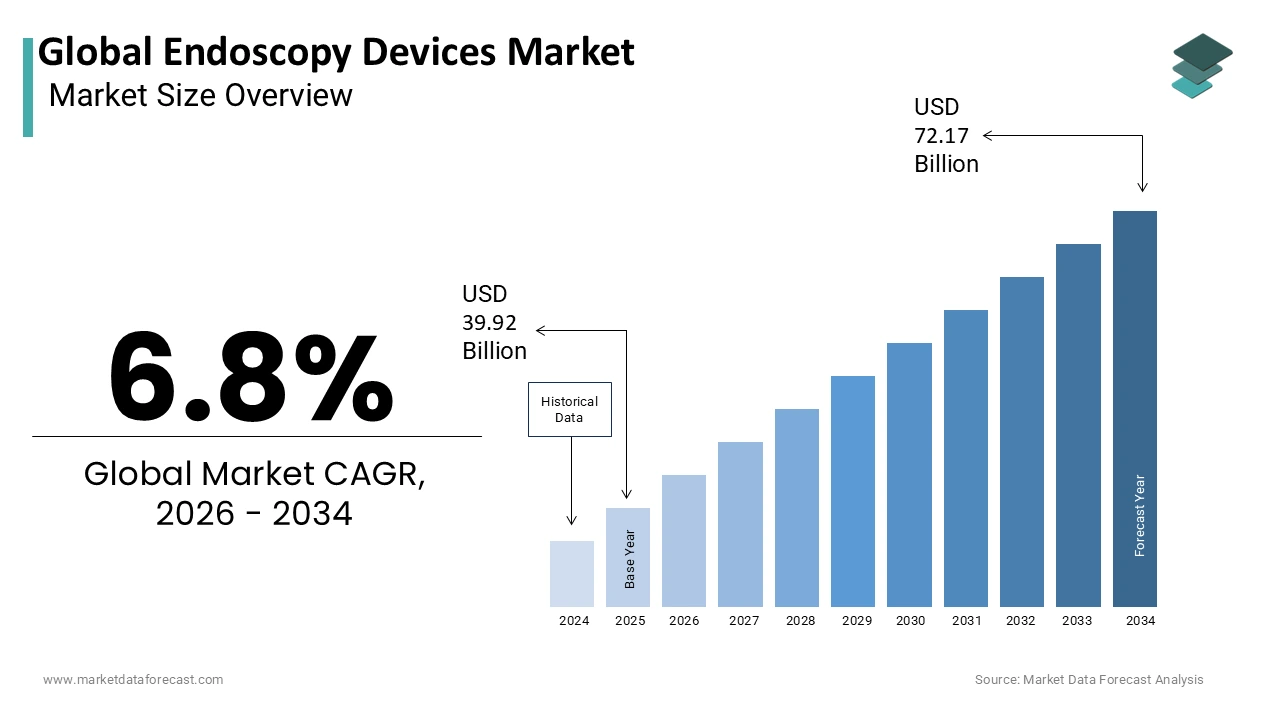
- Market Valuation: Valued at USD 39.92 billion in 2025, estimated at USD 42.64 billion in 2026, and projected to reach USD 72.17 billion by 2034, registering a CAGR of 6.80% from 2026 to 2034.
- Primary Growth Drivers: Rising prevalence of gastrointestinal diseases, increasing demand for minimally invasive surgeries, technological advancements in visualization systems and endoscopes, growing aging populations, expanding healthcare expenditure, and wider adoption of capsule and wireless endoscopy.
Key Market Segment Metrics (2026–2034)
| Category | Leading Segment (2025 Position) | Fastest-Growing Segment |
|---|---|---|
| By Product | Visualization systems segment (accounted for the largest market share in 2025) | Endoscopes segment (projected to register the fastest growth due to disposable and flexible endoscope adoption) |
| By Application | GI endoscopy (held dominant share, driven by gastrointestinal disorders and colorectal cancer screening) | Outpatient endoscopic procedures and specialized therapeutic interventions |
| By Technology & Innovation | High-definition visualization systems and standard endoscopic accessories | Wireless capsule endoscopy, disposable devices, and robotic-assisted procedures |
| By Region / Country | North America (led global market; Europe remains a significant regional market) | Asia Pacific (expected to witness robust growth due to expanding healthcare investments and improving infrastructure) |
Major Market Players & Market Structure
Market Structure: Highly competitive global medical device landscape centered on technological innovation, high-definition visualization, flexible and disposable endoscopes, robotic assistance, and product portfolio expansion.
Key Companies: Ethicon, Stryker Corporation, Karl Storz GmbH, Boston Scientific Inc., Olympus Corporation, Covidien Plc, Smith & Nephew Inc., and Fujifilm Holding Corporation.
 Download Free Sample Report
Global Endoscopy Devices Market Size
The Global Endoscopy Devices Market is projected to grow from USD 39.92 billion in 2025 to USD 42.64 billion in 2026 and reach USD 72.17 billion by 2034, registering a CAGR of 6.8% from 2026 to 2034.
The endoscopy devices market encompasses a sophisticated array of medical instruments and imaging systems designed for minimally invasive diagnostic and therapeutic procedures within the human body. This sector includes flexible and rigid endoscopes, visualization towers, and associated accessories that enable physicians to examine internal organs with high precision. According to the World Health Organization, colorectal cancer is the third most commonly diagnosed cancer globally, necessitating widespread screening programs that rely heavily on colonoscopy and advanced endoscopic visualization technologies. According to the American Cancer Society, regular screening can prevent up to 60% of deaths from colorectal cancer by enabling early detection and removal of precancerous polyps, directly driving the demand for high-definition endoscopic equipment. These statistics underscore the critical role of endoscopy in preventive medicine and oncology care pathways. The market dynamics are further influenced by the rising prevalence of gastrointestinal disorders, technological advancements in image enhancement, and the shift towards outpatient surgical centers. As healthcare systems prioritize early diagnosis and minimally invasive interventions to reduce hospital stays and costs, the adoption of advanced endoscopy devices continues to accelerate across diverse clinical settings.
MARKET DRIVERS
Rising Prevalence of Gastrointestinal Disorders and Cancer Screening Initiatives
The escalating prevalence of gastrointestinal disorders and the global emphasis on cancer screening programs majorly drive the endoscopy devices market expansion. Conditions such as gastroesophageal reflux disease, inflammatory bowel disease, and colorectal cancer require precise visual diagnosis and intervention, which endoscopy provides effectively. According to the Global Burden of Disease Study, digestive diseases account for a significant portion of hospital admissions worldwide, creating a sustained patient pool requiring endoscopic evaluation. According to the International Agency for Research on Cancer, stomach and liver cancers remain leading causes of cancer mortality in many regions, prompting governments to implement national screening guidelines that mandate regular endoscopic examinations. These public health initiatives drive substantial procurement of endoscopes by hospitals and specialized clinics to meet increased patient volumes. The shift towards preventive care models encourages earlier and more frequent screenings, expanding the addressable market for both diagnostic and therapeutic endoscopic tools. As awareness of gastrointestinal health improves among populations, the volume of procedures rises, ensuring consistent utilization of endoscopy devices. This epidemiological trend creates a robust foundation for market growth, as healthcare providers invest in capacity expansion to handle the growing burden of digestive diseases.
Technological Advancements in High Definition and AI Integration
Rapid technological advancements in high-definition imaging and artificial intelligence integration further contribute to the endoscopy devices market expansion. Modern endoscopes offer superior resolution, wider fields of view, and enhanced light sources that improve lesion detection rates and procedural accuracy. According to the American Society for Gastrointestinal Endoscopy, high-definition white light endoscopy combined with chromoendoscopy increases the adenoma detection rate by up to 15% compared to standard-definition systems. This clinical benefit drives healthcare facilities to upgrade their equipment to meet quality standards and improve patient outcomes. Additionally, the integration of artificial intelligence algorithms for real-time polyp detection assists endoscopists in identifying subtle abnormalities that might be missed by the human eye. According to the Journal of Clinical Gastroenterology, AI-assisted endoscopy reduces miss rates and enhances diagnostic confidence, making it a valuable tool for both experienced and novice practitioners. As regulatory bodies approve more AI-based software modules, hospitals are incentivized to adopt compatible hardware platforms. The competitive advantage offered by these advanced features encourages early adoption among premium healthcare providers, driving market growth through technology refresh cycles and the introduction of next-generation visualization systems.
MARKET RESTRAINTS
High Costs of Advanced Endoscopy Systems and Maintenance
The substantial capital investment required for acquiring advanced endoscopy systems and the ongoing costs of maintenance significantly restrain market penetration, particularly in resource-constrained settings. High-end video endoscopy towers and flexible scopes often cost tens of thousands of dollars, placing them out of reach for smaller clinics and public hospitals with limited budgets. According to the World Bank, health expenditure per capita in many low- and middle-income countries remains below the threshold required to sustain advanced medical technology procurement, limiting access to state-of-the-art endoscopy devices. This financial barrier forces many facilities to rely on outdated equipment or refer patients to larger centers, reducing overall market volume. Furthermore, the delicate nature of flexible endoscopes requires frequent repair and rigorous reprocessing, adding to the total cost. According to the Society of Gastroenterology Nurses and Associates, repair costs can account for up to 20% of the initial purchase price annually due to damage during cleaning or use. These recurring expenses strain operational budgets and discourage frequent upgrades. Consequently, the high financial burden acts as a persistent barrier to market expansion, preventing widespread adoption of advanced technologies in segments where they are needed most.
Risk of Cross-Contamination and Strict Reprocessing Protocols
The inherent risk of cross-contamination associated with reusable endoscopes and the stringent requirements for reprocessing act as significant impediments to market efficiency and user confidence. Flexible endoscopes have complex channels that are difficult to clean thoroughly, posing a risk of transmitting multidrug-resistant organisms between patients. According to the Centers for Disease Control and Prevention, outbreaks of infections linked to contaminated endoscopes have occurred despite adherence to cleaning guidelines, highlighting the limitations of current reprocessing methods. This safety concern has led to stricter regulatory oversight and more labor-intensive cleaning protocols, increasing the operational burden on healthcare facilities. Hospitals must invest in specialized automated reprocessors and dedicated staff training to ensure compliance, which adds to operational costs. Additionally, the time required for proper reprocessing limits the throughput of endoscopy suites, creating bottlenecks in patient scheduling. The fear of liability and reputational damage from infection events makes some providers hesitant to expand their endoscopy services. Until single-use disposable endoscopes become more cost-effective or reprocessing technologies improve significantly, the risk of contamination will remain a critical restraint that complicates the widespread deployment of endoscopy devices.
MARKET OPPORTUNITIES
Adoption of Single-Use Disposable Endoscopes
The growing adoption of single-use disposable endoscopes presents a lucrative opportunity for the global endoscopy devices market. These devices are used once and discarded, removing the need for complex and costly reprocessing procedures. According to the Food and Drug Administration, the transition to single-use devices is encouraged for certain procedures to mitigate infection risks, particularly in bronchoscopy and duodenoscopy. According to the Journal of Hospital Infection, single-use endoscopes eliminate the risk of patient-to-patient transmission via equipment, addressing a major safety concern in healthcare settings. This safety advantage is particularly appealing to ambulatory surgical centers and clinics that lack extensive reprocessing infrastructure. Additionally, the predictable cost structure of disposable devices allows for better budget planning compared to the variable repair costs of reusable scopes. Manufacturers are increasingly offering disposable options for various indications, expanding the addressable market. As production scales up and prices decrease, the economic viability of single-use endoscopes improves, making them a viable alternative for high-volume procedures. This shift opens new revenue streams for manufacturers and provides healthcare providers with a safer, more efficient solution for routine diagnostic exams.
Expansion of Telemedicine and Remote Proctoring Capabilities
The integration of telemedicine and remote proctoring capabilities into endoscopy systems offers significant opportunities for enhancing education and expanding access to specialized care. Modern endoscopy towers equipped with digital connectivity allow experts to guide less experienced practitioners in real time during complex procedures. According to the American Telemedicine Association, remote proctoring can improve procedural success rates and reduce complications by providing immediate expert feedback. This capability is particularly valuable in rural and underserved areas where specialist availability is limited. By leveraging cloud-based platforms, healthcare systems can optimize resource allocation and ensure consistent quality of care across multiple locations. Furthermore, recorded endoscopic videos facilitate training and quality assurance reviews, enhancing the skills of the next generation of endoscopists. According to the European Society of Gastrointestinal Endoscopy, digital sharing of cases accelerates learning curves and promotes best practice dissemination. As broadband infrastructure improves globally, the feasibility of remote collaboration increases. Manufacturers can capitalize on this trend by developing software ecosystems that support secure data transmission and collaboration, creating value-added services that differentiate their hardware offerings and drive market growth.
MARKET CHALLENGES
Shortage of Skilled Endoscopists and Training Gaps
The acute shortage of skilled endoscopists and the steep learning curve associated with mastering endoscopic techniques pose significant challenges to market growth. Performing endoscopy requires specialized hand-eye coordination and anatomical knowledge that takes years to develop. According to the World Gastroenterology Organisation, there is a significant disparity in the number of trained gastroenterologists per capita between developed and developing nations, limiting the capacity to perform endoscopic procedures. This workforce gap restricts the utilization of available endoscopy devices, leading to underutilization of installed capacity. Additionally, the rapid evolution of therapeutic endoscopy techniques requires continuous professional development, which is not always accessible to practitioners in remote areas. The lack of standardized training programs in some regions results in variable procedural quality and higher complication rates. Hospitals struggle to recruit and retain qualified staff, delaying the expansion of endoscopy services. Without a sufficient pool of competent professionals, the demand for advanced devices cannot be fully realized. Addressing this human resource challenge requires substantial investment in simulation-based training and fellowship programs, which is a long-term endeavor that currently constrains market potential.
Complex Regulatory Landscape and Reimbursement Issues
The fragmented regulatory landscape and inconsistent reimbursement policies for endoscopic procedures create significant uncertainties that hinder market expansion and innovation adoption. Each country maintains distinct approval requirements for medical devices, forcing manufacturers to navigate complex and time-consuming registration processes. According to the World Health Organization, regulatory harmonization is lacking in many regions, leading to delays in product launches and increased compliance costs. Furthermore, reimbursement rates for endoscopic procedures vary widely, with some payers refusing to cover newer, more expensive technologies such as capsule endoscopy or advanced imaging modalities. According to the Centers for Medicare and Medicaid Services in the United States, coverage determinations are frequently updated, creating uncertainty for providers investing in new equipment. In emerging markets, out-of-pocket payments remain high, limiting patient access to advanced endoscopic diagnostics. The lack of clear financial incentives discourages healthcare facilities from adopting innovative devices that offer clinical benefits but lack adequate reimbursement support. Until regulatory pathways are streamlined and reimbursement policies align with clinical value, the market will face barriers to equitable access and sustained growth.
REPORT COVERAGE
| REPORT METRIC | DETAILS |
| Market Size Available | 2025 to 2034 |
| Base Year | 2025 |
| Forecast Period | 2026 to 2034 |
| Segments Covered | By Product, Application, and Region |
| Various Analyses Covered | Global, Regional & CCountry-LevelAnalysis, Segment-Level Analysis, Drivers, Restraints, Opportunities, Challenges; PESTLE Analysis; Porter’s Five Forces Analysis, Competitive Landscape, Analyst Overview of Investment Opportunities |
| Regions Covered | North America, Europe, Asia Pacific, Latin America, Middle East & Africa |
| Key Market Players | Ethicon, Stryker Corporation, Karl Storz GmbH, Boston Scientific Inc., Olympus Corporation, Covidien Plc, Smith and Nephew Inc., and Fujifilm Holding Corporation |
SEGMENTAL ANALYSIS
By Product Insights
The endoscopes segment led the market by holding the dominant share of 57.7% of the global market in 2025. The dominance of the endoscopes segment in the global market is mainly attributed to their fundamental role as the primary interface for internal visualization during diagnostic and therapeutic procedures. The dominance of the endoscopes segment is primarily driven by the sheer volume of diagnostic and therapeutic procedures performed worldwide that require direct internal visualization. Gastrointestinal disorders and respiratory conditions necessitate frequent examinations using flexible scopes, which are subject to wear and tear requiring regular replacement. According to the American Society for Gastrointestinal Endoscopy, over 15 million colonoscopies are performed annually in the United States alone, creating a massive baseline demand for high-quality flexible endoscopes. Furthermore, according to the World Health Organization, lung cancer remains the leading cause of cancer death globally, driving increased utilization of bronchoscopes for early diagnosis and biopsy. These high procedure volumes ensure that endoscopes remain the most consumed product category in the market. Hospitals and ambulatory surgical centers must maintain large inventories of various scope types to handle diverse patient needs, from routine screenings to complex interventions. The inability to reuse single-use scopes and the limited lifespan of reusable ones create a recurring revenue stream for manufacturers. This operational necessity sustains the segment's leadership through continuous procurement cycles regardless of economic fluctuations.
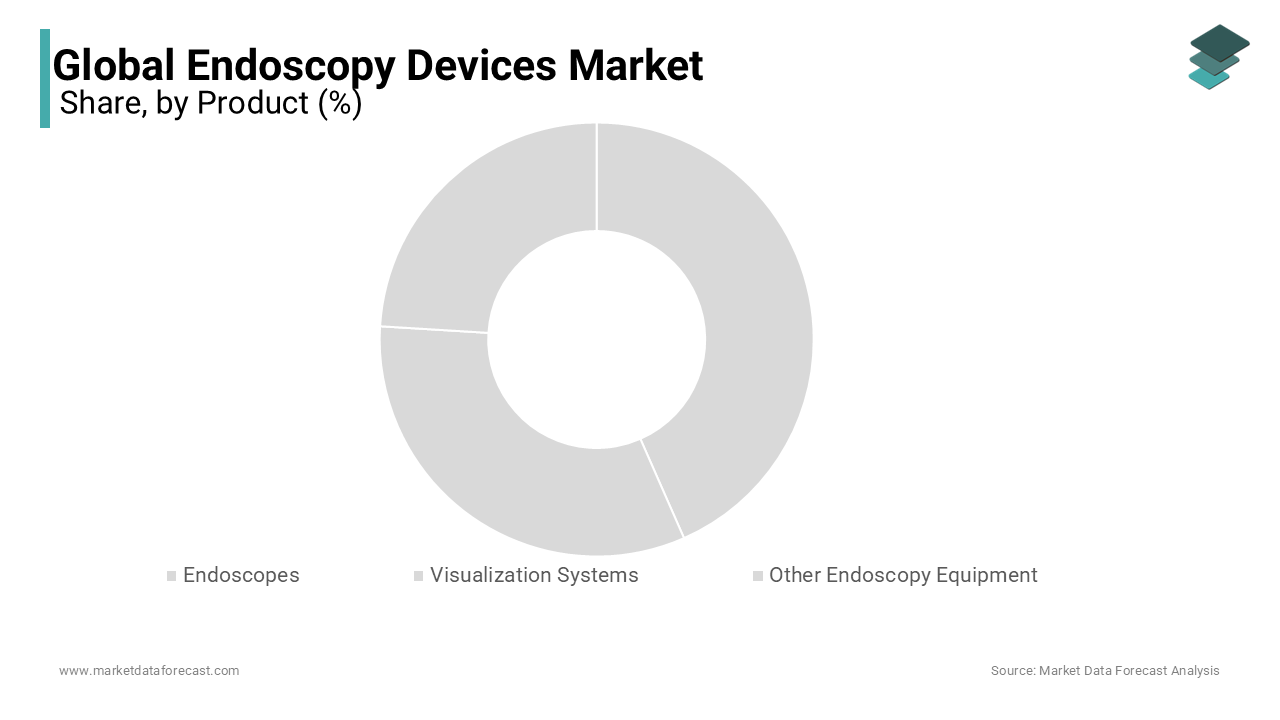
On the other end, the visualization systems segment is anticipated to register a promising CAGR of 8.5% over the forecast period in the global market owing to the integration of artificial intelligence and advanced digital platforms that enhance diagnostic precision and workflow efficiency. Modern towers are no longer just display units, but sophisticated computing hubs that process real-time video feeds for polyp detection and tissue characterization. According to the American Journal of Gastroenterology, AI-assisted visualization systems can improve polyp detection rates by up to 14%, providing a compelling clinical value proposition that drives adoption. Healthcare providers are investing in these systems to reduce miss rates and improve patient outcomes, particularly in colorectal cancer screening programs. Furthermore, the ability to store and share high-quality images via cloud-based platforms facilitates telemedicine and remote proctoring, expanding the utility of visualization systems beyond the operating room. According to the Society of American Gastrointestinal Endoscopic Surgeons, digital integration supports better documentation and quality assurance, which are increasingly required for accreditation. As hospitals seek to optimize operational efficiency and clinical quality, the demand for smart visualization systems rises. This technological evolution transforms visualization towers into essential components of modern endoscopy suites, which is driving faster growth compared to standalone scopes.
By Application Insights
The GI endoscopy segment occupied 60.6% of the global market share in 2025. The growth of the GI endoscopy segment in the global market is driven by the high prevalence of gastrointestinal disorders and the critical role of endoscopy in cancer screening, holding a share of 62.1% in 2025. The dominance of the GI Endoscopy segment is driven by the immense global burden of gastrointestinal diseases and the widespread implementation of cancer screening programs. Colorectal and gastric cancers are among the most common malignancies worldwide, necessitating regular endoscopic surveillance for early detection and prevention. According to the Global Cancer Observatory, colorectal cancer is the third most diagnosed cancer globally, with millions of new cases identified annually, creating a sustained demand for colonoscopy procedures. Furthermore, according to the World Gastroenterology Organisation, Helicobacter pylori infection affects over 50% of the world population, leading to high rates of gastritis and peptic ulcers that require diagnostic upper endoscopy. These epidemiological factors ensure that GI endoscopy remains the most frequently performed endoscopic application. National health agencies in developed countries mandate screening for individuals over 50, driving volume in public and private sectors. The preventive nature of these procedures reduces long-term healthcare costs, encouraging payer coverage and patient compliance. As awareness of gut health increases, more individuals seek diagnostic evaluations, further expanding the market. The critical role of GI endoscopy in saving lives through early intervention solidifies its position as the leading application segment.
However, the bronchoscopy segment is a promising segment and is expected to grow at the fastest CAGR of 9.25 during the forecast period owing to the rising incidence of lung cancer and chronic respiratory diseases globally. Lung cancer remains the leading cause of cancer-related mortality, necessitating accurate and timely diagnosis through bronchoscopic biopsy and visualization. According to the International Agency for Research on Cancer, lung cancer accounts for approximately 1.8 million deaths annually, driving urgent demand for diagnostic procedures. Furthermore, according to the Global Initiative for Chronic Obstructive Lung Disease, COPD affects over 300 million people worldwide, often requiring bronchoscopic evaluation for management of exacerbations and complications. These high prevalence rates create a large patient pool requiring regular respiratory interventions. The aging population is particularly susceptible to these conditions, further amplifying demand. As smoking rates decline in some regions but air pollution increases in others, the burden of respiratory disease remains high. Healthcare systems are expanding pulmonology services to meet this need, leading to increased procurement of bronchoscopes and associated accessories. The critical nature of respiratory diagnostics ensures steady growth for this application segment.
COUNTRY LEVEL ANALYSIS
North America Endoscopy Devices Market Analysis
North America captured the leading share of 37.8% of the global market share in 2025 and is anticipated to experience stable and robust market growth over the next few years due to the high healthcare expenditures, ongoing modernization of clinical facilities, advanced healthcare infrastructure, high healthcare expenditure, and widespread adoption of screening programs. The
United States Endoscopy Devices Market Analysis
United States is the primary contributor, with a mature market characterized by high penetration of advanced visualization technologies. According to the Centers for Disease Control and Prevention, colorectal cancer screening rates have improved significantly, with over 60% of eligible adults undergoing recommended screenings, driving consistent demand for colonoscopes. Additionally, the high prevalence of obesity and gastrointestinal disorders in the region sustains procedural volumes. The presence of major market players and robust research institutions fosters innovation and early adoption of new technologies such as AI-assisted endoscopy. Reimbursement policies from private insurers and government programs like Medicare support the acquisition of high-end equipment. The shift towards ambulatory surgical centers for outpatient endoscopic procedures further boosts market growth by increasing efficiency and reducing costs. Strict regulatory standards ensure high quality and safety, reinforcing trust in advanced devices. The region's focus on value-based care encourages the adoption of technologies that improve outcomes and reduce hospital stays. These factors combine to make North America the most lucrative and technologically advanced market for endoscopy devices globally.
Europe Endoscopy Devices Market Analysis
Europe is expected to witness steady market expansion over the next few years owing to the stringent circular economy mandates and rising adoption of advanced healthcare solutions. Europe represents a significant and mature market in the Endoscopy Devices sector, characterized by strong public healthcare systems and stringent regulatory frameworks. Countries like Germany, France, and the United Kingdom are key contributors, with high standards of clinical care and widespread access to endoscopic services. According to the European Society of Gastrointestinal Endoscopy, harmonized guidelines for screening and treatment are promoted, driving consistent procedural volumes across member states. According to the European Commission, cancer screening programs are mandatory in many EU countries, ensuring steady demand for endoscopy devices for early detection of gastrointestinal and respiratory cancers. Aging populations in Western Europe contribute to a higher prevalence of chronic diseases requiring endoscopic intervention. The region is also a hub for medical device manufacturing, fostering innovation and local supply chains. Regulatory changes under the Medical Device Regulation have increased compliance requirements, leading to consolidation among smaller players but ensuring high quality standards. Reimbursement varies by country, but generally supports essential diagnostic procedures. The focus on cost containment drives interest in efficient and durable equipment. Despite economic variations, the commitment to universal healthcare ensures stable market performance and continued investment in advanced endoscopic technologies.
Asia Pacific Endoscopy Devices Market Analysis
Asia Pacific is projected to witness robust and accelerated expansion over the next few years, fueled by the rapid modernization of commercial healthcare sectors and increasing domestic patient volumes. Asia-Pacific is the fastest-growing region in the Endoscopy Devices Market, registering a leading regional CAGR of 8.5% and driven by rapid economic development, expanding healthcare infrastructure, and increasing awareness of preventive care. China, Japan, and India are the primary growth engines, with large populations and rising incidence of gastrointestinal cancers. According to the World Health Organization, Asia accounts for more than half of the global burden of stomach and liver cancers, creating urgent demand for diagnostic endoscopy. Government initiatives in countries like China and India are improving access to healthcare services, including endoscopic screening programs. Japan has one of the highest rates of gastric cancer screening globally, driving advanced adoption of endoscopic technologies. The rising middle class in emerging economies is increasing out-of-pocket spending on health, facilitating access to private endoscopic services. Medical tourism in countries like Thailand and Singapore attracts international patients seeking high-quality care. Local manufacturing is growing, reducing costs and improving availability. The region's vast population base offers immense potential for market expansion as healthcare coverage improves. Technological adoption is accelerating, with hospitals investing in modern endoscopy suites to meet growing demand.
Latin America Endoscopy Devices Market Analysis
Latin America is anticipated to maintain stable market growth over the next few years, driven by strong export demands and enhanced industrial processing capacities across major emerging economies. Latin America presents an emerging market for Endoscopy Devices, characterized by improving healthcare access and growing medical tourism. Brazil and Mexico are the largest markets, with expanding private healthcare sectors and increasing prevalence of chronic diseases. According to the Pan American Health Organization, noncommunicable diseases are rising in the region, leading to higher demand for diagnostic procedures, including endoscopy. Public health systems are working to expand screening coverage, though resource constraints limit widespread adoption of advanced technologies. Private hospitals in major cities are investing in state-of-the-art endoscopy equipment to cater to affluent patients and medical tourists. The region faces challenges related to uneven distribution of healthcare resources, with urban centers having better access than rural areas. Regulatory frameworks are evolving to align with international standards, facilitating market entry for global players. Economic volatility can impact purchasing power, but the long-term trend towards improved healthcare infrastructure supports growth. Local distributors play a key role in navigating complex regulatory and logistical landscapes. As awareness of preventive care grows, the demand for endoscopy devices is expected to rise steadily.
Middle East and Africa Endoscopy Devices Market Analysis
The Middle East and Africa is expected to show gradual market progress over the next few years, supported by targeted government food security initiatives and healthcare modernization programs. The Middle East and Africa region shows varied performance in the Endoscopy Devices Market, with Gulf Cooperation Council countries leading in adoption due to high healthcare spending and infrastructure development. Saudi Arabia and the United Arab Emirates are investing heavily in modernizing healthcare facilities, including advanced endoscopy suites. According to the World Health Organization, cancer incidence is rising in the region, driving demand for diagnostic services. Public health initiatives are focusing on early detection of gastrointestinal cancers, supporting market growth. In contrast, many African nations face significant challenges related to limited infrastructure and a shortage of skilled specialists. Access to endoscopy services is often restricted to major urban centers and private hospitals. International aid and partnerships are helping to improve capacity in some countries. The region has potential for growth as healthcare systems develop and economic conditions improve. Medical tourism in Dubai and other hubs drives demand for premium devices. Regulatory harmonization efforts in the GCC are facilitating market access. While current market size is smaller compared to other regions, the commitment to healthcare improvement suggests positive long-term prospects.
COMPETITIVE LANDSCAPE
The competition in the Endoscopy Devices Market is characterized by the presence of established global leaders and specialized niche manufacturers who compete on technological innovation and clinical efficacy. Major corporations dominate the flexible and rigid endoscopy segments with advanced visualization systems designed for complex diagnostic and therapeutic procedures. They differentiate themselves through superior image quality, ergonomic design, and integrated digital platforms that support artificial intelligence applications. Smaller companies focus on specific niches such as single-use endoscopes or specialized accessories, offering cost-effective and hygienic alternatives to traditional reusable devices. Competitive dynamics are driven by continuous innovation in sensor technology and light sources, as well as the integration of cloud-based data management solutions. Price competition is moderate in the premium segment where performance is paramount but intense in the disposable device market where volume drives profitability. Companies also compete on after-sales service quality, offering rapid repair services and comprehensive training to build institutional loyalty. The entry of new technologies like robotic endoscopy challenges incumbents to accelerate their research and development cycles. Strategic acquisitions and partnerships are common tactics used to expand product portfolios and geographic reach. This dynamic environment encourages constant improvement and ensures that customers benefit from increasingly sophisticated and reliable endoscopy solutions tailored to diverse clinical needs.
KEY MARKET PLAYERS
Some of the companies that are playing a dominant role in the Global Endoscopy Devices Market include:
- Ethicon
- Stryker Corporation
- KARL STORZ GmbH
- Boston Scientific Inc.
- Olympus Corporation
- Covidien plc
- Smith & Nephew Inc.
- Fujifilm Holding Corporation
TOP LEADING PLAYERS IN THE MARKET
- Olympus Corporation maintains a dominant presence in the Endoscopy Devices Market through its comprehensive portfolio of flexible and rigid endoscopes along with advanced visualization systems. The company focuses on delivering high-resolution imaging solutions that enhance diagnostic accuracy and therapeutic precision for gastrointestinal and respiratory procedures. Recent initiatives include the launch of next-generation endoscopes with improved ergonomics and integrated artificial intelligence capabilities for real-time polyp detection. Olympus collaborates with global medical societies to provide extensive training programs for endoscopists. Their commitment to innovation drives the development of single-use devices to address infection control concerns. By expanding service networks and offering digital health integration, Olympus ensures operational reliability for healthcare facilities. These strategic efforts reinforce their reputation for technological leadership and strengthen their competitive position in the evolving global endoscopy landscape.
- Karl Storz SE & Co. KG contributes significantly to the market by providing specialized rigid endoscopy systems and integrated operating room solutions for various surgical specialties. The company emphasizes modular design and superior optical quality to support complex minimally invasive surgeries. Karl Storz has recently strengthened its market position by introducing advanced 4K visualization platforms that offer exceptional image clarity and depth perception. These innovations address the growing demand for high-definition imaging in laparoscopic and arthroscopic procedures. The company actively participates in international surgical conferences to showcase new technologies and share best practices. Their focus on seamless integration with hospital information systems enhances workflow efficiency. These actions improve customer satisfaction and drive sustained growth by meeting the specific needs of surgeons in diverse clinical settings across the world.
- Fujifilm Holdings Corporation plays a pivotal role in the market by offering innovative endoscopy devices featuring proprietary image enhancement technologies such as Laser Imaging and Blue Light Imaging. The company is dedicated to improving early cancer detection through superior contrast and visibility of mucosal patterns. Fujifilm has recently expanded its product lineup with compact and portable endoscopy systems designed for outpatient clinics and remote care settings. This diversification strategy improves accessibility and reduces infrastructure requirements for smaller healthcare providers. The company also invests in research collaborations to validate the clinical benefits of its imaging modes. Their commitment to user-friendly interfaces and robust durability makes them a preferred choice for high-volume centers. These comprehensive efforts solidify Fujifilm’s position as a key innovator driving advancements in diagnostic endoscopy globally.
TOP STRATEGIES USED BY KEY MARKET PARTICIPANTS
Key players in the Endoscopy Devices Market employ several strategic approaches to strengthen their competitive standing and expand their reach. One primary strategy involves continuous product innovation focused on integrating artificial intelligence and high-definition imaging to enhance diagnostic accuracy and procedural efficiency. Companies are developing smart endoscopes with automated detection algorithms to reduce miss rates and improve patient outcomes. Another critical strategy is the expansion of service and maintenance networks to ensure high device uptime and customer retention. Providers offer comprehensive training programs and technical support to help clinicians maximize the utility of advanced equipment. Strategic partnerships with hospitals and ambulatory surgical centers also play a vital role in securing long-term contracts and influencing procurement standards. Additionally, firms are focusing on developing single-use disposable endoscopes to address infection control challenges and simplify reprocessing workflows. These initiatives align with global safety standards and operational needs. By combining technological advancement with robust service ecosystems and sustainable product designs, market participants create long-term value and maintain leadership positions in this highly specialized sector.
GLOBAL ENDOSCOPY DEVICES MARKET NEWS
- In 2019, "PowerSpiral," a small intestine endoscopy system, was launched by Olympus in Europe and Asia, including Hong Kong and India.
- In 2018, ENF-VT3 was launched by Olympus, the world's first rhino-laryngoscope, to incorporate 4-direction angulation capability.
- In 2018, to enhance minimally invasive neurosurgery, a 4mm Endoscopic NIR/ICG Fluorescence imaging system was launched by KarlStroz.
MARKET SEGMENTATION
This market research report on the global endoscopy devices market has been segmented based on the product, application, and region.
By Product
- Endoscopes
- Flexible Endoscopes
- Rigid Endoscopes
- Capsule Endoscopes
- Visualization Systems
- Other Endoscopy Equipment
- Electrical Endoscopy Equipment
- Mechanical Endoscopy Equipment
By Application
- Laparoscopy
- Bronchoscopy
- GI Endoscopy
By Region
- North America
- Europe
- Asia Pacific
- Latin America
- The Middle East and Africa