- Product Description Description
- Table of Contents TOC
- List of Table & Figure LOT
- Get Free Sample PDF Sample PDF
Market Size, 2025
$5.80 BnMarket Estimate, 2026
$6.02 BnMarket Forecast, 2034
$8.12 BnExecutive Summary: Asia Pacific Apple Juice Market
- Market Scope: Comprehensive regional market evaluation of apple juice across the Asia-Pacific region covering distribution channels, product variants (concentrate, not from concentrate, organic), and country-level frameworks.
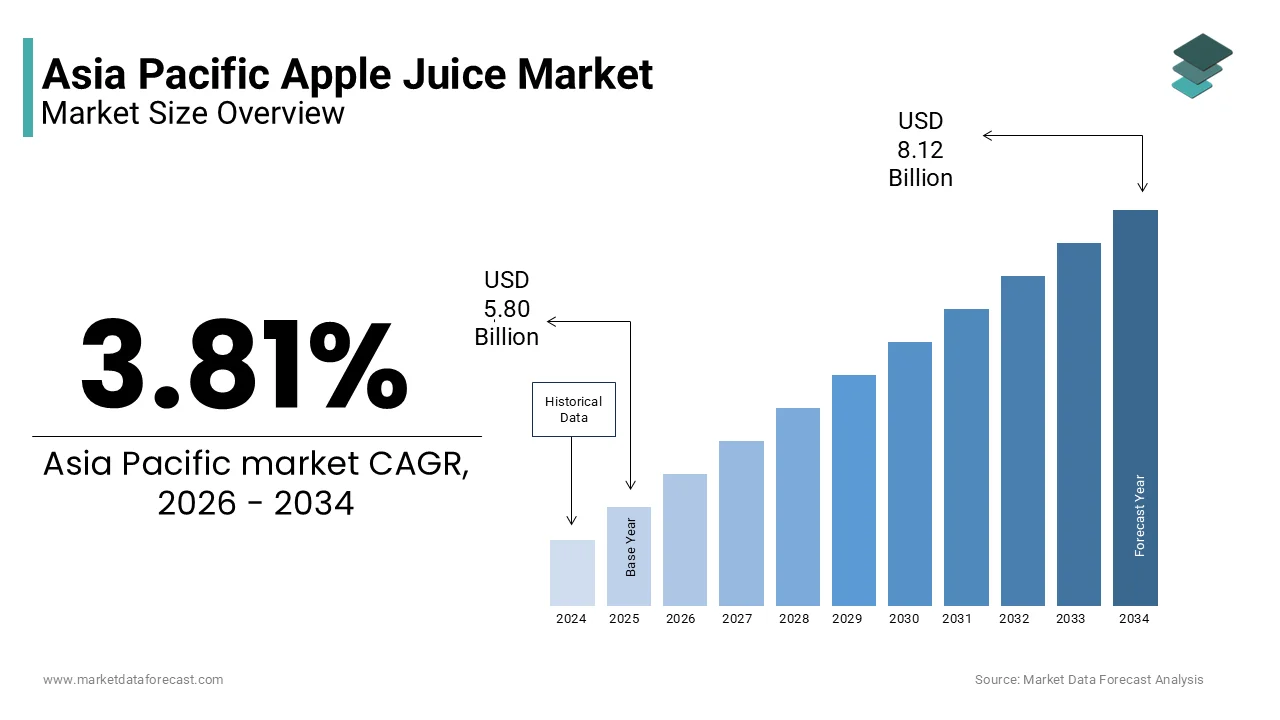
- Market Valuation: Valued at USD 5.80 billion in 2025, estimated at USD 6.02 billion in 2026, and projected to reach USD 8.12 billion by 2034, registering a steady CAGR of 3.81% from 2026 to 2034.
- Primary Growth Drivers: Rising health consciousness and demand for natural/clean-label beverages, expansion of modern retail infrastructure, and explosive e-commerce and quick-commerce platform penetration.
Key Market Segment Metrics (2026–2034)
| Category | Leading Segment (2025 Position) | Fastest-Growing / Preferred Segment |
|---|---|---|
| By Distribution Channel | Supermarkets and Hypermarkets (held the majority share due to extensive reach, variety, and promotional strategies) | Specialty Stores (anticipated to witness the fastest CAGR of 7.8% driven by demand for premium organic and artisanal juices) |
| By Region / Country | China (leads the regional market as the world's top apple producer and volume consumer) alongside high-value growth in Japan, India, Australia, and South Korea. | |
Major Market Players & Market Structure
Market Structure: Highly competitive and fragmented regional landscape characterized by a mix of multinational corporations dominating premium segments and local players competing in mass markets with affordable from-concentrate options.
Key Companies: Musselman Premium Apple Juice, Mishpacha Apple Juice, Mott's, Dole plc, Simply Balanced Organic Apple Juice, Cadia Organic 100% Apple Juice, Del Monte Pacific Limited, Eden Organic Apple Juice, Ito En Ltd, Martinelli's Apple Juice, and Field Day Organic Apple Juice.
Asia Pacific Apple Juice Market Size
The Asia Pacific apple juice market size was valued at USD 5.80 billion in 2025 and is projected to reach USD 8.12 billion by 2034 from USD 6.02 billion in 2026, growing at a CAGR of 3.81%.
The Asia-Pacific apple juice market is characterized by a blend of traditional consumption habits and modern health consciousness, driving demand across both developed and emerging economies. According to the Food and Agriculture Organization of the United Nations, China remains the largest apple producer globally, accounting for approximately 50% of world production, which provides a robust raw material base for domestic juice manufacturing. The region benefits from favorable climatic conditions in countries like India, New Zealand, and Japan, allowing for year-round cultivation of various apple cultivars. As per data from the United Nations Department of Economic and Social Affairs, urbanization rates in Asia have surpassed 50%, leading to altered dietary patterns where convenience beverages gain prominence. Consumers increasingly seek natural and minimally processed options, prompting manufacturers to adopt cold-press technologies and avoid artificial additives. Regulatory bodies in nations such as Australia and South Korea enforce strict food safety standards to ensure high-quality products reach the market. The integration of apple juice into functional beverages and mixed fruit blends further expands its application scope. Rising disposable incomes in Southeast Asian nations facilitate the purchase of premium juice brands. This evolving landscape reflects a shift towards healthier lifestyle choices while maintaining cultural preferences for sweet and refreshing beverages.
MARKET DRIVERS
Rising Health Consciousness and Demand for Natural Beverages
The escalating consumer preference for healthy and natural beverages is a key factor driving the growth of the Asia-Pacific apple juice market. Modern shoppers are increasingly scrutinizing ingredient labels, rejecting sugary sodas and artificial drinks in favor of nutrient-rich alternatives. According to NielsenIQ research conducted in 2024, approximately 65% of consumers in China and India actively seek beverages labeled as 100% natural or no added sugar. This trend compels beverage manufacturers to reformulate their product portfolios to include high-quality apple juice that delivers genuine taste profiles and nutritional benefits. Apple juice is perceived as a heart-healthy option rich in antioxidants and vitamins, which aligns with the wellness goals of urban populations. Major multinational corporations operating in the region have launched clean-label apple juice variants to meet these evolving expectations. The versatility of apple juice allows for consistent flavor delivery across seasonal variations, ensuring brand reliability. Health-conscious demographics, particularly millennials and Generation Z, drive this shift by prioritizing transparency in ingredient sourcing. Retailers respond by expanding shelves dedicated to natural juice blends and functional drinks utilizing apple bases. Marketing campaigns emphasize the origin and purity of apple sources, enhancing consumer trust. The regulatory environment supports this transition by enforcing stricter labeling laws that distinguish between natural and artificial ingredients. As awareness of health implications associated with synthetic additives grows, the reliance on apple juice as a natural alternative continues to strengthen market dynamics.
Expansion of Quick Service Restaurants and Beverage Chains
The rapid expansion of the quick service restaurant and beverage chain sector is further aiding the apple juice market growth in Asia-pacific. Urban lifestyles characterized by busy schedules and increased disposable income have fueled demand for convenient hydration options, including fresh juices and smoothies. According to Euromonitor International, sales of non-alcoholic ready-to-drink beverages in Asia-Pacific grew by 5.8% in 2024, reflecting strong consumer adoption. Manufacturers rely heavily on apple juice concentrates to standardize flavor intensity and ensure product consistency across large-scale production runs. Concentrates offer logistical advantages by reducing storage space and transportation costs compared to fresh fruit, enabling efficient distribution to remote areas. The rise of health-focused functional beverages incorporating vitamins and minerals further integrates apple juice as a base ingredient. Convenience stores and supermarkets have expanded their chilled beverage sections, offering diverse apple-based options that cater to varied taste preferences. Innovations in packaging technology, such as aseptic cartons and lightweight bottles, enhance portability and shelf appeal. Strategic partnerships between juice suppliers and beverage brands facilitate customized formulations targeting specific demographic segments. Seasonal promotions and new product launches continuously refresh market offerings, maintaining consumer interest. The scalability of apple juice usage allows manufacturers to quickly respond to emerging trends such as exotic fruit blends. This dynamic interaction between convenience culture and industrial efficiency sustains robust growth trajectories for apple juice producers throughout the region.
MARKET RESTRAINTS
Volatility in Raw Material Supply Due to Climate Change
Climate change-induced weather unpredictability is a severe restraint on the Asia-Pacific apple juice market by disrupting raw material availability and quality. Extreme weather events such as droughts, floods, and unseasonal frosts directly impact apple yields in major producing regions. According to the Inter-American Institute for Cooperation on Agriculture, climate variability has caused a 12% decline in average apple yields in parts of China and India over the past five years. These fluctuations lead to inconsistent supply volumes, forcing processors to face operational inefficiencies and increased procurement costs. Farmers struggle to maintain consistent harvest schedules, affecting the continuous operation of processing plants. Quality degradation due to heat stress or excessive rainfall further complicates the production of high-grade juices meeting international standards. Insurance costs for agricultural operations have risen substantially, reflecting heightened risk perceptions among financial institutions. Processors must invest in diversified sourcing strategies to mitigate supply shocks, which often involve higher logistical expenses. The inability to guarantee stable raw material inputs undermines long-term contracts with global buyers who prioritize reliability. Government subsidies for climate-resilient farming practices remain insufficient to fully offset these challenges. As extreme weather patterns become more frequent, the industry faces persistent uncertainty regarding production capacity. This environmental vulnerability restricts market expansion and necessitates significant capital investment in adaptive agricultural technologies to ensure future sustainability.
Stringent Regulatory Compliance and Labeling Standards
Stringent regulatory compliance requirements and evolving labeling standards is further impeding the Asia-Pacific apple juice market growth. International markets, particularly in Australia, Japan, and South Korea, enforce rigorous limits on pesticide residues, heavy metals, and microbial contamination. According to the European Commission Rapid Alert System for Food and Feed, notifications regarding non-compliant fruit products from Asia increased by 10% in 2023, highlighting ongoing compliance challenges. Meeting these standards requires substantial investment in quality control infrastructure, laboratory testing, and certification processes, which small and medium enterprises often find prohibitive. Frequent updates to maximum residue limits force producers to constantly adapt their agricultural practices and monitoring systems. Documentation burdens for traceability and sanitary certifications add administrative complexity and delay shipment clearances. Non-compliance results in costly product rejections, border delays, and reputational damage that can exclude suppliers from lucrative markets. Harmonization of regional regulations remains incomplete, creating fragmented compliance landscapes across different Asian countries. Exporters must navigate varying requirements for each destination market, increasing operational overhead. Lack of technical assistance for smaller farmers hinders widespread adoption of good agricultural practices necessary for compliance. These regulatory hurdles limit market access for many potential exporters, concentrating business among larger players with sufficient resources. Consequently, the barrier to entry remains high, restricting broader market participation and innovation.
MARKET OPPORTUNITIES
Development of Value Added Organic and Cold Pressed Juices
The growing global demand for organic and cold-pressed products is a prominent opportunity for the Asia-Pacific apple juice market to diversify into premium value-added segments. Consumers worldwide are increasingly willing to pay premiums for certified organic ingredients perceived as healthier and environmentally friendly. According to the Research Institute of Organic Agriculture, global sales of organic food and beverages reached 135 billion euros in 2023, with Asia-Pacific emerging as a key supplier. Producers in countries like New Zealand and Japan possess favorable agro-ecological conditions for organic cultivation of apples. Transitioning to organic farming methods allows companies to access niche markets with higher profit margins and less price sensitivity. Certification bodies are expanding their presence in the region, facilitating easier compliance with international organic standards. Brands focusing on sustainability and ethical sourcing prefer partnering with organic juice suppliers to enhance their corporate social responsibility profiles. Innovation in cold-press processing techniques ensures that nutritional benefits are preserved while meeting strict purity criteria. Marketing narratives emphasizing biodiversity conservation and soil health resonate strongly with conscious consumers. Retailers are dedicating more shelf space to organic juice blends, driving upstream demand for certified apple juice. Collaborative initiatives between farmers and processors help share the costs and risks associated with organic transition. This strategic shift toward organic juices enables producers to differentiate themselves in a crowded market and capture growing consumer segments prioritizing wellness and environmental stewardship.
Integration of Functional Ingredients and Fortification
Adopting functional ingredient integration offers a significant opportunity for the Asia-Pacific apple juice market to enhance product appeal and health benefits. Traditional apple juice is being fortified with vitamins, minerals, probiotics, and plant extracts to create value-added beverages that address specific health concerns. According to the World Bank, implementing functional models in beverage industries can increase product value by up to 30% while creating new revenue streams. Companies are investing in technologies to blend apple juice with ingredients like ginger, turmeric, and collagen for enhanced immunity and skin health. This approach minimizes environmental impact by reducing landfill contributions and lowering carbon footprints associated with waste management. Biogas production from organic waste provides renewable energy sources for processing facilities, reducing dependence on fossil fuels. Consumers and investors increasingly favor companies demonstrating commitment to sustainable practices, enhancing brand loyalty and attracting green financing. Regulatory incentives in countries like Australia and Singapore support waste reduction initiatives through tax breaks and grants. Partnerships with research institutions facilitate development of innovative extraction methods maximizing resource utilization. Transparent reporting on waste reduction metrics builds trust with stakeholders and complies with emerging environmental disclosure requirements. By transforming waste into wealth, producers improve profitability while contributing to broader sustainability goals. This holistic approach positions Asia-Pacific apple juice manufacturers as leaders in responsible production, appealing to globally conscious markets.
MARKET CHALLENGES
High Energy Consumption in Processing Operations
High energy consumption during the concentration and pasteurization process is a notable challenge for the Asia-Pacific apple juice market and impacts operational costs and environmental sustainability. Evaporation techniques required to remove water from apple juice are energy-intensive, relying heavily on electricity and thermal power. According to the International Energy Agency, industrial energy prices in several Asian countries have risen by an average of 8% annually over the last three years, squeezing profit margins for processors. Fluctuating fuel costs further exacerbate financial pressure, making budget planning difficult for manufacturing facilities. Dependence on non-renewable energy sources exposes companies to volatile global oil and gas markets, affecting competitiveness. Investments in energy-efficient technologies, such as multi-effect evaporators and heat recovery systems, require significant upfront capital, which many small producers cannot afford. Regulatory pressures to reduce carbon emissions necessitate transitions to cleaner energy sources, which may involve complex infrastructure upgrades. Power outages and grid instability in certain regions disrupt production schedules, leading to product spoilage and delivery delays. Lack of government subsidies for renewable energy adoption in the agro-processing sector limits mitigation options. Companies must balance cost containment with sustainability goals, creating strategic dilemmas. Failure to address energy inefficiencies risks long-term viability as global buyers increasingly prioritize low-carbon supply chains. This operational burden requires innovative engineering solutions and policy support to ensure sustainable growth.
Intense Competition from Substitute Beverages
Intense competition from substitute beverages such as coconut water, almond milk, and herbal teas is further challenging the expansion of the regional market. Consumers are increasingly exploring diverse hydration options that offer unique health benefits and flavor profiles distinct from traditional fruit juices. According to Statista, sales of plant-based milks in Asia-Pacific grew by 12% in 2024, reflecting shifting consumer preferences away from high-sugar fruit juices. Coconut water is perceived as a natural electrolyte drink, while almond milk appeals to lactose-intolerant and vegan demographics. These alternatives often carry a healthier image due to lower sugar content and higher protein or fat profiles. Marketing campaigns by substitute beverage brands emphasize their functional benefits, such as hydration and digestion support. Retailers dedicate prominent shelf space to these trending categories, reducing visibility for traditional apple juice products. Price competitiveness also plays a role, as some substitutes offer better value propositions in terms of nutritional density. Innovation in flavor combinations within the substitute sector attracts adventurous consumers seeking novelty. Apple juice manufacturers must invest in differentiation strategies, such as blending with superfoods or reducing sugar content, to remain relevant. The rapid pace of innovation in the broader beverage landscape requires constant adaptation to maintain market share. This competitive pressure limits pricing power and necessitates continuous marketing investment to defend position.
REPORT COVERAGE
| REPORT METRIC | DETAILS |
| Market Size Available | 2025 to 2034 |
| Base Year | 2025 |
| Forecast Period | 2026 to 2034 |
| CAGR | 3.81% |
| Segments Covered | By Distribution Channel and Region |
| Various Analyses Covered | Regional & Country Level Analysis, Segment-Level Analysis, DROC, PESTLE Analysis, Porter’s Five Forces Analysis, Competitive Landscape, Analyst Overview on Investment Opportunities |
| Regions Covered | India, China, Japan, South Korea, Australia, New Zealand, Thailand, Malaysia, Vietnam, Philippines, Indonesia, Singapore, and the Rest of Asia-Pacific |
| Market Leaders Profiled | Musselman Premium Apple Juice, Mishpacha Apple Juice, Mott's, Dole plc, Simply Balanced Organic Apple Juice, Cadia Organic 100% Apple Juice, Del Monte Pacific Limited, Eden Organic Apple Juice, Ito En Ltd, Martinelli's Apple Juice, and Field Day Organic Apple Juice |
SEGMENTAL ANALYSIS
By Distribution Channel Insights
The supermarkets and hypermarkets segment led the market by holding the largest share of the Asia-Pacific apple juice market in 2025. The dominance of supermarkets and hypermarkets segment in the regional market is driven by their extensive reach, one-stop shopping convenience, and ability to offer competitive pricing through economies of scale. This segment further dominates because it serves as the primary shopping destination for the majority of Asian households, allowing for impulse purchases and bulk buying during weekly grocery trips. According to NielsenIQ, over 60% of packaged food and beverage sales in urban centers across China, India, and Southeast Asia occur in large retail chains such as Walmart, Carrefour, and local giants like Big Bazaar. These retailers leverage their bargaining power to negotiate favorable terms with juice producers, enabling them to offer promotional discounts and bundled deals that attract price-sensitive consumers. The wide assortment of brands, ranging from entry-level to premium labels, ensures that supermarkets cater to diverse consumer preferences under one roof. Integrated loyalty programs further enhance customer retention by offering points and personalized offers on juice purchases. The convenience of one-stop shopping reduces the effort required for consumers to purchase apple juice alongside other household necessities. Additionally, supermarkets have improved their shelf presentation and dedicated sections for premium juices, enhancing the shopping experience. Regulatory frameworks in many Asian countries permit the sale of juices in supermarkets, unlike specialized liquor stores, which restricts sales to specific outlets. This accessibility, combined with aggressive marketing and visibility, ensures that supermarkets remain the preferred choice for the majority of juice buyers across the continent.
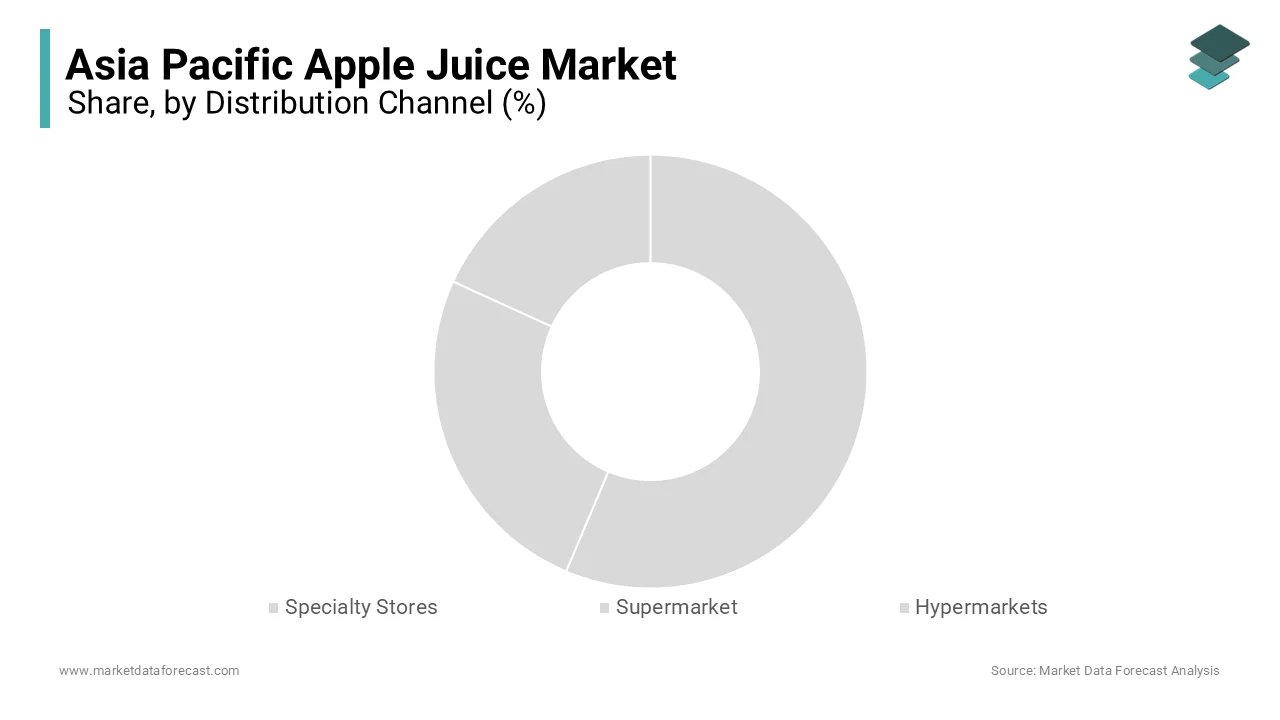
On the other end, the specialty stores segment is estimated to register a CAGR of 8.2% over the forecast period in the regional market owing to the increasing consumer demand for premium, artisanal, and organic apple juices that are not typically available in mass-market retailers. Specialty stores, including health food shops, boutique grocers, and dedicated juice bars, offer curated selections that appeal to discerning consumers seeking unique flavor profiles and high nutritional value. According to the Health Food Industry Association of Asia, sales of premium juices in specialty outlets increased by 22% in 2023 as consumers became more educated about the benefits of cold-pressed and unpasteurized options. These stores provide personalized service and expert advice, helping customers make informed choices based on dietary needs and preferences. The rise of wellness tourism and urban health consciousness drives foot traffic to specialty stores in major cities like Tokyo, Singapore, and Sydney. Digital integration allows these stores to offer online ordering and home delivery, expanding their reach beyond physical locations. Social media marketing highlights the exclusivity and quality of products sold in specialty stores, driving brand awareness. As consumers prioritize quality over quantity, the specialty store channel will capture an increasing share of the premium market segment.
REGIONAL ANALYSIS
China Market Analysis
China held 34.6% of the regional market share in 2025 and is likely to experience stable growth over the next few years. The dominance of China in the regional market is primarily driven by the country's status as the world's largest apple producer, providing a vast and cost-effective raw material base for juice manufacturing. The domestic market is characterized by a growing middle class that increasingly prefers convenient and healthy beverage options. Government initiatives promoting agricultural modernization have improved processing technologies and quality standards for apple juice. Urbanization rates exceeding 60% drive demand for ready-to-drink juices in cities like Beijing and Shanghai. Local brands compete with international players by offering affordable yet high-quality products tailored to local tastes. Export activities remain significant, with China supplying concentrated apple juice to global markets. Regulatory reforms have strengthened food safety standards, enhancing consumer confidence in domestic products. The rise of e-commerce platforms facilitates direct access to premium juice brands for rural and urban consumers alike. Investment in cold chain infrastructure ensures product freshness and extends shelf life. This combination of production capacity, domestic demand and export potential are cementing China's leadership position in the regional market.
Japan Market Analysis
Japan accounted for a substantial share of the Asia-Pacific apple juice market in 2025 and is expected to maintain steady market expansion over the next few years. The country is renowned for its high-quality apple varieties, such as Fuji and Mutsu, which are used to produce premium juices. Japanese consumers prioritize taste, purity, and packaging aesthetics, driving demand for high-end and organic apple juices. The aging population contributes to steady consumption of health-focused beverages rich in antioxidants. Strict regulatory standards ensure that only high-quality ingredients are used in juice production, fostering trust among buyers. Convenience stores and vending machines play a crucial role in distribution, making juices easily accessible throughout the day. Innovation in functional juices incorporating apple with other health ingredients like ginger or collagen is popular. Tourism boosts sales of local specialty juices as souvenirs for international visitors. Sustainability initiatives by producers focus on reducing waste and energy use in processing. This emphasis on quality and innovation maintains Japan's strong market position despite a mature consumer base.
India Market Analysis
India is projected to grow rapidly over the next few years owing to its rapid urbanization and rising health consciousness according to the Agricultural and Processed Foods Export Development Authority 2025 statistics. The northern states of Himachal Pradesh and Jammu & Kashmir are major apple-growing regions, providing fresh raw materials for juice production. Domestic consumption is shifting from traditional whole fruit consumption to convenient juice formats among urban professionals. The growing middle class is increasingly aware of the nutritional benefits of apple juice, driving demand for branded products. Local manufacturers are investing in modern processing facilities to meet international quality standards. Government support for food processing industries encourages investment and technology transfer. Export potential is rising as Indian apple juice gains recognition for its natural sweetness and quality. Challenges include supply chain inefficiencies and seasonal availability, but improvements in cold storage are addressing these issues. Retail expansion in tier-two and tier-three cities opens new markets for affordable juice packs. This dynamic growth trajectory positions India as a key emerging player in the regional market.
COMPETITIVE LANDSCAPE
The competition in the Asia Pacific Apple Juice Market is characterized by the presence of established global beverage giants and agile regional producers striving for brand distinction. Multinational corporations leverage their extensive distribution networks and marketing budgets to maintain dominance while adapting to local tastes and regulatory frameworks. These leaders invest heavily in innovation to introduce premium organic and functional variants that cater to evolving consumer preferences for health and transparency. Regional competitors compete on price and locality offering artisanal products that appeal to niche markets and cultural preferences. Strategic collaborations with retail chains and hospitality providers are common as companies seek to enhance brand visibility and shelf space. The market sees intense rivalry in terms of pricing sustainability credentials and digital engagement strategies. Companies differentiate themselves through exclusive sourcing stories and immersive consumer experiences. As health consciousness rises competitors must balance tradition with modern nutritional narratives. This dynamic environment fosters continuous improvement in product quality and marketing sophistication ensuring a diverse and vibrant juice landscape for Asia Pacific consumers.
KEY MARKET PLAYERS
Key players in the Asia Pacific apple juice market are
- Musselman Premium Apple Juice
- Mishpacha Apple Juice
- Mott's
- Dole plc
- Simply Balanced Organic Apple Juice
- Cadia Organic 100% Apple Juice
- Del Monte Pacific Limited
- Eden Organic Apple Juice
- Ito En Ltd
- Martinelli's Apple Juice
- Field Day Organic Apple Juice
Top Players in the Market
- The Coca Cola Company maintains a robust presence in the Asia Pacific Apple Juice Market through its Minute Maid and Simply brands which are widely recognized for quality and consistency. The company actively supports regional agricultural communities by sourcing apples from local farmers in China and India ensuring sustainable supply chains. Recent initiatives include launching cold pressed apple juice variants to cater to health conscious consumers seeking premium options. Coca Cola has invested in advanced processing facilities in Southeast Asia to enhance production efficiency and product freshness. The company leverages its extensive distribution network to ensure wide availability in both urban and rural markets. By integrating digital marketing strategies and promoting healthy lifestyle campaigns Coca Cola strengthens brand loyalty. These strategic efforts reinforce its position as a trusted provider of nutritious beverages while adapting to evolving consumer preferences for natural and transparent ingredients across the diverse Asia Pacific region.
- Dole plc plays a pivotal role in shaping the Asia Pacific Apple Juice Market by delivering high quality fruit based beverages that emphasize nutrition and sustainability. The company focuses on expanding its portfolio of organic and non GMO apple juices to meet growing demand for clean label products. Dole has strengthened its market position by partnering with local distributors in Japan and Australia to improve logistics and market penetration. Recent actions include introducing recyclable packaging solutions to reduce environmental impact and appeal to eco conscious shoppers. The company invests in research and development to create innovative blends that combine apple juice with other superfoods. Dole emphasizes transparency in sourcing and production processes building trust with consumers. Their proactive approach to regulatory compliance and community engagement ensures reliable performance and fosters long term relationships with key stakeholders in the Asia Pacific beverage industry.
- Uni President Enterprises Corporation contributes significantly to the Asia Pacific Apple Juice Market through its diverse range of affordable and accessible juice products. The company leverages its strong manufacturing base in China and Taiwan to produce high volume apple juice concentrates and ready to drink beverages. Uni President has recently expanded its distribution channels in Southeast Asia by collaborating with major retail chains and e commerce platforms. The company focuses on product innovation by launching low sugar and fortified apple juice variants to address health concerns. Strategic investments in automation and quality control systems ensure consistent product standards and safety. Uni President actively participates in regional food safety initiatives supporting industry best practices. By prioritizing cost efficiency and broad market reach Uni President remains a key driver of volume growth and accessibility in the competitive Asia Pacific apple juice landscape.
Top Strategies Used by the Key Market Participants
Key players in the Asia Pacific Apple Juice Market primarily employ product innovation and sustainable sourcing strategies to strengthen their competitive position. Companies frequently introduce organic cold pressed and functional apple juice variants to align with health and wellness trends. This approach facilitates differentiation and attracts premium paying consumers. Investment in supply chain localization is another critical strategy used to reduce costs and ensure raw material security. By partnering with local farmers these companies support rural economies and minimize logistical risks. Expanding digital presence through e commerce platforms helps overcome geographical barriers and improves direct consumer engagement. Innovation in eco friendly packaging addresses environmental concerns and regulatory requirements. These combined efforts allow key participants to navigate complex market dynamics while delivering value through quality sustainability and accessibility across the Asia Pacific region effectively.
MARKET SEGMENTATION
This research report on the Asia Pacific apple juice market has been segmented and sub-segmented based on categories.
By Distribution Channel
- Specialty Stores
- Supermarket
- Hypermarkets
By Country
- UK
- France
- Spain
- Germany
- Italy
- Russia
- Sweden
- Denmark
- Switzerland
- Netherlands
- Turkey
- Czech Republic
- Rest of Europe