- Product Description Description
- Table of Contents TOC
- List of Table & Figure LOT
- Get Free Sample PDF Sample PDF
Market Size, 2025
$4.89 BnMarket Estimate, 2026
$6.61 BnMarket Forecast, 2034
$73.79 BnCAGR, 2026–2034
35.2%Global Cannabis Beverages Market Report Summary
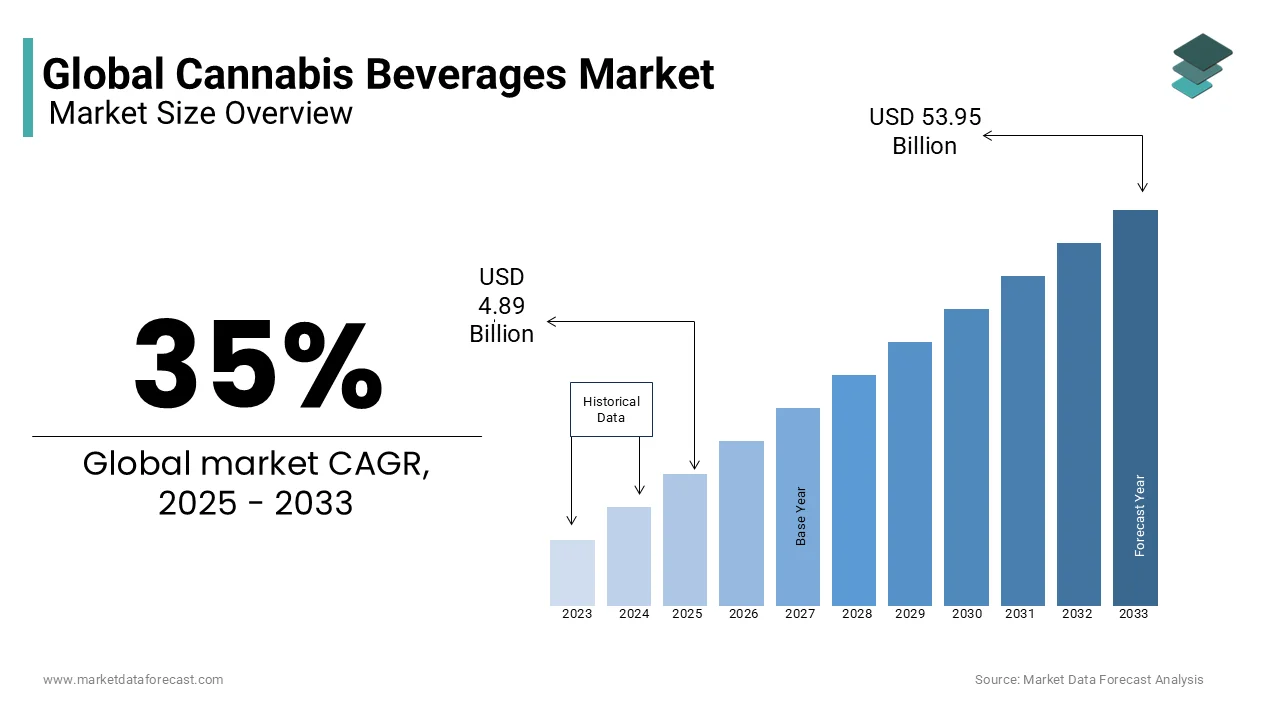
The global cannabis beverages market was valued at USD 4.89 billion in 2025, is estimated to reach USD 6.61 billion in 2026, and is projected to reach USD 73.79 billion by 2034, growing at a CAGR of 35.2% during the forecast period. Market growth is driven by expanding legalization of cannabis in several regions, increasing consumer demand for alternative beverage formats, and rising interest in functional and wellness oriented drinks. Cannabis infused beverages are gaining traction due to their convenience, controlled dosage, and appeal as a substitute for traditional alcoholic drinks. The rapid expansion of product innovation, flavor development, and branding strategies is further accelerating market growth globally.
Key Market Trends
- Increasing legalization of cannabis is driving market growth.
- Rising demand for alternative and functional beverages is boosting adoption.
- Growing consumer preference for non alcoholic cannabis drinks is supporting market expansion.
- Expansion of specialty retail channels is improving product accessibility.
- Innovation in flavors, formulations, and branding is enhancing consumer appeal.
Segmental Insights
- Based on type, the non alcoholic segment held a dominant share of the global cannabis beverages market in 2025. This dominance is attributed to growing demand for healthier beverage alternatives and wider consumer acceptance.
- Based on distribution channel, the specialty stores segment accounted for a dominant share of the global cannabis beverages market in 2025. The segment’s growth is driven by regulatory requirements and controlled distribution environments for cannabis products.
Regional Insights
- The global cannabis beverages market is experiencing rapid growth across regions, supported by regulatory developments and evolving consumer preferences.
- North America was the largest contributor, accounting for 85.3% of the global cannabis beverages market share in 2025, driven by legalization, strong consumer demand, and presence of major industry players.
Competitive Landscape
The global cannabis beverages market is highly competitive, with key players focusing on product innovation, strategic partnerships, and expansion of distribution networks to strengthen their market position. Companies are investing in new product launches, advanced infusion technologies, and brand development. Prominent players in the global cannabis beverages market include New Age Beverages Corporation, The Alkaline Water Company, Phivida Holdings Inc, Koios Beverage Corporation, VCC Brand, Dixie Brands Inc, Keef Brand, Hexo Corp, Aphria, and Canopy Growth.
Global Cannabis Beverages Market Size
The global cannabis beverages market size was valued at USD 4.89 billion in 2025, and the global market size is expected to be worth USD 6.61 billion in 2026 and USD 73.79 billion by 2034, growing at a CAGR of 35.2% during the forecast period.
The cannabis beverages are the infusion of cannabinoids, such as tetrahydrocannabinol and cannabidiol into non-alcoholic drink formats. These products include sparkling waters teas coffees and juices designed to offer consumers an alternative method of cannabinoid consumption that avoids the health risks associated with smoking or vaping. As per the National Institute on Drug Abuse, approximately 48.2 million people in the United States used cannabis in 2019 indicating a substantial base of potential consumers transitioning to beverage formats. Regulatory frameworks are increasingly accommodating this shift with numerous jurisdictions legalizing adult use or medical cannabis which facilitates product development and retail distribution. According to the World Health Organization, there is growing global recognition of the therapeutic potential of cannabidiol for conditions such as anxiety and chronic pain which supports the medicinal positioning of these beverages. The technological advancement in nano emulsion has resolved historical issues regarding bioavailability and onset time allowing for faster absorption comparable to alcohol. This innovation enhances the user experience by providing predictable dosing and quicker effects. The integration of cannabis beverages into mainstream retail channels such as grocery stores and convenience outlets further normalizes their consumption.
MARKET DRIVERS
Shift Toward Health Conscious Consumption and Alcohol Substitution
The growing consumer preference for healthier lifestyle choices and the desire to reduce alcohol consumption is solely a major attribute propelling the growth of cannabis beverages market. Modern consumers are increasingly aware of the negative health impacts associated with excessive alcohol intake such as liver damage and increased cancer risk. As per the Centers for Disease Control and Prevention, excessive alcohol use leads to approximately 95000 deaths annually in the United States prompting many individuals to seek safer alternatives. Cannabis beverages offer a socially acceptable way to unwind without the hangover or long term health detriments of alcohol. The trend known as sober curious or mindful drinking has gained significant traction, particularly among millennials and Generation Z, who prioritize mental and physical well-being. According to research, sales of non-alcoholic beverages, including those infused with cannabinoids have grown by double digits in recent years as retailers expand their offerings to meet this demand. The ability of cannabis beverages to provide relaxation and stress relief aligns with the self care movement that emphasizes mental health management. Tetrahydrocannabinol infused drinks allow users to achieve a mild euphoric state that mimics the social lubrication of alcohol but with greater control over dosage. The lower calorie content of most cannabis beverages compared to beer or cocktails also appeals to fitness oriented consumers.
Technological Advancements in Nano Emulsion and Bioavailability
The technological innovations in nano emulsion have significantly enhanced the appeal and efficacy of cannabis beverages by improving the bioavailability and onset time of cannabinoids. This factor is additionally elevating the growth of cannabis beverages market. Historically, one of the major drawbacks of edible cannabis products was the delayed onset of effects, which could take up to two hours due to digestion and first pass metabolism in the liver. This unpredictability discouraged many consumers, who preferred the immediate feedback loop provided by smoking or drinking alcohol. Nano emulsion technology breaks down cannabis oil into microscopic particles that are water soluble allowing for faster absorption through the stomach lining and into the bloodstream. As per the Journal of Controlled Release, studies have shown that nano emulsified cannabinoids can achieve onset times of 15 to 30 minutes, which is comparable to alcohol consumption. This rapid onset allows users to titrate their dosage more effectively reducing the risk of overconsumption and adverse experiences. The technology also improves the stability of cannabinoids in liquid formulations preventing separation and ensuring consistent dosing throughout the shelf life of the product. Brands that utilize advanced emulsion techniques can create clearer and better tasting drinks without the oily texture associated with traditional infusions. This sensory improvement is crucial for attracting mainstream consumers who may be hesitant to try cannabis products due to stigma or past negative experiences. The ability to produce consistent and reliable products builds consumer trust and encourages repeat purchases.
MARKET RESTRAINTS
Regulatory Fragmentation and Compliance Complexities
The lack of harmonized regulatory frameworks across different jurisdictions is restraining the growth of the cannabis beverages market. In countries like the United States, cannabis laws vary significantly from state to state with some allowing recreational use others only medical use and many prohibiting it entirely. This fragmentation creates substantial challenges for manufacturers, who must navigate a complex web of licensing packaging labeling and testing requirements for each market they enter. As per the National Conference of State Legislatures, over 30 states have legalized cannabis in some form but the specific regulations regarding infused beverages differ widely in terms of potency limits and child resistant packaging standards. These inconsistencies increase operational costs and limit the ability of brands to achieve economies of scale. In international markets the classification of cannabis as a controlled substance under United Nations conventions restricts cross border trade and investment. The uncertainty surrounding federal legalization in key markets discourages large institutional investors and mainstream retailers from fully committing to the category. Banking restrictions also complicate financial operations for cannabis businesses forcing them to operate largely in cash which increases security risks and administrative burdens. As per the Small Business Administration, many cannabis companies struggle to access traditional banking services due to federal prohibitions. These regulatory hurdles slow down product innovation and market penetration creating an uneven playing field that favors larger players with significant legal resources.
Social Stigma and Perception Issues Among Mainstream Consumers
The social stigma surrounding cannabis use among mainstream consumers is stringent factor hindering the growth of cannabis beverages market. Many individuals particularly older people and those in conservative communities still associate cannabis with illicit drug use and negative behavioral stereotypes. This perception can deter potential customers, who fear judgment from peers or employers if they are seen purchasing or consuming cannabis products. As per the study, while support for legalization has grown to 60% in the United States a significant portion of the population still views cannabis use as morally unacceptable or unsafe. The association of cannabis with smoking and counterculture movements persists in the public consciousness making it difficult for beverage brands to position themselves as premium wellness products. Retail placement also plays a role as cannabis beverages are often sold in specialized dispensaries rather than mainstream grocery stores which reinforces their niche status. The lack of standardized education about the effects and benefits of cannabinoids further perpetuates misconceptions. Many consumers are unaware of the differences between tetrahydrocannabinol and cannabidiol or the controlled nature of beverage dosing compared to smoking. This knowledge gap leads to apprehension and reluctance to experiment with new products. Brands must invest heavily in marketing and education to destigmatize cannabis and reframe it as a legitimate component of a healthy lifestyle.
MARKET OPPORTUNITIES
Expansion into Mainstream Retail and Hospitality Channels
The gradual integration of cannabis beverages into mainstream retail and hospitality is creating new opportunities for the growth of cannabis beverages market. As regulatory environments evolve, more jurisdictions are allowing the sale of cannabis products in conventional settings, such as grocery stores, liquor stores, and restaurants. This shift removes the barrier of visiting specialized dispensaries which can be intimidating for new consumers. Partnerships with established beverage distributors and retailers provide cannabis brands with the infrastructure needed to scale operations efficiently. The hospitality industry is also exploring the inclusion of cannabis infused drinks in menus offering patrons a sophisticated alternative to alcohol. According to the National Restaurant Association, a growing number of chefs and bartenders are experimenting with cannabis pairings to enhance dining experiences. This culinary integration helps elevate the perception of cannabis beverages from novelty items to gourmet offerings. The ability to consume these products in social settings such as bars and lounges where alcohol is traditionally consumed fosters a sense of normalcy and community. The development of non-psychoactive cannabidiol beverages also allows for broader distribution in regions where tetrahydrocannabinol remains restricted. These avenues provide platforms for brand building and consumer education which are essential for long term market sustainability.
Innovation in Functional Ingredients and Wellness Positioning
The opportunity to combine cannabinoids with other functional ingredients, such as adaptogens, nootropics, and vitamins, allows brands to create highly targeted wellness products. The innovation in functional ingredients and wellness positioning is another attribute to fuel the growth of cannabis beverages market. Consumers are increasingly seeking beverages that offer specific health benefits beyond hydration such as stress relief improved sleep or enhanced focus. Cannabis beverages positioned as sleep aids or anxiety reducers can tap into this lucrative market by offering natural solutions to common health concerns. The synergy between cannabinoids and other botanicals can enhance therapeutic effects through the entourage effect where multiple compounds work together to produce a greater benefit. Brands that emphasize transparency and scientific backing for their formulations can build trust and loyalty among health conscious buyers. The customization of dosage levels allows users to tailor their experience to their specific tolerance and desired outcome. This personalization aligns with the broader trend toward precision nutrition and individualized health strategies. These innovations provide avenues for premium pricing and brand differentiation. The ability to position cannabis beverages as part of a holistic wellness routine expands their appeal beyond recreational users to health focused demographics.
MARKET CHALLENGES
Inconsistency in Product Potency and Quality Control
Ensuring consistent potency and quality across batches due to the inherent variability of plant based ingredients is one of the major challenges for the growth of cannabis beverages market. Unlike synthetic additives, cannabinoids are natural compounds whose concentration can fluctuate based on growing conditions extraction methods and formulation processes. This inconsistency can lead to products that do not deliver the promised effects causing consumer dissatisfaction and potential safety issues. For beverages, where precise dosing is for user experience even minor deviations can result in under or over consumption. The lack of standardized testing protocols across different jurisdictions further complicates quality assurance efforts. According to the American Herbal Products Association, variations in analytical methods can yield different results for the same sample making it difficult to establish universal quality benchmarks. Manufacturers must invest in rigorous quality control measures and third-party testing to verify potency and purity, which increases production costs. The instability of cannabinoids in liquid environments also poses technical challenges as exposure to light heat and oxygen can degrade active ingredients over time. This degradation affects both efficacy and shelf life requiring advanced packaging solutions, such as opaque bottles and nitrogen flushing. Failure to maintain consistency can damage brand reputation and erode consumer trust which is vital for a nascent industry.
High Production Costs and Pricing Barriers
The high cost of production associated with cannabis beverages that limit their accessibility to consumers is also to impede the growth of cannabis beverages market. Extracting and purifying cannabinoids requires specialized equipment and expertise which drives up initial manufacturing expenses. Additionally, the compliance costs related to regulatory testing packaging and security further inflate the final retail price. As per the Cannabis Business Times the average price of a cannabis infused beverage is significantly higher than comparable non-alcoholic or alcoholic drinks making it a premium product accessible mainly to affluent consumers. This price disparity hinders widespread adoption and limits the frequency of purchase among regular users. The taxation structure in many jurisdictions also adds to the cost burden with excise taxes on cannabis products often exceeding those on alcohol or tobacco. Economies of scale are difficult to achieve in a fragmented market where production volumes are relatively low compared to established beverage categories. The need for child resistant packaging and specific labeling requirements also adds to material costs. As per McKinsey analysis indicates that until production efficiencies improve and regulatory burdens decrease cannabis beverages will remain a niche luxury item. High prices also discourage retailers from allocating significant shelf space to these products as turnover rates may be slower. Reducing production costs through technological advancements and streamlined regulations is crucial for making cannabis beverages competitive in the broader beverage landscape.
REPORT COVERAGE
| REPORT METRIC | DETAILS |
| Market Size Available | 2025 to 2034 |
| Base Year | 2025 |
| Forecast Period | 2026 to 2034 |
| CAGR | 35.2% |
| Segments Covered | By Type, Distribution Channel, and Region |
| Various Analyses Covered | Global, Regional & Country Level Analysis, Segment-Level Analysis, DROC, PESTLE Analysis, Porter’s Five Forces Analysis, Competitive Landscape, Analyst Overview on Investment Opportunities |
| Regions Covered | North America, Europe, APAC, Latin America, Middle East & Africa |
| Market Leaders Profiled | The Alkaline Water Company, Phivida Holdings Inc.,oios Beverage Corporation,VCC Brand,Dixie Brands Inc.,Keef Brand,Hexo Corp,Aphria,Canopy Growth |
SEGMENTAL ANALYSIS
By Type Insights
The non-alcoholic segment was the largest by holding a dominant share of the cannabis beverages market in 2025. The growth of the segment is majorly driven with the alignment of health and wellness trends and broader legal accessibility. The growing consumer preference for functional beverages that offer therapeutic benefits without the intoxicating effects or health risks associated with alcohol. Non-alcoholic cannabis beverages often feature cannabidiol, which is perceived as a natural remedy for anxiety stress and insomnia. According to the World Health Organization, cannabidiol has been recognized for its potential therapeutic applications which encourages consumers to incorporate it into their daily routines for general well being. The absence of alcohol makes these beverages suitable for consumption during work hours or social events where sobriety is preferred. The second driver is the regulatory landscape which is more lenient toward hemp derived cannabidiol products compared to tetrahydrocannabinol infused alcoholic beverages. In many jurisdictions hemp derived products containing less than 0.3% tetrahydrocannabinol are legal at the federal level allowing for wider distribution. This legal clarity enables manufacturers to market their products in mainstream retail channels such as grocery stores and convenience outlets. The lower barrier to entry for consumers who are curious about cannabis but hesitant to consume psychoactive substances further boosts demand.
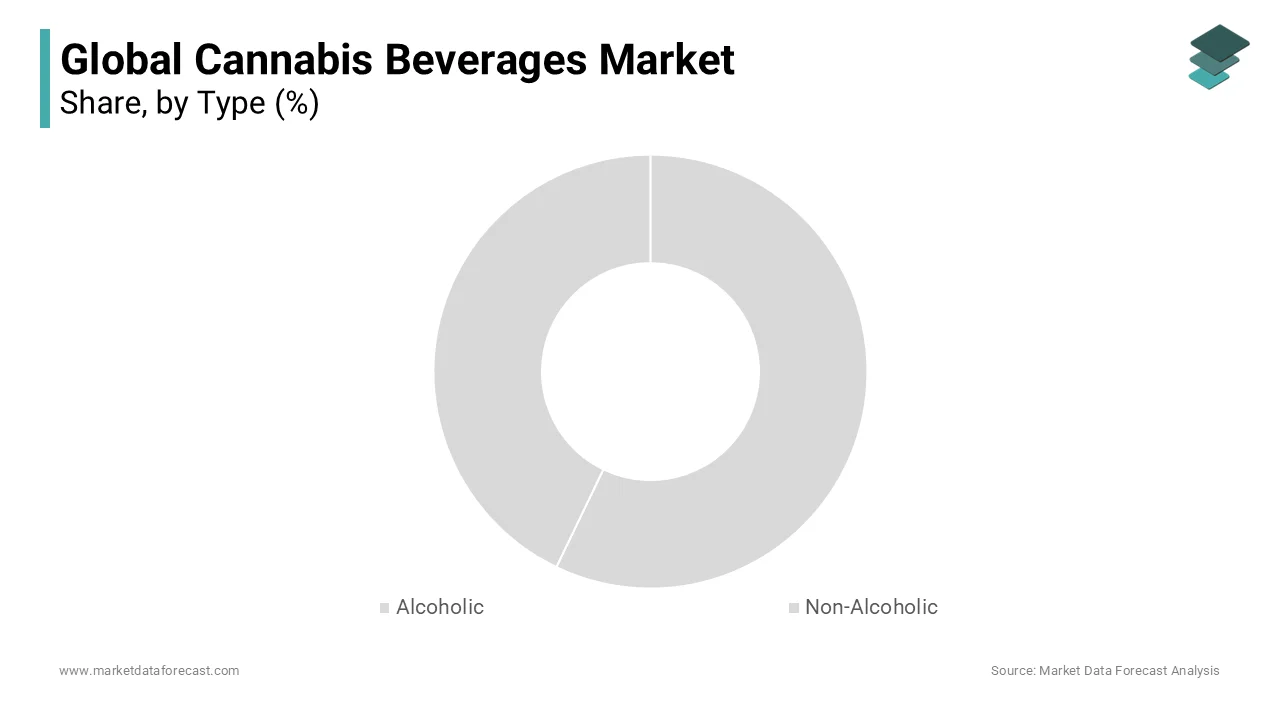
The alcoholic cannabis beverages segment is likely to register a fastest CAGR of 28.5% from 2026 to 2034 with the novelty factor and the desire for enhanced social experiences among adult consumers. The emergence of cannabis infused beers wines and spirits, as premium alternatives to traditional alcoholic drinks in regions, where recreational use is legal. As per the National Alcohol Beverage Control Association, several states in the US have begun to allow the sale of cannabis infused alcoholic beverages in licensed dispensaries creating a new category of adult beverages. These products offer a unique combination of relaxation from alcohol and euphoria from tetrahydrocannabinol appealing to experienced users seeking novel sensations. The innovation in formulation technology that allows for the stable integration of cannabinoids into alcoholic bases without compromising taste or potency is also boosting the growth of segment. According to the Brewers Association, craft breweries are increasingly experimenting with cannabis infusions to differentiate their products in a saturated market. The social aspect of consuming these beverages in private settings or designated lounges fosters a sense of community and exclusivity. The higher price point of these premium products also contributes to revenue growth despite lower volume compared to non-alcoholic options.
By Distribution Channel Insights
The specialty stores segment was accounted in holding a dominant share of the cannabis beverages market in 2025 due to their expertise and regulatory compliance. The requirement in many jurisdictions for cannabis products to be sold only in licensed facilities ensuring age verification and product safety. The restriction consolidates sales within specialty channels, where staff are trained to educate consumers on dosage effects and product selection. The trust and credibility associated with specialty stores, which often provide detailed information about product sourcing testing and potency. According to the study, consumers prefer purchasing from dispensaries because they offer a curated selection of high quality brands that have undergone rigorous third party testing. The personalized service provided by budtenders helps novice users navigate the complex array of options reducing the risk of negative experiences. Specialty stores also serve as hubs for brand launches and promotions allowing manufacturers to engage directly with their target audience. As per Brightfield Group dispensary sales remain the primary revenue stream for cannabis companies due to the limited availability of other retail channels for psychoactive products.
The online retail segment is expected to grow at a fastest CAGR of 25.3% from 2026 to 2034 with the convenience discretion and the expansion of e-commerce platforms for legal cannabis products. The increasing adoption of digital shopping habits among consumers, who value the ease of browsing and comparing products from home. As per study, e-commerce sales in the United States have grown steadily with specialized cannabis delivery services gaining popularity in legal states. Online platforms allow consumers to access a wider variety of brands and formulations than may be available in local physical stores. The discretion offered by online purchasing, which appeals to consumers, who prefer to keep their cannabis use private. According to McKinsey, digital channels are becoming increasingly important for cannabis brands to build direct relationships with customers through subscription models and loyalty programs. The integration of secure payment gateways and age verification technologies has enhanced the safety and reliability of online transactions. Delivery services partnered with licensed dispensaries enable rapid fulfillment often within hours which meets the immediate needs of consumers.
REGIONAL ANALYSIS
North America Cannabis Beverages Market Analysis
North America was the top performer in the global Cannabis Beverages Market by accounting for 85.3% of the share in 2025 with the progressive legalization policies and high consumer acceptance. The United States and Canada are the key contributors in this region with well-established regulatory frameworks for both medical and recreational cannabis. As per the study, public support for cannabis legalization in the US has reached historic highs facilitating expansion. The extensive network of licensed dispensaries and retail outlets in states like California, Colorado, and Washington, which provide easy access to cannabis beverages. According to the study, sales of infused beverages have grown significantly as manufacturers innovate with new flavors and formulations. The strong presence of major beverage companies entering through partnerships and acquisitions is also boosting the growth of cannabis beverages market. As per the Beverage Marketing Corporation, traditional beverage giants are investing in cannabis startups to leverage their distribution networks and marketing expertise. The high disposable income of consumers in North America also supports the purchase of premium priced cannabis beverages. The cultural shift toward wellness and moderation further boosts demand for non-alcoholic options.
Europe Cannabis Beverages Market Analysis
Europe cannabis beverages market growth is likely to grow with the fragmented regulatory landscape and growing interest in medical cannabis. Countries, such as Germany, the Netherlands, and Switzerland are leading the way in legalizing and regulating cannabis products. As per the European Monitoring Centre for Drugs and Drug Addiction, several European countries have decriminalized or legalized medical cannabis creating opportunities for beverage manufacturers. The first major driver is the increasing acceptance of cannabidiol as a wellness supplement in Western European countries. The tourism industry in countries like the Netherlands, where cannabis cafes attract visitors from around the world boosting local sales. The European Union’s novel food regulations are evolving to provide clearer guidelines for cannabidiol products, which may facilitate broader distribution. The presence of established herbal medicine traditions in countries like Germany supports the integration of cannabis into health focused beverages.
Asia Pacific Cannabis Beverages Market Analysis
Asia Pacific cannabis beverages market growth is expected to have fastest growth opportunities in coming years with the traditional uses and gradual regulatory changes. Countries, such as Thailand, Australia, and New Zealand are at the forefront of legalization efforts in the region. As per the United Nations Office on Drugs and Crime Thailand became the first Asian country to decriminalize cannabis sparking interest in commercial products including beverages. According to the Thai Ministry of Public Health the government has promoted cannabis as a cash crop encouraging local businesses to develop infused products. The growing wellness tourism industry in countries like Australia, and New Zealand, where visitors seek holistic health experiences. As per the Australian Government Department of Health, medical cannabis prescriptions have increased indicating rising awareness and acceptance. The large population in countries like China and India offers a vast potential if regulations evolve. However, strict prohibitions in many Asian countries remain a significant barrier. The region’s strong agricultural sector provides ample raw materials for production.
Latin America Cannabis Beverages Market Analysis
Latin America cannabis beverages market growth is driven by the agricultural advantages and evolving legal frameworks. Countries, such as Uruguay, Mexico, and Colombia are leading the region in cannabis legalization and production. As per the Organization of American States, several Latin American countries are reforming drug policies to focus on public health rather than prohibition. The first major driver is the favorable climate for cannabis cultivation which reduces production costs and ensures high quality raw materials. The medical cannabis as governments expand access to treatment options is significantly propelling the growth of the market in this country. As per the Pan American Health Organization, the prevalence of chronic pain and anxiety in the region creates demand for therapeutic alternatives. Uruguay’s pioneering role in legalizing recreational cannabis provides a model for other countries in the region. The potential for export to North America and Europe attracts foreign investment in processing facilities.
Middle East and Africa Cannabis Beverages Market Analysis
The Middle East and Africa cannabis beverages market growth is driven with the strict prohibitions and cultural stigma. However, South Africa and Israel are emerging as exceptions with more progressive approaches to medical cannabis. The Israel’s advanced research in medical cannabis, which positions it as a global leader in innovation. The traditional use of cannabis in some African cultures provides a historical context but legal barriers remain high. The lack of infrastructure and investment limits local production capabilities. Religious and cultural norms in the Middle East strongly oppose cannabis use restricting potential.
COMPETITIVE LANDSCAPE
The Cannabis Beverages Market features intense competition among established beverage giants emerging cannabis startups and specialized infusion companies. Major players compete on the basis of product quality brand recognition distribution reach and technological innovation. The market is characterized by rapid product launches and frequent collaborations between cannabis producers and traditional beverage manufacturers. Companies strive to differentiate themselves through unique flavor profiles functional ingredients and precise dosing mechanisms. Regulatory compliance serves as a significant barrier to entry favoring larger firms with resources to navigate complex legal landscapes. Price competition is moderate as consumers often prioritize quality and consistency over cost. Brand loyalty is still developing as many consumers experiment with various options to find their preferred effects. The fragmentation of legal markets in the United States creates regional competitors who dominate local areas but lack national scale. International expansion is limited by varying global laws forcing companies to focus on domestic growth. Innovation in delivery systems and packaging design remains a key competitive advantage.
KEY MARKET PLAYERS
Some of the notable companies in the global cannabis beverages market are
- New Age Beverages Corporation
- The Alkaline Water Company
- Phivida Holdings Inc.
- Koios Beverage Corporation
- VCC Brand
- Dixie Brands Inc.
- Keef Brand
- Hexo Corp
- Aphria
- Canopy Growth
Top Players in the Market
- Canopy Growth Corporation is a leading global cannabis company with a significant presence in the United States through its strategic investments and partnerships. The company focuses on developing premium cannabis beverages under brands like Tweed and Quatreau to cater to health conscious consumers. Recently Canopy expanded its production capabilities in New York to enhance supply chain efficiency and product availability across key states. The company invests heavily in research and development to improve nano emulsion technology ensuring faster onset times and consistent dosing. These initiatives strengthen its market position by offering superior product quality and reliability. Canory also collaborates with major retail partners to increase distribution reach in legal markets. Its commitment to innovation and brand building helps it maintain a competitive edge in the evolving beverage landscape.
- Constellation Brands Inc is a major beverage alcohol company that has made substantial investments in the cannabis sector particularly through its stake in Canopy Growth. The company leverages its extensive distribution network and marketing expertise to introduce cannabis infused beverages to mainstream audiences. Recently, Constellation launched new ready to drink cannabis beverages in select US markets focusing on social consumption occasions. The company utilizes its experience in the beer and wine industries to create appealing flavors and packaging designs. These efforts enhance consumer acceptance and drive trial among adult users. Constellation also explores opportunities in non-alcoholic cannabinoid drinks to diversify its portfolio. Its strategic approach combines regulatory compliance with aggressive market penetration tactics.
- Molson Coors Beverage Company enters the cannabis beverages market through its joint venture with Hexo Corp known as Truss Beverage Co. The company aims to produce high quality cannabis infused drinks that appeal to traditional beer drinkers seeking alternatives. Recently Molson Coors focused on optimizing its product lineup to include lower dose options suitable for casual consumption. The company leverages its brewing expertise to ensure consistent taste and quality in its cannabis offerings. These actions strengthen its position by providing familiar and reliable products to consumers. Molson Coors also invests in educational campaigns to inform customers about responsible consumption and dosage. Its strong retail relationships facilitate broader distribution in licensed dispensaries.
Top Strategies Used by Key Market Participants
Key players in the Cannabis Beverages Market primarily focus on product innovation and technological advancement to enhance bioavailability and onset speed. Companies invest in nano emulsion technologies to ensure rapid absorption and consistent dosing which addresses consumer concerns about unpredictability. Strategic partnerships with established beverage distributors help brands access wider retail networks and gain credibility among mainstream consumers. Marketing efforts emphasize wellness benefits and lifestyle alignment rather than intoxication to reduce stigma and attract health conscious demographics. Expansion into non psychoactive cannabidiol segments allows companies to operate in regions with stricter tetrahydrocannabinol regulations. Brands also prioritize sustainable sourcing and eco friendly packaging to appeal to environmentally aware buyers. Educational initiatives are crucial for informing consumers about safe usage and legal compliance.
MARKET SEGMENTATION
This research report on the global cannabis beverages market has been segmented and sub-segmented based on type, distribution channel, and region.
By Type
- Alcoholic
- Non-Alcoholic
By Distribution channel
- Specialty stores
- Mass merchandisers
- Online retail
- Others
By Region
- North America
- Europe
- Asia Pacific
- Latin America
- Middle East and Africa