- Product Description Description
- Table of Contents TOC
- List of Table & Figure LOT
- Get Free Sample PDF Sample PDF
Market Size, 2025
$2.5 BnMarket Estimate, 2026
$2.76 BnMarket Forecast, 2034
$6.09 BnCAGR, 2026–2034
10.4%Global Competent Cells Market Size, Growth, Trends & Forecast (2026–2034)
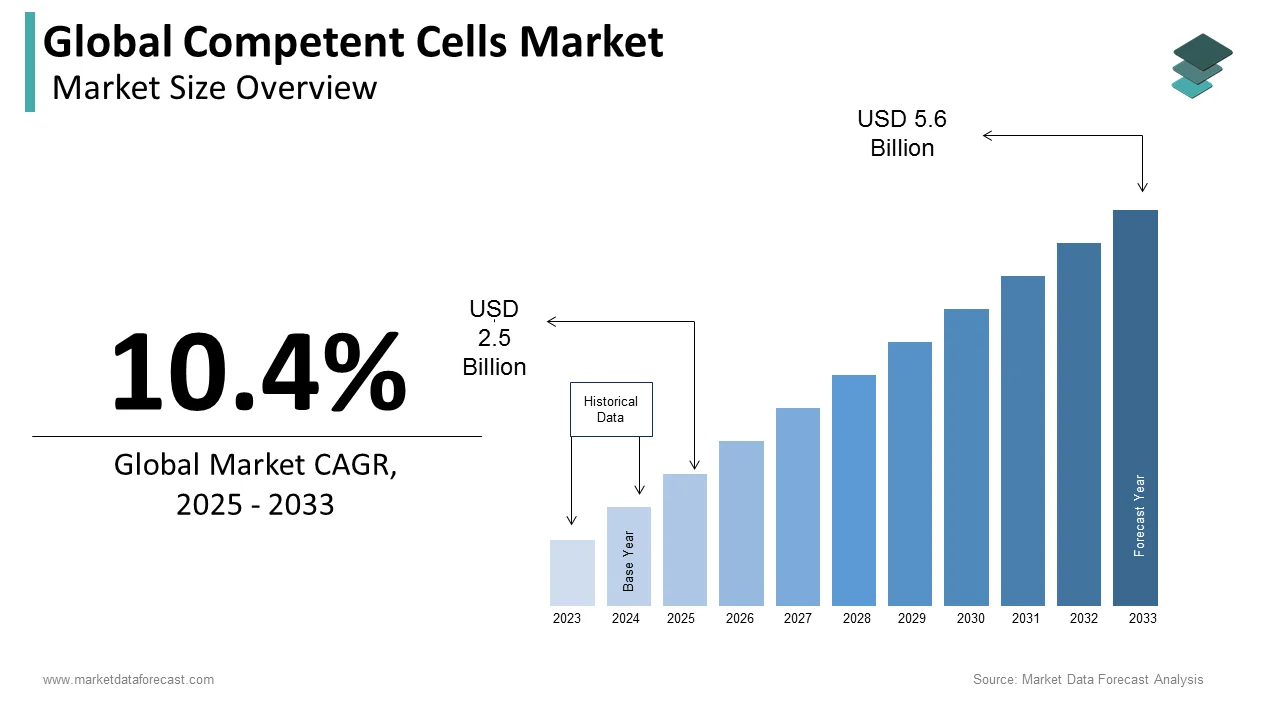
The global competent cells market size was valued at USD 2.50 billion in 2025, is estimated at USD 2.76 billion in 2026, and is anticipated to reach USD 6.09 billion by 2034, expanding at a compound annual growth rate (CAGR) of 10.4% during the forecast period from 2026 to 2034. Market expansion is primarily propelled by the surge in genomic research and personalized medicine initiatives, the robust expansion of biopharmaceutical production, technological developments in ultra-high efficiency strains, and the integration of automated liquid handling systems.
Key Executive Metrics (At-a-Glance)
- 2025 Base Valuation: USD 2.50 Billion
- 2026 Current Valuation: USD 2.76 Billion
- 2034 Forecast Valuation: USD 6.09 Billion
- Compound Annual Growth Rate (CAGR): 10.4% (2026–2034)
- Key Geographic Footprint: North America, Europe, Asia Pacific, Latin America, and Middle East & Africa
Global Competent Cells Market Segmentation Breakdown
| Segment Category | Leading / Dominant Segment | Fastest-Growing Segment |
|---|---|---|
| By Type | Chemically Competent Cells (48.6% share in 2025) | Electrocompetent Cells (CAGR of 8.5%) |
| By Application | Cloning, Subcloning & Routine Cloning (34.2% share in 2025) | Lentiviral Vector Production (CAGR of 11.2%) |
| By End User | Pharmaceutical Companies (52.1% share in 2025) | Academia (CAGR of 7.8%) |
| By Region | North America (40.3% share in 2025) | Asia-Pacific |
Major Industry Players Profiled
Key market participants shaping the global competent cells landscape include Thermo Fisher Scientific, Inc. (U.S.), Merck KGaA (Germany), New England Biolabs Inc. (U.S.), QIAGEN N.V. (Germany), Promega Corporation (U.S.), Zymo Research (U.S.), OriGene Technologies (U.S.), Bioline (U.K.), GCC Biotech (India), and BioDynamics Laboratory, Inc. (Japan).
 Download Free Sample Report
Global Competent Cells Market Size
The global competent cells market was valued at USD 2.50 billion in 2025. The market is estimated to reach USD 2.76 billion in 2026 and is projected to grow to USD 6.09 billion by 2034, registering a CAGR of 10.4% from 2026 to 2034.
The competent cells are specialized bacterial strains that have been treated to increase the permeability of their cell walls, allowing for the efficient uptake of exogenous DNA during molecular cloning procedures. These biological tools are fundamental to genetic engineering, recombinant protein production, and synthetic biology applications across academic research institutions, pharmaceutical companies, and biotechnology firms globally. As per the National Institutes of Health, over 80% of modern biomedical research projects involve some form of recombinant DNA technology, creating a consistent baseline demand for high-efficiency transformation reagents. The market is characterized by a shift towards ready-to-use chemically competent cells, which offer convenience and reproducibility compared to traditional laboratory preparation methods. Regulatory frameworks such as those enforced by the Food and Drug Administration require rigorous quality control and documentation for cells used in therapeutic development, driving the adoption of certified commercial products. The increasing complexity of gene editing techniques, including CRISPR Cas9 systems, further necessitates high-performance competent cells capable of handling large plasmids and complex constructs. Furthermore, the expansion of contract research organizations provides additional avenues for market growth as these entities rely heavily on standardized, reliable reagents to meet client deadlines.
MARKET DRIVERS
Surge In Genomic Research And Personalized Medicine Initiatives Drives Demand
The exponential growth in genomic research and the widespread adoption of personalized medicine protocols is greatly influencing the growth of the competent cells market. Scientists increasingly rely on efficient cloning vectors to construct libraries for next-generation sequencing and functional genomics studies. According to the study, the number of sequenced human genomes has surpassed 1 million globally, generating massive datasets that require validation through recombinant expression systems. This validation process often involves inserting specific gene variants into bacterial hosts using competent cells to produce sufficient quantities of proteins for analysis. The rise of cancer immunotherapy also contributes to this trend as researchers engineer chimeric antigen receptor T cells, which require precise genetic modifications validated through bacterial cloning steps. Academic institutions are expanding their core facilities to support these advanced techniques, leading to higher procurement volumes of specialized competent cells such as those deficient in restriction enzymes or methylases. Furthermore, the decreasing cost of DNA synthesis has lowered barriers to entry for small laboratories, increasing the overall user base.
Expansion Of Biopharmaceutical Production And Recombinant Protein Therapeutics
The robust expansion of the biopharmaceutical sector, particularly in the production of recombinant proteins and monoclonal antibodies, significantly propels the growth of the competent cells market. These cells are indispensable for the initial stages of drug development, where candidate genes are cloned into expression vectors before being transferred to mammalian or yeast systems for large-scale production. As per the study, investment in biomanufacturing capacity has reached record levels, with new facilities requiring validated supply chains for important reagents, including competent cells. The shift towards biosimilars further amplifies this demand as manufacturers seek to replicate existing biologic drugs requiring precise genetic reconstruction. High-efficiency competent cells reduce the time and cost associated with library construction and clone selection, accelerating the drug discovery timeline. Additionally, regulatory agencies mandate strict traceability and quality assurance for all materials used in Good Manufacturing Practice-compliant processes, favoring commercial suppliers over in-house preparations. As per the World Health Organization, the market for insulin and other peptide hormones continues to grow in developing nations, driving local production efforts that rely on robust bacterial transformation systems.
MARKET RESTRAINTS
Stringent Regulatory Compliance and Quality Control Requirements Restrain Small Players
The strict regulatory compliance and rigorous quality control standards for smaller manufacturers and academic suppliers are hindering the growth of the competent cells market. Regulatory bodies such as the Food and Drug Administration and the European Medicines Agency require comprehensive documentation regarding the genetic stability, purity, and absence of contaminants in cells used for therapeutic development. Achieving ISO 13485 certification for medical device-related biological materials involves substantial financial investment and ongoing audit costs that small enterprises often cannot afford. These requirements limit the ability of niche players to compete with established multinational corporations that have dedicated regulatory affairs departments. Furthermore, any deviation in quality can lead to costly recalls and reputational damage, discouraging risk-averse pharmaceutical clients from sourcing from unproven vendors. The need for batch-to-batch consistency is particularly challenging for biological products where natural variability exists. Testing protocols for endotoxin levels and transformation efficiency must be strictly adhered to, requiring specialized equipment and trained personnel. This regulatory burden consolidates the market around a few major players who can absorb these costs effectively, leaving little room for innovation from smaller entities that might otherwise offer unique or specialized strains.
High Cost of Specialized Strains and Limited Budgets in Academic Institutions
The high cost of specialized competent cells combined with limited research budgets in academic and public sector institutions is another factor impeding the growth of the competent cells market. Premium strains engineered for specific applications such as high copy number plasmid propagation or toxic protein expression command significantly higher prices than standard laboratory strains. This financial pressure leads many researchers to revert to preparing competent cells in-house despite the lower efficiency and reproducibility compared to commercial products. The economic disparity between well-funded private industry labs and underfunded academic centers creates a segmented market where premium products are inaccessible to a large portion of potential users. Additionally, the short shelf life of frozen competent cells necessitates careful inventory management to avoid waste, which is difficult for labs with irregular usage patterns. As per the Journal of Laboratory Automation, the failure rate of in-house prepared cells can reach 30%, leading to repeated experiments and increased overall costs yet the upfront savings remain attractive to cash-strapped teams. This dynamic limits the total addressable market for high-end commercial competent cells and encourages vendors to focus primarily on lucrative industrial clients rather than the broader academic community.
MARKET OPPORTUNITIES
Development Of Ultra High Efficiency And Specialty Strains Creates Growth Avenues
The development of ultra-high efficiency and specialty competent cells tailored for challenging cloning applications is to act as a major factor to promote new opportunities for the growth of the competent cells market. Traditional strains often struggle with large plasmids, unstable sequences, or toxic genes, creating a need for advanced solutions. According to the study, recent advancements in strain engineering have produced competent cells with transformation efficiencies exceeding 10 billion colony-forming units per microgram of DNA, enabling the cloning of complex genomic libraries. Manufacturers are introducing strains with specific genotypes such as recA minus to prevent recombination or dam minus to allow methylation-sensitive restriction digestion, opening new experimental possibilities. These value-added products command higher margins and foster customer loyalty among researchers working on cutting-edge projects. Furthermore, the integration of fluorescent markers or antibiotic resistance profiles simplifies screening processes, saving time and resources. The launch of proprietary strains with unique features allows companies to bypass price competition and establish strong intellectual property positions. Collaborations with academic pioneers to co-develop new strains also provide early access to emerging trends, ensuring that product pipelines remain relevant.
Integration with Automated Liquid Handling Systems Enhances Throughput
The integration of competent cells with automated liquid handling systems and high-throughput screening platforms is also to boost the growth of the competent cells market. As drug discovery timelines compress, laboratories are increasingly adopting robotics to perform thousands of transformations simultaneously, requiring reagents formatted for machine compatibility. As per major contract research organizations, manual cloning steps account for up to 20% of project delays, prompting a shift towards automated solutions. Manufacturers are responding by offering competent cells in pre-aliquoted plates or tubes designed specifically for robotic pipetting, reducing setup time and minimizing cross-contamination. This format supports miniaturization, allowing reactions to be performed in nanoliter volumes, which reduces reagent consumption and costs. By aligning product designs with automation trends, suppliers can capture a growing segment of the market focused on efficiency and scalability. Additionally, providing software-compatible data sheets and tracking codes facilitates seamless integration into laboratory information management systems.
MARKET CHALLENGES
Maintaining Cold Chain Integrity During Global Distribution Poses Logistical Challenges
Ensuring the maintenance of cold chain integrity during global distribution due to the extreme temperature sensitivity of these biological products is a huge challenge for the growth of the competent cells market. Competent cells must be stored at minus 80 degrees Celsius to preserve viability and transformation efficiency, making them vulnerable to temperature fluctuations during transit. According to the study, approximately 25% of temperature-sensitive pharmaceutical shipments experience deviations that compromise product quality, leading to significant financial losses and wasted resources. As per the World Health Organization, logistics failures in the cold chain are responsible for up to 30% of vaccine spoilage in developing regions, a risk that equally applies to research reagents. Shipping dry ice internationally is regulated as a hazardous material, adding complexity and cost to logistics operations. Remote locations in Africa and parts of Asia often lack reliable infrastructure for immediate storage upon arrival, increasing the risk of thawing. Manufacturers must invest in sophisticated packaging technologies and real-time temperature monitoring devices to mitigate these risks. Failure to maintain the cold chain results in decreased transformation efficiency, leading to failed experiments and loss of customer trust. This logistical burden requires constant vigilance and investment in supply chain resilience, which is particularly challenging for smaller distributors with limited resources.
Risk Of Genetic Contamination And Strain Instability Affects Product Reliability
The risk of genetic contamination and strain instability is also hindering the growth of the competent cells market. Bacterial strains can undergo spontaneous mutations or acquire plasmids from environmental sources if not handled with strict aseptic techniques, compromising their intended genotype. Data from quality control audits by major suppliers reveal that even minor deviations in growth conditions during manufacturing can alter the physiological state of cells, affecting their competence. The presence of cryptic plasmids or phage infections can further destabilize strains, making them unsuitable for sensitive applications such as protein expression. As per the Journal of Clinical Microbiology, the detection of such contaminants often requires advanced sequencing methods, which are not routinely performed by all manufacturers. This lack of uniform testing standards creates variability in product performance across different batches and brands. Researchers may attribute failed experiments to protocol errors rather than reagent quality delaying problem resolution. However, these measures increase production costs and lead times. Balancing the need for absolute purity with commercial viability remains a delicate act for manufacturers striving to maintain trust in an era where reproducibility is under intense scientific scrutiny.
REPORT COVERAGE
| REPORT METRIC | DETAILS |
| Market Size Available | 2025 to 2034 |
| Base Year | 2025 |
| Forecast Period | 2026 to 2034 |
| Segments Covered | By Type, Application, End-User, and Region. |
| Various Analyses Covered | Global, Regional, and Country-Level Analysis, Segment-Level Analysis, Drivers, Restraints, Opportunities, Challenges; PESTLE Analysis; Porter’s Five Forces Analysis, Competitive Landscape, Analyst Overview of Investment Opportunities |
| Regions Covered | North America, Europe, Asia Pacific, Latin America, Middle East & Africa |
| Market Leaders Profiled | BioDynamics Laboratory, Inc. (Japan), GCC Biotech (India), SMOBIO Technology (Taiwan), Thermo Fisher Scientific, Inc. (the U.S), QIAGEN N.V. (Germany), OriGene Technologies (U.S.), Merck KGaA (Germany), Promega Corporation (U.S.), Bioline (U.K.), and Zymo Research (U.S.). |
SEGMENTAL ANALYSIS
By Type Insights
The chemically competent cells segment was accounted in holding 48.6% of the global competent cells market share in 2025 due to their cost-effectiveness, ease of preparation, and suitability for routine cloning applications. These cells are treated with calcium chloride or other chemical agents to facilitate DNA uptake, making them accessible for standard laboratory procedures without requiring specialized equipment. According to the research, over 70% of molecular biology laboratories worldwide utilize chemical transformation methods for daily cloning tasks due to their simplicity and low barrier to entry. The affordability of chemically competent cells makes them the preferred choice for academic institutions and small biotechnology startups operating with limited budgets. Data from the American Society for Biochemistry and Molecular Biology indicates that chemical transformation protocols are taught in nearly all undergraduate biology programs, ensuring a steady stream of trained users who prefer familiar methods. Furthermore, the stability of chemically competent cells during storage and transport is generally higher than their electrocompetent counterparts, reducing logistical complexities. The widespread availability of ready-to-use kits from major suppliers further reinforces their dominance by offering convenience and reproducibility. The sales data for chemical transformation reagents account for the majority of volume sales in the cloning sector, reflecting their entrenched status as the industry standard for general-purpose genetic engineering.
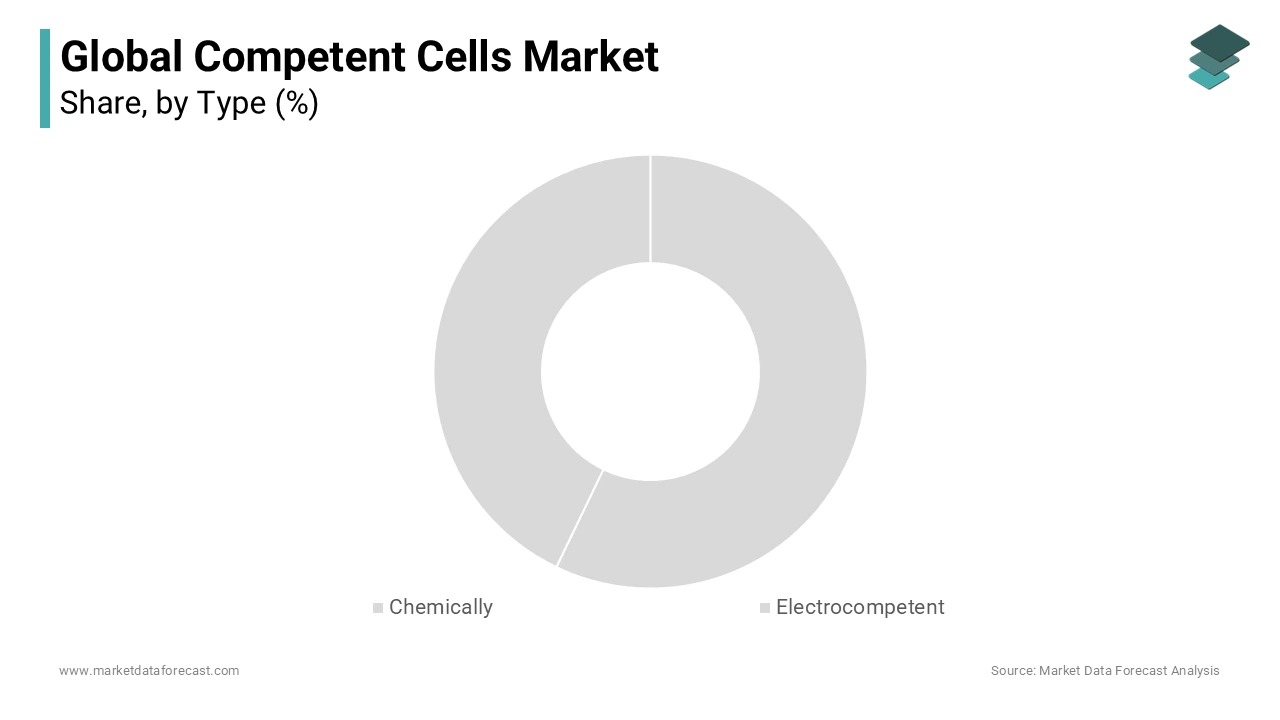
The electrocompetent cells segment is expected to grow at the fastest CAGR of 8.5% from 2026 to 2034 with the increasing demand for high-efficiency transformation in complex genetic engineering projects. These cells are prepared using electroporation, which applies an electric field to create temporary pores in the cell membrane, allowing for the uptake of large plasmids and difficult-to-clone DNA fragments. As per the Synthetic Biology Foundry, the number of projects involving large DNA constructs has increased by 35% annually, necessitating the use of high-efficiency electrocompetent cells. The rise of CRISPR Cas9 gene editing and genome engineering also contributes to this growth as these techniques often require the introduction of multiple genetic elements simultaneously. Furthermore, advancements in electroporation equipment have made the technology more accessible and user-friendly, reducing the technical barriers that previously limited its adoption. Industrial applications such as protein expression and metabolic engineering increasingly rely on electrocompetent cells to maximize yield and reduce screening time.
By Application Insights
The cloning, subcloning, and routine cloning segment held 34.2% of the competent cells market share in 2025, with the foundational workflow for almost all molecular biology research. These processes involve the insertion of DNA fragments into vectors for propagation, analysis, or expression, forming the basis of genetic studies. According to the National Institutes of Health, over 90% of published genetics papers involve some form of cloning procedure, highlighting the universal demand for reliable transformation reagents. The routine nature of these tasks ensures consistent recurring revenue for suppliers, as laboratories constantly require fresh batches of competent cells for daily experiments. The core facilities perform thousands of cloning reactions weekly, driving bulk procurement of standard strains like DH5 alpha and TOP10. The simplicity and speed of routine cloning make it the first step in most research pipelines from gene discovery to protein production. Furthermore, the expansion of educational programs in molecular biology increases the number of students performing cloning exercises, further boosting demand. The routine cloning kits remain their best-selling product category, reflecting the sustained importance of this application.
The lentiviral vector segment is swiftly emerging at the fastest CAGR of 11.2% during the forecast period with the rapid expansion of gene therapy and cell therapy initiatives. Lentiviruses are widely used to deliver genetic material into dividing and non-dividing cells, making them critical tools for creating stable cell lines and therapeutic interventions. The number of clinical trials using lentiviral vectors has doubled in the past five years, reaching over 400 active studies globally, according to the study. This surge in clinical activity requires large-scale production of high-titer viral vectors, which depends on efficient transfection of packaging cells using specialized competent cells for plasmid propagation. Several lentiviral-based therapies have received approval recently, including treatments for sickle cell disease and beta thalassemia, validating the technology and encouraging further investment. The complexity of lentiviral production demands high-quality plasmids free from contaminants, necessitating the use of premium competent cells with high transformation efficiency. Additionally, the rise of CAR T cell therapy relies heavily on lentiviral transduction, creating a sustained demand for reliable vector production workflows.
By End User Insights
The pharmaceutical segment was the largest by accounting for 52.1% of the competent cells market share in 2025 due to their extensive involvement in drug discovery, biologics development, and manufacturing. These organizations require vast quantities of high-quality competent cells for constructing expression libraries, producing recombinant proteins, and generating viral vectors for clinical trials. The pipeline for biological drugs includes more than 12000 candidates, each requiring multiple cloning steps for optimization and validation, as per the study. The stringent regulatory requirements for Good Manufacturing Practice compliance drive pharmaceutical companies to purchase certified commercial competent cells rather than preparing them in-house, ensuring traceability and consistency. Furthermore, the scale of industrial production necessitates bulk purchasing agreements with major suppliers, creating substantial revenue streams. The life science business unit reported double-digit growth in sales to pharmaceutical clients, reflecting the increasing reliance on external reagents for efficient drug development. The shift towards personalized medicine and complex biologics further amplifies the need for specialized competent cells capable of handling difficult constructs.
The academia segment is likely to grow at an anticipated CAGR of 7.8% from 2026 to 2034 with the increased government funding and the expansion of research infrastructure in emerging economies. Universities and research institutes are the primary sites for basic scientific discovery where competent cells are used extensively for teaching and exploratory research. As per the research, global expenditure on research and development has increased by 15% in developing nations, leading to the establishment of new life science departments and core facilities. The growing number of graduate students and postdoctoral researchers entering the field creates a continuous demand for affordable and reliable competent cells for thesis projects and publications. Furthermore, international collaborations and open science initiatives encourage the sharing of protocols and reagents, increasing overall usage. Educational grants and institutional purchases often prioritize cost-effective solutions, driving volume sales of standard strains.
REGIONAL ANALYSIS
North America Competent Cells Market Analysis
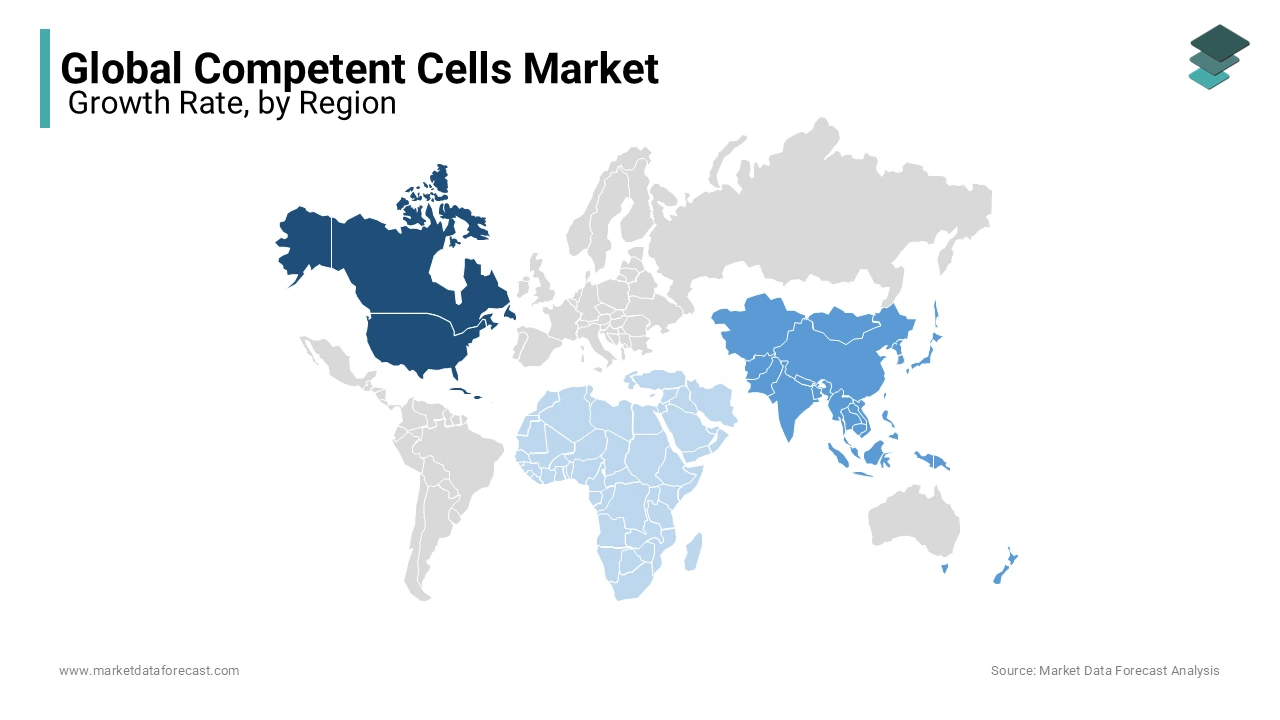
North America was the top performer of the global competent cells market by accounting for a 40.3% share in 2025 due to its advanced research infrastructure and strong presence of major biopharmaceutical companies. The region is home to leading academic institutions such as Harvard University and the Massachusetts Institute of Technology, which drive innovation in molecular biology and synthetic biology. The presence of major reagent suppliers like Thermo Fisher Scientific and New England Biolabs ensures easy access to high-quality products and technical support. Furthermore, the regulatory framework enforced by the Food and Drug Administration encourages the use of certified reagents in therapeutic development, boosting demand for commercial competent cells. The region’s early adoption of automation and high-throughput screening technologies also drives sales of specialized formats. As per the study, employment in life sciences occupations is projected to grow faster than average, ensuring a skilled workforce that sustains market demand.
Europe Competent Cells Market Analysis
Europe competent cells market was positioned second by holding 30.3% of the share in 2025, with a strong focus on regulatory compliance and collaborative research initiatives. The region benefits from well-established pharmaceutical industries in countries like Germany, Switzerland, and the United Kingdom, which drive consistent demand for high-quality competent cells. According to the European Federation of Pharmaceutical Industries and Associations, the European biopharma sector invests over 30 billion euros annually in research and development, supporting extensive molecular cloning workflows. The EU’s key funding program for research and innovation allocates billions of euros to health and biology projects fostering a vibrant academic and industrial research ecosystem. The General Data Protection Regulation and strict medical device regulations compel companies to use traceable and certified reagents, favoring established commercial suppliers. Furthermore, the presence of renowned research centers such as the Max Planck Institute and the Karolinska Institute drives cutting-edge genetic research.
Asia Pacific Competent Cells Market Analysis
The Asia Pacific competent cells market is deemed to grow at the fastest CAGR in the coming years with the increasing government investment in biotechnology and the expansion of pharmaceutical manufacturing. Countries like China, India, and South Korea are prioritizing life sciences as strategic sectors, leading to the establishment of new research parks and biotech hubs. The number of registered biotech startups has doubled in the past five years, creating new demand for affordable and reliable cloning reagents. The rising prevalence of chronic diseases in the region is also driving local drug development efforts, which rely heavily on molecular cloning techniques. Furthermore, the outsourcing of clinical trials and contract research to Asia Pacific countries increases the consumption of standardized reagents by global pharmaceutical companies. The large population base provides a vast pool of talent and patients supporting both research and commercial applications.
Latin America Competent Cells Market Analysis
Latin America competent cells market growth is steadily driven by the emerging biotechnology sector and increasing academic collaboration. Brazil and Argentina are the primary contributors to the regional market with growing investments in agricultural biotechnology and pharmaceutical research. The region faces challenges related to import tariffs and logistical constraints, which can limit access to premium products, but local distributors are working to improve supply chain efficiency. The growing awareness of biotechnology applications in agriculture and health is driving demand for basic molecular biology tools.
Middle East And Africa Competent Cells Market Analysis
The Middle East and Africa competent cells market is to have slow growth opportunities during the forecast period. Israel is a global leader in biotechnology innovation with a dense cluster of startups and research institutions driving demand for advanced molecular biology tools. However, limited infrastructure and funding constraints in many African countries restrict widespread adoption. The Middle East is seeing growth through government initiatives like Saudi Vision 2030, which includes healthcare and biotechnology as key pillars.
COMPETITIVE LANDSCAPE
The global competent cells market features a moderately consolidated landscape dominated by established life science giants, alongside specialized niche providers. Major corporations leverage their extensive distribution networks, broad product portfolios, and strong brand recognition to capture significant revenue from pharmaceutical and academic sectors. Competition is intense regarding product quality, transformation efficiency, and technical support, as researchers demand reliable and reproducible results. Smaller companies differentiate themselves by offering unique strains for specific applications such as methylation-sensitive cloning or high-copy-number propagation. Innovation in strain engineering and format compatibility with automation serves as a key differentiator for industrial clients. Regulatory compliance and quality assurance are critical competitive factors, especially for suppliers targeting Good Manufacturing Practice-compliant environments. The entry of regional players in emerging markets adds complexity but also expands overall access. Collaborative efforts with research institutions foster innovation, while strategic acquisitions allow larger firms to fill portfolio gaps.
KEY MARKET PLAYERS
The leading companies operating in the global competent cells market include:
- BioDynamics Laboratory, Inc.
- GCC Biotech
- SMOBIO Technology
- Thermo Fisher Scientific, Inc.
- QIAGEN N.V.
- OriGene Technologies
- New England Biolabs Inc
- Merck KGaA
- Promega Corporation
- Bioline
- Zymo Research
TOP PLAYERS IN THE MARKET
- Thermo Fisher Scientific Inc maintains a dominant position in the global competent cells market through its extensive portfolio of high-quality reagents under brands like Invitrogen and Gibco. The company provides a wide range of chemically and electrocompetent cells tailored for diverse applications, including cloning, protein expression, and gene editing. Recent strategic actions include expanding its manufacturing capacity to ensure consistent supply and launching new ultra-high efficiency strains designed for complex constructs. Thermo Fisher actively collaborates with academic institutions to support research initiatives and offers comprehensive technical resources to enhance user experience. Their investment in digital platforms enables seamless ordering and tracking, which strengthens customer loyalty.
- Merck KGaA operates as a key player in the life science sector, offering premium competent cells under the MilliporeSigma brand known for their reliability and performance. The company focuses on providing specialized strains for challenging applications such as large plasmid transformation and toxic protein expression. Recent efforts include introducing ready-to-use formats compatible with automated liquid handling systems to meet the needs of high-throughput industrial users. Merck has strengthened its distribution network in emerging markets to improve accessibility and support local researchers. They also prioritize sustainability by adopting eco-friendly packaging materials and optimizing logistics to reduce the carbon footprint.
- New England Biolabs Inc is renowned for its high-quality molecular biology reagents, including a diverse selection of competent cells optimized for various cloning strategies. The company emphasizes scientific rigor and customer education, providing detailed protocols and technical support to ensure successful experiments. Recent actions involve launching novel strains with enhanced stability and transformation efficiency specifically engineered for CRISPR Cas9 and synthetic biology applications. New England Biolabs has expanded its global presence by establishing new distribution partnerships in Asia and Europe to reach a broader customer base. They actively engage with the scientific community through workshops and webinars, fostering trust and brand loyalty.
TOP STRATEGIES USED BY KEY MARKET PARTICIPANTS
Key players in the competent cells market primarily focus on product innovation and differentiation by developing specialized strains with higher transformation efficiencies and unique genotypes. Companies invest heavily in research and development to create cells capable of handling large plasmids, unstable sequences, and toxic genes, catering to advanced research needs. Strategic partnerships with academic institutions and contract research organizations help validate new products and expand reach. Manufacturers are increasingly offering ready-to-use formats compatible with automation to appeal to industrial clients seeking efficiency and scalability. Enhancing supply chain resilience through localized production and robust cold chain logistics ensures product integrity and timely delivery. Digital marketing and educational content are used to build brand loyalty and support users. Additionally, firms prioritize regulatory compliance and quality certification to meet stringent requirements of pharmaceutical customers.
MARKET SEGMENTATION
This market research report on the global competent cells market has been segmented and sub-segmented based on the type, application, and end-user.
By Type
- Chemically
- Electrocompetent
By Application
- Cloning
- Subcloning & Routine Cloning
- Phage Display Library Construction
- Toxic/Unstable DNA Cloning
- High-Throughput Cloning
- Protein Expression
- Other Applications
- Mutagenesis
- Large Plasmid Transformation
- Single-Stranded DNA Production
- Lentiviral Vector Production
By End User
- Pharmaceutical Companies
- Academia
By Region
- North America
- Europe
- Asia-Pacific
- Latin America
- Middle East and Africa