Global Continuous Glucose Monitoring Market Size, Share, Trends & Growth Forecast Report By Components Type (Transmitters & Receivers, Sensors & Insulin Pumps), End Users and Region (North America, Europe, Asia-Pacific, Latin America, Middle East and Africa), Industry Analysis From 2026 to 2034
Market Size, 2025
$5.4 BnMarket Estimate, 2026
$5.79 BnMarket Forecast, 2034
$10.1 BnCAGR, 2026–2034
7.21%Global Continuous Glucose Monitoring Market Report Summary
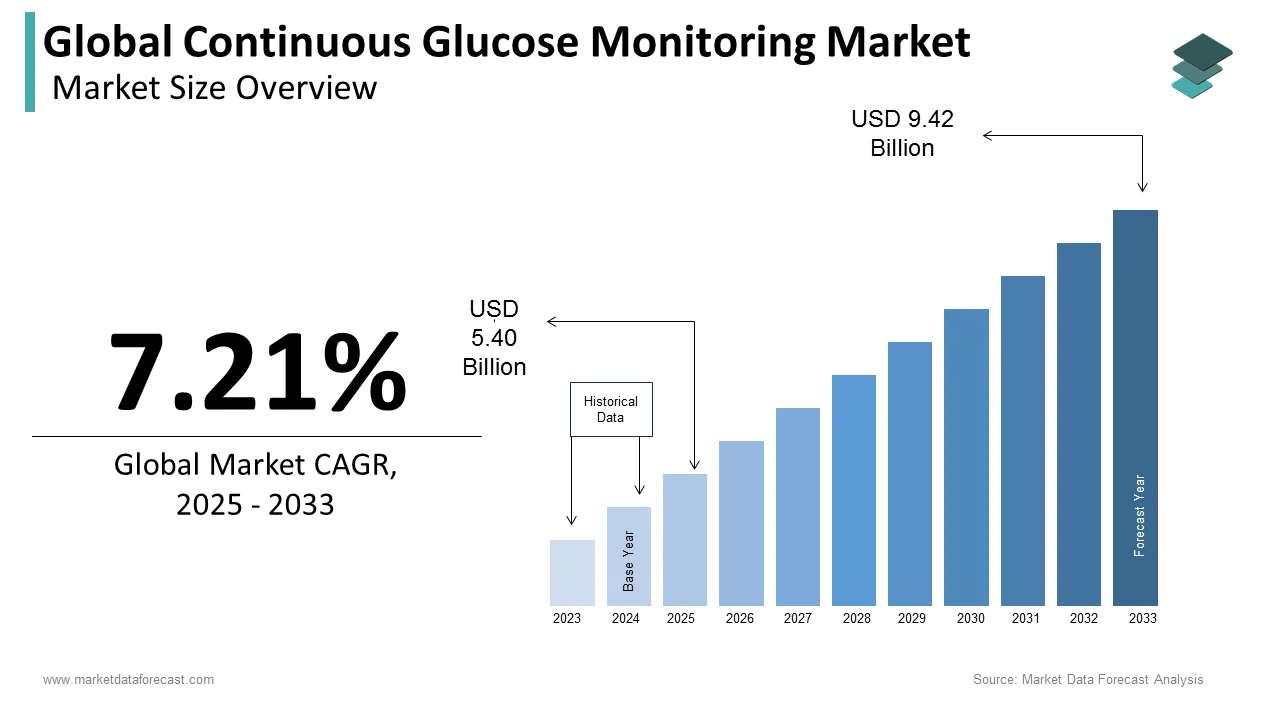
The global continuous glucose monitoring market was valued at USD 5.40 billion in 2025, is estimated to reach USD 5.79 billion in 2026, and is projected to reach USD 10.10 billion by 2034, growing at a steady CAGR of 7.21% from 2026 to 2034. The market growth is driven by the rising prevalence of diabetes, increasing awareness regarding continuous glucose monitoring devices, and growing adoption of advanced healthcare technologies. Expanding use of wearable medical devices, increasing preference for home-based diagnostics, and continuous advancements in sensor accuracy and connectivity are further strengthening the adoption of continuous glucose monitoring systems across the globe.
Key Market Trends
- Growing adoption of wearable and minimally invasive glucose monitoring devices for real-time tracking.
- Increasing demand for home-based diagnostics and remote patient monitoring solutions.
- Expansion of AI- and data-driven glucose monitoring systems for predictive insights and better disease management.
- Rising integration of CGM devices with smartphones and digital health platforms.
- Growing focus on improving sensor accuracy, longevity, and user convenience.
Segmental Insights
Based on component type, the sensors segment dominated the global continuous glucose monitoring market in 2025, accounting for 51.5% of the market share. Strong demand for accurate and real-time glucose tracking, along with continuous technological advancements in sensor performance, is driving segment growth.
Based on end user, the homecare diagnostics segment led the market in 2025 by accounting for 66.9% of the market share. The segment’s growth is supported by increasing patient preference for self-monitoring, convenience, and reduced dependency on hospital visits.
Regional Insights
The global continuous glucose monitoring market is witnessing strong growth across major regions, supported by rising diabetes prevalence, increasing healthcare awareness, and technological advancements in monitoring devices.
- North America captured the largest share, accounting for 41.1% of the market in 2025, driven by advanced healthcare infrastructure, high adoption of innovative medical devices, and strong presence of key market players.
- Europe occupied a significant position in 2025, supported by growing healthcare expenditure, increasing adoption of digital health solutions, and rising awareness regarding diabetes management.
- The Asia-Pacific region is anticipated to be the fastest growing market during the forecast period owing to rapid economic development, expanding middle-class population, and a significant rise in diabetes prevalence.
Competitive Landscape
The global continuous glucose monitoring market is characterized by the presence of leading medical device manufacturers and healthcare technology companies offering advanced monitoring solutions. Companies are focusing on product innovation, improving sensor technologies, and expanding their digital health ecosystems to enhance patient outcomes. Strategic collaborations, new product launches, and technological advancements are shaping the competitive landscape of the market.
Prominent companies in the global continuous glucose monitoring market include Dexcom Inc., Roche Diagnostics, Medtronic plc, Novo Nordisk, Abbott Laboratories, Animas Corporation, Ypsomed AG, Bayer AG, Insulet Corporation, Sensonic Corporation, and others.
Global Continuous Glucose Monitoring Market Size
The size of the global continuous glucose monitoring market was worth USD 5.40 billion in 2025. The global market is anticipated to grow at a CAGR of 7.21% from 2026 to 2034 and be worth USD 10.10 billion by 2034 from USD 5.79 billion in 2026.
Continuous glucose monitoring represents a transformative sector within medical technology, defined by devices that track glucose levels in interstitial fluid throughout the day and night via subcutaneous sensors. Unlike traditional finger-stick methods that offer isolated snapshots, these systems provide real-time data trends and alerts, fundamentally altering diabetes management protocols. The clinical imperative for such technology stems from the global burden of hyperglycaemia and its severe complications. According to the International Diabetes Federation, a large number of adults worldwide are living with diabetes, and this figure is expected to rise in the coming years, creating an immense population requiring constant glycaemic surveillance. As per the Centers for Disease Control and Prevention, many individuals with type-1 diabetes in the United States struggle to consistently meet their target blood sugar levels and this indicate a critical gap in current management strategies. The World Health Organization emphasizes that tight glycemic control significantly reduces the risk of microvascular complications such as retinopathy and nephropathy, which affect a considerable portion of the diabetic population globally. This technology has evolved from a niche tool for intensive care units to a standard of care for outpatient management, driven by miniaturization and wireless connectivity. The shift toward proactive health management and the integration of these devices with insulin delivery systems mark a pivotal era in endocrinology, promising improved quality of life and reduced long-term healthcare expenditures.
MARKET DRIVERS
Rising Global Prevalence of Diabetes and Demand for Tight Glycemic Control
The escalating incidence of diabetes mellitus across all demographics is majorly driving the expansion of the global continuous glucose monitoring market. As the disease burden shifts toward younger populations and those with type 2 diabetes requiring insulin, the clinical need for granular data to prevent acute events like hypoglycemia becomes paramount. According to the International Diabetes Federation, a significant portion of adults globally live with diabetes, and the number of individuals requiring insulin therapy is expected to grow substantially in the coming years, which is creating a vast addressable market for monitoring solutions. Furthermore, clinical evidence strongly supports the use of continuous data to improve Time in Range, a metric increasingly favoured over Hemoglobin A1c for daily management. As per the American Diabetes Association, studies show that users of continuous monitoring devices achieve better Time in Range compared to those relying on self-monitoring of blood glucose, which directly correlates with reduced complication rates. The growing recognition of pre-diabetes and the desire for preventative lifestyle modifications also drive demand among non-insulin users who seek real-time feedback on dietary impacts. According to the National Institute of Diabetes and Digestive and Kidney Diseases, early intervention guided by continuous data can delay the progression from pre-diabetes to type 2 diabetes in high-risk groups. This expanding patient base, coupled with evolving clinical guidelines that recommend continuous monitoring for broader patient categories, ensures sustained market growth driven by fundamental epidemiological trends.
Technological Advancements in Sensor Accuracy and Connectivity
Rapid innovations in sensor chemistry, miniaturization, and digital integration have significantly enhanced the utility and user experience of continuous glucose monitoring devices, which is further boosting the expansion of the continuous glucose monitoring market. Modern sensors now offer factory calibration, eliminating the need for painful finger-stick calibrations, and provide extended wear periods, which drastically improves patient adherence and convenience. According to the Food and Drug Administration, the accuracy of next-generation sensors has improved to a level that makes them reliable enough for dosing decisions without confirmatory testing. The seamless integration of these devices with smartphones and cloud-based platforms allows for remote data sharing, enabling caregivers and clinicians to monitor patients in real time. As per the Journal of Diabetes Science and Technology, remote monitoring capabilities have been shown to reduce hospital admissions for severe hypoglycemia among pediatric and elderly populations by facilitating timely interventions. Furthermore, the development of closed-loop systems that automatically adjust insulin delivery based on sensor readings represents a paradigm shift toward artificial pancreas technology. According to the European Association for the Study of Diabetes, hybrid closed-loop systems improve glycemic control compared to sensor-augmented pump therapy alone. These technological leaps not only attract new users but also encourage existing users to upgrade to newer models, fueling a cycle of continuous innovation and market expansion.
MARKET RESTRAINTS
High Cost of Devices and Reimbursement Barriers
The substantial financial burden associated with continuous glucose monitoring systems is hindering the continuous glucose monitoring market growth. The upfront cost of sensors and transmitters, combined with recurring expenses for replacements, often places these life-changing devices out of reach for uninsured or underinsured populations. According to the Kaiser Family Foundation, the average annual out-of-pocket cost for continuous glucose monitoring supplies in the United States can be very high for patients without comprehensive insurance, which is leading to rationing or discontinuation of use. In many developing nations, the lack of government reimbursement schemes means that only a small fraction of eligible patients have access to this technology. As per the World Bank, out-of-pocket health expenditure accounts for a large share of total health spending in low-income countries, making advanced medical devices prohibitively expensive for the majority. Even in developed markets, restrictive reimbursement criteria often limit coverage to patients with type 1 diabetes or those on intensive insulin regimens, excluding a large segment of type 2 diabetes patients who could benefit. According to the Centers for Medicare and Medicaid Services, despite recent expansions, significant gaps remain in coverage for non-insulin-treated type 2 diabetes, stifling market penetration. The complexity of navigating prior authorization processes further discourages both providers and patients, resulting in delayed initiation of therapy and suboptimal health outcomes for millions who cannot afford the premium pricing of these advanced monitoring solutions.
Skin Irritation and Adhesion Issues Affecting User Compliance
Dermatological reactions and adhesive failures represent significant clinical and operational restraints that undermine user confidence and consistent usage of continuous glucose monitoring devices, which is further hampering the regional market expansion. Prolonged contact with adhesives and sensor materials can cause contact dermatitis, redness, and itching, leading many users to remove devices prematurely or avoid reapplication. According to the American Academy of Dermatology, a notable portion of continuous glucose monitoring users report experiencing some form of skin irritation, with severe cases necessitating discontinuation of the therapy entirely. The issue is exacerbated by environmental factors such as sweat, humidity, and physical activity, which can compromise the adhesive bond and cause sensors to detach before their intended lifespan ends. As per the Journal of Clinical Endocrinology and Metabolism, sensor loss due to adhesion failure occurs in a significant number of applications, resulting in data gaps and increased costs for replacement units. This reliability issue is particularly problematic for active individuals and children, whose dynamic lifestyles place greater stress on the device attachment. Data from patient advocacy groups highlights that fear of skin reactions is a top reason cited by potential users for declining to start continuous monitoring. Manufacturers face the challenge of developing hypoallergenic adhesives and robust attachment methods without increasing the profile or discomfort of the device. Until these biocompatibility and durability concerns are comprehensively addressed, a segment of the potential user base will remain hesitant to adopt the technology, limiting overall market saturation.
MARKET OPPORTUNITIES
Expansion into Non-Diabetic Wellness and Fitness Applications
The adaptation of continuous glucose monitoring technology for the general wellness and fitness market that target non-diabetic individuals seeking metabolic optimization is a significant opportunity in the continuous glucose monitoring market. Growing interest in personalized nutrition and biohacking has spurred demand for real-time glucose data to understand how diet, exercise, and sleep affect metabolic health. According to the Global Wellness Institute, the wellness economy is valued in trillions of dollars, with a rapidly growing segment focused on preventive health and data-driven lifestyle changes. As per a study published in Nature Medicine, continuous glucose monitoring in non-diabetic populations revealed significant glycemic variability in response to different foods, empowering users to make informed dietary choices that stabilize energy levels and prevent long-term metabolic dysfunction. Companies are increasingly launching direct-to-consumer programs that pair sensors with coaching apps to help users achieve weight loss and athletic performance goals. According to market research firms, the subscription model for wellness-focused glucose monitoring has grown significantly, driven by millennials and Gen Z consumers who prioritize proactive health management. This expansion diversifies the revenue stream beyond traditional medical reimbursement, tapping into a massive consumer base willing to pay out-of-pocket for insights into their metabolic flexibility. By positioning these devices as essential tools for longevity and peak performance, manufacturers can unlock a new demographic that was previously untouched by the medical device industry.
Integration with Artificial Intelligence and Closed-Loop Insulin Delivery
The convergence of continuous glucose monitoring with artificial intelligence and automated insulin delivery systems is another promising opportunity in the regional market. Advanced algorithms can now predict glucose trends minutes in advance, allowing for pre-emptive adjustments in insulin dosing that minimize both hyperglycemia and hypoglycemia. According to the Juvenile Diabetes Research Foundation, the widespread adoption of hybrid closed-loop systems has the potential to significantly reduce the daily burden of diabetes management, improving quality of life. As per the Diabetes Technology Society, AI-driven predictive alerts have been shown to reduce severe hypoglycemic events compared to standard threshold alarms, demonstrating the clinical value of intelligent data processing. The opportunity extends to integrating these systems with electronic health records, enabling seamless data flow between patients and providers for more precise therapeutic adjustments. According to clinical trials, fully closed-loop systems that often referred to as the artificial pancreas, can maintain glucose levels within the target range for most of the day, a benchmark difficult to achieve with manual management. Furthermore, the aggregation of vast datasets from millions of users offers unprecedented opportunities for population health analytics and drug development. By leveraging machine learning to refine dosing algorithms and personalize therapy, companies can establish dominant positions in the emerging era of digital therapeutics, creating high-value ecosystems that lock in users through superior clinical outcomes and convenience.
MARKET CHALLENGES
Data Privacy Concerns and Cybersecurity Vulnerabilities
The increasing connectivity of continuous glucose monitoring devices introduces significant challenges regarding data privacy and cybersecurity, as these systems transmit sensitive health information wirelessly to smartphones and cloud servers, which is a major challenge to the continuous glucose monitoring market. The risk of data breaches and unauthorized access to personal health records poses a serious threat to patient trust and regulatory compliance. According to the Office for Civil Rights within the Department of Health and Human Services, the healthcare sector has experienced a notable increase in ransomware attacks, with connected medical devices often serving as entry points for malicious actors. As per the Food and Drug Administration, recalls related to cybersecurity vulnerabilities in glucose monitoring systems have risen, highlighting the critical need for robust encryption and secure firmware updates. The potential for hackers to manipulate insulin dosing commands in integrated closed-loop systems presents a life-threatening scenario that demands rigorous security protocols. According to the Healthcare Information and Management Systems Society, many healthcare organizations have reported a security incident involving Internet of Things medical devices in the past year. Navigating the complex landscape of global data protection regulations, such as the General Data Protection Regulation in Europe and the Health Insurance Portability and Accountability Act in the United States, adds layers of compliance complexity for manufacturers. Ensuring end-to-end security without compromising the ease of use and real-time functionality of the devices remains a formidable technical and operational hurdle that the industry must overcome to sustain growth and public confidence.
Accuracy Limitations During Rapid Glucose Fluctuations and Physiological Variability
Despite significant advancements, continuous glucose monitoring systems still face physiological challenges related to the lag time between interstitial fluid glucose and blood glucose levels, particularly during rapid fluctuations, which is further challenging the expansion of the continuous glucose monitoring market. This inherent delay can lead to discrepancies in readings during periods of intense exercise, meal absorption, or hypoglycemic recovery, potentially resulting in inappropriate treatment decisions. According to the Diabetes Care journal, the physiological lag can last several minutes, which becomes critical when glucose levels are changing rapidly. As per the Endocrine Society, certain physiological conditions such as dehydration, extreme temperatures, and the presence of interfering substances can further compromise sensor accuracy, leading to false readings. According to clinical studies, a portion of sensor readings may fall outside the clinically acceptable error margins during dynamic physiological states, necessitating confirmatory finger-stick tests in critical situations. This limitation undermines the promise of a completely non-invasive management experience and can erode user confidence in the technology. Additionally, individual variations in subcutaneous tissue characteristics affect sensor performance, making it difficult to guarantee uniform accuracy across diverse patient populations. Manufacturers continue to grapple with the biological constraints of interstitial fluid dynamics, and until these physiological barriers are fully mitigated, the technology will require cautious interpretation by users and clinicians, limiting its potential as a standalone diagnostic tool in all scenarios.
REPORT COVERAGE
| REPORT METRIC | DETAILS |
| Market Size Available | 2025 to 2034 |
| Base Year | 2025 |
| Forecast Period | 2026 to 2034 |
| Segments Covered | By Component, End User, and Country. |
| Various Analyses Covered | Global, Regional and Country-Level Analysis, Segment-Level Analysis, Drivers, Restraints, Opportunities, Challenges; PESTLE Analysis; Porter’s Five Forces Analysis, Competitive Landscape, Analyst Overview of Investment Opportunities |
| Regions Covered | North America, Europe, Asia Pacific, Latin America, the Middle East & Africa. |
| Market Leaders Profiled | Dexcom Inc., Roche Diagnostics, Medtronic plc., Novo Nordisk, Abbott Laboratories, Animas Corporation, Ypsomed AG., Bayer AG, Insulet Corporation, and Sensonic Corporation. |
SEGMENTAL ANALYSIS
By Component Type Insights
The sensors segment dominated the market by accounting for 51.5% of the global market share in 2025. The dominance of sensors segment in the global market is attributed to the disposable nature of the component, which necessitates frequent replacement every 7 to 14 days depending on the specific device model, which is creating a recurring revenue stream that far exceeds the one-time or infrequent purchase cycles of transmitters and receivers. The expanding patient base requiring continuous data, as each new user initiates a continuous cycle of sensor purchases that sustains market volume is further contributing to the dominance of sensors segment in the European market. According to the International Diabetes Federation, the global diabetic population is very large and continues to grow, which has proportionally increased the annual volume of sensors required. Furthermore, technological advancements have extended sensor wear duration for some implantable models, yet the aggregate demand remains highest for this component due to the sheer number of active users globally. As per the American Diabetes Association, consistent sensor usage improves Time in Range, encouraging clinicians to prescribe continuous monitoring more aggressively, thereby driving unit sales. According to the Centers for Disease Control and Prevention, millions of Americans have diabetes, and widespread adoption of continuous monitoring with bi-weekly sensor changes results in annual sensor volumes that far exceed the market for durable hardware components.
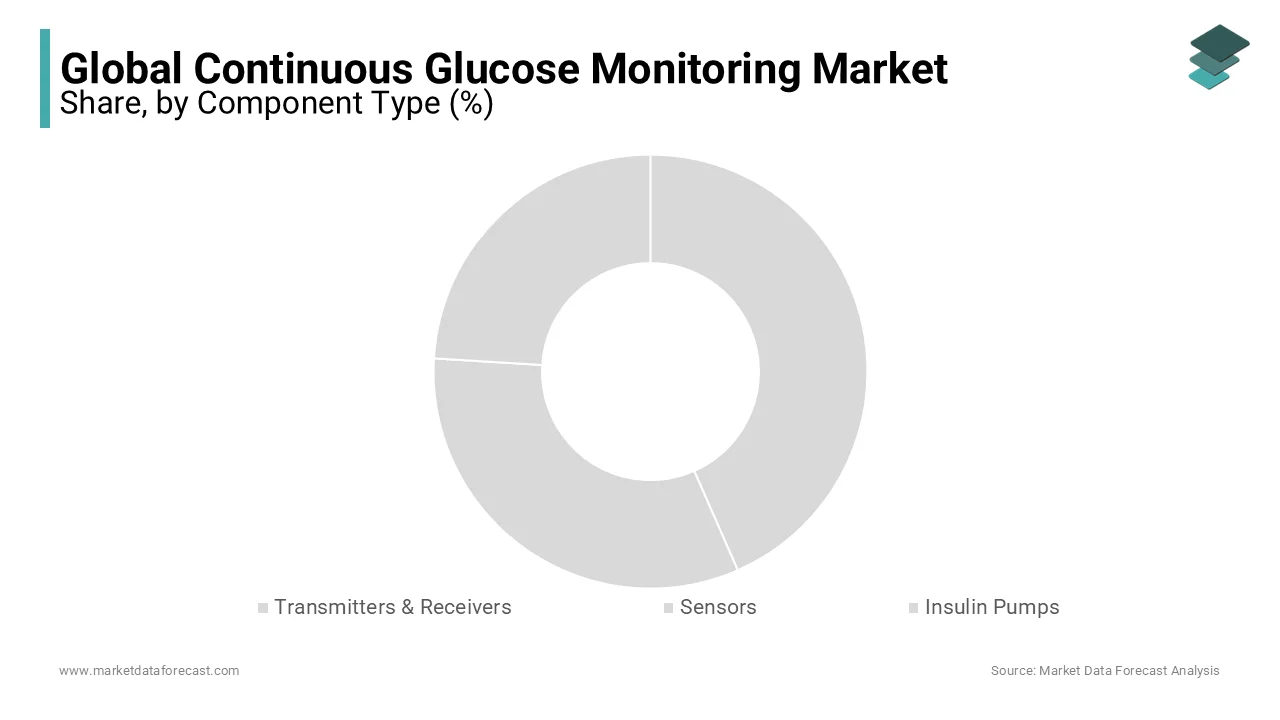
On the other hand, the insulin pumps segment is a promising segment and is projected to register the highest CAGR of 15.1% over the forecast period owing to the rapid integration of continuous glucose monitoring data into automated insulin delivery systems and the clinical shift toward closed-loop therapies that often referred to as artificial pancreas systems, where the pump communicates directly with the sensor to adjust insulin dosing automatically. The regulatory approval and commercial launch of hybrid closed-loop systems that require compatible insulin pumps to function, which is forcing an upgrade cycle among existing pump users is further propelling the expansion of the insulin pumps segment in the regional market. According to the Juvenile Diabetes Research Foundation, adoption of hybrid closed-loop technology has been rising steadily, driven by evidence showing it reduces hypoglycemia events compared to traditional pump therapy. Additionally, the miniaturization of pump technology and the development of tubeless patch pumps have improved user comfort and discretion, attracting a broader demographic including athletes and children. As per the European Association for the Study of Diabetes, patients using integrated pump and sensor systems achieve higher Time in Range than those using separate devices, reinforcing the clinical imperative for combined solutions. According to the Food and Drug Administration, the number of approved automated insulin delivery systems has increased in recent years, signaling a robust pipeline of innovative products that will continue to drive pump sales as the standard of care evolves toward full automation.
By End User Insights
The homecare diagnostics segment led the market by commanding for 66.9% of the regional market share in 2025. The leading position of homecare diagnostics segment in the European market is driven by the fundamental design of modern continuous glucose monitoring devices, which are intended for daily use by patients in their personal environments rather than in clinical settings. The empowerment of patients to manage their condition independently through real-time data access on smartphones and dedicated receivers, which is reducing the need for frequent hospital visits and further boosting the dominance of the homecare diagnostics segment in the European market. According to the National Institute of Diabetes and Digestive and Kidney Diseases, self-management education and tools have been shown to improve outcomes, which is making home-based monitoring a critical component of effective diabetes care. Furthermore, the convenience of wireless connectivity allows caregivers and family members to monitor glucose levels remotely, providing peace of mind and enabling timely interventions without professional mediation. As per the American Association of Diabetes Care and Education Specialists, most diabetes management activities occur outside of clinical facilities, highlighting the necessity of robust home diagnostic tools. According to the World Health Organization, the shift toward decentralized care models has been accelerated by the pandemic, with telehealth and remote monitoring becoming standard practices, further cementing the role of homecare diagnostics as the primary endpoint for continuous glucose monitoring devices.
On the other side, the hospitals segment is anticipated to grow at the fastest CAGR of 13.3% over the forecast period. The high prevalence of stress-induced hyperglycemia among non-diabetic patients in intensive care units is prompting hospitals to adopt continuous monitoring as a standard protocol, which is majorly driving the growth of the hospitals segment in the European market. According to the Society of Hospital Medicine, tight glycemic control in critically ill patients can improve survival and reduce hospital stays, providing a strong economic and clinical rationale for adoption. Additionally, the integration of continuous glucose monitoring data into electronic health records facilitates seamless documentation and decision support for medical teams. As per the Endocrine Society, the use of continuous monitoring in hospital settings has reduced nursing workload related to finger-stick testing that allow staff to focus on other critical care tasks. According to the Centers for Medicare and Medicaid Services, recent reimbursement policy changes have begun to cover inpatient continuous glucose monitoring, which is removing a significant financial barrier and accelerating procurement by hospital administrators seeking to improve quality metrics and patient safety.
REGIONAL ANALYSIS
North America Continuous Glucose Monitoring Market Analysis
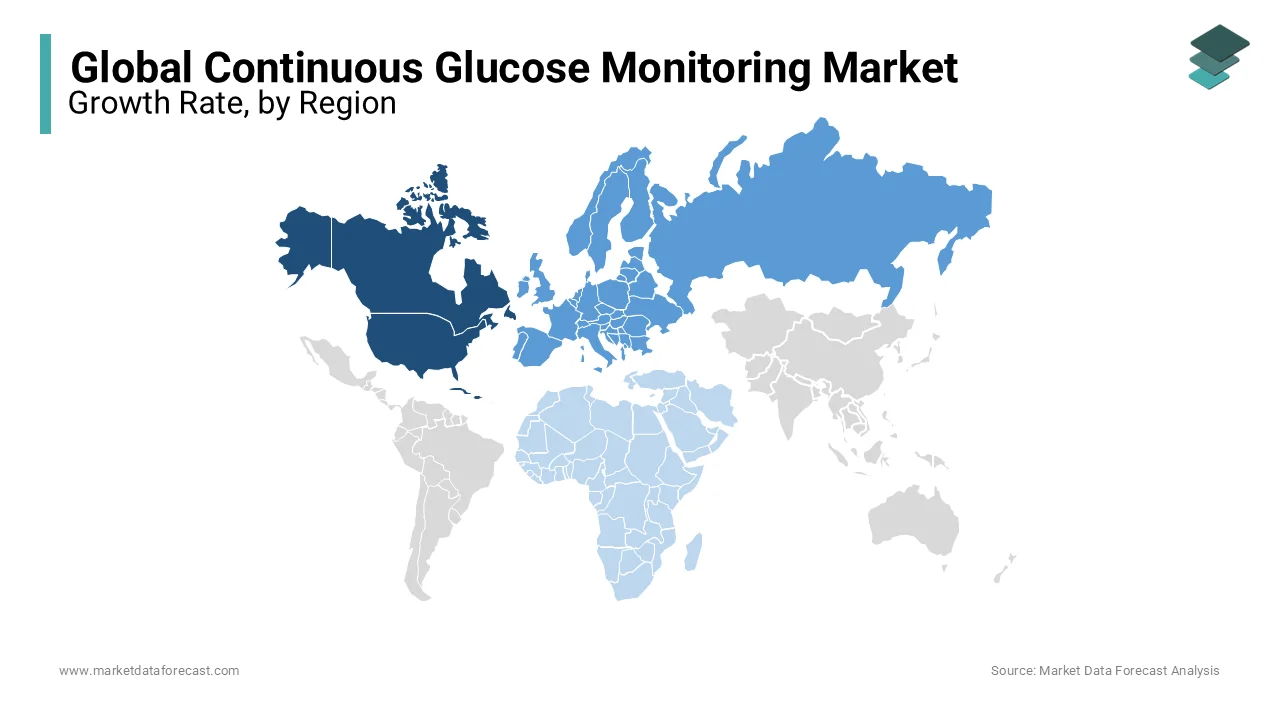
North America stood as the most dominating regional segment in the global continuous glucose monitoring market with 41.1% of the global market share in 2025. The dominance of North America in the global market can be credited to its advanced healthcare infrastructure, high reimbursement rates, and early adoption of innovative medical technologies. The favorable reimbursement landscape established by the Centers for Medicare and Medicaid Services that broadened coverage criteria to include patients with type 2 diabetes not on intensive insulin therapy is further contributing to the leading position of North America in the global market. According to the Kaiser Family Foundation, most commercial health plans in the United States now cover continuous glucose monitoring devices, removing cost barriers for millions of patients. The high prevalence of obesity and diabetes in the region, coupled with a strong culture of proactive health management and digital health adoption are also favouring the expansion of North America in the global market. As per the Centers for Disease Control and Prevention, a large portion of US adults have prediabetes, creating a massive potential market for preventive monitoring solutions. Furthermore, the presence of leading technology companies facilitates rapid integration of continuous glucose monitoring with smart devices and artificial intelligence platforms. According to the Food and Drug Administration, the region sees the fastest approval times for next-generation sensors and closed-loop systems, ensuring that patients have immediate access to the most advanced therapies available globally.
Europe Continuous Glucose Monitoring Market Analysis
Europe was another promising segment in the global market in 2025 and held a promising share of the worldwide market. The universal healthcare systems of Europe and strong regulatory framework that prioritizes patient access to essential diabetes technologies are propelling the European market growth. The implementation of the European Union Medical Device Regulation that has raised safety and performance standards, which is fostering trust among clinicians and patients in the reliability of continuous monitoring devices is also supporting the market growth in Europe. According to the International Diabetes Federation Europe, millions of people in the region live with diabetes, and national health services are increasingly recognizing the cost-effectiveness of continuous monitoring in preventing expensive complications. The second major driver is the growing trend toward cross-border collaboration and harmonization of clinical guidelines, which encourages the adoption of best practices and standardized care protocols. As per the European Association for the Study of Diabetes, countries with comprehensive reimbursement policies see higher adoption rates among type 1 diabetes patients, demonstrating the impact of policy on market penetration. Furthermore, government initiatives aimed at digital health transformation are facilitating the integration of continuous glucose monitoring data into national electronic health records. According to the European Commission, funding programs for research and innovation in digital health are accelerating the development of locally produced sensors and software solutions, strengthening the regional supply chain and reducing dependency on imports.
Asia-Pacific Continuous Glucose Monitoring Market Analysis
The Asia-Pacific region is anticipated to be the fastest growing regional segment in the global continuous glucose monitoring market during the forecast period owing to rapid economic growth, a burgeoning middle class, and a staggering rise in diabetes prevalence that creates an urgent demand for effective management tools. The explosive increase in diabetes cases, particularly in China and India, where lifestyle changes and urbanization have contributed to a public health crisis requiring scalable solutions is further contributing to the market growth in this region. According to the International Diabetes Federation, the Western Pacific region alone accounts for a very large number of people with diabetes, representing the largest patient pool globally. The second critical factor is the improving healthcare infrastructure and increasing government spending on health in emerging economies, which is making advanced medical devices more accessible to the general population. As per the World Bank, health expenditure in the Asia-Pacific region is growing steadily, enabling broader procurement of continuous monitoring systems by public hospitals. Furthermore, the rise of telemedicine and mobile health applications tailored to Asian markets is enhancing patient engagement and adherence. According to the Asian Pacific Society of Endocrinology, local partnerships between global device makers and regional distributors are overcoming logistical challenges and cultural barriers, facilitating faster market entry and education campaigns that drive adoption among previously underserved communities.
Latin America Continuous Glucose Monitoring Market Analysis
Latin America is estimated to showcase a healthy CAGR in the global market over the forecast period. The growing number of legal rulings in countries like Brazil and Mexico that guarantee patient rights to access continuous glucose monitoring devices through the public system, which is effectively bypassing bureaucratic hurdles is driving the Latin American market expansion. According to the Pan American Health Organization, diabetes affects millions of people in Latin America, and advocacy groups have been instrumental in securing court orders for device provision. The expansion of private insurance coverage and the emergence of localized manufacturing capabilities that reduce import costs and make devices more affordable is also boosting the Latin American market expansion. As per the Latin American Diabetes Association, private sector adoption rates have been increasing as employers recognize the productivity benefits of better glycemic control. Additionally, educational campaigns led by endocrinologists are raising awareness about the benefits of continuous monitoring beyond just insulin users. According to the Inter-American Development Bank, investments in health technology infrastructure are beginning to yield results, with pilot programs demonstrating the feasibility of large-scale continuous monitoring deployment in public clinics, paving the way for broader national rollout strategies.
Middle East and Africa Continuous Glucose Monitoring Market Analysis
The Middle East and Africa is projected to register a steady CAGR in the global continuous glucose monitoring market during the forecast period owing to the highly concentrated demand in Gulf Cooperation Council countries and South Africa, while the rest of the continent remains largely underserved despite having some of the highest diabetes prevalence rates globally. The market is nascent but promising, driven by high government spending on healthcare in oil-rich nations and a growing recognition of the diabetes burden in Africa. The key driving factor is the exceptionally high prevalence of diabetes in the Gulf region, where genetic factors and lifestyle contribute to some of the highest rates in the world, prompting governments to invest heavily in advanced management technologies. According to the International Diabetes Federation, the Middle East and North Africa region has a diabetes prevalence rate higher than the global average. The gradual introduction of national health insurance schemes in countries like Saudi Arabia and the United Arab Emirates, which are beginning to cover continuous glucose monitoring for eligible patients is further contributing to the market growth in Middle East and Africa. As per the World Health Organization Regional Office for Africa, pilot projects in South Africa and Kenya are demonstrating the value of continuous monitoring in reducing complication rates, attracting international funding and support. Furthermore, the arrival of lower-cost biosimilar sensors and competitive pricing strategies from global manufacturers is starting to penetrate price-sensitive markets. According to the African Union, regional health strategies are increasingly prioritizing non-communicable diseases, creating a favorable policy environment for future growth as diagnostic capabilities expand and economic stability improves across the continent.
COMPETITIVE LANDSCAPE
The competition within the Continuous Glucose Monitoring Market is intense and characterized by rapid technological innovation and strategic maneuvering among a few dominant global players alongside emerging entrants. Major corporations compete fiercely on sensor accuracy wear duration and ease of use while striving to integrate their devices with third-party insulin delivery systems to create comprehensive artificial pancreas solutions. The landscape is shifting from standalone monitoring devices toward fully automated closed-loop ecosystems where software algorithms play a critical role in differentiating products. Price competition is becoming increasingly relevant as manufacturers seek to capture market share in cost-sensitive regions and expand coverage to non-insulin dependent patients. Legal battles over intellectual property rights and patent infringements frequently arise as companies attempt to protect their proprietary sensor chemistries and data transmission protocols. New entrants are disrupting the market by offering lower-cost alternatives or targeting niche segments such as wellness and fitness enthusiasts who do not have diabetes. Collaboration has also become a key competitive tactic with firms forming alliances to combine strengths in hardware manufacturing software development and distribution networks. The race to achieve the smallest most discreet and longest-lasting sensor drives continuous investment in materials science and miniaturization technologies.
KEY MARKET PLAYERS
The leading companies operating in the global continuous glucose monitoring market include:
- Dexcom Inc.
- Roche Diagnostics
- Medtronic plc
- Novo Nordisk
- Abbott Laboratories
- Animas Corporation
- Ypsomed AG
- Bayer AG
- Insulet Corporation
- Sensonic Corporation
TOP PLAYERS IN THE MARKET
- Abbott Laboratories stands as a global leader by revolutionizing access to glucose monitoring through its FreeStyle Libre system which eliminated the need for routine fingersticks. The company has democratized continuous monitoring by offering factory-calibrated sensors at a lower cost point than competitors, making the technology accessible to millions worldwide. Recently Abbott launched the FreeStyle Libre 3 system featuring the smallest sensor available with real-time glucose readings sent directly to smartphones every minute. The firm actively expands its footprint by securing broad reimbursement approvals across major markets and partnering with digital health platforms to integrate data into comprehensive diabetes management ecosystems. Its commitment to innovation includes developing next-generation biosensors that measure multiple ketones and glucose simultaneously. Abbott continues to drive market growth by focusing on user experience improvements such as extended wear durations and enhanced accuracy during rapid glucose fluctuations while maintaining a robust global supply chain.
- Dexcom Inc maintains a dominant position in the continuous glucose monitoring sector by focusing on high-accuracy real-time data transmission and seamless integration with automated insulin delivery systems. The company pioneered the concept of sharing glucose data remotely allowing caregivers and clinicians to monitor patients from anywhere which has become a standard feature in modern diabetes care. Recent strategic actions include the launch of the Dexcom G7 platform which offers a smaller form factor and faster warm-up times to improve user adherence. Dexcom aggressively pursues partnerships with insulin pump manufacturers to create closed-loop artificial pancreas solutions that automatically adjust insulin dosing based on sensor readings. The corporation invests heavily in clinical research to validate the safety of dosing decisions without confirmatory fingersticks. By prioritizing interoperability and expanding indications to include non-insulin treated type 2 diabetes patients Dexcom strengthens its market presence and sets new standards for therapeutic precision and patient empowerment globally.
- Medtronic plc leverages its extensive portfolio of diabetes therapies to offer integrated continuous glucose monitoring solutions that work synergistically with its proprietary insulin pumps. The company distinguishes itself by providing fully automated hybrid closed-loop systems where the sensor and pump communicate to deliver insulin autonomously reducing the burden on patients. Recent initiatives involve the global rollout of the Guardian 4 sensor which features improved accuracy and longer wear life alongside the MiniMed 780G system. Medtronic focuses on hospital settings as well as home care by deploying centralized monitoring stations that allow nursing staff to track multiple patients simultaneously. The firm actively collaborates with healthcare providers to establish clinical protocols that maximize the benefits of continuous data in acute care environments. By combining hardware innovation with advanced algorithms for predictive low glucose suspend technology Medtronic reinforces its leadership in creating comprehensive ecosystems that address the full spectrum of diabetes management needs for diverse patient populations worldwide.
TOP STRATEGIES USED BY KEY MARKET PARTICIPANTS
Key players in the Continuous Glucose Monitoring Market primarily focus on developing interoperable ecosystems that connect sensors with insulin pumps and smartphone applications to create automated closed-loop therapy systems. Companies invest heavily in research and development to reduce sensor size and extend wear duration while improving accuracy during rapid glucose fluctuations. Strategic partnerships with pharmaceutical firms and digital health startups enable the integration of glucose data into broader disease management platforms and electronic health records. Manufacturers aggressively pursue regulatory approvals for expanded indications including use in pediatric populations and non-insulin treated type 2 diabetes patients to broaden their addressable market. Firms also prioritize securing favorable reimbursement codes from government and private payers to reduce out-of-pocket costs for patients and drive adoption rates. Enhancing user experience through intuitive mobile interfaces and remote monitoring capabilities remains a central tactic to improve patient adherence and satisfaction. Additionally, companies utilize direct-to-consumer marketing campaigns to raise awareness about the benefits of continuous data over traditional finger-stick methods among undiagnosed or underserved demographics.
MARKET SEGMENTATION
This research report on the global continuous glucose monitoring market is segmented and sub-segmented into component type, end-user and region.
By Component Type
- Transmitters & Receivers
- Sensors
- Insulin Pumps
By End User
- Hospitals
- Homecare Diagnostics
- Others
By Region
- North America
- Europe
- Asia-Pacific
- Latin America
- Middle East and Africa
Frequently Asked Questions
1. What is the global continuous glucose monitoring market size in 2024?
The global continuous glucose monitoring market was worth USD 5.04 billion in 2024 and is expected to grow significantly due to rising diabetes prevalence and technological advances
2. What is the predicted CAGR of the global continuous glucose monitoring market?
The global continuous glucose monitoring market is expected to grow at a CAGR of around 7.21% from 2025 to 2033, driven by innovation and higher adoption rates
3. How much will the global continuous glucose monitoring market be worth by 2033?
The global continuous glucose monitoring market is anticipated to reach USD 9.42 billion by 2033 as demand for diabetes monitoring devices increases
4. What are the key drivers for growth in the global continuous glucose monitoring market?
Key drivers include rising diabetes cases globally, advancements in sensor technology, telehealth integration, favorable reimbursement, and consumer wellness trends
5. Which regions lead the global continuous glucose monitoring market?
North America and Europe are current leaders, with growing adoption in Asia Pacific, Latin America, and other emerging markets
6. What role does technology play in the global continuous glucose monitoring market?
Technology advancements like sensor miniaturization and accuracy improvements enhance the usability and effectiveness of devices in the global continuous glucose monitoring market
7. Are subscription pricing models impacting the global continuous glucose monitoring market?
Subscription pricing is lowering entry barriers in low- and middle-income countries, contributing to growth in the global continuous glucose monitoring market
8. How does the global continuous glucose monitoring market benefit diabetic patients?
The global continuous glucose monitoring market provides devices offering real-time glucose data, improving diabetes management and reducing complications
9. What types of continuous glucose monitoring devices are available in the market?
The market includes invasive, minimally invasive, and non-invasive devices that cater to different patient needs in the global continuous glucose monitoring market
10. How does the aging population affect the global continuous glucose monitoring market?
An increasing geriatric population, prone to diabetes, is a notable growth factor in the global continuous glucose monitoring market
Related Reports
Access the study in MULTIPLE FORMATS
Purchase options starting from
$ 2500
Didn’t find what you’re looking for?
TALK TO OUR ANALYST TEAM
Need something within your budget?
NO WORRIES! WE GOT YOU COVERED!
Call us on: +1 888 702 9696 (U.S Toll Free)
Write to us: sales@marketdataforecast.com