- Product Description Description
- Table of Contents TOC
- List of Table & Figure LOT
- Get Free Sample PDF Sample PDF
Market Size, 2025
$12.69 BnMarket Estimate, 2026
$13.58 BnMarket Forecast, 2034
$23.41 BnCAGR, 2026–2034
7.04%Global Endocrine Testing Market Report Summary
The global endocrine testing market was valued at USD 12.69 billion in 2025, is estimated to reach USD 13.58 billion in 2026, and is projected to reach USD 23.41 billion by 2034, growing at a CAGR of 7.04% from 2026 to 2034. Market growth is driven by the rising prevalence of endocrine disorders, increasing awareness of hormonal health, and growing demand for early disease diagnosis. Endocrine testing plays a vital role in diagnosing thyroid disorders, diabetes, adrenal dysfunction, reproductive hormone imbalances, and other metabolic conditions. Advancements in diagnostic technologies, expanding laboratory infrastructure, and increasing adoption of personalized medicine are further supporting market growth.
Key Market Trends
- Increasing prevalence of thyroid disorders, diabetes, and other endocrine diseases.
- Growing adoption of automated immunoassay and molecular diagnostic technologies.
- Rising demand for early diagnosis and personalized endocrine care.
- Expansion of hospital laboratories and specialized diagnostic centers.
- Continuous advancements in high-throughput diagnostic platforms and biomarker testing.
Segmental Insights
- Based on technology, the immunoassay segment dominated the global endocrine testing market in 2025, driven by its high sensitivity, accuracy, rapid turnaround time, and widespread use for hormone level analysis across clinical laboratories.
- Based on end user, the hospitals segment held the largest share of the market in 2025, supported by increasing patient volumes, advanced laboratory infrastructure, and the availability of comprehensive endocrine diagnostic services.
Regional Insights
The global endocrine testing market continues to witness steady growth across major regions, supported by increasing healthcare investments, expanding diagnostic capabilities, and rising awareness of endocrine disorders.
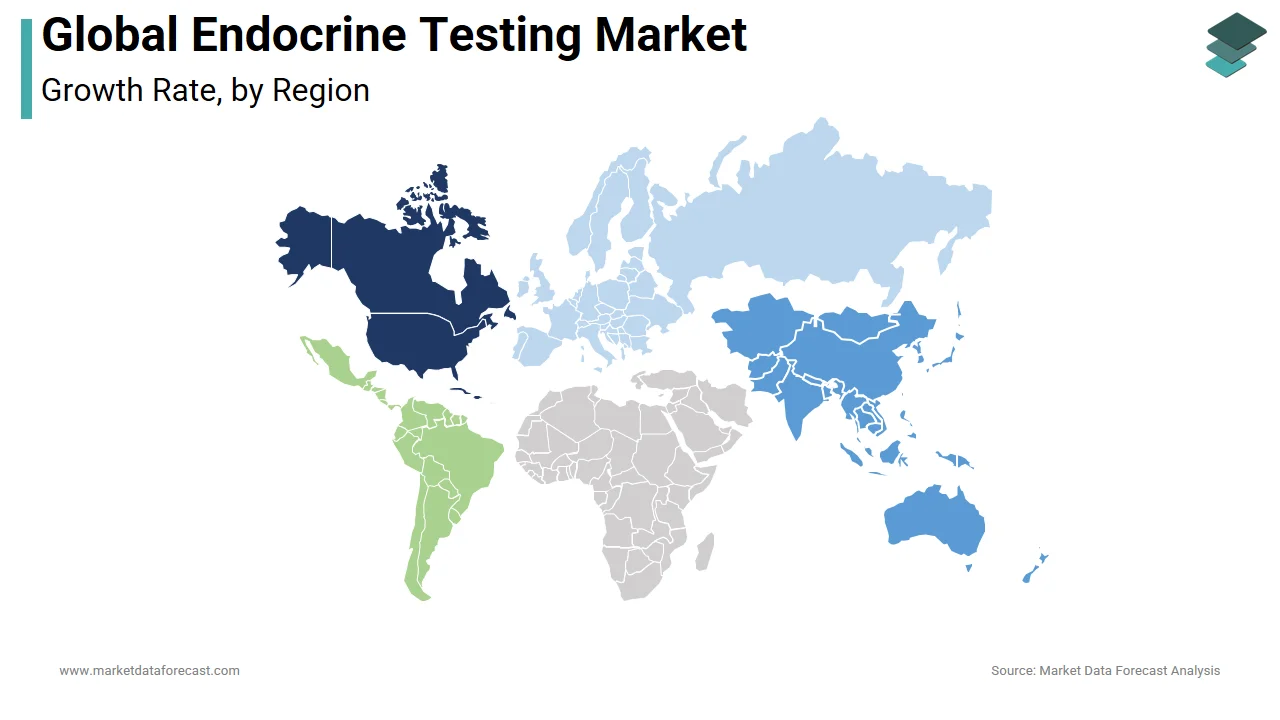
- North America dominated the global market in 2025 by accounting for 38.3% share, driven by advanced healthcare infrastructure, widespread adoption of automated diagnostic technologies, high disease awareness, and favorable reimbursement policies.
- Europe held the second-largest position, supported by continued harmonization of diagnostic protocols, expanding personalized medicine initiatives, and well-established clinical laboratory networks across the region.
- Asia-Pacific is projected to register the fastest growth during the forecast period, driven by rapid healthcare modernization, increasing healthcare expenditure, expanding diagnostic infrastructure, and growing awareness of endocrine health across emerging economies.
Competitive Landscape
The global endocrine testing market is highly competitive, with leading diagnostics and life sciences companies focusing on innovation, automation, and advanced biomarker testing solutions. Market participants are investing in high-throughput immunoassay systems, molecular diagnostics, and integrated laboratory platforms to improve diagnostic accuracy and operational efficiency. Strategic collaborations, acquisitions, product launches, and ongoing research and development continue to shape the competitive landscape.
Prominent companies operating in the global endocrine testing market include Agilent Technologies, F. Hoffmann-La Roche Ltd., AB SCIEX, Thermo Fisher Scientific, Abbott Laboratories, Bio-Rad Laboratories, DiaSorin S.p.A., Roche Diagnostics, Beckman Coulter Inc., Siemens Healthineers, and bioMérieux.
 Download Free Sample Report
Global Endocrine Testing Market Size
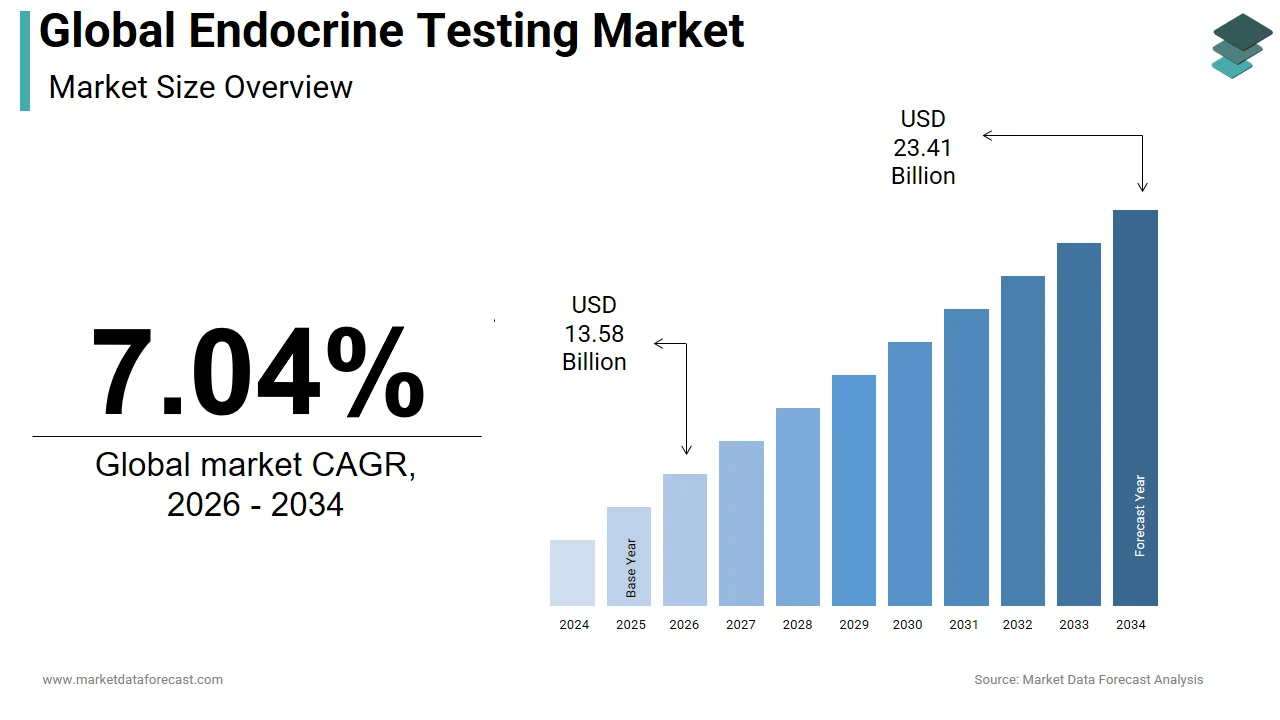
The global endocrine testing market was valued at USD 12.69 billion in 2025, is estimated to reach USD 13.58 billion in 2026, and is projected to reach USD 23.41 billion by 2034, growing at a CAGR of 7.04% from 2026 to 2034.
The endocrine testing market is a specialized array of diagnostic procedures and laboratory assays designed to measure hormone levels and evaluate the functional integrity of the endocrine system. These tests are critical for diagnosing conditions such as diabetes, thyroid disorders, adrenal insufficiency, and reproductive health issues. In Europe, the sector is experiencing robust growth driven by an aging population and increasing prevalence of metabolic syndromes. According to the International Diabetes Federation, approximately 65 million adults in the European region were living with diabetes in 2024, representing a significant burden on healthcare systems that necessitates regular hormonal monitoring. As per the World Health Organization, thyroid disorders affect millions globally, with an estimated 12% of the population developing a thyroid condition during their lifetime, and higher incidence rates observed in iodine-deficient regions. As per data from clinical studies, up to 80% of women may experience some form of hormonal imbalance during their lifetime, driving demand for comprehensive reproductive hormone panels. According to the German Federal Institute for Drugs and Medical Devices, early detection of endocrine disruptions through precise testing is vital for effective disease management. This clinical imperative aligns with the European Commission’s strategy for personalized medicine, which prioritizes advanced diagnostics for chronic disease management. The integration of high-sensitivity immunoassays and mass spectrometry techniques has enhanced the accuracy of these tests, enabling clinicians to detect minute hormonal fluctuations, thereby improving patient outcomes and reducing unnecessary treatments across the continent.
MARKET DRIVERS
Rising Prevalence of Metabolic and Thyroid Disorders Driving Diagnostic Volume
The rising prevalence of metabolic and thyroid disorders is one of the major factors propelling the expansion of the global endocrine testing market. According to data from the World Obesity Federation, obesity rates among adults in the European Union are significant, creating a direct correlation with increased cases of insulin resistance and type 2 diabetes, requiring frequent glycemic and hormonal assessments. As per statistics from the World Health Organization, hypothyroidism affects approximately 2% of the population in iodine-sufficient areas, while hyperthyroidism affects around 0.5%, necessitating regular monitoring of thyroid-stimulating hormone and free thyroxine levels. According to the United Kingdom National Health Service, referrals for thyroid function tests have seen consistent demand due to increased awareness and improved screening guidelines. Furthermore, research indicates that autoimmune thyroid diseases are more prevalent in women, affecting up to 8 times more females than males, which drives consistent demand for gender-specific hormonal panels. According to the Italian Society of Endocrinology, the aging population in Europe, which is projected to constitute a significant portion of the total demographic by 2050, will experience higher rates of age-related hormonal decline, requiring comprehensive diagnostic workups. This demographic shift ensures sustained volume growth as healthcare providers adopt proactive screening protocols to manage chronic endocrine conditions effectively and prevent severe complications.
Advancements in High-Sensitivity Assay Technologies Enhancing Diagnostic Precision
Technological innovations in immunoassay platforms and mass spectrometry have significantly improved the sensitivity and specificity of endocrine tests, which is further aiding the endocrine testing market growth. According to the European Federation of Clinical Chemistry and Laboratory Medicine, modern chemiluminescent immunoassays can detect hormone concentrations at highly precise levels, allowing for earlier diagnosis of subtle endocrine abnormalities. According to the German Society for Clinical Chemistry and Laboratory Medicine, the implementation of tandem mass spectrometry has substantially reduced interference from cross-reacting antibodies, ensuring more accurate results for steroid hormones such as testosterone and cortisol. According to the United Kingdom Association for Clinical Biochemistry and Laboratory Medicine, laboratories adopting automated high-throughput analyzers have significantly reduced turnaround times, facilitating faster clinical decision-making and patient management. Furthermore, according to the Spanish Society of Laboratory Medicine, next-generation sequencing technologies are increasingly used to identify genetic mutations associated with congenital endocrine disorders, enabling personalized treatment strategies. According to the Dutch Federation of Medical Specialists, integration of artificial intelligence in result interpretation has improved diagnostic accuracy by identifying complex patterns in multi-hormone panels. These technological advancements address previous limitations in test reliability and speed, making endocrine testing more accessible and trustworthy for clinicians. According to the Swiss Society of Clinical Chemistry, standardized calibration protocols across European laboratories have enhanced comparability of results, supporting cross-border healthcare initiatives and research collaborations.
MARKET RESTRAINTS
Stringent Regulatory Requirements for Laboratory Accreditation and Quality Control
Complex regulatory frameworks governing laboratory operations and diagnostic kit approvals are hampering the endocrine testing market expansion. According to the European Commission In Vitro Diagnostic Regulation, manufacturers must undergo rigorous conformity assessments and clinical performance evaluations before launching new tests, a process that can take up to 24 months. According to the German Federal Institute for Drugs and Medical Devices, laboratories must maintain strict adherence to ISO 15189 standards, requiring continuous internal quality control and external proficiency testing, which increases operational overheads. According to the French National Authority for Health, non-compliant facilities face severe financial penalties and potential suspension of licensing, creating a high barrier to entry for smaller independent labs. Furthermore, according to the United Kingdom Medicines and Healthcare products Regulatory Agency, detailed post-market surveillance data is required to monitor adverse events associated with diagnostic kits, adding administrative burdens to manufacturers. According to the Italian Ministry of Health, varying national reimbursement policies across European countries complicate pricing strategies and limit market access for innovative but expensive testing methods. According to the Spanish Agency for Medicines and Health Products, frequent updates to regulatory guidelines require constant adaptation of laboratory protocols and staff training. These regulatory pressures necessitate substantial investment in compliance infrastructure and legal expertise, limiting the agility of market participants and slowing the introduction of novel diagnostic solutions despite their clinical potential.
Shortage of Skilled Laboratory Personnel and Technical Expertise
A persistent shortage of qualified clinical biochemists and laboratory technicians poses a significant challenge to the endocrine testing market growth. According to the European Federation of Laboratory Medicine, there is a projected deficit of tens of thousands of skilled laboratory professionals by 2030 due to an aging workforce and insufficient training programs in specialized endocrine diagnostics. According to the German Society for Laboratory Medicine, vacancy rates for senior clinical scientists have reached significant levels, leading to increased workload for existing staff and potential delays in test reporting. According to the United Kingdom Royal College of Pathologists, recruitment difficulties are particularly acute in rural areas, where retention rates are lower than in urban centers, affecting equitable access to diagnostic services. Furthermore, according to the French National Institute of Health and Medical Research, specialized training in mass spectrometry and advanced immunoassay techniques is limited to few academic institutions, creating a skills gap in handling complex endocrine panels. According to the Dutch Association of Clinical Chemists, burnout rates among laboratory staff have increased due to high-pressure environments and staffing shortages, impacting overall productivity. According to the Italian Society of Clinical Pathology, reliance on temporary agency staff increases operational costs and reduces consistency in quality control procedures. This human resource constraint limits the capacity of laboratories to scale operations and adopt new technologies efficiently, hindering the growth potential of the endocrine testing market despite rising demand.
MARKET OPPORTUNITIES
Integration of Point-of-Care Testing for Rapid Hormonal Assessment
The development and deployment of point-of-care testing devices for immediate hormonal assessment present a significant opportunity for the global endocrine testing market. According to the European Society of Endocrinology, portable devices capable of measuring thyroid-stimulating hormone and cortisol levels are gaining traction in general practitioner offices and emergency departments. According to the World Health Organization, point-of-care testing can significantly reduce diagnostic delays, enabling timely initiation of treatment for acute endocrine crises such as adrenal insufficiency. According to the German Federal Joint Committee, reimbursement codes for point-of-care endocrine tests have been expanded to encourage adoption in rural clinics where laboratory access is limited. Furthermore, according to the United Kingdom National Institute for Health and Care Excellence, point-of-care glucose and ketone monitoring is recommended for diabetes management, which has been shown to reduce hospital admissions. According to the French National Health Insurance Fund, decentralized testing models improve patient compliance with monitoring protocols, as individuals can perform tests at home or local pharmacies. According to the Spanish Ministry of Health, mobile health applications integrated with point-of-care devices allow real-time data sharing with endocrinologists, facilitating remote patient management. These innovations democratize access to critical diagnostic information, empowering patients and reducing the burden on centralized laboratories. According to the Norwegian Directorate of Health, pilot programs for home-based hormonal monitoring are supported, demonstrating improved quality of life for patients with chronic endocrine conditions.
Expansion of Personalized Medicine and Genetic Hormonal Profiling
The convergence of endocrine testing with genomic analysis offers lucrative opportunities for the expansion of the global endocrine testing market. According to the European Alliance for Personalized Medicine, genetic testing for polymorphisms affecting hormone metabolism can predict drug response and dosage requirements with high accuracy. According to the German Human Genome Project, pharmacogenomic profiling for thyroid hormone replacement therapy significantly reduces trial-and-error prescribing, leading to better patient outcomes and cost savings. According to the United Kingdom Genomics England initiative, endocrine disorders are included in its rare disease program, enabling comprehensive genetic screening for congenital adrenal hyperplasia and other inherited conditions. Furthermore, according to the French National Institute of Health and Medical Research, polygenic risk scores for type 2 diabetes allow early intervention strategies before clinical symptoms manifest. According to the Italian Society of Endocrinology, integration of genetic data with traditional hormonal assays provides a holistic view of patient health, enabling precision medicine approaches. According to the Dutch Centre for Personalized Cancer Treatment, hormonal profiling is used to tailor therapies for endocrine-sensitive cancers such as breast and prostate cancer, improving survival rates. According to the Swedish National Board of Health and Welfare, reimbursement for genetic endocrine testing is supported in specific high-risk populations, recognizing its clinical utility. This shift toward personalized diagnostics creates new revenue streams for laboratories and strengthens the value proposition of comprehensive endocrine testing packages.
MARKET CHALLENGES
Standardization Discrepancies across Different Laboratory Platforms
Significant variations in assay calibration and reference ranges across different laboratory platforms are challenging the expansion of the global endocrine testing market. According to the European Federation of Clinical Chemistry and Laboratory Medicine, results for the same hormone sample can vary significantly depending on the manufacturer and instrument used, complicating longitudinal patient monitoring. According to the German Society for Laboratory Medicine, lack of universal standardization for steroid hormone assays leads to misdiagnosis and inappropriate treatment adjustments in many cases. According to the United Kingdom Association for Clinical Biochemistry and Laboratory Medicine, harmonization efforts have been slow due to proprietary methodologies and intellectual property restrictions preventing open comparison of reagents. Furthermore, according to the French National Institute of Health and Medical Research, reference intervals often differ between laboratories, requiring clinicians to interpret results within specific local contexts rather than using universal thresholds. According to the Italian Society of Clinical Pathology, patients switching healthcare providers may face confusion due to inconsistent result formats and units of measurement. According to the Spanish Agency for Medicines and Health Products, regulatory bodies struggle to enforce uniformity without stifling innovation in assay design. According to the Dutch Federation of Medical Specialists, these discrepancies hinder multicenter research studies and meta-analyses, requiring complex statistical adjustments. Addressing this fragmentation requires extensive collaboration among manufacturers, regulators, and professional societies to establish common standards and reference materials.
High Costs Associated with Advanced Mass Spectrometry Implementation
The substantial capital investment required for implementing tandem mass spectrometry systems poses a financial barrier for many laboratories seeking to offer high-precision endocrine testing, which is further challenging the global market expansion. For instance, a single triple-quadrupole mass spectrometer can cost between 200,000 and 400,000 euros, excluding maintenance and operational expenses. According to the German Federal Ministry of Education and Research, specialized personnel training for mass spectrometry operation adds significant annual costs to laboratory budgets. According to the United Kingdom National Health Service, only a limited percentage of hospital laboratories have access to mass spectrometry due to budget constraints, forcing reliance on less accurate immunoassays for complex steroid profiles. Furthermore, according to the French National Health Insurance Fund, reimbursement rates for mass spectrometry-based tests do not always cover the full cost of analysis, discouraging widespread adoption. According to the Italian Ministry of Health, smaller private laboratories cannot afford the infrastructure upgrades necessary for high-throughput mass spectrometry, limiting market competition. According to the Spanish Society of Laboratory Medicine, supply chain disruptions for specialized columns and reagents further increase operational risks and costs. According to the Norwegian Directorate of Health, centralization of mass spectrometry services in regional hubs improves efficiency but reduces accessibility for remote patients. These financial hurdles restrict the availability of gold-standard testing methods to well-funded institutions, creating disparities in diagnostic quality across the healthcare system.
REPORT COVERAGE
| REPORT METRIC | DETAILS |
| Market Size Available | 2025 to 2034 |
| Base Year | 2025 |
| Forecast Period | 2026 to 2034 |
| Segments Covered | By Test, Technology, End-User, and Region. |
| Various Analyses Covered | Global, Regional and Country-Level Analysis, Segment-Level Analysis, Drivers, Restraints, Opportunities, Challenges; PESTLE Analysis; Porter’s Five Forces Analysis, Competitive Landscape, Analyst Overview of Investment Opportunities |
| Regions Covered | North America, Europe, Asia Pacific, Latin America, Middle East & Africa |
| Market Leaders Profiled | Agilent Technologies, F-Hoffmann La Roche Ltd, AB SCIEX, Thermo Fisher Scientific, Abbott Laboratories, Bio-Rad Laboratories, DiaSorin S.p.A., Beckman Coulter Inc., Siemens Healthineers, and bioMerieux. |
SEGMENTAL ANALYSIS
By Technology Insights
The immunoassay segment dominated the market by commanding for the highest share of the global market in 2025. The dominance of the immunoassay segment in the global market is attributed to its ability to process large volumes of samples rapidly with minimal manual intervention. According to the European Federation of Clinical Chemistry and Laboratory Medicine, automated immunoassay platforms can process over 400 tests per hour, making them indispensable for high-volume hospital laboratories and commercial diagnostic centers. According to the German Society for Laboratory Medicine, chemiluminescent immunoassays account for the majority of all routine hormone tests, including thyroid-stimulating hormone and insulin, due to their robust performance and ease of integration into existing laboratory workflows. According to the United Kingdom National Health Service, automation significantly reduces human error compared to manual radioimmunoassays, ensuring consistent quality control across thousands of daily tests. Furthermore, according to the French National Institute of Health and Medical Research, modern immunoassay systems require only microliters of sample volume, which is critical for pediatric and geriatric patients with limited blood draw tolerance. According to the Italian Society of Clinical Pathology, the widespread availability of reagents and standardized kits from major manufacturers ensures supply chain stability and cost efficiency. According to the Spanish Agency for Medicines and Health Products, regulatory approval pathways for established immunoassay technologies are well-defined, reducing time to market for new analytes. This operational efficiency and scalability ensure that immunoassays remain the backbone of routine endocrine diagnostics despite the emergence of more specialized techniques.
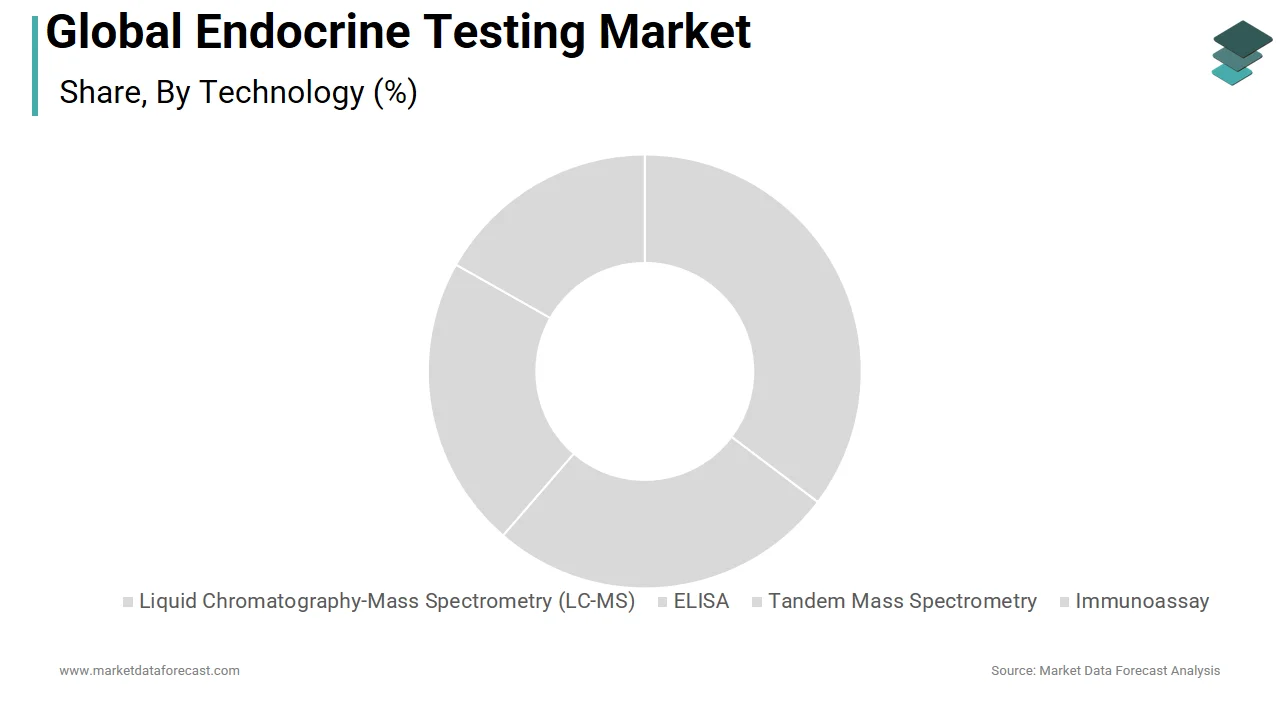
On the other hand, the tandem mass spectroscopy segment is expected to record a promising CAGR of 9.9% during the forecast period due to its unparalleled ability to distinguish between structurally similar hormones without cross-reaction. According to the European Society for Mass Spectrometry, this technology eliminates interference from heterophilic antibodies and binding proteins, which frequently cause false positives in immunoassays, particularly for steroid hormones like testosterone and vitamin D. According to the German Society for Laboratory Medicine, tandem mass spectroscopy achieves specificity rates exceeding 99%, allowing for accurate diagnosis of conditions such as congenital adrenal hyperplasia where precise hormone quantification is critical. According to the United Kingdom Association for Clinical Biochemistry and Laboratory Medicine, reference laboratories are increasingly adopting this technology for confirmatory testing after abnormal immunoassay results, reducing misdiagnosis rates. Furthermore, according to the French National Institute of Health and Medical Research, the ability to measure multiple hormones simultaneously from a single small sample volume enhances diagnostic efficiency and patient comfort. According to the Italian Society of Endocrinology, clinical guidelines increasingly recommend mass spectrometry for low-concentration hormones when immunoassay sensitivity is insufficient. According to the Spanish Society of Laboratory Medicine, improved ionization techniques have expanded the range of detectable analytes, including novel biomarkers for metabolic disorders. These technical superiorities drive adoption among specialized centers seeking gold-standard diagnostic accuracy.
By End User Insights
The hospitals segment led the market, capturing the largest share of the global market in 2025. The leading position of the hospitals segment in the global market is driven by their role as primary centers for acute care and comprehensive disease management requiring immediate and extensive hormonal assessments. According to the European Hospital and Healthcare Federation, hospitals perform approximately 60% of all endocrine tests in Europe, driven by the need for rapid diagnosis in emergency departments and intensive care units. According to the German Hospital Federation, inpatient settings require frequent monitoring of glucose, cortisol, and thyroid hormones to manage critical conditions such as diabetic ketoacidosis and adrenal crisis. According to the United Kingdom National Health Service, hospital-based laboratories offer 24-hour turnaround times for urgent endocrine panels, ensuring timely clinical interventions for critically ill patients. Furthermore, according to the French National Institute of Health and Medical Research, integrated electronic health records in hospitals facilitate seamless coordination between endocrinologists, pathologists, and primary care physicians, improving continuity of care. According to the Italian Society of Hospital Pharmacy, hospitals benefit from economies of scale by centralizing testing services for multiple departments, reducing per-test costs. According to the Spanish Ministry of Health, teaching hospitals serve as hubs for complex case referrals, driving demand for advanced diagnostic capabilities. According to the Austrian Hospital Association, accreditation standards require hospitals to maintain broad testing menus to handle diverse patient populations. This centralization of resources and expertise ensures hospitals remain the dominant end users of endocrine testing services.
On the other end, the diagnostic laboratories segment is expected to register a promising CAGR of 8.4% during the forecast period as healthcare providers increasingly outsource testing to specialized independent facilities. According to the European Diagnostic Manufacturers Association, independent laboratories process over 40% of outpatient endocrine tests due to their ability to offer lower costs and faster turnaround times through centralized operations. According to the German Medical Association, general practitioners prefer sending samples to reference laboratories to avoid the high capital and maintenance costs of in-house equipment. According to the United Kingdom Private Healthcare Information Network, independent labs offer extended testing menus including rare hormone panels that small clinics cannot justify maintaining. Furthermore, according to the French National Health Insurance Fund, competitive pricing among diagnostic laboratories has reduced out-of-pocket expenses for patients, driving higher utilization rates. According to the Dutch Healthcare Authority, digital sample tracking systems allow seamless logistics between collection centers and central labs, enhancing convenience for patients and providers. According to the Italian Society of Clinical Pathology, consolidation in the diagnostic sector has created large networks with nationwide coverage, improving accessibility. According to the Spanish Agency for Medicines and Health Products, regulatory compliance in independent labs meets the same stringent standards as hospitals, ensuring trust in results. According to the Austrian Social Security Institution, contracts with independent labs help manage public healthcare budgets by shifting volume to efficient private providers. These factors drive robust expansion of the diagnostic laboratory segment.
REGIONAL ANALYSIS
North America Endocrine Testing Market Analysis
North America led the market with 38.3% of the global market share in 2025 and is expected to maintain its dominant position in the endocrine testing market over the next few years due to the advanced healthcare infrastructure and high prevalence of endocrine disorders. The United States dominates the regional market with significant investments in diagnostic technologies and a strong presence of key market players. According to the Centers for Disease Control and Prevention, over 34 million Americans have diabetes, necessitating regular hormonal monitoring and driving substantial test volumes. According to the American Diabetes Association, annual spending on diabetes-related diagnostics exceeds 10 billion dollars, supporting robust market growth. Canada contributes with a publicly funded healthcare system that emphasizes preventive care and early detection of thyroid and reproductive disorders. According to the Canadian Institute for Health Information, wait times for specialized endocrine testing have decreased due to the expansion of private diagnostic laboratories. The United States Food and Drug Administration actively approves novel endocrine assays, facilitating rapid market entry for innovative products. High disposable income and health awareness among the population support demand for premium testing services. The region benefits from extensive research collaborations between academic institutions and industry leaders, driving technological advancements. Reimbursement policies from private insurers and Medicare provide financial stability for diagnostic providers. The aging population in the United States further amplifies demand for comprehensive hormonal assessments.
Europe Endocrine Testing Market Analysis
Europe is likely to continue its trend of harmonizing diagnostic protocols and advancing personalized medicine to maintain its position as a major endocrine testing hub. Europe maintains a mature and highly regulated position in the endocrine testing market, characterized by universal healthcare coverage and stringent quality standards. Germany leads the region with a strong network of specialized laboratories and high adoption of advanced diagnostic technologies. According to the Robert Koch Institute, thyroid disorders affect millions of Germans, driving consistent demand for thyroid function tests. The United Kingdom follows with a robust National Health Service that prioritizes cost-effective diagnostic pathways and outsourcing to independent laboratories. France emphasizes personalized medicine initiatives integrating genetic profiling with traditional endocrine testing. The European Medicines Agency ensures strict regulatory oversight, guaranteeing high quality and safety of diagnostic kits. The Netherlands serves as a logistics hub facilitating efficient distribution of reagents across the continent. Scandinavian countries lead in digital health integration, enabling remote monitoring and data sharing. The European Society of Endocrinology promotes harmonization of testing protocols across member states, improving comparability of results. Aging populations in Southern Europe increase the prevalence of age-related hormonal deficiencies. Government funding for rare disease diagnostics supports niche testing segments. The region focuses on sustainability and reducing the environmental impact of laboratory waste.
Asia Pacific Endocrine Testing Market Analysis
Asia Pacific is anticipated to experience rapid growth in its endocrine testing market as healthcare systems continue to modernize and expand across the region over the next several years. Asia Pacific represents the fastest-growing regional market, driven by rising healthcare expenditure and increasing awareness of endocrine health. China leads the region with massive government investments in healthcare infrastructure and expanding insurance coverage for diagnostic tests. According to the Chinese National Health Commission, diabetes prevalence is significant, creating a vast patient base requiring regular monitoring. India is experiencing rapid growth due to medical tourism and the establishment of world-class diagnostic chains offering affordable testing services. Japan focuses on advanced technologies and the needs of an aging population, driving demand for precise hormonal assessments. According to the Indian Council of Medical Research, thyroid disorders are increasingly diagnosed due to improved screening programs. South Korea leverages its strong IT infrastructure to integrate digital health records with laboratory systems. Australia contributes with high standards of care and adoption of innovative diagnostic methods. The Association of Southeast Asian Nations nations are improving rural access to diagnostics through mobile health initiatives. Local manufacturing of reagents is reducing costs and increasing availability. Rising middle-class incomes enable greater spending on preventive health checks. Urbanization and lifestyle changes contribute to higher incidence of metabolic syndromes.
Latin America Endocrine Testing Market Analysis
Latin America is likely to see steady improvements in diagnostic access and infrastructure, fostering long-term growth in the endocrine testing sector due to improving healthcare access and rising chronic disease burden. Brazil leads the regional market with a large population and growing private healthcare sector, driving demand for endocrine testing. According to the Brazilian Ministry of Health, diabetes affects over 16 million people, creating sustained demand for glycemic and hormonal monitoring. Mexico is expanding its diagnostic infrastructure through public-private partnerships, enhancing service availability. Argentina faces economic challenges but maintains demand for essential endocrine diagnostics due to high prevalence of thyroid disorders. According to the Pan American Health Organization, regional initiatives are supported to improve laboratory quality and standardization. Chile and Colombia are seeing growth in premium segments as insurance coverage expands. Local laboratories are investing in automation to improve efficiency and reduce costs. The region benefits from trade agreements facilitating the import of advanced diagnostic equipment. Increasing urbanization drives lifestyle-related endocrine disorders, requiring diagnostic intervention. Government programs focusing on maternal and child health boost demand for reproductive hormone testing.
Middle East and Africa Endocrine Testing Market Analysis
The Middle East and Africa are projected to continue prioritizing healthcare modernization and expanding access to advanced endocrine testing services in the coming years. Saudi Arabia and the United Arab Emirates lead the region with significant investments in state-of-the-art diagnostic facilities. According to the International Diabetes Federation, the Middle East has one of the highest diabetes prevalence rates globally, exceeding 16% in some countries, driving an urgent need for regular testing. South Africa is the largest market in sub-Saharan Africa with established private laboratory networks serving insured populations. Egypt and Nigeria show potential due to large populations and increasing government focus on non-communicable diseases. According to the World Health Organization, capacity-building programs are supported to improve laboratory standards in African nations. High obesity rates in Gulf countries contribute to increased incidence of metabolic and hormonal disorders. Medical tourism in Dubai and Abu Dhabi attracts patients seeking advanced endocrine care. Local manufacturing of basic diagnostic reagents is emerging to reduce import dependency. Digital health initiatives are improving access to testing in remote areas.
COMPETITIVE LANDSCAPE
The competition in the endocrine testing market is characterized by intense rivalry among established multinational corporations and specialized niche players striving for technological superiority. Major competitors differentiate themselves through proprietary assay technologies, automation capabilities, and extensive global distribution networks. Innovation in mass spectrometry and molecular diagnostics creates new battlegrounds for accuracy and specificity, driving continuous research and development investments. Regulatory compliance remains a critical factor as companies navigate complex approval processes across different jurisdictions to maintain market access. Pricing pressure from healthcare payers forces manufacturers to demonstrate cost-effectiveness and clinical value to secure reimbursement coverage. Collaborations with academic institutions and participation in external quality assurance programs enhance credibility and foster trust among clinicians. The rise of point-of-care testing introduces new competitive dynamics as companies seek to decentralize diagnostics and empower patients. Mergers and acquisitions are common strategies to consolidate market presence and acquire innovative technologies. Customer service and technical support quality significantly influence purchasing decisions in this highly technical sector.
KEY MARKET PARTICIPANTS
Some of the companies that are playing a dominant role in the global endocrine testing market include
- Agilent Technologies
- F. Hoffmann-La Roche Ltd.
- AB SCIEX
- Thermo Fisher Scientific
- Abbott Laboratories
- Bio-Rad Laboratories
- DiaSorin S.p.A.
- Roche Diagnostics
- Beckman Coulter Inc.
- Siemens Healthineers
- bioMérieux
TOP PLAYERS IN THE GLOBAL MARKET
- Roche Diagnostics stands as a global leader in endocrine testing by providing comprehensive automated solutions for thyroid, diabetes, and reproductive health diagnostics. The company leverages its Elecsys platform to deliver high-throughput and precise immunoassay results widely used in hospitals worldwide. Recent actions include the launch of novel biomarkers for early detection of adrenal disorders, enhancing clinical decision-making capabilities. Roche actively collaborates with healthcare providers to integrate digital pathology tools that streamline workflow efficiency. Their commitment to innovation is evident in the continuous expansion of their assay portfolio to address emerging endocrine conditions. This strategic focus on precision medicine and automation strengthens their position as a trusted partner for laboratories seeking reliable and scalable diagnostic infrastructure.
- Siemens Healthineers contributes significantly to the endocrine testing market through its advanced Atellica and Dimension platforms known for speed and accuracy. The company focuses on integrating artificial intelligence into laboratory operations to optimize test utilization and reduce turnaround times. Recent initiatives involve expanding their menu of specialized hormone assays, including vitamin D and parathyroid hormone tests, to meet growing clinical demand. Siemens actively partners with reference laboratories to standardize testing protocols, ensuring consistent results across different facilities. Their investment in sustainable laboratory practices appeals to environmentally conscious healthcare systems. By offering seamless connectivity between instruments and laboratory information systems, Siemens enhances operational efficiency and supports clinicians in delivering timely patient care.
- Abbott Laboratories plays a pivotal role in the endocrine testing sector with its Alinity and Architect systems offering robust performance for routine and specialized hormone analysis. The company emphasizes point-of-care solutions enabling rapid glucose and ketone monitoring for diabetes management in diverse settings. Recent actions include the development of next-generation immunoassays with improved sensitivity for low-concentration hormones such as testosterone. Abbott engages in extensive clinical research to validate new biomarkers for metabolic and reproductive disorders. Their global distribution network ensures wide availability of reagents and instruments supporting laboratories in remote regions. By focusing on accessibility and technological advancement, Abbott strengthens its reputation for delivering high-quality diagnostic solutions that improve patient outcomes globally.
TOP STRATEGIES USED BY KEY MARKET PARTICIPANTS
Key players in the endocrine testing market primarily focus on product innovation by developing high-sensitivity assays and expanding menus for rare hormonal disorders. Companies invest heavily in automation technologies to enhance laboratory throughput and reduce manual errors, ensuring consistent result quality. Strategic partnerships with healthcare providers and research institutions facilitate clinical validation of new biomarkers and accelerate regulatory approvals. Manufacturers prioritize regulatory compliance and quality certifications to build trust and maintain access to regulated markets globally. Expansion into emerging economies through localized manufacturing and distribution networks helps capture growing demand in developing regions. Digital integration efforts connect diagnostic devices with electronic health records, enabling real-time data sharing and personalized patient management. These strategies enable companies to differentiate their offerings and respond effectively to evolving clinical needs and regulatory landscapes.
MARKET SEGMENTATION
This research report on the global endocrine testing market has been segmented and sub-segmented into the following categories.
By Technology
- Liquid Chromatography-Mass Spectrometry (LC-MS)
- ELISA
- Tandem Mass Spectrometry
- Immunoassay
By Test
- Human Chorionic Gonadotropin (HCG) Test
- Dehydroepiandrosterone Sulfate (DHEAS) Test
- Thyroid Stimulating Hormone (TSH) Test
- Cortisol Test
- Prolactin Test
- Insulin
By End-User
- Hospitals
- Physicians’ Offices
- Diagnostic Laboratories
- Ambulatory Care Centers
- Healthcare Centers
- Commercial Laboratories
By Region
- North America
- Europe
- Asia-Pacific
- Latin America
- Middle East and Africa