- Product Description Description
- Table of Contents TOC
- List of Table & Figure LOT
- Get Free Sample PDF Sample PDF
Market Size, 2025
$953.69 MnMarket Estimate, 2026
$1,012.82 MnMarket Forecast, 2034
$1,638.80 MnCAGR, 2026–2034
6.2%Europe Acute Ischemic Stroke Diagnosis & Treatment Market Summary
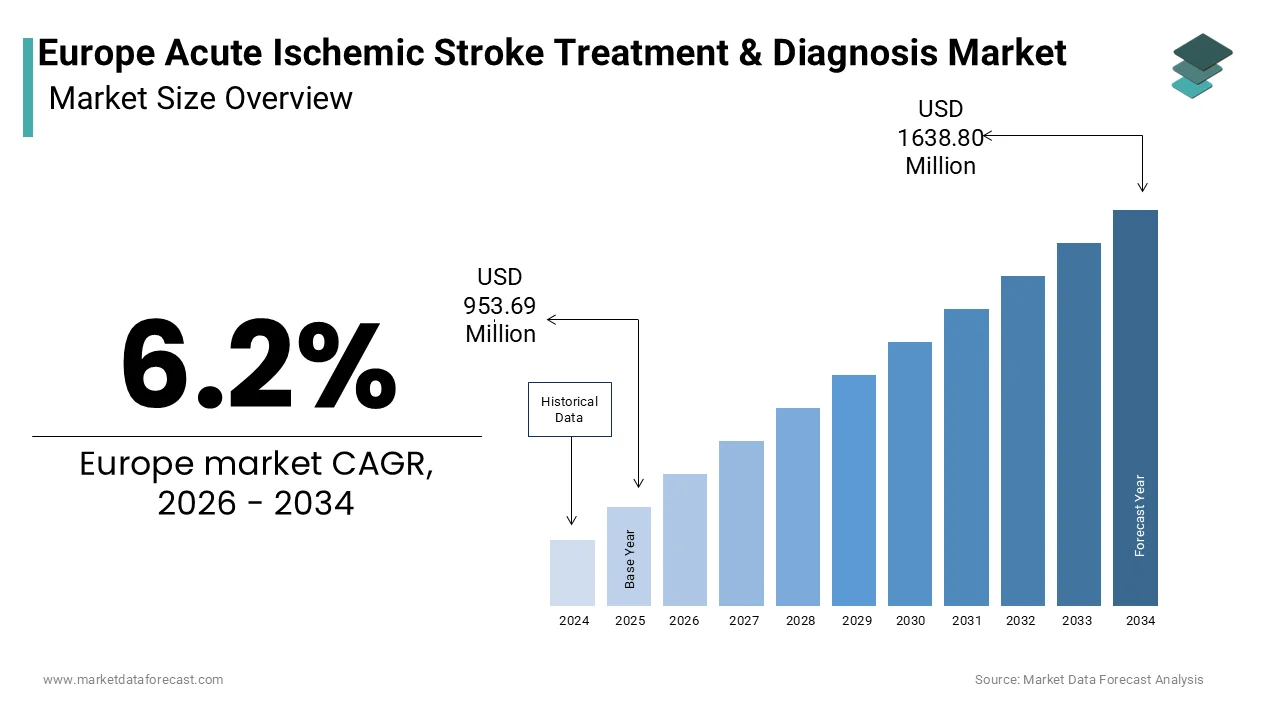
Europe’s acute ischemic stroke diagnosis & treatment market, valued at USD 953.69 million in 2025, is projected to reach USD 1,638.80 million by 2034, growing at a CAGR of 6.2% driven by aging demographics, expanded thrombectomy eligibility, and rapid adoption of AI-enabled stroke imaging and networks.
Key Market Insights
- 2025 Market Size: USD 953.69 million
- 2026 Market Size: USD 951.01 million
- 2034 Forecast: USD 1,638.80 million
- CAGR (2025–2033): 6.2%
- Base Year: 2025
- Forecast Period: 2026–2034
Quick Growth Drivers
- Rising stroke incidence linked to population aging and cardiovascular risk factors
- Expansion of mechanical thrombectomy time windows based on advanced imaging
- Mandatory door-to-needle and door-to-puncture targets in national stroke plans
- Rapid penetration of CT perfusion, MRI diffusion imaging, and AI analytics
- Growth of mobile stroke units and pre-hospital triage systems
Principal Restraints
- Uneven access to comprehensive stroke centers, especially in Eastern and rural Europe
- High capital and procedural costs for thrombectomy and biplane angiography suites
- Delays in reimbursement approvals for AI-based imaging software
- Budget constraints limiting infrastructure replication outside urban hubs
High-Value Opportunities
- Deployment of AI-enabled pre-hospital stroke triage and LVO detection
- Expansion of national hub-and-spoke stroke networks and telestroke platforms
- Integration of automated CT perfusion and workflow orchestration tools
- EU-level funding for digital health and stroke infrastructure resilience
Key Market Challenges
- Shortage of trained neurointerventional specialists across member states
- Inconsistent availability of 24/7 thrombectomy coverage
- Fragmented post-stroke rehabilitation and secondary prevention pathways
- Limited cross-border standardization of stroke care delivery
Fastest-Growing Segments
- MRI Diagnostics: 10.5% CAGR — wake-up strokes and complex cases
- Angioplasty: Double-digit CAGR — intracranial stenosis management
- AI-Assisted Imaging: Rapid adoption across comprehensive stroke centers
Regional Leadership & Dynamics
- Germany (21.6%) — dense stroke unit network, mobile stroke units, full reimbursement
- United Kingdom — NHS-led thrombectomy scale-up and centralized procurement
- France — fast reimbursement, strong neurointerventional training pipeline
- Netherlands — hub-and-spoke efficiency, national CT perfusion deployment
- Sweden — best-in-class outcomes driven by universal access and quality reporting
What Wins Commercially
- Technologies that reduce time-to-reperfusion
- Seamless integration into national stroke protocols
- Strong real-world evidence demonstrating disability reduction
- Scalable solutions supporting hub-and-spoke and telestroke models
- Training and workflow support addressing specialist shortages
Top Strategic Ask for Executives
Invest in AI-driven imaging, scalable thrombectomy platforms, and stroke-network integration to expand access beyond urban centers while demonstrating long-term disability cost savings to European payers.
Leading Players
Some of the companies that are playing a dominating role in the Europe acute ischemic stroke diagnosis & treatment market include:
- Medtronic plc
- Stryker Corporation
- Siemens Healthineers AG
- GE Healthcare
- Philips Healthcare
- Penumbra, Inc.
Europe Acute Ischemic Stroke Treatment & Diagnosis Market Size
The Europe Acute Ischemic Stroke Diagnosis & Treatment Market was valued at USD 953.69 million in 2025, is expected to have 6.2% CAGR from 2026 to 2034, and be worth USD 1638.80 million by 2034 from USD 951012.82 million in 2026.
Acute ischemic stroke diagnosis and treatment include a specialized ecosystem of medical technologies, pharmaceuticals, ls and clinical protocols aimed at rapidly identifying and managing strokes caused by cerebral artery occlusion. Acute ischemic stroke requires intervention within a narrow therapeutic window to salvage penumbral brain tissue and minimize long-term disability. Diagnosis relies on advanced neuroimaging modalities such as non-contrast computed tomography CT perfusion, and magnetic resonance imaging, alongside clinical scoring tools like the NIH Stroke Scale. Treatment pathways include intravenous thrombolysis with alteplase or tenecteplase within 4.5 hours of symptom onset and mechanical thrombectomy for large vessel occlusions up to 24 hours in select patients based on advanced imaging criteria. As per the European Stroke Organisation’s 2024 Stroke Care Atlas, over one million people in the European Union experience a stroke annually, with ischemic etiology dominating the burden. Timely access to comprehensive stroke centers remains uneven; according to the European Brain Council, fewer than half of Europeans live within a 60-minute drive of a certified thrombectomy-capable facility. This geographic and infrastructural disparity underscores the critical role of coordinated pre-hospital triage, telestroke networks, and standardized treatment protocols in shaping the market’s clinical and technological evolution across diverse national healthcare systems.
MARKET DRIVERS
Rising Incidence of Stroke Due to Aging Populations and Cardiovascular Risk Factors
The growing burden of acute ischemic stroke across Europe is primarily driven by demographic aging and the high prevalence of modifiable cardiovascular risk factors such as hypertension, diabetes, and atrial fibrillation, which are significantly driving the growth of the European acute ischemic stroke diagnosis and treatment market. According to Eurostat, the proportion of Europeans aged 65 and older reached over 21 percent in 2024 and is projected to exceed 25 percent by 2035, with age being the strongest non-modifiable risk factor for stroke. Concurrently, the European Society of Cardiology reports that a substantial portion of adults in the EU suffer from hypertension, while a notable share have diagnosed with atrial fibrillation, both leading contributors to thromboembolic cerebral events. In Germany alone, hundreds of thousands of new stroke cases are recorded annually, with ischemic strokes comprising the vast majority, as per the German Stroke Registry 2024 update. This epidemiological pressure compels healthcare systems to invest in rapid diagnostic and interventional capabilities to mitigate long-term disability and associated care costs. National stroke strategies in countries like Sweden and the Netherlands now mandate door-to-needle times under 60 minutes and universal access to thrombectomy within designated networks. As life expectancy continues to rise and risk factor control remains suboptimal across Southern and Eastern Europe, the clinical demand for time-sensitive diagnosis and advanced reperfusion therapies will persistently expand, which is driving the adoption of imaging AI and mobile stroke units across the region.
Expansion of Thrombectomy Eligibility Through Advanced Imaging and Extended Time Windows
The redefinition of treatment windows for mechanical thrombectomy based on advanced neuroimaging has significantly broadened the pool of eligible patients and intensified demand for multimodal diagnostic infrastructure, which is further propelling the regional market expansion. Historically limited to six hours from symptom onset, landmark trials such as DAWN and DEFUSE 3 demonstrated that patients with favorable perfusion imaging profiles could benefit from thrombectomy up to 24 hours after last known well. As per the 2024 European Stroke Organisation guidelines, these imaging-based selection criteria are now the standard of care across EU member states. This paradigm shift has catalysed widespread adoption of CT perfusion and MRI diffusion-weighted imaging in secondary and tertiary hospitals. According to the European Society of Neuroradiology, a majority of comprehensive stroke centers in Western Europe have implemented standardized perfusion protocols enabling precise identification of salvageable brain tissue. Countries like France and Switzerland have integrated automated imaging analysis software such as RAPID or Brainomix into emergency workflows, which is reducing interpretation time significantly. Consequently, hospitals previously deemed ineligible for thrombectomy programs are now upgrading imaging suites and training interventional neuroradiology teams. This evidence-driven expansion of treatable stroke not only improves patient outcomes but also drives sustained investment in diagnostic hardware, AI analytics, and endovascular device ecosystems across the continent.
MARKET RESTRAINTS
Geographic Disparities in Access to Comprehensive Stroke Centers Limit Timely Intervention
A major restraint in the European acute ischemic stroke market stems from pronounced regional inequities in access to thrombectomy-capable stroke centers, particularly in rural and Eastern European regions. According to the European Brain Council’s 2024 Stroke Care Accessibility Index, fewer than half of the EU population reside within a one-hour drive of a certified comprehensive stroke center equipped for mechanical thrombectomy. In countries like Romania, Bulgaria, and parts of Poland, a small fraction of stroke patients reach such facilities within the critical time window due to sparse neurointerventional coverage and underdeveloped emergency medical transport systems. Even in wealthier nations, geographic barriers persist; a 2024 study by the Swedish Stroke Registry found that patients in northern rural counties experienced median door-to-puncture times significantly longer than urban counterparts. These delays directly translate into lost brain tissue and higher disability rates, as every minute equates to the loss of millions of neurons. National health systems face budgetary constraints in replicating expensive thrombectomy infrastructure across low-population-density areas. Consequently, many regions rely on telestroke consultations and patient transfers, which introduce logistical complexity and time loss. Until mobile stroke units or hub-and-spoke models with rapid air ambulance support become universally implemented, this access gap will continue to cap the real-world impact of advanced stroke therapies despite their clinical availability.
Stringent Reimbursement Policies and Budget Constraints Delay Technology Adoption
Fiscal austerity and fragmented reimbursement frameworks across European healthcare systems impede the widespread deployment of advanced stroke diagnostics and treatments, particularly in cost-sensitive markets, which further impede the regional market expansion. While mechanical thrombectomy improves outcomes, it carries a high procedural cost averaging tens of thousands of euros per intervention, according to the European Health Economics Consortium 2024 analysis. Many national payers, including those in Italy, Spain, and Greece, require stringent health technology assessments before granting coverage and often limit reimbursement to academic centers or restrict patient selection criteria beyond clinical guidelines. In 2024, the French National Authority for Health delayed full reimbursement for AI-based imaging software, citing insufficient long-term outcome data despite proven reductions in door-to-treatment times. Similarly, the UK’s National Institute for Health and Care Excellence maintains a restrictive stance on tenecteplase adoption due to pricing negotiations with manufacturers. These delays force hospitals to absorb costs or defer capital investments in CT perfusion scanners or biplane angiography suites. A survey by the European Stroke Organisation found that a majority of medium-sized hospitals in Southern Europe postponed thrombectomy program launches due to budget constraints. Until harmonized value-based reimbursement models recognize the lifetime cost savings of disability prevention, the diffusion of life-saving stroke innovations will remain uneven and suboptimal across the European landscape.
MARKET OPPORTUNITIES
Integration of Artificial Intelligence in Pre-hospital and Emergency Stroke Triage
The deployment of artificial intelligence in pre-hospital and emergency department settings offers a transformative opportunity for the European acute ischemic stroke diagnosis and treatment market. AI algorithms embedded in ambulance electrocardiogram or telemedicine platforms can now predict large vessel occlusion with high accuracy using clinical and rudimentary imaging data, according to a 2024 validation study published in The Lancet Digital Health. In Germany and the Netherlands, mobile stroke units equipped with AI-assisted CT analysis reduce door-to-needle times by an average of over 20 minutes, enabling thrombolysis before hospital arrival. Similarly, emergency departments are adopting FDA- and CE-marked software such as Viz LVO and RapidAI that automatically flag suspected occlusions on incoming CT scans and alert neurovascular teams via smartphone notifications. As per the European Society for Medical Informatics, these systems have significantly reduced time to thrombectomy team activation in pilot sites across Sweden and Belgium. The European Commission’s AI in Health Action Plan further supports scaling such tools through funding and regulatory sandboxing. By compressing the time from symptom onset to reperfusion, AI not only enhances individual outcomes but also maximizes the utility of existing stroke infrastructure, making high-level care feasible even in resource-constrained settings through smarter triage and resource allocation.
Development of National Stroke Networks and Telestroke Infrastructure
The systematic organization of regional stroke care through certified networks and telestroke platforms offers a scalable opportunity to overcome geographic and workforce limitations across Europe, which is another promising opportunity in the European acute ischemic stroke diagnosis and treatment market. Countries like Austria and Denmark have demonstrated that hub-and-spoke models can extend thrombectomy access to the vast majority of the population. As per the European Stroke Organisation’s 2024 Network Implementation Report, a growing number of EU member states now have national stroke plans mandating standardized protocols, data registry participation, and interfacility transfer agreements. Telestroke not only enables remote interpretation of neuroimaging by specialists but also supports intravenous thrombolysis administration at spoke hospitals under expert guidance, increasing treatable cases significantly. The European Investment Bank has allocated hundreds of millions of euros under the Health Infrastructure Resilience Program to support telestroke deployment in Central and Eastern Europe. Additionally, the Interoperable Europe Act mandates cross-border health data exchange, which will soon allow stroke patients traveling within the Schengen area to access their medical history instantly. These coordinated systemic interventions transform stroke care from isolated hospital efforts into integrated public health services to ensure equitable access to time-critical therapies regardless of location.
MARKET CHALLENGES
Shortage of Trained Neurointerventional Specialists Constrains Procedural Capacity
The scalability of mechanical thrombectomy across Europe is one of the major challenges to the growth of the European acute ischemic stroke diagnosis and treatment market. According to the European Federation of Neurological Societies, fewer than 2,000 certified neuro-interventionalists are serving the entire EU population, which is resulting in a median of just a few specialists per country. In Eastern Europe, the gap is more severe as countries like Romania and Bulgaria each have very limited numbers of active practitioners despite stroke incidence rates well above the EU average. Training programs remain inconsistent, with only a portion of member states offering formal accreditation in endovascular stroke therapy, as per the European Board of Neurointervention 2024 workforce survey. This scarcity forces existing specialists to manage excessive caseloads, leading to burnout and procedural delays. In Italy, for example, the average on-call neurointerventionalist covers multiple hospitals across a wide geographic radius, often resulting in delayed start times. While simulation-based training and cross-specialization from interventional radiology or cardiology are emerging solutions, accreditation barriers and limited fellowship positions slow pipeline development. Until coordinated EU-wide training initiatives and task-sharing frameworks are implemented, the procedural capacity for thrombectomy will remain a bottleneck even where imaging and devices are available.
Fragmented Post-Stroke Care and Lack of Integrated Rehabilitation Pathways
Despite advances in acute treatment, the absence of standardized post-stroke rehabilitation and secondary prevention pathways undermines long-term recovery and increases recurrence risk across Europe, which is further challenging the expansion of the European acute ischemic stroke diagnosis and treatment market. According to the European Stroke Action Plan 2024, fewer than half of EU countries have national policies ensuring access to multidisciplinary rehabilitation within 72 hours of stroke onset. In Southern and Eastern Europe, fragmented care transitions often leave patients without coordinated physical, speech, or cognitive therapy, leading to preventable disability. Furthermore, secondary prevention is inconsistently implemented. As per a 2024 audit by the European Heart Network, just over half of discharged ischemic stroke patients received appropriate anticoagulation for atrial fibrillation or lipid-lowering therapy at guideline-recommended intensities. This care gap stems from poor integration between acute hospitals, primary care, and community services, compounded by varying reimbursement for rehabilitation. Without holistic continuity from hyperacute intervention through long-term risk management, the full potential of acute stroke innovations cannot be realized. The European Commission’s recent Chronic Disease Strategy aims to address this through integrated care bundles, but implementation remains nascent and uneven across member states.
REPORT COVERAGE
| REPORT METRIC | DETAILS |
| Market Size Available | 2025 to 2034 |
| Base Year | 2025 |
| Forecast Period | 2026 to 2034 |
| Segments Covered | By Diagnostic Type, Surgery Type, and Region. |
| Various Analyses Covered | Global, Regional, and Country-Level Analysis, Segment-Level Analysis, Drivers, Restraints, Opportunities, Challenges; PESTLE Analysis; Porter’s Five Forces Analysis, Competitive Landscape, Analyst Overview of Investment Opportunities |
| Countries Covered | UK, France, Spain, Germany, Italy, Russia, Sweden, Denmark, Switzerland, Netherlands, Turkey, Czech Republic, Rest of Europe |
| Market Leaders Profiled | Abbott Laboratories, Covidien plc, Philips Healthcare, Johnson & Johnson, Penumbra, Inc., GE Healthcare, Siemens Healthcare, Stryker Corporation (Concentric Medical, Inc.) and Hitachi, Ltd. |
SEGMENTAL ANALYSIS
By Diagnostic Type Insights
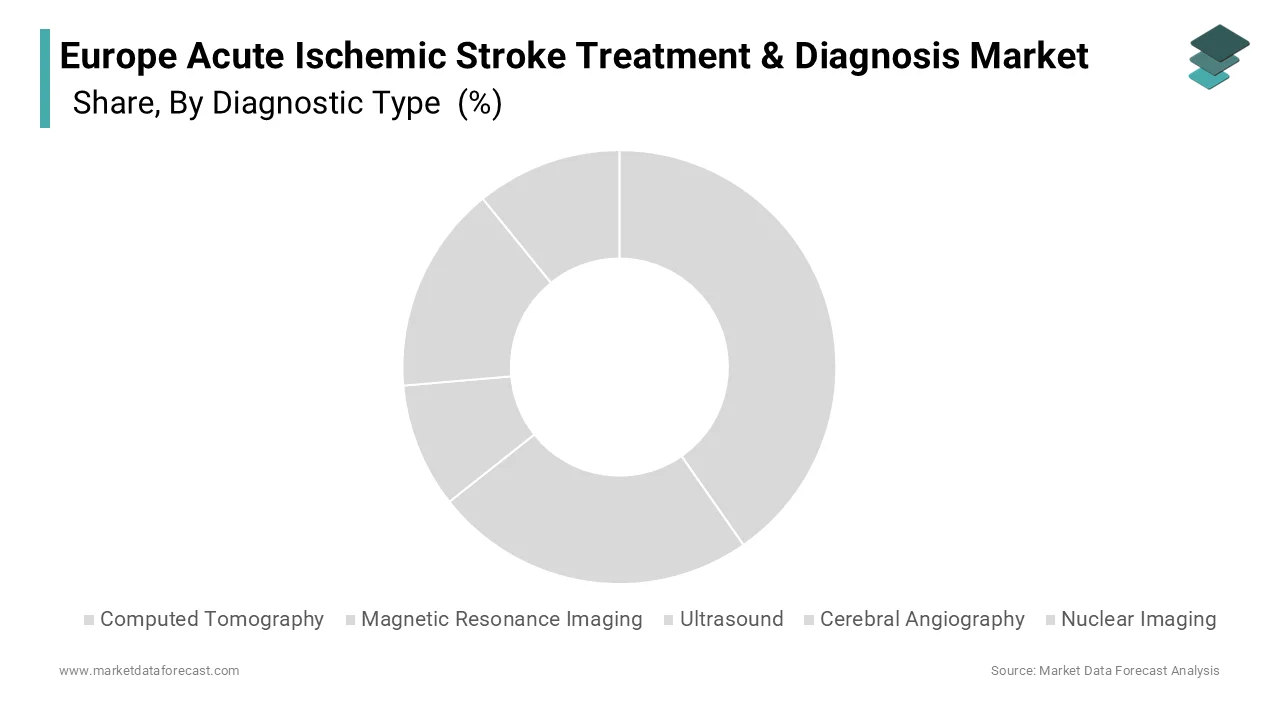
The computed tomography segment dominated the European acute ischemic stroke diagnostic market by holding 51.4% of the regional market share in 2024. The growth of the CT segment in this regional market is driven by its universal availability, speed, and integration into standardized emergency stroke protocols. CT is the first-line imaging modality in nearly all European stroke guidelines due to its ability to rapidly exclude hemorrhage within minutes of patient arrival, which is a critical step before administering thrombolytics. According to the European Stroke Organisation’s 2024 Acute Care Guidelines, nearly all certified stroke centers across the EU use non-contrast CT as the initial diagnostic tool in suspected stroke cases. The technology’s widespread presence is further reinforced by infrastructure; Eurostat data shows that a vast majority of European hospitals with emergency departments possess at least one CT scanner, compared to a significantly lower proportion with MRI capabilities. Moreover, advancements such as CT perfusion and CT angiography now enable identification of ischemic penumbra and large vessel occlusions without delaying initial assessment. National stroke networks in Germany and the Netherlands mandate CT within 20 minutes of door arrival, institutionalizing its role. The balance of speed, accessibility, cost-efficiency, and evolving clinical utility ensures CT remains the diagnostic backbone of acute stroke care across diverse healthcare settings in Europe.
The MRI segment is the fastest-growing diagnostic segment in the European acute ischemic stroke market and is anticipated to exhibit a CAGR of 10.5% over the forecast period. Factors such as the MRI’s unparalleled sensitivity in detecting early ischemic changes, particularly in posterior circulation strokes and small vessel disease, where CT often yields false negatives, are propelling the growth of the MRI segment in this regional market. According to a 2024 multicenter study published in the European Journal of Neurology, diffusion-weighted MRI identified acute infarcts in a significantly higher proportion of cases within three hours of symptom onset compared to non-contrast CT. Countries with advanced neurology infrastructure, such as Sweden, Switzerland, and the Netherlands, are increasingly deploying “MRI-first” protocols for patients with unclear clinical presentations or wake-up strokes. The European Society of Neuroradiology reports that a large majority of comprehensive stroke centers in Western Europe now have dedicated stroke MRI protocols with scan times under 10 minutes. Furthermore, the integration of artificial intelligence tools like automated lesion segmentation enhances interpretation speed and reduces radiologist dependency. Although MRI remains less accessible in rural areas, its diagnostic superiority in complex cases and expanding role in treatment selectiofuells its adoption in high-acuity referral centers, driving sustained growth across Europe’s premium care segment.
By Surgery Type Insights
The endovascular mechanical thrombectomy segment had the major share of theEuropeane acute ischemic stroke diagnosis and treatment market in 2024 due to its established role as the standard of care for large vessel occlusion strokes. This dominance is rooted in overwhelming clinical evidence; trials such as MR CLEAN and HERMES demonstrated that thrombectomy reduces disability significantly compared to medical therapy alone when performed within 24 hours in eligible patients. As per the European Stroke Organisation’s 2024 treatment registry, tens of thousands of thrombectomy procedures were performed across the EU in 2023, driven by expanded imaging-based eligibility and national protocol standardization. Countries like Germany, France, and the Netherlands have integrated thrombectomy into mandatory stroke network pathways, ensuring transfer from spoke to hub centers within 60 minutes. The procedure’s efficacy in restoring cerebral blood flow within minutes surpasses the limitations of intravenous thrombolysis, particularly for proximal occlusions in the internal carotid or middle cerebral arteries. Additionally, the proliferation of next-generation stent retrievers and aspiration catheters has improved first-pass reperfusion rates to well over 80 percent, according to the European Society of Minimally Invasive Neurological Therapy. This combination of proven outcomes, system-wide adoption, and technological refinement solidifies mechanical thrombectomy as the cornerstone of modern ischemic stroke intervention in Europe.
The angioplasty segment is fastest growing surgical segment and is anticipated to grow at a double-digit CAGR over the forecast period. While mechanical thrombectomy targets embolic occlusions, angioplasty addresses underlying stenosis that may cause recurrent strokes, particularly in populations with high atherosclerosis prevalence, such as Southern and Eastern Europe. According to the European Registry of Cerebrovascular Atherosclerosis 2024 update, a significant share of large vessel ischemic strokes in countries like Italy, Greece, and Turkey are attributable to symptomatic intracranial stenosis,s a condition poorly managed by antithrombotics alone. Recent trials like SAMMPRIS EU have refined patient selection, showing that aggressive medical management combined with rescue angioplasty in refractory cases yields superior outcomes. As a result, comprehensive stroke centers in Madrid, Rome, and Istanbul are establishing dedicated neurovascular atherosclerosis programs. The European Society of Neurointerventional Surgery notes a substantial increase in intracranial stenting procedures since 2022, driven by improved balloon-mounted stent designs and better perioperative antiplatelet protocols. Although still niche compared to thrombectomy, this segment addresses a critical unmet need in recurrent stroke prevention and is gaining traction as stroke systems mature beyond acute recanalization toward comprehensive vascular risk management.
COUNTRY LEVEL ANALYSIS
Germany Acute Ischemic Stroke Diagnosis & Treatment Market Analysis
Germany captured the dominating position in the European acute ischemic stroke diagnosis and treatment market in 2024 by holding 21.6% of the regional market share. The leading position in the European acute ischemic stroke diagnosis and treatment market is attributed to its dense network of certified stroke units, advanced imaging infrastructure, and national quality assurance programs. The German Stroke Society mandates that all hospitals performing thrombolysis or thrombectomy participate in the national registry, which tracks door-to-needle times, clinical outcomes, and complication rates for hundreds of thousands of patients annually. According to the Robert Koch Institute, a large majority of the population lives within 60 minutes of a comprehensive stroke center, ensuring equitable access to time-critical interventions. The country leads in mechanical thrombectomy volume, with tens of thousands of procedures performed in 2023, and has pioneered mobile stroke units in Berlin, Hamburg, and Munich that deliver CT and thrombolysis at the roadside. Public health insurance fully reimburses both diagnostic imaging and endovascular therapy with no prior authorization delays. This combination of standardized care protocol enforcement, technological investment, and universal coverage positions Germany as the benchmark for stroke system excellence in Europe.
United Kingdom Acute Ischemic Stroke Diagnosis & Treatment Market Analysis
The United Kingdom occupied the second-largest share of the European acute ischemic stroke diagnosis and treatment market in 2024. The prominence of the UK in the European market can be credited to its nationally coordinated stroke strategy and early adoption of advanced imaging and thrombectomy within the National Health Service. As per the UK’s Sentinel Stroke National Audit Programme 2024, a vast majority of acute hospitals use CT within 30 minutes of arrival, and dozens of comprehensive thrombectomy centers now serve the entire population through regional networks. The NHS Long Term Plan mandates that all eligible patients receive thrombectomy within 24 hours of onset, with ambulance services using pre-hospital stroke scales to bypass local hospitals for direct transfer. The UK also leads in health economics research; a 2024 National Institute for Health and Care Research study confirmed that thrombectomy yields substantial cost savings per quality-adjusted life year in the British context, reinforcing funding decisions. Despite budget constraints, the centralized procurement system enables rapid scale-up of new devices and AI imaging tools across England, Scotland, and Wales. This top-down integration of evidence, policy, and delivery ensures consistent high-quality stroke care and positions the UK as a model for system-wide implementation.
France Acute Ischemic Stroke Diagnosis & Treatment Market Analysis
France is estimated to account for a prominent share of the European market over the forecast period owing to the high procedural volumes, robust neurology training programs, and early reimbursement for advanced stroke therapies. According to the French National Stroke Registry, thousands of mechanical thrombectomies were performed in 2023, with median door-to-puncture times among the fastest in Europe. The country benefits from a centralized stroke plan launched in 2022 that created two dozen regional neurovascular hubs, each serving populations of several million with standardized transfer protocols and telestroke support. France also hosts one of Europe’s largest neurointerventional fellowship programs, with dozens of trainees annually certified by the French Society of Neuroradiology, ensuring a steady pipeline of skilled operators. Public health insurance covers CT perfusion, MRI, and thrombectomy without co-payments, and recently approved reimbursement for AI-based imaging triage software. Additionally, French research groupsled multicenter trials on tenecteplase and extended window thrombectomy, contributing to global evidence generation. This synergy of clinical volume, education, policy, and innovation sustains France’s position as a continental leader in acute stroke intervention.
Sweden Acute Ischemic Stroke Diagnosis & Treatment Market Analysis
Sweden is anticipated to showcase a healthy CAGR in the European market during the forecast period. Sweden is renowned not for volume but for exceptional patient outcomes driven by universal access, rapid protocols, and transparent quality monitoring. According to the Swedish Stroke Registry, which captures all national cases, es nearly all ischemic stroke patients receive brain imaging within 30 minutes, and a large majority of eligible individuals undergo thrombectomy within 6 hours. The country’s flat geography and centralized ambulance dispatch enable nearly the entire population to reach a thrombectomy center within 90 minutes, as per the National Board of Health and Welfare 2024 report. Sweden mandates public reporting of hospital-level stroke metrics, including functional independence at 90 days, fostering continuous quality improvement. All acute stroke care is fully covered under the tax-funded system, with no variation by region or income. Furthermore, Sweden leads in post-stroke rehabilitation integration, ensuring that diagnostic and interventional gains translate into long-term recovery. This holistic emphasis on equity, speed, and accountability makes Sweden a global exemplar in stroke system performance despite its modest population size.
Netherlands Acute Ischemic Stroke Diagnosis & Treatment Market Analysis
The Netherlands is projected to account for a notable share of the European market over the forecast period due to its highly efficient hub-and-spoke stroke network and pioneering use of telemedicine to overcome geographic constraints. Despite a population of only 17 million, the country operates multiple comprehensive thrombectomy centers that serve as hubs for dozens of spoke hospitals through a nationally coordinated transfer system. According to the Dutch Stroke Foundation 2024 data, a large majority of stroke patients receive intravenous thrombolysis or thrombectomy within guideline-recommended windows thanks to real-time telestroke consultations that enable remote neurologist guidance for CT interpretation and treatment decisions. The Netherlands was the first EU country to implement automated CT perfusion analysis across all stroke centers using the Brainomix platform, reducing interpretation time significantly. Health insurance universally covers advanced imaging and endovascular therapy with streamlined prior authorization. Additionally, Dutch researchers lead European efforts in optimizing workflows for wake-up strokes and extending thrombectomy eligibility. This combination of digital innovation, process efficiency, and system cohesion allows the Netherlands to achieve world-leading outcomes with remarkable resource optimization.
COMPETITIVE LANDSCAPE
The European acute ischemic stroke diagnosis and treatment market is characterized by intense competition among global medtech leaders and specialized imaging or device innovators, all vying for integration into tightly regulated national stroke systems. Competition centers not on price alone but on clinical efficacy, workflow compatibility,y and health system alignment. In diagnostics, Siemens,s GE Healthcare, re and Philips compete on speed accuracyy, and AI integration,n with CT remaining dominantt but MRI gaining ground in complex cases. In therapeutics,, Stryker,dtronic, Stryker and Penumbra lead in mechanical thrombectomy, with differentiation based on first pass reperfusion rates, device trackability, and compatibility with diverse vessel anatomies. The market is highly dependent on physician preference and institutional protocols, making clinical evidence and training critical. Reimbursement landscapes vary significantly, with Western Europe offering faster coverage,e while Southern and Eastern Europe require extensive health technology assessments. Innovation is increasingly systemic, focusing on end-to-end solutions from pre-hospital triage to post-procedural analytics rather than isolated products. As stroke networks mature, competition shifts toward enabling equitable access, scalability, and long-term outcome improvement across diverse European healthcare models.
KEY MARKET PLAYERS
A few of the prominent companies operating in the European acute ischemic stroke diagnosis & treatment market profiled in this report are
- Abbott Laboratories
- Covidien plc
- Philips Healthcare
- Johnson & Johnson
- Penumbra, Inc.
- GE Healthcare
- Siemens Healthcare
- Stryker Corporation (Concentric Medical, Inc.)
- Hitachi, Ltd.
TOP LEADING PLAYERS INTHE MARKET
- Medtronic plc is a global leader in neurovascular interventions and plays a pivotal role in theEuropeane acute ischemic stroke treatment landscape through its comprehensive portfolio of mechanicalthrombectomy devicese,s including the Solitaire family of stent retrievers. The company supports European stroke systems by collaborating with national societies to develop training curricula and procedural guidelines that standardize endovascular care. Medtronic has in-real-world evidence generation through European registries such as the RESCUE registry, which tracks thrombectomy outcomes across 15 EU countries. In 2024, the company launched a next-generation aspiration catheter system with enhanced trackability and clot engagement designed specifically for tortuous European patient anatomies. It also expanded partnerships with comprehensive stroke centers in Germany, France, and Sweden to integrate its devices into AI-driven workflow platforms that rereduced door-to-reperfusionimes and improved first-pass effect rates across diverse clinical settings.
- Siemens Healthineers AG contributes significantly to the European acute ischemic stroke diagnosis market through its advanced imaging technologies, including C, T , and MR aAI-powered post-processing solutions. The company’s Somatom family of CT scanners and Magnetom MRI systems are widely deployed in European stroke networks due to their speed, precision,n and compatibility with perfusion imaging protocols. Siemens has embedded its AI Rad Companion software intothe emergency workflow,ws enabling automated detection of ischemic changes and large vessel occlusions directly on scanner consoles. In 2,024 the companyreceivedd the CE mark for an updated CT perfusion package that reduces scan time to under six minutes while maintaining diagnostic accuracy. Siemens also collaborates with national health authorities in the Netherlands and Denmark to implement standardized imaging pathways across regional stroke hubs,, bs ensuring consistent data quality and interoperability. Its focus on integratinghhardware aree sof,tware and clinical decision support strengthens its position as an enabler of time-critical stroke diagnosis across Europe.
- Stryker Corporation is a major force in the European mechanical thrombectomy segment through its Trevo ProVue and newer EmboTrap device platforms, which emphasize highfirst-passs reperfusion rates and procedural efficiency. The company actively engages with European stroke clinicians to refine device design based on real-world feedback, particularly regarding navigation in complex intracranial vasculature common in older populations. Stryker supports system integration by offering mobile simulation labs that train neurointerventional teams across Southern and Eastern Europe where specialist shortages persist. In 2,024 Stryker launchecloud-basedased procedural analytics platform in partnership with major hospital groups in Italy and Spain that captures device performance metrics and correlates them with clinical outcomes to drive continuous quality improvement. The company also participates in EU-funded initiatives to standardize thrombectomy training and expand access through hub and spoke models, ensuring its technologies are embedded not only in devices but in the broader stroke care ecosystem across the continent.
TOP STRATEGIES USED BY THE KEY MARKET PARTICIPANTS
Key players in theEuropeane acute ischemic stroke diagnosis and treatment market prioritize integration of their technologies into standardized national stroke pathways through collaboration with professional societies and health ministries. They invest in real-world evidence generation via multicenter registries to demonstrate clinical and economic value to payers and clinicians. Companies enhance device and imaging platforms with artificial intelligence to reduce interpretation and procedural times, aligning with Europe’s emphasis on workflow efficiency. Strategic focus on training and simulation addresses the shortage of skilled neurointerventionalists,s particularly in emerging markets. Vendors also pursue regulatory harmonization by obtaining CE marks with specific indications for extended time window interventions based on advanced imaging. Partnerships with telestroke networks and hub and spoke systems extend reach beyond academic centers. Additionally, firms emphasize post-procedural analytics and outcome tracking to support value-based healthcare models and justify premium reimbursement in fiscally constrained environments.
MARKET SEGMENTATION
This research report on the europe acute ischemic stroke treatment & diagnosis market has been segmented and sub-segmented into the following. categories
By Diagnostic Type
- Computed Tomography
- Magnetic Resonance Imaging
- Ultrasound
- Cerebral Angiography
- Nuclear Imaging
By Surgery Type
- Carotid Endarterectomy
- Angioplasty
- Endovascular Mechanical Thrombectomy
By Country
-
UK
- France
- Spain
- Germany
- Italy
- Russia
- Sweden
- Denmark
- Switzerland
- Netherlands
- Turkey
- Czech Republic
- Rest of Europe