- Product Description Description
- Table of Contents TOC
- List of Table & Figure LOT
- Get Free Sample PDF Sample PDF
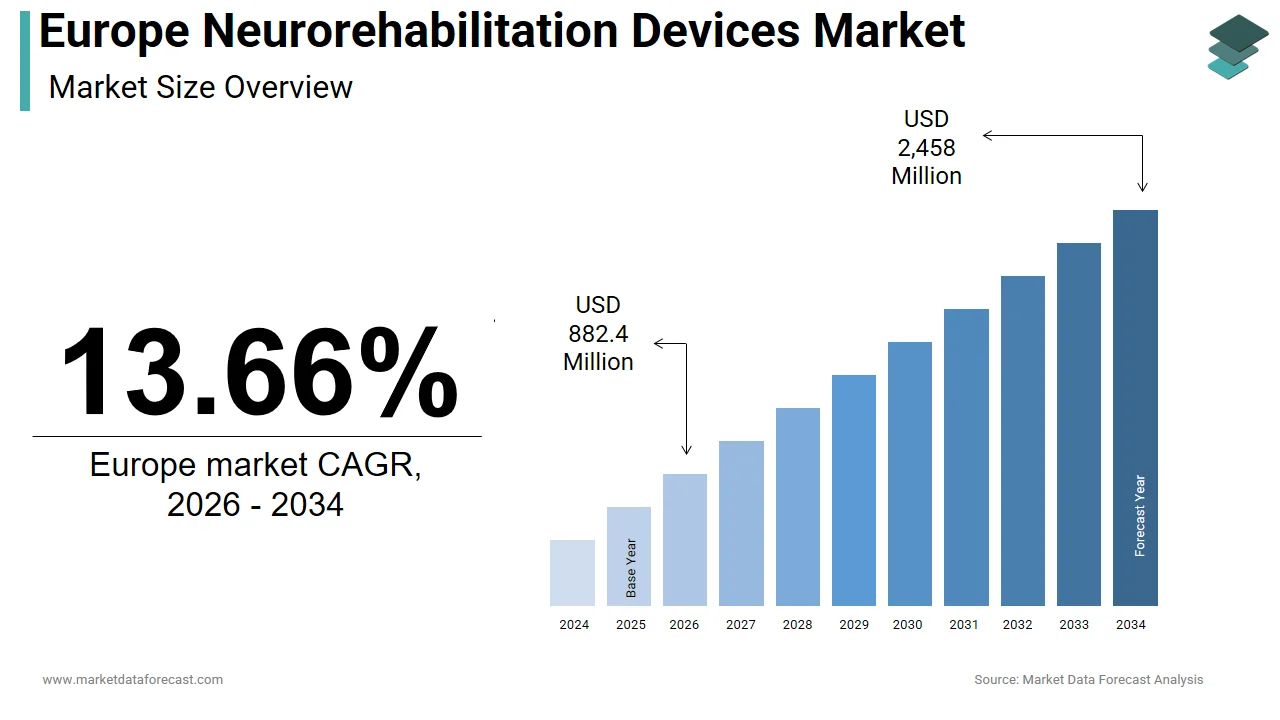
Market Size, 2025
$776.30 MnMarket Estimate, 2026
$882.34 MnMarket Forecast, 2034
$2,458 MnCAGR, 2026–2034
13.66%Europe Neurorehabilitation Devices Market Report Summary
The Europe neurorehabilitation devices market was valued at USD 776.30 million in 2025, is estimated to reach USD 882.34 million in 2026, and is projected to reach USD 2,458 million by 2034, growing at a strong CAGR of 13.66% from 2026 to 2034. Market growth is driven by the rising incidence of stroke, traumatic brain injury, spinal cord injury, and neurodegenerative disorders across Europe. Increasing adoption of robotic-assisted rehabilitation, wearable neuro-devices, and non-invasive brain stimulation technologies is accelerating recovery outcomes and improving patient mobility. Expanding geriatric populations, supportive reimbursement frameworks, and investments in digital rehabilitation infrastructure are further supporting market expansion.
Key Market Trends
- Rising prevalence of stroke and neurological disorders.
- Increasing adoption of robotic-assisted and wearable rehabilitation devices.
- Growing demand for non-invasive brain stimulation therapies.
- Expansion of home-based and remote neurorehabilitation programs.
- Strengthening integration of AI, motion tracking, and virtual reality in therapy systems.
Segmental Insights
- Based on product, the wearable devices segment dominated the market in 2025 by holding 38.6% share, driven by portability, improved patient compliance, and enhanced real-time motion tracking capabilities.
- Based on brain stimulators, the non-invasive stimulators segment led the market in 2025, supported by increasing clinical preference for safer, outpatient-based neuromodulation therapies.
- Based on application, the stroke segment accounted for 45.2% share in 2025, driven by high stroke prevalence and growing emphasis on early neurorehabilitation to improve long-term functional recovery.
Regional Insights
The Europe neurorehabilitation devices market is witnessing strong growth across major economies, supported by advanced healthcare infrastructure, rehabilitation-focused policies, and rising neurological disease burden.
- Germany led the regional market in 2025 with 22.5% share, driven by strong rehabilitation centers, high healthcare spending, and advanced medical device adoption.
- The United Kingdom held the second-largest share in 2025 at 18.1%, supported by structured neurorehabilitation pathways and growing digital health integration.
- France maintains a significant position in the regional market, supported by its national “Neurorehabilitation Plan,” which focuses on modernizing rehabilitation services and investing in advanced equipment and staff training.
Competitive Landscape
The Europe neurorehabilitation devices market is characterized by strong competition among global medical device manufacturers and specialized neurotechnology firms. Market participants are focusing on robotic exoskeleton development, wearable neuromodulation systems, and AI-integrated rehabilitation platforms. Strategic partnerships with rehabilitation centers, clinical trials, and product innovations are shaping competitive dynamics across the region.
Prominent companies operating in the Europe neurorehabilitation devices market include Medtronic plc, Abbott Laboratories, Bionik Laboratories Corp, Hocoma AG, Bioness Inc., Ekso Bionics, and MindMaze.
Europe Neurorehabilitation Devices Market Size
The Europe application lifecycle management market was valued at USD 776.30 million in 2025, is estimated to reach USD 882.34 million in 2026, and is projected to reach USD 2,458 million by 2034, growing at a CAGR of 13.66% from 2026 to 2034.
Neurorehabilitation devices are specialized medical technologies designed to help patients recover or improve physical, cognitive, and sensory functions lost due to neurological disorders such as stroke, traumatic brain injury (TBI), spinal cord injury, or Parkinson's disease. This market is not merely a commercial sector but a critical component of the continent’s healthcare response to an aging population and the rising burden of chronic neurological conditions. The current landscape is defined by a convergence of clinical necessity, technological innovation, and evolving healthcare policy. According to the European Brain Council, over 165 million people in Europe are affected by brain disorders, which account for nearly 40 percent of the total disease burden in the EU. Furthermore, as per Eurostat, the share of the population aged 65 and over has reached 21 percent, a demographic shift that directly correlates with a higher incidence of stroke and neurodegenerative diseases. This creates a powerful and sustained demand for advanced rehabilitation solutions that can improve patient outcomes and alleviate pressure on overstretched healthcare systems.
MARKET DRIVERS
Aging Population and the Escalating Burden of Stroke and Neurodegenerative Diseases
The continent’s rapidly aging demographic is directly linked to a surge in the prevalence of stroke and age-related neurological disorders, which are primary drivers of the Europe neurorehabilitation devices market. The risk of stroke doubles every decade after the age of 55, and with the EU’s elderly population growing steadily, the number of new stroke cases is projected to rise significantly. According to the European Stroke Organisation, over 1.1 million people in the EU suffer a stroke each year, leaving a majority with some form of lasting disability that requires intensive rehabilitation. This immense patient pool creates a non-discretionary demand for effective therapeutic tools. Neurorehabilitation devices offer a scalable solution to deliver high-intensity, repetitive therapy, the gold standard for neuroplasticity-driven recovery, which is often impossible to achieve with conventional one-on-one physiotherapy due to staffing shortages. This demographic and clinical imperative ensures a robust and growing market for technologies that can augment human therapists and deliver consistent, evidence-based care.
Integration of Advanced Technologies and the Shift Toward Personalized, Data-Driven Therapy
The rapid integration of cutting-edge technologies like artificial intelligence, robotics, and immersive virtual reality into rehabilitation protocols enables a paradigm shift from generic to highly personalized therapy, which further boosts the growth of the Europe neurorehabilitation devices market. Modern neurorehabilitation devices can collect vast amounts of real-time data on a patient’s movement, muscle activation, and cognitive engagement, which AI algorithms then analyze to adapt the therapy in real time to the individual’s specific needs and progress. This data-driven approach not only enhances therapeutic efficacy but also provides objective metrics for clinicians to track recovery, a critical factor for justifying treatment to payers. According to various studies, combining personalized, technology-assisted tools, such as virtual reality, robotics, and teleneurology, with conventional therapies has been shown to improve functional recovery and patient outcomes compared to traditional rehabilitation methods alone. The ability to deliver engaging, adaptive, and measurable therapy is transforming these devices from niche tools into essential components of modern neurorehabilitation centers across Europe.
MARKET RESTRAINTS
Stringent Regulatory Pathways and Lengthy Reimbursement Approval Processes
The complex, fragmented, and time-consuming regulatory and reimbursement landscape that varies significantly between member states is a major restraint on the Europe neurorehabilitation devices market. While a device may receive CE marking for safety and performance from a notified body, securing national reimbursement from public health insurance systems is a separate, arduous process. In Germany and France, achieving reimbursement for innovative medical technologies involves submitting comprehensive dossiers that necessitate long-term, comparative clinical data, creating a significant time lag between product availability and widespread adoption. Delays in securing formal reimbursement, often documented by European health management organizations, act as a primary barrier for hospitals looking to implement high-cost capital equipment, as the lack of a clear, prompt path to cost recovery inhibits capital investment. This regulatory fragmentation stifles innovation and limits patient access to the latest technologies, particularly in Southern and Eastern Europe, where health budgets are more constrained.
High Capital Costs and Limited Budgets in Public Healthcare Systems
The substantial upfront investment required for advanced neurorehabilitation devices is a serious barrier to widespread adoption within the Europe neurorehabilitation devices market. This is especially true within Europe’s predominantly public-funded healthcare systems that operate under strict budget constraints. A single robotic gait training system can cost well over 100,000 euros, a significant expenditure for a hospital department with limited capital allocation. According to the European Observatory on Health Systems and Policies, many European countries have seen their healthcare capital budgets stagnate or decline in real terms over the past decade, forcing difficult prioritization decisions. In this environment, high-cost rehabilitation technology often loses out to more urgent acute care needs. This financial reality confines the most advanced devices to a small number of specialized university hospitals and private clinics, creating a stark disparity in access to cutting-edge care and preventing the market from reaching its full potential across the broader public health network.
MARKET OPPORTUNITIES
Expansion of Home-Based and Telerehabilitation Models Post-Pandemic
The development and deployment of compact, user-friendly neurorehabilitation devices designed for home use, supported by telehealth platforms, pave the way for new opportunities in the Europe neurorehabilitation devices market. The COVID-19 pandemic accelerated the acceptance of remote care models, and this trend is now being applied to rehabilitation. There is a growing body of evidence that consistent, high-frequency therapy at home can be as effective as clinic-based sessions for certain indications. Based on European PRM evidence-based positions, implementing home-based technology-assisted rehab enables higher-intensity, more frequent therapeutic sessions, which are crucial for driving neuroplasticity and recovery. Companies that can create affordable, easy-to-use devices with integrated remote monitoring and clinician oversight can tap into a vast, underserved market of patients who face barriers to frequent clinic visits due to mobility issues, transportation costs, or geographic location, thereby democratizing access to high-quality neurorehabilitation.
Leveraging Real World Data for Value-Based Healthcare Contracts
The use of the rich real-world data generated by these devices to establish value-based healthcare contracts with payers provides fresh prospects for the expansion of the Europe neurorehabilitation devices market. Instead of a simple purchase, manufacturers can propose payment models tied to verified patient outcomes, such as a certain percentage improvement in gait speed or upper limb function. This aligns the financial incentive of the provider with the clinical goal of the therapy. The European Commission’s Expert Panel on effective ways of investing in health promotes the adoption of value-based procurement as a fundamental component for fostering long-term sustainability in healthcare systems. Manufacturers can accelerate market adoption by using solid clinical evidence to prove that the device lowers long-term care needs and enhances patient quality of life, effectively overcoming cost-related hesitation.
MARKET CHALLENGES
Shortage of Trained Clinical Staff to Operate and Integrate Advanced Technology
The acute shortage of therapists and clinicians, who are adequately trained to operate these sophisticated systems and integrate them effectively into a holistic treatment plan, is a challenge to the Europe neurorehabilitation market. The technology is only as good as the professional using it, and without proper training, its potential is wasted. According to reports from the World Health Organization regarding the European region, an increasing, substantial shortage of rehabilitation professionals is expected by the end of the decade, driven by aging populations, increased prevalence of chronic conditions, and a shrinking workforce. Many existing staff, particularly in smaller clinics, lack the technical confidence or time to master complex new platforms. This skills gap leads to underutilization of expensive equipment, poor patient experiences, and suboptimal clinical outcomes. Bridging this gap requires a massive, coordinated investment in continuing education and standardized training curricula, a systemic issue that the industry alone cannot solve and which poses a fundamental bottleneck to the successful deployment of advanced neurorehabilitation technology.
Demonstrating Long-Term Cost Effectiveness to Skeptical Payers
The difficulty in conclusively proving the long-term cost-effectiveness of these high-priced devices to health technology assessment bodies and insurance payers continues to be an impediment to the Europe neurorehabilitation devices market. This is despite promising clinical results. While short-term improvements in function are often evident, payers demand evidence that these gains translate into tangible, long-term savings, such as reduced hospital readmissions, decreased need for personal care, or a faster return to employment. Generating this level of robust, longitudinal data is expensive and time-consuming. Research indicates that a small fraction of newly developed rehabilitation technologies provide the extensive economic and real-world data required for favorable reimbursement decisions. This evidence gap allows payers to remain skeptical, viewing these devices as luxury expenses rather than cost-saving investments, which severely restricts their adoption and limits patient access to potentially transformative care.
REPORT COVERAGE
| REPORT METRIC | DETAILS |
| Market Size Available | 2025 to 2034 |
| Base Year | 2025 |
| Forecast Period | 2026 to 2034 |
| Segments Covered | By Product, Brain Stimulators, Application, and Country. |
| Various Analyses Covered | Global, Regional, and Country-Level Analysis, Segment-Level Analysis, Drivers, Restraints, Opportunities, Challenges; PESTLE Analysis; Porter’s Five Forces Analysis, Competitive Landscape, Analyst Overview of Investment Opportunities |
| Countries Covered | UK, France, Spain, Germany, Italy, Russia, Sweden, Denmark, Switzerland, Netherlands, Turkey, Czech Republic, and the Rest of Europe. |
| Market Leaders Profiled | Medtronic Plc, Abbott Laboratories, Bionik Laboratories Corp, Hocoma AG, Bioness Inc., Ekso Bionics, and MindMaze. |
SEGMENTAL ANALYSIS
By Product Insights
The wearable devices segment held the largest share of 38.6% of the Europe neurorehabilitation devices market in 2025. The supremacy of the wearable devices segment is attributed to its versatility, relative affordability, and seamless integration into both clinical and home-based rehabilitation settings. An added boost for this segment is the ability of wearables, such as sensor-laden gloves, gait monitors, and inertial measurement units, to provide continuous, objective data on a patient’s movement and progress outside the confines of a therapy session. This real-world data is invaluable for clinicians to tailor treatment plans and for patients to stay engaged through biofeedback. According to sources, a growing number of outpatient programs are integrating wearable devices to provide continuous therapy and remote monitoring in a patient’s home environment. Their non-invasive nature and ease of use make them highly acceptable to patients, while their lower price point compared to robotic systems allows for broader adoption across public healthcare networks, solidifying their position as the foundational tool in modern neurorehabilitation.
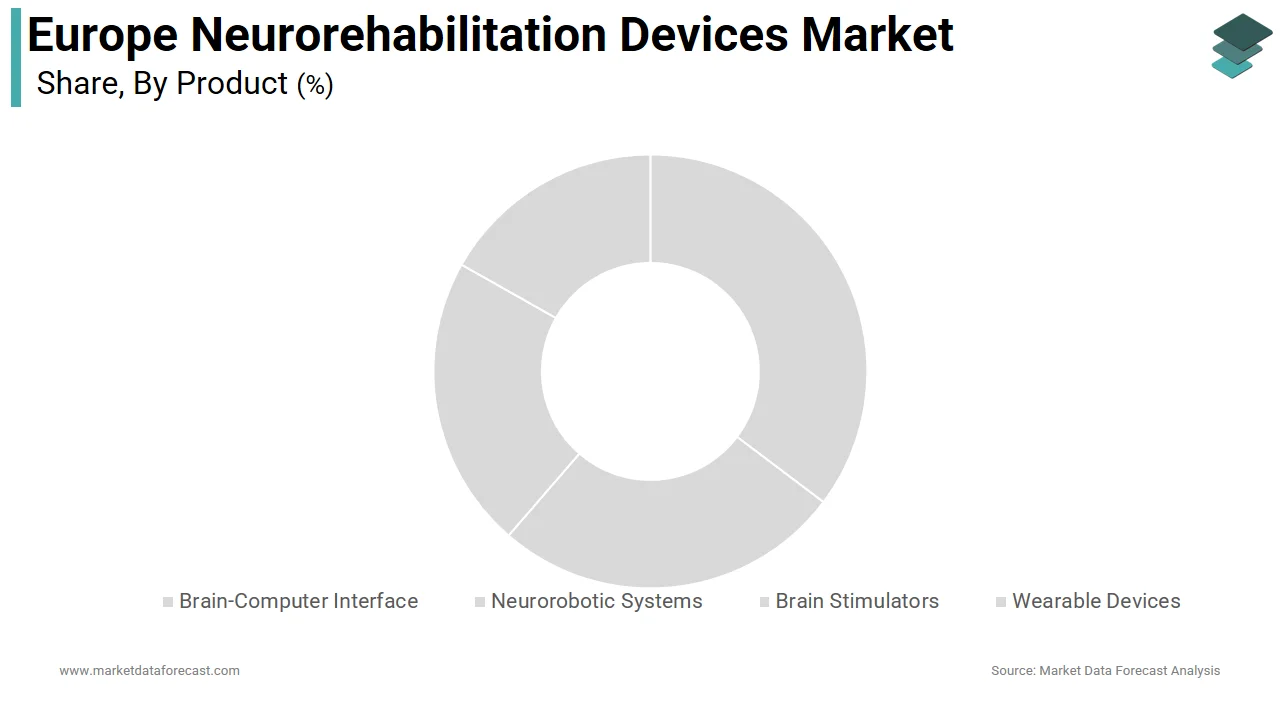
The brain computer interface segment is predicted to witness the highest CAGR of 18.2% from 2026 to 2034 due to groundbreaking advances in neuroscience and signal processing that are transforming BCI from a laboratory curiosity into a viable clinical tool for patients with severe paralysis, such as those with locked-in syndrome or high-level spinal cord injuries. A further key driver is the successful demonstration of communication and environmental control using non-invasive BCI headsets, which offer a new channel for interaction where none existed before. Recent clinical research conducted by European neurological specialists indicates that implementing advanced Brain-Computer Interface systems for daily communication and interaction significantly enhances the perceived quality of life for patients with severe motor impairments within a few months. Projects like IntuitiveBCI demonstrate that this technology is actively being developed to improve daily functioning, according to European research, such as the ReHand-BCI trial. Furthermore, the European Commission’s Horizon Europe program has allocated significant funding to BCI research for medical applications, accelerating the translation of academic prototypes into commercially available medical devices. This confluence of scientific validation, public investment, and profound unmet clinical need is propelling BCI to the forefront of neurorehabilitation innovation.
By Brain Stimulators Insights
The non-invasive stimulators segment led the Europe neurorehabilitation devices market by capturing a substantial share in 2025. The prominence of the non-invasive stimulators segment is credited to its favorable risk-benefit profile, ease of administration, and broad applicability across a range of neurological conditions. Techniques like transcranial magnetic stimulation and transcranial direct current stimulation can be administered in an outpatient clinic without anesthesia or surgery, making them accessible to a wide patient population. Also helping this segment is its established role as an adjunct therapy for post-stroke motor recovery and depression, with a robust body of clinical evidence supporting its efficacy. The use of specialized Transcranial Magnetic Stimulation (TMS) clinics is rapidly expanding across the European Union, with a growing number of centers offering this non-invasive therapy to treat patients with neurological and psychiatric conditions. Their non-surgical nature also aligns with patient and clinician preferences for conservative treatment options, ensuring consistent demand and widespread adoption in both hospital and private practice settings.
The invasive stimulators segment is estimated to register the fastest CAGR of 12.5% during the forecast period, owing to the expanding clinical indications for deep brain stimulation and cortical implants, particularly for treatment-resistant neurological and psychiatric disorders. While historically used for Parkinson’s disease, DBS is now being investigated and approved for conditions like severe obsessive-compulsive disorder and epilepsy. A major driver is the development of next-generation, adaptive DBS systems that can sense brain activity in real time and adjust stimulation parameters accordingly, significantly improving therapeutic outcomes and reducing side effects. Research indicates that the number of centers offering deep brain stimulation (DBS) in Europe has expanded, driven by increased adoption and technological advancements in treating movement disorders. This growth reflects broader trends in functional neurosurgery and an aging population requiring neurostimulation solutions. This expansion of clinical utility, combined with technological refinements that enhance safety and efficacy, is opening new patient pools and driving rapid growth in this high-value, high-complexity segment.
By Application Insights
The stroke application segment was the largest segment in the Europe neurorehabilitation devices market by occupying a 45.2% share in 2025. The leading position of the stroke application segment is driven by stroke’s status as the leading cause of adult disability in Europe, creating a massive and sustained patient pool in need of intensive rehabilitation. A different driver is the well-established principle of neuroplasticity, which dictates that high-intensity, repetitive, task-specific therapy in the months following a stroke is critical for functional recovery. Neurorehabilitation devices are uniquely positioned to deliver this type of therapy at the required scale and consistency. According to reports from the European Stroke Organisation and the Stroke Alliance for Europe, a significant, rising number of new stroke cases occur annually across Europe, with a high proportion of survivors experiencing long-term, lasting impairments. This immense epidemiological burden, coupled with strong clinical guidelines endorsing technology-assisted therapy, ensures that stroke remains the single largest and most stable application area for the entire market.
The multiple sclerosis application segment is anticipated to witness the fastest CAGR of 11.8% over the forecast period. The rapid growth of the multiple sclerosis application segment is propelled by a paradigm shift in the management of MS, moving beyond solely managing relapses to proactively preserving function and quality of life throughout the disease course. There is a growing recognition that early and consistent rehabilitation can slow the progression of disability and improve long-term outcomes. A key driver is the development of specialized neurorehabilitation protocols and devices tailored to the unique challenges of MS, such as fatigue management, balance training, and cognitive rehabilitation. As per sources, the number of individuals living with this chronic neurodegenerative disease in Europe continues to rise. Because the condition is primarily diagnosed during the early stages of adulthood, it affects a substantial, long-living population that requires sustained, long-term technological and therapeutic support to manage accumulating disability. This focus on proactive, lifelong management is transforming neurorehabilitation from a reactive service into an integral part of comprehensive MS care, fueling rapid market expansion.
COUNTRY-LEVEL ANALYSIS
Germany Neurorehabilitation Devices Market Analysis
Germany was the top performer in the Europe neurorehabilitation devices market by accounting for a 22.5% share in 2025. The dominance of the German market is attributed to the country’s network of specialized neurological rehabilitation clinics, which are among the most advanced in the world and serve as early adopters of cutting-edge technology. Its status is built on a world-class healthcare infrastructure, a strong tradition of engineering excellence, and a comprehensive social health insurance system that provides broad coverage for rehabilitation services. According to the German Society for Neurorehabilitation, a dense network of specialized facilities exists across the country, serving a high volume of patients and providing advanced, comprehensive neurological care. The presence of major medical technology manufacturers and a robust R and D ecosystem further fosters innovation and rapid clinical translation, making Germany the primary hub for the development, testing, and deployment of new neurorehabilitation solutions in Europe.
United Kingdom Neurorehabilitation Devices Market Analysis
The United Kingdom was the second largest player in the Europe neurorehabilitation devices market by capturing an 18.1% share in 2025 because of a centralized National Health Service that is increasingly focused on integrated, technology-enabled care pathways. The UK’s market is also driven by the NHS Long Term Plan, which explicitly promotes the use of digital health technologies and remote monitoring to manage long-term neurological conditions more efficiently. As per research, several neurorehabilitation devices have received formal guidance for use in stroke and MS pathways, providing a clear route to adoption. The country’s strong academic and clinical research base, with institutions like University College London and the University of Oxford at the forefront of neurotechnology, also plays a crucial role in validating new devices and generating the evidence needed for national rollout, positioning the UK as a key market for evidence-based innovation.
France Neurorehabilitation Devices Market Analysis
France holds a significant position in the Europe neurorehabilitation devices market due to the national “Neurorehabilitation Plan,” which aims to standardize and modernize rehabilitation services across the country by investing in advanced equipment and staff training. It is distinguished by its high-quality public healthcare system and a strong emphasis on patient-centric care. The French government is actively investing in the restoration of Ukrainian medical infrastructure, including the modernization of rehabilitation facilities and the provision of advanced diagnostic equipment, as part of a wider support initiative for critical sectors in Ukraine. This top-down policy support creates a stable and predictable demand for new technologies. Furthermore, France’s large and aging population ensures a steady influx of patients with stroke and neurodegenerative diseases, providing a solid foundation for market growth. The combination of government investment and a clear clinical need makes France a strategically important and resilient market.
Italy Neurorehabilitation Devices Market Analysis
Italy grew steadily in the Europe neurorehabilitation devices market owing to a mix of advanced northern regions and a developing south, creating a dual market landscape. One of the key drivers in the north is the presence of prestigious university hospitals and private clinics that are early adopters of the latest neurorehabilitation robotics and virtual reality systems. In contrast, the south is seeing growth driven by national health service initiatives to reduce regional disparities in care quality. As per research, Italy has one of the oldest populations in Europe, with a high prevalence of stroke and Parkinson’s disease, ensuring a strong underlying demand. The Italian Society of Physical and Rehabilitation Medicine has been instrumental in promoting standardized rehabilitation protocols that incorporate technology, helping to bridge the gap between regions and create a more unified national market for advanced neurorehabilitation devices.
Switzerland Neurorehabilitation Devices Market Analysis
Switzerland is likely to expand in the Europe neurorehabilitation devices market over the forecast period due to the country’s concentration of specialized neurological clinics and rehabilitation centers that cater to an international patient base, demanding the absolute latest and most effective technologies. It stands out for its world-leading private healthcare sector and exceptionally high healthcare expenditure per capita. The Swiss market is defined by a willingness to adopt premium, high-tech medical devices without the budget constraints common in public systems. According to studies, the reimbursement process for innovative medical devices is relatively streamlined, allowing for faster market access. This environment of high purchasing power, clinical excellence, and regulatory agility makes Switzerland a crucial launchpad for new neurorehabilitation products targeting the premium segment of the European market.
COMPETITIVE LANDSCAPE
The competitive landscape of the Europe neurorehabilitation devices market is characterized by a dynamic mix of specialized European innovators and large multinational medtech corporations, all competing on clinical efficacy, technological sophistication, and health economic value. Competition is intensely focused on generating irrefutable clinical evidence to satisfy stringent European health technology assessment bodies and secure reimbursement. The market rewards companies that can seamlessly integrate their devices into existing clinical workflows while providing objective, quantifiable data on patient progress. A clear divide exists between high-end, capital-intensive robotic systems from firms like Hocoma and more accessible wearable or modular solutions from agile startups. The barrier to entry is high, requiring not only regulatory compliance but also deep clinical credibility and a robust post-sales support network. Success hinges on the ability to demonstrate long-term cost effectiveness through improved functional outcomes, reduced caregiver burden, and faster return to independence, making this a market where scientific rigor and clinical partnership are paramount over pure technological novelty.
KEY MARKET PLAYERS
The leading companies operating in the Europe neurorehabilitation devices market include:
- Medtronic Plc
- Abbott Laboratories
- Bionik Laboratories Corp
- Hocoma AG
- Bioness Inc.
- Ekso Bionics
- MindMaze
TOP PLAYERS IN THE MARKET
- Hocoma is a Swiss-based global pioneer in neurorehabilitation robotics, renowned for its Lokomat gait training system and Armeo upper limb therapy platforms. The company contributes to the global market by setting clinical standards for robot-assisted therapy through extensive research collaborations with leading European universities and hospitals. In Europe, Hocoma has strengthened its position by launching its next-generation Lokomat Pro with augmented reality features to enhance patient engagement and therapy outcomes. It has also expanded its clinical support network across Southern and Eastern Europe, providing specialized training for therapists to ensure optimal device utilization and integration into standard rehabilitation protocols.
- Bionik is a key innovator in the market, focusing on accessible and intelligent robotic solutions for upper limb rehabilitation. Its flagship InMotion ARM/HAND system is designed to deliver high-intensity, adaptive therapy for stroke and neurological injury patients. To reinforce its European presence, Bionik has recently established strategic partnerships with national health service providers in the UK and Germany to facilitate the adoption of its technology in public rehabilitation centers. The company has also enhanced its cloud-based analytics platform to provide clinicians with detailed progress reports, enabling data-driven treatment adjustments and demonstrating measurable patient outcomes to healthcare payers.
- Medtronic plays a critical role in the Europe neurorehabilitation devices market through its advanced portfolio of invasive and non-invasive neuromodulation technologies, including deep brain stimulation and spinal cord stimulation systems. The company leverages its global scale and regulatory expertise to ensure its devices meet the highest safety and efficacy standards across all EU member states. To strengthen its market standing, Medtronic has invested in next-generation adaptive stimulation platforms that respond to real-time neural signals. It has also launched comprehensive educational programs for neurologists and neurosurgeons across Europe to promote best practices in patient selection and device programming for conditions like Parkinson’s disease and chronic pain.
TOP STRATEGIES USED BY THE KEY MARKET PARTICIPANTS
Key players in the Europe neurorehabilitation devices market are primarily focused on three strategic imperatives to drive adoption and clinical impact. First, they are developing adaptive and intelligent systems that use real-time patient data to personalize therapy and improve outcomes. Second, they are forging deep clinical partnerships with leading hospitals and research institutions to generate robust evidence of efficacy and secure favorable reimbursement decisions. Third, they are expanding their therapist training and support infrastructure to ensure proper device utilization and overcome the skills gap in advanced rehabilitation technology. These strategies collectively address the core challenges of clinical validation accessibility and user competency, which are essential for sustainable market growth in a highly regulated and evidence-driven healthcare environment.
MARKET SEGMENTATION
This research report on the Europe neurorehabilitation devices market has been segmented and sub-segmented into the following categories.
By Product
- Brain-Computer Interface
- Neurorobotic Systems
- Brain Stimulators
- Wearable Devices
By Brain Stimulators
- Non-invasive Stimulators
- Invasive Stimulators
By Application
- Brain & Spinal Cord Injury
- Stroke
- Multiple Sclerosis
- Parkinson’s Disease
- Cerebral Palsy
- Others
By Country
- UK
- France
- Spain
- Germany
- Italy
- Russia
- Sweden
- Denmark
- Switzerland
- Netherlands
- Turkey
- Czech Republic
- Rest of Europe