- Product Description Description
- Table of Contents TOC
- List of Table & Figure LOT
- Get Free Sample PDF Sample PDF
Market Size, 2025
$3.31 BnMarket Estimate, 2026
$3.48 BnMarket Forecast, 2034
$5.25 BnCAGR, 2026–2034
5.26%Europe Addiction Treatment Market Report Summary
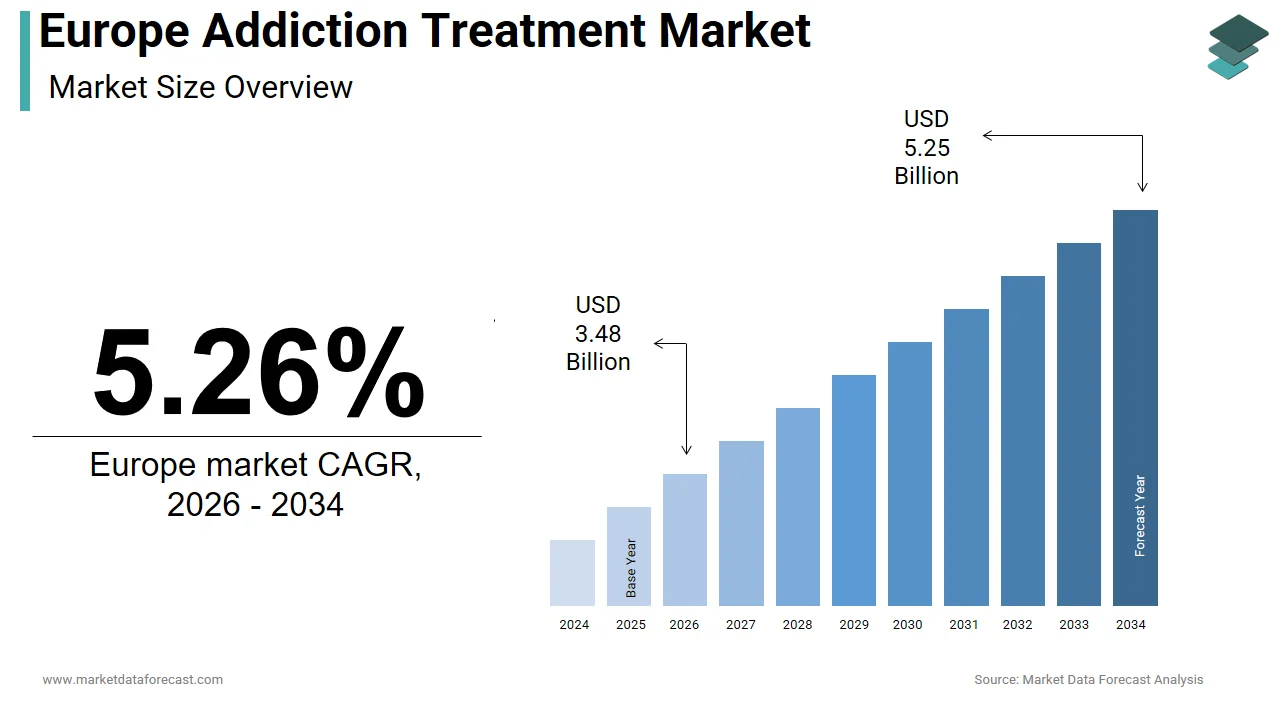
The Europe addiction treatment market was valued at USD 3.31 billion in 2025, is anticipated to reach USD 3.48 billion in 2026, and is projected to reach USD 5.25 billion by 2034, growing at a CAGR of 5.26% from 2026 to 2034. Market growth is driven by rising prevalence of substance use disorders, increasing awareness of mental health and addiction treatment, and expanding access to healthcare services. Addiction treatment includes pharmacological therapies, behavioral interventions, and rehabilitation programs designed to address alcohol, nicotine, and drug dependence. Additionally, supportive government initiatives, expansion of public healthcare programs, and increasing adoption of evidence-based treatment approaches are strengthening addiction treatment infrastructure across Europe.
Key Market Trends
- Rising prevalence of alcohol, nicotine, and opioid addiction across Europe.
- Increasing adoption of medication-assisted treatment (MAT) programs.
- Growing awareness of mental health and substance use disorder treatment.
- Expansion of public healthcare funding and addiction recovery programs.
- Increasing integration of digital health tools and outpatient treatment services.
Segmental Insights
- Based on treatment type, the alcohol treatment segment dominated the Europe addiction treatment market by accounting for 42.5% share in 2025, driven by the high prevalence of alcohol dependence and increasing availability of structured rehabilitation programs.
- Based on drug type, the nicotine replacement products segment held the largest share of 36.7% in 2025, supported by rising smoking cessation initiatives, growing awareness of tobacco-related health risks, and increasing availability of nicotine replacement therapies such as patches, gums, and lozenges.
- Based on distribution channel, the hospital pharmacies segment led the market by capturing 51.3% share in 2025, driven by the critical role of hospitals in providing addiction treatment medications, supervised therapy, and integrated rehabilitation services.
Regional Insights
The Europe addiction treatment market is experiencing steady growth across major countries, supported by public health initiatives, healthcare infrastructure development, and increasing awareness of substance use disorders.
- Germany led the market by accounting for 18.5% share in 2025, driven by strong healthcare infrastructure, government-supported addiction treatment programs, and increasing adoption of pharmacological therapies.
- France held the second-largest share of 15.2% in 2025, supported by expanding mental health services, public awareness campaigns, and improved access to addiction treatment programs.
- The United Kingdom maintains a significant position, supported by its centralized National Health Service framework, integrated addiction treatment services, and growing focus on data-driven public health interventions.
Competitive Landscape
The Europe addiction treatment market is characterized by the presence of major pharmaceutical companies and healthcare providers focusing on developing effective pharmacological treatments and expanding access to addiction recovery programs. Market participants are investing in research and development of innovative therapies, expanding treatment accessibility, and strengthening partnerships with healthcare providers and public health organizations. Increasing focus on personalized treatment approaches and integrated rehabilitation programs is shaping the competitive landscape.
Leading companies operating in the Europe addiction treatment market include Pfizer Inc., Indivior PLC, Teva Pharmaceutical Industries, GlaxoSmithKline, Alkermes, Hikma Pharmaceuticals, Perrigo Company, and Mylan.
 Download Free Sample Report
Europe Addiction Treatment Market Size
The size of the Europe addiction treatment market was valued at USD 3.31 billion in 2025. This market is expected to grow at a CAGR of 5.26% from 2026 to 2034 and be worth USD 5.25 billion by 2034 from USD 3.48 billion in 2026.
Addiction treatment is a comprehensive, tailored process designed to help individuals stop substance use, minimize physical harm, and prevent relapse through a combination of medical detoxification, behavioral therapy, and support services. Treatment modalities range from medically assisted detoxification and residential rehabilitation to outpatient counseling and digital therapeutics, all operating within national healthcare frameworks that increasingly recognize addiction as a chronic neurobiological condition rather than a moral failing. The relevance of this market is underscored by the scale of public health burden across the region. According to a study, European Union Drugs Agency monitoring indicates that hazardous alcohol consumption remains a widespread issue among adults, while high-risk use of opioids continues to represent a significant proportion of treatment demand in the region. Furthermore, the World Health Organization suggests that alcohol consumption contributes to a substantial number of annual deaths and a significant share of lost healthy life years due to disability in the European Region. This reflects a persistent and evolving demand for evidence-based treatment infrastructure that integrates medical, psychological, and social support mechanisms across diverse national systems.
MARKET DRIVERS
Escalating Prevalence of Poly-Substance Use and Co-Occurring Mental Health Disorders
The rising complexity of addiction profiles in the region is one of the key accelerators of the Europe addiction treatment market. This is characterized by concurrent use of multiple substances and high rates of comorbid psychiatric conditions and is intensifying demand for integrated treatment models. According to research, individuals seeking addiction care in Western Europe frequently present with multiple co-occurring mental health disorders, most commonly depression, anxiety, or post-traumatic stress disorder, creating a high demand for dual diagnosis treatment. This dual diagnosis reality necessitates treatment protocols that simultaneously address neurochemical dependency and psychological vulnerability, driving adoption of multidisciplinary care teams and pharmacopsychosocial approaches. For instance, Germany’s healthcare system emphasizes integrating opioid agonist therapy with psychosocial support, encouraging combined treatment pathways for patients with comorbid substance use and mental health conditions. Similarly, France’s national strategy for addressing addictive behaviors focuses on strengthening territorial and departmental action plans to manage complex, comorbid addiction cases across the country. The clinical imperative to treat the whole patient, not just the substance use, has transformed service delivery expectations, compelling providers to expand therapeutic scope and invest in cross-trained personnel. This shift elevates the functional necessity of comprehensive addiction treatment beyond episodic detoxification toward sustained recovery management.
Policy Reforms Emphasizing Harm Reduction and Decriminalization
A wave of progressive drug policy reforms across several European nations is also fuelling the expansion of the Europe addiction treatment market. This is reshaping access to and funding for addiction treatment services. Portugal’s pioneering decriminalization model, now emulated in varying degrees by countries like Germany and the Netherlands, has shifted public resources from punitive enforcement toward public health interventions. According to sources, an increasing number of nations are adopting supervised consumption facilities to reduce overdose fatalities and link users to health services. These facilities consistently function as crucial entry points for individuals to access addiction treatment and social support services. Furthermore, the European drug strategy recognizes harm reduction as a foundational component of public health policy, driving increased investment in outreach and care networks. This policy realignment not only expands the treatment-eligible population but also legitimizes long-term recovery as a societal objective rather than a personal failing.
MARKET RESTRAINTS
Persistent Stigma and Low Treatment Seeking Behavior Despite High Need
Deep-rooted social stigma continues to deter individuals from seeking help, despite growing clinical recognition of addiction as a medical condition, and this restricts the market penetration and the overall growth of the Europe addiction treatment market. European residents with potential alcohol use disorders frequently avoid professional medical consultation because they worry about being stigmatised or facing negative social repercussions. This treatment gap is even wider in Eastern and Southern Europe, where cultural attitudes remain strongly punitive. In Poland, many individuals struggling with opioid use do not seek formal medical assistance because they fear social shame or a lack of privacy regarding their condition. Even in countries with robust public health systems, internalized stigma leads to delayed intervention until crisis points such as overdose or job loss occur. This behavioral inertia constrains demand elasticity regardless of service availability or affordability. Treatment for substance use will likely remain underutilised until public awareness efforts successfully change the perception of addiction from a moral failure to a treatable health condition.
Fragmented Reimbursement Systems and Uneven Cross-National Coverage
The absence of harmonized reimbursement mechanisms across European healthcare systems creates significant access disparities and financial uncertainty for both providers and patients, and thereby slows down the expansion of the Europe addiction treatment market. Addiction treatment funding in Europe is unequal; Sweden and France offer comprehensive public coverage for medication-assisted treatments, whereas Greece and Romania suffer from inconsistent funding, especially for residential care. High personal costs for specialized medical care in several European countries create significant financial hurdles that prevent people with limited financial resources from receiving necessary addiction therapy. Moreover, private insurance plans often exclude behavioral health services or impose stringent pre-authorization requirements that delay care. This fragmentation discourages private investment in scalable treatment infrastructure and complicates cross-border service delivery. For multinational providers, navigating divergent national formulary eligibility criteria and billing codes increases operational complexity and limits economies of scale. The addiction care market will remain inefficient and fragmented until the EU forces greater alignment in financing.
MARKET OPPORTUNITIES
Integration of Digital Therapeutics and Remote Monitoring Platforms
The rapid adoption of telehealth and AI-enabled behavioral interventions offers a transformative opportunity to expand access and personalize addiction treatment across the region. This is expected to boost the growth of the Europe addiction treatment market. Digital therapeutics, such as app-based cognitive behavioral therapy modules, wearable craving monitors, and virtual reality exposure tools, are gaining regulatory traction under the EU Medical Device Regulation framework. European regulatory bodies have begun approving software-based medical treatments for substance use, allowing doctors to prescribe these digital tools as a supplement to traditional clinical care. Countries like Estonia and Denmark have already integrated these tools into national eHealth platforms, allowing patients to receive continuous support without geographic or scheduling constraints. Clinical research from major Swedish medical institutions suggests that digital health applications can significantly help individuals reduce their alcohol intake more effectively than receiving only basic medical advice. Because the vast majority of people across Europe now use smartphones and have reliable internet access, digital health tools provide a practical way to offer support to people in remote areas or younger individuals who might avoid visiting a traditional clinic.
Expansion of Employer-Sponsored Workplace Addiction Programs
Growing recognition of addiction’s economic impact on productivity and workplace safety is enabling corporate investment, which paves the way for fresh prospects in the expansion of European addiction treatment. This investment supports early intervention and employee assistance programs tailored to substance use. European occupational health agencies indicate that substance-related absenteeism and presenteeism impose high costs on employers, with alcohol consumption being a major factor. In response, multinational corporations headquartered in Germany, the Netherlands, and Sweden are increasingly partnering with specialized treatment providers to offer confidential screening, brief interventions, and return-to-work support. Major industrial firms are increasingly investing in holistic employee well-being, training, and mental health initiatives to enhance resilience. Concurrently, European regulatory frameworks are evolving to place greater emphasis on managing psychosocial risks and supporting employee health in the workplace. This employer-led demand creates a new channel for treatment engagement that bypasses traditional healthcare gatekeeping and reduces stigma through normalization within occupational health frameworks. Addiction support is set to become a standard pillar of corporate well-being initiatives, driven by the growing strategic importance of workplace mental health.
MARKET CHALLENGES
Shortage of Specialized Clinical Workforce and Training Gaps
The acute shortage of professionals trained in evidence-based addiction medicine and behavioral therapies limits the growth of the Europe addiction treatment market. This is a critical barrier in scaling effective addiction treatment across the region. Throughout the European Union, the number of medical doctors specifically trained to treat substance use disorders is currently insufficient to meet the needs of the population. This deficit is most severe in rural regions and Southern Europe, where training programs are limited or nonexistent. In Italy, many public addiction treatment facilities lack enough clinical staff, which often results in long delays for patients waiting to begin their recovery programs. Compounding the issue is the lack of standardized curricula. The inclusion of addiction training in medical schools varies internationally, with mandatory modules in countries like Finland and Austria contrasting with a lack of formal training elsewhere, thus resulting in inconsistent treatment standards. Technology and policy alone cannot overcome the current limitations in delivering standard care; only urgent investment in training, residency slots, and cross-disciplinary certification will solve the workforce crisis.
Rise of Novel Psychoactive Substances Outpacing Clinical and Regulatory Response
The proliferation of new psychoactive substances (NPS), including synthetic opioids, benzodiazepines, and stimulants, also inhibits the expansion of the Europe addiction treatment market. This poses a formidable clinical and operational challenge for the region’s treatment systems. Designed to circumvent existing drug laws, these compounds often exhibit unpredictable pharmacology, high toxicity, and resistance to standard antidotes. European drug monitoring authorities have identified a vast and growing number of novel synthetic drugs over the past two decades, with several dozen unique substances continuing to appear each year, frequently marketed through the internet under misleading labels or as experimental chemicals. Clinicians frequently lack diagnostic tools or treatment protocols for these agents. For example, etizolam, a benzodiazepine analog now prevalent in the UK and Ireland, causes prolonged withdrawal syndromes unresponsive to conventional tapering regimens. Toxicology screening panels in most public hospitals do not detect NPS, requiring costly specialized assays that delay accurate diagnosis. This knowledge lag forces treatment providers to rely on symptomatic management rather than targeted intervention, increasing relapse risk and emergency department burden. The treatment community will remain in a reactive, rather than proactive, stance against this evolving threat until real-time surveillance and swift clinical guidance are standardized nationwide.
REPORT COVERAGE
| REPORT METRIC | DETAILS |
| Market Size Available | 2025 to 2034 |
| Base Year | 2025 |
| Forecast Period | 2026 to 2034 |
| Segments Covered | By Treatment Type, Drug Type, Treatment Centre, Distribution Channel, and Country. |
| Various Analyses Covered | Global, Regional, and Country-Level Analysis, Segment-Level Analysis, Drivers, Restraints, Opportunities, Challenges; PESTLE Analysis; Porter’s Five Forces Analysis, Competitive Landscape, Analyst Overview of Investment Opportunities |
| Countries Covered | UK, France, Spain, Germany, Italy, Russia, Sweden, Denmark, Switzerland, Netherlands, Turkey, Czech Republic, and the Rest of Europe. |
| Market Leaders Profiled | Pfizer Inc., Mallinckrodt, Orexo AB, Indivior Plc, Teva Pharmaceutical Industries Ltd, GlaxoSmithKline Plc, Cipla Ltd., Alkermes Plc, Hikma Pharmaceuticals PLC, Titan Pharmaceuticals, Inc., Indivior Plc, Dr. Reddy's Laboratories Limited, Perrigo Company Plc, and Mylan N.V. |
SEGMENTAL ANALYSIS
By Treatment Type Insights
The alcohol treatment segment held the majority share of 42.5% of the Europe addiction treatment market in 2025. The supremacy of the segment is attributed to the high prevalence of alcohol use disorders and the long-standing integration of alcohol treatment into national public health systems. Further support for this segment comes from the widespread availability of evidence-based pharmacological and psychosocial interventions covered under universal healthcare. A significant portion of the adult population in the European Union consumes alcohol at levels that pose a risk to their health, with a smaller but substantial group suffering from severe physical or psychological dependency. Unlike illicit drug use, which remains stigmatized and often criminalized, alcohol misuse is routinely addressed within primary care settings across countries like Sweden, Finland, and the Netherlands. Clinical recommendations in Germany encourage family doctors to use standardized questionnaires to identify patients who may be drinking at risky levels, aiming to provide early help before serious health problems develop. Furthermore, medications like acamprosate and naltrexone have been reimbursed for decades, ensuring consistent access. This institutional normalization, combined with robust epidemiological burden, cements alcohol treatment as the cornerstone of Europe’s addiction care infrastructure.
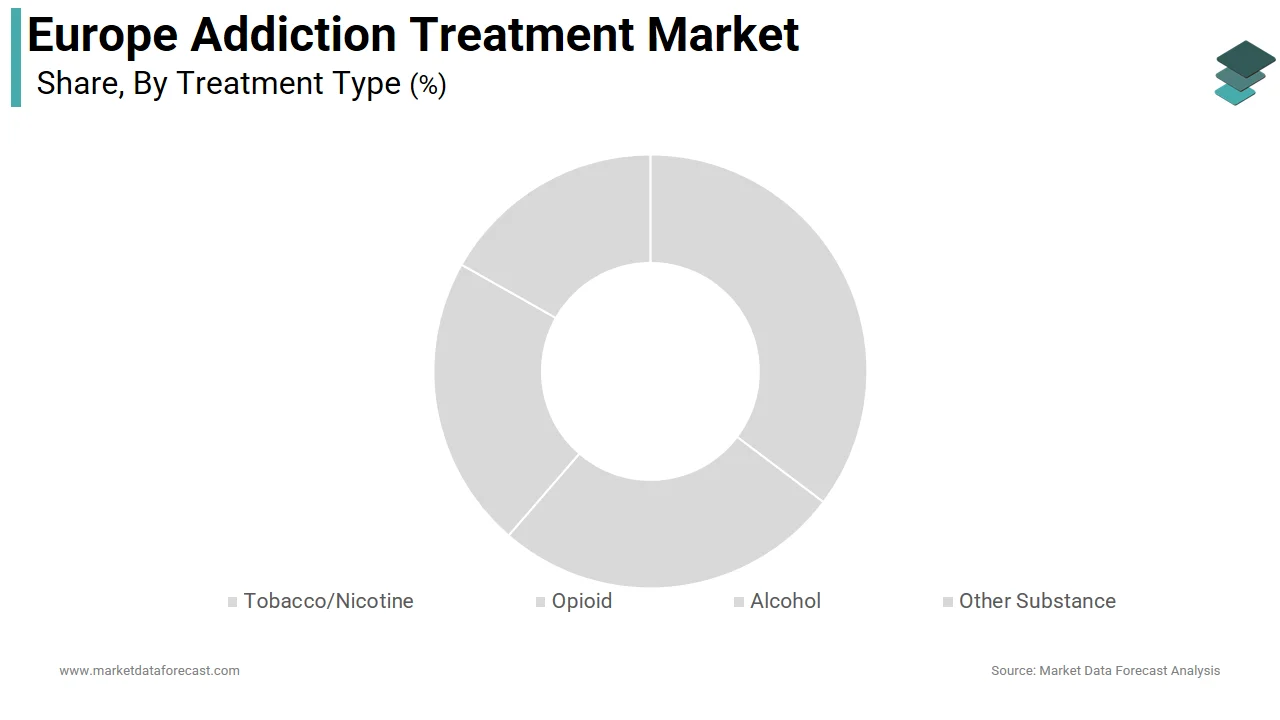
The opioid addiction treatment segment is likely to experience the fastest CAGR of 8.2% between 2026 and 2034 due to rising opioid-related morbidity and evolving policy responses. Also helping this segment is the surge in synthetic opioid use, particularly fentanyl analogs and prescription painkillers diverted from medical channels. Mortality related to the use of powerful synthetic narcotics is currently seeing a significant upward trend across the European Union, reaching the highest levels since specialized monitoring began. In response, countries are scaling up medication-assisted treatment (MAT) programs. Because French family doctors are permitted to provide specialized medication for addiction directly within their general practices, a large number of individuals across the country can access essential treatment through their regular physician. Recent legal updates in Germany allow patients in recovery to receive larger supplies of their maintenance medication at once, helping to reduce crowding at medical facilities and making it easier for individuals to stay consistent with their therapy. These regulatory relaxations, coupled with heightened public health urgency, are transforming opioid treatment from a niche specialty into a mainstream public health intervention, fueling rapid market expansion.
By Drug Type Insights
The nicotine replacement products segment was the largest segment in the Europe addiction treatment market by capturing a 36.7% share in 2025. The prominence of the segment is credited to both the scale of tobacco dependence and the accessibility of over-the-counter cessation aids. According to Eurostat and a 2024 Eurobarometer survey, approximately 24 percent of adults aged 15 and over in the EU are smokers. Unlike other addiction medications that require prescriptions and clinical supervision, nicotine patches, gums, and lozenges are widely available in pharmacies, supermarkets, and even vending machines in countries like Spain and Italy. Public health campaigns further amplify usage. Major annual public health campaigns in the United Kingdom successfully encourage a large number of people to try quitting, with many participants choosing to use various medical or digital aids to help them stop smoking. Additionally, reimbursement schemes in nations such as Sweden and Ireland cover multiple product formats, reducing cost barriers. This combination of retail ubiquity, behavioral support integration, and policy endorsement ensures nicotine replacement products maintain a dominant market presence despite the emergence of newer pharmacotherapies.
The buprenorphine segment is on the rise and is expected to be the fastest-growing segment in the market by witnessing a CAGR of 9.1% over the forecast period, owing to its expanding role in opioid agonist therapy and favorable safety profile. Buprenorphine’s partial mu opioid receptor agonism offers effective craving suppression with lower overdose risk compared to full agonists like methadone. Medical experts in Western Europe have observed that buprenorphine is increasingly being chosen as the first course of action for patients starting therapy for opioid dependency compared to previous years. A major accelerator is regulatory liberalization. To make help more accessible, health services in the Netherlands are increasingly moving addiction support into local community settings and involving specialized nursing staff in the long-term management of patient care. In addition, novel delivery systems, such as subcutaneous implants and weekly transdermal patches, are gaining traction for improving adherence among unstable populations. Health authorities in Sweden have found that patients using modern, long-lasting versions of their medication tend to stay in treatment more consistently and have better long-term outcomes than those who must take a dose every day. These clinical and operational advantages position buprenorphine as the preferred first-line agent in Europe’s escalating response to opioid dependence.
By Distribution Channel Insights
The hospital pharmacies segment led the Europe addiction treatment market and occupied a 51.3% share in 2025. The leading position of the segment is supported by the centralized nature of addiction treatment initiation, particularly for controlled substances. Medications such as methadone, buprenorphine, and injectable naltrexone are typically initiated in inpatient detoxification units or specialized outpatient clinics affiliated with hospitals due to regulatory requirements and the need for clinical monitoring. In France, certain types of medication for opioid dependency must be started at specialized addiction centers. Other treatments are readily available through local family doctors to ensure patients can begin treatment without needing to visit a hospital. In Germany, long-acting injectable medications for addiction are typically administered by healthcare professionals in a range of clinical settings to ensure they are used safely and correctly as part of a broader treatment plan. Many countries in Central and Eastern Europe have traditionally started addiction care in hospitals. However, there is a clear trend toward moving these services into local outpatient clinics to make help more accessible. This institutional gatekeeping ensures that hospital pharmacies remain the primary conduit for high-intensity pharmacotherapies, especially during the critical stabilization phase of recovery.
The medical stores segment is expected to exhibit a noteworthy CAGR of 7.6% from 2026 to 2034. This rapid growth is propelled by policy shifts toward decentralized care and increased pharmacist involvement. Several EU countries have enacted legislation enabling community pharmacists to dispense maintenance medications directly to stable patients, reducing clinic dependency. Throughout the United Kingdom, a vast network of local pharmacies is authorized to monitor patients as they take their prescribed recovery medication, ensuring that thousands of individuals receive their treatment safely and consistently every day. To ensure that people living in remote areas have better access to healthcare, Portuguese authorities are working on new strategies to provide essential addiction medications through local pharmacies rather than only in major city clinics. Moreover, pharmacists are increasingly trained in brief intervention techniques. Experimental programs in Denmark suggest that when pharmacists provide personal guidance to people trying to quit smoking, those individuals are much more likely to follow their treatment plan and successfully stay away from tobacco. Because pharmacies are located in almost every neighborhood across Europe, they are becoming one of the most effective and convenient places for people to receive the ongoing support they need for long-term recovery.
COUNTRY-LEVEL ANALYSIS
Germany Addiction Treatment Market Analysis
Germany dominated the Europe addiction treatment market and accounted for a 18.5% share in 2025. The dominance of the German market is driven by a comprehensive statutory health insurance system that covers a wide array of evidence-based interventions, including inpatient rehabilitation, outpatient psychotherapy, and pharmacotherapy. Every year, several hundred thousand people in Germany seek professional help for addiction, representing only a fraction of the millions who actually struggle with the problematic use of legal and illegal substances. A defining feature is the integration of addiction medicine into general healthcare. To ensure more people can get help, German regulations now allow regular family doctors to provide essential recovery medication to a limited number of patients, even if those doctors do not have a full specialist degree in addiction medicine. Additionally, Germany’s federal structure enables regional innovation, such as Bavaria’s mobile detox units and Berlin’s low-threshold opioid substitution sites, which serve as models for other nations. This blend of universal coverage, professional empowerment, and localized service design solidifies Germany’s leadership in the European landscape.
France Addiction Treatment Market Analysis
France followed closely in the Europe addiction treatment market and captured a 15.2% share in 2025. The expansion of the French market is fuelled by its early and extensive adoption of medication-assisted treatment. France introduced high-dose buprenorphine in 1996, becoming a global leader in office-based, pharmacy-dispensed opioid substitution treatment, and as of the 2020s, it maintains one of the highest rates of opioid agonist therapy (OAT) coverage in Europe for its opioid-dependent population. Alcohol treatment is equally robust; acamprosate and naltrexone are fully reimbursed and prescribed by general practitioners without specialist referral. France’s unique “CSAPA” (Addiction Treatment, Care, and Prevention Centres) network provides multidisciplinary, integrated outpatient care for substance use disorders across urban and rural areas, comprising hundreds of dedicated sites and branches. Recent reforms also permit nurse-led initiation of smoking cessation pharmacotherapies, broadening access. This deeply embedded pharmacological approach, supported by decades of policy continuity, makes France a benchmark for medicalized addiction care in Europe.
United Kingdom Addiction Treatment Market Analysis
The United Kingdom is another key player in the Europe addiction treatment market due to a centralized National Health Service framework that emphasizes data-driven service delivery. The Office for Health Improvement and Disparities (OHID) points out that 310,863 adults in England received structured drug or alcohol treatment between April 2023 and March 2024, representing the highest number in treatment since 2009-2010. The UK stands out for its investment in digital therapeutics. In 2024, studies emphasized the effectiveness of the "Drink Less" app, developed by UCL and the University of Bristol, which is available to the public to help reduce alcohol consumption, though it is not a formally prescribed medical device in the NHS. Additionally, the UK operates a widespread network of hundreds of community pharmacy-based needle and syringe programs to reduce injecting-related harm, although the development of official supervised consumption sites (often referred to as Drug Consumption Rooms) has been limited, with only one pilot approved for operation in Glasgow. This fusion of public health coordination, technological adoption, and pragmatic harm reduction positions the UK as a forward-looking player in the regional market.
Sweden Addiction Treatment Market Analysis
Sweden experienced a consistent growth in the Europe addiction treatment market owing to its strict drug policy combined with strong social welfare support. While the country maintains a zero-tolerance stance on illicit drug use, it invests heavily in early intervention and compulsory care for severe cases under the LVM Act. According to Swedish Social Services and Health Care data, municipalities are legally required to offer addiction support, but wait times and treatment availability vary significantly, with no universal national guarantee of 30-day access for all types of addiction treatment. Sweden excels in outcome tracking; national registries monitor abstinence rates, employment status, and relapse timelines for all publicly funded patients, enabling continuous quality improvement. Sweden maintains one of Europe’s lower alcohol consumption rates, with OECD data showing alcohol-related diseases and injuries present a significant, though relatively lower, burden on the health system compared to other OECD nations. This results-oriented model blends deterrence with compassionate care, creating a distinctive Nordic approach.
Netherlands Addiction Treatment Market Analysis
The Netherlands is predicted to expand in the Europe addiction treatment market during the forecast period due to its pragmatic harm reduction philosophy and decentralized service model. As documented by the Trimbos Institute, the Netherlands operates approximately 25 to 30 medically supervised consumption rooms and provides heroin-assisted treatment to roughly 800–1,000 chronic users. General practitioners play a central role; they can prescribe methadone and buprenorphine after basic training, enabling community-based continuity of care. The Dutch system also emphasizes social reintegration with housing, job coaching, and peer support embedded in treatment plans. Although no new 2024 nationwide emergency program was launched, the Dutch Ministry of Health continues its existing harm reduction efforts. The Trimbos Institute reported a rise in overdose deaths driven by medicinal opioids and, to a lesser extent, new psychoactive substances in 2024. This combination of public health realism, clinical accessibility, and social inclusion makes the Netherlands a laboratory for progressive addiction policy in Europe.
COMPETITIVE LANDSCAPE
The competition in the Europe addiction treatment market is defined by a mix of multinational pharmaceutical firms, specialized biotech companies, and public health-oriented nonprofit providers operating within highly regulated and fragmented national systems. While large corporations leverage global R&D capabilities and established distribution networks, smaller entities compete through niche therapeutic innovations and localized service models. Differentiation hinges on clinical efficacy delivery mechanisms such as long-acting injectables or digital therapeutics and alignment with national reimbursement policies. The absence of a unified EU regulatory pathway for addiction treatments necessitates country-specific market entry strategies, creating barriers for new entrants. Furthermore, competition extends beyond product performance to include integration with care ecosystems involving primary care, mental health services, and social support structures. As demand grows for holistic recovery-oriented approaches, companies that combine pharmacological precision with psychosocial support and digital enablement are gaining a strategic advantage in this complex and socially sensitive market.
KEY MARKET PLAYERS
The leading companies operating in the Europe addiction treatment market include:
- Pfizer Inc.
- Mallinckrodt
- Orexo AB
- Indivior Plc
- Teva Pharmaceutical Industries Ltd
- GlaxoSmithKline Plc
- Cipla Ltd.
- Alkermes Plc
- Hikma Pharmaceuticals PLC
- Titan Pharmaceuticals, Inc.
- Indivor Plc
- Reddy's Laboratories Limited
- Perrigo Company Plc
- Mylan N.V.
TOP PLAYERS IN THE MARKET
- Indivior is a global leader in addiction treatment with a strong foothold in Europe through its portfolio of evidence-based medications for opioid and alcohol use disorders. The company’s flagship product, Suboxone, containing buprenorphine and naloxone, is widely used across European healthcare systems for opioid agonist therapy. Indivior actively engages with national health authorities to support policy reforms that expand access to medication-assisted treatment. In addition, the company launched a digital adherence platform that integrates with electronic health records to monitor patient progress and reduce relapse risk. This initiative underscores Indivior’s commitment to combining pharmacological innovation with digital health solutions to enhance treatment outcomes across the region.
- Alkermes contributes significantly to the Europe addiction treatment market through its long-acting injectable therapies, including Vivitrol, which delivers monthly naltrexone for alcohol and opioid dependence. The company collaborates with European treatment centers to implement structured protocols for depot naltrexone administration, particularly in criminal justice and residential settings. Alkermes partnered with public health agencies to evaluate real world effectiveness of extended-release formulations in reducing hospital readmissions. These efforts reflect its strategy of embedding clinical evidence generation into routine care pathways to reinforce the value of sustained-release pharmacotherapies within Europe’s evolving addiction treatment landscape.
- Pfizer maintains a notable presence in the Europe addiction treatment market primarily through its smoking cessation product Chantix, known as Champix in Europe, which contains varenicline. The company supports national tobacco control programs by providing educational resources and training for healthcare professionals on behavioral pharmacotherapy integration. Pfizer initiated an awareness campaign in collaboration with respiratory societies to highlight the cardiovascular benefits of smoking cessation using pharmacological aids. This public health-oriented approach strengthens its role not only as a pharmaceutical supplier but as a strategic partner in preventive health initiatives targeting nicotine dependence across diverse European populations.
TOP STRATEGIES USED BY THE KEY MARKET PARTICIPANTS
Key players in the Europe addiction treatment market focus on expanding access through regulatory engagement and policy advocacy to align national frameworks with evidence-based practices. They invest in digital health integrations such as telehealth platforms, adherence tracking apps, and electronic prescribing systems to enhance treatment continuity. Companies prioritize real-world evidence generation via partnerships with public health institutions to demonstrate long-term clinical and economic value. Strategic collaborations with community organizations, primary care networks, and criminal justice systems broaden service reach beyond traditional specialty clinics. Additionally, they emphasize professional education by training general practitioners, nurses, and pharmacists to deliver first-line interventions, thereby decentralizing care and reducing stigma associated with addiction treatment.
MARKET SEGMENTATION
This research report on the European addiction treatment market has been segmented and sub-segmented into the following categories.
By Treatment Type
- Tobacco/Nicotine
- Opioid
- Alcohol
- Other Substance
By Drug Type
- Bupropion
- Varenicline
- Acamprosate
- Buprenorphine
- Disulfiram
- Methadone
- Naltrexone
- Nicotine Replacement Products
- Others
By Treatment Centre
- Outpatient
- Inpatient
- Residential
By Distribution Channel
-
Hospital Pharmacies
-
Medical Stores
- Others
By Country
- UK
- France
- Spain
- Germany
- Italy
- Russia
- Sweden
- Denmark
- Switzerland
- Netherlands
- Turkey
- Czech Republic
- Rest of Europe