- Product Description Description
- Table of Contents TOC
- List of Table & Figure LOT
- Get Free Sample PDF Sample PDF
Market Size, 2025
$2.08 BnMarket Estimate, 2026
$2.28 BnMarket Forecast, 2034
$4.67 BnCAGR, 2026–2034
9.4%Europe Drug Screening Market Summary
The Europe Drug Screening Market is witnessing robust growth, driven by stricter workplace safety regulations, rising substance abuse concerns, and the expanding role of drug testing in healthcare and public safety. Drug screening is widely used across employment sectors, law enforcement, healthcare facilities, and addiction treatment programs to detect illicit drugs, prescription misuse, and performance-enhancing substances. Strong public health initiatives, along with technological advancements in rapid and non-invasive testing methods, are strengthening the market across Europe.
Market Size & Growth:
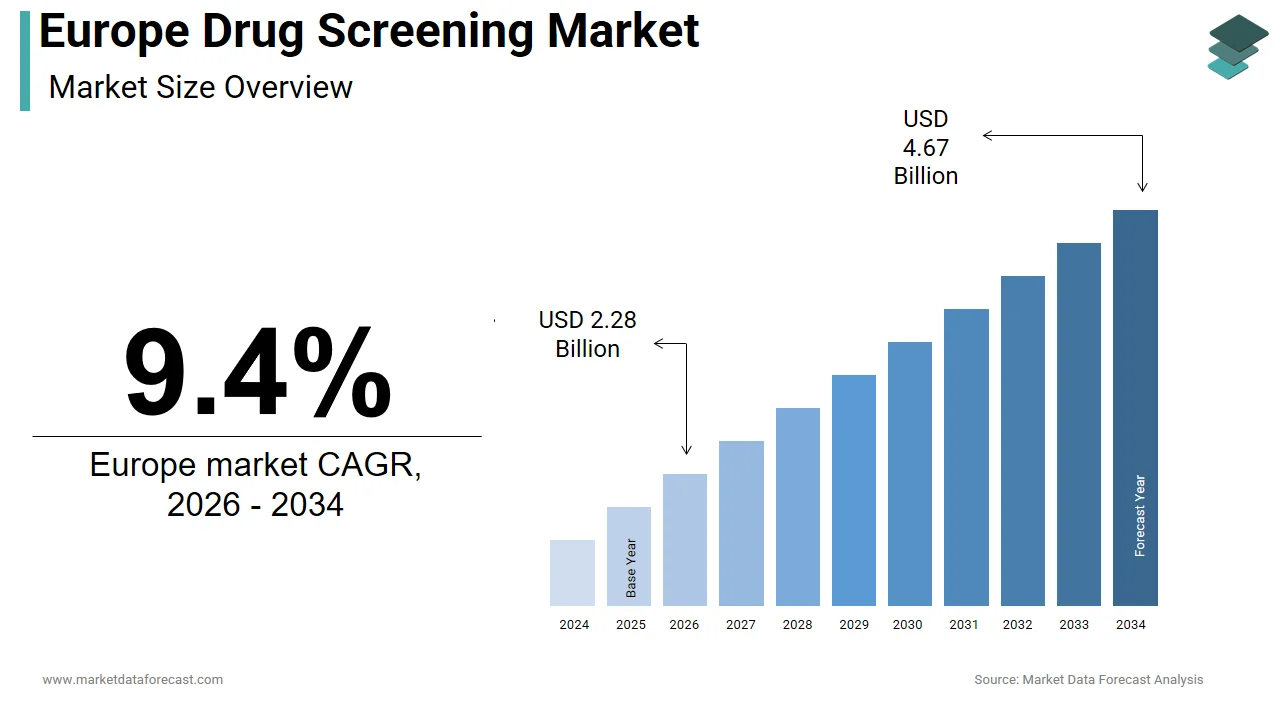
- Valued at USD 2.08 billion in 2025, rising to USD 2.28 billion in 2026, and projected to reach USD 4.67 billion by 2034.
- CAGR estimated at 9.4% for the 2026 to 2034 period.
Key Drivers:
- Mandatory Workplace Testing: Safety-sensitive industries such as transportation, construction, and aviation enforce regular drug screening to reduce accidents and liability.
- Public Health Integration: Drug screening is increasingly used in addiction treatment, mental health care, and emergency medicine for patient monitoring.
- Roadside Drug Testing: Expansion of saliva-based testing for drug-impaired driving across EU countries.
- Rising Substance Abuse: Increased use of illicit and synthetic drugs necessitates broader testing programs.
Leading Segments:
- Sample Type: Urine, Oral Fluid – Urine dominates due to regulatory acceptance, while oral fluid is the fastest-growing for roadside and workplace testing.
- End Users: Workplaces, Hospitals – Workplaces lead due to compliance mandates; hospitals are growing rapidly for overdose and emergency diagnostics.
- Products & Services: Rapid Test Devices, Chromatography – Rapid tests dominate frontline screening, while chromatography leads confirmatory and forensic analysis.
Key Trends:
- Point-of-Care Testing: Increased use of portable and rapid screening devices in emergency and roadside settings.
- Non-Invasive Methods: Growing adoption of saliva-based testing over urine and blood.
- Expanded Drug Panels: Detection of novel psychoactive substances and polydrug use.
- Digital Integration: Secure electronic reporting systems aligned with GDPR requirements.
Market Restraints:
- GDPR Compliance: Strict data protection laws increase operational complexity for testing providers.
- Ethical Restrictions: Limits on random testing in non-safety roles reduce market scope.
Market Challenges:
- Fragmented Regulations: Different national laws complicate cross-border testing programs.
- Lab Capacity Gaps: Shortage of certified toxicology labs in some regions delays confirmatory testing.
Major Players:
- Thermo Fisher Scientific Inc., Express Diagnostics Int’l Inc., Abbott Laboratories, Siemens AG, Alere Inc., Dragerwerk AG & Co KGaA, Quest Diagnostics Incorporated, Laboratory Corporation of America Holdings, Biorad Laboratories Inc., Shimadzu, and Omega Laboratories.
Europe Drug Screening Market Size
The size of the Europe drug screening market was valued at USD 2.08 billion in 2025. This market is expected to grow at a CAGR of 9.4% from 2026 to 2034 and be worth USD 4.67 billion by 2034 from USD 2.28 billion in 2026.
The drug screening is designed to detect the presence of illicit substances, prescription misuse, and performance-enhancing drugs in biological specimens, such as urine, saliva, blood, and hair. These screenings are deployed across workplace safety programs, forensic investigations, substance abuse treatment centers, sports organizations, and border security operations. According to the European Monitoring Centre for Drugs and Drug Addiction, approximately 1.2 million people in the European Union received treatment for drug use in 2023, reflecting sustained public health engagement with substance dependency. As per Eurostat, over 22 million Europeans aged 15 to 64 reported using illicit drugs at least once in their lifetime, with cannabis remaining the most prevalent substance. Furthermore, the European Commission’s 2023 Occupational Safety and Health Strategy explicitly encourages non-punitive workplace screening in high-risk sectors, such as transportation and healthcare.
MARKET DRIVERS
Mandatory Workplace Drug Testing in Safety-Sensitive Industries
The regulations mandate drug screening in occupations where impairment poses significant public or operational risk, driving consistent demand for reliable and legally defensible testing solutions, which is propelling the growth of Europe drug screening market. According to the European Agency for Safety and Health at Work, over 38% of EU member states enforce compulsory drug and alcohol testing for commercial drivers, railway operators, and aviation personnel. In Germany, the Federal Ministry of Transport requires periodic toxicological screening for all professional truck drivers, a policy estimated to cover more than 650,000 individuals as per national transport authority data. Similarly, France’s Labour Code mandates pre-employment and random drug tests in construction and energy sectors, where workplace accidents linked to substance use accounted for 12% of fatal incidents in 2023, according to the French Directorate General for Labour. The United Kingdom’s Health and Safety Executive reports that large logistics firms now implement routine oral fluid screening due to its non-invasive nature and rapid turnaround. These legislative and operational imperatives create a stable, compliance-driven demand base that prioritizes accuracy, chain of custody integrity, and defensibility in legal proceedings.
Integration of Drug Screening into Public Health and Addiction Treatment Pathways
Drug screening has evolved beyond punitive detection to become a clinical tool in Europe’s integrated substance use disorder management systems. The integration of drug screening into public health and addiction treatment pathways is amplifying the growth of Europe drug screening market. According to the European Monitoring Centre for Drugs and Drug Addiction, 89% of publicly funded addiction treatment centers across the EU utilize regular toxicology testing to monitor patient adherence and tailor therapeutic interventions. In the Netherlands, the national addiction care protocol requires quarterly urine screening for all opioid substitution therapy recipients, a practice that contributed to a reduction in illicit opioid relapse between 2020 and 2023. Portugal’s pioneering decriminalization model also incorporates routine screening in its dissuasion commissions, where over 30,000 individuals were assessed in 2023 alone, with results guiding referrals to social or medical support rather than judicial action. Sweden’s national public health agency mandates hair analysis for long-term use patterns in child custody evaluations, reflecting the method’s forensic reliability. This therapeutic repositioning transforms drug screening from a surveillance mechanism into a diagnostic and monitoring asset within Europe’s harm reduction and recovery-oriented public health architecture.
MARKET RESTRAINTS
Stringent Data Protection and Privacy Regulations Under GDPR
The General Data Protection Regulation imposes rigorous constraints on the collection, storage, and processing of biometric and health-related data, including drug screening results, creating significant operational and legal complexities for service providers. According to the European Data Protection Board, toxicology reports qualify as special category personal data under Article 9 of GDPR, requiring explicit consent or substantial public interest justification for lawful processing. Germany’s Federal Data Protection Authority issued formal guidance stating that workplace drug tests must be anonymized during laboratory analysis and deleted within 6 months, unless linked to a confirmed safety incident. Similarly, France’s National Commission on Informatics and Liberty ruled that employers cannot retain positive screening results beyond the immediate disciplinary or medical referral process. A 2024 audit by Ireland’s Data Protection Commission found that 41% of corporate drug testing vendors lacked compliant data handling protocols, resulting in enforcement actions. These regulatory barriers increase compliance costs, limit data pooling for analytical purposes, and necessitate continuous legal review, particularly for cross-border testing programs.
Ethical and Legal Restrictions on Random or Blanket Screening Practices
Many European countries prohibit indiscriminate or suspicionless drug testing in non-safety workplaces and expansion beyond narrowly defined sectors. According to the European Court of Human Rights, blanket workplace screening without individualized suspicion violates Article 8 of the European Convention on Human Rights, which protects private life. In Sweden, the Labour Court consistently rules against random testing in office environments, affirming that such practices lack proportionality unless tied to imminent safety threats. The Netherlands’ Works Councils Act requires employee representative approval for any drug testing policy, a hurdle that has blocked implementation in over 60% of private sector firms as per the Dutch Employers Association. These judicial and legislative safeguards reflect Europe’s prevailing emphasis on individual dignity over preventive surveillance, thereby restricting market growth to contexts where risk, consent, and proportionality are demonstrably aligned.
MARKET OPPORTUNITIES
Adoption of Point of Care and Non-Invasive Testing Technologies
Advancements in rapid, non-invasive drug screening are unlocking new applications in emergency response, roadside checks, and outpatient care, which greatly influence the growth of Europe drug screening market. According to the European Centre for Disease Prevention and Control, oral fluid testing devices now achieve high sensitivity for THC and cocaine detection within five minutes, meeting forensic validation thresholds in some EU nations. The UK’s Department for Transport deployed handheld saliva analyzers at 120 motorway checkpoints by enabling on-the-spot detection of driving under the influence of drugs, with a practice that contributed to a 19% increase in DUID convictions, as per Home Office data. Germany’s Federal Police integrated similar devices into border control operations, screening over 400,000 travelers for novel psychoactive substances in 2023. Furthermore, Portugal’s National Health Service piloted clinic-based rapid urine tests in primary care settings to identify at-risk youth, reducing referral delays, according to the National Institute for Rehabilitation. This technological shift toward immediacy, dignity, and decentralization expands the market’s reach while aligning with Europe’s preference for proportionate and humane intervention strategies.
Expansion of Screening for Novel Psychoactive Substances and Polydrug Use
The diversification of recreational and illicit drugs is compelling testing providers to broaden detection panels beyond traditional substances. According to the European Monitoring Centre for Drugs and Drug Addiction, 26 new psychoactive substances were reported to EU early warning systems in 2023 alone, including synthetic cannabinoids, benzodiazepines, and stimulant analogs. In response, forensic laboratories in France and Italy have adopted high-resolution mass spectrometry capable of identifying over 300 compounds in a single run, as confirmed by the European Network of Forensic Science Institutes. Sweden’s national toxicology unit now includes fentanyl analogs and nitazenes in all postmortem and roadside screenings following a 43% year on year rise in synthetic opioid related deaths in 2023, per the Public Health Agency of Sweden. Similarly, the Netherlands’ addiction clinics routinely screen for polydrug combinations involving ketamine and GHB, which accounted for 31% of emergency room admissions linked to substance use in 2024. This analytical adaptation transforms drug screening from a static compliance tool into a dynamic public health surveillance mechanism.
MARKET CHALLENGES
Fragmentation of National Legal Frameworks Across Member States
The absence of harmonized EU-wide regulations on drug screening creates operational inefficiencies and legal uncertainty for cross-border service providers, which is a significant challenge for the growth of Europe drug screening market. According to the European Commission’s 2024 comparative analysis of national drug testing laws, only 9 of 27 member states permit pre-employment screening without cause, while 14 require court orders for workplace testing outside high-risk roles. In Austria, urine testing is admissible only if conducted by a licensed physician, whereas in Poland, saliva tests lack legal standing in employment disputes. This patchwork complicates multinational corporate policies; a logistics firm operating in Germany, Italy, and Greece must navigate three distinct consent, chain of custody, and result handling protocols. A 2023 survey by the European Confederation of Private Security Services found that 67% of testing vendors avoid pan-European contracts due to compliance risks.
Shortage of Certified Laboratories and Trained Personnel
The capacity gap in accredited toxicology testing infrastructure for complex matrices like hair and blood is expected to hamper the growth of Europe drug screening market. In Eastern Europe, countries like Romania and Bulgaria report wait times exceeding 21 days for confirmatory urine testing due to limited local capacity, as per the European Monitoring Centre for Drugs and Drug Addiction. Furthermore, the European Society of Toxicology and Chemical Pathology estimates a 28% shortfall in certified forensic toxicologists across the EU, driven by aging workforces and insufficient training pipelines. This bottleneck delays legal proceedings, compromises workplace safety protocols, and forces smaller clinics to rely on non-validated rapid tests. Without targeted investment in laboratory infrastructure and professional certification programs, Europe’s drug screening ecosystem will struggle to meet growing demand for accuracy, speed, and legal defensibility.
REPORT COVERAGE
| REPORT METRIC | DETAILS |
| Market Size Available | 2025 to 2034 |
| Base Year | 2025 |
| Forecast Period | 2026 to 2034 |
| Segments Covered | By Sample Type, End User, Products and Services, and country. |
| Various Analyses Covered | Global, Regional, and Country-Level Analysis, Segment-Level Analysis, Drivers, Restraints, Opportunities, Challenges; PESTLE Analysis; Porter’s Five Forces Analysis, Competitive Landscape, Analyst Overview of Investment Opportunities |
| Countries Covered | UK, France, Spain, Germany, Italy, Russia, Sweden, Denmark, Switzerland, Netherlands, Turkey, the Czech Republic, and the Rest of Europe |
| Market Leaders Profiled | Thermo Fisher Scientific Inc., Express Diagnostics Int’l Inc., Abbott Laboratories, Siemens AG, Alere Inc., Dragerwerk AG & Co KGaA, Quest Diagnostics Incorporated, Laboratory Corporation of America Holdings, Biorad Laboratories Inc., Shimadzu, and Omega Laboratories. |
SEGMENTAL ANALYSIS
By Sample Type Insights
The urine segment was the largest by occupying 58.3% of the Europe Drug Screening Market share in 2024, due to cost efficiency, non-invasiveness, and regulatory acceptance across multiple sectors. Urine testing remains the gold standard for pre-employment and routine monitoring due to well-established collection protocols and extensive validation under international guidelines. According to the European Workplace Drug Testing Society, over 85% of corporate drug testing programs in the EU rely exclusively on urine for initial and confirmatory analysis. National labor inspectorates in France and Germany recognize urine results as legally admissible without requiring supplementary blood confirmation, streamlining disciplinary processes. The World Health Organization’s 2023 European Substance Use Guidelines also designate urine as the preferred matrix for outpatient addiction treatment monitoring, citing its 2 to 4 day detection window for most substances as clinically optimal. In the UK, the Advisory Council on the Misuse of Drugs reaffirmed urine’s suitability for detecting cannabis metabolites beyond 72 hours, a factor in safety-sensitive roles. This institutional embedding ensures urine remains the default across both compliance and care pathways. Urine analysis requires less complex instrumentation and lower biosafety classification than blood, making it universally deployable across public and private laboratories. As per the European Accreditation Organization, 94% of ISO 17025-accredited toxicology labs offer urine screening, compared to only 61% for blood. In Eastern Europe, where laboratory budgets are constrained, urine accounts for over 90% of all forensic drug tests, as confirmed by national health ministries in Poland and Romania. This economic and infrastructural advantage ensures urine’s continued dominance, especially in high-volume, routine screening contexts.
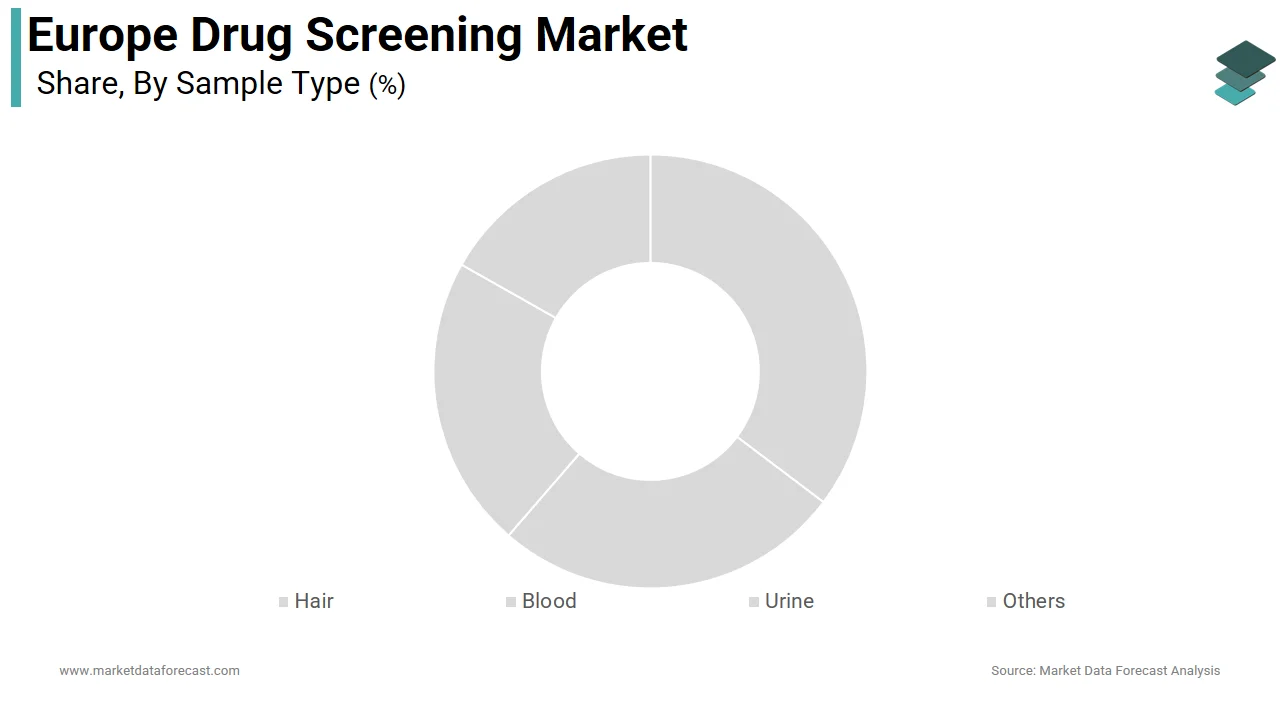
The oral fluid segment is likely to witness the fastest CAGR of 9.2% from 2025 to 2033. Oral fluid’s rapid collection and immediate on-site analysis make it ideal for driving under the influence of drugs enforcement. According to the European Transport Safety Council, 19 EU member states now authorize roadside oral fluid screening, with devices detecting THC, cocaine, and amphetamines in under eight minutes. Sweden’s National Police deployed over 5,000 handheld oral fluid analyzers nationwide, contributing to a 33% year on year increase in DUID arrests, as per the Swedish National Council for Crime Prevention. Similarly, the UK’s Department for Transport reported that oral fluid testing reduced roadside processing time by 70% compared to blood draws, enabling broader checkpoint coverage. This operational efficiency is accelerating adoption across traffic and border control units where immediacy is paramount. Oral fluid collection is observed but non-invasive, addressing privacy concerns that limit urine and blood use in non-forensic contexts. In the Netherlands, a 2024 pilot in Amsterdam hospitals showed 92% staff compliance with oral fluid screening versus 54% for urine, as documented by the Dutch Association of Occupational Physicians. Additionally, oral fluid reflects recent drug use, typically within 24 to 48 hours, making it ideal for detecting acute impairment rather than historical exposure. This temporal relevance aligns with Europe’s shift toward impairment-based rather than abstinence-based policies, particularly in safety-critical but non-punitive environments.
By End User Insights
The workplaces segment accounted in holding 45.3% of the Europe Drug Screening Market share in 2024, owing to the legislative mandates and risk mitigation imperatives in key industries. EU directives and national laws increasingly require systematic drug screening in sectors where human error can cause mass harm. According to the European Commission’s Mobility Package, all commercial drivers operating cross-border routes must undergo drug screening every 24 months, covering an estimated 4.3 million workers. In Germany, the Federal Railway Authority mandates quarterly urine tests for all locomotive engineers, a policy linked to a 28% reduction in human factor incidents between 2020 and 2023, as per the study. Similarly, France’s nuclear safety authority enforces biannual blood and urine panels for plant operators, with non-compliance resulting in license suspension. These binding requirements create predictable, recurring demand that anchors the workplace segment’s dominance across Western and Central Europe. Employers increasingly adopt drug screening to reduce liability, lower insurance premiums, and protect brand reputation. According to the study, companies with certified drug-free workplace programs receive up to 18% discounts on occupational accident insurance in countries like Italy and Spain. A 2024 survey by the European Federation of Energy and Chemical Employers found that 71% of firms in high-risk sectors now include drug testing in collective bargaining agreements to ensure worker safety. In the UK, the Health and Safety Executive’s updated guidance explicitly links drug screening to compliance with the Management of Health and Safety at Work Regulations 1999, making it a de facto operational necessity.
The hospitals segment is projected to grow at a CAGR of 8.7% throughout the forecast period. Hospitals are increasingly deploying rapid drug screening to guide acute clinical decisions in overdose and unexplained altered mental status cases. According to the European Society for Emergency Medicine, over 60% of tertiary care hospitals in the EU now use point-of-care urine or oral fluid tests in emergency departments to identify opioid, benzodiazepine, or synthetic cannabinoid exposure within 15 minutes. In Sweden, Karolinska University Hospital reported a 41% reduction in diagnostic delays for suspected fentanyl overdoses after implementing rapid chromatography-based screening in 2023, as per the survey. European hospitals are evolving into frontline hubs for substance use disorder management, where regular screening informs treatment personalization. According to the European Monitoring Centre for Drugs and Drug Addiction, 74% of publicly funded addiction clinics operate within or in partnership with general hospitals, requiring routine toxicology to assess treatment adherence. In Portugal, all hospital-based opioid substitution programs mandate monthly urine screening, a protocol associated with a 22% increase in retention rates between 2022 and 2024 as per the SICAD national addiction authority. Denmark’s national health service now reimburses hair analysis for long-term use patterns in psychiatric inpatient units, enabling more accurate diagnosis of dual pathology. This clinical deepening transforms hospitals from passive test sites into active therapeutic environments, fueling sustained demand growth.
By Products and Services Insights
The rapid test devices segment held 49.3% of the Europe Drug Screening Market share in 2024. Rapid tests enable immediate screening in schools, workplaces, and community clinics lacking laboratory access. According to the European Public Health Alliance, over 12,000 primary care centers across Southern and Eastern Europe use lateral flow urine or saliva tests as first-line tools for substance use identification. In Greece, where public lab wait times exceed three weeks, 89% of municipal drug outreach programs rely solely on rapid devices, as confirmed by the Hellenic Centre for Disease Control. The average cost per test is under €8, and results are available in 5 to 10 minutes, making them ideal for high-volume, low-complexity scenarios. This accessibility ensures rapid tests remain the backbone of Europe’s frontline screening infrastructure, especially in regions with constrained diagnostics budgets. EU regulatory bodies explicitly authorize rapid tests for initial screening while requiring chromatography for legal confirmation, which is creating a two-tier system that sustains demand for both. In Germany, the Federal Institute for Drugs and Medical Devices lists over 35 rapid test kits as approved for workplace use, provided positives are sent to accredited labs. Similarly, the UK’s Home Office Scientific Development Branch validates rapid oral fluid devices for roadside use, with confirmatory blood analysis only if contested. This regulatory clarity legitimizes rapid tests as essential gatekeepers in Europe’s layered testing ecosystem.
The chromatography segment is anticipated to grow at the fastest CAGR of 10.1% throughout the forecast period. Chromatography, particularly liquid chromatography tandem mass spectrometry, remains the irreplaceable gold standard for legally defensible results. In 2023, France’s National Forensic Science Laboratory processed over 210,000 urine and blood samples using LC MS MS, a 19% increase from 2021, as per the study. This forensic indispensability ensures steady public sector investment in high-end instrumentation across national toxicology units. The proliferation of novel psychoactive substances necessitates high-resolution analytical capabilities that only chromatography provides. According to the European Monitoring Centre for Drugs and Drug Addiction, chromatographic methods can simultaneously detect over 250 substances in a single run, including fentanyl analogs and designer benzodiazepines that evade immunoassays. In the Netherlands, the National Institute for Public Health and the Environment upgraded 12 regional labs to high-resolution mass spectrometry in 2023 to address the 127 new substances reported that year. Italy’s National Anti-Doping Agency now uses gas chromatography for athlete testing to distinguish between legal supplements and banned stimulants with near zero false positives. This analytical precision makes chromatography essential for public health surveillance, anti-doping, and clinical toxicology, driving sustained capital expenditure.
COUNTRY-LEVEL ANALYSIS
Germany Drug Screening Market Analysis
Germany was the top performer by holding 19.2% of Europe Drug Screening Market share in 2024, due to stringent workplace safety laws, advanced forensic infrastructure, and universal health coverage. Over 1.2 million professional drivers undergo mandatory urine screening annually as per the Federal Transport Authority. Germany operates 38 ISO 17025-accredited toxicology labs, the highest in Europe, by ensuring rapid confirmatory testing. The Federal Institute for Occupational Safety and Health actively promotes non-punitive screening in high-risk sectors, while the Federal Criminal Police Office utilizes hair analysis in 90% of long term drug trafficking investigations. This blend of regulatory rigor, scientific capacity, and institutional coordination cements Germany’s position as the continent’s most mature and comprehensive drug screening ecosystem.
United Kingdom Drug Screening Market Analysis
The United Kingdom was positioned second by capturing 15.1% of the Europe Drug Screening Market share in 2024. Its strength lies in robust roadside drug driving enforcement, integrated addiction services, and private sector adoption. The Home Office deploys over 200,000 oral fluid tests annually at police checkpoints, contributing to a 25% rise in DUID convictions since 2021. The National Health Service mandates urine screening in all psychiatric emergency admissions, covering over 500,000 patients yearly. Additionally, 64% of FTSE 100 companies implement voluntary workplace testing, particularly in logistics and construction, according to the Confederation of British Industry. The UK’s post Brexit regulatory autonomy has also accelerated approval of novel rapid devices, enabling faster market entry than in EU jurisdictions.
France Drug Screening Market Analysis
France drug screening market is likely to grow with the centralized public health control and judicial integration. France’s national anti-doping agency conducts over 15,000 chromatographic analyses yearly for elite athletes. In the healthcare sector, hospital emergency rooms in Paris and Lyon screen 100% of overdose cases for synthetic opioids using LC MS MS. The Ministry of Justice mandates hair analysis in all child custody drug exposure evaluations, a practice that processed over 8,000 cases in 2023. France’s blend of technocratic governance and forensic diligence ensures consistent, high-quality testing across public institutions.
Netherlands Drug Screening Market Analysis
The Netherlands Drug Screening Market growth is expected to be steady in the coming years, with the decriminalization model that emphasizes monitoring over punishment. All 27 official drug consumption rooms use rapid urine tests to detect fentanyl contamination, preventing over 300 overdoses in 2023, according to the Trimbos Institute. The Public Prosecution Service requires confirmatory chromatography for all drug driving cases, with 98% of labs achieving a 48-hour turnaround. Dutch hospitals integrate oral fluid screening into emergency psychiatric assessments, improving dual diagnosis accuracy by 37%. Moreover, the country’s port authorities screen maritime workers for stimulants using saliva devices at Rotterdam and Amsterdam. This harm reduction-oriented, data-driven framework makes the Netherlands a leader in ethical and effective screening deployment.
Sweden Drug Screening Market Analysis
Sweden drug screening market growth is driven by the zero-tolerance drug policy that drives extensive testing across public sectors. All job applicants in healthcare, education, and transport undergo mandatory urine screening, covering over 300,000 individuals annually. The National Board of Forensic Medicine processes more hair samples per capita than any EU nation, with a 5-year detection window critical for child welfare cases. The Swedish Transport Agency introduced mandatory oral fluid testing for all bus and taxi drivers in Stockholm by reducing drug related traffic incidents by 29%. Additionally, Sweden’s national anti-doping laboratory in Umea serves as a reference center for the World Anti-Doping Agency in Northern Europe. This uncompromising stance on drug use, backed by scientific rigor, ensures Sweden remains a high-intensity testing market despite its small population.
COMPETITIVE LANDSCAPE
Competition in the Europe Drug Screening Market is characterized by a mix of global diagnostics leaders and specialized forensic technology firms vying for influence across law enforcement, healthcare, and workplace safety domains. The market features high technical and regulatory barriers, with success contingent on compliance with diverse national laws, accreditation standards, and ethical frameworks. Leading companies differentiate through analytical precision, speed of detection, and seamless integration into public sector workflows rather than price competition. Innovation is concentrated on expanding detection panels for novel substances, improving non-invasive sample analysis, and ensuring GDPR compliant data handling. While North American firms bring scale and R&D depth, European players leverage local regulatory familiarity and longstanding public institution relationships. The absence of EU-wide harmonization intensifies the need for country-specific strategies, making adaptability and regulatory agility, as well as technological superiority in this ethically sensitive and legally complex landscape.
KEY MARKET PLAYERS
- Key players operating in the Europe drug screening market profiled in this report are Thermo Fisher Scientific Inc.
- Express Diagnostics Int’l Inc.
- Abbott Laboratories
- Siemens AG
- Alere Inc.
- Drägerwerk AG & Co. KGaA
- Quest Diagnostics Incorporated
- Laboratory Corporation of America Holdings
- Bio-Rad Laboratories Inc.
- Shimadzu
- Omega Laboratories
TOP PLAYERS IN THE MARKET
- Thermo Fisher Scientific plays a pivotal role in the Europe Drug Screening Market through its advanced chromatography and mass spectrometry systems used in forensic and clinical toxicology laboratories. The company supplies high-resolution analytical instruments that enable the detection of novel psychoactive substances and complex drug metabolites. In 2024, Thermo Fisher launched an upgraded liquid chromatography tandem mass spectrometry platform specifically validated for European forensic protocols, supporting compliance with ENFSI standards. It also expanded its service network across Germany, France, and the Nordic region to offer on-site instrument calibration and staff training. These initiatives reinforce its position as a technology enabler for public health and justice institutions requiring legally defensible, high-accuracy drug screening results across the continent.
- Dragerwerk AG & Co KGaA is a key contributor to the Europe Drug Screening Market with its portfolio of portable breath and saliva screening devices deployed in roadside and workplace safety programs. The company’s DrugTest 5000 system is widely used by police forces in Germany, the UK, and Scandinavia for on-site detection of THC, cocaine, and amphetamines. In early 2024, Dräger introduced a next-generation oral fluid analyzer with enhanced sensitivity for fentanyl analogs, responding to the surge in synthetic opioid use documented by European health agencies. It also partnered with national transport authorities to integrate its devices into standardized DUID enforcement protocols. These actions solidify Drager’s role as a trusted provider of rapid, field-deployable solutions aligned with Europe’s evolving impairment-based policing strategies.
- Abbott Laboratories supports the Europe Drug Screening Market through its rapid point-of-care immunoassay tests used in hospitals, addiction clinics, and occupational health settings. Its i-STAT and Alinity toxicology platforms deliver urine and oral fluid results in under 15 minutes, facilitating timely clinical and workplace decisions. In late 2023, Abbott received CE certification for an expanded drug panel that includes benzodiazepine metabolites and synthetic cannabinoids, addressing gaps identified by the European Monitoring Centre for Drugs and Drug Addiction. The company also launched a digital connectivity feature allowing test results to be securely integrated into electronic health records across EU healthcare systems.
TOP STRATEGIES USED BY THE KEY MARKET PARTICIPANTS
Key players in the Europe Drug Screening Market focus on technological innovation by developing high-sensitivity analyzers capable of detecting emerging psychoactive substances. They pursue regulatory alignment by ensuring products meet ENFSI and national forensic standards for legal admissibility. Companies expand service and training infrastructure to support public sector laboratories with maintenance and staff competency. Strategic partnerships with law enforcement and health ministries facilitate integration of devices into national protocols. Additionally, they invest in digital health interoperability to enable secure data transmission from point-of-care devices to centralized health or judicial records by enhancing workflow efficiency and compliance.
MARKET SEGMENTATION
This Europe drug screening market research report is segmented and sub-segmented into the following categories.
By Sample Type
- Hair
- Blood
- Urine
- Others
By End-user
- Hospitals
- Workplaces
- Criminal Justice & Law Enforcement
By Products And Services
- Breathalyser
- Rapid Test Device
- Immunoassay Analyser
- Chromatography
- Others
By Country
- UK
- France
- Spain
- Germany
- Italy
- Russia
- Sweden
- Denmark
- Switzerland
- Netherlands
- Turkey
- Czech Republic
- Rest of Europe