- Product Description Description
- Table of Contents TOC
- List of Table & Figure LOT
- Get Free Sample PDF Sample PDF
Market Size, 2025
$2.54 BnMarket Estimate, 2026
$2.66 BnMarket Forecast, 2034
$3.80 BnCAGR, 2026–2034
4.57%Europe Aerosol Cans Market Report Summary
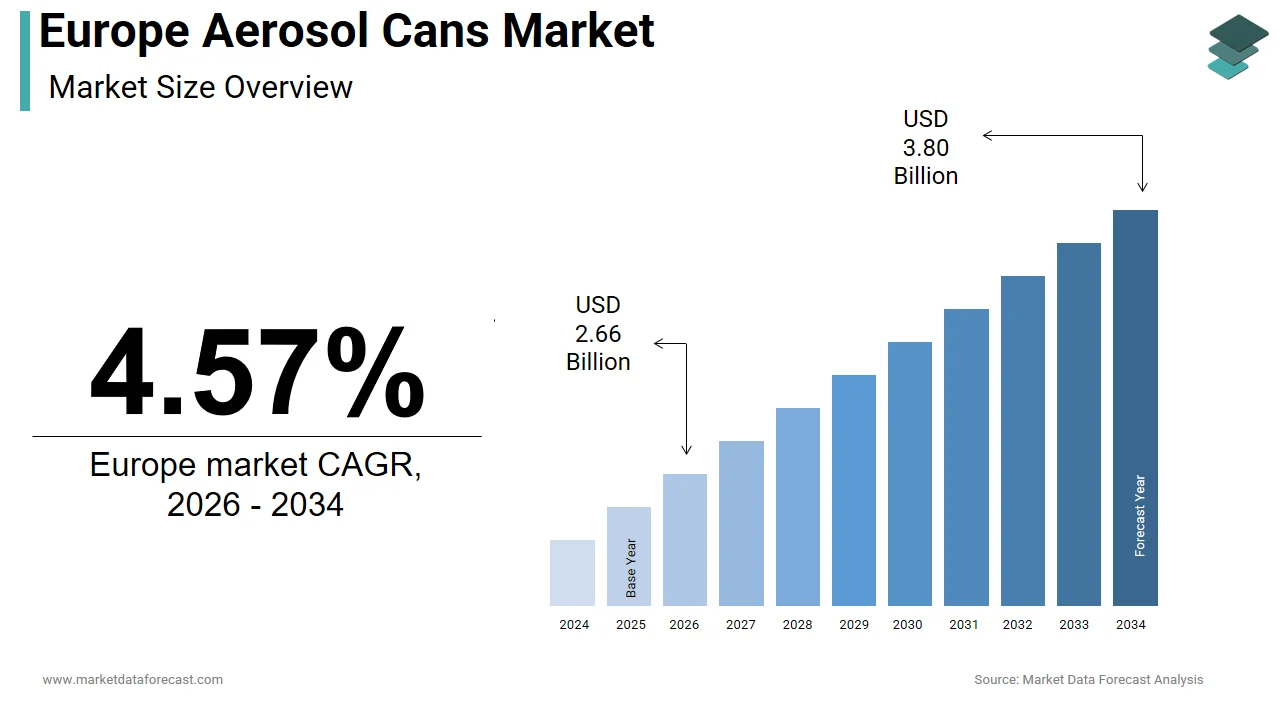
The Europe aerosol cans market was valued at USD 2.54 billion in 2025, is estimated to reach USD 2.66 billion in 2026, and is projected to reach USD 3.80 billion by 2034, growing at a CAGR of 4.57% from 2026 to 2034. Market growth is driven by increasing demand for convenient and sustainable packaging solutions, particularly in personal care, household, and industrial applications. Aerosol cans offer advantages such as ease of use, product preservation, and controlled dispensing, making them widely adopted across multiple industries. The growing emphasis on recyclable materials, innovations in packaging design, and rising consumption of cosmetic and personal care products are further supporting market growth across Europe.
Key Market Trends
- Increasing demand for convenient and user-friendly packaging solutions.
- Rising adoption of aerosol packaging in personal care and household products.
- Growing focus on sustainable and recyclable materials.
- Advancements in lightweight and eco-friendly aerosol can designs.
- Expansion of premium packaging in cosmetic and beauty segments.
Segmental Insights
- Based on material, the steel tinplate segment dominated the Europe aerosol cans market in 2025, driven by its strength, cost-effectiveness, and widespread usage across industries.
- Based on end-user industry, the cosmetic and personal care segment led the market by capturing 54.4% share in 2025, supported by high demand for deodorants, hairsprays, and skincare products.
Regional Insights
The Europe aerosol cans market is witnessing steady growth across key countries due to strong consumer demand and established manufacturing capabilities.
- Germany led the regional market in 2025 with 23.5% share, supported by a strong industrial base and high consumption of packaged products.
- The United Kingdom followed as the second-largest market, driven by high penetration of personal care products such as deodorants and hair care items.
- France holds a significant position due to its strong luxury beauty and personal care sector, which drives demand for premium aerosol packaging solutions, particularly aluminum cans.
Competitive Landscape
The Europe aerosol cans market is moderately competitive, with the presence of global packaging manufacturers focusing on innovation, sustainability, and capacity expansion. Companies are investing in recyclable materials, lightweight designs, and advanced manufacturing technologies to meet evolving consumer and regulatory demands.
Prominent companies operating in the Europe aerosol cans market include Crown Holdings Inc., Ball Corporation, Toyo Seikan Group Holdings, Ardagh Group S.A., CCL Industries, and Can-Pack SA.
 Download Free Sample Report
Europe Aerosol Cans Market Size
The Europe aerosol cans market was valued at USD 2.54 billion in 2025, is estimated to reach USD 2.66 billion in 2026, and is projected to reach USD 3.80 billion by 2034, growing at a CAGR of 4.57% from 2026 to 2034.
Aerosol cans are pressurized packaging solutions utilized for dispensing personal care products, household cleaners, paints, and automotive fluids. These containers rely on a propellant system to expel contents in a fine mist or foam, offering convenience and precise application. The industry is deeply intertwined with consumer lifestyle trends and regulatory frameworks governing packaging waste and chemical safety. As per Eurostat, the European Union has informed the scale of material consumption that drives recycling initiatives. The aerosol sector specifically faces scrutiny due to the combination of metal bodies and residual propellants. According to the European Environment Agency, steel and aluminium recycling rates in the EU have reached high levels, supporting the circular economy model essential for aerosol can producers. Furthermore, the shift towards sustainable propellants such as compressed air or nitrogen reflects broader environmental commitments. According to the Cosmetic Europe Association, the personal care sector, a primary end user, is increasingly prioritizing eco-friendly packaging formats. Despite digitalization, the tactile and functional benefits of aerosols maintain their relevance in hygiene and maintenance routines. The market evolves through technological advancements in valve systems and lightweighting techniques, aiming to reduce material usage while maintaining structural integrity. Regulatory pressure under the European Green Deal continues to shape production standards, compelling manufacturers to innovate towards fully recyclable and low-carbon footprint solutions.
MARKET DRIVERS
Rising Demand for Personal Care and Hygiene Products Driving Consumption
The robust demand for personal care and hygiene products is a primary driver for the Europe aerosol cans market. Consumers increasingly prioritize convenience and efficacy in daily grooming routines, favoring aerosol formats for deodorants, hair sprays, and sunscreens. As per Statista, the personal care market in Europe is projected to grow significantly, with deodorants representing a major portion of sales. The hygienic nature of aerosol dispensing, which prevents direct contact with the product, has gained further importance post pandemic. According to Mintel, many European consumers prefer spray formats for their ease of use and even application. This preference is particularly pronounced among younger demographics who value speed and efficiency in their routines. The aging population in Europe also contributes to demand, as aerosol products often offer easier handling for individuals with limited mobility. Furthermore, innovation in premium personal care segments, such as dry shampoos and texturizing sprays, expands the application scope of aerosol cans. Manufacturers are responding by developing sleeker designs and specialized valves that enhance user experience. The consistent replenishment cycle of these fast-moving consumer goods ensures steady demand for packaging suppliers. Additionally, the rise of e-commerce has facilitated direct-to-consumer sales of personal care items, requiring durable and leak-proof packaging solutions that aerosol cans provide. This sustained consumer loyalty to aerosol-based personal care items underpins the market's growth trajectory.
Expansion of Household Cleaning and Maintenance Segments Boosting Volume
The expansion of the household cleaning and maintenance sector significantly boosts the volume of aerosol cans consumed across Europe, which is further contributing to the European aerosol cans market expansion. Homeowners and professional cleaners rely on aerosol formulations for tasks such as dusting, glass cleaning, and oven maintenance due to their ability to reach difficult areas and provide uniform coverage. As per the European Consumer Organisation, there is a growing trend towards specialized cleaning products that target specific surfaces or stains, many of which are packaged in aerosol formats. The do-it-yourself culture in countries like Germany and the United Kingdom drives demand for automotive and industrial maintenance sprays, including lubricants and rust removers. According to the Association of the European Detergent, Soap and Maintenance Products Industry, the household care market remains resilient, with consumers investing in high-quality cleaning solutions to maintain home standards. The convenience of ready-to-use aerosol cleaners appeals to busy households seeking time-saving solutions. Furthermore, the professional cleaning industry, which services offices, hotels, and public spaces, constitutes a large bulk buyer of aerosol products. Regulatory improvements in formulation safety, such as the reduction of volatile organic compounds, have made aerosol cleaners more acceptable to environmentally conscious consumers. The versatility of aerosol packaging allows for the incorporation of various active ingredients, from disinfectants to polishes. This adaptability ensures that aerosol cans remain a preferred choice for a wide range of household and industrial applications, sustaining market demand.
MARKET RESTRAINTS
Stringent Environmental Regulations on Propellants and Materials Restraining Growth
Stringent environmental regulations regarding propellants and packaging materials are a major restraint on the Europe aerosol cans market. The European Union’s F-Gas Regulation aims to reduce the use of hydrofluorocarbons and other greenhouse gases, impacting the choice of propellants available for aerosol products. As per the European Commission, manufacturers must transition to alternative propellants such as hydrocarbons or compressed gases, which often require reformulation of products and adjustments to production lines. This transition incurs significant research and development costs and may affect product performance or stability. Additionally, the Single Use Plastics Directive and broader packaging waste regulations impose strict recycling and labeling requirements. According to the European Aluminium Association, aluminium is infinitely recyclable, but the collection and separation of aerosol cans from general waste streams remain inconsistent across member states. Contamination issues and a lack of consumer awareness about proper disposal hinder effective recycling rates. The complexity of aerosol cans, which combine metal bodies with plastic valves and actuators, complicates the recycling process. Manufacturers face pressure to design for recyclability, which may involve costly redesigns. Furthermore, carbon pricing mechanisms increase the cost of energy-intensive manufacturing processes. These regulatory hurdles create operational challenges and increase compliance costs, potentially slowing market growth. Companies must navigate a complex web of national and EU-level regulations, which can vary in interpretation and enforcement, and are adding uncertainty to long term planning.
Volatility in Raw Material Prices Impacting Production Costs
Volatility in raw material prices, particularly for aluminium and steel, is another significant challenge to the growth of the Europe aerosol cans market. These metals are the primary components of aerosol bodies, and their prices are subject to global supply and demand dynamics, geopolitical tensions, and energy costs. As per the London Metal Exchange, aluminium prices have experienced considerable fluctuations in recent years. High energy costs, especially in energy-intensive smelting processes, further exacerbate price instability. According to Eurofer, the European Steel Association, steel producers face increased input costs for iron ore and coking coal, which are passed down the supply chain to packaging manufacturers. This cost volatility makes it difficult for aerosol can producers to maintain stable pricing strategies and profit margins. Long term contracts with suppliers may offer some protection, but spot market exposure remains a risk. Additionally, the scarcity of recycled metal feedstock, due to inefficient collection systems, forces reliance on primary materials, which are more expensive and carbon-intensive. Manufacturers must invest in hedging strategies and efficient material usage technologies to mitigate these risks. However, these measures require capital investment and expertise that smaller players may lack. The unpredictability of raw material costs creates financial uncertainty, potentially delaying expansion plans or innovation projects. This economic pressure compels companies to seek alternative materials or lightweighting solutions, which may involve technical challenges and consumer acceptance issues.
MARKET OPPORTUNITIES
Innovation in Sustainable and Recyclable Packaging Solutions Offering Opportunities
Innovation in sustainable and recyclable packaging solutions is a significant opportunity for the Europe aerosol cans market. Consumers and regulators are driving demand for eco-friendly alternatives, prompting manufacturers to develop fully recyclable aerosol systems. As per the European Aerosol Federation, initiatives such as the Every Can Counts program aim to improve recycling rates and consumer awareness across Europe. The development of mono-material aerosol cans, where all components are made from the same type of metal, simplifies the recycling process and enhances material recovery. According to the Aluminium Stewardship Initiative, certified sustainable aluminium production is gaining traction that allows brands to claim lower carbon footprints. Manufacturers are also exploring biobased plastics for valves and actuators to reduce reliance on fossil fuels. The introduction of bag-on-valve technology allows for the use of compressed air or nitrogen as propellants, eliminating the need for hydrocarbon gases. This innovation aligns with corporate sustainability goals and appeals to environmentally conscious consumers. Furthermore, lightweighting technologies reduce the amount of metal used per can, lowering material costs and environmental impact. Collaborations between packaging suppliers and brand owners facilitate the co-development of innovative solutions that meet both functional and sustainability criteria. By leading the transition towards circular economy principles, companies can differentiate their products and capture market share. Government incentives for green packaging innovations further support this opportunity, encouraging investment in research and development.
Growth in E-Commerce and Direct-to-Consumer Channels Expanding Reach
The growth of e-commerce and direct-to-consumer channels offers a substantial opportunity for the Europe aerosol cans market. Online retail platforms enable brands to reach a wider audience and offer specialized products that may not be available in physical stores. As per Eurostat, e-commerce sales in the European Union have grown steadily, with health and beauty products contributing significantly. Aerosol cans require robust packaging to prevent leakage and damage during transit, driving demand for high-quality protective solutions. According to McKinsey and Company, the convenience of home delivery has changed consumer purchasing habits, with many subscribers opting for regular deliveries of personal care and household items. This subscription model ensures recurring revenue and predictable demand for aerosol packaging. Brands are leveraging digital marketing to educate consumers about the benefits of specific aerosol products, such as targeted skincare treatments or premium hair care formulations. The ability to collect customer data through online channels allows for personalized marketing and product recommendations. Furthermore, cross-border e-commerce within the EU enables brands to expand into new markets with relatively low entry barriers. Logistics providers are improving their handling of pressurized goods, making it safer and more efficient to ship aerosols. By integrating with digital retail strategies, aerosol manufacturers and brand owners can enhance visibility and accessibility. This shift towards online sales opens new avenues for product innovation and customer engagement, which is driving market expansion.
MARKET CHALLENGES
Complexity of Recycling Infrastructure and Consumer Behavior Challenges Adoption
A major challenge facing the Europe aerosol cans market is the complexity of recycling infrastructure and varying consumer behavior regarding disposal. While aerosol cans are technically recyclable, the practical execution varies significantly across European countries. As per the European Environment Agency, recycling rates for metal packaging differ widely, with some nations achieving high collection rates while others lag. The presence of residual product and propellant in discarded cans poses safety risks for sorting facilities, leading to rejection or improper processing. According to Keep Britain Tidy, consumer confusion about whether aerosol cans should be rinsed or punctured before recycling results in contamination of recycling streams. Many consumers are unaware that empty aerosol cans can be placed in standard metal recycling bins, leading to them being disposed of in general waste. This behavioral gap undermines recycling efforts and increases the environmental footprint of the product. Additionally, the lack of standardized labeling across the EU creates inconsistency in consumer guidance. Some local authorities have specific rules for aerosol disposal, further complicating the message. The cost of educating consumers and improving collection infrastructure falls on municipalities and industry stakeholders, requiring coordinated effort. Without uniform practices and clear communication, the potential for circularity remains unrealized. This challenge necessitates ongoing investment in public awareness campaigns and infrastructure upgrades. Until these systemic issues are addressed, the industry faces criticism regarding its environmental impact, potentially affecting brand reputation and regulatory standing.
Competition from Alternative Packaging Formats Threatening Market Share
Competition from alternative packaging formats is another significant threat to the Europe aerosol cans market. Non-aerosol alternatives such as pump sprays, roll-ons, and solid bars are gaining popularity due to perceived environmental benefits and cost-effectiveness. As per NielsenIQ, sales of solid deodorants and shampoo bars have increased in several European markets, driven by zero-waste trends. These formats eliminate the need for propellants and metal containers, appealing to eco-conscious consumers who view aerosols as wasteful. Pump sprays, which use mechanical action rather than pressure, are often perceived as safer and easier to recycle. According to the University of Utrecht, life cycle assessments often favor non-aerosol formats due to lower transportation weights and simpler material composition. The cosmetic industry is actively promoting waterless and solid formulations to reduce plastic and metal usage. This shift in consumer preference challenges the dominance of aerosols in personal care segments. Additionally, regulatory pressure to reduce packaging weight and complexity favors simpler formats. Manufacturers of alternative packaging are innovating to improve usability and aesthetics, making them more competitive. The perception that aerosols are outdated or harmful persists among certain consumer groups, despite industry efforts to highlight improvements. To counter this threat, aerosol proponents must demonstrate superior performance and sustainability credentials. However, the momentum behind alternative formats continues to grow, eroding the traditional market share of aerosol cans. This competitive landscape requires constant adaptation and innovation to maintain relevance.
REPORT COVERAGE
| REPORT METRIC | DETAILS |
| Market Size Available | 2025 to 2034 |
| Base Year | 2025 |
| Forecast Period | 2026 to 2034 |
| Segments Covered | By Material, End-User Industry, and Country. |
| Various Analyses Covered | Global, Regional, and Country-Level Analysis, Segment-Level Analysis, Drivers, Restraints, Opportunities, Challenges; PESTLE Analysis; Porter’s Five Forces Analysis, Competitive Landscape, Analyst Overview of Investment Opportunities |
| Countries Covered | UK, France, Spain, Germany, Italy, Russia, Sweden, Denmark, Switzerland, Netherlands, Turkey, Czech Republic, and the Rest of Europe. |
| Market Leaders Profiled | Crown Holdings Inc., Ball Corporation, Toyo Seikan Group Holdings, Ardagh Group S.A., CCL Industries, Can-Pack S.A., and Others. |
SEGMENTAL ANALYSIS
By Material Insights
The steel tinplate segment held the leading position in the Europe aerosol cans market by accounting for 1.6% of the regional market share in 2025. The dominance of the steel tinplate segment in the European market can be credited to the superior mechanical strength and cost effectiveness of steel compared to aluminum, which is making it the preferred choice for larger capacity containers and industrial applications. Steel tinplate offers excellent resistance to internal pressure, which is critical for products such as paints, automotive fluids, and household cleaners that require robust packaging. As per the World Steel Association, steel remains the most recycled material globally, with recycling rates in Europe reported at high levels for packaging applications. This recyclability aligns with the European Union’s circular economy objectives, enhancing the appeal of steel aerosol cans among environmentally conscious brands and consumers. The established infrastructure for steel collection and processing across Europe ensures efficient end-of-life management, reducing the environmental footprint of these packages. Furthermore, steel tinplate provides a strong barrier against light and oxygen, preserving the integrity of sensitive formulations. According to the European Steel Packaging Recycling Association, improvements in recycling technologies have lowered the energy consumption associated with steel production, further supporting its sustainability credentials. The versatility of steel allows for various printing and coating options, enabling brands to create visually appealing packaging that stands out on retail shelves. The economic stability of steel prices, relative to other metals, also contributes to its widespread adoption by manufacturers seeking predictable production costs. These factors collectively sustain the leadership of the steel tinplate segment in the European market.
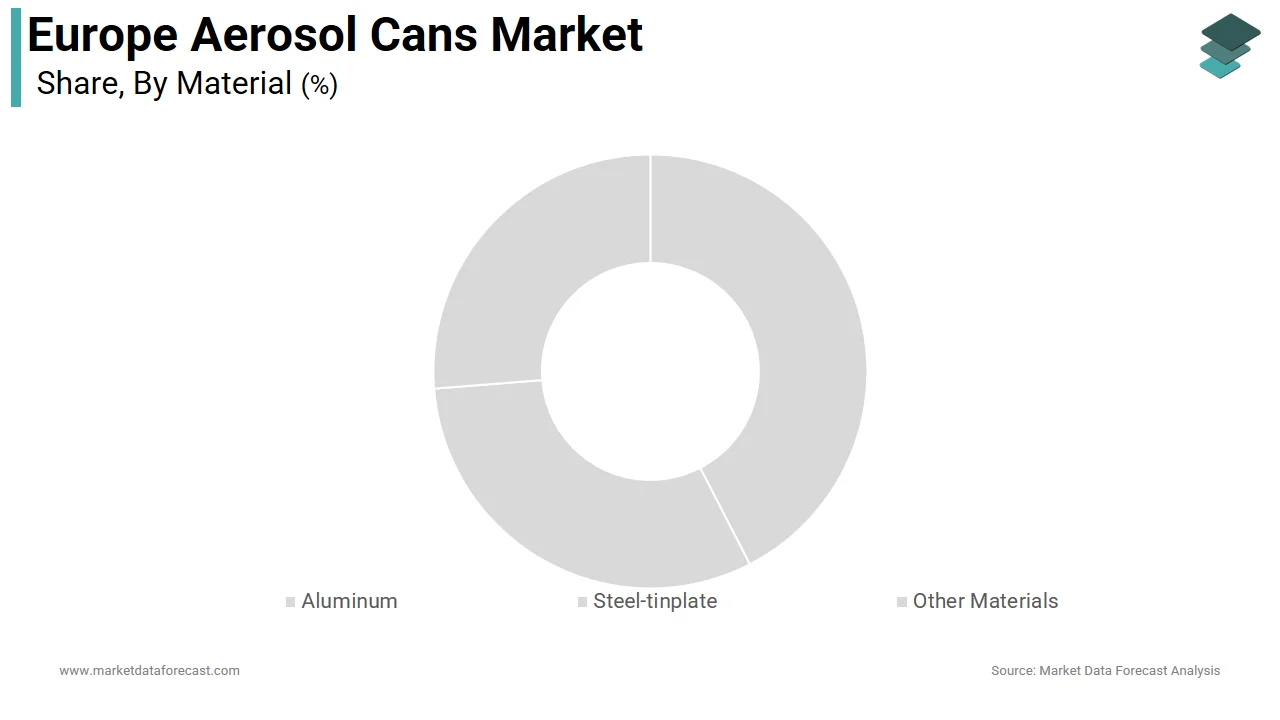
However, the aluminum segment is anticipated to register the highest CAGR of 6.6% over the forecast period, owing to the increasing demand for premium personal care products, particularly deodorants and hair styling aids, where aluminum is the preferred packaging material due to its lightweight nature and aesthetic appeal. Aluminum cans offer a sleek, modern look that resonates with younger consumers and luxury brands. As per the International Aluminium Institute, aluminum is infinitely recyclable without loss of quality, and recycling aluminum requires significantly less energy compared to primary production. This energy saving aligns with the stringent carbon reduction targets set by European governments and corporations. The lightweight property of aluminum reduces transportation costs and associated greenhouse gas emissions, further enhancing its environmental profile. According to the Aluminium Stewardship Initiative, certified sustainable aluminum sourcing is becoming a key differentiator for brands aiming to demonstrate corporate social responsibility. The malleability of aluminum allows for innovative shapes and designs, enabling product differentiation in a crowded market. Additionally, aluminum provides excellent corrosion resistance, ensuring product safety and longevity. The rise of e-commerce has also boosted demand for aluminum aerosols, as their durability and lighter weight make them ideal for shipping. These attributes drive the rapid adoption of aluminum aerosol cans in the premium personal care sector, propelling the segment's growth.
By End User Industry Insights
The cosmetic and personal care segment led the market by capturing 54.4% of the European market share in 2025. This leadership is driven by the ubiquitous use of aerosol formats for deodorants, antiperspirants, hairsprays, and dry shampoos, which are staple items in daily grooming routines. The convenience and ease of application offered by aerosol dispensers make them highly popular among consumers seeking quick and effective solutions. As per Statista, the deodorant market in Europe is one of the largest segments within personal care. The hygienic benefits of aerosol packaging, which prevent direct contact with the product, have further reinforced its popularity, especially in the post pandemic era. According to Mintel, many European consumers prefer spray formats for their ability to provide even coverage and a refreshing feel. The innovation in product formulations, such as alcohol free deodorants and natural hair care sprays, continues to expand the consumer base. Major beauty brands invest heavily in marketing aerosol products, emphasizing their sensory benefits and lifestyle alignment. The recurring nature of personal care purchases ensures a steady and predictable demand for aerosol cans. Furthermore, the trend towards premiumization in the beauty sector drives the adoption of high-quality aluminum aerosol cans with sophisticated designs. The strong brand loyalty in the personal care sector translates into consistent packaging demand, solidifying the dominance of this end-user industry. The integration of aerosol formats into new product categories, such as facial mists and sun care, further broadens the market scope.
The household and industrial products segment is anticipated to grow at a CAGR of 5.5% over the forecast period, owing to the increasing demand for convenient cleaning solutions, automotive maintenance products, and DIY supplies. Consumers and professionals alike value the precision and reach provided by aerosol sprays for tasks such as dusting, lubricating, and paint application. As per the Association of the European Detergent, Soap, and Maintenance Products Industry, the household care market has seen resilient growth, with specialized aerosol cleaners gaining traction for their efficacy. The do-it-yourself trend, particularly in countries like Germany and the United Kingdom, boosts the sales of aerosol paints, adhesives, and rust removers. According to Eurostat, expenditure on housing maintenance and repair has remained stable, supporting the demand for related aerosol products. The professional cleaning sector, which serves commercial and public spaces, also contributes significantly to volume growth. Innovations in eco-friendly formulations, such as water-based paints and biodegradable cleaners, have made aerosol products more acceptable to environmentally conscious users. The expansion of e-commerce platforms has improved the accessibility of these products, allowing consumers to purchase bulk quantities for home projects. Additionally, regulatory improvements in propellant safety have enhanced consumer confidence. The versatility of aerosol packaging for various industrial applications, from electronics cleaning to machinery maintenance, ensures diverse demand sources. This broad application base and the shift towards convenient, ready-to-use solutions drive the rapid expansion of this segment.
COUNTRY LEVEL ANALYSIS
Germany Aerosol Cans Market Analysis
Germany held the leading position in the European aerosol cans market in 2025 with 23.5% of the regional market share. This leading position of Germany in the European market is driven by the country’s robust manufacturing sector and high consumer spending on personal care and household products. As per the Federal Statistical Office of Germany, the chemical and pharmaceutical industries are key contributors to the economy, driving demand for high-quality packaging solutions. German consumers are known for their preference for premium and eco-friendly products, influencing brands to adopt sustainable aerosol packaging such as aluminum cans. According to the German Environment Agency, strict waste management regulations encourage high recycling rates, supporting the circular economy model for aerosol cans. The presence of major multinational personal care companies in Germany further stimulates market activity. The country’s strong automotive industry also contributes to demand for industrial aerosol products, including lubricants and cleaning agents. The do-it-yourself culture in Germany supports the sales of aerosol paints and adhesives. Furthermore, the government’s commitment to reducing carbon emissions drives innovation in low-impact packaging materials. Germany’s central location in Europe facilitates efficient distribution networks, enhancing market accessibility. The combination of industrial strength, consumer awareness, and regulatory support ensures that Germany remains the dominant force in the European aerosol cans market. Continuous investment in recycling infrastructure and sustainable production methods reinforces its leadership position.
United Kingdom Aerosol Cans Market Analysis
The United Kingdom captured the second-highest share of the European aerosol cans market in 2025 due to a high penetration of personal care products, particularly deodorants and hair care items, which are widely consumed across all demographic groups. As per the Office for National Statistics, household expenditure on personal care has remained resilient, supporting steady demand for aerosol packaging. The UK has a strong tradition of DIY home improvement, which drives the consumption of aerosol paints, sprays, and adhesives. According to the British Retail Consortium, sales of household cleaning products have increased, with aerosol formats favored for their convenience and effectiveness. The presence of major retail chains and e-commerce platforms ensures the wide availability of aerosol products. Environmental awareness is high in the UK, with consumers increasingly seeking recyclable packaging options. The Every Can Counts campaign, active in the UK, promotes the recycling of aerosol cans, improving collection rates. The exit from the European Union has introduced some supply chain adjustments, but the market has adapted effectively. The UK’s vibrant beauty and personal care industry continues to launch innovative aerosol products, catering to evolving consumer preferences. The focus on sustainability and convenience drives the market dynamics. The UK’s influential role in setting retail trends impacts the broader European market. Strong branding and marketing efforts by key players sustain consumer interest and loyalty.
France Aerosol Cans Market Analysis
France is anticipated to account for a prominent share of the European aerosol cans market during the forecast period. The French market is heavily influenced by the luxury beauty and personal care sector, which favors premium packaging solutions such as aluminum aerosol cans. As per INSEE, the national statistics institute, the cosmetics industry is a significant contributor to the French economy, with many global brands headquartered in the country. French consumers place a high value on aesthetics and quality, driving demand for visually appealing and high-performance aerosol products. The household care segment also contributes to market volume, with a preference for effective and convenient cleaning solutions. According to the French Ministry of Ecological Transition, environmental regulations are strict, prompting manufacturers to adopt sustainable practices and recyclable materials. The tourism sector in France boosts the sales of travel-sized aerosol products, such as sunscreens and deodorants. The country’s strong retail network, including pharmacies and perfumeries, provides extensive distribution channels for aerosol items. Innovation in natural and organic personal care products is a key trend, with brands launching eco-friendly aerosol options. France’s cultural emphasis on beauty and self-care ensures consistent demand. The market is supported by advanced recycling infrastructure and consumer education initiatives. The influence of French beauty standards extends beyond borders, impacting regional trends.
Italy Aerosol Cans Market Analysis
Italy is estimated to register a healthy CAGR in the European aerosol cans market over the forecast period. The country is a major manufacturing hub for aerosol cans, hosting several leading producers who supply both domestic and international markets. As per the Italian National Institute of Statistics, the packaging industry is a vital component of the manufacturing sector, known for its innovation and design excellence. Italian consumers have a strong affinity for personal care and beauty products, driving demand for aerosol deodorants and hair sprays. The household cleaning segment is also significant, with a preference for effective and aromatic products. According to Confindustria, the main association representing manufacturing and service companies, there is a growing focus on sustainability and circular economy principles in the packaging industry. Italy’s export-oriented economy means that a substantial portion of the produced aerosol cans is shipped to other European countries. The country’s rich tradition in design influences the aesthetic quality of aerosol packaging, making it attractive to premium brands. The tourism industry supports the sales of seasonal aerosol products, such as insect repellents and sun care items. Regulatory compliance with EU environmental standards is strictly maintained. The integration of advanced manufacturing technologies enhances production efficiency. Italy’s strategic location facilitates logistics and distribution across the Mediterranean region. The combination of manufacturing prowess and consumer demand sustains its market position.
Spain Aerosol Cans Market Analysis
Spain is predicted to hold a notable share of the European aerosol cans market over the forecast period. The Spanish market is significantly influenced by the tourism and hospitality sectors, which drive the consumption of personal care and household aerosol products. As per the National Statistics Institute of Spain, the influx of tourists increases the demand for travel-sized deodorants, sunscreens, and hair care items. The warm climate also boosts the sales of insect repellents and cooling sprays. The personal care market in Spain is growing, with consumers increasingly adopting international beauty trends. According to the Spanish Confederation of Business Organizations, the household care sector is stable, with aerosol cleaners being popular for their convenience. The DIY segment is expanding, supported by a growing interest in home improvement projects. Environmental awareness is rising, with consumers showing a preference for recyclable packaging. The Every Can Counts initiative is gaining traction in Spain, improving recycling rates. The retail landscape is dominated by supermarket chains that offer a wide range of aerosol products. E-commerce is also growing, providing additional access to consumers. The manufacturing sector in Spain is developing, with investments in sustainable production methods. The country’s vibrant culture and lifestyle contribute to the diverse demand for aerosol products. Spain’s strategic position as a tourist destination ensures seasonal spikes in consumption.
COMPETITIVE LANDSCAPE
The competition in the Europe aerosol cans market is characterized by the presence of large multinational corporations and specialized regional manufacturers. Leading players compete based on product quality, innovation, and sustainability credentials. The market is consolidated with a few key companies holding significant influence over pricing and technology standards. Competition is intense in the personal care segment, where brands seek premium packaging solutions to differentiate their products. Manufacturers invest heavily in research and development to create lightweight and recyclable cans that meet strict environmental regulations. Price competition is moderate as customers prioritize reliability and service quality over the lowest cost. The threat of new entrants is low due to high capital requirements and established customer relationships. Substitute products, such as pump sprays and solid formats, pose a challenge, prompting aerosol manufacturers to highlight convenience and performance benefits. Strategic partnerships with raw material suppliers and recycling firms enhance competitive advantage. Companies that successfully integrate sustainability into their core business model gain favor with environmentally conscious consumers and regulators. Continuous innovation in design and manufacturing processes remains crucial for maintaining market leadership.
KEY MARKET PLAYERS
The leading companies operating in the Europe aerosol cans market include:
- Crown Holdings Inc.
- Ball Corporation
- Toyo Seikan Group Holdings
- Ardagh Group S.A.
- CCL Industries
- Can-Pack SA
TOP PLAYERS IN THE MARKET
- Ball Corporation is a global leader in sustainable aluminum packaging with a significant presence in the European aerosol cans market. The company supplies high-quality aluminum aerosol containers to major personal care and household brands across the continent. Ball focuses on innovation by developing lightweight and fully recyclable can designs that align with circular economy goals. Recently, the company has expanded its manufacturing capabilities in Europe to meet growing demand for premium aerosol packaging. Their commitment to sustainability is evident in their use of renewable energy in production facilities. Ball actively collaborates with customers to create customized packaging solutions that enhance brand appeal. By investing in advanced printing technologies, they enable vibrant and durable decorations on cans. This strategic focus on quality and environmental responsibility strengthens their position as a preferred supplier in the European market.
- Crown Holdings Inc is a prominent player in the global packaging industry with a strong footprint in the Europe aerosol cans sector. The company manufactures both steel and aluminum aerosol containers serving diverse end-user industries, including personal care and automotive. Crown emphasizes operational efficiency and technological advancement to deliver cost-effective and reliable packaging solutions. They have recently invested in upgrading their European production lines to increase capacity and improve product quality. Crown promotes the recyclability of metal packaging through active participation in industry recycling initiatives. Their extensive distribution network ensures timely delivery to customers across Europe. The company also focuses on developing innovative valve systems that enhance product performance. By prioritizing customer collaboration and sustainable practices, Crown maintains a competitive edge. Their ability to offer a wide range of packaging options supports their strong market presence.
- Ardagh Group S.A. is a leading global supplier of metal and glass packaging with a substantial role in the Europe aerosol cans market. The company produces a wide variety of steel and aluminum aerosol cans for personal care, household, and industrial applications. Ardagh is committed to sustainability by promoting the infinite recyclability of metal packaging. They have recently implemented energy-efficient technologies in their European manufacturing plants to reduce carbon emissions. Ardagh works closely with brands to develop innovative packaging designs that stand out on retail shelves. Their focus on supply chain reliability ensures consistent product availability for customers. The company also engages in educational campaigns to improve consumer awareness about recycling aerosol cans. By combining manufacturing excellence with environmental stewardship, Ardagh strengthens its reputation. Their comprehensive product portfolio and customer-centric approach secure their position in the market.
TOP STRATEGIES USED BY KEY MARKET PARTICIPANTS
Key players in the Europe aerosol cans market primarily focus on sustainability and innovation to maintain competitiveness. Companies are investing heavily in lightweighting technologies to reduce material usage and lower carbon footprints. They actively promote the recyclability of metal packaging through partnerships with recycling organizations and consumer education campaigns. Product differentiation is achieved by offering customized designs and advanced printing techniques that enhance brand visibility. Manufacturers are expanding their production capacities in strategic locations to improve supply chain efficiency and reduce lead times. Collaboration with brand owners to develop eco-friendly propellant systems and valve technologies is another common strategy. Digitalization of manufacturing processes helps optimize operations and reduce waste. Companies also engage in mergers and acquisitions to consolidate market position and acquire new technologies. These strategies enable participants to meet evolving regulatory requirements and consumer preferences while driving growth.
MARKET SEGMENTATION
This research report on the Europe aerosol cans market has been segmented and sub-segmented into the following categories.
By Material
- Aluminum
- Steel-tinplate
- Other Materials
By End-User Industry
- Cosmetic and Personal Care (Deodorants / Antiperspirants, Hairsprays, Hair Mousse, etc.)
- Household
- Pharmaceutical / Veterinary
- Paints and Varnishes
- Automotive / Industrial
- Other End-User Industries
By Country
- United Kingdom
- France
- Spain
- Germany
- Italy
- Russia
- Sweden
- Denmark
- Switzerland
- Netherlands
- Rest of Europe