- Product Description Description
- Table of Contents TOC
- List of Table & Figure LOT
- Get Free Sample PDF Sample PDF
Market Size, 2025
$2.04 BnMarket Estimate, 2026
$2.17 BnMarket Forecast, 2034
$3.58 BnCAGR, 2026–2034
6.47%Europe Insect Repellent Market Size, Growth, Trends & Forecast (2026–2034)
The Europe Insect Repellent Market size was calculated to be USD 2.04 billion in 2025, is estimated to reach USD 2.17 billion in 2026, and is projected to expand to USD 3.58 billion by 2034, registering a compound annual growth rate (CAGR) of 6.47% during the forecast period from 2026 to 2034. Driven by the spread of vector-borne diseases, climate-induced season extensions, rising outdoor recreation, and innovations in sustained-release formulations, the market is shifting from seasonal convenience toward a critical pillar of public health defense.
Key Executive Metrics (At-a-Glance)
- 2025 Base Valuation: USD 2.04 Billion
- 2026 Current Valuation: USD 2.17 Billion
- 2034 Forecast Valuation: USD 3.58 Billion
- Compound Annual Growth Rate (CAGR): 6.47% (2026–2034)
- Leading Region: Italy (holding a dominant 23.2% regional market share in 2025 due to localized arboviral activity)
- Key Growth Hubs: France, Spain, Germany, and the United Kingdom
Core Market Drivers
- Vector-Borne Disease Expansion: Warming temperatures and invasive species proliferation driving year-round demand for preventive health tools.
- Outdoor Recreation Growth: Rising participation in nature-based tourism, hiking, and camping increasing human exposure to biting arthropods.
Primary Market Restraints & Challenges
- Strict EU Chemical Regulations: Biocidal Products Regulation limiting active-ingredient availability and creating high compliance costs.
- Consumer Skepticism: Public preference for "natural" alternatives over approved synthetics, often creating an efficacy gap against aggressive vector species.
Market Segmentation: Largest and Fastest-Growing Segments
| Segment Category | Largest Segment | Fastest-Growing Segment |
|---|---|---|
| By Product Type | Spray (50.9% share in 2025) | Cream (CAGR of 10.6%) |
| By Insect Type | Mosquito (62.5% share in 2025) | Fly (CAGR of 11.6%) |
| By Sales Channel | Supermarkets and Hypermarkets (60.9% share in 2025) | Online Stores (CAGR of 15.4%) |
| By Region | Italy (23.2% share in 2025) | United Kingdom & Spain |
Major Industry Players Profiled
Key market participants shaping the European insect repellent landscape include S.C. Johnson & Son, Inc., Reckitt Benckiser Group PLC, Henkel AG & Company KGaA, Spectrum Brands Holdings, Inc., Godrej Consumer Products Ltd., Dabur India Ltd., Himalaya Wellness Company, Natura & Co Holding SA, 3M Company, Coghlans Ltd., Enesis Group, Jyothy Laboratories, Quantum Health, Beiersdorf AG, and Bayer AG.
Europe Insect Repellent Market Size
The Europe insect repellent market size was calculated to be USD 2.04 billion in 2025 and is anticipated to be worth USD 3.58 billion by 2034, growing from USD 2.17 billion in 2026 at a CAGR of 6.47% during the forecast period.
Insect repellents are topical cosmetic or biocidal formulations designed to deter biting arthropods such as mosquitoes, ticks, midges, and sandflies through active ingredients that interfere with olfactory receptors or create physical barriers. These products are regulated under dual frameworks requiring rigorous safety and performance validation. The market’s evolution is shaped by rising vector-borne disease threats, changing climate patterns, and heightened consumer awareness of chemical exposure. According to the European Centre for Disease Prevention and Control, Europe has seen a marked rise in locally acquired mosquito‑borne infections in recent years, with notable increases in dengue and West Nile virus activity, with southern regions experiencing progressive northward expansion of competent vectors. As per the European Environment Agency, European land temperatures have risen by about 2.2–2.3 °C compared with pre‑industrial levels, which is accelerating insect breeding cycles and extending seasonal activity into autumn, and the European Commission’s Chemicals Strategy for Sustainability tightens rules on hazardous chemicals including measures addressing endocrine disruptors and other high‑concern substances, pushing innovation toward safer alternatives such as plant‑derived and encapsulated actives and this regulatory and epidemiological confluence positions insect repellents not merely as comfort products but as essential tools in personal and public‑health defense.
MARKET DRIVERS
Expansion of Vector‑Borne Diseases Drives Preventive Demand
The geographic spread and intensification of mosquito‑ and tick‑borne illnesses across Europe have transformed insect repellents from seasonal convenience items into year‑round health necessities, which is one of the major factors propelling the growth of the European insect repellent market. For instance, several hundred locally acquired West Nile virus cases in 2023 were the highest recent annual total, with outbreaks reported as far north as Germany and the Netherlands. Similarly, Lyme borreliosis transmitted by Ixodes ticks continues to impose a substantial annual case burden across Europe, with some national systems reporting marked increases in incidence over the past decade. These trends are directly linked to climate‑driven habitat expansion as warming temperatures enable invasive and opportunistic species such as Aedes albopictus (the Asian tiger mosquito) to establish breeding populations across many EU countries, including France, Italy, and Belgium. Public‑health agencies have responded by integrating personal‑protection advice into national surveillance and outbreak protocols: for example, some national institutes distribute repellents or issue targeted guidance during seasonal alerts, and occupational recommendations now emphasise EPA‑equivalent or DEET‑based repellents for high‑exposure workers. Consumer behaviour reflects this shift, with surveys and market indicators showing a clear rise in routine repellent use in higher‑risk regions compared with earlier years. This epidemiological reality anchors sustained demand in prevention rather than preference.
Rise of Outdoor Recreation and Nature‑Based Tourism Amplifies Exposure Risk
Europe’s growing engagement with outdoor leisure activities has significantly increased human exposure to biting insects, particularly in peri‑urban and rural ecosystems, which is further fuelling the growth of the European insect repellent market. Participation in hiking, camping, and other nature‑based recreation has expanded across many member states, and regional trail usage has risen notably since 2019 in Nordic and Alpine areas. Policy initiatives that expand access to greenways and outdoor infrastructure have reinforced this trend, increasing footfall in habitats adjacent to wetlands and river basins where mosquito activity concentrates seasonally. Retailers and outdoor brands have responded by integrating repellent apparel and treated textiles into core product lines, and some national trade associations report strong year‑on‑year growth in permethrin‑treated clothing sales in markets such as Germany and Austria. School excursions and youth programmes in several countries now mandate repellent use during field activities following local health advisories. This cultural embrace of nature, coupled with ecological vulnerability, creates structural demand for effective personal protection that transcends temporary outbreaks and embeds repellents into routine outdoor preparedness.
MARKET RESTRAINTS
Stringent EU Chemical Regulations Limit Active‑Ingredient Availability
The European insect‑repellent market operates under one of the world’s most restrictive chemical regulatory environments, which constrains the formulation toolbox available to manufacturers. Under the Biocidal Products Regulation, only a defined set of active substances is approved for use in repellent products, with many historical actives having been withdrawn or remain under re‑evaluation on safety or environmental grounds. The approval process is resource‑intensive and time‑consuming, with dossier preparation and regulatory compliance imposing high costs that disproportionately affect smaller brands. As a result, some actives face delayed or restricted authorisation in particular product formats, and manufacturers often cite long timelines and high fees as barriers to innovation. Consequently, many companies supplement or replace synthetic actives with “natural” alternatives such as citronella or lemon‑eucalyptus oil. However, standardized testing and consensus guidance indicate that many plant‑based options provide shorter protection durations and more variable efficacy than approved synthetic repellents. This regulatory caution protects consumer safety but simultaneously narrows competitive differentiation and can limit public‑health responsiveness during emerging vector threats.
Consumer Skepticism Toward Synthetic Ingredients Undermines Efficacy Adoption
Despite scientific consensus on the safety and efficacy of approved synthetic repellents when used as directed, which is a significant segment of European consumers avoids them because of perceived toxicity or environmental concerns, further impeding the growth of the European insect repellent market. Surveys across several Western European markets show substantial reluctance among some consumers to use ingredients such as DEET or icaridin, with worries focused on skin absorption and aquatic toxicity, even when products comply with EU standards. This perception is amplified by social‑media narratives and eco‑labelling schemes that equate “natural” with “safe” regardless of comparative efficacy data. The result is a persistent market for plant‑derived repellents that, in many field evaluations, provide shorter protection windows and fail to prevent bites under prolonged exposure to aggressive species. This efficacy gap becomes critical in endemic zones where inadequate protection increases infection risk. Public‑health campaigns and regulatory bodies face a communication challenge: they must provide clear, evidence‑based guidance without appearing to endorse specific commercial products. The disconnect between scientific validation and consumer belief thus creates a paradox in which safety concerns lead some individuals to choose less effective protection, undermining both individual and community‑level disease prevention.
MARKET OPPORTUNITIES
Innovation in Encapsulation and Sustained‑Release Technologies Enhances User Compliance
Advances in microencapsulation and polymer‑matrix delivery systems are overcoming historical limitations of repellents, such as short duration, skin irritation, and unpleasant odor, which is a prominent opportunity in the European insect repellent market. European research institutions have pioneered technologies that gradually release active ingredients over 12–14 hours, reducing reapplication frequency and improving adherence. As per a 2023 pilot by the Fraunhofer Institute for Interfacial Engineering, using cyclodextrin‑encapsulated icaridin demonstrated very high bite protection for 13 hours in Mediterranean field trials without evidence of skin permeation. Similarly, a Swiss startup has developed a biodegradable polymer patch that releases PMD steadily for 24 hours and is undergoing validation by national tropical‑medicine institutes. These innovations align with EU preferences for reduced chemical load and enhanced user experience. Horizon Europe and other public research programmes have directed targeted funding toward transdermal and sustained‑release repellent delivery projects in recognition of their role in outbreak response. Major consumer‑health brands are integrating these platforms into next‑generation sprays, lotions, and wearable formats aimed at travellers, outdoor workers, and vulnerable populations. By decoupling efficacy from frequent reapplication, these technologies address a core behavioural barrier, thereby transforming repellents from burdensome routines into seamless protective measures.
Integration into Public Health Emergency Preparedness Creates Institutional Demand
European governments are increasingly embedding repellents into national vector‑control and health‑security strategies and recognising their role as immediate personal barriers during arboviral and other outbreaks, which is another prominent opportunity in the European insect repellent market. Health‑security guidance at the EU level encourages member states to maintain strategic stocks of WHO‑recommended repellents for rapid deployment during emergencies. In 2023, some countries activated national reserves following local transmission events by distributing repellent kits to at‑risk communities and using municipal emergency packs to protect schoolchildren and outdoor workers in Aedes‑established regions. The European Centre for Disease Prevention and Control and joint procurement mechanisms have supported coordinated cross‑border stockpiling and rapid acquisition to bolster regional response capacity. These institutional channels provide stable, predictable demand that is insulated from short‑term retail trends while validating product efficacy through public‑health endorsement. The EU’s One Health and occupational‑safety initiatives further promote repellent use among veterinarians, livestock workers, and other high‑exposure professions to reduce zoonotic spillover risk. This shift from retail sales to resilience planning positions repellents as critical public‑health infrastructure in Europe’s evolving defense against climate‑amplified infectious threats.
MARKET CHALLENGES
Inconsistent Cross‑National Approval Timelines Delay Market Access
Despite EU‑level harmonisation efforts, significant disparities persist in national biocidal product authorisations, which are creating fragmented market access and commercial inefficiency and challenging the expansion of the European insect repellent market. A repellent authorised in one member state can face additional national review steps or data‑interpretation differences that delay clearance elsewhere, forcing companies to maintain country‑specific formulations, inventory, and labelling and inflating operational costs. In practice, a substantial share of biocidal dossiers does not achieve immediate mutual recognition across all member states, which discourages smaller innovators from expanding beyond core markets and reduces the agility of supply chains during outbreaks. The situation becomes acute when rapid deployment is required. National procedural constraints can impede fast‑track use of already‑approved products in emergency settings. This fragmentation undermines the internal‑market principle and weakens collective health security. Until mutual recognition and streamlined emergency pathways become routine, the European repellent market will remain a patchwork of compliance rather than a unified defence ecosystem.
Climate‑Induced Season Extension Outpaces Consumer Habit Formation
Rising temperatures have lengthened the biting‑insect season across much of Europe, yet consumer usage patterns remain anchored to traditional summer months, which is creating a protection gap during shoulder periods and is further challenging the growth of the European insect repellent market. Mosquito activity now begins earlier and extends later in many central and northern regions, while late‑season vectors such as Aedes japonicus and other invasive species exhibit competence for viruses that were previously rare in those months. Late‑season human cases of arboviral infection have been recorded in several countries, which indicates the risk of discontinuing protection too early. Public‑awareness campaigns have struggled to recalibrate behaviour. Many consumers still treat repellents as seasonal items, and retail merchandising often reinforces that seasonality by reducing shelf space after peak summer. The disconnect between ecological reality and human routine leaves populations vulnerable during climatically amplified transmission windows. Bridging this behavioural lag requires reframing repellents as year‑round health tools through coordinated messaging from health authorities, industry, and media, supported by product formats and distribution strategies that make continuous protection convenient and socially normative.
REPORT COVERAGE
| REPORT METRIC | DETAILS |
| Market Size Available | 2025 to 2034 |
| Base Year | 2025 |
| Forecast Period | 2026 to 2034 |
| CAGR | 6.47% |
| Segments Covered | By Product Type, Insect Type, Sales Channel, And Region |
| Various Analyses Covered | Global, Regional & Country Level Analysis; Segment-Level Analysis; DROC, PESTLE Analysis; Porter’s Five Forces Analysis; Competitive Landscape; Analyst Overview of Investment Opportunities |
| Regions Covered | UK, France, Spain, Germany, Italy, Russia, Sweden, Denmark, Switzerland, Netherlands, Turkey, and the Czech Republic |
| Market Leaders Profiled | S.C. Johnson & Son, Inc., Reckitt Benckiser Group PLC, Henkel AG & Company KGaA, Spectrum Brands Holdings, Inc., Godrej Consumer Products Ltd., Dabur India Ltd., Himalaya Wellness Company, Natura & Co Holding SA, 3M Company, Coghlans Ltd., Enesis Group, Jyothy Laboratories, Quantum Health |
SEGMENTAL ANALYSIS
By Product Insights
Among product forms, the spray segment dominated the Europe insect repellent market by holding 50.9% of the regional market share in 2025. The growth of the spray segment in this regional market is majorly driven by its immediate efficacy, portability, and alignment with emergency response needs during vector outbreaks. Sprays are the preferred format in institutional and outbreak settings due to their fast‑acting nature and ease of mass distribution. Public health guidance from European authorities recommends spray‑based repellents containing icaridin or DEET for travellers to endemic zones, a position widely adopted by national health ministries. During recent arboviral outbreaks in southern Europe, civil protection and public health agencies distributed hundreds of thousands of spray units within short operational windows to protect exposed populations. Their lightweight packaging enables air transport and shelf‑stable storage without refrigeration, which is critical for rapid deployment. Additionally, the European Committee for Standardization’s EN 16842 protocol for repellent efficacy testing is widely applied to spray formulations, supporting regulatory predictability. Field trials by national institutes confirm that aerosol and pump sprays achieve uniform skin coverage faster than creams, reducing application gaps that can compromise protection. This operational superiority ensures sprays remain the backbone of both personal and public‑health defense strategies across diverse European climates.
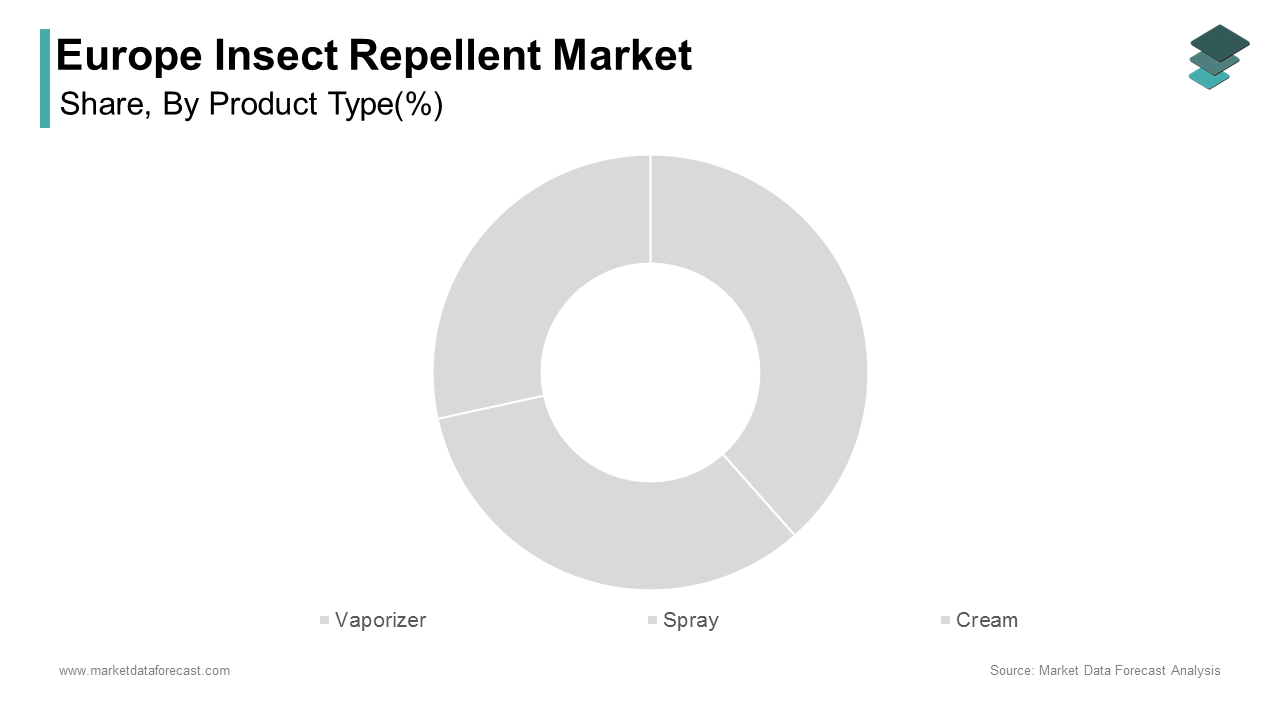
The cream segment is the fastest-growing product type in many European markets and is estimated to grow at a CAGR of 10.6% over the forecast period, owing to the rising consumer demand for skin‑friendly and multifunctional formulations. European consumers are increasingly seeking repellents that double as skincare products, particularly in regions with high UV exposure and dry climates. Creams offer superior moisturization and longer residence time on the skin compared to evaporative sprays. Dermatology societies and patient surveys indicate a growing preference among users with sensitive or atopic skin for cream formats to avoid alcohol‑induced irritation. In Southern Europe, brands have launched SPF‑infused repellent creams that comply with EU sunscreen rules. Sales of such hybrid products have risen in several national markets. The European Commission’s Cosmetic Regulation provides a regulatory pathway for dual‑function items to carry both biocidal and cosmetic claims when active ingredients meet specified thresholds, a route increasingly leveraged by derma‑cosmetic firms. Additionally, creams provide precise application for children’s faces and hands, where spray overspray poses inhalation risks. Paediatricians in some countries now routinely recommend cream‑based repellents for young children in line with national safety guidance. This convergence of dermatological care and vector protection is transforming creams from niche to mainstream in multiple markets.
By Insect Type Insights
The mosquito repellent segment commanded the dominant share of the Europe insect repellent market by occupying 62.5% of the regional market share in 2025. The dominance of the mosquito repellent segment in this regional market can be credited to the public‑health urgency around mosquito‑borne diseases and the expanding geographic range of key vector species. The establishment of invasive mosquito species such as Aedes albopictus and Aedes aegypti has transformed mosquitoes from nuisance pests into primary vectors of epidemic risk. European surveillance and public‑health reporting documented locally acquired cases of dengue, chikungunya, and West Nile virus across multiple Member States in recent seasons, with transmission confirmed in countries previously considered low‑risk. EFSA and national mapping show Aedes albopictus established in an expanding number of EU countries, with breeding sites detected progressively further north. National health agencies have responded by classifying mosquito repellents as essential preventive tools. Several national authorities mandate or strongly recommend repellent use in high‑risk settings and distribute repellent kits during local alerts. The European Commission’s vector control strategy explicitly prioritizes personal protection, including repellents, as a first‑line defense. This institutional validation ensures sustained high demand that transcends seasonal discomfort and anchors the segment in public‑health necessity.
The fly repellent segment is a rapidly growing insect‑type category and is estimated to witness a CAGR of 11.6% over the forecast period, owing to the agricultural and occupational demand as well as renewed attention to nuisance and biting flies in peri‑urban and rural zones. Intensive livestock operations across Western and Central Europe have seen increases in stable flies and face flies linked to warmer winters and changes in farm management. National and EU agricultural health reporting indicate notable rises in fly pressure on dairy and poultry farms in several countries between recent seasons. These flies cause economic losses through reduced milk yield, weight loss, and disease transmission. In response, animal‑health policy and guidance increasingly encourage integrated, non‑antibiotic pest control measures, including topical repellents and collars for livestock. Agricultural cooperatives and farm suppliers reported substantial year‑on‑year increases in sales of repellent collars and pour‑on products in 2023 in several Member States. Human workers in these settings also face biting‑fly harassment, and occupational health surveys show many farmhands use personal fly repellents regularly. This dual human‑animal demand creates a robust growth corridor distinct from mosquito‑focused urban markets.
By Sales Channel Insights
The supermarket and hypermarket segment remained the largest sales channel for insect repellents in Europe in 2025 by accounting for 60.9% of the regional market share. The dominance of the supermarket and hypermarket segment in this regional market is driven by impulse‑driven seasonal purchasing and high foot traffic during peak months. Consumers often buy repellents reactively during heatwaves or after experiencing bites rather than through planned procurement. For instance, a strong concentration of repellent purchases during warm months and heat events. Supermarkets capitalize on this urgency by placing products at eye level near entrances, produce sections, and summer‑essentials aisles. In many countries, major supermarket chains dedicate seasonal displays to repellents with promotional pricing that drives basket attachment. The immediacy of physical retail—especially in rural areas with limited e‑commerce penetration ensures supermarkets remain the default channel for emergency replenishment. Additionally, pharmacies within or adjacent to hypermarkets provide pharmacist‑endorsed recommendations that enhance trust in product selection. This combination of accessibility, proximity, and contextual merchandising creates a self‑reinforcing cycle of high‑volume seasonal sales that digital channels struggle to replicate for reactive purchases.
The online stores segment is the fastest-growing sales channel for insect repellents and is expected to exhibit a CAGR of 15.4%over the forecast period, owing to the growing preference of consumers for specialized, niche, and destination‑specific formulations. Online platforms enable access to repellents not available in conventional stores, including organic‑certified products, travel kits, repellent clothing, and species‑specific formulas. Consumer research shows a large share of online buyers seek formulations (e.g., PMD, icaridin, child‑safe options) that are less commonly stocked in supermarkets. Brands leverage direct‑to‑consumer websites to offer detailed efficacy data, ingredient transparency, and subscription models for repeat buyers. Travel health services report that many travellers now purchase destination‑specific repellents online before departure to allow time for patch testing and to secure products not sold locally. Additionally, e‑commerce supports cross‑border access to highly rated EU products, enabling consumers to bypass local stock limitations. This curation advantage attracts informed buyers who prioritize performance over convenience, which is creating a high‑value digital segment insulated from mass‑retail price competition.
REGIONAL ANALYSIS
Italy Insect Repellent Market Analysis
Italy dominated the insect repellent market in Europe in 2025 by holding 23.2% of the regional market share. The dominance of Italy in the European market is driven by its status as one of the EU countries most affected by locally transmitted arboviral diseases. Autochthonous dengue and chikungunya cases were reported in 2023 in regions where Aedes albopictus is endemic, prompting municipal fogging and free repellent distribution during outbreaks. Pharmacies play a central role in retailing repellents, ensuring professional guidance at the point of sale. National emergency and school‑safety protocols include repellents in outbreak response plans. Italy’s dense summer tourism and large seasonal visitor flow further amplify retail demand in coastal and urban hotspots. This blend of epidemiological pressure, institutional response, and seasonal influx creates a high baseline consumption that anchors Italy’s market leadership.
France Insect Repellent Market Analysis
France commands the second-largest national market and is distinguished by a stringent biocide authorization process and a strong outdoor‑activity culture. National rules limit the set of approved repellent actives, and recent regulatory actions have tightened some aerosol formulations, yet demand remains robust during hiking, camping, and festival seasons. A large share of the population regularly engages in forest and countryside recreation, and public health guidance increasingly incorporates repellent use for outdoor therapies and activities. Retailers run seasonal campaigns, and private‑label products represent a meaningful portion of sales. France’s overseas departments, where dengue risk is year‑round, also sustain national awareness and influence policy and consumption patterns.
Spain Insect Repellent Market Analysis
Spain ranks among the top national markets. The expanding vector presence along the Mediterranean and Atlantic coasts and very large inbound tourism are supporting the insect repellent market growth in Spain. Aedes mosquitoes are now established across multiple autonomous communities, and local transmission has occurred in recent seasons, prompting heightened public‑health messaging. Hotels, resorts, and travel operators commonly provide repellent welcome kits, and major chains distribute large volumes seasonally. Urban parks and public spaces in some cities have installed dispensers in response to bite complaints, while agricultural wetlands and rice paddies create persistent breeding habitats in certain regions. The combination of tourism, agricultural exposure, and festival seasonality produces sustained, geographically varied demand.
Germany Insect Repellent Market Analysis
Germany is a significant market. The growth of Germany in the European market is driven by proactive preventive behavior and strict workplace safety requirements. Local transmission of some arboviruses has been reported in recent years, and vector ranges are shifting northward, increasing public awareness. National travel‑health guidance recommends repellents for many tropical destinations, driving pre‑trip purchases. Occupational safety rules require employers to protect outdoor workers in sectors such as forestry, agriculture, and construction, covering millions of employees. Pharmacies are the dominant retail channel, and a large hiking and cycling population supports steady consumer demand for personal protection products.
United Kingdom Insect Repellent Market Analysis
The United Kingdom is a growing niche market with particular emphasis on tick‑borne disease prevention and faster post‑Brexit product authorizations. Reported Lyme disease incidence has risen in recent years, and public‑health guidance recommends effective repellents such as icaridin or DEET for woodland and rural walks. Regulatory changes since leaving the EU have enabled more agile evaluation of novel active ingredients, attracting innovators and new product entries. A significant share of repellent sales occurs online, supporting rapid uptake of premium and specialist formulations. While mosquito‑borne risk remains comparatively low, the UK’s focus on ticks, travel health, and digital retail creates a distinct growth trajectory centered on efficacy and specialist products.
COMPETITION OVERVIEW
The Europe insect repellent market features intense competition among multinational health and hygiene companies, specialty vector control firms, and agile niche brands. Established players leverage strong brand equity, regulatory expertise, and pharmacy distribution networks to maintain leadership, while smaller innovators disrupt through natural actives, smart delivery, and direct-to-consumer models. The dual regulatory framework creates high barriers to entry, favoring companies with substantial dossier capabilities and toxicological data. Price competition remains limited as consumers prioritize efficacy, safety, and skin compatibility over cost, especially in disease-prone regions. Public health endorsement acts as a powerful differentiator, with government-recommended products gaining rapid consumer trust during outbreaks. The market is increasingly segmented between mass market convenience and premium science-backed solutions, with sustainability and digital integration emerging as key battlegrounds. As climate change amplifies vector threats, the ability to balance innovation, compliance, and public health collaboration determines competitive success across diverse European geographies.
KEY MARKET PLAYERS
A few major players of the Europe insect repellent market include
- S.C. Johnson & Son, Inc
- Reckitt Benckiser Group PLC
- Henkel AG & Company KGaA
- Spectrum Brands Holdings, Inc
- Godrej Consumer Products Ltd
- Dabur India Ltd
- Himalaya Wellness Company
- Natura & Co Holding SA
- 3M Company
- Coghlans Ltd
- Enesis Group
- Jyothy Laboratories
- Quantum Health
Top Strategies Used by the Key Market Participants
Key players in the Europe insect repellent market focus on regulatory compliance by aligning formulations with EU Biocidal Products Regulation and Cosmetic Regulation requirements. They invest in derma cosmetic innovation to develop repellents that double as skincare, enhancing daily use adherence. Strategic partnerships with public health agencies and travel organizations embed products into official prevention guidelines. Companies increasingly adopt sustainable packaging and propellant-free delivery systems to meet EU environmental mandates. Additionally, they leverage e-commerce and digital health platforms to reach informed consumers seeking specialized or travel-specific protection solutions.
Leading Players in the Europe Insect Repellent Market
- Beiersdorf AG is a German multinational renowned for its dermatological expertise and consumer health brands, including Nivea and Eucerin. The company contributes significantly to the global insect repellent market through itsscience-backedd formulations that merge skin compatibility with vector protection. In Europe, Beiersdorf markets repellent products under its trusted skincare line,s ensuring seamless integration into daily routines. In 2025, the company launched a new range of icaridin-based repellent lotions formulated with glycerin and panthenol to address dryness concerns, particularly in sensitive skin populations. This innovation leverages Beiersdorf’s R&D capabilities in derma cosmetic science and aligns with EU regulatory preferences for low irritation profiles. Its distribution through pharmacies and premium retail channels reinforces credibility and consumer trust across Western and Southern Europe.
- Bayer AG is a global life science leader with a strong footprint in vector control through its Environmental Science division. The company supplies both consumer and institutional insect repellent solutions across Europe, emphasizing efficacy against disease-carrying species. Bayer’s products are widely used in public health programs and by travelers seeking WHO-recommended protection. In 2023, Bayer introduced a next-generation repellent spray featuring micro-encapsulated PMD derived from lemon eucalyptus, offering 10-hour protection with reduced odor and skin feel. The company also collaborates with European health ministries to support outbreak response readiness, including stockpiling and community education. Its dual focus on innovation and public health engagement strengthens its strategic relevance in a market increasingly defined by climate-driven disease risks.
- Reckitt Benckiser Group plc is a British multinational that markets insect repellents under globally recognized brands such as Autan and Mortein. In Europe, Autan is a household name, particularly in Southern regions where mosquito pressure is high. The company contributes to global standards by pioneering DEET anicaridin-based formulations that meet stringent EU biocidal and cosmetic regulations. In early 2025, Reckitt enhanced its Autan line with a non-aerosol pump spray using compressed air technology compliant with EU F-gas rules. It also expanded its digital engagement through travel health partnerships, offering personalized repellent recommendations via mobile apps. These actions reflect Reckitt’s strategy of combining regulatory agility, consumer insight, and sustainability to maintain leadership in a rapidly evolving public health landscape.
MARKET SEGMENTATION
This research report on the Europe insect repellent market has been segmented and sub-segmented based on product type, insect type, sales channel, and region.
By Product Type
- Vaporizer
- Spray
- Cream
By Insect Type
- Mosquito Repellent
- Bugs Repellent
- Fly Repellent
- Others
By Sales Channel
- Supermarket/Hypermarket
- Online Stores
By Region
- UK
- France
- Spain
- Germany
- Italy
- Russia
- Sweden
- Denmark
- Switzerland
- Netherlands
- Turkey
- Czech Republic
- Rest of Europe