Europe Arabica Coffee Market Size, Share, Trends & Growth Forecast Report, Segmented By Product Type (Whole Bean, Ground Coffee, Instant Coffee, Others), Application, Distribution Channel, And Country (UK, France, Spain, Germany, Italy, Russia, Sweden, Denmark, Switzerland, Netherlands, Turkey, Czech Republic & Rest of Europe) - Industry Analysis From (2026 To 2034)
Market Size, 2025
$10.43 BnMarket Estimate, 2026
$10.97 BnMarket Forecast, 2034
$16.40 BnCAGR, 2026–2034
5.16%Europe Arabica Coffee Market Report Summary
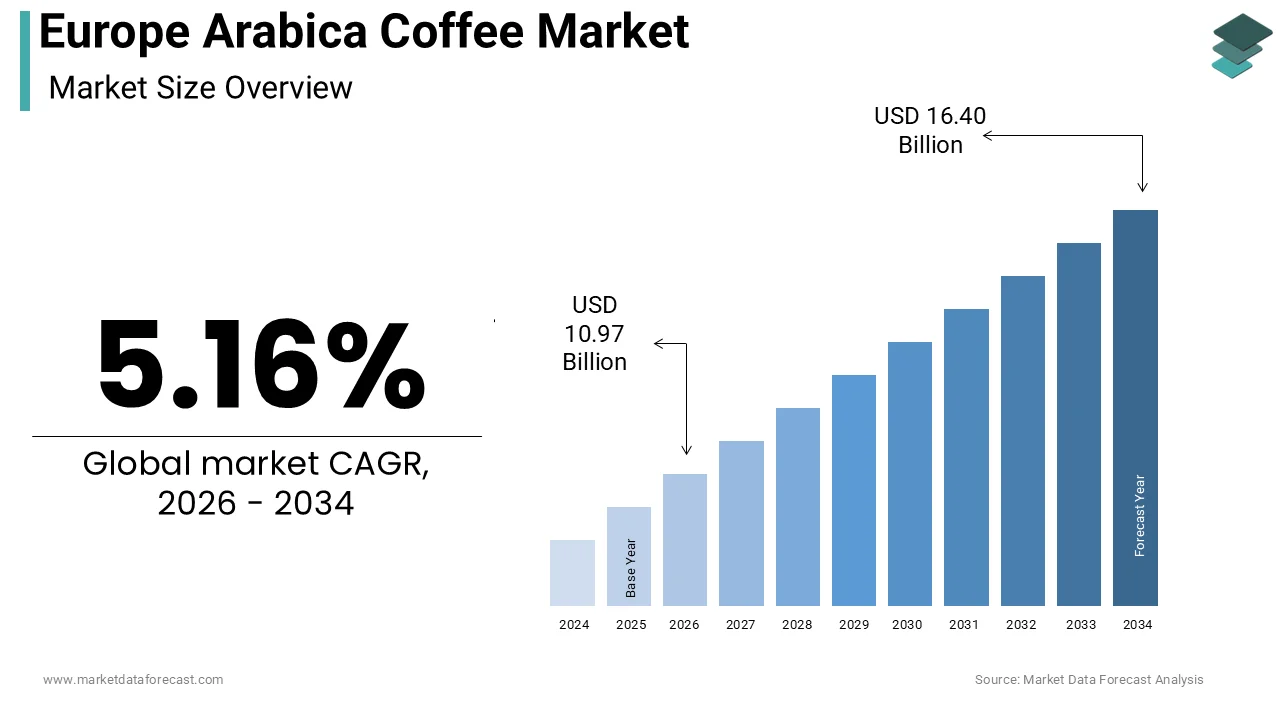
The Europe Arabica coffee market was valued at USD 10.43 billion in 2025, is estimated to reach USD 10.97 billion in 2026, and is projected to reach USD 16.40 billion by 2034, growing at a CAGR of 5.16% during the forecast period. The growth of the Europe Arabica coffee market is driven by increasing consumer preference for premium and specialty coffee, rising café culture, and growing demand for high-quality coffee experiences. Arabica coffee is widely favored for its smooth flavor, aroma, and lower caffeine content, making it the dominant choice among European consumers. The market is further supported by the expansion of specialty coffee shops, increasing adoption of home brewing systems, and growing interest in ethically sourced and sustainably produced coffee. Additionally, innovations in coffee formats such as capsules, ready-to-drink beverages, and artisanal blends are contributing to market growth.
Key Market Trends
- Rising demand for premium and specialty coffee is driven by evolving consumer taste preferences.
- The growing popularity of café culture and artisanal coffee experiences across European cities.
- Increasing adoption of home brewing systems and coffee machines is boosting retail coffee sales.
- Expansion of sustainable and ethically sourced coffee products, including organic and fair-trade offerings.
- Innovation in coffee formats, such as capsules, pods, and ready-to-drink beverages enhancing convenience.
Segmental Insights
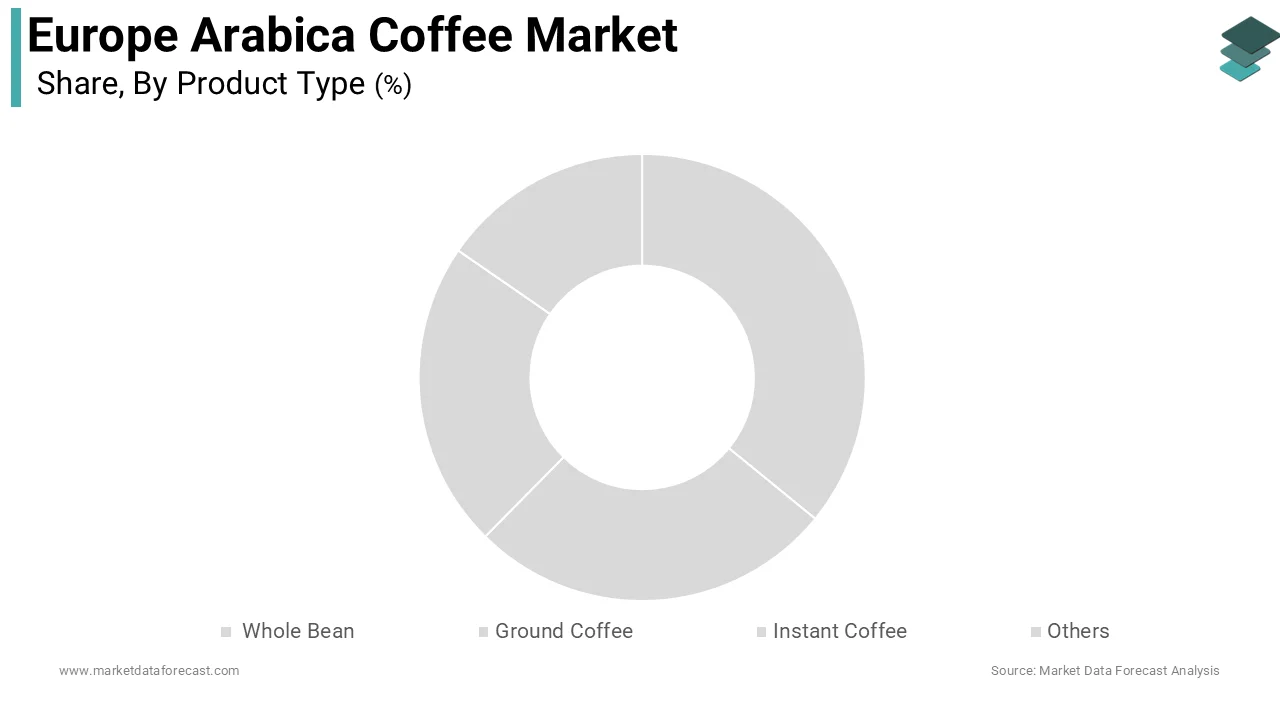
- Based on product type, the ground coffee segment dominated the Europe arabica coffee market by accounting for 46.8% of the market share in 2025, driven by its widespread use in both households and foodservice establishments.
- Based on application, the food and beverage segment held a significant share of the Europe arabica coffee market in 2025, supported by strong consumption in cafés, restaurants, and hospitality sectors.
- Based on distribution channel, the supermarkets and hypermarkets segment accounted for 63.6% of the Europe arabica coffee market share in 2025, owing to wide product availability, competitive pricing, and strong retail penetration.
Regional Insights
- Germany dominated the Europe Arabica coffee market in 2025, accounting for 26.4% of the regional market share, driven by high per capita coffee consumption, strong retail networks, and a well-established coffee culture.
- Italy held 19.7% of the Europe arabica coffee market share in 2025, supported by its rich espresso tradition and strong domestic coffee brands.
- France maintains a significant position, fueled by its historic café culture and increasing interest in gourmet and specialty coffee experiences.
- The United Kingdom is witnessing consistent growth, supported by a thriving specialty coffee scene and increasing demand for innovative coffee formats.
- Spain is expected to expand considerably, driven by high daily coffee consumption and strong social coffee-drinking habits.
Competitive Landscape
- The Europe Arabica coffee market is highly competitive, with the presence of established global brands and regional specialty coffee producers. Market players are focusing on product innovation, premiumization, and sustainable sourcing practices to strengthen their market position. Strategic partnerships, brand expansions, and investments in specialty coffee offerings are key strategies adopted by leading companies.
- Prominent players in the Europe arabica coffee market include Nestlé S.A, JDE Peet’s N.V, Lavazza Group, Tchibo GmbH, Strauss Group Ltd, Illycaffè S.p.A, Luigi Lavazza S.p.A., Melitta Group, Segafredo Zanetti, Starbucks Corporation, Paulig Group, Café Royal, Bewley’s Tea & Coffee, Löfbergs, and Julius Meinl AG.
Europe Arabica Coffee Market Size
The Europe Arabica coffee market size was calculated to be USD 10.43 billion in 2025 and is anticipated to be worth USD 16.40 billion by 2034, from USD 10.97 billion in 2026, growing at a CAGR of 5.16% during the forecast period.
Arabica coffee is a type of coffee made from the beans of the Coffea arabica plant. It is widely considered the world's most popular and highest-quality coffee. European nations stand as the largest importers of green coffee globally, with Germany alone importing over 1 million metric tons annually, according to Eurostat trade data. Consumption habits vary significantly, with Finland recording the highest per capita intake at approximately 12 kilograms per person each year, as per national statistical records. The European region hosts a thriving specialty coffee scene with over 24,000 dedicated specialty outlets in Western Europe and more than 51,000 branded coffee shops total across the continent. These establishments increasingly prioritize single-origin Arabica and "third-wave" artisanal brewing to cater to quality-conscious consumers, according to the Project Café Europe 2025 report. Regulatory frameworks regarding food safety and labeling ensure that only beans meeting strict quality standards enter the supply chain. Cultural integration of coffee into daily social routines drives consistent demand regardless of economic fluctuations. This intricate interplay between import volume, cultural significance, and quality standards establishes the foundation for market evolution in the European coffee sector. The shift toward sustainable sourcing and ethical trade practices further influences procurement strategies among major roasters and retailers throughout the region. Annual coffee consumption in Europe is massive, reaching approximately 53.7 million 60-kg bags in the 2023/2024 coffee year. This volume represents over 30% of global consumption, reflecting the beverage's deep integration into European daily life as reported by the International Coffee Organization. The presence of numerous micro roasteries supports the demand for diverse arabica profiles ranging from fruity Ethiopian to nutty Brazilian varieties.
MARKET DRIVERS
Rising Popularity of Specialty Coffee Culture
The accelerating consumer shift toward specialty-grade arabica beans is one of the major factors propelling demand across the region’s cafes and retail sectors and within the Europe arabica coffee market. The third wave coffee movement emphasizes traceability and unique flavor notes, which drives preference for high altitude arabica over commercial blends. The European specialty coffee landscape is experiencing robust expansion. This growth is driven by a sophisticated consumer base in hubs like Germany and the UK. Consumers are increasingly willing to pay premium prices for beans sourced from specific regions such as Colombia or Ethiopia to experience distinct tasting profiles. This trend is evident in the proliferation of independent coffee shops in major cities like London and Berlin, where baristas educate customers on brewing methods and bean origins. The desire for authentic experiences encourages households to invest in home brewing equipment, which further stimulates demand for high-quality green beans. This cultural evolution ensures that arabica remains the preferred choice for discerning drinkers who prioritize quality and sustainability over cost. The continuous education of consumers regarding flavor differentiation sustains the growth trajectory of the specialty segment throughout the region.
Increasing Consumer Awareness of Health Benefits
The expanding body of nutritional research highlighting the health advantages associated with moderate arabica coffee consumption boosts the expansion of the Europe arabica coffee market. This influences European purchasing decisions. Arabica beans contain higher levels of antioxidants and lipids compared to robusta varieties, which appeals to health-conscious demographics seeking functional beverages. Regular coffee consumption (3–4 cups per day) is linked to significant health benefits, including a reduced risk of Type 2 diabetes and chronic liver disease. These findings are supported by the Institute for Scientific Information on Coffee (ISIC) and widespread public health assessments across the EU. Health consciousness has become a primary driver in the market, with over 60% of European coffee drinkers reporting that health benefits and sustainability certifications (like Organic or Rainforest Alliance) directly influence their brand choice, according to a study. The lower caffeine content in arabica beans makes them suitable for individuals sensitive to stimulants yet seeking the ritual of coffee drinking. Manufacturers respond by highlighting natural properties and the absence of additives on packaging to align with clean label trends. The perception of arabica as a premium and healthier option drives substitution away from instant robusta blends in household pantries. Wellness trends further support the integration of coffee into balanced diets, provided consumption remains within recommended limits. This alignment between nutritional science and consumer preference creates a robust demand driver that sustains arabica consumption growth across diverse demographic segments throughout Europe.
MARKET RESTRAINTS
Climate Change Threats to Global Supply Stability
The vulnerability of coffee cultivation to climate variability in major producing regions holds back the growth of the Europe Arabica coffee market. This threat compromises long-term supply security. Rising temperatures and altered rainfall patterns in countries like Brazil and Vietnam reduce the suitable land area for arabica cultivation significantly, according to sources. Droughts and frost events in key exporting nations cause sudden supply shocks that ripple through to European importers and roasters. These environmental pressures elevate production costs and introduce volatility into the availability of high-quality green beans. Water scarcity in growing regions further complicates irrigation-dependent farming practices essential for premium arabica cherries. European buyers face challenges in securing consistent volumes of specific origin beans required for specialty blends when harvests fail unexpectedly. The reliance on imported biomass exposes the supply chain to compound vulnerability from global weather disruptions beyond local control. These ecological risks challenge the long term sustainability of sourcing strategies for European manufacturers dependent on consistent kernel availability from equatorial zones.
Economic Volatility in Coffee Futures Pricing
Persistent price instability serves as a critical restraint amid fluctuations in the global coffee landscape, which negatively impact the expansion of the European Arabica coffee market. This creates uncertainty for European roasters and retailers managing cost structures. Arabica futures prices on the Intercontinental Exchange have experienced notable swings within single calendar years, according to sources. Such volatility makes financial planning difficult for small and medium-sized enterprises that lack hedging capabilities to protect against sudden cost spikes. When prices surge, retailers may hesitate to pass costs to consumers, fearing demand elasticity, which compresses profit margins across the value chain. Currency exchange rates between the Euro and the US Dollar further complicate landed costs for importers purchasing beans in dollars. These economic pressures can force manufacturers to blend arabica with cheaper robusta to maintain price points, which dilutes product quality and brand reputation. The unpredictability of input costs discourages long-term investment in premium product lines and marketing initiatives. This financial instability limits market expansion by forcing formulators to consider cheaper alternatives to maintain viability in a competitive retail environment.
MARKET OPPORTUNITIES
Growth of Ready-to-Drink Coffee Segments
Burgeoning consumer demand for convenient ready-to-drink coffee formats is creating a potential opportunity for the Europe arabica coffee market. This trend allows European brands to capture consumption occasions outside traditional brewing settings. Canned cold brew and bottled iced coffee products featuring 100% arabica beans are gaining traction among younger demographics seeking portable caffeine solutions. The European ready-to-drink coffee market is projected to grow significantly in the coming years, according to research. Retailers are expanding shelf space dedicated to premium chilled coffee beverages, recognizing their contribution to basket size and impulse purchases. Manufacturers leverage arabica credentials to differentiate products from sugary energy drinks by emphasizing natural ingredients and smooth taste profiles. Studies show that sales of cold brew products increased in major European supermarkets during recent summer seasons. Brand owners launching single-serve formats and functional coffee blends with added vitamins can build deeper consumer engagement and loyalty. This innovation pathway enables market participants to capture incremental value from consumers willing to pay premiums for convenience without compromising quality standards. The expansion of distribution channels into gyms and convenience stores further amplifies reach beyond traditional grocery outlets.
Expansion of Certified Sustainable Coffee Products
The rising demand for ethically sourced and environmentally certified arabica coffee offers great potential for the region’s processors willing to invest in verified supply chains, which is expected to fuel the expansion of the Europe arabica coffee market. Consumers increasingly seek products bearing Fairtrade Organic or Rainforest Alliance labels to ensure social and ecological responsibility in production. The European organic food sector has reached a multi-billion euro valuation, with organic coffee representing a major and influential category within the broader sustainable retail market, according to research. Retailers across Germany and Scandinavia have committed to sourcing 100% certified sustainable coffee for private label ranges by 2025, as per sources. Imports of certified coffee into the European Union have shown consistent growth over several years, reflecting a strengthening consumer preference for ethically and environmentally verified products. Brand owners leveraging traceability technologies to communicate farm-level stories and environmental impact metrics can build deeper consumer engagement. This innovation pathway enables market participants to capture incremental value from consumers aligned with planetary health values. Strategic partnerships with certification bodies help suppliers access premium market segments and build trust with discerning customers. These initiatives support agricultural resilience in producing regions while satisfying European regulatory and consumer expectations.
MARKET CHALLENGES
Supply Chain Disruptions and Logistics Costs
Logistics bottlenecks and rising freight costs are placing significant pressure on the European arabica coffee market. Consequently, the timely delivery of green beans from origin countries is being delayed. Global shipping container shortages and port congestion have increased transit times for cargo moving from South America to European hubs. Freight costs for coffee shipments have fluctuated significantly, with some routes seeing price increases during peak disruption periods. These delays complicate inventory management for roasters who rely on just-in-time delivery models to maintain bean freshness and quality. Smaller importers with limited storage capacity face disproportionate margin pressure when forced to pay premium rates for expedited shipping. Currency fluctuations between the Euro and the US Dollar directly impact landed costs for European importers, adding another layer of financial unpredictability. Sustained input cost inflation may necessitate consumer price increases that could dampen demand in price-sensitive segments. Navigating this volatile landscape demands sophisticated supply chain management and agile operational models to preserve commercial resilience.
Labor Shortages in Coffee-Producing Regions
Labor shortages in key growing regions are creating serious challenges for the supply of arabica coffee, thereby impeding the expansion of the European arabica coffee market. Consequently, harvest volumes and bean quality standards are threatened. Aging farming populations and rural to urban migration in countries like Colombia and Honduras reduce the availability of skilled pickers required for selective arabica harvesting, according to agricultural labor studies. Selective picking is essential for arabica quality, yet labor costs have risen in major origin countries due to worker scarcity, as per studies. Mechanized harvesting is often unsuitable for steep terrain where high-quality arabica grows, forcing reliance on manual labor that is becoming harder to secure. These workforce constraints lead to delayed harvests, where cherries overripe on the branch, reducing cup quality and market value. European buyers face challenges in securing consistent volumes of high-grade beans when labor issues disrupt production cycles at the source. The lack of younger generations entering coffee farming exacerbates the long term risk to supply stability for importers. To maintain supply security, stakeholders must invest in community development and fair wage initiatives. This structural labor challenge necessitates sustained investment in origin support to ensure the future availability of premium arabica beans for the European market.
REPORT COVERAGE
| REPORT METRIC | DETAILS |
| Market Size Available | 2025 to 2034 |
| Base Year | 2025 |
| Forecast Period | 2026 to 2034 |
| CAGR | 5.16% |
| Segments Covered | By Product Type, Application, Distribution Channel, And Region |
| Various Analyses Covered | Global, Regional & Country Level Analysis; Segment-Level Analysis; DROC, PESTLE Analysis; Porter’s Five Forces Analysis; Competitive Landscape; Analyst Overview of Investment Opportunities |
| Regions Covered | UK, France, Spain, Germany, Italy, Russia, Sweden, Denmark, Switzerland, Netherlands, Turkey, and the Czech Republic |
| Market Leaders Profiled | Nestlé S.A., JDE Peet’s N.V., Lavazza Group, Tchibo GmbH, Strauss Group Ltd., Illycaffè S.p.A., Luigi Lavazza S.p.A., Melitta Group, Segafredo Zanetti (Massimo Zanetti Beverage Group), Starbucks Corporation, Paulig Group, Café Royal (Delica AG), Bewley’s Tea & Coffee, Löfbergs, Julius Meinl AG |
SEGMENTAL ANALYSIS
By Product Type Insights
The ground coffee segment dominated the Europe arabica coffee market and accounted for a 46.8% share in 2025. This dominance of the segment is driven by its balance between convenience and flavor quality, fitting seamlessly into established European brewing routines. Ground coffee stays on top mainly because it’s a perfect match for the gear Europeans already have at home, like filter machines, moka pots, and French presses. Consumers value the time-saving aspect of ground coffee compared to whole beans while still retaining more aromatic oils than instant varieties. The texture of ground arabica allows for consistent extraction rates, which is crucial for the daily ritual of morning coffee consumption in countries like Germany and France. This widespread compatibility ensures that ground coffee remains the default choice for mass market consumers who prioritize routine and reliability over the novelty of grinding beans manually. The entrenched infrastructure of home brewing supports the continued volumetric leadership of this segment across the region. Ground coffee also stays ahead because it’s affordable and has a long shelf life, making it easy for stores to stock and manage. Ground arabica coffee offers a lower price point per cup compared to whole bean options due to reduced processing complexity for the end user and economies of scale in industrial grinding operations. Supply chain analysis indicates that ground coffee packages occupy less warehouse volume than whole bean equivalents when considering grinding yield ratios, allowing retailers to maximize shelf productivity according to research. The packaging technology for ground coffee, often involving vacuum sealing or modified atmosphere, preserves freshness for up to 12 months, which reduces waste for both retailers and consumers. This stability allows supermarket chains to stock significant quantities without fear of rapid quality degradation, ensuring consistent availability for shoppers. Price-sensitive consumers in Southern and Eastern European markets particularly favor ground arabica as it provides a premium taste experience over robusta blends without the additional cost of home grinding equipment. This economic advantage, combined with logistical efficiency, solidifies the ground coffee segment as the dominant product type in the European market landscape.
The whole bean coffee segment is expected to exhibit a noteworthy CAGR of 7.9% over the forecast period due to the rising specialty coffee culture and the consumer desire for maximum freshness and flavor control in home brewing environments. Also, the rapid expansion of the whole bean segment is largely fueled by the growing influence of the third wave coffee movement, which emphasizes the importance of grinding beans immediately before brewing to preserve volatile aromatic compounds. Educated consumers increasingly understand that pre-ground coffee loses significant flavor complexity within minutes of exposure to oxygen, driving demand for whole Arabica beans that retain integrity until preparation. Specialty coffee shops often sell retail bags of whole beans to customers, educating them on origin profiles and roast dates, which translates to home consumption habits. This shift is particularly strong in urban centers like London and Berlin, where coffee enthusiasts treat brewing as a hobby rather than a routine. The perception of whole bean coffee as a premium and authentic product aligns with the broader trend of culinary appreciation across Europe. This cultural shift toward quality and freshness ensures that the whole bean segment captures significant growth as consumers upgrade their home brewing practices. A further reason for this growth is the widespread adoption of advanced home brewing equipment, such as super-automatic espresso machines and high-end burr grinders. Manufacturers of home appliances are integrating grinders directly into coffee machines, making whole bean consumption more convenient for the average user who previously relied on pre-ground options. These machines allow users to customize grind size and dose, enhancing the versatility of whole beans for different brewing methods from espresso to pour over. The investment in expensive equipment creates a lock-in effect where consumers are motivated to purchase higher-quality whole arabica beans to justify the cost of their machinery. Technological advancements in packaging, such as valve bags that release carbon dioxide without letting oxygen in, further support the viability of whole bean storage for home users. This synergy between hardware adoption and bean consumption drives the whole bean segment to grow faster than traditional ground coffee categories.
By Application Insights
The Food and Beverage application segment led the Europe arabica coffee market and captured a significant share in 2025. This position of the segment is attributed to the deep cultural integration of coffee as a daily beverage and its extensive use in culinary creations across the continent. The foremost driver for food and beverage dominance is the entrenched habit of daily coffee consumption, which serves as a fundamental social and functional ritual for millions of Europeans. Coffee breaks are institutionalized in workplace cultures across Europe, with specific times allocated for socializing over a cup, which drives volume in both office and cafe settings. The beverage is not merely a drink but a social lubricant that facilitates business meetings and personal gatherings, ensuring steady consumption regardless of economic cycles. Retail sales of coffee beans and grounds for home preparation remain robust even as out-of-home consumption fluctuates, demonstrating the resilience of household demand. The versatility of arabica coffee allows it to be served hot or cold, black or with milk, catering to diverse regional preferences from Italian espresso to French cafe au lait. This ubiquitous presence in daily life ensures that the food and beverage segment remains the overwhelming leader in application volume across the European market. In addition, this segment is supported by the extensive use of arabica coffee as a flavoring agent in a wide array of culinary and confectionery products beyond the cup. Bakeries and food manufacturers incorporate coffee extracts and powders into desserts such as tiramisu, cakes, and chocolates to enhance flavor profiles with bitter and roasted notes. The rise of coffee-inspired menu items in restaurants, including coffee rubs for meats and coffee-infused cocktails, expands the application scope beyond traditional beverages. Chefs value arabica for its complex aroma, which adds depth to both sweet and savoury dishes without overwhelming other ingredients. The growth of gourmet food sectors in countries like Italy and France further drives demand for high-quality coffee ingredients for culinary innovation. This broad utilization across multiple food categories solidifies the food and beverage segment as the dominant application area for arabica coffee in Europe.
The cosmetics application segment is predicted to witness the highest CAGR of 9.5% from 2026 to 2034, owing to the increasing incorporation of coffee extracts in skincare products for their antioxidant and anti-inflammatory properties. The swift expansion of the cosmetics segment is greatly propelled by the growing consumer preference for natural ingredients that offer proven biological benefits such as protection against oxidative stress and environmental damage. Arabica coffee is rich in chlorogenic acid and polyphenols, which are highly valued by cosmetic chemists for their ability to neutralize free radicals and protect skin cells. Brands are marketing coffee scrubs and serums as effective solutions for anti-aging and skin revitalization, appealing to consumers seeking clean beauty alternatives to synthetic chemicals. The exfoliating properties of coffee grounds make them a popular physical abrasive in body scrubs, which drives demand for spent grounds and specialized extracts. Regulatory support for natural claims in the European Union encourages manufacturers to highlight botanical ingredients like arabica on product labels. This alignment with the clean beauty movement ensures that the cosmetics segment captures significant growth as skincare routines evolve toward more natural and functional ingredients. Also, this segment is boosted by the specific application of caffeine derived from arabica beans in products designed to improve microcirculation and reduce the appearance of cellulite. Manufacturers are developing advanced delivery systems to ensure caffeine penetrates the skin barrier effectively, enhancing the efficacy of these treatments. The perception of coffee-based cosmetics as a non-invasive solution for body confidence issues resonates strongly with target demographics across the region. Marketing campaigns often highlight the natural origin of the caffeine compared to synthetic alternatives, reinforcing consumer trust. This specialized functional application creates a niche but rapidly expanding market within the broader cosmetics sector, driving the segment to grow faster than traditional beverage applications.
By Distribution Channel Insights
The supermarkets and hypermarkets segment held the majority share of 63.6% of the Europe arabica coffee market in 2025 because of the convenience of one-stop shopping and the strong presence of private label coffee brands. Supermarkets lead because they offer the most efficient way to shop, letting customers grab coffee while they handle the rest of their grocery list. Large retail chains offer extensive assortments of arabica coffee, ranging from economy blends to premium single origins, under one roof, catering to diverse budget levels. The ability to compare prices and brands physically on the shelf remains a crucial decision factor for many shoppers who value tactile inspection of packaging and roast dates. Promotional activities such as buy one get one free offers are frequently executed in supermarkets to drive volume sales during key periods like holidays. The widespread geographic coverage of supermarket networks ensures that coffee is accessible to consumers in both urban and rural areas without the need for travel to specialized locations. This accessibility and convenience ensure that supermarkets remain the primary channel for coffee distribution across the European continent. Additionally, the segment is helped by the strategic development of private label coffee ranges, which offer high-quality arabica at competitive price points to build retailer loyalty. Major retail groups invest in sourcing direct relationships with coffee farmers to create exclusive blends that differentiate their offerings from national brands. These brands often match the quality of branded products while offering lower prices, which appeals to cost-conscious consumers during periods of inflation. Supermarkets leverage their bargaining power to secure favorable terms from suppliers, which allows them to maintain margin stability even when green coffee prices fluctuate. The trust consumers place in major retail chains extends to their private label products, reducing the risk associated with trying new coffee varieties. This strong private label presence solidifies the supermarket channel as the dominant route to market for arabica coffee in Europe.
The online stores segment is estimated to register the fastest CAGR of 11.8% during the forecast period. This swift growth of the segment is driven by the rise of subscription models and direct-to-consumer roaster platforms. The rapid expansion of the online segment is largely fueled by the adoption of coffee subscription services, which offer convenience and customization for regular consumers seeking fresh beans delivered to their door. These services allow customers to select frequency, grind size, and origin preference,s which creates a sticky customer relationship and predictable revenue streams for roasters. Subscriptions often include educational content about the coffee origin, which enhances customer engagement and loyalty beyond the transaction. The model appeals to busy professionals who prioritize convenience and consistency in their coffee supply without the need to visit physical stores. Roasters benefit from reduced inventory risk and better demand forecasting through subscription data. This shift toward recurring purchase models ensures that the online segment captures significant growth as digital habits become more entrenched in daily life. A major factor that aids this segment is the emergence of direct-to-consumer roasters who bypass traditional retail intermediaries to sell specialty arabica directly to enthusiasts. Online platforms enable small batch roasters to reach a pan-European audience without the need for physical storefronts or distributor agreements. Consumers value the transparency and storytelling provided by direct brands, which often include detailed information about farmers and processing methods. The ability to access rare microlots and limited editions online attracts collectors and connoisseurs who cannot find these products in local supermarkets. Digital marketing tools allow these brands to target specific demographics with precision, which improves conversion rates. This democratization of access to high-quality coffee drives the online channel to grow faster than traditional physical retail outlets.
REGIONAL ANALYSIS
Germany Arabica Coffee Market Analysis
Germany outperformed other countries in the European arabica coffee market and held a 26.4% share in 2025. The demand for Arabica coffee in Germany is attributed to its massive import volume and robust processing industry. Germany is the world’s leading importer of green coffee, with the Port of Hamburg acting as the main gateway for beans distributed throughout Europe. The country’s deep-rooted filter coffee culture creates a steady appetite for mild Arabica blends at home. The presence of major roasting companies and trading houses facilitates efficient distribution and quality control across the supply chain. Private label coffee from German discount supermarkets also drives significant volume due to high quality standards at competitive prices. The country acts as a re-export hub, sending roasted coffee to neighboring nations, which amplifies its market significance. Continuous investment in sustainable sourcing initiatives by German companies ensures long-term supply security. This combination of import capacity, consumption habits, and industrial infrastructure solidifies Germany's dominance in the regional arabica coffee market.
Italy Arabica Coffee Market Analysis
Italy was the second largest country in the European arabica coffee market and accounted for a 19.7% share in 2025. This growth of the Italian market is supported by its iconic espresso culture and strict quality expectations. The preference for dark-roasted arabica in traditional espresso makers, used in bars and homes, serves as a cornerstone of the Italian coffee scene. The social institution of the coffee bar acts as a primary driver, with daily consumption of millions of espressos fueling consistent, out-of-home demand. The protection of traditional methods and geographical indications supports the value of Italian roasted coffee products in export markets. Manufacturers focus on blending arabica with small amounts of robusta for crema, yet premium segments are shifting toward 100% arabica for a smoother taste. The strong brand equity of Italian coffee machines reinforces the demand for compatible arabica beans. This cultural heritage and technical expertise ensure Italy remains a critical high-value market for Arabica coffee in Southern Europe.
France Arabica Coffee Market Analysis
France maintains a significant position in the Europe arabica coffee market due to its historic café society and growing appreciation for gourmet coffee experiences. A rapidly expanding specialty coffee scene is shaking up the traditional French bistro landscape, particularly in urban areas. The cafe's role as a cultural social hub, where people gather to talk and unwind for hours, is a key driver. The rise of third-wave coffee shops in Paris and Lyon is driving demand for single-origin arabica beans with distinct flavor profiles. Consumers are increasingly educated about roast levels and origin, which pushes retailers to stock higher-quality options. The government support for local roasters and artisanal food products encourages the growth of independent coffee businesses. This combination of traditional cafe culture and modern specialty trends positions France as a dynamic and influential market for arabica coffee in Western Europe.
United Kingdom Arabica Coffee Market Analysis
The United Kingdom experienced a consistent growth in the Europe arabica coffee market by leveraging its vibrant specialty coffee scene and high adoption of innovative coffee formats. The UK market status is defined by a rapid shift from instant coffee to fresh bean consumption, driven by younger demographics and urban professionals. A primary driver is the proliferation of independent coffee shops and chains that educate consumers on the quality difference between arabica and robusta varieties. The ready-to-drink coffee segment is also growing fast in the UK, with supermarkets stocking premium cold brew options. Consumers are willing to pay a premium for ethically sourced and organic arabica coffee, which aligns with broader sustainability values. The presence of major international coffee corporations with European headquarters in the UK facilitates rapid product launches. This blend of traditional tea culture shifting toward coffee and innovation keeps the UK as a pivotal growth market for Arabica coffee.
Spain Arabica Coffee Market Analysis
Spain is likely to expand considerably in the Europe arabica coffee market over the forecast period due to high per capita consumption and the social ritual of coffee drinking throughout the day. Unlike markets that prefer large servings, Spain’s coffee consumption is defined by the regular intake of smaller, intense doses throughout the day. A major factor propelling sustained, all-day coffee consumption is its role in both meal times and social interactions. The preference for milk-based coffee drinks like café con leche drives demand for arabica blends that balance well with dairy. The tourism industry also contributes significantly as visitors engage with local coffee culture in bars and restaurants. Local roasters are increasingly focusing on premium arabica offerings to cater to evolving tastes beyond traditional blends. The warm climate supports year-round outdoor seating in cafes, which boosts out-of-home sales volume. This deep cultural embedding and high frequency of consumption position Spain as a stable and important market for arabica coffee in Southern Europe.
COMPETITION OVERVIEW
The Europe Arabica coffee market features a highly competitive landscape characterized by established multinational corporations and agile specialty roasters vying for consumer attention across diverse segments. Market dynamics reflect a balance between large players leveraging economies of scale and niche brands offering unique artisanal experiences that appeal to discerning palates. Competition intensifies in the premium sector, where origin traceability, sustainability credentials, and flavor profiles create significant differentiation opportunities. European consumers prioritize ethical sourcing and environmental responsibility, which encourages suppliers to invest in transparent supply chains and fair trade practices. Innovation in product formats, including cold brew options and functional coffee blends, increasingly influences competitive positioning as health-conscious seekers explore new varieties. The market also sees strategic collaborations between coffee producers and technology firms to enhance brewing experiences and streamline distribution channels. This competitive environment drives continuous improvement in product quality, sustainability performance, and customer engagement as companies strive to secure loyalty from retailers and end users across the region while navigating fluctuating raw material costs and changing regulatory frameworks.
KEY MARKET PLAYERS
A few major players of the Europe arabica coffee market include
- Nestlé S.A
- JDE Peet’s N.V
- Lavazza Group
- Tchibo GmbH
- Strauss Group Ltd
- Illycaffè S.p.A
- Luigi Lavazza S.p.A.
- Melitta Group
- Segafredo Zanetti
- Starbucks Corporation
- Paulig Group
- Café Royal
- Bewley’s Tea & Coffee
- Löfbergs
- Julius Meinl AG
Top Strategies Used by Key Market Participants
Key players in the Europe arabica coffee market employ strategic approaches centered on sustainability, product innovation, and direct consumer engagement to strengthen competitive positioning. Companies prioritize investments in ethical sourcing programs and regenerative agriculture to secure long term supply chains while aligning with European environmental values. Strategic acquisitions of specialty brands enable firms to expand portfolios and access premium market segments that demand high-quality single-origin beans. Manufacturers increasingly focus on developing convenient formats such as ready-to-drink beverages and compatible capsules to meet evolving lifestyle needs. Digital transformation initiatives, including e-commerce platforms and subscription models, enhance customer loyalty and provide valuable data insights. Quality certification pursuits and transparent labeling help suppliers build trust with discerning consumers who value traceability. Capacity expansion through facility upgrades ensures a reliable supply while maintaining cost competitiveness in a dynamic market environment.
Leading Players in the Europe Arabica Coffee Market
- JDE Peet's operates as a leading pure play coffee and tea company with a profound heritage in the European arabica coffee sector. The organization manages a diverse portfolio of iconic brands that serve millions of consumers daily across the continent. JDE Peet's contributes significantly to the global market by sourcing high-quality arabica beans directly from farmers and implementing rigorous sustainability standards. Recent actions to strengthen its position include investing in advanced roasting technologies to enhance flavor consistency and expanding its single-origin offerings to meet growing consumer demand for traceability. The company actively partners with certification bodies to ensure ethical sourcing practices while launching innovative ready-to-drink formats that cater to modern lifestyles. These strategic initiatives reinforce its commitment to quality and sustainability across European markets.
- Nestlé S.A. stands as a global nutrition, health, and wellness company with a dominant presence in the European arabica coffee landscape through its extensive brand portfolio. The corporation leverages its massive distribution network to deliver premium arabica products ranging from instant solutions to whole bean varieties. Nestlé contributes to the global market by driving innovation in coffee processing and promoting regenerative agriculture practices among its supply chain partners. Recent efforts to solidify its market position involve acquiring specialty coffee brands to capture the premium segment and integrating digital tools for direct consumer engagement. The company focuses on reducing its carbon footprint through sustainable packaging initiatives and optimizing logistics efficiency. These moves demonstrate its dedication to meeting evolving consumer preferences while maintaining operational excellence in the competitive European environment.
- Luigi Lavazza S.p.A. functions as a premier Italian coffee manufacturer renowned for its expertise in blending and roasting high-quality arabica beans. The company plays a pivotal role in the European market by upholding traditional espresso culture while embracing modern consumption trends. Lavazza contributes globally by exporting its distinctive blends and establishing flagship stores that showcase Italian coffee heritage. Recent strategic actions include expanding production capacity in Europe to ensure supply stability and launching organic arabica lines to address the rising demand for clean-label products. The firm invests heavily in research and development to create innovative brewing systems and sustainable sourcing programs that support farming communities. These initiatives enhance its brand equity and secure its position as a leader in the premium Arabica coffee segment across Europe.
MARKET SEGMENTATION
This research report on the Europe arabica coffee market has been segmented and sub-segmented based on product type, application, distribution channel & region.
By Product Type
- Whole Bean
- Ground Coffee
- Instant Coffee
- Others
By Application
- Food and Beverage
- Pharmaceuticals
- Cosmetics
- Others
By Distribution Channel
- Online Stores
- Supermarkets/Hypermarkets
- Specialty Stores
- Others
By Region
- UK
- France
- Spain
- Germany
- Italy
- Russia
- Sweden
- Denmark
- Switzerland
- Netherlands
- Turkey
- Czech Republic
- Rest of Europe
Frequently Asked Questions
1. What are the key drivers of this market?
Rising coffee consumption, premiumization trends, and demand for specialty coffee are key drivers.
2. Why is Arabica coffee preferred over Robusta?
Arabica has a smoother taste, lower bitterness, and higher aromatic complexity compared to Robusta.
3. What are the major applications of Arabica coffee?
Beverages (espresso, cappuccino), ready-to-drink coffee, and coffee-based products.
4. What are the key trends in the market?
Growth of specialty coffee, organic coffee demand, and sustainable sourcing practices.
5. What are the challenges in the Europe Arabica coffee market?
Price volatility, climate change affecting coffee cultivation, and supply chain disruptions.
6. What role does sustainability play in this market?
Consumers are increasingly demanding ethically sourced and certified coffee (Fair Trade, Rainforest Alliance).
7. Who are the major end users of Arabica coffee?
Households, cafes, restaurants, offices, and foodservice providers.
8. What are the health benefits of Arabica coffee?
It contains antioxidants and may improve mental alertness and metabolism.
9. What is the importance of roasting in Arabica coffee?
Roasting enhances flavor, aroma, and determines the final taste profile.
10. What is the future outlook of the Europe Arabica coffee market?
The market is expected to grow steadily due to increasing demand for premium and specialty coffee products.
Related Reports
Access the study in MULTIPLE FORMATS
Purchase options starting from
$ 2000
Didn’t find what you’re looking for?
TALK TO OUR ANALYST TEAM
Need something within your budget?
NO WORRIES! WE GOT YOU COVERED!
Call us on: +1 888 702 9696 (U.S Toll Free)
Write to us: sales@marketdataforecast.com