- Product Description Description
- Table of Contents TOC
- List of Table & Figure LOT
- Get Free Sample PDF Sample PDF
Market Size, 2025
$170.72 BnMarket Estimate, 2026
$180.84 BnMarket Forecast, 2034
$286.56 BnCAGR, 2026–2034
5.92%Europe Automotive Accessories Market Report Summary
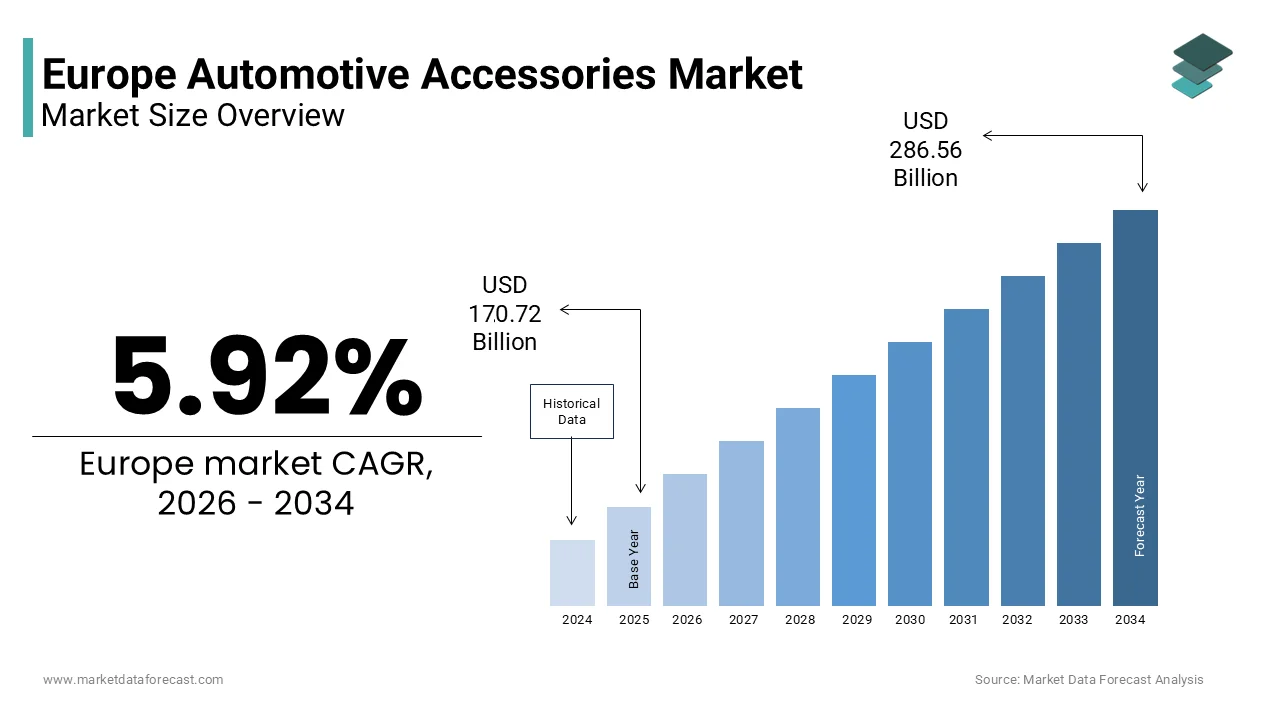
The Europe automotive accessories market was valued at USD 170.72 billion in 2025, is estimated to reach USD 180.84 billion in 2026, and is projected to reach USD 286.56 billion by 2034, growing at a CAGR of 5.92% during the forecast period. The growth of the Europe automotive accessories market is driven by increasing vehicle ownership, rising consumer interest in vehicle customization, and growing demand for comfort, safety, and aesthetic enhancements in automobiles. Automotive accessories such as infotainment systems, seat covers, lighting systems, and exterior styling components are becoming increasingly popular among vehicle owners seeking personalized driving experiences.
Key Market Trends
- Increasing demand for interior customization products such as seat covers, infotainment systems, floor mats, and ambient lighting.
- Growing popularity of advanced automotive accessories including smart navigation systems, parking sensors, and driver assistance technologies.
- Expansion of online automotive accessory retail platforms providing convenient product availability and wider consumer reach.
- Rising consumer interest in aesthetic vehicle upgrades including alloy wheels, body kits, and exterior styling accessories.
- Increasing focus on comfort and convenience features that enhance the driving experience for vehicle owners.
Segmental Insights
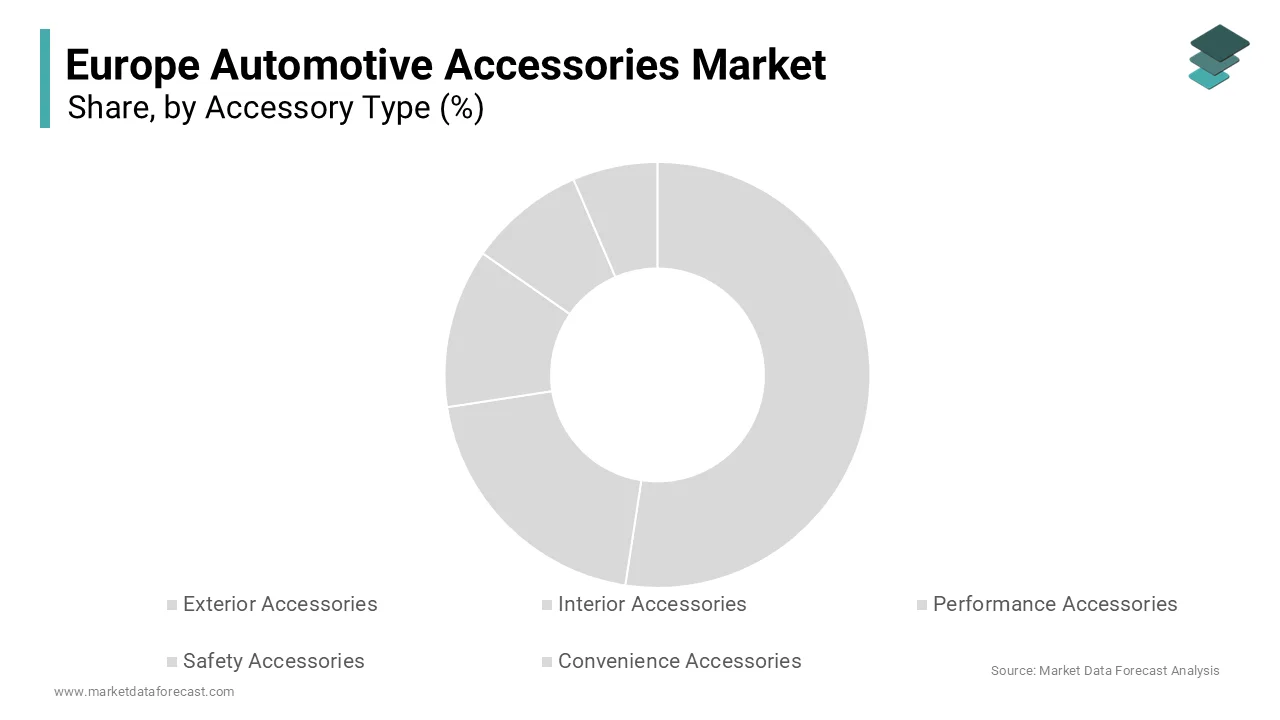
- Based on accessory type, the interior accessories segment held 32.5% of the Europe automotive accessories market share in 2025. The dominance of this segment is attributed to the increasing demand for comfort oriented accessories such as seat covers, dashboard components, infotainment systems, and interior lighting systems that enhance the driving experience.
- Based on vehicle type, the passenger cars segment led the Europe automotive accessories market and accounted for 65.3% of the regional market share in 2025. The high volume of passenger vehicle ownership across European countries and the growing trend of personal vehicle customization are key factors driving the demand for automotive accessories in this segment.
- Based on distribution channel, the aftermarket stores segment dominated the Europe automotive accessories market and captured 38.7% of the market share in 2025. Aftermarket retailers offer a wide variety of customization options, replacement accessories, and affordable upgrade solutions for vehicle owners.
Regional Insights
- The Europe automotive accessories market is witnessing steady growth across several countries due to increasing vehicle ownership and rising demand for personalized automotive products.
- Germany accounted for the largest share of the Europe automotive accessories market and held 24.8% of the regional market share in 2025. The country’s strong automotive industry, high vehicle ownership rates, and growing consumer demand for advanced automotive technologies are key factors supporting market growth.
- Other European countries are also experiencing rising demand for automotive accessories driven by increasing automotive sales, expanding aftermarket service networks, and growing consumer interest in vehicle personalization.
Competitive Landscape
The Europe automotive accessories market is highly competitive with the presence of numerous global automotive component manufacturers, aftermarket suppliers, and technology providers. Companies are focusing on product innovation, expanding aftermarket distribution channels, and developing advanced automotive accessories that improve vehicle safety, comfort, and performance. Strategic collaborations with automotive manufacturers and expansion of online retail channels are also helping companies strengthen their market presence across Europe. Prominent players in the Europe automotive accessories market include Robert Bosch, Delphi Automotive, Continental AG, Denso Corporation, Magna International, Aisin Seiki, Tenneco, Honda Motor, Keystone Automotive Industries, Nissan, Citic Dicastal, LKQ Taiwan Holding, Ford Motor, Y.C.C. Parts, U.S. Auto Parts, Lloyd Mats, Covercraft, Car Mate, Classic Soft Trim, Star Automotive Accessories, Hyundai Motor Company, Roush Performance, JCA Fleet Services, Renault, Pioneer, Garmin, Pecca Group, O'Reilly Auto Parts, H.I Motors, Momo, Federal Mogul Corp, Oakmore, Lund International, Truck Covers, Pep Boys, and Thule Group.
Europe Automotive Accessories Market Size
The Europe automotive accessories market size was valued at USD 170.72 billion in 2025 and is projected to reach USD 286.56 billion by 2034 from USD 180.84 billion in 2026, growing at a CAGR of 5.92%.
Automotive accessories are add-ons and enhancements designed to improve a vehicle's functionality, safety, comfort, and aesthetics. This sector includes interior enhancements like custom seating and floor mats, exterior modifications such as roof racks and body kits, and performance upgrades including exhaust systems and suspension kits. The market operates at the intersection of consumer personalization and regulatory compliance, reflecting a deep cultural affinity for vehicle customization across the continent. In 2024, the average age of passenger cars in the European Union reached 12.7 years, according to data from the European Automobile Manufacturers Association (ACEA). This aging fleet reflects a growing "vehicles in use" base that requires consistent maintenance and aftermarket upgrades as owners retain cars longer due to supply chain impacts and economic factors. Furthermore, Eurostat and ACEA data indicates that as of 2024, the EU averages 574 passenger cars per 1,000 inhabitants. While ownership density is high in regions like Italy (over 680 per 1,000), actual household penetration varies significantly by member state, with transport costs accounting for approximately 12.7% of total EU household budgets in 2024. The European Commission has intensified type approval regulations for aftermarket parts, ensuring that accessories meet strict safety and environmental standards before reaching consumers. This regulatory framework forces manufacturers to innovate within defined parameters, fostering a high quality ecosystem. The definition of vehicle accessories now includes digital add-ons and software-enabled features due to increasing electronic complexity. Consequently, traditional mechanical upgrades are being transformed into smart mobility solutions.
MARKET DRIVERS
Rising Average Vehicle Age Stimulates Aftermarket Maintenance and Enhancement Demand
The increasing longevity of vehicles on European roads serves as a fundamental growth enabler for the Europe automotive accessories market. As cars remain in service longer, owners invest heavily in replacement parts and aesthetic upgrades to preserve value and extend usability. Data from the European Automobile Manufacturers Association indicates that the average age of cars in the EU climbed to approximately 12.3 years in 2024, a record high that directly correlates with higher spending on non essential components. Older vehicles often require refreshed interiors, upgraded lighting systems, and new exterior protections to combat wear and tear, driving consistent demand for accessories. Consumers view these investments as cost effective alternatives to purchasing new vehicles amidst high inflation and interest rates. The trend is particularly strong in Southern and Eastern Europe where economic constraints delay new car acquisitions. Additionally, the emotional attachment to long owned vehicles prompts owners to personalize them with custom wheels, audio systems, and comfort features. This behavioral shift ensures a steady revenue stream for accessory manufacturers who cater to the specific needs of aging fleets. The phenomenon creates a resilient market segment that thrives even when new car sales fluctuate, as the imperative to maintain existing assets remains constant regardless of broader economic conditions.
Growing Consumer Desire for Personalization and Lifestyle Integration
A profound cultural shift towards viewing vehicles as extensions of personal identity is propelling the demand for customized add-ons and enhancements in the region and the expansion of the Europe automotive accessories market. Modern consumers, especially younger demographics, seek unique styling elements and functional additions that differentiate their vehicles from mass produced standards. Consumers are showing a high level of interest in personalizing their digital and interior driving experiences, though they are increasingly price-sensitive regarding the cost of these additional services. This desire manifests in purchases of distinctive alloy wheels, specialized roof racks for outdoor gear, and advanced infotainment add ons that integrate seamlessly with mobile devices. The rise of social media amplifies this trend, as vehicle owners showcase modified cars online, inspiring peers to invest in similar upgrades. Manufacturers respond by offering modular accessory lines that allow for easy installation and removal, catering to the dynamic lifestyle needs of urban dwellers and adventure enthusiasts alike. The integration of lifestyle activities such as cycling, camping, and skiing drives specific accessory categories like bike carriers and cargo management systems. As the boundary between work and leisure blurs, vehicles serve as mobile hubs requiring tailored solutions for connectivity and comfort. This psychological drive for individuality ensures that the accessories market remains vibrant and innovative, constantly evolving to match changing consumer tastes.
MARKET RESTRAINTS
Stringent Regulatory Compliance Increases Development Costs and Time to Market
The rigorous regulatory environment in the region acts as a significant barrier to rapid product deployment within the Europe automotive accessories market. Every aftermarket component must undergo extensive testing to ensure it does not compromise vehicle safety, emissions, or structural integrity, adhering to standards set by the United Nations Economic Commission for Europe. The European Type Approval Framework mandates that accessories like lighting systems, braking components, and aerodynamic kits meet precise technical specifications before legal sale. Compliance with these evolving rules requires substantial investment in research, testing facilities, and certification processes, which disproportionately affects smaller manufacturers. The European Commission updated several regulations to address cybersecurity and software integrity in electronic accessories, adding another layer of complexity. Non compliance results in severe penalties and product recalls, deterring companies from introducing innovative but risky designs. The fragmentation of national interpretations of EU laws further complicates distribution strategies, forcing firms to navigate a labyrinth of local requirements. This regulatory burden slows down the introduction of new products, allowing informal or non compliant markets to flourish in some regions. Consequently, legitimate businesses face higher operational costs that erode profit margins and limit their ability to compete on price with unregulated imports, stifling overall market dynamism.
Proliferation of Counterfeit and Substandard Products Undermines Market Integrity
The widespread presence of counterfeit and low quality automotive accessories severely damages consumer trust and poses safety risks across the Europe automotive accessories market. Illicit traders flood online platforms and unauthorized shops with imitation parts that mimic branded products but fail to meet safety standards. The illicit trade of fake automotive spare parts is becoming more sophisticated, with online marketplaces and e-commerce platforms fueling a surge in dangerous and low-quality components entering the European market. These substandard items often lack durability and can cause vehicle malfunctions, leading to accidents that tarnish the reputation of the entire accessories sector. Genuine manufacturers struggle to compete with the artificially low prices of fake goods, losing significant market share to illegitimate operators. The difficulty in distinguishing high quality replicas from authentic products confuses consumers, who may unknowingly purchase dangerous components. Legal recourse against international counterfeiters is often slow and costly, leaving victims with little compensation. This environment discourages investment in innovation as companies fear their intellectual property will be immediately stolen and diluted. The resulting erosion of brand value and consumer confidence acts as a persistent drag on market growth, forcing legitimate players to spend heavily on anti counterfeiting technologies and consumer education campaigns instead of product development.
MARKET OPPORTUNITIES
Expansion of Electric Vehicle Specific Customization Niches
The rapid adoption of electric vehicles gives a lucrative opportunity for developing specialized accessories tailored to the unique requirements of EVs, which is predicted to fuel the growth of the Europe automotive accessories market. Unlike internal combustion engines, electric cars offer distinct customization possibilities related to battery protection, charging efficiency, and noise reduction. European electric vehicle adoption is entering a new phase of high-volume growth, shifting from early adopters to a broader mainstream audience that increasingly seeks personalized and tech-integrated features. Opportunities abound for accessories such as aerodynamic wheel covers that extend range, specialized floor mats designed around battery packs, and smart charging cable management systems. The silent operation of EVs also drives demand for artificial sound generators and premium audio upgrades that enhance the driving experience without engine noise. Manufacturers can innovate with lightweight materials that complement the heavy battery structures, improving overall vehicle dynamics. Furthermore, the integration of solar panels on roof racks to supplement charging needs represents a cutting edge frontier for accessory developers. As EV technology matures, the aftermarket will see a surge in demand for performance tuning software and hardware that optimizes battery output and regeneration. Companies that early on focus on these EV specific needs will capture significant market share before the segment becomes saturated, establishing themselves as leaders in the green mobility accessories space.
Integration of Smart Connectivity and IoT Enabled Accessories
The convergence of automotive hardware with Internet of Things technology opens vast avenues for smart accessory development in the region, which is anticipated to boost the expansion of the Europe automotive accessories market. Consumers increasingly seek accessories that connect their vehicles to digital ecosystems, enabling remote monitoring, diagnostics, and control. The line between hardware accessories and digital services is blurring as consumers increasingly expect their car’s add-ons to integrate seamlessly with mobile apps and vehicle data systems. Products like GPS trackers with real time theft alerts, dash cams with cloud storage, and OBD II dongles that provide health insights via smartphone apps are gaining immense popularity. These devices appeal to fleet managers and individual owners alike by offering peace of mind and operational efficiency. The opportunity extends to smart interior accessories such as ambient lighting systems controlled by voice assistants and seats with integrated health monitoring sensors. As 5G networks expand across the continent, the latency for data transmission drops, enabling more sophisticated real time applications like augmented reality navigation overlays. Manufacturers can leverage this trend by creating ecosystems where accessories communicate with each other and the vehicle central computer, providing a seamless user experience. This shift transforms passive components into active data nodes, creating recurring revenue streams through subscription services for premium features and data analytics.
MARKET CHALLENGES
Supply Chain Volatility and Raw Material Cost Fluctuations
Persistent instability in global supply chains and erratic raw material prices pose a serious challenge to the Europe automotive accessories market. The industry relies heavily on plastics, aluminum, steel, and rare earth elements, all of which have experienced significant price swings due to geopolitical tensions and logistical bottlenecks. Manufacturers are facing an unpredictable cost environment where sudden spikes in raw metal prices must be balanced against a consumer base that is increasingly sensitive to price hikes. Disruptions in shipping routes and semiconductor shortages delay the production of electronic accessories, leading to stock outs and lost sales opportunities. Small and medium sized enterprises lack the bargaining power of larger corporations to secure favorable supply contracts, making them particularly vulnerable to these fluctuations. The unpredictability forces companies to hold larger inventories, tying up capital and increasing storage costs. Additionally, the push for sustainable sourcing adds complexity, as firms must verify the origin of materials to comply with new EU due diligence regulations. These supply side pressures hinder the ability to launch new products competitively and maintain consistent quality levels. Until global trade dynamics stabilize, the market will continue to face headwinds that threaten profitability and operational continuity.
Complexity of Installation and Lack of Skilled Technicians
The increasing technical sophistication of modern automotive accessories creates a significant barrier regarding installation and maintenance services, which holds back the expansion of the Europe automotive accessories market. Contemporary vehicles feature complex electronic architectures and tightly integrated systems that make retrofitting aftermarket parts challenging without specialized knowledge. The rapid shift toward high-voltage systems and digital vehicle diagnostics is creating a talent gap, as the existing workforce requires extensive reskilling to handle modern electronic installations safely. Improper installation can void vehicle warranties, trigger error codes, or even compromise safety systems, deterring consumers from purchasing complex upgrades. This skills gap limits the market potential for high tech accessories such as advanced driver assistance add ons or custom lighting systems that require programming. Independent workshops often lack the proprietary diagnostic tools and software access needed to integrate new components seamlessly with vehicle controllers. Consequently, consumers are forced to rely on authorized dealers who charge premium rates, reducing the attractiveness of aftermarket options. The industry faces the dual challenge of training a new workforce and developing plug and play solutions that minimize installation complexity.
REPORT COVERAGE
| REPORT METRIC | DETAILS |
| Market Size Available | 2025 to 2034 |
| Base Year | 2025 |
| Forecast Period | 2026 to 2034 |
| CAGR | 5.92% |
| Segments Covered | By Accessory Type, Vehicle Type, Distribution Channel, and Region |
| Various Analyses Covered | Global, Regional, & Country Level Analysis; Segment-Level Analysis; DROC, PESTLE Analysis; Porter’s Five Forces Analysis; Competitive Landscape; Analyst Overview of Investment Opportunities |
| Regions Covered | UK, France, Spain, Germany, Italy, Russia, Sweden, Denmark, Switzerland, Netherlands, Turkey, and the Czech Republic |
| Market Leaders Profiled | Robert Bosch, Delphi Automotive, Continental AG, Denso Corporation, Magna International, Aisin Seiki, Tenneco, Honda Motor, Keystone Automotive Industries, Nissan, Citic Dicastal, Lkq Taiwan Holding, Ford Motor, Y.C.C. Parts, U.S. Auto Parts, Lloyd Mats, Covercraft, Car Mate, Classic Soft Trim, Star Automotive Accessories, Hyundai Motor Company, Roush Performance, JCA Fleet Services, Renault, Pioneer, Garmin, Pecca Group, O'Reilly Auto Parts, H.I Motors, Momo, Federal Mogul Corp, Oakmore, Lund International, Truck Covers, Pep Boys, Thule Group |
SEGMENTAL ANALYSIS
By Accessory Type Insights
The interior accessories segment held the majority share of 32.5% of the Europe automotive accessories market in 2025. The leading position of the segment is driven by the consumer perception of the vehicle cabin as a personal sanctuary, where comfort, aesthetics, and technology integration directly impact daily driving satisfaction. The high frequency of replacement for wear items like floor mats and seat covers, combined with the desire for premium upgrades, sustains this segment's leadership. The escalating consumer expectation for luxury-grade comfort within standard vehicles is a primary driver for interior accessory sales. Drivers spend significant time in their vehicles, leading to a robust market for ergonomic seating solutions, custom upholstery, and advanced climate control add-ons. Car owners are placing a higher priority on the quality and ergonomics of their vehicle's cabin, viewing the interior as a "mobile living space" where comfort is essential for daily use. This trend is particularly pronounced in Northern Europe where harsh winters drive demand for heated seat cushions and steering wheel covers that are not factory standard in older models. The aging vehicle fleet, with an average age exceeding 12 years as per the European Automobile Manufacturers Association, necessitates the replacement of worn-out interior components, creating a steady baseline demand. Furthermore, the rise of remote work has transformed cars into mobile offices, spurring sales of adjustable laptop mounts, premium sound insulation materials, and ergonomic supports. Manufacturers are responding by introducing modular interior systems that allow for easy customization without voiding warranties. This shift towards viewing the interior as a customizable living space ensures that interior accessories remain the most lucrative category in the market. The rapid evolution of in-car technology fuels the demand for interior accessories that bridge the gap between legacy vehicles and modern digital expectations. Consumers increasingly seek aftermarket head units, smartphone integration kits, and premium speaker systems to upgrade the technological capabilities of their cars. Drivers are increasingly seeking to modernize older vehicles by adding smartphone integration features, as they view mobile app compatibility as a non-negotiable requirement for the modern driving experience. As vehicles become data hubs, accessories like wireless charging pads, USB-C hubs, and dashboard-mounted tablets have become essential rather than optional. The complexity of modern car electronics also drives demand for specialized interface modules that allow owners to add features like ambient lighting control or voice activation without altering the core wiring harness. Younger demographics, who prioritize digital connectivity, are the primary adopters of these technologies, often upgrading their vehicles every few years to keep pace with consumer electronics trends. The availability of plug-and-play solutions has lowered the barrier to entry, enabling a broader consumer base to participate in the tech upgrade cycle. This continuous technological obsolescence and the subsequent need for upgrades secure the dominant position of interior accessories.
The safety accessories segment is predicted to witness the highest CAGR of 8.7% from 2026 to 2034 due to heightened safety awareness, stringent regulatory recommendations, and the increasing availability of affordable advanced safety technologies for the aftermarket. A surge in public awareness regarding road safety and accident prevention is significantly boosting the adoption of aftermarket safety accessories. High-profile campaigns by safety organizations and extensive media coverage of road incidents have made consumers more proactive about equipping their vehicles with additional protective measures. There is a verified increase in consumer interest in "retrofitting" older vehicles with modern safety tech (ADAS) to match the standards of new cars. The rising cost of vehicle repairs and insurance premiums further incentivizes owners to install preventive devices that can mitigate accident severity or provide evidence in claims. Dash cams are becoming a standard accessory for European drivers, primarily driven by their utility in resolving insurance disputes and the increasing availability of high-resolution, AI-enabled models. The demographic shift towards an older driving population in countries like Germany and Italy also contributes, as senior drivers prefer vehicles equipped with enhanced visibility and collision avoidance aids. This cultural shift towards defensive driving creates a sustained demand for accessories that offer peace of mind and tangible safety benefits, driving the segment's rapid expansion. Government initiatives and regulatory guidelines encouraging the use of specific safety accessories are acting as a catalyst for market growth. While not always mandatory for older vehicles, many European nations have introduced incentives or strict liability rules that favor cars equipped with advanced safety features. European regulation is driving the adoption of safety cameras through mandates (like the Direct Vision Standard for HGVs in London) rather than consumer subsidies, forcing commercial operators to retrofit fleets to maintain city access. Additionally, new type-approval regulations for aftermarket parts have improved the quality and reliability of safety accessories, boosting consumer confidence in non-OEM products. The mandate for high-visibility vests and warning triangles in all vehicles has expanded to include recommendations for reflective tapes and advanced lighting systems for cyclists and pedestrians detected by vehicle sensors. Insurance companies are also playing a role by offering premium discounts for vehicles fitted with certified security and safety trackers. These regulatory and financial incentives lower the effective cost of adoption for consumers, accelerating the penetration of safety accessories. As regulations continue to evolve towards zero-vision goals, the aftermarket will play a crucial role in upgrading the existing fleet to meet these safety standards.
By Vehicle Type Insights
The Passenger Cars segment led the Europe automotive accessories market and captured a 65.3% share in 2025. The leading position of the segment is supported by the sheer volume of passenger vehicles on European roads, the high emotional attachment owners have to their personal cars, and the extensive range of customization options available for this segment. The vast number of passenger cars in circulation provides a foundational customer base that dwarfs all other vehicle segments. Research shows that there were millions of passenger cars registered in the European Union, representing most of the total vehicle park. This immense installed base ensures a continuous demand for replacement accessories such as wipers, filters, and interior trim, as well as discretionary items like styling kits and performance parts. The high ownership rate, with a significant share of households owning at least one car, means that spending on automotive accessories is a widespread household expense rather than a niche B2B transaction. The diversity of the passenger car fleet, ranging from compact city cars to large SUVs, allows accessory manufacturers to target specific niches with tailored products. Furthermore, the longer retention period of passenger cars, often exceeding a decade, extends the lifecycle for accessory purchases, as owners seek to maintain and refresh their vehicles over time. This structural advantage of volume and longevity makes the passenger car segment the undisputed leader in the accessories market, providing stable revenue streams regardless of fluctuations in new car sales. The deeply ingrained culture of using passenger cars for leisure and self-expression drives significant spending on aesthetic and functional accessories. Europeans frequently use their personal vehicles for weekend getaways, sports activities, and family holidays, creating demand for roof racks, bike carriers, and cargo management systems. The lifestyle orientation encourages owners to view their cars as extensions of their homes and hobbies, leading to higher investment in customization. The trend is particularly strong among younger drivers who use social media to showcase modified vehicles, fueling a vibrant market for body kits, alloy wheels, and unique interior lighting. Additionally, the rise of the "van life" and camping trends has spurred sales of conversion accessories for passenger vehicles, blurring the lines between daily commuters and recreational vehicles. Manufacturers capitalize on this by launching seasonal accessory collections that align with holiday periods and sporting events. This emotional and lifestyle-driven consumption pattern ensures that passenger cars remain the primary focus for accessory innovation and sales volume.
The Electric Vehicles segment is estimated to register the fastest CAGR of 14.2% during the forecast period owing to the exponential growth in EV adoption, the unique accessory requirements of electric powertrains, and the early adopter demographic's propensity for customization. The sheer speed at which electric vehicles are entering the European market is the primary engine for accessory growth in this segment. Each new EV represents a potential customer for specialized accessories, from charging cable organizers to aerodynamic wheel covers designed to maximize range. As the fleet of electric cars expands rapidly, the addressable market for EV-specific aftermarket products grows in tandem, outpacing the slower growth of internal combustion engine vehicles. The novelty of EV technology also encourages owners to experiment with accessories that enhance the futuristic appeal of their vehicles, such as LED light bars and custom software interfaces. Governments across Europe are supporting this transition with subsidies and infrastructure development, indirectly boosting the accessory market by making EV ownership more accessible. The rapid turnover of EV models and the introduction of new platforms create frequent opportunities for accessory manufacturers to launch compatible products. This dynamic growth trajectory ensures that the EV segment will quickly gain significant market share, driven by the fundamental shift in propulsion technology. Electric vehicles possess distinct technical characteristics that necessitate a new category of accessories focused on efficiency optimization and charging convenience. Unlike conventional cars, EVs benefit significantly from accessories that reduce drag and improve thermal management, such as specialized underbody panels and battery insulation wraps. The charging process itself creates a need for products like portable charging stations, cable locks, and adapters for different connector types, which are essential for daily usability. Furthermore, the silent operation of EVs has sparked interest in acoustic enhancement accessories and premium audio systems that compensate for the lack of engine noise. The heavy weight of battery packs also drives demand for suspension upgrades and reinforced tire solutions to handle the increased load. Manufacturers are rapidly innovating to meet these specific needs, creating a specialized niche that commands premium pricing. EV technology is maturing, which means the accessory ecosystem is about to explode. This segment is quickly becoming the market's fastest-growing area.
By Distribution Channel Insights
The Aftermarket Stores segment dominated the Europe automotive accessories market and accounted for a 38.7% share in 2025. This prominence of the segment is attributed to the extensive network of physical retail locations, the immediate availability of products, and the trust consumers place in specialized staff for advice and installation services. The widespread network of brick-and-mortar aftermarket stores across Europe provides a level of accessibility and immediacy that online channels struggle to match. Consumers often require accessories urgently, such as replacement wipers, bulbs, or floor mats, and prefer the ability to purchase and install them instantly. Sources indicate that there are substantial number of independent auto parts stores and service centers operating in Europe, ensuring that most consumers live within a short distance of a retailer. This physical presence allows customers to inspect product quality firsthand, verify fitment, and receive immediate professional advice from knowledgeable staff. The tactile nature of many accessories, such as seat covers and steering wheel grips, makes in-person selection preferable for many buyers who want to ensure texture and color match their expectations. Additionally, these stores often offer on-site installation services, creating a convenient one-stop solution that enhances customer satisfaction. The established trust relationships between local mechanics and vehicle owners further reinforce the dominance of this channel, as recommendations from trusted professionals carry significant weight. This combination of convenience, tangibility, and service capability secures the leading position of aftermarket stores. The complexity of modern vehicle systems increasingly drives consumers towards aftermarket stores that offer professional installation alongside product sales. Many contemporary accessories, particularly those involving electronics or safety systems, require specialized tools and expertise to install correctly without damaging the vehicle. Independent installers and specialized shops possess the diagnostic equipment and training necessary to integrate new components seamlessly with existing vehicle architectures. This value-added service differentiates physical stores from online retailers, where customers must arrange installation separately, often at additional cost and inconvenience. The assurance of professional workmanship reduces the risk of errors that could lead to vehicle malfunctions or safety hazards. Furthermore, these stores often provide post-installation support and troubleshooting, fostering long-term customer loyalty. As vehicles become more technologically advanced, the demand for expert installation will continue to grow, reinforcing the critical role of aftermarket stores in the distribution ecosystem.
The Online Retailers segment is anticipated to witness the fastest CAGR of 11.5% between 2026 and 2034 because of the increasing comfort of consumers with e-commerce, the vast product variety available digitally, and the competitive pricing structures of online platforms. The rapid shift towards online shopping habits across all consumer goods categories is profoundly impacting the automotive accessories market. European consumers increasingly value the convenience of browsing extensive catalogs, comparing prices, and reading user reviews from the comfort of their homes. The digital fluency translates directly to the automotive sector, where shoppers appreciate the ability to find rare or specific parts that may not be stocked locally. The 24/7 availability of online stores eliminates geographical and temporal barriers, allowing customers to shop at their own pace. Advanced search algorithms and vehicle-specific filters make it easier for users to identify compatible accessories, reducing the fear of purchasing incorrect items. The integration of augmented reality tools on some platforms, allowing users to visualize how accessories look on their specific car model, further enhances the online shopping experience. As logistics networks improve and delivery times shorten, the convenience gap between online and offline channels narrows, accelerating the migration of sales to digital platforms. Online retailers leverage lower overhead costs to offer highly competitive pricing and an unparalleled variety of products, attracting price-sensitive and niche-seeking consumers. Without the constraints of physical shelf space, digital platforms can list millions of SKUs, catering to diverse tastes and specific vehicle models that local stores cannot support. The direct-to-consumer model allows manufacturers to bypass intermediaries, passing savings on to customers while maintaining healthy margins. Flash sales, discount codes, and loyalty programs further incentivize online purchases, creating a dynamic pricing environment that appeals to bargain hunters. The global reach of major e-commerce players also introduces European consumers to international brands and innovative products not yet available in local markets. User-generated content such as detailed reviews and installation videos builds community trust and aids decision-making, replicating the advice function of physical stores. This combination of economic advantage and infinite shelf space ensures that online retailers will continue to capture market share at the fastest rate.
REGIONAL ANALYSIS
Germany Automotive Accessories Market Analysis
Germany outperformed other countries in the Europe automotive accessories market and accounted for 24.8% share in 2025. The dominance of the German market is driven by its status as the automotive heartland of the continent, boasting a massive vehicle park and a deeply ingrained car culture that values precision engineering and customization. The country's robust economy supports high discretionary spending, allowing owners to invest in premium interior upgrades, performance parts, and advanced safety systems. Germany is also home to a dense network of specialized tuning shops and aftermarket retailers that cater to enthusiasts of brands like BMW, Mercedes-Benz, and Audi. The strict TUV certification process ensures high quality standards for accessories, fostering consumer confidence in aftermarket products. Furthermore, the strong presence of major automotive suppliers and manufacturing hubs facilitates rapid availability of new accessories. The German market is characterized by a preference for high-tech and functional accessories, driven by a technically savvy consumer base. As the leader in electric vehicle adoption within Europe, Germany is also at the forefront of demand for EV-specific accessories, setting trends that ripple across the region. Its combination of volume, wealth, and automotive passion cements its dominance.
United Kingdom Automotive Accessories Market Analysis
The United Kingdom was the second largest market for automotive accessories in Europe and captured a share of 16.5% share in 2025. The expansion of the UK market is attributed to a vibrant modification culture and a high density of independent garages. The UK market sees a strong enthusiasm for personalization, particularly among younger drivers who view their vehicles as expressions of individuality. The prevalence of right-hand drive vehicles creates a unique market dynamic that requires specific accessory adaptations, limiting competition from non-specialized continental suppliers and bolstering local businesses. The UK's extensive network of independent workshops and fast-fit centers provides accessible installation services, supporting the sales of complex accessories. Additionally, the popularity of motorsports and car shows in the UK fuels demand for performance and aesthetic upgrades. The transition to online shopping has been particularly rapid in the UK, with e-commerce platforms capturing a significant portion of accessory sales. Economic factors such as the high cost of new cars encourage owners to extend the life of existing vehicles through maintenance and upgrades. The UK's diverse vehicle mix, ranging from compact city cars to large pickups, ensures a broad demand spectrum. This unique blend of cultural passion and structural market features sustains its strong second-place position.
France Automotive Accessories Market Analysis
France held a significant share of the Europe automotive accessories market due to a strong focus on aesthetic customization and practical utility accessories. The French market is also influenced by a distinct automotive culture that prioritizes style and comfort, reflecting the nation's fashion-forward sensibilities. French consumers show a strong preference for interior accessories that enhance comfort, such as premium seat covers and ambient lighting, as well as exterior styling elements that differentiate their vehicles. The government's incentive programs for retrofitting older vehicles with safety and emission-reducing technologies have also stimulated demand for specific accessory categories. France boasts a robust network of automotive hypermarkets and specialized chains that offer a wide range of products at competitive prices, making accessories accessible to a broad demographic. The popularity of road trips and outdoor activities in France drives sales of roof boxes, bike racks, and camping gear. Additionally, the growing adoption of electric vehicles, supported by state subsidies, is creating a nascent but rapidly expanding market for EV-specific accessories. The combination of style consciousness, practical needs, and supportive policies maintains France's strong standing in the regional market.
Italy Automotive Accessories Market Analysis
Italy is moving ahead steadfastly in the Europe automotive accessories market owing to a passionate enthusiast base and a strong tradition of automotive design and performance. The Italian market is uniquely driven by the emotional connection owners have with their cars, particularly iconic brands like Fiat, Alfa Romeo, and Ferrari, which inspires significant spending on customization. Italian consumers are known for their discerning taste, favoring high-quality, design-led accessories that enhance the aesthetic appeal and performance of their vehicles. The country's strong motorsport heritage fuels a robust market for performance parts, including exhaust systems, suspension kits, and racing seats. The dense urban environment in cities like Rome and Milan also drives demand for compact car accessories and parking aids. Furthermore, the thriving tourism sector supports a market for rental car accessories and travel-related gear. Local craftsmanship plays a significant role, with many small businesses producing bespoke leather interiors and custom bodywork. This fusion of heritage, design sensitivity, and performance enthusiasm ensures Italy remains a key player in the European accessories landscape.
Spain Automotive Accessories Market Analysis
Spain is likely to expand in the European market during the forecast period due to a growing tourism sector and an increasing focus on vehicle maintenance and outdoor lifestyle accessories. The Spanish market is characterized by a pragmatic approach to car ownership, where accessories are often purchased to enhance utility and durability in a warm climate. This shift in vehicle preference drives demand for roof racks, sunshades, and cooling accessories tailored to the Mediterranean climate. The robust tourism industry stimulates the rental car market, creating a steady demand for durable, easy-to-clean interior accessories and GPS navigation systems. Spanish consumers are increasingly price-conscious, favoring value-for-money products available through large retail chains and online platforms. The growing interest in outdoor activities such as cycling and surfing has boosted sales of transport solutions and protective gear. Additionally, government initiatives to modernize the vehicle fleet and improve road safety are encouraging the adoption of aftermarket safety technologies. The recovery of the economy post-pandemic has led to renewed consumer confidence, resulting in higher spending on non-essential vehicle upgrades. Spain's strategic location and climatic conditions shape a unique accessory demand profile that supports its position as a top five market.
COMPETITIVE LANDSCAPE
The competition within the Europe automotive accessories market is characterized by a fragmented yet dynamic landscape where global giants coexist with numerous specialized local manufacturers and informal traders. Established multinational corporations leverage their brand reputation, extensive distribution networks, and superior research capabilities to maintain dominance in high value segments like safety and electronics. Conversely, smaller regional players compete effectively by offering niche customization options and personalized services that large entities often overlook. The rise of e commerce has intensified rivalry by lowering entry barriers for new sellers who can reach customers directly without physical storefronts. Price competition remains fierce in commoditized categories such as basic maintenance parts, forcing companies to innovate constantly to justify premium pricing. Regulatory compliance acts as a significant differentiator, as only firms with rigorous quality control can navigate the complex European type approval processes successfully. Strategic alliances between technology firms and traditional accessory makers are reshaping competitive boundaries, introducing smart features that were previously unavailable. The battle for consumer loyalty increasingly depends on digital engagement and after sales support rather than product specifications alone. This environment demands agility and continuous adaptation from all participants to sustain growth amidst evolving consumer preferences and economic pressures.
KEY MARKET PLAYERS
Some of the notable key players in the Europe automotive accessories market are
- Robert Bosch
- Delphi Automotive
- Continental AG
- Denso Corporation
- Magna International
- Aisin Seiki
- Tenneco
- Honda Motor
- Keystone Automotive Industries
- Nissan
- Citic Dicastal
- Lkq Taiwan Holding
- Ford Motor
- Y.C.C. Parts
- U.S. Auto Parts
- Lloyd Mats
- Covercraft
- Car Mate
- Classic Soft Trim
- Star Automotive Accessories
- Hyundai Motor Company
- Roush Performance
- JCA Fleet Services
- Renault
- Pioneer
- Garmin
- Pecca Group
- O'Reilly Auto Parts
- H.I Motors
- Momo
- Federal Mogul Corp
- Oakmore
- Lund International
- Truck Covers
- Pep Boys
- Thule Group
Top Players in the Market
- Robert Bosch GmbH stands as a global titan in the automotive accessories sector, delivering a vast portfolio ranging from safety systems to comfort features. The company leverages its immense engineering expertise to supply original equipment and aftermarket solutions worldwide. In Europe, Bosch strengthens its position by focusing on electrification and digitalization, recently launching advanced driver assistance systems tailored for older vehicle fleets. Their global contribution includes setting industry standards for reliability and innovation in mobility solutions. Recent strategic moves involve expanding their service network across European cities to offer direct installation and maintenance of smart accessories. By integrating artificial intelligence into diagnostic tools, Bosch ensures their products remain compatible with modern connected vehicles. This commitment to technological leadership and comprehensive service coverage solidifies their role as a primary enabler of safe and efficient mobility globally while dominating the European aftermarket landscape through continuous product evolution.
- Continental AG is a pivotal force in the Europe automotive accessories market, specializing in tires, interior electronics, and safety components. The corporation contributes significantly to the global market by pioneering technologies that enhance vehicle performance and passenger safety. Recently, Continental has intensified its focus on sustainable materials for interior accessories and high performance tire compounds suited for electric vehicles. Their involvement extends to developing smart surface technologies that integrate controls directly into dashboard materials. To strengthen their European presence, the company established new production facilities dedicated to recycling tire materials, aligning with circular economy goals. They also partnered with major retailers to streamline the distribution of their premium accessory lines. Continental’s global reach allows them to transfer innovations quickly across borders, ensuring European consumers access cutting edge solutions. Their proactive approach to sustainability and digital integration keeps them at the forefront of the industry, driving trends in both original equipment and aftermarket sectors.
- Michelin Group dominates the Europe automotive accessories market primarily through its world renowned tire solutions and associated mobility services. The company plays a crucial global role by advancing sustainable mobility through innovative tire technologies that reduce fuel consumption and emissions. In Europe, Michelin has recently expanded its range of connected tire services that provide real time data on pressure and tread wear to drivers via smartphone applications. Their strategy involves acquiring digital startups to enhance their fleet management software offerings, thereby adding value beyond physical products. Michelin actively promotes road safety campaigns across the continent, reinforcing brand loyalty among consumer and commercial segments. The group also invests heavily in research for bio sourced materials to manufacture eco friendly accessories and tires. By combining physical product excellence with digital service ecosystems, Michelin secures a robust market position. Their commitment to innovation and sustainability ensures they remain a preferred choice for drivers seeking quality and performance in the European automotive landscape.
Top Strategies Used by Key Market Participants
Key players in the Europe automotive accessories market predominantly utilize strategic acquisitions to rapidly expand their product portfolios and enter new geographical niches without developing technologies from scratch. Companies frequently invest heavily in research and development to create proprietary materials and smart features that differentiate their offerings from generic competitors. Another vital strategy involves forming exclusive partnerships with original equipment manufacturers to secure early access to vehicle designs and ensure perfect fitment of aftermarket parts. Market leaders also focus on vertical integration by controlling supply chains to mitigate raw material cost fluctuations and guarantee consistent product quality. Furthermore, firms are increasingly adopting direct to consumer sales models through robust online platforms to capture higher margins and gather valuable customer data. Enhancing brand visibility through sponsorship of motorsport events and automotive shows remains a popular method to build credibility and enthusiasm among enthusiasts. Finally, participants prioritize sustainability initiatives by launching eco friendly product lines to align with strict European environmental regulations and appeal to conscious consumers.
MARKET SEGMENTATION
This research report on the European automotive accessories market has been segmented and sub-segmented based on categories.
By Accessory Type
- Exterior Accessories
- Interior Accessories
- Performance Accessories
- Safety Accessories
- Convenience Accessories
By Vehicle Type
- Passenger Cars
- Commercial Vehicles
- Two Wheelers
- Electric Vehicles
- Luxury Vehicles
By Material
- Metal
- Plastic
- Leather
- Fabric
- Electronic
By Distribution Channel
- OEMs
- Dealerships
- Online Retailers
- Aftermarket Stores
- Independent Installers
By Price Range
- Low-Priced
- Medium-Priced
- High-Priced
- Luxury-Priced
- Mass-Market
By Country
- UK
- France
- Spain
- Germany
- Italy
- Russia
- Sweden
- Denmark
- Switzerland
- Netherlands
- Turkey
- Czech Republic
- Rest of Europe