- Product Description Description
- Table of Contents TOC
- List of Table & Figure LOT
- Get Free Sample PDF Sample PDF
Market Size, 2025
$7.46 BnMarket Estimate, 2026
$8.76 BnMarket Forecast, 2034
$31.58 BnCAGR, 2026–2034
17.39%Europe Biohacking Market Report Summary
The Europe biohacking market was valued at USD 7.46 billion in 2025, is estimated to reach USD 8.76 billion in 2026, and is projected to reach USD 31.58 billion by 2034, growing at a strong CAGR of 17.39% from 2026 to 2034. Market growth is driven by increasing consumer awareness of preventive healthcare, rising adoption of wearable technologies, and growing interest in personalized wellness solutions. Individuals across Europe are embracing biohacking practices to optimize physical performance, cognitive function, and longevity. The integration of AI-powered health analytics, digital biomarkers, and connected health platforms is further accelerating market expansion.
Key Market Trends
- Rising adoption of wearable health monitoring devices for continuous tracking of sleep, activity, and vital signs.
- Increasing demand for personalized nutrition, supplements, and nootropics.
- Growing popularity of data-driven wellness and longevity programs.
- Expansion of mobile health applications and digital coaching platforms.
- Strengthening focus on mental health optimization and stress management technologies.
Segmental Insights
- Based on application, the diagnosis and treatment segment held the majority share of 43.2% in 2025, driven by rising use of biohacking tools for early disease detection, performance monitoring, and personalized therapy.
- Based on product, the supplements segment dominated the market by capturing 51.7% share in 2025, supported by strong demand for vitamins, adaptogens, nootropics, and longevity-enhancing formulations.
Regional Insights
The Europe biohacking market is witnessing strong growth across major economies, supported by advanced healthcare infrastructure, high consumer health awareness, and increasing investments in digital wellness solutions.
- Germany led the market in 2025 with 22.6% share, driven by strong healthcare systems, high adoption of wearable devices, and growing interest in personalized medicine.
- The United Kingdom followed closely with 19.1% share, supported by a vibrant health-tech ecosystem and widespread use of fitness and wellness applications.
- Sweden holds a significant position, driven by its national focus on preventive health, longevity, and citizen empowerment through digital health data ownership.
Competitive Landscape
The Europe biohacking market is characterized by strong competition among wearable device manufacturers, health technology firms, nutrition companies, and wellness platform providers. Market players are focusing on developing advanced biosensors, AI-powered analytics platforms, and evidence-based supplement formulations. Strategic collaborations with healthcare providers, research institutions, and fitness communities are strengthening competitive positioning across the region.
Prominent companies operating in the Europe biohacking market include Garmin Ltd., WHOOP, Inc., Oura Health Ltd., HVMN Inc., OsteoStrong, Apple, Inc., Fitbit, Inc. (Google LLC), Muse (Interaxon Inc.), NeuroSky, Inc., Nootropics Depot, Timeline Nutrition, and Synthego Corporation.
Europe Biohacking Market Size
The Europe biohacking market was valued at USD 7.46 billion in 2025, is estimated to reach USD 8.76 billion in 2026, and is projected to reach USD 31.58 billion by 2034, growing at a CAGR of 17.39% from 2026 to 2034.
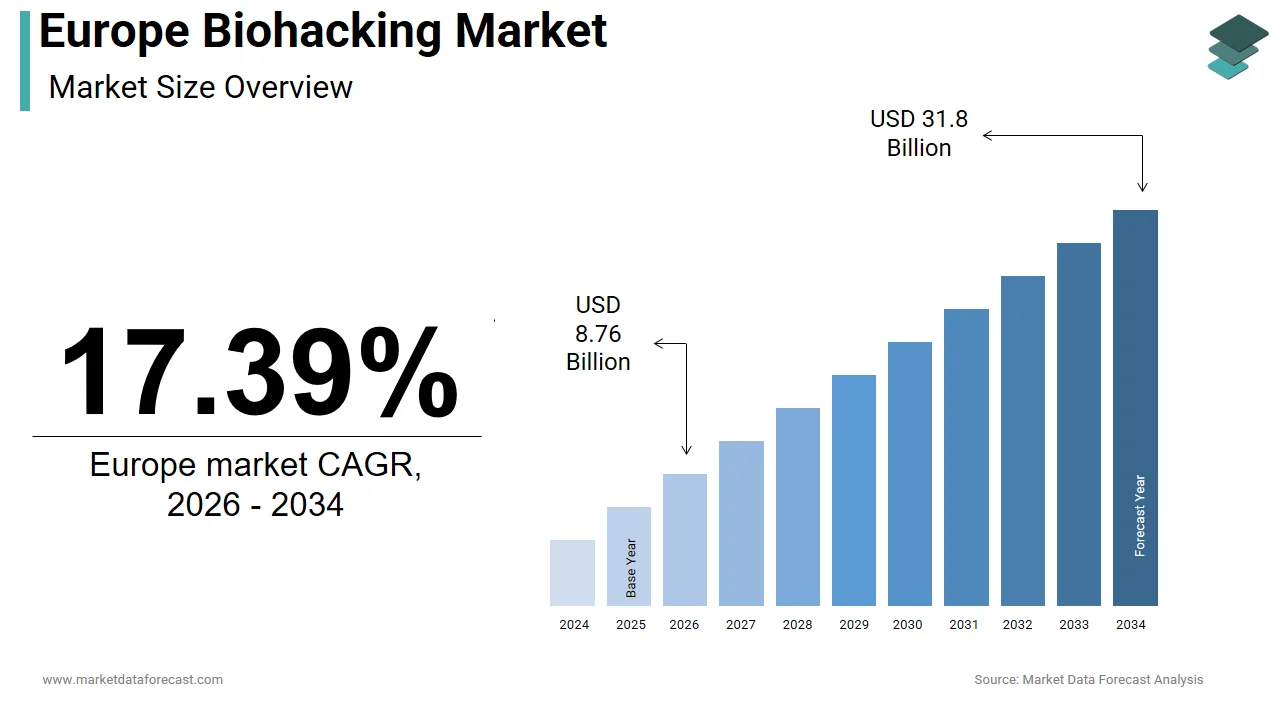
Biohacking, also known as DIY biology, is a broad "do-it-yourself" movement where individuals use science, technology, and self-experimentation to optimize their health, physical performance, and mental clarity. Unlike clinical medicine, this domain operates largely in the consumer wellness space, where individuals adopt data-driven protocols to enhance performance, resilience, and metabolic health. The use of dietary supplements among adults has shown an increasing trend, particularly in recent years, with a notable interest among younger adult professionals seeking health and wellness benefits beyond basic nutrition. Moreover, the European Food Safety Authority (EFSA) has received a growing number of novel food applications from companies, including those for emerging ingredients used as adaptogens and cognitive enhancers, reflecting rising market interest in these areas. The market is uniquely shaped by Europe’s precautionary regulatory stance, which restricts unapproved health claims yet permits personal experimentation within legal boundaries, which creates a dynamic tension between innovation and compliance that defines the continent’s biohacking landscape.
MARKET DRIVERS
Rising Prevalence of Burnout and Cognitive Fatigue in Knowledge Economies
The intensification of mental workload in the region’s service and tech sectors has enabled demand for cognitive enhancement tools that support focus, resilience, and neural recovery, and thereby contributes to the growth of the Europe biohacking market. EU-OSHA findings suggest that information and communication technology workers, along with other service professionals, are increasingly facing significant mental health challenges due to high stress, information overload, and accelerated digitization. This psychological burden has driven the adoption of nootropics such as L-theanine, bacopa monnieri, and lion’s mane mushroom, which are perceived as natural alternatives to stimulants. Studies on student health in Germany indicate a notable, albeit varied, trend of university students utilizing pharmacological cognitive enhancers or supplements to manage high academic pressure and improve concentration during exams. Companies like Nootropics Depot and HVMN have expanded European distribution of evidence-informed stacks targeting working memory and mental clarity. Furthermore, consumer-grade wearable EEG devices are increasingly being utilized for, and researched in pilot studies to validate, the effectiveness of personal, real-time neurofeedback training for enhancing focus and attentional control. In a world that prizes brain power, biohacking gives you the personal hacks needed to stay sharp and steady when the heat is on.
Proliferation of Quantified Self Technologies and Personal Data Literacy
Europeans are increasingly leveraging consumer-grade biosensors to transform subjective wellness into objective metrics, enabling precision self-optimization, which fuels the expansion of the Europe biohacking market. Consumer adoption of wearable technology in Europe has shown significant growth, with high sales volume for devices focused on monitoring metrics like heart rate variability, sleep architecture, and activity. A notable trend is the expanding use of continuous glucose monitors (CGMs) by individuals without diabetes who are interested in tracking metabolic health and optimizing personal wellness. Data-driven recovery strategies have become popular in fitness environments, with a high percentage of members in specific European cities utilizing advanced trackers, such as smart rings and specialized straps, to guide training and rest. There is an increase in "data fluency" among the general population, indicated by the growing interest in citizen science initiatives that train individuals to interpret personal biometric data and conduct self-experimentation. The market is shifting toward specialized, often screenless, wearables that prioritize long-term, 24/7 data collection over traditional smart watch features. Crucially, these tools operate within GDPR frameworks that grant individuals full ownership of their biometric data, which fosters trust and engagement absent in less regulated markets. Rising digital health literacy enables evidence-based biohacking tailored to individual biology.
MARKET RESTRAINTS
Stringent Regulatory Barriers on Health Claims and Novel Ingredients
The European Union’s rigorous framework for health-related product marketing significantly constrains how biohacking solutions can be positioned and sold. These barriers hamper the growth of the Europe biohacking market. Regulatory bodies are adopting a stricter stance on the approval of health claims for products aimed at cognitive or metabolic enhancement, resulting in a low authorization rate due to a requirement for more robust human trial data. The high rejection rate of health claims often requires suppliers to position compounds with potential metabolic or anti-aging effects under broader, general wellness, or dietary supplement categories. Regulatory enforcement is increasing against online retailers that promote products with, or similar to, nootropic blends, specifically when those marketing claims imply disease prevention or mitigation. National authorities are taking action against specific bioactive compounds, such as certain peptides, by prohibiting their sale as dietary supplements when they are deemed to have pharmacological activity that requires classification as a medicinal product. These restrictions fragment the market as brands tailor labeling per country and avoid innovative ingredients altogether. The commercial potential of the biohacking industry will remain muted, despite strong consumer demand, until regulatory frameworks adapt to recognize emerging science on subclinical optimization.
Limited Scientific Validation and Standardization of Biohacking Protocols
The absence of clinical consensus on optimal dosing timing and safety profiles for many biohacking interventions affects credibility and deters mainstream adoption, which further hinders the expansion of the Europe biohacking market. Many popular nootropic or longevity compounds lack extensive, high-quality, randomized controlled trials that meet regulatory standards for efficacy in healthy individuals. An analysis of commercial NMN supplements indicates a wide range of product purity, which can affect the consistency and reliability of results. The variance in supplement composition raises questions about the reproducibility of findings in research and consumer experiences. Moreover, practices like DIY transcranial direct current stimulation lack standardized protocols. In the absence of harmonized guidelines from authoritative bodies like the European Society for Clinical Nutrition and Metabolism (ESPEN), consumers are turning to unverified influencer advice and anecdotal forums, raising the risk of nutritional misuse. This evidence gap fuels skepticism among medical professionals and limits integration into preventive health strategies despite growing public curiosity.
MARKET OPPORTUNITIES
Integration of Biohacking Principles into Corporate Wellness Programs
Forward-looking European employers are embedding biohacking-inspired strategies into workplace health initiatives to combat fatigue, enhance resilience, and reduce absenteeism. This integration paves the way for new opportunities in the Europe biohacking market. Large organizations in specific European countries are increasingly incorporating specialized wellness modules that focus on recovery, including personalized health monitoring, lighting adjustments, and nutritional options. Certain corporate entities are piloting programs that provide employees with wearable technology and personalized sleep guidance to help address afternoon fatigue. Companies are expanding their mental health benefits to include physical, recovery-focused services like light therapy and cryotherapy sessions. These programs operate under occupational health frameworks that avoid medical claims while promoting measurable well-being outcomes. Biohacking is evolving from fringe experimentation into a formal workplace performance strategy, fueled by the EU’s focus on psychosocial risks and creating new B2B opportunities for consumer wellness brands.
Growth of Regenerative Nutrition and Mitochondrial Support Products
Consumer interest in cellular health is fueling demand for scientifically formulated supplements targeting energy metabolism, DNA repair, and oxidative stress, which provides fresh prospects for the Europe biohacking market. These areas are collectively termed regenerative nutrition. Submissions for ingredients aimed at supporting mitochondrial function have shown a notable increase in recent years. Urolithin A, a compound derived from pomegranate metabolites, has gained regulatory approval in specific European markets. Research suggests a positive impact of this compound on muscle endurance in older populations. AI-driven identification of plant-based compounds is being utilized to target sirtuin pathways. Products developed using these methods are expanding their presence in international retail markets. This trend aligns with Europe’s aging demographic. As per sources, by 2030, a portion of the EU population will be aged sixty or above, creating urgency around functional longevity. Unlike generic vitamins, these next-generation nutraceuticals offer mechanism-based benefits validated through biomarker tracking, which positions them at the credible intersection of nutrition science and proactive aging.
MARKET CHALLENGES
Ethical and Social Concerns Around Human Enhancement and Equity
The normalization of biohacking raises profound questions about fairness, access, and the medicalization of everyday life that resonate deeply in the region’s rights-conscious societies, and thereby negatively impacts the growth of the Europe biohacking market. Public discussions indicate apprehension that, if cognitive or physical enhancements are restricted by cost, biohacking technologies may widen existing social divides. Academic environments are experiencing discussions about the pressure to use performance-enhancing substances, drawing parallels to the ethical debates found in competitive sports. There is a recognized, growing concern regarding the potential for unequal access to, and application of, self-enhancement technologies within the community and institutional settings. National bioethics committees in France and Germany have called for moratoria on certain enhancement technologies until societal implications are assessed. Moreover, the blurring line between therapy and enhancement challenges existing regulatory categories. Biohacking risks being seen as a cause of biological stratification instead of empowerment if it fails to adopt inclusive, accessible models, ultimately threatening its social acceptance.
Fragmented Consumer Education and Misinformation Ecosystems
Many Europeans navigate the biohacking landscape with inadequate scientific literacy, despite growing interest, which holds back the expansion of the Europe biohacking market. This leads to suboptimal or risky choices. Many individuals experimenting with biohacking often struggle to distinguish between correlation and causation when interpreting supplement research. The spread of information on social media platforms increases the risk of adopting biohacking methods based on weak evidence. Content regarding substances like peptides and nootropics on social media frequently includes unverified claims and omits information about risks. Employees in wellness retail environments often lack the training necessary to fully explain the potential risks or contraindications of common adaptogens. Public health agencies typically provide generalized advice rather than guidance on niche biohacking, requiring consumers to interpret intricate science through the lens of commercial interests or influencers. The market's susceptibility to hype, which erodes long-term trust in genuine innovations, will persist until coordinated education initiatives successfully bridge this knowledge gap.
REPORT COVERAGE
| REPORT METRIC | DETAILS |
| Market Size Available | 2025 to 2034 |
| Base Year | 2025 |
| Forecast Period | 2026 to 2034 |
| Segments Covered | By Application, End Use, Product, and Country. |
| Various Analyses Covered | Global, Regional, and Country-Level Analysis, Segment-Level Analysis, Drivers, Restraints, Opportunities, Challenges; PESTLE Analysis; Porter’s Five Forces Analysis, Competitive Landscape, Analyst Overview of Investment Opportunities |
| Countries Covered | UK, France, Spain, Germany, Italy, Russia, Sweden, Denmark, Switzerland, Netherlands, Turkey, Czech Republic, and the Rest of Europe. |
| Market Leaders Profiled | Garmin Ltd., WHOOP, Inc., Oura Health Ltd., HVMN Inc., OsteoStrong, Apple, Inc., Fitbit, Inc. (Google LLC), Muse (Interaxon Inc.), NeuroSky, Inc., Nootropics Depot, Timeline Nutrition, Synthego Corporation, and Others. |
SEGMENTAL ANALYSIS
By Application Insights
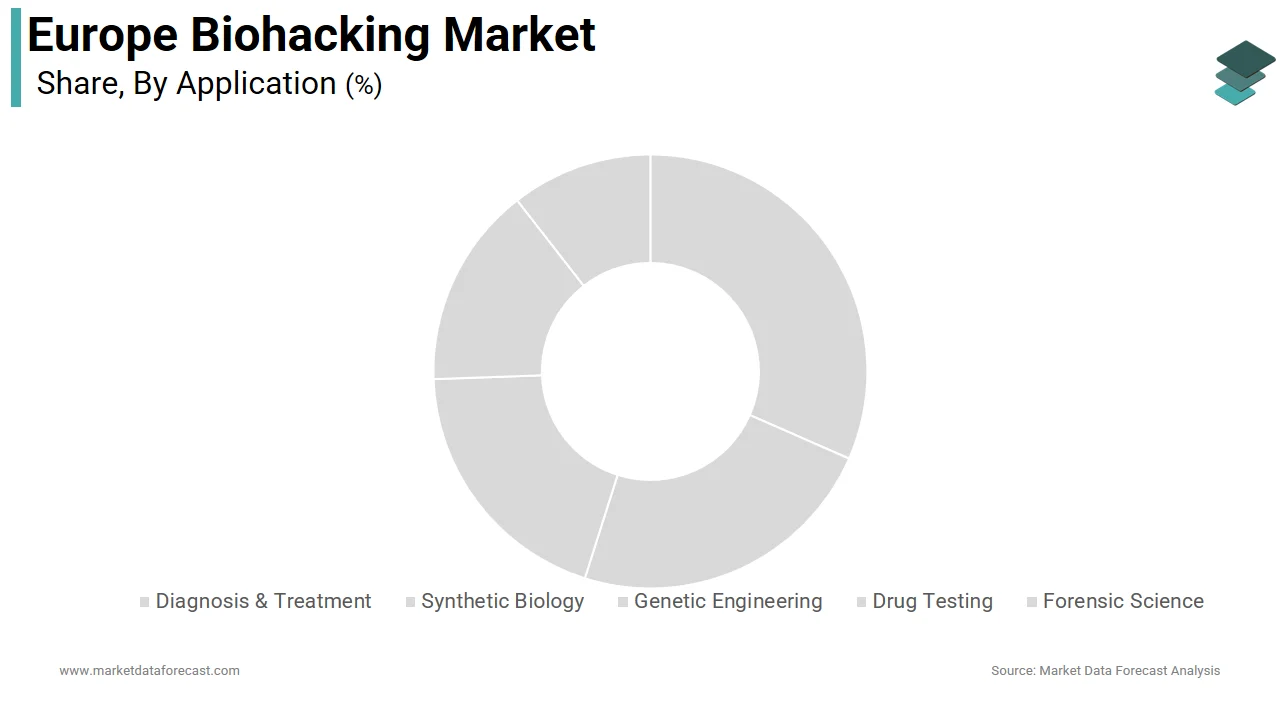
The diagnosis & treatment segment held the majority share of 43.2% share of the Europe biohacking market in 2025. The supremacy of the diagnosis & treatment segment is driven by the convergence of preventive health culture and accessible diagnostic technologies. European consumers increasingly use at-home biomarker tests, continuous glucose monitors, and microbiome analysis kits to gain insights beyond standard clinical checkups. Companies like Forth in the UK and Cerascreen in Germany offer finger-prick blood panels measuring vitamin D, cortisol, and thyroid markers with results interpreted via AI-powered dashboards compliant with GDPR. The European Commission’s Digital Health Action Plan further legitimizes this trend by promoting citizen-controlled health data ecosystems where individuals integrate self-collected metrics into national eHealth records. Crucially, these tools operate within a regulatory gray zone; they inform but do not diagnose, allowing them to bypass medical device classification while still delivering actionable insights. Faced with mounting chronic health issues and overburdened public health systems, Europeans are taking charge of their own health through proactive monitoring and participatory medicine.
The synthetic biology segment is predicted to witness the highest CAGR of 34.2% between 2026 and 2034 due to grassroots innovation in community labs and academic spin-outs developing programmable biological systems for personalized nutrition, environmental sensing, and cellular rejuvenation. The biotechnology landscape in Western Europe is expanding, driven by an increasing number of community labs and specialized facilities that enable the engineering of microorganisms for producing sustainable materials and nutrients. Regional startups are leveraging funding to advance the production of specific compounds using yeast strains as an alternative to traditional chemical methods. Additionally, platforms are emerging to design custom microorganisms for targeting gut-brain axis interactions, with preliminary testing underway in academic settings. Regulatory evolution also plays a role. Synthetic biology is shifting toward personal empowerment, enabling individual biological design within a framework of open science and ethics.
By Product Insights
The supplements segment dominated the Europe biohacking market by capturing a 51.7% share in 2025. The prominence of the supplements segment is attributed to widespread consumer familiarity, regulatory accessibility, and strong retail distribution. Unlike implants or gene kits, which face legal or technical barriers, nutritional compounds such as omega-3 adaptogens and mitochondrial cofactors are readily available as food supplements under the EU’s Novel Food and Food Supplements Directives. A significant portion of the adult population in selected European regions is increasingly incorporating functional supplements into their daily routines for wellness support, including areas like mental clarity, stress management, and metabolic energy. Brands like Nootropics Depot and HVMN have localized formulations to comply with national ingredient restrictions, for example, replacing banned stimulants with EU-approved botanicals like bacopa monnieri or rhodiola rosea. The approval of specific functional compounds for use in food supplements allows for a swift expansion of innovative health products into various European markets. This combination of scientific backing, cultural acceptance, and regulatory permissiveness makes supplements the entry point for most Europeans exploring biohacking.
The wearables segment is estimated to register the fastest CAGR of 29.8% during the forecast period, owing to advances in sensor miniaturization, data integration, and consumer demand for real-time physiological feedback. The market for advanced wearable devices that monitor metrics like heart rate variability, respiration, and sleep patterns has experienced increased adoption across Europe. Smart rings are finding popularity among users focused on optimizing their performance and health metrics. Corporate wellness initiatives in certain European regions are increasingly incorporating wearable technology to monitor employee recovery. The integration of these devices into workplace health programs reflects a growing trend towards proactive, data-driven wellness management. Crucially, these devices operate under the EU Medical Device Regulation only if they claim diagnostic intent; most position themselves as lifestyle tools, thereby avoiding stringent certification while still delivering clinically relevant metrics. Integration with national digital health infrastructures is accelerating. Improved algorithms and battery life are turning wearables into active, indispensable biofeedback tools for the quantified self.
COUNTRY LEVEL ANALYSIS
Germany Biohacking Market Analysis
Germany led the Europe biohacking market by accounting for a 22.6% share in 2025. The dominance of the German market is credited to a strong emphasis on evidence-based supplementation and regulatory compliance. The country’s population exhibits high health literacy, with a notable share of adults regularly consulting scientific sources before adopting wellness products. German consumers favor transparent labeling and third-party testing; companies like Fairvital and Vitamineule dominate online channels by publishing a full certificate of analysis for every batch. Regulatory clarity also supports innovation. The Federal Institute for Drugs and Medical Devices maintains a public database of permitted novel food ingredients, enabling startups to navigate approvals efficiently. Moreover, Germany hosts Europe’s highest density of integrative medicine clinics that blend conventional care with nutrigenomic testing and mitochondrial support protocols. Germany leads in credible, scalable biohacking, supported by a strong e-commerce ecosystem and a cultural emphasis on precise self-care.
United Kingdom Biohacking Market Analysis
The United Kingdom followed closely in the Europe biohacking market by occupying a 19.1% share in 2025. The expansion of the UK market is fuelled by its seamless fusion of biohacking tools with digital health ecosystems and private wellness services. Many UK adults are now using digital health apps and wearables for personal health tracking, with private platforms offering personalized nutrition and diagnostics that, in some cases, can be integrated into broader health records. London has emerged as a hub for biohacking startups. Companies like Nuchido and MitoQ leverage UK research from Imperial College and Cambridge to develop mechanism-based supplements targeting cellular aging. The Medicines and Healthcare products Regulatory Agency maintains a pragmatic stance, allowing functional claims as long as they avoid disease references, enabling rapid product iteration. Corporate wellness initiatives in the UK are increasingly adopting technology, with companies utilizing advanced wearables and personalized coaching to enhance employee mental resilience and overall health. This blend of scientific entrepreneurship, digital fluency, and private sector investment positions the UK as a dynamic incubator for next-generation biohacking models.
Sweden Biohacking Market Analysis
Sweden is another key player in the Europe biohacking market due to its national focus on preventive health, longevity, and citizen empowerment through data ownership. The country’s universal eHealth record system allows individuals to access and augment their medical data with self-collected biomarkers. A significant portion of fitness enthusiasts in major Swedish urban centers now integrates physiological monitoring into their daily exercise routines. The adoption of specialized health technology has transitioned from elite athletic circles to the general gym-going population. Data-driven feedback regarding heart rate variability is increasingly used to inform personal decisions about physical exertion and rest. Higher education curricula are evolving to include specialized training focused on the intersection of biological data and preventative health. Academic programs are preparing a new workforce capable of translating complex molecular information into practical wellness strategies. Startups like Minus10 leverage this ecosystem to offer epigenetic age testing with actionable lifestyle reports compliant with GDPR. Crucially, Swedish biohacking avoids extreme interventions, favoring sustainable circadian nutrition and cold exposure protocols rooted in Nordic tradition. This culturally resonant approach ensures broad societal acceptance and institutional support, making Sweden a model for ethical human optimization.
Switzerland Biohacking Market Analysis
Switzerland expanded steadily in the Europe biohacking market owing to its reputation for pharmaceutical-grade quality and innovation in cognitive and mitochondrial enhancement. The country’s lenient yet rigorous regulatory environment allows faster approval of novel ingredients like urolithin A and PQQ under its unique food law framework administered by the Federal Office of Public Health. Companies like Amazentis and Mibelle Biochemistry supply high-purity actives to global brands while maintaining direct-to-consumer channels for Swiss residents. Geneva and Zurich host elite biohacking clinics offering IV nutrient therapy, red light chambers, and advanced biomarker panels often used by executives and athletes. The Swiss emphasis on neutrality and discretion also attracts international clients seeking privacy in their optimization journeys. Leveraging top-tier research from ETH Zurich and EPFL, this approach brings rigorous clinical validation to consumer biohacking tools.
Netherlands Biohacking Market Analysis
The Netherlands is likely to grow in the Europe biohacking market from 2026 to 2034 due to its culture of open science, citizen experimentation, and progressive regulatory dialogue. Educational programs in these cities allow interested individuals to gain practical experience with genetic tools and microbial systems within structured settings. There is an observable pattern of residents engaging in self-directed health practices, such as evaluating their own biological data or using cognitive-focused supplements. This trend reflects a broader move among younger urban populations to take a more active, hands-on role in managing their personal well-being outside of traditional clinical environments. The government fosters this through the Responsible Innovation program, which funds ethical biohacking projects that prioritize transparency and inclusivity. Companies like Health Leads and Neuronostics offer EEG-based neurofeedback and genetic wellness reports with clear disclaimers aligned with the Netherlands Food and Consumer Product Safety Authority guidelines. Moreover, Dutch universities actively study biohacking behaviors. This participatory ethos makes the Netherlands a living laboratory for socially embedded biohacking innovation.
COMPETITIVE LANDSCAPE
Competition in the Europe biohacking market is defined by a delicate balance between scientific legitimacy, regulatory prudence, and consumer empowerment. Unlike more permissive regions, European players cannot rely on anecdotal claims or unverified ingredients; instead, they compete on transparency, third-party testing, and alignment with public health frameworks. The market features a mix of homegrown startups leveraging local research excellence and global brands adapting their offerings to stringent EU standards. Differentiation arises through mechanism-based formulations, robust clinical backing, and seamless integration with national digital health infrastructures. Ethical considerations around equity data ownership and human enhancement further shape brand positioning as companies navigate societal sensitivities. With no dominant platform and fragmented regulations across member states, success depends on agility, cultural fluency, and unwavering commitment to evidence, making Europe one of the most demanding yet credible arenas for responsible biohacking innovation.
KEY MARKET PLAYERS
The leading companies operating in the Europe biohacking market include:
- Garmin Ltd.
- WHOOP, INC
- Oura Health Ltd.
- HVMN Inc.
- OsteoStrong
- Apple, Inc.
- Fitbit, Inc. (Google LLC)
- Muse (Interaxon Inc.)
- NeuroSky, Inc.
- Nootropics Depot
- Timeline Nutrition
- Synthego Corporation
TOP PLAYERS IN THE MARKET
- Timeline Nutrition is a pioneering force in the Europe biohacking market, specializing in mitochondrial health through its flagship ingredient urolithin A derived from pomegranate metabolites. The company gained significant traction after securing novel food approval from the European Food Safety Authority, enabling pan-European distribution of its Mitopure supplement. Timeline actively collaborates with academic institutions, including ETH Zurich and the University of Copenhagen, to validate efficacy in human trials focused on muscle endurance and cellular aging. In recent years, it expanded direct-to-consumer channels across Germany, France, and the Nordics while partnering with premium wellness clinics for professional dispensing. Globally, Timeline licenses its proprietary ingredient to supplement brands seeking science-backed longevity solutions, reinforcing its role as an innovation enabler in evidence-based biohacking.
- Oura Health has established a strong presence in the Europe biohacking market through its advanced smart rings that deliver granular insights into sleep recovery and physiological readiness. The company tailors its algorithms to European populations by incorporating data from longitudinal studies conducted with partners like the Max Planck Institute and Karolinska Institute. Oura integrates seamlessly with EU digital health platforms, allowing users in Finland and Estonia to voluntarily share anonymized biometric data with national eHealth systems. It has also strengthened local operations by opening customer experience centers in Berlin and Amsterdam, offering personalized coaching based on ring data. Globally, Oura’s emphasis on privacy-first design, processing sensitive metrics on the device rather than in the cloud, resonates with European values and sets a benchmark for ethical wearable technology worldwide.
- Nootropics Depot plays a vital role in the Europe biohacking market by providing rigorously tested nootropic compounds and adaptogens compliant with regional regulatory standards. The company maintains a dedicated European compliance team that ensures all products meet Novel Food and labeling requirements across member states, avoiding restricted stimulants while offering alternatives like bacopa monnieri and L-theanine. It publishes full third-party lab reports for purity and heavy metals, fostering transparency valued by discerning European consumers. Nootropics Depot also sponsors independent research at universities in the Netherlands and Spain to explore cognitive resilience protocols. Through localized formulations, multilingual support, and educational content grounded in neuroscience, it bridges the gap between scientific rigor and accessible self-optimization on a global scale.
TOP STRATEGIES USED BY THE KEY MARKET PARTICIPANTS
Key players in the Europe biohacking market prioritize scientific validation through partnerships with academic institutions and publication of human clinical data to build credibility in a skeptical regulatory environment. They invest in regulatory compliance by securing novel food approvals and tailoring product formulations to meet country-specific ingredient restrictions. Companies emphasize data privacy and on-device processing to align with GDPR principles and European consumer expectations. Strategic localization of e-commerce logistics, customer support, and wellness education enhances user trust and retention. Additionally, firms collaborate with integrative clinics, corporate wellness providers, and digital health platforms to embed biohacking tools within broader preventive health ecosystems rather than operating in isolation.
MARKET SEGMENTATION
This research report on the Europe biohacking market has been segmented and sub-segmented into the following categories.
By Application
- Diagnosis & Treatment
- Synthetic Biology
- Genetic Engineering
- Drug Testing
- Forensic Science
By End Use
- Pharmaceutical & Biotechnology Companies
- Forensic Laboratories
- Research & Academic Institutes
- Hospitals & Clinics
- Other End-use
By Product
- Wearables
- Implants
- Smart Drugs
- Supplements
- Mobile Apps
- Gene Modification Kits
- Other Product
By Country
- United Kingdom
- France
- Spain
- Germany
- Italy
- Russia
- Sweden
- Denmark
- Switzerland
- Netherlands
- Rest of Europe