- Product Description Description
- Table of Contents TOC
- List of Table & Figure LOT
- Get Free Sample PDF Sample PDF
Market Size, 2025
$17.75 BnMarket Estimate, 2026
$19.31 BnMarket Forecast, 2034
$37.92 BnCAGR, 2026–2034
8.80%Europe Blood Culture Tests Market Report Summary
The Europe blood culture tests market was valued at USD 17.75 billion in 2025, is anticipated to reach USD 19.31 billion in 2026, and is projected to reach USD 37.92 billion by 2034, growing at a strong CAGR of 8.80% from 2026 to 2034. Market growth is driven by the rising prevalence of bloodstream infections, increasing incidence of sepsis, and growing emphasis on early and accurate pathogen detection. Healthcare systems across Europe are strengthening diagnostic capabilities to reduce mortality rates and improve antimicrobial stewardship. Advancements in automated blood culture systems, rapid diagnostic technologies, and laboratory workflow optimization are further accelerating market expansion.
Key Market Trends
- Rising demand for early sepsis detection and rapid diagnostic testing.
- Increasing adoption of automated and continuous-monitoring blood culture systems.
- Growing integration of molecular diagnostics with traditional culture methods.
- Expansion of hospital-based microbiology laboratories.
- Strengthening focus on antimicrobial resistance (AMR) surveillance.
Segmental Insights
- Based on product, the consumables segment dominated the market in 2025 by accounting for 58.5% market share, driven by recurring demand for culture media, reagents, and test kits in routine diagnostics.
- Based on technology, the culture-based technology segment led the market in 2025, supported by its high reliability, broad pathogen detection capability, and widespread clinical acceptance.
- Based on end user, the hospital laboratories segment held the largest share in 2025, driven by high patient inflow, availability of specialized microbiology facilities, and increasing focus on in-house diagnostic testing.
Regional Insights
The Europe blood culture tests market is witnessing strong growth across major economies, supported by advanced healthcare infrastructure, rising infection awareness, and increasing investments in diagnostic services.
- Germany led the regional market in 2025 with 19.3% share, driven by strong hospital networks, advanced laboratory systems, and high diagnostic spending.
- France ranked second with 16.1% share in 2025, supported by government-backed healthcare programs and expanding clinical testing capacity.
- The United Kingdom holds a significant position, driven by centralized healthcare delivery, strong focus on infection control, and growing adoption of rapid diagnostics.
Competitive Landscape
The Europe blood culture tests market is characterized by strong competition among global diagnostic equipment manufacturers and specialized microbiology solution providers. Market players are focusing on developing rapid detection platforms, improving automation, and expanding test menus. Strategic partnerships, continuous product innovation, and investments in laboratory informatics are shaping competitive dynamics across the region.
Prominent companies operating in the Europe blood culture tests market include Becton Dickinson, bioMérieux SA, Thermo Fisher Scientific, Cepheid, Nanosphere Inc., IRIDICA, Beckman Coulter, Bruker Corporation, and T2 Biosystems.
Europe Blood Culture Tests Market Size
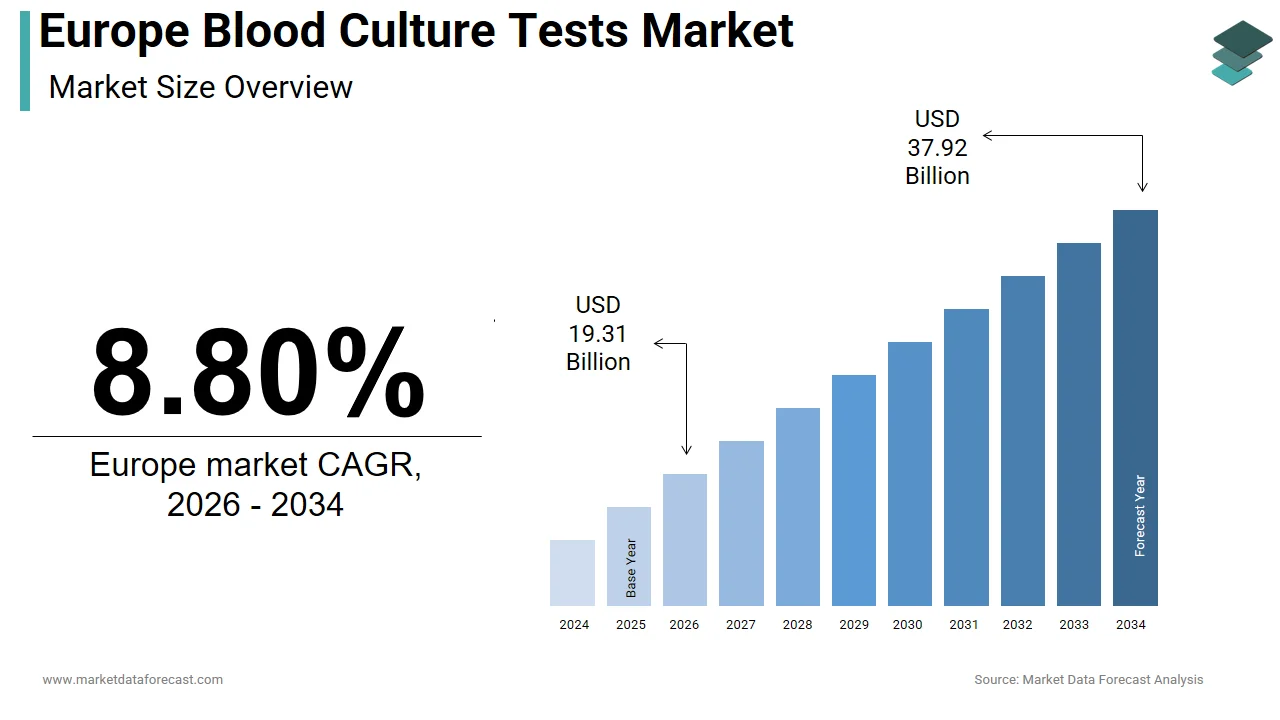
The size of the Europe blood culture tests market was valued at USD 17.75 billion in 2025. This market is expected to grow at a CAGR of 8.80% from 2026 to 2034 and be worth USD 37.92 billion by 2034 from USD 19.31 billion in 2026.
A blood culture test is a laboratory procedure used to detect and identify microorganisms, primarily bacteria and fungi, in the bloodstream. The procedure involves incubating patient blood samples in specialized media to detect and identify pathogenic bacteria or fungi circulating in the bloodstream, a critical step in managing sepsis, endocarditis, and other life-threatening systemic infections. Bloodstream infections present a high burden of disease across the European Union, with a significant proportion resulting in fatal outcomes due to the critical importance of rapid diagnosis and treatment. Sepsis is a major cause of death within Europe, highlighting a critical need for rapid and accurate diagnostic pathways to improve survival rates. National health systems increasingly mandate standardized blood culture protocols under antimicrobial stewardship programs to curb inappropriate antibiotic use. The European Committee on Antimicrobial Susceptibility Testing further reinforces best practices by defining breakpoints and quality criteria for culture-based identification. This clinical and regulatory ecosystem positions blood culture testing not merely as a laboratory procedure but as a pivotal intervention in public health efforts to combat antimicrobial resistance and improve critical care outcomes.
MARKET DRIVERS
Escalating Burden of Sepsis and Hospital-Acquired Bloodstream Infections
Sepsis represents one of the most compelling clinical imperatives, which drives the growth of the Europe blood culture tests market. The European Sepsis Alliance indicates that millions of Europeans develop sepsis annually, with blood-related infections acting as a major cause of sepsis in intensive care settings. European intensive care experts emphasize that delays in delivering appropriate antimicrobial therapy significantly increase the risk of death, highlighting the critical need for rapid pathogen identification. Infections related to central venous catheters are a frequent complication in intensive care units, contributing to a high burden of hospital-acquired infections. As the European population ages, a growing, substantial portion of elderly individuals face a significantly higher risk of developing severe bloodstream infections and sepsis. National initiatives such as Germany’s Sepsis Action Plan and the UK’s NHS Sepsis Six protocol institutionalize blood culture collection as a mandatory first step in sepsis bundles. These clinical guidelines, coupled with rising hospital admissions for complex comorbidities, ensure sustained and growing demand for reliable blood culture diagnostics across the continent.
Integration of Antimicrobial Stewardship Programs in Public Hospitals
The systematic rollout of antimicrobial stewardship programs is occurring across European healthcare institutions, which further propels the expansion of the Europe blood culture tests market. Consequently, blood culture testing has become a non-negotiable component of infection management protocols. European Union member states are actively adopting One Health national action plans to combat increasing antimicrobial resistance, with many countries pushing for standardized protocols requiring blood cultures before administering broad-spectrum antibiotics to patients with suspected sepsis. The burden of antibiotic-resistant infections continues to be a significant threat in the EU/EEA, with recent reports indicating that tens of thousands of people die annually from these infections, which frequently occur in healthcare settings. Healthcare facilities in countries like Sweden and the Netherlands are increasingly utilizing electronic health record alerts and integrated microbiology laboratory systems to boost compliance with best-practice protocols for timely blood culture collection. The EU is funding joint actions and initiatives to strengthen laboratory infrastructure, including automated diagnostics, to enhance surveillance and improve the management of bacterial infections across European healthcare settings. National payers are driving diagnostic rigor by tying reimbursement directly to adherence with stewardship metrics. This regulatory and financial alignment ensures that blood culture testing remains central to both clinical decision-making and public health strategy in combating drug-resistant infections.
MARKET RESTRAINTS
Limited Diagnostic Yield Due to Prior Antibiotic Administration
The frequent administration of antibiotics before specimen collection drastically reduces pathogen recovery rates, which impedes the growth of the Europe blood culture test market. Clinical research indicates that administering antibiotics before collecting samples significantly reduces the detection rate of bacteria in microbiological cultures, particularly for challenging, fastidious organisms. Global studies on intensive care units show that a vast majority of patients with severe infections are already receiving antibiotic therapies before their formal admission for critical care. This practice, while clinically understandable, undermines the diagnostic utility of cultures and often leads to empirical treatment prolongation. Moreover, national guidelines vary in enforcement; while Scandinavian countries enforce strict pre-culture sampling protocols, Southern and Eastern European hospitals report notable compliance rates. The resulting diagnostic uncertainty contributes to unnecessary broad-spectrum antibiotic use, perpetuating antimicrobial resistance cycles. Pre-analytical variability will persist as a factor reducing the reliability and perceived value of conventional blood cultures until molecular point-of-care alternatives are fully validated and reimbursed.
Fragmented Reimbursement Policies Across European Healthcare Systems
Reimbursement for blood culture testing remains inconsistent across European nations, which creates operational and financial barriers to optimal utilization, and thereby limits the expansion of the Europe blood culture tests market. Diagnostic microbiology services across European systems frequently operate under reimbursement models, such as bundled payments or flat-rate, diagnosis-related groups, that do not fully cover the comprehensive expenses of multi-bottle culture sets and extended incubation periods. In countries like Italy and Spain, laboratories receive fixed per-admission payments that discourage repeat or follow-up cultures even when clinically indicated. Conversely, Germany and France offer separate billing codes for aerobic and anaerobic bottles, yet impose volume caps that limit comprehensive sepsis workups. The European Federation of Laboratory Medicine (EFLM) indicates that many EU nations lack specific, additional reimbursement for rapid identification or susceptibility testing, hindering the adoption of fast, direct-from-blood-culture diagnostics, even when evidence demonstrates improved patient outcomes. This misalignment disincentivizes the adoption of advanced workflows such as matrix-assisted laser desorption ionization time of flight mass spectrometry, which require upfront investment. Failure to implement reimbursement models that reward timely diagnostics leaves labs with inadequate resources for modernizing equipment and training, thereby undermining both diagnostic precision and stewardship initiatives.
MARKET OPPORTUNITIES
Adoption of Rapid Molecular and Mass Spectrometry Platforms
The integration of rapid identification technologies following positive blood culture results paves the way for enhancing diagnostic precision and therapeutic response in the region, which is likely to promote the growth of the Europe blood culture testing market. Matrix-assisted laser desorption ionization time-of-flight mass spectrometry allows rapid pathogen identification directly from blood cultures, significantly accelerating the transition to targeted therapy. European initiatives are actively funding the implementation of advanced diagnostic platforms, including mass spectrometry, in hospitals to strengthen antimicrobial stewardship and improve clinical outcomes. Additionally, molecular panels such as PCR-based assays for resistance genes like mecA and vanA allow same-day detection of methicillin-resistant Staphylococcus aureus or vancomycin-resistant Enterococci directly from blood culture broth. EUCAST has integrated rapid diagnostic guidelines that support the implementation of reflex testing algorithms, aiding in the reduction of unnecessary glycopeptide antibiotic usage. The European Union is funding major collaborative partnerships to accelerate the development and implementation of advanced diagnostic technologies. Advanced diagnostic methods for sepsis are becoming more accessible in smaller healthcare settings, moving beyond specialized academic centers to provide scalable, faster patient care. The evolution of blood culture diagnostics transforms the testing process from simple organism detection into a source of rapid, actionable intelligence for clinical decision-making.
Expansion of Automated Blood Culture Systems in Secondary Care Facilities
The deployment of continuous monitoring automated blood culture systems in district and community hospitals offers a major growth vector for improving early sepsis detection beyond tertiary centers, which is predicted to boost the expansion of the Europe bloos culture tests market. Traditionally limited to academic medical centers, these instruments, which use colorimetric or fluorescent sensors to detect microbial metabolism in real time, are now being scaled across secondary care due to falling costs and simplified operation. The European Health Management Association supports the expansion of digital health infrastructure, utilizing regional development funds to improve healthcare accessibility in non-academic medical centers. Implementing automated blood culture systems significantly accelerates pathogen detection compared to traditional techniques, enhancing sample quality through standardized procedures. Leading intensive care organizations observe that hospitals utilizing automated diagnostic tools experience improved patient triage and more timely interventions for serious bloodstream infections. National health agencies in Southern Europe have prioritized the adoption of advanced diagnostic analyzers within their long-term clinical technology roadmaps to align with international sepsis management standards. This decentralization of advanced diagnostics not only expands market reach but also strengthens Europe’s overall resilience against bloodstream infection outbreaks by enabling earlier containment and treatment at the point of initial presentation.
MARKET CHALLENGES
Persistent Contamination Rates Undermining Test Reliability
High rates of blood culture contamination continue to plague European diagnostics, compromising accuracy and triggering unnecessary treatment, even as technology advances, which challenges the growth of the Europe blood culture tests market. Blood culture samples are frequently compromised by bacteria typically found on human skin, with certain staphylococci species being the most prevalent contaminants. Departments characterized by high patient volumes and urgent care needs, such as emergency rooms, experience significantly higher rates of sample contamination compared to general hospital wards. False-positive results from these cultures negatively affect patient care by causing longer hospitalizations and the administration of unnecessary antimicrobial medications. The presence of contaminated cultures imposes a substantial financial strain on healthcare systems due to avoidable diagnostic testing and extended treatment requirements. Implementing structured care protocols and utilizing specialized phlebotomy teams have proven effective in reducing contamination and improving the accuracy of infection diagnoses. Contributing factors include inadequate phlebotomy training, inconsistent skin antisepsis protocols, and reliance on peripheral draws over dedicated venipuncture. A lack of standardized, real-time lab feedback hinders the ability to distinguish contaminants from pathogens, resulting in delayed treatment and reduced trust in results.
Workforce Shortages in Clinical Microbiology Laboratories
The acute shortage of qualified clinical microbiologists and laboratory technicians capable of managing complex culture workflows is among the key barriers to the Europe blood culture tests market. The European Federation of Laboratory Medicine indicates that a substantial proportion of European laboratory services are experiencing critical workforce shortages, with severe vacancies in diagnostic microbiology, particularly affecting countries in Eastern and parts of Western Europe. This scarcity delays critical steps in the blood culture cascade, including Gram stain interpretation, subculture plating, and susceptibility reporting, extending turnaround times beyond the 48-hour benchmark recommended by the European Society of Clinical Microbiology. The European Centre for Disease Prevention and Control indicates that diagnostic delays, partially driven by laboratory resource limitations, are a contributing factor to the overuse of improper empiric treatments and rising resistance in the EU/EEA. Contributing factors include aging workforce demographics, limited training pipelines, and competition from higher-paying private sector roles in biotechnology. Despite the utility of AI in automating routine diagnostics, human oversight is essential for interpreting challenging samples, particularly those containing fastidious or multiple species. Blood culture diagnostics will not reach their full potential across Europe until health systems address workforce gaps by offering incentives and recognizing qualifications across borders.
REPORT COVERAGE
| REPORT METRIC | DETAILS |
| Market Size Available | 2025 to 2034 |
| Base Year | 2025 |
| Forecast Period | 2026 to 2034 |
| Segments Covered | By Product, Technology, Application, End User, and Country. |
| Various Analyses Covered | Global, Regional, and Country-Level Analysis, Segment-Level Analysis, Drivers, Restraints, Opportunities, Challenges; PESTLE Analysis; Porter’s Five Forces Analysis, Competitive Landscape, Analyst Overview of Investment Opportunities |
| Countries Covered | UK, France, Spain, Germany, Italy, Russia, Sweden, Denmark, Switzerland, Netherlands, Turkey, Czech Republic, and the Rest of Europe. |
| Market Leaders Profiled | Becton Dickinson, bioMérieux SA, Thermo Fisher Scientific Inc., Cepheid, Inc., Nanosphere Inc., IRIDICA, Beckman Coulter, Bruker Corporation, and T2 Biosystems. |
SEGMENTAL ANALYSIS
By Product Insights
The consumables segment dominated the Europe Blood Culture Tests Market by accounting for a 58.5% share in 2025. The dominance of the consumables segment is driven by the recurring nature of blood culture bottles, both aerobic and anaerobic, which are single-use items required for every test episode across millions of hospital admissions annually. Unlike capital equipment, consumables generate continuous demand irrespective of instrument installation cycles. Hospital sepsis protocols throughout Europe extensively utilize blood culture sampling, leading to high-volume usage of diagnostic sets. Major manufacturers have advanced, specialized bottle formulations, specifically employing resin-based or charcoal-based media to neutralize circulating antibiotics in patients, which significantly improves the detection of pathogens in clinical trials. Furthermore, national antimicrobial stewardship programs increasingly require paired aerobic anaerobic sampling, which doubles per patient consumable usage. The segment’s resilience is further reinforced by minimal substitution risk and regulatory barriers to new entrants due to stringent CE IVDR certification requirements for culture media.
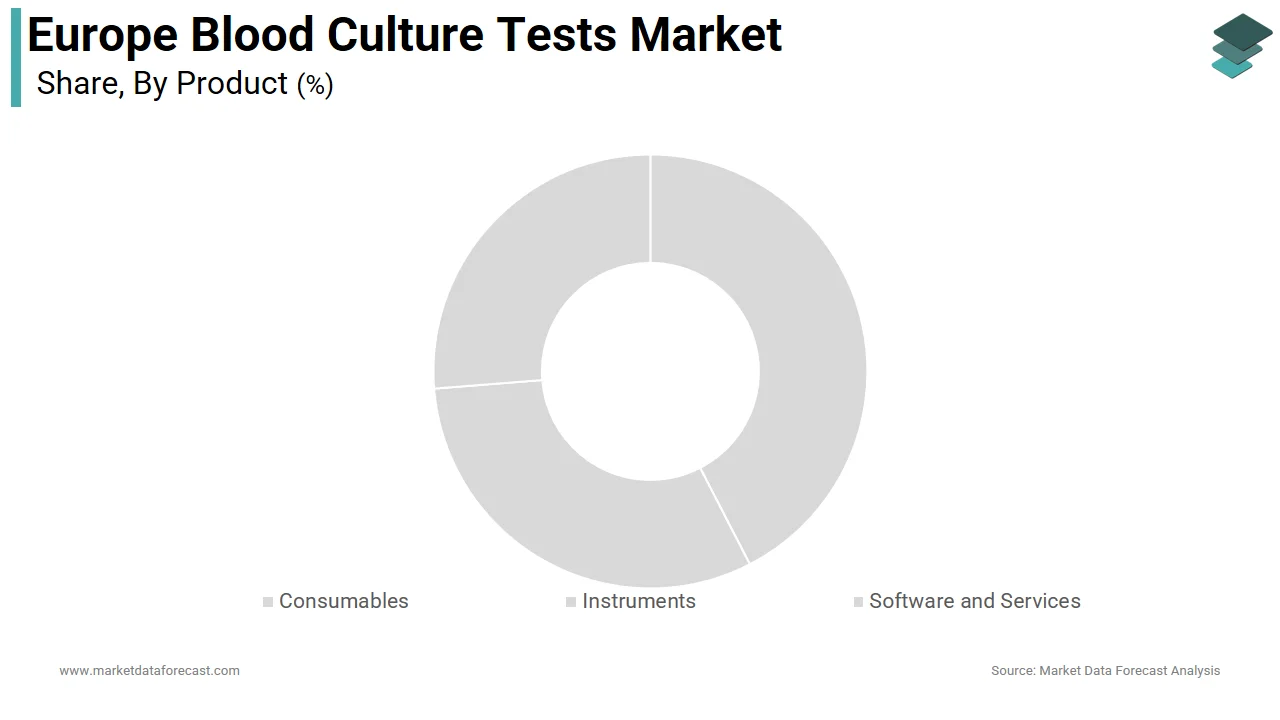
The software and services segment is likely to experience the fastest CAGR of 9.2% between 2026 and 2034 due to the integration of laboratory information systems with automated blood culture platforms to enable real-time monitoring, predictive analytics, and antimicrobial resistance tracking. These software solutions facilitate automatic alerts for positive cultures, integrate with electronic health records, and generate antimicrobial susceptibility reports compliant with EUCAST guidelines. Additionally, managed services, including remote instrument maintenance, cloud-based data storage, and staff training, are gaining traction in Southern and Eastern Europe, where laboratory staffing shortages impede in-house technical management. The EU’s In Vitro Diagnostic Regulation also mandates enhanced post-market surveillance, which has spurred demand for digital audit trails and traceability modules. Software and services are transitioning from ancillary offerings to foundational components of diagnostic value chains, driven by the increasing focus on interoperability and data stewardship in healthcare.
By Technology Insights
The culture-based technology segment led the Europe Blood Culture Tests Market by capturing a substantial share in 2025. Despite advances in molecular methods, culture remains the clinical gold standard due to its ability to provide viable isolates for comprehensive antimicrobial susceptibility testing, a requirement under EU antimicrobial stewardship directives. According to research, all EU member states rely on culture-derived minimum inhibitory concentration data to define national resistance breakpoints. Furthermore, automated blood culture systems from vendors like Becton Dickinson and bioMérieux have reduced time to detection to under 12 hours for common pathogens, enhancing clinical utility. National sepsis guidelines in countries including the UK, Germany, and Sweden explicitly mandate blood culture collection before antibiotic initiation, reinforcing procedural adherence. The technology’s cost-effectiveness also ensures broad accessibility across public health systems. "Pending full regulatory approval of rapid phenotypic susceptibility testing, traditional culture-based workflows remain essential for guiding targeted antimicrobial therapy in bloodstream infections.
The molecular technologies segment is on the rise and is expected to be the fastest-growing segment in the market by witnessing a CAGR of 11.4% during the forecast period, owing to the urgent need to shorten diagnostic turnaround times in sepsis management, where mortality increases per hour of delayed appropriate therapy. Multiplex PCR panels such as BioFire Blood Culture Identification panels can detect numerous pathogens and key resistance genes directly from positive blood cultures in under one hour. European tertiary hospitals are increasingly implementing reflex molecular testing to guide antibiotic stewardship and reduce reliance on broad-spectrum treatments, with notable adoption trends in France, Italy, and the Netherlands. The European Commission is investing substantial funding through the Horizon Europe initiative to validate and accelerate the implementation of rapid molecular diagnostics for sepsis in clinical settings. Updated EUCAST guidance now supports the use of molecular methods to detect resistance in high-risk pathogens, which is driving faster clinical adoption of molecular diagnostics. Molecular diagnostics are becoming integral to accelerated sepsis workflows, driven by evolving reimbursement and lower technology costs, rather than just acting as niche tools.
By End User Insights
The hospital laboratories segment was the largest segment in the Europe blood culture tests market by holding a significant share in 2025. The supremacy of the hospitals segment is credited to the acute care setting’s role as the primary point of sepsis diagnosis, where immediate blood culture collection is mandated by national emergency and critical care protocols. A vast number of patients are hospitalized across the European Union, including inpatients and day-care, indicating a high demand for acute medical services. Bloodstream infection screenings are frequently performed in critical and acute care settings, as these diagnostics are essential for identifying infections in severely ill or hospitalized patients. Major university-affiliated hospitals process a substantial volume of blood cultures annually, requiring specialized, dedicated microbiology infrastructure to manage the high testing demand. National initiatives such as Germany’s Sepsis Registry and the UK’s National Early Warning Score system institutionalize culture testing within standardized sepsis bundles. Furthermore, the EU In Vitro Diagnostic Regulation requires hospital labs to maintain accredited quality management systems for culture testing, ensuring consistent demand for CE-marked consumables and instruments. Unlike reference labs, which handle esoteric or referral cases, hospital laboratories operate under continuous volume pressure, making them the central engine of market activity and innovation adoption across the blood culture diagnostics ecosystem.
The reference laboratories segment is expected to exhibit a noteworthy CAGR of 7.8% between 2026 and 2034. The rapid expansion of the reference laboratories segment is fuelled by the increasing outsourcing of complex antimicrobial susceptibility testing and rare pathogen identification by smaller district hospitals lacking advanced microbiology capabilities. Countries like Poland, Greece, and Portugal have established national reference networks funded through EU structural funds to enhance diagnostic equity. Additionally, reference labs serve as validation hubs for novel diagnostics. EHDS-driven data exchange is transforming reference labs into high-impact centers focused on surveillance and emergency response rather than just high-volume testing.
COUNTRY-LEVEL ANALYSIS
Germany Blood Culture Tests Market Analysis
Germany outperformed other countries in the European blood culture tests market by accounting for a 19.3% share in 2025. The prominence of the German market is driven by its dense network of hospitals, including university medical centers that adhere to stringent national sepsis guidelines mandating dual bottle blood cultures for all suspected systemic infections. The nation also hosts major diagnostic manufacturers such as Siemens Healthineers and QIAGEN, whose R&D facilities collaborate with clinical labs on next-generation culture and molecular workflows. Germany’s robust public health insurance system fully reimburses standardized blood culture sets and supports the adoption of automated systems through hospital investment grants. Furthermore, the Robert Koch Institute’s mandatory reporting of multidrug-resistant organism cases drives consistent testing volumes, particularly for methicillin-resistant Staphylococcus aureus and extended-spectrum beta-lactamase-producing Enterobacterales, reinforcing Germany’s status as Europe’s most advanced and voluminous diagnostic market.
France Blood Culture Tests Market Analysis
France was the second largest player in the Europe blood culture tests market by holding a 16.1% share in 2025. The growth of the French market is propelled by centralized healthcare governance that enforces uniform sepsis and antimicrobial stewardship protocols across all public hospitals. The French National Authority for Health mandates blood culture collection before antibiotic initiation in suspected bacteremia, with compliance monitored through the national SIRSIC surveillance program, which covers a significant number of acute care facilities. The country is also home to bioMérieux, a global leader in blood culture diagnostics whose Marcy l’Étoile headquarters spearheads innovation in resin-containing media and rapid identification algorithms. Recent investments for modernizing hospital microbiology labs with automated culture systems and digital connectivity are enhancing both volume and technological sophistication of testing nationwide.
United Kingdom Blood Culture Tests Market Analysis
The United Kingdom occupies a significant share of the Europe blood culture tests market. The NHS’s systematic implementation of the Sepsis Six care bundle, which requires blood cultures within one hour of suspicion, ensures exceptionally high testing rates across England, Scotland, Wales, and Northern Ireland. NHS laboratories are processing a substantial volume of blood cultures, driven largely by standardized, protocol-driven diagnostic requirements rather than discretionary, ad-hoc, or elective sampling. The UK maintains high standards in pre-analytical blood culture collection, with national guidelines promoting rigorous phlebotomy techniques that enable top-performing trusts to achieve minimal sample contamination rates. Despite Brexit, the UK remains aligned with EUCAST antimicrobial testing standards and continues to participate in European antimicrobial resistance surveillance. Recent NHS Long Term Plan investments for diagnostic modernization, with specific allocations for upgrading blood culture incubators and integrating laboratory information systems. This combination of clinical mandate, operational discipline, and sustained public funding cements the UK’s position as a high compliance high volume market.
Italy Blood Culture Tests Market Analysis
Italy is growing steadily in the Europe blood culture tests market due to its large hospital infrastructure comprising a significant number of public acute care facilities, many of which serve aging populations with high rates of comorbidities predisposing to bloodstream infections. Italy is experiencing a continuous and significant increase in the proportion of its population entering the later stages of life, solidifying its position as one of the world's oldest societies. Clinical data suggest that hospitalizations related to severe infections are becoming more frequent across the country, driven largely by the advancing average age of patients and the growing challenge of drug-resistant pathogens. The country has also become a focal point for diagnostic innovation, with partnerships between universities in Milan and Turin and global firms like Becton Dickinson to validate rapid identification workflows. EU Recovery Fund allocations for healthcare digitization include specific line items for microbiology lab automation, enabling even smaller provincial hospitals to adopt continuous monitoring blood culture systems. This convergence of demographic pressure, policy harmonization, and investment is driving consistent market expansion across diverse Italian healthcare settings.
Spain Blood Culture Tests Market Analysis
Spain is anticipated to expand in the Europe blood culture tests market from 2026 to 2034, owing to its universal public healthcare system, which ensures equitable access to sepsis diagnostics across autonomous communities. National health strategies in Spain, aimed at improving patient outcomes, emphasize the rapid, systematic collection of blood cultures for patients suspected of sepsis within emergency settings. Antimicrobial resistance surveillance, overseen by national health research institutions, extensively monitors blood isolates across the majority of Spanish hospitals to guide treatment. Routine, centralized profiling of bloodstream pathogens is conducted across Spanish medical facilities to monitor for emerging antimicrobial resistance. Spain has also emerged as a hub for clinical validation studies. Recent investments under Spain’s Digital Transformation Strategy for laboratory information system upgrades, enabling real-time culture monitoring and antimicrobial stewardship integration. Spain is strengthening its role as a key player in Southern Europe’s diagnostics sector by aligning policies with increased sepsis awareness and engaging in European initiatives.
COMPETITIVE LANDSCAPE
The Europe Blood Culture Tests Market features intense competition centered on technological differentiation, regulatory compliance, and service depth rather than price alone. While Becton Dickinson and bioMérieux dominate the automated culture segment through proprietary instrument consumable ecosystems, newer entrants focus on niche areas such as rapid molecular reflex testing or AI-enabled interpretation software. Competition is further shaped by the EU In Vitro Diagnostic Regulation, which raised technical and clinical evidence requirements, creating barriers for smaller players but reinforcing the position of established firms with robust regulatory infrastructure. Hospitals increasingly evaluate vendors based on total workflow integration, including pre-analytical standardization, digital connectivity, and post-analytical decision support. Reference laboratories drive demand for advanced identification and resistance profiling capabilities, fostering partnerships with proteomics and sequencing specialists. Despite consolidation trends, regional preferences persist, with Northern Europe favoring high-throughput automation and Southern Europe prioritizing cost-effective reliability. Innovation in reducing time to result while maintaining phenotypic susceptibility remains the ultimate competitive differentiator.
KEY MARKET PLAYERS
The leading companies operating in the Europe blood culture tests market include:
- Becton Dickinson
- bioMérieux SA
- Thermo Fisher Scientific Inc.
- Cepheid, Inc.
- Nanosphere Inc.
- IRIDICA
- Beckman Coulter
- Bruker Corporation
- T2 Biosystems
TOP PLAYERS IN THE MARKET
- Becton Dickinson is a global leader in medical technology with a profound presence in the European blood culture diagnostics landscape. The company supplies its BACTEC automated blood culture systems and resin-containing culture bottles across hospitals and reference labs throughout the region. BD’s solutions are integrated into national sepsis protocols in countries like Germany and the UK due to their high sensitivity in detecting pathogens even after antibiotic exposure. In recent years, BD has enhanced its European footprint by launching digital connectivity modules that link BACTEC instruments to laboratory information systems, enabling real-time monitoring and antimicrobial stewardship support. The company also collaborates with EU clinical networks to validate rapid identification workflows, aligning its portfolio with evolving regulatory and clinical standards under the IVDR framework.
- bioMérieux, headquartered in France, is a specialized diagnostics company with deep expertise in microbiology and infectious disease testing. Its BacT ALERT blood culture system is widely adopted across European healthcare institutions, particularly in Southern and Eastern Europe, where cost-effective yet reliable automation is prioritized. The company offers a comprehensive ecosystem, including culture media, advanced incubation technology, and seamless integration with its VITEK MS for rapid pathogen identification. Recently, bioMérieux expanded its Marcy l’Étoile manufacturing facility to increase production of blood culture consumables compliant with CE IVDR requirements. It also launched AI-driven software that predicts time to positivity based on growth kinetics, supporting earlier clinical intervention. These initiatives reinforce its role as a vertically integrated innovator committed to improving sepsis outcomes across diverse European health systems.
- Thermo Fisher Scientific plays a strategic role in the Europe Blood Culture Tests Market through its molecular and proteomics solutions that complement traditional culture methods. While not a primary provider of automated culture instruments, the company’s PCR-based panels and mass spectrometry platforms are increasingly used as reflex tests following positive blood cultures. Its Applied Biosystems QuantStudio systems enable rapid detection of resistance genes such as mecA and vanA directly from culture broth. The company also partnered with several university hospitals to integrate its Ion Torrent sequencing for outbreak investigation of multidrug-resistant bloodstream pathogens. This focus on post-culture molecular characterization positions Thermo Fisher as a key enabler of precision sepsis management in advanced European laboratories.
TOP STRATEGIES USED BY THE KEY MARKET PARTICIPANTS
Key players in the Europe Blood Culture Tests Market are prioritizing compliance with the EU In Vitro Diagnostic Regulation by upgrading product portfolios and quality management systems. They are investing in digital integration to connect blood culture instruments with hospital electronic health records and antimicrobial stewardship platforms. Companies are expanding manufacturing capacity for IVDR-certified consumables to meet rising demand from public hospitals. Strategic collaborations with academic medical centers facilitate clinical validation of rapid identification and susceptibility workflows. Additionally, firms are enhancing service offerings, including remote instrument monitoring, staff training, and data analytics to support resource-constrained laboratories, particularly in Southern and Eastern Europe.
MARKET SEGMENTATION
This Europe blood culture tests market research report is segmented and sub-segmented into the following categories.
By Product
- Consumables
- Blood Culture Media
- Aerobic Blood Culture Media
- Pediatric Aerobic Blood Culture Media
- Anaerobic Blood Culture Media
- Mycobacterial Blood Culture Media
- Fungi Blood Culture Media
- Assay Kits & Reagents
- Blood Culture Accessories
- Blood Culture Media
- Instruments
- Automated Blood Culture Systems
- Supporting Laboratory Equipment
- Incubators
- Colony Counters
- Microscopes
- Gram Stainers
- Software and Services
By Technology
- Culture-Based Technology
- Molecular Technologies
- Microarrays
- PCR (Polymerase Chain Reaction)
- PNA-FiSH (Peptide Nucleic Acid – Fluorescent in Situ Hybridization)
- Proteomics Technology
By Application
- Bacteremia
- Fungemia
- Mycobacterial Detection
By End User
- Hospital Laboratories
- Reference Laboratories
By Country
- UK
- France
- Spain
- Germany
- Italy
- Russia
- Sweden
- Denmark
- Switzerland
- Netherlands
- Turkey
- Czech Republic
- Rest of Europe