Europe Botulinum Toxin Market Size, Share, Trends & Growth Forecast Report By Application, End User, and By Country (Germany, France, United Kingdom, Italy, Spain & Rest of Europe) – Industry Analysis and Forecast, 2026 to 2034
Market Size, 2025
$2,709.88 MnMarket Estimate, 2026
$2,934.80 MnMarket Forecast, 2034
$5,554.01 MnCAGR, 2026–2034
8.3%Europe Botulinum Toxin Market Summary
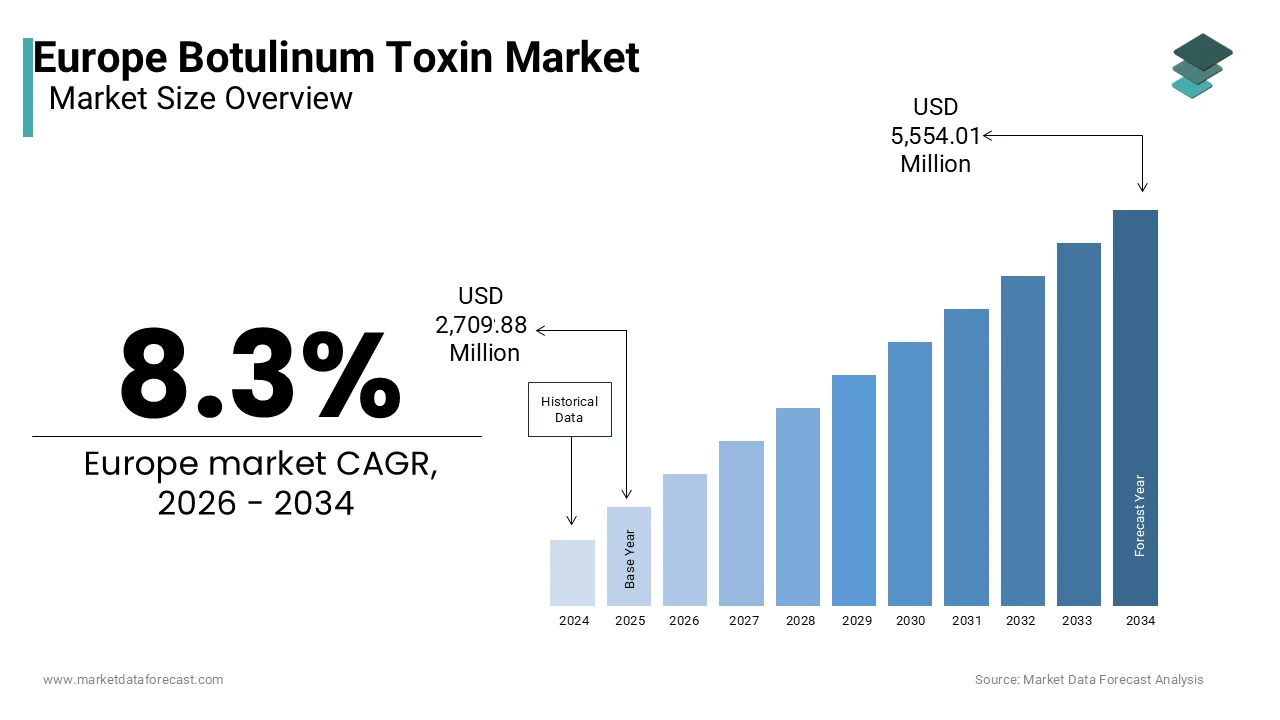
The Europe botulinum toxin market, valued at USD 2.71 billion in 2025, is projected to reach USD 5.55 billion by 2034, expanding at a CAGR of 8.3%, driven by expanding neurological indications, preventive aesthetic adoption, and institutional integration into chronic care pathways.
Key Market Highlights
- 2025 Market Size: USD 2,709.88 million
- 2026 Estimate: USD 2,934.80 million
- 2034 Forecast: USD 5,554.01 million
- CAGR (2026–2034): 8.3%
- Base Year: 2025
- Forecast Period: 2026–2034
Quick Growth Drivers
- Expansion of approved therapeutic indications (chronic migraine, neurogenic bladder, pediatric urology)
- Rising preventive aesthetic use among patients aged 25–35
- Strong aging population base across Europe
- Increasing HTA endorsement for cost-effective neurological treatments
- Growth of specialty dermatology and neurology clinics
Principal Restraints
- Stringent regulatory controls on off-label and cosmetic use
- Physician-only administration rules limiting scalability in some countries
- Fragmented reimbursement policies across EU member states
- Budget-driven limits on treatment frequency in public systems
High-Value Opportunities
- Entry of biosimilar botulinum toxins reducing cost barriers
- Development of next-generation long-acting neurotoxins
- Integration into multidisciplinary migraine, spasticity, and pain clinics
- Expansion of structured reference centers for neurological disorders
- Digitalization of training, certification, and patient monitoring
Key Market Challenges
- Proliferation of unregulated aesthetic practices and counterfeit products
- Product diversion via unauthorized online channels
- Ongoing uncertainty around long-term immunogenicity
- Limited access to antibody testing in Southern and Eastern Europe
Fastest-Growing Segments
- Chronic Migraine: 9.4% CAGR driven by reimbursement expansion
- Hospitals & Public Clinics: 8.7% CAGR from institutional adoption
- Preventive Aesthetics: High volume growth among younger adults
Regional Leadership & Dynamics
- Germany (19.3%) strongest therapeutic + aesthetic balance, physician-only administration
- France early reimbursement leadership and strong dermatology networks
- United Kingdom NHS-embedded care pathways and national toxin registry
- Italy high aesthetic volumes with fragmented therapeutic reimbursement
- Spain fastest therapeutic expansion due to national neurology funding
What Wins Commercially
- Broad therapeutic indication portfolios with EMA approval
- Strong real-world evidence and post-marketing surveillance
- Physician education, certification, and injector loyalty programs
- Differentiation via low-immunogenicity formulations
- Institutional penetration into public neurology and urology systems
Top Strategic Ask for Executives
Invest in next-generation and biosimilar toxin development while strengthening institutional reimbursement pathways and physician-led delivery models to balance aesthetic volume with long-term therapeutic growth.
Leading Players
Some of the companies that are playing a dominating role in the Europe botulinum toxin market include:
- AbbVie (Allergan Aesthetics)
- Ipsen
- Merz Pharma
- Galderma
- Hugel
- Medytox
- Revance Therapeutics
Europe Botulinum Toxin Market Size
The Europe botulinum toxin market was valued at USD 2,709.88 million in 2025, is estimated to reach USD 2,934.80 million in 2026, and is projected to reach USD 5,554.01 million by 2034, growing at a CAGR of 8.3% from 2026 to 2034.
The botulinum toxin is the therapeutic and aesthetic use of purified neurotoxin proteins, primarily Type A derived from Clostridium botulinum to temporarily inhibit neuromuscular transmission. It is employed to treat a range of neurological, ophthalmological, and urological conditions, including chronic migraine, cervical dystonia blepharospasmpa, sm and overactive bladder. In aesthetic medicine, it is widely used for the temporary reduction of glabellar lines, forehead wrinkles, and crow’s feet. The regulatory framework governing its use isstringent, with the European Medicines Agency overseeing product authorization and pharmacovigilance. As per Eurostat, over 220 m,,illion people in the European Union were aged 40 or older in 2024, a demographic highly associated with both medical indications and cosmetic demand for neuromodulators. Additionally, the European Academy of Dermatology and Venereology documented that more than 4.1 million botulinum toxin procedures were performed by certified practitioners across EU member states in 2024, reflecting deep clinical and consumer integration.
MARKET DRIVERS
Expanding Indications in Neurological and Urological Therapeutics
The continuous expansion of approved medical indications for botulinum toxin has become a pivotal demand driver across Europe’s healthcare systems, which is additionally fuelling the growth of Europe botulinum toxin market. In 2023, the European Medicines Agency granted a new indication for onabotulinumtoxinA in the treatment of neurogenic detrusor overactivity in pediatric patients aged five years and older with spinal cord injury or myelomeningocele. This follows earlier approvals for chronic migraine in adults, which affects approximately 12 million people in the EU according to the European Headache Federation. Furthermore, the European Association of Urology reported that over 14 million Europeans suffer from idiopathic overactive bladder, with nearly 30% refractory to oral anticholinergics, which is making intradetrusor botulinum toxin injections a standard second-line therapy. National health technology assessment bodies have increasingly endorsed its cost effectiveness, in 2025the UK’s National Institute for Health and Care Excellence reaffirmesecond-line toxin as a cost-saving intervention for chronic migraine due to reduced emergency department visits and absenteeism. These evidence-based endorsements facilitate reimbursement across public health systemscost-savingg broader patient access. The shift from purely cosmetic to medically validated applications not only diversifies revenue streams for manufacturers but also enhances clinical legitimacy, encouraging physician adoption and reducing treatment stigma.
Rising Consumer Acceptance of Preventive Aesthetic Interventions
A cultural shift toward early and preventive aesthetic maintenance, particularly among adults under 35 i, is greatly influencing the growth of Europe botulinum toxin market. As per the International Society of Aesthetic Plastic Surgery, preventative botulinum toxin injections among patients aged 25 to 34 rose by 18% year on year in Western Europe in 2024. This trend is fueled by social normalization,n digital self-presentation norms, and increased visibility of aesthetic treatments in mainstream media. In Germany, for instance, the Federal Centre for Health Education noted a 35% increase between 2020 and 2025in consultations for “pre-aging” interventions among urban professionals. Unlike corrective procedures, which respond to established wrinkles pr, preventive applications aim to delay dynamic line formation through periodic low-dose treatments. Regulatory clarity has also played a role, where the European Society for Cosmetic and Aesthetic Dermatology updated its 2025consensus guidelines to affirm the safety of long term intermittent use when administered by trained professionals. This scientific validation reassures both practitioners and consumers. Moreover, rising disposable incomes in Southern and Eastern Europe have expanded access beyond traditional affluent markets.
MARKET RESTRAINTS
Stringent Regulatory Controls on Off-Label and Aesthetic Use
The increasingly rigorous regulatory oversight of aesthetic applications and off-label prescribing is restraining the growth of Europe botulinum toxin market. The European Medicines Agency maintains that all aesthetic uses must be performed with products holding a specific marketing authorization for cosmetic indications, with a requirement that excludes certain neurotoxin formulations approved only for medical use. France’s National Agency for the Safety of Medicines and Health Products intensified inspections of aesthetic clinics and issued formal warnings against the use of non-CE-marked or repackaged toxins, leading to the suspension of over 200 practices. Similarly, Germany’s Federal Institute for Drugs and Medical Devices mandates that only physicians, not nurses or aestheticians, can administer botulinum toxin, limiting service accessibility. These restrictions are amplified by pharmacovigilance requirements, where the European Database of Suspected Adverse Reaction Reports logged a 22% increase in mild adverse events related to aesthetic use in 2024, prompting calls for tighter practitioner certification. The European Commission’s 2023 Medical Devices Regulation indirectly affects toxin delivery systems by imposing stricter conformity assessments on associated injection devices.
Persistent Reimbursement Limitations in Public Health Systems
The reimbursement constraints within publicly funded healthcare systems significantly limit patient access to several evidence-supported medical indications, which also limits the growth of Europe botulinum toxin market. Althoughapproved by the European Medicines Agency for conditions like chronic migraine and cervical dystonia c, coverage remains fragmented across member states. According to the European Observatory on Health Systems and Policies, as of 2025only 14 out of 27 EU countries provided full public reimbursement for botulinum toxin in chronic migraine, with others imposing strict prior authorization criteria such as failure of three or more prophylactic medications. In Italy, the National Health Service restricts annual treatment cycles to two per patient despite clinical guidelines recommending up to four. Similarly, the Netherlands’ Health Care Institute excludes reimbursement for spasticity in post-stroke patients under 18 years old despite EMA approval. These inconsistencies stem from national health technology assessments that prioritize short term budget impact over long term societal cost savings. A 2025analysis by the European Brain Council found that delayed or denied access to botulinum toxin for neurological disorders resulted in an average of 4.2 additional sick leave days per patient annually.
MARKET OPPORTUNITIES
Emergence of Biosimilar and Next Generation Neurotoxins
The anticipated entry of biosimilar botulinum toxin products and the development of next-generation neurotoxinswharenticipated set up new opportunities for the growth of Europe botulinum toxin market. While no biosimilar has yet received full marketing authorization from the European Medicines Agency as of early 2025, several candidates are in late-stage clinical trials. South Korea’s Medytox and Germany’s Merz Pharma have both submitted comparative efficacy dossiers for their Type A biosimilars under the EU’s centralized procedure. Regulatory approval would introduce price competition, potentially reducing treatment costs by 20 to 30%, according to modeling by the European Generic and Biosimilar Medicines Association. Simultaneously, sly innovator companies are advancing next-generation formulations withan extended duration of effect. In 2025Evolus received EMA scientific advice supporting a Phase III trial for a novel toxin variant designed to last up to six months, nearly double the current standard. Longer duration could significantly improve patient compliance and reduce injection frequency, particularly in chronic conditions like spasticity. Moreover, the European Innovative Medicines Initiative allocated 45 million euros in 2025to research targeted delivery mechanisms that minimize diffusion and enhance site-specific action. These scientific and competitive dynamics promise to expand access, improve therapeutic precision,n and stimulate provider adoption across both medical and aesthetic domains.
Integration into Multidisciplinary Chronic Pain and Movement Disorder Clinics
The institutional embedding of botulinum toxin within specialized multidisciplinary care pathways is also prompting the growth of Europe botulinum toxin market. Neurology rehabilitation and pain management centers are increasingly adopting team-based models where botulinum toxin is administered as part of a coordinated strategy alongside physiotherapy, pharmacotherapy,apy, and psychological support. As per the European Federation of Neurological Associations, over 60% of tertiary care hospitals in the Nordic countries and Benelux region established dedicated spasticity clinics between 2020 and 2024, with botulinum toxin as a core intervention. Similarly, the European Headache Alliance reported that 38 national headache centers now include onabotulinumtoxinA in their standard chronic migraine protocols, reducing reliance on opioids. This institutionalization enhances treatment legitimacy, ensures appropriate patient selection, action,ction and minimizes misuse. In Spain, the Ministry of Health’s 2025National Plan for Rare Diseases formalized botulinum toxin access for dystonia syndromes through designated reference centers, covering over 95% of the population. Such structured pathways not only improve clinical outcomes but also gereal-worldl world evidence that supports health technology assessments and reimbursement decisions.
MARKET CHALLENGES
Proliferation of Unregulated Aesthetic Practices and Product Diversion
The proliferation of unregulated or semi-regulated aesthetic practices using non-approved or diverted products is one of the challenges for the growth of Europe botulinum toxin market. Despite EU directives requiring prescription-only status for all botulinum toxin formulations, enforcement remains inconsistent across member states. In 2024, Europol’s Operation Pangea seized over 120000 counterfeit or unlicensed vials of neurotoxins across 15 European countries, with the majority destined for beauty salons and pop-up clinics. The European Border and Coast Guard Agency reported a 34% increase in illicit medical product interdictions in 2025compared to 2022, with botulinum toxin among the top five categories. These products often originate from unverified online pharmacies or are diverted from legitimate medical supply chains through unauthorized distributors. The consequences extend beyond financial loss, where the European Centre for Disease Prevention and Control documented 87 cases of adverse reactions in 2025directly linked to non-pharmaceutical grade toxins, including ptosis, dysphagia,ia, and systemic weakness. Regulatory fragmentation, where some countries permit nurse administration under supervision while others restrict it to physicians, exacerbates oversight gaps.
Scientific Uncertainty Around Long-Term Immunogenicity and Efficacy Waning
The unresolved understanding of long-term immunogenicity and its impact on treatment durability, which is also declining the growth of Europe botulinum toxin market. Repeated exposure to botulinum toxin can trigger neutralizing antibody formation in a subset of patients,nts leading to secondary treatment failure. As per the European Neurological Society’s 2025consensus r,eview approximately 3 to 5% of patients with cervical dystonia develop clinically relevant antibodies after five years of regular treatment. While newer formulations use reduced complexing proteins to lower immunogenic potential, initial real-world data on long-term immunogenicity across diverse indications remain limited. In Sweden, the National Board of Health and Welfare issued guidance in 2025recommending antibody testing for patients showing diminished response after two consecutive treatment cyclesa protocol now adopted in Finland and Denmark. However, such testing is not routinely available in Southern Europe, creating diagnostic disparities. Furthermore, the lack of predictive biomarkers means clinicians cannot preemptively identify high-risk patients. This knowledge gap constrains dose optimization, on treatment interventions, as well as patient counseling, ultimately limiting the full therapeutic exploitation of botulinum toxin in chronic conditions requiring lifelong management.
REPORT COVERAGE
| REPORT METRIC | DETAILS |
| Market Size Available | 2025 to 2034 |
| Base Year | 2025 |
| Forecast Period | 2026 to 2034 |
| Segments Covered | By Application, End User, etc., and Region. |
| Various Analyses Covered | Global, Regional, and Country-Level Analysis, Segment-Level Analysis, Drivers, Restraints, Opportunities, Challenges; PESTLE Analysis; Porter’s Five Forces Analysis, Competitive Landscape, Analyst Overview of Investment Opportunities |
| Countries Covered | UK, France, Spain, Germany, Italy, Russia, Sweden, Denmark, Switzerland, Netherlands, Turkey, Czech Republic, Rest of Europe |
| Market Leaders Profiled | AbbVie Inc. (Allergan Aesthetics), Ipsen S.A., Merz Pharma GmbH & Co. KGaA, Galderma S.A., Daewoong Pharmaceutical Co., Ltd., Hugel, Inc., Medytox Inc., Elan Pharma (Evolus, Inc.), Lanzhou Institute of Biological Products, Sandoz (a Novartis division), Revance Therapeutics, Inc., Bonti, Inc., BioTech Pharmacal, Inc., Pharmbot Research Ltd., Moehs Products LLC, Aeterna Zentaris Inc., CellGenix GmbH, Hoffmann-La Roche Ltd., Thermo Fisher Scientific Inc., Prollenium Medical Technologies |
SEGMENTAL ANALYSIS
By Application Insights
The Aesthetics application segment accounted in holding 58.2% of the Europe botulinum toxin market share in 2025, owing to the widespread consumer demand for non-surgical facial rejuvenation, particularly among adults aged 30 to 55 in Western and Northern Europe. The normalization of neuromodulator use in mainstream cultureexpectedally to elevate the growth of the segment. As per Eurofound’s 2025Quality of Life Survey, 22% of urban professionals in France, Germany,,y and the UK reported having received at least one botulinum toxin injection for appearance enhancement, a figure that has doubled since 2018. Social media and digital self-presentation have accelerated this trend, nd with appearance maintenance now viewed as part of personal wellness. Additionally, aesthetic clinics have professionalized their services, adopting medical-grade protocols and certified practitioners, which has improved safety perception. The European Board of Dermatology reported that over 75% of aesthetic clinics in the EUnow emplboard-certifiedied dermatologists or plastic surgeons as medical directors.
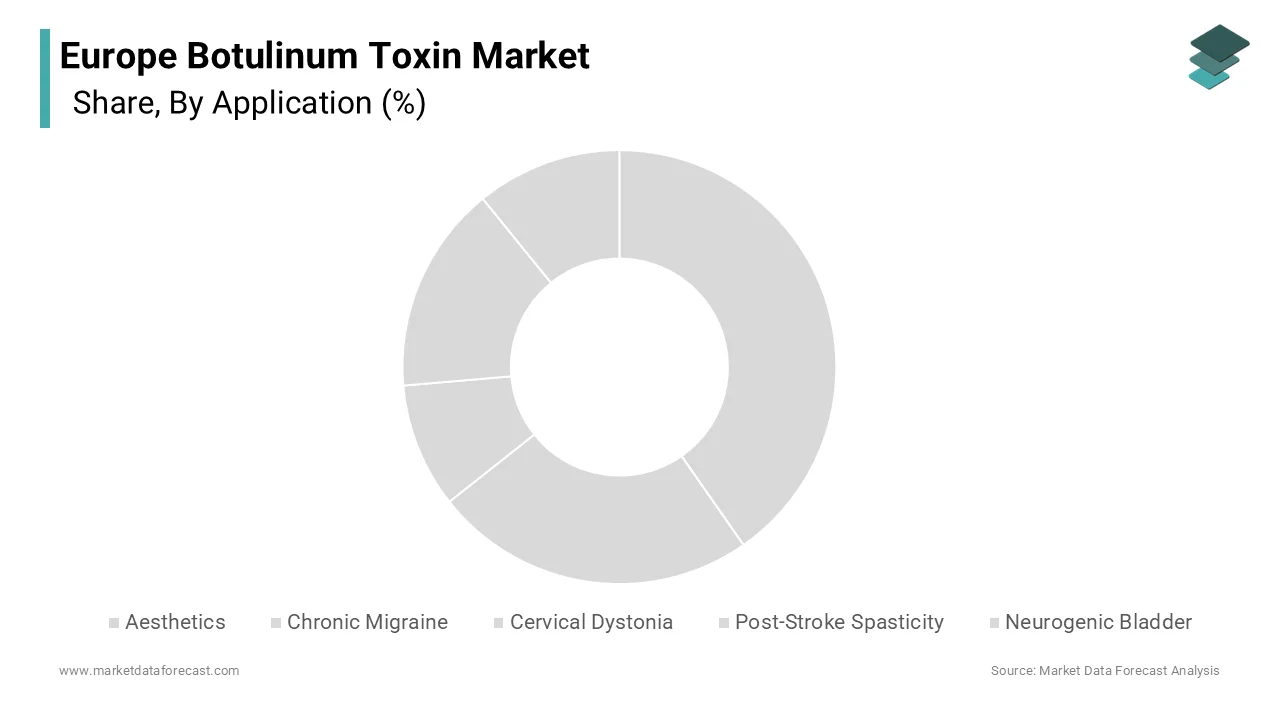
The chronic migraine segment is projected to expand at a CAGR of 9.4% during the forecast period,, od owing to the growing recognition of botulinum toxin as a first-line preventive therapy for chronic migraine, defined as headaches occurring on 15 or more days per month. The European Academy of Neurology’s 2025treatment guidelines reaffirmed onabotulinumtoxinA as a preferred option due to its favorable safety profile and reduction in medication overuse. Epidemiological data from the EU Joint Action on Neurological Disorders estimates that over 3.2 million Europeans suffer from chronic migraine,,ine with incidence rising by 1.8% annually due stress-relatedted triggers and screen exposure. In 2024, the Spanish Ministry of Health expanded coverage to include patients who fail only one prophylactic drug,g down from three previous ones, ly thereby broadening eligibility to an estimated 180000 additional individuals. Furthermorreal-worldrld studies published by the German Migraine & Headache Society demonstrated a 50% reduction in headache days for 65% of patients after six months of treatment.
By End User Insights
The specialty and Dermatology Clinics segment held a prominent share of the Europe botulinum toxin market in 2025with the professionalization and medicalization of aesthetic services across Europe. According to the source, over 80% of standalone aesthetic clinics in Germany and the Netherlands now operate under the supervision of certified medical specialists rather than aestheticians. This shift has been reinforced by national regulations; in 2023, in 2,023 Sweden mandated that all botulinum toxin injections must be prescribed and administered by licensed physicians,,ians a policy adopted in modified form by Belgium and Austria. Additionally, these clinics increasingly integrate teleconsultations onlines digital consent platforms,orm,,s and outcome tracking by enhancing patient retention and compliance. A 2025survey by the European Society of Aesthetic Medicine found that 71% of patients cited “convenience and privacy” as their primary reason for choosing specialty clinics over hospital settings.
The hospitals and clinics segment is projected to registerthea fastest CAGR of 8.7% throughout the forecast period,iod with the institutional adoption of botulinum toxin in public tertiary hospitals for indications like post stroke spasticity and neurogenic bladder. The European Stroke Organisation reported in 2025that 70% of comprehensive stroke centers across the EU now include botulinum toxin injections as part of early rehabilitation protocols within 90 days of onset. Similarly, the European Association of Urology documented that over 120 university hospitals launched dedicated bladder injection clinics in 2025to manage refractory overactive bladder. These institutional settings ensure proper patient selection, imaging guidelines dance,e and adverse event monitoring by enhancing therapeutic safety and efficacy. Furthermore, national health systems are increasingly funding these services: the UK’s National Health Service allocated 28 million pounds in 2025to expand access to neurotoxin therapy for movement disorders across 35 specialized centers. This systemic embedding within public healthcare infrastructure not only expands patient reach but also generatehigh-qualityld evidence that informs future regulatory and reimbursement decisions, making hospitals a strategically vital and rapidly expanding delivery channel.
COUNTRY LEVEL ANALYSIS
Germany Botulinum Toxin Market Analysis
Germany was the top performer of the European botulinum toxin market by occupying 19.3% the of the share in 2025owing to its dual strength in rigorous medical application and mature aesthetic consumption backed by strong regulatory enforcement and health infrastructure. Germany is home to leading headache and movement disorder centers, such as the Charité Berlin lin which treat thousands of patients annually with botulinum toxin for chronic migraine and cervical dystonia. The German Neurological Society reported that over 120000 therapeutic toxin procedures were performed in public hospitals in 2025alone. Simultaneously, aesthetic adoption is widespread, with the Federal Statistical Office estimating that 1.3 million cosmetic botulinum toxin treatments occurred in 2024, primarily in certified dermatology practices. Germany enforces strict physician-only administration laws,aws whihavehas minimized complications and built public trust.
France Botulinum Toxin Market Analysis
France botulinum toxin market growth is likely to grow with its deep-rooted aesthetic cult,ure combined with progressive reimbursement for select neurological indications. Pari,s L y, and Marseille host some of Europe’s most active cosmetic dermatology hubs, where botulinum toxin is integrated into routine wellness regimens. The French National Institute of Statistics recorded 1.1 million aesthetic toxin procedures in 2025with an average patient age of 42, reflecting early and preventive use. On the therapeutic front, France was among the first EU countries to reimburse botulinum toxin for chronic migraine in 2011 and expanded coverage in 2023 to include younger patients. The French Health Insurance Fund reported that over 45000 migraine patients received reimbursed treatment in 2025a 12% increase from 2022. Additionally, national guidelines from the Haute Autorité de Santé mandate regular training updates for injectors, ensuring high procedural standards.
United Kingdom Botulinum Toxin Market Analysis
The United Kingdom botulinum toxin market growth is ppropelled byits integrated approach,ach where botulinum toxin within both National Health Service pathways and private aesthetic networks. The NHS covers botulinum toxin for chronic migraine, in invical dystondystonia sspasmodicitywith over 38000 therapeutic procedures funded in 2025as per NHS Digital. Simultaneously, the private aesthetic sector remains r,obust with the British Association of Aesthetic Plastic Surgeons estimating 950000 cosmetic injections in 2024. A key differentiator is the UK’s leaderreal-worldal world evidence generation: the UK Botulinum Toxin Registry, launched in 20,22 now tracks over 50000 patient outcomes annually,, ly providing critical long-term safety and efficacy. In 2024, the National Institute for Health and Care Excellence updated its chronic migraine guidance to recommend treatment after just two failed preventives.
Italy Botulinum Toxin Market Analysis
Italy botulinum toxin market growth is likely to grow with its exceptionally high aesthetic procedure volume, driven by cultural emphasis on appearance,, ance strong dermatology networrks and widespread private pay adoption. Milan, Rome, and Florence host dense clusters of specialized clinics, many affiliated with fashion and media industries, which normalize early intervention. However, therapeutic use remains underdeveloped due to fragmented regional reimbursement;rsement, only 8 of 21 regions fully cover chronic migraine treatment as of 2024. Nevertheless, aesthetic demand fuels market liquidity and brand visibility with global manufacturers using Italy as a launchpad for new formulations.
Spain Botulinum Toxin Market Analysis
Spain'sin botulinum toxin market growth is driven by the therapeutic applications due to recent public health policy reforms. The Ministry of Health’s 2025National Neurology Plan allocated 18 million euros to expand access to botulinum toxin for chronic migraine and spasticity across all 17 autonomous communities. This initiative is projected to increase reimbursed therapeutic procedures by 40% by 2026. Concurrently, aesthetic use remains strong with the Spanish Society of Aesthetic Dermatology estimating 780000 cosmetic injections in 2025in Madrid, BBarcelonaa and coastal tourism hubs. Additionally, Spain serves as a gateway to Latin American markets with many European manufacturers conducting clinical trials and training programs in Barcelona.
KEY MARKET PLAYERS
Some of the companies that are playing a dominating role in the European Botulinum Toxin Market include
- AbbVie Inc. (Allergan Aesthetics)
- Ipsen S.A.
- Merz Pharma GmbH & Co. KGaA
- Galderma S.A.
- Daewoong Pharmaceutical Co., Ltd.
- Hugel, Inc.
- Medytox Inc.
- Elan Pharma (Evolus, Inc.)
- Lanzhou Institute of Biological Products
- Sandoz (a Novartis division)
- Revance Therapeutics, Inc.
- Bonti, Inc.
- BioTech Pharmacal, Inc.
- Pharmbot Research Ltd.
- Moehs Products LLC
- Aeterna Zentaris Inc.
- CellGenix GmbH
- Hoffmann-La Roche Ltd.
- Thermo Fisher Scientific Inc.
- Prollenium Medical Technologies
COMPETITIVE LANDSCAPE
Competition in thEuropeanpe botulinum toxin market is characterized by a balance between global pharmaceutical leaders and specialized European innovators, all operating within a tightly regulated environment that prioritizes patient safety and clinical evidence. While aesthetic applications drive volume, therapeutic indications increasingly shape strategic differentiation through reimbursement access and institutional adoption. The market features high barriers to entry due to stringent European Medicines Agency requirements, complex manufacturing processes, and the need for extensive post-marketing surveillance. Brand loyalty among physicians is strong, anchored in long term clinical experience and trust in product consistency. However v, newer emerging players are gaining traction by focusing on niche indications, reduced immunogenicity profiles, and digital patient support services. National regulatory variations in administration rights and reimbursement criteria further fragment competitive dynamics, compelling companies to adopt localized strategies.
TOP LEADING PLAYERS IN THE MARKET
- Allergan plc, now a wholly owned subsidiary of AbbVie, is a global pioneer in botulinum toxin innovation with its flagship Type A neurotoxin Botox. The company maintains a dominant presence in Europe through extensive clinical validation, broad therapeutic indications, and a deeply embedded aesthetic brand. In 2025Allergan reinforced its European position by securing expanded reimbursement for Botox in chronic migraine across three additional EU countries and launching a digital training platform for certified injectors in collaboration with the European Academy of Dermatology. Its long-standing investmentreal-worldorld evidence, and physician education continue to drive trust and adoption across both medical and cosmetic sectors throughout the region.
- Merz Pharma, a Germany-based specialty pharmaceutical company, is a leading European player in the botulinum toxin market with its Xeomin product. The company leverages its regional manufacturing base and strong relationships with neurological and dermatological associations to differentiate its offering. Merz strengthened its footprint by initiating a multicenter post authorization safety study across 12 EU countries to reinforce Xeomin’s immunogenicity profile and by expanding its partnership with aesthetic clinics in Southern Europe through a certified injector accreditation program.
- Galderm,sSwitzerland-headquarteredred global dermatology company, has rapidly advanced in tEuropeanope botulinum toxin market with its Type A product Azzalure, approved for both glabellar lines and therapeutic indications. The company distinguishes itself through deep integration with dermatological practice and pa patient-centricdigital ecosystem. In 2025Galderma enhanced its European presence by launching a telemedicine referral network connecting primary care physicians to certified dermatologists for toxin consultations and by introducingsustainability-focusedsed packaging initiative compliant with EU Green Deal principles. Its emphasis on medical dermatology, digital enablement, and regulatory alignment positions Galderma ashigh-growthwth innovator in the region.
TOP STRATEGIES USED BY THE KEY MARKET PARTICIPANTS
Key players in the European botulinum toxin market prioritize expanding therapeutic indications through clinical trials and regulatory submissions to secure broader reimbursement. They invest in physician education and certification programs to ensure safe and standardized injection practices across diverse clinical settings. Companies actively develop digital health tools, including teleconsultation platforms, RMs treatment tracking, ERS,s and injector locator services to enhance patient access and engagement. Strategic partnerships with dermatology, neurology,rology and urology societies reinforce scientific credibility and guideline inclusion. Additionally, firms are adopting sustainable packaging and transparent supply chain practices to align with EU environmental and pharmacovigilance requirements while differentiating their brand in a competitive landscape.
MARKET SEGMENTATION
This research report on Europe botulinum toxin market is segmented and sub-segmented into the following categories.
By Application
- Aesthetics
- Chronic Migraine
- Cervical Dystonia
- Post-Stroke Spasticity
- Neurogenic Bladder
- Others
By End User
- Specialty & Dermatology Clinics
- Hospitals & Clinics
- Ambulatory Surgical Centers
By Country
- Germany
- France
- United Kingdom
- Italy
- Spain
- Rest of Europe
Frequently Asked Questions
1. Which country dominates the Europe Botulinum Toxin Market?
Germany dominates the Europe Botulinum Toxin Market, holding the largest share in 2023 due to its advanced healthcare system, high R&D investments, and prevalence of specialty clinics. It is projected to continue leading with strong growth, contributing significantly to the region's overall expansion through both aesthetic and medical applications.
2. What are the main applications in the Europe Botulinum Toxin Market?
The Europe Botulinum Toxin Market is segmented into aesthetic (e.g., wrinkle reduction) and therapeutic (e.g., cervical dystonia, chronic migraines) applications, with aesthetics driving major revenue. Type A botulinum toxin leads due to its efficacy in minimally invasive cosmetic procedures, while therapeutic uses grow via neurology and urology advancements across Europe.
3. Who are the key players in the Europe Botulinum Toxin Market?
Key players in the Europe Botulinum Toxin Market include AbbVie Inc., Ipsen Pharma, and Merz Pharma, focusing on R&D for new therapeutic approvals and aesthetic innovations. These companies dominate through product developments like advanced Type A formulations, enhancing market share in clinics and hospitals throughout Germany, UK, and France.
4. What drives growth in the Europe Botulinum Toxin Market?
Growth in the Europe Botulinum Toxin Market is driven by rising demand for non-invasive aesthetics, an aging population, and expanded therapeutic applications like muscle spasticity treatment. Awareness campaigns, medical tourism, and less stringent approvals for devices further boost adoption in urban centers across the region.
5. What is the role of Type A in the Europe Botulinum Toxin Market?
Type A dominates the Europe Botulinum Toxin Market with over 105% revenue share in 2023, favored for its effectiveness in facial rejuvenation and therapeutic relief. It is projected to grow fastest due to innovations and high demand in dermatology clinics, outpacing Type B in both aesthetic and medical segments
6. What are the end-user segments in the Europe Botulinum Toxin Market?
End-users in the Europe Botulinum Toxin Market include specialty & dermatology clinics (largest share), hospitals & clinics, and others. Dermatology clinics lead due to high aesthetic procedure volumes, while hospitals grow via therapeutic applications in neurology and pain management across Europe.
7. What challenges face the Europe Botulinum Toxin Market?
Challenges in the Europe Botulinum Toxin Market include high procedure costs limiting accessibility and stringent regulations on approvals. Competition from alternatives and reimbursement variations also impact growth, though innovations mitigate these in key markets like Germany and France.
8 . Why is aesthetic demand high in the Europe Botulinum Toxin Market?
Aesthetic demand in the Europe Botulinum Toxin Market surges due to modern beauty standards, social media influence, and preference for minimally invasive anti-aging treatments. Younger demographics and geriatric needs for wrinkle reduction drive adoption in clinics across the UK, France, and Germany.
9. What therapeutic uses boost the Europe Botulinum Toxin Market?
Therapeutic uses like chronic migraines, cervical dystonia, and muscle spasticity boost the Europe Botulinum Toxin Market, with regulatory support accelerating clinical adoption. These applications expand beyond aesthetics, particularly in hospitals and neurology centers continent-wide.
10. What future trends shape the Europe Botulinum Toxin Market?
Future trends in the Europe Botulinum Toxin Market include R&D for new approvals, personalized treatments, and integration with wellness tourism. Rising geriatric populations and digital awareness campaigns will propel sustained expansion through 2033.
Related Reports
Access the study in MULTIPLE FORMATS
Purchase options starting from
$ 2000
Didn’t find what you’re looking for?
TALK TO OUR ANALYST TEAM
Need something within your budget?
NO WORRIES! WE GOT YOU COVERED!
Call us on: +1 888 702 9696 (U.S Toll Free)
Write to us: sales@marketdataforecast.com