- Product Description Description
- Table of Contents TOC
- List of Table & Figure LOT
- Get Free Sample PDF Sample PDF
Market Size, 2025
$3.89 BnMarket Estimate, 2026
$4.49 BnMarket Forecast, 2034
$14.27 BnCAGR, 2026–2034
15.54%Europe Facial Aesthetics Market Report Summary
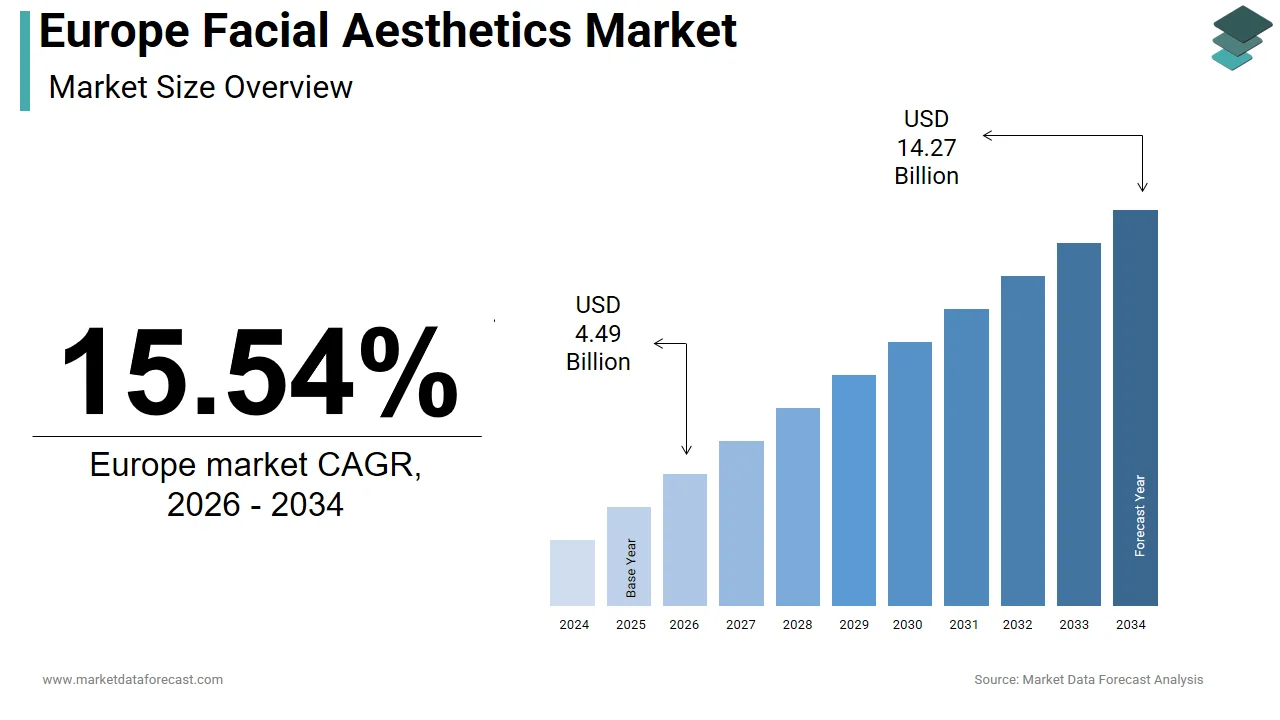
The Europe facial aesthetics market was valued at USD 3.89 billion in 2025, is anticipated to reach USD 4.49 billion in 2026, and is projected to reach USD 14.27 billion by 2034, growing at a strong CAGR of 15.54% from 2026 to 2034. Market growth is driven by rising demand for minimally invasive cosmetic procedures, increasing consumer awareness of aesthetic treatments, and growing emphasis on personal appearance and anti-aging solutions. Advancements in injectable products, laser technologies, and non-surgical procedures are improving treatment outcomes and accessibility. Expansion of specialized aesthetic clinics and rising adoption among younger demographics are further accelerating market expansion.
Key Market Trends
- Rising demand for non-invasive and minimally invasive aesthetic procedures.
- Increasing adoption of dermal fillers and neuromodulators for anti-aging treatments.
- Growing popularity of preventive aesthetics among younger consumers.
- Expansion of specialized aesthetic clinics and medical spas.
- Advancements in laser, energy-based devices, and injectable technologies.
Segmental Insights
- Based on product, the dermal fillers segment dominated the market in 2025, driven by their effectiveness in restoring facial volume, reducing wrinkles, and enhancing facial contours.
- Based on application, the facial line correction segment held the largest share in 2025, supported by high demand for wrinkle reduction treatments and growing consumer focus on youthful appearance.
Regional Insights
The Europe facial aesthetics market is witnessing rapid growth across major economies, supported by strong consumer demand, expanding aesthetic infrastructure, and cultural emphasis on beauty and skincare.
- The United Kingdom led the regional market in 2025 with 18.6% share, driven by a large number of aesthetic clinics, strong consumer demand, and advanced cosmetic treatment adoption.
- Germany followed with 16.4% share in 2025, supported by high healthcare standards and increasing acceptance of non-surgical cosmetic procedures.
- France maintains a significant position, supported by its cultural heritage of beauty and skincare, strong emphasis on natural aesthetic results, and a high concentration of luxury aesthetic clinics.
Competitive Landscape
The Europe facial aesthetics market is characterized by strong competition among global aesthetic device manufacturers, injectable product developers, and cosmetic treatment providers. Market players are focusing on innovative injectable formulations, advanced laser technologies, and personalized treatment solutions. Strategic partnerships, product approvals, and expansion of clinic networks are shaping competitive dynamics across the region.
Prominent companies operating in the Europe facial aesthetics market include Candela Syneron, Vital Esthetique, Allergan Aesthetics, Teoxane, Johnson and Johnson, Cynosure, Bausch Health Companies Inc., Evolus Inc., Revance Therapeutics Abbvie Inc, Merz Pharma, Galderma Laboratories, L.P., Sinclair Pharmaceuticals Limited, Ipsen, Fotona D.O.O, Anika Therapeutics, Inc. and Cutera, Inc.
Europe Facial Aesthetics Market Size
The size of the Europe facial aesthetics market was valued at USD 3.89 billion in 2025. This market is expected to grow at a CAGR of 15.54% from 2026 to 2034 and be worth USD 14.27 billion by 2034 from USD 4.49 billion in 2026.
Facial aesthetics is the practice of using minimally invasive or non-surgical procedures to enhance the face’s appearance by improving symmetry, skin texture, and overall balance. This includes injectable neuromodulators like botulinum toxin, dermal fillers based on hyaluronic acid or other biocompatible materials, skin resurfacing technologies such as lasers and radiofrequency devices, and advanced topical formulations. The European market is distinguished by its stringent regulatory framework under the European Union Medical Device Regulation (MDR), a highly educated consumer base, and a cultural emphasis on natural-looking results and preventative aging. According to research, driven by high demand for non-surgical rejuvenation, the European market for facial aesthetic procedures continues to expand, maintaining a high volume of both surgical and injectable treatments. As per sources, demographic aging in the European Union is creating a long-term tailwind for the anti-aging and aesthetic services market, as the proportion of older residents steadily increases. Furthermore, the implementation of stringent European regulations for medical devices has profoundly transformed the market, enforcing stricter requirements for clinical evidence and ongoing surveillance of aesthetic devices and injectable products. This confluence of an aging population, high safety standards, and a preference for subtle enhancement defines the unique character and trajectory of the European facial aesthetics landscape.
MARKET DRIVERS
Aging Population and Rising Demand for Preventive Aesthetic Treatments
The demographic shift toward an older population is a major factor propelling the growth of the Europe facial aesthetics market. A growing number of individuals seek to maintain a youthful appearance and address the visible signs of aging. The European Union’s population is aging rapidly. According to European Union projections, the population of older individuals is experiencing substantial growth, leading to a significantly higher number of citizens retired or reaching retirement age over the coming years. This demographic reality creates a vast and expanding pool of potential consumers for aesthetic services. Importantly, the trend is not limited to corrective procedures for the elderly but has shifted toward preventative treatments among younger adults in their thirties and forties who wish to delay the onset of wrinkles and volume loss. Research into aesthetic procedures indicates that individuals in their prime adulthood are increasingly seeking, and constitute a large portion of, new consumers for wrinkle-reduction injections in Western Europe. This proactive approach to aging, combined with increased disposable income and a greater social acceptance of aesthetic medicine, ensures a steady and growing demand for safe, effective, and minimally invasive facial rejuvenation solutions across the continent.
Increasing Social Acceptance and Destigmatization of Aesthetic Procedures
A powerful cultural shift in the perception of aesthetic medicine is a key commercial engine for the Europe facial aesthetics market. These procedures have moved from a taboo subject to a mainstream component of personal wellness and self-care. In the past, facial aesthetics were often associated with vanity or reserved for celebrities, but today they are widely discussed on social media, featured in mainstream media, and normalized within peer groups. Consumers are increasingly adopting aesthetic treatments as a mainstream component of proactive personal wellness, treating them as a form of self-care akin to fitness or nutrition. This destigmatization has been particularly impactful for men, whose share of the market has grown significantly. There is a rising trend in male patients seeking non-surgical procedures to enhance appearance and self-confidence. The rise of “lunchtime procedures” that require minimal downtime has further integrated these treatments into busy lifestyles. This broad-based social acceptance has dramatically expanded the eligible patient pool, transforming the market from a niche luxury into a widely accessible wellness service and driving consistent procedural growth across all age and gender demographics.
MARKET RESTRAINTS
Stringent Regulatory Oversight Under the EU Medical Device Regulation (MDR)
The complex and demanding regulatory environment created by the European Union Medical Device Regulation (MDR) is a significant restraint on the Europe Facial Aesthetics Market. Following its full implementation in early 2021, the new European regulatory framework for medical devices has established higher, more proactive standards for clinical evaluation, product risk categorization, and ongoing performance monitoring compared to the previous directive. Many aesthetic products, including certain dermal fillers and energy-based devices, have been reclassified as higher risk, requiring extensive and costly clinical data to maintain their CE Mark. The increased stringency of the European regulation has created a severe shortage of certified inspection bodies, causing significant bottlenecks for manufacturers. Consequently, numerous manufacturers have opted to discontinue or temporarily remove established medical products from the market rather than navigate the complex and costly recertification process. This regulatory friction increases the cost and time required for manufacturers to bring innovative products to market, potentially stifling technological advancement. For clinics and practitioners, it creates uncertainty about the long-term availability of their preferred products. This challenging compliance landscape, while intended to enhance patient safety, poses a significant operational and strategic burden that can slow market growth and limit patient choice in the short to medium term.
Shortage of Qualified and Certified Aesthetic Practitioners
A persistent shortage of medical professionals who are both qualified and certified to perform advanced facial aesthetic procedures causes a critical human capital constraint for the Europe facial aesthetics market. While demand for treatments is surging, the supply of trained practitioners, particularly dermatologists, plastic surgeons, and certified nurse injectors, has not kept pace. According to European dermatological professional bodies, there is a substantial shortage of certified dermatologists across the EU to meet the growing demand for dermatological care and cosmetic procedures. This gap is most acute in Eastern and Southern Europe but is increasingly evident even in high-income nations. The consequence is a two-tiered system. In some regions, patients face long waiting lists, while in others, the market is flooded with unqualified or undertrained individuals operating in unregulated settings, posing significant safety risks. This workforce shortage not only limits the market’s capacity to grow but also undermines the overall safety and quality of care, creating a major barrier to the sustainable and ethical expansion of the facial aesthetics sector in Europe.
MARKET OPPORTUNITIES
Expansion of Personalized and Data-Driven Aesthetic Treatments
The integration of personalized medicine and digital health technologies to create highly tailored treatment plans is a major opportunity for the Europe facial aesthetics market. The rise of 3D facial imaging, AI-powered skin analysis, and genetic testing is enabling practitioners to move beyond a one-size-fits-all approach to a precision model of care. These technologies can analyze a patient’s unique skin structure, aging pattern, and even genetic predisposition to tailor the type, dosage, and placement of injectables or the settings of energy-based devices for optimal results. According to sources, modern aesthetic clinics are rapidly expanding the adoption of artificial intelligence for skin diagnostics, with a significant increase in the use of AI-driven imaging tools for personalized patient care. This data-driven approach not only enhances outcomes and patient satisfaction but also provides a compelling scientific narrative that aligns with the European consumer’s preference for evidence-based, personalized health solutions. The shift toward data-informed aesthetic medicine is unlocking unprecedented opportunities for innovation and high-end, customized patient experiences.
Growth of Men’s Aesthetic Services and Gender Inclusive Offerings
The rapid expansion of the male aesthetic sector offers a transformative potential for sustained growth of the Europe facial aesthetics market. Historically a female-dominated field, the sector is now experiencing a surge in demand from men who are increasingly investing in their appearance for both personal and professional reasons. According to research, the demand for facial rejuvenation among men in the European Union is surging as cosmetic procedures become more mainstream. This trend is driven by a desire for subtle, non-surgical enhancements, with botulinum toxin injections for treating forehead wrinkles and hyaluronic acid fillers for enhancing jawline structure being the most favored treatments. This shift is driven by changing social norms, greater workplace competition, and targeted marketing from clinics. To capitalize on this trend, leading providers are developing male-specific protocols that account for differences in facial anatomy, skin thickness, and aesthetic goals. This focus on gender inclusive and specialized services not only taps into a vast, previously underserved market but also diversifies revenue streams and builds long-term patient relationships, making it a key strategic growth vector for the European facial aesthetics industry.
MARKET CHALLENGES
Long-Term Safety and Efficacy Data Gaps for Newer Products
The lack of long-term, independent clinical data on the safety and efficacy of many newer aesthetic products and technologies is a persistent scientific challenge to the Europe Facial Aesthetics Market. While the EU MDR demands robust clinical evidence, much of the available data comes from manufacturer-sponsored trials with relatively short follow-up periods. For novel filler materials, next-generation neuromodulators, or combination therapies, the long-term effects, such as tissue response over a decade or the impact of repeated treatments, are often unknown. Scholarly assessments in the Journal of the European Academy of Dermatology and Venereology (JEADV) indicate that many recently approved skin treatments currently lack extensive, peer-reviewed, long-term evidence. This knowledge deficit creates uncertainty for both practitioners and patients, potentially slowing adoption and fueling skepticism. It also complicates the management of rare but serious complications that may only manifest years after treatment. The market will struggle to achieve widespread trust and maintain high patient safety standards until a robust, independent evidence base is established.
Proliferation of Unregulated and Unsafe Practices in the Gray Market
The widespread proliferation of unregulated practices within the gray landscape poses a significant barrier to the growth of the European facial aesthetics market. The high demand for affordable treatments has created a thriving underground economy of non-medical practitioners, such as beauticians, dentists, or even untrained individuals, offering injectables and laser treatments in non-clinical settings like homes or hotels. Europol reports a growing, widespread illicit trade in counterfeit and unauthorized aesthetic treatments, such as dermal fillers and botulinum toxin, across the European Union, with criminals increasingly using online platforms to sell these hazardous substances. These unregulated actors often use substandard or fake products and lack the medical training to manage complications, leading to a rising number of adverse events, including infections, disfigurement, and even blindness. This not only endangers public health but also damages the reputation of the legitimate aesthetic medicine profession. Despite efforts by medical associations and regulators, enforcement remains difficult, making this unsafe gray market a persistent and dangerous challenge that undermines the integrity and safety of the entire European facial aesthetics sector.
REPORT COVERAGE
| REPORT METRIC | DETAILS |
| Market Size Available | 2025 to 2034 |
| Base Year | 2025 |
| Forecast Period | 2026 to 2034 |
| Segments Covered | ByProduct, Application, End-user, and Country. |
| Various Analyses Covered | Global, Regional, and Country-Level Analysis, Segment-Level Analysis, Drivers, Restraints, Opportunities, Challenges; PESTLE Analysis; Porter’s Five Forces Analysis, Competitive Landscape, Analyst Overview of Investment Opportunities |
| Countries Covered | UK, France, Spain, Germany, Italy, Russia, Sweden, Denmark, Switzerland, Netherlands, Turkey, Czech Republic, and the Rest of Europe. |
| Market Leaders Profiled | Candela Syneron, Vital Esthetique, Allergan Aesthetics, Teoxane, Johnson and Johnson, Cynosure, Bausch Health Companies Inc., Evolus Inc., Revance Therapeutics Abbvie Inc, Merz Pharma, Galderma Laboratories, L.P., Sinclair Pharmaceuticals Limited, Ipsen, Fotona D.O.O, Anika Therapeutics, Inc. and Cutera, Inc. |
SEGMENTAL ANALYSIS
By Product Insights
The dermal fillers held the majority share of the Europe facial aesthetics market in 2025. The prominence oftheire dermal fillers segment is driven by its versatility in addressing multiple signs of aging, the natural-looking results they provide, and the growing trend toward subtle, preventative rejuvenation. These fillers dominate due to its exceptional ability to treat a wide spectrum of age-related concerns with a single product category. Hyaluronic acid-based fillers can be used to restore volume in the cheeks and temples, smooth nasolabial folds, enhance lip fullness, define the jawline, and even improve the appearance of under-eye hollows. This multi-functional utility makes them a cornerstone of most aesthetic treatment plans. Data indicates that dermal fillers dominate the European facial aesthetics market, holding a leading position in non-surgical procedures due to high patient demand for rejuvenation and volume enhancement. The development of a broad range of filler formulations, with varying densities, viscosities, and particle sizes, allows practitioners to precisely tailor the product to the specific anatomical area and desired outcome. This flexibility, combined with the immediate and long-lasting results, provides a powerful value proposition that appeals to a broad patient demographic, from those seeking minor corrections to those requiring comprehensive facial rejuvenation, thereby cementing dermal fillers as the market’s leading product segment. The leadership of dermal fillers is further reinforced by the European consumer’s strong preference for natural-looking outcomes and the safety net of reversibility. Unlike surgical facelifts, which can appear dramatic, modern filler techniques focus on subtle restoration of lost volume, aligning with the cultural aesthetic of “looking refreshed, not done.” Moreover, the vast majority of dermal fillers on the European market are based on hyaluronic acid, a substance that occurs naturally in the body and can be dissolved with an enzyme called hyaluronidase if the patient is dissatisfied with the result or experiences a complication. Surveys of European beauty consumers show a growing preference for dermal fillers that offer subtle, soft, and reversible enhancements, with patients valuing natural aesthetics and the ability to reverse results over dramatic, permanent changes. This combination of aesthetic subtlety and procedural safety builds immense trust and confidence among consumers, making dermal fillers the go-to choice for both first-time and experienced aesthetic patients across the continent.
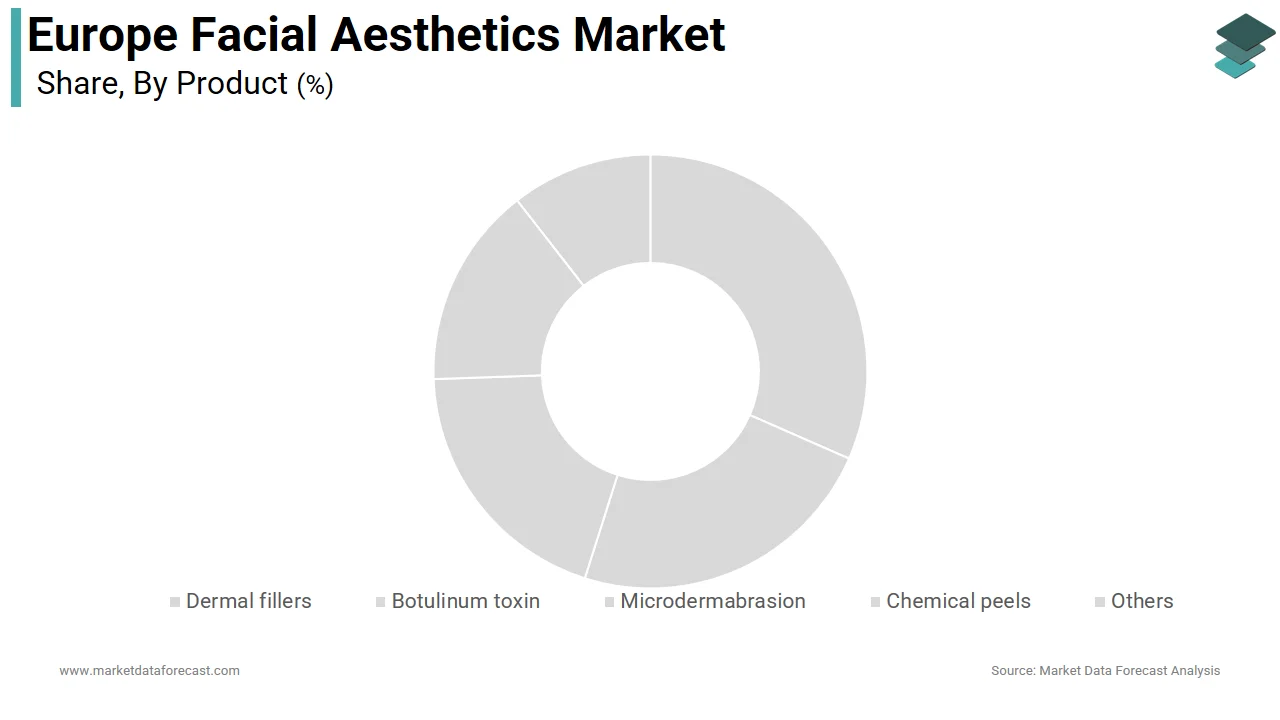
The botulinum toxin segment is predicted to witness the highest CAGR of 9.84% from 2026 to 2034 due to its evolution from a purely cosmetic treatment into a mainstream, preventative wellness procedure with expanding therapeutic applications. An added boost for this segment is the widespread adoption of “preventative Botox” among younger adults in their late twenties and thirties who seek to stop dynamic wrinkles, like frown lines and crow’s feet, from becoming permanent. A growing number of younger adults in Europe are initiating preventative botulinum toxin treatments, driving a shift towards younger demographics in aesthetic clinics. Beyond cosmetics, its use for medical conditions like chronic migraine, bruxism (teeth grinding), and hyperhidrosis (excessive sweating) has created a large, stable patient base that often transitions to cosmetic use. This dual role as both a medical and aesthetic treatment broadens its appeal and ensures consistent demand. The procedure’s status as a quick, low-downtime “lunchtime” treatment further enhances its accessibility, making it the entry point for many into the world of aesthetic medicine and fueling its exceptional growth trajectory. An additional driver for botulinum toxin’s rapid growth is the relentless innovation in its formulations and delivery methods, which are expanding its utility and improving the patient experience. Newer generations of botulinum toxin products offer more precise diffusion profiles, allowing for targeted treatment of fine areas like the lips or neck bands with reduced risk of affecting surrounding muscles. Furthermore, research into novel delivery systems, such as topical or needle-free applications, is ongoing, promising to make the treatment even more accessible and less intimidating for needle-averse patients. The refinement of injection techniques and the rise of validated, patient-reported outcome measures have driven higher overall satisfaction rates with aesthetic toxin treatments. Manufacturers are expanding the market by continuously improving product safety, efficacy, and comfort. These enhancements lower entry barriers and drive repeat usage, fueling a cycle of innovation and adoption.
By Application Insights
The facial line correction treatment segment dominated the Europe Facial Aesthetics Market in 2025. The dominance of the facial line correction treatment segment is attributed to the universal nature of dynamic wrinkles as a primary sign of aging and the high efficacy of available treatments. Facial line correction holds the largest market share because the formation of dynamic wrinkles, such as glabellar lines (frown lines), forehead lines, and crow’s feet, is a near-universal consequence of facial expression and aging across all demographics. These lines are often the first visible sign of aging that prompts individuals to seek aesthetic intervention. The market is dominated by highly effective, minimally invasive solutions, primarily botulinum toxin injections, which work by temporarily relaxing the underlying muscles to smooth the overlying skin. In the EU, non-surgical treatments aimed at reducing facial lines remain the most popular choice for facial rejuvenation, dominating the aesthetic market, according to industry trends. The treatment’s high success rate, predictable outcomes, and minimal downtime have made it the most popular entry point into aesthetic medicine for millions of Europeans. Its status as a foundational, high-volume procedure ensures its position as the dominant application segment in the market. A further pillar of the segment’s dominance is the strong cultural preference in Europe for a fresh, relaxed, and approachable facial appearance, which directly aligns with the results of facial line correction. In many European professional and social contexts, a perpetually furrowed brow or deep frown lines can be perceived as stern, stressed, or unfriendly. Smoothing these lines with botulinum toxin creates a more open, calm, and youthful expression that is highly valued. A growing number of patients in Europe are seeking treatments for frown lines (glabellar lines) specifically to achieve a more relaxed, approachable, and rejuvenated appearance, rather than solely for anti-aging purposes. This social and psychological benefit, combined with the treatment’s effectiveness, creates a powerful and consistent demand that transcends simple vanity, making facial line correction a deeply embedded and essential service in the European aesthetic landscape.
The restoration of volume or fullness application segment is estimated to register the fastest CAGR of 10.21% during the forecast period, owing to a fundamental shift in aesthetic philosophy from simply removing wrinkles to holistically restoring the youthful contours of the face. Modern understanding recognizes that aging is primarily caused by the loss of fat, bone, and collagen, leading to a deflated, hollow appearance that cannot be addressed by wrinkle relaxers alone. This has led to the rise of the “liquid facelift,” where dermal fillers are strategically placed to rebuild the cheekbones, temples, and jawline, creating a lifted and refreshed look from within. The European aesthetic market is experiencing a significant surge in demand for non-surgical, volumizing facial procedures, which are increasingly outpacing other aesthetic applications. This approach resonates with a more sophisticated patient base that seeks natural, long-lasting results that address the root cause of aging, driving the rapid adoption of this advanced technique across the continent. One more reason for growth here is the continuous advancement in dermal filler technology, specifically the development of long-lasting, highly cohesive, and structural products designed for deep volumizing. Newer hyaluronic acid fillers and alternative materials like calcium hydroxylapatite offer greater lifting capacity and durability, with effects lasting up to two years or more. These products are engineered to integrate seamlessly with the tissue and provide a stable scaffold for the overlying skin. Recent clinical research indicates that modern, advanced volumizers provide superior patient satisfaction for midface rejuvenation compared to traditional, older-generation dermal fillers. This technological progress has given practitioners the confidence to perform more ambitious and effective volume restoration, while assuring patients of a significant return on their investment. This synergy of scientific innovation and aesthetic demand is the engine behind the segment’s status as the market’s fastest-growing application area.
COUNTRY-LEVEL ANALYSIS
United Kingdom Facial Aesthetics Market Analysis
The United Kingdom led the Europe facial aesthetics market by holding a 18.6% share in 2025. Its leading position is supported by a highly mature and sophisticated aesthetic industry, a large and affluent consumer base, and a culture that is highly receptive to non-surgical beauty treatments. The UK has one of the highest per capita rates of aesthetic procedures in Europe, with London serving as a global hub for cosmetic innovation and celebrity-driven trends. According to the British Association of Aesthetic Plastic Surgeons (BAAPS) 2024 audit, the United Kingdom experienced a notable surge in cosmetic procedures, driven by increased demand for facial rejuvenation and body contouring, with non-surgical treatments, particularly anti-wrinkle injections and fillers, continuing to grow in popularity among both women and men. The market is characterized by a dense network of highly trained medical practitioners and a strong presence of global aesthetic brands. Furthermore, the National Health Service’s limited coverage for cosmetic procedures has fostered a robust private market where patients are willing to invest significantly in their appearance. This combination of cultural acceptance, economic affluence, and professional expertise solidifies the UK’s undisputed leadership in the European facial aesthetics landscape.
Germany Facial Aesthetics Market Analysis
Germany was the next prominent country in the Europe facial aesthetics market by capturing a 16.4% share in 2025. The growth of the German market is propelled by a large population, high disposable income, and a growing demand for natural-looking, preventative treatments among its aging demographic. Germany is known for its rigorous standards and a patient base that is highly informed and values scientific evidence and safety. According to the German Society for Aesthetic Botulinum Toxin Therapy (DGBT), the number of certified medical professionals offering aesthetic procedures in Germany grew significantly during 2024, highlighting a trend toward enhanced specialization and professionalization in the field. The market is also seeing a significant rise in male patients, driven by changing social norms and workplace competition. While historically more conservative than some of its neighbors, Germany’s aesthetic market is now expanding rapidly, particularly in urban centers like Berlin and Munich, where clinics are adopting the latest technologies and techniques. This blend of cautious consumerism and steady, science-driven growth ensures Germany’s prominent role in the regional market.
France Facial Aesthetics Market Analysis
France holds a noteworthy share of the Europe facial aesthetics market due to a deep cultural heritage of beauty and skincare, a strong emphasis on natural and subtle results, and a high concentration of luxury aesthetic clinics. The French approach to aesthetics is famously understated, favoring “le look frais” (the fresh look) over dramatic transformations. According to research, non-surgical facial procedures continue to rise, with a strong preference for injectables that provide subtle, natural-looking enhancements and volume restoration. Paris remains a global capital of beauty, home to prestigious clinics and the headquarters of major cosmetic companies, which drives innovation and sets trends across Europe. The market is also supported by a well-established network of dermatologists and plastic surgeons who are leaders in the field. This unique combination of cultural philosophy, luxury positioning, and medical excellence defines France’s significant and influential role in the regional market.
Italy Facial Aesthetics Market Analysis
Italy experienced a consistent growth in the European facial aesthetics market owing to a passionate cultural focus on personal appearance, a large aging population, and a thriving medical tourism sector centered in cities like Milan and Rome. Italians have a long-standing tradition of investing in their looks, and this extends to a high uptake of non-surgical aesthetic procedures. According to studies, the market for facial fillers and botulinum toxin is experiencing significant, sustained growth driven by rising domestic and international demand for high-quality, non-surgical, and quick-recovery, non-invasive procedures. The country boasts a dense network of skilled practitioners and is known for its expertise in advanced injection techniques. Furthermore, Italy’s strong fashion and design industries create a constant demand for a polished, youthful appearance. This confluence of cultural values, demographic trends, and professional skill makes Italy a key and vibrant market for facial aesthetics in Europe.
Spain Facial Aesthetics Market Analysis
Spain is anticipated to expand in the Europe facial aesthetics market over the forecast period due to a warm climate that encourages outdoor lifestyles and a consequent high awareness of sun-induced skin aging, coupled with a growing middle class that is increasingly investing in personal care. The Spanish market has seen rapid growth in recent years, particularly in coastal cities and Madrid, where clinics are modernizing and adopting international best practices. According to the Spanish Society of Aesthetic Medicine, the growing demand for and regulation of non-surgical procedures in Spain is accelerating the professionalization of the sector, with a higher number of certified practitioners entering the field to meet the need for safe, regulated treatments. Spain is also becoming a destination for medical tourism from Northern Europe, attracted by the combination of high-quality services and lower prices. The market is heavily focused on anti-aging treatments, with a strong demand for botulinum toxin and dermal fillers to combat photoaging. This dynamic mix of local demand, professional development, and inbound medical tourism ensures Spain’s status as a fast-growing and important market in the European landscape.
COMPETITIVE LANDSCAPE
The competitive landscape of the Europe facial aesthetics market is dominated by a few large multinational corporations that compete primarily on brand reputation, clinical evidence, and physician relationships rather than price. The market features high barriers to entry due to the stringent requirements of the EU Medical Device Regulation, which demands extensive clinical data and post-market surveillance for all injectable products. Competition is intense among the leading players, who continuously launch new formulations and delivery systems to differentiate their offerings. A key differentiator is the depth of medical education and training provided to practitioners, as successful outcomes are highly dependent on injection skill. While the market is mature, it remains dynamic, with companies vying for position through scientific publications, participation in clinical guidelines, and direct engagement with both physicians and consumers to influence the standard of care across diverse national healthcare systems.
KEY MARKET PLAYERS
The leading companies operating in the Europe facial aesthetics market include:
- Candela Syneron
- Vital Esthetique
- Allergan Aesthetics
- Teoxane
- Johnson and Johnson
- Cynosure
- Bausch Health Companies Inc.
- Evolus Inc.
- Revance Therapeutics AbbVie Inc.
- Merz Pharma
- Galderma Laboratories, L.P.
- Sinclair Pharmaceuticals Limited
- Ipsen
- Fotona D.O.O
- Anika Therapeutics, Inc.
- Cutera, Inc.
TOP PLAYERS IN THE MARKET
- Allergan Aesthetics is a global leader in medical aesthetics with a dominant presence in the European facial aesthetics market through its flagship Botox Cosmetic and Juvéderm dermal filler portfolios. The company is renowned for its extensive clinical data, high product quality, and strong brand recognition among both practitioners and consumers. Allergan has strengthened its European position by investing heavily in medical education, offering comprehensive training programs for physicians on advanced injection techniques and facial anatomy. The company also maintains a robust patient support program and a strong digital presence to drive consumer awareness. Its deep integration into the professional aesthetic community, coupled with continuous innovation in its product line, ensures its continued leadership in the region’s highly competitive landscape.
- Galderma, a Swiss dermatology-focused company, is a cornerstone of the European facial aesthetics market with its Restylane family of hyaluronic acid fillers and Azzalure botulinum toxin. The company’s strength lies in its deep scientific heritage in dermatology and its commitment to developing products that deliver natural-looking results. Galderma has reinforced its market position by expanding its portfolio to include innovative technologies like its proprietary NASHA and OBT gel platforms, which offer tailored properties for different facial areas. The company also invests significantly in clinical research and collaborates with leading European aesthetic societies to establish best practice guidelines, ensuring its products are at the forefront of evidence-based aesthetic medicine across the continent.
- Merz Pharma, a German specialty pharmaceutical company, is a major force in the European facial aesthetics market with its Belotero range of dermal fillers and Xeomin botulinum toxin. The company leverages its European roots to build strong relationships with local healthcare professionals and regulatory bodies. Merz has strategically strengthened its position by focusing on precision and natural outcomes, particularly with its Belotero Balance and Volume products designed for fine lines and deep volumizing, respectively. The company also provides extensive hands-on training through its Merz Institute of Aesthetic Medicine, fostering a loyal network of skilled practitioners. This focus on education, science, and subtle aesthetics aligns perfectly with European consumer preferences, solidifying Merz’s role as a key innovator in the regional market.
TOP STRATEGIES USED BY THE KEY MARKET PARTICIPANTS
Key players in the Europe facial aesthetics market employ four core strategies to maintain their competitive edge. First, they invest heavily in comprehensive medical education and hands-on training programs to certify physicians on advanced injection techniques and product-specific protocols. Second, they generate robust clinical evidence through long-term studies and peer-reviewed publications to validate the safety and efficacy of their products under the stringent EU MDR framework. Third, they engage in strategic partnerships with leading aesthetic societies to develop and promote standardized treatment guidelines that enhance patient outcomes. Fourth, they leverage digital marketing and patient engagement platforms to build brand awareness and drive informed consumer demand for their specific products, creating a direct link between patient preference and physician choice.
MARKET SEGMENTATION
This research report on the Europe facial aesthetics market has been segmented and sub-segmented into the following categories.
By Product
- Dermal fillers
- Botulinum toxin
- Microdermabrasion
- Chemical peels
- Others
By Application
- Facial Line Correction Treatment
- Scar Treatment
- Lip Enhancement
- Restoration Of Volume or Fullness
- Others
By End User
- Specialty and Dermatology Clinics
- Hospitals
- Others
By Country
- UK
- France
- Spain
- Germany
- Italy
- Russia
- Sweden
- Denmark
- Switzerland
- Netherlands
- Turkey
- Czech Republic
- Rest of Europe