- Product Description Description
- Table of Contents TOC
- List of Table & Figure LOT
- Get Free Sample PDF Sample PDF
Market Size, 2025
$143 BnMarket Estimate, 2026
$146 BnMarket Forecast, 2034
$176 BnCAGR, 2026–2034
2.37%Europe Carbonated Soft Drinks Market Report Summary
The Europe carbonated soft drinks market was valued at USD 143.09 billion in 2025, is estimated to reach USD 146.48 billion in 2026, and is projected to reach USD 176.67 billion by 2034, growing at a CAGR of 2.37% during the forecast period. Market growth is driven by steady consumer demand, strong brand presence, and continuous product innovation in flavors and formulations. The increasing shift toward low sugar and diet beverages, along with evolving consumer preferences for healthier alternatives, is shaping market dynamics. In addition, expanding retail distribution and marketing strategies are supporting sustained growth across Europe.
Key Market Trends
- Rising demand for low sugar and diet beverages is driving market growth.
- Increasing innovation in flavors and formulations is boosting consumer interest.
- Growing preference for functional and healthier beverage options is influencing product development.
- Expansion of retail and distribution channels is improving product availability.
- Strong brand positioning and marketing strategies are supporting market expansion.
Segmental Insights
- Based on type, the diet segment was the largest and held 43.2% of the Europe carbonated soft drinks market share in 2025. This dominance is attributed to increasing consumer awareness of sugar reduction and health conscious consumption.
- Based on flavour, the cola segment accounted for 38.25% of the Europe carbonated soft drinks market share in 2025. The segment’s growth is driven by strong brand loyalty and widespread consumer preference.
- Based on distribution channel, the supermarkets and hypermarkets segment dominated with 55.4% of the Europe carbonated soft drinks market share in 2025, supported by extensive product availability and strong retail presence.
Regional Insights
- The Europe carbonated soft drinks market is experiencing steady growth across key countries, supported by consistent demand and product innovation.
- Germany was the largest contributor, accounting for 18.4% of the Europe carbonated soft drinks market share in 2025, driven by high consumption levels, strong retail infrastructure, and presence of major beverage brands.
Competitive Landscape
The Europe carbonated soft drinks market is highly competitive, with key players focusing on product innovation, healthier formulations, and expansion of distribution networks to strengthen their market position. Companies are investing in low sugar variants, new flavor launches, and marketing strategies. Prominent players in the Europe carbonated soft drinks market include Monster Beverage Corp, Britvic PLC, Parle Agro, PepsiCo Inc, Coca Cola Company, Cott Corporation, Dohler Group, Kraft Foods, and Dr Pepper Snapple Group Inc.
Europe Carbonated Soft Drinks Market Size
The Europe carbonated soft drinks market size was worth USD 143.09 billion in 2025. The global market is anticipated to grow at a CAGR of 2.37% from 2026 to 2034 and be worth USD 176.67 billion by 2034 from USD 146.48 billion in 2026.
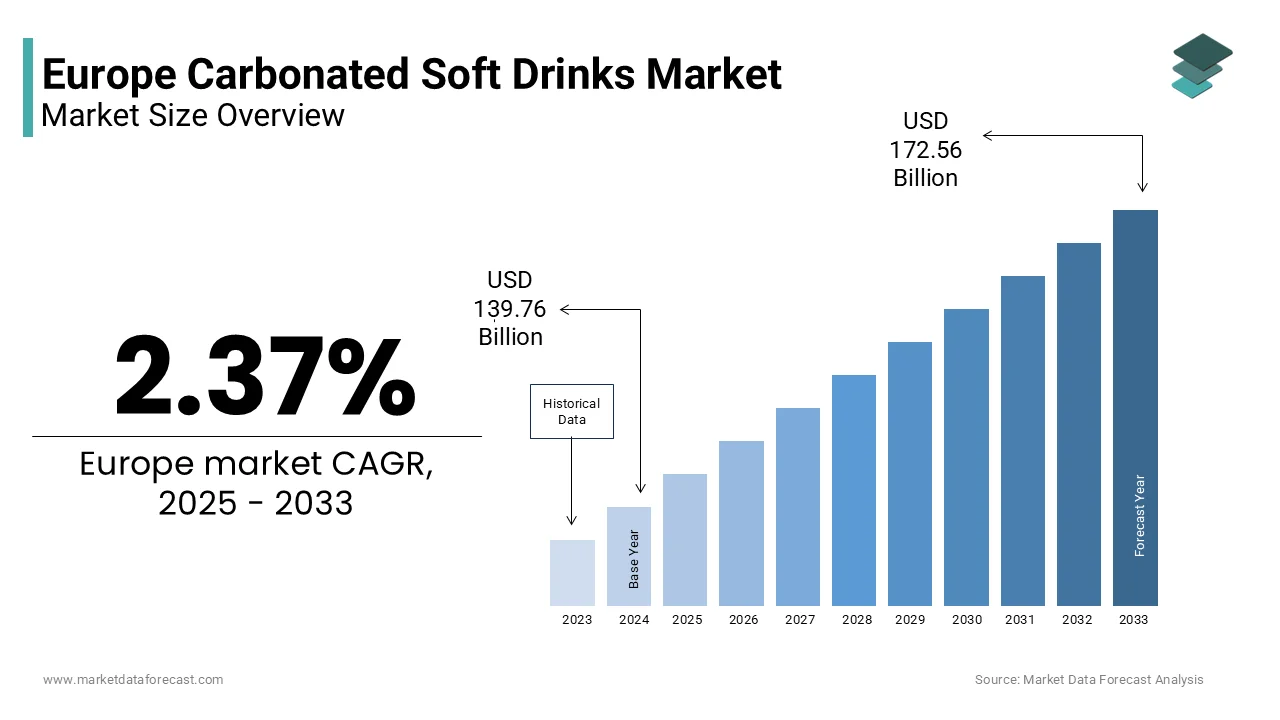
The carbonated soft drinks are beverages that serve as a staple in contemporary consumer diets. These drinks are characterized by their carbonation process, which infuses carbon dioxide into water to create fizz and often include sweeteners flavorings and acids. As per Eurostat data, the population of the European Union reached approximately 447 million people in 2023, providing a substantial consumer base for beverage manufacturers. Furthermore, the region boasts high internet penetration rates with over 90% of households having access to broadband as stated by the International Telecommunication Union. This digital connectivity facilitates robust e commerce platforms for beverage delivery and direct to consumer sales models. The hospitality sector also plays a pivotal role with the number of food service establishments growing steadily across Southern and Western Europe. According to the European Commission the tourism industry contributed significantly to the GDP of member states which in turn drives demand for refreshments in hotels restaurants and cafes.
MARKET DRIVERS
Rising Preference for Premium and Functional Variants Drives Volume Growth
The consumer inclination towards premiumization and functional benefits is driving the growth of Europe carbonated soft drinks market. Modern European shoppers are increasingly scrutinizing ingredient lists and seeking beverages that offer more than just hydration or taste. They demand products that align with health-conscious lifestyles, while still providing the sensory enjoyment associated with carbonated drinks. The introduction of sparkling waters with natural fruit essences and no added sugar has captured significant shelf space in retail outlets. Additionally, the rise of functional sodas that claim to aid digestion or boost energy levels has resonated with younger demographics.
Expansion of On Trade Channels Post Pandemic Recovery Boosts Sales
The gradual normalization of social activities and the reopening of hospitality venues is also enhancing the growth of Europe carbonated soft drinks market. After years of restrictions the food service industry including bars restaurants and cinemas has seen a robust rebound in footfall, across Europe. This resurgence directly translates to higher consumption of packaged beverages in social settings, where carbonated drinks are popular choices for mixing or standalone refreshment. According to the study, the number of dining out occasions in 2024 increased by 15% compared to 2022 levels. This recovery is particularly strong in tourist heavy regions, such as Spain, Italy, and Greece, where outdoor seating and casual dining are cultural norms. The return of large-scale events music festivals and sports competitions has further amplified demand as these venues rely heavily on beverage sales for revenue. Manufacturers have responded by forging stronger partnerships with distributors and offering exclusive packaging sizes tailored for hospitality use. The enhanced visibility of brands in these high traffic environments reinforces consumer loyalty and stimulates impulse purchases.
MARKET RESTRAINTS
Stringent Regulatory Frameworks on Sugar Content Limit Product Formulations
The governments have implemented rigorous policies aimed at reducing sugar consumption to combat rising obesity and diabetes rates is declining the growth of Europe carbonated soft drinks market. These regulatory measures, include sugar taxes mandatory labeling requirements and restrictions on advertising to children. Such interventions force manufacturers to reformulate their products often resulting in altered taste profiles that may not appeal to all consumers. As per the World Health Organization, over 30 European countries have introduced some form of fiscal measure on sugary drinks, since 2010. For instance, the United Kingdom’s Soft Drinks Industry Levy led to a 35% reduction in sugar content in eligible drinks within the first two years of implementation. Similarly, France and Portugal have enacted strict taxes that increase production costs and reduce profit margins for traditional high sugar variants. These policies compel companies to invest in alternative sweeteners, which can be more expensive and sometimes face consumer awareness regarding safety and aftertaste. The European Food Safety Authority has also tightened guidelines on health claims making it difficult for brands to market certain benefits without extensive scientific backing.
Growing Health Consciousness Leads to Substitution with Non Carbonated Alternatives
An increasing awareness of health and wellness among European consumers is driving a shift away from carbonated soft drinks towards healthier alternatives, such as bottled water herbal teas and fresh juices. Many individuals perceive carbonated beverages as unhealthy due to their association with high sugar content and artificial additives even, when low sugar options are available. This perception is reinforced by public health campaigns and media coverage highlighting the negative effects of excessive soda consumption on dental health and bone density. In Scandinavia and the Netherlands, where health consciousness is particularly high the substitution effect is more pronounced. Consumers are opting for sparkling water with natural flavors as a direct replacement for traditional sodas. This trend is supported by the widespread availability of premium water brands in retail stores and vending machines. Additionally, the rise of functional beverages such as kombucha and probiotic drinks offers consumers fizzy alternatives that are perceived as beneficial for gut health. The continuous education of consumers regarding nutrition and lifestyle choices further accelerates this transition.
MARKET OPPORTUNITIES
Innovation in Sustainable Packaging Creates New Revenue Streams
The urgent need for environmental sustainability has opened avenues for innovation in packaging, which is creating new opportunities for the growth of Europe carbonated soft drinks market. European consumers are increasingly demanding eco-friendly solutions and are willing to support brands that demonstrate commitment to reducing plastic waste. This shift has led to the adoption of recycled polyethylene terephthalate bottles aluminum cans and biodegradable materials. Companies are investing in advanced recycling technologies and designing lightweight bottles to minimize material usage. For example, Coca Cola Hellenic Bottling Company announced in March 2024 that it would transition to 100% recycled plastic bottles in several European markets. This initiative not only reduces environmental impact but also enhances brand image and customer loyalty. Furthermore, the introduction of refillable systems and deposit return schemes in countries like Germany and Norway provides additional opportunities for engagement. These systems encourage consumers to return empty containers for recycling thereby creating a circular economy model. Brands that effectively communicate their sustainability efforts through transparent labeling and marketing campaigns can differentiate themselves in a competitive landscape. The alignment with European Green Deal objectives also positions companies favorably for future regulatory compliance and potential incentives.
Development of Niche and Localized Flavor Profiles Expands Consumer Base
The diversification of flavor offerings to cater to regional tastes and emerging culinary trends is certainly to create new opportunities for the growth of Europe carbonated soft drinks market. European consumers are becoming more adventurous and open to experimenting with unique and exotic flavors inspired by global cuisines and local traditions. Manufacturers are leveraging this trend by introducing limited edition variants and region specific formulations that resonate with local palates. For instance in Southern Europe citrus and herbal notes are popular while in Northern Europe berry and forest fruit flavors dominate. Additionally, the rise of artisanal and craft soda brands has influenced mainstream players to adopt similar approaches focusing on high quality natural ingredients and small batch production methods. This fragmentation of the market enables smaller players to thrive and encourages larger corporations to innovate continuously. The ability to rapidly respond to changing taste preferences and introduce fresh variants keeps the category dynamic and engaging.
MARKET CHALLENGES
Volatility in Raw Material Prices Impacts Production Costs
The fluctuations in the prices of key raw materials, such as sugar aluminum and petroleum based plastics to profitability is one of the challenges for the growth of Europe carbonated soft drinks market. These inputs are subject to global market dynamics geopolitical tensions and supply chain disruptions which can lead to unpredictable cost increases. The volatility forces manufacturers to either absorb the higher costs thereby reducing margins or pass them on to consumers, which may dampen demand. Aluminum prices have also been unstable due to energy crises in Europe, affecting the cost of cans which are a preferred packaging format for carbonated drinks. Additionally, the reliance on fossil fuels for plastic production exposes companies to oil price fluctuations. These cost pressures are exacerbated by inflationary trends that affect labor and logistics expenses. Companies must employ sophisticated hedging strategies and diversify their supplier base to mitigate these risks. However, the inherent unpredictability of commodity markets makes long term planning difficult.
Intense Competition from Private Label Brands Erodes Market Share
The proliferation of high-quality private label products offered by major retail chains is significantly to decline the growth of Europe carbonated soft drinks market. Supermarkets and discounters in Europe have significantly improved the quality and variety of their own brand offerings often at lower price points. This strategy appeals to cost conscious consumers who are facing economic pressures and inflation. Retailers leverage their extensive distribution networks and customer data to tailor products that closely mimic popular branded variants. This direct competition forces national and international brands to engage in price wars which can dilute brand equity and reduce profitability. Moreover, private labels are increasingly adopting sustainable packaging and health focused formulations narrowing the differentiation gap. The strong bargaining power of large retail groups allows them to negotiate favorable terms and secure prominent shelf space for their own products. Established players must continuously innovate and invest in brand building to maintain loyalty amidst this aggressive competition.
REPORT COVERAGE
| REPORT METRIC | DETAILS |
| Market Size Available | 2025 to 2034 |
| Base Year | 2025 |
| Forecast Period | 2026 to 2034 |
| CAGR | 2.73% |
| Segments Covered | By Type, Flavour, Distribution Channel, and Region |
| Various Analyses Covered | Global, Regional, & Country Level Analysis; Segment-Level Analysis; DROC; PESTLE Analysis; Porter’s Five Forces Analysis; Competitive Landscape; Analyst Overview of Investment Opportunities |
| Regions Covered | UK, France, Spain, Germany, Italy, Russia, Sweden, Denmark, Switzerland, Netherlands, Turkey, Czech Republic, Rest of Europe |
| Market Leaders Profiled | Monster Beverage Corp, Britvic PLC, Parle Agro, PepsiCo Inc , Coca-Cola Company, Cott Corporation, Dohler Group, Kraft Foods, Dr Pepper Snapple Group, Inc. |
SEGMENTAL ANALYSIS
By Type Insights
The diet segment was the largest by holding 43.2% of the Europe Carbonated Soft Drinks Market share in 2025 with the stringent government regulations aimed at reducing sugar intake across the continent. As per the World Health Organization, European Region data over 35 countries have implemented or are planning sugar sweetened beverage taxes, which has directly incentivized manufacturers to prioritize low calorie and no sugar formulations. The United Kingdom’s Soft Drinks Industry Levy introduced in 2018 resulted in a reformulation of nearly 50% of soft drink products within two years shifting consumer preference towards diet variants. Furthermore, rising health awareness among the aging population in Western Europe has accelerated this transition. Consumers are increasingly reading nutritional labels and opting for drinks sweetened with stevia erythritol or aspartame to manage weight and blood sugar levels. Consequently, major brands have expanded their diet portfolios ensuring wide availability and variety which reinforces market dominance.
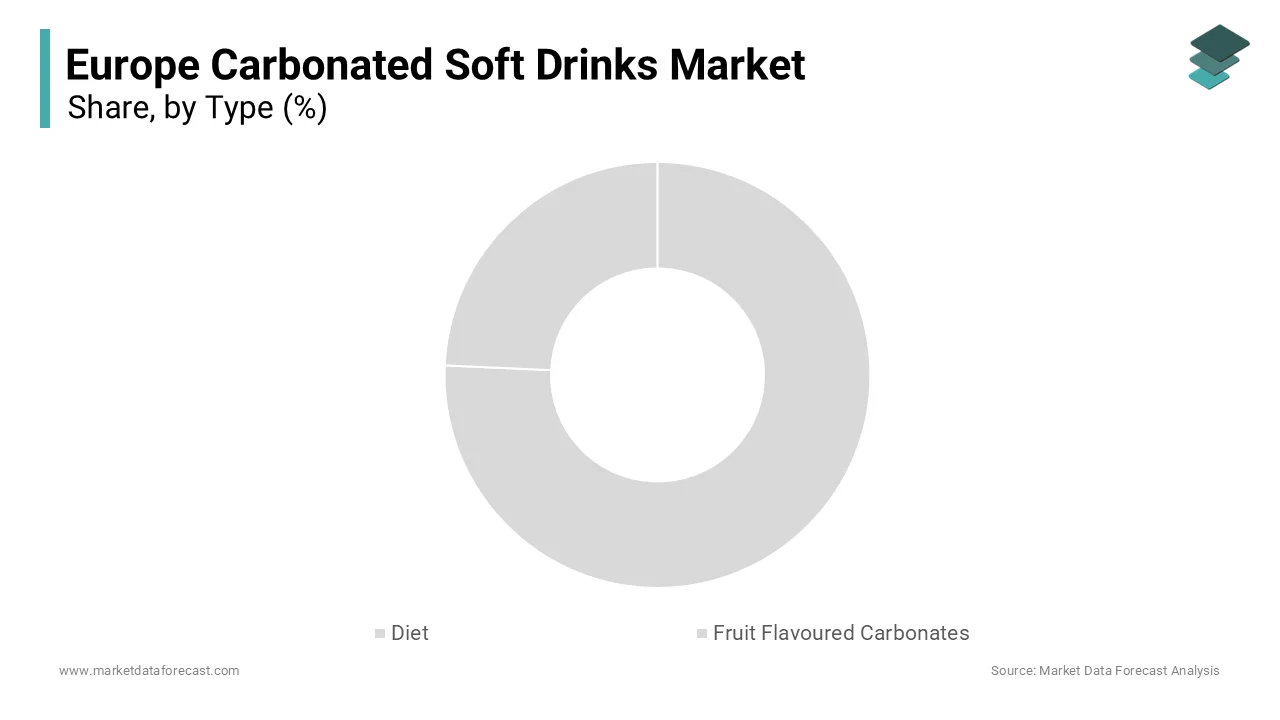
The fruit flavoured carbonates segment is likely to witness a fastest CAGR of 6.8% from 2026 to 2034 with a strong consumer preference for natural fruit extracts and authentic taste profiles over artificial flavors. Younger people, particularly Millennials and Generation Z are driving this trend by seeking beverages that offer a premium sensory experience without the guilt associated with traditional sodas. The rise of craft soda brands that utilize indigenous fruits, such as elderflower in the United Kingdom or blood orange in Italy has further stimulated interest in this category. Additionally, the versatility of fruit carbonates in mixology and social settings has boosted their popularity in the on trade sector. Manufacturers are responding by introducing limited edition seasonal flavors and organic certifications which appeal to environmentally conscious consumers. The perception of fruit carbonates as a healthier and more sophisticated alternative to cola drives their rapid adoption.
By Flavour Insights
The cola flavour segment was the largest by accounting for 38.25 of the Europe Carbonated Soft Drinks Market share in 2025 with the deep cultural entrenchment and decades of aggressive marketing by global giants, such as Coca Cola and PepsiCo. These brands have established strong emotional connections with consumers through sports sponsorships music festivals and community initiatives. The consistent taste profile and widespread availability in every retail channel from vending machines to supermarkets ensure that cola remains the default choice for many consumers. Furthermore, the adaptability of cola as a mixer in alcoholic beverages sustains its relevance in the hospitality sector. Despite health concerns, the introduction of zero sugar and caffeine free variants has helped retain loyal customers who wish to reduce sugar intake without abandoning their preferred flavour. The economies of scale enjoyed by major producers allow for competitive pricing which further protects market share against smaller competitors. This combination of brand heritage ubiquitous distribution and product diversification ensures that cola continues to lead the flavour segment despite emerging trends favoring fruit and exotic tastes.
The lime flavour segment is expected to register a fastest CAGR of 7.2% from 2026 to 2034 with the increasing popularity of lime as a refreshing and versatile flavour that appeals to health conscious consumers. The crisp and tangy profile of lime is perceived as lighter and more natural compared to heavier cola or orange flavours. The rise of mocktails and non-alcoholic cocktails has significantly boosted demand for lime carbonates, which serve as ideal bases for these drinks. Additionally, the influence of Latin American and Mediterranean cuisines, which frequently feature lime has introduced new flavor preferences to Northern European countries. Manufacturers are capitalizing on this by launching sparkling lime waters with added minerals and vitamins positioning them as functional refreshments. The visual appeal of lime also plays a role in social media driven marketing where vibrant green packaging and imagery attract younger audiences.
By Distribution Channel Insights
The supermarkets and hypermarkets segment held 55.4% of the Europe Carbonated Soft Drinks Market share in 2025 with the convenience of one stop shopping and the ability of consumers to purchase beverages in bulk at competitive prices. Major retail chains, such as Carrefour, Tesco, and Aldi, offer extensive shelf space and promotional deals that attract price sensitive families and large households. As per some reports, promotional activities in supermarkets drive nearly 30% of total soft drink sales in Europe, elevating the importance of price discounts and multi pack offers. The centralized logistics and efficient supply chain management of these retailers ensure consistent product availability and freshness which builds consumer trust. Furthermore, the integration of loyalty programs allows supermarkets to collect detailed customer data enabling targeted marketing and personalized offers for carbonated drinks. The rise of private label brands within these stores also contributes to their market leadership as consumers increasingly opt for cheaper alternatives during periods of economic uncertainty. Eurostat reports that household expenditure on food and non alcoholic beverages remains stable indicating sustained demand through this channel.
The convenience stores segment is expected to witness a fastest CAGR of 5.5% from 2026 to 2034 with rapid urbanization and changing lifestyle patterns that favor quick and accessible purchasing options. As per the European Convenience Store Association, the number of convenience outlets in major European cities increased by 8% in 2024 catering to busy professionals and students who prioritize speed and proximity. These stores are strategically located in high traffic areas such as transport hubs office districts and residential neighborhoods making them ideal for impulse purchases. The trend towards smaller household sizes and single person living arrangements has also boosted demand for single serve bottles and cans which are prominently displayed in convenience stores. Additionally, the extended operating hours of convenience stores provide flexibility for consumers who shop outside traditional retail times. The adoption of digital payment systems and self checkout kiosks further enhances the shopping experience reducing wait times and encouraging frequent visits. Manufacturers are leveraging this channel by introducing exclusive packaging sizes and limited edition flavors that appeal to on the go consumers. The agility of convenience stores in adapting to local trends and consumer needs positions them as a dynamic and rapidly expanding distribution avenue.
REGIONAL ANALYSIS
Germany Carbonated Soft Drinks Market Analysis
Germany carbonated soft drinks market was the top performer by holding 18.4% of the share in 2025. Germany is characterized by a strong preference for mineral water and sparkling beverages, which are deeply embedded in the national culture. The country’s robust manufacturing infrastructure and strict quality standards support a diverse range of local and international brands. Environmental consciousness is a key driver with consumers favoring reusable glass bottles and recyclable materials. Health trends are also influencing the market with a notable shift towards low sugar and functional drinks. The presence of major trade fairs such as Anuga in Cologne facilitates innovation and networking for industry players.
United Kingdom Carbonated Soft Drinks Market Analysis
The United Kingdom carbonated soft drinks market was next by holding 16.3% of the share in 2025 with a dynamic interplay between traditional brand loyalty and emerging health conscious trends. As per the British Soft Drinks Association, total soft drink volumes remained stable in 2024 with a noticeable shift towards no and low sugar variants. The implementation of the Soft Drinks Industry Levy has been a pivotal factor driving reformulation and innovation across the industry. The vibrant food service sector in London and other major cities contributes significantly to demand with on trade sales recovering strongly post pandemic. Furthermore, the multicultural population drives demand for diverse and exotic flavors including tropical and spicy variants. Retailers are increasingly focusing on sustainability with major chains committing to reduce plastic usage.
France Carbonated Soft Drinks Market Analysis
France carbonated soft drinks market growth is likely to grow with the strong culinary tradition that values quality and authenticity in beverages. The Nutri Score labeling system has become a tool for consumers leading to increased demand for products with better nutritional profiles. The tourism industry also plays a significant role with millions of visitors contributing to sales in cafes and restaurants, particularly in Paris and the Riviera. Additionally, the emphasis on environmental sustainability has led to wider adoption of glass bottles and recycling initiatives. These cultural and regulatory factors ensure that France remains a key market for innovation and quality driven growth in the carbonated soft drinks sector.
Italy Carbonated Soft Drinks Market Analysis
Italy carbonated soft drinks market growth is likely to grow with a strong affinity for bitter aperitifs and citrus flavored carbonates, which are integral to social dining experiences. The culture of aperitivo has expanded beyond traditional hours boosting daytime consumption in bars and cafes. The demand for natural and locally sourced ingredients is a major driver with consumers preferring brands that use Sicilian lemons and blood oranges. Sustainability is also gaining prominence with initiatives to reduce plastic waste and promote circular economy practices. The hospitality sector’s recovery following pandemic restrictions has further stimulated demand particularly in tourist destinations such as Rome Venice and Florence. Additionally, the growing interest in health and wellness has led to the introduction of low calorie and functional variants.
Spain Carbonated Soft Drinks Market Analysis
Spain carbonated soft drinks market growth is steadily growing with its vibrant consumer base and tourism driven economy. As per the Spanish Federation of Beverages, per capita consumption of soft drinks reached 95 liters in 2024 with carbonated varieties remaining popular among all age groups. Data from the Institute for Tourism Studies indicates that tourist arrivals exceeded pre pandemic levels in 2024 boosting demand in the hospitality sector. The tradition of tapas and social gatherings favors the consumption of carbonated mixers and flavored sodas. Local brands are leveraging regional ingredients such as lemon and orange to differentiate their products. Sustainability initiatives including recycling programs and eco-friendly packaging are also gaining traction among consumers and producers.
COMPETITIVE LANDSCAPE
The competition in the Europe Carbonated Soft Drinks Market is intense and characterized by the presence of established global giants alongside agile local players. Major corporations leverage their extensive resources to dominate shelf space and influence consumer preferences through aggressive marketing campaigns. However, the rise of health consciousness has fragmented the market allowing smaller brands specializing in organic and low sugar options to gain traction. Regulatory pressures regarding sugar content and packaging waste further complicate the competitive landscape forcing all participants to innovate rapidly. Companies must balance cost efficiency with sustainability goals to maintain profitability. The battle for consumer loyalty is increasingly fought on digital platforms where engagement and brand storytelling play pivotal roles. Private label brands from major retailers also pose a significant threat by offering comparable quality at lower prices. This dynamic environment requires constant adaptation and strategic foresight. Success depends on the ability to anticipate trends and respond swiftly to regulatory and consumer shifts while maintaining operational excellence and brand integrity across diverse European markets.
KEY MARKET PLAYERS
Key players in Europe carbonated soft drinks market are
- Monster Beverage Corp
- Britvic PLC
- Parle Agro
- PepsiCo Inc
- Coca-Cola Company
- Cott Corporation
- Dohler Group
- Kraft Foods
- Dr Pepper Snapple Group Inc.
Top Players in the Market
- The Coca Cola Company maintains a formidable presence in the European beverage landscape through its extensive portfolio of iconic brands and continuous innovation. The corporation actively invests in sustainable packaging initiatives aiming to collect and recycle a bottle or can for every one it sells by 2030. Recent strategic moves include the expansion of its zero sugar variants across multiple markets to align with health conscious consumer preferences. The company leverages advanced digital marketing tools to engage younger demographics and enhance brand loyalty. Its robust distribution network ensures widespread availability in both urban and rural areas. By partnering with local suppliers and investing in community programs the firm strengthens its social license to operate.
- PepsiCo Inc exerts significant influence in the Europe Carbonated Soft Drinks Market by offering a diverse range of beverages that cater to varying consumer tastes. The company focuses heavily on product diversification introducing new flavors and functional drinks to capture emerging trends. Recent actions include the launch of premium sparkling water lines and the reformulation of existing products to reduce sugar content. PepsiCo emphasizes sustainability by increasing the use of recycled materials in its packaging and optimizing logistics to lower carbon emissions. The firm also engages in strategic partnerships with retail chains to enhance shelf visibility and promotional activities. Its commitment to innovation and responsible business practices helps maintain strong consumer trust.
- Dr Pepper Snapple Group, known as Keurig Dr Pepper in some contexts plays a notable role in the European market through its distinctive brand offerings and strategic alliances. The company focuses on niche segments and premium products that appeal to specific consumer groups seeking unique flavor experiences. Recent initiatives include the introduction of limited edition flavors and collaborations with popular cultural icons to boost brand relevance. The firm prioritizes operational efficiency by streamlining its supply chain and adopting digital technologies for better inventory management. It also invests in marketing campaigns that highlight the heritage and quality of its brands. By focusing on high margin products and maintaining strong relationships with key distributors the company enhances its market presence.
Top Strategies Used by the Key Market Participants
Key players in the Europe Carbonated Soft Drinks Market employ several strategic approaches to maintain competitiveness and drive growth. Product innovation remains central with companies continuously launching new flavors and healthier options to meet evolving consumer demands. Sustainability initiatives are crucial as firms invest in recyclable packaging and reduce their carbon footprints to align with environmental regulations. Strategic partnerships with retailers and hospitality providers enhance distribution networks and improve product visibility. Digital transformation is another vital strategy where companies utilize data analytics and social media to engage consumers and personalize marketing efforts. Price optimization techniques help manage costs and remain competitive amidst inflationary pressures. Additionally, mergers and acquisitions allow firms to expand their portfolios and enter new market segments.
MARKET SEGMENTATION
This research report on Europe carbonated soft drinks market is segmented and sub-segmented into the following categories
By Type
- Diet
- Fruit Flavoured Carbonates
By Flavour
- Cola
- Lime
- Orange
By Distribution Channel
- Supermarkets
- Independent Retailers
- Convenience Stores
- Others
By Country
- UK
- France
- Spain
- Germany
- Italy
- Russia
- Sweden
- Denmark
- Switzerland
- Netherlands
- Turkey
- Czech Republic
- Rest of Europe