Europe Catalyst Fertilizer Market Size, Share, Growth, Trends, And Forecasts Report, Segmented By Application, Form, End-use, Product, And By Region (UK, France, Spain, Germany, Italy, Russia, Sweden, Denmark, Switzerland, Netherlands, Turkey, Czech Republic and Rest of Europe), Industry Analysis From 2026 to 2034
Market Size, 2025
$0.85 BnMarket Estimate, 2026
$0.86 BnMarket Forecast, 2034
$0.99 BnCAGR, 2026–2034
1.56%Europe Catalyst Fertilizer Market Size
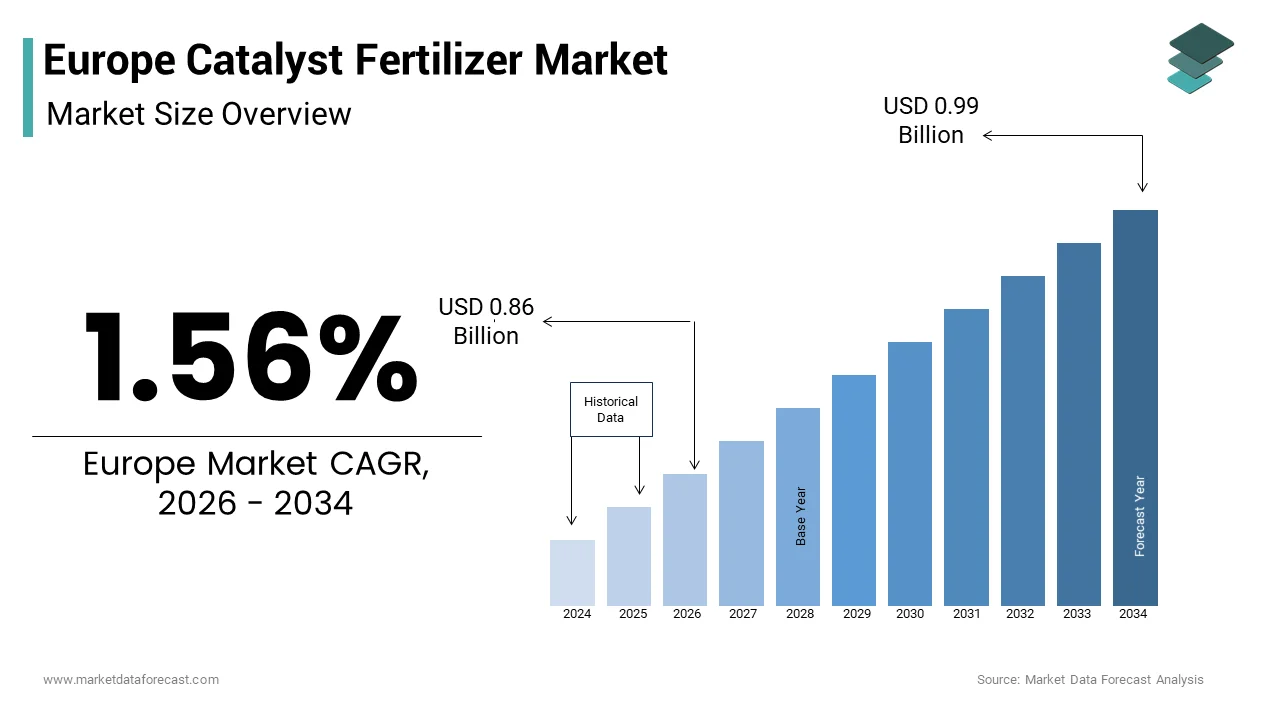
The Europe catalyst fertilizer market size was valued at USD 0.85 billion in 2025 and is anticipated to reach a valuation of USD 0.86 billion in 2026 and USD 0.99 billion by 2034, growing at a CAGR of 1.56% from 2026 to 2034.
Catalyst fertilizers represents a specialized segment within the broader agricultural inputs sector, focusing on additives and enzymatic agents that enhance the efficiency of primary nutrient uptake rather than supplying nutrients directly. These substances include nitrification inhibitors, urease inhibitors, and biological stimulants that optimize soil chemistry to maximize the utility of nitrogen, phosphorus, and potassium. The European agricultural landscape is undergoing a profound transformation driven by the urgent need to decouple food production from environmental degradation. According to Eurostat, in 2024, the use of nitrogen-based fertilizers in EU agricultural production increased to an estimated 8.9 million tonnes. The Farm to Fork Strategy sets the ambition to reduce nutrient losses to the environment by at least 50% by 2030, while ensuring no deterioration in soil fertility, which creates an imperative for technologies that improve nutrient use efficiency. As per the European Commission, agriculture accounts for approximately 90% of ammonia emissions in the EU, necessitating advanced mitigation tools. Catalyst fertilizers address these challenges by slowing down conversion processes in the soil to ensure that plants absorb more nutrients before they are lost to the atmosphere or groundwater. This technological intervention aligns with the circular economy principles promoted by the European Commission. The market is characterized by high innovation rates in biochemical formulations and precision application techniques. With arable land remaining constant but yield expectations rising, catalyst fertilizers serve as critical enablers for sustainable intensification across the continent.
MARKET DRIVERS
Regulatory Mandates for Nitrogen Use Efficiency and Emission Reduction
The implementation of stringent environmental regulations targeting nitrogen losses is a key factor propelling the European catalyst fertilizers market. The Industrial Emissions Directive and the National Emission Ceilings Directive impose strict limits on ammonia and nitrous oxide emissions from agricultural sources, which is compelling farmers to adopt mitigation technologies. According to the European Commission, agriculture accounts for over 90% of ammonia emissions in the EU, primarily due to inefficient nitrogen fertilizer application. Nitrification and urease inhibitors included in catalyst fertilizer formulations significantly reduce volatilization and leaching, thereby helping farmers comply with legal thresholds. The Nitrates Designated Vulnerable Zones cover large portions of agricultural land in countries like Germany, France, and the Netherlands, where specific management practices are mandatory. For instance, the use of enhanced efficiency fertilizers can reduce nitrogen losses by allowing for more efficient nitrogen uptake by crops. Farmers face increasing pressure to demonstrate sustainable practices to retain subsidies under the Common Agricultural Policy. The conditionality requirements link direct payments to environmental standards, promoting the integration of catalyst additives into standard fertilization routines. This regulatory push transforms catalyst fertilizers from optional enhancements into essential tools for legal compliance and operational continuity in intensive farming systems.
Economic Pressure to Optimize Input Costs amidst Price Volatility
Escalating costs of synthetic fertilizers due to energy price volatility and supply chain disruptions are further contributing to the European catalyst fertilizers market expansion. Nitrogen fertilizer prices have experienced significant volatility in recent years due to fluctuating natural gas costs, which are central to ammonia production, creating a financial burden for European growers. According to various agricultural market reports, fertilizer costs have seen substantial increases, forcing farmers to seek ways to stretch their input budgets. Catalyst fertilizers enhance nutrient use efficiency, allowing farmers to maintain yields with lower total nutrient applications or achieve higher yields with the same input levels. For instance, the application of inhibitors can improve nitrogen recovery, translating into significant cost savings per hectare. For large-scale cereal and oilseed producers who operate on thin margins, this efficiency gain is critical for profitability. The economic rationale shifts from viewing catalysts as an added cost to recognizing them as a cost-saving mechanism. Farmers are increasingly calculating the cost-benefit ratio of using stabilized fertilizers versus conventional ones, finding that the premium paid for catalysts is offset by reduced waste and improved crop performance. This financial incentive accelerates adoption among conventional growers who prioritize economic resilience alongside environmental stewardship.
MARKET RESTRAINTS
High Initial Costs and Complex Application Requirements
The elevated cost of catalyst fertilizers compared to standard mineral fertilizers is impeding the expansion of the European catalyst fertilizers market, which is limiting their widespread adoption among price-sensitive farmers. Enhanced efficiency fertilizers incorporating nitrification or urease inhibitors command a premium price due to the additional manufacturing steps and proprietary chemical formulations involved. For instance, the price premium for stabilized fertilizers poses a barrier for small and medium-sized enterprises. Furthermore, the effective use of these products often requires precise timing and specific application methods to ensure the catalyst remains active in the soil profile. As per agricultural extension reports, many farmers lack the technical knowledge or specialized equipment to apply these products correctly, which is leading to suboptimal results and disillusionment. The complexity of integrating catalysts into existing fertilization schedules adds administrative and operational burdens. Without immediate visible results, farmers may perceive the investment as risky, especially when crop prices are volatile. The lack of standardized pricing and varying efficacy across different soil types further complicates purchasing decisions. This economic and operational friction slows the transition from traditional practices to advanced nutrient management strategies, particularly in regions with limited access to technical support and financial resources.
Limited Awareness and Technical Knowledge among Growers
Insufficient awareness and understanding of the mechanisms and benefits of catalyst fertilizers hinder the regional market expansion. Many conventional growers are accustomed to applying bulk nutrients based on historical habits rather than scientific optimization principles. According to general agricultural surveys, a significant portion of farmers are unaware of how specific inhibitors work or the conditions under which they provide value. The scientific complexity of soil chemistry and microbial interactions makes it difficult for non-experts to grasp the long-term benefits of catalyst additives. As per educational gap analyses, extension services often lack the resources to provide detailed training on enhanced efficiency fertilizers, leaving farmers to rely on anecdotal evidence or supplier claims. Misinformation regarding the compatibility of catalysts with other agrochemicals leads to hesitation in adoption. The absence of clear and consistent labeling standards for catalyst-containing products further confuses buyers. Without robust demonstration plots and peer-to-peer learning opportunities, farmers remain skeptical about the return on investment. This knowledge deficit perpetuates reliance on familiar high-volume application methods, preventing the realization of potential environmental and economic benefits. Until education and outreach efforts are scaled up, the market will struggle to move beyond early adopters to the mainstream farming community.
MARKET OPPORTUNITIES
Integration with Precision Agriculture and Digital Farming Tools
The convergence of catalyst fertilizers with precision agriculture technologies presents a substantial opportunity for the European catalyst fertilizers market growth. Advanced farm management software and variable-rate technology enable growers to apply catalyst-treated fertilizers only where and when they are needed, based on real-time soil and crop data. For instance, the adoption of digital tools is accelerating, with significant percentages of large farms utilizing precision techniques. Integrating catalyst usage with sensor data allows for precise monitoring of nitrogen levels and adjustment of application rates to minimize waste. This data-driven approach provides proof of performance, which builds trust and encourages wider adoption. For instance, digital platforms can track the reduction in nitrogen losses attributable to catalyst use, facilitating compliance reporting and sustainability certification. The ability to quantify environmental benefits through digital records adds value for farmers seeking to access green finance or premium markets. Furthermore, precision application reduces the total amount of catalyst required, lowering costs and environmental impact. This synergy between biological, chemical, and digital innovations creates a holistic solution that appeals to tech-savvy younger farmers. By leveraging technology, manufacturers can offer service-based models that guarantee performance, thereby overcoming skepticism and driving market growth.
Development of Bio-Based and Organic Compatible Catalysts
The growing demand for organic and bio-based agricultural inputs offers significant opportunities for the European catalyst fertilizers market expansion. Regulatory restrictions on synthetic chemicals are driving interest in biological alternatives that enhance nutrient availability without leaving harmful residues. According to the Research Institute of Organic Agriculture (FiBL), the area under organic management in Europe continues to expand, creating a ready market for compliant efficiency enhancers. Bio-based catalysts, such as those derived from seaweed, humic acids, or beneficial bacteria, align with the principles of regenerative agriculture and soil health. As per research findings, these natural substances can stimulate root growth and improve nutrient uptake efficiency similar to synthetic inhibitors but with added soil-health benefits. The European Green Deal supports the transition to bio-economy solutions, providing funding and incentives for innovation in this sector. Manufacturers investing in the extraction and formulation of natural catalysts can differentiate their products and access premium market segments. The compatibility of these products with organic certification standards opens doors to high-value crops and export markets. As consumer preference for clean-label food grows, the demand for organic-compatible production methods will rise. This shift towards natural solutions positions bio-based catalysts as a key growth engine in the evolving European fertilizer landscape.
MARKET CHALLENGES
Variability in Efficacy Due to Soil and Climatic Conditions
The inconsistent performance of catalyst fertilizers across diverse soil types and climatic conditions is a significant challenge to the European catalyst fertilizers market growth. Nitrification and urease inhibitors are highly sensitive to factors such as soil pH, temperature, moisture content, and organic matter levels, which vary widely across the continent. According to agronomic trials, the efficacy of a specific catalyst in the sandy soils of Northern Europe may differ significantly from its performance in the clay soils of Southern Europe. Climate change exacerbates this variability by introducing unpredictable weather patterns, such as sudden heavy rains or heat waves that can alter microbial activity and chemical stability. For instance, extreme weather events can wash away or degrade catalysts before they exert their full effect, which is leading to perceived product failure. Farmers who experience inconsistent results may lose confidence in the technology and revert to traditional methods. The lack of localized data and recommendations for specific regional conditions leaves growers to experiment at their own risk. Extension services struggle to provide universal guidelines due to this heterogeneity. Without robust strain selection and formulation adjustments for local environments, the risk of application failure remains high. This uncertainty deters risk-averse farmers from integrating catalysts into their core nutrient management plans, hindering market expansion.
Complex Regulatory Approval Processes for New Formulations
Navigating the complex and lengthy regulatory approval process for new catalyst formulations remains a major hurdle for manufacturers seeking to introduce innovative products to the European market, which is another significant challenge to the European catalyst fertilizers market growth. The registration of fertilizer additives and biostimulants falls under the Fertilizing Products Regulation, which requires extensive data on safety, efficacy, and environmental impact. According to industry associations, the time and cost required to secure approval for a new catalyst can be prohibitive, particularly for small and medium-sized enterprises. The lack of harmonized testing protocols across member states creates additional administrative burdens and delays. As per regulatory feedback, the criteria for defining what constitutes a catalyst versus a fertilizer ingredient are sometimes ambiguous, leading to classification disputes. This uncertainty discourages investment in research and development, as companies fear that their innovations may not reach the market in a timely manner. Furthermore, the periodic re-evaluation of approved substances adds ongoing compliance costs. The slow pace of regulatory adaptation to scientific advancements means that cutting-edge biological catalysts often face longer approval times than established chemical counterparts. Until the regulatory framework becomes more streamlined and predictable, the pipeline of new and improved catalyst products will remain constrained, limiting the options available to farmers and slowing the overall modernization of the sector.
REPORT COVERAGE
| REPORT METRIC | DETAILS |
| Market Size Available | 2025 to 2034 |
| Base Year | 2025 |
| Forecast Period | 2026 to 2034 |
| CAGR | 1.56% |
| Segments Covered | By Application, Form, End-Use, Product, By Country |
| Various Analyses Covered | Global, Regional & Country Level Analysis; Segment-Level Analysis, DROC, PESTLE Analysis, Porter’s Five Forces Analysis, Competitive Landscape, Analyst Overview of Investment Opportunities |
| Regions Covered | UK, France, Spain, Germany, Italy, Russia, Sweden, Denmark, Switzerland, Netherlands, Turkey, Czech Republic,c & Rest of Europe |
| Market Leaders Profiled | Nutrien (CA), Yara International (NO), CF Industries (US), BASF (DE), EuroChem Group AG, K+S AG (DE), Mosaic Company (US), OCP Group (MA), ICL Group (IL), Agrium (CA) |
SEGMENTAL ANALYSIS
By Application Insights
The nitrogenous fertilizers segment led the market by holding the largest share of the European market in 2025. The dominance of nitrogenous fertilizers segment in the European market is driven by the massive volume of nitrogen applied across European agriculture and the associated high rates of environmental loss. Nitrogen is the most critical nutrient for crop growth but is also the most inefficiently used, with significant portions lost to volatilization and leaching. According to Eurostat data, the European Union consumes millions of tonnes of nitrogen fertilizers annually, creating a vast addressable market for efficiency-enhancing catalysts. The primary driver for catalyst adoption in this segment is the urgent needs to mitigate ammonia emissions and nitrate leaching, which are major environmental concerns. As per the European Environment Agency, agriculture contributes over 90% of ammonia emissions in the EU, largely due to urea and ammonium-based fertilizers. Nitrification and urease inhibitors are specifically designed to address these losses by slowing down the conversion of nitrogen into forms that are easily lost. This regulatory and environmental pressure makes nitrogenous fertilizers the primary target for catalyst integration. Farmers are compelled to adopt these technologies to comply with strict emission limits under the National Emission Ceilings Directive. The sheer scale of nitrogen usage ensures that even small improvements in efficiency translate into significant economic and environmental benefits, driving the dominance of this application segment.
On the other side, the complex fertilizers segment is a promising segment and is estimated to record the fastest CAGR in the European market over the forecast period owing to the increasing demand for balanced nutrition and precision application methods. Modern agricultural practices are shifting towards customized nutrient solutions that provide nitrogen, phosphorus, and potassium in specific ratios tailored to crop needs. For instance, the use of complex fertilizers allows for single application events, reducing labor and machinery costs. Catalysts integrated into complex formulations enhance the availability of all three macronutrients simultaneously, improving overall crop uptake. As per agronomic studies, the synergy between nutrients in complex fertilizers can be optimized by catalysts that prevent nutrient fixation in the soil. This is particularly important for phosphorus, which often becomes unavailable due to soil chemistry interactions. The growing adoption of precision farming technologies enables farmers to apply complex fertilizers more accurately, maximizing the benefit of catalyst additives. The convenience of using a single product that delivers balanced nutrition with enhanced efficiency appeals to large-scale commercial growers. This trend towards simplification and optimization drives the rapid growth of the complex fertilizer segment in the catalyst market.
By Form Insights
The solid form segment led the market by accounting for the major share of the European market in 2025. The growth of the solid form segment in the European market is attributed to their widespread use in broad-acre cereal and oilseed production, which covers the majority of European arable land. Granular and prilled solid fertilizers are the standard for applying nitrogen, phosphorus, and potassium to crops like wheat, barley, and rapeseed. According to Eurostat, cereals account for a large portion of the arable land use in the EU, creating a massive demand for solid fertilizer forms. Solid catalysts, such as coated granules or mixed powders, are easy to handle, store, and apply using existing spreading equipment. For instance, the majority of farms in Europe are equipped with solid fertilizer spreaders, making this form highly accessible. The stability of solid catalysts during storage and transport ensures long shelf life and consistent performance. Farmers prefer solid forms for their ease of integration into traditional farming routines without requiring significant changes to infrastructure. The cost-effectiveness of solid formulations compared to liquid alternatives also drives their dominance. This operational convenience and established infrastructure ensure that solid-form catalyst fertilizers remain the primary choice for large-scale agricultural operations across the continent.
However, the liquid form segment is estimated to grow at the fastest CAGR in the European market during the forecast period owing to their compatibility with precision agriculture and fertigation systems. Liquid catalysts can be easily mixed with irrigation water or sprayed directly onto foliage, allowing for precise and uniform application. For instance, the adoption of drip irrigation and sprinkler systems is increasing, particularly in Southern Europe. Liquid forms enable the integration of catalysts into these systems, ensuring that nutrients and efficiency enhancers are delivered directly to the root zone. As per technical assessments, liquid catalysts offer faster absorption and immediate activity in the soil compared to solid forms. This rapid action is beneficial for correcting nutrient deficiencies and optimizing uptake during critical growth stages. The ability to adjust application rates in real-time based on sensor data enhances the efficiency of liquid catalysts. This technological synergy drives the rapid adoption of liquid forms among progressive farmers seeking to maximize productivity.
COUNTRY-LEVEL ANALYSIS
Germany Catalyst Fertilizers Market Analysis
Germany dominated the market by accounting for the largest share of the European catalyst fertilizers market in 2025 and is expected to continue holding the leading position in the European market throughout the forecast period due to its extensive agricultural sector and strict environmental regulations. The country is a major producer of cereals and oilseeds, which require efficient nitrogen management. According to national agricultural ministry reports, Germany has implemented rigorous limits on nitrogen surpluses. This regulatory pressure drives the adoption of nitrification inhibitors. As per industry data, German farmers are early adopters of enhanced efficiency fertilizers. The presence of major chemical companies fosters innovation, and the strong focus on sustainability supports market growth.
France Catalyst Fertilizers Market Analysis
France occupies a significant position in the market, characterized by its large arable area and diverse cropping systems. The country is a leading producer of wheat and maize. According to the French Ministry of Agriculture, national plans promote reduced pesticide and fertilizer use, which encourages the use of catalysts to maintain yields. As per trade data, France imports significant volumes of stabilized fertilizers. The cooperative structure facilitates knowledge sharing, and the focus on organic farming also drives demand for bio-based catalysts.
Spain Catalyst Fertilizers Market Analysis
Spain is a key player in the market, driven by its intensive horticulture and irrigated agriculture. The country is a major exporter of fruits and vegetables. According to national agricultural reports, water scarcity necessitates efficient nutrient use, and catalysts help optimize fertigation systems. As per industry reports, the adoption of liquid catalysts is high in greenhouse regions. The warm climate increases the risk of nitrogen volatilization, making inhibitors valuable, while the export orientation drives quality standards.
Italy Catalyst Fertilizers Market Analysis
Italy holds a notable share in the market, influenced by its diverse agriculture and strong organic sector. The country produces a wide range of crops, including grains and specialty fruits. According to market analysis, the area under organic management is significant, which drives demand for compliant catalysts. Italian farmers value quality and sustainability, and the presence of local manufacturers supports the market, alongside the cultivation of traditional crops like olives and grapes.
United Kingdom Catalyst Fertilizers Market Analysis
The United Kingdom maintains a steady presence in the market, driven by its large cereal sector and post-Brexit agricultural policies. The country focuses on sustainable land management, and environmental schemes reward efficient nutrient use, which drives the adoption of catalysts. As per industry data, UK farmers are increasingly using enhanced efficiency fertilizers. The temperate climate suits grassland and arable farming, and the strong research base supports innovation.
COMPETITIVE LANDSCAPE
The competition in the Europe catalyst fertilizers market is characterized by the presence of large integrated fertilizer producers specialized chemical companies and emerging biotechnology firms. Major players compete on the basis of product efficacy regulatory compliance and technical support services. Integrated producers leverage their existing distribution networks to promote catalyst treated fertilizers as premium offerings. Chemical specialists focus on supplying high quality active ingredients to blenders and formulators creating a fragmented supply chain. The market is driven by stringent environmental regulations which favor companies with proven technologies for reducing nitrogen losses. Innovation in bio based catalysts is becoming a key differentiator as companies seek to appeal to the organic sector. Price competition is moderate as buyers prioritize performance and compliance over cost alone. Strategic alliances between manufacturers and digital agriculture providers are increasing to offer holistic nutrient management solutions. The high barriers to entry due to regulatory requirements protect established players but also limit the speed of new product launches. Overall the market rewards companies that can demonstrate tangible environmental and economic benefits to farmers.
KEY MARKET PLAYERS
A few of the market players that are dominating the Europe catalyst fertilizers market are
- Nutrien (CA)
- Yara International (NO)
- CF Industries (US)
- BASF (DE)
- EuroChem Group AG
- K+S AG (DE)
- Mosaic Company (US)
- OCP Group (MA)
- ICL Group (IL)
- Agrium (CA)
Top Players In The Market
- Yara International ASA is a global leader in crop nutrition with a significant presence in the Europe catalyst fertilizers market through its advanced nitrogen solutions. The company produces and distributes enhanced efficiency fertilizers incorporating nitrification and urease inhibitors to reduce environmental impact. Yara recently expanded its production capacity for stabilized ammonium nitrate products to meet growing regulatory demands in Northern Europe. The company strengthens its market position by integrating digital farming tools that recommend precise application rates for catalyst treated fertilizers. Yara actively collaborates with farmers to demonstrate the economic and environmental benefits of using efficiency enhancers. Their commitment to sustainable agriculture and innovation ensures they remain a preferred supplier for professional growers seeking compliance with strict European emission standards.
- BASF SE leverages its extensive chemical expertise to offer high performance catalyst solutions for the European fertilizer industry. The company supplies key active ingredients such as nitrification inhibitors to major fertilizer manufacturers across the continent. BASF recently launched new formulation technologies that improve the stability and longevity of catalysts in diverse soil conditions. The company strengthens its market position through strategic partnerships with local blenders and distributors to ensure wide product availability. BASF invests heavily in research and development to create bio based alternatives to synthetic inhibitors. Their focus on sustainability and regulatory compliance helps customers meet the stringent requirements of the European Green Deal. By providing reliable and innovative solutions BASF supports the transition towards more efficient nutrient management practices.
- EuroChem Group AG is a major integrated fertilizer producer with a strong footprint in the Europe catalyst fertilizers market. The company manufactures a wide range of nitrogen fertilizers including those treated with advanced stabilizing agents. EuroChem recently upgraded its facilities to produce enhanced efficiency urea and ammonium sulfate products tailored for Western European markets. The company strengthens its market position by offering customized nutrient solutions that address specific regional soil challenges. EuroChem actively promotes the use of catalyst treated fertilizers through educational programs and field trials. Their robust supply chain ensures consistent delivery of high quality products to agricultural cooperatives and independent farmers. By focusing on product efficacy and environmental stewardship EuroChem maintains a competitive edge in the evolving European landscape.
Top Strategies Used By Key Market Participants
Key players in the Europe catalyst fertilizers market primarily employ product innovation and strategic partnerships to enhance their competitive positioning. Companies invest heavily in research and development to create more effective and environmentally friendly inhibitors that comply with strict EU regulations. Collaborations with agricultural technology firms allow for the integration of catalyst recommendations into digital farming platforms improving precision and adoption. Manufacturers focus on educating farmers and advisors about the economic and environmental benefits of enhanced efficiency fertilizers through demonstration plots and training programs. Expansion of production capacities for stabilized fertilizers ensures reliable supply to meet growing demand. Regulatory engagement is crucial as companies work closely with policymakers to shape standards for nutrient management. Diversification into bio based catalysts addresses the rising demand for organic compatible inputs. These strategies collectively help participants navigate complex regulatory landscapes and capture value in the sustainability driven market.
MARKET SEGMENTATION
This research report on the Europe catalyst fertilizers market is segmented and sub-segmented into the following categories.
By Form
- Solid
- Liquid
- Granular
By End-Use
- Agriculture
- Horticulture
- Forestry
By Application
- Nitrogenous Fertilizers
- Phosphatic Fertilizers
- Potassic Fertilizers
- Complex Fertilizers
By Production Method
- Haber-Bosch Process
- Contact Process
- Others
By Country
- UK
- France
- Spain
- Germany
- Italy
- Russia
- Sweden
- Denmark
- Switzerland
- Netherlands
- Turkey
- Czech Republic
- Rest of Europe
Frequently Asked Questions
What is driving the growth of the Europe catalyst fertilizer market?
The Europe catalyst fertilizer market is growing due to increasing demand for sustainable agricultural practices, higher crop productivity, and efficient fertilizer production technologies. Rising adoption of environmentally friendly fertilizers, stringent environmental regulations, and investments in advanced catalyst technologies are encouraging manufacturers to improve fertilizer efficiency while reducing emissions and production costs.
What are catalyst fertilizers and how are they used in agriculture?
Catalyst fertilizers are produced using specialized catalyst technologies that enhance fertilizer manufacturing efficiency and support the production of high-quality nitrogen-based and other nutrient fertilizers. In agriculture, these fertilizers help improve nutrient availability, promote healthy crop growth, increase yields, and support sustainable farming practices by optimizing nutrient utilization.
What are the key trends shaping the Europe catalyst fertilizer market?
Key trends in the Europe catalyst fertilizer market include the development of low-emission fertilizer production processes, increasing adoption of green ammonia technologies, precision agriculture, controlled-release fertilizers, digital farming solutions, and investments in sustainable crop nutrition. Manufacturers are also focusing on catalyst innovations that improve production efficiency and reduce the environmental footprint of fertilizer manufacturing.
Which countries are leading the Europe catalyst fertilizer market?
Germany, France, the Netherlands, Spain, Italy, and Poland are among the leading contributors to the Europe catalyst fertilizer market. These countries have well-established agricultural sectors, advanced fertilizer manufacturing facilities, and strong government support for sustainable farming and environmentally responsible agricultural practices.
What is the future outlook for the Europe catalyst fertilizer market?
The Europe catalyst fertilizer market is expected to witness steady growth over the forecast period, driven by increasing demand for sustainable fertilizers, continuous innovation in catalyst technologies, and stricter environmental standards. Growing investments in green fertilizer production, precision farming, and advanced crop nutrition solutions are expected to create significant opportunities for fertilizer manufacturers, catalyst suppliers, and agricultural technology providers.
Related Reports
Access the study in MULTIPLE FORMATS
Purchase options starting from
$ 2000
Didn’t find what you’re looking for?
TALK TO OUR ANALYST TEAM
Need something within your budget?
NO WORRIES! WE GOT YOU COVERED!
Call us on: +1 888 702 9696 (U.S Toll Free)
Write to us: sales@marketdataforecast.com