- Product Description Description
- Table of Contents TOC
- List of Table & Figure LOT
- Get Free Sample PDF Sample PDF
Market Size, 2025
$5.63 BnMarket Estimate, 2026
$5.85 BnMarket Forecast, 2034
$7.99 BnCAGR, 2026–2034
3.96%Europe Chewing Gum Market Report Summary
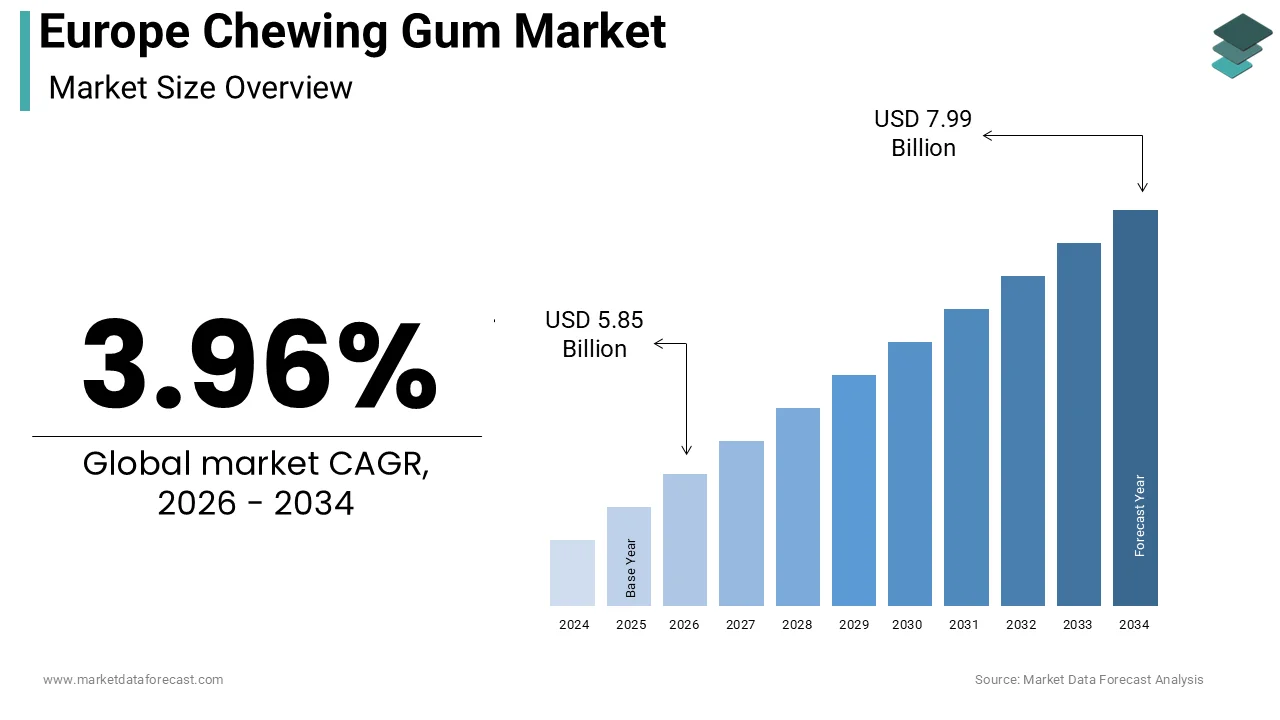
The Europe chewing gum market was valued at USD 5.63 billion in 2025, is estimated to reach USD 5.85 billion in 2026, and is projected to reach USD 7.99 billion by 2034, growing at a CAGR of 3.96% during the forecast period. The growth of the Europe chewing gum market is driven by increasing demand for functional confectionery products, rising awareness of oral health, and growing preference for sugar-free alternatives. Chewing gum is widely consumed for benefits such as fresh breath, stress relief, and dental health support. The market is further supported by product innovation, including functional gums with added vitamins, caffeine, and nicotine alternatives. Additionally, the expansion of retail channels and impulse purchasing behavior continues to drive steady demand across Europe.
Key Market Trends
- Increasing demand for sugar-free and functional chewing gums supporting oral health.
- The rising popularity of functional ingredients such as vitamins, caffeine, and herbal extracts.
- Growing consumer preference for convenient and on-the-go confectionery products.
- Expansion of premium and innovative gum flavors and formats.
- Increasing focus on health-conscious and clean-label confectionery products.
Segmental Insights
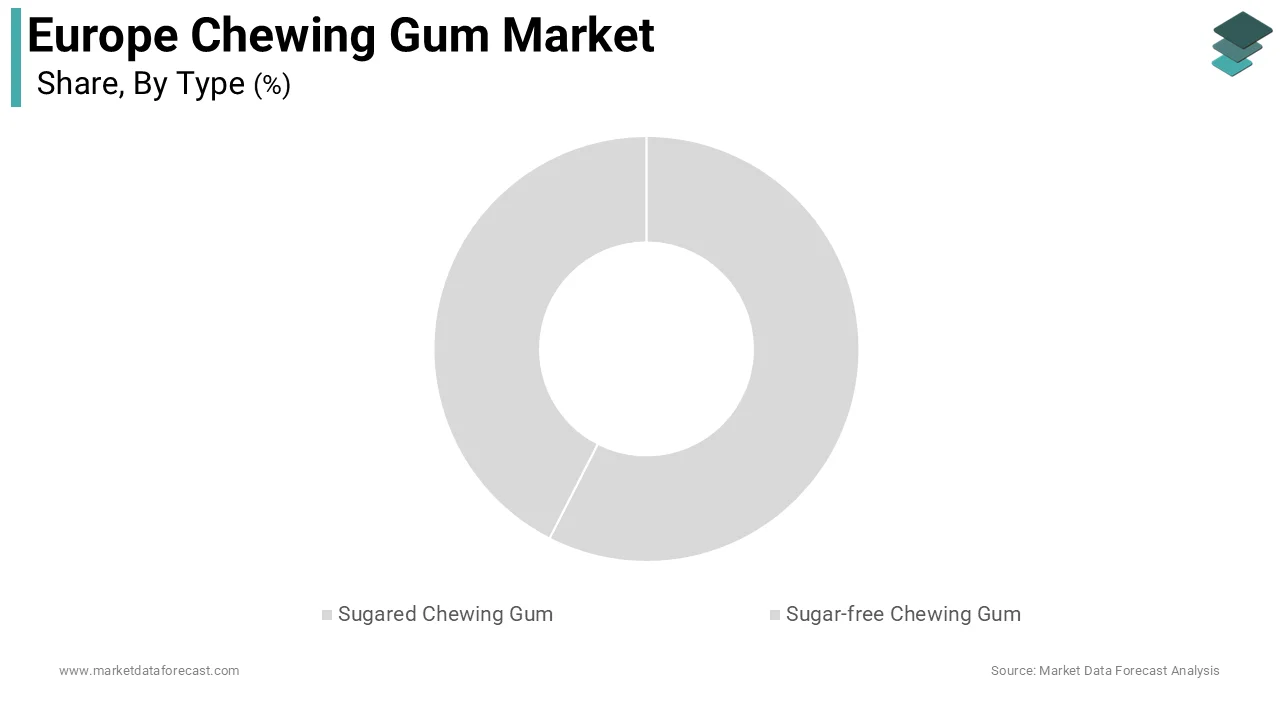
- Based on type, the sugar-free chewing gum segment dominated the Europe chewing gum market by accounting for 59.3% of the market share in 2025, driven by increasing health awareness and dental care benefits.
- Based on form, the pellets and pillows segment held 45.6% of the Europe chewing gum market share in 2025, supported by convenience, portion control, and modern packaging formats.
- Based on distribution channel, the supermarkets and hypermarkets segment accounted for 49.8% of the Europe chewing gum market share in 2025, owing to strong retail presence and accessibility.
Regional Insights
- Germany dominated the Europe chewing gum market in 2025, accounting for 34.5% of the regional market share, driven by high consumption levels, strong retail infrastructure, and demand for sugar-free products.
- The United Kingdom is expected to witness notable growth, supported by increasing demand for functional and premium chewing gum products.
- France is projected to grow steadily, driven by consumer preference for high-quality confectionery and innovative flavors.
- Italy is experiencing steady growth, supported by traditional consumption habits and the rising adoption of modern functional gum products.
- Spain is emerging as a growing market, driven by a young population and increasing disposable incomes.
Competitive Landscape
- The Europe chewing gum market is highly competitive, with the presence of global confectionery companies focusing on product innovation, branding, and distribution expansion. Market players are investing in functional formulations, sugar-free variants, and attractive packaging to strengthen their market position. Strategic marketing and product diversification are key strategies adopted by leading companies.
- Prominent players in the Europe chewing gum market include Mars Incorporated, Mondelez International, Perfetti Van Melle, Lotte Confectionery, Cloetta AB, The Hershey Company, Nestlé S.A, Meiji Holdings Co., Ltd, Grupo Arcor, and Ferrero Group.
Europe Chewing Gum Market Size
The Europe chewing gum market size was calculated to be USD 5.63 billion in 2025 and is anticipated to be worth USD 7.99 billion by 2034, from USD 5.85 billion in 2026, growing at a CAGR of 3.96% during the forecast period.
The chewing gum is primarily composed of a gum base, sweeteners, flavorings, and softeners. According to Eurostat, the average household expenditure on confectionery in the European Union remained stable at approximately 45 euros per capita in 2024, reflecting consistent demand despite inflationary pressures. Furthermore, the European Food Safety Authority notes that over 60% of European consumers actively seek sugar-free options due to rising awareness of dental health and obesity risks. The prevalence of strict waste management protocols has also reshaped the market, with the European Environment Agency reporting that improper disposal of gum litter costs municipalities across the continent an estimated 500 million euros annually for cleaning operations. This intersection of health consciousness, regulatory compliance, and environmental responsibility defines the current operational dynamics of the chewing gum sector in Europe.
MARKET DRIVERS
Escalating Consumer Preference for Sugar-Free and Functional Confectionery
The profound shift in consumer behavior toward sugar-free products enriched with functional benefits, such as tooth enamel protection and stress reduction, is greatly influencing the growth of Europe chewing gum market. European populations are increasingly educated about the detrimental effects of refined sugars, leading to a widespread adoption of alternatives sweetened with xylitol, sorbitol, and stevia. As per the European Dental Association, dental caries remains a significant public health issue, affecting 30% of adults in the region, which has spurred government campaigns promoting xylitol-containing gums for their proven ability to inhibit bacterial growth. Data from the European Consumer Organisation indicates that many shoppers in Western Europe now explicitly check for "sugar-free" labels before purchasing confectionery items. This demand is particularly strong among millennials and Gen Z consumers who view gum not just as a treat but as a wellness tool. The ability of these functional gums to offer immediate oral hygiene benefits aligns perfectly with the busy lifestyles of urban Europeans who prioritize convenience and health.
Rising Stress Levels and Demand for Cognitive Enhancement Products
The increasing prevalence of stress and anxiety has fundamentally altered purchasing decisions, making chewing gum a sought-after tool for mental focus and relaxation, which is additionally fuelling the growth of Europe chewing gum market. Modern life in major metropolitan areas like London, Paris, and Berlin is characterized by high-pressure work environments and long commute times, driving consumers to seek accessible methods for stress management. According to the World Health Organization Regional Office for Europe, anxiety disorders affected nearly 40 million people in the region in 2024, prompting a surge in demand for non-pharmaceutical coping mechanisms. Chewing gum has been scientifically linked to reduced cortisol levels and improved alertness, a fact increasingly leveraged by marketers. This behavioral trend has led to the emergence of specialized gum varieties infused with caffeine, vitamins, and adaptogens designed to boost cognitive performance. The affordability and discreet nature of gum make it an ideal solution for daily stress relief, ensuring consistent repeat purchases. As mental health awareness continues to grow, the positioning of chewing gum as a functional aid for psychological well-being will continue to drive robust sales volumes.
MARKET RESTRAINTS
Stringent Environmental Regulations and Litter Management Costs
The intensifying regulatory pressure regarding plastic pollution and the high economic burden of gum litter on municipal budgets is limiting the growth of Europe chewing gum market. Traditional chewing gum bases often contain synthetic polymers classified as plastics, which do not biodegrade and contribute significantly to urban waste. As per the European Environment Agency, chewing gum constitutes approximately 10% of all street litter in major European cities, costing local authorities an estimated 500 million euros annually for removal and cleaning efforts. This visible environmental impact has prompted several municipalities to implement strict anti-littering fines and ban the sale of non-biodegradable gum varieties. Data from the European Commission's Single-Use Plastics Directive indicates that member states are increasingly mandated to reduce plastic waste, forcing manufacturers to reconsider their formulations. The negative public perception of gum as a pollutant discourages environmentally conscious consumers from purchasing traditional products. Furthermore, the logistical challenges of collecting and recycling used gum remain unresolved, limiting the industry's ability to present a circular economy narrative.
Declining Impulse Purchases Due to Digital Payment Adoption
The rapid transition from cash to digital payment methods, as it disrupts the traditional impulse buying behavior, is additionally impeding the growth of Europe chewing gum market. Historically, a significant portion of gum sales occurred at point-of-sale terminals where consumers would add a pack to their transaction while paying with cash. However, the ubiquity of contactless cards and mobile wallets has altered this dynamic, reducing the frequency of spontaneous add-on purchases. According to the survey, the volume of cash transactions in the Euro area declined by 18% in 2024, with digital payments accounting for over 65% of all retail transactions. Data from the European Retail Federation reveals that impulse buy rates for small confectionery items dropped by 12% in stores with exclusively digital payment terminals compared to those accepting cash. The psychological friction of adding a small item to a digital transaction, often requiring extra steps or authentication, deters casual buyers. Additionally, the redesign of checkout counters to accommodate digital interfaces has sometimes reduced the visibility of gum displays. This structural shift in payment behavior challenges manufacturers to find new ways to trigger impulse buys in an increasingly cashless society.
MARKET OPPORTUNITIES
Development of Fully Biodegradable and Natural Gum Bases
The innovation and commercialization of fully biodegradable gum bases derived from natural chicle, pine resin, and other plant-based polymers is setting up the growth of Europe chewing gum market. As environmental regulations tighten and consumer eco-awareness grows, there is a burgeoning demand for sustainable alternatives that eliminate plastic pollution. Companies that pioneer the use of compostable bases can capture the loyalty of the green consumer segment and align with the EU's Green Deal objectives. According to the survey, many European consumers are willing to pay a premium for products made from renewable and biodegradable content, signaling a viable market for sustainable confectionery. By establishing take-back programs or partnering with waste management firms to compost used gum, manufacturers can create a circular business model that mitigates litter concerns. This shift not only addresses a major market restraint but also positions brands as leaders in sustainability, unlocking new B2B contracts with eco-certified retailers and public institutions.
Integration of Nutraceuticals and Personalized Wellness Features
The nutraceutical industry, to deliver personalized health benefits such as immune support, energy boosting, and sleep aid, is expected to have a positive impact on the growth of Europe chewing gum market. Consumers are increasingly seeking functional foods that address specific health goals, and gum offers a convenient, fast-acting delivery mechanism for active ingredients. Imagine gums infused with melatonin for sleep, vitamin B12 for energy, or probiotics for gut health, tailored to different times of the day or specific consumer needs. This trend allows manufacturers to move beyond the commoditized breath-freshening segment into higher-margin therapeutic categories. The ability to offer precise dosing and rapid absorption through the buccal mucosa makes gum an ideal vehicle for supplements.
MARKET CHALLENGES
Volatility in Raw Material Prices and Supply Chain Disruptions
The fluctuating raw material costs and ongoing supply chain instabilities that threaten profit margins and product availability are one of the challenges for the growth of Europe chewing gum market. Key ingredients such as natural gum base, cocoa butter equivalents, and specialized sweeteners are subject to global commodity price swings exacerbated by geopolitical tensions and climate change impacts on agriculture. Supply chain bottlenecks, particularly in the logistics of importing natural resins from non-European sources, have led to delays and increased inventory holding costs. Data from the European Confectionery Association indicates that many manufacturers reported significant disruptions in sourcing critical ingredients in 2024, forcing them to reformulate products or halt production lines. The reliance on imported sweeteners like stevia, primarily sourced from Asia and South America, adds another layer of vulnerability to currency fluctuations and trade barriers. Navigating this volatile landscape requires sophisticated hedging strategies and diversified sourcing, which strains resources and complicates long-term planning for both large and small players in the industry.
Complex Regulatory Compliance for Health Claims and Labeling
The complex regulations regarding health claims, nutritional labeling, and ingredient safety also inhibit the growth of Europe chewing gum market. The European Union enforces some of the world's strictest rules under the Nutrition and Health Claims Regulation, which mandates rigorous scientific substantiation for any benefit attributed to a product. As per the European Food Safety Authority, the rejection rate for health claim applications remains high, with some submissions denied in 2024 due to insufficient evidence, limiting the marketing potential of functional gums. Manufacturers must also comply with the Food Information to Consumers Regulation, which requires detailed allergen labeling and clear nutritional information, often necessitating packaging redesigns for different member states. Data from the European Commission highlights that non-compliance can result in severe penalties, product recalls, and reputational damage. The varying interpretation of these rules across national borders further complicates pan-European distribution strategies.
REPORT COVERAGE
| REPORT METRIC | DETAILS |
| Market Size Available | 2025 to 2034 |
| Base Year | 2025 |
| Forecast Period | 2026 to 2034 |
| CAGR | 3.96% |
| Segments Covered | By Type, Form, Distribution Channel, And Region |
| Various Analyses Covered | Global, Regional & Country Level Analysis; Segment-Level Analysis; DROC, PESTLE Analysis; Porter’s Five Forces Analysis; Competitive Landscape; Analyst Overview of Investment Opportunities |
| Regions Covered | UK, France, Spain, Germany, Italy, Russia, Sweden, Denmark, Switzerland, Netherlands, Turkey, and the Czech Republic |
| Market Leaders Profiled | Mars Incorporated, Mondelez International, Perfetti Van Melle, Lotte Confectionery, Cloetta AB, The Hershey Company, Nestlé S.A., Meiji Holdings Co., Ltd., Grupo Arcor, Ferrero Group |
SEGMENTAL ANALYSIS
By Type Insights
The sugar-free chewing gum segment was the largest by holding 59.3% of the Europe chewing gum market share in 2025, owing to the intensifying consumer shift towards healthier lifestyles and dental hygiene awareness across the region. European consumers are increasingly avoiding sugary products due to rising obesity rates and government initiatives like sugar taxes, which have directly impacted confectionery choices. The World Health Organization reports that excessive sugar intake remains a critical public health issue in Europe, prompting individuals to seek alternatives that do not compromise oral health. Sugar-free gums often utilize sweeteners like xylitol and sorbitol, which are proven to reduce the risk of tooth decay by neutralizing plaque acids. Furthermore, major manufacturers have reformulated their portfolios to emphasize natural and functional ingredients, aligning with the clean label trend that permeates the European food and beverage sector. The European Food Safety Authority has approved various health claims for polyols used in sugar-free gum, reinforcing consumer confidence in these products as beneficial for teeth.
The sugar-free chewing gum segment is projected to expand at a CAGR of 4.43% during the forecast period. The rising demand for functional gums that offer additional health benefits beyond breath freshening, such as stress relief or vitamin supplementation, is also fuelling the growth of the segment. Consumers are increasingly viewing gum as a functional delivery system for nutrients, driving innovation in formulations that cater to specific wellness needs. The global functional chewing gum market is anticipated to rise significantly, reflecting a broader trend where snack products are expected to provide tangible health value. Additionally, the prevalence of diabetes and pre-diabetic conditions in Europe has necessitated a move away from traditional sugary confections, further propelling the adoption of sugar-free options. National health surveys in countries like Germany and the United Kingdom show a consistent decline in sugar consumption per capita, correlating directly with the uptake of non-sugary alternatives. Manufacturers are leveraging this trend by launching premium sugar-free lines infused with natural flavors and functional additives, which command higher price points and drive value growth.
By Form Insights
The pellets and pillows form segment was the largest by holding 45.6% of the Europe chewing gum market share in 2025, owing to the convenience and portability offered by pellet packaging, which fits seamlessly into the fast-paced urban lifestyles prevalent across major European cities. Unlike stick gums that require manual unwrapping of individual pieces, pellet gums come in resealable bottles or blister packs that allow for easy one-handed consumption and storage. This format appeals strongly to younger demographics and professionals who prioritize ease of use while commuting or working. The versatility of the pellet form also enables manufacturers to experiment with layered flavors and liquid centers more effectively than in stick formats, enhancing the sensory experience for consumers. Moreover, the perception of pellet gum as a more premium and hygienic option compared to traditional sticks has bolstered its popularity among health-conscious buyers. Retailers often allocate prime shelf space to pellet varieties because of their higher turnover rates and attractive margin profiles. The ability to offer variety packs with multiple flavors in a single container further drives consumer trial and repeat purchases, cementing the pellets and pillows segment as the market leader.
The liquid-filled gum segment is likely to witness the fastest CAGR in the coming years, with a consumer desire for intense and long-lasting flavor experiences. While specific CAGR figures for liquid-filled gum in Europe are often bundled within broader functional categories, the segment is outpacing traditional forms due to its novelty and sensory appeal. Consumers are increasingly seeking products that provide a burst of flavor upon chewing, a feature that liquid centers deliver more effectively than solid gum bases. The shift towards experiential consumption, where the texture and flavor release mechanism become key differentiators is amplifying the growth of the segment. Reports indicate that center-filled gums are expanding rapidly as they cater to the demand for indulgence without the guilt associated with high sugar content. The technology behind liquid filling has advanced, allowing for more stable formulations that maintain freshness and flavor intensity over longer periods. As European consumers become more adventurous with their taste preferences, the liquid-filled segment is poised to capture a larger share of the market, particularly among millennials and Gen Z, who value unique product attributes.
By Distribution Channel Insights
The supermarkets and hypermarkets segment was the largest by holding 49.8% of the Europe chewing gum market share in 2025, with the high footfall these retail formats attract and the strategic placement of gum products at checkout counters, which capitalizes on impulse buying behavior. European shoppers frequently visit large format stores for their weekly grocery needs, providing ample opportunity for confectionery brands to engage with consumers at the point of sale. Additionally, promotional activities and bundle offers are more easily executed in these settings, driving volume sales during peak shopping seasons. The trust consumers place in established retail chains for product authenticity and freshness further reinforces the preference for purchasing gum in these venues. Retailers also leverage loyalty programs and data analytics to optimize inventory and placement of gum products, ensuring maximum visibility and accessibility.
The e-commerce segment is expected to register the fastest CAGR of 11.2% during the forecast period. Although exact CAGR figures for gum specifically via e-commerce can vary, the online retail sector for fast-moving consumer goods in Europe is experiencing double-digit growth rates. Consumers are increasingly turning to online platforms for the convenience of home delivery, bulk purchasing options, and access to a wider range of niche and international brands that may not be available in local stores. The ability to subscribe to regular deliveries of gum products appeals to busy households and office managers looking to streamline their procurement processes. Digital platforms also enable brands to engage directly with consumers through targeted marketing and personalized recommendations, driving higher conversion rates. The expansion of quick commerce services in major European cities has further reduced delivery times, making online purchases of low-value items like gum more viable and attractive. Market observations suggest that online retail is expected to witness the highest growth trajectory as retailers invest heavily in optimizing their digital storefronts and logistics networks. The integration of social commerce and influencer marketing on these platforms also plays a significant role in introducing new gum varieties to tech-savvy demographics.
REGIONAL ANALYSIS
Germany Chewing Gum Market Analysis
Germany was the top performer in Europe chewing gum market by holding 34.5% of the share in 2025, with a high demand for premium and functional gum products, driven by a population that is highly conscious of health and ingredient quality. German consumers prefer sugar-free options and are willing to pay a premium for brands that offer natural ingredients and dental benefits. This expansion is supported by the presence of major manufacturing facilities and a well-organized retail network that ensures wide product availability. Strict regulations on food labeling and advertising in Germany compel manufacturers to maintain high standards, which in turn builds consumer trust. The aging population in Germany also contributes to the demand for gum products that aid in oral care and digestion. Furthermore, the trend towards sustainability has led to increased interest in eco-friendly packaging, a factor that German brands are actively addressing to maintain their market leadership.
United Kingdom Chewing Gum Market Analysis
The United Kingdom chewing gum market growth is likely to witness a prominent growthopportunitys in the coming years with the innovation and trend adoption within the confectionery sector. The market status in the UK is defined by a mature consumer base that is increasingly shifting towards sugar-free and functional variants amidst rising health awareness. This growth is underpinned by the implementation of the Soft Drinks Industry Levy, which has indirectly influenced consumers to reduce sugar intake across all confectionery categories, including gum. British consumers are highly responsive to new flavor launches and limited edition releases, driving frequent product trials. Retailers in the UK are focusing on omnichannel strategies to capture sales from both physical stores and online platforms, adapting to the evolving shopping behaviors of the populace. The strong presence of global confectionery giants in the UK ensures a competitive landscape that fosters continuous innovation.
France Chewing Gum Market Analysis
The French chewing gum market is likely to grow at an anticipated rate with its sophisticated consumer palate and appreciation for high-quality confectionery products. The French growth is stable with a gradual shift towards healthier options, mirroring broader European trends but with a distinct emphasis on flavor complexity and brand heritage. French consumers are increasingly adopting sugar-free gums, driven by national health campaigns and a cultural shift towards mindful eating. The country's strong agricultural sector supports the sourcing of natural flavors and ingredients, aligning with the clean label movement. Retail distribution in France is highly consolidated, with hypermarkets playing a crucial role in product visibility and sales volume. Manufacturers are responding by launching premium lines that cater to these specific preferences, thereby driving value growth in the sector.
Italy Chewing Gum Market Analysis
Italy's chewing gum market growth is likely to grow with a blend of traditional consumption habits and a growing openness to modern functional products. Despite some forecasts suggesting a contraction in volume consumption, the value of the market continues to rise due to the premiumization of products. Italian consumers are increasingly interested in gums that offer functional benefits such as whitening teeth or freshening breath for extended periods. The influence of Mediterranean lifestyle trends promotes the use of natural ingredients like mint and citrus, which are popular flavor profiles in the region. Distribution channels in Italy are diverse, ranging from traditional small grocers to supermarket chains, ensuring broad market coverage. The economic recovery post-pandemic has also boosted discretionary spending on confectionery, supporting market resilience.
Spain Chewing Gum Market Analysis
Spain's chewing gum market growth is driven by a young demographic and increasing disposable incomes. The growth of the market is likely to grow with the shift towards sugar-free and innovative gum formats that cater to the lifestyle of the modern Spanish consumer. The growth of the segment is likely to increase with the rising awareness of oral health issues and the effectiveness of public health campaigns promoting sugar reduction. Retailers are enhancing their confectionery sections with dedicated spaces for health-focused gums, facilitating easier access for shoppers. The combination of economic stabilization and changing dietary habits positions Spain as a key growth engine for the chewing gum industry in Southern Europe.
COMPETITION OVERVIEW
The competition in the Europe chewing gum market is intense and characterized by the presence of established multinational corporations alongside emerging regional players who vie for consumer attention through continuous innovation. Major companies dominate the landscape by leveraging their extensive distribution networks and strong brand recognition to maintain shelf space in supermarkets and convenience stores. The rivalry often centers on product differentiation, where firms introduce unique flavors and functional benefits to attracthealth-consciouss buyers seeking sugar-free alternatives. Pricing strategies play a crucial role as competitors engage in promotional activities to gain market share during festive seasons and holiday periods. Sustainability has become a key battleground with brands striving to reduce their environmental footprint through recyclable packaging and responsible sourcing practices to appeal to eco-aware consumers. Digital marketing efforts are increasingly vital as companies utilize online channels to connect directly with customers and gather insights on evolving preferences.
KEY MARKET PLAYERS
A few major players of the Europe chewing gum market include
- Mars Incorporated
- Mondelez International
- Perfetti Van Melle
- Lotte Confectionery
- Cloetta AB
- The Hershey Company
- Nestlé S.A
- Meiji Holdings Co., Ltd
- Grupo Arcor
- Ferrero Group
Top Strategies Used by Key Market Participants
Key players in the Europe chewing gum market primarily employ product innovation as a central strategy to capture consumer interest and drive sales growth. Companies frequently launch new flavors and functional formulations that address specific health needs, such as stress relief or enhanced oral hygiene, to differentiate their portfolios. Another major strategy involves aggressive marketing campaigns that leverage social media platforms and influencer partnerships to engage younger demographics and build brand loyalty. Manufacturers are also focusing on sustainability by adopting eco-friendly packaging solutions and reducing plastic usage to comply with strict European environmental regulations. Expansion of distribution channels through e-commerce platforms allows these firms to reach a wider audience and offer convenient purchasing options for busy consumers. Strategic acquisitions and collaborations with local suppliers help strengthen supply chains and ensure consistent product availability across the region. Price optimization and promotional offers during peak shopping seasons further stimulate demand and encourage trial of new product variants among price-sensitive shoppers.
Leading Players in the Market
- Mars Wrigley Confectionery stands as a dominant force in the Europe chewing gum market with its iconic brands like Extra and Orbit driving global consumption. The company actively invests in research and development to create functional gums that offer dental benefits and stress relief to health-conscious consumers. Recent actions include launching new sugar-free varieties infused with natural flavors and vitamins to align with clean label trends across European countries. They have also committed to sustainable sourcing of raw materials and reducing plastic waste in their packaging lines to meet stringent environmental regulations. Their global contribution involves setting industry standards for product safety and innovation while expanding distribution networks in emerging markets. This strategic focus on wellness and sustainability strengthens their bond with modern European shoppers who prioritize ethical consumption habits.
- Perfetti Van Melle is a major contributor to the Europe chewing gum market, known for its diverse portfolio including brands like Mentos and Airheads that appeal to various demographic groups. The company focuses heavily on innovation by introducing unique textures and long-lasting flavors that differentiate their offerings from competitors in the global confectionery sector. Recent initiatives involve expanding their production facilities in key European countries to enhance supply chain efficiency and reduce carbon footprints associated with logistics. They have also partnered with local retailers to create exclusive product bundles that drive impulse purchases at point-of-sale locations. Their commitment to community engagement through oral health awareness campaigns has bolstered brand loyalty among families and young adults.
- Mondelez International plays a pivotal role in the Europe chewing gum market with its well-recognized brand Trident offering a wide range of sugar-free options that cater to health-aware individuals. The company prioritizes digital transformation by utilizing data analytics to understand consumer preferences and tailor product launches accordingly across different European regions. Recent actions include revamping their packaging designs to be more eco-friendly and incorporating recycled materials to support circular economy goals. They have also expanded their e-commerce capabilities to reach direct consumers through online platforms and subscription services that ensure regular delivery of their products. Their global impact is evident through their adherence to high-quality standards and ethical sourcing practices that resonate with socially responsible buyers.
MARKET SEGMENTATION
This research report on the Europe chewing gum market has been segmented and sub-segmented based on type, form, distribution channel & region.
By Type
- Sugared Chewing Gum
- Sugar-free Chewing Gum
By Form
- Sticks/tabs
- Pellets/pillows
- Liquid Filled Gum
- Others
By Distribution Channel
- Supermarkets/hypermarkets
- Specialty Stores
- Convenience Stores
- E-commerce
- Others
By Region
- UK
- France
- Spain
- Germany
- Italy
- Russia
- Sweden
- Denmark
- Switzerland
- Netherlands
- Turkey
- Czech Republic
- Rest of Europe