- Product Description Description
- Table of Contents TOC
- List of Table & Figure LOT
- Get Free Sample PDF Sample PDF
Market Size, 2025
$1.85 BnMarket Estimate, 2026
$2.02 BnMarket Forecast, 2034
$4 BnCAGR, 2026–2034
8.95%Europe Collagen and Gelatin Market Size, Growth, Trends & Forecast (2026–2034)
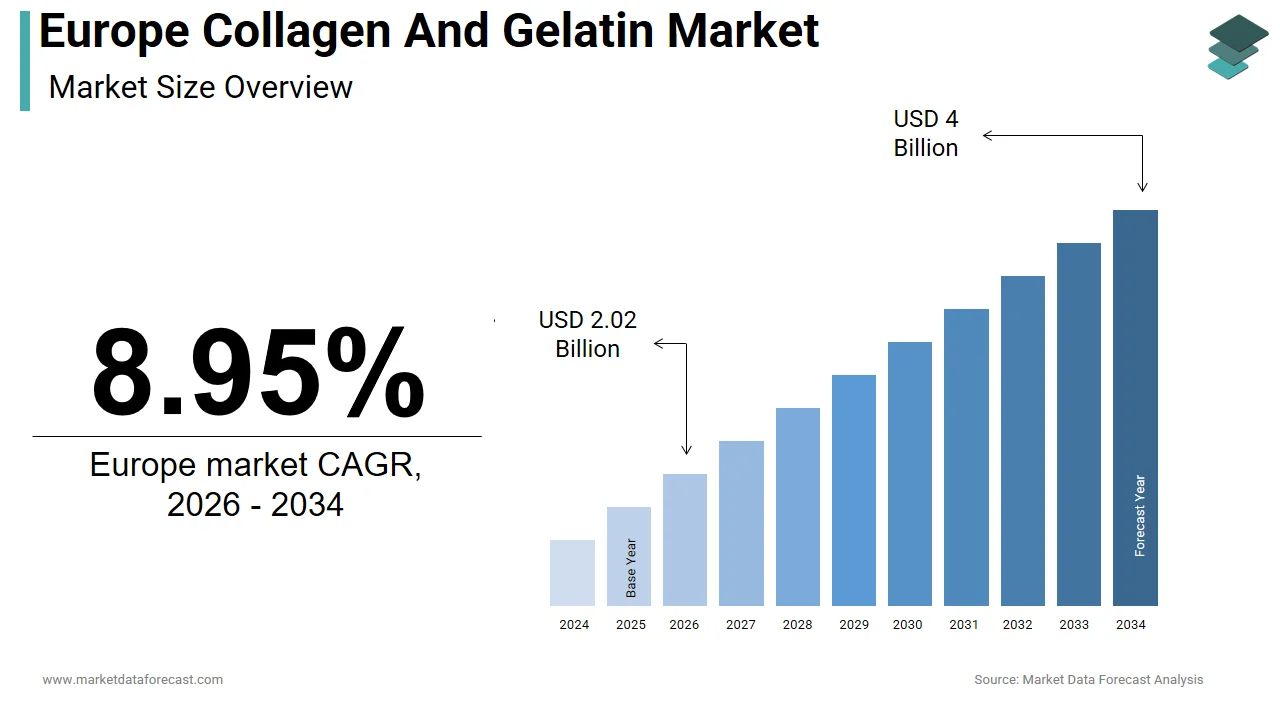
The size of the Europe collagen and gelatin market was valued at USD 1.85 billion in 2025, reached USD 2.02 billion in 2026, and is expected to grow at a CAGR of 8.95% from 2026 to 2034, reaching USD 4 billion by 2034. Driven by an aging population, rising health consciousness, clean-label trends, and innovations in orthopaedic and wound care biomaterials, the market continues to expand as a foundational pillar of Europe's functional ingredient and medical sector.
Key Executive Metrics (At-a-Glance)
- 2025 Base Valuation: USD 1.85 Billion
- 2026 Current Valuation: USD 2.02 Billion
- 2034 Forecast Valuation: USD 4.00 Billion
- Compound Annual Growth Rate (CAGR): 8.95% (2026–2034)
- Dominant Regional Market: Germany (holding a 19.5% market share in 2024, backed by robust medical device manufacturing, nutraceutical production, and regulatory excellence)
- Key Growth Segments: Bovine source, marine collagen (fastest-growing source), orthopaedic applications, and advanced wound care
Core Market Drivers & Growth Triggers
- Preventive Health & Active Aging: Surging demand for collagen peptides supporting joint mobility, skin integrity, and bone density among Europe's rapidly aging demographic.
- Clean-Label Food Applications: Gelatin's indispensable thermoreversible, gelling, and mouthfeel properties in confectionery, dairy, and functional drink formulations under stable EU food laws.
Primary Market Restraints & Challenges
- Ethical & Dietary Preferences: Religious restrictions (Halal/Kosher requirements) and vegetarian or vegan lifestyles constraining market penetration in sensitive consumer groups.
- Regulatory & Supply Complexities: Stringent Novel Food pathways for marine alternatives, raw material price volatility, and compliance hurdles under the EU Deforestation Regulation.
Europe Collagen and Gelatin Market Segmentation Breakdown
| Segment Category | Largest Segment / Leader | Fastest-Growing Segment |
|---|---|---|
| By Source | Bovine (Captured 44.5% market share in 2024 due to extensive cattle slaughter co-products and high thermal stability) | Marine (Projected at an 11.4% CAGR fueled by circular economy fish waste valorization and cosmetic demand) |
| By Application | Orthopaedic Applications (Led with 36.3% share in 2024, essential for bone grafts, scaffolds, and joint treatments) | Wound Care (Expanding at a 10.8% CAGR driven by diabetic foot ulcer treatments and EU health initiative grants) |
| By Country | Germany (Commanded 19.5% regional share in 2024 through advanced pharmaceutical and medical manufacturing) | Spain (Emerging as a leading marine collagen and eco-friendly sourcing hub in Southern Europe) |
Major Industry Players Profiled
Key corporations shaping the Europe collagen and gelatin market include LifeSciences Holding Corporation, Collagen Solutions plc, Vornia Biomaterials, Ltd., Collagen Matrix, Inc., GELITA AG, Nitta Gelatin, Inc., PB Gelatins, Rousselot, Royal DSM, Integra SYMATESE, and NuCollagen, LLC.
Europe Collagen and Gelatin Market Size
The size of the Europe collagen and gelatin market was valued at USD 1.85 billion in 2025. This market is expected to grow at a CAGR of 8.95% from 2026 to 2034 and be worth USD 4 billion by 2034 from USD 2.02 billion in 2026.
Collagen and gelatin include protein derivatives sourced primarily from bovine, porcine, and marine raw materials, processed through controlled hydrolysis to yield functional ingredients used across food, pharmaceutical, cosmetic, and nutraceutical sectors. Collagen is valued for its bioactive properties supporting skin elasticity, joint health, and bone density, while gelatin serves as a gelling, thickening, and stabilizing agent in confectionery, dairy, and capsule manufacturing. Europe’s market is distinguished by stringent regulatory oversight under the European Food Safety Authority and the European Medicines Agency, which classify these proteins based on origin, processing method, and intended use. According to the European Environment Agency, EU rendering facilities process millions of tons of animal by‑products annually, with a significant portion allocated to gelatin and collagen production in compliance with the Animal By‑Products Regulation. Furthermore, as per the European Commission’s Farm to Fork Strategy, valorisation of slaughterhouse co‑products aligns with circular economy objectives, reinforcing the sustainability narrative of these ingredients. Driven by aging demographics, rising health consciousness, and clean‑label trends, the market reflects a convergence of traditional food processing with science‑backed bioactive innovation, positioning collagen and gelatin as essential biomolecules in Europe’s functional ingredient landscape.
MARKET DRIVERS
Growing Consumer Focus on Preventive Health and Active Aging
Europe’s rapidly aging population is a powerful catalyst for collagen supplementation, as consumers increasingly adopt proactive strategies to maintain mobility, skin integrity, and musculoskeletal health, which is majorly driving the collagen and gelatin market growth in Europe. According to the European Commission’s 2024 Ageing Report, people aged 65 and older now constitute slightly over one‑fifth of the EU population, with a continued rise projected toward roughly one‑third by 2050. This demographic shift coincides with rising awareness of protein quality. As per the evidence from peer‑reviewed human studies, daily intake of hydrolysed collagen peptides can support skin hydration and reduce joint‑related discomfort in specific populations, though effects vary by product and dose. As per recent consumer health surveys conducted across major EU markets in 2024, which is a majority of adults over 50 report regular use of collagen‑enriched beverages, powders, or supplements. Retail channels reflect this demand as collagen‑fortified products in Germany, France, and the Nordic countries grew strongly in 2024. Unlike synthetic actives, collagen peptides are perceived as natural and digestible, aligning with clean‑label preferences. This confluence of demographic pressure, scientific validation, and consumer trust establishes collagen as a mainstream dietary component rather than a niche wellness trend.
Expansion Of Clean‑Label and Texture‑Enhancing Applications in Food
Gelatin remains indispensable in European food manufacturing due to its unmatched gelling, thermoreversible, and mouthfeel properties, particularly in confectionery, dairy, and plant‑based formulations seeking natural alternatives to synthetic hydrocolloids, which is further boosting the collagen and gelatin market expansion in Europe. According to European confectionery industry reporting, a dominant share of gummy vitamins and soft jellies sold in the EU relies on gelatin for texture stability and chewiness. Even as clean‑label trends discourage artificial additives, gelatin benefits from long‑standing acceptance under EU food additive rules and is typically declared simply as “gelatin,” enabling simpler ingredient declarations compared to E‑numbered additives. Furthermore, the rise of hybrid plant‑animal protein products creates new functional roles. As per European dairy sector monitoring, a sizable portion of new protein drink launches in 2024 included bovine or marine collagen for both nutritional and viscosity enhancement. Regulatory clarity also supports usage; recent European risk assessments reaffirmed that gelatin and collagen derived from approved ruminant materials and processed under prescribed regulations pose negligible BSE risk when compliant with EU standards. This combination of functional superiority, regulatory acceptance, and clean‑label compatibility sustains robust demand across both traditional and emerging food categories.
MARKET RESTRAINTS
Religious and Ethical Concerns Surrounding Animal‑Derived Sources
A significant portion of European consumers avoids bovine and porcine gelatin and collagen due to religious dietary laws, ethical objections, or vegetarian preferences, which is constraining market penetration in sensitive segments. According to pan‑European estimates, a mid‑single‑digit share of EU citizens identifies as vegetarian or vegan, with a larger share following flexitarian diets, and higher concentrations in Germany, the Netherlands, and Sweden. Additionally, Muslim and Jewish communities require halal or kosher certification, which is not universally available for all collagen products. As per European halal and kosher certification bodies, fewer than half of gelatin producers in Europe hold broad, recognized halal accreditations, limiting access to a growing demographic. Retailers like Carrefour and Edeka have responded by expanding plant‑based alternatives or explicitly labeling animal sources, which is pressuring manufacturers to diversify. While marine collagen offers a partial solution, its higher cost and supply constraints restrict scalability. These cultural and ethical considerations fragment the market and compel costly segmentation, certification, and reformulation efforts that disproportionately affect small and medium‑sized producers.
Stringent Regulatory Requirements for Novel and Marine‑Derived Collagen
Collagen sourced from non‑traditional origins faces complex and sometimes lengthy regulatory pathways across European jurisdictions, which is hindering the expansion of the European collagen and gelatin market. Although EU risk assessments support the safety of bovine and porcine gelatin under long‑standing evaluations, novel sources typically require authorization under the EU Novel Food Regulation, a process that can span two to three years and entail substantial dossier costs. According to the European Commission’s Novel Food status updates, only a limited number of marine collagen applications have progressed to market in recent years, with some delayed due to incomplete toxicology packages or sustainability issues in fish sourcing. Furthermore, marine collagen supply chains are subject to the EU’s Common Fisheries Policy and strict traceability requirements, adding compliance layers. As per EU environmental and customs monitoring, documentation gaps in certain marine collagen imports have led to holds and delays. These regulatory hurdles delay innovation, inflate costs, and deter investment in sustainable alternatives, despite strong consumer interest in ocean‑sourced proteins. Until harmonized evaluation protocols and clearer category guidance emerge, novel collagen streams will remain commercially constrained.
MARKET OPPORTUNITIES
Rise Of Medical and Wound Care Applications for Collagen Biomaterials
Collagen’s biocompatibility and role in tissue regeneration are unlocking high-value applications in Europe’s advanced medical device and wound care sectors, which is a promising opportunity in the European collagen and gelatin market. Purified collagen matrices are increasingly used in chronic wound dressings, surgical hemostats, and dermal fillers, supported by clinical evidence of accelerated healing. According to the European Wound Management Association and allied European wound journals, chronic wounds represent a substantial burden across EU health systems, which is indicating the need for bioactive dressings containing type I collagen. The European regulatory framework classifies devices under MDR rules (Class I, IIa, IIb, III) based on risk and intended use, with high‑risk collagen devices assessed accordingly; EMA provides scientific advice for high‑risk devices, and MDR guidance clarifies classification pathways, which have spurred GMP‑compliant production investment. In 2024, German authorities continued to oversee listings and approvals within national systems for advanced wound care products, consistent with BfArM’s remit and national device oversight infrastructure. Additionally, the EU’s Horizon Europe programme funds regenerative medicine, with recent calls and projects involving collagen scaffolds for bone and cartilage repair under the Health Cluster. With aging populations and rising diabetes incidence driving wound care needs, this medical segment offers premium margins and scientific credibility, transforming collagen from a nutritional ingredient into a clinical biomaterial.
Development Of Sustainable Marine and Byproduct Sourcing Models
Europe’s commitment to circular economy principles is fostering innovation in collagen production from underutilized marine and slaughterhouse co‑products, aligning ingredient sourcing with environmental stewardship, which is another prominent opportunity in the European collagen and gelatin market. According to the European Environment Agency, the EU is prioritizing waste reduction and valorisation within a circular economy framework, while European projects document practical models for extracting collagen from fish by‑products such as skins and scales. Companies in Iceland, Norway, and Spain are now extracting high‑purity type I collagen from cod and salmon by‑products, creating value from waste streams. Similarly, bovine hide and porcine skin are being diverted to high‑grade collagen production under EU animal by‑products and food safety rules, with EFSA’s opinion supporting safe processing of collagen under established conditions. As per the European Circular Bioeconomy Fund and associated EU platforms, dedicated bioeconomy financing supports the valorisation and scale‑up of circular collagen initiatives across Europe. Certification schemes like the Marine Stewardship Council and EU Organic further enhance marketability. This shift not only reduces environmental impact but also insulates producers from feedstock volatility, positioning sustainable sourcing as a key differentiator in an increasingly eco‑conscious marketplace.
MARKET CHALLENGES
Supply Chain Vulnerability and Raw Material Price Volatility
The Europe collagen and gelatin market remains highly dependent on a consistent supply of animal raw materials whose availability and pricing are subject to livestock production cycles, disease outbreaks, and geopolitical trade policies. Eurostat reports notable inflation dynamics in meat categories, including pork, over recent years,s as these are the conditions that can pass through to co‑product pricing used for gelatin feedstocks. Broader EU pork market analyses in 2024 indicate shifting production and export patterns that affect slaughter volumes and co‑product flows, which can tighten bovine and porcine inputs used for collagen and gelatin. Marine collagen faces separate pressures. EU and trilateral fisheries quota decisions and TACs for the North Sea and Atlantic directly influence processing volumes and sidestream availability, affecting raw material flows for marine collagen without providing guaranteed waste volumes year‑to‑year. These fluctuations directly impact production costs and batch consistency, particularly for small manufacturers without long‑term supply contracts. Furthermore, the 2023 EU Deforestation Regulation introduces stringent traceability and geolocation requirements along supply chains, increasing compliance burdens for animal‑derived inputs and associated feed systems. Until diversified or recombinant sources scale commercially, the market will remain exposed to biological and regulatory shocks in primary agriculture.
Technical Limitations in Plant‑Based and Recombinant Alternatives
Despite growing demand for non‑animal collagen, truly functional plant‑based or recombinant alternatives remain scientifically and commercially immature in Europe, which is further challenging the collagen and gelatin market growth in Europe. Plants do not produce collagen, and current “vegan collagen” products are limited to precursor blends that support endogenous synthesis, as these offer no direct gelling or structural properties. Recombinant human collagen produced via microbial or other systems shows promise but faces significant hurdles. According to the European and international reviews, ongoing yield, scalability, and cost challenges relative to animal‑derived equivalents, with clinical‑grade developments emerging but not yet matching high‑volume food applications. Additionally, EFSA’s existing safety opinions cover traditionally processed collagen, as novel engineered collagen intended for food would require assessment under EU food safety and Novel Food frameworks before broad use, whereas current applications skew toward cosmetics and medical devices. For instance, only a limited number of recombinant collagen initiatives have reached pilot or clinical‑grade readiness, largely focused on dermal and device applications rather than mass‑market food uses. Until yield efficiency improves and regulatory pathways clarify, these alternatives cannot meaningfully substitute traditional sources in food or high‑volume applications, which is leaving the market reliant on animal inputs despite ethical and supply concerns.
REPORT COVERAGE
| REPORT METRIC | DETAILS |
| Market Size Available | 2025 to 2034 |
| Base Year | 2025 |
| Forecast Period | 2026 to 2034 |
| Segments Covered | By Source, Application, and Region. |
| Various Analyses Covered | Global, Regional, and Country-Level Analysis, Segment-Level Analysis, Drivers, Restraints, Opportunities, Challenges; PESTLE Analysis; Porter’s Five Forces Analysis, Competitive Landscape, Analyst Overview of Investment Opportunities |
| Countries Covered | UK, France, Spain, Germany, Italy, Russia, Sweden, Denmark, Switzerland, Netherlands, Turkey, Czech Republic, and the Rest of Europe |
| Market Leaders Profiled | LifeSciences Holding Corporation (U.S.), Collagen Solutions plc (U.K.), Vornia Biomaterials, Ltd. (Ireland), Collagen Matrix, Inc. (U.S.), GELITA AG (Germany), Nitta Gelatin, Inc. (Japan), PB Gelatin (Belgium), Royal DSM (Netherlands), Integra SYMATESE (France), and NuCollagen, LLC. (U.S.). |
SEGMENTAL ANALYSIS
By Source Insights
The bovine segment captured 44.5% of the European collagen and gelatin market share in 2024. The dominating position of the bovine segment in the European market can be credited to the widespread availability of bovine hides as co‑products of Europe’s beef and dairy industries. According to Eurostat, more than 28 million cattle are slaughtered annually in the Euto ensure a secure raw‑material supply. Bovine collagen offers high thermal stability and gelling strength, which makes it suitable for pharmaceutical capsules and orthopaedic biomaterials. The European Medicines Agency recognizes bovine gelatin from BSE‑controlled regions as acceptable for parenteral and oral use, while the European Food Safety Authority reaffirmed in 2024 that gelatin sourced from EU‑certified abattoirs poses no transmissible spongiform encephalopathy risk under Regulation (EC) No 1069/2009. Additionally, bovine collagen peptides are preferred in nutraceuticals due to their glycine and proline content, which support joint and bone health. As per the estimations of the International Osteoporosis Foundation, 22 million Europeans over age 50 suffer from osteoporosis, creating consistent demand for bone‑supportive ingredients. Bovine collagen and gelatin are expected to remain dominant as supply security, functional performance, and regulatory trust converge to sustain leadership.
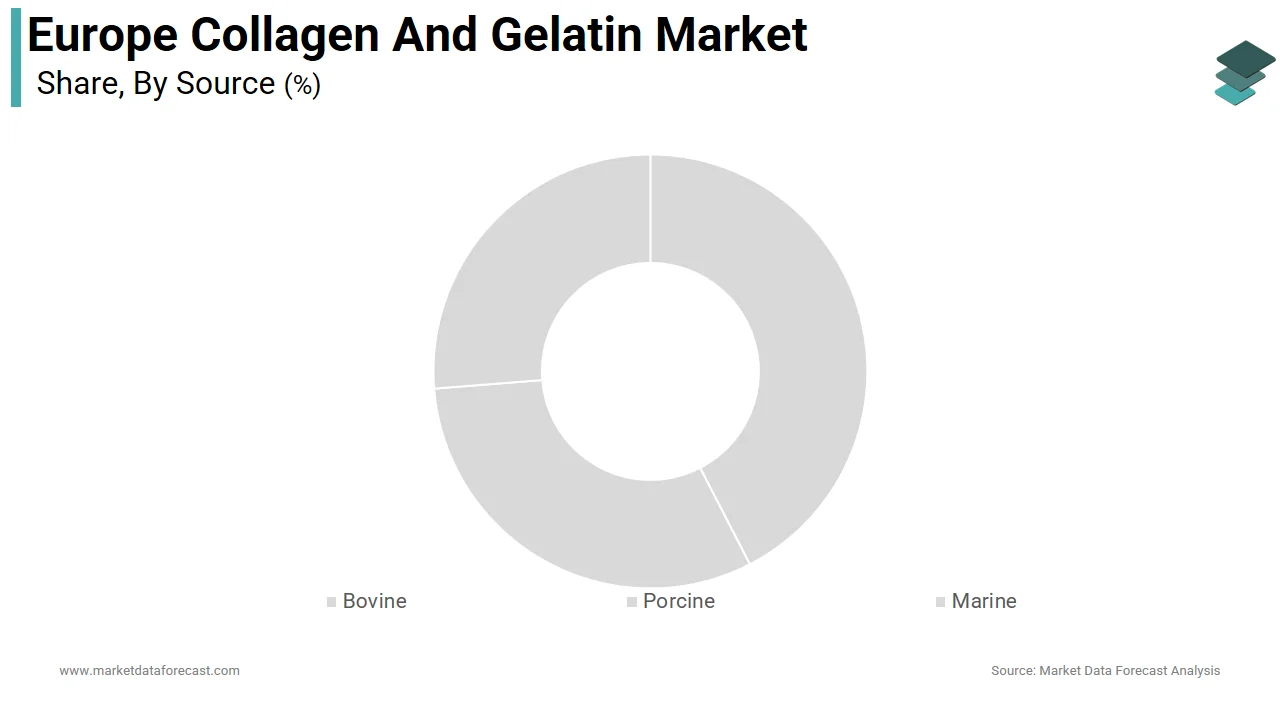
The marine collagen segment is a promising segment and is expected to exhibit a CAGR of 11.4% over the forecast period, owing to the rising consumer preference for sustainable and non‑mammalian proteins. Marine collagen is rich in type I collagen with low‑molecular‑weight peptides that exhibit superior bioavailability. According to the European Cosmetic Toiletry and Perfumery Association, more than 65% of new anti‑aging skincare launches in 2024 featured marine collagen as a key ingredient. The EU’s circular‑economy agenda supports this trend: the European Environment Agency estimates that 1.3 million tonnes of fish‑processing waste are generated annually in Europe, much of which is now valorized through collagen extraction. Countries such as Iceland, Spain, and Denmark have pioneered biorefineries converting cod, hake, and salmon byproducts into high‑purity collagen, which is supported by Horizon Europe funding. Marine collagen also qualifies for EU Organic and MSC certifications, enhancing premium positioning. Marine collagen is expected to grow rapidly as sustainability, clean‑label demand, and cosmetic innovation drive mainstream adoption.
By Application Insights
The orthopaedic segment led the market and occupied 36.3% of the European market share in 2024. Collagen’s role in bone and cartilage structure makes it indispensable in scaffolds for bone grafts, osteoarthritis treatments, and dental regeneration. According to the European Orthopaedic Research Society, more than 1.8 million orthopaedic implant procedures in the EU incorporated collagen‑based biomaterials in 2024, a 14% increase from 2021. This growth is fuelled by Europe’s aging population: the European Commission projects that 30% of EU citizens will be over 65 by 2035, which is driving demand for joint replacements and osteoporosis interventions. Regulatory pathways also favor collagen, as medical‑grade products benefit from established biocompatibility data under EU MDR Class III. Leading device companies in Germany and Switzerland integrate collagen sponges and putties into trauma and spine portfolios to ensure consistent adoption and reimbursement. Orthopaedic applications are expected to remain dominant as aging demographics and regulatory support sustain demand for collagen‑based biomaterials.
The wound care segment is the fastest-expanding application segment and is predicted to witness a CAGR of 10.8% over the forecast period, owing to the rising prevalence of chronic wounds. According to the European Wound Management Association, more than 2.2 million patients across the EU suffer from diabetic foot ulcers and venous leg ulcers annually. Collagen dressings accelerate healing by modulating inflammation and promoting fibroblast migration. According to the International Diabetes Federation, diabetes prevalence in Europe reached 9.8% in 2024, with 15–25% of patients developing foot ulcers during their lifetime. National health agencies are responding as Germany’s Federal Joint Committee updated reimbursement guidelines in 2024 to cover advanced collagen dressings for non‑healing wounds. Furthermore, the European Commission’s Innovative Health Initiative allocated €92 million in 2024 to develop next‑generation bioactive dressings, with 12 projects focusing on collagen hydrogels. Wound care is expected to grow rapidly as clinical efficacy, cost effectiveness, and EU health initiatives drive adoption across primary and specialist care.
COUNTRY‑LEVEL ANALYSIS
Germany Collagen and Gelatin Market Analysis
Germany dominated the collagen and gelatin market in Europe with 19.5% of the regional market share in 2024. The dominance of Germany in the European market is primarily attributed to its dual strength in high‑end medical device manufacturing and nutraceutical production, with global leaders such as GELITA and Symatese operating advanced collagen purification facilities. Germany is Europe’s largest consumer of pharmaceutical gelatin, used in more than 30 billion hard and soft capsules annually, as per the Federal Institute for Drugs and Medical Devices. The nation’s aging population fuels demand for orthopaedic and joint‑health products. Additionally, the German government’s High Tech Strategy 2025 allocated 140 million euros in 2024 to biomaterials innovation, including collagen scaffolds for regenerative medicine. Stringent quality standards under the German Medicinal Products Act ensure that domestic producers meet the highest safety benchmarks, which facilitates export across the EU. With integrated R&D, clinical validation, and manufacturing excellence, Germany serves as the technological and regulatory anchor of the European market and is expected to remain the driver of innovation in both medical and consumer collagen applications.
France Collagen and Gelatin Market Analysis
France ranked second in the Europe collagen and gelatin market in 2024. The strong activity in cosmetic and dermatological applications, anchored by global beauty houses such as L’Oréal and Pierre Fabre that source marine and bovine collagen for anti‑aging formulations are supporting the collagen and gelatin market growth in France. France is also a major producer of porcine gelatin, leveraging its position as Europe’s top pork producer with more than 24 million pigs slaughtered annually, as per FranceAgriMer. The National Agency for Medicines and Health Products Safety approved 28 new collagen‑based medical devices in 2024, primarily for wound and dental care. Furthermore, the French National Research Institute for Agriculture, Food and Environment leads EU‑funded projects on sustainable collagen extraction from fish waste in Brittany and Normandy. Consumer demand is robust; as per the French Health Observatory, 41% of adults over 45 regularly consume collagen supplements. With a blend of luxury cosmetics, clinical innovation, and agricultural integration, France maintains a diversified and resilient market presence and is expected to expand its leadership in sustainable sourcing and premium beauty applications.
Italy Collagen and Gelatin Market Analysis
Italy captured a promising share of the Europe collagen and gelatin market in 2024. The dual role of Italy as a leading producer of bovine collagen from the Po Valley dairy belt and a hub for medical‑grade gelatin used in pharmaceutical capsules is contributing to the Italian market growth. Italy hosts several specialized collagen peptide manufacturers that supply nutraceutical brands across Southern Europe. According to ISTAT, more than 19% of the Italian population is aged 65 or older, driving domestic consumption of joint and skin‑health products. The Italian Medicines Agency streamlined approval pathways for Class III collagen devices in 2024, reducing time to market by 30%. Additionally, marine collagen production is expanding along the Adriatic coast, where fish‑processing plants in Emilia Romagna and Marche collaborate with biotech startups to extract collagen from bluefish byproducts. The National Recovery and Resilience Plan allocated 85 million euros to biomaterials innovation, including a collagen biorefinery in Bologna. Italy’s blend of agricultural heritage, medical manufacturing, and Mediterranean sourcing ensures sustained growth across multiple segments, positioning the country as a balanced contributor to both traditional and advanced collagen markets.
Spain Collagen and Gelatin Market Analysis
Spain is anticipated to register a prominent CAGR in the Europe collagen and gelatin market over the forecast period. The country’s market is distinguished by its leadership in marine collagen production, leveraging its status as the EU’s second‑largest fish‑catching nation with more than 800,000 tons landed annually as per the Spanish Ministry of Agriculture. Companies in Galicia and Catalonia operate integrated facilities that extract high‑purity collagen from cod, hake, and tuna byproducts, supplying cosmetic and nutraceutical brands across Europe. Spain also has a growing porcine gelatin sector tied to its Iberian ham industry, which generates significant skin and bone waste. According to the National Statistics Institute, 19.8% of Spaniards are over 65, creating steady demand for mobility and skin‑health supplements. In 2024, the Spanish Agency of Medicines authorized three new collagen‑based wound dressings for diabetic care. With abundant marine feedstocks, strong export orientation, and aging demographics, Spain is emerging as a key sustainable sourcing hub in Southern Europe and is expected to strengthen its role in eco‑friendly collagen innovation.
United Kingdom Collagen and Gelatin Market Analysis
The United Kingdom is predicted to account for a notable share of the European collagen and gelatin market over the forecast period. Despite its departure from the EU, the UK remains deeply integrated into European regulatory and supply chains, with major producers such as Croda and Nitta Gelatin operating GMP‑certified collagen facilities. The country’s market is driven by advanced wound care and sports‑nutrition applications; as per the National Health Service, chronic wounds cost the UK healthcare system 5.3 billion pounds annually, accelerating the adoption of collagen dressings. The UK’s Medicines and Healthcare products Regulatory Agency approved six novel collagen scaffolds in 2024 for orthopaedic use. Additionally, British consumers show high engagement with wellness; the Office for National Statistics reported that 37% of adults aged 35 to 64 use collagen supplements regularly. The Life Sciences Vision 2024 committed 75 million pounds to regenerative medicine, including collagen‑based tissue engineering at universities in Cambridge and Edinburgh. With strong clinical research infrastructure, consumer health awareness, and innovation in regenerative medicine, the UK maintains a high‑value niche in the European landscape and is expected to expand its influence in therapeutic and lifestyle collagen applications.
COMPETITIVE LANDSCAPE
Competition in the Europe collagen and gelatin market is defined by a tiered structure where large integrated producers dominate high-value pharmaceutical and medical segments, while regional specialists focus on food and nutraceutical applications. The market is highly regulated with stringent requirements under the European Medicines Agency, European Food Safety Authority, and EU Medical Device Regulation, creating significant barriers to entry for new players. Differentiation is achieved through raw material traceability, production purity, clinical validation, and sustainability credentials rather than price competition. Bovine and porcine sources remain dominant due to established supply chains but face pressure from marine and recombinant alternatives driven by ethical and religious considerations. Leading companies leverage decades of regulatory experience to secure approvals for advanced applications in wound care, orthopaedics, and drug delivery. Meanwhile, smaller innovators focus on niche bioactive peptides or circular economy models using fish or slaughterhouse waste. The competitive landscape is further shaped by shifting consumer preferences toward clean-label natural ingredients and science-backed health benefits, requiring continuous investment in R and D and market education across diverse European cultures and regulatory environments.
KEY MARKET PLAYERS
Key players operating in the Europe collagen and gelatin market profiled in this report are
- LifeSciences Holding Corporation
- Collagen Solutions plc
- Vornia Biomaterials, Ltd.
- Collagen Matrix, Inc.
- GELITA AG
- Nitta Gelatin, Inc.
- PB Gelatins
- Rousselot
- Royal DSM
- Integra SYMATESE
- NuCollagen, LLC
TOP PLAYERS IN THE MARKET
- GELITA AG is a globally recognized leader in the Europe collagen and gelatin market, headquartered in Germany with production facilities across the continent and beyond. The company specializes in high-purity pharmaceutical food and technical gelatin as well as bioactive collagen peptides for nutraceutical and medical applications. GELITA supplies hard and soft capsule manufacturers worldwide and is a key provider of collagen matrices for wound care and orthopaedic devices. In 2024, the company expanded its Eberbach facility to increase production of certified medical-grade collagen and launched a new line of sustainably sourced marine collagen peptides for European cosmetic brands. Its commitment to vertical integration, traceability, and regulatory compliance reinforces its role as a trusted global partner in both traditional and advanced biomaterial segments.
- Rousselot is a prominent player in the Europe collagen and gelatin market, known for its science-backed collagen peptides and pharmaceutical gelatin solutions. Operating major facilities in Belgium, France, and the Netherlands, the company serves the food supplement and medical device industries with premium ingredients backed by clinical research. Rousselot’s X-Pure gelatin meets stringent global pharmacopeia standards and is widely used in vaccine and biologic delivery systems. In 2024, Rousselot inaugurated a dedicated innovation center in Ghent focused on collagen bioavailability and launched a clean-label collagen peptide series for functional beverages. Through its parent company, Darling Ingredients, it leverages circular supply chains using certified animal byproducts aligned with EU sustainability mandates, enhancing its global footprint while anchoring European production.
- Nitta Gelatin maintains a strategic presence in the Europe collagen and gelatin market through its advanced manufacturing and R and D capabilities focused on high-value medical and pharmaceutical applications. The Japanese headquartered company operates a GMP-certified European facility that produces recombinant and porcine gelatin for injectable vaccine stabilizers and regenerative medicine. Nitta is distinguished by its expertise in low-endotoxin and non-immunogenic gelatin formulations critical for parenteral use. In 2024, the company partnered with a leading German biotech firm to develop a novel collagen scaffold for cartilage repair and enhanced its European distribution network for medical-grade products. Its precision in biomaterial purity and compliance with EU MDR standards positions it as a key enabler of next-generation therapeutic delivery and tissue engineering across the region.
TOP STRATEGIES USED BY KEY MARKET PARTICIPANTS
Key players in the Europe collagen and gelatin market prioritize vertical integration of raw material sourcing to ensure traceability, sustainability, and regulatory compliance with EU animal byproduct regulations. They invest in clinical research and scientific substantiation to validate health claims for collagen peptides in joint, skin, and bone health applications. Companies expand production capacity for medical-grade gelatin to meet growing demand from vaccine and biologic manufacturers. They develop marine and alternative source collagens to address ethical and religious consumer preferences. Additionally, they pursue certifications such as Halal Kosher and Marine Stewardship Council to access diverse consumer segments and enhance premium positioning across the food, pharmaceutical, and cosmetic sectors.
MARKET SEGMENTATION
This Europe collagen and gelatin market research report is segmented and sub-segmented into the following categories.
By Source
- Bovine
- Porcine
- Marine
- Others
By Application
- Orthopaedic Applications
- Wound Care
- Cardiovascular Applications
- Others
By Country
- UK
- France
- Spain
- Germany
- Italy
- Russia
- Sweden
- Denmark
- Switzerland
- Netherlands
- Turkey
- Czech Republic
- Rest of Europe