- Product Description Description
- Table of Contents TOC
- List of Table & Figure LOT
- Get Free Sample PDF Sample PDF
Market Size, 2025
$5.85 BnMarket Estimate, 2026
$6.51 BnMarket Forecast, 2034
$15.29 BnCAGR, 2026–2034
11.26%Europe Credit Insurance Market Size
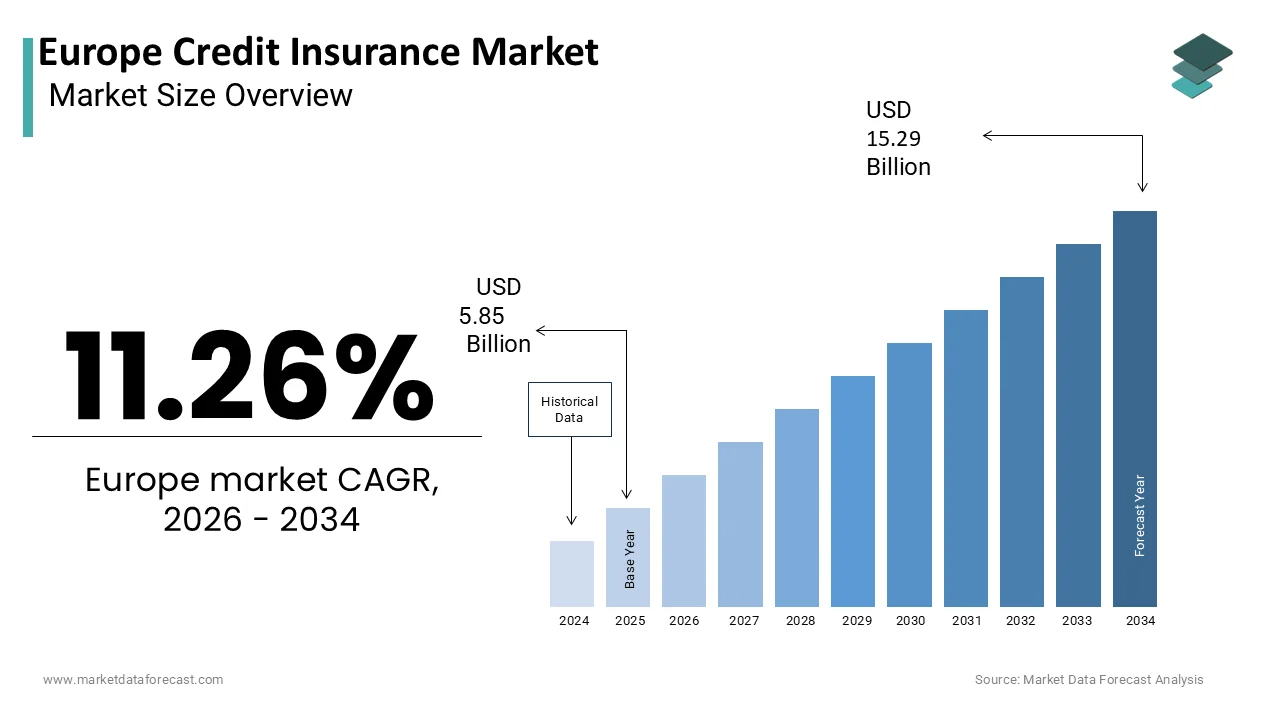
The Europe Credit Insurance Market was valued at USD 5.85 billion in 2025, is estimated to reach USD 6.51 billion in 2026, and is projected to reach USD 15.29 billion by 2034, growing at a CAGR of 11.26% from 2026 to 2034.
Credit insurance is a risk management tool that protects lenders or sellers against non-payment of debts. This specialized form of insurance covers losses arising from commercial insolvency or protracted default as well as political risks such as currency inconvertibility or war. In an economic landscape characterized by volatility and interconnected supply chains credit insurance enables companies to expand their sales with confidence while optimizing their working capital management. The sector is particularly vital for small and medium sized enterprises which often lack the internal resources to assess buyer creditworthiness effectively. According to Eurostat, trade between member states within the single market has reached record high levels, with the total value of exchanged goods now exceeding four trillion euros annually, highlighting a massive requirement for protection against payment defaults. As per the European Central Bank (ECB), while the total volume of business financing continues to grow, the ratio of corporate debt relative to economic output is trending downward, though firms still rely heavily on risk management tools to navigate tighter credit conditions and higher interest rates. The market operates within a framework of stringent regulatory oversight ensuring that insurers maintain adequate reserves to cover potential claims. Credit insurers also provide valuable data analytics and credit scoring services which help businesses make informed decisions about extending credit terms. The integration of digital technologies is transforming the industry by enabling real time monitoring of buyer behavior and faster underwriting processes. This evolution supports the resilience of European businesses in the face of global economic uncertainties and shifting trade dynamics. The market thus plays a pivotal role in sustaining liquidity and fostering stable commercial relationships across the continent.
MARKET DRIVERS
Escalating corporate insolvencies driving demand for risk mitigation
The rising trend of corporate insolvencies across the region acts as a primary factor for the increased adoption of credit insurance policies, which boost the growth of the Europe credit insurance market. Economic pressures including inflation higher interest rates and energy costs have strained the balance sheets of many businesses leading to a higher frequency of defaults. According to Allianz Trade, business failures across Western Europe are continuing to climb toward a new peak, with the building and consumer-facing sectors facing the most acute pressure from high interest rates and shifting demand. This deterioration in credit quality prompts companies to seek external protection to safeguard their receivables and maintain cash flow stability. As per Allianz Trade another major player in the market insolvency rates in key European economies such as Germany and France have shown an upward trajectory reflecting the broader economic stress. Businesses are increasingly aware that relying solely on internal credit control measures is insufficient in such a volatile environment. Credit insurance provides a safety net that allows companies to continue trading with risky buyers without exposing themselves to catastrophic losses. The ability to transfer the risk of non payment to an insurer enables firms to preserve their capital and invest in growth opportunities despite the uncertain economic backdrop. Furthermore the detailed risk assessments provided by insurers help companies identify early warning signs of potential defaults allowing for proactive management of customer portfolios. This protective function is essential for maintaining business continuity and preventing a cascade of failures within supply chains. Consequently the fear of financial loss due to customer insolvency remains a powerful driver for market expansion.
Expansion of cross border trade within and beyond the European Union
The continuous growth of cross-border trade, both within the European Union and with external partners, significantly contributes to the expansion of the European credit insurance market. As businesses expand their geographical reach they encounter unfamiliar markets with varying legal frameworks and credit cultures increasing the complexity of risk management. According to the World Trade Organization (WTO), international goods exchange is experiencing a period of restricted growth as regional tensions and trade barriers alter traditional shipping routes and global commerce hubs. This extensive network of trade relationships necessitates robust protection against political and commercial risks that are inherent in foreign transactions. As per the European Commission exports from the EU to non EU countries have grown steadily creating opportunities for businesses but also exposing them to new risks such as currency fluctuations and political instability in importing nations. Credit insurance facilitates this expansion by providing coverage for political risks including war expropriation and transfer restrictions which are not covered by standard commercial policies. This coverage gives exporters the confidence to enter emerging markets where the risk of non payment is higher. Additionally credit insurers offer valuable insights into the creditworthiness of foreign buyers helping companies make informed decisions about extending credit terms. The ability to secure financing against insured receivables also improves liquidity enabling businesses to fulfill larger orders. As global supply chains become more complex the need for comprehensive trade credit protection becomes increasingly critical. This dynamic ensures that credit insurance remains an indispensable tool for companies seeking to capitalize on international trade opportunities while managing associated risks effectively.
MARKET RESTRAINTS
High premium costs limiting accessibility for small and medium enterprises
The relatively high cost of premiums serves as a significant restraint on the growth of the European credit insurance market. This constraint is particularly evident among small and medium-sized enterprises. For many smaller businesses the expense of insuring their receivables can be prohibitive especially when profit margins are already thin. According to the European Commission’s SME Strategy, small and medium-sized enterprises typically maintain restricted cash reserves, which limits their capacity to take on new recurring expenses like comprehensive risk coverage. This financial constraint forces many smaller firms to rely on internal risk management strategies which may be less effective in mitigating large scale defaults. As per the Survey on the Access to Finance of Enterprises (SAFE), the general expense of securing external financial services is a major deterrent for smaller firms looking to safeguard their commercial transactions against default. The pricing of credit insurance is often based on the perceived risk of the insured portfolio meaning that companies operating in high risk sectors or regions face even higher premiums. This creates a disparity where those who need protection the most are often the least able to afford it. Furthermore the complexity of policy structures and exclusions can lead to unexpected costs or denied claims causing frustration among policyholders. The lack of transparency in pricing models also makes it difficult for businesses to compare options and find affordable solutions. Consequently many SMEs choose to forego credit insurance altogether leaving them exposed to significant financial risks. This limitation restricts the overall growth potential of the market as a large segment of the business community remains uninsured. Addressing the affordability issue is crucial for expanding the reach of credit insurance services.
Complexity of underwriting processes and data integration challenges
The complexity of underwriting processes and the issues associated with integrating disparate data sources are constraints on the efficiency and accessibility of the Europe credit insurance market. Underwriting credit insurance requires a thorough assessment of the creditworthiness of numerous buyers which can be time consuming and resource intensive. According to the International Credit Insurance and Surety Association the traditional underwriting process often involves manual verification of financial statements and credit histories leading to delays in policy issuance. This sluggishness can hinder businesses from responding quickly to market opportunities or changing customer needs. As per the European Banking Authority the lack of standardized data formats across different jurisdictions complicates the aggregation and analysis of credit information. Insurers often struggle to integrate data from various sources such as public records private databases and client provided information into a cohesive risk assessment model. This fragmentation leads to inconsistencies in risk evaluation and can result in either overpricing or underpricing of policies. The difficulty in accessing real time data on buyer behavior further exacerbates the problem making it hard for insurers to adjust coverage limits dynamically. For businesses this means that they may not receive timely updates on their credit limits leaving them exposed to sudden changes in buyer risk profiles. The administrative burden associated with managing these complex processes also increases operational costs for both insurers and policyholders. Until these technological and procedural hurdles are overcome the market will continue to face inefficiencies that limit its attractiveness to potential customers. Streamlining underwriting through automation and standardization is essential for overcoming this restraint.
MARKET OPPORTUNITIES
Integration of artificial intelligence and big data analytics
The integration of artificial intelligence and big data analytics offers a substantial opportunity for the Europe credit insurance market. This allows for enhanced risk assessment accuracy and operational efficiency. By leveraging advanced algorithms insurers can analyze vast amounts of structured and unstructured data to identify patterns and predict potential defaults with greater precision. According to the European Insurance and Occupational Pensions Authority the use of artificial intelligence in the insurance sector is expected to grow significantly driven by the need for more sophisticated risk modeling capabilities. This technology enables insurers to process real time data from diverse sources such as social media news feeds and transaction records providing a more holistic view of buyer risk. As per a study, the implementation of automated intelligence in the evaluation process significantly decreases the volume of manual tasks, enabling teams to handle high-value cases more effectively and improve overall service speed. The ability to monitor buyer behavior continuously also enables dynamic adjustment of credit limits reducing the exposure to sudden deteriorations in credit quality. Furthermore predictive analytics can help insurers identify emerging trends and systemic risks allowing for proactive portfolio management. This enhanced capability not only improves profitability for insurers but also offers greater value to policyholders through more accurate and responsive coverage. The adoption of machine learning models also facilitates the automation of routine tasks freeing up human experts to focus on complex cases. As data availability continues to expand the potential for innovation in credit scoring and risk mitigation grows. Embracing these technologies positions insurers to offer more competitive and tailored products. This digital transformation is key to unlocking new growth avenues in the market.
Growing demand for sustainable and green trade finance solutions
The increasing focus on sustainability and environmental responsibility creates a strong prospect for the development of green credit insurance products in the region, which is expected to boost the expansion of the Europe credit insurance market. As companies strive to meet environmental social and governance criteria there is a growing demand for insurance solutions that support sustainable supply chains and green initiatives. According to the European Commission the European Green Deal aims to make Europe the first climate neutral continent by 2050 driving a shift towards sustainable business practices. Credit insurers can capitalize on this trend by offering preferential terms or specialized coverage for transactions involving environmentally friendly products and services. As per the Sustainable Finance Disclosure Regulation financial institutions and insurers are required to disclose the sustainability impacts of their investments encouraging the development of green financial instruments. By integrating environmental risk factors into their underwriting models insurers can help businesses manage the risks associated with the transition to a low carbon economy. This includes assessing the creditworthiness of companies based on their environmental performance and resilience to climate related disruptions. Offering incentives for sustainable practices not only aligns with regulatory expectations but also enhances the reputation of insurers and policyholders. The growing investor interest in sustainable assets further supports the demand for green trade finance solutions. Insurers that pioneer these products can differentiate themselves in a competitive market and attract environmentally conscious clients. This alignment with broader societal goals ensures long term relevance and growth. The development of standardized metrics for green credit insurance will further facilitate market expansion.
MARKET CHALLENGES
Volatility in global economic conditions and geopolitical tensions
The inherent volatility in global economic conditions and escalating geopolitical tensions pose a significant challenge to the stability and predictability of the Europe credit insurance market. Economic fluctuations influenced by factors such as inflation interest rate changes and supply chain disruptions create an uncertain environment for risk assessment. According to the International Monetary Fund global economic growth has faced downward risks due to geopolitical conflicts and tightening financial conditions affecting trade flows and creditworthiness. These macroeconomic uncertainties make it difficult for insurers to accurately price policies and reserve for potential claims. As per the European Central Bank geopolitical tensions particularly in Eastern Europe have led to increased sanctions and trade restrictions impacting the credit risk profiles of many businesses. The sudden onset of conflicts or political instability can result in widespread defaults requiring insurers to pay out large volumes of claims simultaneously. This exposure to systemic risks can strain the capital reserves of insurance companies and affect their ability to underwrite new business. Furthermore the interconnected nature of global supply chains means that disruptions in one region can have cascading effects on businesses across Europe. Insurers must constantly monitor and adjust their risk models to account for these dynamic factors which requires significant resources and expertise. The unpredictability of political events also complicates the assessment of political risk coverage. Maintaining profitability in such a volatile environment requires robust risk management strategies and flexible underwriting guidelines. This constant state of uncertainty challenges the long term planning and strategic development of market participants.
Regulatory compliance burdens and evolving legal frameworks
The stringent regulatory compliance burdens and the constantly evolving legal frameworks in the region are a serious hurdle for insurance providers in the Europe credit insurance market. Insurers must navigate a complex web of regulations including Solvency II which imposes strict capital requirements and risk management standards. According to the European Insurance and Occupational Pensions Authority (EIOPA), the regulatory framework is evolving to streamline submission requirements, aiming to decrease the administrative load on insurers while maintaining high standards for financial transparency and capital stability. These regulatory demands increase operational costs and can limit the flexibility of insurers to innovate and respond quickly to market changes. As per the General Data Protection Regulation the handling of personal and business data for credit assessment purposes must adhere to strict privacy standards adding another layer of complexity to operations. Non compliance with these regulations can result in severe penalties and reputational damage. The harmonization of insurance laws across different European countries remains incomplete leading to fragmented regulatory landscapes that insurers must manage. This fragmentation increases the administrative burden for companies operating in multiple jurisdictions. Furthermore changes in trade policies and sanctions regimes require insurers to update their compliance protocols frequently to avoid violating international laws. The need for continuous monitoring and adaptation to regulatory changes diverts resources from core business activities. Keeping pace with these evolving requirements requires dedicated legal and compliance teams which adds to the overall cost structure. Balancing regulatory adherence with business agility remains a persistent challenge for the industry.
REPORT COVERAGE
| REPORT METRIC | DETAILS |
| Market Size Available | 2025 to 2034 |
| Base Year | 2025 |
| Forecast Period | 2026 to 2034 |
| Segments Covered | By Insurance Type, Industry, Premium Type, and Region. |
| Various Analyses Covered | Global, Regional and Country-Level Analysis, Segment-Level Analysis, Drivers, Restraints, Opportunities, Challenges; PESTLE Analysis; Porter’s Five Forces Analysis, Competitive Landscape, Analyst Overview of Investment Opportunities |
| Countries Covered | UK, France, Spain, Germany, Italy, Russia, Sweden, Denmark, Switzerland, Netherlands, Turkey, Czech Republic, Rest of Europe |
| Market Leaders Profiled | Allianz Trade (Euler Hermes), Atradius N.V., Coface, Zurich Insurance Group Ltd., American International Group, Inc., AXA S.A., Chubb Limited, QBE Insurance Group Limited, Credendo Group, Tokio Marine HCC, Sompo Holdings, Inc., Swiss Re Group |
SEGMENTAL ANALYSIS
By Insurance Type Insights
The domestic credit insurance segment dominated the Europe credit insurance market and accounted for a 65.6% share in 2025. This dominance of the segment is driven by the vast volume of intra national trade activities and the high density of business transactions within individual European countries. The stability and predictability of domestic markets make this segment the primary source of revenue for credit insurers. Moreover, the sheer volume of intra national business transactions across Europe serves as the primary engine for the dominance of domestic credit insurance. Companies within each country engage in continuous trade with local suppliers and customers creating a massive base of receivables that require protection. According to Eurostat, the total economic activity of businesses within the European Union generates a combined annual turnover reaching tens of trillions of euros, with domestic trade within the single market forming the primary revenue driver for most member states. This extensive network of local commerce necessitates robust credit risk management solutions to safeguard cash flows against customer defaults. As per the European Central Bank small and medium sized enterprises which form the backbone of the European economy rely heavily on trade credit for working capital making them prime candidates for domestic credit insurance. The frequency of transactions in domestic markets is significantly higher than in export markets leading to a greater accumulation of insured exposure. Furthermore the legal and regulatory frameworks governing domestic trade are well established and uniform within each country simplifying the underwriting process for insurers. This ease of assessment encourages broader adoption of insurance policies among local businesses. The integration of supply chains within national borders also means that disruptions in one part of the domestic economy can have ripple effects increasing the perceived need for protection. Consequently the consistent demand from a wide array of industries for covering local receivables ensures that domestic credit insurance remains the largest segment in the market. The familiarity of businesses with local market conditions further facilitates the uptake of these policies. The presence of established legal frameworks and the relative ease of underwriting domestic risks significantly contribute to the leading position of this segment. Domestic credit insurance benefits from transparent and accessible data on company financials bankruptcy records and payment behaviors which are often centralized and standardized within each country. According to the World Trade Organization (WTO), international commerce is entering a period of significant uncertainty, with trade volume forecasts being adjusted downward as global economies face new barriers and shifting policy landscapes. This efficiency reduces operational costs and enables insurers to offer competitive premiums to a broad customer base. As per the United Nations Commission on International Trade Law while international trade laws vary significantly domestic commercial laws within European countries are harmonized and predictable reducing legal uncertainties for insurers. This stability encourages insurers to write larger volumes of domestic business with confidence. The ability to automate underwriting decisions for low risk domestic clients further enhances scalability and profitability. Insurers can leverage advanced algorithms to process large numbers of domestic applications quickly providing immediate coverage decisions. This responsiveness is highly valued by businesses that need to extend credit terms rapidly to secure sales. Additionally the lower complexity of domestic claims handling due to familiar legal procedures and language barriers absence leads to faster resolution times. These operational advantages make domestic credit insurance a more attractive and manageable product for both insurers and policyholders. The streamlined processes support high penetration rates across various industry sectors within each country.
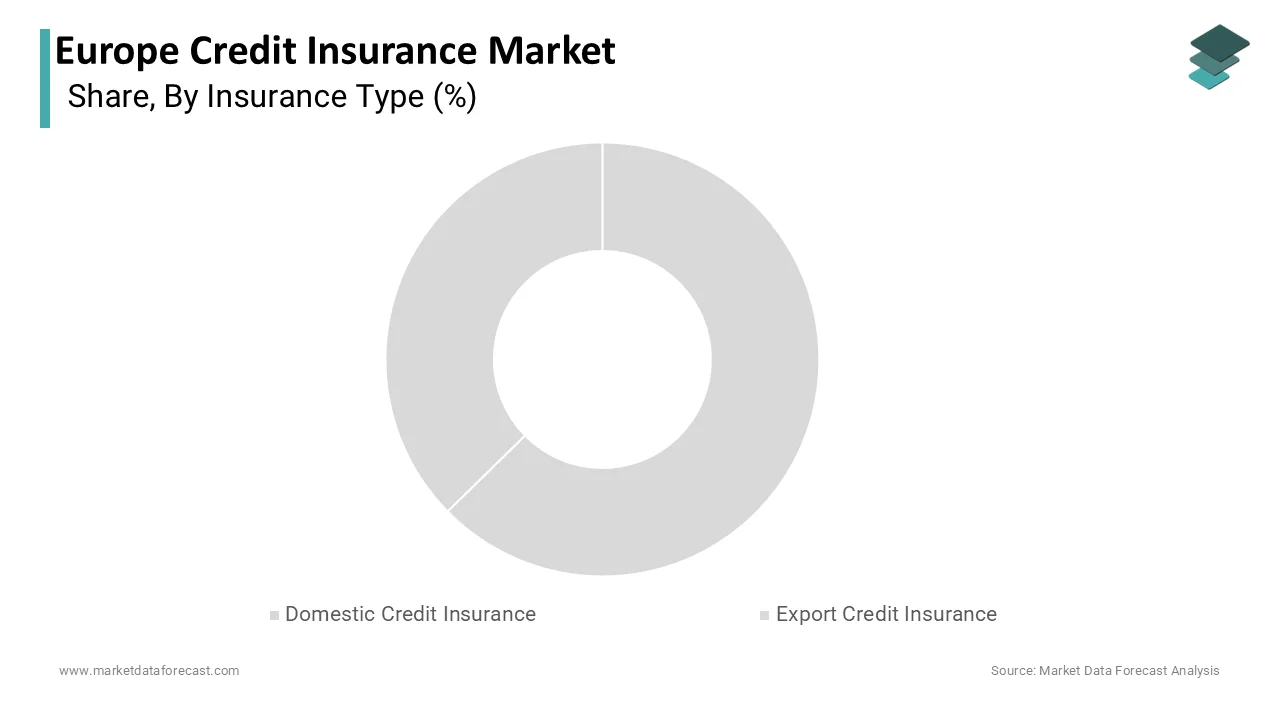
The export credit insurance segment is predicted to witness the highest CAGR of 6.8% between 2026 and 2034 owing to the increasing globalization of European businesses and the need to mitigate risks associated with international trade. In addition, the accelerating trend of globalization and the strategic expansion of European companies into emerging markets are key drivers for the rapid growth of export credit insurance. As domestic markets become saturated businesses are increasingly looking abroad for growth opportunities exposing themselves to higher levels of commercial and political risk. According to the World Trade Organization global trade volumes are expected to grow steadily with emerging economies contributing a larger share of this expansion. European exporters entering these markets face uncertainties such as currency instability political unrest and weaker legal protections for creditors. As per the European Commission the EU has signed numerous free trade agreements in recent years facilitating access to new markets but also increasing the complexity of risk management for exporters. Export credit insurance provides essential protection against non payment due to both commercial insolvency and political events such as war or expropriation. This coverage enables companies to bid for contracts and extend credit terms with confidence in regions where risk perception is high. The growing importance of supply chain diversification away from single sources also drives trade with multiple international partners increasing the need for comprehensive export coverage. Furthermore government supported export credit agencies in Europe actively promote exports by providing insurance facilities encouraging private sector participation. The ability to secure financing against insured export receivables further enhances the attractiveness of these policies. As European firms continue to deepen their footprint in Asia Africa and Latin America the demand for export credit insurance will sustain its high growth trajectory. This strategic shift towards internationalization ensures sustained momentum for the segment. The heightened volatility in foreign exchange rates and increasing geopolitical instability globally are significant factors accelerating the adoption of export credit insurance. Fluctuations in currency values can severely impact the profitability of export transactions and the ability of foreign buyers to pay. Export credit insurance helps mitigate the financial impact of these fluctuations by covering losses arising from currency inconvertibility or transfer restrictions. Businesses are increasingly aware of the potential for sudden disruptions in trade relationships due to sanctions or diplomatic disputes. Export credit insurance provides a safety net against such unforeseen political events ensuring that exporters are compensated for losses incurred. The rising frequency of trade disputes and protectionist measures in some regions further underscores the need for political risk coverage. Insurers are responding by offering more flexible and comprehensive policies that address these evolving risks. The ability to navigate complex international environments with the support of expert risk assessment from insurers is becoming a competitive advantage. This protective function is crucial for maintaining business continuity in an unpredictable global landscape. So, the demand for export credit insurance is rising as companies seek to safeguard their international revenues against external shocks.
By Industry Insights
The manufacturing segment led the Europe credit insurance market and captured a 30.6% share in 2025. This leading position of segment is attributed to the capital intensive nature of the sector long payment cycles and the extensive supply chains that characterize modern manufacturing operations. The capital intensive nature of the manufacturing industry combined with long payment cycles creates a substantial need for credit insurance to protect working capital. Manufacturing companies often invest heavily in raw materials production equipment and labor before receiving payment from their customers which can take 60 to 90 days or longer. This extended credit period leaves manufacturers vulnerable to cash flow disruptions if a major customer fails to pay. The high value of individual transactions in manufacturing further amplifies the potential impact of a single default making insurance a critical risk management tool. Manufacturers often deal with a concentrated base of large buyers meaning that the insolvency of one key customer can have devastating financial consequences. Credit insurance mitigates this concentration risk by covering a significant portion of the loss. Additionally the global nature of manufacturing supply chains involves cross border transactions that carry additional political and commercial risks. The ability to insure these receivables allows manufacturers to maintain stable operations and continue investing in innovation and capacity expansion. This financial security is essential for sustaining competitiveness in a global market. The reliance on trade credit as a primary financing mechanism ensures that manufacturing remains the leading user of credit insurance services. The complexity of global supply chains and the deep interdependencies among manufacturing entities drive the dominant position of this segment in the credit insurance market. Modern manufacturing relies on intricate networks of suppliers and distributors spanning multiple countries each introducing potential points of failure. Credit insurance provides visibility into the financial health of suppliers and customers across the entire supply chain enabling manufacturers to identify and mitigate risks proactively. Insurers offer valuable data and analytics that help manufacturers monitor the stability of their partners and adjust credit limits accordingly. This real time insight is crucial for maintaining the flow of goods and payments in a volatile environment. The interdependence of manufacturers with downstream distributors and upstream suppliers means that credit risk is shared across the network. Insurance policies often cover entire portfolios of buyers providing comprehensive protection against systemic risks. The ability to transfer these risks to insurers allows manufacturers to focus on core competencies such as production efficiency and product development. Furthermore the requirement for compliance with international trade regulations and standards is facilitated by the due diligence processes of credit insurers. This support enhances the overall reliability and sustainability of manufacturing operations. The critical role of credit insurance in managing supply chain complexity ensures its continued dominance in the manufacturing sector.
The professional services segment is estimated to register the fastest CAGR of 7.2% over the forecast period. This swift growth of the segment is propelled by the increasing reliance on trade credit in service delivery and the rising value of contracts in sectors such as consulting IT and legal services. The increasing value of service contracts and the trend towards extending credit terms in the professional services sector are primary drivers for the rapid growth of credit insurance in this segment. Professional service firms including consulting agencies IT providers and legal firms are increasingly engaging in large scale projects with payment terms that stretch over several months. As projects become larger and more complex the financial exposure to client non payment increases substantially. Credit insurance offers a solution by protecting these high value receivables against insolvency and protracted default. The shift towards outcome based pricing models where payment is linked to project milestones further extends the credit period and increases risk. Professional service firms are recognizing that traditional credit checks are insufficient for managing these dynamic risks. The adoption of credit insurance allows them to bid for larger contracts with confidence knowing that their revenue is protected. Additionally the intangible nature of services makes recovery of debts more difficult in case of default making insurance a vital safety net. The growing recognition of credit risk as a strategic issue in the services sector is driving uptake. This trend is supported by the increasing availability of tailored insurance products designed for the unique needs of service providers. The focus on financial resilience in a competitive market ensures sustained growth for this segment. The rapid digital transformation of the professional services sector and the associated increase in cyber risk exposure are accelerating the adoption of credit insurance. As professional service firms increasingly deliver services through digital platforms and cloud based systems they become more vulnerable to cyber attacks that can disrupt operations and affect client ability to pay. While traditional credit insurance covers commercial and political risks many insurers are now offering integrated solutions that address cyber related credit risks. Professional service firms are seeking comprehensive protection that covers not only traditional insolvency but also the indirect effects of cyber incidents on their receivables. The integration of cyber risk assessment into credit underwriting provides a more holistic view of client stability. This expanded coverage appeals to IT and consulting firms that operate in high risk digital environments. The growing awareness of the interconnectedness of cyber and credit risks is driving demand for specialized insurance products. Insurers are leveraging data analytics to assess cyber resilience of clients offering insights that help service providers manage their portfolios effectively. This innovation in product offerings aligns with the evolving risk landscape of the digital economy. The proactive approach to managing emerging risks positions professional services as a high growth segment in the credit insurance market.
By Premium Type Insights
The annual premium segment held the majority share in the Europe credit insurance market in 2025. This supremacy of the segment is credited to the preference of businesses for comprehensive and continuous coverage that simplifies administration and provides consistent protection throughout the fiscal year. The strong preference for comprehensive and continuous coverage among European businesses is the primary driver for the dominance of the annual premium segment. Companies prefer annual policies because they provide uninterrupted protection for all eligible receivables eliminating the need to negotiate separate contracts for each transaction or customer. According to the Federation of European Risk and Insurance Managers annual policies are favored for their administrative efficiency and predictability in cost planning. This approach allows businesses to integrate credit insurance seamlessly into their overall risk management strategy without the burden of frequent renewals or adjustments. Annual policies typically cover the entire portfolio of buyers which is particularly beneficial for companies with diverse customer bases. This broad coverage ensures that no significant exposure is left unprotected reducing the risk of gaps in coverage. The simplicity of managing a single policy rather than multiple individual contracts saves time and resources for finance and risk management teams. Furthermore annual policies often come with added value services such as regular credit reports and risk monitoring which help businesses stay informed about their customers financial health. The continuous nature of the coverage supports long term business relationships and fosters trust with customers. The alignment of annual insurance cycles with corporate fiscal years also simplifies accounting and reporting processes. These operational and strategic advantages make annual premiums the preferred choice for the majority of businesses in Europe. The cost efficiency and administrative simplicity associated with annual premium policies significantly contribute to their leading position in the market. Annual policies generally offer lower average premiums per unit of coverage compared to single or multiyear premiums due to the economies of scale and reduced administrative overhead for insurers. This cost advantage makes annual coverage more accessible to a wider range of businesses including small and medium sized enterprises. Businesses do not need to submit detailed information for every new customer or transaction as the policy automatically covers new buyers within agreed limits. This automation enhances efficiency and allows companies to respond quickly to sales opportunities without waiting for insurance approval. The predictability of annual premiums also facilitates better financial planning and cash flow management. Companies can allocate a fixed budget for credit insurance knowing that their coverage will remain consistent throughout the year. The ease of administration and cost effectiveness make annual premiums an attractive option for businesses seeking reliable and affordable credit protection. The widespread adoption of digital platforms for policy management further enhances the convenience of annual policies. These factors collectively ensure that annual premiums remain the dominant choice in the Europe credit insurance market.
The single premium segment is anticipated to witness the fastest CAGR of 5.5% from 2026 to 2034 due to the increasing demand for flexible and targeted coverage for specific high value transactions or short term projects. Also, the need for flexibility in covering specific high value transactions is a key driver for the rapid growth of the single premium segment. Businesses often engage in large one off projects or sales to new customers where the risk exposure is significant but temporary. According to the International Chamber of Commerce single premium policies allow companies to insure individual transactions without committing to long term contracts providing tailored protection for unique situations. This flexibility is particularly valuable for companies entering new markets or dealing with unfamiliar buyers where the risk profile is uncertain. As per the UK Export Finance agency single premium export credit insurance is increasingly used by SMEs to secure specific export contracts enabling them to compete globally with greater confidence. The ability to purchase coverage on a transaction by transaction basis allows businesses to manage their insurance costs more effectively by only paying for the protection they need. This approach is ideal for sporadic or irregular trade activities where annual coverage may not be cost effective. Single premium policies also offer faster issuance times allowing businesses to secure coverage quickly to meet tight deadlines. The transparency of pricing for individual transactions helps companies assess the true cost of risk for each deal. This granular approach to risk management appeals to businesses that prioritize agility and precision in their financial operations. The growing complexity of international trade deals further increases the demand for such specialized coverage. As companies seek to optimize their risk retention strategies single premium insurance offers a viable alternative to broad portfolio coverage. This targeted approach ensures sustained growth for the segment. The rise of short term projects and contract based work in various industries is accelerating the adoption of single premium credit insurance. Many businesses particularly in construction consulting and technology sectors operate on a project basis where the duration of engagement is limited and the risk is confined to specific milestones. Single premium policies provide coverage for the exact duration of the project ensuring that businesses are protected only when necessary. Traditional annual policies may not be suitable for these workers due to cost and complexity. Single premium insurance offers a simple and affordable solution for protecting individual invoices or contracts. The ability to customize coverage limits and terms for each project enhances the relevance of these policies. Insurers are developing user friendly digital platforms that allow for instant quoting and purchasing of single premium policies catering to the needs of agile businesses. This accessibility lowers the barrier to entry for smaller entities and independent professionals. The trend towards project based work is expected to continue driven by the desire for flexibility and cost efficiency in the labor market. Thus, the demand for single premium credit insurance will grow in tandem with this structural shift in employment and business models.
COUNTRY LEVEL ANALYSIS
Germany Credit Insurance Market Analysis
Germany outperformed other countries in the Europe credit insurance market and accounted for a 22.4% share in 2025. The demand for credit insurance in German is supported by its status as the largest economy in Europe and a global export powerhouse with a highly developed industrial base. Moreover, the German economy is heavily reliant on exports particularly in the automotive machinery and chemical sectors which generates substantial demand for credit insurance. According to the Federal Statistical Office of Germany exports of goods amounted to over 1.5 trillion euros in recent years highlighting the vast volume of trade requiring protection. This export orientation exposes German companies to diverse international risks making credit insurance a critical component of their risk management strategies. Research indicate that the German market for trade protection is the most substantial in the region, largely due to the risk-conscious nature of the country's prominent middle-market industrial sector. These companies often operate in niche global markets where buyer risk can be volatile necessitating robust coverage. The strong regulatory framework in Germany ensures that insurers maintain high standards of solvency and service quality fostering trust among policyholders. The presence of major global credit insurers headquartered in Germany further strengthens the market infrastructure and innovation. The country’s focus on digitalization in the financial sector is leading to the adoption of advanced underwriting tools and real time monitoring systems. The stability of the German legal system facilitates efficient claims handling and dispute resolution. The continuous investment in research and development by German insurers ensures that products remain aligned with evolving customer needs. The strong trade links with emerging markets also drive demand for political risk coverage. The resilience of the German industrial sector ensures steady demand for credit insurance services. The collaborative approach between insurers and industry associations promotes best practices and risk awareness. These factors collectively sustain Germany’s position as the largest market for credit insurance in Europe.
United Kingdom Credit Insurance Market Analysis
The United Kingdom was the next prominent country in the Europe credit insurance market and captured a 18.8% share in 2025. This growth trajectory of the UK market is fuelled by its robust financial services sector and significant international trade activities despite the changes brought by Brexit. The UK has a long standing tradition of insurance excellence with London being a global hub for specialty insurance including credit and political risk. According to the Association of British Insurers the UK insurance sector contributes significantly to the economy with credit insurance playing a vital role in supporting trade. The post Brexit environment has introduced new trade barriers and regulatory complexities increasing the need for credit risk mitigation among UK exporters. As per the Department for Business and Trade UK businesses are diversifying their export markets beyond the EU leading to increased exposure to non European risks. This shift drives demand for export credit insurance that covers political and commercial risks in emerging markets. The strong legal framework in the UK provides certainty for contract enforcement and claims settlement enhancing the attractiveness of the market for insurers. The presence of leading global credit insurers and brokers in London facilitates access to capacity and expertise for UK businesses. The focus on innovation in the UK insurance market is driving the development of digital platforms and data analytics tools. The government support for exports through UK Export Finance complements private credit insurance offerings. The resilience of the UK service sector particularly in professional and financial services also contributes to market growth. The high level of awareness regarding credit risk among UK companies ensures steady demand for insurance products. The adaptive nature of the UK market allows it to respond quickly to changing trade dynamics. These elements maintain the UK’s strong position in the European credit insurance landscape.
France Credit Insurance Market Analysis
France is another key player in the Europe credit insurance market due to its diverse industrial base strong export orientation and active government support for international trade. The French economy features a mix of large multinational corporations and dynamic small and medium sized enterprises both of which utilize credit insurance to manage risk. According to sources, the trade credit insurance market has experienced premium increases as businesses seek to mitigate payment risks in a shifting economic landscape. France is a major exporter of aerospace luxury goods and agricultural products sectors that often involve high value transactions and long payment cycles. As per Bpifrance, French international expansion is facilitated by State-backed export guarantees and private insurance options that safeguard against political and commercial defaults. The collaboration between private insurers and the public agency Bpifrance ensures that French exporters have access to comprehensive coverage even in high risk markets. The regulatory environment in France is stringent ensuring high standards of consumer protection and insurer solvency. The increasing focus on digital transformation in the French insurance sector is improving the efficiency and accessibility of credit insurance products. The growing awareness of cyber risks and their impact on creditworthiness is driving innovation in product offerings. The strong presence of French insurers in international markets also contributes to the domestic market depth. The emphasis on sustainable finance is leading to the development of green credit insurance products. The robust legal system facilitates efficient resolution of credit disputes. These factors support the continued growth and stability of the credit insurance market in France. The strategic importance of trade to the French economy ensures sustained demand for risk mitigation tools.
Italy Credit Insurance Market Analysis
Italy holds a significant share of the Europe credit insurance market. It is driven by its strong manufacturing sector particularly in fashion machinery and food processing and the prevalence of small and medium sized enterprises. The Italian economy is characterized by a large number of small and medium sized enterprises that are heavily involved in export activities. According to the Italian National Institute of Statistics (ISTAT), Italian export performance is currently uneven, with notable strength in the United States contrasting with a slowdown in several traditional European partner countries. These SMEs often lack the internal resources to manage credit risk effectively making them reliant on external insurance solutions. As per the Italian Association of Insurance Companies credit insurance is seen as a vital tool for accessing bank financing and expanding sales channels. The high level of fragmentation in the Italian supply chain increases the complexity of risk management driving demand for portfolio coverage. The government initiatives to support internationalization of Italian businesses include incentives for adopting risk management tools such as credit insurance. The regulatory framework in Italy aligns with European standards ensuring transparency and stability in the insurance market. The increasing adoption of digital technologies by Italian insurers is improving the speed and accuracy of underwriting processes. The focus on recovering non performing loans has also increased the relevance of credit insurance in the financial sector. The strong cultural emphasis on relationships in business requires insurers to provide personalized services and local expertise. The resilience of the Italian manufacturing sector despite global challenges ensures steady demand for credit protection. The growing interest in sustainable business practices is influencing product development. These dynamics contribute to the steady growth of the credit insurance market in Italy. The strategic support for SMEs ensures broad market penetration.
Netherlands Credit Insurance Market Analysis
The Netherlands is likely to grow notably in the Europe credit insurance market from 2026 to 2034 owing to its role as a major logistics and trade hub in Europe with a highly open and internationalized economy. Also, the Netherlands serves as a gateway for trade into Europe with the Port of Rotterdam handling vast volumes of goods. According to Statistics Netherlands the country has one of the highest ratios of trade to GDP in the world reflecting its deep integration into global supply chains. This extensive trade activity creates a high demand for credit insurance to protect against defaults in international transactions. As per the Dutch Association of Insurers the credit insurance market in the Netherlands is mature and sophisticated with high penetration rates among exporting companies. The presence of major multinational corporations and trading houses in the Netherlands drives demand for complex and customized insurance solutions. The strong regulatory environment and supervisory authority ensure high standards of governance and solvency for insurers. The Dutch market is known for its innovation in insurance technology with many startups and incumbents developing digital solutions for credit risk assessment. The focus on sustainability and corporate social responsibility is leading to the integration of environmental social and governance criteria in underwriting. The collaborative culture in the Dutch business community facilitates information sharing and risk management best practices. The strategic location of the Netherlands makes it a center for reinsurance and risk distribution. The high level of English proficiency and international orientation supports cross border business activities. These factors position the Netherlands as a key player in the European credit insurance market. The continuous adaptation to global trade trends ensures market relevance and growth.
COMPETITIVE LANDSCAPE
The competition in the Europe credit insurance market is characterized by a concentrated landscape dominated by a few large international players alongside specialized regional providers. Major corporations compete on the basis of financial strength data analytics capabilities and the breadth of their global networks. Differentiation is increasingly achieved through digital innovation and the quality of customer service rather than price alone. Insurers are investing heavily in technology to offer real time risk monitoring and seamless user experiences. The barrier to entry remains high due to the need for substantial capital reserves and sophisticated risk modeling expertise. Regulatory compliance with Solvency II and other frameworks adds complexity favoring established entities with robust governance structures. Mergers and acquisitions are common strategies used to consolidate market position and acquire technological capabilities. The market sees intense rivalry in providing value added services such as debt collection and factoring. Customer retention is critical leading to focused efforts on building long term relationships through personalized support. The rise of insurtech startups introduces new competitive dynamics prompting traditional insurers to adapt quickly. Collaboration between incumbents and tech firms is becoming a standard approach to drive innovation. The focus on sustainability and ESG factors is creating new avenues for competitive advantage. Overall the market remains dynamic with continuous evolution driven by technological and regulatory changes.
KEY MARKET PLAYERS
Some of the companies that are playing a dominating role in the global Europe Credit Insurance Market include
- Allianz Trade (Euler Hermes)
- Atradius N.V.
- Coface
- Zurich Insurance Group Ltd.
- American International Group, Inc. (AIG)
- AXA S.A.
- Chubb Limited
- QBE Insurance Group Limited
- Credendo Group
- Tokio Marine HCC
- Sompo Holdings, Inc.
- Swiss Re Group
TOP LEADING PLAYERS IN THE MARKET
- Allianz Trade stands as a premier global leader in credit insurance and risk management services with a profound influence on the European market. The company provides comprehensive solutions that protect businesses against commercial and political risks enabling secure trade across borders. Allianz Trade contributes significantly to the global market by leveraging extensive data analytics and digital platforms to offer real time credit insights. Recent actions to strengthen its position include the launch of enhanced digital tools that streamline underwriting processes and improve customer experience. The company has also expanded its sustainability focused offerings helping clients manage environmental social and governance risks within their supply chains. By integrating artificial intelligence into risk assessment models Allianz Trade enhances the accuracy of credit decisions. Their strategic partnerships with financial institutions facilitate better access to working capital for insured businesses. The continuous investment in cybersecurity ensures robust protection of sensitive client data. These initiatives reinforce their reputation for innovation and reliability. Allianz Trade actively engages in thought leadership providing valuable economic research that guides business strategies. Their commitment to supporting small and medium sized enterprises through tailored products further solidifies their market presence. The company’s global network allows for seamless cross border service delivery ensuring consistent quality. This holistic approach ensures sustained growth and customer loyalty in a competitive landscape.
- Atradius is a dominant force in the Europe credit insurance market offering specialized solutions that safeguard businesses from non payment risks. The company plays a crucial role in facilitating international trade by providing reliable coverage and insightful credit information. Atradius contributes to the global market through its extensive network of offices and experts who understand local market dynamics. Recent actions to strengthen its market position include significant investments in digital transformation initiatives that enhance operational efficiency. The company has introduced advanced online platforms that allow clients to manage policies and monitor buyer risks in real time. Atradius has also focused on expanding its suite of value added services such as debt collection and factoring support. These integrated solutions provide a holistic approach to receivables management for clients. The company actively collaborates with industry associations to promote best practices in credit risk management. Their emphasis on sustainability is evident in the development of green insurance products that support eco friendly business practices. Atradius leverages big data analytics to refine its underwriting models ensuring precise risk pricing. The company’s strong capital base provides stability and confidence to policyholders during economic uncertainties. By focusing on customer centric innovation Atradius maintains its competitive edge. Their proactive approach to emerging risks such as cyber threats ensures comprehensive protection. This strategic focus on technology and service excellence drives long term value creation.
- Coface is a leading specialist in credit insurance and business services with a strong footprint in the European market. The company helps businesses trade with confidence by offering protection against customer insolvency and protracted default. Coface contributes to the global market by providing unique economic expertise and data driven insights that inform decision making. Recent actions to strengthen its market position include the implementation of agile digital solutions that simplify the customer journey. The company has enhanced its online portal allowing for faster quote generation and policy management. Coface has also expanded its international presence through strategic alliances and localized service offerings in key growth markets. The integration of machine learning algorithms into their risk assessment processes has improved the speed and accuracy of credit limits. Coface places a strong emphasis on corporate social responsibility promoting sustainable business practices among its clients. Their dedicated teams provide personalized support helping businesses navigate complex regulatory environments. The company regularly publishes detailed country risk analyses which are highly regarded by industry professionals. Coface focuses on developing tailored solutions for specific sectors such as automotive and construction. This sector specific expertise allows for more nuanced risk management strategies. By prioritizing transparency and trust Coface builds lasting relationships with its clients. Their commitment to innovation ensures they remain at the forefront of the industry. This customer focused strategy drives continuous improvement and market relevance.
TOP STRATEGIES USED BY THE KEY MARKET PARTICIPANTS
Key players in the Europe credit insurance market primarily focus on digital transformation to enhance operational efficiency and customer experience. Companies invest heavily in artificial intelligence and machine learning to improve risk assessment accuracy and automate underwriting processes. Strategic partnerships with fintech firms enable the integration of innovative technologies such as blockchain for secure data sharing. Sustainability is a major strategic pillar with insurers developing green products that align with environmental social and governance criteria. Expansion into emerging markets through local collaborations helps companies diversify their portfolios and capture new growth opportunities. Data analytics capabilities are strengthened to provide real time insights and predictive modeling for better decision making. Customer centric approaches involve simplifying policy structures and offering flexible coverage options tailored to specific industry needs. Continuous investment in cybersecurity ensures the protection of sensitive client information and maintains trust. These strategies collectively drive competitiveness and resilience in a dynamic market environment.
MARKET SEGMENTATION
This research report on the europe credit insurance market is segmented and sub-segmented into the following categories
By Insurance Type
- Domestic Credit Insurance
- Export Credit Insurance
By Industry
- Manufacturing
- Professional Services
By Premium Type
- Annual Premium
- Single Premium
By Country
- Germany
- United Kingdom
- France
- Italy
- Netherlands
- Rest of Europe