- Product Description Description
- Table of Contents TOC
- List of Table & Figure LOT
- Get Free Sample PDF Sample PDF
Market Size, 2025
$0.64 BnMarket Estimate, 2026
$0.69 BnMarket Forecast, 2034
$1.25 BnCAGR, 2026–2034
7.7%Europe Dental Software Market Report Summary
The Europe dental software market was valued at USD 0.64 billion in 2025, is estimated to reach USD 0.69 billion in 2026, and is projected to reach USD 1.25 billion by 2034, growing at a CAGR of 7.7% from 2026 to 2034. Market growth is driven by the increasing adoption of digital dentistry solutions, rising demand for efficient practice management systems, and growing integration of advanced diagnostic technologies in dental clinics. Dental software enables dental professionals to manage patient records, imaging data, billing processes, and clinical workflows more efficiently. The expansion of digital healthcare infrastructure, increasing demand for automated clinical workflows, and rising awareness of modern dental care technologies are further supporting market expansion across Europe.
Key Market Trends
- Increasing adoption of digital practice management and patient record systems in dental clinics.
- Rising integration of imaging, diagnostics, and treatment planning software in modern dentistry.
- Growing demand for automated workflow and appointment management systems.
- Expansion of cloud-enabled dental software platforms and data management solutions.
- Increasing government initiatives promoting digital health and electronic health record integration.
Segmental Insights
- Based on type, the practice management software segment dominated the Europe dental software market by holding 36.6% share in 2025, driven by the need for efficient scheduling, billing, and patient data management in dental practices.
- Based on application, the clinical application software segment held the largest share of 61.5% in 2025, supported by increasing adoption of digital imaging, diagnostics, and treatment planning tools in dental care.
- Based on deployment, the on-premise segment retained the largest share of 51.9% in 2025, driven by concerns regarding data security, regulatory compliance, and the preference for locally hosted systems among dental clinics.
Regional Insights
The Europe dental software market is witnessing steady growth across major countries due to increasing digitalization in dental practices and growing demand for advanced dental technologies.
- Germany dominated the regional market in 2025 with 24.4% share, supported by a strong healthcare infrastructure and widespread adoption of digital dental technologies.
- The United Kingdom held a promising share in 2025, driven by the increasing adoption of practice management systems and digital diagnostic tools in dental clinics.
- France is expected to register a strong CAGR during the forecast period due to its dense network of private dental practitioners and government incentives promoting digital health solutions.
Competitive Landscape
The Europe dental software market is characterized by the presence of dental technology providers and healthcare software developers competing through innovation and integrated digital dentistry solutions. Market participants are focusing on improving workflow automation, enhancing imaging and diagnostic capabilities, and expanding cloud-based software platforms. Strategic collaborations with dental clinics, laboratories, and healthcare institutions are shaping competitive dynamics across the region.
Prominent companies operating in the Europe dental software market include Carestream Health Inc., Dentsply Sirona, Elite Computer Italia (OrisLine Group), Henry Schein Inc., and KaVo Dental GmbH.
 Download Free Sample Report
Europe Dental Software Market Size
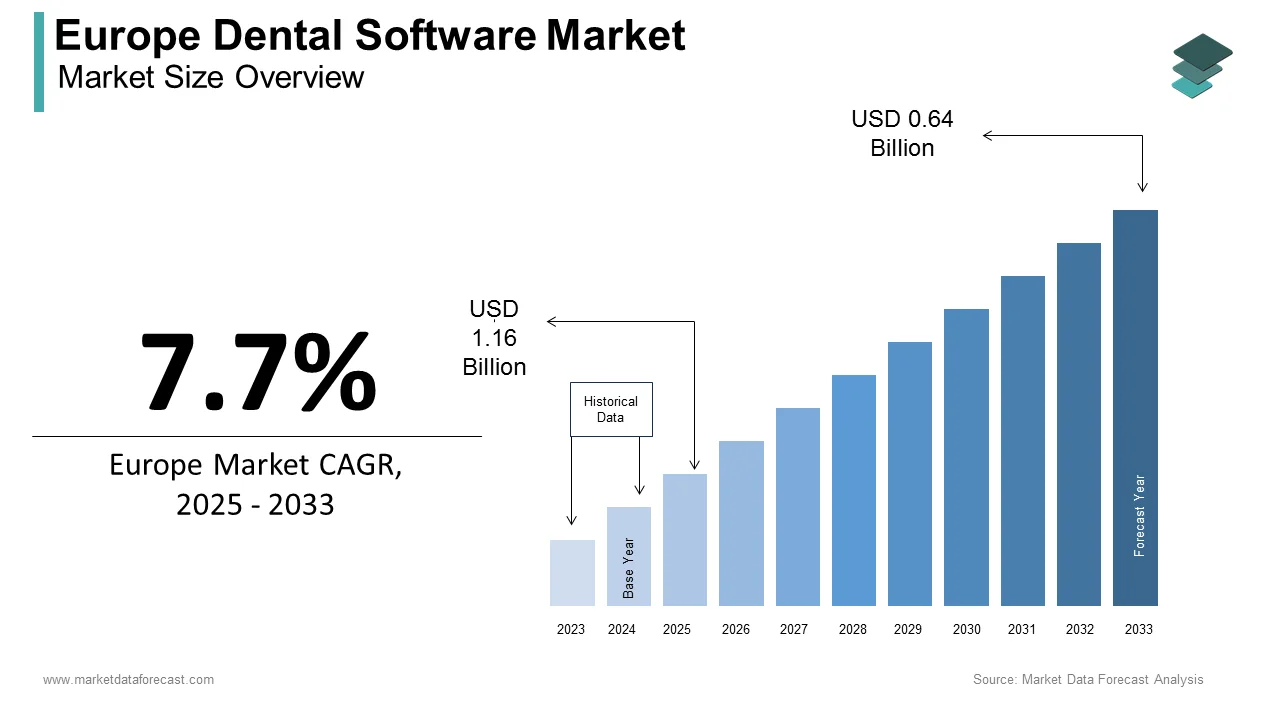
The dental software market size in Europe was valued at USD 0.64 billion in 2025. The European market is estimated to be worth USD 1.25 billion by 2034 from USD 0.69 billion in 2026, growing at a CAGR of 7.7% from 2026 to 2034.
Dental software represents a critical segment of the healthcare technology landscape, comprising specialized applications designed to digitize clinical workflows, manage administrative tasks, and enhance diagnostic accuracy within dental practices. This ecosystem includes practice management systems that handle scheduling and billing, imaging software for processing radiographs and intraoral scans, and computer aided design or computer aided manufacturing platforms that facilitate the creation of prosthetics. The transition from analog to digital methods is no longer optional but essential for modern clinics aiming to meet the expectations of a digitally literate patient base and comply with stringent regulatory frameworks. The urgency for adopting these software solutions is underpinned by significant demographic shifts and public health realities across the continent. According to Eurostat, a growing proportion of individuals aged 65 and older in the European Union typically requires more frequent and complex dental interventions such as implants and periodontal maintenance. This aging population places immense pressure on dental practitioners to optimize their operational efficiency to handle increased patient volumes without compromising care quality. Furthermore, as per the World Health Organization, oral disease prevalence remains exceptionally high among adults in Europe, which necessitates robust data management systems capable of tracking long term treatment histories and coordinating care across multiple specialties.
MARKET DRIVERS
Escalating Prevalence of Chronic Oral Diseases
The increasing incidence of chronic oral conditions across Europe is primarily driving the growth of the European dental software market. As dietary patterns shift and the population ages, the complexity of dental pathologies has intensified, requiring practitioners to manage intricate treatment plans that span months or even years. According to the Organisation for Economic Cooperation and Development, a significant proportion of adults in European nations suffer from periodontal disease, a progressive condition that demands meticulous monitoring of pocket depths, attachment levels, and bone loss over time. Manual record keeping is wholly inadequate for tracking such detailed longitudinal data, creating an urgent demand for software suites that offer automated charting, visual progression tracking, and predictive analytics. In Germany, statutory health insurance funds processed a large number of claims related to periodontal therapy, which is illustrating the sheer volume of administrative work that modern practices must handle. Software solutions mitigate this burden by automating recall systems and ensuring that no critical follow up is missed, thereby improving patient retention and clinical outcomes. Additionally, as per the European Federation of Periodontology, clinics utilizing integrated digital records report improved care coordination with general physicians. This clinical necessity drives dentists to invest in platforms that not only streamline operations but also enhance the quality of care delivered to a population grappling with widespread oral health challenges.
Stringent Regulatory Mandates for Digital Health Records
Governmental regulations mandating the digitization of health records and ensuring data interoperability serve as a powerful external force accelerating market growth throughout Europe. National health authorities and European Union bodies are increasingly enforcing standards that require seamless data exchange between providers to improve transparency and reduce healthcare fraud. The European Health Data Space initiative, a landmark policy framework, stipulates that all healthcare providers, including dental clinics, must utilize certified digital systems capable of secure and standardized data transmission. As per the European Commission, healthcare institutions within the European Union are required to achieve full compliance with interoperability standards by 2027. This timeline creates an immediate and non-negotiable imperative for dental practices to replace legacy analogue systems or outdated software with modern, compliant solutions. In France, the rollout of the Mon Espace Santé platform has made it compulsory for dental professionals to upload structured patient summaries electronically, a task that is impossible without compatible software infrastructure. Similarly, the United Kingdom National Health Service enforces the use of specific digital formats for referrals and treatment plans to ensure continuity of care between primary and secondary services. Non-compliance with these mandates carries severe consequences, including financial penalties and exclusion from public reimbursement schemes, which are vital revenue sources for most practices. Furthermore, the requirement for real time reporting and comprehensive audit trails pushes clinics toward cloud-based solutions that offer automatic regulatory updates. According to the Council of European Dentists, practices that have adopted compliant software systems have observed a reduction in the administrative time spent on regulatory reporting. Consequently, the legislative landscape transforms software adoption from a strategic advantage into a mandatory condition for operational viability, which is ensuring consistent market demand regardless of economic fluctuations.
MARKET RESTRAINTS
High Implementation Costs Deter Small Practice Adoption
The substantial financial investment required to acquire, implement, and maintain advanced dental software serves as a significant barrier to entry, particularly for the small independent practices and solo practitioners that constitute a large portion of the European market. The total cost of ownership extends well beyond the initial software license fee, encompassing necessary hardware upgrades, network infrastructure overhauls, and extensive training programs for staff. According to the European Association of Dental Practitioners, the expenditure to fully digitize a small clinic with five operatories exceeds 45000 euros, a sum that includes high performance servers, intraoral scanners, and integration modules for existing diagnostic equipment. For many small business owners operating on narrow profit margins, this upfront capital outlay represents a formidable hurdle that delays or entirely prevents the transition to digital systems. The financial strain is compounded by recurring costs such as monthly subscription fees, annual maintenance contracts, and mandatory cybersecurity updates, which continuously impact cash flow. In Southern European markets like Italy and Spain, where the sector is dominated by family-owned entities with limited access to favorable credit lines, the return on investment period often stretches beyond three years, rendering the project financially unviable. Moreover, the rapid pace of technological obsolescence means that software purchased today may require costly upgrades within 24 months to remain compatible with emerging devices or regulatory changes. As per data from the European Central Bank, interest rates on small business loans remained elevated, further discouraging practitioners from leveraging debt to fund digital transformation initiatives. This economic reality fosters a bifurcated market dynamic where large corporate chains rapidly adopt cutting edge technologies while smaller clinics remain reliant on outdated systems, ultimately slowing the overall penetration rate of advanced dental software across the region.
Critical Shortage of Digitally Skilled Dental Professionals
A pervasive scarcity of dental professionals equipped with the necessary technical skills to operate advanced digital systems is hampering the expansion of the European dental software market. While vendors continue to introduce increasingly sophisticated features powered by artificial intelligence and machine learning, the current workforce often lacks the digital literacy required to leverage these tools effectively. According to the European Society of Dental Education, only a limited portion of dental curricula in European universities currently include comprehensive training modules on digital practice management and advanced imaging software, leaving many new graduates ill prepared for the modern digital operatory. This skills gap forces existing practitioners to depend heavily on external IT support for routine operations, leading to workflow disruptions and reduced productivity whenever technical issues arise. The challenge is particularly acute in rural areas of Eastern Europe, where attracting and retaining tech savvy staff is difficult due to lower wage structures and limited opportunities for professional development. As per the World Health Organization Regional Office for Europe, many dental clinics in rural regions report significant difficulties in finding personnel capable of managing digital patient records without committing errors. Furthermore, resistance to change among older practitioners who are accustomed to manual methodologies exacerbates the problem, as they often perceive complex software interfaces as obstacles rather than aids to efficiency. Vendor provided training programs are frequently insufficient to bridge this gap, as they tend to focus on basic functionality rather than strategic integration into clinical decision-making processes. The resulting underutilization of purchased software features leads to user dissatisfaction and a perception that digital tools fail to deliver their promised value, thereby dampening enthusiasm for future investments. Until educational institutions and professional bodies prioritize digital competency, this human capital deficit will remain a formidable brake on market expansion.
MARKET OPPORTUNITIES
Integration of Artificial Intelligence for Diagnostic Precision
The incorporation of artificial intelligence algorithms into dental software is a promising opportunity in the European dental software market. These advanced systems possess the capability to analyze radiographic images and intraoral scans to detect pathologies such as caries, bone loss, and root fractures with a level of consistency and sensitivity that often surpasses human evaluation, thereby significantly reducing misdiagnosis rates. According to the Journal of Dental Research, AI assisted diagnostic tools have demonstrated strong potential in detecting early-stage dental caries compared to unassisted human evaluation. This technological leap enables dentists to identify issues at their incipient stages when minimally invasive treatments are still viable, aligning perfectly with the European healthcare emphasis on preventive care and the conservation of natural tooth structure. Furthermore, AI driven software can automate routine and time-consuming tasks such as measuring periodontal pocket depths or planning optimal implant placements, freeing up valuable chairside time for patient interaction and complex procedural work. The ability of these systems to continuously learn from vast datasets of global cases ensures that clinical recommendations remain current with the latest evidence-based practices and guidelines. As per the European Institute of Innovation and Technology, the adoption of AI in healthcare diagnostics is expected to reduce overall treatment costs through early intervention and optimized resource allocation. Vendors who successfully integrate these intelligent features into intuitive and user-friendly interfaces are poised to capture significant market share as practitioners actively seek competitive advantages through superior diagnostic capabilities.
Expansion of Teledentistry Services Creates New Revenue Streams
The rapid evolution and growing acceptance of teledentistry platforms offer a substantial opportunity for the European dental software market. The post pandemic era has normalized remote consultations, prompting patients to increasingly expect digital access to their dental providers for triage, follow up appointments, and preliminary assessments. According to the European Commission, a significant proportion of European citizens expressed willingness to use telehealth services for non-emergency dental concerns, indicating a robust and growing demand for secure video conferencing and image sharing capabilities within dental software ecosystems. This paradigm shift enables practitioners to extend their service hours and geographical reach, effectively catering to patients in remote locations or those with mobility constraints who previously faced significant barriers to accessing care. Software solutions that seamlessly integrate teledentistry modules with electronic health records allow for continuous care monitoring and timely interventions, thereby enhancing patient retention and overall satisfaction. Moreover, insurance providers in progressive markets like the Netherlands and Sweden have begun reimbursing specific teledentistry codes, validating the financial viability of these digital services. As per the European Observatory on Health Systems and Policies, clinics offering remote consultation options reported improved patient engagement compared to those relying solely on in person visits. By facilitating asynchronous communication and secure file transfers, these platforms empower dentists to manage larger patient panels with greater efficiency. Vendors who develop robust, compliant, and intuitive teledentistry features will position themselves at the forefront of this digital revolution, capturing value from a burgeoning segment that effectively bridges the gap between physical clinics and virtual care delivery.
MARKET CHALLENGES
Interoperability Fragmentation Complicates System Integration
The lack of standardized data formats and communication protocols among diverse dental software providers is challenging the growth of the European dental software market. Dental practices frequently utilize a heterogeneous mix of hardware and software from different vendors, including imaging devices, practice management systems, and laboratory communication tools, which often fail to exchange data efficiently without the implementation of costly custom interfaces. According to the European Health Telematics Observatory, many dental clinics in Europe report significant difficulties in transferring patient data between disparate systems, leading to fragmented records and an increased risk of clinical errors. This fragmentation forces practitioners to manually re-enter data or rely on inefficient workarounds, effectively negating the efficiency gains that digitalization promises to deliver. The absence of a unified standard tailored for the nuances of dentistry exacerbates the issue, as vendors often prioritize the development of proprietary ecosystems that lock users into their specific product suites. In cross border scenarios within the European Union, the challenge intensifies due to varying national regulations and language barriers that further complicate data exchange requirements. As per the European Federation of Dental Industries, resolving interoperability issues consumes a notable portion of the IT budget for medium sized dental groups, diverting critical resources away from innovation and direct patient care improvements. Until industry stakeholders collaborate to establish and enforce universal connectivity standards, the market will remain siloed, preventing the realization of a truly integrated digital health network.
Escalating Cybersecurity Threats Target Patient Data Privacy
The escalating sophistication of cyberattacks targeting healthcare data poses a critical challenge for the Europe dental software market, as dental clinics become increasingly attractive targets for ransomware gangs and data breach incidents. The centralized storage of sensitive personal health information, including detailed medical histories and financial details, makes dental databases a lucrative prize for malicious actors seeking to exploit vulnerabilities in digital infrastructure. According to Europol, cyber incidents in the European healthcare sector have risen significantly, with small and medium sized enterprises, including dental practices, accounting for a disproportionate share of victims due to inherently weaker security postures. The consequences of such breaches are severe, ranging from complete operational paralysis during attacks to long term reputational damage and hefty fines imposed under the General Data Protection Regulation. Many dental software solutions, particularly older on-premise systems, lack robust encryption and multi factor authentication mechanisms, leaving them exposed to evolving threat vectors. As per the European Union Agency for Cybersecurity, the average cost of a data breach in the European healthcare industry has reached several million euros, a financial blow that many small practices simply cannot survive. The imperative to constantly update security protocols places a heavy burden on both software vendors and clinic administrators, requiring continuous vigilance and significant investment in defensive technologies. Fear of potential breaches may also deter some practitioners from migrating to cloud based solutions, despite their inherent advantages, due to perceived risks regarding data sovereignty and third-party access. Addressing this pervasive threat landscape requires a concerted effort to embed security by design into all dental software products and to educate the workforce on best practices for cyber hygiene.
REPORT COVERAGE
| REPORT METRIC | DETAILS |
| Market Size Available | 2025 to 2034 |
| Base Year | 2025 |
| Forecast Period | 2026 to 2034 |
| Segments Covered | By Type, Application, Deployment, and Country. |
| Various Analyses Covered | Global, Regional, and Country-Level Analysis, Segment-Level Analysis, Drivers, Restraints, Opportunities, Challenges; PESTLE Analysis; Porter’s Five Forces Analysis, Competitive Landscape, Analyst Overview of Investment Opportunities |
| Countries Covered | UK, France, Spain, Germany, Italy, Russia, Sweden, Denmark, Switzerland, Netherlands, Turkey, Czech Republic, and the Rest of Europe. |
| Market Leaders Profiled | Carestream Health Inc, Dentsply Sirona, Elite Computer Italia (OrisLine Group), Henry Schein Inc, KaVo Dental GmbH, PLANMECA OY, and Others. |
SEGMENTAL ANALYSIS
By Type Insights
The practice management software segment commanded for the largest portion of the Europe dental software market by holding 36.6% of the European market share in 2025. The dominance of practice management software segment in the European market can be credited to its role as the operational backbone of every dental clinic, integrating scheduling, billing, inventory control, and patient records into a single unified platform. The regulatory and operational imperative to digitize core administrative functions across European healthcare facilities is further contributing to the expansion of the practice management software segment in the European market. National health systems increasingly mandate electronic record keeping to ensure transparency and facilitate reimbursement processes, making these systems indispensable rather than optional. As per the European Commission, healthcare providers in the European Union are required to utilize certified digital management systems to process insurance claims electronically. In Germany, the Telematics Infrastructure mandates that statutory health insurance dentists use compatible software for secure data transmission, impacting a large number of practices nationwide. Furthermore, the complexity of billing codes and insurance regulations in countries like France and Italy necessitates automated systems to minimize claim rejections. According to the Organisation for Economic Cooperation and Development, automated billing systems have been shown to reduce claim rejection rates, directly impacting the revenue cycle of dental practices. The inability to operate efficiently without such tools cements this segment as the foundational layer of the market, driving consistent demand regardless of economic fluctuations.
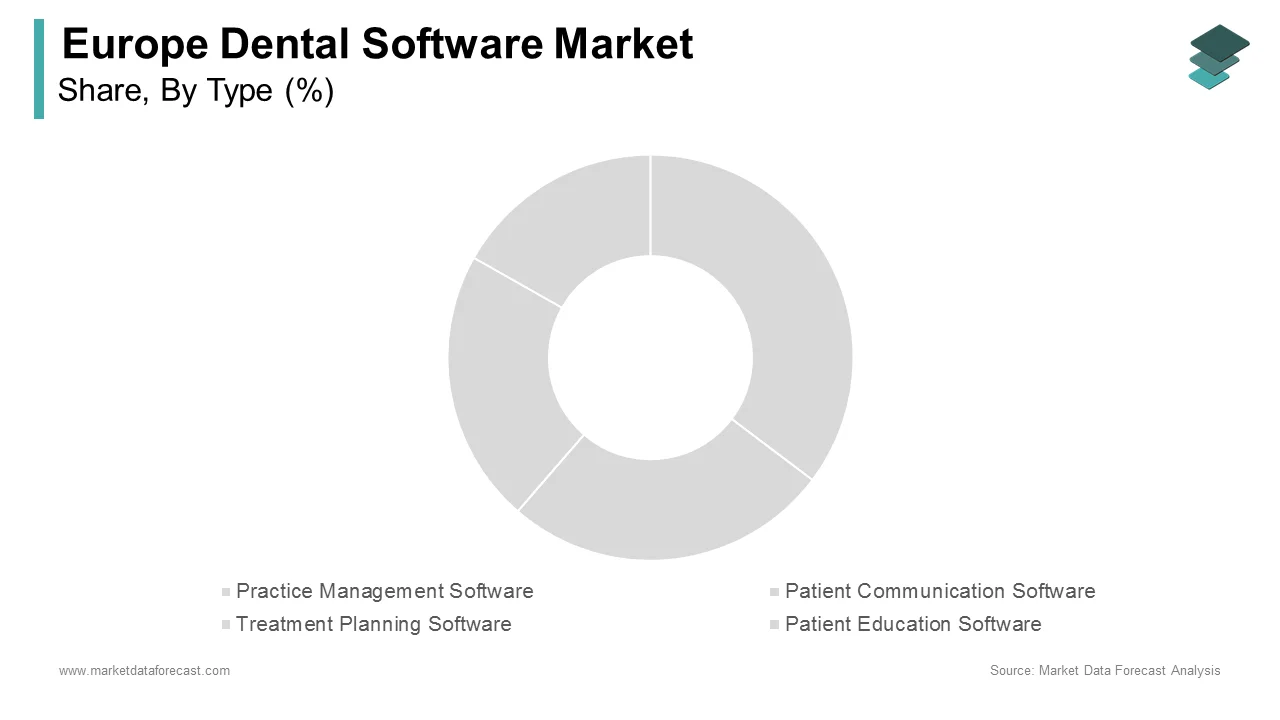
The patient communication software segment is anticipated to record a CAGR of 15.5% over the forecast period in the European market owing to the shifting consumer expectations for instant, digital interaction and the proven ability of these tools to reduce no show rates and enhance patient engagement. The surging growth of patient communication software is primarily driven by the urgent need for dental practices to mitigate the financial impact of missed appointments. Automated reminders via SMS, email, and mobile applications have proven highly effective in ensuring patients adhere to their scheduled visits, directly protecting clinic revenue. As per the European Observatory on Health Systems and Policies, dental clinics across Europe have reported notable no show rates, resulting in significant annual losses for the sector. Practices implementing automated two-way communication systems have reported reductions in no shows, providing a compelling return on investment that accelerates adoption. The post pandemic landscape has further conditioned patients to expect digital convenience, with many preferring text-based confirmations over phone calls. According to the European Consumer Organisation, a majority of patients under the age of 40 prefer receiving appointment reminders via mobile messaging rather than traditional voice calls. This demographic shift forces clinics to adopt sophisticated communication platforms that offer personalized messaging, waitlist management, and instant rescheduling options. The direct correlation between improved attendance rates and increased profitability makes this software category a priority for practice owners seeking to optimize their schedules and maximize resource utilization.
By Application Insights
The clinical application software segment held the commanding lead in the Europe dental software market with 61.5% of the regional market share in 2025. The leading position of clinical application software segment in the European market is attributed to the irreversible shift towards digital diagnostics and the clinical necessity for precision in complex procedures. The overwhelming dominance of clinical application software is also driven by the widespread transition from analog to digital diagnostic methods, which has become the standard of care in modern dentistry. Digital radiography and intraoral scanning offer superior image quality, lower radiation exposure, and immediate availability, making them indispensable for accurate diagnosis and treatment planning. As per the European Society of Oral and Maxillofacial Radiology, many dental practices in Western Europe have replaced traditional film-based X rays with digital sensors, a trend that necessitates sophisticated software for image processing and analysis. The integration of three-dimensional cone beam computed tomography has further accelerated this shift, requiring advanced software to visualize anatomical structures for implant planning and endodontic procedures. In Germany, statutory guidelines now recommend digital imaging for complex cases to ensure precise documentation and reduce retake rates. According to the European Commission on radiation protection, digital systems have been shown to reduce patient radiation exposure compared to conventional film, aligning with strict European safety standards. The clinical imperative to provide accurate diagnoses and minimally invasive treatments ensures that investment in clinical software remains the top priority for practitioners, solidifying this segment's market leadership.
The administrative application software is expected to witness the most rapid growth in the market during the forecast period with an expected CAGR of 14.1%. The escalating administrative burden on dental practices, the need for rigorous compliance with evolving regulations, and the drive to optimize revenue cycle management through automation are driving the growth of the administrative application software segment in the European market. Dental practices must navigate a complex web of data protection laws, infection control logs, and insurance reporting mandates that are increasingly difficult to manage manually. As per the European Data Protection Board, compliance audits in the healthcare sector have increased, prompting clinics to adopt automated administrative systems to ensure adherence and avoid penalties. The General Data Protection Regulation requires meticulous tracking of patient consent and data access, tasks that are efficiently handled by specialized administrative modules. In countries like France and Italy, frequent updates to national health insurance coding systems necessitate software that can automatically update billing protocols to prevent claim rejections. According to the European Health Management Association, practices using automated compliance tools have reported reductions in administrative error rates, significantly lowering the risk of financial losses. The constant evolution of regulatory frameworks creates a perpetual demand for updated administrative solutions, driving rapid adoption as practices seek to mitigate legal risks and ensure operational continuity in a highly regulated environment.
By Deployment Insights
The on-premise model segment currently retained the largest share of the Europe dental software market with 51.9% of the regional market share. The dominance of on-premises segment in the European market can be credited to the perceived control over data security, the ability to customize systems extensively, and the avoidance of recurring subscription costs, which appeals to practices with significant capital reserves. Many dental practitioners, particularly in Germany and Switzerland, prefer to keep sensitive patient data within their own physical servers to maintain absolute control and minimize the perceived risks associated with third party cloud storage. According to the European Union Agency for Cybersecurity, a significant proportion of healthcare providers in Europe cite data location and control as the primary reason for retaining on premise infrastructure. The General Data Protection Regulation imposes heavy fines for data breaches, leading some risk averse practices to believe that local storage offers a more defensible security posture. In nations with strong traditions of data privacy, the psychological comfort of knowing exactly where data resides outweighs the benefits of cloud flexibility. As per the German Medical Association, many dental practices in Germany continue to rely on local servers for their primary patient records due to these security perceptions. Additionally, large dental hospitals often have dedicated IT teams capable of managing complex on site security protocols, which is making the on-premise model a viable and preferred option. This entrenched preference for local control ensures that the on-premise segment maintains its leading position.
The web based or cloud-based model segment is the fastest growing deployment segment and is projected to grow at a CAGR of 15.5% over the forecast period owing to the scalability of cloud solutions, the rise of multi-location dental groups, and the increasing demand for remote access and collaboration capabilities. Unlike on-premise systems that require individual server setups for each location, cloud platforms allow these organizations to manage multiple clinics from a single dashboard, ensuring standardized protocols and real time data visibility. As per the European Dental Group Association, corporate owned dental clinics in Europe have been expanding, creating a surge in demand for flexible infrastructure that can easily accommodate new acquisitions. Cloud solutions enable instant deployment of software updates and new features across all locations simultaneously, eliminating the logistical challenges of maintaining disparate on-site systems. This scalability reduces the total cost of ownership and allows groups to expand rapidly without significant capital expenditure on hardware. According to the European Private Equity Healthcare Report, newly acquired dental practices by investment firms are often migrated to cloud based systems within months to streamline operations. The ability to scale resources up or down based on patient volume also provides financial flexibility, making the cloud model highly attractive for growing enterprises. This structural shift in the ownership landscape of European dentistry is a primary engine for the rapid adoption of cloud technologies.
COUNTRY-LEVEL ANALYSIS
Germany Dental Software Market Analysis
Germany occupied the commanding position in the European dental software market in 2025 with 24.4% of the regional market share. The dominance of Germany in the European market is attributed to its robust healthcare infrastructure and early adoption of digital technologies. Factors such as a high density of dental practices, a strong regulatory framework that mandates digitalization, the Telematics Infrastructure and a secure network that connects all healthcare providers that forces widespread software adoption are further boosting the dominance of Germany in the European market. As per the German Dental Association, a large majority of registered dental practices are now connected to this digital network, creating a massive installed base for software vendors. Additionally, the prevalence of private health insurance drives demand for sophisticated billing and management tools capable of handling complex reimbursement schemes. According to the Federal Statistical Office of Germany, expenditure on digital health technologies per capita in Germany is higher than the European average, reflecting a strong willingness to invest in quality. The presence of leading domestic software developers also fosters a competitive landscape that accelerates innovation. The combination of regulatory compulsion, high purchasing power, and a culture of precision engineering ensures that Germany remains the cornerstone of the regional market, which is setting trends that influence neighbouring nations.
United Kingdom Dental Software Market Analysis
The United Kingdom had a promising share of the European dental software market in 2025. The growth of the UK in the European market is driven by a mix of National Health Service mandates, a vibrant private dental sector and a dual system where public sector efficiency drives standardization while private competition fuels innovation are contributing to the expansion of the UK in the European market. As per NHS Digital, a significant proportion of dental contracts now require the submission of electronic activity data, pushing practices to upgrade their management systems. Furthermore, the UK has seen a surge in corporate dental groups, driving the adoption of cloud-based enterprise solutions for multi-site management. According to the General Dental Council, the registration of new dental professionals has remained stable, but the pressure to increase patient throughput has led to greater adoption of automated scheduling and recall software. The post Brexit regulatory environment has also encouraged local innovation, with UK based fintech and healthtech firms developing tailored solutions for the specific needs of the British market. This dynamic interplay between public policy and private enterprise sustains the UK's status as a major growth engine.
France Dental Software Market Analysis
France is anticipated to showcase a prominent CAGR in the European dental software market during the forecast period owing to a dense network of liberal dental practitioners and strong government incentives for digital health. The driving force behind software adoption is the "Mon Espace Santé" initiative, a personal digital health space that requires all health professionals to upload patient data securely. As per the French Ministry of Health, a majority of dental surgeons have activated their professional accounts on this platform, necessitating compatible software upgrades. Additionally, the French social security system's push for paperless claims processing has accelerated the shift away from manual administration. According to the National Order of Dentists, the average age of dental practitioners is decreasing, with younger dentists showing a higher propensity to adopt comprehensive digital suites including imaging and practice management. The government's "France 2030" investment plan also allocates significant funds to health tech startups, fostering a local ecosystem of innovative dental software solutions. These factors combine to create a resilient market where regulatory alignment and generational shifts drive continuous modernization.
Italy Dental Software Market Analysis
Italy is expected to account for a notable share of the European dental software market during the forecast period. The fragmented landscape of small family-owned clinics that are gradually modernizing, growing need to improve efficiency in a region with high tax compliance requirements and the implementation of the Electronic Health Record system at the regional level are driving the Italian market growth. As per the Italian National Institute of Statistics, adoption of digital management software in the healthcare sector has been growing, with dentistry being a key contributor. The rising cost of labor and materials has forced Italian dentists to seek software that optimizes inventory and reduces waste. Furthermore, the booming medical tourism sector in cities like Milan and Rome demands high tech services to attract international patients, driving the adoption of premium imaging and treatment planning software. According to the Italian Dental Association, clinics catering to medical tourists are more likely to invest in state-of-the-art digital workflows. This blend of domestic efficiency needs and international competitiveness fuels the steady growth of the Italian market.
Spain Dental Software Market Analysis
Spain is anticipated to register a healthy CAGR in the European dental software market during the forecast period owing to a rapidly growing private dental sector, increasing health consciousness among the population, a shift from public to private care, with private insurance coverage rising steadily and the expansion of private dental insurance are supporting the Spanish dental software market expansion. As per the Spanish Dental Council, the number of private dental clinics has been increasing, each requiring new software installations. Additionally, the Spanish government's digital agenda aims to connect all primary care centers, including dental clinics, to a unified health data network by 2027. According to the Ministry of Health, regions like Catalonia and Madrid are leading this charge, with adoption rates of digital records continuing to rise. The popularity of cosmetic dentistry among the younger demographic also drives the uptake of specialized treatment planning and simulation software. As per the European Consumer Organization, Spain has one of the highest growth rates in cosmetic dental procedures in Europe, directly correlating with increased investment in aesthetic focused software tools. These dynamics position Spain as a high potential market with strong future growth trajectories.
COMPETITIVE LANDSCAPE
The competition in the Europe Dental Software Market is characterized by intense rivalry among established global giants and agile regional specialists who vie for dominance through continuous innovation and strategic differentiation. The landscape features a mix of large conglomerates offering comprehensive ecosystems and smaller firms providing specialized niche solutions that address specific clinical or administrative pain points. Competitors frequently engage in price wars and value-added service bundles to attract price sensitive small practices while simultaneously targeting large corporate chains with enterprise grade solutions. The threat of new entrants remains moderate due to high regulatory barriers and the significant investment required to develop compliant and interoperable software. However, the rapid pace of technological change means that incumbents must constantly innovate to avoid disruption from startups leveraging artificial intelligence and blockchain technologies. Customer switching costs are relatively high due to data migration complexities which fosters loyalty but also intensifies the battle for initial acquisition. The market is further fragmented by varying national regulations and language preferences requiring players to adopt highly localized strategies to succeed in individual countries. This dynamic environment forces all participants to remain agile and responsive to shifting customer demands and regulatory landscapes to maintain their competitive edge.
KEY MARKET PLAYERS
The leading companies operating in the Europe dental software market include:
- Carestream Health Inc.
- Dentsply Sirona
- Elite Computer Italia (OrisLine Group)
- Henry Schein Inc.
- KaVo Dental GmbH
- PLANMECA OY
TOP PLAYERS IN THE MARKET
- Henry Schein, One stands as a pivotal force in the Europe Dental Software Market by delivering integrated practice management and clinical solutions that empower dental professionals to optimize workflows. The company contributes significantly to the global market through its vast network of technology partners and its commitment to interoperability standards that connect disparate dental systems. Recently Henry Schein One has intensified its focus on cloud-based platforms to facilitate remote access and real time data analytics for European clinics. The firm launched enhanced versions of its Dentrix Ascend software tailored to meet strict European data protection regulations ensuring seamless compliance for users. By investing heavily in artificial intelligence driven diagnostic tools the company enables dentists to detect pathologies earlier and improve patient outcomes. Their strategic partnerships with local European distributors have expanded their reach into emerging markets while providing localized support services. These actions demonstrate a robust commitment to strengthening their market position through innovation and customer centric service delivery across the continent.
- Dentsply Sirona leverages its extensive portfolio of dental equipment and software to create a cohesive digital ecosystem that dominates the European landscape. The company plays a crucial role in the global market by integrating hardware such as intraoral scanners and cone beam computed tomography units with advanced software suites like Sidexis and Ortho X. Recent initiatives include the expansion of their cloud-based connectivity features allowing European practitioners to share large imaging files securely and collaborate with specialists instantly. Dentsply Sirona has also focused on developing open architecture platforms that enable third party applications to integrate smoothly with their core systems fostering a vibrant developer community. The firm actively participates in European standardization bodies to shape the future of digital dentistry interoperability ensuring their solutions remain at the forefront of technological advancement. By acquiring niche software startups specializing in treatment planning algorithms the company continues to enhance its clinical capabilities. These strategic moves reinforce their leadership by offering comprehensive end to end digital workflows that address the evolving needs of modern dental practices throughout Europe.
- Planmeca distinguishes itself as a leading innovator in the Europe Dental Software Market through its wholly owned software development division that creates unified solutions for imaging and practice management. The company contributes globally by exporting its Finnish engineered software which is renowned for its user-friendly interface and robust functionality across diverse clinical settings. Planmeca recently strengthened its position by launching Planmeca Romexis Cloud a secure platform that enables European dentists to access patient data from any location while maintaining full compliance with regional privacy laws. The firm has invested significantly in artificial intelligence modules that automate routine tasks such as cephalometric tracing and caries detection thereby increasing clinical efficiency. Planmeca also emphasizes sustainability by optimizing software code to reduce energy consumption on client hardware aligning with European environmental goals. Their active engagement in research collaborations with European universities ensures that their software incorporates the latest scientific findings and clinical best practices. By continuously updating their software suite with new features based on direct feedback from European users Planmeca maintains strong customer loyalty and drives organic growth in a competitive marketplace.
TOP STRATEGIES USED BY KEY MARKET PARTICIPANTS
Key players in the Europe Dental Software Market predominantly employ strategies centered on cloud migration and interoperability to secure competitive advantages. Companies are aggressively transitioning their legacy on premise solutions to cloud-based architectures to offer scalability and remote access capabilities that modern practices demand. Another major strategy involves strategic acquisitions of niche software developers to rapidly integrate advanced features such as artificial intelligence diagnostics and automated billing systems into existing portfolios. Market participants also prioritize forming extensive partnership networks with hardware manufacturers to create seamless end to end digital workflows that lock in customers through ecosystem dependency. Furthermore, vendors are investing heavily in localization efforts to ensure their software complies with specific national regulations and language requirements across diverse European countries. Continuous innovation through research and development remains a core pillar as firms strive to introduce predictive analytics and machine learning tools that enhance clinical decision making. Finally, companies are focusing on customer success programs that provide comprehensive training and support to maximize software utilization and reduce churn rates in a saturated market.
MARKET SEGMENTATION
This Europe dental software market research report is segmented and sub-segmented into the following categories.
By Type
- Practice Management Software
- Patient Communication Software
- Treatment Planning Software
- Patient Education Software
By Application
- Clinical Application
- Administrative
By Deployment
- On-Premise Model
- Web-Based/ Cloud-Based Model
By Country
- UK
- France
- Spain
- Germany
- Italy
- Russia
- Sweden
- Denmark
- Switzerland
- Netherlands
- Turkey
- Czech Republic
- Rest of Europe