- Product Description Description
- Table of Contents TOC
- List of Table & Figure LOT
- Get Free Sample PDF Sample PDF
Market Size, 2025
$6.74 BnMarket Estimate, 2026
$7.54 BnMarket Forecast, 2034
$18.44 BnCAGR, 2026–2034
11.83%Europe Disposable Gloves Market Summary
The Europe disposable gloves market was valued at USD 6.74 billion in 2025 and is projected to reach USD 18.44 billion by 2034, growing at a CAGR of 11.83% from 2026 to 2034. Growth is driven by stringent hygiene protocols, expanding healthcare infrastructure, increasing surgical and examination volumes, and rising glove adoption across food processing, laboratory, industrial, and elderly care environments across the region.
Market Dynamics
The market’s growth is primarily influenced by infection-control policies, workforce expansion in healthcare and social care services, tightening food safety regulations, and the strong shift toward nitrile-based and powder-free glove variants. Post-pandemic hygiene normalization and structural demand from hospitals, diagnostics, and food service sectors have reinforced recurring glove consumption across Europe, while regulatory sustainability pressures and raw material price fluctuations are reshaping procurement and manufacturing strategies.
Key Drivers:
- Growing enforcement of hygiene and infection-control standards: Mandatory glove usage across hospitals, clinics, diagnostic laboratories, and elderly care facilities drives continuous demand across clinical applications.
- Rising number of patient admissions and medical procedures: Increasing surgical volumes, intensive-care needs, and growing elderly population accelerate glove consumption in healthcare settings.
- Strengthening food safety and handling regulations: EU hygiene legislation restricting direct hand contact with ready-to-eat foods fuels glove adoption in food processing, catering, and retail environments.
- Shift toward nitrile and synthetic materials: Nitrile gloves are widely preferred for their puncture resistance, chemical compatibility, and latex-free safety performance.
Trends & Opportunities:
- High demand for nitrile gloves: Nitrile remains the largest and fastest-growing material segment due to durability, barrier strength, and hypoallergenic characteristics across healthcare and industrial applications.
- Shift towards powder-free and sustainable options: Hospitals and food sector organizations increasingly prioritize powder-free, low-protein, and environmentally responsible glove variants to minimize contamination and allergy risks.
- Development of bio-based and recyclable glove materials: Ongoing innovation in bio-nitrile and biodegradable glove technologies aligns with Europe’s circular economy and green procurement initiatives.
Challenges:
- Raw material price fluctuations: Dependence on imported nitrile and natural rubber exposes manufacturers and purchasers to input-cost volatility and margin pressure.
- Supply chain disruptions: Logistics delays, import reliance, and shipping uncertainties affect availability and procurement stability for large institutional buyers.
- Environmental impact: The single-use nature of disposable gloves increases waste management concerns, encouraging investment in eco-friendly and low-impact alternatives.
Market Segmentation
The market is segmented based on material, application, and country.
- By Material: Nitrile is the dominant material owing to superior chemical resistance, durability, and absence of latex allergens, while natural rubber usage continues to decline. Other materials include vinyl, PVC, and specialty synthetic polymers.
- By Application: Healthcare & medical represents the largest end-user segment, including hospitals, clinics, laboratories, and elderly care facilities, while the food industry is emerging as the fastest-growing segment.
- By Country: Germany is the leading market in Europe, followed by the United Kingdom, France, Italy, and Spain, with growth supported by strong healthcare infrastructure and safety compliance requirements.
Leading Players
The market is moderately fragmented, with leading global and regional players focusing on regulatory compliance, product innovation, and reliable supply across institutional procurement networks. Top Glove Corporation Bhd, Hartalega Holdings Berhad, Kossan Rubber Industries Bhd, Ansell Ltd, Sempermed, Cardinal Health, Supermax Corporation Berhad, Intco Medical, Bluesail Medical Co., Ltd., Riverstone Holdings Limited, YTY Group, Comfort Rubber Gloves Industries Sdn Bhd, Jiangsu Jaysun Glove Co., Ltd., Kimberly-Clark Worldwide, Inc., Synthomer plc, 3M.
Europe Disposable Gloves Market Size
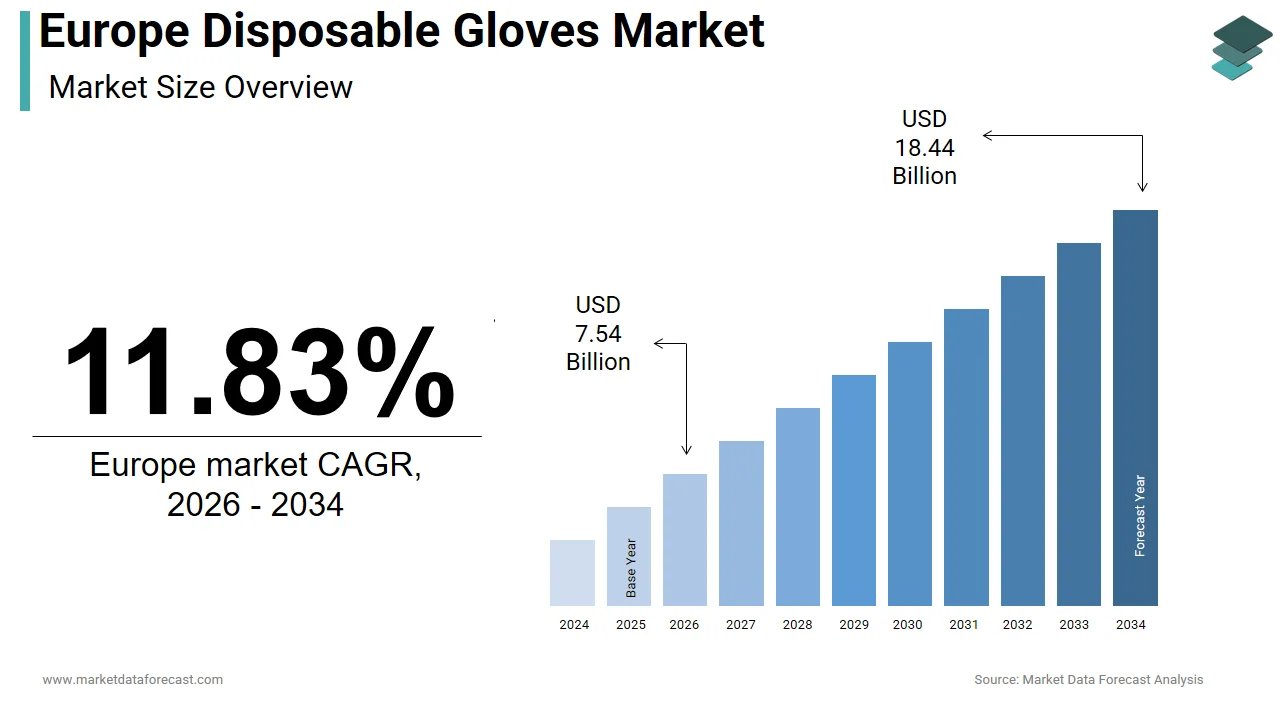
The Europe disposable gloves market was valued at USD 6.74 billion in 2025. The regional market is projected to grow from USD 7.54 billion in 2026 to reach USD 18.44 billion by 2034, exhibiting a compound annual growth rate (CAGR) of 11.83% from 2026 to 2034.
Disposable gloves include single-use protective hand coverings made from materials such as nitrile, latex, vinyl, and polyethylene, primarily used in healthcare, food service, laboratories, and industrial settings to ensure hygiene and prevent cross-contamination. Unlike reusable alternatives, disposable gloves serve as critical personal protective equipment where sterility and barrier integrity are non-negotiable. The European landscape is uniquely shaped by stringent regulatory oversight under the EU Personal Protective Equipment Regulation and growing institutional demand across public health and food safety sectors. According to Eurostat, approximately 15 million healthcare professionals were employed across the European Union in 2023, which indicates the baseline demand for infection control supplies. As per the estimations of the European Centre for Disease Prevention and Control, 4.3 million patients acquire healthcare-associated infections annually in EU/EEA hospitals, reinforcing the need for high-quality barrier protection. Additionally, under EU food hygiene legislation (Regulation EC No 852/2004), glove use is mandated in food handling across all 27 member states to prevent contamination. The post-pandemic normalization of hygiene protocols, combined with workforce expansion in care and food sectors, has institutionalized glove consumption as a structural component of Europe’s public health and safety infrastructure.
MARKET DRIVERS
Institutionalization of Infection Prevention Protocols in Healthcare
The entrenchment of infection prevention and control protocols as standard practice across European healthcare institutions is a primary driver of the European disposable gloves market. Following the lessons of the COVID-19 pandemic, European health authorities have elevated hand hygiene and barrier protection to core components of care delivery. According to the European Centre for Disease Prevention and Control (ECDC), nearly all acute care hospitals in the EU enforce mandatory glove use during patient contact procedures. This cultural shift is codified in national guidelines. Germany’s Commission for Hospital Hygiene and Infection Prevention updated its 2023 standards to require nitrile gloves for all direct care activities, citing superior puncture resistance and latex allergy avoidance. According to NHS Scotland’s 2024 Green Theatres Programme, glove use remains elevated post-pandemic. The aging population further intensifies usage. As per Eurostat, 43% of hospital admissions in 2023 involved patients aged 65 or older. Additionally, according to the European Federation of Nurses Associations, EU-wide nursing shortages persist, with vacancy rates averaging around 14%, increasing reliance on temporary staff who strictly adhere to standardized PPE protocols. These systemic and demographic forces ensure that disposable glove demand remains embedded in daily clinical workflows across the continent.
Expansion of Food Safety Regulations and Food Service Employment
The proliferation of food safety mandates and growth in food handling employment across Europe significantly bolsters demand for disposable gloves in non-medical sectors, which is further fuelling the expansion of the European disposable gloves market. The European Food Safety Authority enforces Regulation (EC) No 852/2004, which requires food business operators to prevent direct hand contact with ready-to-eat products, thereby mandating glove use in processing, retail, and catering environments. According to FoodDrinkEurope and Eurostat, the EU food and drink industry employed 4.6 million people in 2023, with 291,000 companies operating in the sector. As per the European Commission’s Labour Force Survey, food preparation roles saw a notable increase in 2023. Countries like Spain and Italy experienced strong rebounds in restaurant employment. According to the European Commission’s 2023 RASFF report, there were 4,695 food safety notifications, with hygiene lapses cited in a significant share of cases. As per a 2024 survey by the European Food and Drink Employers Federation, 84% of food businesses now offer double-gloving options for high-risk tasks. These regulatory and labor market dynamics make food service a durable and growing pillar of Europe’s disposable glove demand.
MARKET RESTRAINTS
Stringent EU Regulations on Chemical Content and Allergens
A significant restraint in the European disposable gloves market arises from the EU’s rigorous chemical safety regulations. According to the European Chemicals Agency (ECHA), over 120 substances used in glove production are subject to restriction under REACH due to skin sensitization risks. This has forced manufacturers to reformulate compounds, increasing production complexity and costs. For latex gloves, the EU Medical Devices Regulation mandates residual protein levels below 50 µg/g, which is a threshold only advanced facilities can consistently meet. According to the German Federal Institute for Occupational Safety and Health (BAuA), glove shipment rejection rates are monitored. The European Committee for Standardization updated EN 455 in 2022 to require an explicit declaration of all chemical additives. As per the European Trade Union Institute, compliance testing adds an estimated 12–15% to unit production costs for EU-based converters. These regulatory hurdles constrain supply diversity and elevate price sensitivity among cost-conscious public procurement agencies.
Environmental Policies Targeting Single-Use Plastics and Waste
Europe’s aggressive environmental legislation targeting single-use items poses a structural constraint on disposable glove consumption despite their hygiene necessity, which is another major restraint to the growth of the European disposable gloves market. According to the European Commission’s 2023 revision of the Packaging and Packaging Waste Directive, certain single-use protective garments now fall under extended producer responsibility schemes, requiring manufacturers to finance collection and recycling. Although gloves are not banned, they face scrutiny due to their low recyclability. According to the European Environment Agency, only a small fraction of disposable gloves are recovered for energy or material reuse. Countries like France and Italy have introduced eco-taxes on non-recyclable single-use medical products, with glove producers facing fees up to €220 per tonne. Public institutions are also under pressure to reduce waste. The UK NHS has committed to halving single-use plastic medical waste by 2028. As per a 2024 Eurobarometer survey, 61% of European consumers support restrictions on single-use protective items if safe alternatives exist. These environmental mandates and shifting public sentiment create long-term uncertainty for volume-based glove business models, which is even in essential sectors.
MARKET OPPORTUNITIES
Development of Bio-Based and Recyclable Glove Materials
A major opportunity in the Europe disposable gloves market lies in the development and commercialization of bio-based and recyclable glove materials aligned with the EU’s circular economy objectives. Innovators are replacing petroleum-derived nitrile with bio-nitrile sourced from renewable feedstocks such as castor oil, achieving equivalent barrier performance with a significantly lower carbon footprint. According to the Nova-Institute, bio-based nitrile can reduce carbon emissions by up to 40% compared to fossil-derived alternatives. In 2023, Germany’s Federal Ministry for Economic Affairs and Climate Action funded the pilot production of polylactic acid-based gloves that are industrially compostable under EN 13432 standards. Additionally, chemical recycling pathways are emerging. As per Carbios, enzymatic depolymerization has been demonstrated for PET-based materials. These advances respond directly to the EU Strategy for Sustainable and Circular Textiles, which calls for all protective equipment to be durable or recyclable by 2030. Public procurement policies are adapting. The Swedish Environmental Research Institute now awards green public procurement points for gloves containing over 30% bio-based content. According to the European Bioplastics Association, global bioplastics production capacity is projected to grow from 2.18 million tonnes in 2023 to 7.43 million tonnes by 2028, indicating strong momentum in bio-based elastomer development. These material innovations position sustainable gloves as a high-value growth segment meeting both regulatory and institutional demand for eco-conscious infection control.
Integration of Smart Features for Usage Monitoring and Compliance
The incorporation of smart technologies into disposable gloves presents an emerging opportunity for the European disposable gloves market. Startups and research institutes are developing gloves embedded with ultrathin sensors or color-changing indicators that signal glove degradation, contamination, or improper donning. In 2023, the Technical University of Denmark launched a prototype nitrile glove with pH-sensitive ink that changes color upon contact with bodily fluids. Similarly, Fraunhofer Institutes in Germany have explored RFID and sensor-based smart PPE for hospital logistics and hygiene monitoring. These innovations align with the European Commission’s Digital Europe Programme, which funds smart PPE for occupational safety. According to the European Agency for Safety and Health at Work, 31% of healthcare facilities in Northern Europe are evaluating intelligent glove systems to address hand hygiene compliance gaps. Additionally, food safety auditors increasingly require tamper-evident indicators. The Netherlands Food and Consumer Product Safety Authority endorsed smart gloves in 2024 for high-risk meat processing facilities. As per the European Innovation Council, these functional enhancements command 25–40% price premiums while reducing liability costs. This convergence of digitalization and protective function opens a premium segment for next-generation disposable gloves in Europe.
MARKET CHALLENGES
Supply Chain Vulnerability to Raw Material Price Volatility
A persistent challenge facing the Europe disposable gloves market is acute exposure to global fluctuations in key raw material prices, particularly nitrile butadiene rubber and natural latex. Europe produces less than 5% of its required nitrile domestically, relying heavily on imports from Asia and the Americas. According to ChemAnalyst, nitrile butadiene rubber prices in Europe experienced sharp volatility in 2023, with notable price drops and swings of up to 18% year-on-year. This instability directly impacts procurement budgets. As per the European Hospital and Healthcare Employers’ Association, glove expenditure for public hospitals varied by up to 30% annually between 2021 and 2023 due to input cost shifts. Long-term contracts offer limited protection, as most suppliers include raw material pass-through clauses. Moreover, according to Marsh and the Atlas Institute, the Red Sea shipping crisis in early 2024 added 12–15 days to lead times from Southeast Asian manufacturers. These supply chain fragilities undermine cost predictability for healthcare systems and food businesses operating on thin margins, forcing frequent supplier switching and inventory hoarding that further distort market dynamics.
Shortage of Skilled Labor in Local Manufacturing Facilities
The Europe disposable gloves market faces a critical challenge in the shortage of specialized technical labor required to operate advanced glove manufacturing lines, particularly for high-quality medical-grade products. Unlike commodity production, glove fabrication demands precision in coagulant dipping, vulcanization, and leaching processes that require trained technicians to maintain defect rates below 0.6% as mandated by EN 455 standards. According to the European Federation of Textile and Clothing Industries, only Germany, Sweden, and the Czech Republic retain active glove production facilities, all reporting chronic difficulties in recruiting process engineers and quality control specialists. As per the Czech Statistical Office, advanced polymer processing roles had a vacancy rate of 28% in 2023, while Germany’s Federal Employment Agency classified glove manufacturing technicians as a “bottleneck occupation” with over 1,400 unfilled positions. This labor gap impedes efforts to onshore production. The European Commission’s 2022 Critical Goods Resilience Report identified disposable gloves as a strategic item, yet local capacity remains below 4% of annual demand. Training pipelines are underdeveloped. As per CEDEFOP, fewer than 200 technicians graduate annually in the EU with relevant glove manufacturing competencies. Without targeted workforce development, Europe’s dependence on imported gloves will persist despite policy intentions to reshore essential medical supplies.
REPORT COVERAGE
| REPORT METRIC | DETAILS |
| Market Size Available | 2025 to 2034 |
| Base Year | 2025 |
| Forecast Period | 2026 to 2034 |
| Segments Covered | By Material, Application, and County. |
| Various Analyses Covered | Global, Regional, and Country-Level Analysis, Segment-Level Analysis, Drivers, Restraints, Opportunities, Challenges; PESTLE Analysis; Porter’s Five Forces Analysis, Competitive Landscape, Analyst Overview of Investment Opportunities |
| Countries Covered | UK, France, Spain, Germany, Italy, Russia, Sweden, Denmark, Switzerland, Netherlands, Turkey, Czech Republic, and the Rest of Europe. |
| Market Leaders Profiled | Top Glove Corporation Bhd, Hartalega Holdings Berhad, Kossan Rubber Industries Bhd, Ansell Ltd, Sempermed, Cardinal Health, Supermax Corporation Berhad, Intco Medical, Bluesail Medical Co., Ltd., Riverstone Holdings Limited, YTY Group, Comfort Rubber Gloves Industries Sdn Bhd, Jiangsu Jaysun Glove Co., Ltd., Kimberly-Clark Worldwide, Inc., Synthomer plc, 3M, and Others. |
SEGMENTAL ANALYSIS
By Material Insights
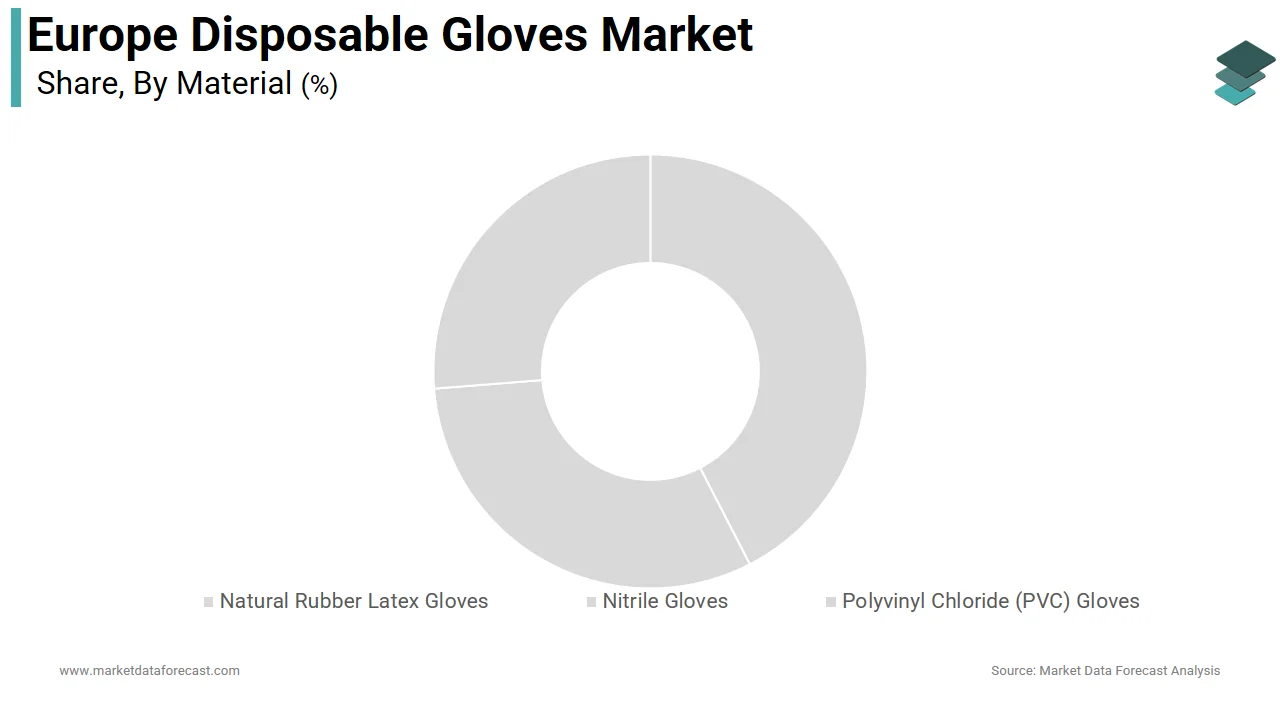
The nitrile gloves segment dominated the market by holding 51.5% of the Europe disposable gloves market share in 2024. The dominance of the nitrile gloves segment in this regional market is driven by their superior chemical resistance, puncture durability, and hypoallergenic properties compared to natural latex. As per the European Centre for Disease Prevention and Control, over 85% of European hospitals now specify nitrile as the standard for all direct patient care due to the rising prevalence of Type I latex allergy, which affects an estimated 4.3% of healthcare workers according to the European Academy of Allergy and Clinical Immunology. Additionally, nitrile’s compatibility with chemotherapy agents and disinfectants makes it indispensable in oncology and laboratory environments. According to the European Chemicals Agency, restrictions on certain latex accelerators under REACH further disadvantage natural rubber. Moreover, nitrile gloves maintain tactile sensitivity comparable to latex while offering longer shelf life under varied storage conditions. As per the German Social Accident Insurance, nitrile glove failure rates in occupational settings are 60% lower than vinyl alternatives. These performance and safety advantages have cemented nitrile as the material of choice across Europe’s most demanding sectors.
The nitrile gloves segment is not only dominant but also the fastest-growing material segment in the Europe disposable gloves market and is expected to witness a CAGR of 8.84% over the forecast period, owing to the converging regulatory, clinical, and industrial trends that favor synthetic over natural materials. As per the EU Medical Devices Regulation, all gloves must undergo rigorous biocompatibility testing, with nitrile formulations consistently achieving Class I and IIa certification due to the absence of latex proteins. In 2023, the French National Authority for Health updated its procurement guidelines to prioritize nitrile for all public hospital tenders, citing reduced allergic incident reports. Simultaneously, industrial demand is surging. According to the European Agency for Safety and Health at Work, nitrile glove usage in automotive and chemical manufacturing increased by 24% between 2022 and 2023, driven by stricter solvent exposure limits under the EU’s Occupational Exposure Limit framework. As per the Nova Institute, innovations in formulation have also reduced environmental impact, with bio‑based nitrile derived from castor oil now constituting 12% of European production. These multi‑sectoral tailwinds ensure nitrile maintains its dual status as both market leader and highest growth material in Europe’s disposable glove landscape.
By Application Insights
The healthcare and medical segment commanded the largest share of the Europe disposable gloves market and had 55.9% of the regional market share in 2024. The leading position of the healthcare and medical segment in this regional market can be credited to the non‑discretionary nature of glove use across clinical settings, where infection control is mandated by law and professional standards. As per Eurostat, Europe employed over 18 million healthcare professionals in 2023, with nurses alone averaging 12 glove changes per shift, as documented by the European Federation of Nurses Associations. The burden of healthcare‑associated infections further intensifies usage. According to the European Centre for Disease Prevention and Control, 8.9 million hospital‑acquired infections occur annually in the EU, necessitating rigorous hand hygiene protocols that include glove use for all contact precautions. National policies reinforce this demand. Germany’s Hospital Hygiene Ordinance requires gloves for all tasks involving bodily fluids, while the UK’s National Health Service mandates double gloving in high‑risk units. Additionally, Europe’s aging population drives utilization, with patients over 65 requiring 2.3 times more nursing interventions than younger cohorts, as per the Organisation for Economic Co‑operation and Development. These structural and demographic imperatives make healthcare the enduring core of Europe’s disposable glove consumption.
The food segment is the fastest-growing application segment in the Europe disposable gloves market and is estimated to register a CAGR of 10.14% over the forecast period, owing to the tightening food safety regulations, expanding food service employment, and increased consumer expectations for hygiene transparency. As per the European Food Safety Authority’s Regulation EC No 852/2004, bare hand contact with ready‑to‑eat foods is explicitly prohibited, mandating glove use across all 27 member states. Compliance enforcement has intensified following recurrent pathogen outbreaks. According to the EU’s Rapid Alert System for Food and Feed, 1,120 hygiene‑related alerts were issued in 2023, prompting national agencies like Spain’s AECOSAN to conduct unannounced glove compliance inspections. Employment growth further amplifies demand. Eurostat reports that food service jobs in Europe rose by 7.8% in 2023, driven by tourism recovery and online meal delivery platforms, which now account for 22% of restaurant revenue as per the European Commission. Moreover, premium food retailers such as Edeka and Carrefour have introduced “glove visible” packaging for deli and bakery items to reassure consumers. As per a 2024 survey by the European Consumer Organisation, 68% of shoppers consider visible glove use a key indicator of food safety. These regulatory, commercial, and behavioral forces position the food sector as Europe’s most dynamic glove application frontier.
COUNTRY-LEVEL ANALYSIS
Germany Disposable Gloves Market Analysis
Germany led the market by holding 20.9% of the European market share in 2024 due to its extensive public healthcare infrastructure, stringent occupational safety laws, and large industrial manufacturing base. Germany operates over 1,900 hospitals employing 1.3 million healthcare workers who consume an average of 4.2 billion gloves annually, as per the Federal Statistical Office. The German Social Accident Insurance mandates glove use across 37 high-risk industrial sectors, significantly expanding non-medical demand. Additionally, Germany enforces some of Europe’s strictest hygiene protocols. The Commission for Hospital Hygiene requires nitrile gloves for all patient contact and mandates batch traceability under DIN EN 455 standards. The federal government also stockpiles over 500 million gloves as part of its National Pandemic Preparedness Strategy, updated in 2023. These institutionalized requirements across public health, industry, and emergency planning create a deep and resilient glove consumption base unmatched in volume and regulatory rigor.
United Kingdom Disposable Gloves Market Analysis
The United Kingdom plays a central role in the European disposable gloves market. Factors such as the expansive healthcare system, rigorous food safety enforcement, and entrenched hygiene culture are driving the UK disposable gloves market growth. Despite Brexit, the National Health Service remains the single largest glove consumer in Europe, with over 1.5 million clinical staff using an estimated 3.8 billion gloves per year, according to NHS Supply Chain data. The UK’s Food Standards Agency enforces glove mandates across 450,000 registered food businesses, with zero tolerance for bare-hand contact in ready-to-eat preparation. Post-pandemic hygiene norms have become permanent. A 2024 Public Health England review found that 92% of care homes now require glove use for all resident interactions, compared to 63% in 2019. The Health and Safety at Work Act imposes strict liability on employers for PPE failures, prompting proactive over-compliance in sectors like cleaning and laboratory services. The government’s 2023 PPE Resilience Strategy institutionalized strategic glove reserves and local sourcing incentives.
France Disposable Gloves Market Analysis
France maintains a strong position in the European glove market. The growth of France in the European market is driven by centralized hygiene mandates across healthcare, food, and social care sectors. The National Health Insurance system covers 750,000 healthcare professionals who follow standardized glove protocols updated annually by the High Authority for Health. In 2023, the agency mandated nitrile as the default material for all public hospitals, reducing latex procurement by 40%. France’s food sector. France is home to over 280,000 registered businesses and faces aggressive enforcement, with the Directorate General for Competition Policy, Consumer Affairs, and Fraud Control conducting over 18,000 glove compliance inspections in 2023 alone. The country also leads in elderly care glove usage. withWith of its population aged 65 or older, residential care facilities now require glove use for all hygiene assistance tasks. These top-down public health directives generate consistent, high-volume glove consumption throughout France.
Italy Disposable Gloves Market Analysis
Italy remains a significant contributor to the European glove market. The large healthcare workforce of Italy, robust food manufacturing sector, and high tourism-driven food service activity are propelling the Italian market growth. The country operates over 1,000 public hospitals and 25,000 nursing homes, where glove use is enforced under the National Prevention Plan, updated in 2023. The Ministry of Health reported a 19% increase in glove consumption in public hospitals between 2021 and 2023 due to expanded infection control protocols. Italy’s food industry requires strict glove compliance in processing plants, especially for dairy, meat, and ready meals. The National Health Service mandates double gloving in high-risk food zones and conducts unannounced audits through the Carabinieri NAS unit, which issued 3,400 hygiene violations in 2023. Tourism further amplifies demand, with over 60 million international visitors in 2023, prompting restaurants and hotels to increase glove usage to meet hygiene expectations.
Spain Disposable Gloves Market Analysis
Spain plays a growing role in the European disposable gloves market. The expansive tourism sector of Spain, the large public healthcare system, and evolving food safety regulations are supporting the Spanish market growth. The National Health System employs over 800,000 professionals across 700 hospitals, with glove protocols standardized under the Spanish Agency of Medicines and Medical Devices. In 2023, the agency updated specifications to require powder-free nitrile gloves in all clinical settings, reducing allergy risks. Spain’s food service industry faces strict glove mandates from regional health inspectors. The autonomous communities of Catalonia and Andalusia introduced “glove transparency” laws requiring staff to change gloves visibly during food preparation. Industrial demand is also rising. Theistry of Labour reported a 22% increase in glove usage in cleaning and hospitality sectors between 2022 and 2023, driven by post-pandemic hygiene expectations. These institutional, public health, and consumer-driven requirements position Spain as a high-growth and compliance-conscious glove market in Southern Europe.
COMPETITIVE LANDSCAPE
Competition in the Europe disposable gloves market is defined by stringent regulatory compliance, consistent quality assurance, and sustainable sourcing rather than price alone. While global manufacturers from Asia dominate volume supply, European buyers increasingly demand full transparency in chemical composition, labor practices, and environmental impact. This has elevated the importance of certifications such as CE marking, REACH compliance, and ethical audit reports. The market features a dual structure with high-volume suppliers catering to public procurement tenders and premium brands serving specialized industrial and surgical segments. Differentiation arises through material innovation, such as thinner yet stronger nitrile formulations or allergen-free latex alternatives. Logistics reliability has become critical following pandemic-induced shortages, prompting buyers to favor suppliers with regional warehousing and diversified production bases. Public sector contracts often require multiyear price stability and stockpile commitments, further raising entry barriers. As environmental scrutiny intensifies, competition now extends to end-of-life solutions including recyclability and bio-based content. This complex landscape rewards suppliers who combine global scale with a deep understanding of Europe’s regulatory and ethical expectations.
KEY MARKET PLAYERS
The leading companies operating in the Europe disposable gloves market include:
- Top Glove Corporation Bhd
- Hartalega Holdings Berhad
- Kossan Rubber Industries Bhd
- Ansell Ltd
- Sempermed
- Cardinal Health
- Supermax Corporation Berhad
- Intco Medical
- Bluesail Medical Co., Ltd.
- Riverstone Holdings Limited
- YTY Group
- Comfort Rubber Gloves Industries Sdn Bhd
- Jiangsu Jaysun Glove Co., Ltd.
- Kimberly-Clark Worldwide, Inc.
- Synthomer plc
- 3M
TOP PLAYERS IN THE MARKET
- Hartalega Holdings Berhad is a global leader in nitrile glove manufacturing with a substantial footprint in the Europe disposable gloves market. The company supplies high-quality medical and industrial-grade gloves to hospitals, food processors, and laboratories across the region. Hartalega has strengthened its European presence through strategic partnerships with major distributors and compliance with the EU Medical Device Regulation and REACH chemical standards. Recently, the company expanded its automated production capacity dedicated to Europe-bound shipments featuring enhanced powder-free formulations and reduced protein content to meet stringent allergy requirements. These initiatives reinforce Hartalega’s role as a reliable large-scale supplier aligned with Europe’s demand for consistent quality and regulatory adherence in critical protective equipment.
- Top Glove Corporation Berhad plays a pivotal role in the Europe disposable gloves market by delivering a broad portfolio of latex and nitrile gloves tailored to healthcare and industrial needs. The company has invested heavily in sustainability and ethical manufacturing to address European buyer expectations, including zero forced labor certifications and waste reduction programs. In recent years, Top Glove enhanced its European logistics network with regional distribution centers in the Netherlands and Poland to ensure rapid delivery and inventory resilience. It also introduced bio-based nitrile gloves compliant with the EU’s circular economy framework. These actions demonstrate Top Glove’s commitment to aligning global production capabilities with Europe’s evolving regulatory and environmental standards.
- Ansell Limited is a key player in the Europe disposable gloves market, renowned for its advanced protective solutions in healthcare and industrial sectors. Headquartered in Australia but with deep European operations, Ansell emphasizes innovation in material science and ergonomic design. The company supplies premium nitrile and specialty polymer gloves to European hospitals, laboratories, and automotive manufacturers requiring high chemical resistance and tactile precision. Recently, Ansell launched its next-generation MicroFlex Nitrile series with enhanced grip and reduced thickness without compromising barrier protection. It also expanded its sustainability program by introducing recyclable packaging and partnering with European waste management firms to pilot glove take-back schemes. These initiatives solidify Ansell’s position as a technology-driven and sustainability-conscious supplier in Europe’s high-performance glove segment.
TOP STRATEGIES USED BY THE KEY MARKET PARTICIPANTS
Key players in the Europe disposable gloves market prioritize regulatory compliance with the EU Medical Device Regulation and REACH chemical restrictions to ensure market access. They invest in automated high-capacity production lines to guarantee consistent quality and supply stability. Companies develop bio-based and recyclable glove formulations to align with Europe’s circular economy mandates. Strategic placement of regional distribution hubs in the Netherlands, Poland, and Germany enhances logistics responsiveness. Additionally, firms engage in sustainability certifications and ethical labor audits to meet stringent European procurement criteria, particularly from public health and food sectors.
MARKET SEGMENTATION
This research report on the Europe disposable gloves market has been segmented and sub-segmented into the following categories.
By Material
- Natural Rubber Latex Gloves
- Nitrile Gloves
- Polyvinyl Chloride (PVC) Gloves
- Others
By Application
- Healthcare & Medical
- Industrial
- Food Industry
- Others
By Country
- United Kingdom
- France
- Spain
- Germany
- Italy
- Russia
- Sweden
- Denmark
- Switzerland
- Netherlands
- Rest of Europe