- Product Description Description
- Table of Contents TOC
- List of Table & Figure LOT
- Get Free Sample PDF Sample PDF
Market Size, 2025
$4.90 BnMarket Estimate, 2026
$5.16 BnMarket Forecast, 2034
$7.74 BnCAGR, 2026–2034
5.21%Europe Fragrance Market Size, Share, Trends & Forecast (2026–2034)
- Market Scope: Comprehensive analysis of the European fragrance market covering product types, consumer groups, applications, and country-level dynamics.
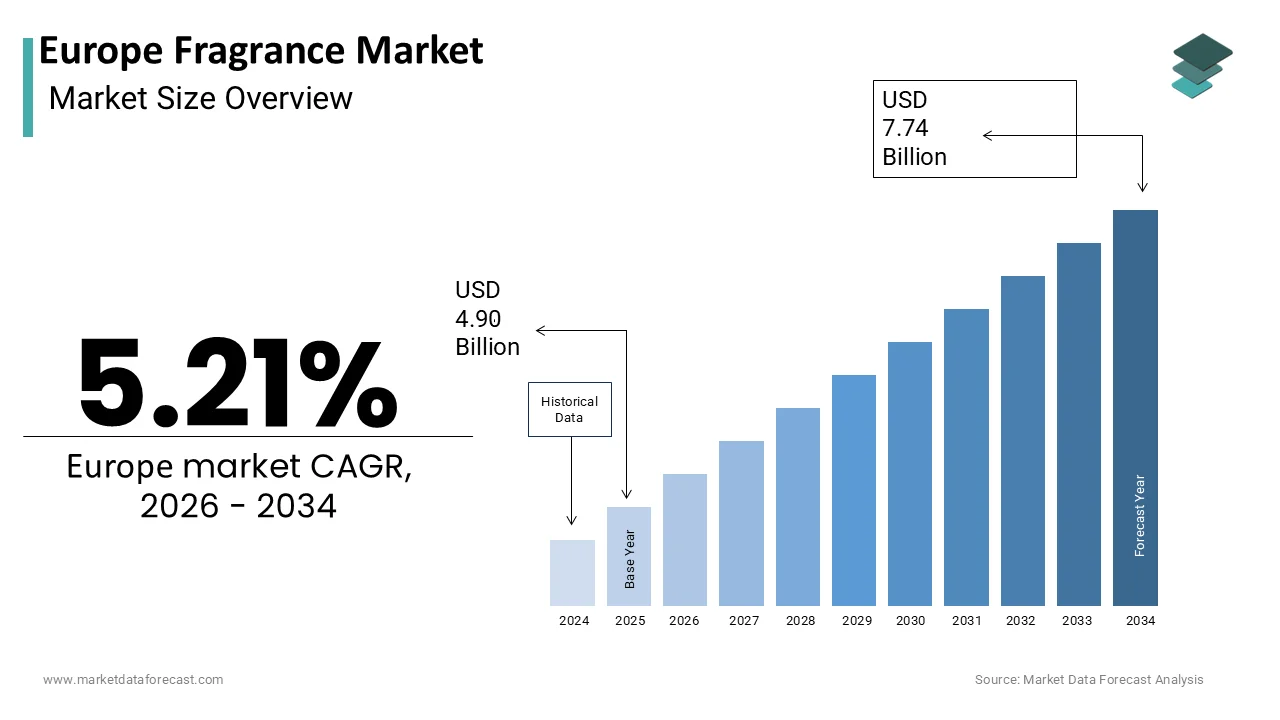
- Market Valuation: Valued at USD 4.90 billion in 2025, estimated at USD 5.16 billion in 2026, and projected to reach USD 7.74 billion by 2034, registering a healthy CAGR of 5.21% from 2026 to 2034.
- Primary Growth Drivers: Rising demand for premiumization and niche perfumery, along with the growing integration of fragrances into personal wellness and aromatherapy routines.
Key Europe Fragrance Market Segment Metrics (2026–2034)
| Category | Leading Segment (2025 Position) | Fastest-Growing Segment |
|---|---|---|
| By Type | Synthetic fragrances segment (dominated in 2025 due to cost-effectiveness, stability, and versatility) | Natural fragrances segment (estimated to grow at a CAGR of 8.2%, driven by clean beauty and holistic wellness trends) |
| By Consumer Group | Women segment (led the market in 2025, accounting for ~60% of Western European sales) | Unisex segment (estimated to register a CAGR of 10.4%, fueled by shifting gender norms and Gen Z preferences) |
| By Application | Perfumes and fine fragrances segment (occupied the major share in 2025 as luxury social signaling goods) | Essential oils and aromatherapy segment (anticipated to showcase a CAGR of 9.2% for holistic mental health benefits) |
Major Market Players & Competitive Structure
Market Structure: Highly competitive landscape balancing historic perfumery heritage houses with modern indie brands, digital personalization platforms, and strict regulatory compliance requirements.
Key Market Leaders: Givaudan SA, Symrise AG, Firmenich International S.A., MANE FILS SA, International Flavors & Fragrances Inc. (IFF), Robertet Group, Takasago International Corporation, Sensient Technologies Corporation, CPL Aromas Ltd., dsm-firmenich AG, Kao Corporation, and Puig S.L.
Europe Fragrance Market Size
The Europe Fragrance Market is projected to grow from USD 4.90 billion in 2025 to USD 5.16 billion in 2026 and reach USD 7.74 billion by 2034, registering a CAGR of 5.21% during the forecast period from 2026 to 2034.
Fragrances includes a diverse array of scented products, including perfumes, colognes, eau de toilette, and home fragrances, that serve both personal grooming and lifestyle enhancement purposes. This sector is deeply rooted in European cultural heritage, particularly in nations like France and Italy, where perfumery is considered an art form. The market caters to a wide demographic, ranging from luxury consumers seeking exclusive niche scents to mass market buyers looking for affordable daily wear options. According to Eurostat, the household final consumption expenditure on personal care products in the European Union reached approximately 45 billion euros in 2023, indicating robust consumer spending power in this category. The European Commission notes that the cosmetics industry, which includes fragrances, employs over 150,000 people directly across the continent, highlighting its economic significance. As per the International Fragrance Association, Europe remains the largest producer of fragrance ingredients globally, with Grasse in France recognized as the historic capital of perfume manufacturing. Consumer preferences are shifting toward sustainable and transparent sourcing, driven by heightened environmental awareness. Regulatory frameworks under the European Chemicals Agency ensure strict safety standards for allergens and restricted substances in fragrance formulations. The rise of e-commerce has transformed distribution channels, allowing brands to reach consumers directly through digital platforms. This dynamic landscape reflects a blend of tradition and innovation, where established houses coexist with emerging indie brands, all navigating evolving consumer expectations and regulatory requirements in a mature yet evolving market.
MARKET DRIVERS
Rising Demand for Premiumization and Niche Perfumery Drives Value Growth
The trend toward premiumization and the growing popularity of niche perfumery are majorly propelling the expansion of the European fragrance market, as consumers increasingly seek unique, high-quality scents that reflect individual identity rather than mass appeal. Affluent consumers in Western Europe are willing to pay higher prices for artisanal fragrances crafted with rare natural ingredients and complex olfactory profiles. According to McKinsey and Company, the luxury personal care segment, which includes niche fragrances, grew by 12% annually in Europe between 2020 and 2023, outpacing the growth of mass market products. This shift is fueled by a desire for exclusivity and storytelling, with brands emphasizing their heritage, craftsmanship, and ethical sourcing practices. The number of independent perfumeries in cities like London, Paris, and Berlin has increased by 30% over the last five years as per industry observations, indicating a vibrant ecosystem for niche players. Consumers are becoming more educated about fragrance notes and composition, leading to a decline in impulse buying and a rise in deliberate, curated purchases. Social media influencers and fragrance communities online play a crucial role in discovering and promoting niche brands, creating buzz around limited edition releases. This demand for differentiation encourages established luxury houses to launch exclusive lines and acquire independent niche brands to capture this lucrative segment. The emotional connection consumers form with unique scents drives brand loyalty and repeat purchases, sustaining revenue growth even in economically uncertain times. This premiumization trend elevates the average transaction value and strengthens the overall value proposition of the European fragrance industry.
Increasing Focus on Personal Wellness and Aromatherapy Boosts Usage Frequency
The increasing integration of fragrances into personal wellness routines and aromatherapy practices significantly boosts usage frequency and expands the addressable market in Europe, which is another major market driver. Consumers are increasingly viewing scent not just as an accessory but as a tool for mental well-being, stress reduction, and mood enhancement. According to the Global Wellness Institute, the mental wellness market in Europe is valued at over 100 billion dollars, with aromatherapy and sensory experiences playing a pivotal role. This holistic approach drives demand for fragrances with functional benefits, such as calming lavender, energizing citrus, or grounding woody notes. Retailers report a 25% increase in sales of wellness-oriented fragrances and home scents since 2021, as per industry data from major department stores. The pandemic accelerated this trend, with individuals spending more time at home and seeking comfort through familiar and soothing scents. Brands are responding by launching collections specifically designed for relaxation, sleep aid, or focus, often incorporating essential oils and natural extracts. Yoga studios, spas, and wellness centers collaborate with fragrance brands to create immersive sensory experiences, further normalizing the use of scent for therapeutic purposes. This shift broadens the consumer base beyond traditional perfume users to include health-conscious individuals who may not have previously prioritized fragrance. The overlap between beauty and wellness creates new marketing narratives and product innovations, driving sustained engagement and consumption. As mental health awareness continues to grow, the role of fragrance in self-care rituals is expected to expand, providing a stable demand driver for the market.
MARKET RESTRAINTS
Stringent Regulatory Restrictions on Allergens and Ingredients Limit Formulation Flexibility
Stringent regulatory restrictions on allergens and specific chemical ingredients imposed by the European Union significantly constrain formulation flexibility for fragrance manufacturers, which is a significant impediment to the regional market growth. The European Chemicals Agency regularly updates the list of restricted substances under the Classification, Labelling and Packaging Regulation, requiring companies to reformulate popular scents to comply with safety standards. According to the International Fragrance Association, over 200 substances are currently restricted or banned in fragrance compositions within the EU, forcing brands to invest heavily in research and development to find safe alternatives that maintain olfactory integrity. These reforms can alter the scent profile of iconic fragrances, potentially alienating loyal customers who prefer the original formulation. The cost of compliance is substantial, with small and medium-sized enterprises struggling to afford the necessary toxicological testing and regulatory filings. Consumer awareness of allergens, such as limonene and linalool, has also increased, leading to demands for clearer labeling which can clutter packaging and deter purchase. Some natural ingredients face supply chain volatility due to regulatory scrutiny on sustainability and harvesting practices, further complicating production. The lengthy approval process for new synthetic molecules delays time to market, hindering rapid innovation cycles compared to less regulated regions. These regulatory hurdles create barriers to entry for new players and increase operational costs for established brands, limiting the diversity of available products and potentially stifling creative expression in perfumery while prioritizing consumer safety.
Economic Volatility and Inflationary Pressures Reduce Discretionary Spending
Economic volatility and persistent inflationary pressures across Europe reduce discretionary spending on non-essential items like premium fragrances, which is another significant restraint on market growth. As the cost of living rises, consumers prioritize essential goods, such as food, energy, and housing, leading to a trade-down effect in the personal care sector. According to Eurostat, the inflation rate in the Euro area averaged 6.4% in 2023, eroding purchasing power and causing households to cut back on luxury expenditures. Data from retail analytics firms indicate a 10% decline in volume sales of mid-tier fragrances in 2023, as consumers opted for smaller sizes or switched to cheaper alternatives. The war in Ukraine and subsequent energy crises have exacerbated economic uncertainty, making consumers more cautious with their finances. While the ultra-luxury segment remains resilient due to wealthy consumers being less affected by inflation, the mass and prestige segments face significant headwinds. Promotional activities and discounts have become more frequent as brands struggle to maintain sales volumes, impacting profit margins. Younger consumers, who are key drivers of fragrance trends, are particularly sensitive to price increases and may delay purchases or explore refillable options to save money. This economic environment forces brands to rethink pricing strategies and value propositions, often leading to a contraction in overall market value despite potential stability in unit sales of lower-priced items. The uncertainty surrounding future economic conditions makes long-term planning difficult for industry participants.
MARKET OPPORTUNITIES
Expansion of E-Commerce and Digital Personalization Creates New Engagement Channels
The rapid expansion of e-commerce and the adoption of digital personalization technologies create substantial opportunities for the Europe Fragrance Market by enhancing customer experience and accessibility. Online platforms allow brands to reach a wider audience beyond physical retail locations, particularly in rural areas where specialty perfume shops are scarce. According to Statista, e-commerce sales of beauty and personal care products in Europe grew by 18% in 2023, with fragrances representing a significant portion of this growth. Digital tools, such as virtual scent profiling quizzes and artificial intelligence-driven recommendations, help consumers navigate the vast array of choices without the ability to smell the product physically. Brands are investing in augmented reality applications that provide immersive storytelling experiences, connecting users with the inspiration behind each scent. Direct-to-consumer models enable brands to collect valuable data on customer preferences, allowing for targeted marketing and personalized product offerings. Subscription services for fragrance samples have gained popularity, offering consumers a low-risk way to discover new scents before committing to full-size bottles. Social media platforms serve as powerful discovery engines, with influencer collaborations driving viral trends and immediate sales spikes. The convenience of home delivery and easy return policies further encourages online purchasing. As digital natives become the dominant consumer group, brands that seamlessly integrate online and offline experiences through omnichannel strategies will capture greater market share. This digital transformation opens new revenue streams and fosters deeper brand loyalty through personalized engagement.
Growing Demand for Sustainable and Eco-Friendly Fragrance Solutions
The growing consumer demand for sustainable and eco-friendly fragrance solutions presents a significant opportunity for the European fragrance market. European consumers are increasingly scrutinizing the environmental impact of their purchases, favoring brands that use biodegradable ingredients, recyclable packaging, and ethical sourcing practices. According to a survey by the European Consumer Organisation, 70% of Europeans consider sustainability a key factor when buying personal care products. This trend drives innovation in green chemistry, with companies developing bio-based synthetics and upcycled natural ingredients that reduce reliance on petrochemicals. Refillable perfume bottles are gaining traction, with major luxury houses launching refill stations in flagship stores to reduce plastic waste. Certifications, such as Ecocert and Cosmos Organic, provide credibility to brands claiming natural or organic status, appealing to health-conscious consumers. Transparency in supply chains is becoming a competitive advantage, with brands sharing stories about ingredient origins and farmer partnerships. Clean beauty movements advocate for fragrances free from controversial chemicals, prompting reformulations that align with stricter safety and environmental standards. Collaborations with environmental organizations enhance brand reputation and demonstrate commitment to corporate social responsibility. As regulatory pressure on plastic waste and carbon emissions increases, early adopters of sustainable practices will be better positioned to comply and thrive. This shift toward sustainability not only meets consumer expectations but also future-proofs businesses against evolving regulatory landscapes, creating long-term value and brand equity.
MARKET CHALLENGES
Supply Chain Disruptions and Raw Material Scarcity Impact Production Stability
Supply chain disruptions and scarcity of key raw materials pose significant challenges to the Europe fragrance market, which is affecting production stability and cost management. Many natural ingredients used in perfumery, such as rose oil from Bulgaria, jasmine from Grasse, and sandalwood from Asia, are subject to climatic variations and geopolitical instability. According to the International Trade Centre, global supply chain bottlenecks increased freight costs by 300% during peak disruption periods, impacting the profitability of fragrance manufacturers. Climate change exacerbates these issues, with extreme weather events damaging crops and reducing yields of essential aromatic plants. The conflict in Eastern Europe has disrupted the supply of certain synthetic precursors and packaging materials, leading to delays and shortages. Dependence on single-source suppliers for rare ingredients increases vulnerability to price volatility and availability risks. Manufacturers face difficulties in forecasting demand accurately amidst fluctuating consumer behavior, leading to either excess inventory or stockouts. The complexity of global logistics networks means that delays in one region can cascade through the entire supply chain, affecting product launches and seasonal promotions. Companies are forced to diversify suppliers and invest in local sourcing initiatives, which often come at a higher cost. These operational challenges require agile management strategies and robust risk mitigation plans to ensure continuity. The inability to secure consistent supplies of high-quality ingredients can compromise product quality and brand reputation, making supply chain resilience a critical strategic priority for industry players.
Counterfeit Products and Intellectual Property Theft Erode Brand Value
The prevalence of counterfeit products and intellectual property theft significantly erodes brand value and consumer trust in the Europe fragrance market, which is posing a persistent challenge for legitimate manufacturers. Counterfeit fragrances, often sold through unofficial online marketplaces and street vendors, mimic popular luxury scents but contain inferior or potentially harmful ingredients. According to the European Union Intellectual Property Office, the cosmetics and perfume sector accounts for approximately 5% of all seized counterfeit goods at EU borders, representing millions of euros in lost revenue annually. These fake products not only deprive brands of sales but also damage their reputation when consumers experience poor performance or adverse reactions. The sophistication of counterfeiters has increased, with some replicas being nearly indistinguishable from genuine products in packaging and presentation. Protecting intellectual property requires significant investment in legal actions, anti-counterfeit technologies, and consumer education campaigns. Small and niche brands are particularly vulnerable, as they lack the resources to combat large-scale counterfeiting operations. The anonymity of online platforms makes it difficult to track and shut down illicit sellers effectively. Consumer confusion between genuine and fake products can lead to dissatisfaction and loss of loyalty. Brands must continuously innovate in packaging security features, such as holograms and QR codes, to verify authenticity. Collaborative efforts with law enforcement agencies and online platforms are essential to curb this illegal trade. Despite these efforts, the sheer volume of counterfeit goods remains a daunting challenge that undermines the integrity of the luxury fragrance sector.
REPORT COVERAGE
| REPORT METRIC | DETAILS |
| Market Size Available | 2025 to 2034 |
| Base Year | 2025 |
| Forecast Period | 2026 to 2034 |
| Segments Covered | By Type, Consumer Group, Application, and Region |
| Various Analyses Covered | Global, Regional and Country-Level Analysis, Segment-Level Analysis, Drivers, Restraints, Opportunities, Challenges; PESTLE Analysis; Porter’s Five Forces Analysis, Competitive Landscape, Analyst Overview of Investment Opportunities |
| Countries Covered | UKFranceSpainGermany |
| Market Leaders Profiled | Givaudan SA, Symrise AG, Firmenich International S.A., MANE FILS SA, International Flavors & Fragrances Inc. (IFF), Robertet Group, Takasago International Corporation, Sensient Technologies Corporation, CPL Aromas Ltd., dsm-firmenich AG, Kao Corporation, Puig S.L. |
SEGMENTAL ANALYSIS
By Type Insights
The synthetic fragrances segment dominated the market by accounting for the highest share of the European market in 2025 due to their cost-effectiveness, consistency, and versatility in formulation. Unlike natural ingredients, which are subject to seasonal variations and climatic uncertainties, synthetic molecules offer stable pricing and uniform olfactory profiles essential for mass production. According to the International Fragrance Association, approximately 90% of the ingredients used in modern perfumery are synthetic, highlighting their indispensable role in the industry. These compounds allow perfumers to create scents that do not exist in nature, such as aquatic or ozonic notes, expanding creative possibilities significantly. The European Chemicals Agency regulates these substances strictly, ensuring safety while enabling innovation. Major fragrance houses rely on synthetics to maintain supply chain reliability, as natural raw materials, like rose or jasmine, require vast land areas and labor-intensive harvesting processes. For instance, producing one kilogram of rose absolute requires nearly 4,000 kilograms of petals, making it prohibitively expensive for mainstream products. Synthetic alternatives provide similar sensory experiences at a fraction of the cost, allowing brands to offer affordable luxury to a broader consumer base. Furthermore, advancements in green chemistry have led to the development of bio-based synthetics that mimic natural structures without environmental degradation, addressing sustainability concerns. This technological evolution ensures that synthetic fragrances remain the backbone of the European market, supporting both mass market and prestige segments with reliable and scalable solutions.
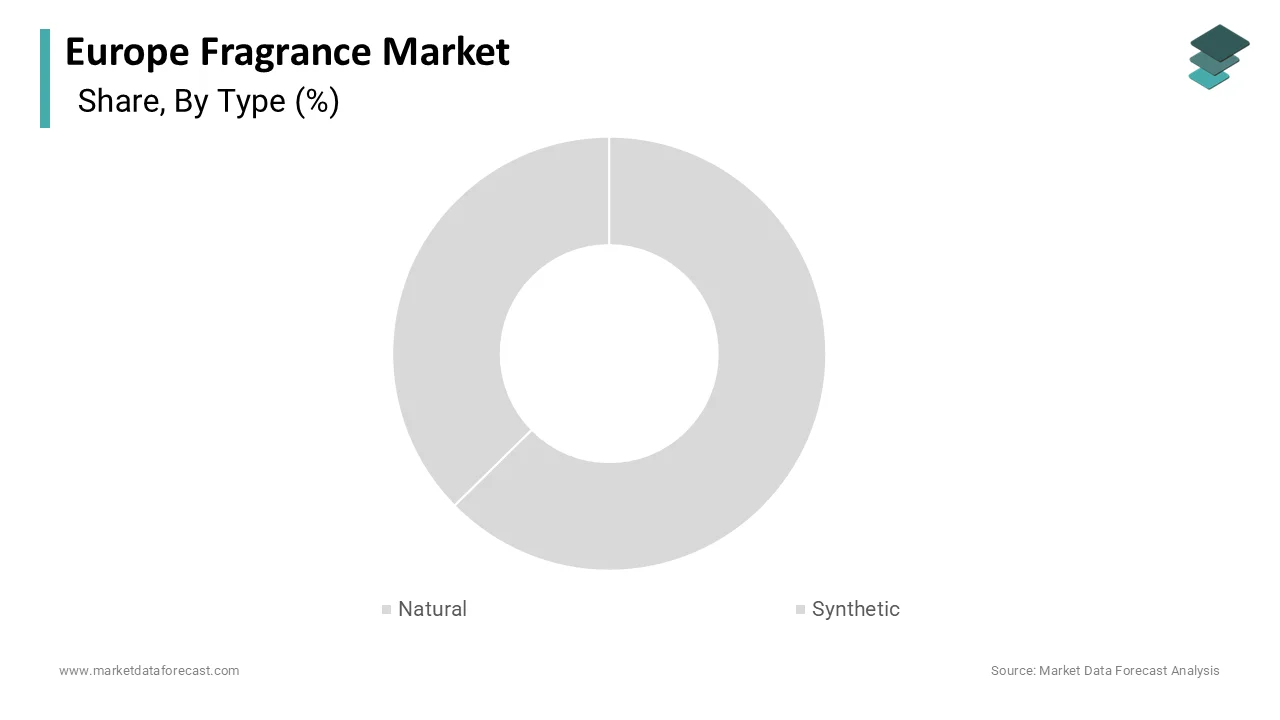
However, the natural fragrances segment is estimated to witness a CAGR of 8.2% during the forecast period in the European market owing to the increasing consumer demand for clean, transparent, and sustainable beauty products that align with holistic wellness lifestyles. According to the Soil Association, sales of certified natural cosmetics in Europe increased by 12% in 2023, with fragrances being a significant contributor to this expansion. Consumers are becoming more aware of the potential health risks associated with synthetic chemicals, prompting a shift toward plant-based alternatives derived from essential oils and absolutes. Regulatory pressures, such as the European Union’s Green Deal, encourage the use of renewable resources and biodegradable ingredients, further boosting the appeal of natural fragrances. Brands are responding by obtaining certifications, like Ecocert and Cosmos Organic, to validate their claims and build trust with discerning buyers. The rise of aromatherapy and wellness tourism has also heightened interest in natural scents for their therapeutic benefits, such as stress relief and mood enhancement. Niche perfumeries are leading this trend by showcasing single-origin ingredients and artisanal extraction methods, creating a narrative of authenticity and craftsmanship. As environmental consciousness becomes a mainstream value, the demand for natural fragrances is expected to continue its upward trajectory, challenging the dominance of synthetics in specific premium and eco-conscious niches.
By Consumer Group Insights
The women segment led the market by holding the highest share of the European market in 2025. The growth of the women segment in the European market can be credited to deeply ingrained cultural norms, higher consumption frequency, and a wider variety of product offerings tailored to female preferences. Women are traditionally the primary purchasers of fragrances for themselves and often for their households, making them the dominant demographic in terms of volume and value. According to Euromonitor International, women account for approximately 60% of total fragrance sales in Western Europe, reflecting their significant influence on market dynamics. The female fragrance category is characterized by extensive segmentation, with products ranging from fresh florals to oriental gourmands, catering to diverse occasions and moods. Marketing campaigns heavily target women through emotional storytelling and celebrity endorsements, creating strong brand connections. The ritual of applying perfume is often integrated into daily grooming routines, leading to regular repurchase cycles. Department stores and beauty retailers dedicate substantial floor space to women’s fragrances, offering personalized consultations and gift sets that drive impulse buys. Seasonal launches and limited edition collections are frequently directed at female consumers, keeping engagement high throughout the year. The social expectation for women to wear scent as part of their presentation reinforces habitual usage. Additionally, the rise of layering techniques, where multiple scents are combined, increases product consumption per user. This entrenched behavior, supported by aggressive marketing and diverse product availability, ensures that the women segment remains the cornerstone of the European fragrance industry.
On the other end, the unisex segment is estimated to register a CAGR of 10.4% during the forecast period in the European market due to the shifting gender norms and a growing desire for inclusivity and individuality among younger consumers. According to Mintel, 40% of Gen Z consumers in Europe prefer gender-neutral products, including fragrances, as they reject traditional binary classifications. Unisex scents often feature woody, spicy, or aromatic notes that appeal to a broad audience without adhering to stereotypical floral or musky profiles. Niche brands are leading this trend by marketing their products as inclusive and versatile, appealing to those who view scent as a form of self-expression rather than a gender marker. Major luxury houses are also launching gender-free lines to capture this emerging demographic. Retailers are adapting by organizing shelves by scent family rather than gender, facilitating easier exploration for shoppers. The rise of fluid identity and non-conformist lifestyles supports the acceptance of unisex fragrances in mainstream culture. Social media discussions around gender neutrality amplify visibility and acceptance, encouraging more people to try these scents. This cultural shift transforms fragrance from a gendered accessory to a universal personal care item, opening new avenues for growth and innovation in the European market.
By Application Insights
The perfumes and fine fragrances segment occupied the major share of the European market in 2025. The growth of the perfumes and fragrances segment in the European market is driven by their status as luxury goods, strong cultural significance, and high value per unit. This segment includes eau de parfum, eau de toilette, and extrait de parfum, which are primarily used for personal adornment and social signaling. According to Statista, the revenue from perfumes and colognes in Europe exceeded 10 billion euros in 2023, underscoring their economic importance. European consumers view fine fragrances as essential accessories that complement their style and personality. The presence of historic perfume houses in France and Italy reinforces the prestige associated with these products. Gift-giving occasions, such as Christmas and birthdays, drive significant sales volumes, with perfumes being a preferred present due to their perceived thoughtfulness and luxury. The segment benefits from continuous innovation in scent creation and packaging, attracting collectors and enthusiasts. High margins allow brands to invest in elaborate marketing campaigns and flagship stores that enhance brand image. The emotional connection consumers have with their signature scents fosters long-term loyalty and repeat purchases. Despite economic fluctuations, the demand for premium perfumes remains resilient, as consumers treat themselves to small luxuries. This enduring appeal ensures that perfumes and fine fragrances remain the dominant application segment in the European market.
However, the essential oils and aromatherapy segment is growing exponentially and is anticipated to showcase a CAGR of 9.2% during the forecast period owing to the rising interest in holistic wellness, mental health awareness, and natural remedies. According to the Global Wellness Institute, the wellness economy in Europe is expanding rapidly, with aromatherapy playing a key role in stress management and relaxation. Consumers are incorporating essential oils into their daily routines through diffusers, baths, and topical applications to improve sleep, reduce anxiety, and boost energy. The pandemic accelerated this trend, as people sought ways to cope with isolation and uncertainty at home. Retailers are expanding their offerings to include pure essential oils, blends, and aromatherapy accessories. Certification bodies are establishing standards for purity and quality, building consumer trust. The versatility of essential oils allows for customization, appealing to those who prefer DIY solutions. Integration with smart home devices, such as app-controlled diffusers, adds convenience and modern appeal. As mental well-being becomes a priority, the demand for natural, therapeutic scents continues to rise. This segment bridges the gap between fragrance and healthcare, offering functional benefits that resonate with health-conscious Europeans. The combination of tradition and innovation ensures sustained growth and diversification in the aromatherapy market.
COUNTRY LEVEL ANALYSIS
France Fragrance Market Analysis
France held the largest share of the European market in 2025 and is likely to remain the absolute leader and center of gravity for the European fragrance sector over the next few years, expanding its strong export position and heritage status. France holds the premier position in the Europe Fragrance Market, driven by its historical legacy as the global capital of perfumery. The country is home to Grasse, the historic center of flower cultivation and extraction, which supplies high-quality raw materials to major luxury houses. According to the French Federation of Beauty Companies, the perfume sector generates over 3 billion euros in annual exports, highlighting its economic significance. French consumers exhibit sophisticated tastes and high brand loyalty, preferring prestigious heritage brands that emphasize craftsmanship and artistry. The domestic market is supported by a dense network of perfumeries and department stores that offer personalized services. Tourism plays a crucial role, with visitors purchasing French fragrances as authentic souvenirs. Government support for artisanal skills and intellectual property protection strengthens the industry. Innovation in sustainable sourcing and green chemistry is prioritized to maintain leadership in a changing regulatory landscape. The presence of global headquarters for major conglomerates facilitates rapid product launches and marketing campaigns. France’s influence extends beyond borders, setting trends that shape the entire European market. This combination of heritage, expertise, and economic power ensures France remains the undisputed leader in the European fragrance industry.
Germany Fragrance Market Analysis
Germany is expected to experience steady, practical development over the coming years, primarily driven by a deep-rooted consumer emphasis on organic formulations and product safety. German consumers are known for their discerning tastes and willingness to pay for premium products that offer proven benefits. According to the German Cosmetic Toiletry Perfumery and Detergent Association, the domestic fragrance market is stable, with steady growth driven by demand for niche and organic brands. The country has a robust retail infrastructure, including drugstores and specialized perfumeries, that cater to diverse consumer segments. Environmental consciousness is high, leading to increased demand for eco-friendly packaging and sustainably sourced ingredients. Regulatory compliance is strict, with consumers trusting products that meet high safety standards. The rise of online shopping has expanded access to international brands, increasing competition. German manufacturers focus on innovation in synthetic biology and green chemistry to produce sustainable aroma chemicals. The market is less driven by impulse buying and more by deliberate choices based on ingredient transparency. Corporate gifting and seasonal promotions contribute to sales peaks. Germany’s central location in Europe makes it a key distribution hub for fragrance products. This blend of quality focus, sustainability, and logistical advantage sustains Germany’s strong position in the regional market.
United Kingdom Fragrance Market Analysis
The United Kingdom is poised to act as a highly dynamic laboratory for digital commerce and indie brand experimentation for the foreseeable future, driving rapid retail evolution. London serves as a global hub for creative talent and niche fragrance launches, attracting attention from international consumers. According to the British Beauty Council, the UK fragrance market is resilient, with growth driven by premiumization and diverse consumer preferences. British shoppers are experimental and open to new scent profiles, supporting the growth of artisanal brands. The retail landscape includes iconic department stores and independent boutiques that offer curated selections. E-commerce penetration is high, with online platforms driving significant sales volume. Post-Brexit adjustments have impacted supply chains, but brands have adapted by localizing operations. The UK leads in digital marketing and influencer collaborations, shaping trends across Europe. Consumer interest in gender-neutral and inclusive fragrances is particularly strong here. Economic fluctuations affect discretionary spending, but the luxury segment remains robust. The cultural diversity of the UK influences scent preferences, leading to a wide variety of available products. Investment in retail experiences and customer service enhances brand loyalty. The UK’s creative energy and digital savvy ensure it remains a key driver of innovation and trends in the European fragrance market.
COMPETITIVE LANDSCAPE
The competitive landscape of the Europe Fragrance Market features a mix of established multinational corporations and agile niche players vying for consumer attention through innovation and brand storytelling. Major ingredient suppliers compete on technological prowess sustainability credentials and ability to deliver unique olfactory experiences to brand owners. Luxury fashion houses leverage their brand equity to dominate the premium segment while indie perfumers attract consumers seeking exclusivity and authenticity. Price competition is intense in the mass market segment prompting companies to optimize supply chains and offer value added packaging. Regulatory compliance with European Union standards serves as a barrier to entry ensuring only qualified players operate in the market. Differentiation is achieved through creative marketing digital engagement and personalized customer experiences. Collaborations between tech firms and fragrance houses are becoming common to integrate scent into digital platforms. The market is characterized by rapid trend cycles requiring agility and continuous innovation. Consolidation through mergers and acquisitions allows larger entities to expand portfolios and achieve economies of scale. This dynamic environment drives constant evolution in product offerings and business models across the continent.
KEY MARKET PLAYERS
Some of the companies that are playing a dominating role in the European Fragrance Market include
- Givaudan SA
- Symrise AG
- Firmenich International S.A.
- MANE FILS SA
- International Flavors & Fragrances Inc. (IFF)
- Robertet Group
- Takasago International Corporation
- Sensient Technologies Corporation
- CPL Aromas Ltd.
- dsm-firmenich AG
- Kao Corporation
- Puig S.L.
TOP LEADING PLAYERS IN THE MARKET
- Givaudan SA stands as a global leader in flavors and fragrances with a profound impact on the European market through its extensive innovation capabilities. The company leverages advanced technology such as artificial intelligence to create unique scent profiles that resonate with modern consumer preferences. Givaudan recently expanded its creative centers in France and Switzerland to foster closer collaboration with perfumers and clients. Their commitment to sustainability is evident in their Sourcing for Shared Value initiative which ensures ethical ingredient procurement. By integrating digital tools into the fragrance creation process Givaudan enhances efficiency and personalization for brand partners. This strategic focus on innovation and responsible sourcing strengthens their reputation and deepens relationships with major luxury and mass market brands across Europe.
- Firmenich International MA is a pivotal player in the Europe Fragrance Market known for its expertise in fine fragrance creation and sustainable ingredients. Following its merger with DSM the company has strengthened its position by combining scientific prowess with creative excellence. Firmenich actively invests in biotechnology to develop natural and bio based aroma chemicals that meet growing demand for clean labels. Their recent launch of proprietary molecules offers perfumers new olfactory possibilities while adhering to strict environmental standards. The company collaborates closely with European fashion houses to craft signature scents that define brand identities. Through continuous research and development Firmenich maintains its competitive edge by delivering high quality innovative solutions that align with evolving regulatory and consumer expectations in the region.
- International Flavors and Fragrances Inc plays a significant role in the Europe Fragrance Market by providing diverse scent solutions for personal care and home care applications. The company focuses on creating emotional connections through scent using insights from consumer behavior studies. IFF recently integrated its acquisition of DuPont Nutrition and Biosciences which enhanced its capability to offer holistic wellness oriented fragrance solutions. They have expanded their production facilities in Germany to improve supply chain resilience and reduce carbon footprint. IFF emphasizes transparency and sustainability in its ingredient sourcing appealing to environmentally conscious European consumers. By leveraging data analytics and creative talent IFF delivers customized fragrance experiences that help brands differentiate themselves in a crowded marketplace ensuring sustained growth and relevance.
TOP STRATEGIES USED BY KEY MARKET PARTICIPANTS
Key players in the Europe Fragrance Market employ several strategic approaches to maintain competitive advantages and drive growth. Companies increasingly adopt sustainable sourcing practices to meet consumer demand for eco friendly products and comply with stringent environmental regulations. Investment in biotechnology and green chemistry allows firms to create innovative natural and bio based ingredients that reduce reliance on finite resources. Strategic partnerships with fashion houses and lifestyle brands enable co creation of exclusive scents that enhance brand equity and customer loyalty. Digital transformation through artificial intelligence and data analytics helps companies predict trends and personalize fragrance recommendations for consumers. Expansion into emerging niches such as gender neutral and wellness oriented fragrances opens new revenue streams. Continuous investment in research and development ensures a steady pipeline of novel aroma molecules that differentiate offerings in a saturated market. These strategies collectively strengthen market position and foster long term resilience.
MARKET SEGMENTATION
This research report on the Europe fragrance market has been segmented and sub-segmented into the following categories.
By Type
- Natural
- Synthetic
By Consumer Group
- Women
- Men
- Unisex
By Application
- Perfumes
- Fine Fragrances
- Essential Oils & Aromatherapy
- Hair Care
- Soap
- Household & Air Care
- Tobacco
- Detergent
By Country
- UK
- France
- Spain
- Germany
- Italy
- Russia
- Sweden
- Denmark
- Switzerland
- Netherlands
- Turkey
- Czech Republic
- Rest of Europe