- Product Description Description
- Table of Contents TOC
- List of Table & Figure LOT
- Get Free Sample PDF Sample PDF
Market Size, 2025
$10.52 BnMarket Estimate, 2026
$11.22 BnMarket Forecast, 2034
$18.87 BnCAGR, 2026–2034
6.71%Executive Summary: Europe Gelato Market Report (2026–2034)
- Market Scope: Comprehensive analysis of the European gelato market covering source variants, packaging types, distribution channels, regional performance, and compliance with EU dietary, health, and sustainability regulations.
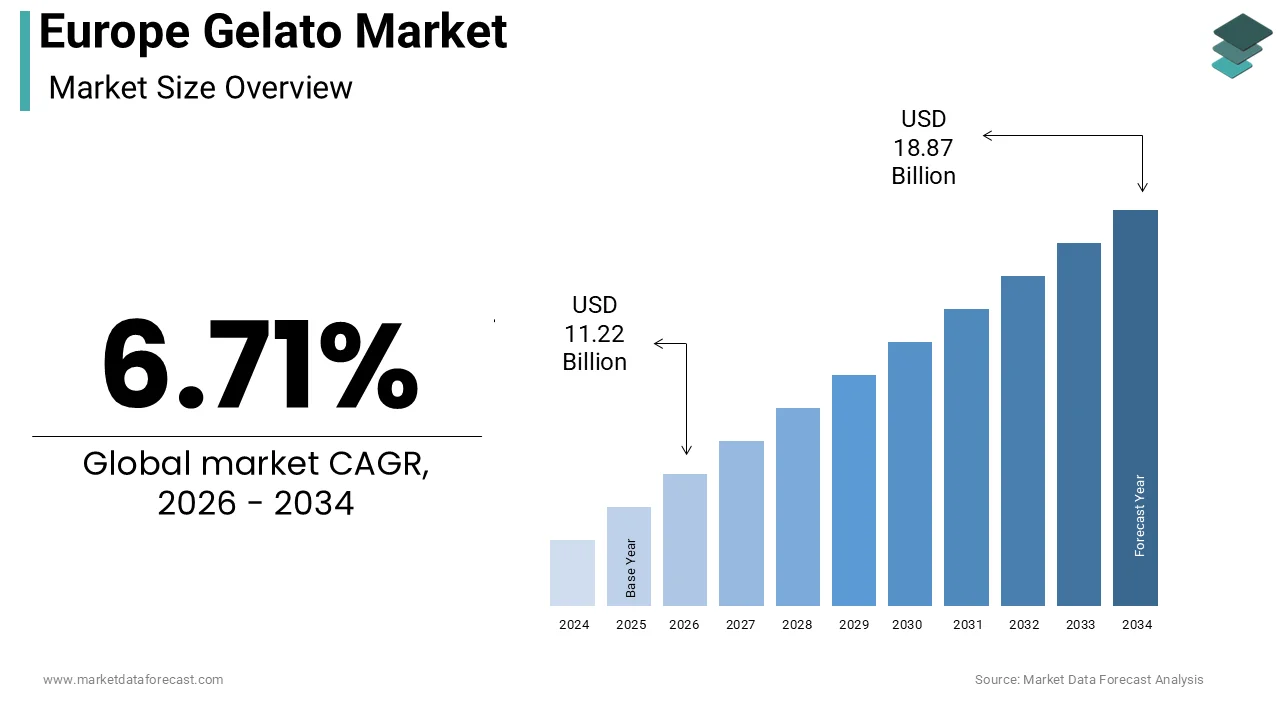
- Market Valuation: Valued at USD 10.52 billion (2025), estimated at USD 11.22 billion (2026), and projected to reach USD 18.87 billion by 2034, registering a solid CAGR of 6.71% (2026–2034).
- Primary Growth Drivers: Rising consumer preference for premium and artisanal experiences, rapid expansion of vegan and plant-based dietary lifestyles, and increasing integration of functional wellness ingredients.
Key Europe Gelato Market Segment Metrics (2026–2034)
| Category | Leading Segment (2025 Position) | Fastest-Growing Segment |
|---|---|---|
| By Source | Dairy source segment (held a dominant market share in 2025) | Non-dairy source segment (projected at a 9.4% CAGR) |
| By Packaging | Impulse packaging segment (held a dominant share in 2025) | Take-home packaging segment (projected at a 7.2% CAGR) |
| By Distribution Channel | Specialty stores / ice cream parlors (occupying 48.2% in 2025) | Online retail channel (projected at an 11.5% CAGR) |
| By Region | Italy (top performer holding 22.3% of the market share in 2025) | Germany, France, UK, and Spain gelato markets |
Major Industry Players & Market Structure
Market Structure: Highly competitive landscape featuring global multinational corporations, robust regional family-owned enterprises, and numerous small artisanal producers competing on authenticity, natural ingredients, and omnichannel accessibility.
Key Gelato Companies: Unilever PLC, Nesté S.A., Ferrero Group, General Mills Inc., Froneri International Ltd., Sammontana S.p.A., La Romana Gelateria, Carpigiani Group, Grom (Unilever), Amorino, Venchi S.p.A., Häagen-Dazs (General Mills), Mövenpick (Froneri), Valsoia S.p.A., and Gelato di Natura.
Europe Gelato Market Size
The Europe gelato market size was calculated to be USD 10.52 billion in 2025 and is anticipated to be worth USD 18.87 billion by 2034, from USD 11.22 billion in 2026, growing at a CAGR of 6.71% during the forecast period.
The gelato has a dense texture, an intense flavor profile, and lower fat content compared to traditional ice cream. This sector distinguishes itself through specific manufacturing techniques that incorporate less air and utilize a higher proportion of milk to cream, resulting in a product that melts at a slightly higher temperature and delivers a more immediate sensory impact. As per the European Food Safety Authority, consumer awareness regarding ingredient origin has surged, with over 60% of shoppers actively checking labels for natural components before purchasing frozen desserts. Furthermore, the International Dairy Federation indicates that milk production in Europe remains robust, providing a stable supply of high-quality dairy inputs essential for authentic gelato formulation. Meanwhile, the World Health Organization reports that sugar consumption remains a critical public health focus, pushing manufacturers to innovate with alternative sweeteners while maintaining taste integrity.
MARKET DRIVERS
Rising Consumer Preference for Premium and Artisanal Experiences
The escalating demand for premiumization and authentic artisanal experiences is propelling the Europe gelato market. Modern consumers increasingly view gelato not merely as a commodity but as a gourmet indulgence, willing to pay a premium for products made with fresh, locally sourced ingredients and traditional methods. As per the European Consumer Organisation, European shoppers prioritize quality and authenticity over price when purchasing luxury food items, a trend that directly benefits artisanal gelato producers. This shift is evident in the proliferation of independent gelaterias across major cities like Paris, London, and Berlin, where customers seek unique flavors and transparent supply chains. Data from Mintel indicates that launches of premium frozen desserts with claims such as "handcrafted," "small batch," and "locally sourced" grew by 28% in Western Europe over the last three years. The sensory superiority of gelato, with its intense flavor delivery due to lower overrun, aligns perfectly with this desire for elevated gastronomic moments. Furthermore, the rise of food tourism encourages visitors to seek out renowned gelato destinations, reinforcing the perception of gelato as a cultural experience rather than a simple snack. Retailers are responding by dedicating more shelf space to super-premium tubs that mimic the shop experience at home.
Expansion of Vegan and Plant-Based Dietary Lifestyles
The rapid adoption of veganism and flexitarian diets, with innovation and expansion, is positively impacting the growth of the gelato market. Consumers are increasingly seeking dairy-free alternatives that do not compromise on the creamy texture and rich taste associated with traditional gelato, prompting manufacturers to develop sophisticated plant-based formulations. As per the Plant-Based Foods Association, sales of plant-based food products in Europe increased by 21% recently, with frozen desserts representing one of the fastest-growing categories due to technological advancements in base ingredients. Innovations using oat milk, almond milk, and cashew cream have allowed producers to replicate the mouthfeel of dairy gelato, overcoming previous textural limitations. The versatility of fruit-based sorbets and nut-based gels aligns naturally with the gelato format, making it an ideal vehicle for plant-based innovation. Furthermore, the environmental concerns associated with dairy farming drive eco-conscious consumers toward these sustainable alternatives. Brands that successfully market their vegan gelato as equally indulgent and ethical capture a loyal and expanding customer base, transforming a niche requirement into a mainstream growth engine.
MARKET RESTRAINTS
Volatility in Raw Material Costs and Supply Chain Disruptions
The fluctuation in prices of key raw materials such as milk, sugar, nuts, and cocoa is limiting the growth of Europe gelato market. These inputs are subject to global commodity market volatility, climate change impacts on agriculture, and geopolitical tensions that disrupt supply chains, forcing manufacturers to absorb costs or raise prices. The reliance on specific high-quality ingredients, such as Sicilian pistachios or Colombian cocoa, makes artisanal producers particularly vulnerable to crop failures and trade barriers. Statistics from the European Milk Board indicate that farm gate milk prices fluctuated within a single year, creating uncertainty for long-term pricing strategies. Furthermore, energy costs required for freezing, storage, and transportation have surged, adding another layer of financial pressure on an energy-intensive industry. Small artisanal shops often lack the hedging mechanisms available to large corporations, threatening their viability in a high-cost environment.
Stringent Regulatory Scrutiny on Sugar Content and Health Claims
The rigorous government regulations regarding sugar reduction and the substantiation of health claims to product formulation and marketing agility are impeding the growth of Europe gelato market. Public health initiatives are increasingly targeting sugary foods through taxation, mandatory labeling, and advertising restrictions by compelling manufacturers to reformulate recipes, which can alter the beloved texture and taste of gelato. As per the European Commission, the Farm to Fork Strategy aims to reduce the average sugar intake by 10% by 2030, leading several member states to implement sugar taxes that specifically impact frozen confectionery. Data from the World Health Organization shows that excessive sugar consumption is linked to rising obesity rates in Europe, prompting stricter guidelines that limit the use of traditional sweeteners in mass-market products. Replacing sugar with alternative sweeteners often requires complex technical adjustments to maintain the freezing point and body of the gelato, posing a challenge for artisans who rely on traditional recipes. Furthermore, the European Food Safety Authority maintains a strict approval process for health claims, meaning manufacturers cannot easily market reduced-sugar or nutrient-fortified gelato as "healthy" without extensive clinical evidence.
MARKET OPPORTUNITIES
Integration of Functional Ingredients and Wellness Benefits
The growing emergence of indulgence and wellness to expand into the functional food sector by incorporating bioactive ingredients is creating new opportunities for the growth of Europe gelato market. Consumers are increasingly seeking treats that offer additional health benefits, such as improved digestion, enhanced immunity, or stress relief, which is driving demand for gelato fortified with probiotics, adaptogens, and vitamins. As per the Global Wellness Institute, the European wellness economy is valued at over 1 trillion dollars, with nutrition representing a significant expenditure area as individuals look for functional solutions in everyday foods. This trend allows gelato makers to differentiate their offerings by adding ingredients like collagen for skin health, turmeric for inflammation, or prebiotics for gut balance without sacrificing the indulgent experience. The natural perception of gelato as a fresher and cleaner product compared to industrial ice cream makes it an ideal canvas for these functional enhancements. Brands that successfully communicate the dual benefit of taste and health can command premium pricing and attract health-conscious demographics who typically avoid sweets.
Adoption of Sustainable Packaging and Circular Economy Practices
The increasing consumer demand for environmental stewardship to lead in sustainability through innovative packaging and circular economy models is also driving the growth of Europe gelato market. Shoppers are actively seeking brands that minimize plastic waste and demonstrate a commitment to reducing their carbon footprint, driving the adoption of biodegradable, compostable, or reusable packaging solutions. As per the European Plastics Strategy, the EU aims to ensure all plastic packaging is reusable or recyclable by 2030, creating a regulatory and consumer-driven imperative for change. Gelato producers can leverage this by introducing edible cones, paper-based tubs, or refillable container systems that resonate with eco-conscious values. Data from the Ellen MacArthur Foundation suggests that transitioning to reusable packaging models could generate significant cost savings and brand loyalty for fast-moving consumer goods sectors in Europe. Furthermore, sourcing ingredients from regenerative agriculture projects allows brands to tell a compelling story about soil health and biodiversity, appealing to the deep green segment of the market. Startups specializing in upcycled ingredients, such as using imperfect fruits or spent grain from brewing, are gaining traction and investor interest.
MARKET CHALLENGES
Intense Competition from Industrial Ice Cream and Private Labels
The pervasive presence of established industrial ice cream giants and aggressive private labels is acting as a barrier to the growth and margin sustainability of Europe gelato market. Large multinational corporations possess immense distribution networks and marketing budgets that allow them to dominate supermarket shelves and convenience stores, often crowding out smaller artisanal gelato brands. This price competition forces artisanal producers to either lower their margins or risk losing visibility in key retail channels. The blurring lines between premium ice cream and gelato further complicate the landscape, as industrial players launch "gelato-style" products that mimic the texture and branding of authentic artisanal offerings without the associated production costs. Data from Kantar Worldpanel indicates that brand loyalty in the frozen dessert category is declining, with 50% of consumers willing to switch brands for better promotions or packaging. Additionally, the high cost of maintaining physical gelaterias in prime urban locations exacerbates the pressure on independent operators.
Labor Shortages and Skill Gaps in Artisanal Production
The acute shortage of skilled labor and the difficulty in finding trained gelato makers are threatening the scalability and quality consistency, which is likely to hinder the growth of Europe gelato market. Authentic gelato production requires specialized knowledge of balancing ingredients, managing temperatures, and crafting flavors, skills that are traditionally acquired through lengthy apprenticeships and are in short supply. The aging workforce and the perceived lack of career progression in manual food production roles deter younger generations from entering the trade, creating a widening skills gap. Statistics from the European Centre for the Development of Vocational Training indicate that vacancy rates in specialized culinary roles have risen by 18% in the last three years. This scarcity drives up wage bills, eroding profit margins for small businesses that cannot afford to automate the delicate art of gelato making. Furthermore, the seasonal nature of the business complicates recruitment, as many workers seek year-round employment. The inability to secure consistent, high-quality staff forces some establishments to compromise on product standards or limit their operating hours, stifling growth potential and risking the dilution of the artisanal reputation that defines the category.
REPORT COVERAGE
| REPORT METRIC | DETAILS |
| Market Size Available | 2025 to 2034 |
| Base Year | 2025 |
| Forecast Period | 2026 to 2034 |
| CAGR | 6.71% |
| Segments Covered | By Source, Packaging, Distribution Channel, And Region |
| Various Analyses Covered | Global, Regional & Country Level Analysis; Segment-Level Analysis; DROC, PESTLE Analysis; Porter’s Five Forces Analysis; Competitive Landscape; Analyst Overview of Investment Opportunities |
| Regions Covered | UK, France, Spain, Germany, Italy, Russia, Sweden, Denmark, Switzerland, Netherlands, Turkey, and the Czech Republic |
| Market Leaders Profiled | Unilever PLC, Nestlé S.A., Ferrero Group, General Mills Inc., Froneri International Ltd., Sammontana S.p.A., La Romana Gelateria, Carpigiani Group, Grom (Unilever), Amorino, Venchi S.p.A., Häagen-Dazs (General Mills), Mövenpick (Froneri), Valsoia S.p.A., Gelato di Natura |
SEGMENTAL ANALYSIS
By Source Insights
The dairy source segment accounted for a dominant share of the Europe gelato market in 2025, with the traditional definition of authentic gelato, which relies heavily on fresh milk to achieve its characteristic dense texture and creamy mouthfeel that distinguishes it from airier ice cream. A primary factor driving this leadership is the deep cultural heritage of dairy farming in Europe, particularly in Italy and France, which ensures a consistent supply of high-quality milk essential for premium gelato production. The universal consumer preference for vanill, as a versatile and comforting flavor profile that serves as a standalone treat or a complement to other desserts. The vanilla remains the top-selling flavor across all frozen dessert categories in Western Europe, favored by 65% of households for its perceived naturalness and compatibility with various dietary occasions. The sensory expectation of richness associated with dairy fat content reinforces consumer loyalty to traditional formulations by making dairy-based vanilla gelato the benchmark against which all other variations are measured in the regional marketplace.
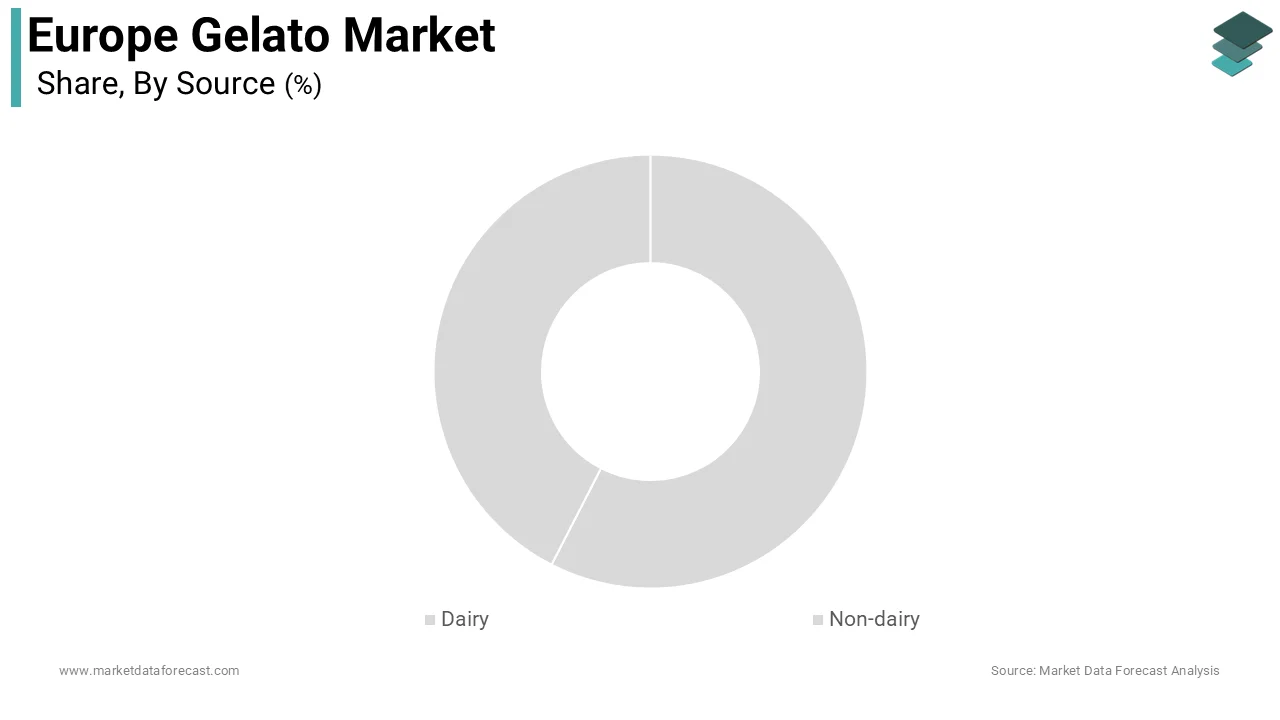
The non-dairy source segment is likely to witness the fastest CAGR of 9.4% from 2025 to 2034, owing to the surging prevalence of lactose intolerance, veganism, and flexitarian diets across the continent, prompting manufacturers to innovate with plant-based bases that mimic dairy creaminess. The technological advancement in extracting fats from oats, almonds, and coconuts has significantly improved the texture of non-dairy gelato by removing the icy mouthfeel that previously hindered adoption. The intense consumer demand for functional benefits and natural colorants, as berries like strawberries, raspberries, and blueberries are rich in antioxidants and vitamins. Furthermore, the vibrant natural colors of berry purees align with the clean-label trend, allowing brands to avoid artificial dyes while offering visually appealing products.
By Packaging Insights
The impulse packaging segment held a dominant share of the Europe gelato market in 2025, owing to the intrinsic nature of gelato consumption as a spontaneous treat often enjoyed immediately after purchase during leisure activities, tourism, or social outings. A primary factor sustaining this leadership is the dense network of artisanal gelaterias, kiosks, and beachside stalls across Southern and Western Europe that serve single-serve portions in cones or cups, catering to the on-the-go lifestyle of consumers. The psychological association of gelato with immediate gratification and experiential enjoyment, where the act of buying a fresh scoop is part of the ritual rather than just acquiring a product, is elevating the growth of the segment. Additionally, the ability of retailers to display attractive, freshly churned gelato in transparent cabinets stimulates unplanned buying behavior through visual appeal. The higher profit margins associated with single-serve units compared to bulk tubs also encourage vendors to prioritize impulse offerings by ensuring this segment remains the cornerstone of the market structure.
The take-home packaging segment is likely to register the fastest CAGR of 7.2% from 2025 to 2034, with the shifting consumer behaviors that increasingly favor home entertainment, family sharing experiences, and the desire to enjoy premium gelato quality within the comfort of domestic settings. The improvement in freezing technology and logistics allows manufacturers to distribute high-quality tubs that retain their artisanal texture and flavor integrity after transport and storage. The rising popularity of gourmet dinner parties and home baking trends, where consumers purchase larger containers of gelato to serve as desserts or ingredients in complex recipes, is another attribute elevating the growth of the segment. Furthermore, the expansion of supermarket shelf space dedicated to artisanal and organic gelato brands has made these products more accessible for weekly grocery runs.
By Distribution Channel Insights
The specialty stores and ice cream parlors channel segment was the largest by occupying 48.2% of the Europe gelato market in 2025, with the authentic Italian tradition of the "gelateria," which is viewed not merely as a retail outlet but as a cultural institution offering a superior sensory experience that supermarkets cannot replicate. Also, the consumer perception is that gelato served fresh from a parlor offers unmatched quality, texture, and flavor variety compared to pre-packaged alternatives. As per data from the European Association of Craft Ice Cream Makers, there are over 40,000 registered artisanal gelaterias across Europe, with Italy alone hosting nearly 20,000, creating a ubiquitous presence that drives foot traffic and habitual consumption. The social aspect of visiting a gelato parlor, which serves as a communal hub for families and friends during evening promenades and summer holidays, is additionally driving up the growth of the segment. Statistics from the European Travel Commission indicate that culinary tourism, specifically seeking out famous gelato destinations, contributes significantly to local economies and reinforces the channel's relevance. Furthermore, the ability of parlors to offer customizations, such as mixing flavors or adding fresh toppings, enhances the interactive nature of the purchase.
The online retail channel is anticipated to grow at a CAGR of 11.5% throughout the forecast period, with the digital transformation of the grocery sector and the development of specialized cold-chain logistics that enable the safe delivery of frozen goods directly to consumer doorsteps. The emergence of direct-to-consumer brands and subscription services that offer curated boxes of artisanal gelato flavors by allowing customers to access niche and premium products that may not be available in local stores is gearing up the growth of the segment. The changing lifestyle of urban professionals, who prioritize convenience and time-saving shopping methods by opting to have their favorite treats delivered rather than making special trips to parlors or supermarkets. Additionally, the pandemic accelerated the adoption of quick-commerce apps that promise delivery within minutes, further normalizing the purchase of frozen treats via digital platforms. This technological enablement and shift in consumer habits position online retail as the highest-growth engine for the market.
REGIONAL ANALYSIS
Italy Gelato Market Analysis
Italy was the top performer of the Europe gelato market by holding 22.3% ofthe market share in 2025, with its profound cultural integration of gelato into daily life and its status as the global benchmark for authenticity and quality. The deep-rooted tradition of the "passeggiata," or evening stroll, where consuming gelato is a central social ritual, ensures consistent year-round demand regardless of economic fluctuations. As per data from the Italian National Institute of Statistics, the average Italian consumes approximately 7.5 kilograms of gelato annually, the highest per capita rate in the world, underpinning a massive domestic market. The country's robust agricultural sector provides abundant high-quality raw materials such as Sicilian pistachios, hazelnuts from Piedmont, and fresh dairy, which are critical for maintaining the premium standards of Italian gelato. Furthermore, the government's support for protected geographical indications and artisanal certifications helps preserve traditional methods while promoting exports.
Germany Gelato Market Analysis
Germany's gelato market growth is likely to grow with its high consumption volumes and a unique blend of traditional Italian-style parlors and innovative industrial production capabilities. The large population of Italian immigrants and the subsequent proliferation of family-run gelaterias have become staples in German cities, normalizing gelato consumption beyond seasonal peaks. As per data from the German Ice Cream Industry Association, the country ranks as the second-largest consumer of ice cream and gelato in Europe, with annual per capita consumption exceeding 13 liters, a figure that continues to rise. The rigorous focus on food safety and labeling transparency, pushing manufacturers to adopt clean-label practices and source sustainable ingredients, is also boosting the growth of the market. Additionally, the strong retail infrastructure, including dense networks of supermarkets and discounters, facilitates widespread availability of take-home gelato formats. The combination of cultural acceptance, high purchasing power, and demand for quality ensures Germany remains a critical growth engine and a testing ground for new product innovations in the region.
France Gelato Market Analysis
France's gelato market growth is likely to grow with a renowned pastry heritage, with an increasing appreciation for Italian-style frozen desserts as a refined indulgence. The thriving tourism industry, particularly in Paris and the French Riviera, where gelato serves as a popular treat for millions of visitors seeking a refreshing break while exploring historic sites, is expanding the growth of the market in this country. As per figures from FranceAgriMer, the French frozen dessert market has seen a steady shift towards premiumization, with gelato capturing a growing share of the luxury segment due to its perceived artisanal value. The strong culinary culture in France encourages experimentation, leading to the creation of unique fusion flavors that appeal to adventurous palates. Furthermore, the French consumer's emphasis on naturalness and avoidance of artificial additives aligns perfectly with the traditional gelato formulation, fostering loyalty. The synergy between gastronomic excellence, tourism dynamics, and a commitment to natural ingredients positions France as a sophisticated and evolving market within the European landscape.
United Kingdom Gelato Market Analysis
The United Kingdom gelato market growth is likely to witness a dominant growth opportunity throughout the forecast period, with its openness to international trends and a burgeoning scene of artisanal producers challenging established industrial brands. The revival of high street shopping and the resurgence of independent food quarters in cities like London, Manchester, and Edinburgh, where boutique gelaterias thrive by offering unique, small-batch flavors. The post-pandemic shift towards supporting local businesses has further boosted the visibility of independent gelato makers who emphasize provenance and sustainability. Statistics from Kantar Worldpanel reveal that British consumers are increasingly reading labels for sugar content and natural ingredients, driving demand for fruit-based sorbets and low-fat gelato variants. Additionally, the strong presence of major supermarket chains dedicating shelf space to premium Italian brands has increased accessibility for home consumption.
Spain Gelato Market Analysis
Spain's gelato market growth is driven by the warm Mediterranean climate and vibrant outdoor culture to sustain high levels of consumption throughout extended seasons. The seamless integration of gelato into the leisure lifestyle, where it is a common sight in plazas, beaches, and promenades across the country. The strong tourism sector, which brings millions of visitors annually, contributes significantly to the demand for refreshing frozen treats in coastal regions and major cities like Barcelona and Madrid. As per data from the Spanish Association of Ice Cream Manufacturers, per capita consumption of ice cream and gelato in Spain has reached 5.5 kilograms, with a notable shift towards higher-quality artisanal products in recent years. The Spanish palate favors intense fruit flavors and chocolate, driving innovation in local production using indigenous ingredients like almonds and citrus fruits. Furthermore, the late dining culture in Spain means that gelato is often consumed as a post-dinner dessert, extending the daily consumption window. The combination of favorable weather, tourism influx, and a deep-seated culture of socializing outdoors ensures Spain remains a robust and resilient market for gelato in Southern Europe.
COMPETITION OVERVIEW
The competition in the Europe gelato market is intensely fierce, characterized by a dynamic mix of large multinational corporations, strong regional family-owned businesses, and numerous small artisanal producers. Dominant players leverage their extensive distribution networks and marketing budgets to secure prime shelf space in supermarkets and drive brand awareness through high-profile campaigns. The market witnesses constant rivalry based on product quality, ingredient authenticity, and innovation in flavors as consumers become increasingly discerning about taste and origin. Artisanal gelaterias compete by emphasizing traditional methods, fresh local ingredients, and unique sensory experiences that industrial brands struggle to replicate. Private label offerings from major retail chains have gained significant traction, exerting pressure on branded manufacturers to justify premium pricing through superior quality and ethical sourcing. Consolidation activities remain frequent as large entities acquire niche artisanal brands to expand their portfolios and access specialized expertise. The push for sustainability and clean labels further intensifies competition, forcing all participants to adapt quickly to new consumer expectations and regulatory requirements.
KEY MARKET PLAYERS
A few major players of the Europe gelato market include
- Unilever PLC
- Nestlé S.A
- Ferrero Group
- General Mills Inc
- Froneri International Ltd
- Sammontana S.p.A
- La Romana Gelateria
- Carpigiani Group
- Grom (Unilever)
- Amorino
- Venchi S.p.A
- Häagen-Dazs (General Mills)
- Mövenpick (Froneri)
- Valsoia S.p.A
- Gelato di Natura
Top Strategies Used by Key Market Participants
Key players in the Europe gelato market primarily employ product differentiation strategies by launching unique flavors and limited-edition collections inspired by local culinary traditions to capture consumer interest. Companies heavily invest in sustainable sourcing initiatives to secure high-quality raw materials like cocoa and vanilla while appealing to environmentally conscious shoppers. Another major strategy involves expanding distribution networks through partnerships with premium supermarkets and dedicated online platforms to increase accessibility and reach wider audiences. Firms also focus on health-oriented innovations by introducing plant-based, low-sugar, and organic gelato options to meet evolving dietary preferences and regulatory standards. Additionally, participants prioritize brand storytelling and experiential marketing to emphasize artisanal craftsmanship and authenticity, fostering emotional connections with consumers. These combined approaches enable market leaders to maintain competitiveness and drive growth in a sophisticated and demanding environment.
Leading Players in the Europe Gelato Market
- Froneri International Limited stands as a global powerhouse in the frozen dessert sector, formed through a strategic joint venture between Nestlé and R&R Ice Cream. The company plays a pivotal role in the Europe gelato market by managing a vast portfolio of premium brands that blend industrial scale with artisanal quality standards. Its global contribution is defined by extensive research and development capabilities that drive innovation in texture and flavor profiles while maintaining cost efficiency. Recent actions to strengthen its market position include the acquisition of niche artisanal gelato brands to diversify its premium offerings and the implementation of sustainable sourcing practices for dairy and cocoa. Froneri has also invested heavily in expanding its production facilities across Italy and Germany to meet rising demand for high-quality frozen treats. These strategic moves reinforce its reputation as a leader capable of delivering both mass-market appeal and gourmet excellence.
- Unilever PLC operates as a leading multinational consumer goods corporation with a dominant presence in the Europe gelato market through its renowned Magnum and Ben & Jerry's brands. The Anglo-Dutch giant contributes globally by setting trends in indulgent yet responsibly sourced frozen desserts that resonate with diverse cultural preferences. In Europe, Unilever has focused on revitalizing its gelato lines by introducing plant-based variants and limited-edition flavors inspired by local culinary traditions. Recent actions to strengthen its market position include the commitment to sourcing all cocoa and vanilla from sustainable suppliers and the launch of fully recyclable packaging for its premium ice cream ranges. The company has also expanded its direct-to-consumer channels through specialized online platforms that offer exclusive flavors and subscription services. Furthermore, Unilever continues to invest in marketing campaigns that highlight the craftsmanship and quality ingredients behind its gelato products.
- Sammontana S.p.A. is an Italian family-owned enterprise renowned for its deep expertise in authentic gelato production and its strong footprint across the European market. The company plays a critical role in preserving traditional gelato-making techniques while leveraging modern technology to ensure consistent quality and safety. Its global contribution stems from exporting premium Italian gelato to over 40 countries, serving as an ambassador for genuine Italian culinary heritage. Recent actions to strengthen its market position include the expansion of its manufacturing capacity in Tuscany to increase output for both domestic and international markets. Sammontana has also launched new organic and lactose-free product lines to cater to growing health-conscious and dietary-specific consumer segments. The firm actively collaborates with local farmers to secure high-quality raw materials such as fresh milk and seasonal fruits, ensuring superior taste and texture.
MARKET SEGMENTATION
This research report on the Europe gelato market has been segmented and sub-segmented based on source, packaging, distribution channel & region.
By Source
- Dairy
- Non-dairy
By Packaging
- Impulse
- Take-home
By Distribution Channel
- Retail Channels
- Supermarkets/Hypermarkets
- Specialty Stores/Ice cream Parlors
- Online Retail
- Others
- Food Service Channels
By Region
- UK
- France
- Spain
- Germany
- Italy
- Russia
- Sweden
- Denmark
- Switzerland
- Netherlands
- Turkey
- Czech Republic
- Rest of Europe