Europe Ice Cream Market Size, Share, Trends & Growth Forecast Report By Product Type (Artisanal, Impulse, Take-home), Category (Dairy, Non-dairy), Distribution Channel (On-trade, Off-trade), and Country (Germany, UK, France, Italy, Rest of Europe) – Industry Analysis From 2026 to 2034.
Market Size, 2025
$35.07 BnMarket Estimate, 2026
$36.36 BnMarket Forecast, 2034
$48.55 BnCAGR, 2026–2034
3.68%Europe Ice Cream Market Size
The ice cream market size in Europe was valued at USD 35.07 billion in 2025. The European market is estimated to be worth USD 48.55 billion by 2034 from USD 36.36 billion in 2026, growing at a CAGR of 3.68% from 2026 to 2034.
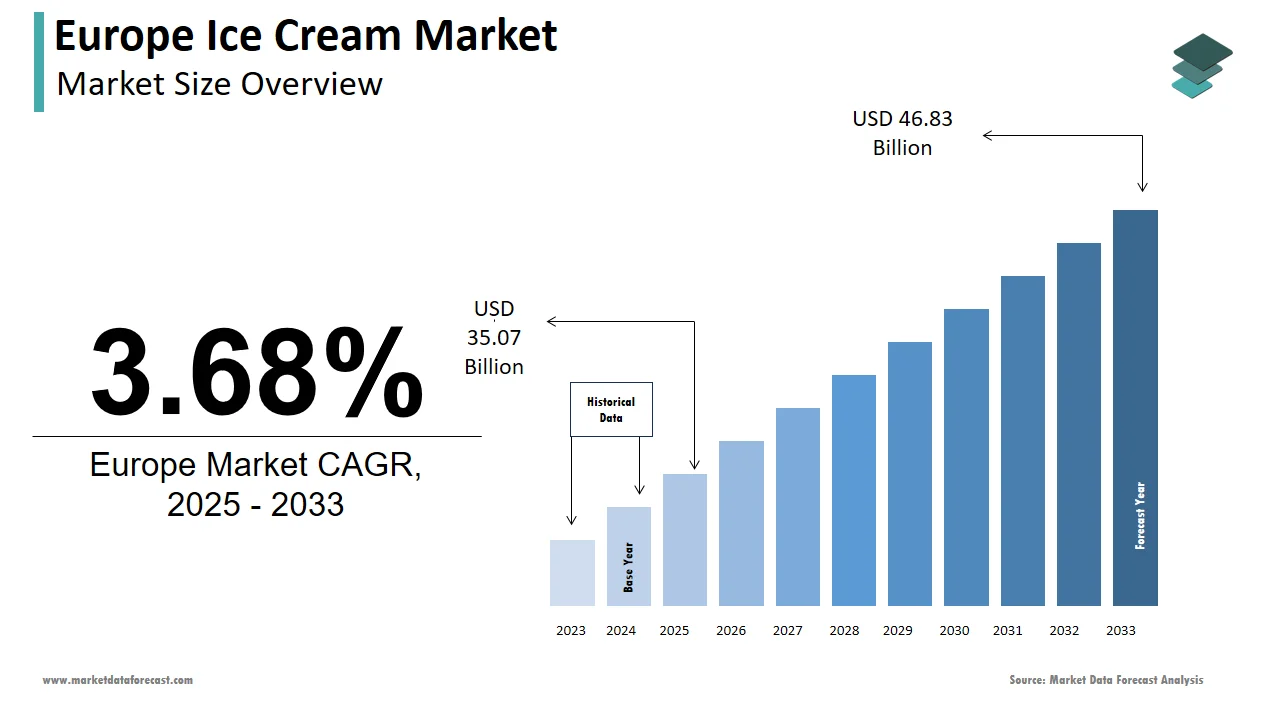
The Europe ice cream market has emerged as a vibrant segment of the region’s food industry, driven by evolving consumer preferences and the growing demand for indulgent yet innovative frozen treats. This surge is fueled by urbanization, rising disposable incomes, and the increasing popularity of artisanal and plant-based options. A significant factor shaping the market is the growing emphasis on premiumization. As per the European Food Information Council (EUFIC), over 60% of European consumers prefer premium ice cream products, creating a critical need for high-quality ingredients and unique flavors. Additionally, advancements in freezing technologies have amplified adoption by positioning ice cream as a versatile indulgence across all age groups.
MARKET DRIVERS
Rising Demand for Premium and Artisanal Products
The rising demand for premium and artisanal ice cream products is driving the Europe ice cream market growth. For instance, Italian artisanal gelato gained significant traction, capturing 15% of the regional market share due to its rich texture and cultural appeal.
Increasing Popularity of Plant-Based Alternatives
The increasing popularity of plant-based alternatives is significantly bolstering the Europe ice cream market growth. These products cater to health-conscious and environmentally aware consumers by ensuring compliance with EU Green Deal objectives. Additionally, collaborations with retailers have expanded functionality, enabling features like subscription-based delivery services.
MARKET RESTRAINTS
High Production Costs and Supply Chain Challenges
The high production costs associated with premium ingredients and advanced freezing technologies are hampering the growth of the Europe ice cream market. Additionally, supply chain disruptions remain a concern, particularly for imported raw materials. This issue undermines the pace of technological adoption and limits overall market growth.
Health Concerns and Consumer Perception of Sugar Content
The health concerns and consumer perception of sugar content pose another significant restraint for the growth of the European ice cream market. According to Capgemini, over 65% of European consumers expressed concerns about the high sugar levels in traditional ice creams, which raises questions about their suitability for regular consumption. Addressing these concerns requires significant investments in reformulation and marketing campaigns, which may not be feasible for all stakeholders.
MARKET OPPORTUNITIES
Expansion into Functional and Fortified Products
The expansion into functional and fortified ice cream products is significantly posing new opportunities for the growth of the Europe ice cream market. These products cater to health-conscious buyers, ensuring compliance with EU sustainability goals. For example, a report by Statista highlights that ice creams fortified with probiotics and vitamins captured 8% of the market share in 2023, driven by their perceived health benefits.
Growth of Online Distribution Channels
The growth of online distribution channels is expected to boost the growth of the Europe ice cream market. These platforms enable direct access to urban consumers, which is reducing logistical challenges and enhancing scalability.
The partnerships with e-commerce giants like Amazon and local grocery platforms expanded functionality by enabling features like personalized recommendations.
MARKET CHALLENGES
Regulatory Compliance and Labeling Requirements
The regulatory compliance and labeling requirements are a significant challenge for the growth of the Europe ice cream market. For example, a report by ABB reveals that compliance-related delays reduced production by 12% in 2023 for products using imported ingredients.
Competition from Alternative Desserts
The intense competition from alternative desserts is posing a new challenge for the Europe ice cream market. The emerging solutions, such as frozen yogurt and dairy-free pudding,s are gaining traction among health-conscious consumers. These alternatives offer advantages like lower calorie counts and perceived freshness, threatening the dominance of traditional ice creams. According to a study by the European Grocery Retail Association, frozen yogurt captured 15% of the dessert market share in 2023.
REPORT COVERAGE
| REPORT METRIC | DETAILS |
| Market Size Available | 2025 to 2034 |
| Base Year | 2025 |
| Forecast Period | 2026 to 2034 |
| Segments Covered | By Product Type, Category, Distribution Channel, and Country. |
| Various Analyses Covered | Global, Regional and Country-Level Analysis, Segment-Level Analysis, Drivers, Restraints, Opportunities, Challenges; PESTLE Analysis; Porter’s Five Forces Analysis, Competitive Landscape, Analyst Overview of Investment Opportunities |
| Countries Covered | UK, France, Spain, Germany, Italy, Russia, Sweden, Denmark, Switzerland, Netherlands, Turkey, Czech Republic, and the Rest of Europe. |
| Market Leaders Profiled | Unilever PLC, Nestlé S.A., Mars, Incorporated, Wells Enterprises, Inc. (Halo Top), General Mills, Inc., and others. |
SEGMENTAL ANALYSIS
By Product Type Insights
The Take-home segment was the largest and held 45.3% of the Europe ice cream market share in 2024, with the emphasis on value-for-money offerings. Over 60% of European consumers cited cost-effectiveness as the primary reason for purchasing take-home ice creams in 2023, which is creating a surge in demand for bulk packaging options. The international flavors accounted for 30% of take-home ice cream sales in 2023, catering to adventurous palates and expanding market reach.
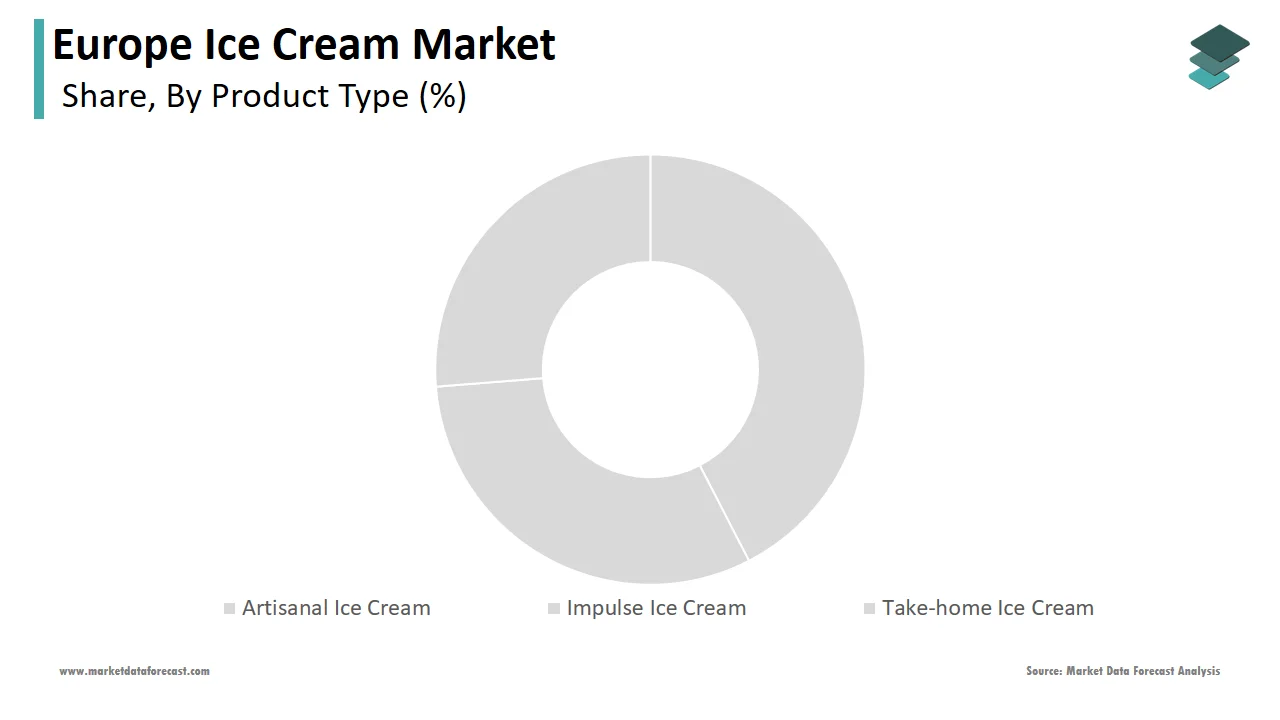
The artisanal segment is likely to grow with a projected CAGR of 6.8% during the forecast period, with the increasing adoption of premium and locally sourced ingredients among affluent urban consumers. The artisanal ice creams gained significant traction in 2023 with their rich texture and cultural appeal. These products are particularly valuable for metropolitan areas, enabling efficient meal planning while reducing food waste. Additionally, collaborations with local farmers have expanded functionality, enabling seamless integration with sustainable agriculture practices.
By Category Insights
The dairy segment accounted in holding a prominent share of the Europe ice cream market in 2024, with the emphasis on traditional recipes. Over 75% of European consumers cited familiarity as the primary reason for purchasing dairy ice creams in 2023, which is creating a surge in demand for classic flavors.
The non-dairy segment is likely to grow with an expected CAGR of 8.5% during the forecast period. The growth of the segment is likely to grow with the partnerships with grocery chains and subscription-based services. These platforms enable direct access to urban consumers by reducing logistical challenges and enhancing scalability. Additionally, collaborations with tech startups have expanded functionality by enabling features like personalized recommendations.
By Distribution Channel Insights
The off-trade segment held a dominant share of the Europe ice cream market in 2024, with the widespread presence of supermarkets, hypermarkets, and specialty stores in rural and suburban areas. The integration of sustainable packaging is another factor significantly boosting the growth of the Europe ice cream market. These innovations not only streamline workflows but also align with EU regulatory frameworks, promoting sustainability.
The on-trade distribution segment is expected to grow with a CAGR of 7.2% during the forecast period. The on-trade sales of artisanal and gourmet ice creams grew by 45% in 2023, which was driven by collaborations with high-end foodservice providers. These platforms enable direct access to affluent urban consumers by reducing logistical challenges and enhancing scalability. Additionally, partnerships with tech startups have expanded functionality, which is enabling features like online reservations and delivery services.
COUNTRY LEVEL ANALYSIS
Germany Market Analysis
Germany was the top performer of the Europe ice cream market by occupying 22.3% of the share in 2024, with its robust retail infrastructure and strong emphasis on premium and artisanal products, supported by initiatives promoting sustainable agriculture. The growing urban population is also expected to enhance the growth ofthe market in Germany. According to Eurostat, over 75% of Germans reside in urban areas, where premium and plant-based ice creams have gained significant traction due to their extended shelf life and ease of preparation.

United Kingdom Market Analysis
The UK was ranked second by holding 18.2% of the Europe ice cream market share in 2024. The transition to plant-based diets has significantly bolstered demand. As per the UK Food Standards Agency, non-dairy ice creams grew by 35% in 2023 by creating a surge in adoption for organic and nutrient-rich options. Additionally, government funding for sustainable food systems has expanded accessibility, which is reinforcing the UK’s prominence in frozen dessert solutions.
France Market Analysis
The French ice cream market is likely to grow with a significant CAGR during the forecast period. The increasing adoption of online grocery shopping is additionally to further enhance the growth of the market in France. According to the French Retail Federation, online sales of ice creams increased by 40% in 2023, driven by consumer demand for home delivery and subscription services. Additionally, urbanization initiatives have amplified demand for scalable and efficient solutions in metropolitan areas.
Italy Market Analysis
Italy ice cream market is likely to grow with prominent opportunities during the forecast period. Milan and Rome are rapidly emerging as key hubs with a growing emphasis on artisanal gelato and traditional recipes. The increasing adoption of locally sourced ingredients is also expected to boost the growth of the market. According to the Italian Ministry of Agriculture, these products accounted for 30% of ice cream sales in 2023, ensuring compliance with EU sustainability goals. Additionally, government incentives supporting local farmers have expanded adoption by ensuring scalability and safety.
Spain Market Analysis
Spain's ice cream market growth is ascribed to the level of new opportunities in the coming years. Barcelona and Madrid lead the charge, which is hosting major frozen dessert innovation centers and distribution hubs. The emphasis on Mediterranean-inspired flavors is also enhancing the growth of the market. According to the Spanish Food Industry Federation, these products captured 25% of the ice cream market share in 2023, driven by their health benefits and cultural appeal.
COMPETITIVE LANDSCAPE
The Europe ice cream market is characterized by intense competition, driven by the presence of global giants and regional innovators vying for market share. Major players like Unilever, Nestlé, and Froneri dominate by leveraging their extensive expertise in frozen desserts and plant-based solutions.
Technological innovation is a key battleground, with companies investing heavily in IoT, AI, and blockchain to differentiate themselves. According to McKinsey, over 60% of European enterprises prioritize secure and scalable frozen dessert solutions, intensifying competition among providers to offer cutting-edge technologies. Additionally, stringent EU regulations mandating sustainability have forced companies to innovate responsibly, further raising the stakes.
Mergers and acquisitions are another hallmark of the competitive marketplace. Larger firms acquire smaller innovators to expand their product portfolios and geographic reach. Meanwhile, price wars and aggressive marketing strategies are common in Germany and the UK.
KEY MARKET PLAYERS
Some of the companies that are playing a dominating role in the Europe ice cream market include
- Unilever PLC
- Nestlé S.A.
- Mars, Incorporated
- Wells Enterprises, Inc. (Halo Top)
- General Mills, Inc.
- Others
Top Leading Players in The Market
- Unilever is a global leader in the ice cream market, playing a pivotal role in shaping the Europe segment. The company offers a comprehensive portfolio of premium and mass-market brands tailored to diverse consumer preferences. Its focus on innovation and sustainability has positioned it as a trusted partner for retailers and wholesalers.
- Nestlé specializes in advanced ice cream formulations, emphasizing quality and affordability. The company’s premium brands are widely adopted in households and foodservice outlets, enabling efficient meal preparation. Nestlé’s commitment to sustainability aligns with EU Green Deal objectives, earning it a loyal customer base.
- Froneri is renowned for its cutting-edge frozen dessert solutions, particularly in the UK and Scandinavia. The company’s focus on organic and plant-based options has made it a leader in health-conscious segments.
Top Strategies Used by Key Market Participants
Leading players in the Europe ice cream market have embraced sustainability as a core strategy to enhance their competitive edge. For instance, the development of eco-friendly packaging and carbon-neutral supply chains has resonated with environmentally conscious consumers. These initiatives not only align with EU regulations but also foster brand loyalty among stakeholders, prioritizing green solutions.
Investments in research and development are a cornerstone strategy for staying ahead in the market. Companies focus on developing innovative freezing technologies and product formulations to address evolving customer needs.
Expanding into emerging markets within Europe, such as Eastern Europe and Scandinavia, has become a priority for key players. Companies can better serve regional demands while capitalizing on favorable regulatory frameworks by establishing localized production facilities and distribution networks. This strategy ensures sustained growth amid intensifying competition.
EUROPE ICE CREAM MARKET NEWS
- In March 2024, Unilever partnered with a German agricultural cooperative to launch a line of organic ice creams, enhancing its position in sustainable food solutions. This initiative aims to reduce carbon emissions while improving product quality.
- In June 2023, Nestlé introduced a new line of plant-based frozen desserts in France, designed to cater to health-conscious consumers. This move underscores the company’s commitment to diversifying its product offerings.
- In September 2023, Froneri acquired a Swedish startup specializing in frozen plant-based desserts, expanding its portfolio of health-focused products. This acquisition strengthens Froneri’s leadership in the Nordic region.
- In January 2024, Dr. Oetker launched an e-commerce platform for frozen desserts in Italy, targeting urban consumers seeking convenience. This launch positions Dr. Oetker as a leader in digital retail solutions.
- In November 2023, Findus unveiled its carbon-neutral frozen yogurt line in Spain, addressing environmental concerns while appealing to eco-conscious buyers. This initiative enhances brand loyalty and trust.
MARKET SEGMENTATION
This Europe ice cream market research report is segmented and sub-segmented into the following categories.
By Product Type
- Artisanal Ice Cream
- Impulse Ice Cream
- Take-home Ice Cream
By Category
- Dairy
- Non-dairy
By Distribution Channel
- On-trade
- Off-trade
- Specialist Retailers
- Hypermarkets/Supermarkets
- Convenience Stores
- Online Retail Stores
- Other Distribution Channels
By Country
- UK
- France
- Spain
- Germany
- Italy
- Russia
- Sweden
- Denmark
- Switzerland
- Netherlands
- Turkey
- Czech Republic
- Rest of Europe
Frequently Asked Questions
1. What is the Europe Ice Cream Market and what drives its growth?
The Europe Ice Cream Market encompasses all frozen dessert products including dairy and non-dairy ice creams, driven by consumer demand for premium, artisanal, and health-oriented varieties alongside expanding online sales and sustainable packaging innovations
2. Which ice cream product types dominate the Europe market?
Traditional tubs and bricks, artisanal gelato, and impulse ice cream products like sticks and cones are key segments
3. How significant is the demand for vegan and low-calorie ice creams?
Demand for plant-based, dairy-free, low sugar, and fat-free ice creams is rising rapidly due to health and dietary preferences
4. Which countries lead the Europe Ice Cream Market?
Germany, France, Italy, UK, and Spain are major contributors, supported by strong manufacturing and retail infrastructure
5. How does seasonality affect the Europe Ice Cream Market?
Sales peak during warmer months, with seasonal and limited-edition flavors capitalizing on consumer trends
6. What role does e-commerce play in the Europe Ice Cream Market?
Online retail channels have expanded market reach and convenience, boosting ice cream purchases outside traditional stores
7. What are the emerging flavor and product innovation trends?
Novel and exotic flavors, functional ingredients, and textural innovations attract consumers seeking unique experiences
8. How important is sustainable packaging in the market?
Eco-friendly cartons, biodegradable wrappers, and refillable options align with rising consumer environmental concerns
9. How does consumer indulgence affect market dynamics?
Growing emphasis on indulgence and premium quality drives willingness to pay more for artisanal and high-end products
10. What challenges does the Europe Ice Cream Market face?
Challenges include supply chain disruptions, ingredient cost volatility, and regulatory compliance related to labeling and health claims
Related Reports
Access the study in MULTIPLE FORMATS
Purchase options starting from
$ 2000
Didn’t find what you’re looking for?
TALK TO OUR ANALYST TEAM
Need something within your budget?
NO WORRIES! WE GOT YOU COVERED!
Call us on: +1 888 702 9696 (U.S Toll Free)
Write to us: sales@marketdataforecast.com