- Product Description Description
- Table of Contents TOC
- List of Table & Figure LOT
- Get Free Sample PDF Sample PDF
Market Size, 2025
$29.32 BnMarket Estimate, 2026
$30.37 BnMarket Forecast, 2034
$40.24 BnCAGR, 2026–2034
3.58%Europe Home Textiles Market Size, Growth, Trends & Forecast (2026–2034)
The Europe Home Textiles Market size was calculated to be USD 29.32 billion in 2025, is estimated to reach USD 30.37 billion in 2026, and is projected to expand to USD 40.24 billion by 2034, registering a compound annual growth rate (CAGR) of 3.58% during the forecast period from 2026 to 2034. Driven by rising homeownership rates, wellness-driven sleep science trends, circular economy adoption, and rigorous EU regulatory frameworks, the market continues to experience steady modernization.
Key Executive Metrics (At-a-Glance)
- 2025 Base Valuation: USD 29.32 Billion
- 2026 Current Valuation: USD 30.37 Billion
- 2034 Forecast Valuation: USD 40.24 Billion
- Compound Annual Growth Rate (CAGR): 3.58% (2026–2034)
- Leading Region: Germany (holding a dominant 19.8% share in 2025 backed by high consumer quality standards and eco-certifications)
- Key Growth Hubs: United Kingdom, France, Italy, and Turkey
Core Market Drivers
- Residential Tenure & Homeownership: Stable housing tenure and high homeownership rates driving predictable, long-term replacement cycles for bed and bath linens.
- Wellness & Sleep Science: Growing consumer emphasis on sleep quality accelerating demand for temperature-regulating, antimicrobial, and certified hypoallergenic fabrics.
Primary Market Restraints & Challenges
- Regulatory & Compliance Burdens: Stringent EU chemical and environmental mandates increasing production and digital documentation costs, especially for SMEs.
- Raw Material Volatility: Persistent fluctuations in natural and synthetic fiber prices eroding profit margins and complicating supply chain planning.
Market Segmentation: Largest and Fastest-Growing Segments
| Segment Category | Largest Segment | Fastest-Growing Segment |
|---|---|---|
| By Application | Bed Linen (Leading share in 2025) | Bath Linen (CAGR of 6.8%) |
| By Material | Cotton (Leading share in 2025) | Linen (CAGR of 9.2%) |
| By Distribution Channel | B2C / Retail Channels (Dominant share in 2025) | B2B / Direct (CAGR of 11.3%) |
| By Region | Germany (19.8% share in 2025) | Turkey & United Kingdom |
Major Industry Players Profiled
Key market participants shaping the Europe home textiles landscape include IKEA, Welspun Group, Lenzing Group, Trident Group, Springs Global, CIE Automotive Textiles, Frette, Hugo Boss Home, Schlossberg Switzerland, Descamps, Yves Delorme, Heimtextil Germany, Tessitura Toscana Telerie, John Lewis Home, and Marks & Spencer Home.
Europe Home Textiles Market Size
The Europe home textiles market size was calculated to be USD 29.32 billion in 2025 and is anticipated to be worth USD 40.24 billion by 2034, growing from USD 30.37 billion in 2026 at a CAGR of 3.58% during the forecast period.
Home textiles are fabric-based household goods, including bed linens, bath towels, tablecloths, curtains, upholstery fabrics, and decorative accessories, designed for both functional and aesthetic use within residential environments. This sector operates at the intersection of lifestyle trends, sustainability imperatives, and evolving consumer expectations around comfort and wellness. Unlike fast fashion, home textiles are characterized by longer replacement cycles yet remain highly responsive to macro shifts in housing patterns, interior design preferences, and environmental consciousness. European households have consistently shown an interest in updating their living spaces, reflecting an ongoing focus on the home environment. Additionally, the amount of discarded textiles presents a notable waste management challenge, with home fabrics contributing significantly to the overall volume. In response, strategies are being developed to address these end-of-life challenges through extended producer responsibility and improved product design. These behavioral and regulatory currents, not commercial metrics, emphasize the sector’s evolving significance in Europe’s sustainable consumption landscape.
MARKET DRIVERS
Rising Homeownership and Long-Term Residential Tenure Boost Replacement Demand
Stable housing patterns across the region have intensified consumer investment in durable and high-quality home textiles as households seek to personalize long-term living spaces, which in turn contributes to the growth of the Europe home textiles market. The average duration of residential tenancy across many regions exceeds eight years, indicating a pattern of stable housing situations. In several countries, including Spain, Italy, and Romania, homeownership rates are high, often surpassing seventy-five percent, which encourages residents to focus on comfort and aesthetic improvements in their living spaces. This longevity translates into planned cyclical renewal of bedding and bath textiles. A common pattern in home care routines is the frequent replacement of bed linens, typically every one to two years, and towels every two to three years. Besides, rising disposable income in Central and Eastern Europe has amplified spending on premium cotton and linen goods. Overall, there has been a consistent annual increase in household spending on textiles, reflecting a general upward shift in consumer expenditure on home goods. This structural housing stability creates predictable and recurring demand that transcends short-term fashion trends.
Wellness and Sleep Science Trends Elevate Functional Textile Innovation
Consumer focus on health and sleep quality has transformed home textiles from decorative items into performance-oriented wellness tools, which fuels the expansion of the Europe home textiles market. This shift is driving demand for technologically enhanced fabrics. Poor sleep quality is a widespread issue among adults in Europe, with environmental factors like temperature regulation and fabric breathability playing a significant role in sleep quality. This awareness has accelerated the adoption of moisture wicking temperature adaptive and antimicrobial textiles. Consumers are increasingly choosing bedding with specific quality certifications, indicating a growing preference for materials that are hypoallergenic and free of certain chemicals. This shift in purchasing behavior highlights a general prioritization of material safety and health considerations. Retailers dedicate entire collections to sleep science with phase change materials and Tencel blends marketed for thermal balance. Furthermore, demand for inherently safe natural and bio-based fibers has intensified, partly in response to regulations that restrict the use of numerous hazardous substances in textiles. This convergence of health consciousness, regulatory scrutiny, and material innovation redefines value in the home textiles market beyond aesthetics alone.
MARKET RESTRAINTS
Stringent EU Chemical and Environmental Regulations Increase Compliance Costs
The European Union’s expanding regulatory framework for textile safety and sustainability imposes significant compliance burdens on home textile manufacturers, particularly small and mid-sized enterprises, which restricts the growth of the Europe home textiles market. A wide range of chemical substances in textile products are subject to regulation, with a specific focus on ensuring the safety of materials in home goods. Certain voluntary certification programs for home textiles emphasize the use of highly biodegradable materials and address concerns about synthetic fiber shedding. Meeting various compliance standards can influence the financial aspects of production for certain types of suppliers. Future regulations are expected to introduce comprehensive digital documentation requirements regarding a product's material makeup, environmental impact, and potential for repair. Many European textile SMEs lack the digital infrastructure to generate this data, creating a competitive disadvantage against vertically integrated global players. These regulatory complexities stifle innovation and raise barriers to market entry despite environmental intent.
Volatile Raw Material Prices Destabilize Production Planning and Pricing
Fluctuations in the cost of key natural and synthetic fibers create persistent uncertainty in the Europe home textiles market. These disruptions are leading to disrupted supply chains and eroded profit margins. Cotton prices demonstrated significant fluctuation over a recent two-year period, a trend associated with weather challenges in a major producing region and changes in a large consumer market's agricultural policy. Concurrently, prices for a key synthetic fiber increased considerably in a single recent year, a shift observed as energy expenses influenced chemical manufacturing in two European nations. Many European manufacturers of home textiles operate under pre-determined pricing agreements with retailers, which may increase their financial exposure to sudden increases in material costs. Textile companies in Europe appeared to absorb a notable portion of material price increases in a recent period, rather than adjusting consumer prices upward, likely as a strategy to maintain demand. This pricing pressure is especially acute for SMEs without hedging mechanisms or long-term fiber contracts. Consequently, many brands reduce order volumes or shift to lower-cost regions, undermining local manufacturing and sustainability claims tied to short supply chains.
MARKET OPPORTUNITIES
Circular Business Models Unlock Value Through Take Back and Resale
The emergence of circular economy initiatives in home textiles is creating new opportunities while aligning with EU sustainability mandates, which is predicted to drive the growth of the Europe home textiles market. The observation indicates an emerging pattern of retail brands in Europe introducing programs that allow customers to return used home textiles for recycling or resale. This shift involves various retailers enabling the return of items like used bedding and towels, offering new avenues for customers to responsibly manage end-of-life textiles. The analysis of a specific resale program showed that a portion of returned home textile items were successfully resold as pre-owned goods, contributing to a circular model and reducing material waste. This activity is occurring alongside the implementation of new laws designed to promote extended producer responsibility within the textile industry, encouraging more sustainable practices through a standardized framework. Companies offer subscription models for luxury bed linens with regular cleaning,g replacement, and end-of-life recycling included. Transforming a one-time sales framework into an ongoing service model is a strategy that enables brands to improve customer retention while also achieving key regulatory and environmental goals.
Premiumization of Outdoor and Wellness Living Spaces Expands Product Scope
The blurring boundary between indoor and outdoor living has increased demand for high-performance home textiles designed for terraces, balconies, and wellness rooms across the region; this provides fresh prospects for the Europe home textiles market. A notable increase in the development or improvement of outdoor living areas among urban households across several European countries has been observed. This shift drives demand for weather resistant UV stable and quick-drying fabrics that retain softness and color fastness. Sales of specific types of outdoor textiles, including those made with solution-dyed acrylic and recycled polyester, have shown substantial growth. Simultaneously, the wellness economy fuels demand for spa-inspired bath textiles with enhanced absorbency and antimicrobial properties. Certain textile manufacturers have introduced new collections of organic cotton towels that are specifically designed for home spa and hydrotherapy environments. Procurement guidelines for publicly funded housing and hospitality initiatives now emphasize the use of performance-verified sustainable textiles. This spatial expansion of domestic life redefines the functional boundaries of home textiles, creating high-margin niches beyond traditional categories.
MARKET CHALLENGES
Greenwashing Allegations Undermine Consumer Trust in Sustainability Claims
The growing skepticism over the authenticity of environmental claims eroding brand credibility and slowing sustainable adoption, despite widespread eco labelling, degrades the growth of the Europe home textiles market. Observing current trends, a significant number of sustainability claims on home textile items appear to lack verifiable supporting information, often utilizing ambiguous wording in their descriptions. Certain regulatory actions have previously highlighted instances where materials were advertised as organic despite issues found within their sourcing processes. Generally, consumer confidence in a brand's sustainability labels tends to be considerably lower when the claims are not supported by independent, third-party certification. The distrust is amplified by complex global supply chains where fiber origin and chemical use are opaque. This credibility gap discourages genuine innovators and confuses consumers seeking responsible choices, thereby impeding the market’s transition to true sustainability.
Fragmented Recycling Infrastructure Limits End-of-Life Textile Recovery
The absence of efficient and standardized collection and recycling systems for post-consumer textile waste continues to obstruct the expansion of the Europe home textiles market. Discarded home textiles are often not collected separately and instead are combined with general waste streams or processed through incineration. The collection systems for these materials show a notable pattern of integration into the mixed municipal waste system. Even when collected, the widespread practice of blending fibers, such as polyester and cotton, in many bedding and curtain products, significantly complicates the mechanical recycling process. These material compositions present technical and economic challenges that currently limit effective recycling. Consequently, only a small fraction of home textiles are ultimately recycled back into new textile fibers. The majority of these collected materials are often downcycled into alternative products like insulation or cleaning rags. Countries like Sweden and Belgium lead in separate collection, but Southern and Eastern Europe lack municipal infrastructure. The absence of effective reverse logistics and robust recycling capabilities means circularity is merely aspirational, not operational, thereby jeopardizing environmental goals and the credibility of sustainability narratives.
REPORT COVERAGE
| REPORT METRIC | DETAILS |
| Market Size Available | 2025 to 2034 |
| Base Year | 2025 |
| Forecast Period | 2026 to 2034 |
| CAGR | 3.58% |
| Segments Covered | By Application, Material, Distribution Channel, and Region |
| Various Analyses Covered | Global, Regional & Country Level Analysis; Segment-Level Analysis; DROC, PESTLE Analysis; Porter’s Five Forces Analysis; Competitive Landscape; Analyst Overview of Investment Opportunities |
| Regions Covered | UK, France, Spain, Germany, Italy, Russia, Sweden, Denmark, Switzerland, Netherlands, Turkey, and the Czech Republic |
| Market Leaders Profiled | IKEA, Welspun Group, Lenzing Group, Trident Group, Springs Global, CIE Automotive Textiles, Frette, Hugo Boss Home, Schlossberg Switzerland, Descamps, Yves Delorme, Heimtextil Germany, Tessitura Toscana Telerie, John Lewis Home, Marks & Spencer Home |
SEGMENTAL ANALYSIS
By Application Insights
The bed linen segment captured the leading share of the Europe home textiles market in 2025. The supremacy of the bed linen segment is driven by its essential household function, high replacement frequency, and strong alignment with wellness and sleep trends. An additional driver is demographic and behavioral stability. Many households change their bed sheets every twelve to eighteen months, with pillowcases typically replaced even more often due to hygiene concerns. Consumers often upgrade their bedding to achieve better sleep quality. A further factor is premiumization through material innovation. Brands increasingly offer high thread count Egyptian cotton Tencel blends and OEKO TEX certified organic cotton to meet demand for hypoallergenic and thermoregulating fabrics. Additionally, the rise of hotel-at-home aesthetics, fueled by social media, has elevated consumer expectations for luxury finishes like sateen and percale. These intertwined hygiene, wellness, and design imperatives ensure bed linen remains the foundational and highest volume category in European home textiles.
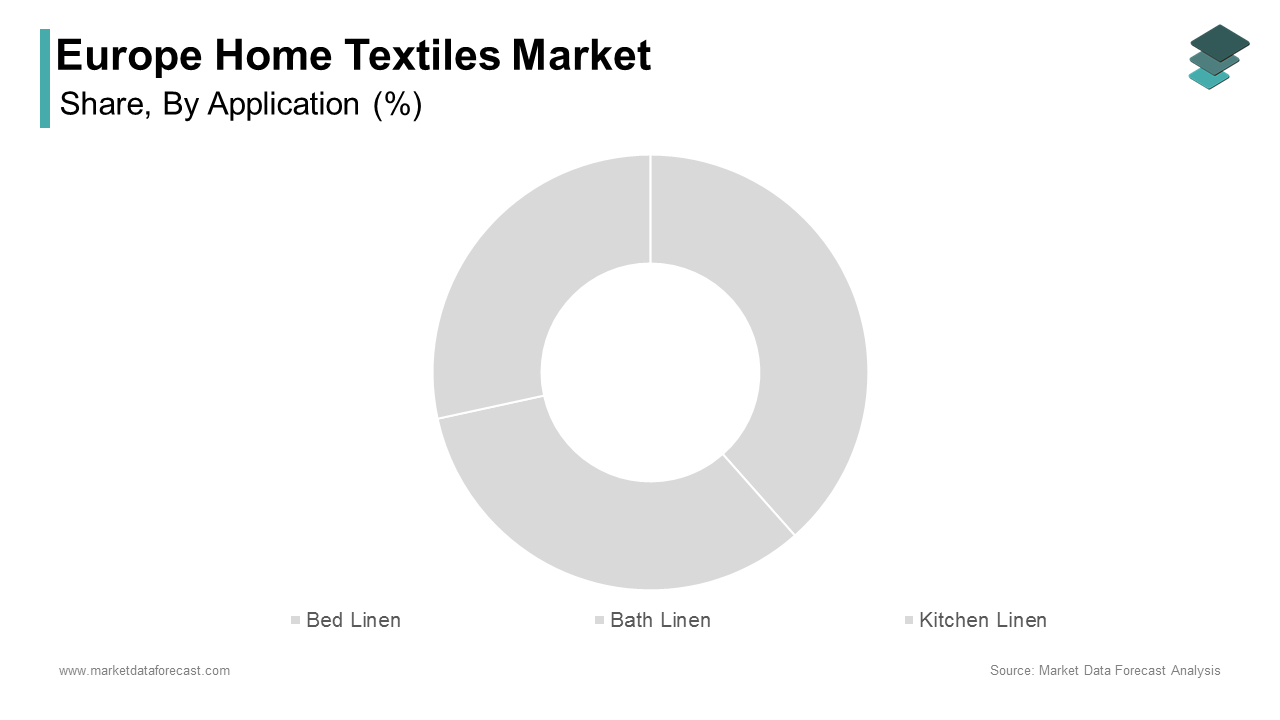
The bath linen segment is estimated to register the fastest CAGR of 6.8% from 2026 to 2034. The rapid acceleration of the bath linen segment is propelled by rising standards in personal care and home spa culture. A notable portion of households in the region recently prioritized investments in their bathrooms, often considering high absorbency and quick-drying towels to be a key component of these upgrades. Turkish and Portuguese manufacturers have responded with GOTS-certified organic cotton and bamboo blends that offer superior softness and reduced environmental impact. A different driver is the expansion of premium private label offerings. Major retail chains introduced elevated product lines, including bath collections with specific quality metrics and guarantees, bringing standards once mainly associated with premium brands into the mass market. Newer environmental certifications for bath textiles incorporate particular standards for water absorption and biodegradability, encouraging manufacturers to align mass-market designs with performance and sustainability goals. This convergence of self-care aesthetics and regulatory standards fuels disproportionate growth in bath linen beyond basic functional demand.
By Material Insights
The cotton segment led the Europe home textiles market in 2025. The leading position of the cotton segment is attributed to its universal consumer acceptance, superior comfort properties, and established supply chain infrastructure. Moreover, a key driver is sensory preference. Europeans generally view cotton as a highly desirable fabric for use in bed and bath textiles, often preferring it due to its pleasant feel, breathability, and gentle nature on the skin. This preference is reinforced by health awareness, with the German Allergy and Asthma Association confirming that cotton bedding reduces allergen retention compared to synthetics. A further factor is certification alignment. A significant majority of certified organic textiles are cotton-based, which helps manufacturers align with sustainability goals while still providing a quality product. Many large retail companies obtain a substantial portion of their home textiles from organizations that promote more responsible cotton production methods, ensuring a more traceable and lower environmental impact supply chain. Despite price volatility, cotton’s biodegradability, regulatory compliance, and deep consumer trust sustain its leadership across all home textile categories in Europe.
The linen segment is anticipated to witness the fastest CAGR of 9.2% during the forecast period, owing to its alignment with circular economy principles and luxury minimalism aesthetics. Linen is fully biodegradable, requires no irrigation, and uses less water than cotton during cultivation. European designers in Italy and France increasingly feature linen in high-end home collections due to its natural texture, temperature-regulating properties, and low environmental footprint. A different driver is regional fiber sovereignty. The European Union's Farm to Fork Strategy provides a supportive framework for flax cultivation. A significant amount of the world's high-quality textile flax is produced in France, Belgium, and the Netherlands. There is an ongoing effort by the French government to modernize facilities involved in the processing of flax fibers, which aims to reduce dependence on chemical treatments. This reflects a broader trend within the home textile sector, where linen blends are notably present in new product introductions at major design events. This synergy of sustainability, authenticity, and design prestige positions linen as Europe’s premium natural fiber of choice.
By Distribution Channel Insights
The B2C retail channels segment dominated the Europe home textiles market in 2025. The dominance of the B2C segment is supported by a multi-tiered ecosystem encompassing department stores, specialty home retailers, supermarkets, and e-commerce platforms. An additional driver is consumer accessibility. Department stores such as El Corte Inglés in Spain and Galeries Lafayette in France curate premium assortments that integrate home textiles into broader interior lifestyle offerings. A different factor is omnichannel integration. Additionally, private label expansion by retailers like Sainsbury’s and Carrefour provides cost competitive quality assured options that align with value conscious post inflation shopping behaviors. This dense and adaptive retail network ensures consistent consumer reach across income and geography, making B2C the central distribution artery.
The B2B direct segment is likely to experience the fastest CAGR of 11.3% from 2026 to 2030. The swift expansion of the B2B direct segment is fuelled by institutional demand from hotels, healthcare facilities, and social housing projects requiring standardized, high-durability textiles in bulk. The classification systems for European hotels require specific standards for bed and bath linens in properties rated three stars and higher, which leads to a more consistent approach in purchasing these items. Additionally, funds have been dedicated to public housing renovations in Southern Europe, and home textiles are part of the furnishing plans for these projects. Besides, post pandemic hygiene protocols have increased replacement cycles in hospitals and care homes. Companies have developed B2B digital platforms offering volume pricing, customization, and circular take-back services. This institutional channel, immune to retail volatility, offers stable high-volume offtake and long-term contracts, accelerating its growth trajectory.
REGIONAL ANALYSIS
Germany Home Textiles Market Analysis
Germany was the top performer in the Europe home textiles market and accounted for a 19.8% share in 2025. The supremacy of the German market is credited to high consumer standards, technical innovation, and robust domestic manufacturing. The country’s demand is shaped by a strong culture of quality and sustainability, with a portion of consumers checking care labels and eco certifications before purchase. German brands emphasize regional production with traceable cotton and linen supply chains. Besides, Germany’s Energiewende policy indirectly boosts durable home textiles as energy-conscious households invest in thermal curtains and insulating bedding to reduce heating costs. This blend of regulatory rigor, consumer awareness, and industrial capability ensures Germany remains the market’s quality benchmark and largest national contributor.
United Kingdom Home Textiles Market Analysis
The United Kingdom followed closely in the Europe home textiles market and captured a 16.8% share in 2025. The growth of the UK market is driven by a dynamic retail landscape, strong private label development, and post Brexit emphasis on ethical sourcing. British consumers lead in online home textile purchases with a notable share of transactions occurring digitally. Retailers like John Lewis and Dunelm dominate through vertically integrated supply chains that control design, sourcing, and end-of-life take-back. The United Kingdom's environmental plan requires producers to take responsibility for textiles by 2026, which supports the shift toward circular business models. Furthermore, numerous home textile lines now feature recognized sustainability labels, demonstrating an increase in consumer-facing sustainability information within the market. Additionally, the rise of quiet luxury aesthetics has fueled demand for high thread count cotton and linen bedding with minimalist design. Despite economic headwinds, UK consumers prioritize home comfort with average annual spending on home textiles exceeding two hundred thirty euros per household. This retail sophistication and regulatory foresight sustain the UK’s strong market position.
France Home Textiles Market Analysis
France is also a notable player in the Europe home textiles market because of its heritage in luxury linens, artisanal craftsmanship, and state-supported flax industry. The country produces over eighty percent of the world’s high-quality textile flax, with regions like Normandy and Picardy supplying premium linen to global luxury brands. French consumers exhibit a strong preference for natural materials, with many favoring linen and organic cotton. Brands blend traditional jacquard weaving with modern sustainability certifications to command premium positioning. This unique fusion of cultural heritage, regulatory leadership, and agricultural policy makes France a center of excellence for high-end sustainable home textiles.
Italy Home Textiles Market Analysis
Italy grew steadily in the Europe home textiles market due to its global reputation for design excellence, textile manufacturing heritage, and integration of home textiles into interior architecture. The country’s Como and Biella regions host centuries-old mills producing premium cotton sateen and jacquard fabrics for both domestic and international luxury markets. Italian design fairs like Milan’s Salone del Mobile serve as global launchpads where home textiles are presented as integral elements of holistic living spaces. Furthermore, Italian households spend among the highest in Europe on home decoration. This synergy of artisanship, innovation, and lifestyle culture ensures Italy’s outsized influence on premium market trends.
Turkey Home Textiles Market Analysis
Turkey is anticipated to expand in the Europe home textiles market from 2026 to 2034 as the continent’s primary manufacturing hub and export powerhouse with strategic proximity to both the EU and Middle Eastern markets. The country supplies a portion of the EU’s imported home textiles, particularly in the bath and bed categories. Turkish manufacturers in Denizli and Bursa have invested heavily in sustainable production with over one hundred fifty facilities certified under EU Ecolabel and GOTS standards. Additionally, competitive labor costs and vertical integration, from spinning to finishing, enable rapid response to European fast fashion and private label demands. Major European retailers, including IKEA and H&M, source the majority of their value segment home textiles from Turkey. This combination of scale agility and sustainability upgrading positions Turkey as an indispensable supply chain partner in the European home textiles ecosystem.
COMPETITION OVERVIEW
Competition in the Europe home textiles market is characterized by a multi-tiered structure where global retailers, luxury heritage brands and agile fast fashion players coexist through distinct value propositions. Mass market leaders compete on price, sustainability certifications, and omnichannel convenience, while premium brands differentiate through artisanal craftsmanship, regional fiber sourcing, and design heritage. The market is highly fragmented with thousands of SMEs, but consolidation is accelerating as regulatory pressures favor vertically integrated players with traceable supply chains. Sustainability is no longer optional but a baseline requirement with the EU’s Strategy for Sustainable and Circular Textiles driving innovation in material science, recycling, and labeling. Competition now centers on the authenticity of eco claims, product durability, and emotional connection to home wellness. Digital tools such as virtual room styling and care guidance further deepen engagement. Despite low barriers to entry at the brand level, true competitiveness hinges on supply chain control, regulatory foresight, and circular service integration.
KEY MARKET PLAYERS
A few major players of the Europe home textiles market include
- IKEA
- Welspun Group
- Lenzing Group
- Trident Group
- Springs Global
- CIE Automotive Textiles
- Frette
- Hugo Boss Home
- Schlossberg
- Descamps
- Yves Delorme
- Heimtextil
- Tessitura Toscana Telerie
- John Lewis Home
- Marks & Spencer Home
Top Strategies Used by the Key Market Participants
Key players in the Europe home textiles market prioritize material transparency by adopting certified organic cotton, recycled fibers, and biodegradable linen to meet regulatory and consumer expectations. They integrate circular economy models through take-back resale, and recycling programs to comply with extended producer responsibility mandates. Companies invest in digital product passports to disclose environmental footprints and care instructions in line with EU legislation. Retailers leverage omnichannel strategies blending online visualization with in-store tactile experiences to enhance purchase confidence. Additionally, brands align home textiles with broader interior design narratives to elevate perceived value and encourage complete room refresh cycles rather than isolated replacements.
Leading Players in the Europe Home Textiles Market
- IKEA is a dominant force in the Europe home textiles market, offering a wide range of affordable, functional, and sustainably designed products, including bed linens, bath towels, and curtains. The company contributes globally by scaling circular textile practices such as take-back programs, material traceability, and the use of recycled or renewable fibers across its supply chain. Through design democratization, sustainability integration, and omnichannel accessibility, IKEA continues to shape mainstream consumer expectations for value and responsibility in home living.
- Zara Home leverages its parent company Inditex’s agile supply chain to deliver fashion-forward home textiles that align with seasonal interior trends across Europe. The brand contributes to the global market by blending rapid product turnover with increasing sustainability commitments, including the use of organic cotton lyocell, and certified dyes. It also enhanced in-store and online visual merchandising to position home textiles as integral to curated lifestyle aesthetics. By combining fast-paced design innovation with transparent sustainability, Zara Home bridges fashion and functionality in the European household.
- Balsan is a French heritage manufacturer specializing in high-quality bed and bath linens with a strong presence in both retail and hospitality sectors across Europe. The company contributes globally by championing European flax linen and long staple cotton while maintaining fully traceable production from spinning to finishing in its French mills. It also obtained EU Ecolabel certification for its entire home textile range, verifying low environmental impact across water, energy, and chemical use. Through craftsmanship, regional sourcing, and circular B2B solutions, Balsan reinforces the premium sustainable segment of the European home textiles landscape.
MARKET SEGMENTATION
This research report on the Europe home textiles market has been segmented and sub-segmented based on application, material, distribution channel, and region.
By Application
- Bed Linen
- Bath Linen
- Kitchen Linen
By Material
- Cotton
- Linen
- Synthetic Fibres
By Distribution Channel
- B2C/Retail Channels
- B2B/Direct
By Region
- UK
- France
- Spain
- Germany
- Italy
- Russia
- Sweden
- Denmark
- Switzerland
- Netherlands
- Turkey
- Czech Republic
- Rest of Europe