Europe Hot Dog And Sausages Market Research Report - Segmented By Product, Type And Region(UK, France, Spain, Germany, Italy, Russia, Sweden, Denmark) - Industry Analysis, Size, Share, Growth, Trends, And Forecasts (2026 to 2034)
Market Size, 2025
$16.37 BnMarket Estimate, 2026
$16.98 BnMarket Forecast, 2034
$22.74 BnCAGR, 2026–2034
3.72%Europe Hot Dog and Sausage Market Report Summary
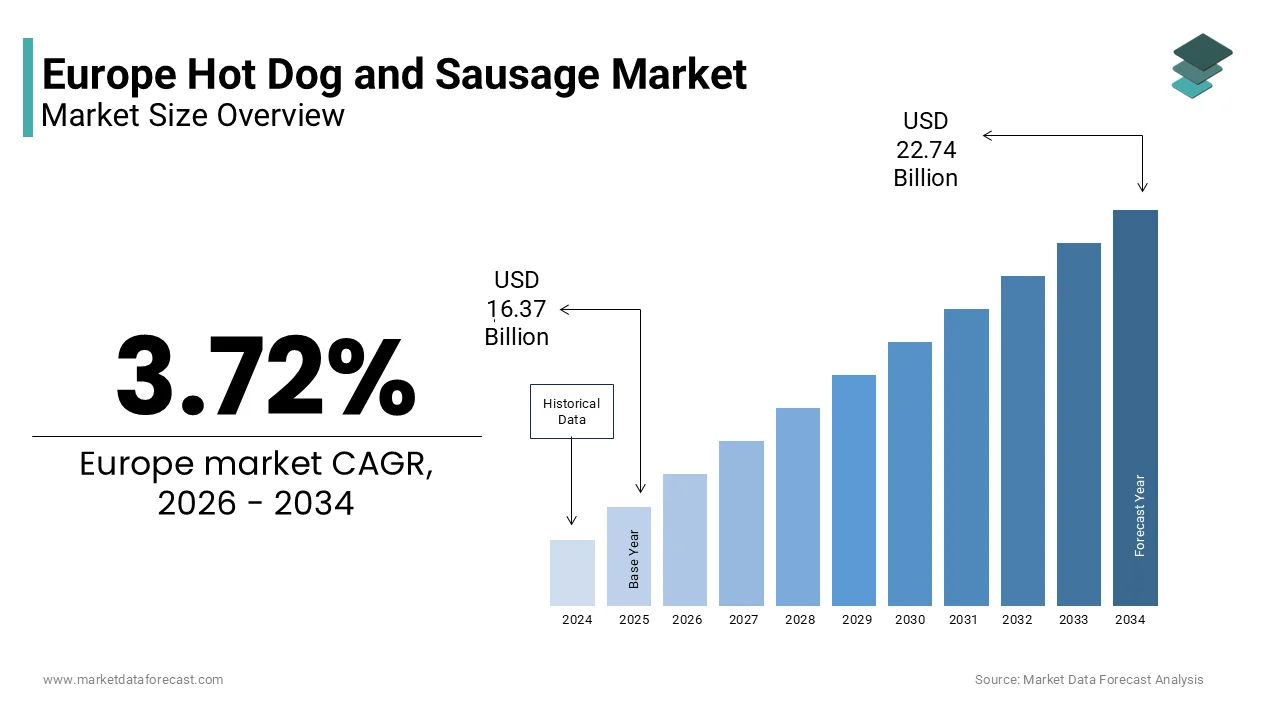
The Europe hot dog and sausage market was valued at USD 16.37 billion in 2025, is estimated to reach USD 16.98 billion in 2026, and is projected to reach USD 22.74 billion by 2034, growing at a CAGR of 3.72% during the forecast period. Market growth is driven by strong consumption of processed meat products, traditional dietary preferences, and increasing demand for convenient and ready to cook food items. The popularity of quick service restaurants, street food culture, and ready to eat meals is further supporting market expansion. In addition, product innovation in flavors, packaging, and healthier formulations is contributing to steady growth across Europe.
Key Market Trends
- Rising demand for convenient and ready to cook meat products is driving market growth.
- Increasing popularity of quick service restaurants and street food is boosting consumption.
- Growing innovation in flavors and product varieties is supporting market expansion.
- Rising demand for premium and organic meat products is influencing product development.
- Expansion of retail and food service channels is enhancing product availability.
Segmental Insights
- Based on product, the pork segment was the largest and held 54.5% of the Europe hot dog and sausage market share in 2025. This dominance is attributed to traditional consumption patterns and strong preference for pork based processed meat products.
- Based on type, the refrigerated dinner sausages segment accounted for 41.4% of the Europe hot dog and sausage market share in 2025. The segment’s growth is driven by high demand for fresh and chilled processed meat products with better taste and quality.
Regional Insights
- The Europe hot dog and sausage market is experiencing steady growth across key countries, supported by strong cultural preferences and food consumption habits.
- Germany was the largest contributor in the Europe hot dog and sausage market in 2025, driven by its strong meat processing industry, traditional sausage consumption, and high demand for processed meat products.
Competitive Landscape
The Europe hot dog and sausage market is highly competitive, with key players focusing on product quality, innovation, and expansion of production and distribution capabilities to strengthen their market position. Companies are investing in premium product offerings, sustainable sourcing, and branding strategies. Prominent players in the Europe hot dog and sausage market include Bigard Group, Terrena, Veronesi Group, Vion, Tönnies Holding ApS and Co KG, Danish Crown AmbA, Groupe Bigard SA, LDC Group, HKScan, and Westfleisch SCE mbH.
Europe Hot Dog and Sausage Market Size
The Europe hot dog and sausage market size was valued at USD 16.37 billion in 2025, and the market size is expected to reach USD 22.74 billion by 2034 from USD 16.98 billion in 2026, at a CAGR of 3.72%.
Hot dog and sausages represents a significant segment of the processed meat industry characterized by a diverse array of cured, smoked, and cooked meat products that are deeply embedded in European culinary traditions. This market encompasses both traditional regional specialties, such as German bratwurst and Polish kielbasa, as well as modern convenience formats like frankfurters and cocktail sausages. The consumption patterns are influenced by cultural heritage, seasonal festivities, and the growing demand for ready to eat food solutions. According to the European Commission, the meat sector remains one of the largest agricultural industries in the European Union, accounting for approximately 40% of the total agricultural output value. This economic significance underscores the vital role of sausage production in rural economies and supply chains across the continent. As per Eurostat data, the average annual meat consumption per capita in the European Union stands at around 69 kilograms, which indicates a sustained baseline demand for protein sources, including processed varieties. The market is further shaped by evolving consumer preferences towards high quality artisanal products and transparent sourcing practices. Regulatory frameworks, such as the European Food Safety Authority guidelines, ensure strict hygiene and labeling standards, which influence production methods and consumer trust. The integration of traditional craftsmanship with modern manufacturing technologies allows producers to meet the dual demands of authenticity and convenience. This dynamic landscape positions the hot dog and sausage sector as a resilient component of the European food industry, adapting to changing dietary habits while preserving cultural gastronomic identities.
MARKET DRIVERS
Rising Demand for Convenient and Ready to Eat Food Options Drives Consumption of Packaged Sausages
The accelerating pace of urban life and changing lifestyle patterns across Europe have significantly increased the demand for convenient and ready to eat food options and this is driving the expansion of the European hot dog and sausages market. Modern consumers, particularly working professionals and young families, which is prioritizing time saving meal solutions that do not compromise on taste or nutritional value. Pre-cooked and easy to prepare sausages fit seamlessly into this need, as they offer quick preparation times for breakfast, lunch or dinner. According to the European Convenience Food Association, the market for ready meals and convenience meat products has grown by 6% annually over the past five years, and this reflects a structural shift in eating habits. The versatility of sausages, which can be grilled, boiled, or microwaved, makes them an ideal choice for busy households. Furthermore, the expansion of retail channels, including supermarkets and online grocery platforms, has enhanced the accessibility of these products. As per NielsenIQ data, sales of packaged meat products in urban centers of Europe increased by 8% in 2022, and this was driven largely by the convenience factor. The development of innovative packaging technologies that extend shelf life while maintaining freshness further supports this trend. Consumers are also drawn to single serve packs and family sized bundles that cater to varying household sizes. This convergence of convenience, affordability, and availability ensures that hot dogs and sausages remain a staple in the European diet, despite the emergence of alternative protein sources.
Strong Cultural Heritage and Traditional Consumption Patterns Sustain Steady Demand for Regional Sausage Varieties
The enduring strength of cultural heritage and traditional consumption patterns is further fuelling the European hot dog and sausages market growth, which is ensuring steady demand for regional specialty products. Europe boasts a rich diversity of sausage making traditions, with each country and region possessing unique recipes and preparation methods that have been passed down through generations. In Germany, for instance, sausages are an integral part of daily meals and festive occasions, with over 1500 different varieties recognized nationwide. According to the German Meat Industry Association, the per capita consumption of sausage products in Germany remains among the highest in the world at approximately 30 kilograms per year. Similarly, in Poland, the tradition of consuming kielbasa during holidays and family gatherings reinforces its market presence. As per the Polish Meat Industry Federation, domestic production of smoked sausages increased by 4% in 2023 to meet local demand. These cultural ties create a loyal consumer base that values authenticity and quality over price sensitivity. The protection of geographical indications by the European Union for products like Nürnberger Bratwürste and Thüringer Rostbratwurst further enhances their prestige and market stability. Tourists and expatriates also contribute to demand by seeking authentic tastes from their home countries. This deep rooted cultural connection ensures that traditional sausages maintain a prominent position in the European food landscape, resisting fluctuations seen in other food categories.
MARKET RESTRAINTS
Growing Health Consciousness and Concerns Over Processed Meat Consumption Restrain Market Growth
The growing health consciousness and widespread concerns regarding the consumption of processed meats is impeding the growth of the Europe hot dog and sausages market. Public health campaigns and scientific studies have linked high intake of processed meats to various health issues, including cardiovascular diseases and certain types of cancer. The World Health Organization classified processed meat as a Group 1 carcinogen, and this has heightened consumer awareness and prompted many individuals to reduce their intake. According to the European Heart Network, chronic diseases related to poor diet account for approximately 80% of all premature deaths in Europe, and this is leading to a societal shift towards healthier eating habits. Consumers are increasingly scrutinizing ingredient labels, and they are avoiding products with high sodium, nitrites, and saturated fats commonly found in traditional sausages. As per the European Consumer Organisation, surveys indicate that 65% of Europeans are actively trying to reduce their meat consumption for health reasons. This trend is particularly pronounced among younger demographics who prioritize wellness and clean eating. The rise of flexitarian diets further limits the frequency of sausage consumption, as individuals seek plant based alternatives. Manufacturers face the challenge of reformulating products to meet these health expectations without compromising taste or texture. Until significant innovations in healthy processing methods are widely adopted and accepted, the negative perception of processed meats will continue to dampen market expansion and limit volume growth.
Stringent Regulatory Standards and Labeling Requirements Increase Compliance Costs and Operational Complexity
The stringent regulatory standards and complex labeling requirements imposed by European Union authorities are further hampering the regional market expansion. Regulations, such as the EU Regulation on the provision of food information to consumers, mandate detailed disclosure of ingredients, allergens, and nutritional values, and this increases the administrative burden on manufacturers. Additionally, the strict limits on additives, such as phosphates and nitrites, require producers to invest in advanced processing technologies and quality control systems to ensure compliance. According to the European Food Safety Authority, the continuous review and updating of safety standards for food additives necessitates ongoing research and development expenditures for meat processors. These compliance costs are particularly challenging for small and medium sized enterprises that lack the financial resources of larger corporations. As per the European Small Business Alliance, regulatory complexity is cited as a major barrier to innovation and market entry for artisanal sausage makers. Furthermore, variations in national interpretations of EU regulations can create inconsistencies across member states, and this complicates cross border trade. The requirement for traceability from farm to fork also adds layers of logistical complexity and cost to the supply chain. Non-compliance can result in severe penalties and product recalls, and this damages brand reputation. These regulatory pressures constrain profit margins and slow down the introduction of new products, and this hinders the overall dynamism and growth potential of the market.
MARKET OPPORTUNITIES
Expansion of Plant Based and Alternative Protein Sausage Offerings Presents Significant Growth Opportunities
The rapid expansion of plant based and alternative protein sausage offerings is a lucrative opportunity for the Europe hot dog and sausages market as manufacturers seek to capture the growing segment of flexitarian and vegan consumers. Innovations in food technology have enabled the creation of plant based sausages that closely mimic the taste, texture, and appearance of traditional meat products using ingredients such as pea protein, soy, and wheat gluten. According to the Good Food Institute Europe, sales of plant based meats in the region grew by 19% in 2022 to reach a value of 1.9 billion euros, and this indicates strong consumer acceptance. Major meat producers are launching their own vegetarian and vegan sausage lines to diversify their portfolios and appeal to health conscious and environmentally aware buyers. As per the European Plant Based Foods Association, the availability of plant based options in mainstream supermarkets has increased by 40% over the last three years, and this is facilitating easier access for consumers. This shift allows traditional sausage manufacturers to mitigate the risks associated with declining meat consumption and tap into new revenue streams. Marketing strategies emphasizing sustainability and reduced carbon footprints further enhance the appeal of these products. Collaborations with food tech startups accelerate innovation and improve product quality. By embracing this trend, companies can position themselves as forward thinking brands committed to meeting evolving dietary preferences. The success of plant based sausages demonstrates the market's adaptability and potential for sustainable growth in a changing culinary landscape.
Development of Premium and Artisanal Sausage Products Caters to Discerning Consumer Preferences
The development of premium and artisanal sausage products offers a significant opportunity for the European hot dog and sausages market. Consumers are increasingly willing to pay higher prices for high quality products made with natural ingredients, free from artificial additives and preservatives. This trend is driven by a desire for authentic flavors and ethical sourcing practices. According to the European Specialty Food Association, the premium meat segment has experienced a compound annual growth rate of 5%, and this is outpacing the standard processed meat category. Artisanal producers, who emphasize traditional methods, local sourcing, and unique flavor profiles, are gaining popularity among gourmet shoppers and food enthusiasts. As per the International Wine and Food Society, surveys show that 70% of European consumers prefer buying meat products from local butchers or specialized delis when seeking quality assurance. Large manufacturers are responding by launching premium sub brands that highlight heritage recipes and superior ingredient quality. The use of organic meats and rare breed pigs further enhances the exclusivity and appeal of these products. Retailers are dedicating more shelf space to artisanal ranges, and this reflects this shift in consumer preference. By focusing on quality rather than quantity, companies can achieve higher profit margins and build strong brand loyalty. This strategy allows the market to evolve beyond commoditized products and cater to the sophisticated tastes of modern European consumers.
MARKET CHALLENGES
Volatility in Raw Material Prices and Supply Chain Disruptions Impact Production Costs and Profitability
The volatility in raw material prices and frequent supply chain disruptions are primarily challenging the European hot dog and sausages market growth. The primary ingredients for sausages, including pork, beef, and poultry, are subject to fluctuating prices due to factors such as feed costs, disease outbreaks, and geopolitical tensions. According to the Agricultural Market Information System, pork prices in Europe experienced a 15% increase in 2023 due to supply constraints and higher energy costs affecting farming operations. These cost increases are often difficult to pass on to consumers who are sensitive to price changes, and this leads to compressed profit margins for manufacturers. As per the European Meat Industry Association, energy costs for processing facilities have doubled in recent years, and this further exacerbates financial pressures. Supply chain bottlenecks, caused by labor shortages and logistical delays, also hinder the timely delivery of raw materials and finished goods. The reliance on imports for certain spices and casings adds another layer of vulnerability to global trade disruptions. Manufacturers must engage in complex hedging strategies and maintain larger inventory buffers to mitigate these risks, and this ties up capital. The unpredictability of input costs makes long term planning difficult and discourages investment in expansion. Until supply chains become more resilient and stable, the industry will continue to face challenges in maintaining consistent pricing and profitability.
Intense Competition from Private Label Brands Erodes Market Share of Established Manufacturers
The intense competition from private label brands that are increasingly eroding the market share of established national and international manufacturers is further challenging the regional market expansion. Retailers, such as Aldi, Lidl, and Tesco, have significantly improved the quality and variety of their own brand sausage products, and they offer consumers a cheaper alternative without compromising significantly on taste. According to the Private Label Manufacturers Association, private label accounts for over 30% of total grocery sales in several European countries, including Germany and the United Kingdom. This high penetration rate indicates strong consumer acceptance and trust in retailer brands. As per Kantar Worldpanel data, the market share of private label meat products grew by 2% in 2023, as inflation drove shoppers to seek value for money. Established brands struggle to justify price premiums when private label options offer comparable quality at lower prices. This pressure forces major manufacturers to engage in price wars, and this further reduces profitability. Additionally, retailers prioritize their own brands in promotional activities and shelf placement, and this limits the visibility of branded products. To counter this threat, established players must invest heavily in marketing, innovation, and brand building to differentiate their offerings. However, the cost effectiveness of private labels remains a persistent challenge. The dominance of powerful retail chains gives them significant bargaining power over suppliers, and this makes it difficult for branded manufacturers to maintain their historical market positions.
REPORT COVERAGE
| REPORT METRIC | DETAILS |
| Market Size Available | 2025 to 2034 |
| Base Year | 2025 |
| Forecast Period | 2026 to 2034 |
| CAGR | 3.72% |
| Segments Covered | By Product, Type, and Region |
| Various Analyses Covered | Global, Regional, & Country Level Analysis; Segment-Level Analysis; DROC, PESTLE Analysis; Porter’s Five Forces Analysis; Competitive Landscape; Analyst Overview of Investment Opportunities |
| Regions Covered | UK, France, Spain, Germany, Italy, Russia, Sweden, Denmark, Switzerland, Netherlands, Turkey, and the Czech Republic |
| Market Leaders Profiled | Bigard Group, Terrena, Veronesi Group, Vion, Tönnies Holding ApS & Co. KG, Danish Crown AmbA, Groupe Bigard SA, LDC Group, HK Scan, Westfleisch SCE mbH |
SEGMENTAL ANALYSIS
By Product Insights
The pork segment led the market by holding 54.5% of the European market share in 2025. The dominance of pork segment in the European market is attributed to the deep rooted culinary traditions and cost effective production capabilities. The central role of pork meat in European gastronomy, where it serves as the primary ingredient for traditional sausages such as bratwurst, chorizo, and salami is further contributing to the expansion of the pork segment in the European market. Pork is favored for its ideal fat to lean meat ratio, which provides the necessary texture and flavor profile required for high quality sausage production. According to the European Commission, pork remains the most consumed meat in the European Union, accounting for nearly half of total meat consumption per capita. This widespread acceptance ensures a consistent and robust demand for pork based sausages across all demographic groups. The established supply chain for pork in countries like Germany, Spain, and Denmark allows for efficient production and distribution, and this keeps costs competitive compared to other meats. As per Eurostat data, the European Union produced approximately 23 million tons of pork in 2022, and this reinforces its availability as a raw material. Furthermore, cultural events and festivals often feature pork sausages as staple foods, and this strengthens consumer loyalty. The versatility of pork allows it to be processed into various forms, from fresh links to cured and smoked varieties, and this caters to diverse consumer preferences. This combination of cultural significance, economic efficiency, and supply chain stability cements pork as the leading product segment in the market.
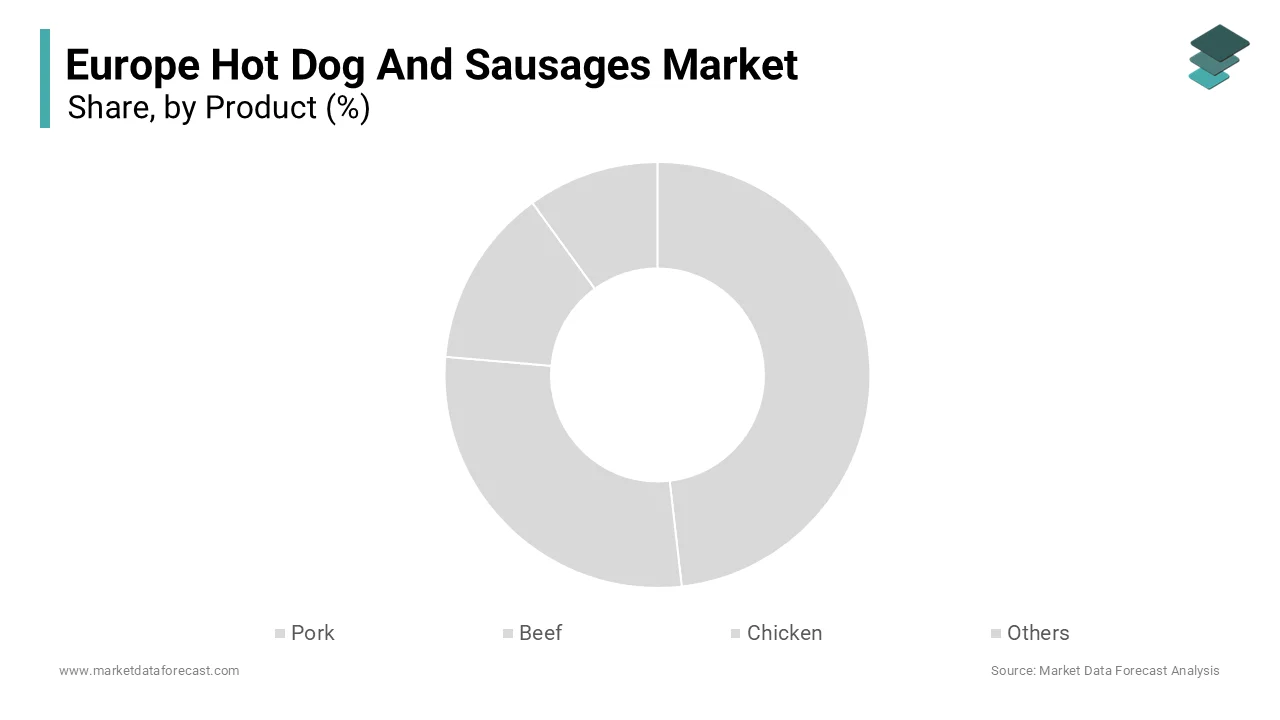
However, the chicken segment is another promising segment and is estimated to witness a CAGR of 7.5% over the forecast period owing to the health conscious consumer preferences and increasing consumer shift towards leaner protein sources perceived as healthier alternatives to red and processed meats. Chicken sausages are marketed as low fat and low calorie options, and they appeal to fitness enthusiasts and individuals managing their weight. According to the European Broiler Association, chicken consumption in Europe has risen steadily, as consumers seek versatile and affordable protein sources that align with modern dietary guidelines. The mild flavor of chicken also allows for extensive innovation in seasoning and ingredient inclusion, such as herbs, vegetables, and spices, and this attracts younger demographics seeking novel taste experiences. As per the International Poultry Council, the production of poultry meat in Europe increased by 3% annually over the last five years, and this supports the growth of derived products like sausages. Additionally, chicken sausages are often positioned as convenient, ready to cook meals for busy households, and this further drives adoption. The perception of chicken as a cleaner and lighter meat option reduces the guilt associated with processed food consumption. Retailers are expanding their shelves with various chicken sausage flavors, including Mediterranean and Asian inspired variants, to cater to evolving palates. This alignment with health trends and culinary innovation positions chicken as the most dynamic growth driver in the product segment.
By Type Insights
The refrigerated dinner sausages segment held the leading position in the Europe hot dog and sausages market with 41.4% of the regional market share in 2025. The dominance of refrigerated dinner sausages segment in this regional market is driven by their integration into traditional European evening meals, where they serve as a primary protein source accompanied by sides such as potatoes, vegetables, or bread. Consumers prefer refrigerated sausages over frozen or shelf stable options, due to their perceived freshness, superior taste, and texture. According to the European Frozen Food Federation, while frozen foods are popular, fresh chilled products are preferred for immediate consumption due to higher quality perceptions. Dinner sausages, such as Italian sausages, bratwurst, and merguez, are essential ingredients in home cooking, and they allow for versatile preparation methods including grilling, frying, and baking. As per Kantar Worldpanel, household purchases of fresh meat products remain stable, and this indicates a consistent demand for dinner oriented sausage formats. The convenience of pre seasoned and ready to cook dinner sausages appeals to working families, who seek quick yet wholesome meal solutions. Retailers prioritize these products in fresh meat counters, and this ensures high visibility and accessibility. Furthermore, the association of dinner sausages with family gatherings and weekend barbecues reinforces their cultural relevance. The ability of manufacturers to introduce premium and artisanal variations within this category further sustains consumer interest and drives volume sales. This combination of convenience, quality, and cultural habit ensures the continued leadership of refrigerated dinner sausages.
On the other end, the cocktail sausages segment is the fastest growing type segment in this regional market and is anticipated to record a CAGR of 8.2% over the forecast period. The increasing popularity of social gatherings, parties, and casual dining occasions, where bite sized finger foods are highly sought after is one of the key factors propelling the growth of the cocktail sausages segment in this regional market. These small sausages are convenient to serve and consume, and this makes them ideal for buffets, holidays, and sporting events. According to the European Snack Association, the market for savory snacks and appetizers has grown by 5% annually, as consumers spend more on entertainment and hospitality at home. Cocktail sausages offer a satisfying savory taste in a manageable portion size, appealing to both children and adults. As per NielsenIQ data, sales of party food items, including mini sausages, spike significantly during festive seasons such as Christmas and New Year, and this indicates strong seasonal demand. Manufacturers are innovating with various flavors and coatings, such as bacon wrapped or cheese filled cocktail sausages, to enhance appeal. The rise of ready to eat platters in supermarkets also facilitates easy access for consumers hosting events. Additionally, the trend of grazing tables and charcuterie boards has expanded the usage of cocktail sausages beyond traditional heating methods. Their versatility and ease of preparation make them a preferred choice for hosts looking to offer diverse and enjoyable food options. This social and functional utility drives the rapid expansion of the cocktail sausage segment.
REGIONAL ANALYSIS
Germany Hot Dog and Sausages Market Analysis
Germany stood as the largest national market for hot dogs and sausages market in Europe in 2025 due to an unparalleled cultural devotion to sausage variety and consumption Germany maintains its leadership position due to its historic reputation as the land of sausages, with over 1500 distinct varieties produced across the country. The consumption of sausages is deeply ingrained in daily life and regional identities, with specialties like Weisswurst in Bavaria and Currywurst in Berlin. According to the German Meat Industry Association, the average German consumes approximately 30 kilograms of sausage products annually, and this reflects intense domestic demand. The presence of numerous local butchers and specialized meat shops ensures high quality and fresh offerings that cater to discerning tastes. As per the Federal Ministry of Food and Agriculture, the meat processing industry is a key economic sector in rural areas, and it supports employment and agricultural supply chains. The strong tradition of beer gardens and outdoor festivals further boosts sausage sales, as these venues rely heavily on traditional meat offerings. Consumer preference for regional authenticity drives the success of protected geographical indication products, which command premium prices. Additionally, the aging population in Germany contributes to steady demand for traditional comfort foods. Despite health trends, the cultural significance of sausages ensures resilience in consumption levels. Manufacturers continue to innovate with organic and reduced salt options to address health concerns while preserving traditional flavors. This unique blend of heritage and adaptation sustains Germany's dominant market status.
United Kingdom Hot Dog and Sausages Market Analysis
The United Kingdom represents a significant market in Europe due to the popularity of breakfast sausages and the growing influence of multicultural culinary trends. The United Kingdom holds a prominent position in the market due to the strong tradition of the full English breakfast, which prominently features pork sausages. This daily ritual ensures consistent demand for breakfast sausages throughout the year. According to the British Meat Processors Association, sausage sales remain robust with billions of units sold annually, and this highlights their staple status in British diets. The market is also influenced by the diverse population, which introduces varied sausage styles such as chorizo and merguez into mainstream retail. As per Kantar UK, household spending on meat products has shown resilience despite economic pressures, and this indicates sustained consumer priority for familiar comfort foods. The rise of gourmet burger joints and gastropubs has elevated the status of artisanal sausages, and this encourages premiumization in the sector. Retailers like Tesco and Sainsbury's actively promote own brand premium ranges to capture value conscious shoppers. Furthermore, the trend towards convenience has boosted sales of ready to cook sausage rolls and party packs. Health consciousness is leading to increased availability of reduced fat and turkey sausage options. The combination of traditional breakfast habits and evolving culinary preferences drives the dynamic nature of the UK sausage market.
France Hot Dog and Sausages Market Analysis
France is a key contributor to the Europe hot dog and sausages market and is driven by its rich charcuterie heritage and increasing demand for convenient meal solutions. France leverages its renowned charcuterie tradition to maintain a strong presence in the sausage market, with products like saucisson and Andouille being household staples. The French consumer values quality and origin, and this leads to high demand for labeled and certified meat products. According to the French Interprofessional Office for Livestock and Meat, the consumption of processed meat products remains stable with a slight shift towards premium and organic options. The integration of sausages into quick lunch options, such as sandwiches and salads, has expanded their usage beyond traditional dinner settings. As per the National Institute of Statistics and Economic Studies, the number of single person households is rising, and this is driving demand for smaller portion sizes and convenient packaging. The popularity of street food, including hot dogs, has introduced younger generations to sausage based fast food, and this diversifies consumption patterns. Local producers emphasize terroir and artisanal methods to differentiate their products from industrial brands. Supermarkets are expanding their fresh counter sections to offer freshly sliced and prepared sausage dishes. The emphasis on gastronomic pleasure, rather than mere sustenance, supports the premium segment. This balance between tradition and modern convenience characterizes the French market landscape.
Spain Hot Dog and Sausages Market Analysis
Spain holds a substantial share in the Europe hot dog and sausages market. Spain's market is defined by the ubiquitous presence of chorizo and other cured sausages, which are integral to tapas culture and home cooking. These products are used in a wide variety of dishes, from stews to appetizers, and this ensures high frequency of purchase. According to the Spanish Ministry of Agriculture, Fisheries, and Food, pork products account for a significant portion of household meat expenditure, and this reflects their dietary importance. The export strength of Spanish cured meats also reinforces domestic production capabilities and quality standards. As per the Spanish Food Information and Control Agency, consumer trust in locally produced sausages is high due to strict quality controls and labeling regulations. The tourism industry boosts demand, as visitors seek authentic culinary experiences featuring traditional sausages. Recent trends show a growing interest in low salt and natural ingredient versions to align with health awareness. Retailers are promoting regional specialties to attract tourists and locals alike. The social aspect of dining in Spain ensures that sausages remain a central part of communal meals. This cultural embeddedness, combined with adaptive product development, sustains Spain's robust market position.
Italy Hot Dog and Sausages Market Analysis
Italy is a vital market in Europe and is characterized by a diverse array of regional sausage specialties and a strong preference for high quality ingredients. Italy's contribution to the market is marked by its extensive variety of regional sausages, such as salsiccia and salami, which are celebrated for their distinct flavors and preparation methods. Italian consumers prioritize ingredient quality, often preferring sausages made with specific breeds of pork and natural casings. According to the Italian Meat Industry Association, the sector focuses heavily on traditional recipes and protected designation of origin labels to maintain product integrity. The use of sausages in pasta dishes and pizzas expands their application beyond standalone consumption. As per the National Institute of Statistics, the demand for artisanal and organic meat products is growing, as consumers become more health conscious and environmentally aware. The slow food movement in Italy advocates for sustainable and traditional production methods, and this influences consumer choices. Supermarkets are increasingly stocking premium local brands to meet this demand. The cultural pride in regional culinary identities ensures that local sausages retain loyal customer bases. Innovation in packaging to extend freshness without preservatives is gaining traction. This commitment to quality and tradition ensures Italy remains a key player in the European sausage market.
COMPETITIVE LANDSCAPE
The competition in the Europe Hot Dog And Sausages Market is intense and fragmented featuring a mix of multinational corporations and local artisanal producers. Major players compete on product quality brand reputation and innovation to capture consumer loyalty. The market sees continuous product launches focusing on health benefits such as reduced sodium and organic ingredients to address growing health concerns. Private label brands from major retailers pose a significant threat by offering comparable quality at lower prices forcing established brands to differentiate through premiumization and unique flavors. Regulatory compliance regarding food safety and labeling adds complexity and cost to operations influencing competitive dynamics. Companies invest in sustainable practices and transparent sourcing to appeal to ethically conscious consumers. The rise of plant based alternatives further intensifies competition as traditional meat processors diversify their offerings. Strategic partnerships and mergers are common as firms seek to expand their geographic reach and operational efficiency. Overall the market demands agility and innovation to sustain growth amidst evolving consumer preferences and regulatory pressures.
KEY MARKET PLAYERS
Key players in the Europe hot dog and sausage market are
- Bigard Group
- Terrena
- Veronesi Group
- Vion
- Tönnies Holding ApS & Co. KG
- Danish Crown AmbA
- Groupe Bigard SA
- LDC Group
- HKScan
- Westfleisch SCE mbH
Top Players in the Market
- Vion NV stands as a leading meat processor in Europe with significant operations in the hot dog and sausage sector. The company focuses on sustainable meat production and high quality standards to meet evolving consumer demands. Vion has recently invested in advanced processing technologies to improve efficiency and product consistency across its facilities. Their strategy emphasizes transparency in sourcing and animal welfare which resonates with ethical consumers. By strengthening partnerships with local farmers Vion ensures a reliable supply of premium raw materials. The company also expands its portfolio of convenience products including ready to cook sausages to cater to busy lifestyles. These initiatives enhance their competitive edge and reinforce their commitment to delivering safe and nutritious meat products to European households while maintaining a strong global presence through export activities.
- Westfleisch SCE is a major cooperative meat producer in Germany known for its extensive range of sausage and hot dog products. The company leverages its strong regional roots to deliver authentic tastes that appeal to traditional consumers. Westfleisch has recently focused on expanding its organic and premium product lines to address health conscious market segments. They have implemented rigorous quality control measures to ensure compliance with strict European food safety regulations. The cooperative model allows Westfleisch to maintain close relationships with farmers ensuring stable supply chains and fair pricing. Recent investments in sustainable packaging solutions reflect their commitment to environmental responsibility. By diversifying their product offerings and enhancing operational efficiency Westfleisch strengthens its market position and continues to be a trusted provider of high quality meat products in Europe and beyond.
- Tönnies Holding is one of the largest meat producers in Europe with a dominant presence in the sausage and hot dog market. The company operates state of the art facilities that enable large scale production while maintaining high hygiene standards. Tönnies has recently focused on digitalizing its supply chain to improve traceability and reduce waste. They are also investing in alternative protein research to diversify their portfolio amidst changing dietary trends. The company prioritizes innovation in product development introducing new flavors and formats to attract younger consumers. Strategic collaborations with retail partners ensure wide distribution and visibility of their brands. By adhering to strict sustainability goals and enhancing operational transparency Tönnies reinforces its leadership role in the European meat industry and maintains a robust global export network.
Top Strategies Used by the Key Market Participants
Key players in the Europe Hot Dog And Sausages Market primarily focus on product innovation to meet changing consumer preferences for healthier and convenient options. Companies invest heavily in research and development to create reduced fat and low salt varieties without compromising taste. Strategic acquisitions of local artisanal brands allow larger firms to expand their portfolios and access niche markets. Sustainability is a core strategy with manufacturers adopting eco friendly packaging and ethical sourcing practices to enhance brand reputation. Digital transformation is employed to optimize supply chains and improve traceability from farm to fork. Marketing campaigns emphasize transparency and quality to build consumer trust in processed meat products. Partnerships with retailers ensure prominent shelf placement and promotional support. These strategies help companies navigate regulatory challenges and maintain competitiveness in a dynamic market environment driven by health consciousness and ethical considerations.
MARKET SEGMENTATION
This Research Report on Europe hot dog and sausage market is segmented and sub segmented into following categories
By Product
- Pork
- Beef
- Chicken
- Others
By Type
- Refrigerated Breakfast Sausages
- Refrigerated Dinner Sausages
- Cocktail Sausages
By Country
- Germany
- France
- Spain
- Poland
- Czech Republic
- Austria
- United Kingdom
- Russia
- Italy
Frequently Asked Questions
1. What is the Europe hot dog and sausage market?
The Europe hot dog and sausage market includes processed meat products made from pork, beef, poultry, or plant-based alternatives, consumed across retail and foodservice channels.
2. What factors are driving growth in the Europe hot dog and sausage market?
Key drivers include changing consumer lifestyles, demand for convenient ready-to-eat foods, strong regional culinary traditions, and growth of quick-service restaurants.
3. Which product types are included in this market?
The market includes hot dogs, fresh sausages, cooked sausages, smoked sausages, and dried or fermented sausages.
4. Which meat types dominate the European market?
Pork-based sausages dominate due to traditional consumption patterns, followed by poultry and beef, with rising interest in plant-based alternatives.
5. How does health consciousness affect market demand?
Growing health awareness is increasing demand for low-fat, low-sodium, organic, and clean-label hot dog and sausage products.
6. What role do plant-based and vegan sausages play in the market?
Plant-based and vegan sausages are gaining popularity as consumers seek meat alternatives driven by health, environmental, and ethical considerations.
7. Which distribution channels are most important in Europe?
Supermarkets and hypermarkets account for the largest share, followed by convenience stores, online retail, and foodservice outlets.
8. Which countries are major contributors to the Europe hot dog and sausage market?
Germany, the United Kingdom, France, Italy, and Spain are key markets due to strong consumption and established meat processing industries.
9. Who are the key players in the Europe hot dog and sausage market?
Major players include Nestlé S.A., Tyson Foods, Inc., WH Group, Hormel Foods Corporation, and regional European meat processors.
10. What challenges does the Europe hot dog and sausage market face?
Challenges include fluctuating raw material prices, increasing regulatory scrutiny, and competition from fresh and plant-based protein alternatives.
Related Reports
Access the study in MULTIPLE FORMATS
Purchase options starting from
$ 2000
Didn’t find what you’re looking for?
TALK TO OUR ANALYST TEAM
Need something within your budget?
NO WORRIES! WE GOT YOU COVERED!
Call us on: +1 888 702 9696 (U.S Toll Free)
Write to us: sales@marketdataforecast.com