- Product Description Description
- Table of Contents TOC
- List of Table & Figure LOT
- Get Free Sample PDF Sample PDF
Market Size, 2025
$1.09 BnMarket Estimate, 2026
$1.11 BnMarket Forecast, 2034
$1.26 BnCAGR, 2026–2034
1.61%Europe Isopropanol Market Report Summary
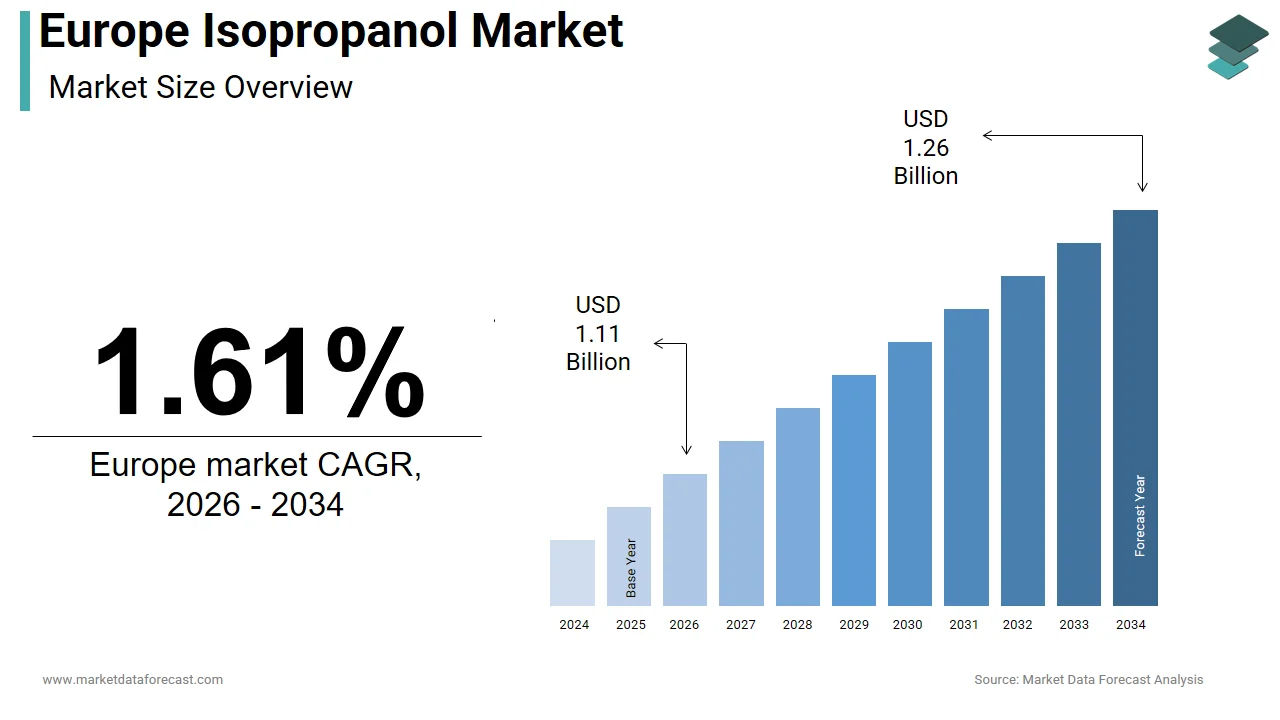
The Europe isopropanol market was valued at USD 1.09 billion in 2025, is estimated to reach USD 1.11 billion in 2026, and is projected to reach USD 1.26 billion by 2034, growing at a CAGR of 1.61% from 2026 to 2034. Market growth is driven by steady demand from pharmaceutical, cosmetics, and industrial cleaning applications. Isopropanol is widely used as a solvent, disinfectant, and intermediate chemical, making it essential across multiple industries. The market is supported by consistent demand in the healthcare and personal care sectors, along with increasing usage in electronics cleaning and chemical processing. However, moderate growth reflects market maturity and stable consumption patterns across Europe.
Key Market Trends
- Steady demand from pharmaceutical and healthcare applications.
- Increasing use of disinfectants and sanitization products.
- Growing application in electronics and industrial cleaning.
- Stable demand from the cosmetics and personal care industries.
- Focus on efficient and sustainable production processes.
Segmental Insights
- Based on grade type, the technical grade segment dominated the Europe isopropanol market by capturing 44.9% share in 2025, driven by its widespread industrial usage.
- Based on the manufacturing process, the direct hydration of the propylene segment held the largest share of 59.4% in 2025, supported by cost efficiency and established production methods.
- Based on primary function, the dissolving agent segment led the market with 36.3% share in 2025, due to its extensive use as a solvent across industries.
Regional Insights
The Europe isopropanol market shows stable demand across key countries due to industrial and healthcare applications.
- Germany led the regional market in 2025 with 23.9% share, supported by its strong chemical manufacturing base.
- France held the second-largest share, driven by its robust pharmaceutical and cosmetics industries.
- The United Kingdom is expected to witness a promising CAGR during the forecast period due to increasing demand in healthcare and industrial applications.
Competitive Landscape
The Europe isopropanol market is moderately competitive, with the presence of major chemical manufacturers focusing on production efficiency and supply chain optimization. Companies are investing in sustainable production methods and expanding their product portfolios to meet diverse industrial needs.
Prominent companies operating in the Europe isopropanol market include Dow Chemical Company, Exxon Mobil Corporation, Shell plc, Mitsui Chemicals, Inc., Tokuyama Corporation, LG Chem Ltd., Perrigo Company plc, Sasol Limited, and LyondellBasell Industries N.V.
 Download Free Sample Report
Europe Isopropanol Market Size
The Europe isopropanol market was valued at USD 1.09 billion in 2025, is estimated to reach USD 1.11 billion in 2026, and is projected to reach USD 1.26 billion by 2034, growing at a CAGR of 1.61% from 2026 to 2034.
Isopropanol is isopropyl alcohol and a versatile organic solvent widely utilized across pharmaceutical, cosmetic, industrial cleaning, and chemical synthesis sectors. This clear colourless liquid with a strong odour serves as a critical intermediate in the manufacture of acetone and various esters. The market dynamics are heavily influenced by regulatory frameworks governing chemical safety and environmental sustainability within the European Union. As per the European Chemicals Agency, isopropanol is registered under the Registration, Evaluation, Authorisation and Restriction of Chemicals regulation, ensuring strict compliance with health and safety standards. The region’s robust pharmaceutical industry relies extensively on isopropanol for disinfection and sterilization processes. According to the European Federation of Pharmaceutical Industries and Associations, the pharmaceutical sector in Europe is a major employer and revenue generator, which is driving consistent demand for high-purity solvents. Furthermore, the personal care industry utilizes isopropanol in cosmetics and hygiene products due to its rapid evaporation and antimicrobial properties. As per Eurostat, the chemical industry is recognized as one of the largest manufacturing sectors in the European Union, contributing significantly to the regional economy. The shift towards bio-based feedstocks and green chemistry initiatives also shapes production methods. Manufacturers are increasingly adopting sustainable practices to align with the European Green Deal objectives. The interplay between industrial demand, regulatory compliance, and sustainability goals defines the current landscape of the isopropanol market in Europe.
MARKET DRIVERS
Surging Demand from Pharmaceutical and Healthcare Sectors
The pharmaceutical and healthcare sectors are primarily contributing to the growth of the Europe isopropanol market due to the critical need for effective disinfectants and solvents in drug manufacturing. Isopropanol is extensively used as an antiseptic for skin preparation before injections and surgeries, as well as a cleaning agent for medical equipment. The rising awareness of hygiene and infection control, particularly following recent global health crises, has solidified its role in healthcare protocols. As per the World Health Organization, hand hygiene using alcohol based rubs is emphasized as a cornerstone of infection prevention, with isopropanol being a key ingredient in many formulations. The European pharmaceutical industry continues to expand, with increased investment in research and development activities. According to the European Commission, the EU is recognized as the world’s largest exporter of pharmaceutical products, driving strong demand for high-purity isopropanol in sterilization and synthesis processes. Additionally, the aging population in Europe increases the demand for healthcare services and pharmaceutical products, further boosting consumption. The stringent regulatory requirements for sterility in pharmaceutical manufacturing ensure that isopropanol remains indispensable. Hospitals, clinics, and pharmaceutical manufacturing facilities maintain substantial inventories of isopropanol to meet operational needs. The reliability of supply chains and adherence to quality standards are paramount for these critical applications.
Expansion of Personal Care and Cosmetic Industries
The expansion of the personal care and cosmetic industries significantly drives the demand for isopropanol in Europe, which is further fuelling the regional market expansion. Isopropanol is a common ingredient in various personal care products, including hand sanitizers, lotions, hair sprays, and nail polish removers, due to its solvent properties and ability to enhance product texture. The European cosmetic market is one of the largest globally, characterized by continuous innovation and high consumer spending. As per Statista, the Beauty and Personal Care market in Europe is projected to generate substantial revenue, reflecting strong consumer interest in grooming and hygiene products. Isopropanol’s rapid evaporation rate makes it ideal for products that require quick drying, such as deodorants and perfumes. Furthermore, the trend towards natural and organic cosmetics has led to the formulation of products that utilize isopropanol as a clean and efficient solvent. The European Cosmetics Regulation ensures that all ingredients, including isopropanol, meet strict safety criteria, fostering consumer trust. Manufacturers are increasingly focusing on sustainable sourcing and eco-friendly packaging, aligning with the preferences of environmentally conscious consumers. The rise of e-commerce has also facilitated the distribution of personal care products, expanding market reach. Brands are launching new product lines that emphasize hygiene and wellness, further integrating isopropanol into their formulations.
MARKET RESTRAINTS
Stringent Environmental Regulations and Volatile Organic Compound Limits
Stringent environmental regulations regarding volatile organic compounds pose a significant restraint on the Europe isopropanol market. Isopropanol is classified as a volatile organic compound, and its emissions are subject to strict controls under European Union directives aimed at improving air quality and reducing environmental impact. The Industrial Emissions Directive mandates that industrial facilities implement best available techniques to minimize emissions of volatile organic compounds, including isopropanol. As per the European Environment Agency, compliance with these regulations requires significant investment in emission control technologies and process modifications, increasing operational costs for manufacturers. Companies must monitor and report their emissions regularly, adding administrative burdens. The push towards green chemistry encourages the substitution of traditional solvents with less harmful alternatives, potentially reducing the demand for isopropanol in certain applications. Additionally, the REACH regulation imposes restrictions on the use of certain chemicals, requiring extensive testing and registration processes. These regulatory hurdles can delay product launches and increase time to market. Small and medium-sized enterprises may struggle to bear the costs associated with compliance, limiting their competitiveness. The ongoing tightening of environmental standards necessitates continuous adaptation and innovation from market participants. Failure to comply can result in hefty fines and reputational damage.
Volatility in Raw Material Prices and Supply Chain Disruptions
Volatility in raw material prices and supply chain disruptions present major restraints to the Europe isopropanol market. Isopropanol is primarily produced through the hydration of propylene, a derivative of crude oil and natural gas. Fluctuations in global energy prices directly impact the cost of propylene and subsequently isopropanol. As per the International Energy Agency, energy markets have experienced instability due to geopolitical tensions and supply chain bottlenecks, leading to unpredictable raw material costs. This price volatility affects profit margins for manufacturers and creates uncertainty for buyers. Supply chain disruptions, such as those caused by logistical challenges or plant maintenance, can lead to shortages and delivery delays. The European chemical industry relies on integrated supply chains, and any disruption in one part of the chain can have cascading effects. According to the European Chemical Industry Council, the sector faces ongoing challenges related to energy availability and cost competitiveness compared to other regions. These factors hinder long-term planning and investment decisions. Companies may hesitate to expand capacity or enter new markets due to the unpredictability of input costs. Additionally, the dependence on imported raw materials exposes the market to external shocks. Mitigating these risks requires diversification of supply sources and strategic stockpiling, which can be capital-intensive. The inherent instability in raw material markets thus constrains the consistent growth and profitability of the isopropanol sector in Europe.
MARKET OPPORTUNITIES
Development of Bio-Based Isopropanol Production Technologies
The development of bio-based isopropanol production technologies offers significant opportunities for the Europe isopropanol market. As industries strive to reduce their carbon footprint and adhere to sustainability goals, there is growing interest in renewable alternatives to fossil fuel-derived chemicals. Bio-based isopropanol is produced from biomass feedstocks such as corn, sugarcane, or cellulosic materials, offering a lower environmental impact. As per the European Bioplastics Association, production capacity for bio-based plastics and chemicals is expanding in Europe, driven by policy support and consumer demand. Governments are providing incentives for the adoption of green technologies, including grants and tax benefits for bio-based production facilities. The European Green Deal aims to make Europe the first climate-neutral continent by 2050, encouraging the transition to sustainable industrial practices. Companies investing in bio-based isopropanol can differentiate themselves in the market and appeal to environmentally conscious customers. Collaborations between research institutions and industry players are accelerating the commercialization of these technologies. According to the Joint Research Centre of the European Commission, advancements in biotechnology are making bio-based production more cost-competitive. The potential for circular economy models, where waste biomass is converted into valuable chemicals, further enhances the appeal.
Growth in Electronics and Semiconductor Manufacturing Cleaning Applications
The growth in electronics and semiconductor manufacturing presents a lucrative opportunity for the Europe isopropanol market. Isopropanol is widely used as a cleaning agent in the production of semiconductors, printed circuit boards, and electronic components due to its ability to remove flux residues and contaminants without leaving traces. The European semiconductor industry is experiencing renewed growth, supported by initiatives such as the European Chips Act, which aims to strengthen the region’s semiconductor ecosystem. As per the European Commission, the act seeks to expand Europe’s global semiconductor market share by 2030, driving substantial investments in fabrication facilities. These new facilities require high-purity isopropanol for precise cleaning processes essential for maintaining product quality and yield. The increasing complexity of electronic devices and the miniaturization of components necessitate rigorous cleaning standards, further boosting demand. Additionally, the expansion of electric vehicle production in Europe, which relies heavily on advanced electronics, contributes to this trend. According to the European Automobile Manufacturers Association, the shift towards electrification is accelerating, creating a ripple effect on the supply chain for electronic components. Manufacturers of isopropanol can capitalize on this demand by offering specialized high-purity grades tailored to the electronics industry.
MARKET CHALLENGES
Fluctuating Energy Costs Impacting Production Competitiveness
A major challenge facing the Europe isopropanol market is the fluctuating energy costs, which significantly impact production competitiveness. The production of isopropanol is energy-intensive, requiring substantial amounts of heat and electricity for processes such as propylene hydration and distillation. As per Eurostat, energy prices in the European Union have shown considerable volatility in recent years, influenced by geopolitical events and supply constraints. High energy costs erode profit margins for manufacturers, making it difficult to compete with producers in regions with lower energy expenses. The European chemical industry has expressed concerns about the long term viability of energy-intensive operations in the region. According to the European Chemical Industry Council, energy costs are a key determinant of competitiveness, and sustained high prices may lead to production cuts or relocation of facilities. This uncertainty discourages investment in new capacity and innovation. Manufacturers must implement energy efficiency measures to mitigate costs, but these require upfront capital expenditure. The disparity in energy prices across European countries also creates an uneven playing field, with some nations offering more favorable conditions than others.
Competition from Alternative Solvents and Substitutes
Competition from alternative solvents and substitutes poses a significant challenge to the Europe isopropanol market. Various other solvents, such as ethanol, acetone, and methyl ethyl ketone, offer similar properties and can replace isopropanol in many applications. The choice of solvent often depends on cost, availability, and specific performance requirements. As per the American Chemistry Council, the global solvent market is highly fragmented, with numerous alternatives competing for market share. In the cleaning and disinfection sector, ethanol is a direct competitor, often preferred due to its perceived safety profile and renewable sourcing options. In industrial applications, acetone, which is also a derivative of isopropanol production, can sometimes serve as a substitute depending on the process. The development of new green solvents, such as those derived from biomass or designed to be biodegradable, further intensifies competition. According to the Organisation for Economic Co-operation and Development, regulatory pressures are driving the search for safer and more sustainable solvent alternatives. Customers are increasingly evaluating the total cost of ownership, including disposal and environmental impact, when selecting solvents. This dynamic environment requires isopropanol producers to continuously demonstrate the value proposition of their product. Innovation in application-specific formulations and improved sustainability credentials are essential to retain market share.
REPORT COVERAGE
| REPORT METRIC | DETAILS |
| Market Size Available | 2025 to 2034 |
| Base Year | 2025 |
| Forecast Period | 2026 to 2034 |
| Segments Covered | By Grade Type, Manufacturing Process, Primary Function, Application, and Country. |
| Various Analyses Covered | Global, Regional, and Country-Level Analysis, Segment-Level Analysis, Drivers, Restraints, Opportunities, Challenges; PESTLE Analysis; Porter’s Five Forces Analysis, Competitive Landscape, Analyst Overview of Investment Opportunities |
| Countries Covered | UK, France, Spain, Germany, Italy, Russia, Sweden, Denmark, Switzerland, Netherlands, Turkey, Czech Republic, and the Rest of Europe. |
| Market Leaders Profiled | Dow Chemical Company, Exxon Mobil Corporation, Shell PLC, Mitsui Chemicals, Inc, Tokuyama Corporation, LG Chem Ltd., Perrigo Company plc, Sasol Limited, Lyondell Basell Industries N.V. |
SEGMENTAL ANALYSIS
By Grade Type Insights
The technical grade segment dominated the market and accounted for the leading share of 44.9% of the European market in 2025. The growth of the technical grade segment is majorly credited to its extensive use as a solvent and intermediate in industrial applications, including the production of acetone, cleaning agents, and chemical synthesis. The cost-effectiveness of technical grade isopropanol makes it the preferred choice for large-scale industrial processes where ultra-high purity is not required. As per the European Chemical Industry Council, the chemical sector remains a cornerstone of the European economy, with significant output in basic organic chemicals. Technical grade isopropanol is essential in the manufacturing of paints, coatings, and inks, which are widely used in construction and automotive industries. According to Eurostat, the production of chemicals and chemical products in the European Union represents a substantial portion of industrial turnover, ensuring steady demand for raw materials like technical grade isopropanol. The versatility of this grade allows it to be used in various formulations, from degreasers to extraction solvents. Its availability in bulk quantities supports continuous industrial operations. Furthermore, the recovery and recycling of isopropanol in industrial settings are more feasible with technical grades, aligning with circular economy principles. The robust infrastructure for handling and distributing industrial chemicals in Europe facilitates the widespread adoption of technical-grade isopropanol. Manufacturers prioritize this grade for its balance of performance and affordability, sustaining its market leadership. The consistent growth of end-use industries such as automotive and construction further reinforces the demand for technical-grade isopropanol across the region.
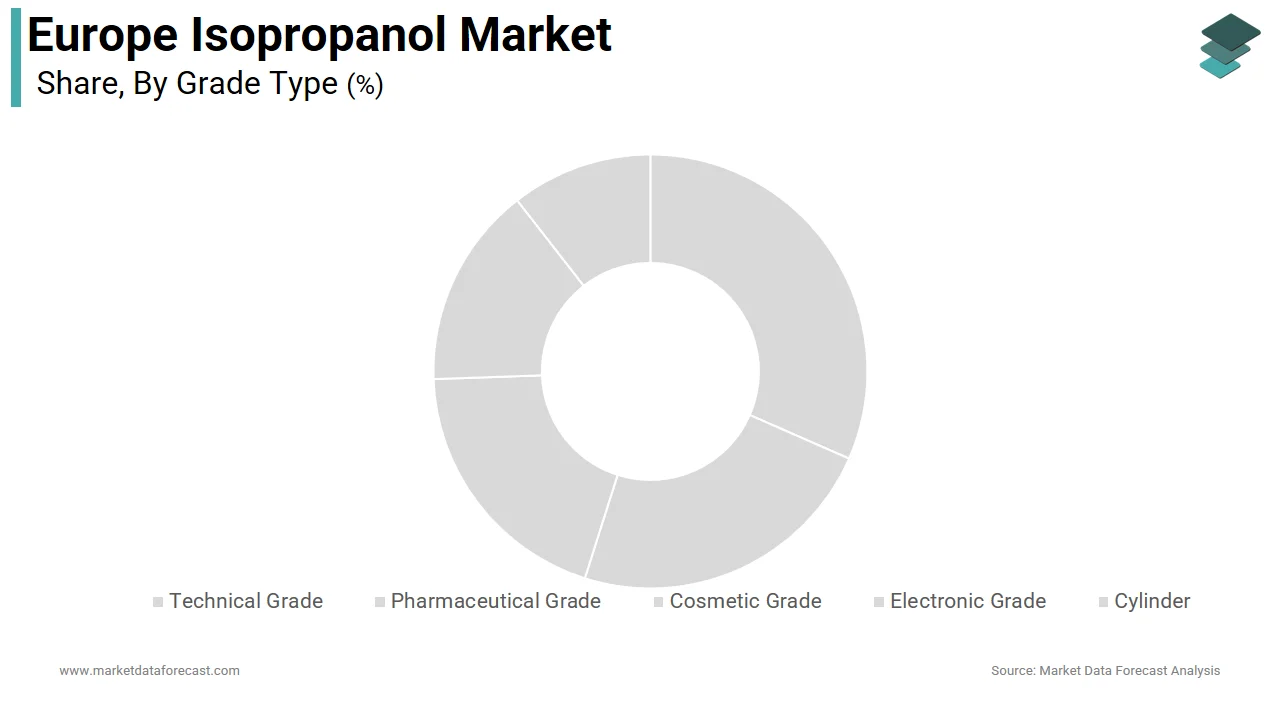
On the other end, the electronic grade segment is the fastest growing category in the Europe isopropanol market and is estimated to grow at a CAGR of 7.4% over the forecast period, owing to the stringent requirements of the semiconductor and electronics manufacturing industries for ultra-high purity solvents. Electronic grade isopropanol is critical for cleaning silicon wafers and removing photoresists without leaving residues that could compromise device performance. As per the European Semiconductor Industry Association, the demand for semiconductors in Europe is rising, driven by the automotive and industrial sectors. The European Chips Act aims to strengthen the region’s semiconductor ecosystem, leading to increased investments in fabrication facilities. These facilities require vast amounts of high-purity isopropanol to maintain yield and quality standards. According to the International Technology Roadmap for Semiconductors, the miniaturization of electronic components necessitates stricter cleanliness protocols, boosting the demand for electronic-grade solvents. The shift towards electric vehicles and fifth-generation telecommunications infrastructure further amplifies the need for advanced electronic components. Manufacturers of electronic-grade isopropanol are investing in advanced purification technologies to meet these rigorous specifications. The high-value-added nature of this segment attracts significant research and development efforts. Additionally, the localization of supply chains for critical materials enhances the strategic importance of domestic production. The combination of technological advancement and policy support drives the accelerated growth of the electronic grade segment, making it a key focus area for market participants.
By Manufacturing Process Insights
The direct hydration of propylene process segment occupied 59.4% of the regional market share in 2025. The leading position of this segment in the European market is attributed to its operational efficiency, lower capital investment requirements, and reduced environmental impact compared to indirect methods. Direct hydration involves the reaction of propylene with water in the presence of a solid acid catalyst, producing isopropanol in a single step. As per the American Chemistry Council, direct hydration is preferred globally due to its simplicity and higher selectivity. In Europe, strict environmental regulations favor processes that minimize waste and energy consumption. The direct hydration process generates fewer byproducts and requires less corrosion-resistant equipment, lowering maintenance costs. According to the European Commission’s Best Available Techniques reference document for large volume organic chemicals, direct hydration is recognized as an efficient method for alcohol production. The availability of propylene from steam crackers in Europe supports the feedstock supply for this process. Major chemical producers in the region have optimized their direct hydration plants to maximize yield and minimize downtime. The process’s ability to operate at moderate pressures and temperatures enhances safety and operational stability. Furthermore, the integration of direct hydration units with existing petrochemical complexes improves overall site efficiency. The continuous improvement in catalyst technology has further enhanced the performance of direct hydration processes. These factors collectively sustain the leadership of the direct hydration method in the European isopropanol market, ensuring its prevalence in new capacity additions.
On the other side, the catalytic hydrogenation of acetone process segment is estimated to register a CAGR of 6.4% over the forecast period, owing to the increasing availability of acetone as a byproduct of phenol production and the desire for sustainable production routes. Catalytic hydrogenation converts acetone to isopropanol using hydrogen gas and a metal catalyst that offers a flexible production option that can adjust to market demands for both chemicals. As per the European Phenol Producers Association, the demand for phenol, used in resins and plastics, drives acetone production, creating a surplus that can be converted to isopropanol. This integrated approach optimizes resource utilization and reduces waste. The process is particularly attractive in regions with established phenol industries, such as Germany and the Netherlands. According to the Joint Research Centre of the European Commission, chemical recycling and integration are key strategies for achieving circular economy goals. Catalytic hydrogenation allows manufacturers to balance the production of acetone and isopropanol based on market conditions, enhancing economic resilience. Advances in catalyst efficiency have improved conversion rates and reduced energy consumption. The process also benefits from the growing interest in bio-based acetone, which can be hydrogenated to produce bio-based isopropanol. This alignment with sustainability trends and operational flexibility drives the rapid adoption of catalytic hydrogenation. The ability to leverage existing infrastructure and feedstock availability further supports the growth of this segment in the European market.
By Primary Function Insights
The dissolving agent segment led the market by capturing 36.3% of the European market share in 2025. The dominance of the dissolving agent segment in the European market is driven by the versatile solvent properties of isopropanol, which make it indispensable in various industrial and consumer applications. Isopropanol effectively dissolves a wide range of nonpolar compounds, including oils, resins, and gums, making it ideal for use in paints, coatings, inks, and adhesives. As per the European Coatings Industry Federation, the coatings sector in Europe is a major consumer of solvents, driven by construction and automotive activities. Isopropanol’s rapid evaporation rate and low toxicity compared to other solvents enhance its appeal in formulation chemistry. According to Eurostat, the manufacturing of paints and varnishes remains a significant industrial activity in the European Union, supporting steady demand for effective solvents. The pharmaceutical industry also utilizes isopropanol as a solvent for extracting active ingredients and preparing formulations. Its compatibility with water and organic substances allows for diverse application possibilities. The printing industry relies on isopropanol for cleaning presses and adjusting ink viscosity. The textile industry uses it for dyeing and finishing processes. The broad spectrum of applications ensures that the dissolving agent function remains the primary driver of isopropanol consumption. Manufacturers continue to innovate in formulation techniques to optimize solvent performance, further cementing their role. The consistent growth of end-use industries sustains the dominance of this segment in the market.
However, the disinfectant segment is the fastest growing function in the Europe isopropanol market and is estimated to witness a CAGR of 7.7% over the forecast period due to the growing hygiene awareness and the critical role of isopropanol in infection control. Isopropanol is a key ingredient in hand sanitizers, surface disinfectants, and medical wipes due to its effective antimicrobial properties. As per the World Health Organization, alcohol based hand rubs are recommended for hand hygiene in healthcare settings, driving institutional demand. The post pandemic era has ingrained hygiene practices in daily life, leading to sustained consumer demand for disinfectant products. According to the European Centre for Disease Prevention and Control, maintaining high standards of hygiene is emphasized as essential for preventing healthcare-associated infections. The healthcare sector, including hospitals and clinics, maintains large stocks of isopropanol-based disinfectants. The personal care industry has expanded its range of hygiene products, incorporating isopropanol for its quick drying and non-irritating characteristics. Regulatory approvals for isopropanol as a biocidal active substance in the European Union ensure its safe and effective use. The rise of public health initiatives and government mandates for hygiene in public spaces further boosts demand. Manufacturers are developing innovative delivery systems, such as foams and gels, to enhance user experience. The ongoing emphasis on health and safety ensures that the disinfectant segment continues to expand rapidly, outpacing other functional categories.
COUNTRY LEVEL ANALYSIS
Germany Isopropanol Market Analysis
Germany occupied the leading position in the Europe isopropanol market in 2025 with 23.9% of the regional market share. This leading position of Germany in the European market is attributed to the country’s robust chemical and pharmaceutical industries, which are major consumers of isopropanol. As per the Federal Statistical Office of Germany, the chemical industry is recognized as one of the largest manufacturing sectors, contributing significantly to the national economy. Germany is home to several major chemical producers who utilize isopropanol as a solvent and intermediate. The pharmaceutical sector in Germany is also highly developed, driving demand for high-purity grades for disinfection and synthesis. According to the German Chemical Industry Association, the sector invests heavily in research and development, fostering innovation in chemical applications. The automotive industry, another key pillar of the German economy, uses isopropanol in cleaning and coating processes. The country’s strict environmental regulations encourage the adoption of efficient and sustainable production methods. Germany’s central location in Europe facilitates efficient distribution networks. The presence of advanced manufacturing facilities and a skilled workforce supports high-value-added applications. Government initiatives promoting industrial sustainability align with the trends in green chemistry. The combination of industrial strength, regulatory framework, and innovation capacity ensures that Germany remains the dominant force in the European isopropanol market.
France Isopropanol Market Analysis
France held the second largest share of the Europe isopropanol market in 2025. The French market is characterized by a strong pharmaceutical and cosmetics industry, which are significant driver of isopropanol demand. As per INSEE, the pharmaceutical industry in France is identified as a key exporter and innovator, requiring substantial volumes of high-purity solvents. The cosmetics sector, renowned for its luxury brands, utilizes isopropanol in various personal care products. According to the French Ministry of Economy, the beauty and personal care industry contributes notably to the trade balance. France’s commitment to health and hygiene standards drives the use of isopropanol in healthcare settings. The country’s regulatory framework emphasizes safety and environmental protection, influencing production and usage practices. The presence of major research institutions supports the development of new applications for isopropanol. France’s strategic focus on sustainable chemistry encourages the adoption of bio-based alternatives. The tourism and hospitality sectors also contribute to demand through hygiene and cleaning requirements. The well-developed infrastructure for chemical distribution ensures a reliable supply.
United Kingdom Isopropanol Market Analysis
The United Kingdom is estimated to showcase a promising CAGR in the Europe isopropanol market during the forecast period. The advanced healthcare system and substantial pharmaceutical industry are propelling the UK market expansion. As per the Office for National Statistics, the healthcare sector is recognized as a major employer and spender, generating consistent demand for disinfectants and solvents. The UK’s pharmaceutical industry is a global leader in research and development, requiring high-purity isopropanol for drug manufacturing. According to the Association of the British Pharmaceutical Industry, the sector invests heavily in innovation, supporting demand for specialized chemicals. The personal care and cosmetics market in the UK is also vibrant, with consumers seeking high-quality hygiene products. The exit from the European Union has introduced some regulatory adjustments, but the market has adapted effectively. The UK’s focus on life sciences and biotechnology creates opportunities for advanced applications of isopropanol. The government’s emphasis on public health and infection control reinforces demand for disinfectants.
Italy Isopropanol Market Analysis
Italy is anticipated to account for a prominent share of the Europe isopropanol market during the forecast period, owing to a diverse manufacturing base, including pharmaceuticals, cosmetics, and industrial cleaning. As per the Italian National Institute of Statistics, the chemical and pharmaceutical sectors are recognized as key contributors to industrial output. Italy is known for its high-quality cosmetics and personal care products, which utilize isopropanol in various formulations. According to Confindustria, there is a strong focus on innovation and export orientation. The pharmaceutical industry in Italy is robust, with significant production of generic and branded medicines. The industrial cleaning sector also drives demand, particularly in the automotive and machinery industries. Italy’s strategic location in the Mediterranean facilitates trade and distribution. Regulatory compliance with European standards ensures product safety and environmental protection.
Spain Isopropanol Market Analysis
Spain is estimated to showcase a healthy CAGR in the Europe isopropanol market during the forecast period due to the expanding pharmaceutical and personal care sectors. As per the National Statistics Institute of Spain, the pharmaceutical industry is identified as a key strategic sector, with increasing investments in production and research. The personal care market in Spain is vibrant, with consumers prioritizing hygiene and wellness. According to the Spanish Confederation of Business Organizations, the cosmetic and hygiene sectors are showing resilient growth. The tourism industry, a major component of the Spanish economy, drives demand for cleaning and disinfection products in hotels and public spaces. The industrial sector, including automotive and manufacturing, also contributes to isopropanol consumption. Spain’s focus on modernizing its industrial base supports the adoption of advanced chemical solutions. The government’s initiatives to promote sustainability and innovation encourage the use of efficient solvents. The geographic position of Spain serves as a gateway to Latin American markets, offering export opportunities.
COMPETITIVE LANDSCAPE
The competition in the Europe isopropanol market is characterized by the presence of established multinational chemical companies and regional producers. Leading players compete based on product quality, reliability, and sustainability credentials. The market is moderately consolidated with key companies holding significant influence over pricing and supply dynamics. Competition is intense in high-value segments such as pharmaceuticals and electronics, where purity standards are stringent. Manufacturers invest in research and development to innovate production processes and reduce environmental footprints. Price competition is moderate as customers prioritize consistent supply and technical support over the lowest cost. The threat of new entrants is limited due to high capital requirements and regulatory barriers. Substitute products pose a challenge, prompting suppliers to highlight the unique benefits of isopropanol. Strategic collaborations with raw material providers enhance supply chain resilience. Companies that successfully integrate sustainability into their business models gain favor with regulators and consumers. Continuous improvement in operational efficiency remains crucial for maintaining market leadership and profitability in this mature yet evolving market landscape.
KEY MARKET PLAYERS
The leading companies operating in the Europe isopropanol market include:
- Dow Chemical Company
- Exxon Mobil Corporation
- Shell plc
- Mitsui Chemicals, Inc.
- Tokuyama Corporation
- LG Chem Ltd.
- Perrigo Company plc
- Sasol Limited
- LyondellBasell Industries N.V.
TOP PLAYERS IN THE MARKET
- Shell plc is a global energy and petrochemical company with a significant presence in the Europe isopropanol market. The company produces high-quality isopropanol through efficient direct hydration processes at its integrated manufacturing sites. Shell leverages its extensive supply chain network to ensure reliable delivery to customers across various industries, including pharmaceuticals and cosmetics. Recently, the company has focused on enhancing operational efficiency and reducing carbon emissions in its chemical production facilities. Shell actively collaborates with customers to develop sustainable solutions and optimize product applications. Their commitment to safety and environmental stewardship strengthens their reputation as a trusted supplier. By investing in advanced technologies and maintaining strict quality standards, Shell ensures consistent product performance. This strategic focus on sustainability and reliability reinforces their position in the European market.
- Sasol Limited is a leading international chemical and energy company that plays a vital role in the Europe isopropanol market. The company utilizes its proprietary technology to produce isopropanol with high purity and consistency. Sasol serves diverse sectors such as healthcare, personal care, and industrial cleaning with tailored solutions. They have recently expanded their distribution capabilities in Europe to improve customer service and market reach. Sasol emphasizes innovation and sustainability by developing bio-based alternatives and improving process efficiency. Their strong research and development team drives continuous improvement in product quality and application performance. The company engages in strategic partnerships to enhance value creation for stakeholders. By focusing on customer-centric solutions and operational excellence, Sasol maintains a competitive edge. Their dedication to responsible chemistry supports long-term growth in the region.
- Dow Inc. is a major materials science company with a robust portfolio in the Europe isopropanol market. The company provides high-performance isopropanol products for critical applications in electronics, pharmaceuticals, and consumer goods. Dow leverages its global expertise and local presence to deliver innovative solutions that meet evolving customer needs. They have recently invested in digitalization and automation to enhance manufacturing efficiency and product traceability. Dow prioritizes sustainability by integrating circular economy principles into their operations and product design. The company collaborates with industry partners to advance safe and responsible chemical management. Their comprehensive technical support services help customers optimize formulations and processes. By combining scientific expertise with customer collaboration, Dow strengthens its market position. Their focus on innovation and sustainability ensures they remain a key player in the European isopropanol landscape.
TOP STRATEGIES USED BY KEY MARKET PARTICIPANTS
Key players in the Europe isopropanol market primarily focus on operational efficiency and sustainability to maintain competitiveness. Companies invest in advanced production technologies such as direct hydration to reduce costs and environmental impact. Strategic partnerships with downstream industries enable manufacturers to develop customized solutions and secure long-term contracts. Expansion of distribution networks ensures a reliable supply and enhances customer service across the region. Manufacturers emphasize product quality and purity to meet stringent regulatory standards in the pharmaceutical and electronic sectors. Innovation in bio-based production methods aligns with green chemistry trends and consumer preferences. Digitalization of supply chains improves transparency and responsiveness to market changes. Companies also engage in rigorous compliance with environmental regulations to mitigate risks. These strategies enable participants to adapt to dynamic market conditions and drive sustainable growth while meeting diverse customer requirements effectively.
MARKET SEGMENTATION
This research report on the Europe isopropanol market has been segmented and sub-segmented into the following categories.
By Grade Type
- Technical Grade
- Direct Solvent Grade
- Chemical Derivatives Grade
- Pharmaceutical Grade
- Cosmetic Grade
- Electronic Grade
By Manufacturing Process
- Indirect Hydration of Propylene
- Direct Hydration of Propylene
- Catalytic Hydrogenation of Acetone
By Primary Function
- Dissolving Agent
- Cleaning & Drying Agent
- Disinfectant
- Anti-freezing Agent
- Synthetic Flavoring Adjuvant
- Antiseptics
- Anti-adhesives
- Others
By Application
- Pharmaceuticals
- Homecare
- Cosmetic & Personal Care
- Chemical Intermediates
- Electronics
- Others
By Country
- United Kingdom
- France
- Spain
- Germany
- Italy
- Russia
- Sweden
- Denmark
- Switzerland
- Netherlands
- Rest of Europe