Europe Laboratory Informatics Market Size, Share, Trends and Growth Forecasts Research Report, Segmented By Product Type, Deployment Model, End-User and Country – Industry Analysis (2026 to 2034)
Market Size, 2025
$1,060.15 MnMarket Estimate, 2026
$1,149.20 MnMarket Forecast, 2034
$2,191 MnCAGR, 2026–2034
8.40%Europe Laboratory Informatics Market Report Summary
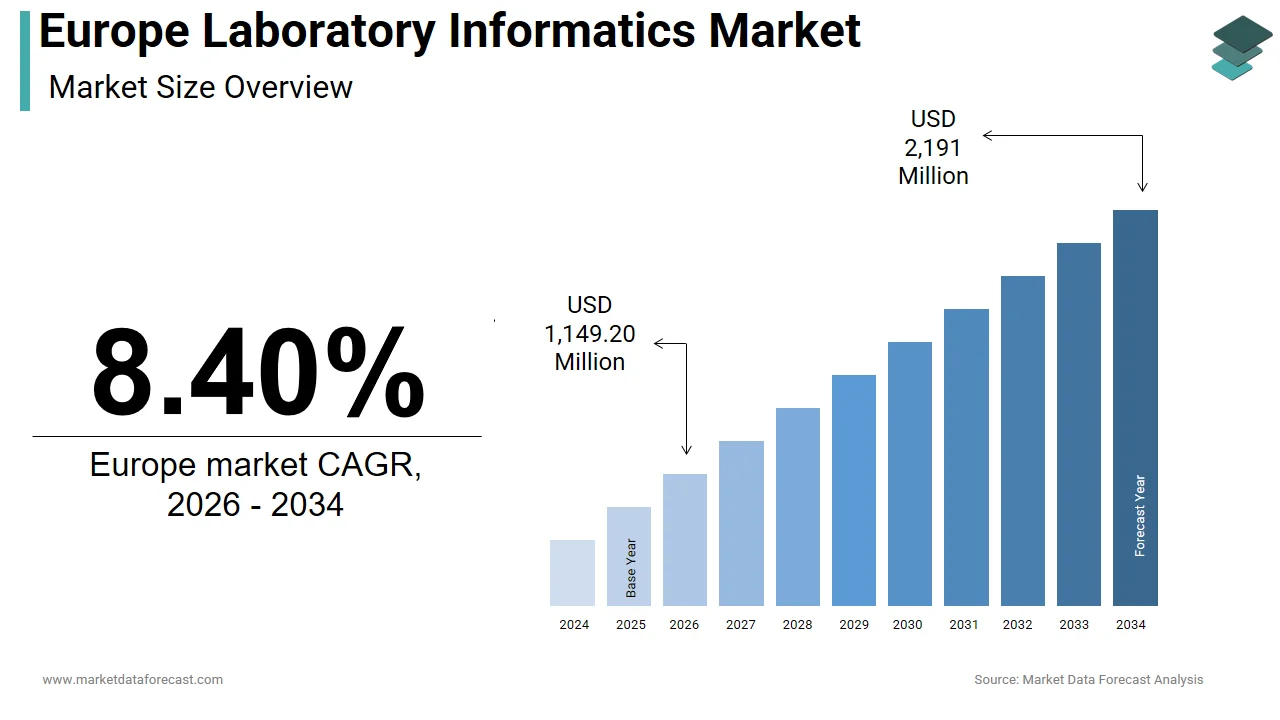
The Europe laboratory informatics market reached USD 1,060.15 million in 2025, is estimated to reach USD 1,149.20 million in 2026, and is projected to reach USD 2,191 million by 2034, growing at a strong CAGR of 8.40% from 2026 to 2034. Market growth is driven by rising digitization across laboratory ecosystems, stricter regulatory mandates for electronic documentation, and increasing adoption of advanced solutions such as LIMS, ELN, and SDMS. Strong compliance requirements under EU-based clinical, diagnostic, and research regulations continue to accelerate the adoption of validated informatics platforms. Growing scientific data volumes, cross-institution collaborations, and expansion of public research programs further support market growth across Europe.
Key Market Trends
- Strong shift from manual workflows to digitized laboratory data capture and automation.
- Rising adoption of FAIR-compliant data management practices in academia and funded research.
- Integration of AI-driven analytics into informatics platforms for automated interpretation of scientific data.
- Increasing use of cloud-connected systems to support distributed testing environments.
- Rapid modernization of LIMS and ELN platforms to support audit trails, traceability, and compliance with EU regulations.
Segmental Insights
- Based on product type, the LIMS segment dominated the Europe laboratory informatics market in 2024 with a 42.5% share. Its dominance is driven by its role in sample lifecycle tracking, reagent traceability, and audit-ready documentation. Hospitals, CROs, and regulated R&D environments deploy LIMS to meet Annex 11 and IVDR requirements, making it the most widely implemented platform across Europe.
- Based on the deployment model, the on-premise segment held the largest share at 54.5% in 2024. High preference for on-premise systems is attributed to data sovereignty priorities, GMP documentation needs, integration with legacy instruments, and internal validation control. However, cloud adoption is rising rapidly as laboratories increasingly operate across multi-site environments.
- Based on end user, the pharma and biotech laboratories segment led the market with 38.8% share in 2024. This dominance is supported by the need to maintain electronic audit trails for clinical submissions, manage multi-site research workflows, and enable compliance with EMA-regulated documentation structures. High R&D activity in biologics, cell therapies, and diagnostics continues to drive segment leadership.
Regional Insights
The Europe laboratory informatics market is witnessing strong momentum across leading science-intensive economies, supported by research investments, modernization initiatives, and advanced regulatory frameworks.
- Germany accounted for the largest share at 24.4% in 2024, driven by strong biopharma presence, high adoption across national research institutes, and early digital transformation initiatives in lab environments.
- The United Kingdom remains a major contributor, supported by advanced clinical research networks, strong academic clusters, and wide adoption of validated electronic systems in life science environments.
- Switzerland serves as an innovation hub, driven by multinational pharma companies and high regulatory adherence.
- France continues to expand due to public sector-driven research digitization and standardized ELN deployment policies.
- The Netherlands is emerging strongly due to high compliance with FAIR principles, strong national interoperability frameworks, and central adoption of ELN platforms across universities.
Competitive Landscape
The Europe laboratory informatics market is characterized by established global software providers offering validated, regulatory-ready informatics systems, alongside specialized vendors serving academic and distributed research environments. Market leaders continue investing in AI-enabled automation, standardized data architecture, and seamless integration with laboratory instruments. Vendors with EU-based data hosting, stronger validation capabilities, and participation in cross-institution digitization programs continue to maintain a competitive advantage. Platform interoperability, adherence to GDPR, integration with national research infrastructures, and support for FAIR-aligned data structures remain key differentiators shaping the competitive landscape.
Prominent companies operating in the Europe laboratory informatics market include Thermo Fisher Scientific, Agilent Technologies, PerkinElmer, LabWare, Abbott Informatics, Waters Corporation, Autoscribe Informatics, LabVantage Solutions, Illumina, and Shimadzu.
Europe Laboratory Informatics Market Size
The Europe laboratory informatics market reached USD 1,060.15 million in 2025, is expected to grow to USD 1,149.20 million in 2026, and is anticipated to touch USD 2,191 million by 2034, at a CAGR of 8.40% from 2026 to 2034.
Laboratory informatics includes integrated digital systems that manage scientific data workflows across research, clinical, and industrial laboratories, including Laboratory Information Management Systems (LIMS), Electronic Lab Notebooks (ELN), and Scientific Data Management Systems (SDMS). These platforms ensure data integrity, regulatory compliance, and operational efficiency in environments where traceability and auditability are non-negotiable. The stringent regulatory frameworks, such as the EU Clinical Trials Regulation and the In Vitro Diagnostic Medical Devices Regulation, which mandate structured electronic documentation of experimental and diagnostic data, are driving the laboratory informatics market expansion in Europe. According to the European Medicines Agency, the EU Clinical Trials Information System (CTIS) has authorised several thousand clinical trials since its launch, including many in 2023, each requiring integrated informatics to manage subject data, sample tracking, and protocol adherence. Additionally, as per Eurostat, 2.15 million full‑time equivalent researchers in the EU in 2023, which is generating vast volumes of structured and unstructured data that demand a robust informatics infrastructure. According to the European Commission, a growing share of public research laboratories participates in cross‑border data‑sharing initiatives under the European Open Science Cloud, which requires standardized metadata and interoperable systems. Unlike generic data management, Europe’s laboratory informatics is defined by its fusion of scientific rigor, regulatory accountability, and commitment to open yet secure science.
MARKET DRIVERS
Mandatory Compliance with EU Clinical Trials and Diagnostic Regulations
The enforcement of harmonized regulatory standards across the European Union is primarily driving the growth of the laboratory informatics market in Europe. According to the European Medicines Agency (EMA), the EU Clinical Trials Regulation entered into application on 31 January 2022 and requires all trial sponsors to submit data through the centralized Clinical Trials Information System (CTIS) using structured electronic formats, which effectively eliminates paper‑based submissions. As per the European Clinical Research Infrastructure Network (ECRIN), this transition has compelled a majority of academic and commercial research sites in the EU to deploy validated LIMS and ELN platforms to ensure audit readiness. According to the European Commission’s guidance on the In Vitro Diagnostic Medical Devices Regulation (IVDR), diagnostic laboratories must maintain full traceability of testing procedures, reagent lots, and instrument calibrations, which is a requirement that has accelerated LIMS adoption in hospital and private testing facilities. As per the European Commission’s 2024 report, more than 120,000 IVD devices are now under stricter post‑market surveillance, with each requiring digital audit trails. These regulations transform laboratory informatics from an operational convenience into a legal prerequisite. Moreover, non‑compliance risks exclusion from EU funding programs such as Horizon Europe, which explicitly requires FAIR (Findable, Accessible, Interoperable, Reusable) data management plans.
Expansion of Publicly Funded Research Infrastructures Under Horizon Europe
The strategic investment in large-scale research ecosystems of Europe is fuelling demand for integrated laboratory informatics to enable data harmonization and cross-institutional collaboration, which is further boosting the laboratory informatics market expansion in Europe. According to the European Commission, Horizon Europe allocated €95.5 billion for 2021–2027, with more than 30% directed toward health, digital, and industrial research that generates complex experimental data. As per the European Commission’s 2023 Horizon Europe project database, over 3,200 collaborative research projects required participants to implement FAIR‑compliant data management systems, including LIMS and ELN. According to the EOSC Association, the European Open Science Cloud now connects over 170 research institutions across 23 member states, which requires standardized metadata schemas and API‑driven interoperability. As per national research councils such as Germany’s DFG and France’s ANR, grant disbursements are increasingly conditioned on the use of certified informatics platforms. According to the 1+ Million Genomes initiative, unified sample tracking and consent management across 21 countries is only achievable through enterprise‑grade LIMS. These coordinated science policies embed laboratory informatics at the core of Europe’s knowledge infrastructure and are transforming it from a lab‑level tool into a pillar of collective scientific progress.
MARKET RESTRAINTS
Fragmented Legacy Systems Hindering Interoperability Across Laboratories
A significant restraint in the Europe laboratory informatics market stems from the persistent use of outdated, siloed data systems that lack standardized interfaces and modern data architectures. According to the European Commission’s 2023 Research Infrastructure Survey, approximately 61% of public‑sector laboratories in Southern and Eastern Europe still rely on custom‑built or decade‑old LIMS that cannot exchange data with newer ELN or instrument platforms. As per the European Centre for Disease Prevention and Control (ECDC), 54% of national microbiology labs use multiple disconnected databases for pathogen tracking, which is delaying cross‑border outbreak responses. According to Eurostat, public research institutions in 12 EU member states operate with informatics budgets below 3% of total research expenditure, insufficient for system modernization. Consequently, even when new informatics solutions are procured, they must coexist with legacy architectures through fragile middleware, increasing maintenance costs and data integrity risks. This fragmentation undermines Europe’s vision of unified scientific data spaces and slows the adoption of next‑generation informatics capable of supporting AI‑driven discovery and real‑time collaboration.
Complex Validation Requirements for Regulated Laboratory Environments
The rigorous validation protocols mandated for laboratory informatics in regulated sectors impose substantial time and resource burdens that deter adoption, particularly among small and mid-sized laboratories, which further hinders the laboratory informatics market growth in Europe. According to the European Medicines Agency, any LIMS or ELN used in GxP environments must undergo full Annex 11‑compliant validation, a process that typically takes 6 to 18 months and requires specialized quality assurance personnel. As per the European Federation of Pharmaceutical Industries and Associations (EFPIA), only about 28% of SME biotechs in the EU possess in‑house validation expertise, forcing reliance on expensive third‑party consultants. According to the European Association of Hospital Pharmacists (EAHP), a 2024 survey found that 67% of hospital labs postponed ELN implementation due to validation complexity and audit risks. As per national competent authorities, divergent interpretations of validation scope persist. For example, Germany’s BfArM requires full revalidation for minor configuration changes, while Denmark’s Medicines Agency permits risk‑based approaches. This regulatory variability increases compliance uncertainty and discourages harmonized informatics deployment across the EU, especially among resource‑constrained organizations that prioritize immediate analytical output over long‑term data governance.
MARKET OPPORTUNITIES
Integration of Artificial Intelligence for Automated Data Curation and Analysis
The European laboratory informatics market is unlocking new value through the strategic incorporation of artificial intelligence to automate data extraction, annotation, and hypothesis generation from unstructured experimental records. According to the European Commission’s AI for Health initiative (2023), funded projects embed machine learning within ELN platforms to recognize patterns in microscopy images, spectroscopy outputs, and researcher notes, which transform raw data into structured knowledge. As per the European Bioinformatics Institute, AI‑enhanced SDMS can reduce manual curation time by up to 70% in proteomics and metabolomics workflows and accelerate publication and regulatory submission cycles. Pharmaceutical R&D companies such as Novo Nordisk and Sanofi are piloting natural language processing tools that auto‑tag experimental entries in ELNs with ontology terms from the European Health Data Space, ensuring semantic interoperability. As per the forthcoming EU AI Act, certain laboratory AI tools are classified as high‑risk, which paradoxically drives investment in compliant, transparent, and auditable AI modules within informatics platforms. These developments position laboratory informatics not just as a data repository but as an intelligent co‑pilot in scientific discovery, which is turning Europe’s regulatory rigor into a catalyst for trustworthy AI innovation that balances automation with accountability.
Growth of Decentralized and Point-of-Care Testing Requiring Cloud-Based Informatics
The proliferation of decentralized testing models across Europe is creating demand for scalable, cloud native laboratory informatics architectures, which is another promising opportunity for the European laboratory informatics market. According to the European Centre for Disease Prevention and Control (ECDC), the number of non‑traditional testing sites offering SARS‑CoV‑2 and influenza diagnostics grew significantly between 2022 and 2024, with each generating data that must feed into national surveillance systems. As per the European Commission’s Digital Health and Care Strategy, all point‑of‑care test results must be integrated into electronic health records within 24 hours, which is a requirement that has accelerated cloud LIMS adoption in primary care networks across countries such as the Netherlands and Portugal. According to the In Vitro Diagnostic Regulation (IVDR), rapid tests require real‑time lot traceability, compelling manufacturers to embed cloud‑connected data capture at the point of use. For instance, companies such as Roche and Abbott are partnering with informatics vendors to deploy secure, GDPR‑compliant cloud platforms that link decentralized analyzers to central quality control dashboards. This shift transforms laboratory informatics from a centralized back‑office function into a distributed network enabler, which ensures that Europe’s move toward accessible, patient‑centric diagnostics does not compromise data integrity or public health oversight.
MARKET CHALLENGES
Persistent Skills Gap in Bioinformatics and Data Stewardship
Europe faces a critical shortage of professionals who can bridge laboratory science with data management, impeding effective utilization of advanced informatics platforms. According to the European Centre for the Development of Vocational Training (CEDEFOP), the EU will require an additional 180,000 data stewards and bioinformaticians by 2027 to support FAIR data implementation in research and healthcare, yet fewer than 35,000 individuals currently hold relevant certifications. As per a 2024 survey by the European Federation of Laboratory Medicine (EFLM), 72% of hospital laboratories lack staff trained in metadata standardization or ontology mapping, and these skills are essential for ELN and LIMS optimization. According to the European University Association (EUA), only 11% of life‑science degree programs in the EU include mandatory courses in data governance or informatics. Consequently, even when laboratories invest in sophisticated platforms and they underutilize features such as automated audit trails or cross‑study querying due to knowledge gaps. This human capital shortfall not only delays return on investment but also increases compliance risk, as misconfigured systems may fail regulatory inspections. Until Europe builds a workforce fluent in both wet‑lab science and data architecture, the full potential of laboratory informatics will remain unrealized across public and private research domains.
Inconsistent Cross-National Data Governance Frameworks
Despite EU-level harmonization efforts, divergent national interpretations of data protection and research ethics create operational friction for laboratories deploying unified informatics systems across borders, which is further challenging the regional market expansion. According to the European Data Protection Board (EDPB), 19 member states have issued supplementary guidelines on processing health research data under the General Data Protection Regulation, which is leading to conflicting requirements on anonymization thresholds and consent granularity. As per German authorities, explicit patient consent is required for secondary use of diagnostic data, while Spain permits broader research use under public interest provisions. According to the European Biobanking and Biomolecular Resources Research Infrastructure (BBMRI‑ERIC), 44% of its 2023 sample‑sharing projects experienced delays due to inconsistent data transfer agreements. As per the European Commission’s Health Data Space implementation report (2024), only 9 countries had established national health data access bodies by mid‑2024, reflecting uneven progress. These disparities force laboratories to maintain multiple data governance policies or restrict collaboration, which is undermining the efficiency gains promised by integrated informatics. Until data sovereignty and research ethics are aligned through mutual recognition mechanisms, Europe’s laboratory informatics ecosystem will remain partially fragmented and limiting scalability and scientific synergy.
REPORT COVERAGE
| REPORT METRIC | DETAILS |
| Market Size Available | 2025 to 2034 |
| Base Year | 2025 |
| Forecast Period | 2026 to 2034 |
| Segments Covered | By Product Type, Deployment Model, End-User, and Country. |
| Various Analyses Covered | Global, Regional, and Country-Level Analysis, Segment-Level Analysis, Drivers, Restraints, Opportunities, Challenges; PESTLE Analysis; Porter’s Five Forces Analysis, Competitive Landscape, Analyst Overview of Investment Opportunities |
| Countries Covered | UK, France, Spain, Germany, Italy, Russia, Sweden, Denmark, Switzerland, Netherlands, Turkey, Czech Republic, and the Rest of Europe. |
| Market Leaders Profiled | Thermo Fisher Scientific, Agilent Technologies, PerkinElmer, LabWare, Abbott Informatics, Waters Corporation, Autoscribe Informatics, LabVantage Solutions, Illumina, Shimadzu, and Others. |
SEGMENTAL ANALYSIS
By Product Type Insights
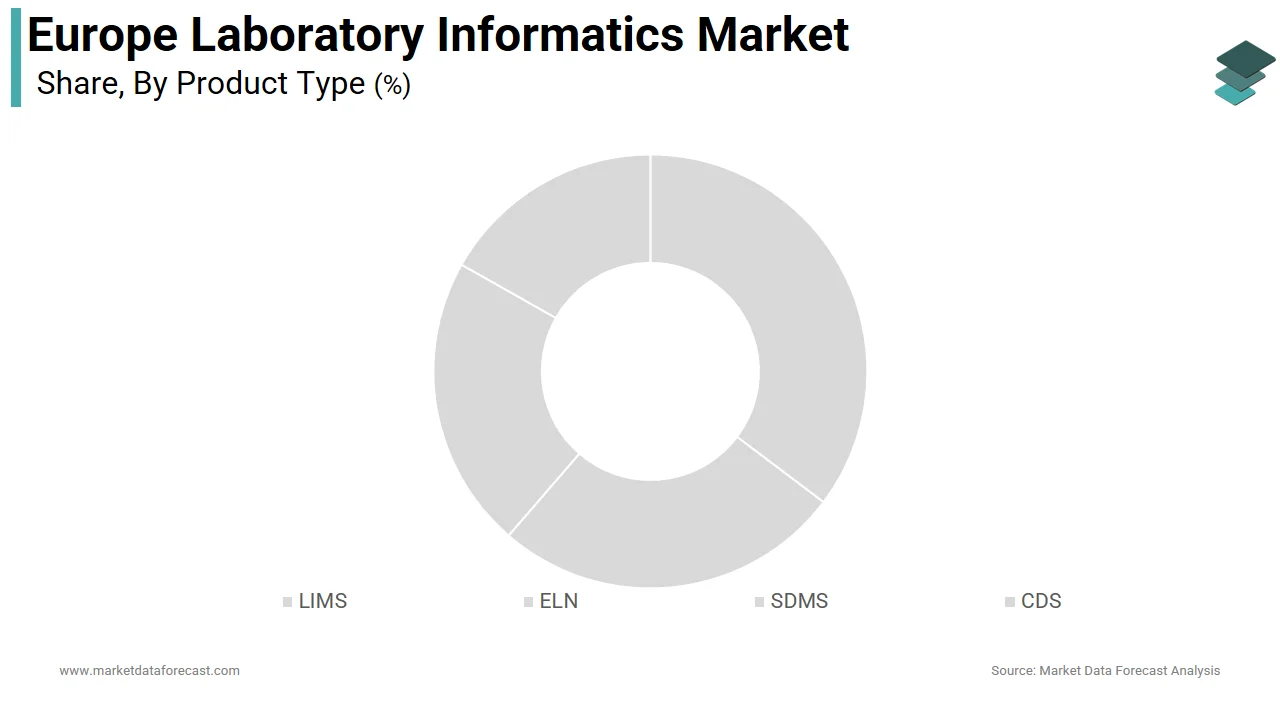
The LIMS segment dominated the Europe laboratory informatics market by capturing 42.5% of the market share in 2024. This dominance is attributed to its foundational role in ensuring regulatory compliance, sample traceability, and workflow standardization. According to EMA, GMP and GLP laboratories must maintain auditable records of sample custody and calibration, functions comprehensively supported by LIMS. The IVDR framework has entrenched adoption, with thousands of diagnostic labs across the EU implementing validated LIMS for reagent tracking. Environmental monitoring also relies on LIMS, as structured data submission to EU systems is mandated. Public health laboratories participating in EU surveillance networks use LIMS for real‑time pathogen reporting. Its maturity, interoperability, and compliance with Annex 11 data integrity guidelines make LIMS indispensable across Europe. The LIMS segment will remain dominant in the European market and is supported by regulatory mandates and audit readiness requirements.
The ELNs segment is anticipated to grow at a promising CAGR of 13.44% over the forecast period in the European laboratory informatics market, owing to the digital‑first research and FAIR data mandates. The European Commission requires Horizon Europe projects to adopt digital records, compelling labs to replace paper notebooks. EFPIA reports widespread ELN adoption in pharma R&D, accelerating patent documentation and reducing disputes. Integration with chemical drawing tools and spectral databases enhances utility, as demonstrated by institutes like Max Planck. The European Open Science Cloud (EOSC) promotes ELN adoption with standardized APIs for cross‑platform exchange. The ELNs segment will expand rapidly as Europe prioritizes reproducibility, open science, and AI‑ready data.
By Deployment Model Insights
The On‑premise segment dominated with a 54.5% share in 2024 of the European laboratory informatics market, owing to data sovereignty and GDPR compliance. According to the European Data Protection Supervisor, most GxP labs in Germany, France, and Italy host systems internally to control sensitive data. EMA emphasizes simplified audit trails with on‑premise systems. National reference labs such as the Robert Koch Institute mandate local hosting for pathogen sequencing. Legacy instruments from Agilent and Thermo Fisher also require direct integration, which reinforces on‑premise preference. The On‑premise segment in the European laboratory informatics market will remain dominant, where compliance and instrument interoperability outweigh scalability.
The cloud-based laboratory informatics segment is the fastest-growing deployment model in Europe and is estimated to grow at a CAGR of 15.5% over the forecast period. The rise of decentralized research, SME participation in EU funding programs, and sovereign cloud initiatives are fuelling the cloud segment in the European laboratory informatics market. The Digital Europe Programme allocated €450 million in 2023 for cloud‑enabled infrastructures, which is supporting SMEs and universities. According to EOSC, over 60% of new consortia select cloud‑hosted informatics for collaboration across multiple countries. Sovereign providers like OVHcloud and Deutsche Telekom’s Gaia‑X stack deliver GDPR‑aligned environments. The ECDC promotes cloud LIMS for mobile testing units, ensuring synchronized outbreak data. The cloud segment in the European market will accelerate as validation frameworks evolve and sovereign cloud initiatives mature.
By End User Insights
The pharma and biotech labs segment commanded 38.8% of the regional market share in 2024. EMA recorded over 2,800 marketing authorization applications in 2023, with each requiring electronic audit trails. According to EFPIA, 92% of members operate under strict Annex 11 and Part 11 compliance, necessitating validated informatics. Advanced therapies like gene and cell treatments demand granular chain‑of‑custody tracking, embedded in modern LIMS. Major hubs in Switzerland, Germany, and the UK host over 1,200 biotech firms relying on informatics to accelerate IND submissions. The pharma and biotech labs segment will remain dominant in the European laboratory informatics market owing to the compliance and advanced therapy workflows.
The academic and research institutes segment is the fastest-growing end-user segment in Europe’s laboratory informatics market and is anticipated to grow at a CAGR of 14.4% over the forecast period due to the EU mandates for open science, reproducibility, and cross-institutional collaboration. Horizon Europe mandates FAIR data management plans by 2025, which is compelling universities to adopt ELN and LIMS. According to the European University Association, modernization programs were implemented across 63% of life science departments in 2023. National councils like Germany’s DFG tie funding to ELN usage. Pan‑European initiatives such as the European Bioinformatics Institute’s federated commons depend on standardized metadata, achievable only through informatics. The academic labs segment will expand rapidly owing to the open science mandates and collaborative infrastructures.
COUNTRY-LEVEL ANALYSIS
Germany Laboratory Informatics Market Analysis
Germany commanded the leading share of 24.4% of the regional market in 2024. The dominating position of Germany in the European market is driven by its pharmaceutical strength, dense research networks, and rigorous regulatory culture. Germany hosts global R&D centres for Bayer, Merck KGaA, and BioNTech, all of which operate fully digitized laboratories with integrated LIMS and ELN to comply with EU GMP and BfArM requirements. According to the Federal Ministry of Education and Research, most Max Planck and Fraunhofer institutes had adopted FAIR‑compliant informatics platforms under the National Research Data Infrastructure initiative. The German Chemical Industry Association requires electronic recordkeeping for REACH substance testing, driving LIMS adoption in contract labs. Participation in GAIA‑X provides sovereign cloud options for biotechs. With thousands of public and private laboratories requiring validated systems and a strong domestic IT sector, Germany is expected to remain Europe’s largest and most advanced laboratory informatics hub.
United Kingdom Laboratory Informatics Market Analysis
The United Kingdom represents a robust segment of the European laboratory informatics market. The UK’s Life Sciences Vision, backed by multi‑billion‑pound public investment, requires funded projects to implement electronic data capture systems, accelerating ELN adoption across Oxford, Cambridge, and London clusters. According to the Medicines and Healthcare products Regulatory Agency, most UK clinical trial sites use validated LIMS to meet Good Clinical Practice standards. The UK Health Security Agency operates advanced pathogen genomics networks with cloud‑connected LIMS for outbreak tracking. A 2024 survey by Research England found that a majority of STEM departments use institutional ELN platforms to support research integrity. Despite Brexit, the UK continues to mirror EU data standards, ensuring interoperability and sustaining its influence as a hub for regulated, data‑driven science.
Switzerland Laboratory Informatics Market Analysis
Switzerland plays a strategic role in Europe’s laboratory informatics market. Roche, Novartis, and Lonza operate highly automated labs embedding LIMS and ELN into R&D and QC processes. The State Secretariat for Education, Research and Innovation requires Horizon Europe participants to implement FAIR data infrastructures, driving nationwide ELN rollout. Switzerland’s neutral data jurisdiction attracts multinational trials routing European data through Swiss‑hosted platforms to ensure GDPR compliance. The Swiss National Science Foundation mandates metadata standardization for funded projects, creating demand for structured data capture. With a high density of innovation‑driven labs and a commitment to regulatory equivalence with the EU, Switzerland is expected to remain a premium innovation hub for laboratory informatics.
France Laboratory Informatics Market Analysis
France represents a significant share of Europe’s laboratory informatics market. The French National Research Agency requires all publicly funded life science projects to use certified ELN platforms under the Open Science Roadmap 2024. According to the Ministry of Higher Education and Research, most CNRS and INSERM laboratories have migrated from paper to digital records since 2022. Sanofi and Servier standardized cloud‑based LIMS across European R&D sites to support real‑time data sharing under GDPR‑compliant architectures. France’s sovereign cloud initiative, Cloud de Confiance, includes certified providers enabling secure SaaS adoption. The French Medicines Agency enforces strict electronic audit trail requirements for clinical trial data. France is expected to remain a model for policy‑driven informatics adoption.
Netherlands Laboratory Informatics Market Analysis
The Netherlands secures its place among Europe’s top laboratory informatics markets. The Dutch Research Council confirmed that all universities adopted institutional ELN platforms by 2023 to meet FAIR data commitments. The National Institute for Public Health and the Environment operates an integrated LIMS network connecting 40 regional labs for pathogen surveillance, praised by the European Centre for Disease Prevention and Control. The Netherlands champions interoperability via its National Node in the European Open Science Cloud, offering standardized APIs for publishing data directly from LIMS to federated repositories. With strong public‑private alignment and a digital innovation culture, the Netherlands is expected to exert disproportionate influence in Europe’s data‑driven research future.
COMPETITIVE LANDSCAPE
Competition in the Europe laboratory informatics market is characterized by a nuanced interplay between global vendors with deep regulatory expertise and agile regional providers offering domain-specific customization. Unlike markets driven solely by price or features, Europe’s landscape is shaped by compliance, credibility, data sovereignty, and alignment with public research policy. Established players leverage decades of validation experience and instrument integration to dominate pharmaceutical and clinical segments, while niche entrants gain traction in academia through open architecture and FAIR data readiness. The absence of universal data standards creates both fragmentation and opportunity as vendors differentiate via certification with national competent authorities and participation in European Open Science Cloud initiatives. Public procurement rules further influence dynamics favoring vendors with transparent supply chains, EU-based support teams, and demonstrable GDPR adherence. As laboratories transition from isolated data capture to interconnected knowledge generation, the competitive edge increasingly lies in the ability to balance auditability with interoperability, ensuring that informatics serves not only compliance but also collaborative scientific discovery in line with Europe’s vision of open, trustworthy, and impactful research.
KEY MARKET PLAYERS
The leading companies operating in the Europe laboratory informatics market include:
- Thermo Fisher Scientific
- Agilent Technologies
- PerkinElmer
- LabWare
- Abbott Informatics
- Waters Corporation
- Autoscribe Informatics
- LabVantage Solutions
- Illumina
- Shimadzu
TOP PLAYERS IN THE MARKET
- Thermo Fisher Scientific Inc. is a leading force in the Europe laboratory informatics market through its SampleManager LIMS and Platform for Science portfolio, which serves pharmaceutical, biotechnology, and environmental laboratories across the region. The company integrates its informatics solutions with its extensive suite of analytical instruments, enabling seamless data capture and regulatory compliance. Globally, Thermo Fisher contributes to standardization by aligning its platforms with EU GxP Annex 11 and FDA 21 CFR Part 11 requirements. In 2024, the company enhanced its cloud-based LIMS with native support for the European Health Data Space metadata schema and expanded its professional services team in Berlin and Lyon to accelerate validation for Horizon Europe-funded projects. These moves reinforce its role as a trusted partner for laboratories prioritizing audit readiness and interoperability in highly regulated European environments.
- Agilent Technologies Inc maintains a strong presence in the Europe laboratory informatics market through its OpenLab software suite, which combines chromatography data systems with laboratory data management capabilities tailored for pharmaceutical and food testing labs. The company’s deep integration with EU environmental monitoring protocols enables laboratories to comply with European Environment Agency reporting standards. Globally, Agilent advances open architecture by supporting AnIML and Allotrope data standards, which facilitate cross-platform analytics. In early 2024, Agilent launched a GAIA-X-compliant cloud deployment option for its OpenLab ECM hosted in German data centers and partnered with French academic networks to embed its ELN into national research data infrastructures. These initiatives strengthen its relevance for European labs, balancing instrument connectivity, data integrity, and sovereign cloud requirements.
- LabVantage Solutions Inc. plays a pivotal role in the Europe laboratory informatics market by delivering highly configurable LIMS and laboratory analytics platforms for clinical diagnostics, pharmaceuticals, and public health sectors. The company’s solutions are validated for compliance with the In Vitro Diagnostic Medical Devices Regulation and EU Clinical Trials Regulation, making them suitable for regulated environments across the region. Globally, LabVantage contributes to interoperability through HL7 and FHIR integrations that connect laboratory data to electronic health records. In 2024, LabVantage introduced a modular ELN extension with AI-powered semantic tagging aligned with European Bioinformatics Institute ontologies and established a dedicated validation center in the Netherlands to support mid-sized biotechs navigating EU regulatory pathways. These actions position the company as a responsive enabler of digital transformation for Europe’s diverse laboratory ecosystem.
TOP STRATEGIES USED BY THE KEY MARKET PARTICIPANTS
Key players in the Europe laboratory informatics market prioritize regulatory alignment by embedding EU-specific requirements, such as IVDR, CLP, and GxP, directly into product architectures and validation templates. They invest in sovereign cloud and hybrid deployment models to meet GDPR data residency mandates while supporting decentralized research. Strategic partnerships with national research infrastructures and Horizon Europe consortia enable co-development of FAIR-compliant data workflows. Companies also enhance semantic interoperability through the adoption of European ontologies and open standards like AnIML and Allotrope. Additionally, they expand localized professional services and validation support centers to address the acute shortage of informatics expertise among academic and SME laboratories across the region.
MARKET SEGMENTATION
This research report on the Europe laboratory informatics market has been segmented and sub-segmented into the following categories.
By Product Type
- LIMS
- ELN
- SDMS
- CDS
By Deployment Model
- On-premise
- Cloud-based
- Web-hosted
By End-User
- Pharmaceutical & Biotechnology Labs
- Environmental Testing Labs
- Academic & Research Institutes
By Country
- United Kingdom
- France
- Spain
- Germany
- Italy
- Russia
- Sweden
- Denmark
- Switzerland
- Netherlands
- Rest of Europe
Frequently Asked Questions
1. What drives growth in the Europe laboratory informatics market?
Growth in the Europe laboratory informatics market is driven by pharma R&D expansion, regulatory compliance needs, cloud adoption, and laboratory digitization initiatives.
2. What is the Europe laboratory informatics market size in 2026?
The Europe laboratory informatics market is valued at approximately USD 1,149 million in 2026, projected to reach 2.191 million by 2034 at an 8.4% CAGR.
3. Which software type dominates the Europe laboratory informatics market?
LIMS holds the largest share in the Europe laboratory informatics market due to essential sample tracking and compliance requirements.
4. How significant is cloud deployment in the Europe laboratory informatics market?
Cloud solutions grow fastest in the Europe laboratory informatics market, offering scalability and remote access for distributed labs
5. What role does pharma play in the Europe laboratory informatics market?
Pharmaceutical companies lead end-user demand in the Europe laboratory informatics market for drug discovery and QC applications
6. Which countries dominate the Europe laboratory informatics market?
Germany, UK, and France lead the Europe laboratory informatics market, driven by strong biotech and pharma sectors
7. How do regulations impact the Europe laboratory informatics market?
EMA/GDPR compliance drives demand for validated LIMS/ELN systems in the Europe laboratory informatics market
8. What innovations shape the Europe laboratory informatics market?
AI analytics, blockchain data integrity, and IoT integration advance the Europe laboratory informatics market
9. What challenges face the Europe laboratory informatics market?
Data migration, legacy system integration, and cybersecurity concerns challenge growth in the Europe laboratory informatics market
10. Who are key players in the Europe laboratory informatics market?
Major companies include Thermo Fisher, LabWare, Agilent, Waters, and STARLIMS in the Europe laboratory informatics market
Related Reports
Access the study in MULTIPLE FORMATS
Purchase options starting from
$ 2000
Didn’t find what you’re looking for?
TALK TO OUR ANALYST TEAM
Need something within your budget?
NO WORRIES! WE GOT YOU COVERED!
Call us on: +1 888 702 9696 (U.S Toll Free)
Write to us: sales@marketdataforecast.com