- Product Description Description
- Table of Contents TOC
- List of Table & Figure LOT
- Get Free Sample PDF Sample PDF
Market Size, 2025
$0.38 BnMarket Estimate, 2026
$0.40 BnMarket Forecast, 2034
$0.64 BnCAGR, 2026–2034
6%Europe Microbial Identification Market Report Summary
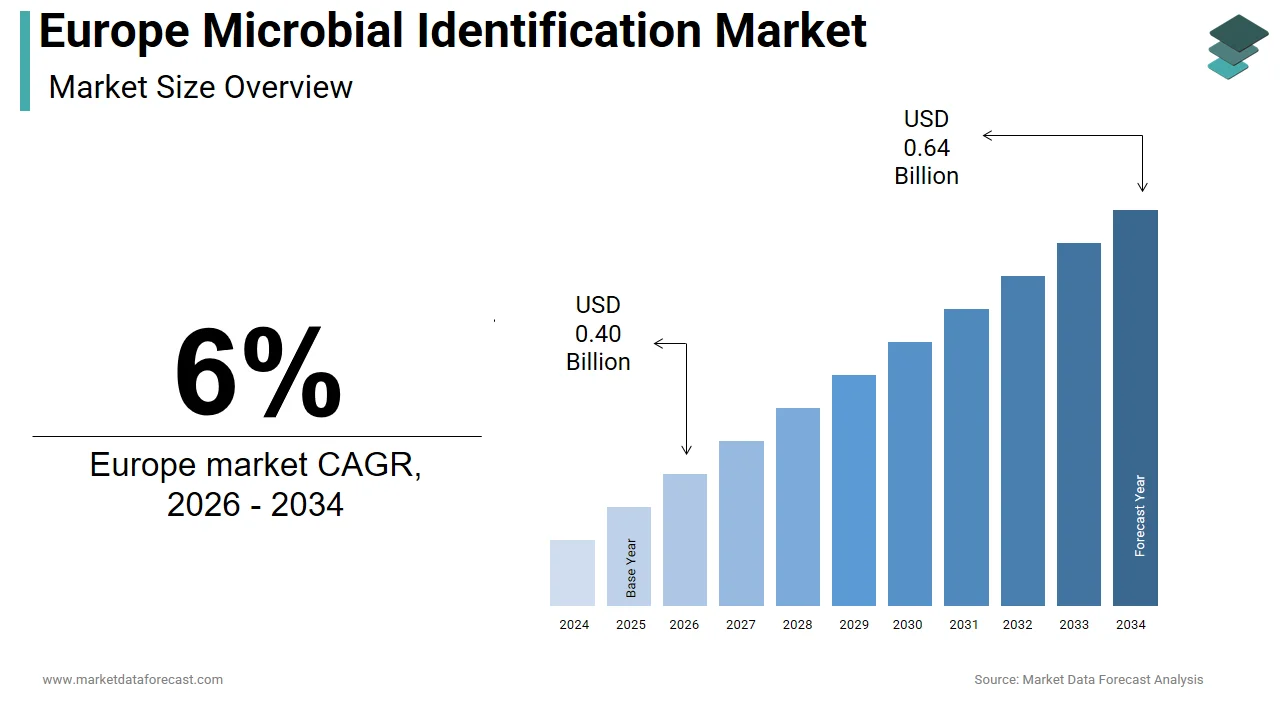
The Europe microbial identification market was valued at USD 0.38 billion in 2025, is anticipated to reach USD 0.40 billion in 2026, and is projected to reach USD 0.64 billion by 2034, growing at a CAGR of 6% from 2026 to 2034. Market growth is driven by the rising prevalence of infectious diseases, increasing antimicrobial resistance, and growing demand for rapid and accurate pathogen identification. Healthcare institutions and pharmaceutical companies across Europe are strengthening microbiology testing capabilities to improve patient outcomes and support public health surveillance. Advancements in mass spectrometry, molecular diagnostics, and automated identification systems are further accelerating market expansion.
Key Market Trends
- Rising adoption of MALDI-TOF mass spectrometry for rapid microbial identification.
- Increasing focus on antimicrobial resistance (AMR) monitoring and stewardship programs.
- Growing integration of molecular and proteomics-based diagnostic platforms.
- Expansion of automated microbiology laboratory workflows.
- Strengthening emphasis on public health surveillance and outbreak management systems.
Segmental Insights
- Based on method, the proteomics segment dominated the market in 2025, driven by the widespread adoption of MALDI-TOF mass spectrometry in clinical laboratories and pharmaceutical research facilities.
- Based on application, the diagnostic segment held the largest share in 2025, supported by high testing volumes in clinical microbiology labs, hospitals, and public health institutions managing infectious diseases and antimicrobial resistance.
- Based on end user, the hospitals and diagnostic centres segment accounted for a significant share in 2025, driven by their central role in disease diagnosis, antimicrobial stewardship, and regulatory reporting.
Regional Insights
The Europe microbial identification market is witnessing steady growth across major economies, supported by advanced healthcare infrastructure, strong research ecosystems, and expanding public health initiatives.
- Germany led the regional market in 2025, driven by world-class healthcare infrastructure, a robust pharmaceutical sector, and leadership in diagnostic innovation.
- The United Kingdom ranked second in 2025, supported by centralized public health surveillance systems and strong academic–clinical integration.
- France is expected to register the fastest CAGR over the forecast period, driven by its national reference laboratory network and strict hospital accreditation requirements.
Competitive Landscape
The Europe microbial identification market is characterized by strong competition among global life sciences companies, diagnostics manufacturers, and laboratory solution providers. Market players are focusing on expanding MALDI-TOF platforms, improving database accuracy, and integrating AI-enabled analysis tools. Strategic partnerships, technology upgrades, and investments in laboratory automation are shaping competitive dynamics across the region.
Prominent companies operating in the Europe microbial identification market include Shimadzu Corporation, Becton Dickinson and Company, Biolog Inc., bioMérieux SA, Merck KGaA, IEH Laboratories & Consulting Group, Trivitron Healthcare, Thermo Fisher Scientific Inc., Bruker Corporation, VWR Corporation, and Charles River Laboratories International Inc..
Europe Microbial Identification Market Size
The size of the Europe microbial identification market was valued at USD 0.38 billion in 2025. This market is expected to grow at a CAGR of 6% from 2026 to 2034 and be worth USD 0.64 billion by 2034 from USD 0.40 billion in 2026.
The microbial identification is a technology and system used to detect, characterize, and classify microorganisms, including bacteria, fungi, viruses, and yeasts, in clinical, pharmaceutical, food safety, and environmental settings. These methods range from traditional culture-based techniques to advanced molecular diagnostics, such as matrix-assisted laser desorption ionization time of flight mass spectrometry MALDI TOF MS polymerase chain reaction PCR and next-generation sequencing. According to the European Centre for Disease Prevention and Control, over 90% of national reference laboratories in the EU now use standardized molecular identification protocols for pathogen surveillance under the EU One Health Action Plan. As per the European Medicines Agency, all pharmaceutical manufacturers must implement validated microbial identification systems to comply with Good Manufacturing Practice Annex 1, which was revised in 2022 to mandate real-time contamination monitoring. The European Food Safety Authority further requires rapid species-level identification for foodborne outbreaks under Regulation EC 178/2002.
MARKET DRIVERS
Mandatory Compliance with Revised EU GMP Annex 1 for Pharmaceutical Manufacturing
The 2022 revision of the European Union’s Good Manufacturing Practice Annex 1 has fundamentally reshaped microbial monitoring requirements in pharmaceutical production, driving urgent adoption of advanced identification systems. This factor is attributed to propelling the growth of the Europe microbial identification market. According to the European Medicines Agency, the updated guidelines require real-time environmental monitoring and species-level identification of any detected microorganism within 48 hours, with a standard unattainable with traditional culture methods. In 2024, Germany’s Federal Institute for Drugs and Medical Devices reported that 87% of sterile manufacturing facilities had deployed MALDI TOF or PCR-based systems to meet these mandates. Similarly, France’s National Agency for Medicines and Health Products Safety confirmed that all new biologics manufacturing licenses issued in 2024 required integrated microbial identification workflows with digital audit trails.
Expansion of EU One Health Surveillance Networks for Antimicrobial Resistance Tracking
The coordinated response to antimicrobial resistance has institutionalized high-throughput microbial identification across human, animal, and environmental sectors, and is substantially accelerating the growth of Europe microbial identification market. According to the European Centre for Disease Prevention and Control, the EU Joint Action on Antimicrobial Resistance and Healthcare-Associated Infections now links 28 national networks requiring standardized pathogen identification and resistance profiling. Sweden’s Public Health Agency reported that 100% of clinical microbiology labs used MALDI TOF or whole genome sequencing for routine bacterial identification, enabling real-time AMR data sharing with the European Antimicrobial Resistance Surveillance System. The European Commission allocated 220 million euros in 2024 through the EU4Health program to upgrade laboratory capacity in Eastern Europe, ensuring pan-European data comparability.
MARKET RESTRAINTS
High Capital and Operational Costs of Advanced Identification Platforms
Many public and small private laboratories cannot afford the upfront investment and recurring expenses of modern microbial identification systems. This factor is solely restraining the growth of Europe microbial identification market. According to the European Society of Clinical Microbiology and Infectious Diseases, MALDI TOF instruments cost between 150,000 and 250000 euros, with annual maintenance and consumables exceeding 30 000 euros, prohibitive for smaller facilities. In 2024, Romania’s National Institute of Public Health reported that only 28% of regional hospitals could deploy rapid identification due to budget constraints, relying instead on slow referral networks. As per the European Observatory on Health Systems and Policies, public microbiology labs in Southern and Eastern Europe face average funding gaps of 40% compared to Western counterparts, limiting technology adoption. These financial and human resource barriers create a two-tier system, where advanced identification remains concentrated in urban academic centers, delaying outbreak response and AMR containment in underserved regions.
Fragmented Reimbursement and Procurement Policies Across Member States
The absence of harmonized funding mechanisms for diagnostic technologies results in inconsistent access to microbial identification tools across the EU. The fragmented reimbursement and procurement policies across member states are additionally hampering the growth of Europe microbial identification market. According to the European Diagnostic Manufacturers Association, national health systems reimburse or procure identification tests based on disparate criteria. Germany funds MALDI TOF as essential infrastructure, while Bulgaria classifies it as an optional innovation. Italy’s National Health Service approved centralized procurement for rapid identification in only 12 of 21 regions, leaving others to rely on outdated methods. This fragmentation discourages vendors from developing pan-European solutions and forces laboratories to maintain multiple validation protocols, increasing administrative burden. Until the EU establishes unified procurement guidelines or dedicated diagnostic investment funds, technological equity in microbial identification will remain elusive, undermining collective biosecurity efforts.
MARKET OPPORTUNITIES
Integration of AI-Driven Interpretation with Genomic and Proteomic Platforms
The emergence of artificial intelligence with next generation sequencing and MALDI TOF for automated high accuracy microbial identification is creating new opportunities for the growth of Europe microbial identification market. According to the European Bioinformatics Institute, its AI-powered platform for bacterial genome analysis reduced identification time from 72 hours to under four hours in 2024, while improving species resolution by 22%. In Denmark, the Statens Serum Institut deployed a machine learning model that correlates MALDI TOF spectral patterns with antibiotic resistance profiles, achieving 94% predictive accuracy for MRSA and VRE. As per the European Commission’s Digital Europe Programme, 18 Horizon Europe projects received funding in 2024 to develop explainable AI tools that assist microbiologists in interpreting complex genomic data without bioinformatics expertise.
Deployment in Emerging Cell and Gene Therapy Quality Control Workflows
The rapid growth of advanced therapy medicinal products is a high-value niche for ultra-sensitive microbial identification in sterile manufacturing environments. The deployment in emerging cell and gene therapy quality control workflows is expected to elevate the growth of the Europe microbial identification market. According to the European Medicines Agency, over 120 cell and gene therapy products were in clinical trials in the EU in 2024, each requiring near-zero contamination tolerance due to immunocompromised recipients. The revised GMP Annex 1 explicitly mandates rapid identification of any adventitious agent in these products within 24 hours, with a window only achievable with PCR or NGS-based systems. In Germany, the Paul Ehrlich Institute reported that 100% of ATMP manufacturers implemented closed system microbial monitoring with real-time identification in 2024. This mission-critical role justifies premium pricing and long-term service contracts, positioning vendors as essential partners in Europe’s cutting-edge life sciences ecosystem.
MARKET CHALLENGES
Shortage of Skilled Microbiologists and Bioinformaticians
The effective operation of advanced microbial identification systems requires specialized personnel who are in critically short supply across Europe. According to the European Centre for Disease Prevention and Control, 41% of EU clinical microbiology labs reported unfilled specialist positions in 2024, with the deficit most acute in Eastern Europe. In Poland, the National Institute of Public Health noted that only 120 new clinical microbiologists graduated in 2024 against an estimated need for 500 to manage current workloads. As per the European Society for Clinical Microbiology and Infectious Diseases, fewer than 15% of EU universities offer dedicated training in MALDI TOF interpretation or genomic data analysis, creating a generational skills gap. This shortage forces labs to underutilize expensive equipment or outsource testing, delaying results and increasing costs. The problem is exacerbated in food and environmental sectors where microbiology roles compete with higher-paying clinical and biotech jobs. Without targeted EU-level reskilling programs and career incentives, the human bottleneck will constrain the impact of even the most advanced identification technologies.
Data Privacy and Cross-Border Sharing Limitations Under GDPR
While microbial identification generates vital public health data, strict interpretation of the General Data Protection Regulation hinders seamless information exchange across EU borders. According to the European Data Protection Board, genomic sequences linked to patient identifiers, even indirectly, are considered personal data requiring explicit consent for international transfer. In 2024, an outbreak investigation of Listeria monocytogenes was delayed by 11 days because French authorities could not share strain data with German counterparts without individual patient permissions. As per the European Centre for Disease Prevention and Control, only 9 member states have established legal frameworks that anonymize pathogen data sufficiently for GDPR compliant cross border analysis. The European Commission’s proposed Health Data Space aims to resolve this, but implementation remains years away. Until then, laboratories operate in data silos, reducing the effectiveness of EU-wide surveillance and slowing response to transnational threats. This legal ambiguity forces institutions to choose between privacy compliance and public health efficacy, with a tension that undermines the very purpose of microbial identification in a connected world.
REPORT COVERAGE
| REPORT METRIC | DETAILS |
| Market Size Available | 2025 to 2034 |
| Base Year | 2025 |
| Forecast Period | 2026 to 2034 |
| Segments Covered | By Method, Application, Product, End User, and country. |
| Various Analyses Covered | Global, Regional, and Country-Level Analysis, Segment-Level Analysis, Drivers, Restraints, Opportunities, Challenges; PESTLE Analysis; Porter’s Five Forces Analysis, Competitive Landscape, Analyst Overview of Investment Opportunities |
| Countries Covered | UK, France, Spain, Germany, Italy, Russia, Sweden, Denmark, Switzerland, Netherlands, Turkey, Czech Republic, and the Rest of Europe. |
| Market Leaders Profiled | Shimadzu Corporation, Dickinson & Company, Biolog Inc., BioMerieux SA, Merck KGaA, IEH Laboratories & Consulting Group, Trivitron Healthcare, Thermo Fisher Scientific Inc., Bruker Corporation, VWR Corporation, and Charles River Laboratories International Inc. |
SEGMENTAL ANALYSIS
By Method Insights
The proteomics segment held 42.3% of the Europe microbial identification market share in 2024, owing to the widespread adoption of MALDI TOF mass spectrometry in clinical and pharmaceutical settings. According to the European Centre for Disease Prevention and Control, over 85% of national reference laboratories in the EU now use MALDI TOF as their primary identification platform due to its speed, accuracy, and cost efficiency. The European Medicines Agency confirmed that 78% of sterile manufacturing facilities implemented proteomics-based systems in 2024 to comply with the revised GMP Annex 1, requiring species-level identification within 48 hours. In Germany, the Robert Koch Institute reported that MALDI TOF reduced average bacterial identification time from 72 hours to under two hours in public health labs. As per the European Society of Clinical Microbiology and Infectious Diseases, proteomics platforms achieve over 95% accuracy for common pathogens at a fraction of the cost of genomic methods. This combination of regulatory alignment, operational practicality, and diagnostic reliability has cemented proteomics as the backbone of Europe’s microbial identification infrastructure.
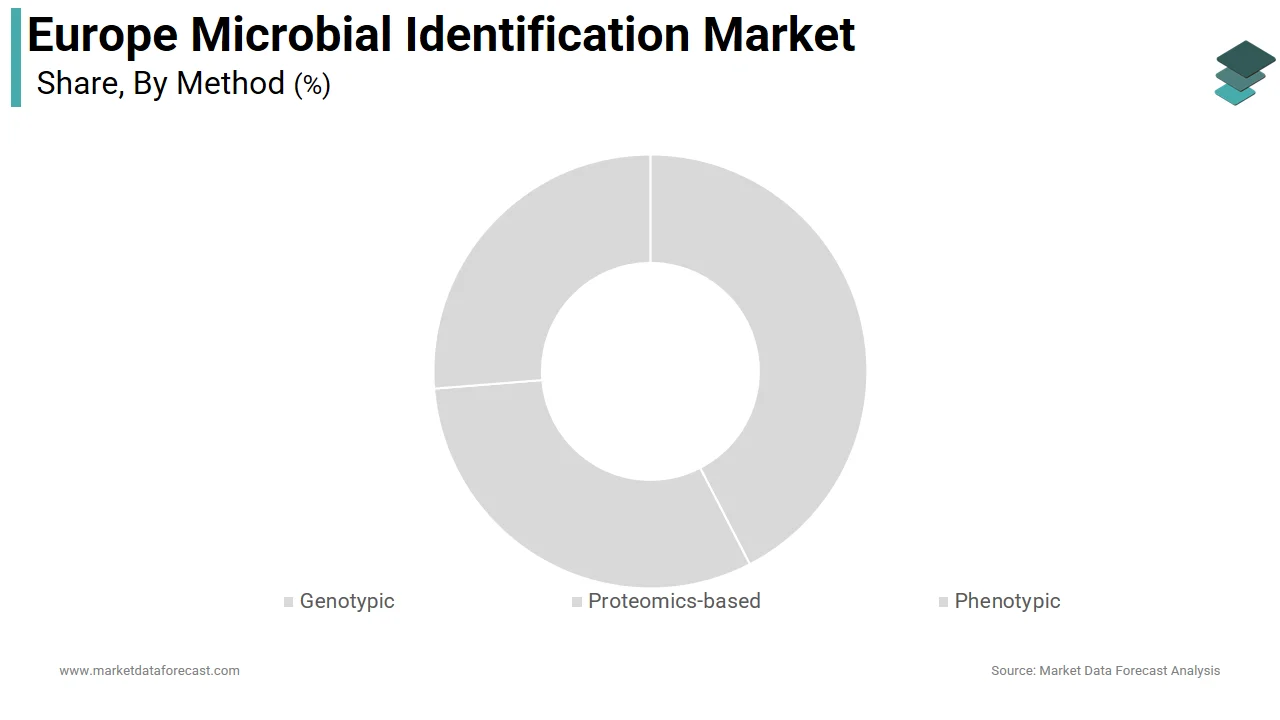
The genotypic segment is deemed to grow at the fastest CAGR of 12.4% throughout the forecast period, with the rise of whole genome sequencing and PCR-based pathogen tracking in public health and advanced therapy manufacturing. In Sweden, the Public Health Agency reported that 100% of tuberculosis and listeria cases were sequenced in 2024, enabling precise transmission mapping. As per the European Medicines Agency, all cell and gene therapy manufacturers must implement genotypic contamination screening due to zero tolerance for adventitious agents by creating high-value demand. The European Bioinformatics Institute launched an AI-powered genomic interpretation platform in 2024 that reduced analysis time by 80%, making sequencing accessible to mid-tier labs.
By Application Insights
The diagnostic application segment was the largest by holding 48.3% of the Europe microbial identification market share in 2024, owing to the clinical microbiology labs, hospitals, and public health institutions managing infectious diseases and antimicrobial resistance. According to the European Centre for Disease Prevention and Control, over 1,800 clinical labs across the EU perform more than 120 million microbial identifications annually, primarily for bloodstream, urinary, and respiratory infections. The European Society of Clinical Microbiology and Infectious Diseases reported that 92% of tertiary hospitals adopted rapid identification platforms in 2024 to meet sepsis management guidelines requiring pathogen ID within six hours. In France, the National Reference Centre for Antibiotic Resistance confirmed that real-time identification reduced inappropriate antibiotic prescriptions by 27% between 2022 and 2024.
The pharmaceutical application segment is likely to register the fastest CAGR of 11.8% from 2025 to 2033, with the stringent GMP Annex 1 requirements and the expansion of advanced therapy medicinal products. According to the European Medicines Agency, over 120 cell and gene therapies were in clinical development in the EU in 2024, each requiring near real-time microbial monitoring due to immunocompromised recipients. The revised GMP Annex 1 mandates species-level identification of any environmental isolate within 24 to 48 hours, with a standard only achievable with MALDI TOF or PCR. In Germany, the Paul Ehrlich Institute reported that 100% of ATMP manufacturers implemented closed system identification workflows in 2024. As per the Alliance for Regenerative Medicine, Europe invested 3.8 billion euros in ATMP infrastructure between 2022 and 2024, creating sustained demand for contamination detection.
By End User Insights
The hospitals and diagnostic centres segment accounted in holding 51.3% of the Europe microbial identification market share in 2024, with their central role in managing infectious diseases, antimicrobial stewardship, and public health reporting. According to Eurostat, over 6 500 public hospitals in the EU operate clinical microbiology labs performing millions of identifications annually for sepsis, meningitis, and surgical site infections. The European Society of Intensive Care Medicine reported that 89% of ICUs in Western Europe now require pathogen identification within four hours of blood culture positivity to guide targeted therapy. In the Netherlands, the National Institute for Public Health confirmed that all hospital labs contribute data to the national AMR dashboard using standardized identification protocols. As per the European Commission’s Sepsis Action Plan, early and accurate identification reduces mortality by up to 30% by making it a clinical imperative rather than optional testing.
The pharmaceutical companies segment is expected to grow at the fastest CAGR of 11.5% during the forecast period, due to regulatory tightening and biologics manufacturing complexity. According to the European Medicines Agency, the 2022 revision of GMP Annex 1 requires pharmaceutical facilities to implement rapid microbial identification for all environmental monitoring excursions. In 2024, Germany’s Federal Institute for Drugs and Medical Devices reported that 87% of sterile drug manufacturers had deployed MALDI TOF or PCR systems to avoid compliance penalties. The rise of personalized medicines, which cannot be terminally sterilized, further intensifies demand for real-time contamination control. With the EU approving 45 new biologics in 2024 alone, this segment offers high-margin recurring demand for validated identification workflows integrated into quality management systems.
COUNTRY-LEVEL ANALYSIS
Germany Microbial Identification Market Analysis
Germany was the top performer of the Europe microbial identification market by holding 24.3% of the share in 2024, owing to its world-class healthcare infrastructure, robust pharmaceutical sector, and leadership in diagnostic innovation. According to the Robert Koch Institute, many public health and hospital labs use standardized MALDI TOF and sequencing platforms for pathogen surveillance under the National Action Plan on Antimicrobial Resistance. The Federal Institute for Drugs and Medical Devices confirmed that 100% of sterile manufacturing facilities comply with GMP Annex 1 through rapid identification systems. As per the German Society for Hygiene and Microbiology, 94% of university hospitals have integrated AI-assisted interpretation tools to accelerate sepsis diagnosis. Germany also hosts major diagnostic manufacturers like Bruker, whose MALDI TOF systems are used across Europe. This combination of regulatory rigor, scientific excellence, and industrial capacity makes Germany the undisputed anchor of Europe’s microbial identification ecosystem.
United Kingdom Microbial Identification Market Analysis
The United Kingdom held second position by capturing 16.2% of the Europe microbial identification market share in 2024, with the centralized public health surveillance and strong academic clinical integration. According to Public Health England, over 120 NHS microbiology labs feed real-time identification data into the Second-Generation Surveillance System, enabling nationwide outbreak detection. The Medicines and Healthcare products Regulatory Agency reported that all UK biologics manufacturers implemented rapid identification workflows in 2024. As per the UK Health Security Agency, whole genome sequencing is now routine for tuberculosis salmonella and meningococcal disease by covering 100% of notifiable cases.
France Microbial Identification Market Analysis
France microbial identification market growth is likely to grow at the fastest CAGR in the coming years, with its national reference laboratory network and strict hospital accreditation requirements. According to Sante Publique France, the National Reference Centre for Antibiotic Resistance coordinates identification protocols across 28 regional labs, ensuring data harmonization for the EU AMR system. The French National Authority for Health mandates that all hospitals use rapid identification for bloodstream infections as part of its sepsis care bundles, with a rule driving 92% adoption in 2024. As per the National Agency for Medicines and Health Products Safety, all new pharmaceutical licenses require validated microbial identification workflows. France also invests heavily in sequencing; the Pasteur Institute’s genomic surveillance unit processes over 50,000 isolates annually.
Netherlands Microbial Identification Market Analysis
The Netherlands microbial identification market growth is propelled by the innovation in automated diagnostics and cross-sectoral data integration. According to the National Institute for Public Health and the Environment RIVM, all hospital and food safety labs use interoperable identification platforms feeding into the national One Health database. As per the Netherlands Enterprise Agency, the country hosts over 30 diagnostic startups developing AI-enhanced MALDI TOF and portable PCR systems. Academic medical centers in Utrecht and Leiden pioneered closed-loop identification workflows that auto-notify clinicians upon pathogen detection.
Sweden Microbial Identification Market Analysis
Sweden microbial identification market growth is expected to witness steady growth opportunities in the coming years with the genomic surveillance and antimicrobial stewardship. According to the Public Health Agency of Sweden, 100% of clinical bacterial isolates are identified using MALDI TOF with whole genome sequencing applied to all resistant or outbreak strains. As per the Karolinska Institute, AI algorithms now predict resistance directly from MALDI TOF spectra with 94% accuracy, reducing reliance on culture. Sweden also requires all pharmaceutical manufacturers to submit identification validation data as part of marketing authorization.
COMPETITIVE LANDSCAPE
Competition in the Europe microbial identification market is defined by a convergence of scientific excellence, regulatory precision, and public health mission rather than price alone. Unlike global markets, where feature proliferation dominates, European players compete on validation reliability and integration with institutional workflows across clinical, pharmaceutical, and food safety domains. The landscape features a mix of specialized leaders like Bruker in proteomics, broad diagnostics giants such as bioMérieux, and technology integrators like Thermo Fisher offering genotypic solutions. Regulatory pressure from the European Medicines Agency, European Centre for Disease Prevention and Control, and European Food Safety Authority creates high barriers to entry, favoring firms with established compliance track records. At the same time, fragmentation across 27 member states allows regional players to thrive through localized service and language support. Innovation is increasingly collaborative, with vendors co-developing standards through EU-funded initiatives like the Pathogen Genomics Initiative.
KEY MARKET PLAYERS
Key players operating in the Europe microbial identification market profiled in this report are
- Shimadzu Corporation
- Dickinson & Company
- Biolog Inc.
- bioMérieux SA
- Merck KGaA
- IEH Laboratories & Consulting Group
- Trivitron Healthcare
- Thermo Fisher Scientific Inc.
- Bruker Corporation
- VWR Corporation
- Charles River Laboratories International Inc.
TOP PLAYERS IN THE MARKET
- Bruker Corporation is a global leader in proteomics-based microbial identification, with its MALDI Biotyper platform widely adopted across European clinical, pharmaceutical, and public health laboratories. The company’s systems are integrated into national surveillance networks in Germany, France, and the Netherlands due to their speed, accuracy, and compliance with EU regulatory standards. Bruker enhanced its platform with AI-driven spectral interpretation algorithms validated by the European Centre for Disease Prevention and Control for rapid resistance prediction. It also launched a GDPR compliant cloud data module enabling secure cross-institutional pathogen sharing while maintaining patient anonymity.
- bioMérieux, a French-headquartered diagnostics company, offers a comprehensive portfolio of genotypic and phenotypic microbial identification solutions, including the VITEK and GENOMICS platforms used extensively in European hospitals and food safety labs. The company leverages its deep integration with national health systems to deliver end-to-end workflows from sample to insight. The bioMerieux introduced an automated PCR-based identification system for foodborne pathogens certified under EFSA guidelines and expanded its antimicrobial resistance detection panel to cover emerging carbapenemase genes mandated by ECDC surveillance protocols. Its partnership with the Pasteur Institute ensures continuous alignment with public health priorities, reinforcing trust among public sector buyers across the EU.
- Thermo Fisher Scientific provides advanced genotypic identification tools, including next-generation sequencing platforms and real-time PCR systems tailored for pharmaceutical and clinical applications in Europe. The company’s Ion Torrent and Applied Biosystems technologies support EU GMP Annex 1 compliance through rapid contamination detection in sterile manufacturing. In 2024, Thermo Fisher launched a cloud-based genomic analysis suite compliant with the EU Health Data Space framework, enabling secure pathogen data exchange across borders. It also collaborated with the UK Health Security Agency to standardize whole genome sequencing protocols for tuberculosis and listeria surveillance.
MARKET SEGMENTATION
This Europe microbial identification market research report is segmented and sub-segmented into the following categories.
By Method
- Genotypic
- Proteomics-based
- Phenotypic
By Application
- F&B
- Diagnostic
- Pharmaceutical
- Environmental
By Product
- Identification Services
- Consumables
- Instruments
By End User
- Food Manufacturing Industries
- Pharmaceutical Companies
- Hospitals and Diagnostic Centres
- Others
By Country
- UK
- France
- Spain
- Germany
- Italy
- Russia
- Sweden
- Denmark
- Switzerland
- Netherlands
- Turkey
- Czech Republic
- Rest of Europe