- Product Description Description
- Table of Contents TOC
- List of Table & Figure LOT
- Get Free Sample PDF Sample PDF
Market Size, 2025
$16.89 BnMarket Estimate, 2026
$17.82 BnMarket Forecast, 2034
$27.40 BnCAGR, 2026–2034
5.52%Europe Multivitamins Market Size, Growth, Trends & Forecast (2026–2034)
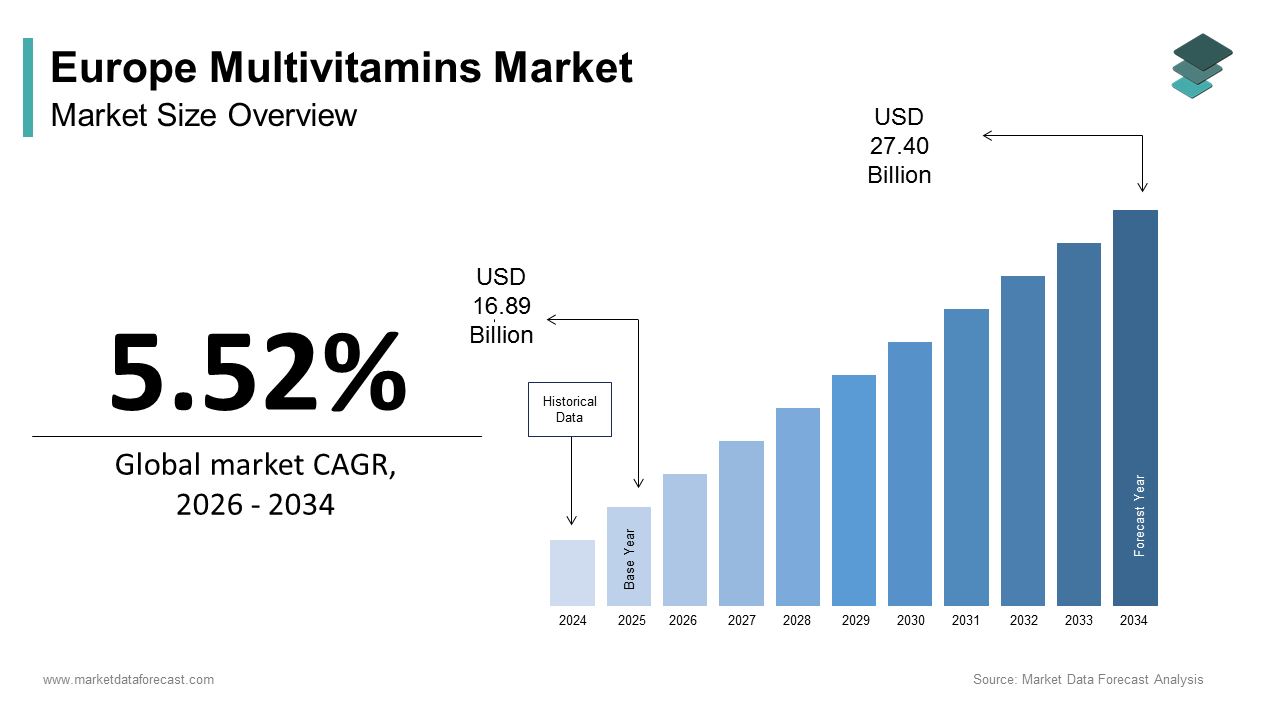
The Europe multivitamins market size was calculated to be USD 16.89 billion in 2025, reached USD 17.82 billion in 2026, and is anticipated to be worth USD 27.40 billion by 2034, growing at a compound annual growth rate (CAGR) of 5.52% during the forecast period from 2026 to 2034. Driven by a rapidly aging demographic, rising self-supplementation trends among urban professionals, and an increasing focus on preventive healthcare, the market blends strict regulatory oversight with diverse product innovation.
Key Executive Metrics (At-a-Glance)
- 2025 Base Valuation: USD 16.89 Billion
- 2026 Current Valuation: USD 17.82 Billion
- 2034 Forecast Valuation: USD 27.40 Billion
- Compound Annual Growth Rate (CAGR): 5.52% (2026–2034)
- Dominant Regional Market: Germany (holding a 24.4% market share in 2025, anchored by high health literacy, pharmacy distribution, and strict regulatory compliance)
- Key Growth Segments: General health and Immunity applications; Adults (18–64) and Geriatric end-user demographics
Core Market Drivers & Growth Triggers
- Aging Population: Growing numbers of older adults seeking non-pharmaceutical solutions to support bone health, cognitive function, and immune resilience.
- Urban Lifestyle Stressors: Contemporary diets lacking optimal fruit and vegetable intake, prompting urban professionals to rely on multivitamins for nutritional insurance.
Primary Market Restraints & Challenges
- Strict Regulation & Skepticism: Restrictive EU health claims frameworks (EC 1924/2006) and maximum ingredient limits alongside persistent scientific skepticism regarding efficacy.
- Price Sensitivity & Fragmentation: Intense private label competition compressing margins and fragmented national regulatory interpretations across member states.
Europe Multivitamins Market Segmentation Breakdown
| Segment Category | Largest Segment / Leader | Fastest-Growing Segment |
|---|---|---|
| By Application | General Health (Commanded a 44.8% share in 2025 as broad-spectrum daily nutritional insurance against lifestyle gaps) | Immunity (Anticipated at a 9.12% CAGR driven by year-round wellness priorities, vitamin D demand, and respiratory concerns) |
| By End User | Adults 18–64 (Accounted for 57.5% share in 2025 as primary household purchasers managing work stress and preventive care) | Geriatric (Projected at an 8.15% CAGR propelled by Europe's aging demographic and age-related nutrient absorption declines) |
| By Region | Germany (Held 24.4% share in 2025, driven by scientific rigor, pharmacy distribution, and stringent compliance frameworks) | United Kingdom / France (Expanding via digital health integration, direct-to-consumer models, and pharmacist-led care) |
Major Industry Players Profiled
Key corporations shaping the Europe multivitamins market include Bayer AG, GlaxoSmithKline plc, Sanofi S.A., Pfizer Inc., Nestlé Health Science, Reckitt Benckiser Group plc, Haleon plc, Herbalife Nutrition Ltd., Amway Corp., and Vitabiotics Ltd.
Europe Multivitamins Market Size
The Europe multivitamins market size was calculated to be USD 16.89 billion in 2025 and is anticipated to be worth USD 27.40 billion by 2034, from USD 17.82 billion in 2026, growing at a CAGR of 5.52% during the forecast period.
Multivitamins comprise dietary supplements containing a combination of essential vitamins and minerals formulated to address nutritional gaps, support general wellness, or target specific physiological needs such as immunity, energy metabolism, or cognitive function. These products are available in various formats, including tablets, capsules, gummies, powders, and effervescent formulations, distributed through pharmacies, supermarkets, online platforms, and health stores. Unlike therapeutic drugs, multivitamins in Europe are regulated as food supplements under Directive 2002/46/EC, which mandates strict labeling, safety assessments, and permissible nutrient levels. According to the European Food Safety Authority’s consumer intake survey, adults in the European Union reported regular use of dietary supplements, with multivitamins being the most commonly consumed category. As per national health agencies in countries like Germany and the Netherlands, there have been rising self-supplementation trends, particularly among urban professionals and aging populations seeking preventive health strategies. This blend of regulatory oversight, consumer proactivity, and diverse product innovation defines the structural and cultural contours of Europe’s multivitamins landscape.
MARKET DRIVERS
Aging Population and Rising Focus on Preventive Health
Europe’s rapidly aging demographic is a primary catalyst for multivitamin consumption, as older adults seek non-pharmaceutical means to maintain vitality and delay age-related decline, which is one of the major factors driving the multivitamins market growth in Europe. According to Eurostat, the EU population is experiencing a rise in the proportion of older adults, which is creating sustained demand for nutrients like vitamin D, B12, calcium, and magnesium that support bone health, neurological function, and immune resilience. As per the UK Scientific Advisory Committee on Nutrition, daily vitamin D supplements are recommended for all adults during autumn and winter. Furthermore, public awareness campaigns such as France’s NutriPrev initiative indicate micronutrient deficiencies in elderly diets, normalizing supplementation as part of routine self-care.
Urban Lifestyle Stressors and Nutritional Gaps in Modern Diets
Contemporary European lifestyles, characterized by processed food reliance, irregular eating patterns, and chronic stress, have widened micronutrient gaps, which are driving demand for convenient nutritional insurance and further fuelling the expansion of the European multivitamins market. According to the European Commission, many adults do not meet the recommended intake of fruits and vegetables daily, leading to suboptimal levels of vitamins C, E, and folate. Urban professionals in cities like Berlin, Paris, and Stockholm report high levels of fatigue and low energy, prompting them to self-direct the use of B-complex and antioxidant-enriched multivitamins. As per the European Consumer Organisation, supplement users often cite compensating for a poor diet as a key motivation. The rise of desk-based work and reduced sunlight exposure further exacerbates vitamin D deficiency, particularly in Northern Europe. As consumers prioritize holistic well-being without medical intervention, multivitamins serve as accessible, low-risk solutions to bridge the gap between ideal nutrition and daily reality.
MARKET RESTRAINTS
Stringent EU Regulations on Health Claims and Ingredient Limits
The European multivitamins market operates under one of the world’s most restrictive regulatory frameworks, significantly limiting product differentiation and marketing efficacy. Under Regulation EC 1924/2006, only a narrow set of authorized health claims can be used, while disease prevention or performance enhancement statements are prohibited. Moreover, Directive 2002/46/EC sets maximum permitted levels for vitamins and minerals, often below clinically effective doses. According to the European Federation of Associations of Health Product Manufacturers, many innovative multivitamin formulations developed in recent years could not be launched due to these restrictions.
Scientific Skepticism and Public Misinformation on Supplement Efficacy
Persistent skepticism among healthcare professionals and media narratives questioning the benefits of multivitamins constrain market expansion. Major studies published in journals such as The Lancet and BMJ have concluded that multivitamins offer no mortality benefit for healthy individuals, reinforcing physicians' reluctance to recommend them. According to Eurobarometer, a significant portion of Europeans expresses distrust in supplement efficacy, with higher skepticism in Southern and Eastern regions. Social media amplifies unfounded claims about unnecessary supplementation or toxic buildup, despite evidence of widespread subclinical deficiencies. Unlike in the United States, where supplements are often integrated into primary care, European doctors typically view them as redundant unless a deficiency is diagnosed. This credibility gap discourages first-time users and limits repeat purchases to already convinced segments.
MARKET OPPORTUNITIES
Personalization Through Digital Health Integration
The convergence of at-home diagnostics, AI-driven nutrition platforms, and direct-to-consumer models presents a transformative opportunity for the European multivitamins market. Companies are now offering DNA-based or blood biomarker-informed formulations that adjust nutrient profiles to individual needs. According to the European Nutrigenomics Organisation, personalized nutrition startups have launched in the EU, many incorporating multivitamin customization. Services like ZOE in the UK and Lifeline Care in Sweden provide users with microbiome or vitamin D test kits followed by bespoke supplement plans. As per the European Commission’s Horizon Europe program, funding has been allocated to support digital personalized nutrition research, validating its scientific legitimacy. As wearable devices track sleep, stress, and activity, future multivitamins could dynamically adapt dosing, positioning them not as static pills but as responsive elements of a data-driven wellness ecosystem.
Expansion of Clean Label and Sustainable Supplement Formats
Consumer demand for transparency and environmental responsibility is reshaping multivitamin formulation and packaging, which is another promising opportunity in the European multivitamins market. European shoppers increasingly reject synthetic additives, artificial colors, and plastic bottles, favoring plant-based, organic, certified, and recyclable alternatives. According to the Forsa Institute, German consumers show a preference for multivitamins with recognizable ingredients and minimal processing. Brands like Norsan in Germany and Vivo Life in the UK now offer algae-derived omega-3 fortified multivitamins in compostable pouches or glass jars. As per the EU’s Green Claims Directive, sustainability credentials will be further incentivized. Additionally, innovations in gummy and powder formats using natural sweeteners like stevia cater to clean label preferences while improving palatability.
MARKET CHALLENGES
Price Sensitivity and Private Label Competition
Despite growing interest, multivitamin adoption in Europe remains highly price sensitive, especially in cost-conscious markets like Spain and Italy, which is primarily challenging the expansion of the European multivitamins market. Supermarkets and pharmacies aggressively promote private label supplements priced lower than branded counterparts, compressing margins and discouraging R&D investment. According to NielsenIQ, private label multivitamins have captured a significant share of unit sales in Western Europe. Consumers often perceive little functional difference between store brands and premium products, particularly when health claims are legally restricted. This commoditization pressures manufacturers to compete on cost rather than innovation, leading to formula simplification and reduced quality control.
Fragmented Regulatory Landscape Across Member States
Although governed by EU-wide directives, multivitamin regulations are inconsistently interpreted and enforced across member states, which is creating compliance complexity and market access barriers and further challenging the expansion of this regional market. For example, Germany’s Federal Institute for Drugs and Medical Devices requires pre-market notification for all supplements, while France permits immediate sale post-labeling compliance. Some countries impose additional national limits. According to the European Responsible Nutrition Alliance, companies spend considerable time and resources navigating divergent national requirements. This fragmentation deters small innovators and delays pan-European launches, fragmenting the single market ideal. Until harmonization improves, businesses face elevated operational costs and strategic uncertainty, particularly when scaling new formulations across borders.
REPORT COVERAGE
| REPORT METRIC | DETAILS |
| Market Size Available | 2025 to 2034 |
| Base Year | 2025 |
| Forecast Period | 2026 to 2034 |
| CAGR | 5.52% |
| Segments Covered | By Application, End User, and Region |
| Various Analyses Covered | Global, Regional & Country Level Analysis; Segment-Level Analysis; DROC, PESTLE Analysis; Porter’s Five Forces Analysis; Competitive Landscape; Analyst Overview of Investment Opportunities |
| Regions Covered | UK, France, Spain, Germany, Italy, Russia, Sweden, Denmark, Switzerland, Netherlands, Turkey, and the Czech Republic |
| Market Leaders Profiled | Bayer AG, GlaxoSmithKline plc, Sanofi S.A., Pfizer Inc., Nestlé Health Science, Reckitt Benckiser Group plc, Haleon plc, Herbalife Nutrition Ltd., Amway Corp., Vitabiotics Ltd. |
SEGMENTAL ANALYSIS
By Application Insights
The general health segment commanded the highest share of 44.8% of the regional market in 2025. The dominance of the general health segment in the European market is driven by widespread consumer perception of multivitamins as daily nutritional insurance against dietary gaps and lifestyle stressors. Unlike targeted formulations, general health multivitamins offer broad-spectrum coverage of essential vitamins and minerals in balanced doses suitable for long-term use without medical supervision. According to the European Food Safety Authority’s consumer survey, supplement users take multivitamins primarily to maintain overall well-being rather than address specific conditions. Retailers across Germany, France, and the UK dedicate prominent shelf space to trusted general health brands, reinforcing habitual purchasing. National health agencies, while cautious about therapeutic claims, acknowledge that modern diets often fall short of micronutrient recommendations, indirectly validating daily supplementation.
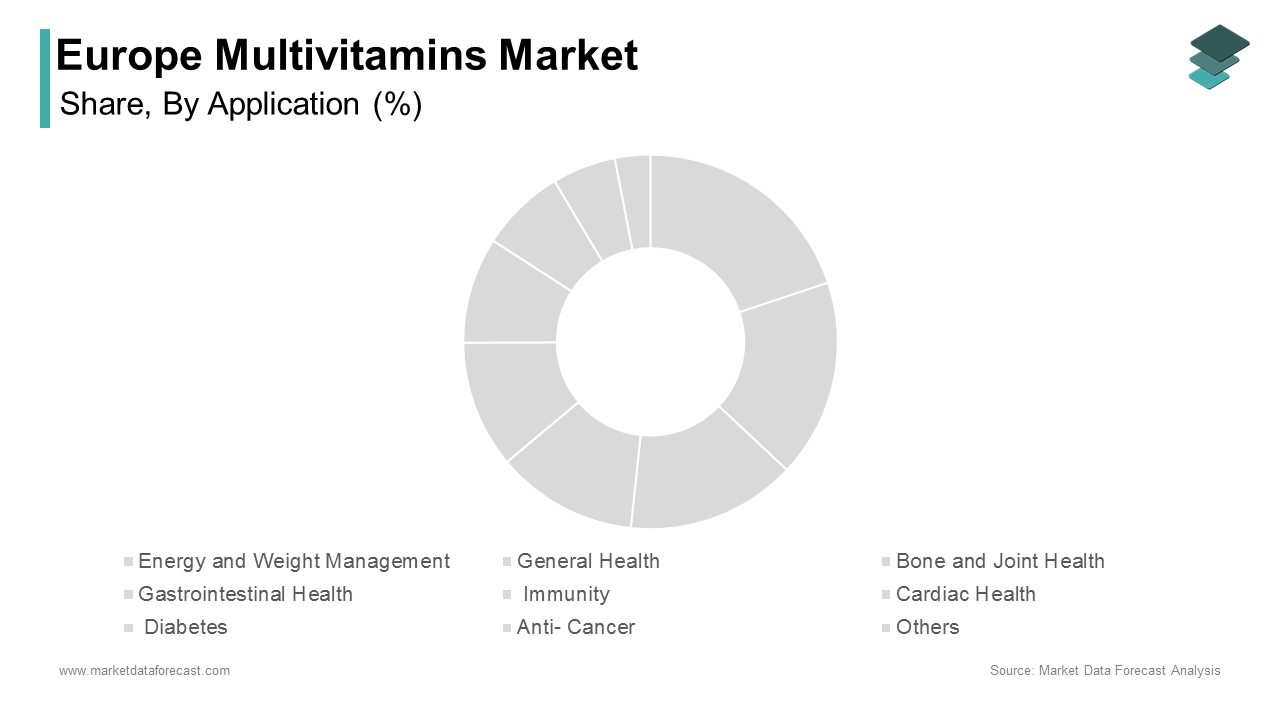
The immunity segment is the fastest-growing application category in the Europe multivitamins market and is anticipated to witness a CAGR of 9.12% over the forecast period, owing to the increasing public awareness of immune resilience following global health events and rising seasonal respiratory concerns. Vitamins C, D, and zinc are now routinely sought by consumers across age groups. According to the European Centre for Disease Prevention and Control, vitamin D deficiency is common during winter months, prompting national health bodies in Finland and Ireland to recommend daily supplementation. Retail sales data from IQVIA indicate immunity-focused multivitamins have grown in value across Western Europe. Brands have responded with transparent labeling highlighting clinically relevant dosages and natural sources. As preventive self-care becomes normalized, immunity transitions from seasonal demand to year-round wellness priority.
By End User Insights
The adults aged 18 to 64 segment constituted the dominant end-user segment in the Europe multivitamins market and accounted for 57.5% of the regional market share in 2025. The leading position of adults segment is mainly due to their dual role as primary household purchasers and individuals managing work-related stress, irregular diets, and preventive health goals. Urban professionals in cities like Berlin, Amsterdam, and Madrid report high levels of fatigue and low energy, driving demand for B complex and antioxidant-enriched formulas. According to the European Commission’s Special Eurobarometer on Health, many working-age Europeans believe they do not consume enough fruits and vegetables, creating a psychological need for nutritional backup. Supermarkets and online platforms cater to this demographic with convenient formats like gummies and effervescent tablets that fit busy lifestyles. Additionally, employer wellness programs in countries like Sweden and the Netherlands increasingly include multivitamin vouchers, institutionalizing supplementation as part of corporate health culture.
The geriatric segment is the fastest-growing end-user category in the Europe multivitamins market and is expected to exhibit a CAGR of 8.15% over the forecast period, owing to the rapidly growing European aging population. According to Eurostat, the proportion of seniors in the EU is steadily increasing. Age-related declines in nutrient absorption, particularly of vitamin B12, D, calcium, and magnesium, create a physiological necessity for supplementation. National guidelines reinforce this, with Germany’s Nutrition Society recommending daily vitamin D and B12 intake for all seniors, while France’s High Council for Public Health advocates fortified multivitamins for those with limited sun exposure or poor appetite. Pharmacy chains in the UK and Germany report growth in senior-specific multivitamin sales, often featuring easy-to-swallow capsules and joint or cognitive support blends. As life expectancy rises and healthy aging becomes a policy priority, multivitamins evolve from optional aids to essential components of elderly nutritional care.
REGIONAL ANALYSIS
Germany Multivitamins Market Analysis
Germany led the multivitamins market in Europe in 2025 by holding 24.4% of the regional market share. The dominance of Germany in the European market is attributed to its stringent regulatory environment, high health literacy, and robust pharmacy distribution network. German consumers exhibit strong trust in science-backed supplements. The country’s Apotheken system ensures professional guidance, driving demand for high-quality formulations with transparent labeling. As per the Robert Koch Institute, national health campaigns highlight micronutrient gaps, particularly vitamin D deficiency among adults in winter. Companies like Bayer and Abtei dominate with locally trusted brands that emphasize purity and compliance. Germany’s influence extends beyond borders, as its regulatory interpretations often shape EU-wide supplement standards. This fusion of scientific rigor, consumer awareness, and structured retail makes Germany the most influential and mature multivitamins market in Europe.
United Kingdom Multivitamins Market Analysis
The United Kingdom held the second-largest share of the European multivitamins market in 2025. The growth of the UK in the European market is driven by its openness to innovation, direct-to-consumer models, and digital health integration. British consumers are early adopters of personalized and functional multivitamins. Brands like Ritual and Heights leverage subscription models and clean label positioning to capture urban millennials. As per the UK Food Standards Agency, online nutrition services are increasingly used by consumers. The NHS’s updated guidance on vitamin D supplementation recommends daily intake for all adults, further normalizing use. Post Brexit, the UK has shown flexibility in approving novel nutrient forms faster than the EU, attracting startups. Online sales now represent a significant portion of the market, according to the Health Food Manufacturers’ Association, driven by convenience and tailored offerings. This dynamic ecosystem of digital engagement, regulatory agility, and wellness culture positions the UK as Europe’s most adaptive multivitamins market.
France Multivitamins Market Analysis
France is estimated to capture a promising share of the European multivitamins market during the forecast period. The strong emphasis of France on preventive medicine and pharmacist-led distribution is driving the French multivitamins market growth. A majority of multivitamins are sold through pharmacies, where trained professionals guide purchases based on individual needs. As per Santé Publique France, national campaigns promoting vitamin D and folate supplementation have increased public awareness, especially among women and seniors. French consumers favor minimalist formulations with natural ingredients, rejecting artificial additives, a preference reinforced by the clean label movement. Brands like Arkopharma and Oemine combine herbal traditions with micronutrient science, resonating with cultural values. The government’s NutriNet-Santé cohort study provides real-world evidence that informs public health messaging and product development. This synergy of professional oversight, scientific validation, and cultural alignment sustains France’s distinct and resilient multivitamins landscape.
Italy Multivitamins Market Analysis
Italy is predicted to grow at a healthy CAGR in the European multivitamins market during the forecast period due to its integration of supplementation into the Mediterranean lifestyle rather than as a clinical intervention. While traditional diets are nutrient-rich, modern shifts toward processed foods have created gaps, particularly in vitamin D and B12 among urban populations. As per Italy’s National Institute of Health, adults show suboptimal vitamin D levels in winter, which is prompting increased supplement use. Italian consumers prefer gentle, food-based multivitamins often combined with olive polyphenols or citrus bioflavonoids to enhance absorption. Pharmacies and parapharmacies serve as key channels, with brands like Bios Line and Solgar emphasizing natural sourcing and digestibility. The government’s National Prevention Plan includes micronutrient education, especially for pregnant women and the elderly. This holistic approach, where supplements complement rather than replace diet, positions Italy as a bridge between tradition and modern nutritional science.
Netherlands Multivitamins Market Analysis
The Netherlands is anticipated to record a steady CAGR in the European multivitamins market during the forecast period, owing to the high consumer trust in scientific validation and environmental responsibility. Dutch shoppers prioritize transparency. As per Statistics Netherlands, consumers check ingredient origins and sustainability certifications before purchasing. The country hosts leading research institutions like Wageningen University, which collaborates with brands on bioavailability studies and clean label innovation. Companies such as Orthica and AOV offer multivitamins in recyclable packaging with plant-based capsules and no synthetic additives. The Dutch Nutrition Centre actively promotes evidence-based supplementation, particularly for vitamin D and iodine. Additionally, the Netherlands serves as a logistics hub for pan-European e-commerce distribution, enabling rapid delivery of fresh inventory. This combination of scientific rigor, ecological consciousness, and efficient infrastructure makes the Netherlands a progressive and influential player in Europe’s evolving multivitamins sector.
COMPETITION OVERVIEW
The Europe multivitamins market features intense competition among multinational pharmaceutical spin-offs, national pharmacy brands, and agile digital natives. Legacy players like Haleon and Bayer dominate through brand recognition, scientific credibility, and extensive retail distribution, particularly in pharmacies. However, they face growing pressure from direct-to-consumer startups offering personalized clean-label and sustainably packaged alternatives at competitive prices. Private label offerings from retailers like DM Rossmann and Boots further compress margins in the mass segment. Regulatory complexity creates high barriers to entry, yet also limits innovation due to strict nutrient limits and claim restrictions. Differentiation increasingly hinges on transparency, sourcing ethics, and digital engagement rather than price alone. As consumers become more discerning about ingredient quality and environmental impact, the competitive landscape is shifting toward value-driven propositions that blend science, sustainability, and personalization across fragmented yet sophisticated European markets.
KEY MARKET PLAYERS
A few major players of the Europe multivitamins market include
- Bayer AG
- GlaxoSmithKline plc
- Sanofi S.A
- Pfizer Inc
- Nestlé Health Science
- Reckitt Benckiser Group plc
- Haleon plc
- Herbalife Nutrition Ltd
- Amway Corp
- Vitabiotics Ltd
Top Strategies Used by the Key Market Participants
Key players in the Europe multivitamins market focus on scientific substantiation through clinical studies and partnerships with academic institutions to build consumer trust and comply with EU health claim regulations. They reformulate products to meet clean label demands by removing artificial additives and using bioavailable nutrient forms such as methylcobalamin and cholecalciferol. Companies invest in sustainable packaging, including recyclable bottles and plant-based capsules, to align with EU Green Deal objectives. Digital transformation is central to personalized recommendation engines, subscription models, and e-commerce optimization, enhancing direct consumer relationships. Additionally, they tailor formulations for specific demographics such as seniors, pregnant women, and urban professionals to address evolving nutritional needs and lifestyle trends across diverse European markets.
Leading Players in the Europe Multivitamins Market
- Bayer AG is a global life science leader with deep roots in the Europe multivitamins market through its well-established One A Day and Berocca brands. The company supplies a wide range of general health and targeted multivitamin formulations across pharmacies, supermarkets,s and online channels throughout the continent. Bayer leverages its scientific heritage to ensure product quality, clinical relevance, and regulatory compliance under EU food supplement directives. Recently, the company reformulated its core multivitamin lines to include bioavailable forms of vitamin D,3 B12, and folate while eliminating artificial colors and preservatives. It also launched a digital wellness platform in Germany and France, offering personalized supplement recommendations based on lifestyle questionnaires, reinforcing its shift toward consumer-centric preventive health solutions.
- Haleon plays a pivotal role in the Europe multivitamins market as the owner of globally recognized brands, including Centrum and Supradyn. Headquartered in the UK, the company serves millions of European consumers with science-backed multivitamin products tailored for adults, seniors, and specific health needs such as immunity and energy. Haleon invests heavily in clinical research to substantiate nutrient efficacy and collaborates with European universities on micronutrient bioavailability studies. In recent years, it has prioritized sustainability by transitioning Centrum packaging to recyclable materials and introducing plant-based capsule options. The company also enhanced its e-commerce capabilities across Western Europe, enabling direct consumer engagement and subscription-based delivery models that align with modern purchasing behaviors.
- Pfizer’s legacy in the Europe multivitamins market endures through its iconic Centrum franchise, which remains a benchmark for comprehensive daily nutrition. Although now under Haleon’s portfolio, Centrum continues to operate with strong regional autonomy in key markets like Italy, Spain, and Germany. The brand is renowned for its balanced formulations, third-party testing, and alignment with European dietary reference values. Recent initiatives include the launch of Centrum Specialist lines targeting immunity, bone health, and mental performance using clinically studied nutrient levels. Pfizer’s historical investment in consumer education campaigns about micronutrient gaps has helped normalize daily supplementation across generations, reinforcing trust and habitual use in diverse European households.
MARKET SEGMENTATION
This research report on the Europe multivitamins market has been segmented and sub-segmented based on application, end user, & region.
By Application
- Energy and Weight Management
- General Health
- Bone and Joint Health
- Gastrointestinal Health
- Immunity
- Cardiac Health
- Diabetes
- Anti- Cancer
- Others
By End User
- Adults
- Geriatric
- Pregnant Women
- Children and Infants
By Region
- UK
- France
- Spain
- Germany
- Italy
- Russia
- Sweden
- Denmark
- Switzerland
- Netherlands
- Turkey
- Czech Republic
- Rest of Europe