- Product Description Description
- Table of Contents TOC
- List of Table & Figure LOT
- Get Free Sample PDF Sample PDF
Executive Summary: Europe Nail Salon Market
- Market Scope: Comprehensive Europe nail salon market analysis covering service types, end-user profiles, age groups, distribution channels, and regional leadership frameworks across key European economies.
- Market Valuation: The European market for nail salons held a significant regional share of 21.4%, driven by a knowledgeable consumer base, strict regulatory standards, and high emphasis on quality and hygiene.
- Primary Growth Drivers: Rising personal grooming habits, increasing disposable incomes, expansion of organized salon networks, and a strong consumer shift toward clean, eco-friendly, vegan, and non-toxic nail care products and professional certified technician services.
Key Market Segment Metrics
| Category | Leading Segment (Position) | Fastest-Growing Segment |
|---|---|---|
| By Service Type | Manicure (established as the largest revenue-generating service segment) | UV Gel Overlays and Extensions (identified as the most lucrative, fast-growing service) |
| By End User | Women (representing the primary consumer base and largest market revenue contributor) | Men and Gender-Neutral demographics (experiencing rising adoption of professional grooming) |
| By Age Group | 19 to 40 years (accounting for the highest concentration of regular salon-goers) | Above 60 years and younger demographics seeking specialized nail health care |
| By Region / Country | Germany and Western Europe (leading regional market share driven by high urban spending power) | France (projected to register the highest country-level growth rate) |
Major Market Players & Market Structure
Market Structure: Highly fragmented yet increasingly professionalized European landscape featuring specialized urban salons, premium wellness chains, and independent boutiques competing on hygiene standards, organic formulations, client loyalty, and specialized technical skill sets.
Key Companies: Revive Nails & Co., HM Nail Salon & Spa, Alluring Nails & Tanning, Milano Nail Spa, Soho Beauty & Nail Boutique, J and J Nails & Spa, Hana Nail Spa, Shian Nails Beauty, and regional independent operators.
Europe Nail Salon Market Size
The europe nail salon market was valued at USD 3815.16 million in 2025, is expected to have a 7.3% CAGR from 2026 to 2034, and be worth USD 7913 million by 2034 from USD 4093.67 million in 2026.
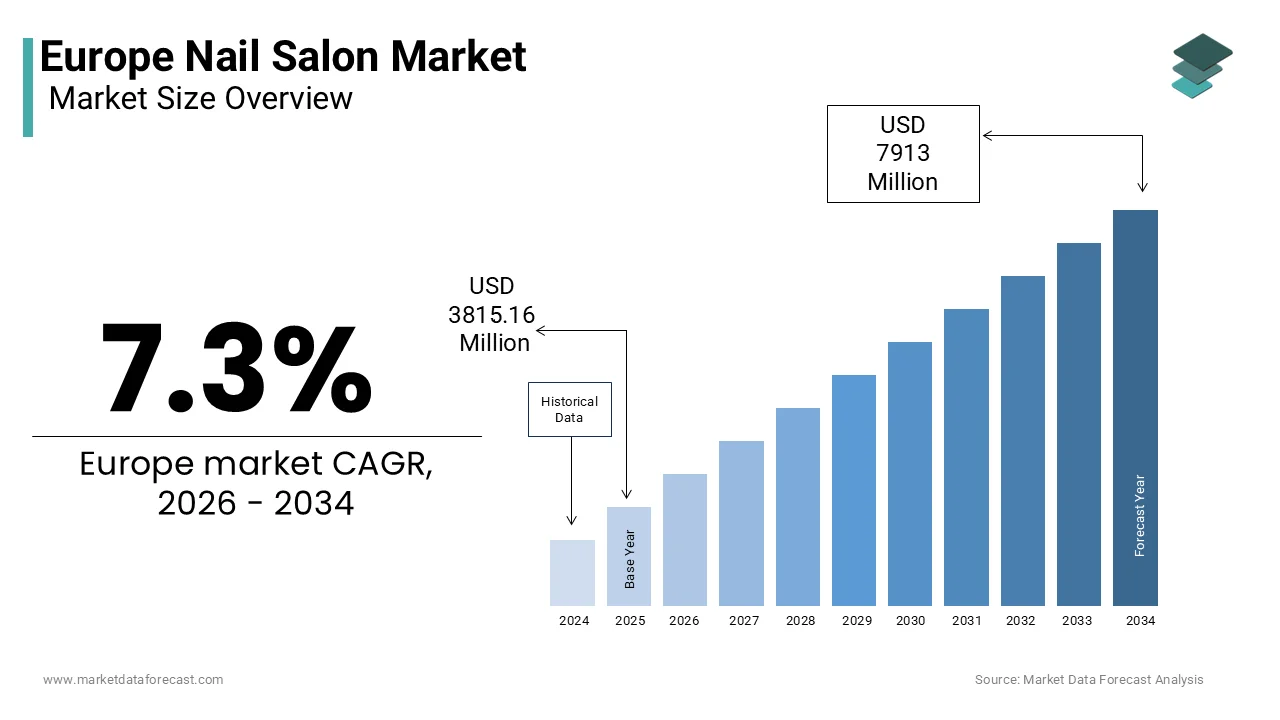
Nail salons constitute a specialized segment of the personal care and beauty industry, focusing on manicure, pedicure, and nail art services provided in professional settings. This sector has evolved from basic grooming into a sophisticated wellness and aesthetic experience, driven by changing consumer perceptions of self-care and personal presentation. The market encompasses independent boutiques, franchise chains, and spa-integrated salons across major economies including France, Germany, the United Kingdom, and Italy. As per Eurostat, the personal service sector in the European Union employs over 3 million individuals, with beauty and hair care establishments representing a significant portion of this workforce. The rise of social media platforms has transformed nail aesthetics into a form of digital expression, influencing trends and driving frequent visits among younger demographics. According to the European Commission, consumer expenditure on personal care services has shown resilience despite economic fluctuations, indicating a shift toward affordable luxuries. The industry is characterized by high fragmentation, with a mix of highly skilled artisans and standardized service providers. Regulatory standards regarding hygiene, chemical safety, and labor practices strictly govern operations, ensuring consumer protection. The integration of advanced technologies such as gel polish curing systems and digital design tools has elevated service quality. This market continues to adapt to sustainability demands, with increasing adoption of non-toxic products and eco-friendly practices, reflecting broader societal values while maintaining its role as a key driver of local service economy growth.
MARKET DRIVERS
Influence of Social Media and Digital Beauty Trends
The pervasive influence of social media platforms is primarily driving the growth of the European nail salon market, which is transforming nail art into a visible and shareable form of personal expression. Platforms such as Instagram, TikTok, and Pinterest have created a visual culture where intricate nail designs gain viral status, prompting consumers to seek professional replication of these trends. According to Meta, over 60% of users in Europe engage with beauty-related content weekly, with nail art tutorials and showcases generating billions of views annually. This digital exposure creates immediate demand for specific styles, colors, and techniques, driving frequent salon visits as trends evolve rapidly. The phenomenon of "nail influencing" has empowered technicians to build personal brands, attracting clients who value artistic skill and uniqueness. Younger demographics, particularly Generation Z and Millennials, view nail care as an essential accessory rather than occasional maintenance, leading to higher visit frequency. According to data from Kantar, 45% of European women aged 18 to 34 schedule nail appointments based on social media inspiration. This trend encourages salons to invest in skilled artists and diverse product ranges to meet varied aesthetic demands. The immediacy of digital trends shortens the lifecycle of styles, necessitating continuous innovation from service providers. Consequently, salons that actively engage with online communities and showcase their work digitally experience higher footfall and customer loyalty, reinforcing the symbiotic relationship between digital visibility and physical service demand.
Rising Disposable Income and Affordability of Premium Services
Increasing disposable income levels and the perception of nail care as an affordable luxury significantly drive the Europe nail salon market expansion. Despite economic pressures, consumers prioritize small indulgences that offer immediate psychological benefits and enhanced self-esteem. According to the Organisation for Economic Cooperation and Development, household disposable income in many Western European countries has stabilized, allowing for sustained spending on personal care services. Nail services are positioned as accessible premium experiences, costing significantly less than other beauty treatments like hair coloring or spa therapies, making them frequent choices for regular upkeep. The average cost of a manicure in major European cities ranges from 20 to 50 euros, fitting comfortably within monthly discretionary budgets for a large segment of the population. As per Euromonitor International, the personal care sector has seen consistent growth in value sales, with nail services contributing substantially due to their recurring nature. Consumers are increasingly willing to pay extra forhigh-qualityy products such as gel polishes, acrylics, and organic treatments that promise durability and health benefits. This willingness to upgrade from basic services to premium offerings boosts average transaction values for salons. Furthermore, the gift economy supports this driver, with nail vouchers remaining popular presents for birthdays and holidays. The combination of financial accessibility and emotional reward ensures steady demand, even during periods of broader economic uncertainty, solidifying nail salons as resilient components of the service economy.
MARKET RESTRAINTS
Stringent Health and Safety Regulations Regarding Chemical Exposure
Strict health and safety regulations concerning chemical exposure in nail products are impacting the regional market growth negatively. European authorities enforce rigorous standards under the Registration, Evaluation, Authorisation and Restriction of Chemicals regulation, which limits the use of certain substances such as formaldehyde, toluene, and dibutyl phthalate in cosmetic products. According to the European Chemicals Agency, compliance with these regulations requires salons to source certified products, maintain detailed safety data sheets, and ensure proper ventilation systems to protect both staff and clients from volatile organic compounds. Implementing these safety measures involves substantial capital investment in infrastructure upgrades and ongoing training for employees. Small independent salons often struggle with the financial burden of compliance, leading to market consolidation or closure. Additionally, frequent updates to regulatory lists require constant monitoring and adaptation, creating administrative overhead. As per the European Agency for Safety and Health at Work, occupational exposure to nail chemicals remains a concern, prompting stricter enforcement of protective equipment usage. These regulatory pressures increase operational costs, which may be passed on to consumers, potentially reducing price sensitivity and demand. While necessary for public health, the complexity and cost of adherence limit the ease of entry for new entrepreneurs and constrain the profitability of existing businesses, particularly those lacking economies of scale to absorb compliance expenses efficiently.
High Labor Costs and Skilled Technician Shortages
The Europe nail salon market faces significant constraints due to high labor costs and a persistent shortage of skilled technicians, which impact service availability and pricing. The beauty industry relies heavily on manual dexterity and artistic skill, requiring extensive training and certification that vary across European countries. According to Eurostat, the labor cost index in the accommodation and food service activities sector, which includes personal care, has risen by approximately 4% annually in recent years, outpacing inflation in many regions. In countries with strong labor protections such as France and Germany, minimum wage increases and social security contributions further elevate operational expenses. Simultaneously, there is a mismatch between the demand for high-quality nail services and the supply of qualified professionals. Vocational training programs often lack sufficient capacity or appeal to younger workers who may prefer less physically demanding careers. As per the European Federation of Hairdressers and Beauticians, many salons report difficulties in recruiting experienced staff, leading to longer wait times and reduced service capacity. This shortage forces salons to offer higher wages to retain talent, squeezing profit margins. Additionally, the physical nature of the job leads to high turnover rates due to ergonomic strain and burnout. These labor dynamics restrict the ability of salons to expand operations or reduce prices, limiting market growth and accessibility for price-sensitive consumers while challenging the sustainability of small business models.
MARKET OPPORTUNITIES
Integration of Eco-Friendly and Non-Toxic Product Lines
The growing consumer demand for sustainable and health-conscious beauty solutions presents a major opportunity for the Europe nail salon market to differentiate through eco-friendly and non-toxic product lines. Increasing awareness of the environmental impact of traditional nail polishes and removers has driven interest inwater-basedd, vegan, and cruelty-free alternatives. According to a survey by the Soil Association, over 50% of European consumers actively seek out natural and organic personal care products, indicating a robust market for green beauty services. Salons that adopt brands certified by organizations such as Ecocert or Cosmos can attract environmentally conscious clients who prioritize transparency and safety. This shift allows operators to command premium pricing for specialized services that align with ethical values. Furthermore, the reduction of hazardous waste through biodegradable materials and recycling programs enhances brand reputation and compliance with emerging environmental regulations. The European Green Deal encourages businesses to adopt circular economy principles, providing potential incentives for sustainable practices. By marketing themselves as clean beauty destinations, salons can tap into a loyal niche audience that values health and sustainability. Partnerships with innovative startups developing plant-based nail enhancements offer exclusive product offerings that competitors may lack. This transition not only mitigates regulatory risks associated with chemical usage but also future-proofs the business against shifting consumer preferences, creating a competitive advantage in an increasingly discerning market.
Expansion of Male Grooming and Gender Neutral Services
The expanding acceptance of male grooming and gender neutral beauty services offers a significant growth avenue for the Europe nail salon market, which is breaking traditional gender stereotypes. Societal shifts toward inclusivity and self-expression have led to increased interest in nail care among men and non-binary individuals, particularly in urban centers. According to Mintel, the male grooming market in Europe has grown by 15% in recent years, with nail care emerging as a notable sub-segment. Men are increasingly seeking manicures for hygiene, professional appearance, and personal style, moving beyond basic trimming to include polishing and art. Salons that create welcoming, non-judgmental environments and market services specifically to male clients can capture this underserved demographic. Marketing campaigns featuring diverse models and inclusive language help normalize nail care for all genders. Additionally, corporate wellness programs are beginning to include grooming services, providing B2B opportunities for salons to offer group packages. The rise of gender neutral branding in beauty products supports this trend, with major brands launching unisex nail polish lines. By diversifying their client base, salons can reduce dependency on traditional female demographics and increase revenue streams. This expansion requires staff training in different aesthetic preferences and communication styles, but the potential for market enlargement is substantial. Embracing inclusivity positions salons as modern, progressive businesses aligned with contemporary social values.
MARKET CHALLENGES
Economic Volatility and Inflationary Pressures on Consumer Spending
Economic volatility and persistent inflationary pressures pose a major challenge to the Europe nail salon market by eroding consumer purchasing power and altering spending priorities. Rising costs of living, including energy, housing, and food, force households to reconsider discretionary expenditures, with personal care services often among the first to be reduced or postponed. According to the European Central Bank, inflation rates in the euro area have remained elevated, impacting real income levels and consumer confidence. Nail services, while relatively affordable, are perceived as non-essential by many during financial uncertainty, leading to decreased visit frequency or trading down to cheaper alternatives such as home kits. Cost-push inflation also affects salon operations, with increases in rent, utilities, and product prices squeezing margins. Operators face the dilemma of raising prices to cover costs, which may further deter price-sensitive customers, or absorbing losses to maintain clientele. Small independent salons are particularly vulnerable as they lack the bargaining power to negotiate better supply terms. As per Statista, consumer spending on personal care services showed signs of contraction in several European markets during peak inflation periods. This economic environment requires salons to demonstrate clear value propositions and offer flexible pricing models to retain customers. Navigating this financial landscape demands strategic cost management and innovative marketing to justify expenditure amidst broader household budget constraints.
Competition from At Home DIY Nail Care Products
The rapid advancement and accessibility of at-home DIY nail care products are further challenging the regional market expansion. Technological innovations have improved the quality of home manicure kits, gel polish systems, and nail art tools, enabling consumers to achieve salon-like results without professional assistance. According to NielsenIQ, sales of home nail care products in Europe have increased by 12% annually, which is reflecting a shift toward self-service beauty routines. The convenience of performing nail care at home saves time and money, appealing to busy professionals and budget-conscious consumers. Online tutorials and social media guides further empower individuals to master techniques previously reserved for professionals. This trend reduces the frequency of salon visits, particularly for basic maintenance services such as standard manicures and pedicures. Salons must compete not only with each other but with the entire retail beauty sector. The perception of DIY as a viable long-term solution undermines the value proposition of professional services unless salons can offer superior expertise, complex designs, or therapeutic benefits that cannot be replicated at home. This competition forces salons to innovate continuously and emphasize the experiential aspects of their services, such as relaxation and personalized consultation, to justify the premium over home-based options.
REPORT COVERAGE
| REPORT METRIC | DETAILS |
| Market Size Available | 2025 to 2034 |
| Base Year | 2025 |
| Forecast Period | 2026 to 2034 |
| Segments Covered | By Service End User Age Group and Region. |
| Various Analyses Covered | Global, Regional Country-Level Analysis, Segment-Level Analysis, Drivers, Restraints, Opportunities, Challenges; PESTLE Analysis; Porter’s Five Forces Analysis, Competitive Landscape, Analyst Overview of Investment Opportunities |
| Countries Covered | UK, France, Spain, Germany, Italy, Russia, Sweden, Denmark, Switzerland, Netherlands, Turkey, Czech Republic, and the Rest of Europe. |
| Market Leaders Profiled | Regal Nails Salon & Spa, Nails Inc., Ladurée Beauty Bar, LeSalon, TOWNHOUSE Salon, Nail’d It London, Wah Nails, DryBy London, The Nail Spa, Candy Coat, Lynk & Co Beauty Studio, The Nail Garden, The Ten Spot, Frenchies Modern Nail Care, Nailberry Ltd., LUXE Nail Bar, Mani & Pedi Spa, Nail’d It Boutique Spa, Allure Nails & Spa, and Luminous Nail Studio. |
SEGMENTAL ANALYSIS
By Service Insights
The manicure services segment captured the largest share of the European market in 2025 and is likely to maintain its prominent position in the European nail salon market over the next few years due to high frequency of demand and status as a primary grooming essential. Hands are constantly visible in daily interactions, making well-maintained nails a key component of personal hygiene and aesthetic appeal. According to Euromonitor International, manicures account for approximately 65% of total nail service revenue in Western Europe, driven by the need for regular upkeep every two to three weeks. A primary driver is the corporate culture in major European economies, where polished appearance is often linked to professionalism and credibility. As per LinkedIn data, professionals who maintain groomed appearances report higher confidence levels in client-facing roles, reinforcing the habit of regular manicures. The second driving factor is the versatility of manicure services, which range from basic filing and polishing to complex gel and acrylic applications. This variety allows salons to cater to diverse budgets and preferences, ensuring broad market penetration. The rise of quick-service manicure bars in urban centers like London and Paris has further increased accessibility, reducing appointment times to less than 30 minutes. As per Statista, the average consumer in Europe visits a nail salon for manicure services 12 times annually, significantly more than other beauty treatments. This high recurrence rate creates a stable revenue base for salons, which is making manicures the cornerstone of the industry despite the growing popularity of other services.
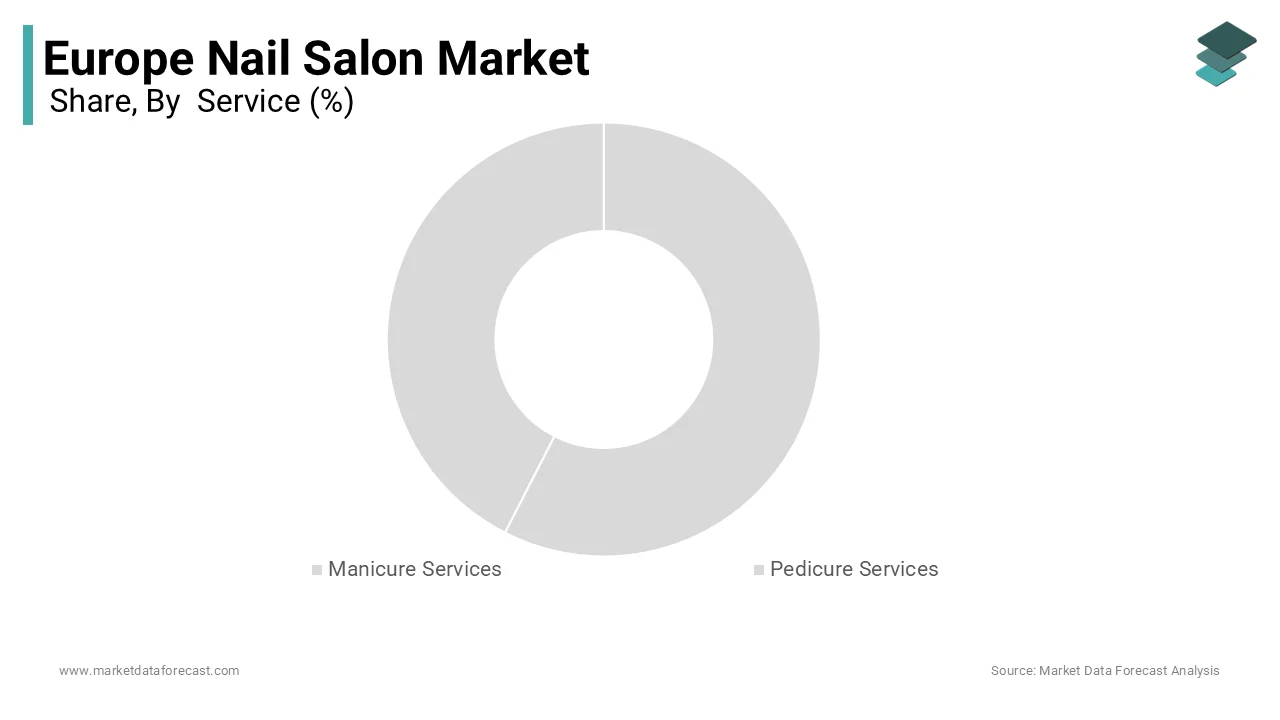
On the other side, the pedicure segment is poised for significant expansion and is predicted to record a CAGR of 8.4% over the forecast period owing to the increasing health consciousness and the recognition of foot care as an integral part of overall wellness rather than just cosmetic enhancement. Consumers are becoming more aware of issues such as fungal infections, calluses, and poor circulation, which is prompting them to seek professional pedicures for therapeutic benefits. According to the European Podiatry Association, over 40% of adults in Europe experience foot-related problems annually, which is driving demand for specialized care that combines aesthetics with medical attention. The rising trend of self-care and relaxation, where pedicures are viewed as a luxurious escape from daily stress,s is further contributing to the expansion of the pedicure segment in the European market. Spa-integrated salons offer extended pedicure packages that include massages, exfoliation, and aromatherapy, appealing to consumers seeking holistic experiences. As per Mintel, sales of foot care products and services have increased by 15% in recent years, reflecting this shift in consumer priority. Additionally, the summer tourism season in Southern Europe boosts demand for sandal-ready feet, creating seasonal spikes that contribute to annual growth. The integration of advanced technologies such as paraffin wax treatments and LED therapy further enhances the appeal of professional pedicures, distinguishing them from home-based alternatives and justifying premium pricing.
By End User Insights
The women's segment led the market by holding the leading share of the European market in 2025 and is anticipated to continue its dominance in the European market for the next few years, as nail maintenance remains a standard practice within female beauty routines. Women constitute the leading end-user segment in the Europe nail salon market due to longstanding cultural norms and societal expectations regarding feminine grooming. Nail care has traditionally been marketed as a core element of female beauty routines, reinforced by decades of advertising and media representation. According to Kantar, 70% of women in Europe consider nail maintenance a non-negotiable part of their monthly budget, prioritizing it alongside hair and skin care. The social pressure and peer influence that encourage regular salon visits for events, holidays, and professional settings are further aiding the dominance ofthe women'sn segment in the European market. Social media platforms amplify this behavior, with influencers showcasing intricate nail art that inspires imitation and frequent updates. The second driving factor is the wide variety of services tailored specifically to women, including elaborate designs, extensions, and seasonal color trends that foster creativity and self-expression. Salons often create welcoming environments with amenities such as complimentary beverages and comfortable seating, enhancing the experiential aspect of the service. As per Nielsen data, women are more likely to bundle nail services with other beauty treatments such as waxing or facials, increasing the average transaction value. This bundling behavior strengthens customer loyalty and ensures consistent footfall. Despite evolving gender norms, the entrenched habit of regular nail care among women remains the primary revenue generator for the industry, providing a stable foundation for market operations.
On the other side, the men's segment is a promising segment and is expected to record a CAGR of 8.8% in the European market during the forecast period owing to the dismantling of traditional gender stereotypes and the broader acceptance of male grooming as a standard practice. Younger generations, particularly Millennials and Generation Z, are increasingly open to beauty services that enhance their appearance and hygiene without stigma. According to a survey by YouGov, 35% of men aged 18 to 34 in Europe have visited a nail salon in the past year, a significant increase from previous decades. A key driver is the professional requirement for well-groomed hands in customer-facing industries, where neat nails are perceived as a sign of attention to detail and professionalism. The second factor is the influence of male celebrities and athletes who openly discuss their grooming routines, normalizing nail care for men. Brands are responding by launching gender neutral marketing campaigns and offering simplified service menus focused on cleaning, shaping, and buffing rather than polishing. As per Statista, the male grooming market in Europe is expanding rapidly, with nail care being one of the fastest-adopting subcategories. Salons that create inclusive environments and train staff to serve male clients effectively are capturing this untapped potential, diversifying their revenue streams and reducing dependency on female demographics.
By Age Group Insights
The 19-to 40-year age group segment dominated the market by capturing the leading share of the European market in 2025 and is likely to remain the primary customer base for the next few years due to high digital engagement and a strong focus on professional and social aesthetics. The 19 to 40 years age group holds the leading share in the Europe nail salon market, driven by high disposable income, active social lives, and strong engagement with digital beauty trends. This demographic represents the core workforce and student population, who prioritize personal appearance for career advancement and social interaction. According to Eurostat, individuals in this age bracket spend approximately 25% more on personal care services compared to older generations, reflecting their willingness to invest in self-presentation. A primary driver is the influence of social media, where platforms like Instagram and TikTok dictate rapid trend cycles that this tech-savvy group eagerly follows. As per the data from Hootsuite, 80% of users in this age range discover new beauty services through social media, leading to frequent experimentation with styles and colors. The second driving factor is the prevalence of life events such as weddings, parties, and vacations that necessitate professional nail services. This group views nail care as an affordable luxury that provides immediate gratification and confidence boosts. As per Mintel, this demographic is also the most likely to adopt new technologies such as gel polish and nail art stickers, driving innovation in salon offerings. Their high frequency of visits and openness to premium services make them the most valuable customer segment for salons seeking sustainable growth and brand loyalty.
However, the 41 years and above age group segment is estimated to showcase a healthy CAGR of 6.65% during the forecast period in the European market as older generations continue to prioritize wellness, active aging, and self-care. This growth is fueled by an aging population that remains active, health-conscious, and financially stable. Older consumers are increasingly viewing nail care as a therapeutic and social activity rather than just a cosmetic necessity. According to the World Health Organization, the proportion of people aged 60 and older in Europe is expected to reach 30% by 2050, creating a large and loyal customer base. A key driver is the focus on foot health and circulation, with many seniors seeking regular pedicures to manage conditions such as dry skin and nail thickening. The second factor is the availability of leisure time and pension income, which allows this group to indulge in regular self-care routines without financial strain. As per AARP, older adults are among the most loyal customers for service-based businesses, preferring consistent providers and personalized attention. Salons are adapting by offering comfortable seating, longer appointment times, and specialized treatments for mature nails. This demographic values quality and hygiene over trendy designs, leading to higher satisfaction and retention rates. The shift toward healthy aging and wellness supports the sustained growth of this segment in the coming years.
COUNTRY LEVEL ANALYSIS
UK Nail Salon Market Analysis
The UK dominated the market by holding 21.5% of the regional market share in 2025 and is expected to sustain its position as a major European market for nail services, with ongoing expansion driven by high consumer demand and an innovative freelance workforce for the next few years. The market is characterized by a high concentration of independent salons and franchise chains in cities like London, Manchester, and Birmingham. According to the British Beauty Council, the UK beauty industry contributes over 2 billion pounds annually to the economy, with nail services representing a significant share. A major driving factor is the multicultural demographic, which brings diverse beauty traditions and a high demand for intricate nail art. The prevalence of South Asian and Eastern European communities has influenced the popularity of detailed designs and acrylic extensions. The second factor is the robust gig economy, which supports a flexible workforce of freelance nail technicians operating from home or rented chairs. This model lowers entry barriers and increases service availability. However, regulatory scrutiny regarding hygiene and licensing is tightening, pushing the market toward formalization. The rise of nail bars in shopping centers and transport hubs caters to busy professionals seeking convenience. Despite economic pressures, the UK market remains resilient due to the strong cultural emphasis on personal grooming and the social nature of salon visits.
France Nail Salon Market Analysis
France is poised to maintain its reputation for elegance and high-quality services, with steady growth expected as the country leverages its luxury heritage to cater to both domestic and international clients over the next few years. France occupies a sophisticated niche in the Europe nail salon market due to its emphasis on elegance and high-quality standards. The French market prioritizes natural looks and classic manicures over extravagant art, reflecting the country’s fashion heritage. According to the Federation of Beauty Companies in France, the personal care sector is highly regulated, ensuring strict hygiene and product safety protocols. A key driver is the strong domestic production of luxury beauty brands that supply salons with premium polishes and care products. This association with luxury enhances the perceived value of salon services. The second factor is the tourism industry, particularly in Paris and the Riviera, which drives demand from international visitors seeking authentic French beauty experiences. Salons in these areas often offer bilingual services and upscale amenities to cater to global clients. Additionally, the French work-life balance allows time for regular self-care appointments, sustaining steady demand. The market is also influenced by government initiatives promoting artisanal skills, supporting small independent salons that offer personalized service. France’s focus on quality and tradition ensures a stable and high-value market segment within the broader European landscape.
Germany Nail Salon Market Analysis
Germany will likely continue to lead in professional service standards and health-conscious nail care, with consistent growth projected as the aging population seeks more functional and therapeutic beauty services over the next few years. Germany represents a significant and structured market for nail salons in Europe, characterized by a preference for efficiency and hygiene. The German market is known for its high standards of cleanliness and professional certification requirements for beauty technicians. According to the German Federal Statistical Office, the personal service sector has seen steady growth, driven by an aging population and increasing health awareness. A primary driver is the strong demand for medical pedicures and foot care services, as Germans prioritize functional health alongside aesthetics. Many salons collaborate with podiatrists to offer comprehensive foot treatments. The second factor is the high disposable income in major cities like Berlin and Munich, which supports regular spending on premium beauty services. The market is also influenced by the presence of large pharmacy chains that sell professional-grade nail care products, encouraging home maintenance between salon visits. Regulatory frameworks ensure that only certified professionals can perform certain treatments, maintaining high service quality. The integration of digital booking systems and cashless payments further enhances customer convenience. Germany’s market demonstrates how regulatory rigor and health consciousness can drive a mature and reliable nail salon market.
Spain Nail Salon Market Analysis
Spain is expected to enjoy a vibrant and growing e-commerce and retail-connected service market, with the warm climate and social culture likely to fuel continued demand for aesthetic services for the next few years. Spain holds a vibrant and growing share of the Europe nail salon market, driven by a strong culture of socializing and personal presentation. The Spanish market is characterized by a high frequency of salon visits, particularly among younger demographics who view nail care as a social activity. According to the Spanish Confederation of Hairdressers and Beauticians, the beauty sector has recovered strongly post-pandemic, with nail services leading the resurgence. A key driver is the warm climate, which encourages open footwear and thus increases demand for pedicures throughout much of the year. Coastal tourism also boosts demand in regions like Costa del Sol and Barcelona, where visitors seek quick and affordable beauty services. The second factor is the competitive pricing structure, with many salons offering affordable packages to attract students and young professionals. Social media influence is particularly strong in Spain, with local influencers driving trends in bright colors and artistic designs. The market is fragmented, with many small family-run salons competing alongside international chains. Despite economic fluctuations, the cultural importance of looking well groomed ensures consistent demand for nail services across the country.
Italy Nail Salon Market Analysis
Italy is set to remain a stylish and trend-conscious market, with high-end craftsmanship expected to drive consumer loyalty and steady market performance for the next few years. Italy maintains a stylish and influential position in the Europe nail salon market where fashion and aesthetics are deeply intertwined. The Italian market is known for its appreciation of high-quality materials and skilled craftsmanship in nail art. According to the Italian National Institute of Statistics, the personal care sector benefits from a strong domestic fashion industry that sets global trends in beauty and style. A primary driver is the cultural emphasis on la bella figura, or making a good impression, which motivates regular grooming habits among both men and women. The second factor is the prevalence of small boutique salons that offer personalized and artistic services, catering to discerning clients who value uniqueness. Major cities like Milan and Rome serve as hubs for innovation, attracting international talent and introducing new techniques. The market is also supported by a robust supply chain of local manufacturers producing high-end nail products. Tourism plays a significant role, with visitors seeking authentic Italian beauty experiences. While economic challenges exist, the strong cultural value placed on appearance sustains a resilient and quality-focused market.
COMPETITIVE LANDSCAPE
Competition in the Europe nail salon market is highly fragmented and intense, characterized by a mix of large franchise chains, independent boutiques,s and freelance technicians. Major players compete on brand recognition, service quality,ity and location convenience while smaller operators differentiate through personalized care and niche specialties. Price sensitivity varies across regions,gions with Northern Europe favoring premium services and Southern Europe focusing on affordability. Innovation in nail art techniques and product formulations serves as a key differentiator, attracting trend-conscious consumers. Digital presence and social media engagement are critical for customer acquisition and retention in this visually driven industry. Labor shortages and rising operational costs pressure margins, forcing operators to optimize efficiency through technology and streamlined processes. Regulatory compliance regarding hygiene and chemical safety creates barriers to entry but ensures high industry standards. The rise of mobile nail services and home kits adds further competition by offering convenience alternatives. Overall, market participants must continuously adapt to changing trends, regulatory shifts, and consumer preferences to maintain relevance and profitability in this diverse and evolving landscape.
KEY MARKET PLAYERS
Some of the companies that are playing a dominant role in the global nail salon market include
- Regal Nails Salon & Spa
- Nails Inc.
- Ladurée Beauty Bar
- LeSalon
- TOWNHOUSE Salon
- Nail’d It London
- Wah Nails
- DryBy London
- The Nail Spa
- Candy Coat
- Lynk & Co Beauty Studio
- The Nail Garden
- The Ten Spot
- Frenchies Modern Nail Care
- Nailberry Ltd.
- LUXE Nail Bar
- Mani & Pedi Spa
- Nail’d It Boutique Spa
- Allure Nails & Spa
- Luminous Nail Studio
TOP LEADING PLAYERS IN THE MARKET
- The Nail Bar operates as a prominent franchise network across Europe, specializing in high-qualitymanicure and pedicure services with a focus on speed and consistency. The company has established a strong presence in major shopping centers and urban hubs by offering standardized service menus and trained technicians. Recent actions include expanding its footprint into Eastern European markets to capture emerging demand and introducing eco-friendly product lines to align with sustainability trends. The firm has also invested in digital booking platforms to enhance customer convenience and reduce wait times. By maintaining strict hygiene standards and offering competitive pricing, The Nail Bar attracts a broad demographic of clients seeking reliable beauty services. Its franchise model allows for rapid scalability while ensuring brand uniformity across different locations. These strategic initiatives strengthen its reputation as a trusted provider in the competitive European landscape.
- Sally Beauty Holdings plays a critical role in the Europe nail salon market by supplying professional-grade products and tools to independent salons and technicians. The company operates numerous retail stores and an extensive online platform that serves both professionals and DIY consumers. Recent actions involve launching exclusive private label nail care brands that offer high performance at accessible price points. The firm has also enhanced its B2B services by providing educational workshops and certification programs for nail artists. Partnerships with leading international manufacturers ensure a diverse product portfolio, including gel polishes and acrylic systems. By supporting the professional community with training and resources, Sally Beauty strengthens its position as a key enabler of the industry. Its focus on innovation and customer support drives loyalty among salon owners and freelance technicians across the continent.
- Beauty Works is a significant player in the European nail salon sector, known for its chain of upscale salons that offer comprehensive beauty treatments,s including advanced nail art. The company focuses on delivering premium experiences through skilled artisans and luxurious salon environments. Recent actions include integrating augmented reality tools that allow clients to visualize nail designs before application, enhancing customer satisfaction. The firm has also expanded its mobile service offerings to cater to busy professionals who prefer home visits. Collaborations with fashion brands have introduced limited-edition nail collections that drive foot traffic and media attention. Beauty Works prioritizes staff development through continuous training in the latest techniques and trends. These efforts differentiate the brand in a crowded market and attract clientele seeking personalized and innovative beauty solutions. Its commitment to quality and technology reinforces its leadership position in the premium segment.
TOP STRATEGIES USED BY KEY MARKET PARTICIPANTS
Key players in the Europe nail salon market employ digital integration as a primary strategy to enhance customer engagement and operational efficiency. They utilize mobile apps for seamless booking reminders and loyalty rewards, which increase retention rates. Product differentiation is achieved through the adoption ofnon-toxicc and vegan formulations that appeal to health-conscious consumers. Franchising models enable rapid expansion with lower capital risk while maintaining brand consistency across regions. Training and certification programs ensure high service quality and technician competence, which builds consumer trust. Strategic partnerships with fashion and beauty influencers drive brand visibility and trend adoption. Sustainability initiatives such as waste reduction and eco-friendly packaging align with regulatory requirements and consumer values. Pricing strategies often include bundle offers and membership plans to encourage frequent visits. These approaches collectively help participants navigate competitive pressures and meet evolving consumer expectations in the dynamic European market.
MARKET SEGMENTATION
This research report on the europe nail salon market is segmented and sub-segmented into the following categories:
By Service
- Manicure Services
- Pedicure Services
- Others
By End User
- Women
- Men
By Age Group
- Under 18 Years
- 19 to 40 Years
- 41 Years & Above
By Country
- United Kingdom
- France
- Germany
- Italy
- Spain
- Rest of Europe