- Product Description Description
- Table of Contents TOC
- List of Table & Figure LOT
- Get Free Sample PDF Sample PDF
Market Size, 2025
$2.33 BnMarket Estimate, 2026
$2.59 BnMarket Forecast, 2034
$6.15 BnCAGR, 2026–2034
11.4%Europe Radiopharmaceuticals Market Summary
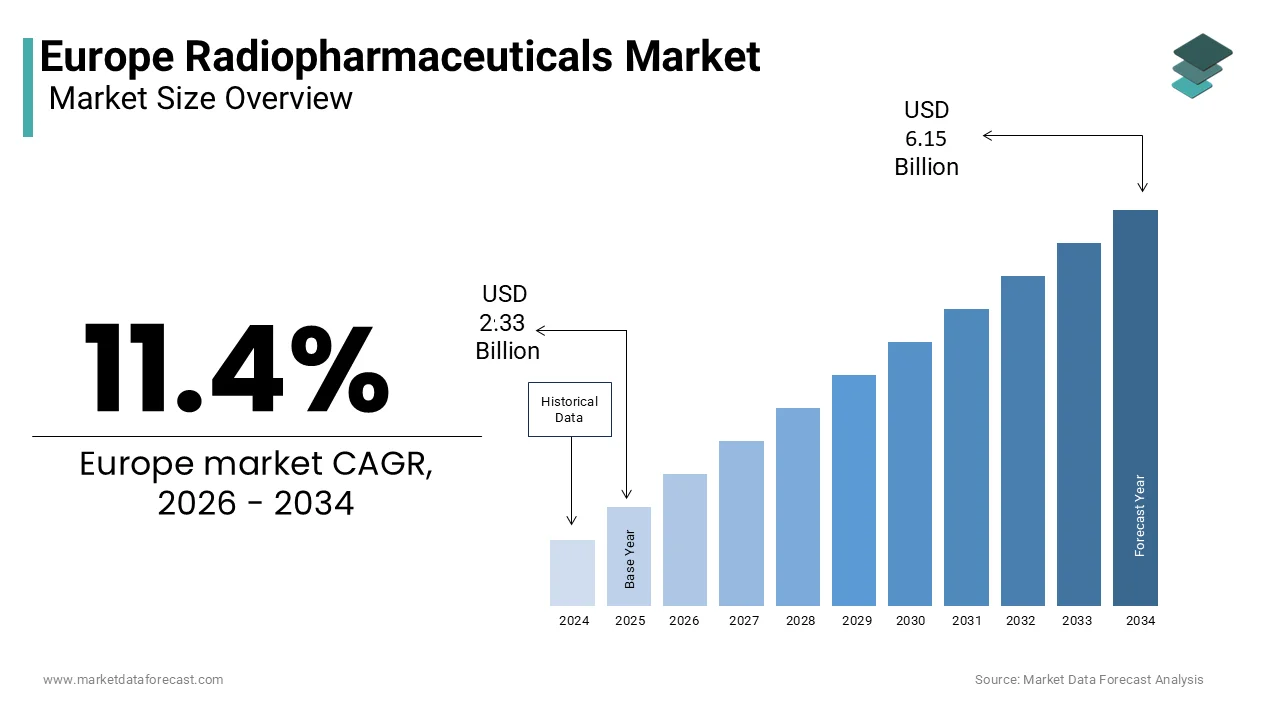
The Europe radiopharmaceuticals market, valued at USD 2.33 billion in 2025, is projected to reach USD 6.15 billion by 2034, expanding at a CAGR of 11.4%, driven by cancer prevalence, theranostics adoption, and growing demand for precision nuclear medicine diagnostics and therapies.
Key Market Insights
- 2025 Market Size: USD 2.33 billion
- 2026 Market Size: USD 2.59 billion
- 2034 Forecast: USD 6.15 billion
- CAGR (2026–2034): 11.4%
- Base Year: 2025
- Forecast Period: 2026–2034
Quick Growth Drivers
- Rising cancer incidence across Europe
- Expansion of PET and SPECT imaging in oncology and cardiology
- Rapid adoption of theranostics (Ga-68 / Lu-177 pairs)
- Increasing neurodegenerative disease diagnostics
- Strong reimbursement momentum in Germany, France, and the Nordics
- An aging population is driving demand for precision diagnostics
Principal Restraints
- Lengthy and fragmented EMA and national regulatory approvals
- Stringent radiation safety and handling requirements
- High compliance costs for manufacturing and distribution
- Dependence on aging nuclear reactors for Mo-99 supply
- Limited scalability of alternative isotope production technologies
High-Value Opportunities
- Integration of theranostics into national oncology pathways
- Expansion of alpha-emitting radionuclides (Ac-225, Pb-212)
- Growth in neuro PET tracers for Alzheimer’s and Parkinson’s disease
- Investment in cyclotron-based and accelerator-based isotope production
- Public funding under Horizon Europe and national cancer missions
Key Market Challenges
- Extremely short half-lives create logistical complexity
- Uneven access to PET facilities in rural and Eastern Europe
- Fragile medical isotope supply chains
- Acute shortage of radiochemists and nuclear medicine technologists
- High capital requirements for GMP radiopharmaceutical infrastructure
Fastest-Growing Segments
- Therapeutic Radiopharmaceuticals (Lu-177, alpha emitters)
- Oncology Applications (PSMA, NETs, thyroid cancer)
- Neurology Radiotracers (amyloid and tau PET)
- Alpha-emitter–based targeted therapies
Regional Leadership & Dynamics
- Germany (21.8%) theranostics reimbursement leader, cyclotron density
- France (17.4%) has centralized planning and strong isotope manufacturing
- United Kingdom NICE-backed PSMA PET adoption, alpha research
- Italy is expanding diagnostic access under NRRP funding
- Switzerland's early adoption and regulatory agility, isotope R&D hub
What Wins Commercially
- Vertical integration across isotope production → labeling → distribution
- Reliable access to critical isotopes (Mo-99, Lu-177, Ga-68)
- Strong hospital and academic partnerships
- Regulatory expertise across fragmented EU frameworks
- Investment in automation, logistics, and workforce training
Top Strategic Ask for Executives
Secure isotope supply and scale theranostic and alpha-emitting pipelines through vertically integrated production, regulatory harmonization, and academic collaboration to capture Europe’s rapidly expanding precision nuclear medicine demand.
Leading Players
Some of the companies that are playing a dominating role in the European radiopharmaceuticals market include:
GE HealthCare, Curium Pharma, Bayer AG, Bracco Imaging S.p.A, Lantheus Medical Imaging, IBA Molecular Imaging, Hologic Inc., Medix Inc., Positron Corporation, Naviscan Inc., and Segami Corporation.
Europe Radiopharmaceuticals Market Size
The Europe Radiopharmaceuticals Market was valued at USD 2.33 billion in 2025, is expected to have 11.4% CAGR from 2026 to 2034, and be worth USD 6.15 billion by 2034 from USD 2.59 billion in 2026.
Radiopharmaceuticals are radioactive compounds used primarily in diagnostic imaging and targeted radionuclide therapy. These agents combine a radioisotope with a biologically active molecule to visualize or treat diseases at the molecular level particularly in oncology cardiology and neurology. As of 2025, nuclear medicine procedures in Europe exceed 9 million annually. According to the European Association of Nuclear Medicine,d this reflects deep integration into standard clinical pathways. As per data from the Joint Research Centre of the European Commission, the region hosts over 120 cyclotrons dedicated to medical isotope production, which indicates infrastructure maturity. According to the European Medicines Agency, regulatory frameworks ensure stringent quality control, while as per the Euratom Supply Agency, initiatives reinforce secure access to critical isotopes such as molybdenum 99 and lutetium 177. With aging populations and rising cancer incidence, the demand for precision diagnostics and theranostics continues to grow, shaping a dynamic ecosystem where innovation in radiochemistry converges with evolving healthcare delivery models across European nations.
MARKET DRIVERS
Rising Incidence of Cancer Across Europe Fuels Diagnostic and Therapeutic Demand
Cancer remains one of the leading causes of morbidity and mortality in Europe and is one of the major factors propelling the growth of the European radiopharmaceuticals market. As per the European Commission’s Joint Research Centre in 2024, approximately 3.9 million new cases are diagnosed annually. This escalating burden has intensified reliance on nuclear medicine for both early detection and personalized treatment. Radiopharmaceuticals such as fluorodeoxyglucose labelled with fluorine 18 are routinely used in positron emission tomography scans to stage tumors and monitor therapeutic response. According to Eurostat, metastatic prostate cancer affects over 470,000 men yearly in Europe, and theranostic pairs like gallium 68 and lutetium 177 have revolutionized its management. National health systems increasingly recognize the cost-effectiveness of these precision approaches, which are reducing unnecessary surgeries and ineffective chemotherapy cycles. Countries including Germany, France, and the Netherlands have expanded reimbursement policies for radiopharmaceutical based procedures, reflecting clinical validation and public health prioritization. This epidemiological pressure,e combined with advances in molecular targeting, ensures sustained demand for both diagnostic and therapeutic radiopharmaceuticals across diverse oncology indications throughout the region.
Expansion of Neurodegenerative Disease Diagnostics Drives Uptake of Novel Tracers
As per the European Brain Council in 2024, neurodegenerative disorders particularly Alzheimer’s disease affect more than 9 million people in the European Union. Conventional diagnostic methods often fail to differentiate between dementia subtypes until advanced stages, prompting the adoption of amyloid and tau PET imaging using radiopharmaceuticals such as florbetapir fluorine 18 and flortaucipir fluorine 18. These tracers enable in vivo visualization of pathological protein aggregates years before symptom onset, facilitating earlier intervention and clinical trial enrollment. According to the European Academy of Neurology, amyloid PET is now recommended in ambiguous cognitive cases, aligning with updated diagnostic criteria. As per national neurology registries, Germany alone performs over 25,000 amyloid PET scans annually, demonstrating real-world integration. According to the European Medicines Agency, regulatory approvals for next-generation tracers targeting alpha synuclein in Parkinson’s disease signal expanding applications. As per Eurostat, life expectancy in Europe is projected to reach 83 years by 2030, expanding the pool of at-risk individuals and accelerating demand for accurate differential diagnostics. This trend positions radiopharmaceuticals as indispensable tools in managing an aging continent’s neurological health challenges.
MARKET RESTRAINTS
Stringent Regulatory and Radiation Safety Protocols Delay Market Entry
The commercialization of radiopharmaceuticals in Europe faces prolonged timelines due to rigorous oversight by multiple regulatory bodies, including the European Medicines Agency, national competent authorities, and radiation protection agencies under the Euratom Directive, which is a significant restraint to the growth of the European radiopharmaceuticals market. Unlike conventional drugs, radiopharmaceuticals must comply with additional requirements covering handling, transport, waste disposal, and facility licensing, which vary significantly across member states. As per case studies reviewed by the Paul Scherrer Institute in Switzerland, obtaining approval for a new therapeutic radiopharmaceutical can take up to 24 months longer than for a standard oncology drug. The 2021 revision of the Basic Safety Standards Directive imposed stricter dose constraints and staff training mandates, increasing operational complexity for hospitals and manufacturers alike. According to the Italian National Institute of Health, regulatory divergence between regions caused a six-month delay in the nationwide rollout of a lutetium 177-based therapy. Such fragmentation elevates compliance costs and discourages smaller innovators from entering the market, limiting therapeutic diversity and slowing patient access to nuclear medicine solutions despite strong clinical need.
Limited and Fragile Supply Chain for Critical Medical Radioisotopes
Europe’s dependence on a narrow network of aging nuclear reactors for key isotopes such as molybdenum-99 creates persistent vulnerability in radiopharmaceutical availability, which is further hampering the growth of the European radiopharmaceuticals market. As per the Organisation for Economic Cooperation and Development Nuclear Energy Agency in 2023, over 60% of the continent’s molybdenum-99 supply originates from just two facilities, the BR2 reactor in Belgium and the HFR reactor in the Netherlands. Both reactors are over 50 years old and subject to unplanned outages. According to the European Directorate for the Quality of Medicines, the most recent outage in 2022 caused a 30% drop in regional technetium 99m generator deliveries. Technetium 99m, derived from molybdenum 9,9 is used in nearly 80% of all diagnostic nuclear medicine procedures in Europe, totaling more than 7 million scans yearly. Although alternative production methods using cyclotrons and linear accelerators are emerging, they remain insufficient to meet large-scale demand. As per the European Commission’s 2023 Strategic Agenda for Medical Isotopes, this fragility is acknowledged, and diversified production is called for, but implementation lags. Consequently, hospitals frequently face rationing or rescheduling of critical scans, undermining timely diagnosis and eroding confidence in nuclear medicine as a reliable clinical modality.
MARKET OPPORTUNITIES
Theranostics Integration into National Oncology Care Pathways
The formal incorporation ofradiopharmaceutical-basedd theranostics into national cancer care guidelines offers a transformative opportunity across Europe in the European radiopharmaceuticals market. As per the New England Journal of Medicine, the VISION trial demonstrated a 38% reduction in death risk for metastatic castration resistant prostate cancer patients treated with prostate-specific membrane antigen-targeted lutetium 177 therapy. In 2023, Germany became the first country to include this therapy in its statutory health insurance reimbursement scheme. According to health technology assessment bodies in France and Sweden, favorable recommendations have been issued based on real-world evidence showing improved progression-free survival and quality of life. As per the European Society for Medical Oncology, PSMA theranostics are now listed as a standard option in clinical practice guidelines, reinforcing legitimacy. According to the Robert Koch Institute, Germany records over 75,000 new prostate cancer cases annually, which makes the addressable patient population substantial. Beyond prostate cancer, trials for somatostatin receptor-targeted therapies in neuroendocrine tumors are yielding comparable success, prompting broader adoption.
Advancement in Alpha Emitting Radionuclides for Precision Targeted Therapy
The clinical exploration of alpha-emitting radiopharmaceuticals such as actinium 225 and lead 212 offers unprecedented opportunities due to their high linear energy transfer and short path length, enabling precise tumor cell eradication with minimal damage to surrounding healthy tissue. As per the European Organisation for Research and Treatment of Cancer, a multicenter phase II trial was launched in 2024 evaluating actinium 225 PSMA 617 in patients with advanced prostate cancer who failed prior beta emitter therapy. According to The Lancet Oncology, pilot studies at Heidelberg University Hospital showed complete biochemical responses in 22% of heavily pretreated patients. As per the German Federal Ministry of Education and Research, €45 million was allocated in 2023 to establish a national alpha isotope production and distribution network. According to the UK’s National Physical Laboratory, partnerships with private firms are underway to develop scalable generator systems for lead 212. As per the European Commission’s Horizon Europe program, alpha therapeutics have been prioritized under the cancer mission initiative. With over 20alpha-basedd candidates in preclinical development across European institutions, this emerging class could redefine treatment paradigms for micrometastatic and treatment-resistant cancers in the coming decade.
MARKET CHALLENGES
Short Physical Half Lives Impose Logistical and Operational Constraints
The extremely limited shelf life of many diagnostic and therapeutic radiopharmaceuticals presents a formidable operational barrier across Europe, which is a major opportunity in the European radiopharmaceuticals market. Fluorine 18 used in PET imaging has a half-life of just 110 minutes, requiring synthesis and administration within hours of production. Lutetium 17, 7 though more stable at 67 ho, urs still demands rapid distribution to maintain potency. According to a 2023 survey by the European Association of Nuclear Medicine, over 40% of European hospitals lack on site radiopharmaceutical preparation capabilities. As per the World Health Organization’s European Observatory on Health Systems and Policies, patients in rural regions of Spain and Romania often travel more than 150 kilometers to access PET services. Cold chain logistics temperature-sensitive precursors add further complexity, especially during summer months when ambient temperatures accelerate decay. These constraints limit equitable access and increase per-dose costs due to batch wastage and expedited transport. Despite advances in automated synthesis modules and drone delivery pilots, scalability remains elusive, making consistent service delivery a persistent challenge in decentralized healthcare landscapes.
Workforce Shortages in Nuclear Medicine and Radiochemistry
A critical deficit of trained professionals threatens the sustainable expansion of radiopharmaceutical services across Europe, which is further challenging the expansion of the European radiopharmaceuticals market. As per the European Federation of Radiographer Societies, a shortfall of over 8,000 nuclear medicine technologists is expected by 2026, driven by retirements and insufficient training pipelines. According to the European Radiochemistry Society, fewer than 300 certified radiochemists practice in the entire European Union, largely concentrated in Germany, the Netherlands, and Sweden. In countries like Poland and Greece, universities offer no dedicated radiochemistry programs, forcing reliance on foreign expertise or outsourcing. As per the European Commission’s 2024 Workforce in Health report, nuclear medicine is identified as a high-risk specialty for service disruption due to human capital gaps. Without urgent investment in education, accreditation, and cross-border credential recognition, the capacity to manufacture, administer, and interpret radiopharmaceutical-based procedures will remain bottlenecked even as demand surges. This human infrastructure gap may ultimately constrain Europe’s ability to fully harness the potential of precision nuclear medicine despite technological readiness.
REPORT COVERAGE
| REPORT METRIC | DETAILS |
| Market Size Available | 2025 to 2034 |
| Base Year | 2025 |
| Forecast Period | 2026 to 2034 |
| Segments Covered | By Type, Application, and Country. |
| Various Analyses Covered | Global, Regional & Country Level Analysis, Segment-Level Analysis; DROC, PESTLE Analysis, Porter's Five Forces Analysis, Competitive Landscape, Analyst Overview of Investment Opportunities |
| Country Covered | UK, Germany, Italy, France, Spain, Sweden, Denmark, Poland, Switzerland, Netherlands, Rest of Europe. |
| Market Leader Profiled | GE Healthcare, Hologic Inc., Medix Inc., Segami Corporation, Positron Corporation, Bracco Imaging S.p.A |
SEGMENTAL ANALYSIS
By Type Insights
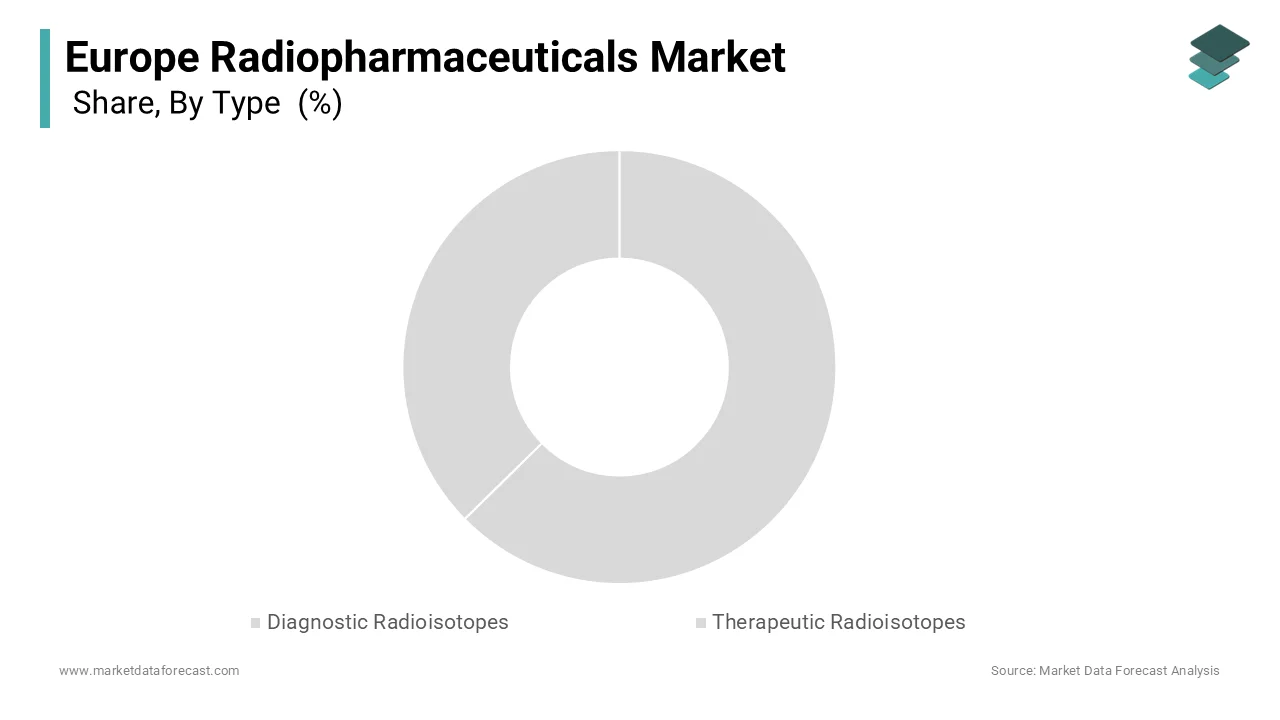
The diagnostic radioisotopes segment dominated the market and accounted for 61.6% of the European radiopharmaceuticals market share in 2025. The dominance of this segment in the European market is attributed to its entrenched role in routine clinical imaging. As per the Organisation for Economic Cooperation and Development Nuclear Energy Agency, technetium 99m powers over 80% of all nuclear medicine diagnostic procedures across the continent. The extensive infrastructure of gamma cameras and SPECT systems in European hospitals further entrenches reliance on these isotopes. Additionally, national screening programs for cardiovascular and oncological conditions in countries like Germany and France mandate regular imaging, which is contributing to consistent demand. Reimbursement policies in most EU member states also favor diagnostic procedures due to their cost-effectiveness in early disease detection, reducing long term treatment burdens. These structural and policy-level enablers sustain the leadership of diagnostic radioisotopes despite the rapid rise of therapeutic alternatives.
The therapeutic radioisotopes segment is growing exponentially and is anticipated to register the fastest CAGR by type in this regional market during the forecast period. As per the European Medicines Agency, lutetium 177-based agents such as lutetium Lu 177 vipivotide tetraxetan received full marketing authorization in 2022 following the VISION trial. According to the New England Journal of Medicine, this trial demonstrated a median overall survival improvement in metastatic prostate cancer patients. National health systems are increasingly integrating these therapies into standard care pathways, with Germany and Sweden leading reimbursement adoption. Furthermore, the expansion of theranostic platforms where the same molecular target is used for both diagnosis and therapy streamlines clinical workflows and enhances treatment personalization. According to the European Union Clinical Trials Register, over 120 clinical trials involving therapeutic radioisotopes are currently active across Europe, which is signalling robust pipeline momentum and institutional confidence in this modality’s future.
By Application Insights
Among application segments, the oncology segment commanded the largest share of 51.5% of the regional market in 2025. As per the European Commission’s Joint Research Centre, millions of new cancer cases are diagnosed each year across the region. Radiopharmaceuticals play a dual role in oncology, enabling precise tumor localization through PET and SPECT imaging and delivering cytotoxic radiation directly to malignant cells via targeted therapies. According to Eurostat, metastatic prostate cancer affects a large number of men annually in Europe, and the integration of prostate-specific membrane antigen imaging using gallium 68, followed by treatment with lutetium 17,7 has become standard in managing this disease. National comprehensive cancer centers in France, Germany, and the Netherlands have established dedicated theranostic units, accelerating adoption. Moreover, European oncology guidelines now routinely recommend molecular imaging for staging recurrent disease and monitoring response, thereby institutionalizing radiopharmaceutical use across the care continuum from diagnosis to palliation.
The neurology segment is on the rise and is estimated to grow at a prominent CAGR of 13.3% in the European market over the forecast period. According to the same council’s 2024 update, millions of individuals in the European Union live with Alzheimer’s disease. Conventional cognitive assessments lack specificity, prompting the adoption of amyloid and tau PET tracers such as florbetapir fluorine 18 and flortaucipir fluorine 18, which received European Medicines Agency approval in 2021 and 2023, respectively. As per the German Center for Neurodegenerative Diseases, Germany performs thousands of amyloid PET scans annually, reflecting real-world integration. According to the European Academy of Neurology, biomarker-based diagnostics have been included in revised guidelines to standardize use in differentiating Alzheimer’s from frontotemporal dementia or Lewy body disease. As per Eurostat, life expectancy in the EU is projected to reach 83 years by 2030, expanding the pool of patients requiring differential diagnosis and fuelling sustained demand for neurological radiopharmaceuticals beyond current indications.
COUNTRY LEVEL ANALYSIS
Germany Radiopharmaceuticals Market Analysis
Germany dominated the radiopharmaceuticals market in Europe in 2025 by holding 21.8% of the regional market share. The dominance of Germany in the European market is attributed to its advanced nuclear medicine infrastructure comprising over 400 certified nuclear medicine departments and more than 60 cyclotrons dedicated to medical isotope production, as per published research on cyclotron operations iGerman-speakingng countries. Germany was the first European nation to establish nationwide reimbursement for lutetium 177 PSMA therapy in 2023, following robust health technology assessment outcomes. The presence of major research institutions such as Heidelberg University Hospital and the Helmholtz Zentrum München accelerates clinical translation of novel radiotracers. Additionally, stringent but clear regulatory pathways under the Paul Ehrlich Institute facilitate faster market entry for innovative products. As per the Federal Office for Radiation Protection, about 2.1 million nuclear medicine procedures are performed annually inGermany. With strong public investment in precision oncology, Germany remains the undisputed epicenter of radiopharmaceutical innovation and utilization in Europe.
France Radiopharmaceuticals Market Analysis
France occupied a 17.4% of theEuropeane radiopharmaceuticals market share in 2025. The growth of France in the European market is driven by centralized healthcare planning and strategic investments in molecular imaging. France pioneered the use of fluorine 18 DOPA for neuroendocrine tumor imaging and maintains leadership in radioiodine therapy for thyroid disorders. In 2024, the government allocated 120 million euros under its Cancer Plan 2023 2030 to expand theranostic capabilities in regional hospitals. France also hosts key manufacturing facilities for GE HealthCare and Curium, ensuring a stable domestic supply of critical isotopes. Its robust academic clinical network, including Institut Gustave Roussy, enables rapid validation and scaling ofnext-generationn radiopharmaceutical protocols, reinforcing its pivotal role in the European landscape.
United Kingdom Radiopharmaceuticals Market Analysis
The United Kingdom is anticipated to exhibit a promising CAGR in the European radiopharmaceuticals market during the forecast period, owing to the integrated research and clinical delivery systems. Nuclear medicine procedures are widely conducted across NHS trusts, with oncology applications forming a significant proportion of usage. The National Institute for Health and Care Excellence issued updated guidance in 202,3, endorsing PSMA PET CT for high-risk prostate cancer staging,g accelerating adoption across NHS trusts. The UK is home to the National Physical Laboratory,ry which collaborates with industry to develop alpha-emitting isotopes such as actinium 225 for advanced therapies. Despite Brexit-related regulatory adjustments, the Medicines and Healthcare products Regulatory Agency maintains alignment with European standards,s facilitating continued access to novel agents. The government’s Life Sciences Vision initiative has committed 150 million pounds to advance radiopharmaceutical manufacturing and workforce training, ensuring long term competitiveness in the high-value sector.
Italy Radiopharmaceuticals Market Analysis
Italy is estimated to account for a prominent share of the European radiopharmaceuticals market during the forecast period, owing to the high disease burden and expanding diagnostic access. Nuclear medicine procedures are widely performed annually in Italy,with cardiac stress testing using technetium 99m remaining prevalent due to high rates of ischemic heart disease, which is the leading cause of death in thecountry. AHAA/ASA Journals. Italy operates more than 200 authorized nuclear medicine units, though distribution is uneven,n with southern regions lagging in advanced PET availability. Recent reforms under the National Recovery and Resilience Plan allocated 85 million euros in 2023 to modernize imaging infrastructure and train specialists. The country also hosts significant production capacity through IRE EL, iT a subsidiary of the Belgian IRE group,oup ensura ing reliable supply of gallium 68 and lutetium 177 generators. Collaborative networks like the Italian Association of Nuclear Medicine promote protocol harmonization, enhancing quality and uptake across diverse healthcare settings.
Switzerland Radiopharmaceuticals Market Analysis
Switzerland is projected to register a healthy CAGR in theEuropeane radiopharmaceuticals market during the forecast period due to its scientific excellence and regulatory agility. Switzerland aligns closely with European Medicines Agency standards, enabling swift access to approved radiopharmaceuticals. The Paul Scherrer Institute operates one of Europe’s most advanced proton therapy and isotope research facilities,s producing novel isotopes like terbium 161 for experimental therapies. Swissmed, in the national regulation, has approved lutetium 177 PSMA therapy within three months of EMA clearance, ance demonstrating efficient review processes. Leading academic hospitals in Zurich, Geneva and Basel participate in multinational trials and often serve as early adopters of precision radiopharmaceutical protocols. Combined with strong private insurance coverage and high healthcare expenditure,nditure Switzerland maintains a sophisticated niche market that punches above its demographic weight in radiopharmaceutical innovation and delivery.
COMPETITIVE LANDSCAPE
European radiopharmaceuticals market features a competitive landscape shaped by a mix of multinational pharmaceutical giants, specialized radiopharma companies, and imaging technology providers. Competition centers on innovation in isotope chemistry, regulatory agility, and logistical mastery due to the short half-lives of key products. Established players leverage decades of nuclear medicine expertise while newer entrants focus on niche therapeutic isotopes like actinium 225 or terbium 161. The market is characterized by high barriers to entry, including capital-intensive production facilities, complex licensing,g and a shortage of radiochemistry talent. Despite th, is, collaboration often outweighs pure rivalry as companies partner on isotope supply, clinical trials, and manufacturing to de-risk development. National healthcare policies and reimbursement decisions further influence competitive dynamics, making adaptability to local frameworks essential. This environment fosters both intense specialization and strategic interdependence among participants striving to meet Europe’s growing demand for precision diagnostics and targeted radiotherapies.
KEY MARKET PLAYERS
Companies playing a notable role in the European Radiopharmaceuticals market and profiled in this report are
- GE Healthcare
- Hologic Inc.
- Medix Inc.
- Segami Corporation
- Positron Corporation
- Bracco Imaging S.p.A
- Naviscan Inc.
- Bayer Healthcare
- Lantheus Medical Imaging, Inc.
- IBA Molecular Imaging
TOP LEADING PLAYERS IN THE MARKET
- Curium Pharma is a leading European radiopharmaceutical company with a strong presence in both diagnostic and therapeutic segments. The company operates one of the largest global networks for radioisotope production,n including facilities in France and the Netherlands that supply critical isotopes such as iodine 1,31 lutetium 177, and technetium 99m generators across Europe and North America. Curium contributes significantly to global nuclear medicine by ensuring reliable large-scale production and distribution of GMP-compliant radiopharmaceuticals. Recently, the company expanded itsMo-999 processing capacity at its Petten site to address chronic supply shortages and invested in automated synthesis modules to enhance production efficiency. These initiatives reinforce its role as a backbone supplier in the international radiopharmaceutical ecosystem while strengthening resilience in Europe’s medical isotope infrastructure.
- Bayer AG has emerged as a major force in the European radiopharmaceuticals market through its strategic acquisition of Noria Therapeutics and its pioneering work in targeted radionuclide therapy. The company’s flagship product, Pluvicto lutetium Lu 177 vipivotide tetraxeta,n received European Medicines Agency approval in 2022 and is now integrated into prostate cancer treatment guidelines across multiple EU countries. Bayer leverages its global oncology expertise and commercial infrastructure to accelerate patient access and physician adoption. In recent years, rs the company has significantly expanded its radiopharmaceutical pipeline, including alpha-emitting candidates and novel targeting vectors. It also established a dedicated radioligand therapy unit in Berlin to coordinate research, manufacturing,g and clinical development,nt reinforcing its long-term commitment to advancing precision oncology through nuclear medicine innovations on a global scale.
- GE HealthCare plays a pivotal role in tEuropeanope radiopharmaceuticals market by integrating imaging hardware with radiopharmaceutical solutions to enable end-to-end diagnostic workflows. The company supplies cyclotrons, radiochemistry ssynthesizersPET tracerscerse , rs including fluoro-18, ,F DG across more than 30 European countries. GE HealthCare’s contribution to the global market lies in its ability to standardize production protocols and ensure consistent tracer quality through its FASTlab platform, which is installed in over 150 European radiopharmacies. Recently,ently the company launcnext-generationration tracer production system compliant with updated European radiation safety standards and partnered with academic centers to validate novel neurology and oncology tracers. These actions enhance diagnostic accuracy and expand access to molecular imaging, thereby solidifying GE HealthCare’s position as an enabler of precision medicine across Europe and worldwide.
TOP STRATEGIES USED BY THE KEY MARKET PARTICIPANTS
Key players in theEuropeane radiopharmaceuticals market prioritize vertical integration by controlling isotope production, radiolabelin,, and distribution to ensure supply chain reliability. Strategic acquisitions of specialized biotech firms allow rapid expansion of therapeutic ppipelineses particularly in oncology theranostics. Companies heavily invest in regulatory harmonization efforts to navigate fragmented national approvals and align with European Medicines Agency standards. Collaborations with academic hospitals and research institutes accelerate clinical validation of novel tracers and therapies. Additionally, firms are adopting digital platforms for dose tracking, logistics optimization, and real-time quality control to comply with stringent radiation safety directives while improving operational efficiency across multi-country operations.
MARKET SEGMENTATION
This research report on the European radiopharmaceuticals market has been segmented and sub-segmented into the following categories.
By Type
-
Diagnostic Radioisotopes
-
SPECT
-
Technetium-99m
-
Thallium-201
-
Gallium-67
-
Iodine-23
-
Others
-
-
PET
-
Fluorine-18
-
Rubidium-82
-
Others
-
-
-
Therapeutic Radioisotopes
-
Beta Emitters
-
Iodine-131
-
Yttrium-90
-
Samarium-153
-
Rhenium-186
-
Lutetium-177
-
-
Alpha Emitters
-
Radium-223
-
-
Brachytherapy
-
Cesium-131
-
Iodine-125
-
Palladium-103
-
Iridium-192
-
-
By Application
- Cardiology
- Lymphoma
- Thyroid
- Neurology
- Oncology
- Others
By Country
- UK
- France
- Spain
- Germany
- Italy
- Russia
- Sweden
- Denmark
- Switzerland
- Netherlands
- Turkey
- Czech Republic
- Rest of Europe