- Product Description Description
- Table of Contents TOC
- List of Table & Figure LOT
- Get Free Sample PDF Sample PDF
Market Size, 2025
$147.31 MnMarket Estimate, 2026
$153.91 MnMarket Forecast, 2034
$218.49 MnCAGR, 2026–2034
4.48%Europe Onion Seed Market Size, Growth, Trends & Forecast (2026–2034)
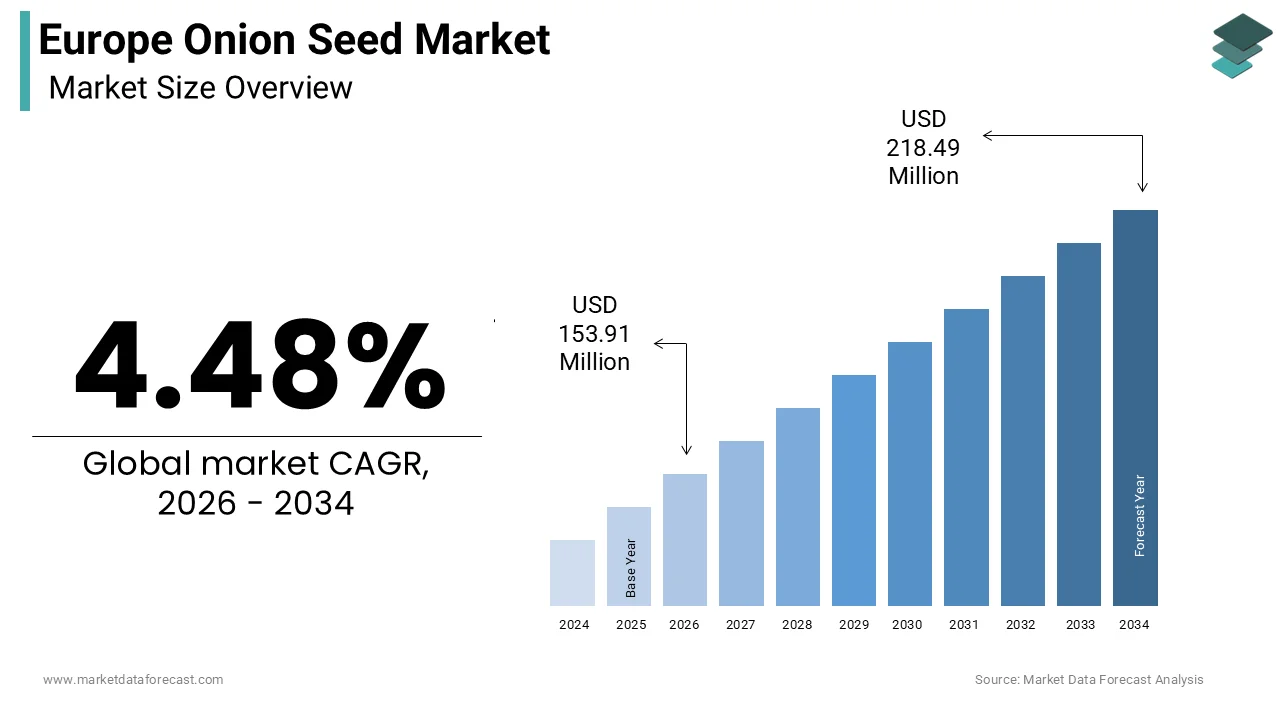
The Europe onion seed market size was calculated to be USD 147.31 million in 2025, is anticipated to be worth USD 153.91 million in 2026, and is projected to scale up to USD 218.49 million by 2034, registering a compound annual growth rate (CAGR) of 4.48% during the forecast period from 2026 to 2034. Growth is primarily propelled by the escalating demand for high-yielding and disease-resistant hybrid varieties, alongside the rapid expansion of organic farming and sustainable agricultural practices.
Key Executive Metrics (At-a-Glance)
- 2025 Base Valuation: USD 147.31 Million
- 2026 Current Valuation: USD 153.91 Million
- 2034 Forecast Valuation: USD 218.49 Million
- Compound Annual Growth Rate (CAGR): 4.48% (2026–2034)
- Dominant Breeding Technology Segment: Hybrid Segment
- Fastest-Growing Breeding Technology Segment: Open-Pollinated Varieties and Hybrid Derivatives (6.5% CAGR)
- Dominant Country: Spain
Core Market Drivers & Restraints
- Key Drivers: Growing commercial need for disease-resistant F1 hybrids and strict regulatory mandates supporting certified organic farming expansion.
- Market Restraints: Stringent regulatory compliance and variety registration costs, and climate change-induced weather volatility impacting crop performance.
Europe Onion Seed Market Segmentation Breakdown
| Segment Category | Leading Sub-Segment | Fastest-Growing Sub-Segment |
|---|---|---|
| By Breeding Technology | Hybrid Segment | Open-Pollinated Varieties & Hybrid Derivatives (6.5% CAGR) |
| By Region/Country | Spain | Netherlands, France, and others |
Major Industry Players Profiled
Key breeding corporations and seed companies driving the European market include BASF SE, Bayer AG, Bejo Zaden B.V., Groupe Limagrain, Sakata Seed Corporation, Enza Zaden, Takii & Co., Ltd., East-West Seed, Syngenta Group, Rijk Zwaan, KWS SAAT SE & Co. KGaA, Hazera Seeds, Vilmorin & Cie, Advanta Seeds, and Nong Woo Bio.
 Download Free Sample Report
Europe Onion Seed Market Size
The Europe onion seed market size was calculated at USD 147.31 million in 2025 and is anticipated to reach USD 218.49 million by 2034, from USD 153.91million in 2026, growing at a CAGR of 4.48% during the forecast period.
Onion seed refers to the agricultural input, the physical, reproductive unit of the Allium cepa plant, purchased by commercial growers to plant and cultivate onions. This market is critical for ensuring food security and agricultural productivity, as onions remain a staple ingredient in European cuisines ranging from Mediterranean to Northern European diets. The sector is characterized by a shift toward high-performance hybrid varieties that offer improved disease resistance, uniform bulb size, and extended shelf life. According to Eurostat, the European Union harvested 6.2 million tonnes of onions in 2022, making it the second most commonly grown fresh vegetable by quantity in the region. As per research, the utilized area for onion cultivation across the European Union exceeds 180,000 hectares, with the Netherlands, Spain, and Poland serving as the top regional production hubs. Regulatory frameworks such as the EU Organic Regulation influence seed selection, driving demand for certified organic and non-GMO varieties. According to Seed World Europe, the vegetable seed sector in Europe drives global breeding innovation, focusing on specialized techniques on high-value crops like onions to enhance consumer traits like flavor and shelf life. Farmers increasingly rely on advanced seed technologies to mitigate climate risks and optimize yield per hectare. The market dynamics are further shaped by the consolidation of seed companies and the integration of digital breeding tools. This ecosystem supports a diverse range of stakeholders, including breeders, distributors, and commercial growers who prioritize genetic purity and germination rates. The transition toward sustainable farming practices necessitates seeds that require fewer chemical inputs, aligning with the European Green Deal objectives.
MARKET DRIVERS
Increasing Demand for High-Yielding and Disease-Resistant Hybrid Varieties
The escalating need for high-yielding and disease-resistant hybrid onion varieties is the main reason behind the growth of the Europe onion seed market. This growth is driven by the intensification of agricultural practices and the threat of pathogenic outbreaks. Commercial growers face pressure to maximize output per hectare to maintain profitability amidst rising input costs and land scarcity. Hybrid seeds offer superior vigor, uniformity, and resistance to common diseases such as downy mildew and fusarium basal rot, which can devastate crops if left unchecked. According to the European and Mediterranean Plant Protection Organization (EPPO), emerging regional pest pressures threatening allium crops have increased, prompting commercial operations to integrate certified disease-resistant genetic strains to curb seasonal crop losses. The adoption of F1 hybrids allows for precise control over bulb characteristics such as color, size, and storage potential, meeting the stringent quality standards of retail chains and processing industries. In regions like the Netherlands and Spain, where onion production is highly mechanized, uniform germination and growth habits are essential for efficient harvesting. The shift away from open-pollinated varieties toward hybrids is evident in the increasing share of hybrid seed sales in major producing countries. Breeders are investing heavily in molecular marker-assisted selection to accelerate the development of resilient traits. This technological advancement ensures that new varieties can withstand biotic stresses while delivering consistent yields. The reliability of hybrid seeds reduces production risks and enhances income stability for farmers, driving sustained demand in the market.
Expansion Of Organic Farming And Sustainable Agricultural Practices
The rapid expansion of organic farming across the region fuels demand for certified organic onion seeds that comply with strict regulatory standards and support sustainable agricultural systems, and thereby propel the expansion of the Europe onion seed market. Consumers are increasingly prioritizing organic produce due to health concerns and environmental awareness, leading to a surge in organic onion consumption. According to Eurostat, the area under organic farming in the European Union reached 16.9 million hectares by 2022, representing 10.5% of total agricultural land, with organic vegetable production serving as a primary pillar of this growth. Organic certification requires the use of seeds produced without synthetic chemicals or genetically modified organisms, creating a specialized niche within the seed market. Seed companies are responding by expanding their portfolios of organic varieties that offer competitive performance against conventional counterparts. As per EU Organic Regulation (EU) 2018/848, producers are legally required to utilize certified organic seeds unless severe regional shortages are formally documented, establishing a highly protected, consistent market for dedicated seed breeding operations. Breeding programs focused on organic systems emphasize traits such as nutrient use efficiency and weed competitiveness, which are crucial for low-input agriculture. Retailers and food processors are setting ambitious targets for sourcing organic ingredients, further pulling demand for organic onion seeds. This trend is supported by government subsidies and policy incentives that encourage conversion to organic methods. The premium pricing of organic onions provides financial motivation for farmers to invest in high-quality organic seeds. This structural shift toward sustainability ensures long-term growth for the organic segment of the onion seed market.
MARKET RESTRAINTS
Stringent Regulatory Compliance and Registration Costs Restrain Market Entry
Stringent regulatory requirements for variety registration and intellectual property compliance create significant restraints in the Europe onion seed market. As a result, seed developers face heavy administrative burdens and high costs. Bringing a new onion variety to market involves rigorous testing for distinctness, uniformity, and stability, a process that can take several years and require substantial financial investment. According to the Community Plant Variety Office (CPVO), the direct statutory fee for submitting an online application for a plant variety right stands at 450 euros, though overall commercialization hurdles remain anchored to downstream technical testing and maintenance costs. These barriers limit the ability of smaller breeding companies and public institutions to introduce new genetics, leading to market consolidation among large multinational corporations. Additionally, the European Union’s strict regulations on pesticide residues and environmental impact require seeds to perform well under low chemical input conditions, complicating the breeding process. Compliance with these evolving standards demands continuous research and adaptation, diverting resources from other areas of innovation. The complexity of navigating different national regulations within the EU further fragments the market and increases operational costs. Small and medium-sized enterprises often struggle to meet these regulatory demands, reducing diversity in seed offerings. The lengthy approval timelines delay the introduction of innovative traits, slowing down the pace of technological adoption. These regulatory hurdles create a challenging environment for new entrants and restrict the flow of novel genetics into the market.
Climate Change-Induced Weather Volatility Impacts Seed Performance
The increasing volatility of weather patterns due to climate change is also a major restraint on the Europe onion seed market. This affects the reliability and performance of existing varieties. Onion crops are sensitive to temperature fluctuations and water stress, which can lead to bolting, irregular bulb formation, and reduced yields. According to the European Environment Agency (EEA), intensifying seasonal volatility, including severe heatwaves and altered rainfall patterns across Europe, is disrupting foundational crop cycles and altering standard seed performance metrics. Seed breeders face difficulties in developing varieties that can withstand unpredictable climatic conditions across diverse European regions. A variety that performs well in Southern Europe may fail in Northern climates due to differing day length and temperature regimes. This variability increases the risk for farmers who may hesitate to invest in new seeds without guaranteed performance data. The need for region-specific adaptations fragments the market and increases the cost of breeding programs. Climate-induced shifts in pest and disease pressures further complicate seed development, requiring constant updates to resistance profiles. The uncertainty surrounding future climate scenarios makes long-term breeding planning difficult. Farmers may revert to traditional varieties perceived as more resilient, slowing the adoption of advanced hybrids. This environmental instability undermines the value proposition of high-performance seeds, restraining market growth and innovation.
MARKET OPPORTUNITIES
Development Of Climate Resilient And Biofortified Onion Varieties
The development of climate-resilient and biofortified onion varieties is a key growth area for the Europe onion seed market. This opportunity addresses emerging agricultural challenges and consumer health trends. Breeders are leveraging advanced genomic tools to create varieties that tolerate drought, salinity, and extreme temperatures, ensuring stable production in changing climatic conditions. According to the European Commission, dedicated research initiatives under the Horizon Europe framework heavily prioritize funding for new genomic technologies (NGTs) to breed resilient crop varieties capable of enduring extreme abiotic and climate-induced stressors. Biofortification efforts aim to increase the nutritional content of onions, such as higher levels of antioxidants and flavonoids, appealing to health-conscious consumers. These value-added traits differentiate products in a competitive market and command premium prices. The integration of digital phenotyping and precision breeding accelerates the development cycle, allowing faster response to market needs. Collaborations between public research institutions and private seed companies facilitate knowledge sharing and resource pooling. The demand for sustainable crops that require fewer inputs aligns with EU policy goals, creating favorable conditions for innovation. Farmers are willing to adopt varieties that reduce risk and improve profitability through better stress tolerance. This technological advancement opens new market segments and enhances the competitiveness of European seed producers globally. The focus on nutrition and resilience positions onion seeds as key contributors to food security and public health.
Integration Of Digital Technologies in Seed Breeding and Production
The integration of digital technologies such as artificial intelligence, big data, and automation in seed breeding and production offers a transformative opportunity for the Europe onion seed market. These technologies enable precise selection of desirable traits, optimization of breeding cycles, and improvement of seed quality control processes. As per research, advanced genomic selection techniques and digital agrigenomics platforms are driving commercial market expansion by increasing crop breeding efficiency by up to 30% over conventional methods. AI algorithms analyze vast datasets from field trials to predict performance and identify promising genetic combinations. Automation in seed processing ensures higher purity and germination rates, meeting the stringent quality standards of commercial growers. Digital platforms facilitate direct engagement with farmers, providing real-time advice on variety selection and cultivation practices. This data-driven approach enhances customer loyalty and supports precision agriculture initiatives. The use of blockchain technology for traceability builds trust in seed origin and quality, addressing concerns about counterfeiting. Investment in digital infrastructure attracts tech-savvy investors and partners, fostering innovation ecosystems. The scalability of digital solutions allows seed companies to serve diverse markets efficiently. This technological leap positions European seed producers at the forefront of global agricultural innovation. The synergy between biology and digitalization creates new value propositions and business models.
MARKET CHALLENGES
Intellectual Property Theft and Counterfeit Seeds Undermine Market Integrity
Intellectual property theft, along with the circulation of counterfeit seeds, persistently threatens the growth of the Europe onion seed market. As a result, breeder rights are undermined, and crop performance is compromised. Unauthorized reproduction and sale of protected varieties deprive companies of revenue needed for research and development, stifling innovation. According to research, illegal practices, including counterfeit seeds, unauthorized IP reproduction, and falsified labels, represent an expanding threat to global market integrity, creating acute liability and financial risks for legitimate breeders. Farmers who purchase counterfeit seeds often experience poor germination, low yields, and susceptibility to diseases, leading to financial losses and distrust in branded products. The lack of effective enforcement mechanisms in some regions facilitates the spread of fake seeds. Distinguishing between authentic and counterfeit products is difficult for end users, especially when packaging is replicated accurately. This issue erodes the value of intellectual property rights and discourages investment in new breeding programs. Legal battles to protect patents are costly and time-consuming, diverting resources from productive activities. The prevalence of counterfeit seeds distorts market data and complicates supply chain management. Addressing this challenge requires coordinated efforts among regulators, industry associations, and law enforcement agencies. Strengthening legal frameworks and enhancing detection technologies are essential to restore market integrity. The threat of counterfeiting remains a significant barrier to growth. It will only persist until effective measures are implemented.
Supply Chain Disruptions And Raw Material Scarcity
Supply chain disruptions and the scarcity of raw materials continue to be a critical obstacle for the Europe onion seed market. These challenges affect production schedules and cost stability. The seed production process relies on specific agricultural inputs such as fertilizers, pesticides, and energy, which have experienced price volatility and availability issues in recent years. As per EconStor, the price of critical agricultural inputs like triple superphosphate (TSP) surged by 100% following the 2021/2022 energy crisis and geopolitical tensions, which severely drove up localized crop and seed multiplication overhead costs. Logistics bottlenecks and transportation delays further complicate the distribution of seeds from production sites to markets. Dependence on imported raw materials for seed treatment and coating exposes the industry to global market fluctuations. Labor shortages in agricultural sectors affect the manual processes involved in seed harvesting and processing. These disruptions lead to delayed deliveries and inventory shortages, frustrating farmers and retailers. The unpredictability of supply chains forces companies to hold higher safety stocks, increasing working capital requirements. Small and medium-sized seed companies are particularly vulnerable to these shocks due to limited financial buffers. The interdependence of global supply networks means that local issues can have widespread impacts. Building resilience through diversification and local sourcing is necessary but challenging. This operational instability hampers the ability to meet demand consistently and maintain competitive pricing.
REPORT COVERAGE
| REPORT METRIC | DETAILS |
| Market Size Available | 2025 to 2034 |
| Base Year | 2025 |
| Forecast Period | 2026 to 2034 |
| CAGR | 4.48% |
| Segments Covered | By Breeding Technology and Region |
| Various Analyses Covered | Global, Regional, & Country Level Analysis; Segment-Level Analysis; DROC; PESTLE Analysis; Porter’s Five Forces Analysis; Competitive Landscape; Analyst Overview of Investment Opportunities |
| Regions Covered | UK, France, Spain, Germany, Italy, Russia, Sweden, Denmark, Switzerland, Netherlands, Turkey, Czech Republic, Rest of Europe |
| Market Leaders Profiled | BASF SE, Bayer AG, Bejo Zaden B.V., Groupe Limagrain, Sakata Seed Corporation, Enza Zaden, Takii & Co., Ltd., East-West Seed, Syngenta Group, Rijk Zwaan, KWS SAAT SE & Co. KGaA, Hazera Seeds, Vilmorin & Cie, Advanta Seeds, Nong Woo Bio |
SEGMENTAL ANALYSIS
By Breeding Technology
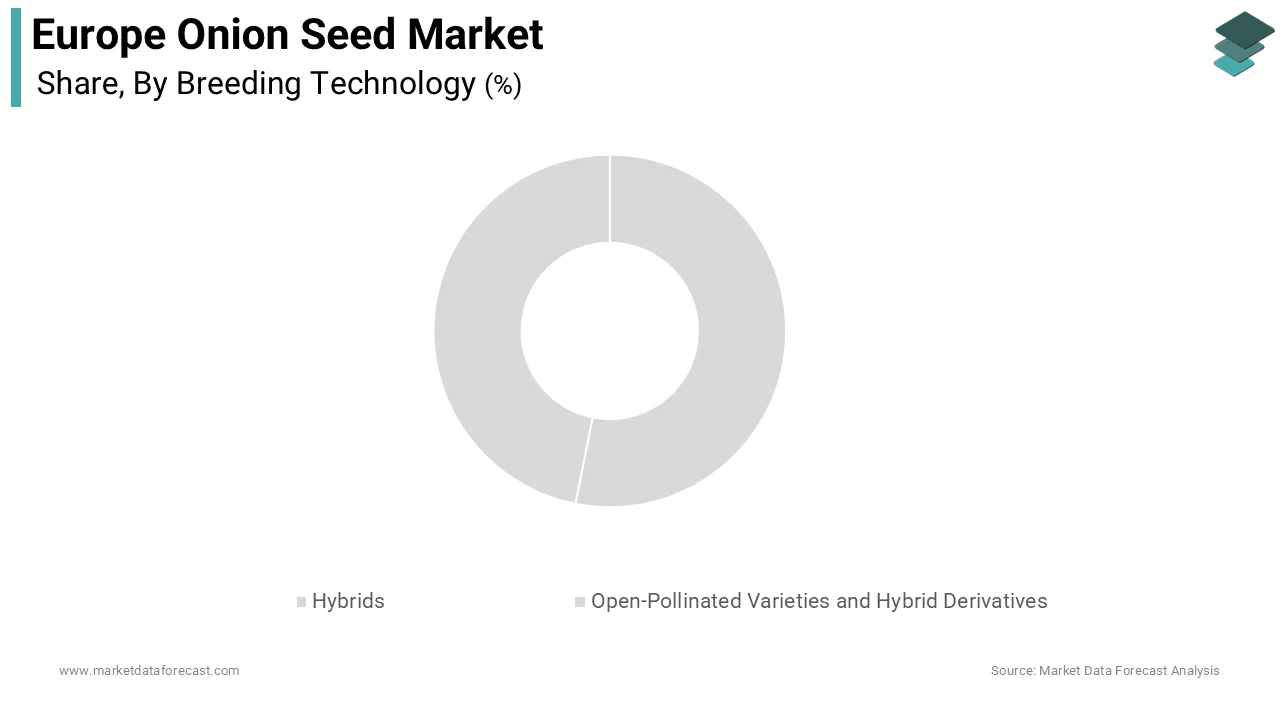
The hybrid segment maintained the lead in the Europe onion seed market and captured a significant share in 2025. This leading position of the segment was attributed to its ability to deliver superior yield stability, uniform bulb size, and consistent maturity, which are critical for mechanized harvesting and retail standards. Commercial growers prioritize hybrids because they exhibit heterosis or hybrid vigor, resulting in significantly higher productivity compared to open-pollinated varieties. According to the FAO, hybrid onion breeding technologies yield approximately 20% to 30% more marketable crops than traditional open-pollinated types due to uniform growth cycles and superior disease resilience. This yield advantage is essential for farmers operating on thin margins who need to maximize output per hectare to remain competitive. The uniformity of hybrid bulbs ensures that they meet the strict grading requirements of supermarkets and processing facilities, which demand consistent sizing for packaging and consumer appeal. As per Seed World Europe, the adoption of premium hybrid onion seeds exceeds 80% of total commercial plantings in intensive cultivation hubs like Spain and the Netherlands to secure standardized sizing required by global export supply chains. The reliability of hybrids in delivering predictable harvest windows allows for better labor planning and logistics management. Furthermore, hybrid varieties often possess enhanced storage capabilities, reducing post-harvest losses, which is a significant cost factor for growers. The economic return on investment for hybrid seeds justifies their higher upfront cost, making them the preferred choice for professional vegetable producers across Europe. This performance consistency secures their dominance in the commercial sector.
The prominence of this segment is further supported by the integration of advanced disease resistance traits that help farmers manage biotic stresses while reducing reliance on chemical pesticides. Onion crops are susceptible to various fungal and bacterial diseases such as downy mildew, botrytis leaf blight, and fusarium basal rot, which can cause substantial crop losses. Hybrid breeding programs utilize molecular markers to stack multiple resistance genes into a single variety, providing robust protection against these pathogens. According to the European Commission's Sustainable Use of Pesticides framework, integrated pest management and the development of pest-resistant seed alternatives are core pillars designed to align with broader regional strategies aimed at slashing chemical pesticide dependency by 50% by 2030. Hybrids offer a genetic solution that minimizes the need for frequent fungicide applications, thereby lowering production costs and environmental impact. This aligns with the European Green Deal objectives and strict residue limits imposed by retailers. Farmers in regions with high disease pressure, such as Northern and Central Europe, rely heavily on these resistant hybrids to ensure crop survival. The development of multi-disease-resistant hybrids allows for cultivation in diverse agro-climatic zones, expanding the geographic reach of onion production. Seed companies continuously update their hybrid portfolios to address emerging pathogen strains, ensuring long-term efficacy. This technological edge makes hybrids indispensable for sustainable and profitable onion farming in Europe.
Open-Pollinated Varieties And Hybrid Derivatives
The open-pollinated varieties and hybrid derivatives segment is predicted to witness the highest CAGR of 6.5% from 2026 to 2034, owing to the rising demand for organic produce and heirloom varieties among niche markets and home gardeners. Organic farming regulations often favor open-pollinated seeds due to their adaptability to local conditions and lower input requirements compared to intensive hybrid systems. According to Eurostat, organic agricultural land in the EU has steadily expanded, directly driving the demand for certified organic seeds that comply with strict chemical-free propagation mandates. Consumers are increasingly interested in unique flavors, colors, and textures offered by heirloom and specialty onion varieties, which are typically open-pollinated. This trend is supported by the growth of farmers' markets, community-supported agriculture schemes, and specialty food stores that value biodiversity and culinary diversity. Home gardening has also surged in popularity, particularly in urban areas where individuals seek to grow their own food using traditional seeds. Open-pollinated seeds allow farmers to save and replant seeds from their harvest, reducing dependency on commercial seed suppliers and lowering costs. This self-sufficiency aspect appeals to small-scale growers and sustainability advocates. The preservation of genetic diversity through open-pollinated varieties is also supported by conservation initiatives and seed banks. This cultural and ecological shift drives steady growth in this segment despite its smaller overall market share.
The rapid growth of the open-pollinated and hybrid derivative segment is fueled by their cost-effectiveness and adaptability for small-scale farmers and developing agricultural regions within Europe. Unlike hybrids, which require annual purchase, open-pollinated seeds can be saved and reused, making them an affordable option for resource-constrained growers. This economic advantage is particularly relevant in Eastern European countries and rural areas where subsistence farming and smallholder agriculture remain prevalent. As per Eurostat, approximately 62.8% of all agricultural holdings in the European Union are small-scale farms measuring under 5 hectares in size, making initial seed investment costs and operational flexibility critical variables for regional growers. Open-pollinated varieties tend to be more genetically diverse, allowing them to adapt better to local microclimates and soil conditions without intensive management. This resilience is valuable in the face of climate variability, where standardized hybrids may struggle. Hybrid derivatives, which are second-generation selections from hybrids, offer a middle ground providing some uniformity at a lower cost than F1 hybrids. Seed companies are recognizing this potential and offering improved open-pollinated lines that bridge the gap between traditional and modern genetics. The availability of these seeds through local cooperatives and agricultural extension services facilitates their adoption. This segment supports food security and livelihoods for smallholders, contributing to its robust growth trajectory.
REGIONAL ANALYSIS
Spain Onion Seed Market Analysis
Spain remained dominant in the Europe onion seed market and held a commanding share in 2025. Its status as the leading producer of onions in the European Union and a major exporter of fresh produce has contributed to the dominance of this market. The country’s favorable climate allows for year-round cultivation, particularly in regions like Castilla-La Mancha and Andalusia, creating sustained demand for high-quality seeds. According to the Ministry of Agriculture, Fisheries and Food of Spain (MAPA), Spain remains one of Europe's top onion producers with volumes regularly exceeding 1.2 million tonnes annually, driven by highly specialized irrigation and seed technologies. Spanish growers predominantly use hybrid seeds to meet the rigorous quality standards of international markets, especially in Northern Europe. The sector is characterized by large-scale commercial operations that invest in advanced irrigation and harvesting technologies. Seed companies focus on developing varieties with excellent storage properties and resistance to heat stress to suit local conditions. The presence of major breeding centers in Spain facilitates rapid testing and adaptation of new genetics. Export orientation drives the adoption of premium seeds that ensure uniformity and shelf life. The government supports research and development through agricultural innovation programs. Spain serves as a key testing ground for new onion varieties destined for the broader European market. The mature infrastructure and expertise sustain its leadership position.
Netherlands Onion Seed Market Analysis
The Netherlands was the next prominent country in the European onion seed market by securing a substantial share in 2025. It serves as a major global hub for seed breeding technology and trade. Although domestic onion production is moderate compared to Southern Europe, the country is home to several leading multinational seed companies that develop and export onion genetics worldwide. As per Plantum, the Dutch seed trade association, the Netherlands is a dominant force in global vegetable seed exports, treating high-yield onion breeding as a cornerstone of its international trade portfolio. Dutch breeders are renowned for their innovation in hybridization and disease resistance traits, leveraging advanced genomic tools. The country’s strategic location and logistics infrastructure facilitate the efficient distribution of seeds to European and global markets. Growers in the Netherlands utilize high-tech greenhouse and field production systems requiring precise and high-performance seeds. The focus on sustainability and circular agriculture drives demand for varieties that optimize resource use. Research institutions collaborate closely with private breeders to accelerate innovation. The Netherlands acts as a knowledge center influencing breeding trends across Europe. Its role in intellectual property protection and variety registration strengthens its market influence. The concentration of expertise ensures continued leadership in seed technology.
France Onion Seed Market Analysis
France holds a significant share of the Europe onion seed market due to a diverse production base ranging from large commercial farms to small specialized holdings. The country is known for producing high-quality specialty onions such as the Roscoff pink onion, which has Protected Geographical Indication status. According to Agreste and FAOSTAT tracking, France's harvested area for onions spans over 23,000 hectares, blending scaled commercial production with strict regional quality and identity frameworks. French growers use a mix of hybrid and open-pollinated seeds depending on the target market and production system. The demand for organic seeds is growing rapidly, driven by consumer preference for local and sustainable produce. Seed companies in France emphasize varieties with superior flavor profiles and culinary attributes. The regulatory framework supports the preservation of heritage varieties while encouraging innovation. Collaborative breeding programs involve farmers and researchers to develop adapted genetics. The strong domestic consumption of onions ensures a stable market for seed suppliers. France balances tradition with modernity in its seed usage patterns. The emphasis on gastronomy drives demand for premium seed varieties.
Italy Onion Seed Market Analysis
Italy grew steadily in the European onion seed market owing to a strong tradition of onion cultivation and a growing focus on premium and organic products. Regions like Veneto and Campania are major production centers known for specific varieties such as the Tropea red onion. As per the Italian National Institute of Statistics (ISTAT), Italy’s agricultural framework places an exceptionally high value on geographical certification, directly impacting the legally mandated lineage of seeds used for protected regional crops. Italian growers increasingly adopt hybrid seeds to improve yield and disease resistance while maintaining traditional characteristics. The organic sector is expanding rapidly, driving demand for certified organic onion seeds. Seed suppliers cater to both large-scale processors and niche artisanal producers. The climate diversity in Italy allows for varied cropping seasons requiring adaptable seed varieties. Research institutes work on improving local cultivars through modern breeding techniques. The export of Italian onions supports the demand for high-quality seeds. Consumer awareness of health benefits boosts consumption. Italy’s market is defined by a blend of heritage and innovation.
Germany Onion Seed Market Analysis
Germany maintains a notable position in the Europe onion seed market. This is primarily because it acts as a major consumer and importer of onion seeds and produce, rather than a large-scale producer. The country has a strong demand for high-quality onions for both fresh consumption and processing industries. According to the German Federal Office for Agriculture and Food (BLE), Germany relies on substantial imports to fulfill its domestic onion consumption, heavily prioritizing external supply chains that adhere to strict quality standards and reliable crop yields. German growers focus on efficiency and sustainability, adopting hybrid varieties that reduce input costs and environmental impact. The organic market is well developed, driving demand for certified organic seeds. Retailers impose strict quality and residue standards, influencing seed choices. Breeding efforts focus on varieties suitable for mechanical harvesting and storage. The country serves as a key market for seed companies testing new technologies. Consumer preference for convenience drives demand for uniform bulbs. Germany’s regulatory environment promotes sustainable agricultural practices. The market is characterized by high standards and technical sophistication.
COMPETITION OVERVIEW
The competition in the Europe onion seed market is characterized by a mix of multinational breeding corporations and specialized regional players who compete primarily on genetic performance and technical service rather than price alone. The market exhibits moderate consolidation with established firms holding strong positions in hybrid segments while niche companies thrive in organic and heirloom categories. Key competitors distinguish themselves through proprietary disease resistance traits, superior storage qualities, and adaptation to specific local climates. Barriers to entry remain high due to lengthy breeding cycles, costly variety registration,n and stringent phytosanitary regulations. Companies invest significantly in field demonstration networks to prove variety reliability and build farmer confidence. Brand reputation and agronomic support are critical differentiators as growers seek partners who mitigate production risks. Strategic alliances with research institutions accelerate innovation and share development costs. The competitive landscape is further shaped by sustainability mandates forcing rapid portfolio transitions toward low-input compatible genetics. Innovation speed and regulatory compliance serve as key battlegrounds. Overall, the market rewards entities that balance scientific excellence with practical, farmer-centric solutions and adaptive supply chain resilience.
KEY MARKEY PLAYERS
A few major players of the Europe onion seed market include
- BASF SE
- Bayer AG
- Bejo Zaden B.V
- Groupe Limagrain
- Sakata Seed Corporation
- Enza Zaden
- Takii & Co., Ltd
- East-West Seed
- Syngenta Group
- Rijk Zwaan
- KWS SAAT SE & Co. KGaA
- Hazera Seeds
- Vilmorin & Cie
- Advanta Seeds
- Nong Woo Bio
Major Strategies Used By Key Market Participants
Key players in the Europe onion seed market employ several strategic approaches to maintain competitiveness and drive growth amidst evolving agricultural challenges. Investment in molecular breeding and genomic selection serves as a primary strategy to accelerate the development of disease-resistant and climate-resilient varieties. Companies prioritize expanding organic seed portfolios to align with regulatory shifts and consumer demand for sustainable produce. Strategic partnerships with local distributors and cooperatives enhance market penetration and provide essential technical support to farmers. Digital integration through agronomy apps and data platforms strengthens customer loyalty and optimizes variety placement. Continuous field trialing across diverse European regions validates performance and builds trust among commercial growers. Focusing on seed treatment technologies improves germination and early crop establishment, reducing farmer risk. Intellectual property protection and variety registration secure long-term revenue streams and incentivize innovation. These combined strategies enable participants to navigate regulatory complexities and capitalize on emerging opportunities in the dynamic vegetable seed sector.
Leading Players in the Europe Onion Seed Market
- Syngenta Vegetable Seeds maintains a prominent presence in the European onion seed sector through its extensive portfolio of high-performance hybrid varieties tailored for diverse climatic zones. The company focuses on developing genetics with enhanced disease resistance and superior storage capabilities to meet commercial grower demands. Recent actions include expanding trial networks across Spain and the Netherlands to validate the variety performance under varying environmental stresses. Syngenta has strengthened its position by integrating digital agronomy tools that provide farmers with precise sowing recommendations and crop management insights. Their commitment to sustainable breeding aligns with European Green Deal objectives, reducing chemical dependency. The company actively collaborates with local distributors to ensure timely seed availability and technical support. Continuous investment in molecular breeding accelerates the development of resilient traits. This comprehensive approach ensures Syngenta remains a key partner for professional onion producers seeking reliable and profitable solutions across the continent.
- Bejo Zaden is a specialized leader in the European onion seed market, renowned for its expertise in organic and conventional allium breeding. The company contributes significantly through its wide range of open-pollinated and hybrid varieties adapted to specific regional requirements and processing needs. Recent strategic initiatives involve launching new organic onion lines certified for low-input farming systems to capture growing niche demand. Bejo has strengthened its market position by investing in advanced seed health technologies, ensuring high germination rates and pathogen-free stock. Their focus on taste and nutritional quality appeals to both fresh market and industrial segments. The company maintains strong relationships with growers through field days and educational programs demonstrating variety performance. Bejo’s dedication to biodiversity and traditional breeding methods complements modern innovation. This balanced strategy secures their relevance in both mainstream and specialty markets throughout Europe.
- Enza Zaden plays a vital role in the European onion seed landscape by delivering innovative hybrid varieties that combine high yield potential with robust stress tolerance. The company’s contribution centers on addressing climate challenges through genetics that withstand heat, drought, and emerging diseases. Recent actions include establishing new research facilities in Southern Europe to accelerate breeding cycles for warm climate adaptations. Enza Zaden has strengthened its position by forming strategic partnerships with agricultural cooperatives to enhance distribution reach and farmer engagement. Their emphasis on data-driven breeding utilizes genomic selection to improve trait precision and speed. The company actively promotes integrated pest management solutions compatible with their resistant varieties. Enza Zaden’s customer-centric approach involves continuous feedback loops from growers to refine product offerings. This agile innovation model ensures they remain competitive in a rapidly evolving agricultural environment across diverse European regions.
MARKET SEGMENTATION
This research report on the Europe Onion Seed market has been segmented and sub-segmented based on breeding technology and region.
By Breeding Technology
- Hybrids
- Open-Pollinated Varieties and Hybrid Derivatives
By Region
- UK
- France
- Spain
- Germany
- Italy
- Russia
- Sweden
- Denmark
- Switzerland
- Netherlands
- Turkey
- Czech Republic
- Rest of Europe