- Product Description Description
- Table of Contents TOC
- List of Table & Figure LOT
- Get Free Sample PDF Sample PDF
Market Size, 2025
$1.16 BnMarket Estimate, 2026
$1.22 BnMarket Forecast, 2034
$1.76 BnCAGR, 2026–2034
4.69%Europe Organic Bananas Market Report Summary
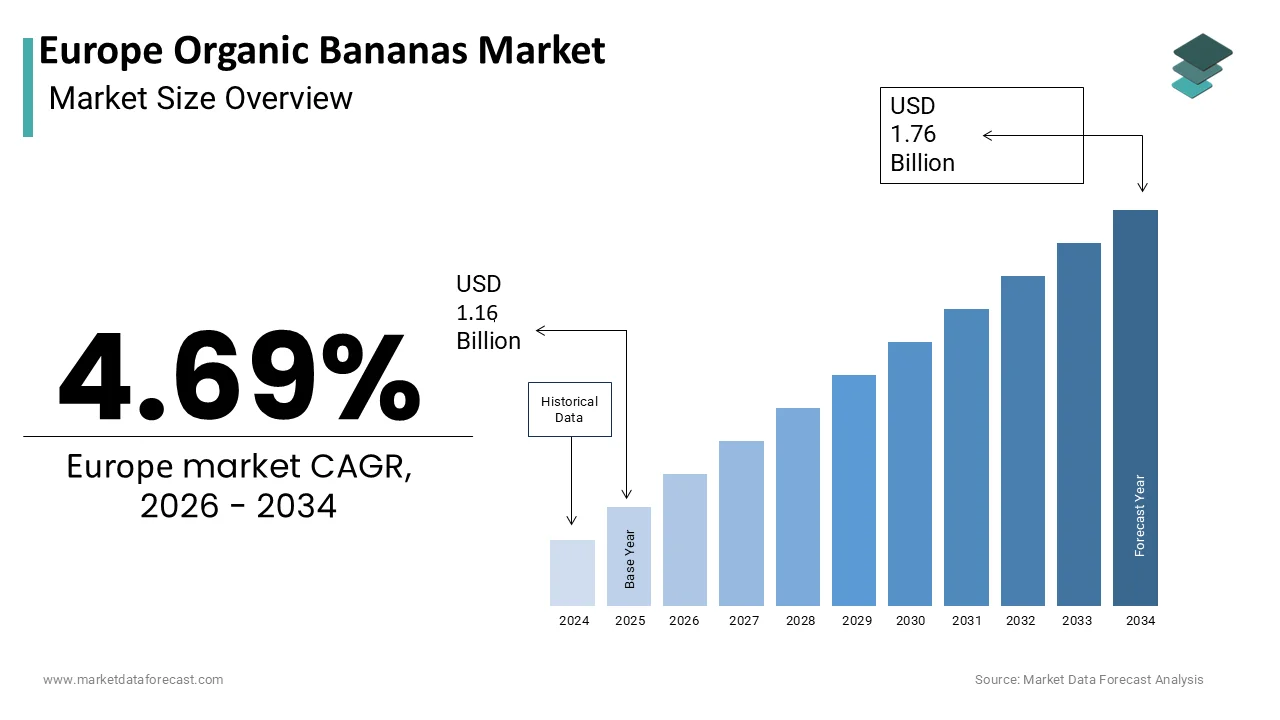
The Europe Organic Bananas Market was valued at USD 1.16 billion in 2025 and is projected to reach USD 1.76 billion by 2034, growing from USD 1.22 billion in 2026 at a CAGR of 4.69% during the forecast period. Growth is driven by heightened consumer awareness of pesticide residues, expansion of retail commitments to sustainable sourcing, and integration of regenerative agriculture and carbon-neutral initiatives. High production costs and complex certification compliance logistics are shaping market dynamics.
Key Market Trends
- Rising integration of regenerative agriculture and carbon farming certification under the EU CRCF framework
- Growing adoption of direct-to-consumer subscription models for organic produce delivery
- Increasing demand for organic banana chips as a clean-label healthy snacking option
- Expansion of private label organic banana ranges by major discount retailers
- Rising vulnerability to Fusarium wilt TR4 disease threatens Cavendish variety supply.
Segmental Insights
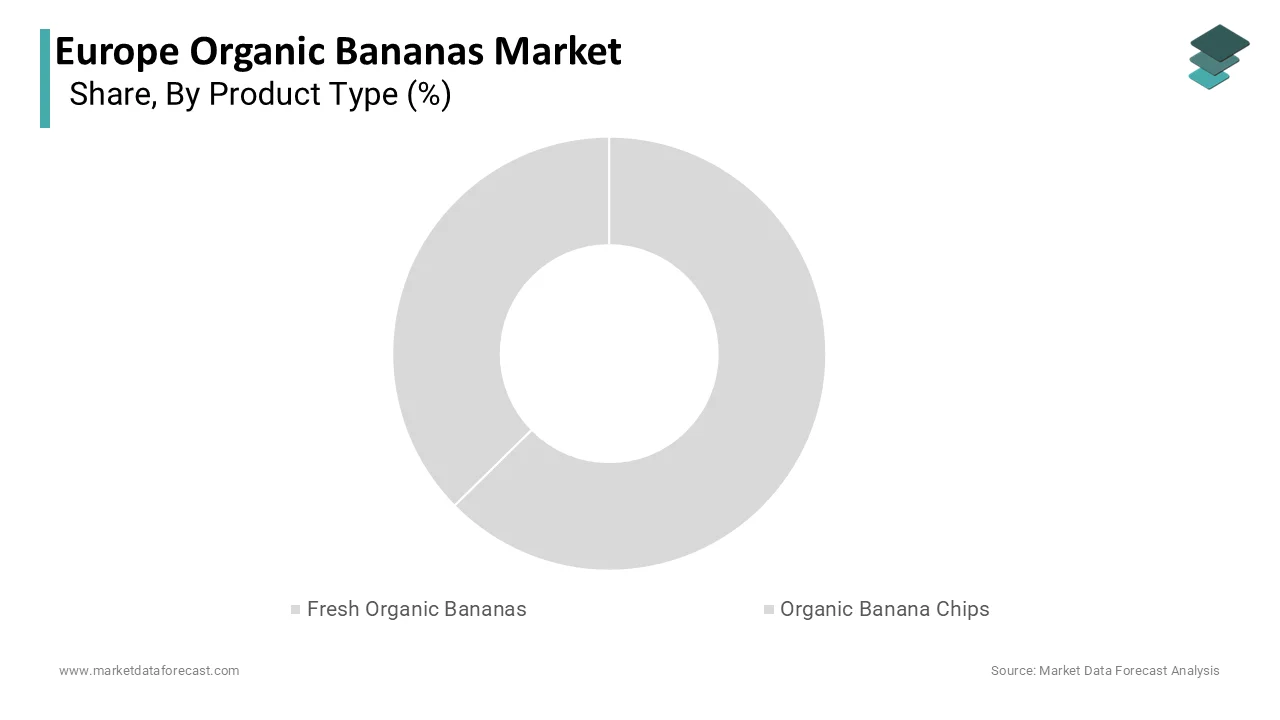
- Based on product type, fresh organic bananas dominated the market in 2025, driven by high per capita fresh fruit consumption and established cold chain logistics.
- Based on distribution channel, supermarkets and hypermarkets led the market in 2025, driven by extensive reach and private label economies of scale.
- Organic banana chips are the fastest-growing product segment, projected at a CAGR of 8.5%, driven by rising demand for clean-label snacking alternatives.
Regional Insights
- Germany led the market in 2025, supported by its mature organic food sector and organic farmland reaching 11.5% of total agricultural land.
- France holds a significant share, driven by strong government support for organic agriculture under the Ecophyto plan.
- United Kingdom is a prominent market supported by high retail penetration and strong consumer demand for ethical products.
- Spain contributes notably due to its dual role as both a producer and a major consumption hub with efficient import logistics.
- Online retail is the fastest-growing distribution channel, projected at a CAGR of 9.2%, driven by digital convenience and expanded product variety.
Competitive Landscape
The market is highly competitive, with multinational exporters and specialized ethical importers competing on sustainability credentials, fair trade certification, and supply chain traceability. Companies are investing in biodegradable packaging and direct partnerships with producer cooperatives to strengthen ethical positioning.
Prominent players in the market include Fyffes Unlimited Company, Dole plc, Chiquita Brands International Inc., Fresh Del Monte Produce Inc., Eosta B.V., Nature & More (Eosta), Organic Farm Foods Ltd., Greenyard NV, Compagnie Fruitière, BioTropic GmbH, Total Produce plc (Dole plc), and Banabay Import-Export GmbH.
Europe Organic Bananas Market Size
The Europe Organic Bananas Market is projected to grow from USD 1.16 billion in 2025 to USD 1.22 billion in 2026 and reach USD 1.76 billion by 2034, registering a CAGR of 4.69% during the forecast period from 2026 to 2034.
Organic bananas are grown without synthetic pesticides, chemical fertilizers, or genetically modified organisms (GMOs), following strict, certified agricultural standards. This market is driven by a consumer base that prioritizes environmental stewardship, ethical labor practices, and personal health. Unlike conventional counterparts, organic bananas must adhere to strict certification standards such as the EU Organic Logo, ensuring traceability from plantation to retail shelf. The market dynamics are heavily influenced by the continent's reliance on imports, primarily from Latin American countries like Ecuador, Peru, and the Dominican Republic, as well as emerging supplies from West Africa. According to the European Commission using Eurostat Comext data, total EU banana imports from ACP and dollar-zone countries reached approximately 5.1 to 5.2 million tonnes for the full year of 2023. The regulatory landscape is shaped by the European Green Deal and the Farm to Fork Strategy, which aim to reduce chemical pesticide use by 50 percent by 2030, thereby creating a favorable policy environment for organic produce. Consumer awareness regarding the high pesticide residue levels often found in conventional banana peels has further accelerated the shift toward organic options. Major supermarket chains across Germany, France, and the United Kingdom have committed to increasing their organic fruit offerings, responding to demand from health conscious shoppers. The market is also witnessing a trend toward fair trade integration, where organic certification is frequently paired with social accountability labels. This dual focus on ecological and social sustainability defines the unique value proposition of organic bananas in the European marketplace, distinguishing them as a premium ethical commodity rather than just a dietary staple.
MARKET DRIVERS
Heightened Consumer Awareness Regarding Pesticide Residues And Health Safety
The escalating concern among regional consumers regarding pesticide residues in conventional produce drives the growth of the Europe organic bananas market. Bananas are frequently cited in food safety studies as having significant pesticide loads on their peels, which can transfer to the flesh during handling or consumption, prompting health-conscious individuals to seek cleaner alternatives. According to the European Food Safety Authority (EFSA), multi-annual monitoring data track the long-term presence of active chemical components across commodities, confirming that organic food categories consistently exhibit significantly lower pesticide quantification and lower Maximum Residue Level (MRL) exceedance rates than conventional equivalents. This scientific validation has empowered consumers to make informed choices, driving a shift toward organic varieties that are grown without synthetic agrochemicals. Parents are particularly vigilant, often preferring organic bananas for children due to perceived lower health risks. The rise of digital health platforms and nutrition apps has further disseminated information about the benefits of organic diets, reinforcing this behavior. Retailers have responded by prominently displaying organic bananas and providing educational materials about the differences in cultivation methods. The perception of organic bananas as a safer and healthier option commands a price premium that consumers are increasingly willing to pay. This health-driven motivation is not transient but reflects a long-term change in dietary habits across Northern and Western Europe. Medical professionals continue to urge people to reduce their chemical intake. As a result, the demand for residue-free fruits like organic bananas will likely sustain its upward trajectory.
Expansion Of Retail Commitments To Sustainable Sourcing And Corporate Responsibility
The strategic expansion of major retailers in the region and their commitments to sustainable sourcing open the growth of the Europe organic bananas market. Leading supermarket chains such as Aldi, Lidl, and Tesco have publicly pledged to increase the proportion of organic products in their portfolios as part of their corporate social responsibility goals. As per the Research Institute of Organic Agriculture (FiBL), European organic retail sales experienced a significant rebound, setting a new milestone of 58.7 billion euros in 2024 to signify renewed consumer confidence across key continental retail channels. These corporations are integrating organic bananas into their private label ranges, making them more accessible and affordable to a broader consumer base. By leveraging their purchasing power, retailers influence supply chain practices, encouraging producers in exporting countries to convert to organic farming methods. This institutional support reduces the market entry barriers for smaller organic producers and stabilizes demand. Furthermore, retailers use organic bananas as a flagship product to demonstrate their commitment to the European Green Deal, enhancing their brand image among environmentally conscious shoppers. Promotional campaigns and in-store improvements have normalized the purchase of organic bananas, moving them from niche health stores to mainstream supermarkets. This retail-led transformation ensures consistent shelf space and marketing support, which are critical for maintaining consumer interest. The alignment of corporate strategies with consumer values creates a robust ecosystem that supports sustained market expansion.
MARKET RESTRAINTS
High Production Costs And Price Volatility Restrain Mass Market Adoption
Higher production costs associated with organic farming restrict the growth of the Europe organic bananas market. Consequently, these elevated retail prices limit mass market penetration. Organic cultivation requires intensive manual labor for weed control and pest management, as well as more expensive organic fertilizers, leading to production costs that can be 20 to 30 percent higher than conventional methods. According to the Food and Agriculture Organization, the lack of economies of scale in organic banana production compared to the highly industrialized conventional sector keeps prices elevated, making them less accessible to price-sensitive consumers. In times of economic uncertainty or high inflation, such as the cost-of-living crisis experienced in Europe in 2023 and 2024, consumers often prioritize affordability over organic certification, reverting to conventional bananas. This price sensitivity restricts the organic segment to a niche demographic with higher disposable income. Additionally, organic yields are typically lower due to the absence of synthetic growth enhancers, further exacerbating the cost disparity. Supply chain inefficiencies, including the need for separate handling and storage to prevent contamination, add logistical expenses. These financial barriers prevent organic bananas from achieving the same volume turnover as conventional varieties. Retailers may hesitate to allocate extensive shelf space to a product with slower sales velocity. Price volatility will remain a persistent constraint on broader market adoption. This issue will persist until production efficiencies improve or subsidies reduce the cost gap.
Complex Logistics And Strict Certification Compliance Hinder Supply Chain Efficiency
The intricate logistics and stringent certification requirements for organic bananas are major constraints to the efficiency and scalability of the Europe organic bananas market. Maintaining the integrity of organic certification throughout the supply chain requires rigorous documentation, separate storage facilities, and dedicated transport channels to avoid cross-contamination with conventional produce. According to the International Federation of Organic Agriculture Movements, the administrative burden of compliance with varying national and EU organic standards creates bottlenecks and increases operational complexity for importers and distributors. Any breach in protocol can result in the decertification of entire shipments, leading to significant financial losses and supply disruptions. The perishable nature of bananas exacerbates these challenges, as delays at ports or during inland transportation can compromise quality. Furthermore, the limited number of certified organic ports and handling facilities in Europe creates congestion and increases costs. Small and medium-sized exporters in producing countries often struggle to meet these complex regulatory demands, limiting the diversity of supply sources. The lack of harmonization in inspection procedures across different European member states adds another layer of difficulty. These logistical hurdles reduce the flexibility of the supply chain, making it less responsive to sudden changes in demand. The high risk of non-compliance discourages some potential market entrants, consolidating the market among large players who can afford the necessary infrastructure. This structural rigidity impedes the rapid expansion of the organic banana sector.
MARKET OPPORTUNITIES
Integration Of Regenerative Agriculture And Carbon Neutral Initiatives
The integration of regenerative agriculture practices and carbon-neutral initiatives offers a significant opportunity for the European organic bananas market. These practices help brands differentiate themselves and capture premium value. Consumers and retailers are increasingly looking beyond basic organic certification to support farming systems that actively restore soil health and sequester carbon. According to the official European Commission Climate Action framework, Regulation (EU) 2024/3012 establishes the Carbon Removals and Carbon Farming (CRCF) framework, which issues verified compliance units to land managers implementing climate-beneficial practices to unlock voluntary private financing and corporate sustainability reporting advantages. Organic banana plantations that adopt agroforestry systems, cover cropping, and composting can position themselves as climate-positive products, appealing to environmentally aware consumers. This narrative allows brands to command higher price points and build deeper emotional connections with buyers. Retailers are eager to showcase such productclimate-positiveir net zero strategies, providing marketing support and preferential shelf placement. The development of carbon footprint labeling on packaging can further transparently communicate these benefits. Collaborations between European imnet-zeroand Latin American producers to implement regenerative techniques can secure long-term supply contracts and improve farm resilience. This approach transforms organic bananas from a passive commodity into an active solution for climate change. The opportunity lies in creating a verified standard for regen-long-term-organic bananas that goes beyond current certifications. This innovation can open new market segments and strengthen the sustainability credentials of the entire value chain.
Growth of Direct-to-Consumer and Digital Subscription Models
The emergence of direct-to-consumer and digital subscription models provides a lucrative prospect for the Europe organic bananas market. This helps to bypass traditional retention of Direct-to-Consumer and loyal customer bases. Online grocery platforms' direct-to-consumer subscription services are gaining popularity among urban consumers who value convenience and transparency. According to sources, the online food delivery market in Europe is projected to grow significantly, with fresh produce being a key driver of this expansion. These digital channels allow producers and distributors to offer curated boxes of organic bananas, often paired with other ethical products, directly to households. This model reduces intermediary margins, potentially lowering costs for consumers while increasing profits for suppliers. It also enables detailed storytelling about the origin and farmers, enhancing the perceived value of the product. Subscription services ensure recurring revenue and predictable demand, helping to stabilize supply chains. Digital platforms can leverage data analytics to personalize offerings and optimize delivery routes, reducing waste. The ability to reach niche audiences who are specifically seeking organic and fair trade products is enhanced through targeted digital marketing. This shift empowers smaller brands to compete with large retailers by offering superior customer service and unique value propositions. The growth of e-commerce infrastructure across Europe facilitates this transition, making it a viable strategy for market expansion.
MARKET CHALLENGES
Vulnerability To Climate Change And Extreme Weather Events
Climate change and extreme weather affect the growth of the Europe organic bananas market. These environmental threats significantly destabilize the supply chain originating from tropical producing regions. Banana plants are highly sensitive to changes in temperature, rainfall patterns, and wind intensity, making them susceptible to droughts, floods, and hurricanes. According to the Intergovernmental Panel on Climate Change, tropical regions are experiencing increased frequency of extreme weather events, which can devastate entire harvests and disrupt export schedules. Organic farms, which often lack the financial resources for advanced irrigation or protective infrastructure, are particularly at risk. A single severe storm can wipe out months of production, leading to sudden shortages and price spikes in the European market. This unpredictability makes it difficult for retailers to maintain consistent stock levels and for consumers to rely on organic bananas as a staple. Climate change also alters the prevalence of pests and diseases, such as Fusarium wilt, which can spread more rapidly in changing conditions. Adapting to these challenges requires significant investment in resilient farming practices, which many smallholder organic farmers cannot afford. The lack of crop insurance in many producing countries exacerbates the financial impact of climate-related losses. This environmental instability poses a long-term threat to the viability of the organic banana supply chain, requiring urgent collaborative action to build resilience.
Threat Of Emerging Diseases And Lack of Climate-related Diversity
The threat of emerging diseases, particularly long-term Race 4 of Fusarium wilt, combined with the lack of genetic diversity in commercial banana varieties, is a severe impediment to the Europe organic bananas market. The global banana trade relies heavily on the Cavendish variety, which is genetically uniform and highly susceptible to this soil-borne fungus. According to the World Bank, the spread of Fusarium TR4 threatens banana production worldwide, and organic farms have fewer chemical options to manage soil pathogens compared to conventional operations. Once soil-borne cannot be replanted with bananas for decades, leading to permanent loss of productive area. Organic certification restricts the use of potent fungicides, leaving farmers with limited biological control methods that may not be fully effective against aggressive strains. The lack of genetic diversity means that if one plantation is affected, others are likely to follow suit. Developing resistant organic varieties is a slow and costly process, and few commercially viable alternatives to Cavendish exist that meet European consumer preferences for taste and appearance. This biological vulnerability creates a constant risk of supply disruption. Retailers and consumers may lose confidence in the reliability of organic bananas if shortages become frequent. Addressing this challenge requires significant investment in breeding programs and biosecurity measures, which are often beyond the capacity of individual organic producers.
REPORT COVERAGE
| REPORT METRIC | DETAILS |
| Market Size Available | 2025 to 2034 |
| Base Year | 2025 |
| Forecast Period | 2026 to 2034 |
| Segments Covered | By Product Type, Distribution Channel, Consumer Type, and Region. |
| Various Analyses Covered | Global, Regional and Country-Level Analysis, Segment-Level Analysis, Drivers, Restraints, Opportunities, Challenges; PESTLE Analysis; Porter’s Five Forces Analysis, Competitive Landscape, Analyst Overview of Investment Opportunities |
| Countries Covered | Germany, Italy, France, the United Kingdom, the Netherlands |
| Market Leaders Profiled | Fyffes Unlimited Company, Dole plc, Chiquita Brands International, Inc., Fresh Del Monte Produce Inc., Eosta B.V., Nature & More (Eosta), Organic Farm Foods Ltd., Greenyard NV, Compagnie Fruitière, BioTropic GmbH, Total Produce plc (Dole plc), Banabay Import-Export GmbH. |
SEGMENTAL ANALYSIS
By Product Type Insights
The fresh organic bananas segment dominated the Europe organic bananas market and accounted for a substantial share in 2025. This dominance of the segment was driven by its status as a primary dietary staple and the high per capita consumption of fresh fruit across the continent. Unlike processed derivatives, fresh bananas are consumed daily by a broad demographic for their convenience, natural sweetness, and nutritional value, including potassium and vitamin B6. According to Eurostat, bananas remain one of the most frequently purchased fruits across European households due to their affordability, high consumption volume, and stable year-round availability. The preference for fresh produce is deeply ingrained in European culinary culture, where raw fruits are preferred for snacking and breakfast routines. Retailers prioritize fresh organic bananas because they drive foot traffic and complement sales of other fresh produce. The immediate gratification and minimal preparation required make fresh bananas the default choice for health-conscious consumers who seek whole foods. The supply chain for fresh bananas is well established, ensuring consistent quality and ripeness upon arrival in European ports. This logistical maturity supports the dominance ofhealth-conscioushealth-conscioust over processed alternatives, which require additional manufacturing steps. The visual appeal and sensory experience of eating fresh fruit also contribute to its popularity. Consumers perceive fresh organic bananas as the purest form of the product, free from processing additives or preservatives. This perception aligns with the core values of the organic movement,t which emphasizes natural and unadulterated food sources.
The prominence of this segment is further reinforced by retail priority and supply chain efficiency that favor perishable goods with high turnover rates. Supermarkets and hypermarkets allocate prime shelf space to fresh organic bananas because they are a key indicator of a store’s commitment to sustainability and quality. According to multiple studies, fresh produce sections are the most visited areas in grocery stores, and organic bananas serve as an entry point for consumers exploring organic options. The rapid turnover of fresh bananas reduces inventory holding costs and minimizes waste when managed correctly through advanced ripening technologies. Distributors have optimized cold chain logistics to maintain the freshness of organic bananas from Latin American plantations to European retail shelves. This efficiency ensures that retailers can offer competitive pricing despite the higher production costs of organic farming. The ability to sell fresh bananas in large volumes allows retailers to negotiate better terms with suppliers, further stabilizing the market. Promotional activities such as weekly discounts and bundle offers are frequently applied to fresh organic bananas to attract price-sensitive shoppers. This retail support creates a virtuous cycle of price-sensitive sales volume. The immediacy of consumption means that demand is consistent and predictable, allowing for precise supply planning. The dominance of the fresh segment is thus sustained by a robust infrastructure that prioritizes speed and quality.
The organic banana chips segment is likely to experience the fastest CAGR of 8.5% during the forecast period owing to the rising demand for healthy snacking options and convenient ready-to-eat products. European consumers are already seeking alternatives to traditional sugary or salty snacks, and organic banana chips offer a naturally sweet and crunchy option that fits this trend. According to research, the healthy snack landscape in Europe has expanded significantly, with fruit-based snacks gaining popularity among fruit-based and Gen Z consumers who prioritize clean-label ingredients. Organic banana chips are labeled as a wholesome alternative to potato chips or confectionery, appealing to parents looking for nutritious snacks for children. The portability and long shelf life of banana chips make them ideal for on-the-go consumption, fitting into busy urban lifestyles. Manufacturers are on the go with baking methods instead of frying to reduce fat content, further enhancing the health profile of the product. The availability of flavored varieties such as coconut, cinnamon, and dark chocolate-coated chips adds variety and attracts adventurous palates. Retailers have tailored their snack aisles to include more organic and natural options, providing greater visibility for banana chips. The growth of vending machines and convenience stores offering healthy choices also contributes to increased accessibility. This segment benefits from the broader shift toward mindful eating, where snacks are viewed as mini meals rather than indulgences. The combination of taste, convenience, and health benefits drives the rapid adoption of organic banana chips.
The rapid growth of the organic banana chips segment is accelerated by the expansion ofe-commercee platforms and specialty food e-commerce that cater to niche dietary preferences. Online retailers offer a wider variety of organic banana chip brands and flavors than traditional supermarkets, allowing consumers to explore premium and artisanal options. According to sources, online grocery sales in Europe have surged, with specialty food items like organic snacks benefiting from targeted digital marketing and home delivery convenience. Subscription boxes focused on healthy snacking often include organic banana chips, introducing them to new customers who might not encounter them in regular stores. Specialty health food stores and organic boutiques also play a crucial role in promoting these products through tastings and educational displays. The ability to ship non-perishable items like banana chips globally allows smaller brands to reach customers without the logistical challenges of fresh produce. Social media influencers and food bloggers frequently feature organic banana chips in healthy recipe videos and snack reviews, driving viral interest. The packaging of banana chips is often designed to be eye-catching and informative, highlighting organic certification and sustainability. This digital and specialty channel expansion lowers the barrier to entry for new brands and fosters a competitive environment that drives innovation. The ease of access and diverse availability ensure sustained growth for this segment.
By Distribution Channel Insights
The supermarkets and hypermarkets segment led the Europe organic bananas market and captured a significant share in 2025. This leading position of the segment was attributed to its extensive reach and the convenience of one-stop shopping for everyday groceries. Thone-stopil formats are the primary source of food for the majority of European households, making them the most effective channel for distributing high-volume staples like organic bananas. According to EuroCommerce, consolidhigh-volumehigh-volumesurface retail chains, hypermarkets, and modern grocery formats control the vast majority of continental food distribution infrastructure, making them the essential gatekeepers for high-volume organic supply chains. The presence of organic bananas in these stores normalizes their consumption and makes them accessible to mainstream shoppers who may not visit specialty health stores. Large retail chains leverage their purchasing power to offer competitive prices and consistent supply, addressing the cost sensitivity of many consumers. The integration of organic bananas into regular promotional cycles and loyalty programs further drives sales volume. Shoppers appreciate the ability to purchase organic bananas alongside other weekly essentials, saving time and effort. The physical visibility of fresh produce sections in supermarkets encourages impulse purchases and trial. Retailers invest in attractive displays and signage to highlight the organic status and benefits of the bananas. This mass market approach ensures that organic bananas are not confined to a niche audience but are available to the general public. The reliability and convenience of supermarkets make them the dominant channel for organic banana distribution.
The dominance of the supermarkets and hypermarkets segment is enhanced by private label strategies and economies of scale that allow retailers to offer affordable organic options. Major chains such as Aldi, Lidl, and Tesco have developed their own organic brands, including organic bananas, which are priced lower than branded equivalents. According to research, private label organic products have gained significant market share in Europe, driven by consumer trust in retailer quality standards and lower prices. These private labels enable retailers to control the supply chain from source to shelf, ensuring consistency and reducing intermediary costs. The large volume of sales through supermarkets allows for efficient logistics and reduced waste through better demand forecasting. Retailers often source directly from producer cooperatives, fostering long-term relationships and securing stable supplies. This direct sourcing model improves margins and allows for reinvestment in sustainability initiatives. The credibility of major supermarket brands reassures consumers about thelong-termlong-termcity of organic certification. Promotional campaigns by retailers often feature their private label organic bananas as flagship products for their sustainability commitments. This strategic focus on private labels strengthens customer loyalty and drives repeat purchases. The ability to offer high-quality organic bananas at accessible prices and economies of scale cements the leadership of supermarkets and hypermarkets in the distribution landscape.
The online retail segment is on the rise and is expected to be the fastest-growing segment in the market by witfastest-growingof 9.2% over the forecast period due to digital convenience and the expanded product variety available through e-commerce platforms. Consumers are increasingly turning to online grocery services for the ease of home delivery and the ability to compare products and prices effortlessly. According to sources, the online food and beverage landscape in Europe is projected to continue its strong growth trajectory, with e-commerce being a key category for expansion. Online platforms offer a wider selection of organic banana brands, including rare varieties and value-added products like organic banana flour or chips, which may not be available in local stores. The ability to subscribe to regular deliveries ensures a steady supply of organic bananas for households, reducing the need for frequent shopping trips. Digital retailers use algorithms to personalize recommendations and offer targeted discounts, enhancing customer engagement. The transparency of online listings allows consumers to read detailed product descriptions and customer reviews, building trust in the quality of organic produce. The rise of quick commerce services that deliver groceries within hours has further boosted the appeal of online fresh food shopping. This convenience is particularly valued by urban professionals and families with limited time. The seamless integration of organic bananas into digital shopping carts drives consistent growth for this channel.
The swift expansion of the online retail segment is fueled by targeted marketing and direct consumer engagement strategies that build brand loyalty and educate shoppers. E-commerce platforms utilize data analytics to identify consumers interested in e-commerce and sustainable products, delivering personalized advertisements and content. According to research, digital marketing effectiveness in the food sector has improved significantly, with higher conversion rates for targeted campaigns compared to traditional advertising. Online retailers often collaborate with influencers and nutritionists to create content that highlights the benefits of organic bananas, driving traffic to their sites. Subscription models and loyalty programs offered by online grocers encourage repeat purchases and increase customer lifetime value. The ability to provide detailed information about the origin, farming practices, and certification of organic bananas builds trust and transparency. Direct communication channels such as chat support and social media engagement allow retailers to address consumer queries and feedback promptly. This interactive approach fosters a sense of community and connection with the brand. Online platforms also facilitate the sale of bundled organic boxes, introducing consumers to organic bananas as part of a broader healthy lifestyle package. The flexibility and personalization of online retail make it an attractive and rapidly growing channel for organic banana distribution.
By Consumer Type Insights
In 2025, the health-conscious consumers segment held the largest share of the Europe organic bananas market because of its strong awareness of preventive health measures and the nutritional benefits of organic produce. This demographic actively seeks foods that support overall well-being, manage weight, and reduce the risk of chronic diseases. Organic well-being is perceived as a healthier choice due to the absence of synthetic pesticides and fertilizers, which aligns with the desire to minimize chemical exposure. According to the World Health Organization, noncommunicable diseases are a leading cause of mortality in Europe, prompting individuals to adopt healthier diets rich in fruits and vegetables. Bananas are valued for their high potassium content, which supports heart health and blood pressure regulation. Health-conscious consumers are willing to pay a premium for organic certification as a guarantee of quality and safety. They often follow dietary guidelines that emphasize whole, unprocessed foods, making organic bananas a staple in their daily routine. This group is also influenced by medical advice and nutritional studies that highlight the benefits of organic consumption. The desire to protect family health, particularly for children, further drives purchasing decisions. Health-conscious consumers are typically well informed and rely on credible health-conscious information. Their well-informed approach provides a stable foundation for the organic bananas market. This segment’s commitment to health ensures long-term loyalty and repeat purchases.
The dominance of health-conscious conlong-term sustained by the integration of organic bananas into broader wellness trends and active lifestyles. This demographic often participates in fitness activities, yoga, and mindfulness practices where nutrition plays a central role. Organic bananas are a popular pre- or post-workout snack due to their natural energy-boosting properties and easy digestion. According to surveys, the wellness economy in Europe is growing, with consumers spending more on products that support physical and mental health. Social media and wellness influencers frequently promote organic bananas as part of balanced meal plans and smoothie recipes, reinforcing their status as a superfood. Health-conscious consumers are also likely to engage in other sustainable practices, such as recycling and supporting ethical brands, creating a holistic lifestyle alignment. They prefer retailers and brands that demonstrate transparency and corporate responsibility. The community aspect of wellness, including group classes and online forums, facilitates knowledge sharing about organic benefits. This social reinforcement strengthens commitment to organic consumption. The alignment of organic bananas with values of vitality and self-care ensures their continued popularity. This segment’s influence extends to self-care and peers, amplifying market reach. The enduring focus on health and wellness secures the leading position of this consumer type.
The vegetarians and vegans segment is expected to exhibit a noteworthy CAGR of 7.8% between 2026 and 2034. This rapid growth of the segment is propelled by ethical consumption patterns and the widespread adoption of plant-based diets. Moreover, this demographic plants organic bananas not only for health reasons but also for their alignment with ethical values regarding animal welfare and environmental sustainability. According to ProVeg International, the number of people following plant-based diets in Europe has increased significantly, with many seeking organic options to ensure their food choices are environmentally responsible. Organic farming practices are perceived as more humane and eco-friendly, avoiding harmful chemicals that can damage ecosystems. Vegetarian-friendly foods rely heavily on fruits like bananas for essential nutrients such as potassium and energy. They are often early adopters of new organic products and brands that reflect their values. This group is highly engaged in advocacy and community building, spreading awareness about the benefits of organic and plant-based eating. They prefer brands that are transparent about their supply chains and labor practices. The growth of vegan restaurants and cafes also increases the visibility and consumption of organic bananas in prepared dishes. This segment’s commitment to ethical living drives consistent demand and loyalty. Their influence on mainstream food trends accelerates the adoption of organic bananas among broader audiences.
The quick surge of the vegetarian and vegan segment is accelerated by the influence of social movements and digital advocacy that promote plant-based and organic lifestyles. Online communities and social media platforms serve as powerful tools for sharing information, recipes, and ethical considerations related to food choices. According to a study, digital activism around climate change and animal rights has heightened consumer awareness of the plant-based environmental impact of conventional agriculture. Vegetarians and vegans are active participants in these discussions, often choosing organic bananas to support sustainable farming systems. Influencers and activists highlight the connection between organic farming and biodiversity conservation, resonating with this demographic. The availability of vegan and organic certified labels simplifies purchasing decisions for these consumers. Retailers are responding by expanding their vegan and organic offerings, including organic bananas, to cater to this growing segment. Collaborative events such as Veganuary encourage participants to try plant-based and organic products, driving the plant-based option. The strong sense of identity and community among vegetarians and vegans fosters brand loyalty and word-of-mouth recommendations. This digitalword-of-mouthomentum ensures sustained growth for this consumer segment. Their advocacy helps normalize organic consumption and drives market expansion.
COUNTRY LEVEL ANALYSIS
Germany's organic bananas market Analysis
Germany was the top performer in the Europe organic bananas market and maintained a commanding share in 2025. This dominance of the German market was driven by its mature organic food sector and high consumer awareness of sustainability. The country is the largest market for organic products in Europe, with consumers prioritizing environmental protection and health. According to the Federal Ministry of Agriculture, Food, and Homeland (BMEL), Germany's organic farming area reached a total of 1.91 million hectares by the end of 2024, accounting for 11.5 percent of all agricultural land. Major supermarket chains such as Alnatura and Denns Biomarkt specialize in organic products, while conventional retailers like Rewe and Edeka have extensive organic assortments. German consumers are willing to pay a premium for certified organic bananas due to trust in strict EU regulations. The government supports organic farming through subsidies and national action plans. Demand is further boosted by the presence of numerous health food stores and online organic retailers. German shoppers are well informed about pesticide risks and prefer residue-free options. The country sees a residue-free point for organic banana imports into Central Europe. Stability in demand and high purchasing power sustain market growth. Germany’s leadership in organic consumption sets trends for neighboring countries.
France organic bananas market Analysis
France occupies a significant position in the Europe organic bananas market because of strong government support for organic agriculture and growing consumer interest. The French government has implemented ambitious targets to increase organic farmland and consumption under the Ecophyto plan. According to Agence Bio, the French organic landscape has grown steadily, with fresh fruit being a popular category among organic shoppers. French consumers value the taste and quality of organic bananas, often purchasing them from specialized organic stores like Biocoop or mainstream supermarkets with dedicated organic sections. The cultural emphasis on gastronomy and fresh ingredients supports demand for high-quality produce. Retailers promote high-quality through labeling and educational campaigns about environmental benefits. The presence of fair trade certifications alongside organic labels appeals to ethically conscious buyers. France’s strategic location facilitates efficient import logistics from Latin America. Consumer awareness of health benefits drives regular consumption. The market is supported by a robust network of distributors and retailers committed to sustainability. France continues to expand its organic offerings in response to consumer demand.
United Kingdom Organic Bananas Market Analysis
The United Kingdom maintains a noteworthy organic banana market due to high retail penetration and strong consumer demand for ethical products. British shoppers are among the most active buyers of organic food in Europe, driven by concerns about health and environmental impact. According to the Soil Association, the UK organic landscape has seen consistent growth, with supermarkets playing a key role in making organic bananas accessible. Major retailers such as Waitrose, Marks and Spencer, and Tesco offer wide ranges of organic produce, including bananas. The UK’s departure from the EU has led to adjustments in certification processes, but demand remains robust. Consumers appreciate the convenience of buying organic bananas alongside weekly groceries. Online grocery services have expanded access to organic options, particularly in urban areas. The influence of celebrity chefs and health advocates promotes organic consumption. The market benefits from strong supply chains and established importer relationships. UK consumers are willing to switch brands for better ethical credentials. The market continues to evolve with new product launches and promotions.
Italy's organic bananas market Analysis
Italy Italy's ahasicant share of the European organic banana market owing to its strong agricultural tradition and increasing interest in organic foods. Italian consumers are becoming more aware of the benefits of organic produce, although fresh fruit consumption is traditionally dominated by local seasonal items. According to ISMEA, the Italian organic sector is growing, with imports of tropical organic fruits like bananas rising to meet demand. Retailers such as Coop and Esselunga have expanded their organic sections, offering certified organic bananas. Italian shoppers value quality and origin, preferring bananas with clear labeling and certification. The influence of Mediterranean diet principles encourages fruit consumption, with organic options gaining traction among health-conscious individuals. Government inchealth-consciousorganic farming, although domestic banana production is negligible. Imports from Latin America are well established, ensuring a steady supply. The market is characterized by a mix of traditional markets and modern supermarkets. Consumer education about organic benefits is increasing through media and health campaigns. Italy’s market potential is significant as organic awareness grows.
Spain organic bananas market Analysis
Spain is a key player in the Europe organic bananas market by serving as both a producer and a major consumer hub. While Spain produces some bananas in the Canary Islands, the majority of organic bananas are imported to meet mainland demand. According to the Ministry of Agriculture, Fisheries and Food, Spain has one of the largest areas of organic farmland in Europe, reflecting strong consumer interest in sustainable products. Spanish retailers such as Mercadona and Carrefour have increased their organic offerings, including bananas, to cater to health conscious shoppers. Consumers in Spain are price-sensitive but increasingly willing to pay for organic quality. The warm climate encourages high fruit consumption year-round. Organic bananas are popular in smoothies,s anthe health-consciousse market benefits from efficient logistics due to proximity to African and Latin American suppliers. Governmentprice-sensitiveganic agriculture enhances market credibility. Spanish consumers are influenced by global health trends year-round, and the market continues to grow as organic options become more affordable and available.
COMPETITIVE LANDSCAPE
The competition in the Europe organic bananas market is characterized by a mix of large multinational exporters and specialized ethical importers who vie for dominance through sustainability credentials and supply chain reliability. The market exhibits moderate fragmentation with established players holding strong positions in specific retail channels and geographic regions. Key competitors distinguish themselves through verified fair trade practices, carbon-neutral logistics, and innovative packaging solutions rather than price alone. Barriers to entry remain high due to stringent organic certification requirements and the need for robust cold chain infrastructure. Companies are carbon-neutral in building direct relationships with producer cooperatives to ensure consistent quality and ethical compliance. Brand reputation and trust are critical assets as consumers become more knowledgeable about the social and environmental impacts of their purchases. Strategic alliances with major supermarket chains enhance market penetration and shelf visibility. The competitive landscape is further shaped by the growing demand for transparency, which forces players to adopt digital traceability systems. Innovation in sustainable practices serves as a key differentiator. Overall,l the market rewards companies that can combine operational efficiency with genuine commitment to social and environmental responsibility.
KEY MARKET PLAYERS
Some of the companies that are playing a dominant role in the Europe Organic Bananas Market include
- Fyffes Unlimited Company
- Dole plc
- Chiquita Brands International, Inc.
- Fresh Del Monte Produce Inc.
- Eosta B.V.
- Nature & More (Eosta)
- Organic Farm Foods Ltd.
- Greenyard NV
- Compagnie Fruitière
- BioTropic GmbH
- Total Produce plc (Dole plc)
- Banabay Import-Export GmbH
TOP LEADING PLAYERS IN THE MARKET
- Ecofrut operates as a leading exporter of organic bananas from Ecuador to the European market with a strong focus on sustainability and social responsibility. The company supplies major European retailers with high-quality certified organic bananas that meet strict EU standards. Recent actions include expanding its agroforestry projects to enhance biodiversity and carbon sequestration on its plantations. Ecofrut has strengthened its market position by obtaining additional certifications such as Fair Trade and Rainforest Alliance, which appeal to ethically conscious European consumers. The company invests in advanced ripening and logistics technologies to ensure optimal fruit quality upon arrival. Their commitment to fair labor practices and community development builds strong relationships with stakeholders. Ecofrut actively participates in industry forums to promote best practices for organic banana production. This holistic approach ensureslong-termm competitiveness and brand loyalty in the dynamic European market.
- Solbanana is a prominent supplier of organic bananas based in Peru with a significant presence in the European market through direct partnerships with retailers. The company specializes in producing premium organic bananas using long-term farming methods that protect soil health and water resources. Recent strategic initiatives include launching new packaging solutions made from biodegradable materials to reduce plastic waste in the supply chain. Solbanana has strengthened its position by investing in solar energy systems for its packing facilities, aligning with European green energy goals. The company focuses on traceability technologies that allow consumers to verify the origin and journey of their bananas. Their emphasis on quality, consistency, and reliable delivery schedules makes them a preferred partner for major supermarket chains. Solbanana engages in educational campaigns to highlight the benefits of Peruvian organic agriculture. This commitment to innovation and sustainability secures their relevance in the competitive Europe, an l andscap,e.
- Agrofair is a pioneering importer and distributor of organic fair trade bananas in Europe, ope known for its unique business model that supports smallholder farmers. The company works closely with producer cooperatives in Latin America and Africa to ensure fair prices and stable markets for their organic produce. Recent actions include expanding its product range to include value-added organic banana products such as dried slices and purees. Agrofair has strengthened its market position by enhancing its digital platform for transparent communication between producers and consumers. The company acts on value-added data for policy changes that support small-scale organic farmers in international trade. Their focus on social impact and environmental stewardship resonates strongly with European consumers. Agrofair collaborates with NGOs to implement community development projects in small-scale regions. This ethical approach differentiates the brand and fosters deep customer loyalty across the continent.
TOP STRATEGIES USED BY KEY MARKET PARTICIPANTS
Key players in the Europe organic bananas market employ several strategic approaches to maintain competitiveness and drive growth amidst evolving consumer preferences. Vertical integration and direct partnerships with producer cooperatives serve as primary strategies to ensure supply chain transparency and fair labor practices. Companies invest heavily in sustainable packaging innovations such as biodegradable wraps to align with European plastic reduction mandates. Certification diversification, including Fair Trade and Rainforest Alliance labels,s enhances brand credibility and appeals to ethically conscious shoppers. Digital traceability technologies are implemented to provide consumers with detailed information about product origin and farming methods. Marketing campaigns focus on storytelling that highlights the social and environmental impact of purchasing organic bananas. Retail collaborations involve co-branded promotions and dedicated shelf space to increase visibility. Investment in climate-resilient farming techniques helps mitigate supply risks from extreme weather events. These combined strategies enable participants to coco-brand regulatory complexities and capitalize on the growing demand for ethical and climate-resilient
MARKET SEGMENTATION
This research report on the europe organic bananas market is segmented sub-segmented into the following categories.
By Product Type
- Fresh Organic Bananas
- Organic Banana Chips
By Distribution Channel
- Supermarkets & Hypermarkets
- Online Retail
By Consumer Type
- Health-Conscious Consumers
- Vegetarians & Vegans
By Country
- Germany
- France
- United Kingdom
- Italy
- Spain