- Product Description Description
- Table of Contents TOC
- List of Table & Figure LOT
- Get Free Sample PDF Sample PDF
Market Size, 2025
$24.05 BnMarket Estimate, 2026
$25.79 BnMarket Forecast, 2034
$45.08 BnCAGR, 2026–2034
7.23%Europe Palm Oil Market Report Summary
The Europe palm oil market was valued at USD 24.05 billion in 2025, is estimated to reach USD 25.79 billion in 2026, and is projected to reach USD 45.08 billion by 2034, growing at a CAGR of 7.23% during the forecast period. Market growth is driven by increasing demand from the food processing industry, rising applications in cosmetics and personal care products, and expanding industrial usage. Palm oil is widely utilized due to its versatility, cost efficiency, and functional properties in edible oils, bakery products, biofuels, and consumer goods. The growing demand for processed food products and sustainable sourcing initiatives is further supporting market expansion across Europe.
Key Market Trends
- Rising demand for edible oils and processed food products is driving market growth.
- Increasing applications in cosmetics, personal care, and industrial products are boosting demand.
- Growing use of palm oil in bakery and packaged food manufacturing is supporting market expansion.
- Expansion of sustainability and certified sourcing initiatives is enhancing market development.
- Innovation in palm oil derivatives and refining technologies is influencing industry growth.
Segmental Insights
- Based on derivative, the crude palm oil segment accounted for 42.8% of the Europe palm oil market share in 2025. This dominance is attributed to its extensive use in food processing and industrial applications.
- Based on application, the edible oil segment held 54.8% of the Europe palm oil market share in 2025, driven by widespread consumption in cooking oils, packaged foods, and foodservice industries.
Regional Insights
- The Europe palm oil market is experiencing steady growth across key countries, supported by expanding food manufacturing activities and industrial demand.
- Germany was the leading contributor, accounting for 18.2% of the Europe palm oil market share in 2025, driven by strong food processing industry presence, high industrial consumption, and established import infrastructure.
Competitive Landscape
The Europe palm oil market is highly competitive, with key players focusing on sustainable sourcing, supply chain expansion, and product diversification to strengthen their market position. Companies are investing in certified palm oil production, refining technologies, and strategic partnerships. Prominent players in the Europe palm oil market include Golden Agri Resources Limited, Godrej Agrovet Limited, PT Astra Agro Lestari Tbk, Cargill Inc, United Palm Oil Industry Public Company Limited, Wilmar International Limited, Sime Darby, IOI Corp, London Sumatra, and Kulim Bhd.
Europe Palm Oil Market Size
The Europe palm oil market size was valued at USD 24.05 billion in 2025, and the market size is expected to reach USD 45.08 billion by 2034 from USD 25.79 billion in 2026. The market's is promising CAGR for the predicted period is 7.23%.
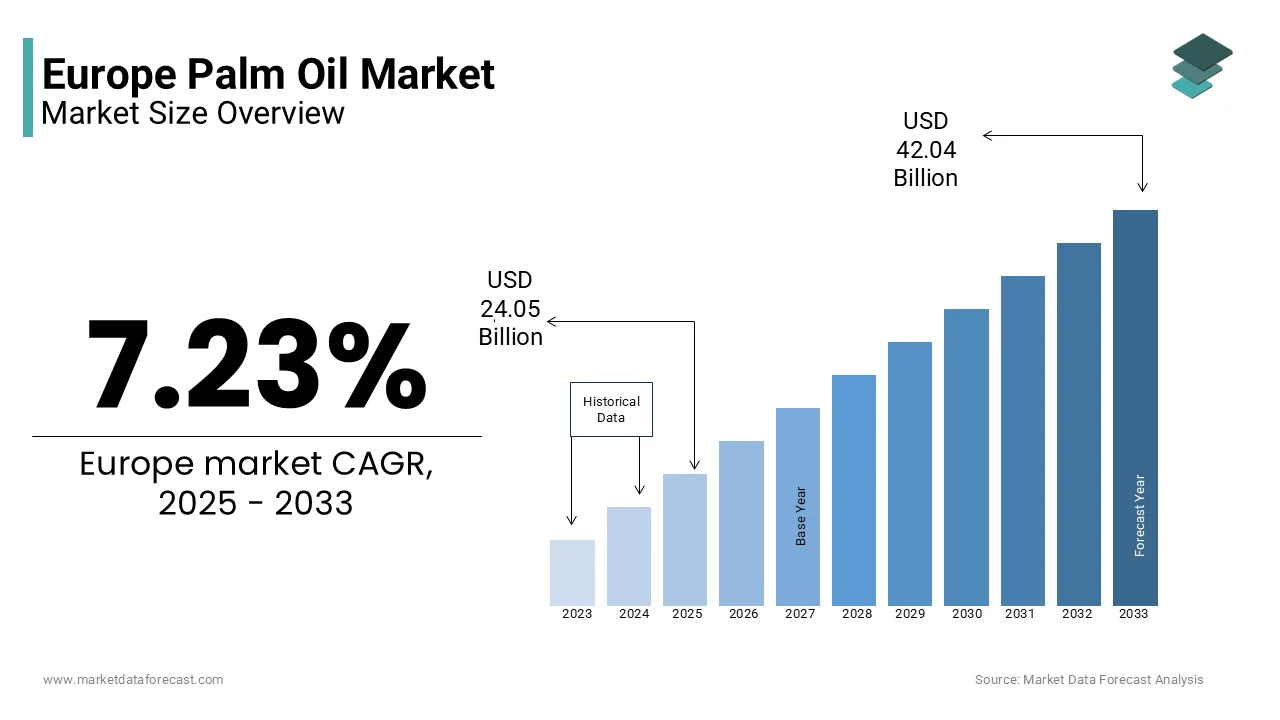
The palm oil includes food processing oleochemicals and increasingly biofuel production, although the latter faces significant legislative headwinds. As per Eurostat, the European Union imported approximately 6.3 million tons of palm oil in 2022 primarily sourced from Indonesia and Malaysia which together account for over 85% of global supply. The region acts as a gateway for certified sustainable products with the Roundtable on Sustainable Palm Oil noting that Europe remains the largest importer of Certified Sustainable Palm Oil globally. The regulatory landscape is shifting dramatically with the European Commission implementing stringent deforestation free supply chain requirements. The agriculture and land use change remain significant contributors to greenhouse gas emissions prompting stricter oversight of commodity imports. The food industry utilizes palm oil for its functional properties such as stability and texture in products ranging from confectionery to baked goods. Furthermore, the rise of plant-based diets has increased demand for versatile vegetable fats. The geopolitical dynamics of trade agreements between the EU and Southeast Asian nations further influence market accessibility and tariff structures.
MARKET DRIVERS
Demand for Processed Foods and Confectionery Products
The persistent demand for processed foods and confectionery products due to the unique functional properties of the oil is boosting the growth of the Europe palm oil market. Palm oil is semi solid at room temperature making it an ideal ingredient for spreads chocolates and baked goods without the need for hydrogenation which produces harmful trans fats. As per the European Commission, the food and beverage industry remains the largest consumer of palm oil in the region accounting for approximately 60% of total imports. The versatility of palm oil allows manufacturers to achieve desired textures and shelf stability in products such as ice cream margarine and instant noodles. The European Snack Association notes that the convenience food sector has witnessed steady growth driven by changing consumer lifestyles and urbanization. This trend increases the reliance on efficient and cost-effective ingredients like palm oil. Additionally, the rise of plant-based alternatives has boosted demand for vegetable fats that can mimic the mouthfeel of dairy products. Palm oil fractions are extensively used in vegan cheeses and creams to provide richness and structure. Despite sustainability concerns, the technical superiority of palm oil in many applications makes it difficult to replace entirely. Manufacturers continue to source certified sustainable palm oil to balance functional needs with corporate social responsibility goals.
Growth of the Oleochemical and Cosmetic Industries
The expansion of the oleochemical and cosmetic industries, as manufacturers seek renewable and versatile raw materials for personal care and household products is another factor bolstering the growth of the Europe palm oil market. Palm oil derivatives, such as fatty alcohols, fatty acids, and glycerin are essential components in soaps, shampoos, detergents, and skincare formulations. The cosmetic industry values these derivatives for their emulsifying cleansing and moisturizing properties, which are difficult to replicate with synthetic alternatives. The natural and organic cosmetics segment is growing rapidly with consumers preferring plant-based ingredients over petroleum derived chemicals. Palm oil offers a cost effective and efficient solution for large scale production of these eco-friendly products. Furthermore, the shift towards biodegradable cleaning agents has increased demand for palm based surfactants which break down easily in the environment. Companies are increasingly partnering with suppliers who provide Certified Sustainable Palm Oil to align with brand values and consumer expectations. This commitment to sustainability enhances market access and brand loyalty.
MARKET RESTRAINTS
Stringent Environmental Regulations and Deforestation Concerns
The stringent environmental regulations and heightened concerns regarding deforestation by imposing rigorous compliance requirements and limiting market access is hindering the growth of the Europe palm oil market. The European Union has implemented the Deforestation Regulation, which prohibits the placement of commodities linked to forest degradation on the EU. As per the European Commission, this legislation requires operators to conduct strict due diligence and prove that their products are deforestation free. Compliance involves complex traceability systems and geolocation data which can be burdensome for smallholders and suppliers in producing countries. The regulatory pressure has led to a decline in palm oil imports as companies seek to avoid reputational risks and legal penalties. According to the European Parliament non-governmental organizations have campaigned extensively against palm oil citing its association with habitat loss and biodiversity decline in Southeast Asia. This public sentiment has influenced retail policies with several major supermarket chains pledging to reduce or eliminate palm oil from own brand products. The negative perception creates a challenging business environment for importers and manufacturers who must invest heavily in certification and verification processes. The cost of compliance increases the final price of palm oil-based products making them less competitive compared to local alternatives. Furthermore, the uncertainty surrounding future regulatory changes discourages long term investment in palm oil supply chains.
Consumer Preference for Local and Alternative Oils
The growing consumer preference for locally sourced and alternative vegetable oils, as shoppers increasingly prioritize sustainability and health considerations is also hampering the growth of the Europe palm oil market. Many European consumers view palm oil as an environmentally damaging ingredient and actively seek products labeled as palm oil free. As per a survey by the European Consumer Organisation, a significant portion of respondents indicated a willingness to pay more for products that do not contain palm oil due to environmental concerns. This shift in consumer behavior has prompted manufacturers to substitute palm oil with rapeseed sunflower and coconut oils which are perceived as more sustainable or healthier options. The production of rapeseed oil in Europe has increased to meet this domestic demand. Sunflower oil also benefits from the perception of being a heart healthy alternative with high levels of unsaturated fats. The health narrative is further supported by dietary guidelines that recommend reducing saturated fat intake, although palm oil contains a balanced profile of saturated and unsaturated fats. The availability of local alternatives reduces dependency on imports and supports regional agriculture.
MARKET OPPORTUNITIES
Expansion of Certified Sustainable Palm Oil Initiatives
The expansion of Certified Sustainable Palm Oil initiatives by enhancing credibility and meeting regulatory and consumer demands for responsible sourcing is certainly to create new opportunities for the growth of the Europe palm oil market. The Roundtable on Sustainable Palm Oil has established rigorous standards that ensure palm oil is produced without causing deforestation or harming local communities. As per the Roundtable on Sustainable Palm Oil, Europe remains the largest importer of Certified Sustainable Palm Oil with nearly 70% of palm oil entering the region being certified. This high level of adoption demonstrates the market’s commitment to sustainability and provides a competitive advantage for compliant suppliers. Companies that invest in certified supply chains can access premium market segments and build trust with environmentally conscious consumers. The European Commission recognizes certification schemes as valuable tools for verifying compliance with the Deforestation Regulation. This alignment between private standards and public policy creates a favorable environment for sustainable palm oil. Furthermore, major food and cosmetic brands have pledged to source 100% certified sustainable palm oil driving demand for verified products. The European Retail Forum for Sustainability facilitates collaboration among retailers to promote sustainable sourcing practices. The growing availability of segregated and identity preserved certified palm oil allows for greater transparency and traceability.
Innovation in Palm Oil Derivatives and Bio based Products
The innovation in palm oil derivatives and the development of bio based products to diversify applications and enhance value is additionally to surge new opportunities for the expansion of the Europe palm oil market. Researchers and manufacturers are exploring new uses for palm oil in bioplastics bio lubricants and pharmaceuticals reducing reliance on fossil fuel-based materials. As per the European Bioplastics Association, the demand for bio-based plastics is increasing driven by regulatory targets and consumer preference for sustainable packaging. Palm oil derivatives serve as key feedstocks for producing polyols and other chemical building blocks used in these innovative materials. The circular economy model encourages the utilization of renewable resources to minimize waste and carbon footprints. Advances in enzymatic technology allow for more efficient conversion of palm oil into high value specialty chemicals. These innovations open new revenue streams for suppliers and reduce the market’s dependence on traditional food applications. Furthermore, the pharmaceutical industry utilizes palm oil derivatives for drug delivery systems and excipients due to their biocompatibility and stability. The European Medicines Agency supports the use of safe and effective excipients in medicinal products.
MARKET CHALLENGES
Supply Chain Traceability and Compliance Complexity
Ensuring supply chain traceability and managing compliance complexity, as regulations become increasingly stringent is major challenge for the growth of the Europe palm oil market. The European Union Deforestation Regulation requires detailed geolocation data for every plot of land, where palm oil is produced. The smallholder farmers, who produce a significant portion of the world’s palm oil often lack the resources and technology to provide this information. The cost of implementing traceability systems is high and requires collaboration across multiple tiers of suppliers. The Roundtable on Sustainable Palm Oil notes that achieving full traceability to the plantation level remains a major hurdle for the industry. Inconsistent data quality and fragmentation in producing countries further complicate verification efforts. Companies face the risk of non-compliance if they cannot adequately document the deforestation free status of their products. This uncertainty can lead to supply disruptions and increased operational costs. The lack of standardized digital platforms for sharing traceability data exacerbates the challenge. Suppliers must invest in capacity building and technology transfer to support smallholders in meeting these requirements.
Volatility in Global Prices and Geopolitical Tensions
The volatility in global prices and geopolitical tensions by creating uncertainty in supply and cost stability is another factor to decline the growth of the Europe palm oil market. Palm oil prices are influenced by a myriad of factors, including weather conditions crop yields and export policies in producing countries. The commodity price fluctuations can be extreme affecting the profitability of importers and manufacturers. Export levies and bans imposed by Indonesia and Malaysia in response to domestic food security concerns disrupt supply chains and drive up costs. Geopolitical tensions between the European Union and producing nations over sustainability standards further exacerbate trade frictions. Diplomatic disputes can lead to retaliatory measures that restrict market access or increase tariffs. The ongoing conflict in Ukraine has also impacted the vegetable oil market by altering demand for substitutes like sunflower oil. This interconnectedness means that disruptions in one region can have cascading effects on global prices. Currency, fluctuations between the Euro and producing country currencies add another layer of financial risk. Hedging strategies can mitigate some risks but require sophisticated financial management. The inability to predict long term price trends makes budgeting and strategic planning difficult for businesses.
REPORT COVERAGE
| REPORT METRIC | DETAILS |
| Market Size Available | 2025 to 2034 |
| Base Year | 2025 |
| Forecast Period | 2026 to 2034 |
| CAGR | 7.23% |
| Segments Covered | By Derivative, Application, and Region |
| Various Analyses Covered | Global, Regional, & Country Level Analysis; Segment-Level Analysis; DROC; PESTLE Analysis; Porter’s Five Forces Analysis; Competitive Landscape; Analyst Overview of Investment Opportunities |
| Regions Covered | UK, France, Spain, Germany, Italy, Russia, Sweden, Denmark, Switzerland, Netherlands, Turkey, Czech Republic, Rest of Europe |
| Market Leaders Profiled | olden Agri Resources Limited, Godrej Agrovet Limited, PT Astra Agro Lestari Tbk, Cargill Inc, United Palm Oil Industry Public Company Limited, Wilmar International Limited, Sime Darby, IOI Corp, London Sumatra, Kulim Bhd., and others. |
SEGMENTAL ANALYSIS
By Derivative Insights
The crude palm oil segment was the largest by holding 42.8% of the Europe Palm Oil Market share in 2025 due to its unparalleled versatility in food processing and industrial applications. It serves as the primary raw material for refining into various fractions used extensively in the production of margarine shortening confectionery and baked goods. As per the European Commission, the food industry accounts for the majority of palm oil consumption in the region driven by the need for stable and cost effective fats. The semi solid nature of crude palm oil at room temperature allows manufacturers to achieve desired textures without hydrogenation which avoids the formation of trans fats. Additionally, crude palm oil is a key feedstock for the oleochemical industry, where it is processed into fatty acids and alcohols used in detergents and personal care products. The demand for bio based chemicals is rising usage of crude palm oil derivatives. Its high yield per hectare compared to other oil crops ensures a consistent supply chain, which is for maintaining production schedules.
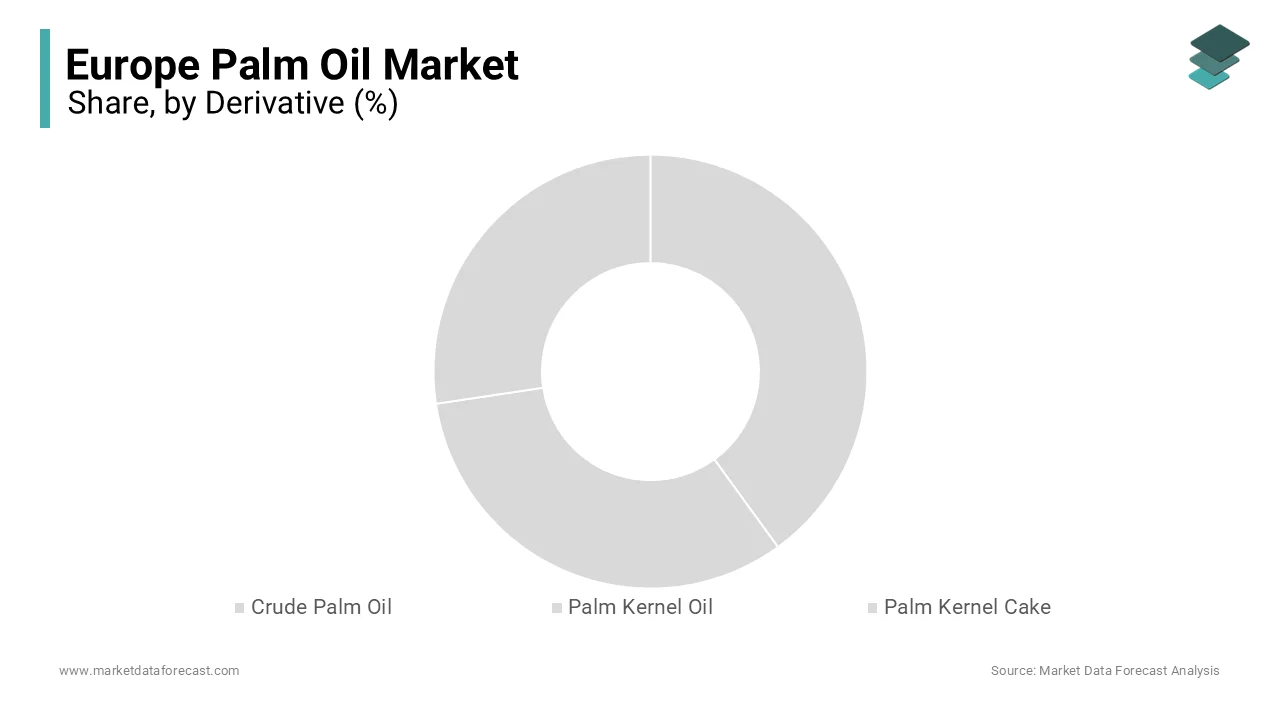
The palm kernel oil segment is projected to register a fastest CAGR of 5.2% from 2026to 2034 with the surge in demand for natural cosmetics and personal care products. Palm kernel oil is rich in lauric acid which is highly valued for its cleansing and moisturizing properties in soaps shampoos and lotions. The natural and organic beauty sector is expanding rapidly, as consumers seek plant-based ingredients. Palm kernel oil serves as a sustainable and effective alternative to synthetic surfactants and petroleum derived compounds. Its ability to create rich lather and provide skin hydration makes it a preferred ingredient for premium cosmetic formulations. The rise of clean beauty trends has prompted major brands to reformulate products using natural oils including palm kernel oil. Manufacturers are increasingly sourcing certified sustainable palm kernel oil to align with brand values and consumer expectations. This shift towards eco-friendly personal care products fuels the demand for palm kernel oil derivatives.
By Application Insights
The edible oil segment was the largest by capturing 54.8% of the Europe Palm Oil Market share in 2025 Palm oil is widely used in the production of spreads baked goods, confectionery, and instant foods due to its stability and texture. As per the research, the food industry consumes the largest share of palm oil imports in the region. The semi solid consistency of palm oil at room temperature eliminates the need for hydrogenation thereby avoiding trans fats, which are harmful to health. This functional benefit makes it a preferred choice for health-conscious manufacturers seeking to improve product profiles. Its neutral flavor and high smoke point make it suitable for frying and cooking applications. The convenience food sector which relies on long shelf life and consistent quality depends heavily on palm oil. Additionally, the rise of plant based diets has increased the use of palm oil in vegan alternatives, such as cheese and meat substitutes.
The bio-diesel segment is lucratively to grow at a fastest CAGR of 6.8% from 2026 to 2034 with regulatory mandates for renewable energy adoption, across the European Union. The Renewable Energy Directive sets binding targets for the share of energy from renewable sources in transport. As per the European Commission, member states are required to increase the use of biofuels to reduce greenhouse gas emissions. Although, palm-oil based biofuels face restrictions due to indirect land use change concerns there is still significant demand for certified sustainable palm oil in bio-diesel production. The directive allows for the inclusion of advanced biofuels and those with low indirect land use change risk. This regulatory framework creates a structured market for compliant bio-diesel producers. Palm oil offers a high energy content and favorable cold flow properties making it suitable for bio-diesel blends. The push for energy independence following geopolitical tensions has further accelerated the adoption of domestic and imported biofuels.
REGIONAL ANALYSIS
Germany Palm Oil Market Analysis
Germany was the top performer in the Europe Palm Oil Market by holding 18.2% of share in 2025 with the strong industrial base and large population drive demand for palm oil in both food and oleochemical sectors. The food processing industry is a major contributor to the national economy requiring substantial amounts of vegetable fats. Germany is also a leading producer of bio-diesel with palm oil serving as a key feedstock despite regulatory shifts. The German government supports renewable energy initiatives, which influences the demand for sustainable palm oil derivatives. The country hosts major refineries and chemical plants that process crude palm oil into various industrial applications. According to the German Chemical Industry Association, the oleochemical sector relies on palm oil for producing surfactants and detergents. Consumer awareness regarding sustainability is high in Germany prompting retailers to prioritize Certified Sustainable Palm Oil. The German Retail Federation notes that many supermarket chains have committed to sourcing only certified palm oil for own brand products. This commitment drives the market towards higher sustainability standards. Additionally, Germany’s central location in Europe facilitates efficient distribution to neighboring countries.
Netherlands Palm Oil Market Analysis
The Netherlands palm oil market was ranked second by capturing 19.25 of the share in 2025 due to its strategic port infrastructure. The Port of Rotterdam is the largest seaport in Europe and handles the majority of palm oil imports from Southeast Asia. The Netherlands has a robust oleochemical industry that processes crude palm oil into derivatives for various applications. The government has implemented strict sustainability for biofuels influencing the type of palm oil imported. The Netherlands Enterprise Agency promotes the use of Certified Sustainable Palm Oil to align with national environmental goals. Major multinational companies headquartered in the Netherlands drive demand for sustainable supply chains. Consumer organizations in the Netherlands actively monitor corporate compliance with sustainability standards.
Italy Palm Oil Market Analysis
Italy palm oil market growth is anticipated to register a fastest CAGR in coming years with the food processing and cosmetics industries. The country’s renowned food sector utilizes palm oil in the production of baked goods confectionery and snacks. Italian consumers are increasingly aware of health and environmental issues influencing purchasing decisions. The cosmetics industry in Italy also contributes to demand using palm oil derivatives in luxury beauty products. Retailers in Italy are adopting sustainable sourcing policies to meet consumer expectations. The Italian Retail Consortium reports that major chains are committing to Certified Sustainable Palm Oil. The country’s strong design and fashion sectors indirectly support the demand for palm based oleochemicals in personal care.
France Palm Oil Market Analysis
France palm oil market growth is majorly propelled with its large food and cosmetic sectors. The French food industry uses palm oil in various processed products although there is a growing trend towards reducing its usage. French consumers are highly sensitive to environmental and health issues leading to increased demand for sustainable and transparent supply chains. The French Government has implemented policies to promote sustainable agriculture and reduce deforestation linked to imports. The French Agency for Ecological Transition supports initiatives that ensure responsible sourcing of commodities. The cosmetics industry in France a global leader utilizes palm oil derivatives in high end beauty products. Major French retailers have pledged to eliminate unsustainable palm oil from their supply chains. The French Retail Federation highlights the importance of certification and traceability.
Spain Palm Oil Market Analysis
Spain palm oil market growth is likely to grow with its growing food processing and biofuel industries. The country’s strategic location facilitates trade with Africa and Latin America complementing imports from Asia. Palm oil is used in the production of snacks baked goods and confectionery for both domestic consumption and export. The Spanish biofuel industry is expanding with palm oil serving as a feedstock for bio-diesel production. Consumer awareness regarding sustainability is rising in Spain influencing retail practices. The tourism industry also drives demand for food and personal care products containing palm oil derivatives. Spain’s climate supports the cultivation of alternative oils like olive oil but palm oil remains competitive for industrial applications. The government’s focus on circular economy principles encourages the use of sustainable raw materials.
United Kingdom Palm Oil Market Analysis
The United Kingdom palm oil market is having steady opportunities throughout the forecast period. The country maintains strong trade links with Southeast Asia and adheres to high sustainability standards. British consumers are highly engaged in environmental issues driving demand for Certified Sustainable Palm Oil. The UK Government has committed to eliminating deforestation from supply chains through legislative measures. Major UK retailers have been pioneers in sustainable palm oil commitments often exceeding industry averages. The British Retail Consortium reports that nearly all palm oil used in own brand products is certified sustainable. The oleochemical and cosmetic industries in the UK also contribute to demand using palm derivatives in personal care products.
COMPETITIVE LANDSCAPE
The competition in the Europe palm oil market is intense and characterized by strict regulatory compliance and high sustainability standards. Major global producers compete on the basis of traceability certification and environmental stewardship rather than just price. The European Union Deforestation Regulation has raised barriers to entry forcing companies to invest in sophisticated monitoring systems. Leading players differentiate themselves through transparent supply chains and verified deforestation free credentials. Consumer pressure drives retailers to source exclusively from certified sustainable providers creating a premium market segment. Competition is also fueled by innovation in oleochemical applications and bio based alternatives. Companies that fail to meet environmental criteria face exclusion from key markets. Strategic alliances with European distributors and manufacturers enhance market access.
KEY MARKET PLAYERS
Some of the key players in the Europe palm oil market are
- Golden Agri Resources Limited
- Godrej Agrovet Limited
- PT Astra Agro Lestari Tbk
- Cargill Inc
- United Palm Oil Industry Public Company Limited
- Wilmar International Limited
- Sime Darby
- IOI Corp
- London Sumatra
- Kulim Bhd
Top Players in the Market
- Musim Mas Holdings is a leading integrated palm oil producer with a significant presence in the European market through its sustainable supply chain initiatives. The company operates extensive plantations and mills ensuring traceability from seed to shelf. Recent actions include expanding its certified sustainable palm oil offerings to meet stringent European Union regulations. Musim Mas actively collaborates with European retailers and manufacturers to provide transparent and deforestation free products. The company invests in advanced processing technologies to enhance product quality and efficiency. Its commitment to zero deforestation policies aligns with European consumer values. These strategic efforts ensure compliance with evolving regulatory frameworks while maintaining competitive advantage. The company continues to innovate in oleochemical applications to diversify its portfolio. This holistic approach solidifies its position in the dynamic European palm oil landscape.
- IOI Corporation Berhad is a major global palm oil player contributing significantly to the Europe market through its diversified product portfolio and sustainability commitments. The company supplies high quality crude and refined palm oil for food and oleochemical applications. Recent strategies involve enhancing its traceability systems to comply with the European Union Deforestation Regulation. IOI Corporation actively engages with European stakeholders to promote sustainable practices across its supply chain. The company invests in research and development to create value added palm based products. Its robust certification framework ensures adherence to international sustainability standards. The company also explores partnerships with European firms to develop innovative bio based solutions. These initiatives reinforce its market position by addressing critical regulatory and consumer demands.
- Sime Darby Plantation Berhad is a prominent palm oil producer serving the Europe market with a strong emphasis on sustainability and innovation. The company provides a wide range of palm oil products for food industrial and energy sectors. Recent actions include implementing digital traceability platforms to ensure full supply chain transparency for European buyers. Sime Darby Plantation actively participates in industry roundtables to shape sustainable standards. The company invests in renewable energy projects at its facilities to reduce carbon footprint. Its commitment to no deforestation no peat and no exploitation policies resonates with European consumers. The company also develops specialized oleochemical derivatives for high value applications.
Top Strategies Used by Key Market Participants
Key players in the Europe Palm Oil Market primarily focus on achieving full supply chain traceability to comply with stringent European Union deforestation regulations. Companies invest heavily in digital monitoring systems and geolocation data to verify the origin of their products. Strategic partnerships with local farmers and suppliers ensure adherence to sustainable agricultural practices. Certification under recognized standards like the Roundtable on Sustainable Palm Oil is prioritized to build consumer trust. Diversification into high value oleochemical and bio based products reduces reliance on traditional food applications. Engagement with non governmental organizations and policymakers helps shape favorable regulatory frameworks. Investment in research and development drives innovation in sustainable processing technologies.
MARKET SEGMENTATION
This Research Report on Europe palm oil market is segmented and sub-segmented into the following categories:
By Derivative
- Crude Palm Oil
- Palm Kernel Oil
- Palm Kernel Cake
By Application
- Edible Oil
- Cosmetics
- Bio-diesel
- Lubricants
- Surfactants
By Country
- UK
- France
- Spain
- Germany
- Italy
- Russia
- Sweden
- Denmark
- Switzerland
- Netherlands
- Turkey
- Czech Republic
- Rest of Europe