- Product Description Description
- Table of Contents TOC
- List of Table & Figure LOT
- Get Free Sample PDF Sample PDF
Market Size, 2025
$0.55 BnMarket Estimate, 2026
$0.58 BnMarket Forecast, 2034
$0.83 BnCAGR, 2026–2034
4.55%Europe Pate Market Size, Growth, Trends & Forecast (2026–2034)
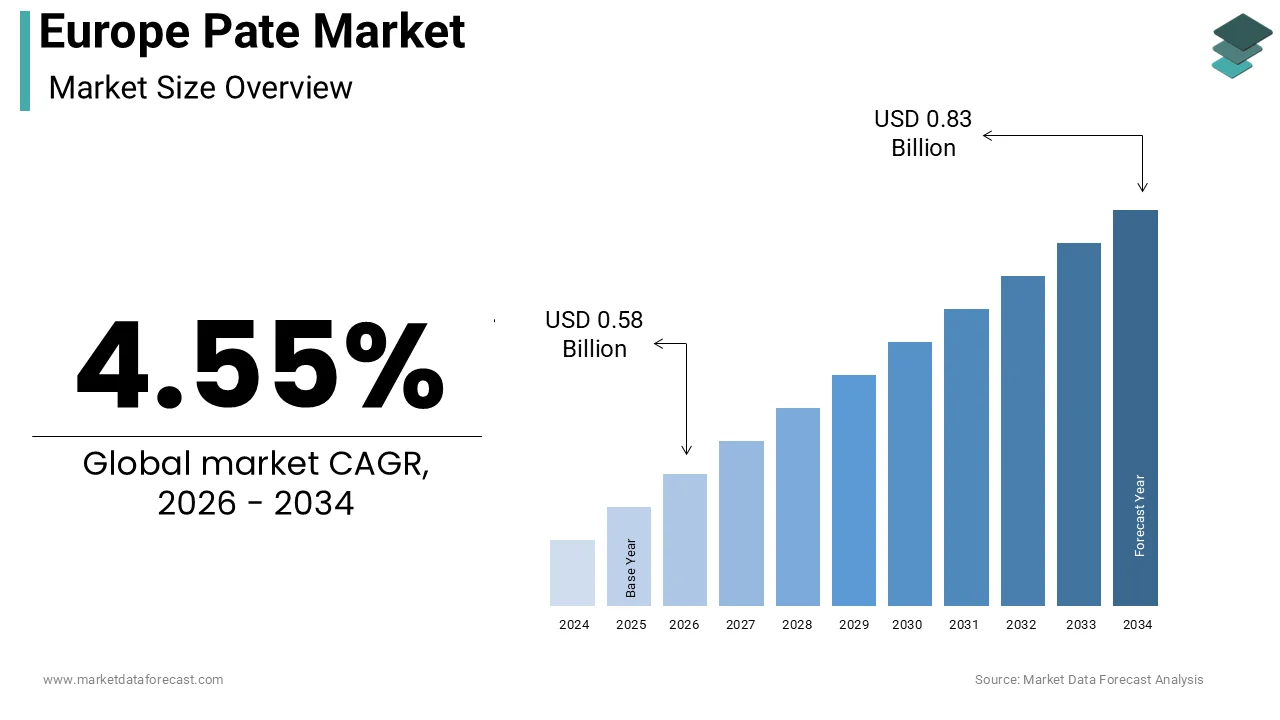
The Europe pate market size was calculated to be USD 0.55 billion in 2025, is anticipated to be worth USD 0.58 billion in 2026, and is projected to reach USD 0.83 billion by 2034, growing at a compound annual growth rate (CAGR) of 4.55% during the forecast period from 2026 to 2034. Driven by deep-rooted cultural heritage, expanding gourmet distribution networks, rising consumer appreciation for artisanal food experiences, and product innovation, the regional market continues to post steady and resilient expansion.
Key Executive Metrics (At-a-Glance)
- 2025 Base Valuation: USD 0.55 Billion
- 2026 Current Valuation: USD 0.58 Billion
- 2034 Forecast Valuation: USD 0.83 Billion
- Compound Annual Growth Rate (CAGR): 4.55% (2026–2034)
- Dominant Product Segment: Duck Pate (holding a 42.9% share in 2025 due to traditional prestige and European geographical indications)
- Fastest-Growing Product Segment: Fish Pate (projected to witness the highest CAGR of 6.8% due to health consciousness and omega-3 trends)
- Dominant Country Market: France (capturing a 35.8% market share in 2025 anchored by massive domestic consumption and culinary traditions)
- Key Regional Markets: Germany, United Kingdom, Italy, and Spain
Core Market Drivers
- Gourmet & Artisanal Culture: Surge in consumer preference for authentic culinary experiences, premium ingredients, and traditional slow-cooking methods.
- Modern Retail Expansion: Strategic shelf placement in premium supermarket chains, hypermarkets, and specialized online grocery channels boosting consumer accessibility.
Primary Market Restraints & Challenges
- Strict Regulatory & Compliance Burdens: Complex hygiene legislation (Regulation EC No 852), traceability rules, and high administrative certification costs.
- Health Consciousness & Substitutes: Growing awareness of saturated fat intake leading to a shift toward plant-based spreads and dairy alternatives.
- Raw Material Volatility: Price fluctuations in pork, poultry, and livers driven by disease outbreaks (avian influenza, African swine fever) and inflation.
Europe Pate Market Segmentation Breakdown
| Segment Category | Leading Sub-Segment (Base/Current) | Fastest-Growing Sub-Segment |
|---|---|---|
| By Product Type | Duck Pate (42.9% share in 2025) | Fish Pate (6.8% CAGR driven by health preferences and omega-3 benefits) |
| By Region / Country | France (35.8% share in 2025) | Spain / United Kingdom (driven by tapas culture and gastropub innovation) |
Major Industry Players Profiled
Key enterprises shaping the competitive European pate market include Nestlé S.A., Danone S.A., Conagra Brands Inc., Hormel Foods Corporation, JBS S.A., WH Group Limited, Campofrío Food Group, Groupe Madrange, Herta (Nestlé), Dr. Oetker, Unilever PLC, Argal Alimentación S.A., Casa Tarradellas S.A., Duc de Gascogne, and Henaff S.A.
 Download Free Sample Report
Europe Pate Market Size
The Europe pate market size was calculated to be USD 0.55 billion in 2025 and is anticipated to be worth USD 0.83 billion by 2034, from USD 0.58 billion in 2026, growing at a CAGR of 4.55% during the forecast period.
Pate is a savoury, spreadable paste traditionally made from a mixture of ground meat, fat, and seasonings. In Europe, this product holds deep cultural significance, particularly in France, Belgium, and Germany, where it serves as a staple appetizer and gourmet delicacy. The European landscape for such traditional food items is supported by a robust agricultural framework. As documented by Eurostat, the European Union utilizes a vast expanse of its total land area for agricultural production, ensuring a steady supply of essential raw materials such as pork and poultry. The availability of these primary ingredients, including high-quality animal livers, remains a fundamental requirement for the regional production of traditional meat spreads and pâtés. The region also boasts a dense network of small and medium enterprises that drive artisanal food manufacturing. According to reports from the European Commission, the food and drink manufacturing industry stands as the largest manufacturing employer across the union, underscoring the significant workforce required to sustain regional food production. The high level of employment within this sector reflects the specialized skills and labor-intensive processes involved in crafting premium meat-based products for the European pate market. Consumer appreciation for heritage foods remains strong, with the European Food Safety Authority noting that traditional meat products undergo rigorous safety assessments to maintain public trust. The market thrives on the intersection of gastronomic tradition and modern convenience, as urban populations seek authentic flavors that reflect regional identities. This sector benefits from strict geographical indication protections that safeguard traditional recipes and production methods, ensuring that European pate retains its premium status globally while satisfying local palates accustomed to rich and savory profiles.
MARKET DRIVERS
Rising Popularity of Gourmet and Artisanal Food Culture
Surge in Demand for Authentic Culinary Experiences Drives Premium Segment Growth. The surge in consumer preference for gourmet and artisanal food experiences stands as a primary catalyst for market expansion. European diners increasingly seek authentic and high-quality meat spreads that offer distinct flavor profiles compared to mass-produced alternatives. This shift aligns with a broader trend where consumers prioritize quality over quantity in their dietary choices. Market trends across the European Union indicate a rising demand for specialty and artisanal food products, as consumers increasingly seek out premium items such as handcrafted pâtés, according to FoodDrinkEurope. The proliferation of gourmet shops and high-end delicatessens across major cities such as Paris, Berlin, and Milan has created dedicated channels for these products. A significant portion of the European demographic, particularly younger adult consumers, demonstrates a strong preference and willingness to pay more for food products with verified artisanal origins and traditional production methods. This demographic drives the market by viewing pate not merely as a spread but as a component of sophisticated entertaining and culinary exploration. Restaurants and bistros further amplify this demand by featuring local pate varieties on their menus, introducing the product to wider audiences. The emphasis on traditional production methods, such as slow cooking and the use of specific regional herbs, resonates with customers who value transparency and heritage. As the culinary landscape evolves, the desire for unique and elevated taste experiences ensures that artisanal pate remains a sought-after item in the European food basket.
Expanding Retail Distribution Through Premium Supermarket Chains
Strategic Shelf Placement and Modern Trade Expansion Enhance Product Accessibility. The strategic expansion of premium supermarket chains and specialized retail formats is increasing, which boosts the growth of the European pate market. This significantly boosts the accessibility and visibility of pate products. Major retailers across Europe have dedicated increasing shelf space to gourmet sections, placing traditional meat spreads alongside cheeses and cured meats to attract discerning shoppers. Premium private label ranges in major supermarket chains have experienced notable growth, signaling a consumer shift toward high-quality store brands that now feature diverse and sophisticated pâté varieties, as noted in EuroCommerce retail outlooks. This retail evolution allows manufacturers to reach a broader consumer base beyond traditional butcher shops. The integration of cold chain logistics ensures that fresh and delicate pate products maintain their quality from production to the point of sale. Modern retail outlets, including supermarkets and hypermarkets, serve as the dominant channel for packaged food sales in Western Europe, providing the primary platform for pâté brands to reach a broad consumer base and showcase their product portfolios. Retailers frequently organize tasting events and promotional campaigns that educate consumers on the versatility of pate, encouraging trial and repeat purchases. The presence of well-known international and local brands in these stores enhances consumer confidence and fosters brand loyalty. Furthermore, the rise of online grocery platforms enables niche pate producers to access customers in remote areas, breaking geographical barriers. This robust distribution network ensures that high-quality pate remains readily available to the growing segment of home cooks seeking restaurant-quality ingredients for their daily meals.
MARKET RESTRAINTS
Stringent Regulatory Compliance and Food Safety Standards
Complex Hygiene Regulations and Traceability Requirements Increase Operational Burdens. The rigorous regulatory environment governing meat processing and food safety in the region is quite strict, which hampers the growth of the Europe pate market. This acts as a significant restraint on market fluidity and speed to market. Manufacturers must adhere to complex legislation regarding hygiene, labeling, and traceability, which increases operational costs and extends production timelines. According to the European Food Safety Authority, compliance with Regulation EC No 852 on the hygiene of foodstuffs requires extensive documentation and regular audits that can strain the resources of smaller artisanal producers. The implementation of strict controls on animal by-products and additives limits the formulation options available to manufacturers, potentially restricting innovation in flavor and texture. Small and medium-sized enterprises in the meat sector face a disproportionately high regulatory burden, with a notable portion of their operating costs dedicated to maintaining safety certifications and ensuring compliance with regional standards. These financial burdens can hinder market entry for new players and limit the scalability of existing businesses. Additionally, varying national interpretations of EU-wide regulations create fragmentation, forcing companies to adapt their processes for each member state. The requirement for clear allergen labeling and nutritional information further complicates packaging design and inventory management. While these measures ensure high safety standards, they inadvertently slow down the introduction of new products and increase the final retail price, potentially deterring price-sensitive consumers. The constant need to update practices in response to evolving safety protocols creates an operational challenge that restrains rapid market growth and flexibility.
Health Consciousness and Shift Toward Plant-Based Alternatives
Growing Cardiovascular Health Concerns Drive Consumers Toward Vegetable-Based Spreads. Growing health consciousness among European consumers and the concurrent rise of plant-based diets are a substantial restraint on the Europe pate market. Increasing awareness regarding the health implications of high cholesterol and saturated fat intake has led many individuals to reduce their consumption of organ meats and fatty spreads. Cardiovascular diseases continue to be the primary cause of mortality across the continent, leading to extensive public health campaigns that advocate for a reduced consumption of animal-derived fats to improve long-term heart health, as emphasized by the European Heart Network. This health narrative drives a shift towardvegetable-basedd spreads and legume pastes that mimic the texture of pate without the associated health risks. Consumer interest in plant-based alternatives is growing in many European regions, with meat substitutes increasingly competing with traditional spreads for retail shelf space as shoppers prioritize health and sustainability, according to research. The demographic most likely to purchase pate, often older adults, is simultaneously the group most advised to monitor their lipid profiles, creating a conflict between tradition and medical advice. Furthermore, the rising popularity of flexitarian lifestyles means that even occasional meat eaters are substituting traditional pate with mushroom or lentil-based versions during regular meals. This behavioural change reduces the frequency of purchase for conventional liver and meat pates. Manufacturers face the difficult task of reformulating products to meet lower fat standards without compromising the rich mouthfeel that defines the category, a technical challenge that limits immediate market responsiveness to these health trends.
MARKET OPPORTUNITIES
Innovation in Organic and Free Range Product Segments
Ethical Sourcing and Organic Certification Create Premium Value Propositions. The burgeoning demand for organic and free-range meat products offers a lucrative opportunity for manufacturers within the European pate market. This allows them to differentiate their pâté offerings and capture premium market segments. Consumers are increasingly scrutinizing the sourcing of ingredients, favoring products derived from animals raised without antibiotics and with access to outdoor spaces. European organic farmland continues to expand, strengthening the supply chain for organic livestock and providing a consistent source of high-quality meat for premium pâté production, as noted by the Research Institute of Organic Agriculture (FiBL). This trend allows brands to command higher price points by appealing to ethically minded shoppers who prioritize animal welfare and environmental sustainability. The European Union’s long-term agricultural strategy explicitly aims to significantly increase the proportion of land dedicated to organic farming, creating a stable regulatory and supply framework for organic ingredients over the coming decade. Consumer demand for certified organic meat products remains high across Europe, with shoppers often demonstrating a preference for items that meet stringent animal welfare and environmental standards. Manufacturers can leverage this opportunity by launching exclusive lines of organic duck, chicken, or pork pates that highlight transparent sourcing stories. Collaborations with local farms to secure certified free-range liver supplies can further enhance brand authenticity. By aligning product portfolios with the clean label movement, companies can attract a younger demographic that values sustainability. This strategic pivot not only mitigates the impact of commodity price fluctuations but also builds resilient brand loyalty among consumers who view their food choices as a reflection of their personal values.
Expansion into Emerging Flavors and Fusion Culinary Profiles
Culinary Innovation and Global Flavor Integration Attract Adventurous Consumers. Developing innovative flavor profiles and fusion varieties paves the way to revitalize the pâté category, which is likely to fuel the expansion of the Europe pate market. This approach also attracts adventurous eaters. Traditional recipes often dominate the market, yet there is untapped potential in incorporating global spices and unconventional ingredients to create unique taste experiences. Manufacturers can experiment with ingredients such as truffle, cognac, sun-dried tomatoes, or exotic spices like harissa and ginger to appeal to sophisticated palates. This approach transforms pate from a standard breakfast item into a versatile component for modern gastronomy and social gatherings. The rise of food tourism and exposure to international cuisines through travel and media have educated consumers on diverse flavor combinations, making them more receptive to novel variations. A significant segment of younger adult consumers actively seeks out traditional food products that incorporate modern or innovative variations, driving brands to reimagine classic recipes like pâté with unique ingredients or contemporary twists. By introducing limited edition flavors or seasonal variants, brands can generate buzz and encourage repeat purchases driven by curiosity. Collaborations with renowned chefs to co-create signature blends can further elevate brand prestige and visibility. This strategy effectively broadens the consumer base beyond traditionalists to include food enthusiasts who view pate as a canvas for culinary creativity, thereby driving volume growth in a mature market segment.
MARKET CHALLENGES
Volatility in Raw Material Prices and Supply Chain Disruptions
Commodity Price Fluctuations and Animal Disease Outbreaks Threaten Margin Stability. Fluctuations in the costs of key raw materials such as pork, poultry, and fats pose a persistent challenge to profitability and pricing stability within the Europe pate market. The industry relies heavily on agricultural commodities whose prices are susceptible to weather conditions, feed costs, and geopolitical tensions. According to the European Central Bank (ECB), food inflation in the euro area remained elevated compared to historical averages during the early part of the year, though it has moderated from recent peaks. The upward pressure on food prices was significantly influenced by rising costs in the meat and dairy sectors, where supply shortages and robust demand kept consumer prices high. These upward pressures force manufacturers to either absorb the costs, thereby squeezing margins, or pass them on to consumers, risking a decline in sales volume. The dependency on specific cuts like liver makes the sector particularly vulnerable to supply shocks caused by animal disease outbreaks. Reports from the World Organisation for Animal Health (WOAH) indicate that outbreaks of avian influenza and African swine fever across various European regions led to mandatory culling and trade restrictions, which reduced the availability of raw materials for meat processors. These animal health challenges exacerbated existing supply chain pressures, contributing to tighter inventory for traditional meat-based products and spreads. Such disruptions create uncertainty in production planning and inventory management. Additionally, rising energy costs associated with processing and refrigeration further exacerbate the financial strain on producers. The fragmented nature of the supply chain, involving numerous small-scale farmers and processors, complicates efforts to negotiate long-term fixed price contracts. This volatility hinders the ability of companies to maintain consistent retail pricing, potentially alienating cost-conscious consumers who may switch to cheaper alternatives during periods of high inflation.
Intense Competition from Substitute Spreads and Private Labels
Market Saturation by Alternatives and Retailer Brands Erodes Traditional Brand Share. A wide array of substitute spreads impedes the expansion of the Europe pate market. Furthermore, the aggressive expansion of retailer private labels erodes brand share. Consumers today have access to numerous alternatives, including hummus, tapenade, cheese spreads, and plant-based patés that often compete directly for the same usage occasions. As per the Private Label Manufacturers Association (PLMA), private label brands continue to expand their market share across Europe, with retailers increasingly positioning high-quality store-brand spreads as competitive alternatives to leading national brands. Retailers are utilizing their scale to offer premium meat and dairy products at more accessible price points, which has helped sustain sales volume during periods of high inflation. This dynamic forces established brands to invest heavily in marketing and differentiation to justify premium pricing. The proliferation of healthy alternatives appeals to the growing segment of health-conscious buyers who perceive traditional pate as less nutritious. The dairy sector has seen a notable increase in the consumption of cheese-based products, which are capturing a larger portion of the market as consumers explore a wider variety of protein-rich snacks and spreads. Furthermore, the low barrier to entry for small batch producers saturates the market with niche options, fragmenting consumer attention. Large multinational food corporations also introduce competitive products that benefit from economies of scale, making it difficult for smaller artisanal brands to compete on price or distribution reach. This intense rivalry compels manufacturers to constantly innovate and optimize operations, yet the pressure on margins remains acute as consumers demonstrate high price sensitivity and willingness to switch between categories based on value and perceived health benefits.
REPORT COVERAGE
| REPORT METRIC | DETAILS |
| Market Size Available | 2025 to 2034 |
| Base Year | 2025 |
| Forecast Period | 2026 to 2034 |
| CAGR | 4.55% |
| Segments Covered | By Product Type, And Region |
| Various Analyses Covered | Global, Regional & Country Level Analysis; Segment-Level Analysis; DROC, PESTLE Analysis; Porter’s Five Forces Analysis; Competitive Landscape; Analyst Overview of Investment Opportunities |
| Regions Covered | UK, France, Spain, Germany, Italy, Russia, Sweden, Denmark, Switzerland, Netherlands, Turkey, and the Czech Republic |
| Market Leaders Profiled | Nestlé S.A., Danone S.A., Conagra Brands Inc., Hormel Foods Corporation, JBS S.A., WH Group Limited, Campofrío Food Group, Groupe Madrange, Herta (Nestlé), Dr. Oetker, Unilever PLC, Argal Alimentación S.A., Casa Tarradellas S.A., Duc de Gascogne, Henaff S.A. |
SEGMENTAL ANALYSIS
By Product Type Insights
The duck pate segment dominated the Europe pate market and held a 42.9% share in 2025 because of the culinary traditions of France and Southwest Europe, where duck liver is considered the gold standard for gourmet spreads. The segment's dominance is mainly driven by the protected status of traditional recipes and the high perceived value associated with duck products. The primary factor sustaining the dominance of duck pate is the strong cultural attachment to heritage foods protected by European Union geographical indications. Consumers view duck pate not just as a food item but as a symbol of gastronomic excellence that is integral to festive dining and fine dining experiences. France remains the world's leading producer of duck-based delicacies, with the vast majority of its output dedicated to satisfying high domestic demand for traditional holiday products, as noted by the French Ministry of Agriculture. This massive local demand creates a stable baseline for the segment across the continent. Products protected by European quality schemes, such as Protected Geographical Indication (PGI), command a significant price premium over generic alternatives, encouraging producers to adhere to strict regional production standards according to European Commission studies. The cultural pairing of specialty meats with regional wines continues to drive consumer purchasing behavior, particularly in the premium and gift sector,s where these items are frequently marketed as complementary products. This symbiotic relationship between the wine and duck pate industries reinforces the segment's market position, making it resilient against cheaper alternatives. A further reason for this growth is the robust export market and the global perception of European duck pate as a luxury good. High net worth individuals and the hospitality sector in Asia and North America specifically seek authentic European duck pate, creating a lucrative revenue stream that supports domestic production scales. The European Union continues to see steady value in the export of prepared and preserved meat products, with high-end duck varieties remaining a prestigious category in international markets according to Eurostat trade records. The ability to command premium prices allows manufacturers to invest in superior packaging and marketing, further distinguishing duck pate from mass market chicken or pork options. A study indicates that the luxury meat spread category, led by duck, is projected to grow at a steady rate due to rising disposable incomes in emerging markets. Additionally, the limited supply of high-quality duck livers compared to poultry creates an exclusivity factor that appeals to discerning consumers. Duck-based products, including traditional foie gras and specialty spreads, serve as a primary benchmark for quality within the European gourmet food market, maintaining a dominant presence in specialty delicatessens and high-end retail outlets as per FoodDrinkEurope.
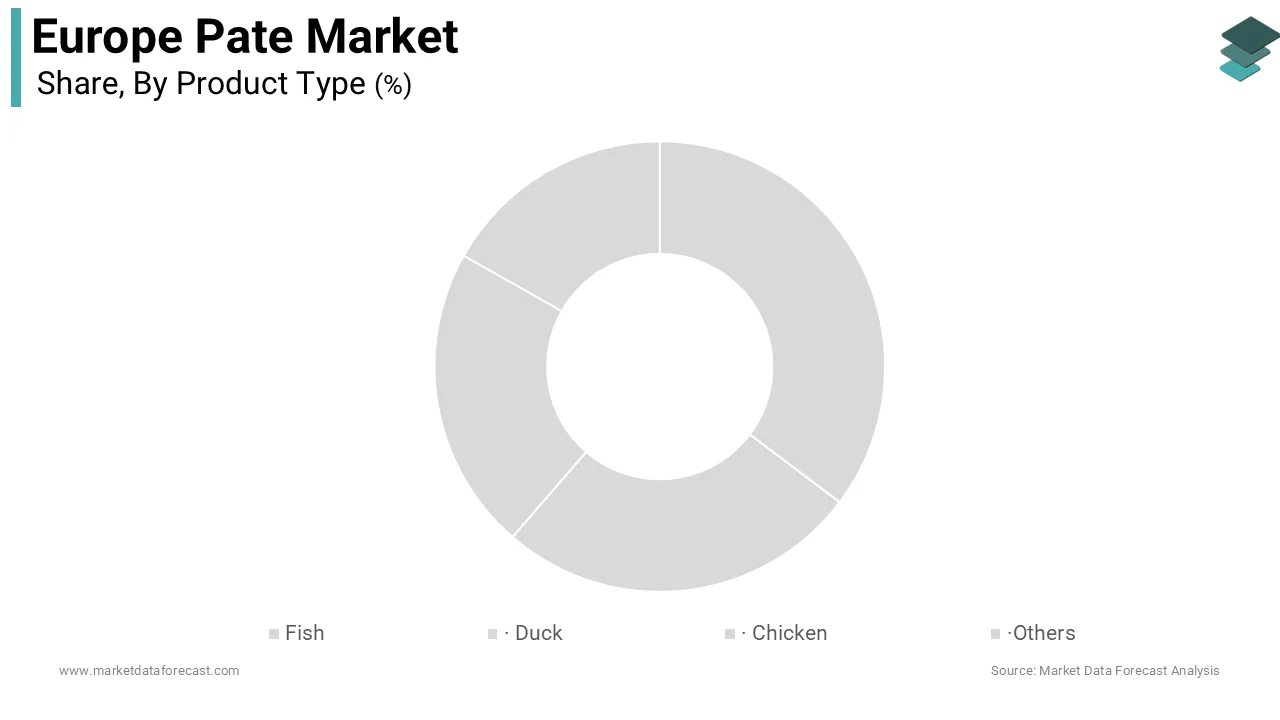
The fish pate segment is predicted to witness the highest CAGR of 6.8% from 2026 to 2034 due to shifting dietary preferences toward healthier, lighter protein sources and the increasing popularity of seafood in everyday meals. Unlike the mature duck segment, fish pate benefits from innovation in flavors and formats that appeal to younger demographics. The foremost driver for the explosive growth of fish pate is the intensifying consumer focus on heart health and the nutritional benefits of omega-3 fatty acids. Modern European consumers are actively reducing their intake of saturated fats found in traditional meat pates in favor of seafood options that offer similar textures with superior health profiles. The presence of essential nutrients such as Vitamin D and selenium in fish pate makes it an attractive option for health-conscious families. The nutritional advantage allows fish pate to penetrate the breakfast and snack dayparts more effectively than heavier meat alternatives, driving frequent repeat purchases and expanding the total addressable market. In addition, this area is supported by the alignment of fish pate production with stringent sustainability standards and eco-labeling schemes that resonate with environmentally aware shoppers. The European seafood industry has made significant strides in certifying fisheries, giving fish pate a competitive edge over meat products, which face scrutiny regarding carbon footprints and animal welfare. Consumers are increasingly willing to pay a premium for products that guarantee sustainable sourcing, and fish pate brands have been quick to adopt these certifications. The European Commission’s Farm to Fork Strategy aims to make food systems fair and healthy, promoting sustainable fish stock,s which directly benefits the raw material supply for this segment. The trend encourages retailers to prioritize shelf space for certified fish pates, enhancing visibility and accessibility. The versatility of fish pate in plant-forward diets, often used as a bridge for flexitarians, further accelerates its adoption, positioning it as the dynamic growth engine of the overall market.
REGIONAL ANALYSIS
France Pate Market Analysis
France led the Europe pate market and captured a 35.8% share in 2025. The dominance of the French market is driven by its deep-seated culinary traditions and massive domestic consumption. The country is not only the largest producer but also the primary innovator, setting the global standard for quality and variety in meat spreads. The market status in France shows a unique blend of artisanal craftsmanship and industrial scale production, where pate is a daily staple rather than an occasional luxury. A primary driving factor is the ingrained culture of the "aperitif" and traditional family meal,s where pate serves as a central component. France leads the world in the consumption of foie gras and specialty pâtés, with the average citizen consuming these products at rates far exceeding those of any other European nation, according to CIFOG reports. The high demand for these traditional delicacies remains a hallmark of French gastronomic culture, particularly during festive seasons and regional celebrations. This consistent high-volume demand ensures a stable and lucrative market environment for both small-scale farmers and large corporations. Furthermore, the French government actively supports the sector through subsidies and protection of traditional methods, fostering a resilient supply chain. The specialty meat processing sector is a vital component of the French economy, employing tens of thousands of skilled workers across the country, as documented by the National Institute of Statistics and Economic Studies (INSEE). This industry supports a vast network of producers and processors, underscoring the importance of value-added meat products to the national agricultural landscape. Local markets and traditional butcher shops serve as essential outlets for high-end and artisanal pâté varieties, offering consumers a direct link to regional producers and traditional recipes as highlighted by the Confederation of French Butchers. While modern supermarkets handle the majority of volume, these traditional channels remain the primary venue for discovering premium, handcrafted products that emphasize local heritage and quality. This robust infrastructure, combined with a population that views high-quality pate as a birthright of their cuisine, secures France's position as the unchallenged leader in the regional landscape.
Germany Pate Market Analysis
Germany was the next prominent country in the Europe pate market in 2025 due to its high volume consumption of affordable and versatile meat spreads across all demographic groups. The German market is defined by its efficiency, strong private label presence, and the integration of pate into the daily breakfast routine. The market status in Germany is heavily influenced by the "Abendbrot" or evening bread tradition, where cold cuts and spreads are the cornerstone of the meal. A key driving factor is the dominance of discount supermarket chains like Aldi and Lidl, which have democratized access to high-quality pate through aggressive private label strategies. Private label products represent a substantial portion of the grocery market in Germany, with their presence being particularly strong in refrigerated and deli categories, according to insights from the German Retail Association (HDE). The prevalence of high-quality, affordable own-brand options from major retailers has helped establish meat spreads and pâtés as accessible products for a broad range of consumers. This retail structure drives volume growth even if average unit prices remain lower than in France. Additionally, the German meat processing industry is a major player in Europe, maintaining a significant output that supports a stable supply of raw materials for various processed meat products, as documented by the Federal Ministry of Food and Agriculture (BMEL). Despite recent declines from historical production peaks, the sector remains a critical hub for meat manufacturing, ensuring that producers have consistent access to the primary ingredients required for high-volume pâté production. The consumer preference for convenience has also spurred innovation in packaging, with single-serve portions and easy-open lids gaining traction. Meat spreads and pâtés are a traditional part of the German diet, frequently appearing on household shopping lists as a regular item for breakfasts and evening meals, according to sources. The majority of German households continue to purchase meat-based spreads, viewing them as a convenient and reliable pantry staple for routine consumption. The combination of efficient logistics, strong domestic production capabilities, and a culture that embraces cold meat spreads ensures Germany remains a critical pillar of the European pate market.
United Kingdom Pate Market Analysis
The United Kingdom maintains a significant position in the European pate market owing to a sophisticated consumer base that is increasingly pivoting toward premium and artisanal varieties. While traditional consumption patterns exist, the UK market is distinctively driven by the growth of the foodservice sector and the influence of celebrity chefs. The market status in the UK is undergoing a transformation where pate is shedding its image as a simple sandwich filler to become a gourmet ingredient for entertaining. A major driving factor is the thriving pub culture and the rise of gastropubs, which frequently feature locally sourced pates as starter options, introducing the product to a wider audience. Furthermore, the influence of media and cooking shows has educated consumers on the versatility of pate, leading to increased home usage. The presence of a diverse population has also introduced new flavor profiles, with manufacturers experimenting with fusion ingredients to cater to multicultural palates. This blend of traditional pub fare and modern gourmet trends creates a dynamic environment where quality and provenance are becoming the primary purchase drivers, solidifying the UK's role as a key value market.
Italy Pate Market Analysis
Italy is moving ahead steadfastly in the Europe pate market due to its preference for regionally specific preparations and the integration of pate into its rich antipasto culture. Unlike the mass market approach in Northern Europe, the Italian market is fragmented and deeply rooted in local traditions and high-quality ingredients. The market status in Italy is defined by the concept of "terroir," where consumers strongly favor pates made from local breeds and traditional recipes specific to their regions. A primary driving factor is the robust tourism industry, which exposes millions of visitors to Italian cured meats and spreads, thereby reinforcing domestic pride and consumption. The Italian agricultural sector's focus on quality over quantity supports this niche, with many producers obtaining Protected Designation of Origin status for their products. Furthermore, the Italian palate's appreciation for texture and herb infusions leads to unique product variations that differ significantly from the smooth French styles. The presence of numerous small-scale artisanal producers ensures a diverse market landscape where innovation happens at the micro level. This dedication to authenticity and regional identity allows Italy to maintain a loyal customer base that values the story and origin of their food as much as the taste.
Spain Pate Market Analysis
Spain is an emerging player in the Europe pate market by leveraging its vibrant tapas culture to drive frequent and social consumption of meat spreads. The Spanish market is characterized by a growing appreciation for premium pork products and a shift toward convenient yet high-quality snacking options. The market status in Spain is evolving rapidly as modern lifestyles intersect with traditional eating habits, making pate a popular choice for quick meals and social gatherings. A significant driving factor is the ubiquity of tapas bars, where small portions of pate are served alongside bread and wine, normalizing its consumption across all age groups. This domestic abundance allows Spanish manufacturers to compete aggressively on price while maintaining quality. The rise of urbanization has also led to an increase in demand for ready-to-eat solutions, with pate fitting perfectly into the busy schedules of city dwellers. Furthermore, the export potential of Spanish Iberian pork products has elevated the global profile of Spanish pates, encouraging domestic producers to invest in premium lines. The combination of a strong domestic supply chain, a culture of social eating, and increasing urbanization positions Spain as a high-potential growth market within the European landscape.
COMPETITION OVERVIEW
The competition in the Europe pate market is characterized by a dynamic interplay between established heritage brands and agile artisanal producers who collectively drive innovation and quality standards. Large multinational corporations leverage their extensive distribution networks and marketing budgets to dominate shelf space in major retail chains, while smaller local players compete on authenticity and unique regional flavors. This fragmented landscape fosters intense rivalry as companies constantly seek to differentiate themselves through premium ingredients and sustainable sourcing practices. The rise of private label products from major supermarket chains adds another layer of pressure by offering cost effective alternatives that challenge branded items on price. Consumers are becoming increasingly discerning, which forces all participants to maintain high transparency regarding origin and production methods. The market sees frequent launches of novel flavor profiles and eco-friendly packaging as brands vie for the attention of health-conscious and environmentally aware shoppers. This competitive environment ensures continuous evolution in product quality and variety, benefiting the end consumer while pushing manufacturers to optimize operations and strengthen brand loyalty through consistent excellence and strategic positioning in both physical and digital retail spaces.
KEY MARKET PLAYERS
A few major players of the Europe pate market include
- Nestlé S.A
- Danone S.A
- Conagra Brands Inc
- Hormel Foods Corporation
- JBS S.A
- WH Group Limited
- Campofrío Food Group
- Groupe Madrange
- Herta (Nestlé)
- Dr. Oetker
- Unilever PLC
- Argal Alimentación S.A
- Casa Tarradellas S.A
- Duc de Gascogne
- Henaff S.A
Top Strategies Used by Key Market Participants
Key players in the Europe pate market primarily employ product innovation and premiumization strategies to differentiate their offerings in a crowded landscape. Companies frequently launch limited edition flavors incorporating exotic ingredients like truffles or cognac to attract adventurous consumers and generate media buzz. Another vital strategy involves securing organic and free-range certifications to align with growing consumer demand for ethical and sustainable food sources. Major participants also focus on expanding their distribution channels by partnering with high-end retailers and developing robust e-commerce platforms to reach direct consumers. Strategic acquisitions of smaller artisanal producers allow large corporations to broaden their portfolios and access niche markets quickly. Furthermore, brands invest heavily in storytelling and heritage marketing to emphasize their traditional roots and craftsmanship, which justifies premium pricing and builds emotional connections with loyal customers who value authenticity and quality above all else in their gourmet food purchases.
Leading Players in the Europe Pate Market
- Rougie stands as a preeminent force in the European pate landscape with a legacy spanning over two centuries of artisanal excellence. The company specializes in high-end duck and goose liver products that define the premium segment globally. Rougie maintains strict control over its supply chain by partnering directly with select farmers in Southwest France to ensure unparalleled quality. Recently, the brand has intensified its focus on sustainability by obtaining organic certifications for key product lines to meet evolving consumer demands. They have also expanded their digital presence to reach international gourmet shoppers directly through enhanced e-commerce platforms. Their commitment to traditional methods combined with modern distribution strategies solidifies their reputation as a guardian of French culinary heritage while driving growth in emerging markets across Asia and North America.
- Labeyrie Fine Foods operates as a diversified powerhouse in the European delicacy sector with a robust portfolio extending beyond pate to include smoked salmon and caviar. The company leverages its extensive distribution network to place products in major retail chains and luxury hospitality venues worldwide. Labeyrie recently launched innovative ready-to-eat snack packs featuring single-serve pate portions to cater to busy urban consumers seeking convenience without compromising quality. They have also invested heavily in marketing campaigns that highlight the versatility of their products in modern gastronomy. By acquiring smaller artisanal brands, Labeyrie has broadened its flavor profiles and strengthened its foothold in niche segments. Their strategic emphasis on premiumization and global export capabilities ensures they remain a dominant player, influencing taste trends and setting quality benchmarks across the international gourmet food market.
- Delpeyrat distinguishes itself through a dedicated focus on free-range and ethically sourced duck products that appeal to conscientious consumers. The company has built a strong brand identity around animal welfare and transparent farming practices, which resonates deeply with modern European shoppers. Delpeyrat recently introduced a new line of truffle-infused pates that target the ultra-premium segment and have received critical acclaim from culinary experts. They have expanded their production facilities to increase capacity while maintaining rigorous quality controls. The brand actively participates in international food exhibitions to showcase its innovations and build relationships with high-end distributors. Their commitment to sustainable agriculture and continuous product innovation allows them to command premium prices and foster intense brand loyalty among discerning customers who prioritize ethical sourcing alongside exceptional taste in their culinary choices.
MARKET SEGMENTATION
This research report on the Europe pate market has been segmented and sub-segmented based on product type & region.
By Product Type
- Fish
- Duck
- Chicken
- Others
By Region
- UK
- France
- Spain
- Germany
- Italy
- Russia
- Sweden
- Denmark
- Switzerland
- Netherlands
- Turkey
- Czech Republic
- Rest of Europe