- Product Description Description
- Table of Contents TOC
- List of Table & Figure LOT
- Get Free Sample PDF Sample PDF
Market Size, 2025
$1.69 BnMarket Estimate, 2026
$1.73 BnMarket Forecast, 2034
$2.03 BnCAGR, 2026–2034
2.01%Europe Pepper Market Size, Growth, Trends & Forecast (2026–2034)
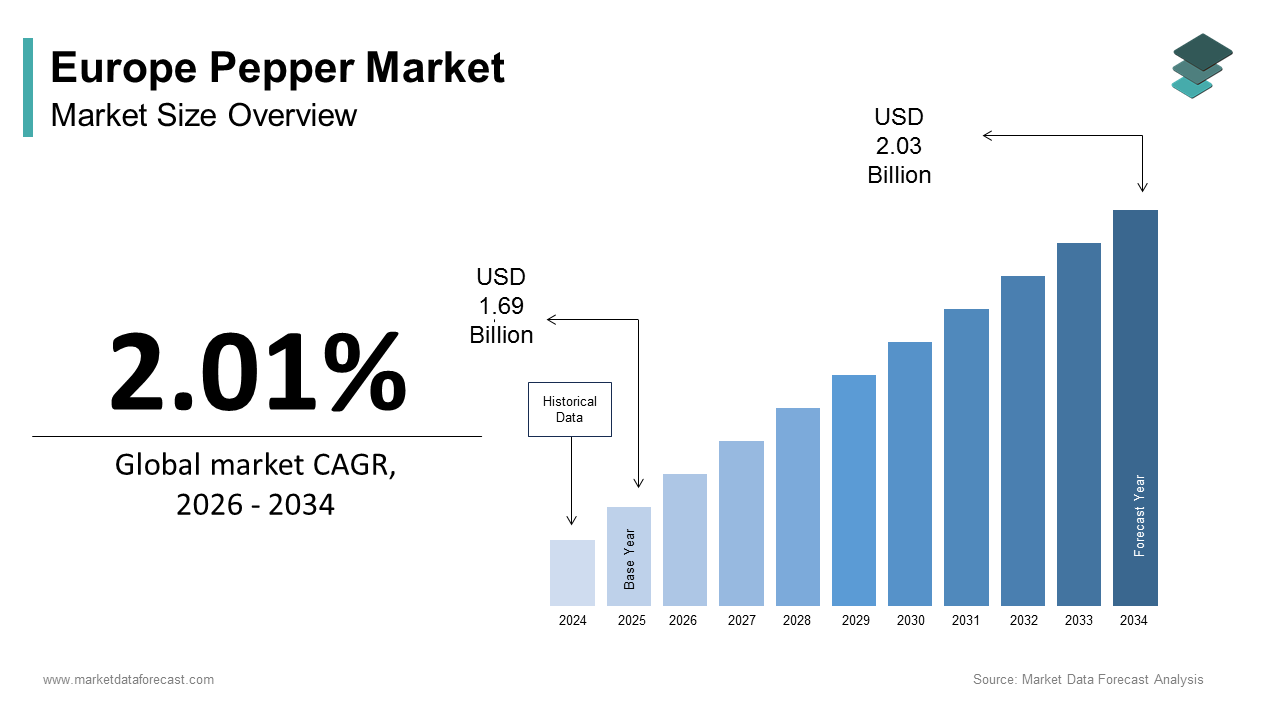
The Europe Pepper Market size was calculated to be USD 1.69 billion in 2025, is estimated to reach USD 1.73 billion in 2026, and is projected to expand to USD 2.03 billion by 2034, registering a compound annual growth rate (CAGR) of 2.01% during the forecast period from 2026 to 2034. Driven by the popularity of ethnic cuisines, health and wellness trends, and a structural blend of regional horticulture for fresh produce and global imports for dried spices, the market continues to expand steadily.
Key Executive Metrics (At-a-Glance)
- 2025 Base Valuation: USD 1.69 Billion
- 2026 Current Valuation: USD 1.73 Billion
- 2034 Forecast Valuation: USD 2.03 Billion
- Compound Annual Growth Rate (CAGR): 2.01% (2026–2034)
- Leading Country Market: Germany (holding 20.9% regional market share in 2025)
- Key Production & Consumption Hubs: Spain, France, United Kingdom, and Italy
Core Market Drivers
- Ethnic & Flavor-Driven Cuisines: Growing demand for diverse international flavor profiles across European home cooking and foodservice channels.
- Health and Wellness Focus: Increasing consumer preference for natural botanicals, antioxidants, and anti-inflammatory compounds like capsaicin and piperine.
Primary Market Restraints & Challenges
- Strict Regulatory Compliance: Stringent EU maximum residue limits (MRLs) and food safety regulations causing potential import bottlenecks.
- Global Price & Supply Volatility: Climatic and geopolitical vulnerabilities in primary sourcing regions leading to input cost instability.
Market Segmentation: Largest and Fastest-Growing Segments
| Segment Category | Largest Segment | Fastest-Growing Segment |
|---|---|---|
| By Nature | Conventional (80.5% share in 2025) | Organic (CAGR of 8.14%) |
| By Product Type | Black Pepper (60.5% share in 2025) | Red Pepper (CAGR of 7.17%) |
| By Application | Food and Beverage (94.1% share in 2025) | Personal Care Products (CAGR of 9.4%) |
| By Form | Powdered Pepper (60.6% share in 2025) | Whole Pepper (CAGR of 6.16%) |
Major Industry Players Profiled
Key market participants shaping the European pepper landscape include Olam International, McCormick & Company, Koninklijke Euroma B.V., Fuchs Gruppe, Nedspice Group, Bart Ingredients Company Ltd, British Pepper & Spice Co Ltd, Unilever PLC, Ajinomoto Co Inc, and Everest Spices.
Europe Pepper Market Size
The Europe pepper market size was calculated to be USD 1.69 billion in 2025 and is anticipated to be worth USD 2.03 billion by 2034, from USD 1.73 billion in 2026, growing at a CAGR of 2.01% during the forecast period.
Pepper is a diverse array of products, including black pepper, white pepper, chili peppers, and bell peppers, serving both culinary and industrial applications. This market is characterized by a complex interplay of domestic production, particularly in Southern and Western Europe, for fresh varieties like bell peppers, and heavy reliance on imports for dried spices such as black pepper from Southeast Asia. As per Eurostat, Spain leads European Capsicum pepper production, underscoring the continent’s strong capacity for fresh pepper cultivation. According to the European Union’s trade data, imports from Vietnam highlight Europe’s deep integration into global spice supply chains. As per EU internal trade records, black pepper continues to circulate significantly among member states, with a notable portion consisting of re-exports. This duality of robust regional horticulture for fresh produce and dependence on external sources for dried spices defines the structural complexity of the European pepper landscape.
MARKET DRIVERS
Rising Demand for Ethnic and Flavor-Driven Cuisines
The proliferation of ethnic restaurants and the mainstream adoption of globally inspired home cooking have significantly amplified demand for diverse pepper varieties across Europe, which is one of the key factors propelling the European peppers market growth. Consumers are increasingly seeking authentic flavors from Asian, Middle Eastern, and Latin American cuisines, all of which rely heavily on specific types of peppers for their characteristic taste profiles. This culinary shift represents a structural change in European food culture. The growing popularity of ethnic cuisine is a primary driver for the pepper market in countries such as the Czech Republic. The expansion of the European foodservice industry, which actively incorporates these international flavors, reinforces this demand. As per the Centre for the Promotion of Imports from developing countries, the need for stable and sustainable sourcing of flavourful ingredients like black pepper has become a leading force behind consumer interest. This sustained appetite for culinary diversity ensures a consistent and growing market for both common and specialty peppers, moving beyond mere seasoning to become a core component of Europe’s evolving gastronomic identity.
Growing Consumer Focus on Natural Health and Wellness
European consumers are demonstrating a pronounced preference for natural ingredients with perceived health benefits, which is a trend that directly benefits the pepper market. Compounds found in various peppers, such as piperine in black pepper and capsaicin in chili peppers, are associated with antioxidant and anti-inflammatory properties, aligning with clean-label and functional food movements. This health-conscious shift is a key factor driving market growth, with increased governmental support for the consumption of beneficial botanicals further validating consumer choices. Demand extends beyond whole or ground pepper to extracts and powders used in dietary supplements and health-focused food products. As consumers actively seek to replace synthetic additives with natural alternatives, pepper’s dual role as a flavor enhancer and a health-promoting ingredient positions it as a strategic component in product development across the food and beverage sector, creating a powerful and enduring demand driver rooted in wellness as well as taste.
MARKET RESTRAINTS
Stringent and Evolving EU Regulatory Compliance
The European pepper market faces significant restraint from the European Union’s rigorous and continuously updated regulatory framework governing food safety and pesticide residues. For imported dried pepper, compliance with maximum residue limits (MRLs) is a formidable barrier. As per EU regulations, strict limits on contaminants in black pepper require meticulous control throughout the supply chain from farm to port of entry. Failure to meet these standards results in shipment rejections, financial losses, and reputational damage for exporters. While designed to protect consumer health, these regulations create bottlenecks that stall exports from key producing nations, disrupt established supply chains, and erode trust between European importers and international partners. The constant evolution of these rules demands continuous adaptation and investment in quality assurance from suppliers, increasing costs and complexity, which ultimately constrains market fluidity and can limit the availability of certain pepper varieties for European processors and consumers.
Vulnerability to Geopolitical and Climatic Supply Disruptions
Europe’s heavy dependence on imported pepper, especially from politically sensitive or climatically volatile regions, constitutes a major market restraint. A significant portion of the EU’s black pepper supply originates from countries such as Vietnam, where production is susceptible to adverse weather events and shifting harvest cycles. As per agricultural trade reports, climate-related crop delays in Vietnam and Brazil have already shifted harvests, while reduced inventories across Southeast Asia and India create a fragile supply foundation. This vulnerability is compounded by geopolitical tensions and logistical disruptions that impede the smooth flow of goods. Market challenges include exposure to weather events, pest outbreaks, and geopolitical instability in major producing countries. Such instability leads to price volatility and potential shortages, making it difficult for European food manufacturers and retailers to plan effectively and maintain consistent product offerings, thereby acting as a persistent brake on market stability and growth.
MARKET OPPORTUNITIES
Expansion of Organic and Specialty Pepper Segments
A substantial opportunity for the European pepper market lies in the rapid expansion of the organic and specialty segments. European consumers are increasingly willing to pay a premium for products that are certified organic, sustainably sourced, and traceable. This creates fertile ground for high-value pepper varieties, including heirloom chilies, single-origin peppercorns, and organically certified powders. The demand for stable and sustainable sourcing is already a leading driver of consumer interest, indicating a strong foundation for premium offerings. By investing in certified organic farming practices and building transparent supply chains that highlight origin and ethical production, suppliers can capture significant value in a segment growing faster than the conventional market. This enables differentiation and builds brand loyalty in a competitive landscape.
Technological Advancements in Supply Chain and Logistics
The integration of advanced technologies into the pepper supply chain offers a major opportunity for the European pepper market. Innovations such as blockchain for traceability, IoT sensors for real-time monitoring of transit conditions, and predictive analytics for logistics can reduce risks of spoilage, contamination, and non-compliance. Improved supply chain management is recognized as a growth avenue, enabling producers and distributors to deliver more consistent and reliable products. For a market heavily reliant on long-distance imports, these technologies mitigate vulnerabilities associated with climatic and geopolitical disruptions by providing greater visibility and control. Leveraging these tools allows stakeholders to build resilient and responsive supply networks, reducing waste and increasing profitability across the value chain.
MARKET CHALLENGES
Persistent Volatility in Global Pepper Prices
A critical challenge confronting the Europe pepper market is the persistent volatility in global pepper prices. This instability stems from fluctuating harvest yields in major producing countries, speculative trading, and shifts in global inventory levels. As per trade reports, recent years have been characterized by soaring prices despite shrinking trade volumes, creating a difficult environment for European buyers who face escalating input costs without the ability to fully pass them on to consumers. High interest rates and storage costs have further depleted pepper stocks in Europe, exacerbating price pressures and tightening supply. This chronic uncertainty makes it difficult for food manufacturers, restaurant chains, and retailers to manage budgets, forecast margins, and maintain stable pricing, undermining the financial predictability essential for long term planning and investment.
Intensifying Competition from Alternative Flavoring Solutions
The European pepper market is increasingly challenged by the rise of alternative flavoring solutions that compete for space in modern food formulations. The industry’s pursuit of novel taste experiences and cost efficiencies has led to the development of flavor enhancers, umami boosters, and other natural or artificial seasonings that can partially or fully substitute for pepper. This competition is intensified by consumer demand for clean labels, which can work against pepper if its price becomes prohibitive, pushing formulators toward cheaper alternatives. While pepper remains a staple, its position is not unassailable. Suppliers must contend with substitutes offering lower cost, unique flavor profiles, or enhanced functional properties. These dynamic forces prompt producers to continuously justify their product’s value beyond basic seasoning, requiring strong marketing and education efforts to maintain its irreplaceable status in European cuisine.
REPORT COVERAGE
| REPORT METRIC | DETAILS |
| Market Size Available | 2025 to 2034 |
| Base Year | 2025 |
| Forecast Period | 2026 to 2034 |
| CAGR | 2.01% |
| Segments Covered | By Nature, Product Type, Application, Form, and Region |
| Various Analyses Covered | Global, Regional & Country Level Analysis; Segment-Level Analysis; DROC, PESTLE Analysis; Porter’s Five Forces Analysis; Competitive Landscape; Analyst Overview of Investment Opportunities |
| Regions Covered | UK, France, Spain, Germany, Italy, Russia, Sweden, Denmark, Switzerland, Netherlands, Turkey, and the Czech Republic |
| Market Leaders Profiled | Olam International, McCormick & Company, Koninklijke Euroma B.V., Fuchs Gruppe, Nedspice Group, Bart Ingredients Company Ltd, British Pepper & Spice Co Ltd, Unilever PLC, Ajinomoto Co Inc, Everest Spices Europe |
SEGMENTAL ANALYSIS
By Nature Insights
The conventional pepper segment held the dominant share of the Europe pepper market with 80.5% of the regional market share in 2025. This dominance is driven by cost-effectiveness and widespread availability across retail and foodservice channels. Conventional pepper benefits from established global supply chains originating from major producers such as Vietnam, Brazil, and India, enabling consistent volume delivery at competitive prices. European food manufacturers, particularly in processed and packaged food sectors, rely heavily on conventional pepper due to predictable pricing and standardized quality specifications required for large-scale production. As per the International Trade Centre, the majority of black pepper imported into the EU is non-organic, reflecting entrenched procurement patterns among industrial buyers. Lower consumer price sensitivity in mass-market segments further reinforces demand for conventional variants, especially in staple applications like ready meals, sauces, and canned goods.
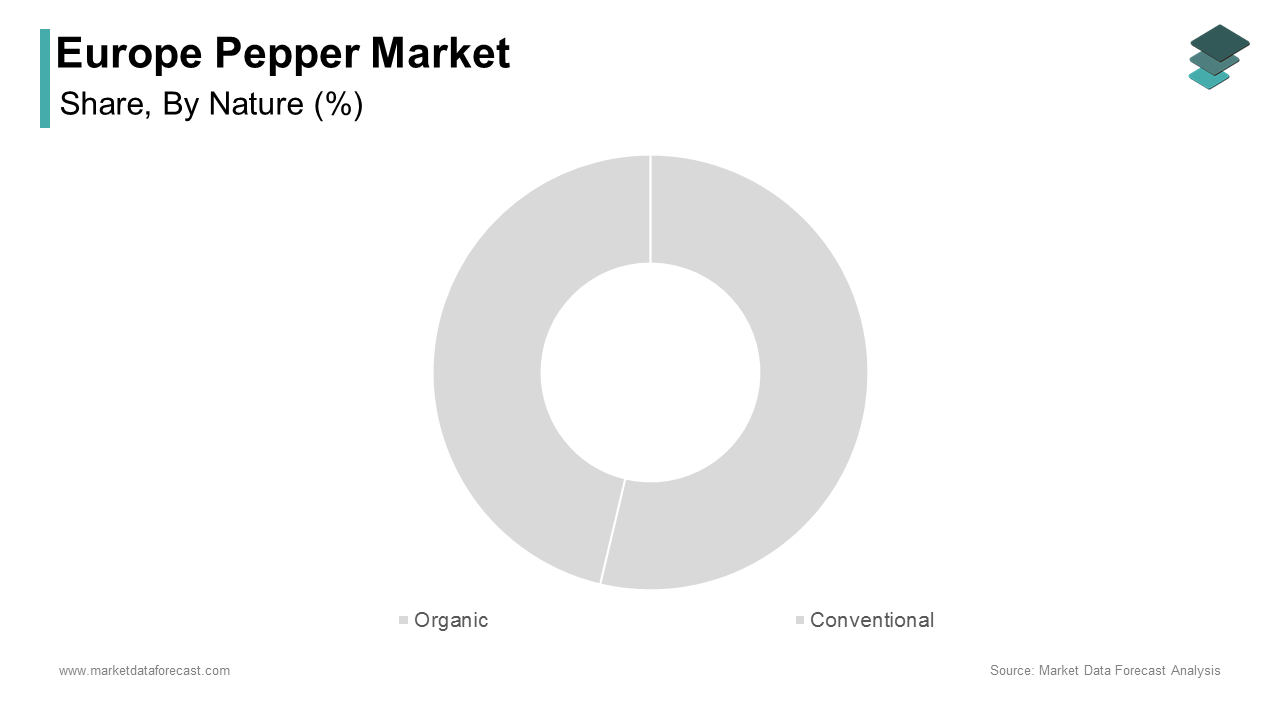
The organic pepper segment is on the rise and is expected to grow at a promising CAGR of 8.14% over the forecast period, owing to the growing consumer awareness of pesticide residues and preference for clean-label ingredients across Western and Northern Europe. As per the German Federal Ministry of Food and Agriculture, Germany leads organic spice consumption, creating a strong foundation for organic pepper adoption. Retailers such as Edeka and Carrefour have expanded private-label organic spice ranges, increasing visibility and accessibility. Furthermore, the European Union’s Farm to Fork Strategy, which aims to increase organic farmland to 25% by 2030, incentivizes suppliers to certify pepper production under EU organic standards. These policy-driven and consumer-led forces are propelling organic pepper beyond niche markets into mainstream distribution.
By Product Type Insights
The black pepper segment commanded the highest share of 60.5% of the regional market in 2025. The dominance of the black pepper segment in the European market is attributed to its universal culinary utility, deep integration into European food traditions, and its role as a foundational seasoning across savory dishes. Black pepper is widely used in home kitchens and industrial food processing, including meat products, soups, snacks, and condiments. As per the European Spice Association, black pepper constitutes the majority of whole and ground pepper imports into the EU. Its pungent flavor profile, derived from piperine, offers taste enhancement and mild preservative properties, making it indispensable in formulations requiring shelf stability. Its compatibility with diverse cuisines ensures sustained demand, reinforcing its position as the cornerstone of the European pepper landscape.
The red pepper segment is anticipated to expand at a CAGR of 7.17% over the forecast period. The growth of the red pepper segment in the European market is likely to be driven by the growing popularity of Mediterranean, Eastern European, and Middle Eastern cuisines, all of which feature red pepper as a core flavoring and coloring agent. As per Spain’s Ministry of Agriculture, Spain is a leading producer of Capsicum annuum, much of which is processed into paprika for domestic use and export. The clean-label movement amplifies demand, as natural red pepper extract serves as a preferred alternative to synthetic colorants. Functional food trends highlight capsaicin’s metabolic benefits, driving incorporation into wellness-oriented products. Retail innovation, such as smoked paprika and hot chili blends, caters to adventurous consumers seeking authentic global flavors, cementing red pepper’s dynamic growth trajectory.
By Application Insights
The food and beverage application segment overwhelmingly dominated the Europe pepper market in 2025 with 94.1% of the regional market share. This supremacy is rooted in pepper’s fundamental role as a primary seasoning across every tier of the European food system, from artisanal bakeries to multinational food processors. In the retail sector, ground and whole pepper are pantry staples. As per Euromonitor International, pepper is widely purchased annually by European households. In foodservice, pepper is a non-negotiable component in professional kitchens, used in everything from béarnaise sauce to kebabs. Industrial applications are equally significant; pepper is a key ingredient in meat preservation, snack seasoning, and ready-to-eat meal formulations due to its antimicrobial properties and flavor-enhancing capabilities. The European Food Safety Authority acknowledges piperine’s role in improving the bioavailability of nutrients, indirectly supporting its inclusion in fortified foods. This deep entrenchment across household, commercial, and industrial food channels ensures the food and beverage segment remains the undisputed core of pepper consumption in Europe.
The personal care products segment is the fastest-growing application area for pepper in Europe and is anticipated to record a CAGR of 9.4% over the forecast period, owing to the cosmetic industry’s increasing use of natural bioactive compounds, with piperine and capsaicin valued for their purported anti-inflammatory, circulation-boosting, and skin-renewal properties. As per Cosmetics Europe, consumers are increasingly willing to pay more for products containing natural ingredients. Brands such as L’Occitane and Weleda have incorporated pepper extracts into anti-cellulite creams, hair tonics, and facial serums, leveraging their thermogenic effects. Regulatory support under the EU’s Cosmetic Regulation EC 1223/2009 facilitates the safe use of standardized pepper extracts, encouraging R&D investment. Additionally, the rise of cosmeceuticals, products bridging cosmetics and pharmaceuticals, has created new avenues for pepper-based actives in targeted skincare solutions.
By Form Insights
The powdered pepper segment led the market by holding 60.6% of the regional market share in 2025, owing to its convenience, uniformity, and immediate usability in both domestic and industrial settings. Consumers favor powdered pepper for its ease of integration into recipes without additional preparation, while food manufacturers rely on it for consistent flavor dispersion in large-batch production. The powdered form is essential in dry spice blends, instant soups, snack seasonings, and processed meats, where particle size and solubility are critical for product performance. As per the European Spice Association, ground pepper is widely used in the EU food processing industry, reflecting its operational necessity. Retail packaging innovations, such as resealable grinders and single-dose sachets, have further enhanced consumer appeal by addressing freshness concerns. The dominance of powdered pepper is also reinforced by its compatibility with automated dispensing systems in commercial kitchens and fast-food chains, ensuring speed and portion control.
The whole pepper segment is the fastest-growing form segment in the Europe pepper market and is predicted to witness a CAGR of 6.16% over the forecast period due to a growing consumer preference for freshness, authenticity, and sensory experience, particularly among premium and gourmet audiences. Whole peppercorns retain volatile oils and aromatic compounds longer than pre-ground versions, offering superior flavor when freshly milled, a trait highly valued in fine dining and home cooking enthusiast circles. As per IRI Worldwide, retailers across Europe have reported growth in sales of whole peppercorn refill packs and artisanal blends. The rise of specialty kitchenware, including high-end pepper mills and multi-peppercorn grinders, has further normalized whole pepper usage in households. Additionally, the clean-label movement discourages anti-caking agents often found in commercial powders, pushing health-conscious consumers toward whole forms. This shift reflects a broader trend toward ingredient transparency and culinary craftsmanship, positioning whole pepper as a symbol of quality and intentionality in European kitchens.
REGIONAL ANALYSIS
Germany Pepper Market Analysis
Germany stood as the largest pepper market in Europe by commanding for 20.9% of the regional market share in 2025. The dominance of Germany in the European pepper market is attributed to the high per capita spice usage, a sophisticated retail landscape, and stringent quality expectations. As per the German Spice Association, German households are among the highest consumers of pepper in the EU. The country’s leadership in organic food retail fuels strong demand for certified organic pepper, particularly in urban centers like Berlin and Munich. Major retailers such as REWE and Aldi have implemented rigorous traceability protocols for imported spices, compelling suppliers to adhere to strict sustainability and residue standards. Furthermore, Germany’s robust food processing industry, including giants like Nestlé and Dr. Oetker, consumes vast quantities of pepper for ready meals, sauces, and sausages, anchoring industrial demand. This combination of conscientious consumerism and industrial scale solidifies Germany’s position as the continent’s most influential pepper market.
France Pepper Market Analysis
France held the second-largest share of the Europe pepper market in 2025. The growth of France in the European market can be credited to its gastronomic heritage and evolving culinary innovation. Black pepper is indispensable in classic French cuisine, from steak au poivre to béchamel, ensuring consistent household and restaurant demand. As per FranceAgriMer, French households show a marked preference for high-grade Tellicherry and Malabar varieties. The country’s premium food culture drives demand for whole peppercorns and artisanal blends, with specialty stores in Paris and Lyon offering single-origin peppers from Madagascar and Kampot. France’s foodservice sector relies heavily on consistent pepper supply for both traditional and fusion menus. Government initiatives promoting local sourcing have also spurred interest in domestically grown Espelette pepper, a protected PGI product from the Basque region, adding a unique regional dimension to national consumption patterns.
United Kingdom Pepper Market Analysis
The United Kingdom is estimated to grow at a prominent CAGR in the European pepper market during the forecast period due to its multicultural population and diverse culinary influences. The UK’s historical ties to South Asia have embedded chili and black pepper deeply into everyday cooking, with curry remaining one of the nation’s most consumed dishes. As per the UK Spice Association, annual household pepper consumption is among the highest in Europe. The rise of plant-based eating has increased demand for bold, pepper-based seasonings to enhance vegetable-centric meals. Additionally, the UK’s vibrant food manufacturing sector, including brands like Schwartz and Bart, processes significant volumes of pepper for retail and foodservice. Post-Brexit trade adjustments have prompted importers to diversify sourcing beyond traditional EU routes, strengthening direct partnerships with Vietnamese and Brazilian suppliers to ensure supply resilience and cost efficiency.
Spain Pepper Market Analysis
Spain is predicted to hold a notable share of the European pepper market during the forecast period. Spain is uniquely positioned as both a major producer and consumer. As per Spain’s Ministry of Agriculture, Spain is the EU’s top cultivator of fresh Capsicum peppers, primarily in regions like Murcia and Andalusia. While much of this output is fresh bell and red peppers, Spain also processes significant volumes into paprika, a national staple used in chorizo, stews, and tapas. Domestic consumption of dried black pepper remains steady, driven by tourism and a thriving restaurant culture. Spanish consumers increasingly favor locally sourced, sun-dried pepper products, aligning with the “km zero” movement. Export-oriented agribusinesses also leverage Spain’s logistical advantages to distribute pepper products across Southern Europe and North Africa, enhancing its regional influence.
Italy Pepper Market Analysis
Italy is expected to exhibit a healthy CAGR in the European peppers market over the forecast period. The regional culinary identities and artisanal approach to seasoning are propelling the Italian pepper market growth. While black pepper is widely used, Italy exhibits a nuanced preference for specific varieties such as long pepper in Piedmontese cuisine or locally milled blends in Tuscany. As per ISMEA, Italian households show a strong bias toward whole peppercorns for use in manual grinders. The country’s pasta, cheese, and cured meat industries are major industrial users, integrating pepper into iconic products like Parmigiano Reggiano and salami. Italy’s growing organic sector supports demand for certified organic pepper in premium food lines. Small-scale spice blenders in cities like Bologna and Naples further differentiate the market by offering terroir-driven pepper mixes, reinforcing Italy’s role as a curator of sensory authenticity in the European pepper landscape.
COMPETITION OVERVIEW
The Europe pepper market features intense competition among multinational agribusinesses, specialized spice traders, and regional processors. While large players like McCormick and Olam dominate through scale and brand recognition, numerous mid-sized European firms compete on niche offerings such as single-origin organic or artisanal blends. Competition is driven less by price and more by quality consistency, regulatory compliance, and supply chain transparency. The market is fragmented in the fresh pepper segment, where local growers in Spain, Italy, and the Netherlands hold sway, while the dried pepper segment is consolidated around global importers with strong logistics networks. Innovation in packaging, sustainability certifications, and functional applications further differentiates competitors. New entrants face high barriers due to EU food safety standards and established buyer relationships, yet opportunities exist in premiumization and digital traceability solutions that address growing consumer demand for authenticity and ethical sourcing.
KEY MARKET PLAYERS
A few major players of the Europe pepper market include
- Olam International
- McCormick & Company
- Koninklijke Euroma B.V
- Fuchs Gruppe
- Nedspice Group
- Bart Ingredients Company Ltd
- British Pepper & Spice Co Ltd
- Unilever PLC
- Ajinomoto Co Inc
- Everest Spices
Top Strategies Used by the Key Market Participants
Key players in the Europe pepper market employ several strategic approaches to maintain a competitive advantage. They prioritize vertical integration by controlling sourcing, processing, and distribution to ensure quality and cost efficiency. Sustainability is central to investments in certified organic farming, fair trade partnerships, and carbon footprint reduction initiatives. Companies are also leveraging digital technologies such as blockchain and IoT for end-to-end traceability and compliance with stringent EU regulations. Product diversification through premium blends, functional extracts, and clean label formulations caters to evolving consumer preferences. Additionally, they strengthen local presence via regional processing hubs and strategic partnerships with retailers and foodservice providers to enhance responsiveness and market penetration across diverse European geographies.
Leading Players in the Europe Pepper Market
- Olam International is a leading global agri-business with deep involvement in the Europe pepper market through its extensive sourcing and processing network. The company sources pepper from key producing regions, including Vietnam, Brazil, and Indonesia, and supplies both conventional and organic variants to European food manufacturers and retailers. Olam has strengthened its position by investing in traceability technologies and sustainability programs, such as its AtSource platform, which provides end-to-end visibility into farm-level practices. Recently, the company expanded its spice processing facility in the Netherlands to enhance value-added capabilities for the European market, ensuring fresher and more consistent pepper products aligned with EU regulatory standards.
- McCormick & Company is a dominant force in the European spice sector with a robust portfolio that includes a wide range of pepper products under both branded and private label formats. The company supplies ground whole and specialty pepper blends to retail foodservice and industrial customers across Europe. To reinforce its market presence, McCormick has prioritized clean label innovation and sustainable sourcing. In recent years, it has partnered with European farmers and cooperatives to develop regenerative agriculture pilots for spice crops. Additionally, the company upgraded its distribution center in Poland to improve logistics efficiency and product freshness for Central and Eastern European markets, reflecting its commitment to localized supply chain resilience.
- Visser & Smit is a prominent Dutch spice trading and processing firm deeply embedded in the European pepper supply chain. Specializing in bulk and industrial-grade pepper, the company serves food processors, snack manufacturers, and seasoning blenders throughout the continent. Visser & Smit has enhanced its competitiveness by integrating advanced quality control systems, including real-time aflatoxin and pesticide residue screening. The company recently launched a blockchain-enabled traceability initiative in collaboration with Rotterdam port authorities to accelerate customs clearance and ensure compliance with EU food safety regulations. This digital transformation effort has reduced lead times and improved reliability for its European clients seeking secure and transparent pepper sourcing.
MARKET SEGMENTATION
This research report on the Europe pepper market has been segmented and sub-segmented based on nature, product type, application, form & region.
By Nature
- Organic
- Conventional
By Product Type
- White
- Black
- Green
- Red Pepper
By Application
- Food and Beverage
- Personal Care
- Others
By Form
- Whole Pepper
- Powdered Pepper
By Region
- UK
- France
- Spain
- Germany
- Italy
- Russia
- Sweden
- Denmark
- Switzerland
- Netherlands
- Turkey
- Czech Republic
- Rest of Europe