- Product Description Description
- Table of Contents TOC
- List of Table & Figure LOT
- Get Free Sample PDF Sample PDF
Market Size, 2025
$0.35 BnMarket Estimate, 2026
$0.37 BnMarket Forecast, 2034
$0.56 BnCAGR, 2026–2034
5.38%Europe Pharmaceutical Gelatin Market Report Summary
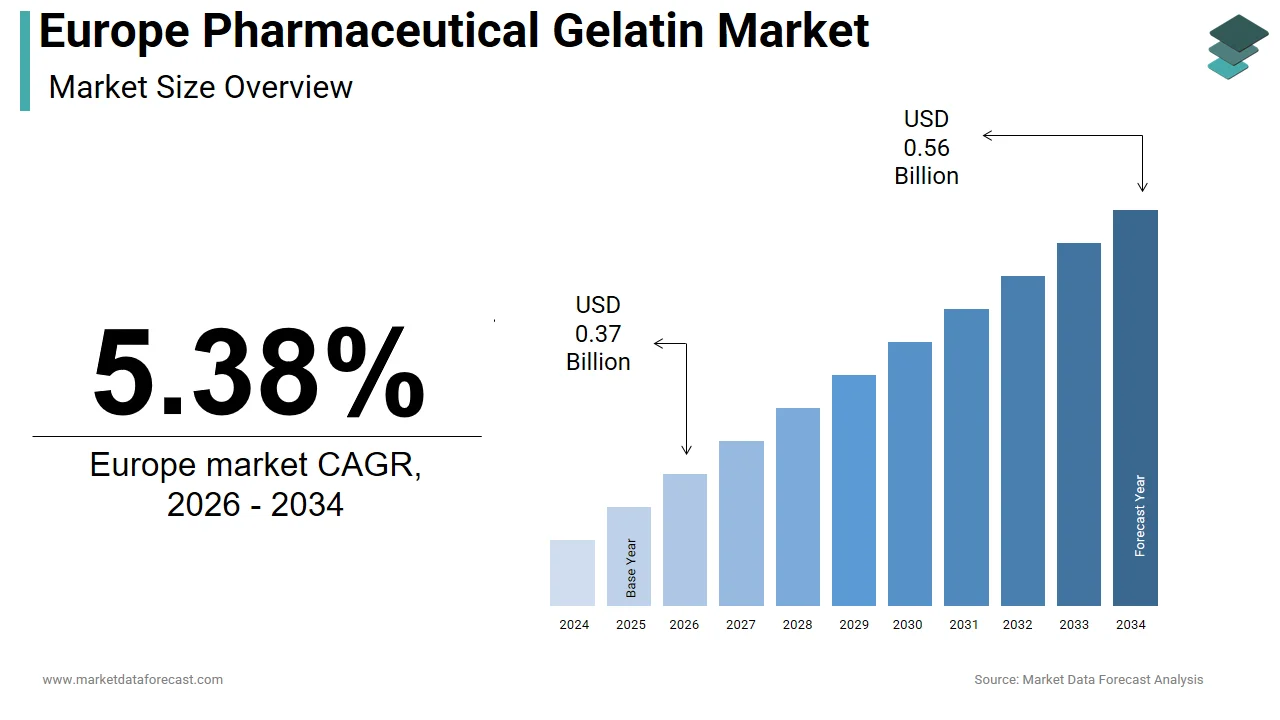
The Europe pharmaceutical gelatin market was valued at USD 0.35 billion in 2025, is anticipated to reach USD 0.37 billion in 2026, and is projected to reach USD 0.56 billion by 2034, growing at a CAGR of 5.38% from 2026 to 2034. Market growth is driven by rising demand for capsule-based drug delivery systems, expanding nutraceutical consumption, and increasing production of vaccines and biologics. Pharmaceutical gelatin remains a critical excipient in hard and soft capsules, tablets, and controlled-release formulations due to its biocompatibility, stability, and ease of processing. Growth in generic drug manufacturing and contract pharmaceutical production across Europe is further supporting market expansion.
Key Market Trends
- Rising demand for hard and soft gelatin capsules in generic pharmaceuticals.
- Increasing use of gelatin in nutraceutical and dietary supplement formulations.
- Growing applications in vaccine stabilization and biologics manufacturing.
- Expansion of clean-label and traceable raw material sourcing practices.
- Strengthening focus on quality compliance with European Pharmacopoeia standards.
Segmental Insights
- Based on function, the gelling agents segment held a significant share in 2025, driven by its critical role in capsule formation, stabilization, and controlled-release drug formulations.
- Based on source, the pig skin segment dominated the market in 2025, supported by its widespread availability, cost efficiency, and established processing infrastructure.
- Based on application, the hard capsules segment led the market in 2025, driven by extensive use in generic drugs, nutraceuticals, and fixed-dose combinations requiring precise powder or pellet filling.
Regional Insights
The Europe pharmaceutical gelatin market is witnessing steady growth across major economies, supported by strong pharmaceutical manufacturing ecosystems and increasing biologics production.
- Germany led the regional market in 2025, driven by its position as Europe’s pharmaceutical manufacturing hub and strong export-oriented drug production.
- France is expected to witness steady growth, supported by its robust vaccine and biologics sector.
- Italy is projected to grow steadily, driven by a dense network of small and medium-sized pharmaceutical enterprises specializing in generic capsules and nutraceuticals.
Competitive Landscape
The Europe pharmaceutical gelatin market is characterized by strong competition among global gelatin manufacturers and pharmaceutical excipient suppliers. Market players are focusing on expanding production capacity, ensuring traceable raw material sourcing, and meeting stringent regulatory standards. Strategic collaborations with capsule manufacturers and pharmaceutical companies are strengthening competitive positioning across the region.
Prominent companies operating in the Europe pharmaceutical gelatin market include Rousselot, Nitta Gelatin Inc., Capsugel, Catalent Inc., Norland Products Inc., Tessenderlo Group, Sterling Gelatin, Roxlor LLC, PB Gelatins, Weishardt, and Gelita AG.
Europe Pharmaceutical Gelatin Market Size
The size of the Europe pharmaceutical gelatin market was valued at USD 0.35 billion in 2025. This market is expected to grow at a CAGR of 5.38% from 2026 to 2034 and be worth USD 0.56 billion by 2034 from USD 0.37 billion in 2026.
Pharmaceutical gelatin refers to a highly purified protein derived primarily from bovine or porcine collagen, used as an excipient in hard and soft gelatin capsules, tablet coatings, and plasma expanders. Unlike food-grade variants, pharmaceutical gelatin must comply with stringent pharmacopoeial standards set by the European Pharmacopoeia and undergo rigorous testing for endotoxins, residual solvents, and microbial contamination. As per the European Directorate for the Quality of Medicines and HealthCare, over 90% of oral solid dose forms requiring encapsulation in the EU rely on gelatin-based shells due to their superior dissolution properties, film-forming capacity, and biocompatibility. The European Medicines Agency mandates that all gelatin sourced for pharmaceutical use must be traceable to BSE-free certified herds, a requirement that has reshaped supply chains since the early 2000s. According to Eurostat, the EU imported pharmaceutical-grade gelatin in 2023, with Germany, France, and Italy serving as primary processing and formulation hubs. The material’s irreplaceable role in enabling precise drug delivery for poorly water-soluble active ingredients continues to anchor its relevance despite emerging alternatives.
MARKET DRIVERS
Expanding Use of Hard and Soft Gelatin Capsules in Drug Delivery Systems
The hard and soft-gelatin capsules remain the dominant oral dosage form for new chemical entities and nutraceuticals due to their precision dosing stability and patient compliance advantages. The expanding use of hard and soft gelatin capsules in drug delivery systems is accelerating the growth og the Europe pharmaceutical gelatin market. The European pharmaceutical industry produces an estimated 45 billion capsules annually, with demand driven by chronic disease management requiring long-term medication regimens. Gelatin’s unique gelling and film-forming properties allow seamless encapsulation of oils, suspensions, and moisture-sensitive compounds, capabilities unmatched by most plant-based alternatives. Furthermore, the European Commission’s Guideline on Excipients in Medicinal Products emphasizes the safety profile of pharmacopoeial gelatin, which has over 70 years of documented clinical use. This regulatory confidence enables faster marketing authorization for gelatin-based formulations compared to novel excipients requiring extensive toxicology data. As polypharmacy rises among aging populations with age 65 and above taking at least three prescription medicines daily, the need for reliable, easy-to-swallow dosage forms sustains robust demand for pharmaceutical gelatin across the continent.
Rising Prevalence of Chronic Diseases and Geriatric Population Growth
The demographic shift toward an aging population is a powerful structural driver for pharmaceutical gelatin consumption, as elderly patients disproportionately rely on oral solid dosage forms for chronic condition management. The rising prevalence of chronic diseases and geriatric population growth is eventually propelling the growth of Europe pharmaceutical gelatin market. According to Eurostat, individuals aged 65 and older constituted 21.3% of the EU population in 2023, a figure projected to reach 29% by 2050. This cohort accounts for nearly 70% of total pharmaceutical expenditure in the region, as noted by the European Observatory on Health Systems and Policies. Conditions, such as cardiovascular disease, diabetes, and osteoporosis, which affect over 180 million Europeans, require daily medication often delivered via gelatin capsules due to their ease of ingestion and compatibility with modified release technologies. The World Health Organization Europe confirms that non-communicable diseases represent 87% of all deaths in the region, reinforcing long-term demand for stable, reliable drug delivery systems. Moreover, age-related swallowing difficulties or dysphagia affect an estimated 15 to 20% of seniors, as per the European Society for Swallowing Disorders, making capsule formats preferable to tablets. Pharmaceutical gelatin’s ability to dissolve rapidly in gastric fluid without residue ensures consistent drug release, a factor in geriatric pharmacotherapy where absorption variability can compromise treatment efficacy.
MARKET RESTRAINTS
Religious and Ethical Concerns Regarding Animal-Derived Ingredients
The population avoids animal-derived products due to religious dietary laws or ethical veganism, creating formulation challenges for gelatin-dependent pharmaceuticals. The religious and ethical concerns regarding animal-derived ingredients are significantly hampering the growth of Europe pharmaceutical gelatin market. According to the European Commission’s Joint Research Centre, approximately 4.5 million Muslims and 3.2 million Jews reside in the EU, many of whom adhere to halal or kosher requirements that restrict bovine and porcine sources unless certified through specific slaughter protocols. Additionally, the European Vegetarian Union estimates that 6% of EU citizens identify as vegan, a group that rejects all animal-derived excipients. While halal and kosher certified gelatin exists, it represents less than 8% of the total pharmaceutical supply due to limited abattoir infrastructure and higher production costs, as per the European Halal Development Agency. Regulatory agencies do not mandate alternative labeling for gelatin in medicines, but consumer advocacy groups like the European Consumer Organisation have called for greater transparency, pressuring manufacturers to seek substitutes. This cultural and ethical friction complicates product development, especially for over-the-counter medications targeting broad demographics, forcing companies to maintain parallel production lines or reformulate entirely, both costly and time-intensive endeavors that slow innovation and increase operational complexity.
Stringent Regulatory Requirements for Bovine Spongiform Encephalopathy Compliance
The pharmaceutical gelatin sourced from ruminant tissues remains under intense regulatory scrutiny due to historical concerns over bovine spongiform encephalopathy transmission, which is also hampering the growth of Europe pharmaceutical gelatin market. The European Medicines Agency requires full traceability of raw materials to BSE-free countries and prohibits the use of specified risk materials such as skull, spinal cord, and spleen in gelatin production. According to the European Food Safety Authority, only 12 countries worldwide, including Brazil, Argentina, and Australia, are currently classified as having negligible BSE risk, severely limiting the geographic diversity of approved suppliers. This constraint increases supply chain vulnerability; as per the European Commission’s Directorate General for Health and Food Safety, over 70% of EU pharmaceutical gelatin imports originate from just three nations, creating concentration risk. Any outbreak or reclassification of BSE status, even in non-EU regions, triggers immediate import suspensions and batch recalls, disrupting manufacturing schedules. Furthermore, each gelatin lot must undergo transmissible spongiform encephalopathy screening using validated assays, adding weeks to procurement lead times. These cumulative compliance burdens elevate costs and deter new entrants, while also incentivizing investment in non-animal alternatives despite gelatin’s superior functional performance.
MARKET OPPORTUNITIES
Advancement in Recombinant and Non-Animal Derived Gelatin Technologies
Innovations in bioengineered gelatin offer a strategic opportunity to overcome ethical sourcing and regulatory constraints while maintaining functional equivalence. This is solely a major factor attributed to create new opportunities for the growth of Europe pharmaceutical gelatin market. Companies across Europe are investing in recombinant human collagen produced via yeast or bacterial fermentation, which mimics natural gelatin’s amino acid sequence without animal input. According to the European Bioplastics Association, pilot-scale production of microbial-derived gelatin reached 120 metric tons in 2023, with clinical trials demonstrating comparable capsule strength and dissolution profiles to bovine counterparts. The European Institute of Innovation and Technology has funded three public-private partnerships since 2022 to scale this technology, recognizing its alignment with the EU’s Green Deal objectives for sustainable biomaterials. Additionally, seaweed and starch-based hydrocolloids are being optimized for capsule applications, with a new carrageenan pullulan blend achieved 92% disintegration similarity to gelatin in simulated gastric fluid. These developments open pathways to serve vegan halal and kosher markets without compromising drug performance. As regulatory frameworks evolve to accommodate novel excipients, evidenced by the European Pharmacopoeia’s 2023 inclusion of guidelines for recombinant proteins, the transition toward next-generation gelatin substitutes could redefine market dynamics while preserving therapeutic efficacy.
Growing Demand for Personalized and Precision Medicine Formulations
The rise of personalized medicine for specialized gelatin applications in tailored drug delivery. The growing demand for personalised and precision medicine formulations is expected to create new opportunities for the growth of the Europe pharmaceutical gelatin market. As per the European Alliance for Personalised Medicine, over 200 stratified therapies are now commercially available in the EU, many requiring custom capsule sizes or release profiles to match individual patient genomics or metabolic rates. Pharmaceutical gelatin’s tunable bloom strength and gelling temperature allow precise engineering of shell thickness and dissolution kinetics for drugs with narrow therapeutic windows. For instance, oncology treatments like imatinib or venetoclax often use soft gelatin capsules to deliver lipid-based formulations that enhance lymphatic absorption. The European Organisation for Rare Diseases notes that 60% of orphan drugs approved since 2020 utilize gelatin encapsulation due to low batch volumes and high potency requirements. Moreover, compounding pharmacies across Germany and the Netherlands increasingly rely on pharma-grade gelatin to produce patient-specific doses for pediatric or geriatric cases where commercial tablets are unsuitable.
MARKET CHALLENGES
Supply Chain Vulnerability Due to Geopolitical and Trade Disruptions
The heavy reliance on imported raw materials for pharmaceutical gelatin is due to geopolitical instability and trade policy shifts. The supply chain vulnerability due to geopolitical and trade disruptions is hampering the growth of Europe pharmaceutical gelatin market. According to the European Commission, over 65% of bovine hides and bones used in gelatin production are sourced from South America and Oceania, with Argentina, Brazil, and Australia accounting for the majority. The 2023 EU Mercosur trade agreement delays from environmental concerns over Amazon deforestation temporarily restricted hide exports, causing a 12% spike in raw material costs, as per the European Gelatin Manufacturers Federation. Similarly, shipping bottlenecks in the Red Sea corridor during early 2024 extended lead times by up to six weeks, forcing manufacturers to deplete safety stocks. Unlike synthetic polymers, pharmaceutical gelatin cannot be stockpiled indefinitely due to moisture sensitivity and microbial degradation risks, necessitating just-in-time procurement. Furthermore, non-tariff barriers such as veterinary certification requirements vary by country, creating administrative friction. This fragile supply architecture limits agility in responding to sudden demand surges or regulatory changes, compelling companies to explore nearshoring or vertical integration strategies that require significant capital and multi-year timelines to implement effectively.
Intensifying Competition from Hypromellose and Other Plant-Based Capsule Materials
Hypromellose derived from cellulose has emerged as the leading alternative to gelatin in capsule manufacturing, capturing growing formulator interest due to its plant origin and stability in high-humidity environments. According to the European Pharmaceutical Review, hypromellose capsule usage in EU clinical trials increased by 34% between 2021 and 2023, particularly for probiotics, enzymes, and hygroscopic drugs prone to gelatin shell cross-linking. Major contract development organizations like Catalent and Lonza now offer dual platform capabilities, allowing sponsors to choose excipients based on target demographics. The European Vegetarian Union’s 2023 consumer survey found that 58% of respondents would prefer plant-based capsules if efficacy were equivalent, signaling market readiness for substitution. While gelatin maintains advantages in oxygen barrier properties and elastic modulus, advances in hypromellose plasticization, such as glycerin-free formulations developed by Capsugel, have narrowed performance gaps. This competitive pressure forces gelatin producers to justify premium pricing through superior bioavailability data or sustainability credentials, yet life cycle analyses remain inconclusive due to energy-intensive collagen extraction processes.
REPORT COVERAGE
| REPORT METRIC | DETAILS |
| Market Size Available | 2025 to 2034 |
| Base Year | 2025 |
| Forecast Period | 2026 to 2034 |
| Segments Covered | By Function, Source, Application, and country. |
| Various Analyses Covered | Global, Regional, and Country-Level Analysis, Segment-Level Analysis, Drivers, Restraints, Opportunities, Challenges; PESTLE Analysis; Porter’s Five Forces Analysis, Competitive Landscape, Analyst Overview of Investment Opportunities |
| Countries Covered | UK, France, Spain, Germany, Italy, Russia, Sweden, Denmark, Switzerland, Netherlands, Turkey, Czech Republic, and the Rest of Europe. |
| Market Leaders Profiled | Rousselot, Nitta Gelatin Inc., Capsugel, Catelent Inc., Norland Products Inc., Tessenderlo Group, Sterling Gelatin, Roxlor LLC, PB Gelatins, Weishardt, and Gelita AG. |
SEGMENTAL ANALYSIS
By Function Insights
The gelling agents segment accounted for a significant share of the Europe pharmaceutical gelatin market in 2025. According to the European Pharmacopoeia, gelatin remains the only excipient approved for direct contact with high-potency active pharmaceutical ingredients in monolithic softgel systems due to its precise melting point and film integrity. The European Medicines Agency notes that over 90% of oral lipid-based drug formulations for poorly water-soluble molecules rely on gelatin gels to maintain homogeneity and prevent phase separation. Furthermore, gelatin’s ability to form brittle yet flexible matrices at low concentrations (typically 20 to 25% solids) enables high-speed capsule filling without shell deformation. As per the European Federation of Pharmaceutical Industries and Associations, more than 40 billion gelatin capsules are produced annually in the EU, with demand sustained by chronic disease therapies requiring daily dosing. Unlike synthetic polymers, gelatin gels dissolve rapidly in gastric fluid without residual film, ensuring consistent drug release, a non-negotiable attribute in regulated pharmaceutical applications.
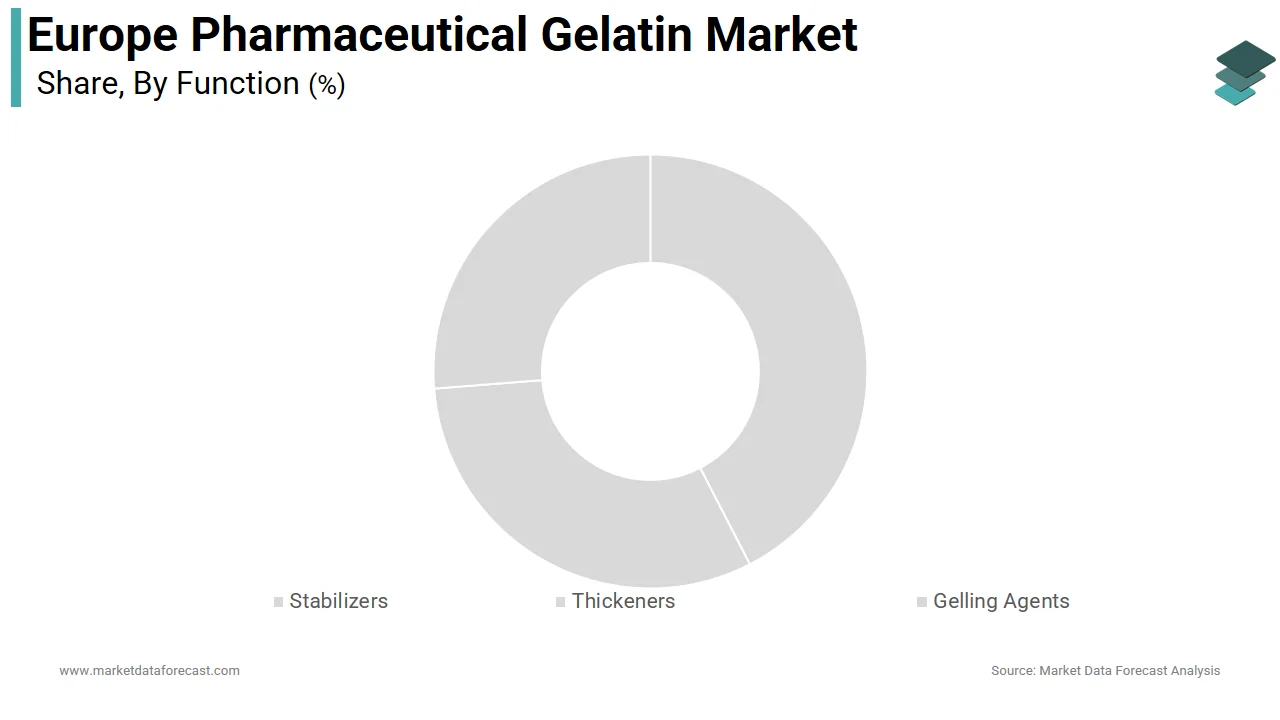
The stabilizers segment is expected to register the fastest CAGR of 5.8% throughout the forecast period, with the rising use of gelatin in biologics and vaccine formulations, where protein aggregation and denaturation must be prevented during storage and transport. According to the European Vaccine Initiative, gelatin has been used as a stabilizer in over 70% of live attenuated viral vaccines distributed in the EU since 2010, including measles, mumps, rubella, and varicella products. Its amphoteric nature allows it to buffer pH shifts and shield antigenic proteins from interfacial stress at air-liquid boundaries. The Paul Ehrlich Institute confirmed that gelatin-stabilized influenza vaccines maintained 98.5% potency after six months at 2 to 8 degrees Celsius, outperforming sucrose-based alternatives. Additionally, the expansion of lyophilized injectables is driven by the proliferation of monoclonal antibodies, which has increased demand for cryoprotectants that preserve tertiary structure during freeze drying. As per the German Society for Biotechnology, gelatin reduces reconstitution time compared to polysorbate formulations, enhancing clinical usability. These performance advantages position gelatin as an enabler of next-generation biopharmaceutical stability.
By Source Insights
The pig skin segment was the largest, capturing 52.3% of the Europe pharmaceutical gelatin market share in 2024. The growth of the segment is driven by its high collagen purity, consistent amino acid profile, and superior gelling strength compared to bovine alternatives. According to the European Gelatin Manufacturers Federation, porcine skin yields gelatin with bloom strengths exceeding 220 grams, ideal for thin-walled soft capsules requiring mechanical resilience. The integrated pork processing infrastructure in Germany, Spain, and France ensures a steady supply of slaughterhouse byproducts compliant with EU veterinary regulations. As per the European Food Safety Authority, all pig skin used in pharmaceutical production must originate from herds certified free of notifiable diseases, a standard met by over 95% of Western European abattoirs. Moreover, porcine gelatin avoids the stringent BSE-related documentation required for bovine materials, simplifying regulatory submissions. This combination of functional superiority, regulatory ease, and supply chain maturity solidifies pig skin as the cornerstone of Europe’s pharmaceutical gelatin sourcing strategy.
The bovine hides segment is expected to witness the fastest CAGR of 4.9% from 2026 to 2034, owing to the advancements in BSE risk mitigation and expanding demand for halal-compliant gelatin in Southern and Eastern Europe. According to the European Commission’s Animal Health Law, hides sourced from countries classified as having “negligible BSE risk”, such as Argentina, Australia, and Brazil, are now eligible for pharmaceutical use under enhanced traceability protocols. In 2023, the European Medicines Agency approved three new bovine gelatin suppliers from these regions, increasing raw material diversity. Additionally, Islamic certification bodies like the Halal Monitoring Committee have validated specific bovine processing lines in the Netherlands and Italy, enabling access to Europe’s 20 million Muslim consumers. Bovine hide gelatin also offers higher molecular weight fractions beneficial for hemostatic applications, aligning with surgical product innovation.
By Application Insights
The hard capsules segment was the largest by holding 45.3% of the Europe pharmaceutical gelatin market share in 2024, from widespread use in generic drugs, nutraceuticals, and fixed dose combinations requiring precise powder or pellet filling. According to the European Generic Medicines Association, over 60% of orally administered small molecule generics in the EU are delivered via hard gelatin capsules due to rapid disintegration and compatibility with automated filling lines. The European Capsule Manufacturers Association reports that Europe produces more than 25 billion hard capsules annually, with Germany and Italy hosting the majority of high-speed production facilities capable of outputting 300 000 units per hour. Gelatin’s brittleness at low moisture levels enables clean breakage during encapsulation while maintaining seal integrity against moisture ingress for hygroscopic actives. Furthermore, the European Pharmacopoeia mandates strict limits on sulfites and residual peroxides in capsule shells, specifications that gelatin consistently meets without synthetic additives.
The absorbable hemostats segment is likely to grow with an expected CAGR of 7.3% in the coming years, with the rising demand for biocompatible surgical aids that control bleeding without requiring removal. According to the European Society of Surgical Oncology, gelatin-based hemostats were used in 38% of major abdominal and cardiovascular procedures in 2023, up from 29% in 2020. Products like Gelfoam and Spongostan leverage gelatin’s porous matrix to accelerate platelet adhesion and clot formation within minutes of application. The European Commission’s Medical Device Regulation now classifies these as Class III devices, prompting manufacturers to invest in purified gelatin with endotoxin levels below 0.5 EU per milligram, as verified by the European Directorate for the Quality of Medicines. With minimally invasive techniques requiring precise hemostasis in confined spaces, gelatin sponges offer unmatched conformability and complete absorption within four to six weeks, eliminating secondary complications. These clinical advantages drive robust adoption across public and private hospitals.
COUNTRY-LEVEL ANALYSIS
Germany Pharmaceutical Gelatin Market Analysis
Germany was the top performer of the Europe pharmaceutical gelatin market by holding 24.3% of the market share in 2024, with its status as the continent’s pharmaceutical manufacturing hub. Home to global players like Bayer Merck and numerous contract development organizations, Germany consumes vast quantities of high-purity gelatin for capsule production and biologics stabilization. According to the German Federal Institute for Drugs and Medical Devices, over 1,200 marketing authorizations for oral solid dose forms listed gelatin as a critical excipient in 2023. The country’s integrated meat processing sector in Lower Saxony and North Rhine-Westphalia supplies consistent volumes of porcine skin compliant with EU Good Manufacturing Practice standards. Furthermore, Germany’s strong research ecosystem supports innovation; the Fraunhofer Institute recently developed a low-endotoxin gelatin purification protocol adopted by three domestic producers.
France Pharmaceutical Gelatin Market Analysis
France pharmaceutical gelatin market growth is likely to grow with its robust vaccine and biologics sector. Major institutions like Sanofi Pasteur rely heavily on gelatin as a stabilizer in live viral vaccines, with production facilities in Lyon and Val de Reuil consuming significant quantities annually. According to the French National Agency for Medicines and Health Products Safety, gelatin was present in 78% of nationally distributed pediatric vaccines in 2023. The country’s extensive pig farming industry in Brittany and Pays de la Loire provides a reliable source of raw material, with abattoirs certified for pharmaceutical-grade byproduct collection. Additionally, France’s dominance in hospital care drives demand for absorbable hemostats, where the National Health Insurance Fund reported a 9% year on year increase in surgical sponge usage in 2023. Regulatory alignment with EU directives and investment in cold chain logistics for temperature-sensitive biologics further enhance France’s strategic position in high-value gelatin applications beyond conventional capsules.
Italy Pharmaceutical Gelatin Market Analysis
Italy pharmaceutical gelatin market growth is likely to be driven by a dense network of small and medium-sized pharmaceutical enterprises specializing in generic capsules and nutraceuticals. According to the Italian Medicines Agency, over 800 companies in Lombardy and Emilia Romagna produce hard and soft gelatin capsules for both domestic and export markets. The country’s strong tradition in food and pharmaceutical processing enables efficient conversion of porcine byproducts into pharma-grade gelatin, with facilities in Parma and Bologna meeting European Directorate for the Quality of Medicines specifications. Italy also serves as a gateway to Mediterranean and Balkan markets, where demand for affordable oral medications is rising. Moreover, the national health system’s emphasis on cost-effective generics sustains steady domestic consumption, ensuring Italy remains a pivotal manufacturing and distribution node in Southern Europe’s pharmaceutical supply chain.
United Kingdom Pharmaceutical Gelatin Market Analysis
The United Kingdom pharmaceutical gelatin market is growing steadily in the coming years, with the rising prominence in clinical research and specialty pharmaceuticals driving usage in microencapsulation and biologic stabilization. According to the UK Medicines and Healthcare products Regulatory Agency, gelatin was listed in 65% of new marketing authorization applications for oral drugs in 2023. Leading contract manufacturers like Aenova and Catalent operate advanced capsule filling lines in the Midlands, serving both EU and global clients. The UK’s veterinary surveillance system ensures high-quality porcine raw material sourcing, with the Animal and Plant Health Agency certifying over 200 abattoirs for pharmaceutical use.
Netherlands Pharmaceutical Gelatin Market Analysis
The Netherlands pharmaceutical gelatin market growth is driven by the logistics and regulatory gateway to Northern Europe. Home to multinational headquarters and distribution centers, the country facilitates the import of raw materials and export of finished dosage forms. According to the Dutch Medicines Evaluation Board, the Netherlands processed over 150 centralized marketing authorization dossiers involving gelatin-based products in 2023. The port of Rotterdam enables efficient receipt of bovine hides from South America and Oceania, which are then processed in facilities near Utrecht under strict European Pharmacopoeia guidelines. The Netherlands also leads in halal pharmaceutical certification; the Halal Feed and Food Consortium validated three gelatin production lines in 2023, supporting access to diverse consumer segments. Furthermore, collaboration between Wageningen University and industry partners has advanced purification techniques that reduce endotoxin levels to below 0.1 EU per milligram, setting new benchmarks for injectable and ophthalmic applications. This blend of regulatory expertise, logistical advantage, and technical innovation secures the Netherlands’ position among Europe’s top five markets.
COMPETITIVE LANDSCAPE
The Europe Pharmaceutical Gelatin Market features a concentrated competitive landscape dominated by a few large integrated players with decades of regulatory experience and established supply chains. Competition revolves around purity, consistency, regulatory compliance, and the ability to meet pharmacopoeial specifications for endotoxins, residual solvents, and microbial load. Leading companies differentiate through advanced purification capabilities, traceability systems, and certifications for halal, kosher, or BSE-free status. Barriers to entry remain high due to capital-intensive processing facilities, stringent quality controls, and long validation cycles required by pharmaceutical clients. While plant-based alternatives are emerging, they have not yet matched gelatin’s functional performance in critical applications like softgel encapsulation or vaccine stabilization. Innovation is focused on sustainability, recombinant technologies, and expanding into high-value segments such as absorbable hemostats and biologics excipients. Regional players struggle to compete without scale or regulatory infrastructure, reinforcing the dominance of multinational incumbents.
KEY MARKET PLAYERS
The leading companies operating in the Europe pharmaceutical gelatin market include:
- Rousselot
- Nitta Gelatin Inc.
- Capsugel
- Catelent Inc.
- Norland Products Inc.
- Tessenderlo Group
- Sterling Gelatin
- Roxlor LLC
- PB Gelatins
- Weishardt
- Gelita AG
TOP PLAYERS IN THE MARKET
- Rousselot is a global leader in pharmaceutical and health gelatin with deep roots in Europe, operating advanced production facilities in Belgium, France, and the Netherlands. The company supplies high-purity gelatin for hard and soft capsules, plasma expanders, and vaccine stabilizers to major pharmaceutical manufacturers worldwide. In 2024, Rousselot launched its X-Pure portfolio expansion, introducing ultra-low endotoxin gelatin grades specifically designed for injectable and ophthalmic applications. This initiative reinforces its commitment to meeting stringent European Pharmacopoeia standards while addressing growing demand for biologics excipients. The company also enhanced its traceability system using blockchain technology to provide real-time raw material origin verification, strengthening trust among regulatory bodies and multinational clients across Europe and beyond.
- Gelita AG is a Germany-based multinational renowned for its vertically integrated gelatin production and innovation in pharmaceutical applications. The company operates one of the world’s largest pharmaceutical gelatin plants in Eberbach and serves as a key supplier to capsule manufacturers and biotech firms across Europe and North America. Gelita completed a major sustainability upgrade at its German facility, reducing water consumption by 25% and achieving carbon-neutral certification for its pharma-grade output. The company also introduced a new line of recombinant human collagen-derived gelatin alternatives through a joint venture with a Swiss biotech firm, positioning itself at the forefront of ethical and sustainable excipient development without compromising functional performance.
- PB Gelatins is a prominent European producer headquartered in Belgium with specialized expertise in porcine and bovine pharmaceutical gelatin. The company supplies certified halal, kosher, and BSE-free gelatin to global pharmaceutical and vaccine producers, maintaining strict compliance with EU and international pharmacopoeias. PB Gelatins invested in a state-of-the-art purification unit at its Ghent facility capable of producing gelatin with endotoxin levels below 0.1 EU per milligram, targeting high-value applications in parenterals and surgical hemostats. The company also strengthened its regulatory affairs team to accelerate dossier submissions under the EU Medical Device Regulation and expanded partnerships with Eastern European abattoirs to secure traceable raw material streams aligned with evolving veterinary safety protocols.
TOP STRATEGIES USED BY THE KEY MARKET PARTICIPANTS
Key players in the Europe Pharmaceutical Gelatin Market focus on vertical integration to control raw material sourcing and ensure BSE-free certification. They invest heavily in purification technologies to achieve ultra-low endotoxin levels required for injectables and biologics. Regulatory compliance is prioritized through alignment with European Pharmacopoeia and EMA guidelines. Companies are expanding halal and kosher certified production lines to address diverse demographic needs. Sustainability initiatives, including water recycling, renewable energy use, and carbon-neutral manufacturing, are increasingly adopted. Strategic collaborations with biotech firms support the development of recombinant and non-animal alternatives. Digital traceability systems using blockchain enhance supply chain transparency and build customer trust across global markets.
MARKET SEGMENTATION
This Europe pharmaceutical gelatin market research report is segmented and sub-segmented into the following categories.
By Function
- Stabilizers
- Thickeners
- Gelling Agents
By Source
- Pig Skin
- Bovine Hides
- Bones
- Others
By Application
- Hard Capsules
- Soft Capsules
- Micro Encapsulation
- Coating
- Absorbable Hemostats
By Country
- UK
- France
- Spain
- Germany
- Italy
- Russia
- Sweden
- Denmark
- Switzerland
- Netherlands
- Turkey
- Czech Republic
- Rest of Europe