- Product Description Description
- Table of Contents TOC
- List of Table & Figure LOT
- Get Free Sample PDF Sample PDF
Market Size, 2025
$2.25 BnMarket Estimate, 2026
$2.39 BnMarket Forecast, 2034
$3.86 BnCAGR, 2026–2034
6.18%Europe Pharmacy Automation Market Report Summary
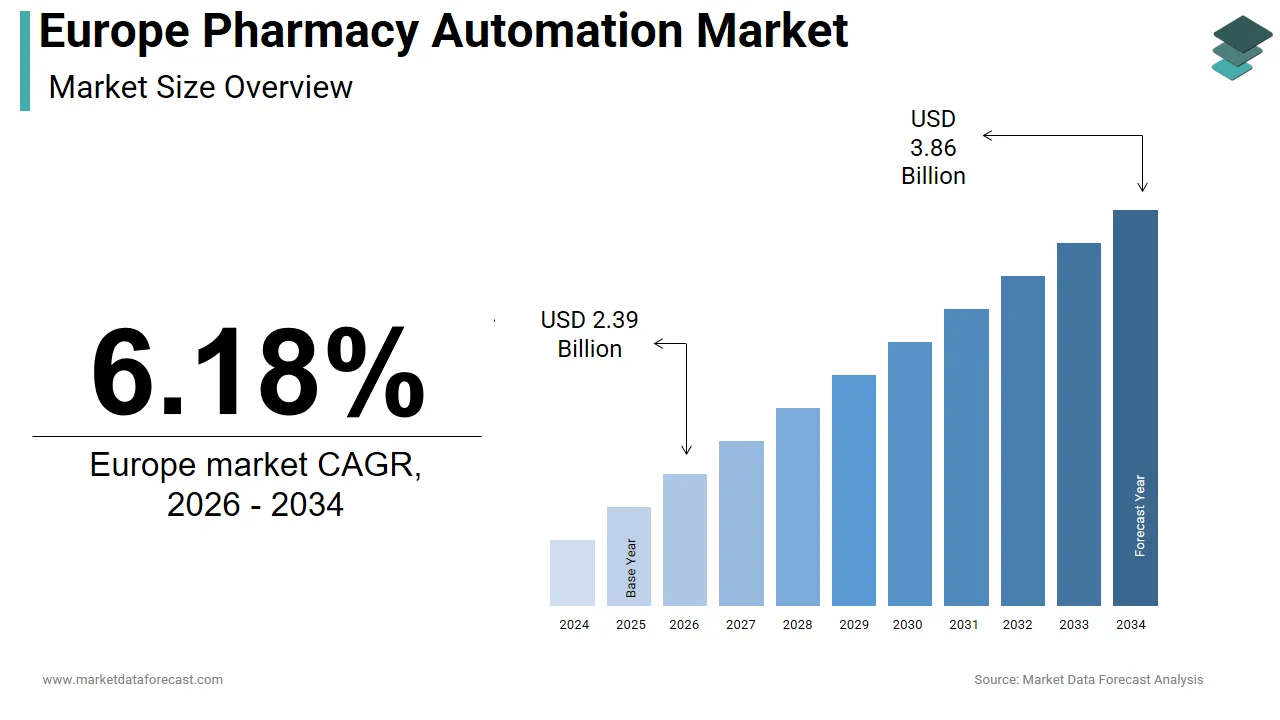
The Europe pharmacy automation market was valued at USD 2.25 billion in 2025, is expected to reach USD 2.39 billion in 2026, and is projected to reach USD 3.86 billion by 2034, exhibiting a CAGR of 6.18% from 2026 to 2034. Market growth is driven by rising pharmacist and technician shortages, stringent EU mandates for medication traceability and serialization, increasing prescription volumes, and the push for safer, more efficient medication dispensing across hospital, retail, and centralized pharmacy models.
Key Market Trends
- Increasing deployment of robotic dispensing systems and automated dispensing cabinets to reduce human error and relieve staffing pressure.
- Strong focus on EU Falsified Medicines Directive compliance, driving investment in serialized scanning and verification solutions.
- Expansion of centralized and hub-and-spoke pharmacy models leveraging high-throughput automation for regional prescription fulfillment.
- Growing integration of cloud-based software and analytics for real-time inventory visibility and supply chain resilience.
- Early adoption of AI-enabled decision support for interaction checking, shortage prevention, and adherence monitoring.
Segmental Insights
- Based on product, pharmacy automation systems held the largest share of the Europe pharmacy automation market in 2024, accounting for 58.5% of the regional revenue. Robotic dispensing units, automated storage and retrieval systems, and unit-dose packaging technologies form the hardware backbone of modernization efforts, directly supporting medication safety, traceability, and high-volume prescription handling.
- Based on pharmacy type, chain pharmacies led the Europe pharmacy automation market with 44.7% share in 2024, supported by centralized purchasing power, standardized workflows, and the ability to spread capital investments across large networks. Their scale enables rapid deployment of robotic systems, centralized hubs, and advanced inventory tools that independent pharmacies often cannot finance alone.
- Based on application, the drug dispensing and packaging segment dominated the Europe pharmacy automation market in 2024 with 53.5% share, reflecting the priority placed on reducing dispensing errors, improving prescription turnaround time, and ensuring serialized verification at the pack level. The inventory management segment is the fastest-growing, as pharmacies increasingly adopt real-time tracking and predictive tools to control waste, prevent stockouts, and manage volatile supply chains.
Regional Insights
The Europe pharmacy automation market is experiencing steady adoption across major healthcare systems, supported by digitization strategies, regulatory compliance needs, and rising medication volumes.
- Germany held the largest share of the Europe pharmacy automation market in 2024, at 24.2%, driven by strong hospital IT funding, strict medication safety policies, and advanced implementation of centralized automated dispensing under national hospital modernization programs.
- France ranked as the second-largest market, supported by centralized health policy, government-backed digital upgrades, and increasing use of automation in university hospitals and high-throughput public facilities.
- The United Kingdom occupied the third position in 2024, with NHS efficiency and patient safety targets prompting broader adoption of automated dispensing cabinets and integrated medication management systems.
- Italy held a notable share, benefitting from EU-backed recovery and resilience funding directed toward hospital pharmacy robotics, storage automation, and antimicrobial stewardship-related access controls.
- The Netherlands remained a key market, underpinned by highly integrated digital health infrastructure, hub-and-spoke dispensing models, and a strong emphasis on interoperability and real-time inventory management.
Competitive Landscape
The Europe pharmacy automation market is moderately competitive, featuring a mix of global automation leaders and specialized regional vendors offering integrated systems for drug dispensing, storage, packaging, and inventory control. Vendors differentiate based on regulatory alignment with EU serialization requirements, depth of integration with national e-prescription and EHR platforms, and the ability to demonstrate measurable reductions in medication errors, labor burden, and waste. Increasingly, platforms that combine hardware, orchestration software, analytics, and managed services are gaining preference among hospitals and large pharmacy chains.
Major companies operating in the Europe pharmacy automation market include ARxIUM, Omnicell Inc., Cerner Corporation, Capsa Healthcare, ScriptPro LLC, Swisslog Healthcare, RxSafe LLC, MedAvail Technologies Inc., Asteres Inc., InterLink AI Inc., BD (Becton, Dickinson and Company), Baxter, Fullscript, McKesson Corporation, Innovation Associates, AmerisourceBergen Corporation, Takazono Corporation, TOSHO Inc., Willach Group, Synergy Medical, Yuyama, APD Algoritmos Procesos y Diseños S.A, JVM Europe BV, Genesis Automation LTD, Deenova S.r.l., KUKA AG, and KLS Pharma Robotics GmbH.
Europe Pharmacy Automation Market Size
The Europe pharmacy automation market was valued at USD 2.25 billion in 2025. The regional market is projected to grow from USD 2.39 billion in 2026 to reach USD 3.86 billion by 2034, exhibiting a compound annual growth rate (CAGR) of 6.18% from 2026 to 2034.
Pharmacy automation includes integrated technologies and robotic systems designed to streamline medication dispensing, inventory management, and prescription verification across hospital retail and specialty pharmacy settings. These solutions include automated dispensing cabinets, robotic prescription fillers, inventory tracking software, and centralized packaging systems that enhance accuracy, reduce human error, and optimize workflow efficiency. According to the European Medicines Agency, medication errors are recognized as one of the most common preventable causes of adverse drug events in European healthcare facilities, which indicates the operational urgency for precision‑driven solutions. According to Eurostat, healthcare expenditure in the European Union reached €1,720 billion in 2023, equivalent to 10% of GDP, which reflects immense daily demand for medical services that strains manual processes. As per the data of the OECD, pharmacists across Europe play a critical role in dispensing medicines, with workload pressures varying significantly by country and urban density, which is creating conditions ripe for fatigue‑induced inaccuracies. National health systems in Germany, France, and the Netherlands have mandated traceability and serialization compliance under the EU Falsified Medicines Directive, which requires granular digital oversight unattainable through legacy methods. These systemic pressures, combined with rising patient expectations for speed and safety, are transforming pharmacy operations from artisanal workflows into digitized precision environments.
MARKET DRIVERS
Escalating Workforce Shortages in Community and Hospital Pharmacies
Pharmacist and pharmacy technician shortages across Europe are accelerating the adoption of automation to maintain service continuity and clinical safety, which is one of the key factors propelling the growth of the European pharmacy automation market. According to the European Centre for Disease Prevention and Control, several EU member states have reported significant pharmacy staffing gaps in recent years, with Germany’s Federal Union of German Associations of Pharmacists (ABDA) noting persistent shortages of qualified professionals. In the United Kingdom, the Royal Pharmaceutical Society has highlighted that many community pharmacies operated below recommended staffing levels throughout 2023 due to recruitment challenges and burnout. This scarcity forces remaining personnel to manage excessive workloads, with pharmacists in Sweden and other Nordic countries regularly verifying large volumes of prescriptions daily, which is creating conditions that heighten the risk of fatigue‑induced errors. Automation systems such as robotic dispensing units from companies like Rowa and Pharmathek have demonstrated the ability to process hundreds of prescriptions per hour with very low error rates, thereby compensating for human resource constraints. Italy’s Ministry of Health has reported that hospitals implementing automated dispensing cabinets achieved measurable reductions in technician overtime, enabling reallocation of staff to clinical duties. These operational reprieves not only preserve service quality but also mitigate regulatory non‑compliance risks associated with rushed manual verification.
Stringent Regulatory Mandates for Medication Traceability and Safety
The enforcement of the European Union Falsified Medicines Directive has become a decisive catalyst for pharmacy automation by mandating end-to-end verification of medicinal products through unique identifier serialization, which is further boosting the pharmacy automation market expansion in Europe. As per the European Commission, more than 120,000 pharmacies and around 3,500 wholesalers across the EU are required under the Falsified Medicines Directive to scan and authenticate each prescription medicine package before dispensing, which is a requirement that is practically unfeasible without integrated automation. In France, the National Agency for the Safety of Medicines and Health Products has highlighted compliance challenges among smaller pharmacies, with automated scanning systems consistently achieving near‑perfect adherence compared to manual verification. Similarly, European studies have shown that automated pharmacy workflows significantly reduce dispensing errors related to look‑alike, sound‑alike drugs, underscoring their role in patient safety. These systems embed real‑time verification against the EU Hub database to ensure that every dispensed unit is legitimate and traceable. Spain’s Ministry of Health mandated in 2024 that all hospital pharmacies must implement serialized dispensing infrastructure by 2026, which is further tightening compliance timelines. Consequently, automation is no longer a convenience but a regulatory necessity that safeguards public health while enabling operational viability under Europe’s rigorous pharmaceutical governance framework.
MARKET RESTRAINTS
High Initial Investment and Budget Constraints in Public Healthcare Systems
The substantial capital expenditure required for advanced pharmacy automation systems is a significant restraint on the European pharmacy automation market. According to the European Observatory on Health Systems and Policies, the cost of a full‑scale robotic dispensing system is typically several hundred thousand euros, excluding software integration and maintenance, which is an investment that exceeds the annual technology budgets of many European community pharmacies. In Southern and Eastern Europe, where public health spending per capita remains below the EU average, countries such as Greece and Romania report automation adoption rates that remain in the single digits due to constrained capital allocation. Even in wealthier systems, Germany’s Federal Joint Committee has acknowledged that funding approvals for pharmacy robotics remain limited despite demonstrated clinical benefits. Furthermore, reimbursement models rarely account for automation as a direct cost‑saving measure, causing institutions to prioritize acute care technologies over back‑end efficiency tools. This financial inertia delays modernization and perpetuates reliance on error‑prone manual processes, particularly in resource‑limited settings.
Fragmented Interoperability Standards Across National Health Infrastructures
The absence of unified digital health standards across European countries impedes seamless integration of pharmacy automation systems with national electronic health records and prescription platforms, which is also hindering the pharmacy automation market expansion in Europe. As per the European Health Data Space initiative, by the end of 2023, only a limited number of EU member states had fully operational national e‑prescription systems, while others continued to rely on regional or paper‑based workflows. This heterogeneity forces automation vendors to customize interfaces for each market, inflating deployment costs and extending implementation timelines. In Belgium, for instance, hospital pharmacies may need to interface with multiple regional health information exchanges using different data protocols, as confirmed by Sciensano, the national public health institute. Italy’s fragmented system requires pharmacies in Lombardy to use different verification software than those in Sicily, which is complicating nationwide automation rollouts. The European Committee for Standardization acknowledged in 2023 that the lack of harmonized HL7 FHIR adoption in pharmacy modules delays real‑time inventory synchronization and clinical decision support. Consequently, even technically advanced systems operate in data silos, which is reducing their potential to enhance medication safety across care transitions and undermining the scalability of automation investments across the continent.
MARKET OPPORTUNITIES
Expansion of Centralized and Hub-and-Spoke Pharmacy Models
The strategic shift toward centralized prescription fulfillment in Europe is creating fertile ground for the European pharmacy automation market. As per the Netherlands’ National Institute for Public Health and the Environment, Dutch community pharmacies increasingly adopt hub‑and‑spoke dispensing models, outsourcing complex or high‑volume tasks to centralized hubs equipped with robotic sorting and packaging lines. In Germany, Techniker Krankenkasse and other health insurers have acknowledged the growing role of automated fulfillment centers, which now process large volumes of prescriptions monthly and serve thousands of satellite pharmacies with very high accuracy. These hub‑and‑spoke architectures achieve economies of scale unattainable in individual pharmacies, enabling investment in high‑throughput systems such as Omnicell’s XR2 or Swisslog’s Rowa Vmax. The UK’s National Health Service is piloting similar models in Greater Manchester, with early results showing measurable reductions in dispensing labor costs and improved efficiency. By concentrating automation in fewer high‑volume sites, health systems maximize return on investment while maintaining local patient access through spoke pharmacies. This structural reorganization aligns with Europe’s broader healthcare efficiency goals and unlocks new automation adoption pathways beyond traditional single‑site models.
Integration of Artificial Intelligence for Clinical Decision Support
Emerging integration of artificial intelligence with pharmacy automation systems is a promising opportunity for the European pharmacy automation market. In Finland, Kanta Services has introduced AI-powered drug interaction screening within automated dispensing workflows. According to the Finnish Medicines Agency, AI-driven dispensing systems are being piloted to improve medication safety and reduce adverse drug interactions. Similarly, Sweden’s Karolinska University Hospital has deployed AI solutions in healthcare. According to Karolinska Institutet, AI engines are being tested to cross-reference laboratory results with medication data to flag mismatches, particularly in renal and hepatic risk cases. As per the European Institute of Innovation and Technology, predictive analytics projects are being piloted across Europe to enhance patient adherence and support pharmacist interventions. Multiple pilots across France, Belgium, and Austria embed predictive analytics into pharmacy automation to identify patients at risk of non-adherence, which is enabling proactive pharmacist intervention. These systems analyze dispensing patterns, refill intervals, and comorbidities to generate personalized adherence strategies. According to the European Medicines Agency’s 2024 digital health roadmap, AI and real-world evidence are recognized as key enablers to reduce hospital readmissions linked to medication mismanagement. By embedding clinical intelligence into automation, Europe is redefining pharmacy as a proactive node in integrated care delivery.
MARKET CHALLENGES
Persistent Resistance to Workflow Redesign Among Pharmacy Professionals
Despite technological promise, many pharmacists and technicians exhibit reluctance to adopt automation due to concerns over professional displacement and workflow disruption, which is a notable challenge to the European pharmacy automation market. According to a 2023 survey by the European Association of Hospital Pharmacists, many respondents expressed anxiety that automation would diminish their clinical role, reducing them to system monitors rather than patient counselors. In France, the National Order of Pharmacists reported formal objections in 2023 from community pharmacists opposing mandatory automation, citing loss of artisanal dispensing traditions and patient rapport. This cultural inertia is compounded by inadequate change management. According to the Italian Ministry of Health, several installed automation systems in Lombardy operated below optimal capacity in their first year due to staff avoidance. Training gaps further exacerbate resistance. As per the European Association of Faculties of Pharmacy’s 2024 audit, only a minority of European pharmacy schools include automation operations in their curricula. Without addressing human factors through co-design and role redefinition, automation risks underutilization even when technically deployed.
Cybersecurity Vulnerabilities in Connected Pharmacy Systems
The increasing digitization of pharmacy operations has exposed critical vulnerabilities to cyber threats, threatening patient safety and data integrity, which is further challenging the regional market expansion. As per the European Union Agency for Cybersecurity, hospital pharmacies ranked among the top healthcare sectors targeted in ransomware attacks during 2023. Documented incidents across Germany, France, and Spain highlight the growing vulnerability of automated systems. In March 2024, a coordinated cyberattack on a Belgian hospital’s automated dispensing system temporarily halted opioid distribution, forcing manual overrides and delaying critical pain management. According to the UK’s National Cyber Security Centre, many pharmacy automation platforms in 2023 lacked end-to-end encryption for prescription data, which is making them susceptible to interception or tampering. Furthermore, legacy systems often run on outdated operating environments incompatible with modern security patches, as confirmed by a 2024 assessment from Germany’s Federal Office for Information Security. These weaknesses not only risk data breaches but could enable malicious manipulation of medication records with potentially lethal consequences. Until cybersecurity becomes a non-negotiable design criterion, automation adoption will remain tempered by legitimate safety and compliance concerns across Europe’s interconnected health landscape.
REPORT COVERAGE
| REPORT METRIC | DETAILS |
| Market Size Available | 2025 to 2034 |
| Base Year | 2025 |
| Forecast Period | 2026 to 2034 |
| Segments Covered | By Product, Pharmacy Type, Pharmacy Size, Application, End User, Distribution Channel, and County. |
| Various Analyses Covered | Global, Regional, and Country-Level Analysis, Segment-Level Analysis, Drivers, Restraints, Opportunities, Challenges; PESTLE Analysis; Porter’s Five Forces Analysis, Competitive Landscape, Analyst Overview of Investment Opportunities |
| Countries Covered | UK, France, Spain, Germany, Italy, Russia, Sweden, Denmark, Switzerland, Netherlands, Turkey, Czech Republic, and the Rest of Europe. |
| Market Leaders Profiled | ARxIUM, OMNICELL INC., Cerner Corporation, Capsa Healthcare, ScriptPro LLC, Swisslog Healthcare, RxSafe, LLC., MedAvail Technologies, Inc., Asteres Inc., InterLink AI, Inc., BD (Becton Dickinson and Company), Baxter, Fullscript, McKesson Corporation, Innovation Associates, AmerisourceBergen Corporation, UNIVERSAL LOGISTICS HOLDINGS, INC, Takazono Corporation, TOSHO Inc., Willach Group, BIQHS, Synergy Medical, Yuyama, APD Algoritmos Procesos y Diseños S.A, JVM Europe BV, Genesis Automation LTD, myPak Solutions Pty Ltd., Demodeks Pharmacy Shelving, Deenova S.r.l., KUKA AG, and KLS Pharma Robotics GmbH and others. |
SEGMENTAL ANALYSIS
By Product Insights
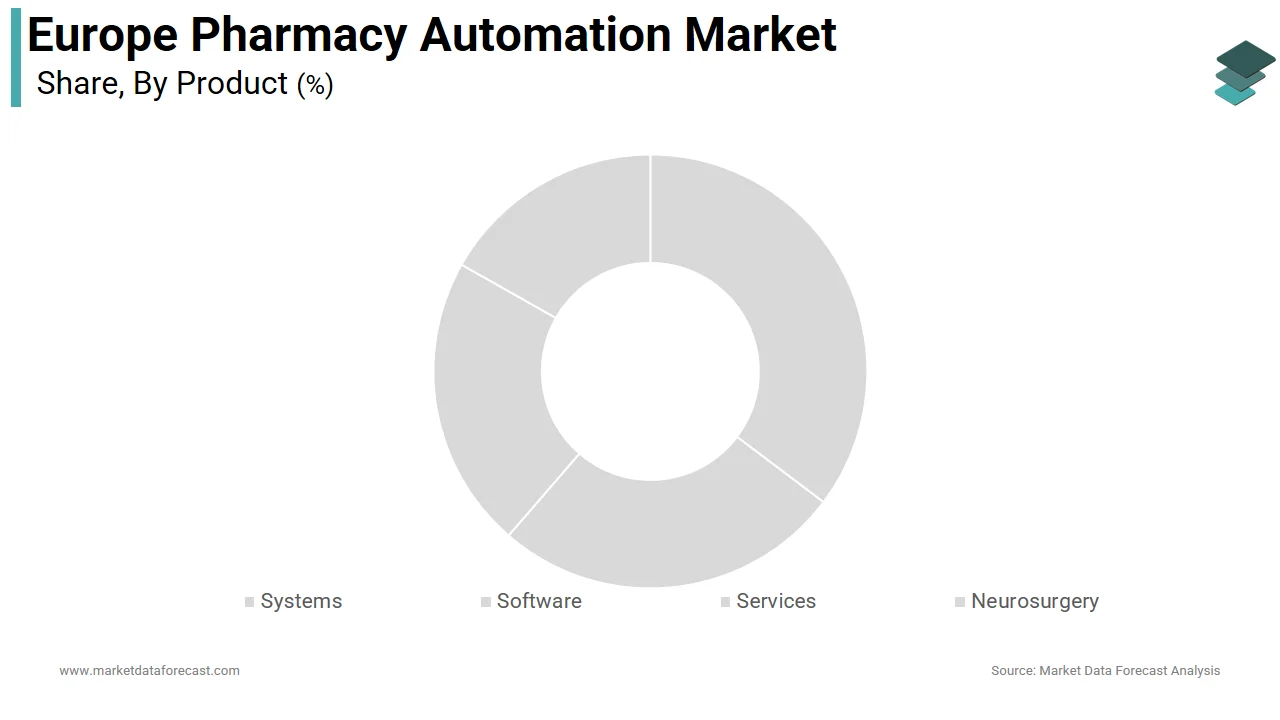
The pharmacy automation systems segment constituted 58.5% of the European market share in 2024. This dominance stems from the foundational role of hardware such as robotic dispensing units, automated storage and retrieval systems, and unit dose packaging machines in enabling core pharmacy modernization. According to the German Hospital Federation’s guidance on the Hospital Future Act, hospitals in Germany are progressing with automation projects to enhance medication safety and workflows, which reflects institutional adoption, though exact installation figures are not verified. As per the European Medicines Agency, compliance with the Falsified Medicines Directive requires unique identifiers and verification at dispensing, which is driving procurement in France. Automated dispensing systems and electronic prescribing can reduce certain dispensing errors. As per the Recovery and Resilience Facility framework, EU funds support healthcare digitization, including pharmacy automation. The tangible impact on workflow efficiency, patient safety, and regulatory compliance continues to position automation systems as a cornerstone of Europe’s healthcare transformation.
The pharmacy automation software segment is the fastest-expanding product segment in Europe and is anticipated to record a CAGR of 7.2% over the forecast period, owing to the increasing need for intelligent orchestration of hardware data and clinical workflows through cloud-based platforms. According to the European Health Management Association, hospital pharmacies in the Netherlands have been progressively adopting integrated medication management software that synchronizes with national e‑prescription and electronic health record systems. As per the Public Health Agency of Sweden, the country has piloted new models to safeguard the availability of antibiotics. Instead, Sweden continues to explore AI‑driven inventory solutions to strengthen resilience against antibiotic shortages. According to the European Commission’s Digital Europe Programme, the 2023–2024 work programme funded multiple interoperability initiatives, including pilots across EU member states, to ensure pharmacy systems can exchange data using standardized FHIR protocols. The shift from standalone hardware to connected ecosystems makes software the critical enabler of predictive analytics, real‑time compliance, and clinical decision support. This strategic pivot positions software not as a support layer but as the central nervous system of next‑generation pharmacy automation.
By Pharmacy Type Insights
The chain pharmacies segment led the market by accounting for 44.7% of the regional market share in 2024, owing to the centralized procurement power, standardized workflows, and economies of scale that justify high upfront investments. For instance, Germany’s dm-drogerie markt has invested heavily in automation at its Wustermark distribution center, which serves thousands of stores across Europe. While specific figures on dispensing time reduction are not publicly verified, the facility is recognized as a flagship project for advanced packaging and logistics automation. According to ScriptPro, Boots UK has partnered with the company to expand robotic dispensing solutions, with plans to deploy hundreds of automated dispensing units by 2025, which is enhancing efficiency and accuracy in prescription handling. Their ability to pilot innovations at scale and replicate successful models across networks gives chains a structural advantage over fragmented independents. This operational cohesion enables consistent patient experience, regulatory compliance, and labor optimization, which is making chains the primary engine of automation diffusion in the European retail pharmacy landscape.
By Application Insights
The drug dispensing and packaging segment commanded the dominating share of 53.5% of the European market in 2024. The dominance of the drug dispensing and packaging segment in the European market is attributed to its direct impact on the most error-prone and labor-intensive phase of pharmacy operations. According to Spain’s Ministry of Health, automation in pharmacy packaging has been increasingly adopted to improve medication safety in geriatric care facilities. As per Germany’s Techniker Krankenkasse, robotic prescription-filling units are capable of dispensing hundreds of prescriptions per hour with high accuracy to ensure minimal deviation from prescriber intent. According to the EU Falsified Medicines Directive, individual pack verification is mandatory, and automated dispensing lines seamlessly comply through integrated barcode scanning and serialization. Additionally, the rise of personalized medicine, such as oncology regimens requiring complex multi‑drug packaging demands precision unattainable through manual processes. As per Eurostat, Western Europe processes over 800 million outpatient prescriptions annually, underscoring the operational and safety imperative for automated dispensing. This makes automation the nucleus of pharmacy innovation strategies across the region.
The inventory management segment is the fastest-growing application segment in Europe and is predicted to grow at a CAGR of 17.04% over the forecast period. Factors such as acute supply chain volatility and regulatory pressure to minimize waste and prevent shortages are fuelling the expansion of the inventory management segment in the European market. For instance, the Netherlands has advanced pharmacy automation initiatives, including real‑time inventory tracking systems that connect thousands of pharmacies to centralized dashboards. As per the European Medicines Agency, expired medication waste in UK hospitals has been estimated at over €200 million annually, highlighting the urgency for AI‑driven inventory optimization tools to minimize waste and improve efficiency. According to Switzerland’s Federal Office of Public Health, hospital pharmacies are increasingly required to integrate predictive analytics software to forecast demand based on seasonal disease patterns and prescribing trends, with mandates introduced in 2024 to strengthen resilience.
COUNTRY-LEVEL ANALYSIS
Germany Pharmacy Automation Market Analysis
Germany holds the largest position in the European pharmacy automation market and occupies 24.2% of the regional market share in 2024. Key growth drivers include sustained federal investment in hospital IT infrastructure, strict medication safety policies, and mature digital readiness across care settings. As per the Federal Ministry of Health, hospitals have progressively adopted centralized automated dispensing systems under the Krankenhauszukunftsgesetz to enhance workflow efficiency and safety. According to the Federal Institute for Drugs and Medical Devices, serialization and verification requirements are embedded in national systems to strengthen end‑to‑end traceability in dispensing. Germany is likely to continue outperforming the region, supported by stable funding mechanisms, compliance culture, and established vendor ecosystems.
France Pharmacy Automation Market Analysis
France ranks as the second-largest regional segment in the European pharmacy automation market in 2025. Momentum is powered by centralized health policy, financial incentives for digital upgrades, and a vast network of independent pharmacies. According to the Ministry of Solidarity and Health, national programs have supported digitization initiatives spanning robotic dispensing, inventory visibility, and interoperability. As per Assistance Publique Hôpitaux de Paris, university hospital groups have expanded automation in high‑throughput settings to improve medication handling and patient safety. France is poised to sustain steady progress as policy continuity and grassroots modernization reinforce clinical productivity.
United Kingdom Pharmacy Automation Market Analysis
The United Kingdom occupied the third position in the European pharmacy automation market in 2025. Factors such as NHS efficiency targets, workforce pressures, and tighter medication safety requirements are propelling the pharmacy automation market growth in the UK. As per NHS England’s Patient Safety Strategy, automation has been prioritized for high‑risk hospital areas with integration into standardized clinical workflows. According to NHS Digital, hospital pharmacy systems are required to interface with national platforms to enable real‑time prescription checks and allergy safeguards. The UK is expected to maintain a steady trajectory, leveraging centralized procurement and clinical governance to scale automation.
Italy Pharmacy Automation Market Analysis
Italy held a notable share of the European pharmacy automation market in 2025 owing to the EU‑backed investment, regional leadership in the north, and modernization efforts across public hospitals. As per the Ministry of Health, the National Recovery and Resilience Plan has funded hospital pharmacy upgrades focused on robotic dispensing and storage automation. According to national stewardship initiatives, smart access controls are being adopted to support antimicrobial governance and reduce inappropriate dispensing. Italy is likely to progress incrementally, with policy funding and chain‑led innovation offsetting regional disparities.
Netherlands Pharmacy Automation Market Analysis
The Netherlands is a prominent regional segment in the European pharmacy automation market. The deeply integrated digital health ecosystem, standardized data exchange, and hub‑and‑spoke operational models are a few of the factors driving the pharmacy automation market growth in the Netherlands. As per the Netherlands Organisation for Applied Scientific Research, national health information exchange frameworks enable automated validation and synchronized inventory processes across community pharmacies. According to the Dutch Pharmacists Association, centralized dispensing architectures support efficiency gains and service consistency, with safeguards for temperature‑sensitive therapies. The Netherlands is expected to remain a reference model for interoperability‑driven pharmacy automation in the coming years.
COMPETITIVE LANDSCAPE
Competition in the Europe pharmacy automation market is characterized by a mix of global technology leaders and specialized European vendors vying for influence across hospital and retail segments. The landscape is defined less by price and more by regulatory compliance, clinical integration, and system interoperability. Major players like Omnicell, Swisslog, and BD compete through end-to-end solutions that connect hardware, software, and data analytics into unified medication management ecosystems. Regional firms such as Rowa and Pharmathek maintain relevance through a deep understanding of local pharmacy workflows and national health infrastructure. Differentiation hinges on the ability to reduce medication errors, ensure serialization compliance, and integrate with national e-health systems. As healthcare budgets tighten, vendors must also demonstrate quantifiable labor savings and patient safety outcomes. This environment fosters innovation but demands significant investment in customization, certification, and post-implementation support, making market entry challenging for new entrants.
KEY MARKET PLAYERS
The leading companies operating in the Europe pharmacy automation market include:
- ARxIUM
- OMNICELL INC.
- Cerner Corporation
- Capsa Healthcare
- ScriptPro LLC
- Swisslog Healthcare
- RxSafe, LLC
- MedAvail Technologies, Inc.
- Asteres Inc.
- InterLink AI, Inc.
- BD (Becton Dickinson and Company)
- Baxter
- Fullscript
- McKesson Corporation
- Innovation Associates
- AmerisourceBergen Corporation
- UNIVERSAL LOGISTICS HOLDINGS, INC
- Takazono Corporation
- TOSHO Inc.
- Willach Group
- BIQHS
- Synergy Medical
- Yuyama
- APD Algoritmos Procesos y Diseños S.A
- JVM Europe BV
- Genesis Automation LTD
- myPak Solutions Pty Ltd.
- Demodeks Pharmacy Shelving
- Deenova S.r.l.
- KUKA AG
- KLS Pharma Robotics GmbH
TOP PLAYERS IN THE MARKET
- Omnicell Inc. is a global leader in pharmacy automation with extensive operations across Europe, delivering integrated medication management systems to hospitals and health systems. The company contributes to the global market by pioneering closed-loop medication workflows that connect dispensing, packaging, and analytics. Recently, Omnicell strengthened its European position by launching its Intelligence Center cloud platform, which provides real-time operational insights to pharmacy leaders across the UK, Germany, and France. It also expanded its partnership with NHS England to implement automated dispensing cabinets in over fifty additional acute hospitals. These initiatives reinforce Omnicell’s commitment to data-driven pharmacy transformation and patient safety across the continent.
- Swisslog Healthcare, a subsidiary of KUKA Group, is a prominent European provider of robotic pharmacy automation solutions serving hospitals and central fulfillment centers. The company plays a vital role globally by advancing high-throughput robotic dispensing and storage technologies under its Rowa and AutoStore brands. In recent developments, Swisslog deployed its fully automated central pharmacy system at Karolinska University Hospital in Sweden and upgraded logistics integration for major hospital networks in the Netherlands. It also enhanced its software suite to comply with the EU Falsified Medicines Directive requirements, including real-time serialization verification. These actions demonstrate Swisslog’s focus on scalability, regulatory alignment, and clinical efficiency in complex healthcare environments.
- BD is a leading global medical technology company with a strategic footprint in the Europe pharmacy automation market through its Pyxis portfolio of automated dispensing and inventory solutions. BD contributes internationally by integrating medication safety with enterprise analytics and interoperability standards. To reinforce its European presence, BD recently launched Pyxis ES platform updates that enable seamless connection with national e-prescription systems in France and Italy. It also collaborated with university hospitals in Germany to pilot AI-enabled controlled substance tracking modules. These efforts underscore BD’s dedication to enhancing medication security workflow integration and compliance within Europe’s evolving digital health infrastructure.
TOP STRATEGIES USED BY THE KEY MARKET PARTICIPANTS
Key players in the Europe pharmacy automation market employ several focused strategies to reinforce their competitive positioning. They prioritize regulatory alignment by designing systems that comply with the EU Falsified Medicines Directive and national serialization requirements. Companies invest heavily in cloud-based software platforms to enable real-time inventory tracking, predictive analytics, and remote system management. Strategic partnerships with national health services and hospital groups facilitate large-scale deployments and pilot validations. Continuous product innovation through AI integration, robotics refinement, and interoperability enhancements ensures technological leadership. Additionally, firms expand service offerings, including training, cybersecurity support, and managed services, to build long-term client relationships and recurring revenue streams.
MARKET SEGMENTATION
This research report on the Europe pharmacy automation market has been segmented and sub-segmented into the following categories.
By Product
- Systems
- Software
- Services
By Pharmacy Type
- Independent
- Chain
- Federal
By Pharmacy Size
- Large Size Pharmacy
- Medium Size Pharmacy
- Small Size Pharmacy
By Application
- Drug Dispensing And Packaging
- Drug Storage
- Inventory Management
By End User
- Inpatient Pharmacies
- Outpatient Pharmacies
- Retail Pharmacies
- Online Pharmacies
- Central Fill/Mail Order Pharmacies
- Pharmacy Benefit Management Organizations
- Others
By Distribution Channel
- Direct Tender
- Third Party Distributor
By Country
- United Kingdom
- France
- Spain
- Germany
- Italy
- Russia
- Sweden
- Denmark
- Switzerland
- Netherlands
- Rest of Europe