- Product Description Description
- Table of Contents TOC
- List of Table & Figure LOT
- Get Free Sample PDF Sample PDF
Market Size, 2025
$1.36 BnMarket Estimate, 2026
$1.48 BnMarket Forecast, 2034
$2.83 BnCAGR, 2026–2034
8.5%Europe Pharmacy Automation System Market Size, Growth, Trends & Forecast (2026–2034)
The Europe pharmacy automation system market size was valued at USD 1.36 billion in 2025, is estimated at USD 1.48 billion in 2026, and is anticipated to reach USD 2.83 billion by 2034, expanding at a compound annual growth rate (CAGR) of 8.5% during the forecast period from 2026 to 2034. Market expansion is primarily propelled by an aging demographic driving polypharmacy regimens, increasing focus on error-resilient medication safety, strict regulatory frameworks like the EU Falsified Medicines Directive, and post-pandemic digital healthcare infrastructure investments.
Key Executive Metrics (At-a-Glance)
- 2025 Base Valuation: USD 1.36 Billion
- 2026 Current Valuation: USD 1.48 Billion
- 2034 Forecast Valuation: USD 2.83 Billion
- Compound Annual Growth Rate (CAGR): 8.5% (2026–2034)
- Key Geographic Footprint: Germany, France, United Kingdom, Italy, Spain, Russia, Sweden, Denmark, Switzerland, Netherlands, Turkey, Czech Republic, and Rest of Europe
Europe Pharmacy Automation System Market Segmentation Breakdown
| Segment Category | Leading / Dominant Segment | Fastest-Growing Segment |
|---|---|---|
| By Product | Automated Medication Dispensing Systems (42.5% share in 2024) | Automated Packaging and Labeling Systems (CAGR of 11.3%) |
| By End User | Inpatient Pharmacies (48.3% share in 2024) | Pharmacy Benefit Management & Mail-Order Pharmacies (CAGR of 12.7%) |
| By Region | Germany (22.7% share in 2024) | Spain, Italy, and Eastern European Markets |
Major Industry Players Profiled
Key market participants shaping the European pharmacy automation system landscape include Becton, Dickinson, and Company (BD), Omnicell, Baxter International, Inc., ScriptPro LLC, KUKA AG, Talyst Systems LLC, Capsa Healthcare, RxSafe, Inc., and ARxIUM Inc.
Europe Pharmacy Automation System Market Size
The pharmacy automation system market size in Europe was valued at USD 1.36 billion in 2025. The European market size is anticipated to exhibit a CAGR of 8.5% from 2026 to 2034 and be worth USD 2.83 billion by 2034 from USD 1.48 billion in 2026.

A pharmacy automation system refers to the hardware and software solutions designed to enhance the accuracy, safety, and efficiency of medication dispensing, inventory control, and prescription management across hospital, retail, and long-term care pharmacy environments. These systems include robotic dispensing units, automated packaging and labeling equipment, smart cabinets, and digital inventory platforms that reduce reliance on manual processes. In a region facing demographic and systemic healthcare pressures, automation serves as a critical enabler of resilient pharmaceutical services. According to sources, the proportion of elderly individuals within the European Union population is increasing, which represents a significant demographic shift. Concurrently, as per studies, Medication errors are a substantial issue affecting hospital admissions across Europe, which emphasizes a significant patient safety concern within the healthcare system. These realities underscore the urgency for precision-driven pharmaceutical workflows. The environment for adopting advanced automation technologies within the pharmacy value chain is becoming increasingly positive, driven by EU digital health strategies and post-pandemic infrastructure spending.
MARKET DRIVERS
Aging Population Intensifies Demand for Error-Resilient Pharmacy Operations
The region’s demographic transformation is a key driver for the Europe pharmacy automation system market. The EU's elderly population continues to increase, with those aged 65 and over representing over a fifth of the total population (21.3% in 2023), as per Eurostat. This segment frequently requires complex polypharmacy regimens, significantly elevating the risk of dispensing errors. Manual handling in high throughput environments increases the likelihood of dosage miscalculations or wrong drug distribution, which automated systems mitigate through barcode verification, robotic accuracy, and real-time audit trails. As per studies, between 5% and over 20% of hospital admissions among seniors are linked to adverse drug events, with a significant proportion of these being preventable. In response, healthcare institutions are investing in centralized robotic filling and automated dispensing cabinets. These technologies not only enhance patient safety but also alleviate workforce strain, which positions automation as a strategic necessity rather than a discretionary upgrade.
Regulatory Push for Medication Safety Spurs Automation Integration
Stringent regulatory environment is accelerating the expansion of the Europe pharmacy automation system market. The European Medicines Agency identifies medication errors as a systemic public health concern, affecting millions annually. The EU Falsified Medicines Directive, fully operational since 2019, mandates end-to-end verification of prescription medicines through unique serialization and real-time authentication at the point of dispensing, a requirement impractical to fulfill manually at scale. Apart from these, the Pharmaceutical Strategy for Europe, adopted in November 2020, explicitly promotes digitalization and quality assurance in medicine distribution, among other objectives like ensuring access to affordable medicines and enhancing crisis preparedness. Automated pharmacy platforms inherently comply with these mandates by interfacing with national verification repositories and ensuring traceability. This regulatory alignment not only compels adoption but also reinforces automation as a cornerstone of Europe’s vision for safer, more transparent pharmaceutical care.
MARKET RESTRAINTS
High Initial Investment Deters Widespread Adoption Among Smaller Pharmacies
The significant capital outlay required for pharmacy automation remains a barrier to the Europe pharmacy automation system market. Full implementation, including robotic dispensers, software integration, and staff training, can cost significantly, according to research. Unlike large hospital systems with access to public funding or centralized budgets, most community pharmacies operate on thin margins and lack dedicated technology investment streams. Recurring costs for maintenance, updates, and compliance further deter adoption. Unequal access to capital is creating a two-tiered marketplace where major institutions benefit from rapid automation, while their smaller counterparts remain manual, consequently limiting the market's reach. The persistence of the automation gap, particularly in Southern and Eastern Europe, is a direct consequence of the absence of targeted financing mechanisms like government grants, leasing programs, and pay-as-you-go models.
Interoperability Challenges with Legacy Health IT Systems Limit Integration Efficiency
Technical incompatibility between modern automation platforms and legacy health IT infrastructure hampers seamless deployment, which impedes the Europe pharmacy automation system market. Many European healthcare facilities, especially in Central and Eastern Europe, continue to use outdated electronic prescribing and inventory systems that do not support modern data exchange standards. Even in advanced markets, regional variations in electronic health record formats obstruct uniform integration. Consequently, vendors must develop custom middleware for each site, inflating costs and extending implementation timelines from weeks to months. These integration hurdles not only delay operational benefits but also erode confidence among potential adopters. The absence of an EU-wide harmonized interoperability framework for pharmacy automation means that existing disjointed system landscapes will persist in limiting growth potential and ROI.
MARKET OPPORTUNITIES
Expansion of Hospital at Home and Decentralized Care Models Creates New Deployment Avenues
The rise of decentralized care, particularly hospital-at-home programs, opens new opportunities for the Europe pharmacy automation system market. These models deliver acute care in patients’ residences, requiring precise, pre-packaged, and often time-sensitive medication kits. Automated compounding and packaging systems enable centralized pharmacies to produce individualized, barcoded medication bundles at scale, ensuring compliance and safety without on-site pharmacists. Compact, modular automation units are now being designed specifically for outpatient and home care hubs. This shift repositions pharmacy automation as an enabler of integrated, community-based care, expanding the market into logistics, remote dispensing, and patient-centric delivery networks.
Integration of Artificial Intelligence and Predictive Analytics Enhances Inventory Optimization
The fusion of automation with artificial intelligence is offering potential opportunities in intelligent inventory management, which is expected to propel the growth of the Europe pharmacy automation system market. Traditional pharmacy systems often suffer from overstocking, stockouts, or expiry waste due to static reorder logic. Next-generation automation platforms now embed machine learning algorithms that analyze historical dispensing trends, seasonal illness patterns, and regional prescription flows to predict needs with high accuracy. Swedish hospital networks using AI-enhanced dispensing systems have reduced medication waste. This synergy between automation and data intelligence not only cuts costs but also bolsters supply chain resilience.
MARKET CHALLENGES
Cybersecurity Vulnerabilities in Connected Pharmacy Systems Pose Operational Risks
Cybersecurity vulnerabilities continue to hinder the growth of the Europe pharmacy automation system market. These systems manage sensitive patient data, controlled substance inventories, and prescription records, making them prime targets for cyberattacks. Such disruptions delay medication access, compromise patient safety, and trigger penalties under the General Data Protection Regulation. Most pharmacy automation vendors still lack standardized cybersecurity certifications, and EU regulations do not yet mandate specific security protocols for medical robotics. The absence of a sector-specific cybersecurity framework (covering encryption, secure firmware updates, and intrusion detection) is a barrier to trust in connected automation, especially in public health systems with their rigorous data governance mandates.
Workforce Resistance and Skill Gaps Impede Seamless Operational Transition
Human and organizational factors pose a challenge to the Europe pharmacy automation system market. Many pharmacists and technicians view automation as a threat to professional identity or job security, leading to resistance during implementation. Compounding this, the effective operation of advanced systems demands new competencies in digital literacy, data interpretation, and system troubleshooting skills often absent in the current workforce. According to sources, a smaller number of pharmacy technician training programs included modules on managing automated dispensing systems. This gap prolongs transition periods, increases error rates during onboarding, and undermines expected efficiency gains. The full potential of automation in Europe's diverse pharmacy landscape can only be unlocked with structured change management, continuous upskilling, and a fundamental redesign of roles that emphasizes pharmacists as clinical supervisors rather than mere manual dispensers.
REPORT COVERAGE
| REPORT METRIC | DETAILS |
| Market Size Available | 2025 to 2034 |
| Base Year | 2025 |
| Forecast Period | 2026 to 2034 |
| Segments Covered | By Product, End User, and Country. |
| Various Analyses Covered | Global, Regional, and Country-Level Analysis, Segment-Level Analysis, Drivers, Restraints, Opportunities, Challenges; PESTLE Analysis; Porter’s Five Forces Analysis, Competitive Landscape, Analyst Overview of Investment Opportunities |
| Countries Covered | UK, France, Spain, Germany, Italy, Russia, Sweden, Denmark, Switzerland, Netherlands, Turkey, Czech Republic, and the Rest of Europe. |
| Market Leaders Profiled | Becton, Dickinson, and Company, Omnicell, Baxter International, Inc., ScriptPro LLC, KUKA AG, TCGRx Pharmacy Workflow Solutions, RxSafe, Inc., Cerner Corporation, Capsa Healthcare, Parata Systems LLC (U.S), LLC ARxIUM Inc., and Talyst Systems LLC. |
SEGMENT ANALYSIS
By Product Insights
The automated medication dispensing systems segment held the largest share of 42.5% of the Europe pharmacy automation system market in 2024. Its vital role in minimizing medication errors and enhancing workflow efficiency in high-volume hospital settings fuels the growth of the automated medication dispensing systems segment. Automated Medication Dispensing Systems are deeply embedded in institutional patient safety frameworks across Europe. These systems provide controlled access to narcotics and high alert medications while enforcing double verification protocols through biometric authentication and electronic prescribing integration. Furthermore, the use of engineered safeguards to prevent harm directly aligns with the functional capabilities of automated dispensing cabinets. This regulatory and operational alignment makes the segment indispensable in modern European hospitals, which supports its market dominance. Beyond large hospitals, these systems are increasingly adapted for outpatient clinics, psychiatric facilities, and long-term care homes due to modular designs and cloud-based management. The system’s ability to integrate with electronic health records across national digital health infrastructures further accelerates deployment. The growing trend of healthcare systems consolidating services and centralizing pharmacy operations across Europe is fueling an ever-expanding demand for scalable, secure, and interoperable dispensing solutions, which confirms this segment's leading position.
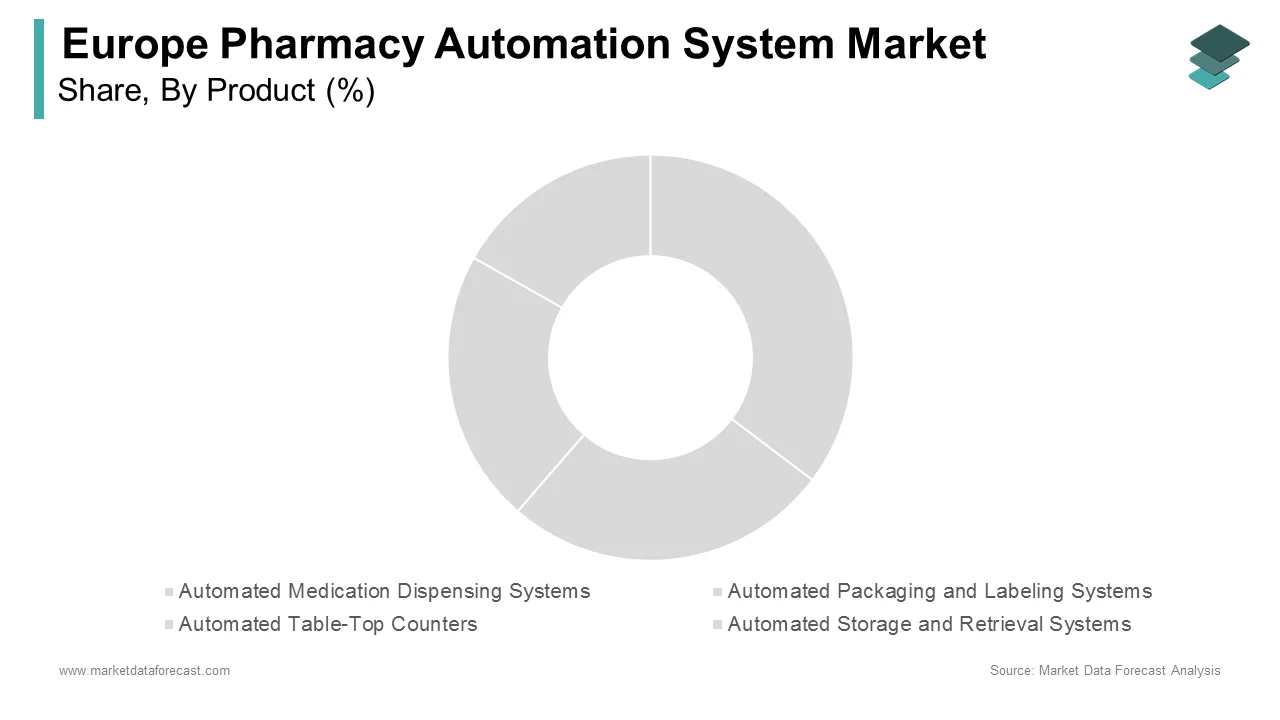
The automated packaging and labeling systems segment is estimated to register the fastest CAGR of 11.3% from 2025 to 2033. The rapid expansion of the automated packaging and labeling systems segment is propelled by the rise of unit dose and blister packaging mandates in hospital settings, and pharmaceutical serialization and anti-counterfeiting compliance. European healthcare institutions are increasingly adopting unit dose dispensing to enhance medication adherence and reduce cross-contamination. Automated packaging systems fulfill this requirement by producing individually labeled blister packs with embedded barcodes, expiry dates, and patient identifiers. The shift away from bulk dispensing is especially pronounced in oncology and geriatric care, where dosage precision is non-negotiable, which creates sustained demand for high-speed, compliant packaging automation. The EU Falsified Medicines Directive mandates unique serialization and tamper-evident features on all prescription medicine packaging, a requirement that manual labeling cannot reliably meet at scale. Automated labeling systems integrate directly with national verification repositories such as the European Hub operated by EMVO, ensuring every dispensed unit is authenticated. Retail and mail order pharmacies are retrofitting packaging lines to comply with these rules while supporting home delivery models. This regulatory imperative, combined with the need for personalized packaging in decentralized care, positions Automated Packaging and Labeling Systems as the most dynamically expanding segment in the European market.
By End User Insights
The inpatient pharmacies segment led the Europe pharmacy automation system market in 2024 and occupied a 48.3% share. The supremacy of the inpatient pharmacies segment is attributed to their operational complexity, regulatory exposure, and direct integration with acute care workflows. Inpatient pharmacies manage thousands of daily doses across diverse therapeutic areas, including high-risk medications such as anticoagulants, chemotherapeutics, and opioids. Automated dispensing and compounding systems mitigate the risk of calculation or transcription errors in this high-stakes environment. National healthcare budgets across Europe increasingly allocate capital for digital transformation in public hospitals. These institutional buyers benefit from centralized procurement, long-term maintenance contracts, and regulatory alignment, making inpatient pharmacies the most stable and expansive end-user segment.
The pharmacy benefit management organizations and mail order pharmacies segment is anticipated to witness the fastest CAGR of 12.7% during the forecast period, owing to evolving care delivery models and policy shifts. As Europe’s population ages and chronic conditions rise, payers and providers are shifting medication distribution from retail counters to direct home delivery to improve adherence and reduce hospital visits. According to sources, a notable share of adults aged 65 and older manage at least two chronic conditions, which require consistent access to complex medication regimens. Pharmacy Benefit Management Organizations leverage automated dispensing and packaging systems to prepare patient-specific adherence packs at scale. These operations rely on high-speed robotic counters and automated labeling to maintain accuracy amid rising volumes, driving infrastructure investment. The digitization of prescribing and reimbursement across Europe is enabling seamless data flow between payers, pharmacies, and patients. Countries have achieved near-universal e-prescription adoption, allowing Pharmacy Benefit Management Organizations to automate order intake, eligibility checks, and dispensing. Automation allows these organizations to handle peak volumes during flu season or chronic therapy initiations without proportional staffing increases. The migration of more EU member states to digital prescribing and centralized reimbursement models is projected to make this segment the fastest-growing of all.
COUNTRY LEVEL ANALYSIS
Germany Pharmacy Automation System Market Analysis
Germany was the top performer in the Europe pharmacy automation system market and accounted for a 22.7% share in 2024. The domination of Germany is primarily driven by its advanced hospital infrastructure, robust public health funding, and proactive digital health policies. A major driver is the Krankenhauszukunftsgesetz, which allocated funds for hospital digitization, explicitly including pharmacy robotics and inventory systems. Apart from these, Germany faces acute workforce shortages. The country also hosts leading European vendors and integrators, which fosters a mature ecosystem for deployment and maintenance. High regulatory standards enforced by the Paul Ehrlich Institute further necessitate precision in controlled substance handling, which makes automated dispensing systems essential in both public and private facilities.

France Pharmacy Automation System Market Analysis
France followed closely in the Europe pharmacy automation market and captured a 16.1% share in 2024. The growth of France is attributed to nationwide digital health initiatives and centralized hospital governanceFrance has committed substantial funding to the digital transformation of its healthcare system through initiatives, specifically prioritizing pharmacy automation to enhance medication safety. A significant majority of French public hospitals have modernized their pharmacy operations in recent years by concentrating on the implementation of automated dispensing technologies and barcode verification systems. Furthermore, France’s centralized procurement model allows bulk adoption across regional hospital groups, enabling cost-efficient scaling and rapid technology diffusion.
The United Kingdom Pharmacy Automation System Market Analysis
The United Kingdom is another key player in the Europe pharmacy automation system market and is driven by systemic pressures within the National Health Service and post-Brexit supply chain reforms. The NHS Long Term Plan prioritizes medication safety as a cornerstone of quality improvement. The UK also faces significant workforce challenges. Apart from these, the Medicines and Healthcare products Regulatory Agency has intensified oversight of controlled drug handling, requiring auditable, secure dispensing capabilities inherent in automated systems. The rise of integrated care systems across England further encourages shared pharmacy hubs that rely on centralized automation for multi-site medication distribution, reinforcing the UK’s position as a key growth market.
Italy Pharmacy Automation System Market Analysis
Italy is expanding steadily in the European market, with growth increasingly driven by regional healthcare modernization and EU recovery fund allocations. Despite historical fragmentation, Italy’s National Recovery and Resilience Plan committed funds to digital health infrastructure, with pharmacy automation eligible under hospital innovation grants. Italy is seeing an increased deployment of automated dispensing and storage systems in hospitals across key regions, a trend driven partly by its high proportion of elderly citizens, which intensifies pressure on polypharmacy management in healthcare settings. The nationwide e-prescription system is further facilitating automation by standardizing digital workflows across all regions. The gap in automation between the north and south is narrowing, as coordinated investment and demographic challenges in the south hasten the move toward Northern European benchmarks.
Spain Pharmacy Automation System Market Analysis
Spain is likely to grow in the European pharmacy automation market between 2025 and 2033, with dynamic growth emerging from its primary care transformation and hospital network consolidation. Spain's Ministry of Health is actively funding pharmacy digitization, leading many hospitals nationwide to adopt automation. Despite challenges from the decentralized healthcare system, regional programs show significant efficiency gains with automated systems. The need for accurate medication dispensing is rising due to the growing number of older adults and the prevalence of chronic illnesses. Apart from these, growth in hospital-at-home programs requires automated packaging for remote care, expanding automation use outside traditional settings.
COMPETITIVE LANDSCAPE
The Europe Pharmacy Automation System Market features intense competition among global innovators and specialized regional vendors. Established players leverage their extensive R and D capabilities and global supply chains to offer integrated end-to-end solutions, while niche firms differentiate through modular designs and agile deployment models. Competition is increasingly focused on interoperability with national digital health infrastructures, data security, and total cost of ownership rather than hardware alone. Companies actively engage in co-development initiatives with European hospitals to refine user experience and align with clinical workflows. The market also sees rising competitive pressure from vendors offering subscription-based or leasing models to lower entry barriers for small pharmacies. As regulatory and demographic drivers accelerate demand, the competitive landscape is evolving toward ecosystem-based strategies that combine hardware, software, and services to deliver measurable clinical and operational outcomes across diverse European healthcare settings.
KEY MARKET PLAYERS
A few of the noteworthy companies operating in the Europe pharmacy automation system market profiled in this report are
- Becton, Dickinson, and Company
- Omnicell
- Baxter International, Inc.
- ScriptPro LLC
- KUKA AG
- TCGRx Pharmacy Workflow Solutions
- RxSafe, Inc.
- Cerner Corporation
- Capsa Healthcare
- Parata Systems LLC
- LLC
- ARxIUM Inc.
- Talyst Systems LLC
TOP PLAYERS IN THE MARKET
- Becton Dickinson and Company is a global leader in healthcare technology with significant involvement in the Europe Pharmacy Automation System Market through its Pyxis automated dispensing solutions. The company has consistently enhanced its portfolio by integrating advanced analytics and secure access features into its dispensing cabinets. In recent years, BD has focused on interoperability upgrades that align with European electronic health record standards, enabling seamless data exchange across hospital systems. Its strategic collaborations with national health agencies in Germany and the Netherlands have reinforced its presence in acute care settings. BD continues to invest in cybersecurity enhancements and cloud-based inventory management to meet evolving EU regulatory and operational demands.
- Talyst Inc. specializes in pharmacy automation technologies designed to improve medication safety and workflow efficiency across Europe. The company’s primary offerings include automated inventory management and compliance verification systems that support both hospital and retail environments. Talyst has recently strengthened its European footprint by launching AI-driven analytics modules that predict medication usage patterns and reduce waste. It has also partnered with regional pharmacy networks in Spain and Italy to customize solutions for decentralized care models. These initiatives reflect Talyst’s commitment to addressing Europe’s unique operational challenges, including workforce shortages and regulatory complexity, through targeted innovation.
- ScriptPro LLC delivers robotics-based pharmacy automation systems with a strong focus on outpatient and retail pharmacy integration in Europe. The company’s SP 200 and SP Central platforms automate prescription filling, labeling, and inventory tracking with high precision. To bolster its market position, ScriptPro has introduced modular systems tailored for independent pharmacies and mail order operations across Western Europe. Recent enhancements include multilingual interface support and compatibility with EU e-prescription frameworks. The company has also expanded its service network in France and the UK to ensure rapid deployment and maintenance. These efforts underscore ScriptPro’s strategy to democratize access to automation beyond large institutional buyers.
TOP STRATEGIES USED BY THE KEY MARKET PARTICIPANTS
Key players in the Europe Pharmacy Automation System Market employ several core strategies to maintain a competitive advantage. Product innovation remains central with companies integrating artificial intelligence, predictive analytics, and cloud connectivity into their systems to enhance functionality and compliance. Strategic partnerships with national health services, hospital groups, and pharmacy networks enable localized customization and smoother adoption. Geographic expansion through localized service centers and multilingual support infrastructure strengthens customer retention. Regulatory alignment is another critical strategy as firms proactively design systems to meet EU mandates such as the Falsified Medicines Directive and GDPR requirements. Lastly, many companies invest heavily in cybersecurity measures and workforce training programs to address implementation barriers and build trust among healthcare providers.
MARKET SEGMENTATION
This research report on the European pharmacy automation systems market has been segmented and sub-segmented into the following categories.
By Product
- Automated Medication Dispensing Systems
- Centralized Automated Dispensing Systems
- Robots/Robotic Automated Dispensing Systems
- Carousels
- Decentralized Automated Dispensing Systems
- Automated unit-dose Dispensing Systems
- Pharmacy-Based Automated Dispensing Systems
- Ward-Based Automated Dispensing Systems
- Centralized Automated Dispensing Systems
- Automated Packaging and Labeling Systems
- Automated unit-dose Packaging & Labeling Systems
- Automated Multi-Dose Packaging & Labeling Systems
- Automated Table-Top Counters
- Automated Medication Compounding Systems
- Automated Storage and Retrieval Systems
- Other Pharmacy Automation Systems
By End User
- Inpatient Pharmacies
- Acute Care Settings
- Long-Term Care Facilities
- Outpatient Pharmacies
- Outpatient/Fast-Track Clinics
- Hospital Retail Settings
- Retail Pharmacies
- Pharmacy Benefit Management Organizations and Mail-Order Pharmacies
By Region
- UK
- France
- Spain
- Germany
- Italy
- Russia
- Sweden
- Denmark
- Switzerland
- Netherlands
- Turkey
- Czech Republic
- Rest of Europe