- Product Description Description
- Table of Contents TOC
- List of Table & Figure LOT
- Get Free Sample PDF Sample PDF
Market Size, 2025
$0.42 TnMarket Estimate, 2026
$0.45 TnMarket Forecast, 2034
$0.79 TnCAGR, 2026–2034
7.27%Europe Private Medical Insurance Market Report Summary
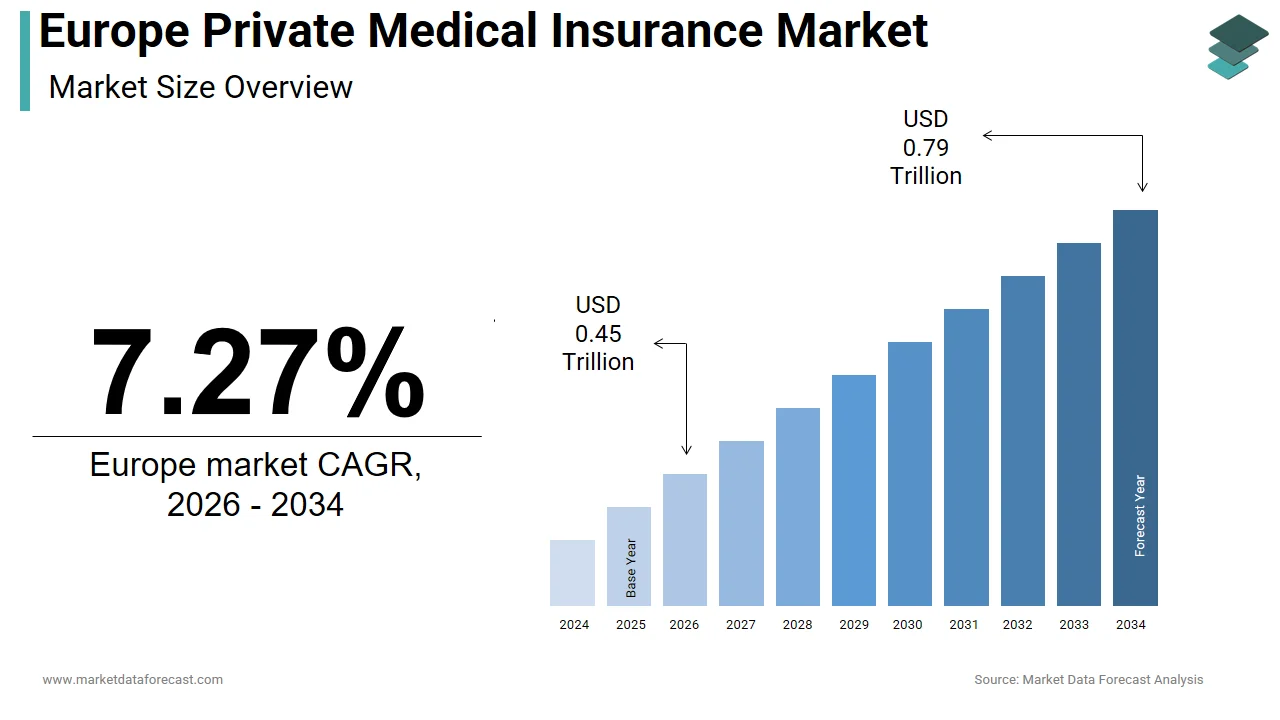
The Europe private medical insurance market was valued at USD 0.42 trillion in 2025, is estimated to reach USD 0.45 trillion in 2026, and is projected to reach USD 0.79 trillion by 2034, growing at a CAGR of 7.27% from 2026 to 2034. Market growth is driven by increasing demand for faster access to healthcare services, rising healthcare costs, and growing preference for personalized medical coverage across Europe. Private medical insurance complements public healthcare systems by offering shorter waiting times, wider provider choice, and enhanced service quality. Additionally, the rising burden of chronic diseases, aging populations, and increasing awareness of health insurance benefits are further supporting the expansion of the market across the region.
Key Market Trends
- Increasing demand for faster access to healthcare and reduced waiting times.
- Rising adoption of complementary private insurance alongside public healthcare systems.
- Growing prevalence of chronic diseases and aging population across Europe.
- Expansion of digital health services and telemedicine integration in insurance plans.
- Increasing focus on personalized and flexible health insurance coverage.
Segmental Insights
- Based on type, the individual health insurance segment dominated the Europe private medical insurance market by accounting for 44.7% share in 2025, driven by rising consumer awareness and demand for customized health coverage.
- Based on provider, the private providers segment held the largest share of 81.8% in 2025, supported by the strong presence of private insurers offering diverse healthcare plans.
- Based on distribution channel, the brokers and agents segment led the market with 54.7% share in 2025, driven by the importance of advisory services in selecting suitable insurance policies.
Regional Insights
The Europe private medical insurance market is experiencing steady growth across major countries due to evolving healthcare systems, increasing demand for private healthcare access, and supportive regulatory frameworks.
- The United Kingdom led the regional market in 2025 with 27.7% share, supported by its well-established dual healthcare system where private insurance complements the National Health Service.
- Germany holds a significant share due to its strong private health insurance framework and high-income population segments opting for private coverage.
- France is expected to maintain a prominent position during the forecast period due to the widespread adoption of complementary private health insurance systems, commonly known as mutuelles.
Competitive Landscape
The Europe private medical insurance market is highly competitive, with the presence of global insurance providers and regional healthcare insurers offering a wide range of medical coverage plans. Market participants are focusing on expanding service offerings, integrating digital health solutions, and enhancing customer experience through personalized insurance products. Strategic partnerships, mergers and acquisitions, and investments in digital healthcare platforms are shaping competitive dynamics across the region.
Prominent companies operating in the Europe private medical insurance market include UnitedHealth Group, Anthem Inc., Aetna Inc., Cigna Corporation, Humana Inc., Kaiser Permanente, Blue Cross Blue Shield Association, Allianz SE, AXA Group, Bupa, Aviva, Prudential plc, AIA Group Limited, Zurich Insurance Group, MetLife Inc., Ping An Insurance, China Life Insurance, Munich Re Group, Generali Group, and Manulife Financial Corporation.
Europe Private Medical Insurance Market Size
The size of the Europe private medical insurance market was worth USD 0.42 trillion in 2025. The regional market is anticipated to grow at a CAGR of 7.27% from 2026 to 2034 and be worth USD 0.79 trillion by 2034 from USD 0.45 trillion in 2026.
Private medical insurance functions as a critical supplementary mechanism within the continental healthcare ecosystem, providing expedited access to diagnostics, elective procedures, and enhanced patient amenities that tax-funded public systems frequently ration. This sector operates on a voluntary premium basis, distinct from mandatory state schemes, and serves as a strategic buffer against systemic bottlenecks. The urgency for such coverage intensifies as public infrastructures face unprecedented strain due to demographic shifts. According to Eurostat, the proportion of the European population aged 65 and older has risen in recent years, which is creating sustained pressure on national health services. Furthermore, as per the World Health Organization, chronic noncommunicable diseases account for the majority of deaths across the European region, which is requiring long-term management strategies that often exceed standard public provisions. According to the European Commission, out-of-pocket health expenditures remain a significant burden for households in several member states, which is driving the search for financial protection mechanisms. The market thus evolves from a luxury service into a necessary component for ensuring continuity of care amidst evolving disease profiles that challenge the capacity of tax-funded models to deliver timely interventions for the entire populace.
MARKET DRIVERS
Escalating Public Sector Waiting Times Fuelling Demand for Expedited Care
Prolonged waiting periods for elective surgeries and specialist consultations within tax-funded national health services is majorly driving the European private medical insurance market growth. Patients facing delays that extend into months or even years increasingly view private coverage as an essential mechanism to secure timely intervention and prevent condition deterioration. According to the Organisation for Economic Co-operation and Development, average waiting times for certain procedures in European nations remain lengthy, compelling patients to seek faster alternatives. As per the Commonwealth Fund, a notable proportion of patients in countries with predominantly public systems report waiting extended periods for specialist appointments, which directly correlates with rising policy uptake among middle- and upper-income demographics. Insurers leverage this disparity by guaranteeing appointments within days rather than months, a value proposition that resonates deeply with employed individuals who cannot afford extended absence from work due to health issues.
Rising Prevalence of Chronic Diseases Driving Comprehensive Coverage Needs
The escalating burden of chronic noncommunicable diseases across the European continent fundamentally alters the risk profile of the population, which is compelling individuals to seek private medical insurance for comprehensive management solutions and is further boosting the expansion of the regional market. Conditions such as cardiovascular disorders, diabetes, and oncological diseases require continuous monitoring, advanced pharmaceuticals, and specialized interventions that often stretch the resources of universal public schemes. According to the World Health Organization, chronic diseases are responsible for the majority of premature deaths in the European region, creating a persistent demand for high-quality ongoing care. As per Eurostat, cancer diagnoses have risen steadily, necessitating access to cutting-edge therapies and personalized treatment plans that may not be immediately available in every public hospital. Private insurers respond by offering policies that cover novel biologics, genetic testing, and rapid access to oncology specialists, features that are increasingly non-negotiable for patients facing life-threatening diagnoses.
MARKET RESTRAINTS
Stringent Regulatory Frameworks Limiting Product Flexibility and Pricing
The highly regulated nature of the European insurance landscape imposes significant constraints on product innovation and pricing strategies, which is a substantial restraint on market expansion. National authorities and European Union directives enforce strict solvency requirements and consumer protection laws that limit the ability of insurers to tailor policies to niche segments or adjust premiums dynamically based on emerging risk data. According to the European Insurance and Occupational Pensions Authority, capital adequacy standards under the Solvency II regime increase operational costs and reduce the agility of providers to launch competitive products rapidly. As per the European Commission, regulatory fragmentation across different countries requires insurers to maintain distinct compliance frameworks for each jurisdiction, inflating administrative overheads and slowing down the rollout of unified cross-border solutions. This rigidity stifles the development of flexible micro-insurance products or usage-based models that could attract younger demographics.
High Premium Costs Excluding Price Sensitive Demographic Segments
The prohibitive cost of private medical insurance premiums remains a formidable barrier preventing widespread adoption among price-sensitive populations, particularly in Southern and Eastern European economies where disposable incomes are comparatively lower, which is further impacting the regional market growth negatively. Despite the clear benefits of reduced waiting times and enhanced comfort, the financial burden of monthly or annual premiums places comprehensive coverage out of reach for a significant portion of the workforce. According to the European Central Bank, household disposable income varies drastically across the union, with individuals in lower income brackets spending a disproportionate percentage of their earnings on essential living costs. As per Eurostat, poverty risk rates in several member states remain high, suggesting that a large segment of the population prioritizes immediate subsistence over long-term health security investments. Insurers face the dilemma of setting premiums high enough to cover the rising costs of advanced medical treatments and administrative compliance while remaining affordable enough to attract a broad customer base. This disconnects results in a market heavily skewed toward corporate clients and high net worth individuals, which is limiting organic growth from the retail sector.
MARKET OPPORTUNITIES
Integration of Artificial Intelligence for Personalized Risk Assessment and Pricing
The incorporation of artificial intelligence and big data analytics offers a promising opportunity for the European private medical insurance market by enabling hyper-personalized risk assessment and dynamic pricing models. Traditional actuarial methods rely on historical aggregates, often resulting in broad risk pools that do not accurately reflect individual health behaviors or real-time physiological data. AI-driven platforms can process information from wearable devices, electronic health records, and lifestyle apps to create precise health profiles, allowing insurers to offer tailored premiums that reward healthy behaviours. According to the European Society of Cardiology, the adoption of digital health tools has surged, with many Europeans now using connected devices that track heart rate, sleep patterns, and physical activity levels. This data richness allows insurers to shift from a reactive claims model to a proactive wellness partnership, intervening before minor issues escalate into costly claims. As per industry analysis, predictive analytics can reduce claims expenses through early detection and prevention strategies. Furthermore, this technological leap facilitates the creation of on-demand insurance products that cater to gig economy and freelance workers who require flexible coverage durations.
Expansion of Corporate Wellness Programs Driving Group Policy Adoption
The growing emphasis on employee well-being and productivity within the corporate sector offers a substantial avenue for growth in the European private medical insurance market. Companies increasingly recognize that healthy employees are more productive and that providing comprehensive health benefits is a key differentiator in attracting and retaining top talent in a competitive labor market. According to the European Foundation for the Improvement of Living and Working Conditions, work-related stress and musculoskeletal disorders are among the leading causes of absenteeism, prompting employers to invest in preventive health measures and rapid access to care. Private medical insurance serves as a cornerstone of these wellness strategies by offering employees immediate access to mental health support, physiotherapy, and diagnostic screenings that reduce downtime. As per Eurofound, a growing proportion of large enterprises in Western Europe now include private health coverage as part of their standard benefits package, with adoption steadily rising in Central and Eastern European markets. This trend is amplified by the post-pandemic shift in workplace dynamics, where health security has become a paramount concern for the workforce.
MARKET CHALLENGES
Cybersecurity Threats Compromising Sensitive Health Data Integrity
The escalating frequency and sophistication of cyberattacks pose a critical challenge to the Europe private medical insurance market by threatening the integrity of sensitive personal health information and eroding consumer trust. Insurers accumulate vast repositories of highly confidential data, including medical histories, genetic information, and financial details, making them prime targets for ransomware gangs and state-sponsored hackers. According to the European Union Agency for Cybersecurity, the healthcare sector has experienced a sharp increase in cyber incidents, with attacks on associated insurance providers rising in parallel due to the interconnected nature of digital health ecosystems. As per ENISA, the average cost of a data breach in the European financial and insurance sectors has risen significantly, forcing companies to divert substantial resources toward defense mechanisms rather than product innovation. The challenge is compounded by the increasing reliance on third-party vendors for cloud storage and telemedicine platforms, which expands the attack surface and introduces additional vulnerabilities.
Fragmented Healthcare Systems Hindering Cross-Border Standardization
The profound fragmentation of healthcare systems across European nations presents a formidable obstacle to the development of standardized cross-border private medical insurance products, which is further challenging the regional market growth. Each country maintains its own distinct regulatory framework, reimbursement protocols, and medical coding systems, which is making it difficult for insurers to offer seamless coverage that travels with the policyholder throughout the continent. According to the European Commission, despite efforts toward digital health integration, significant disparities remain in how medical services are delivered and billed, complicating the administration of international claims. As per the European Observatory on Health Systems and Policies, the lack of harmonization leads to administrative inefficiencies and higher operational costs for insurers attempting to operate in multiple jurisdictions. This fragmentation limits the mobility of the European workforce, as individuals often lose their private coverage benefits when relocating for work or retirement to another member state. Divergent national laws regarding pre-existing conditions and mandatory coverage elements force insurers to maintain separate product lines for each market, preventing economies of scale. Until a more unified approach to health data exchange and regulatory alignment is achieved, the market will remain siloed, restricting the potential for truly pan-European insurance solutions.
REPORT COVERAGE
| REPORT METRIC | DETAILS |
| Market Size Available | 2025 to 2034 |
| Base Year | 2025 |
| Forecast Period | 2026 to 2034 |
| Segments Covered | By Type, Provider, Distribution Channel, End-User, and Country. |
| Various Analyses Covered | Global, Regional, and Country-Level Analysis, Segment-Level Analysis, Drivers, Restraints, Opportunities, Challenges; PESTLE Analysis; Porter’s Five Forces Analysis, Competitive Landscape, Analyst Overview of Investment Opportunities |
| Countries Covered | UK, France, Spain, Germany, Italy, Russia, Sweden, Denmark, Switzerland, Netherlands, Turkey, Czech Republic, and the Rest of Europe. |
| Market Leaders Profiled | UnitedHealth Group, Anthem Inc., Aetna Inc., Cigna Corporation, Humana Inc., Kaiser Permanente, Blue Cross Blue Shield Association, Allianz SE, AXA Group, Bupa, Aviva, Prudential plc, AIA Group Limited, Zurich Insurance Group, MetLife Inc., Ping An Insurance, China Life Insurance, Munich Re Group, Generali Group, Manulife Financial Corporation, and Others. |
SEGMENTAL ANALYSIS
By Type Insights
The individual health insurance segment led the market by accounting for 44.7% of the European market share in 2025. The growth of the individual health insurance segment in the European market is driven by the flexibility it offers to self-employed professionals and those seeking coverage beyond employer-provided schemes. The rising number of freelancers and gig economy workers who lack access to corporate group plans is further contributing to the expansion of the individual health insurance segment in this regional market. According to Eurostat, millions of self-employed individuals in the European Union create a vast addressable market for standalone policies. Furthermore, increasing awareness of health security among the middle class drives demand. As per the European Commission, a significant portion of Europeans express concern about their ability to afford healthcare costs in the event of serious illness, which is prompting them to secure individual protection. The ability to customize coverage levels allows policyholders to align premiums with specific budget constraints while ensuring access to private facilities.
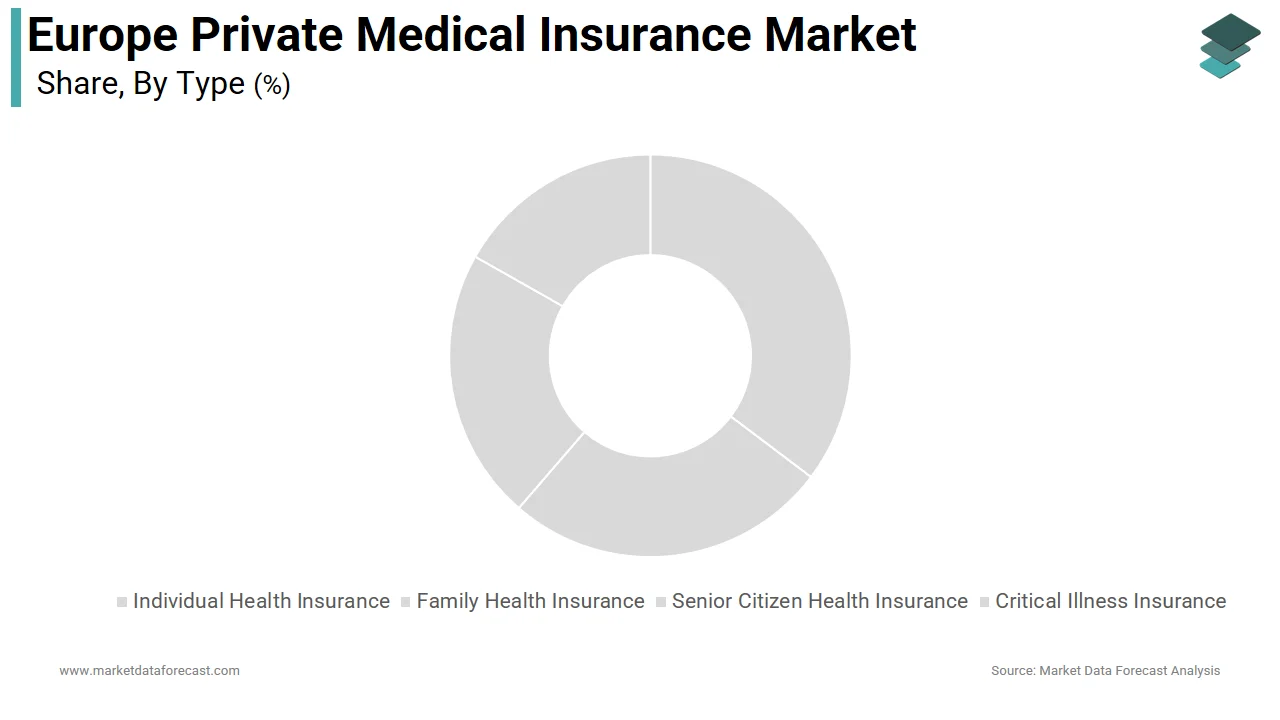
On the other hand, the senior citizen health insurance segment is projected to be the fastest growing segment and expand at a CAGR of 9.12% over the forecast period. The rapid aging of the European demographic profile and the specific health needs of the elderly population are primarily driving the senior citizen health insurance segment in the European market. According to Eurostat, the share of people aged 65 and above in the EU is expected to rise significantly by 2050, which is creating unprecedented demand for policies covering age-related ailments. As per the World Health Organization, individuals over 60 account for a large share of the total disease burden in Europe, which is requiring comprehensive coverage for chronic management and mobility issues. Insurers are responding by launching tailored products that cover hearing aids, dental care, and home nursing, which are often excluded from standard policies.
By Provider Insights
The private providers segment held the overwhelming majority of the share of the regional market with 81.8% of the regional market share in 2025. The dominance of private providers segment in the European market is attributed to their agility in product innovation and extensive network of hospitals. The core strength of this segment lies in its ability to negotiate directly with private hospital chains to offer reduced waiting times and superior amenities. The investment capacity of private insurers to integrate advanced technologies into their service delivery is further boosting the expansion of the private providers segment in the regional market. According to the European Insurance and Occupational Pensions Authority, private insurers have significantly increased their digital spending to streamline claims processing. As per the European Hospital and Healthcare Federation, private insurers maintain contracts with a large proportion of private clinics across major European capitals, ensuring wide accessibility for policyholders. Unlike public entities bound by statutory mandates, private providers can rapidly adapt to emerging health trends such as mental health coverage and wellness programs.
However, the public providers offering supplementary private schemes segment is experiencing the fastest growth and is predicted to grow at a CAGR of 7.4% over the forecast period. The government initiatives to alleviate pressure on state systems by encouraging semi-private top-up plans and the legislative push in several nations to introduce mandatory or subsidized supplementary coverage are propelling the expansion of the segment in this regional market. For instance, France mandates complementary health insurance for all employees, a model being studied in other regions. According to the Organisation for Economic Co-operation and Development, countries with strong public supplementary schemes have seen rising enrollment due to tax incentives. As per the European Commission, public trust in state-affiliated health funds remains high in many member states, providing a stable base for expansion.
By Distribution Channel Insights
The brokers and agents segment had the major share of 54.7% of the regional market share in 2025. The growth of brokers and agents segment in the European market is attributed to the complexity of insurance products and the need for personalized advice. The intricacy of policy terms, exclusions, and coverage limits makes professional intermediation essential for many consumers, which is further aiding the dominance of brokers and agents segment in this regional market. According to the European Insurance Intermediaries Association, a majority of policyholders prefer face-to-face consultations to ensure they fully understand the scope of their coverage. Additionally, brokers play a crucial role in the corporate sector where group policies require complex negotiation and customization. As per the International Employee Benefits Association, most large corporations in Europe utilize brokers to structure their employee health benefits.
However, the online distribution channel segment is registering the highest growth and is estimated to register a CAGR of 10.4% over the forecast period due to the digital transformation of consumer behavior and the rise of Insurtech and the increasing comfort of younger demographics with digital purchasing journeys. According to Eurostat, a large majority of individuals in the EU use the internet for personal purposes, with many comfortable conducting financial transactions online. As per the European Consumer Organisation, the use of online comparison tools for insurance has grown rapidly, empowering consumers to find competitive rates instantly. Insurers are capitalizing on this by offering exclusive discounts for online purchases and utilizing artificial intelligence to provide instant quotes. This channel appeals to the tech-savvy generation who prioritize speed and transparency, making online distribution the most dynamic and rapidly expanding route to market.
COUNTRY LEVEL ANALYSIS
United Kingdom Private Medical Insurance Market Analysis
The United Kingdom stood as the largest and most mature market for private medical insurance in Europe with 27.7% of the regional market share in 2025 due to the well-established dual system where private coverage acts as a direct alternative to the National Health Service primarily. In addition, the persistent strain on the NHS that has led to record-breaking waiting lists is further boosting the dominance of the UK in the European market. According to the King's Fund, millions of people are currently waiting for routine hospital treatment in England, prompting a mass migration toward private options. Furthermore, the corporate sector in the UK heavily utilizes private health insurance as a standard employee benefit. As per the Confederation of British Industry, a significant proportion of medium to large enterprises provide private medical cover to their staff to ensure workforce productivity and retention. The presence of major global insurers and a sophisticated regulatory environment under the Financial Conduct Authority fosters a competitive landscape. The cultural acceptance of private care among the middle and upper classes, combined with public sector delays, ensures the UK remains the undisputed leader in regional market volume and penetration.
Germany Private Medical Insurance Market Analysis
Germany accounted for a promising share of the European private medical insurance market in 2025. The growth of Germany in the European market can be credited to a unique statutory and private dual insurance system. The market is robust, driven by a legal framework that allows high earners and self-employed individuals to opt out of public insurance entirely in favor of private coverage. A key driving factor is the income threshold mechanism which automatically expands the eligible pool for private insurance as wages rise. According to the Federal Statistical Office of Germany, wage growth has pushed additional employees above the mandatory insurance limit, swelling the private subscriber base. Additionally, the comprehensiveness of private plans in Germany, which often includes single-room hospitalization and access to chief physicians, creates a strong value proposition. As per the German Insurance Association, private insurers cover millions of people, representing a significant portion of the population. The high quality of care and perception of superior service sustain high retention rates, cementing Germany’s role as a powerhouse in the regional market.
France Private Medical Insurance Market Analysis
France is estimated to hold a prominent share of the European private medical insurance market during the forecast period due to the near-universal adoption of complementary private health insurance known as "mutuelles." The market is unique because private coverage is effectively mandatory for most of the working population due to government legislation. The principal driver is the "Loi ANI" reform which made complementary health insurance compulsory for all private sector employees. According to the French Ministry of Health, this mandate resulted in coverage rates exceeding the vast majority of the population, creating a massive and stable market base. Another significant factor is the reimbursement gap in the public system, which typically covers only a portion of standard medical costs, leaving the remainder to be covered by private top-up plans. Data from the National Health Insurance Fund highlights that out-of-pocket expenses for dental and optical care remain high, driving continuous demand for enhanced private packages. The market is highly fragmented with numerous mutual societies competing alongside commercial insurers. This legislative backbone combined with the necessity to cover remaining medical costs ensures France maintains a high-volume market with consistent growth potential.
Switzerland Private Medical Insurance Market Analysis
Switzerland is expected to exhibit a healthy CAGR in the European private medical insurance market during the forecast period. Switzerland represents a highly specialized and high-value market and is defined by the mandatory nature of basic health insurance which is provided exclusively by private companies, creating a fully privatized foundational layer. The legal requirement under the Federal Health Insurance Act that every resident must purchase basic coverage from a private insurer is driving the market growth in Switzerland. According to the Swiss Federal Office of Public Health, expenditure on health insurance premiums constitutes a significant portion of household budgets, yet compliance remains near universal due to strict enforcement. Furthermore, the high cost of medical services in Switzerland necessitates robust insurance coverage. As per the World Health Organization, per capita health spending in Switzerland is among the highest in Europe, driving premium volumes significantly higher than in neighbouring countries. The competitive landscape forces insurers to differentiate through customer service and supplementary add-on products. This unique model where the state mandates private provision ensures a stable and lucrative market environment, making Switzerland a critical hub for high premium revenue within the region.
Italy Private Medical Insurance Market Analysis
Italy serves as a key emerging market within the Southern European region with growth accelerating due to fiscal incentives and public system pressures. The market is transitioning from a niche luxury to a broader necessity as public resources tighten. A major driving factor is the introduction of tax deductions for health insurance premiums, which has stimulated demand among the self-employed and small business owners. According to the Italian National Institute of Statistics, the utilization of these tax breaks has increased in recent years, indicating a growing willingness to invest in private coverage. Additionally, the disparity in healthcare quality between Northern and Southern Italy drives residents in the south to seek private alternatives for reliable care. The Italian Ministry of Health reports that waiting times for diagnostic imaging and specialist visits in the public sector have lengthened considerably, pushing patients toward private solutions. The rise of collective bargaining agreements that include health funds for workers is also expanding the base. These economic and structural shifts are transforming the Italian landscape, positioning it as a high-growth territory where private insurance is increasingly viewed as an essential component of personal financial planning.
COMPETITIVE LANDSCAPE
The competition within the Europe private medical insurance market is characterized by intense rivalry among established multinational giants and agile regional specialists who vie for market share through innovation and service differentiation. Major incumbents leverage their extensive capital reserves and broad provider networks to offer comprehensive coverage packages that appeal to corporate clients and high net worth individuals. However, the emergence of digital native insurers and insurtech startups has disrupted traditional dynamics by introducing user friendly platforms and transparent pricing models that attract younger demographics. Regulatory fragmentation across European nations creates a complex battlefield where local knowledge and compliance expertise serve as significant competitive advantages. Companies are increasingly competing on the quality of digital experiences and the breadth of wellness services rather than price alone. The race to integrate advanced technologies like telemedicine and predictive analytics has become a defining feature of the landscape. This environment fosters continuous evolution as providers strive to balance profitability with the growing consumer expectation for personalized and accessible healthcare solutions.
KEY MARKET PLAYERS
The leading companies operating in the Europe private medical insurance market include:
- UnitedHealth Group
- Anthem Inc.
- Aetna Inc.
- Cigna Corporation
- Humana Inc.
- Kaiser Permanente
- Blue Cross Blue Shield Association
- Allianz SE
- AXA Group
- Bupa
- Aviva
- Prudential plc
- AIA Group Limited
- Zurich Insurance Group
- MetLife Inc.
- Ping An Insurance
- China Life Insurance
- Munich Re Group
- Generali Group
- Manulife Financial Corporation
TOP PLAYERS IN THE MARKET
- Allianz SE stands as a preeminent force in the European private medical insurance landscape, leveraging its vast global network to deliver comprehensive health solutions across multiple jurisdictions. The company contributes significantly to the global market by integrating advanced digital health tools and telemedicine services into its core offerings, setting industry standards for customer engagement. Recently, Allianz has strengthened its position by launching innovative wellness programs that utilize artificial intelligence to personalize health advice and preventive care for policyholders. These initiatives focus on reducing long term claims costs while improving member health outcomes. The firm actively partners with leading healthcare providers to ensure seamless access to high quality medical facilities. By emphasizing sustainability and digital transformation, Allianz continues to redefine the value proposition of private health insurance, ensuring it remains resilient against evolving demographic challenges and regulatory shifts within the complex European environment.
- AXA Group operates as a dominant entity in the Europe private medical insurance sector, renowned for its strategic focus on prevention and partnership driven care models. Globally, the company influences market trends by pioneering integrated health ecosystems that connect insurers, providers, and patients through unified digital platforms. Recent actions to solidify its market standing include the expansion of its "Health Partner" network, which facilitates direct billing and coordinated care pathways for members across borders. AXA has also invested heavily in data analytics to predict health risks and intervene early, thereby enhancing the efficiency of its insurance products. The group frequently acquires niche health tech startups to incorporate cutting edge solutions like remote monitoring and mental health support apps into its portfolio. These moves demonstrate a commitment to evolving from a mere payer to a proactive health partner, addressing the growing demand for holistic and accessible healthcare services throughout the European continent.
- Generali Group maintains a robust presence in the Europe private medical insurance market, distinguished by its customer centric approach and extensive distribution network. On the global stage, Generati contributes by developing flexible insurance products that cater to diverse demographic needs, ranging from individual plans to comprehensive corporate schemes. To reinforce its market position, the company recently launched a series of digital first insurance products designed to appeal to younger, tech savvy consumers who prioritize speed and transparency. Generati has also forged strategic alliances with major hospital chains to offer exclusive benefits and reduced waiting times for its policyholders. The firm emphasizes wellness and prevention through its "Vitality" program, which rewards healthy behaviors with premium discounts and lifestyle perks. By continuously innovating its service delivery models and expanding its digital capabilities, Generati ensures it remains competitive and responsive to the dynamic health requirements of the European population.
TOP STRATEGIES USED BY KEY MARKET PARTICIPANTS
Key players in the Europe private medical insurance market primarily employ strategies centered on digital transformation and ecosystem integration to maintain competitiveness. Insurers are aggressively investing in artificial intelligence and big data analytics to refine risk assessment models and personalize premium pricing structures. Another prevalent strategy involves forming strategic partnerships with healthcare providers and technology firms to create seamless care pathways that reduce administrative friction. Companies are also focusing on wellness and prevention programs to lower long term claim costs and enhance customer retention rates. Expansion into niche segments such as senior care and mental health coverage allows providers to address specific demographic demands effectively. Furthermore, mergers and acquisitions remain a critical tool for consolidating market presence and acquiring innovative health tech capabilities. These collective efforts aim to shift the business model from reactive claims processing to proactive health management, ensuring sustainable growth in a highly regulated environment.
MARKET SEGMENTATION
This research report on the Europe private medical insurance market has been segmented and sub-segmented into the following categories.
By Type
- Individual Health Insurance
- Family Health Insurance
- Senior Citizen Health Insurance
- Critical Illness Insurance
- Others
By Provider
- Public
- Private
By Distribution Channel
- Direct Sales
- Brokers/Agents
- Bancassurance
- Online
By End-User
- Individuals
- Corporates
By Country
- United Kingdom
- France
- Spain
- Germany
- Italy
- Russia
- Sweden
- Denmark
- Switzerland
- Netherlands
- Rest of Europe