Europe Pumpkin Seeds Market Size, Share, Trends & Growth Forecast Report, Segmented By Product Type (Pumpkin Seed Oil, Pumpkin Seed Extracts, Pumpkin Seed Flour, Roasted Pumpkin Seeds, Raw Pumpkin Seeds), Category, Application, And Country (Uk, France, Spain, Germany, Italy, Russia, Sweden, Denmark, Switzerland, Netherlands, Turkey, Czech Republic & Rest Of Europe) - Industry Analysis From (2026 To 2034)
Market Size, 2025
$0.43 BnMarket Estimate, 2026
$0.46 BnMarket Forecast, 2034
$0.78 BnCAGR, 2026–2034
6.82%Europe Pumpkin Seeds Market Report Summary
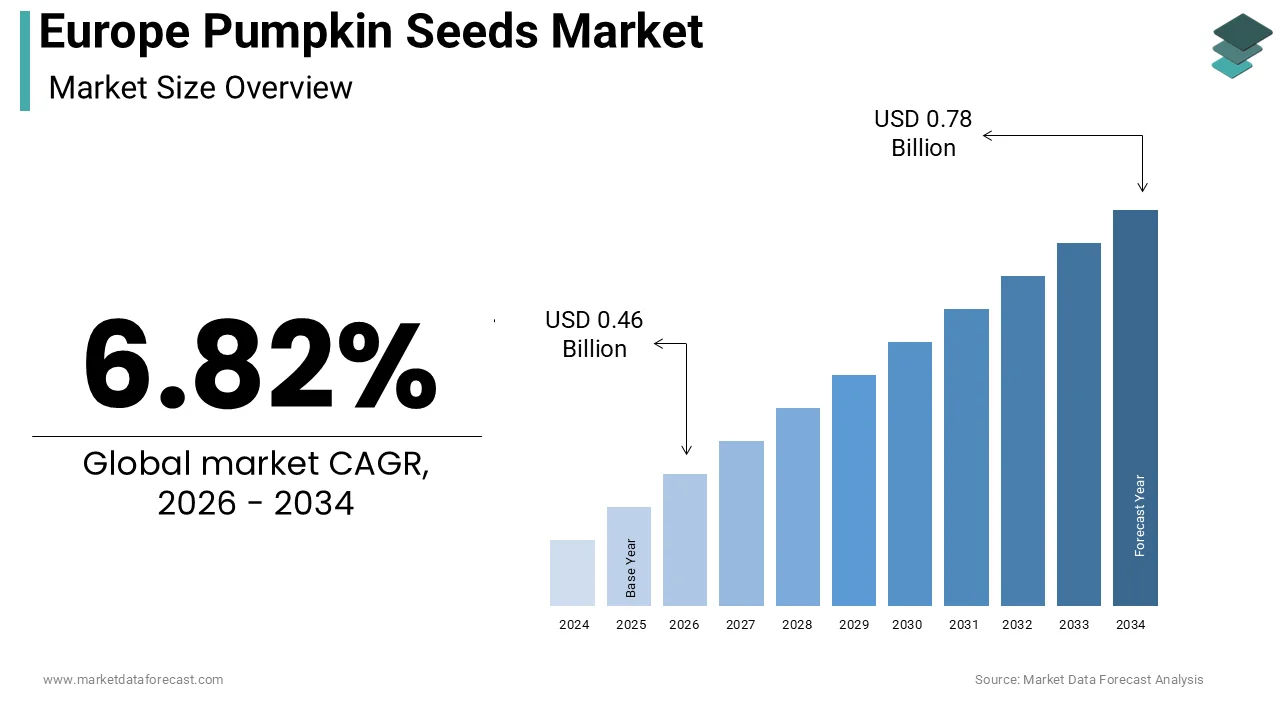
The Europe pumpkin seeds market was valued at USD 0.43 billion in 2025, is estimated to reach USD 0.46 billion in 2026, and is projected to reach USD 0.78 billion by 2034, growing at a CAGR of 6.82% during the forecast period. The growth of the Europe pumpkin seeds market is driven by increasing consumer demand for healthy snacks, rising awareness of the nutritional benefits of seeds, and the growing popularity of plant-based diets. Pumpkin seeds are rich in protein, healthy fats, fiber, and essential minerals, making them a preferred choice among health-conscious consumers. The market is further supported by the rising incorporation of pumpkin seeds in food products such as bakery items, cereals, salads, and snacks. Additionally, the growing demand for organic and clean-label food products, along with expanding retail availability, is contributing to steady market growth across Europe.
Key Market Trends
- Increasing demand for healthy and nutrient-rich snacks is boosting pumpkin seed consumption.
- Rising adoption of plant-based and vegan diets is supporting the use of seeds as a protein source.
- Growing use of pumpkin seeds in bakery, cereals, salads, and functional foods.
- Expansion of organic and clean-label product offerings, enhancing consumer appeal.
- Increasing availability through supermarkets, health stores, and online retail channels.
Segmental Insights
- Based on product type, the roasted pumpkin seeds segment dominated the Europe pumpkin seeds market by accounting for 42.3% of the market share in 2025, driven by their convenience, enhanced flavor, and popularity as a ready-to-eat snack.
- Based on category, the conventional segment held a significant share of the Europe pumpkin seeds market in 2025, supported by its affordability and wide availability across retail channels.
- Based on application, the food and beverage segment accounted for a major share of the Europe pumpkin seeds market in 2025, owing to their extensive use in processed foods, snacks, and health-oriented products.
Regional Insights
- Austria dominated the Europe pumpkin seeds market in 2025, accounting for 28.3% of the regional market share, driven by its strong tradition of pumpkin seed cultivation and production of pumpkin seed oil.
- Germany held 22.3% of the Europe pumpkin seeds market share in 2025, supported by high demand for healthy snack products and strong retail distribution.
- Hungary is expected to grow steadily, owing to its extensive agricultural land dedicated to oilseed pumpkins and its role as a key supplier within Europe.
- France is projected to witness the fastest growth, driven by increasing demand for organic and health-focused food products.
- Italy is experiencing growth, supported by the integration of pumpkin seeds into the Mediterranean diet as a source of healthy fats and nutrients.
Competitive Landscape
The Europe pumpkin seeds market is moderately competitive, with the presence of global agribusiness companies, food manufacturers, and regional organic producers. Market players are focusing on product innovation, organic certifications, and expanding distribution networks to strengthen their market presence. Strategic partnerships and investments in sustainable agriculture practices are key strategies adopted by leading companies.
Prominent players in the Europe pumpkin seeds market include Archer Daniels Midland Company, Cargill Incorporated, Olam Group, SunOpta Inc, Naturkost Übelhör GmbH & Co. KG, Bio Planet S.A, The Hain Celestial Group, Inc, NOW Foods, Bob’s Red Mill Natural Foods, Inc, Woodland Foods, PepsiCo, Inc, Conagra Brands, Inc, Kanegrade Ltd, Bioriginal Food & Science Corp, and A.Vogel AG.
Europe Pumpkin Seeds Market Size
The Europe pumpkin seeds market size was calculated to be USD 0.43 billion in 2025 and is anticipated to be worth USD 0.78 billion by 2034, from USD 0.46 billion in 2026, growing at a CAGR of 6.82% during the forecast period.
The pumpkin seeds are the cultivation, processing, distribution, and consumption of Cucurbita pepo kernels, valued for their distinct green color, nutty flavor, and dense nutritional profile comprising magnesium, zinc, and healthy fats. As per Eurostat, the European Union dedicated approximately 140000 hectares to pumpkin cultivation in 2023, with Austria, Hungary, and Slovenia serving as primary hubs for specialized oilseed varieties. The region's culinary heritage plays a pivotal role, with data from the European Commission indicating that traditional food products containing pumpkin seeds enjoy protected geographical status in several member states, fostering local economic resilience. Consumer behavior is increasingly shifting toward functional foods, driven by a growing awareness of plant-based nutrition.
MARKET DRIVERS
Escalating Demand for Plant-Based Protein and Nutrient Density
The surging adoption of plant-based diets and the specific search for nutrient-dense superfoodsares accelerating the growth of Europe's pumpkin seeds market. Consumers are increasingly replacing animal proteins with plant sources that offer comprehensive amino acid profiles and essential micronutrients like magnesium and iron. According to the European Plant-Based Foods Association, the market for plant-based protein sources grew by 22% in 2024, with seeds gaining traction due to their versatility in salads, baking, and smoothies. Pumpkin seeds are uniquely positioned in this narrative due to their high zinc content, which supports immune function, a key concern for post-pandemic consumers. Data from the European Food Information Council indicates that 67% of European shoppers now prioritize foods with high mineral content when making purchasing decisions. The rise of "flexitarian" lifestyles has further amplified demand, as individuals seek convenient ways to boost their daily nutrient intake without drastic dietary overhauls.
Integration into Traditional Culinary Practices and Gourmet Trends
The deep-rooted presence of pumpkin seeds in Central European cuisine, combined with their emergence as a gourmet ingredient in fine dining, significantly propels market growth across the continent. In regions like Styria in Austria and Prekmurje in Slovenia, pumpkin seed oil and roasted kernels are staples, creating a consistent baseline demand that extends to neighboring countries. The modern chefs are leveraging the vibrant green color and crunchy texture of pumpkin seeds to elevate dishes, using them as garnishes for soups, toppings for artisanal breads, and ingredients in premium confectionery. Data from the Mintel Global New Products Database reveals that launches of bakery and confectionery products featuring pumpkin seeds in Europe increased by 19% in 2024, reflecting a trend toward visual appeal and textural contrast. The versatility of the seed allows it to bridge the gap between rustic comfort food and high-end gastronomy. This dual driver of cultural fidelity and culinary innovation ensures that pumpkin seeds remain relevant across diverse meal occasions and demographic segments.
MARKET RESTRAINTS
Vulnerability to Climate Variability and Agricultural Yield Fluctuations
The heavy reliance on agricultural outputs that are highly susceptible to changing climate patterns and extreme weather events is limiting the growth of Europe pumpkin seeds market. Pumpkins require specific growing conditions, including warm temperatures and adequate rainfall during growth stages, making yields volatile in the face of increasing droughts and unseasonal frosts. This supply instability leads to sharp price fluctuations that can deter price-sensitive consumers and disrupt long-term contracts between processors and retailers. Data from the European Farmers Association indicates that yield variability for oilseed pumpkins has increased over the last five years, forcing importers to seek alternative sources outside the EU, which complicates logistics and increases carbon footprints. The concentration of production in specific regions like Austria and Hungary exacerbates the risk, as a localized weather event can ripple through the entire continental supply chain. This inherent agricultural vulnerability creates an environment of uncertainty that hampers steady market expansion and complicates inventory planning for manufacturers.
High Processing Costs and Labor-Intensive Extraction Methods
The intricate and labor-intensive process required to extract, clean, and roast pumpkin seeds is also hindering the growth of Europe pumpkin seeds market. Unlike many other nuts and seeds, pumpkin seeds often require manual or semi-automated separation from the fibrous pulp, followed by rigorous washing and drying to prevent mold and ensure quality, processes that are energy and time-consuming. According to the European Food Processing Federation, the cost of labor and energy for seed processing has risen by 18% in 2024, squeezing margins for small and medium-sized enterprises that dominate the sector. The need for specialized machinery to hull certain varieties or produce uniform roasted kernels represents a significant capital expenditure that many smaller producers cannot afford. Furthermore, strict hygiene standards mandated by the European Food Safety Authority require extensive quality control measures, adding layers of administrative and operational costs. These economic barriers limit the ability of the supply side to scale up rapidly in response to growing demand, thereby restraining overall market growth.
MARKET OPPORTUNITIES
Development of Value-Added Derivatives and Functional Ingredients
The transformation of pumpkin seeds into high-value derivatives, such as cold-pressed oil, gluten-free flour, and protein isolates, is likely to create new opportunities for the growth of Europe pumpkin seeds market. As the functional food and beverage sector grows, manufacturers are seeking natural ingredients that offer both nutritional benefits and technical functionality in formulations. Companies can leverage this trend by developing specialized ingredients for sports nutrition bars, dairy alternatives, and baked goods. Statistics from the Cosmetic Ingredients Review indicate an increase in the use of pumpkin seed oil in skincare formulations due to its antioxidant content. By diversifying into these value-added categories, producers can mitigate the risks associated with raw commodity price volatility and capture higher value from each kilogram of harvested seeds.
Expansion of Organic and Regenerative Agriculture Certifications
The growing consumer preference for organically produced and sustainably sourced foods to differentiate itself and command premium pricing is greatly influencing the growth of Europe pumpkin seeds market. As environmental awareness rises, shoppers are increasingly willing to pay more for products that support biodiversity, soil health, and chemical-free farming practices. According to the Research Institute of Organic Agriculture, the organic farmland area in Europe expanded by 5% in 2024, with pumpkin cultivation being a key beneficiary due to its compatibility with crop rotation systems. Producers who obtain organic certification or adopt regenerative agriculture practices can access niche markets and secure contracts with high-end retailers who prioritize sustainability. The European Union's Farm to Fork Strategy further supports this shift by providing incentives for farmers to reduce pesticide use and enhance ecological balance.
MARKET CHALLENGES
Intense Competition from Alternative Seeds and Nuts
The formidable competition from a wide array of alternative seeds and nuts that vie for the same health-conscious consumer base and shelf space poses a challenge for the growth of Europe pumpkin seeds market. Products such as sunflower seeds, chia seeds, flaxseeds, and almonds often benefit from larger production scales, lower price points, or more established marketing narratives, making it challenging for pumpkin seeds to maintain dominance. Consumers facing economic pressure may opt for these cheaper alternatives, which are viewed as sufficient substitutes for obtaining similar nutritional benefits. Data from the Retail Analytics Group indicates that private label offerings of mixed seeds often prioritize sunflower and flax over pumpkin due to cost efficiency, limiting the visibility of pure pumpkin seed products. Furthermore, the rise of exotic superfoods like hemp hearts and goji berries fragments the market further, diluting consumer attention.
Complex Supply Chain Logistics and Quality Preservation Requirements
The quality and freshness of pumpkin seeds throughout the supply chain, due to their high oil content and susceptibility to oxidation and rancidity, is ascribed to hindering the growth of Europe pumpkin seeds market. Unlike drier commodities, pumpkin seeds require controlled temperature and humidity conditions during storage and transport to preserve their sensory qualities and nutritional value, necessitating a robust cold chain infrastructure that is not always available or cost-effective. The risk of spoilage is heightened during long transit times from Eastern European production hubs to Western European consumption centers, where temperature fluctuations can accelerate lipid oxidation. Furthermore, the fragmentation of the distribution network involving multiple handlers increases the points of potential failure in maintaining optimal conditions. Statistics from the International Freight Forwarders Federation highlight that delays at border crossings can expose cargo to unfavorable environments, compromising the delicate green color and fresh taste that define premium pumpkin seeds.
REPORT COVERAGE
| REPORT METRIC | DETAILS |
| Market Size Available | 2025 to 2034 |
| Base Year | 2025 |
| Forecast Period | 2026 to 2034 |
| CAGR | 6.82% |
| Segments Covered | By Product Type, Category, Application, And Region |
| Various Analyses Covered | Global, Regional & Country Level Analysis; Segment-Level Analysis; DROC, PESTLE Analysis; Porter’s Five Forces Analysis; Competitive Landscape; Analyst Overview of Investment Opportunities |
| Regions Covered | UK, France, Spain, Germany, Italy, Russia, Sweden, Denmark, Switzerland, Netherlands, Turkey, and the Czech Republic |
| Market Leaders Profiled | Archer Daniels Midland Company, Cargill Incorporated, Olam Group, SunOpta Inc., Naturkost Übelhör GmbH & Co. KG, Bio Planet S.A., The Hain Celestial Group, Inc., NOW Foods, Bob’s Red Mill Natural Foods, Inc., Woodland Foods, PepsiCo, Inc., Conagra Brands, Inc., Kanegrade Ltd., Bioriginal Food & Science Corp., A.Vogel AG |
SEGMENTAL ANALYSIS
By Product Type Insights
The roasted pumpkin seeds segment was the largest by accounting for 42.3% of the Europe pumpkin seeds market share in 2025, with the widespread consumer preference for ready-to-eat snacks that offer immediate sensory satisfaction and the extensive use of roasted kernels as toppings in various culinary applications across the continent. Roasting enhances the nutty flavor and crunchy texture of the seeds, making them highly palatable as a standalone snack or a salad topping. The availability of diverse flavor variants such as sea salt, paprika, and garlic further drives impulse purchases in retail settings. The integral role of roasted pumpkin seeds in the European bakery and gastronomy sectors, where they are valued for their visual appeal and textural contrast, additionally leverages the growth of the segment. Artisanal bakers and chefs frequently use roasted kernels to garnish breads, soups, and desserts, leveraging their vibrant green color to enhance dish presentation. The roasting process stabilizes the oils within the seed, extending shelf life and ensuring consistent quality for industrial food manufacturers. The ability of roasted seeds to retain crunch even when baked into products makes them indispensable for texture modification.
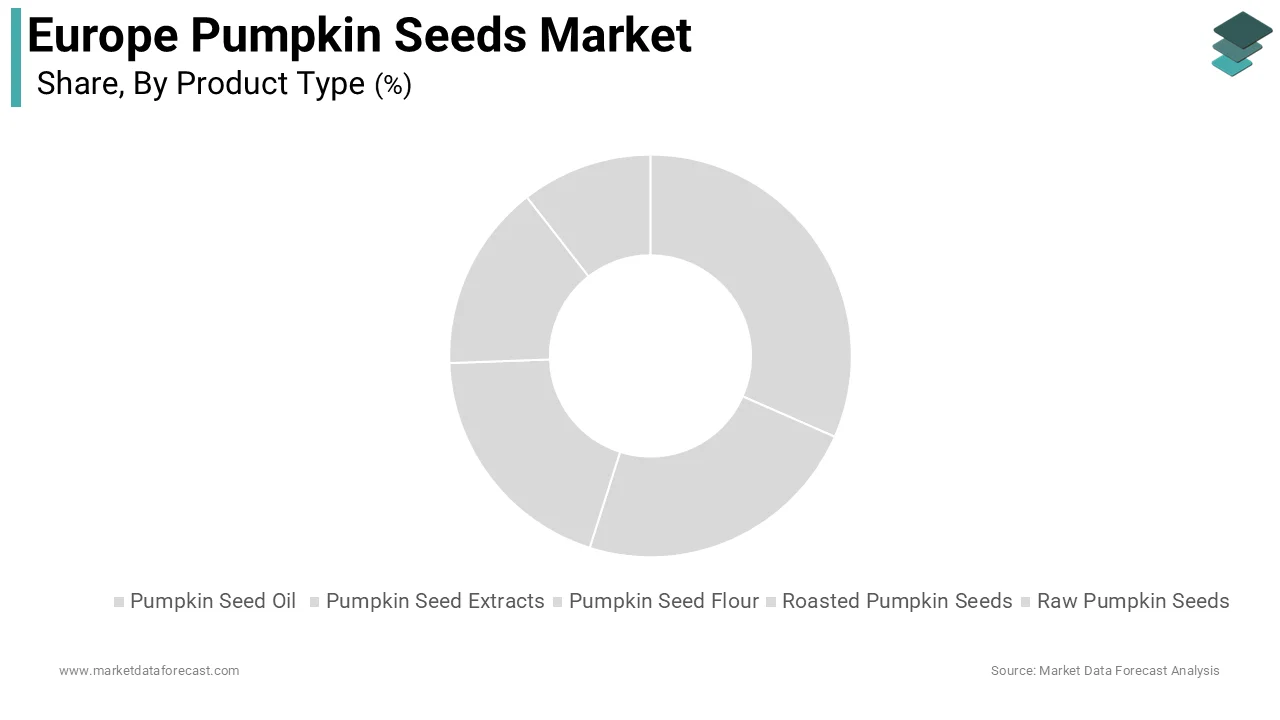
The pumpkin seed extracts segment is projected to expand at a CAGR of 9.3% from 2026 to 2034, owing to the surging demand for concentrated bioactive compounds in the dietary supplement and pharmaceutical industries, particularly for prostate health and hormonal balance support. The increasing consumer awareness regarding specific health benefits for men's health and urinary tract function has spurred the formulation of targeted supplements. Extracts offer a standardized dose of active compounds like cucurbitacin and phytosterols, providing efficacy that whole seeds cannot guarantee in variable dietary intakes. The convenience of capsule and liquid forms appeals to older demographics who may struggle with chewing whole seeds. Statistics from the Supplement Industry Report show that sales of pumpkin seed-based capsules increased by 25% in the last year, outpacing other botanical extracts. This medical validation and ease of consumption drive robust growth in the extract segment as consumers prioritize preventive healthcare solutions.
The growing adoption of pumpkin seed extracts in the cosmetic and personal care industry, valued for their antioxidant properties and ability to improve skin elasticity and hair health, is also boosting the growth of Europe pumpkin seed market. Formulators are increasingly incorporating these extracts into anti-aging serums, hair loss treatments, and moisturizers to meet the demand for clean and effective beauty ingredients. The extraction process allows for the isolation of potent antioxidants that protect skin from environmental stressors, aligning with the "skinification" of wellness trends.
By Category Insights
The conventional pumpkin seeds segment held a significant share of the Europe pumpkin seeds market in 2025, owing to the heightened price sensitivity among European consumers facing inflationary pressures, which leads many to choose cost-effective options for daily nutrition. Conventional farming methods yield higher volumes at lower production costs by allowing retailers to offer competitive pricing that appeals to budget-conscious households. The extensive supply chain for conventional crops ensures consistent stock levels, preventing shortages that might occur with limited organic supplies. Statistics from the Household Spending Survey reveal that families purchasing seeds in bulk for baking and snacking predominantly select conventional options to maximize quantity per euro spent. This economic reality ensures that conventional seeds remain the default choice for the majority of the population, securing their leading market share despite the growing interest in sustainability. The mature and efficient supply chain infrastructure dedicated to conventional pumpkin seeds, which guarantees wide distribution and shelf presence across diverse retail formats, is also bolstering the growth of the segment. Large-scale agricultural operations in Central and Eastern Europe provide a steady stream of conventional seeds that can be processed and distributed rapidly to meet high-volume demand.
The organic pumpkin seeds segment is likely to expand at a CAGR 8.7% throughout the forecast period, with the surge in organic seeds driven by the escalating consumer fear regarding pesticide residues and synthetic fertilizers in conventional agriculture, prompting a shift toward certified organic products perceived as safer and healthier. European shoppers are increasingly scrutinizing labels for organic certification to ensure their food is free from harmful chemicals, a trend particularly strong among parents buying for children. The perception that organic seeds offer superior taste and nutritional quality further reinforces this preference. Statistics from the Organic Trade Monitor show that households with higher education levels are twice as likely to purchase organic pumpkin seeds regularly.
By Application Insights
The food and beverage segment was the largest by accounting for a significant share of the Europe pumpkin seeds market in 2025 owing to the food and beverage sector is the extensive use of pumpkin seeds in the bakery and confectionery industries, where they serve as essential ingredients for texture, flavor, and nutritional enhancement. Artisanal breads, muffins, crackers, and energy bars frequently feature pumpkin seeds to appeal to health-conscious consumers seeking fiber and protein. Data from the Confectionery Manufacturers Federation shows that chocolate and candy producers are increasingly using roasted pumpkin seeds to create gourmet clusters and bars, capitalizing on the trend for salty-sweet flavor combinations. The ability of pumpkin seeds to withstand high baking temperatures while retaining their nutritional profile makes them ideal for industrial processing. Consumers increasingly view seeds as a convenient way to boost the nutritional value of yogurt, smoothies, and breakfast bowls, driving demand in the dairy sub-segment. The rise of plant-based milk and cheese alternatives has also created new opportunities, with manufacturers using pumpkin seed flour or whole seeds to enhance protein content and mouthfeel. The snacking category itself remains robust, with single-serve packs of flavored pumpkin seeds seeing double-digit growth in convenience stores.
The cosmetics and personal care segment is expected to witness the fastest CAGR of 10.2% from 2026 to 2034, owing to the rapid growth in cosmetics, driven by the global shift toward clean beauty, where consumers and formulators prioritize natural, sustainably sourced ingredients over synthetic chemicals. Pumpkin seed oil and extracts are rich in vitamins, antioxidants, and essential fatty acids, making them highly desirable for anti-aging, moisturizing, and soothing formulations. The transparency demanded by modern consumers favors ingredients with simple, recognizable names, benefiting pumpkin seed derivatives. The specific application of pumpkin seed extracts in hair care products targeting hair loss, scalp health, and shine, addressing a growing concern among European consumers. The ability of these ingredients to strengthen hair follicles and improve scalp circulation offers a compelling value proposition for aging populations and those suffering from thinning hair. Statistics from the Personal Care R&D Forum indicate that investment in pumpkin seed-based hair care research has doubled in the past two years.
REGIONAL ANALYSIS
Austria Pumpkin Seeds Market Analysis
Austria was the top performer of the Europe pumpkin seeds market by holding 28.3% of the market share in 2025. Austria is deeply rooted in tradition, where pumpkin seeds and their oil are staples in everyday cuisine, used in salads, soups, and desserts, creating a consistent and high-volume local demand. The rigorous quality control and certification systems that protect the authenticity of Austrian pumpkin products, fostering immense consumer trust and premium pricing power is boosting the growth of Europe pumpkin seeds market. According to the Austrian Ministry of Agriculture, over 45000 hectares are dedicated to oilseed pumpkin cultivation, with nearly 90% of the harvest processed domestically into oil and roasted seeds. The strong cooperation between farmers, processors, and researchers ensures continuous innovation in varieties and processing techniques.
Germany Pumpkin Seeds Market Analysis
Germany was ranked second by holding 22.3% of the Europe pumpkin seeds market share in 2025. Germany is heavily influenced by the "Bio" (organic) trend, where consumers actively seek certified organic pumpkin seeds for baking, snacking, and supplementation, driving significant volume in the organic segment. The integration of pumpkin seeds into the daily diet through breads, muesli, and salads, supported by a culture that prioritizes whole grains and natural ingredients, is enhancing the growth of the market in this country. The presence of major health food retailers and discount chains offering affordable organic options further democratizes access.
Hungary Pumpkin Seeds Market Analysis
Hungary's pumpkin seed market growth is likely to grow with its extensive agricultural land dedicated to oilseed pumpkins and its role as a primary supplier to neighboring European nations. Hungary is characterized by large-scale farming operations that leverage favorable climatic conditions to produce high-yield crops competitively, making it a cost-effective source for the European market. A primary driving factor is the government's support for the agricultural sector through subsidies and research programs aimed at improving seed varieties and processing efficiency. The tradition of consuming roasted seeds and oil remains strong locally, providing a stable domestic baseline. Statistics from the Food Industry Association show that local processing capacity has increased to add value before export. The focus on sustainable farming practices and the development of new hybrid varieties further enhances competitiveness. This strategic focus on production scale and export logistics ensures Hungary remains a pivotal player in the supply chain.
France Pumpkin Seeds Market Analysis
The French pumpkin seeds market is significantly to grow at the fastest CAGR throughout the forecast period. France is undergoing a transformation, where pumpkin seeds are shifting from niche health food stores to mainstream gourmet shelves, driven by chefs and food influencers promoting their versatility. According to the French Ministry of Agriculture, domestic production of oilseed pumpkins has increased by 18% in 2024 to reduce reliance on imports and support local farmers. The French penchant for artisanal products favors small-batch, locally sourced seeds with traceable origins. Additionally, the strong phytotherapy tradition in France boosts demand for pumpkin seed extracts in pharmacies. This fusion of gastronomy and health consciousness drives steady growth in the French market.
Italy Pumpkin Seeds Market Analysis
Italy's pumpkin seeds market growth is likely to grow with the value of seeds within the context of the Mediterranean diet, viewing pumpkin seeds as a healthy fat source comparable to olive oil and nuts. The rise of vegetarian and vegan lifestyles in Italy, which has spurred demand for diverse plant-based protein sources, including pumpkin seeds. The Italian bakery sector is increasingly incorporating pumpkin seeds into focaccia and grissini, creating new demand channels. Statistics from the Food Retail Monitor show that sales of mixed seed packs featuring pumpkin seeds grew in major chains. Furthermore, the cosmetic industry in Northern Italy is beginning to utilize pumpkin seed oil for high-end skincare, opening new industrial avenues.
COMPETITION OVERVIEW
The competition in the Europe pumpkin seeds market is characterized by a fragmented landscape comprising specialized regional producers in Central Europe and large multinational ingredient suppliers vying for dominance. Established players in Austria, Slovenia, and Hungary leverage their geographical indication status and centuries-old traditions to command premium prices and foster deep brand loyalty among discerning consumers. Meanwhile, larger agro-industrial corporations compete on scale, offering cost-effective bulk ingredients to global food and cosmetic manufacturers through efficient supply chains. The market sees intense rivalry in the organic segment, where certification and traceability become key differentiators for attracting health-conscious buyers. Private label brands from major supermarket chains also exert pressure by offering affordable alternatives that challenge branded products on price. Innovation in product formats such as flavored snacks and functional extracts drives companies to continuously invest in research and development. Regulatory compliance regarding food safety and sustainability further raises barriers to entry, favoring established entities with robust quality control systems.
KEY MARKET PLAYERS
A few major players of the Europe pumpkin seeds market include
- Archer Daniels Midland Company
- Cargill Incorporated
- Olam Group
- SunOpta Inc
- Naturkost Übelhör GmbH & Co. KG
- Bio Planet S.A
- The Hain Celestial Group, Inc
- NOW Foods
- Bob’s Red Mill Natural Foods, Inc
- Woodland Foods
- PepsiCo, Inc
- Conagra Brands, Inc
- Kanegrade Ltd
- Bioriginal Food & Science Corp
- A.Vogel AG
Top Strategies Used by Key Market Participants
Key players in the Europe pumpkin seeds market primarily focus on vertical integration to secure high-quality raw materials and control production costs from farm to finished product. Companies frequently invest in advanced processing technologies such as cold pressing and optical sorting to enhance product purity and nutritional value. Another vital strategy involves obtaining organic and geographical indication certifications to differentiate products and justify premium pricing in competitive retail environments. Major participants also expand their export networks by targeting emerging markets in Asia and North America, where demand for healthy European superfoods is rising. Furthermore, brands develop value-added derivatives like protein isolates and cosmetic oils to diversify revenue streams beyond whole seeds. Strategic partnerships with local farmers ensure sustainable sourcing and stable supply volumes while adhering to strict environmental regulations. These combined efforts allow market leaders to maintain quality consistency and drive growth in a specialized industry.
Leading Players in the Europe Pumpkin Seeds Market
- Olmuhle Fandler GmbH operates as a premier Austrian producer renowned for its high-quality Styrian pumpkin seed oil and roasted kernels that set global benchmarks for purity and flavor. The company contributes significantly to the international market by exporting premium products to over fifty countries, establishing the gold standard for protected geographical indication goods. Recently, the firm has strengthened its position by investing in state-of-the-art cold pressing technologies that maximize nutrient retention and yield efficiency. They have also expanded their sustainable farming partnerships with local growers to ensure a consistent supply of organic oilseed pumpkins while reducing environmental impact. Their commitment to traditional methods, combined with modern quality control systems, allows them to command premium prices in the gourmet and health food sectors worldwide.
- Preveden d.o.o. stands as a leading Slovenian manufacturer specializing in the processing and export of pumpkin seeds and oil, leveraging the rich agricultural heritage of the Prekmurje region. The company plays a vital role in the global supply chain by providing bulk ingredients to major food manufacturers and private label brands across Europe and beyond. In recent developments, Preveden has upgraded its roasting and packaging facilities to increase production capacity and meet rising international demand for healthy snacks. They have obtained multiple international food safety certifications to facilitate smoother entry into regulated markets outside the European Union. Their strategy focuses on vertical integration by working closely with farmers to optimize seed varieties for higher oil content and better taste profiles.
- Mlinotest Industrija d.d. is a prominent Croatian agro-industrial company with a diverse portfolio that includes significant operations in pumpkin seed processing and oil production for both domestic and export markets. The company contributes to the global sector by supplying high-volume ingredients to the confectionery, bakery, and cosmetic industries, utilizing its advanced milling and extraction capabilities. Recently, Mlinotest has focused on expanding its organic product range to align with the growing European demand for chemical-free and sustainably sourced ingredients. They have invested in research and development to create specialized pumpkin seed flours and protein isolates that serve the burgeoning plant-based food sector. Their strategic acquisitions of smaller local processors have allowed them to consolidate supply chains and improve logistical efficiency across the Balkan region.
MARKET SEGMENTATION
This research report on the Europe pumpkin seeds market has been segmented and sub-segmented based on product type, category, application, & region.
By Product Type
- Pumpkin Seed Oil
- Pumpkin Seed Extracts
- Pumpkin Seed Flour
- Roasted Pumpkin Seeds
- Raw Pumpkin Seeds
By Category
- Organic
- Conventional
By Application
- Food and Beverage
- Dietary Supplements
- Bakery, Snacks
- Confectionery
- Dairy
- Beverages
- Cosmetics and Personal Care
- Pharmaceuticals
By Region
- UK
- France
- Spain
- Germany
- Italy
- Russia
- Sweden
- Denmark
- Switzerland
- Netherlands
- Turkey
- Czech Republic
- Rest of Europe
Frequently Asked Questions
1. What factors are driving the growth of this market?
Key drivers include increasing health awareness, demand for protein-rich foods, and growth in vegan and vegetarian diets.
2. What are pumpkin seeds mainly used for?
They are used in snacks, bakery products, cereals, salads, and as ingredients in health supplements.
3. Which form of pumpkin seeds is most popular?
Raw and roasted pumpkin seeds are the most widely consumed forms.
4. What are the key distribution channels?
Supermarkets, hypermarkets, online retail, and health food stores are the main distribution channels.
5. Why are pumpkin seeds considered healthy?
They are rich in protein, fiber, healthy fats, vitamins, and minerals like magnesium and zinc.
6. What are the major challenges in the market?
Fluctuating raw material supply and price volatility are key challenges.
7. What trends are shaping the market?
Organic products, flavored seeds, and clean-label offerings are trending.
8. How is the demand for organic pumpkin seeds evolving?
Demand is rising significantly due to increasing preference for chemical-free food products.
9. What are the opportunities in the Europe pumpkin seeds market?
Product innovation, expansion into functional foods, and new flavor variants offer growth opportunities.
10. What is the future outlook of the market?
The market is expected to grow steadily due to increasing demand for nutritious and plant-based foods.
Related Reports
Access the study in MULTIPLE FORMATS
Purchase options starting from
$ 2000
Didn’t find what you’re looking for?
TALK TO OUR ANALYST TEAM
Need something within your budget?
NO WORRIES! WE GOT YOU COVERED!
Call us on: +1 888 702 9696 (U.S Toll Free)
Write to us: sales@marketdataforecast.com