- Product Description Description
- Table of Contents TOC
- List of Table & Figure LOT
- Get Free Sample PDF Sample PDF
Market Size, 2025
$32.14 BnMarket Estimate, 2026
$35.78 BnMarket Forecast, 2034
$84.51 BnCAGR, 2026–2034
11.34%Europe Theranostics Market Overview
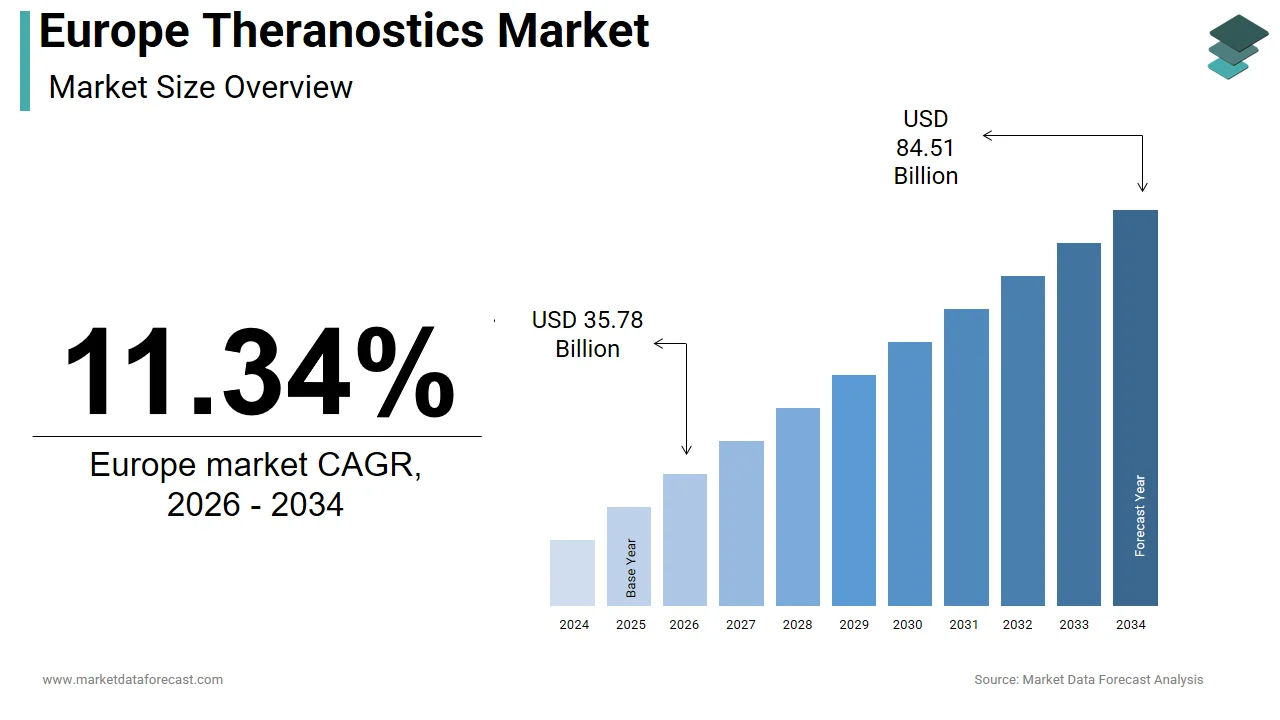
- Market size (2025): USD 32.14 billion
- Estimated market size (2026): USD 35.78 billion
- Projected market size (2034): USD 84.51 billion
- CAGR (2026 to 2034): 11.34%
What Is Driving Market Growth?
- Rising incidence of biomarker-positive cancers, particularly prostate cancer, neuroendocrine tumors, and thyroid cancers
- Increasing adoption of precision medicine and theranostic care pathways
- Growing use of PET imaging and targeted radionuclide therapies across oncology centers
- Strong backing from European Union healthcare initiatives and public funding programs
- Expansion of nuclear medicine and radiopharmaceutical infrastructure across Europe
Regional Leadership and Adoption Trends
- Germany, France, the United Kingdom, and the Netherlands are the leading markets
- High concentration of specialized theranostic centers and PET-capable hospitals
- Oncology represents the largest disease segment in the theranostics market
- Hospitals dominate as end users due to regulatory, safety, and infrastructure requirements
Key Market Players
Major companies operating in the Europe theranostics market include Novartis AG, Curium Pharma, Advanced Accelerator Applications, Pfizer, Abbott Laboratories, Beckman Coulter, Siemens Healthineers, and GE HealthCare. These players focus on radioligand therapy development, isotope supply security, regulatory compliance, and partnerships with leading hospitals, strengthening market adoption across Europe.
Europe Theranostics Market Size
The size of the Europe theranostics market was valued at USD 32.14 billion in 2025. This market is expected to grow at a CAGR of 11.34% from 2026 to 2034 and be worth USD 84.51 billion by 2034 from USD 35.78 billion in 2026.
Theranostics represents an integrated paradigm in precision medicine that unifies diagnostic imaging and targeted radionuclide therapy using matched molecular probes. Unlike conventional approaches, theranostics enables real-time visualization of disease biology followed by delivery of therapeutic isotopes to the same biological target, thereby personalizing oncology and neuroendocrine disease management.
As per the European Association of Nuclear Medicine, over 120 specialized theranostic centers now operate across the European Union, with Germany, France, and the Netherlands leading in clinical adoption. This expansion is highly relevant as it demonstrates strong institutional infrastructure, enabling wider patient access to radioligand therapies and accelerating clinical adoption across Europe. According to the International Agency for Research on Cancer, Europe accounts for approximately 27 percent of global neuroendocrine tumor incidence, with prostate and thyroid cancers further expanding the patient pool eligible for radioligand interventions. This statistic is critical as it highlights the significant clinical demand for theranostics to ensure a large and growing patient base for advanced oncology solutions. As per the European Commission’s Innovative Health Initiative, more than €200 million has been allocated since 2021 to advance theranostic radiochemistry and production infrastructure. This funding is directly relevant as it strengthens supply chains, supports innovation, and ensures the scalability of theranostic solutions across Europe. This convergence of unmet clinical need, regulatory support, and scientific innovation positions theranostics not merely as a diagnostic tool but as a transformative care pathway reshaping oncology delivery across Europe.
MARKET DRIVERS
Rising Incidence of Targetable Cancers with Defined Molecular Markers
The rising prevalence of biomarker‑positive cancers is majorly propelling the growth of the European theranostics market. According to the European Commission, over 490,000 new cases of prostate cancer were diagnosed in Europe in 2022, with a significant proportion exhibiting prostate‑specific membrane antigen (PSMA) expression, making them eligible for PSMA‑based diagnostics and therapy. This is highly relevant as it expands the patient pool for theranostic interventions. As per the European Society for Medical Oncology, more than 35,000 patients annually in Western Europe present with somatostatin receptor‑positive neuroendocrine tumors suitable for Lu‑177 DOTATATE treatment, underscoring the clinical demand for radionuclide therapies. The German Cancer Research Center estimates that 60 percent of advanced prostate cancer patients now undergo PSMA PET‑CT imaging before therapy selection, highlighting the integration of theranostics into routine care. National oncology guidelines in Sweden and the Netherlands have formally incorporated theranostics into standard pathways for recurrent disease, further validating its role. The growing incidence of targetable cancers and guideline adoption is directly driving theranostics demand across Europe.
Expansion of Specialized Nuclear Medicine Infrastructure Across Europe
The expansion of nuclear medicine infrastructure is another key driver supporting the growth of the European theranostics market. According to the European Association of Nuclear Medicine, the number of PET‑capable nuclear medicine departments in the EU increased by 38 percent between 2019 and 2023, reflecting systemic investment in diagnostic capacity. France and Italy have invested in centralized radiopharmaceutical production hubs compliant with GMP standards, enabling reliable distribution of short half‑life isotopes like Gallium‑68 and Lutetium‑177. In 2023, the UK’s National Health Service designated 18 hospitals as theranostic centers of excellence, standardizing protocols for patient selection, dosimetry, and radiation safety. As per the European Commission’s SAMIRA Strategic Agenda, cross‑border isotope logistics and workforce training are being supported, ensuring scalability. Justification: The infrastructure expansion and systemic investment are transforming theranostics from experimental options into accessible standards of care in Europe.
MARKET RESTRAINTS
Complex and Fragmented Regulatory Approval Pathways for Radiopharmaceuticals
The fragmented regulatory approval process for radiopharmaceuticals is impeding the theranostics market growth in Europe. According to the European Medicines Agency, radiopharmaceuticals must undergo separate evaluations as both medicinal products and radioactive substances, requiring coordination between national radiation safety authorities and centralized drug regulators. As per the European Federation of Radiopharmaceutical Industries, this bifurcated process extends approval timelines by an average of 14 months compared to conventional oncology drugs, delaying patient access. For example, the approval of Lu‑177 vipivotide tetraxetan in Germany required parallel assessments by multiple agencies. Decentralized manufacturing of diagnostic components like Ga‑68 generators under hospital exemption rules further creates variability in quality, hindering multicentre trial harmonization. This regulatory fragmentation that increases costs and delays is restraining the heranostics market growth in this region.
Limited Reimbursement Coverage and High Out‑of‑Pocket Costs
The inconsistent reimbursement landscape is another restraint hampering the European theranostics market. According to the European Observatory on Health Systems and Policies, only 11 of 27 EU member states provide universal reimbursement for Lu‑177 DOTATATE, with others restricting coverage to specific tumor subtypes or trial settings. As per the European Society for Theranostics and Molecular Imaging, patients in Spain and Greece often face waiting lists exceeding nine months or incur partial out‑of‑pocket payments averaging €8,000 per treatment cycle, limiting equitable access. Even in Germany, prior authorization requirements and budget caps delay treatment initiation. The lack of standardized health technology assessment criteria further complicates pricing negotiations. Justification: These reimbursement gaps and high patient costs restrain equitable adoption of theranostics across Europe and regional market expansion.
MARKET OPPORTUNITIES
Advancement in Novel Target Discovery Beyond Neuroendocrine and Prostate Cancers
The discovery of new molecular targets offers a significant opportunity for the European theranostics market. According to the European Organisation for Research and Treatment of Cancer, early‑phase trials are evaluating fibroblast activation protein inhibitors for pancreatic and triple‑negative breast cancers, with promising uptake in over 80 percent of tumor samples, expanding theranostics applicability. The Netherlands Cancer Institute demonstrated successful imaging and therapy using Cu‑64 and Cu‑67 labeled somatostatin analogs in pediatric neuroblastoma, addressing unmet needs in rare diseases. Preclinical studies at Sweden’s Karolinska Institutet identified GRPR as a viable target in 70 percent of primary glioblastomas, opening avenues for brain tumor theranostics. As per the Innovative Medicines Initiative, the THERAGUIDE consortium is funded to validate five new target‑ligand pairs by 2026, ensuring pipeline expansion. The novel target discovery, broadening theranostics’ scope and patient base, is creating strong growth opportunities.
Integration of Artificial Intelligence for Dosimetry and Treatment Personalization
The integration of artificial intelligence is another promising opportunity driving theranostics expansion in Europe. According to the European Institute for Biomedical Imaging Research, machine learning models can estimate tumor absorbed radiation doses from diagnostic scans with 92 percent accuracy, reducing reliance on post‑therapy imaging. In 2024, Heidelberg University Hospital validated an AI algorithm predicting progression‑free survival in prostate cancer patients after Lu‑177 PSMA therapy, demonstrating clinical utility. As per the European Commission’s Horizon Europe program, €45 million has been allocated to the RADIANCE project, developing cloud‑based AI platforms for automated treatment planning across 15 European nuclear medicine departments. The AI’s role in improving precision, safety, and scalability is likely to offer sustainable growth for the European theranostics market.
MARKET CHALLENGES
Shortage of Key Radionuclides and Fragile Supply Chains
The shortage of radionuclides is primarily challenging the European theranostics market. According to the European Commission, over 95 percent of Lutetium‑177 used in Europe is produced in just three reactors, two in Poland and one in Belgium, raising reliability concerns. In 2023, unplanned maintenance at the Maria reactor in Poland led to a 40 percent reduction in Lu‑177 availability across Southern Europe, delaying treatments for over 2,000 patients as per the European Association of Nuclear Medicine, underscoring supply fragility. Germanium‑68 for Ga‑68 generators is primarily sourced from the US, creating transatlantic dependency. Although the EU’s SAMIRA initiative promotes alternative production, only four commercial cyclotron‑based Lu‑177 facilities were operational in Europe by early 2024. The isotope supply and fragility that challenge theranostics scalability and reliability across Europe are challenging the regional market expansion.
Workforce Shortages in Nuclear Medicine and Radiopharmacy
The shortage of skilled professionals is also challenging the European theranostics market. According to the European Federation of Radiology, there is a projected shortfall of 1,800 nuclear medicine physicians and 3,200 radiopharmacists by 2030, due to aging workforces and insufficient training pipelines. In Portugal and Finland, fewer than five certified radiopharmacists manage national isotope production for millions of residents, highlighting critical gaps. As per the European Society of Radiology, 60 percent of medical schools in Eastern Europe offer no dedicated theranostics curriculum, delaying skill development. Furthermore, only 45 percent of nuclear medicine technologists in Italy and Spain currently hold the radiation safety certification required for therapeutic radionuclides. The workforce shortages that limit operational capacity and equitable access to theranostic care are further challenging the regional market growth.
REPORT COVERAGE
| REPORT METRIC | DETAILS |
| Market Size Available | 2025 to 2034 |
| Base Year | 2025 |
| Forecast Period | 2026 to 2034 |
| Segments Covered | By Disease Type, Technology, End-User, and Country. |
| Various Analyses Covered | Global, Regional, and Country-Level Analysis, Segment-Level Analysis, Drivers, Restraints, Opportunities, Challenges; PESTLE Analysis; Porter’s Five Forces Analysis, Competitive Landscape, Analyst Overview of Investment Opportunities |
| Countries Covered | UK, France, Spain, Germany, Italy, Russia, Sweden, Denmark, Switzerland, Netherlands, Turkey, Czech Republic, and the Rest of Europe. |
| Market Leaders Profiled | Abbott Laboratories, AmeriPath, Dickinson and Company, Curium Pharma, BIOTEC Laboratories, Dade Behring, Dianon Systems, Dynacare Laboratories, Advanced Accelerator Applications, Enterix, Focus Diagnostics, Pfizer, Novartis AG, and Beckman Coulter. |
SEGMENTAL ANALYSIS
By Disease Type Insights
The oncology segment captured 78.4% of the Europe theranostics market share in 2024. The leading position of the oncology segment in this European market is attributed to well‑validated molecular targets, established clinical protocols, and regulatory approvals for radioligand therapies. According to the European Medicines Agency, more than 95% of approved theranostic agents in Europe are indicated for oncological conditions such as metastatic castration‑resistant prostate cancer and gastroenteropancreatic neuroendocrine tumors. As per the European Society for Medical Oncology, tens of thousands of patients across Germany, France, and the Netherlands received Lu-177-based therapy in 2023, reflecting deep clinical integration. National cancer plans, including Germany’s National Decade Against Cancer, explicitly endorse PSMA PET imaging and subsequent radioligand therapy for recurrent disease. Furthermore, the European Commission’s Innovative Health Initiative has prioritized oncology theranostics in funding allocations, recognizing their role in reducing systemic toxicity compared to conventional chemotherapy. This segment is expected to remain dominant over the forecast period as prostate, neuroendocrine, and thyroid cancers continue to anchor theranostic adoption in Europe.
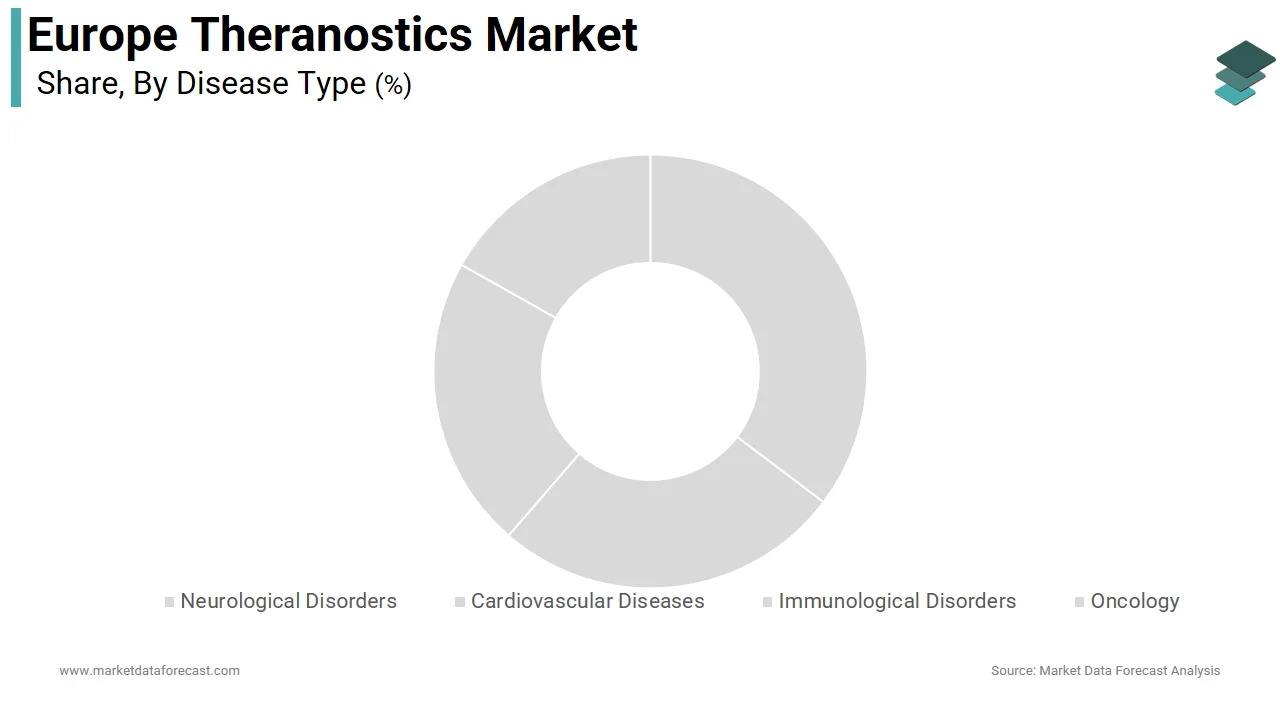
The neurological disorders segment is expected to register the fastest CAGR of 16.2% over the forecast period in the European market. Breakthroughs in imaging and therapeutic targeting for Alzheimer’s disease, Parkinson’s disease, and glioblastoma are propelling the growth of the neurological disorders segment in this European market. According to the European Academy of Neurology, more than 9 million Europeans live with Alzheimer’s disease, and emerging tau and amyloid PET tracers now enable early diagnosis and therapeutic monitoring. In 2023, the Karolinska Institute in Sweden initiated a first‑in‑human trial using Cu-64-labeled FAPI for glioblastoma theranostics, demonstrating tumor‑specific uptake in a majority of patients. As per the European Commission’s Horizon Europe program, significant funding has been allocated to the NEURORAD consortium to develop alpha‑emitting theranostics for neurodegenerative proteinopathies. The European Association of Nuclear Medicine also reports strong growth in amyloid PET scans across academic centers in France and Italy since 2021. This segment is expected to expand rapidly over the forecast period as disease‑modifying therapies and companion diagnostics accelerate theranostic adoption in neurology.
By Technology Insights
The sequencing segment held the leading position in the Europe theranostics market in 2024 and occupied 32.1% of the regional market share. The dominance of the sequencing segment in this European market is driven by its role in target identification, patient stratification, and biomarker validation. According to the European Molecular Biology Laboratory, more than 70% of theranostic clinical trials in Europe between 2021 and 2023 incorporated next‑generation sequencing to confirm target expression, such as PSMA or somatostatin receptors, before radionuclide administration. As per France’s Plan France Médecine Génomique 2025, 23 sequencing platforms have been established, capable of processing hundreds of thousands of genomes annually to support precision oncology pipelines. The European Commission’s 1+ Million Genomes Initiative enables cross‑border data sharing, accelerating the discovery of novel theranostic targets like FAP and GRPR. This segment is expected to remain dominant over the forecast period as sequencing continues to serve as the technological cornerstone of theranostics in Europe.
The in situ hybridization segment is anticipated to grow at a promising CAGR of 14.8% over the forecast period in the European market. The critical role of in situ hybridization in validating target expression at the cellular level is supporting the growth of this segment in the European market. According to the European Society of Pathology, more than half of academic medical centers in Germany and the Netherlands use fluorescence in situ hybridization to confirm fibroblast activation protein or GRPR mRNA expression in tumor biopsies before theranostic enrollment. In 2024, the Innovative Medicines Initiative launched the THERAPATH project to standardize in situ hybridization protocols across 12 European countries for emerging targets in pancreatic and ovarian cancers. As per the European Commission’s Beating Cancer Plan, molecular pathology infrastructure upgrades are being prioritized in Eastern European hospitals. This segment is expected to expand rapidly over the forecast period as precise target localization becomes indispensable for patient selection and trial success.
By End User Insights
The hospitals segment dominated the Europe theranostics market by holding 84.7% of the market in 2024. The dominance of the hospitals segment in this European market is attributed to the highly regulated nature of radiopharmaceutical handling, integrated multidisciplinary teams, and immediate clinical correlation. According to the European Association of Nuclear Medicine, more than 90% of theranostic procedures in Europe are performed in hospital settings where nuclear medicine, radiology, oncology, and pharmacy departments collaborate on treatment planning and radiation safety. As per the UK’s National Health Service, 18 hospitals have been designated as theranostic centers of excellence equipped with PET‑CT scanners, radiopharmacies, and shielded infusion suites. In Germany, statutory health insurance reimburses theranostic therapy only when delivered in certified university hospitals, ensuring quality control. This segment is expected to remain dominant over the forecast period as hospitals continue to serve as the unavoidable hub of theranostic delivery in Europe.
The diagnostics laboratories segment is anticipated to exhibit a CAGR of 12.9% over the forecast period in the European market. The expanding role of diagnostics laboratories in biomarker validation and companion diagnostic development is favouring the growth of this segment in this European market. According to the European Federation of Laboratory Medicine, specialized molecular pathology labs in France, Italy, and Belgium now offer standardized PSMA and SSTR expression scoring to guide theranostic eligibility. In 2023, the Netherlands’ PALGA foundation launched a national external quality assurance program for theranostic biomarker testing across dozens of private laboratories. As per reference labs such as Synlab and Cerba, centralized analysis supports multicenter trials and consistent patient stratification. This segment is expected to expand steadily over the forecast period as diagnostics laboratories transition from support entities to strategic gatekeepers of therapeutic access in theranostics.
COUNTRY-LEVEL ANALYSIS
Germany Theranostics Market Analysis
Germany dominated the European theranostics market in 2024 by holding 22.6% of the regional market share. The dominating position of Germany in the European market is driven by advanced nuclear medicine infrastructure, strong research ecosystems, and supportive health policies. According to the German Radiological Society, Germany operates over 140 PET‑capable nuclear medicine departments, with dozens certified for Lu‑177 therapy. As per the Federal Ministry of Education and Research, the National Decade Against Cancer, launched in 2019, allocated significant funding to theranostic research, including PSMA and FAP agents. Statutory health insurance provides reimbursement for approved radioligand therapies, ensuring broad patient access. Leading institutions such as Heidelberg University Hospital and the Technical University of Munich contribute substantially to European clinical trials. Germany also hosts isotope producers and radiopharmaceutical developers, fostering a vertically integrated ecosystem. Germany is expected to remain Europe’s benchmark for theranostic scale and innovation.
France Theranostics Market Analysis
France is a promising regional segment in the European theranostics market. The centralized healthcare planning, strong public investment, and academic leadership are fuelling the theranostics market growth in France. According to the Haute Autorité de Santé, Lu‑177 DOTATATE treatments are reimbursed under the national hospital care framework, ensuring patient access. As per the Plan France Médecine Génomique 2025, integrated platforms in Paris, Lyon, and Marseille combine sequencing, PET imaging, and radiopharmacy. The Institut Curie and Gustave Roussy lead multicenter trials for next‑generation prostate and neuroendocrine theranostics, supported by EU funding. France mandates radiation safety certification for theranostic teams, ensuring consistent quality. France is expected to remain a high‑impact hub for clinical delivery and innovation.
United Kingdom Theranostics Market Analysis
The United Kingdom is anticipated to capture a prominent share of the European theranostics market over the forecast period owing to the NHS infrastructure, academic leadership, and regulatory agility. According to NHS England, 18 theranostic centers were designated in 2023, standardizing PSMA imaging and Lu‑177 therapy protocols. Cancer Research UK reports that over 5,000 prostate cancer patients received theranostic care in 2023, a sharp increase from prior years. The Medicines and Healthcare products Regulatory Agency operates a fast‑track approval pathway for radiopharmaceuticals, reducing time to market. Leading institutions such as The Institute of Nuclear Medicine in London and the Christie Hospital in Manchester contribute to global trial leadership. Despite Brexit, the UK maintains collaboration with EU consortia. The UK is expected to remain a compliance‑driven and globally connected market.
Netherlands Theranostics Market Analysis
The Netherlands is expected to exhibit a healthy CAGR in the European theranostics market over the forecast period owing to the early adoption, coordinated networks, and strong industry‑academia partnerships. According to the Dutch Society of Nuclear Medicine, over 8,000 theranostic procedures are performed annually, with reimbursement through national insurance. The Netherlands Cancer Institute pioneered PSMA PET imaging and leads the European PROSTASCAN trial. The Dutch government’s National Growth Fund allocated €75 million in 2023 to expand radiopharmaceutical production capacity at the High Flux Reactor in Petten, a key source of Lu‑177 in Western Europe. This integration of clinical innovation, public investment, and isotope sovereignty positions the Netherlands as a critical enabler of Europe’s theranostic supply chain.
Sweden Theranostics Market Analysis
Sweden is a notable regional segment in the European theranostics market. The research translation, public health integration, and sustainable radiopharmaceutical production are driving the theranostics market growth in Sweden. According to the Swedish Radiation Safety Authority, national coverage for somatostatin receptor and PSMA PET imaging has been achieved, with results integrated into electronic health records. Karolinska University Hospital conducts first‑in‑human trials for novel alpha‑emitting theranostics targeting glioblastoma and pancreatic cancer. Sweden’s national precision medicine strategy mandates molecular profiling for advanced cancer patients, including theranostic eligibility screening. The country is also investing in cyclotron‑based Lu‑177 production to reduce reactor dependency. Sweden is expected to remain a global thought leader in next‑generation theranostics.
COMPETITIVE LANDSCAPE
The Europe Theranostics Market features a concentrated yet dynamic competitive landscape dominated by multinational pharmaceutical companies and specialized radiopharmaceutical firms. Competition centers on clinical validation, regulatory expertise, supply chain resilience, and integration into national healthcare systems rather than price. Large players like Novartis leverage global R and D pipelines and marketing scale while niche firms such as Curium differentiate through manufacturing agility and technical support for hospital radiopharmacies. The market is further shaped by academic medical centers that act as innovation hubs and gatekeepers of early adoption. Regulatory complexity under both medicinal product and radiation safety frameworks creates high barriers to entry, favoring established entities with cross-functional capabilities. Simultaneously, the expansion into new disease areas and alpha-emitting isotopes is attracting biotech startups supported by EU innovation grants. As theranostics transitions from experimental to standard care, the ability to deliver end-to-end solutions encompassing diagnostics, isotopes logistics, and physician education determines competitive advantage across Europe.
KEY MARKET PLAYERS
The leading companies operating in the Europe theranostics market include:
- Abbott Laboratories
- AmeriPath
- Dickinson and Company
- Curium Pharma
- BIOTEC Laboratories
- Dade Behring
- Dianon Systems
- Dynacare Laboratories
- Advanced Accelerator Applications
- Enterix
- Focus Diagnostics
- Pfizer
- Novartis AG
- Beckman Coulter
TOP PLAYERS IN THE MARKET
- Novartis AG is a global pioneer in the Europe Theranostics Market through its development and commercialization of radioligand therapies such as Lutathera and Pluvicto. The company integrates diagnostic imaging with targeted treatment to address unmet needs in neuroendocrine tumors and metastatic prostate cancer. In Europe, Novartis collaborates with academic centers across Germany, France, and the Netherlands to expand access to PSMA PET imaging and subsequent therapy. In early 2024, the company launched a centralized radiopharmaceutical logistics network to ensure reliable delivery of Lu 177 and Ac 225-based products to certified treatment sites. Novartis also partners with national health systems to streamline reimbursement pathways and support clinician training. These initiatives reinforce its leadership in transforming theranostics from a niche application to mainstream oncology care across Europe and globally.
- Curium Pharma plays a vital role in the Europe Theranostics Market as a leading supplier of diagnostic and therapeutic radiopharmaceuticals, including Lutathera under license and a broad portfolio of Gallium 68 and Lutetium 177 generators. Headquartered in France, the company operates Good Manufacturing Practice-compliant production facilities in the Netherlands and Germany, ensuring consistent supply across the continent. Curium actively supports hospital radiopharmacies through technical training on radiolabeling and quality control. In 2024, Curium expanded its partnership with European nuclear medicine societies to standardize dosimetry protocols and radiation safety procedures. The company also invests in cyclotron-based isotope production to reduce dependency on aging nuclear reactors. These efforts position Curium as a critical enabler of scalable and safe theranostic delivery throughout Europe and beyond.
- Advanced Accelerator Applications, a Novartis company, has been instrumental in establishing the clinical and regulatory foundation for theranostics in Europe. As the original developer of Lutather, a AAA, pioneered the concept of combining Ga 68 DOTATATE PET imaging with Lu 177 therapy for neuroendocrine tumors. The company maintains a strong presence in France, Italy, and Switzerland with dedicated medical science liaison teams supporting hospital adoption. In 2024, AAA launched a digital theranostic coordination platform connecting imaging centers, radiopharmacies, and oncology units to streamline patient pathways. It also co-leads the European Society of Nuclear Medicine’s theranostic training curriculum for nuclear medicine professionals. Through scientific advocacy, infrastructure support, and education, AAA continues to shape the standards and accessibility of theranostic care across Europe and globally.
TOP STRATEGIES USED BY THE KEY MARKET PARTICIPANTS
Key players in the Europe Theranostics Market focus on vertical integration by securing control over isotope production, radiolabeling, and delivery logistics to ensure supply chain reliability. Companies invest in strategic partnerships with academic hospitals and national health systems to embed theranostics into standard oncology pathways and secure reimbursement. Regulatory harmonization efforts include proactive engagement with the European Medicines Agency to establish clear approval frameworks for novel radioligand pairs. Workforce development through certified training programs addresses shortages in nuclear medicine and radiopharmacy. Additionally, firms prioritize digital health solutions that connect diagnostic imaging, treatment planning, and patient monitoring into unified platforms, enhancing care coordination and data collection for real-world evidence generation.
MARKET SEGMENTATION
This Europe theranostics market research report is segmented and sub-segmented into the following categories.
By Disease Type
- Neurological Disorders
- Cardiovascular Diseases
- Immunological Disorders
- Oncology
- Others
By Technology
- Polymerase Chain Reaction (PCR)
- Immunohistochemistry
- In Situ Hybridization
- Sequencing
- Others
By End-User
- Hospitals
- Diagnostics Laboratories
- Others
By Country
- UK
- France
- Spain
- Germany
- Italy
- Russia
- Sweden
- Denmark
- Switzerland
- Netherlands
- Turkey
- Czech Republic
- Rest of Europe