Europe Alzheimers Disease Market Research Report By Therapeutics, Diagnostics & Country (United Kingdom, France, Spain, Germany, Italy, Russia, Sweden, Denmark, Switzerland, Netherlands and Rest of Europe) – Industry Size, Share, Trends & Growth Forecast (2025 to 2033)
Europe Alzheimer’s Disease Market Summary
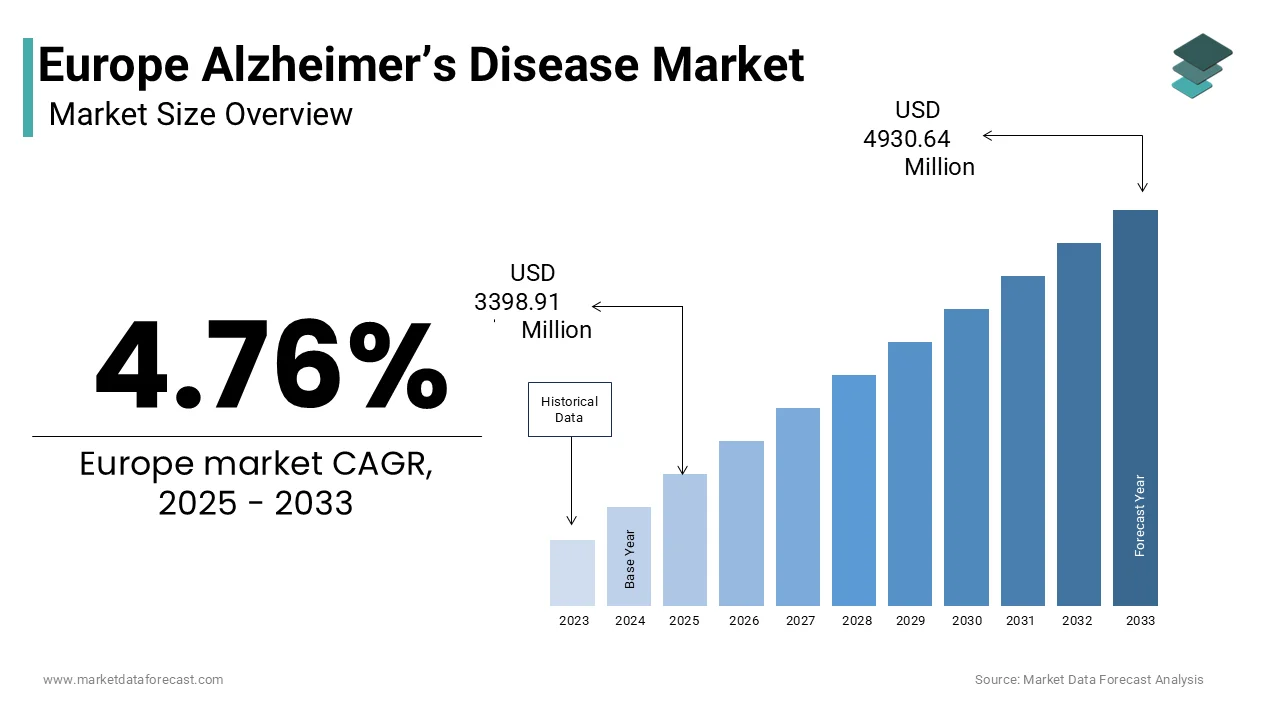
Europe Alzheimer’s disease market was valued at USD 3,244.47 million in 2024, estimated at USD 3,398.91 million in 2025, and is projected to reach USD 4,930.64 million by 2033, growing at a CAGR of 4.76% from 2025 to 2033, driven by rapid population aging, expansion of biomarker-guided diagnostics, and accelerating adoption of disease-modifying therapies across major European healthcare systems.
Market snapshot
- 2024 (actual): USD 3,244.47 million
- 2025 (est): USD 3,398.91 million
- 2033 (forecast): USD 4,930.64 million
- CAGR (2025–2033): 4.76%
Quick growth drivers
- Accelerated aging of Europe’s population, particularly growth in the 80+ demographic most vulnerable to Alzheimer’s disease.
- Shift from symptom-based to biomarker-defined diagnosis, expanding the addressable early-stage and preclinical patient pool.
- Rising adoption of MRI, PET, and blood-based biomarkers in national dementia pathways.
- Emergence of disease-modifying anti-amyloid therapies supported by conditional reimbursement frameworks.
- Government-backed national dementia strategies prioritizing early diagnosis and coordinated care.
Principal restraints
- Fragmented reimbursement and regulatory decision-making across EU member states delaying therapy access.
- Uneven availability of advanced diagnostics such as amyloid PET and CSF testing, especially in Eastern and Southern Europe.
- Chronic underinvestment in long-term dementia care infrastructure, limiting treatment continuity.
- High dependence on informal caregivers, reducing adherence to complex treatment protocols.
High-value opportunities
- National Alzheimer’s prevention and risk-reduction programs targeting modifiable lifestyle and vascular factors.
- Expansion of digital diagnostics, remote cognitive screening, and AI-enabled risk stratification tools.
- Public-private research consortia accelerating clinical trial recruitment and translational research.
- Growth of companion diagnostics and biomarker services linked to disease-modifying therapies.
Key operational challenges
- Limited harmonization of health data governance restricting large-scale biomarker and genomic research.
- Severe shortages of neurologists and dementia-trained healthcare professionals.
- Long waiting times for specialist consultations, particularly in rural regions.
- Integration complexity between diagnostics, therapeutics, and long-term care services.
Fastest-growing segments
- Pipeline disease-modifying drugs: 22.8% CAGR — anti-amyloid and next-generation mechanisms.
- PET imaging diagnostics: 19.7% CAGR — mandated amyloid confirmation for novel therapies.
- Biomarker-based early diagnosis: fastest expansion within diagnostics.
- Digital cognitive assessment tools: rising adoption in primary care and community settings.
Regional leadership & dynamics
Germany (lead, 25.5%)
- First EU country to implement conditional reimbursement for lecanemab.
- Dense network of memory clinics and advanced imaging capacity.
France
- Strong national Alzheimer plans with centralized memory resource centers.
- High participation in European and global clinical trials.
United Kingdom
- Integrated NHS dementia pathways and leadership in blood-based biomarkers.
- Extensive longitudinal datasets via UK Biobank.
Italy & Spain
- Rapid demographic aging with increasing focus on community-based and digital care models.
- Improving access to biomarker diagnostics in urban centers.
What wins commercially
- Early alignment with biomarker-guided treatment eligibility criteria.
- Strong engagement with national health technology assessment bodies.
- Integrated offerings combining diagnostics, therapeutics, and caregiver support.
- Real-world evidence generation to support reimbursement and guideline inclusion.
Top strategic ask for executives
- Invest in biomarker infrastructure and early-stage diagnosis ecosystems.
- Support managed access and risk-sharing reimbursement models.
- Expand digital health and caregiver enablement platforms.
- Strengthen pan-European data collaboration and clinical trial networks.
Leading players
Eisai · Biogen · Eli Lilly · Roche · Novartis · H. Lundbeck · Johnson & Johnson · GE Healthcare · Janssen · AC Immune
Europe Alzheimer’s Disease Market Size
The europe alzheimer’s disease market was valued at USD 3244.47 million in 2024, is expected to have 4.76% CAGR from 2025 to 2033, and be worth USD 4930.64 million by 2033 from USD 3398.91 million in 2025.
Alzheimer’s disease remains the leading cause of dementia across Europe, defined by progressive neurodegeneration, irreversible cognitive decline, and profound socioeconomic consequences. Unlike transient neurological conditions, Alzheimer’s entails chronic deterioration of memory, language, and executive function, culminating in total dependency. The European landscape is distinguished not by therapeutic abundance but by the escalating burden of undiagnosed or late diagnosed cases amid aging demographics and uneven care infrastructure. According to Alzheimer Europe, over 9 million individuals were living with dementia in the European Union in 2023, with Alzheimer’s pathology confirmed in approximately 60–70% of autopsied cases. The World Health Organization (WHO) European Region projected in 2024 that dementia prevalence will nearly double by 2050, driven primarily by longevity rather than increased incidence. Germany, France, and Italy collectively account for more than 40% of all European dementia cases, whichreflectsg both population size and relatively mature diagnostic systems. However, significant gaps persist, and as per the estimations of the European Dementia Observatory, up to 50% of cases remain undetected in parts of Central and Eastern Europe, where cognitive screening is not routinely integrated into primary care. This diagnostic inertia, compounded by stigma and fragmented referral pathways, shapes the urgent context in which the Alzheimer’s disease market must evolve beyond pharmaceuticals toward integrated, preventive, and digitally enabled care models. By combining early detection, digital health tools, and multidisciplinary care pathways, Europe is increasingly positioning Alzheimer’s management as a public health priority within aging and chronic disease strategies.
MARKET DRIVERS
Accelerated Population Aging Across High‑Income European Nations Fuels Diagnostic and Therapeutic Demand
Europe is experiencing demographic transformation at an unprecedented scale, with the proportion of citizens aged 65+ reaching 21% of the total EU population in 2024, according to Eurostat. This figure is projected to climb to 29% by 2050, with the fastest growth occurring in the 85+ cohort, the demographic at highest risk for Alzheimer’s disease. In Germany, as per the Federal Statistical Office, 5.8 million citizens aged 80+ were recorded in 2023, a number expected to surpass 7 million by 2030. This demographic pressure translates directly into clinical demand for early cognitive assessment, neuroimaging, and emerging disease‑modifying therapies. According to France’s National Institute of Health and Medical Research (INSERM), Alzheimer’s cases will increase from 900,000 in 2020 to over 1.3 million by 2030, driven almost entirely by age structure shifts rather than lifestyle changes. Northern European countries such as Sweden and the Netherlands have responded by embedding memory clinics within primary care networks, recognizing that early intervention can delay nursing home admission by up to 18 months. Consequently, aging is not merely a statistical trend but a structural catalyst that compels national health systems to reconfigure service delivery, driving sustained demand for scalable, precision‑oriented Alzheimer’s diagnostics and care coordination tools across Western and Central Europe.
Expansion of Biomarker‑Guided Diagnostic Frameworks Enhances Early Detection and Market Relevance
The European approach to Alzheimer’s diagnosis has undergone a paradigm shift from symptom‑based classification to biology‑defined criteria, significantly expanding the addressable patient pool. As per the European Medicines Agency (EMA), cerebrospinal fluid assays measuring amyloid beta‑42 and phosphorylated tau have been formally adopted into national dementia guidelines in 17 EU countries since 2021. Positron emission tomography (PET) for amyloid plaque detection is now operational in over 30 specialized centers across Germany, France, and the United Kingdom, according to the European Academy of Neurology. A landmark advancement occurred in 2023 when the European Commission endorsed blood‑based phosphorylated tau‑21 assays for use in primary care triage, following validation in studies coordinated by the Stockholm Gerontology Research Group involving more than 15,000 participants. These tools enable identification of Alzheimer’s pathology up to 15 years before dementia onset, creating a new preclinical patient segment. As per Finland’s nationwide pilot in 2024, biomarker screening in individuals reporting subjective cognitive decline improved diagnostic accuracy by 42% compared to standard clinical evaluation. This biological redefinition necessitates investment in laboratory networks, data interoperability, and clinician training, thereby anchoring market growth in objective, scalable diagnostics rather than subjective behavioral assessments.
MARKET RESTRAINTS
Persistent Gaps in Cross‑National Regulatory Harmonization Impede Therapeutic Innovation and Reimbursement
Despite aspirations for a unified health market, Europe remains a mosaic of divergent regulatory and reimbursement frameworks that delay patient access and deter investment. According to the European Network for Health Technology Assessment (EUnetHTA), only 11 EU countries had completed joint evaluations of anti‑amyloid monoclonal antibodies by mid‑2024, resulting in stark access disparities. Lecanemab, for instance, received conditional public reimbursement in Germany in January 2024 but remains unavailable in Spain and Poland due to unresolved cost‑effectiveness debates. As per the European Medicines Agency (EMA), 32% of Alzheimer’s drug applications in 2023 required additional post‑authorization studies to satisfy national payers, extending time to market by an average of 18 months. In Eastern Europe, limited neurology expertise within health technology assessment committees often necessitates external consultants, further prolonging decisions. This fragmentation inflates development costs and complicates commercial planning, as companies must navigate up to 27 distinct pricing and evidence requirements. Consequently, even clinically validated therapies struggle to achieve pan‑European uptake, constraining market expansion and discouragingthe development of region‑specific treatment protocols.
Chronic Underfunding of Long‑Term Dementia Care Infrastructure Limits Therapeutic Uptake and Continuity
The real‑world efficacy of Alzheimer’s interventions is frequently undermined by systemic deficiencies in long‑term care support across Europe. According to the Organisation for Economic Co‑operation and Development (OECD), public spending on long‑term care averages just 1.8% of gross domestic product, with Southern and Eastern member states investing less than 1%. In Italy, the National Institute of Statistics (ISTAT) confirmed in 2024 that over 75% of dementia patients depend entirely on unpaid family caregivers, who often lack training or respite support. This informal care model severely limits adherence to complex treatment regimens, particularly infusion‑based therapies requiring regular monitoring. As per the European Commission’s Joint Report on Social Protection, only 34% of European nursing homes employ staff formally trained in dementia care. In Greece, public dementia care beds number fewer than 5 per 10,000 elderly residents, forcing frequent hospital readmissions for behavioral crises. Without parallel investment in community services, caregiver education, and specialized residential facilities, even the most advanced therapeutics cannot achieve population‑level impact, artificially capping market potential.
MARKET OPPORTUNITIES
Emergence of National Alzheimer’s Prevention Strategies Opens New Pathways for Public Health Intervention
Europe is increasingly prioritizing primary and secondary prevention as a cornerstone of dementia policy, which is creating novel avenues for the European Alzheimer’s disease market. As per the European Brain Council, 22 EU nations now include modifiable risk factor reduction in their national dementia strategies. The FINGER trial, pioneered in Finland and replicated across 11 European countries under the World Wide FINGERS consortium, demonstrated that multidomain interventions targeting nutrition, physical activity, cognitive engagement, and vascular health reduced cognitive decline by 30% over 2 years. Building on this, the Netherlands launched a nationwide prevention program in 2023 that integrates dementia risk screening into routine primary care for adults aged 60+, linking high‑risk individuals to community health coaches. Portugal embedded automated dementia risk alerts into its national electronic health record system in 2024, flagging combinations such as hearing loss, depression, and physical inactivity. According to the World Health Organization (WHO) Regional Office for Europe, addressing 12 key modifiable risks could prevent or delay up to 40% of dementia cases. This preventive orientation is catalyzing demand for digital therapeutics, remote lifestyle coaching platforms, and population health analytics, expanding the Alzheimer’s market beyond drugs into public health infrastructure.
Rising Investment in Public‑Private Consortia Accelerates Translational Research and Clinical Trial Infrastructure
A wave of collaborative innovation is addressing Europe’s historical weakness in Alzheimer’s clinical trial capacity through large‑scale public‑private partnerships. The Innovative Medicines Initiative (IMI), co‑funded by the European Union and the European Federation of Pharmaceutical Industries and Associations (EFPIA), has committed over €800 million to neurodegeneration research since 2020. The AMYPAD project established a harmonized network of amyloid imaging centers across 8 countries, enabling multicenter trials with standardized data collection. According to the European Dementia Platform, this infrastructure cut patient recruitment timelines by 50% for trials initiated between 2022 and 2024. France’s Plan Maladies Neurodégénératives allocated €200 million in 2023 to create 25 specialized memory research centers equipped with digital phenotyping and biobanking capabilities. Data from ClinicalTrials.gov shows that European sites’ participation in global phase III dementia trials rose from 23% in 2020 to 36% in 2024. This enhanced capacity positions Europe as a preferred region for adaptive trial designs, real‑world evidence generation, and companion diagnostic co-development,t unlocking commercial opportunities in trial logistics, data analytics, and patient recruitment technologies.
MARKET CHALLENGES
Fragmented Data Governance Frameworks Undermine Large‑Scale Biomarker and Genomic Research
Europe’s potential to lead in precision medicine for Alzheimer’s is hindered by the inconsistent implementation of data protection rules across member states. Although the General Data Protection Regulation (GDPR) sets a common baseline, its application to health research varies significantly. According to the European Parliament’s 2024 report on health data spaces, only 9 countries operate national health data repositories that permit anonymized research access without individual consent for dementia studies. In Germany, regional laws in states like Bavaria prohibit the linkage of genomic and cognitive data, even within academic collaborations. The European Prevention of Alzheimer’s Dementia (EPAD) project reported in 2023 that over 40% of its initial timeline was consumed by data harmonization delays due to differing ethical approval processes. Consequently, European research consortia struggle to assemble datasets of sufficient scale; by contrast, the United States Alzheimer’s Disease Neuroimaging Initiative (ADNI) has aggregated data from over 20,000 participants. Without a fully operational European Health Data Space that balances privacy with research utility, the continent risks lagging in the development of stratified therapies tailored to its own genetic and environmental contexts.
Workforce Shortages in Geriatric Neurology and Dementia Care Compromise Service Delivery and Market Scalability
The scalability of Alzheimer’s diagnostics and therapeutics is critically constrained by acute shortages of trained professionals across the care continuum. According to the European Federation of Neurological Associations (EFNA), the EU faces a projected deficit of more than 12,000 neurologists by 2030, with geriatric neurology being the most underserved specialty. In Poland, the Neurological Society documented in 2024 that there is only 1 dementia specialist per 300,000 elderly residents. The shortage extends to primary care: as per the European Association of Geriatric Medicine, fewer than 15% of general practitioners in the EU have received formal training in cognitive disorder management. As a result, patients in rural Spain or Romania may wait over 9 months for a specialist consultation, during which irreversible neurodegeneration advances. The absence of structured career incentives in dementia care further discourages young clinicians from entering the field. Until Europe invests in task‑shifting, tele‑neurology support, and standardized dementia curricula in medical education, market growth will remain confined to elite urban centers, failing to deliver equitable impact across the broader population.
REPORT COVERAGE
| REPORT METRIC | DETAILS |
| Market Size Available | 2024 to 2033 |
| Base Year | 2024 |
| Forecast Period | 2025 to 2033 |
| Segments Covered | By Therapeutics, Diagnostics, and Region. |
| Various Analyses Covered | Global, Regional, and Country-Level Analysis, Segment-Level Analysis, Drivers, Restraints, Opportunities, Challenges; PESTLE Analysis; Porter’s Five Forces Analysis, Competitive Landscape, Analyst Overview of Investment Opportunities |
| Countries Covered | UK, France, Spain, Germany, Italy, Russia, Sweden, Denmark, Switzerland, Netherlands, Turkey, Czech Republic, Rest of Europe |
| Market Leaders Profiled | AbbVie Inc. |
SEGMENTAL ANALYSIS
By Therapeutics Insights
The cholinesterase inhibitors segment dominated the market by accounting for 57.4% of the European Alzheimer’s disease market share in 2024. The dominance of the cholinesterase inhibitor segment in the European Alzheimer’s disease market is primarily driven by donepezil, rivastigmine, and galantamine drugs that enhance cholinergic neurotransmission by inhibiting acetylcholinesterase breakdown. Their widespread adoption stems from decades of clinical validation, inclusion in national treatment guidelines, and cost‑effectiveness in public reimbursement systems. Cholinesterase inhibitors are embedded in first‑line treatment algorithms across nearly all Western European health systems. As per the European Academy of Neurology, 24 of 27 EU member states explicitly recommend donepezil or rivastigmine for mild to moderate Alzheimer’s in their official dementia guidelines as of 2024. In the United Kingdom, the National Institute for Health and Care Excellence (NICE) mandates cholinesterase inhibitor use for patients scoring between 10 and 26 on the Mini-Mental State Examination, resulting in over 300,000 annual prescriptions. France’s national Alzheimer plan ensures full public reimbursement for these drugs, contributing to a 72% treatment rate among diagnosed patients aged 65–80, according to the French National Health Insurance Fund in 2023. This policy alignment ensures consistent demand despite the emergence of newer mechanisms.
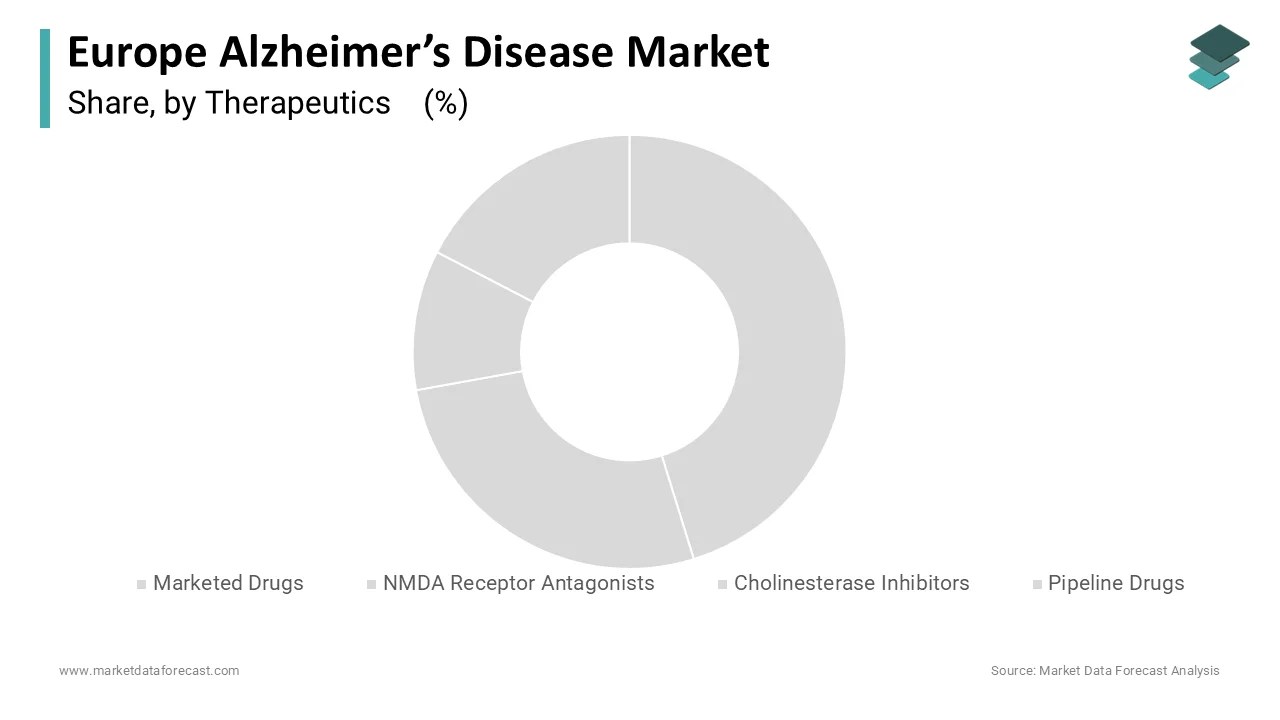
The pipeline drugs segment represents the fastest-growing segment of the European Alzheimer’s disease therapeutics market and is estimated to record a CAGR of 22.8% over the forecast period in this regional market. Regulatory acceleration of disease‑modifying therapies fuels commercial pipeline expansion, which is majorly driving the pipeline drugs segment in the European market. As per EMA, 4 anti‑amyloid monoclonal antibodies, including lecanemab and donanemab,b have received priority medicines designation since 2021, enabling expedited review and conditional approval pathways. In 2024, Germany became the first EU nation to implement a temporary reimbursement framework for lecanemab under its early benefit assessment law, facilitating access for over 15,000 early‑stage patients within 6 months of approval, according to the Federal Joint Committee. France and the Netherlands followed with similar managed access programs in early 2025. As per the European Federation of Pharmaceutical Industries and Associations (EFPIA), over 35 Alzheimer’s disease‑modifying agents are now in phase II or III trials across Europe, up from 19 in 2020. This regulatory momentum transforms the pipeline from theoretical potential into a near‑term commercial reality.
By Diagnostics Insights
The magnetic resonance imaging (MRI) segment had 40.8% of the European market share in 2024. MRI is the cornerstone of structural neuroimaging in dementia workups due to its ability to detect hippocampal atrophy, white matter lesions, and vascular changes without ionizing radiation. MRI is mandated in the diagnostic algorithms of all major European neurological societies. As per the European Academy of Neurology, MRI is recommended as a first‑line imaging modality for all patients presenting with cognitive complaints in 26 EU countries. In Germany, statutory health insurers covered over 1.2 million dementia‑related MRI scans in 2023, representing an 18% increase from 2020, according to the German Federal Statistical Office. The United Kingdom’s NHS performs MRI within 6 weeks of referral in over 85% of suspected dementia cases, as per NHS England’s 2024 dementia audit. This institutional entrenchment ensures MRI remains the default structural imaging choice regardless of emerging molecular techniques.
The positron emission tomography (PET) segment is on the rise and is expected to exhibit a CAGR of 19.7% in the European market over the forecast period. As per EMA, both lecanemab and donanemab label indications require confirmation of amyloid pathology before initiation. In Germany, the Federal Joint Committee mandated amyloid PET or cerebrospinal fluid testing for all patients considered for anti‑amyloid therapy, triggering a 300% surge in amyloid PET scans between January and September 2024, according to the German Radiological Society. France activated 20 dedicated amyloid PET centers in 2024 under its national neurodegenerative plan, aiming to perform 50,000 scans annually by 2026. This therapeutic linkage creates direct, reimbursed demand independent of diagnostic uncertainty alone.
COUNTRY LEVEL ANALYSIS
Germany Alzheimer’s Disease Market Analysis
Germany dominated the Alzheimer’s disease market in Europe in 2024 by holding 25.5% of the European market share. The growth of Germany is majorly attributed to its aging population, advanced diagnostic infrastructure, and proactive policy framework. The country serves as a regulatory and commercial bellwether for novel Alzheimer’s interventions across the continent. Germany’s leadership stems from its comprehensive integration of dementia care into statutory health insurance. According to the Robert Koch Institute, over 2.3 million people aged 65 and older were diagnosed with dementia in 2024, with Alzheimer’s accounting for approximately 70% of cases. The German government allocated €1.2 billion to its updated Dementia Strategy 2025, focusing on early diagnosis networks and caregiver support. Crucially, Germany was the first EU nation to implement a conditional reimbursement pathway for lecanemab, enabling access for amyloid‑positive patients with mild cognitive impairment through its early benefit assessment system. The country also hosts the highest density of memory clinics in Europe, over 400 facilities certified under the German Alzheimer Society’s quality standards. Furthermore, Germany operates more than 3,000 MRI scanners and 50 amyloid PET centers, ensuring diagnostic capacity matches therapeutic innovation. This alignment of epidemiology, policy, and infrastructure solidifies Germany’s position as the continent’s primary Alzheimer’s disease market.
France Alzheimer’s Disease Market Analysis
France held a promising share of the European Alzheimer’s disease market in 2024. The national Alzheimer plans, universal healthcare coverage, and strong research ecosystem are a few of the factors fuelling the growth of the French Alzheimer’s disease market. France’s approach is characterized by systematic public investment in dementia care. As per Inserm and the Paris Brain Institute, over 900,000 individuals live with Alzheimer’s disease in France in 2024, a number projected to exceed 1.3 million by 2030 due to demographic aging. The third National Alzheimer Plan (2023–2027) allocated €850 million to expand memory resource centers, now numbering over 300 nationwide. These centers provide standardized cognitive assessments, biomarker testing, and multidisciplinary follow‑up, ensuring high diagnostic rates 72% of suspected cases receive a confirmed diagnosis within 3 months, per the French National Health Insurance Fund. France also leads in clinical trial participation, hosting over 20% of all EU Alzheimer’s phase III studies in 2024, according to the French National Agency for Medicines and Health Products Safety. Full public reimbursement for cholinesterase inhibitors and emerging access to disease‑modifying therapies through temporary authorization further drive market activity. This blend of centralized planning and clinical excellence sustains France’s high market relevance.
United Kingdom Alzheimer’s Disease Market Analysis
The United Kingdom is projected to witness a prominent CAGR in the European Alzheimer’s disease market during the forecast period due to its integrated National Health Service, robust epidemiological surveillance, and early adoption of biomarker diagnostics. The UK’s dementia burden is substantial, with Alzheimer’s affecting approximately 982,000 individuals, according to Alzheimer’s Society UK in 2024. The National Health Service mandates MRI or CT within 6 weeks of cognitive referral, achieving an 85% compliance rate according to the 2024 National Dementia Audit. The UK was among the first European nations to validate blood‑based biomarkers in real‑world settings; a 2024 rollout across 30 NHS memory clinics demonstrated that plasma phosphorylated tau testing reduced diagnostic waiting times by 40%. Although post‑Brexit regulatory divergence has slowed access to some novel therapies, the Medicines and Healthcare products Regulatory Agency granted fast‑track review to lecanemab in early 2025. Additionally, the UK Biobank, with over 500,000 deeply phenotyped participants, continues to fuel global Alzheimer’s research, enhancing the country’s scientific influence. Despite fiscal constraints, the NHS Long Term Plan commits to diagnosing two‑thirds of dementia cases by 2026, ensuring sustained diagnostic and therapeutic demand.
Italy Alzheimer’s Disease Market Analysis
Italy captured a notable share of the European Alzheimer’s disease market in 2024. The elderly population, regional healthcare disparities, and growing emphasis on community‑based care are supporting the Italian Alzheimer’s disease market. Italy has the second-oldest population in Europe, with 24% of citizens aged 65 or older, according to ISTAT. In 2024, approximately 850,000 individuals were estimated to live with Alzheimer’s disease, though diagnosis rates vary significantly between the North and South. The National Dementia Plan 2023–2027 aims to standardize care by establishing 250 new dementia community hubs, particularly in underserved regions like Sicily and Calabria. While cholinesterase inhibitors are fully reimbursed, access to advanced diagnostics remains limited; only 35 amyloid PET centers operate nationwide, mostly in Lombardy and Lazio, as per the Italian Society of Neurology. However, Italy is witnessing rapid growth in telemedicine for cognitive screening, with the 2024 Digital Health Observatory reporting a 200% increase in remote assessments since 2022. Family caregivers remain the backbone of support, with over 75% of patients cared for at home, a cultural norm that both constrains and shapes market dynamics toward home‑based diagnostics and caregiver training tools.
Spain Alzheimer’s Disease Market Analysis
Spain is anticipated to account for a noteworthy share of the European Alzheimer’s disease market over the forecast period, owing to its aging demographics, public health modernization efforts, and increasing biomarker adoption in urban centers. Spain’s population aged 65 and older reached 22% in 2024, according to the National Statistics Institute (INE), with over 700,000 individuals estimated to have Alzheimer’s disease, as per the Pasqual Maragall Foundation. The National Dementia Strategy 2023–2027 allocated €600 million to strengthen primary care capacity, including training 15,000 general practitioners in cognitive screening. Madrid and Barcelona now host integrated memory units that offer MRI, lumbar puncture, and amyloid PET, though rural access remains limited. The Spanish Agency of Medicines approved lecanemab for conditional use in early 2025, contingent on amyloid confirmation, accelerating demand for biomarker services. According to the Spanish Society of Neurology, over 40 specialized centers performed more than 25,000 amyloid PET scans in 2024, a three‑fold increase from 2022. Additionally, Spain is piloting a national dementia registry to track outcomes and treatment patterns, enhancing data‑driven policy. While economic constraints persist, Spain’s commitment to decentralizing dementia expertise and linking diagnostics to emerging therapies positions it for continued market growth.
COMPETITIVE LANDSCAPE
Competition in theEuropeane Alzheimer’s disease market is intensifying as traditional pharmaceutical leaders and emerging biotechnology firms vie for influence in a landscape reshaped by biological definitions of disease and payer scrutiny. The market is no longer dominated solely by symptomatic treatments but is increasingly contested in the domain of disease modification, biomarker diagnostics, and integrated care delivery. Companies differentiate themselves through regulatory agility, partnership depth with memory clinics, and investments in real-world evidence generation. While large firms leverage existing neurology franchises and reimbursement expertise, smaller innovators focus on novel mechanisms like tau immunotherapies or neuroprotective agents. Cross-sector collaboration with radiology networks, digital health startups, and caregiver organizations has become a critical competitive lever. Despite scientific progress, competition remains constrained by diagnostic gaps, workforce shortages, and inconsistent national policies, creating a complex and dynamic environment where strategic adaptability outweighs scale alone.
KEY MARKET PLAYERS
Some of the companies that are playing a dominating role in the europe alzheimer’s disease market include
- AbbVie Inc.
- Pfizer Inc.
- AC Immune SA
- Eisai Co Ltd.
- Allergan PLC
- Novartis AG
- Amarantus Bioscience Holdings
- H. Lundbeck A/S
- Anavex LifeSciences
- Avid Radiopharmaceuticals
- Forest Laboratories Inc.
- Axon Neuroscience
- Daiichi Sankyo Co.
- TauRx Therapeutics Ltd.
- Eli Lilly
- F. Hoffmann La Roche AG
- Johnson & Johnson
- GE Healthcare
- Janssen Pharmaceuticals
TOP LEADING PLAYERS IN THE MARKET
- Eisai Co Ltd plays a pivotal role in advancing Alzheimer’s disease therapeutics in Europe through its pioneering development of disease-modifying agents. The company co-developed lecanemab, an anti-amyloid monoclonal antibody, which received conditional marketing authorization from the European Medicines Agency in 2024. Eisai has actively engaged with national health authorities across Germany, France, and the Netherlands to establish early access programs and biomarker-guided treatment pathways. It has also invested in caregiver support initiatives and diagnostic infrastructure partnerships to facilitate timely patient identification. These efforts reflect Eisai’s commitment to building an integrated Alzheimer’s care ecosystem beyond drug supply, reinforcing its scientific leadership and deepening its foothold in Europe’s evolving neurodegenerative disease landscape.
- Biogen Inc has significantly shaped the European Alzheimer’s disease market through its long-standing focus on neurodegenerative disorders and strategic collaboration on next-generation therapeutics. As co-developer of lecanemab with Eisai, Biogen contributed critical clinical trial infrastructure and regulatory expertise that accelerated European approval timelines. The company has strengthened its position by aligning with European memory clinics to standardize amyloid testing protocols and by supporting physician education on early diagnosis criteria. Biogen also participates in public-private research consortia such as the Innovative Medicines Initiative to advance biomarker validation. Its sustained investment in translational neuroscience and commitment to real-world evidence generation underscore its dedication to transforming Alzheimer’s care delivery across European healthcare systems.
- Novartis AG contributes to the European Alzheimer’s disease market through its diversified neuroscience pipeline and strategic emphasis on early intervention and digital health integration. Although not currently marketing an approved Alzheimer’s drug, Novartis has advanced several candidates targeting tau pathology and neuroinflammation into mid-stage clinical trials in European centers. The company leverages its strong presence in Switzerland and Germany to pilot digital cognitive assessment tools and remote monitoring platforms in partnership with academic hospitals. In 2024, Novartis launched a pan-European research initiative focused on modifiable risk factors, collaborating with public health agencies to develop preventive care models. This proactive approach positions Novartis as an emerging force in both therapeutic innovation and holistic dementia risk management across the region.
TOP STRATEGIES USED BY THE KEY MARKET PARTICIPANTS
Key players in the European Alzheimer’s disease market primarily pursue three core strategies to enhance their competitive positioning. First, they form strategic alliances with academic institutions and public health bodies to co-develop biomarker validation frameworks and clinical guidelines. Second, they invest in early access and managed entry agreements with national payers to accelerate patient availability of novel therapies while gathering real-world evidence. Third, they integrate digital health solutions such as cognitive screening applications and caregiver support platforms to extend their value beyond pharmaceuticals. Additionally, companies are expanding diagnostic collaboration networks to ensure patients meet biological eligibility criteria for emerging disease-modifying treatments. Lastly, they actively participate in regulatory science initiatives to harmonize endpoints and accelerate approval pathways across fragmented European jurisdictions.
MARKET SEGMENTATION
This research report on the european alzheimer's disease market has been segmented and sub-segmented into the following categories.
By Therapeutics
- Marketed Drugs
- NMDA Receptor Antagonists
- Cholinesterase Inhibitors
- Pipeline Drugs
By Diagnostics
- Computed tomography scan
- Electroencephalography
- Lumbar puncture test
- Magnetic resonance imaging
- Positron emission tomography
- Others
By Country
- UK
- France
- Spain
- Germany
- Italy
- Russia
- Sweden
- Denmark
- Switzerland
- Netherlands
- Turkey
- Czech Republic
- Rest of Europe
Frequently Asked Questions
1. Who are the key players in the Europe Alzheimer's Disease Market?
Leading firms in the Europe Alzheimer's Disease Market include Roche Diagnostics, Biogen, Eli Lilly, and Pfizer, advancing biomarkers, neuroimaging, and therapies like Aduhelm amid Europe's clinical trial networks.
2. How does aging impact the Europe Alzheimer's Disease Market?
Europe's aging demographic significantly boosts the Europe Alzheimer's Disease Market, with prevalence rising sharply; around 7-9 million dementia cases expected by 2030-2050, heightening demand for treatments.
3. What role do diagnostics play in the Europe Alzheimer's Disease Market?
Diagnostics drive the Europe Alzheimer's Disease Market via tools like PET/MRI imaging, CSF biomarkers (e.g., Elecsys by Roche), and AI, supported by projects like AD-RIDDLE for early detection
4. Which countries lead the Europe Alzheimer's Disease Market?
Germany, UK, France, and Italy dominate the Europe Alzheimer's Disease Market due to advanced healthcare, national dementia strategies, and R&D hubs, with robust reimbursement policies.
5. What therapeutics are key in the Europe Alzheimer's Disease Market?
Cholinesterase inhibitors and emerging anti-amyloid drugs like those from Biogen define the Europe Alzheimer's Disease Market, with pipelines focusing on disease modification amid regulatory approvals
6. How do EU initiatives affect the Europe Alzheimer's Disease Market?
EU projects like ALCOVE and national strategies enhance the Europe Alzheimer's Disease Market by promoting awareness, early diagnosis, and cross-border research collaborations.
7. What are market challenges in Europe Alzheimer's Disease Market?
High R&D costs, drug failure risks, and access barriers challenge the Europe Alzheimer's Disease Market, though offset by funding and innovations in biomarkers.
8. What is the pipeline outlook for Europe Alzheimer's Disease Market?
Robust pipelines in the Europe Alzheimer's Disease Market include disease-modifying therapies and diagnostics, with 2025 pivotal for launches boosting sales growth.
9. How does prevalence influence Europe Alzheimer's Disease Market?
High Alzheimer's prevalence (second-largest globally in Europe) sustains market demand, with economic costs projected to rise 43% by 2030, spurring investments.
10. What innovations shape the Europe Alzheimer's Disease Market?
AI-driven diagnostics, digital biomarkers, and modular toolboxes like AD-RIDDLE innovate the Europe Alzheimer's Disease Market, improving accuracy and early intervention.
Related Reports
Access the study in MULTIPLE FORMATS
Purchase options starting from
$ 2000
Didn’t find what you’re looking for?
TALK TO OUR ANALYST TEAM
Need something within your budget?
NO WORRIES! WE GOT YOU COVERED!
Call us on: +1 888 702 9696 (U.S Toll Free)
Write to us: sales@marketdataforecast.com