- Product Description Description
- Table of Contents TOC
- List of Table & Figure LOT
- Get Free Sample PDF Sample PDF
Market Size, 2025
$7.39 BnMarket Estimate, 2026
$7.79 BnMarket Forecast, 2034
$11.81 BnCAGR, 2026–2034
5.34%Europe Uterine Cancer Therapeutics Market Summary
Market Size & Growth
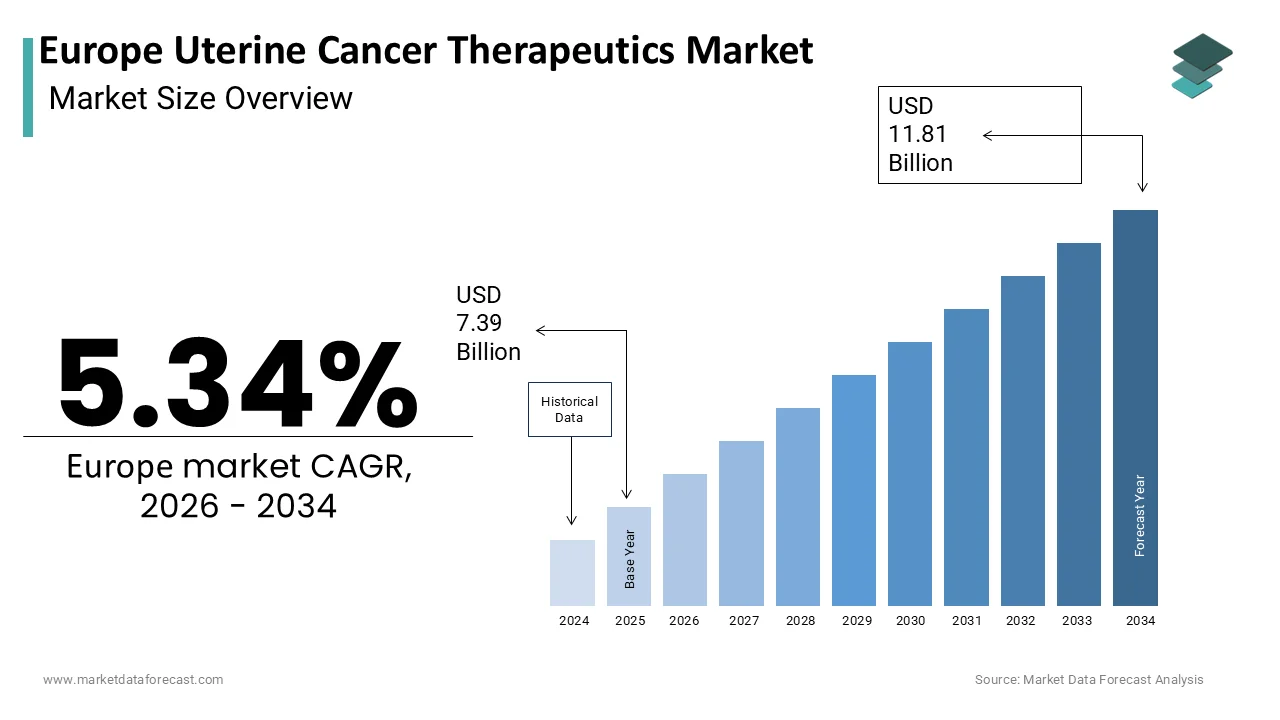
- The Europe uterine cancer therapeutics market was valued at USD 7.39 billion in 2025.
- Expected to reach USD 11.81 billion by 2034, growing at a CAGR of 5.34% from 2026 to 2034.
- The market was valued at USD 7.79 billion in 2026.
- Germany leads with 22.3% market share in 2025; the United Kingdom holds 18.3% share.
- The immunotherapy segment is the fastest-growing therapy type at a CAGR of 14.3% from 2025 to 2033.
- The uterine sarcoma segment is projected to grow at a CAGR of 10.8% during the forecast period.
Key Market Segments
- By Type: Endometrial Carcinoma (dominant), Uterine Sarcoma (fastest growing), Adenocarcinoma, Carcinosarcoma, Squamous Cell Carcinoma
- By Therapy: Surgery (largest share), Chemotherapy, Radiation Therapy, Immunotherapy (fastest growing), Hormone Therapy
- By Country: Germany leads; UK, France, Italy, Netherlands, Spain, Russia, Sweden, Denmark, Switzerland, Turkey, Czech Republic
Key Drivers
- Over 59% of adult women in the EU were classified as overweight or obese in 2023 (WHO), driving endometrial cancer incidence via unopposed estrogen stimulation.
- Women aged 65 and older represent 23% of the EU population, projected to reach 28% by 2035, expanding the at-risk demographic base.
- Uterine cancer incidence rose 1.8% annually between 2015 and 2023 across the EU (European Commission Cancer Inequalities Registry, 2025).
- Molecular subtyping under The Cancer Genome Atlas framework is now mandated for all high-risk endometrial cancers by the European Society of Gynaecological Oncology, accelerating targeted therapy adoption.
- Over 35 active Phase 2 and Phase 3 clinical trials are recruiting across 18 EU countries, focused on PARP inhibitors, antibody-drug conjugates, and dual immune checkpoint blockade.
Key Restraints
- Average time from EMA approval to national reimbursement ranges from 5 months (Sweden) to over 22 months (Italy and Portugal).
- High-cost therapies such as pembrolizumab and dostarlimab remain unavailable in public hospitals in Greece and other Eastern EU states.
- Only 30% of endometrial cancers are mismatch repair-deficient and eligible for current immunotherapies, limiting addressable population.
Key Players
Merck and Co. Inc., GSK plc, Eisai Co. Ltd., F. Hoffmann-La Roche AG, Novartis AG, Takeda Pharmaceutical Company Ltd., Sanofi, AbbVie (Abbott Laboratories), Ariad Pharmaceuticals Inc., Siemens Healthineers (Siemens Healthcare GmbH).
Europe Uterine Cancer Therapeutics Market Size
The Europe Uterine Cancer Therapeutics Market is projected to grow from USD 7.39 billion in 2025 to USD 7.79 billion in 2026 and reach USD 11.81 billion by 2034, registering a CAGR of 5.34% during the forecast period from 2026 to 2034.
The uterine cancer therapeutics are pharmacological and biological interventions used in the treatment of endometrial and uterine sarcoma,including hormone therapy, chemotherapy agents,targeted therapiess,and emerging immunotherapies. Uterine cancer remains the most common gynecologic malignancy in Europe, with incidence rates rising steadily due to demographic and lifestyle factors. The European Society of Medical Oncology notes that some cases are diagnosed at an early stage, yet advanced or recurrent disease presents significant therapeutic challenges due to limited treatment options and molecular heterogeneity. National cancer plans across the EU increasingly emphasize personalized medicine and access to clinical trials, which is reshaping therapeutic algorithms and accelerating the integration of biomarker-driven therapies into standard care pathways.
MARKET DRIVERS
Rising Incidence of Uterine Cancer Linked to Obesity and Aging Demographics
The growing burden of uterine cancer is primarily driven by the increasing prevalence of obesity and an aging female population, which is a major factor accelerating the growth of the European uterine cancer therapeutics market. According to the World Health Organization, over 59% of adult women in the European Union were classified as overweight or obese in 2023, with obesity being the single most significant modifiable risk factor for endometrial cancer due to unopposed estrogen stimulation of the endometrium. Furthermore, as per the study, women aged 65 and older represent 23% of the EU population and this segment is projected to reach 28% by 2035. The European Commission’s Cancer Inequalities Registry reported in 2025that uterine cancer incidence rose by 1.8% annually between 2015 and 2023,, with the steepest increases observed in Eastern and Southern Europe where obesity rates have surged. This epidemiological shift creates sustained demand for both early-stage adjuvant therapies and advanced disease management options across diverse healthcare systems.
Integration of Molecular Profiling and Precision Medicine into Clinical Guidelines
The adoption of molecular classification systems, such as The Cancer Genome Atlas, is transforming uterine cancer management and driving demand for targeted therapeutics. The integration of molecular profiling and precision medicine into clinical guidelines is additionally escalating the growth of the European uterine cancer therapeutics market. According to the European Society of Gynaecological Oncology, molecular subtyping,distinguishing between POLE-mutated mutated mismatch repair-deficient p53 abnormal and no specific molecular profile is now recommended for all high-risk endometrial cancers to guide adjuvant therapy decisions. Germany’s Federal Joint Committee granted early benefit assessment for the combination therapy within three months of approval. Similarly, the UK’s National Institute for Health and Care Excellence included molecular testing in its 2023 uterine cancer pathway, mandating access to genomic diagnostics in all comprehensive cancer centers. These evidence-based frameworks ensure rapid uptake of novel agents aligned with tumor biology rather than histology alone.
MARKET RESTRAINTS
Limited Reimbursement forHigh-Costt Targeted and Immunotherapies in Several EU Countries
Despite clinical efficacy, the fragmented and restrictive reimbursement policiesacross European member states are restricting the growth of the Europe uterine cancer therapeutics market. In countrieslike Greece, Romania, and Bulgaria hihigh-costherapies, such as pembrolizumab, lenvatini,b,, or dostarlim,ab are either unavailable or accessible only through compassionate use programs with stringent eligibility criteria. Even in wealthier nati,,,ons budget impact models often require cost offset within 12 ,,,months leading to restrictive indications. For example, France’s Haute Autorité de Santé initially limited pembrolizumab reimbursement to orepair-deficientientdef,icient tumors despite broader European approval. These disparities create significant access inequities and delay life extending treatments for thousands of patients annually.
Shortage of Specialized Gynecologic Oncology Services in Rural and Eastern Regions
The uneven distribution of specialized gynecologic oncology care restricts optimal therape,utic delivery, particularly for complex treatthat requiremens requiring multidisciplinary coordination. This factor is also declining the growth of European uterine cancer therapeutics market. In Romania and Bulgaria, there are fewer than 20 certified gynecologic oncologists nationwide,, limiting access to surge,ry chemother,apy and clinical trials. A 2025audit by the European Federation of Gynaecology and Obstetrics found that many uterine cancer patients in rural Pond, and Hungary receive initial treatment from general surgeons or medical oncologists without gynecologic specializati,on often resulting in suboptimal staging or adjuvant therapy selection. Furthermore, molecular testing infrastructure is concentrated in capital cities wifewerress hospitals in peripheral regions offering next-generation sequencing.
MARKET OPPORTUNITIES
Expansion of Clinical Trial Networks and Access to Novel Therapeutic Agents
The coordinated oncology research infrastructure to accelerate access to next-generation uterine cancer therapies through clinical trials is solely to set up new opportunities for the growth of the Europe uterine cancer therapeutics market. According to the European Organisation for Research and Treatment of Cancer, over 35 active phase two and three trials are currently recruiting uterine cancer patients across 18 EU countries, focusing on PARP inhibitor,s antibody drug conjugat,es and dual immune checkpoint blockade. TEU-fundedded ULTIMATE consortium, launched in 2024,, aims to enroll 2000 women in biomarker-drivenen platform trial testing multiple targeted combinations based on molecular subtype. National cancer institutes are also enhancing trial access. Similarly, the UK’s Experimental Cancer Medicine Centres network reported an increase in gynecologic trial enrollment between 2022 and 2024.
Development ofBiomarker-Guidedd Adjuvant and Neoadjuvant Strategies
The shift toward risk-adapted treatment based on molecular profiling is creating new therapeutic windows in early-stage disease, where overtreatment has historically been common. The development of biomarker-guided adjuvant and neoadjuvant strategies is additionally to surge the growth opportunities for the European uterine cancer therapeutics market. The ongoing PORTEC 4a trial conducted across 14 European countries uses molecular classification to de-escalate therapy in low-risk subgroups and intensify it in high-risk cohorts. Interim results published in 2025showed that POLE-mutated patients had zero recurrences at three years without adjuvant therapy. Conversely, p53 abnormal tumors benefited significantly from chemotherapy intensification. This precision approach reduces unnecessary toxicity and healthcare costs while improving outcomes. National health systems are responding by funding molecular diagnostics upfront.
MARKET CHALLENGES
Complexity of Tumor Heterogeneity and Lack of Predictive Biomarkers for Non-MMRd Tumors
Uterine cancer exhibits profound molecular diversity with limited targeted options for the majority of patients, who do not have a mismatch repair deficiency. The complexity of tumor heterogeneity and lack of predictive biomarkers for MMRd tumors is a significant challenge for the growth of the Europe uterine cancer therapeutics market. According to The Cancer Genome Atlas, only 30% of endometrial cancers are mismatch repair-deficient and thus responsive to current immunotherapies. The remaining 70% comprising p53 abnormal and no specific molecular profile subtypes,, lack validated predictive biomarkers and show modest response to existing targeted agents. Furthermoreintra-tumoror heterogeneity complicates biomarker development as spatial and temporal genomic evolution can render initial profiling obsolete at recurrence. The European Medicines Agency acknowledged in its 2025oncology roadmap that uterine cancer lags behind other solid tumors in biomarker-qualified drug development.
Delays in Regulatory Harmonization and Cross Border Access to Innovative Therapies
Despite the centralized European Medicines Agency, national regulatory and pricing decisions create significant delays in patient access to new uterine cancer therapeutics. The delays in regulatory harmonization and cross-border access to innovative therapies aree another factor likely to degrade the growth oEurope'spe uterine cancer therapeutics market. According to the European Cancer Organisation, the average time from EMA approval to national reimbursement ranges from 5 months in Sweden to over 22 months in Italy and Portugal. In 2024, the European Commission’s Beating Cancer Plan highlighted that only a few of EU citizens live in countries where all EEMA-approvedgynecologic cancer drugs are routinely available. Parallel trade restrictions and hospital formulary limitations further constrain access. For instance, dostarlimab received EMA approval in 2021 but was not reimbursed in Spain until late 2023 and remains unavailable in public hospitals in Greece. These systemic inefficiencies undermine the EU’s goal of equitable cancer care and force patients to seek costly private treatment or participate in clinical trials out of necessity rather than choice. Harmonizing health technology assessment and pricing mechanisms remains a critical unmet need.
REPORT COVERAGE
| REPORT METRIC | DETAILS |
| Market Size Available | 2025 to 2034 |
| Base Year | 2025 |
| Forecast Period | 2026 to 2034 |
| Segments Covered | By Type, Therapy, and Region. |
| Various Analyses Covered | Global, Regional,, and Country-Level Analysis, Segment-Level Analysis, Drivers, Restraints, Opportunities, Challenges; PESTLE Analysis; Porter’s Five Forces Analysis, Competitive Landscape, Analyst Overview of Investment Opportunities |
| Countries Covered | UK, France, Spain, Germany, Italy, Russia, Sweden, Denmark, Switzerland, Netherlands, Turkey, Czech Republic, Rest of Europe |
| Market Leaders Profiled | Abbott Laboratories, Ariad Pharmaceuticals, Inc., Becton, Dickinson and Company, F. Hoffmann-La Roche AG, GlaxoSmithKline Plc, Merck & Co., Inc., Novartis AG, Sanofi, Siemens Healthcare Gm,bH, and Takeda Pharmaceutical Company Ltd. |
SEGMENTAL ANALYSIS
By Type Insights
The endometrial carcinoma segmeas accounted in holding a significant share of the European uterine cancer therapeutics market in 2025due to its overwhelming prevalence among uterine malignancies. This histological subtype arises from the endometrial lining and is strongly associated with hormonal and metabolic risk factors prevalent across European populations. According to the International Agency for Research on Cancer, new uterine cancer cases diagnosed in the EU in 2023 were classified as endometrial carcinoma, with the majority being endometrioid adenocarcinomas. The European Society of Gynaecological Oncology confirms that endometrial carcinoma is the most common gynecologic cancer in hhigh-incomeEuropean countries in Northern and Western Europe, where obesity and aging demographics amplify incidence. National cancer registries in Germany and the UK report that over 90% of uterine cancer therapeutic protocols are designed specifically for endometrial carcinoma subtypes, including hormone receptor-positive and mismatch repair-deficient variants. Furthermore, the integration of molecular classification into treatment guidelines, such as The Cancer Genome Atlas subtypes that has further entrenched endometrial carcinoma as the focal point of clinical research and drug development, ensuring its continued dominance in therapeutic utilization.
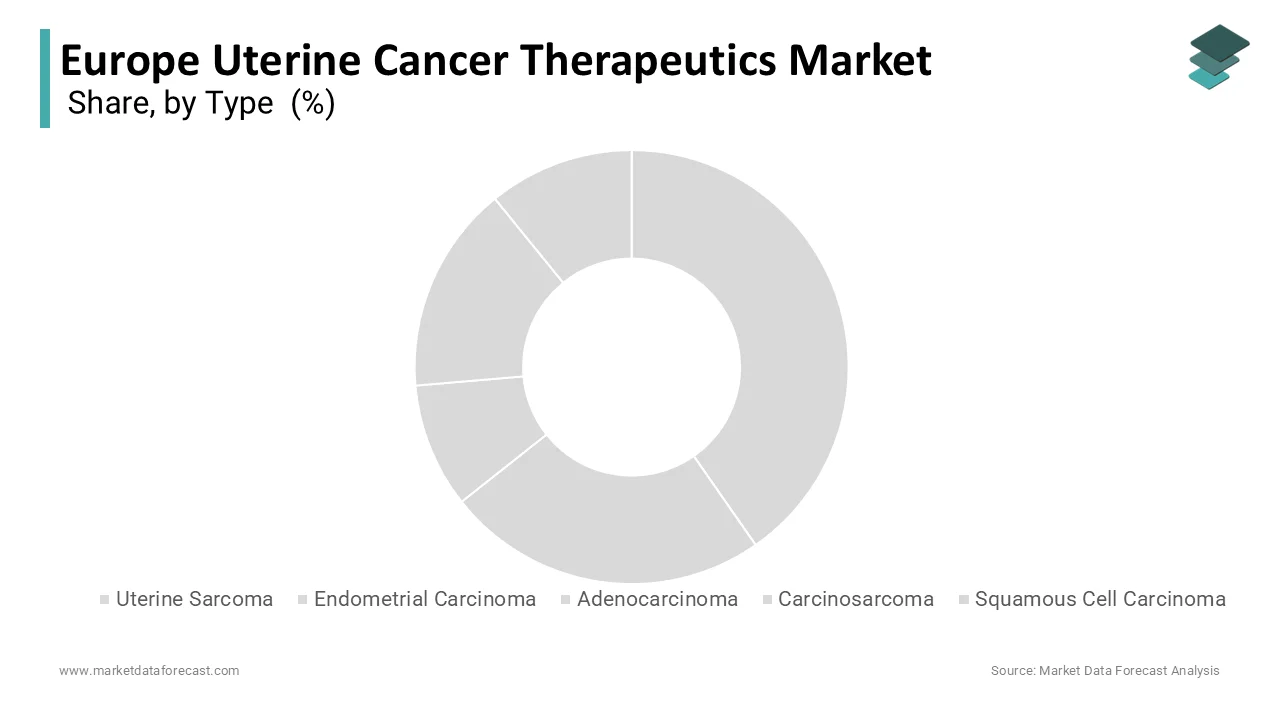
The uterine sarcoma segment is anticipated to witness the fastest CAGR of 10.8% during the forecast period,, with the improved diagnostic accura,c,y increased recognition of its distinct bio,,logy and the urgent need for effective systemic therapies. Historically misclassified as aggressive endometrial carc,,inomas uterine sarcomas, including leiomyosarcoma and endometrial stromal,, sarcoma are now recognized as separate entities requiring tailored approaches. According to the European Society of Medical Oncology, the reclassification of uterine tumors under the WHO 2020 guidelines led to an increase in confirmed uterine sarcomaiagnoses, across EU cancer centers between 2021 and 2023. This diagnostic refinement has spurred clinical interest and therapeutic development. In 2024, the European Organisation for Research and Treatment of Cancer launched the SARCUL trial evaluating olaratumab and trabectedin combinations specifically for advanced uterine leiomyosarcoma. Additionally, national rare cancer networks i France, and the Neterlands, now mandate central pathology review for all suspected sarcomas,, ensuring accurate identification and access to specialized protocols. These advances are transforming a previously neglected category into a focus of precision oncology investment.
By Therapy Insights
The surgery segment was the largest by capturing a significant share of thEuropeanpe uterine cancer therapeutics market in 2024, as it is the curative intent treatment for early-stage disease. Total hysterectomy with bilateral salpingo-oophorectomyis the standard of care for the majority of endometrial carcinoma cases and is widely accessibleacross European healthcare systems. According to the European Society of Gynaecological Oncology, uterine cancer patients in the EU undergo surgery as part of their initial management with minimally invasive laparoscopic or robotic approaches, now used in hihigh-resourceettings. National cancer plans reinforce this trend. Germany’s National Cancer Plan mandates that all uterine cancer surgeries be performed in certified gynecologic oncology centers, which improved five-year survival rates between 2018 and 2023. Similarly, the UK’s National Institute for Health and Care Excellence updated its 2023 guidelines to recommend robotic surgery for obese patients.
The immunotherapy segment is expected to grow at a fastest CAGR of 14.3% from 2025 to 2033,, with the regulatory approval,biomarker-drivenen indication,s, and integration intfirst-linene treatment regimens for advanced disease. According to the European Society of Medical Oncology, advanced endometrial cancer patients in Western Europ now receive immune checkpoint inhibitors as part of their treatment pathway. National reimbursement has followed rapidly. Sweden’s Dental and Pharmaceutical Benefits Agency granted full coverage in early 2024, while the Netherlands included the combination in its national oncology formulary. Furthermore, the ongoing RAINBO trial is evaluating immunotherapy in the adjuvant setting for hhigh-riskmolecular subtypes. These clinical and policy tailwinds position immunotherapy as thehigh-growthh frontier in systemic uterine cancer management.
COUNTRY LEVEL ANALYSIS
Germany Uterine Cancer Therapeutics Market Analysis
Germany was the top performer of the European uterine cancer therapeutics market by accounting for 22.3% of the share in 2025due to its universal health coverage, robust oncology infrastructur,e and early adoption of precision medicine. According to the German Cancer Research Center, molecular subtyping is now standard for alhigh-risksk endometrial cancers,, with reimbursement provided under the statutory health insurance scheme. The Federal Joint Committee granted early benefit assessment to pembrolizumab lenvatinib within three months of EMA approv,al ensuring rapid patient access. Additionally, Germany leads European clinical trial enrollment with participation rates exceedithose ng for gynecologic cancers. These systemic advantages in diagnostics, treatmen,t acce,ss and research position Germany as the regional benchmark for comprehensive uterine cancer care.
United Kingdom Uterine Cancer Therapeutics Market Analysis
The United Kingdom was positioned next by capturing 18.3% of tEuropeanope uterine cancer therapeutics market share in 2024,, with its centralized National Health Servi,ce, strong clinical governanc,e, and proactive national cancer strategy. According to NHS England, over 9000 new uterine cancer cases are diagnosed annua,,lly with 78% staged at diagnosis due to widespread transvaginal ultrasound access. The National Institute for Health and Care Excellence updated its 2023 uterine cancer pathway to mandate molecular testing and include immunotherapy for advanced mismrepair-deficientcient disease. Furthermore, the Cancer Drugs Fund provides temporary coverage for promising therapies pending full appraisal. These coordinated mechanisms ensure timely access to both standard and innovative treatments across public healthcare settings.
France Uterine Cancer Therapeutics Market Analysis
France's's uterine cancer therapeutics market growth is expected to grow with its national cancer plan,, dense network of comprehensive cancer cente,,rs and strong emphasis on rare tumor management. According to the French National Cancer Institute, many new uterine cancer cases are diagnosed each ,,year with centralized pathology review required fohigh-grade grade or sarcomatous tumors. The Haute Autorité de Santé approved reimbursement for dostarlimab in mismatch repair-deficient disease in 2023, with expanded indications under review. Additionally, Franceco-leadss the European SARCUL trial for uterine sarcomas, reflecting its leadership in rare gynecologic malignancies. These structural and research investments create a high compliance market with strong uptake ofbiomarker-guidedd therapies.
Italy Uterine Cancer Therapeutics Market Analysis
Italy's's uterine cancer therapeutics market growth is expected to witness a prominent growth opportunity with the high incidence of rising obesity rates and regional disparities in care access. According to the Italian National Institute of Health, over 11000 new uterine cancer cases are reported annually,, with incidence increasing by 2.1% per year since 20,15 primarily due to metabolic risk factors. The National Oncology Netw,,ork established in, ,2022 aims to standardize care by designating 18 regional reference centers for gynecologic cancers. In 2024, the Italian Medicines fast-trackedtracked approval for pembrolizumab combinations and allocated supplementary funding for molecular testing in public hospitals.
The Netherlands Uterine Cancer Therapeutics Market Analysis
The Netherlands uterine cancer therapeutics market growth is likely to be driven by the integrated care models,, rapid health technology assessment and leadership in molecularly guided treatment. According to the Netherlands Comprehensive Cancer Organisation, over 1800 new uterine cancer cases are diagnosed annually with 100% of high-risk patients receiving ProMisE molecular subtyping reimbursed under national insurance. The National Health Care Institute approved full coverage for immunotherapy combinations in 2,,023 within four months of EMA authorization. The country also leads the PORTEC 4a de escalation ,trial which uses molecular classification to tailor adjuvant therapy.
COMPETITIVE LANDSCAPE
Europe uterine cancer therapeutics market features a competitive landscape defined by a select group of multinational pharmaceutical companies advancing immune checkpoint inhibitors and targeted kinase inhibitors within a precision oncology framework. Competition centers on clinical differentiation through biomarker stratification,, speed of regulatory and reimbursement approval,, and integration into national treatment guidelines. Leading participants invest heavily in companion diagnostics and physician education to ensure appropriate patient identification and therapy selection. The market is further shaped by the European Medicines Agency’s adaptive pathways and the Beating Cancer Plan’s emphasis on equitable acce,,ss which incentivize companies to engage early with health technology assessment bodies. While surgery and chemotherapy remain foundati,,onal systemic innovation is concentrated in immunotherapy combinations for advanced d,,isease with emerging interest in adjuvant settings. Barriers to entry are high due to the need for large phase three trials and complex biomarker infras,tructure yet the unmetnon-mismatch mismatch repair deficient tumors creates opportunities for novel mechanisms. Overall, the market rewards scientific rigo,,r regulatory agil,i,ty and deep collaboration with European oncology communities.
KEY MARKET PLAYERS
A few of the promising companies operating in the europe uterine cancer therapeutics market profiled in this report are
- Abbott Laboratories
- Ariad Pharmaceuticals, Inc.
- Becton, Dickinson and Company
- F. Hoffmann-La Roche AG
- GlaxoSmithKline Plc
- Merck & Co., Inc.
- Novartis AG
- Sanofi
- Siemens Healthcare GmbH
- Takeda Pharmaceutical Company Ltd.
TOP LEADING PLAYERS IN THE MARKET
- MerCo.. & Co is a global oncology leader with a pivotal role European Europe uterine cancer therapeutics market through its immune checkpoint inhibitor pembrolizumab, which has redefined treatment paradigms for advanced endometrial cancer. The company contributes to the global market by driving biomarker-driven immunotherapy adoption and supporting large-scale clinical validation across diverse populations. Recently,, Merck secured European Medicines Agency approval for pembrolizumab in combination with lenvatinib for mismatch repair proficient uterine cancer and expanded access programs across Germany, France, and the UK. It also partnered with European molecular pathology networks to standardizPD-L1L1 and mismatch repair testing protocols. These actions reinforce its commitment to precision oncology and ensure broad patient access to evidence-based combination regimens in alignment with evolving EU treatment guidelines.
- Eisai Co.. is a key contributor to the European uterine cancer therapeutics landscape through its multikinase inhibitor lenvatinib,, which forms the backbone offirst-linee combination therapy with pembrolizumab. The company supports global clinical development byco-leadingg the LEAP clinical trial program and actively engaging with European regulatory and reimbursement bodies. In 2024,, Eisai collaborated with national cancer institutes in Italy and the Netherlands to integrate lenvatiniand b and pembrolizumab into routine care pathways for advanced disease. It also launched a digital decision support tool for gynecologic oncologists to guide molecular testing and treatment selection. These initiatives demonstrate their strategic focus on real-world implementation and multidisciplinary collaboration to enhance therapeutic outcomes in biomarker-defined patient subgroups.
- GSK is a significant player in the European uterine cancer therapeutics market through its PD-1 inhibitor dostarlimab,, which is approved for mismatchrepair-deficientt recurrent or advanced endometrial cancer. The company contributes globally by advancingtumor-agnosticc immunotherapy approaches and investing in biomarker discovery. Recently,, GSK expanded dostarlimab access across Eastern and Southern Europe through early access programs and supported the European Society of Gynaecological Oncology’s molecular testing initiative. It also initiated the AtTEnd trial evaluating dostarlimab in the adjuvant setting for high-risk molecular subtypes. These efforts position GSK as a specialist in gynecologiimmuno-oncologygy with a strong emphasis on expanding the utility of immunotherapy beyond metastatic disease into earlier stages of care.
TOP STRATEGIES USED BY THE KEY MARKET PARTICIPANTS
Key players in the European uterine cancer therapeutics market primarily focus on securing regulatory approvals for biomarker-defined indications, conductinglarge-scalee multinational clinical trials,, establishing partnerships with national cancer networks to facilitate molecular testing,, expanding early access and compassionate use programs and developing digital tools to support treatmdecision-makingking and real-world evidence generation across diverse European healthcare systems.
MARKET SEGMENTATION
This research report on the europe uterine cancer therapeutics market is segmented & sub-segmented into the following categories.
By Type
- Uterine Sarcoma
- Endometrial Carcinoma
- Adenocarcinoma
- Carcinosarcoma
- Squamous Cell Carcinoma
- Others
By Therapy
- Surgery
- Chemotherapy
- Radiation Therapy
- Immunotherapy
- Hormone Therapy
By Country
- UK
- France
- Spain
- Germany
- Italy
- Russia
- Sweden
- Denmark
- Switzerland
- Netherlands
- Turkey
- Czech Republic
- Rest of Europe