Europe Wound Dressing Market Size, Share, Trends & Growth Forecast Report By Product, By Application, By End-Use, and By Country (Germany, United Kingdom, France, Italy, Netherlands & Rest of Europe) – Industry Analysis and Forecast, 2026 to 2034
Market Size, 2025
$4.45 BnMarket Estimate, 2026
$4.59 BnMarket Forecast, 2034
$5.91 BnCAGR, 2026–2034
3.2%Europe Wound Dressing Market Summary
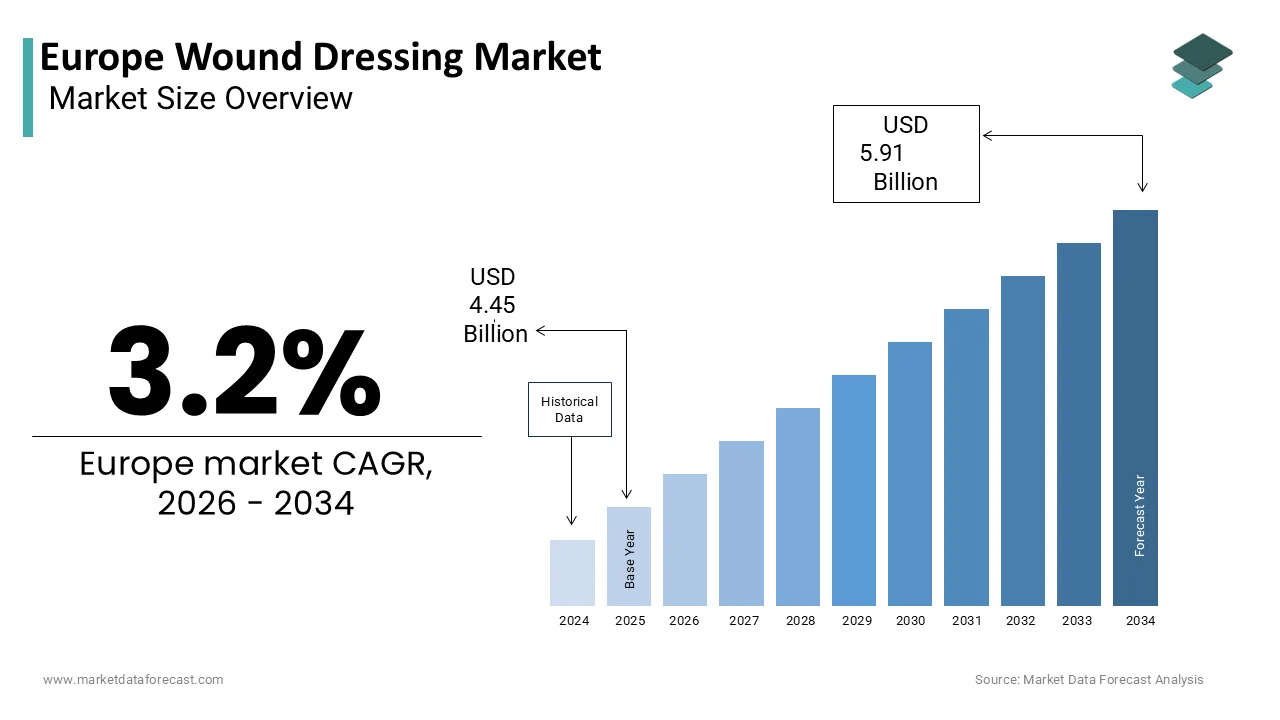
The Europe wound dressing market was valued at USD 4.45 billion in 2025 and is projected to reach USD 5.91 billion by 2034, growing at a CAGR of 3.2% from 2026 to 2034, driven by rising chronic wound prevalence, aging demographics, and the transition toward home-based and value-driven wound care models.
Market Snapshot
- 2025 Market Size: USD 4.45 Billion
- 2026 Market Size: USD 4.59 Billion
- 2034 Forecast: USD 5.91 Billion
- CAGR (2026–2034): 3.2%
- Base Year: 2025
- Forecast Period: 2026–2034
Quick Growth Drivers
- Rising burden of diabetic foot ulcers and venous leg ulcers across aging populations
- Expansion of structured chronic wound management programs in Germany, UK, and France
- Shift toward decentralized, home-based wound care delivery
- Clinical evidence supporting faster healing through advanced moisture-retentive dressings
- Integration of antimicrobial and bioactive materials in advanced wound care
Principal Restraints
- Strict reimbursement and health technology assessment requirements
- Price containment policies in Southern and Eastern Europe
- Limited harmonization of national wound care guidelines
- Administrative burden under EU Medical Devices Regulation (EU MDR)
High-Value Opportunities
- Smart and sensor-enabled dressings for remote monitoring
- Bioactive and regenerative dressings with growth factors and ECM scaffolds
- Telehealth-integrated wound management platforms
- Sustainability-driven eco-design and recyclable packaging solutions
- Expansion of community nursing and home healthcare distribution channels
Key Market Challenges
- Extended CE certification timelines under EU MDR
- Rising compliance and clinical documentation costs
- Environmental concerns regarding single-use medical waste
- Knowledge gaps among clinicians in evidence-based dressing selection
- Fragmented procurement frameworks across EU member states
Fastest-Growing Segments
- Advanced Dressings – fastest CAGR of 10.7% driven by chronic wound management demand
- Acute Wounds Application – fastest CAGR of 9.3% due to surgical volume growth
- Home Healthcare End-Use – fastest CAGR of 12.1% supported by decentralized care reforms
Regional Leadership & Dynamics
- Germany (23.3%) – largest market with structured wound centers and strong statutory insurance coverage
- United Kingdom (17.3%) – centralized NHS procurement and virtual wound clinic models
- France – proactive diabetic screening and national guideline integration
- Italy – regionally driven chronic wound management programs
- Netherlands – leader in home-based care and telehealth-enabled wound management
What Wins Commercially
- Inclusion in national reimbursement formularies and HTA approval
- Demonstrated reduction in healing time and hospital readmissions
- EU MDR-compliant documentation and post-market surveillance readiness
- Integrated hospital and community care partnerships
- Sustainability alignment with EU Green Deal medical waste targets
Top Strategic Ask for Executives
Prioritize EU MDR-compliant innovation in advanced and bioactive dressings while expanding home healthcare partnerships and real-world evidence generation to secure reimbursement in Europe’s cost-constrained, outcomes-driven wound care ecosystem.
Leading Players
Some of the companies that are playing a dominating role in the Europe wound dressing market include
Smith & Nephew,
3M,
ConvaTec,
Coloplast,
Mölnlycke Health Care,
Essity,
Paul Hartmann AG,
Medtronic,
Johnson & Johnson,
and Cardinal Health.
Europe Wound Dressing Market Size
The europe wound dressing market was valued at USD 4.45 billion in 2025, is estimated to reach USD 4.59 billion in 2026, and is projected to reach USD 5.91 billion by 2034, growing at a CAGR of 3.2% from 2026 to 2034.
The wound dressing is a medical device designed to protect wounds, manage exudate, prevent infection, and promote tissue regeneration across acute surgical and chronic care settings. These include traditional gauze film,s hydrocolloids, alginates, foams,ams, and advanced bioactive dressings embedded with antimicrobial growth factors or moisture-responsive polymers. In the European context, wound care is shaped by aging demographics, rising prevalence of diabetes and vascular diseases, stringent regulatory oversight under the EU Medical Devices Regulation, and evolving reimbursement frameworks that prioritize clinical outcomes over volume. According to the European Centre for Disease Prevention and Control, over 25 million people in the EU live with chronic wounds, such as diabetic foot ulcers and venous leg ulcers,s which account for 2–4% of total healthcare expenditures in several member states. As per Eurostat, 21.3% of the EU population was aged 65 or older in 2025a demographic highly susceptible to pressure injuries and delayed healing. The emergence of clinical needs, ed technological innovations, and value-based healthcare policy has redefined wound dressings from passive coverings to active therapeutic interventions central to integrated wound management pathways across the region.
MARKET DRIVERS
Rising Burden of Chronic Wounds Linked to Diabetes and Vascular Diseases
The escalating prevalence of diabetes and peripheral vascular disorders is driving the demand for advanced wound dressing due to the high incidence of non-healing ulcers and associated complications, which is majorly propelling the growth of Europe wound dressing market. According to the International Diabetes Federation, over 61 million adults in the EU had diabetes in 2024, with 15 to 25% developing foot ulcers during their lifetime. The European Wound Management Association reports that diabetic foot ulcers alone lead to over 100,000 lower limb amputations annually in the EU, costing healthcare systems an estimated 12 billion euros per year. National health agencies are responding with structured wound care programs, where Germany’s Federal Joint Committee mandates multidisciplinary treatment for chronic wounds, including the use of moisture-retentive and antimicrobial dressings. Similarly, the UK’s National Health Service includes advanced dressings in its Diabetic Foot Pathway to reduce hospitalization. As per the European Society for Vascular Surgery, patients with chronic venous insufficiency develop venous leg ulcers requiring specialized compression and absorbent dressings. This clinical urgency, amplified by an aging population,s fuels consistent demand for evidence-based wound solutions that accelerate healing and prevent deterioration.
Shift Toward Home-Based and Community Wound Care Models
European healthcare systems are increasingly decentralizing wound management from hospitals to community and home settings to reduce costs, improve patient quality of life, and alleviate hospital congestion. According to the European Observatory on Health Systems and Policies, 19 EU countries expanded community nursing services for wound care between 2021 and 2025as part of broader long-term care reforms. In the Netherlands, over 70% of chronic wound patients receive treatment at home through district nursing teams using advanced dressings that require fewer changes and enable remote monitoring. Sweden’s national wound registry shows that home-based care reduced dressing-related outpatient visits in 2024. Additionally, the UK’s Virtual Wound Clinic model uses telehealth to guide caregivers in dressing selection and application, increasing adherence to protocols. This structural shift favors user-friendly, longer-wear dressings such as hydrocolloids and foam variants that support self-management and reduce clinician burden, enabling adoption beyond institutional settings.
MARKET RESTRAINTS
Stringent Reimbursement Criteria and Price Containment Policies
The public healthcare systems impose strict limitations on advanced wound dressing reimbursement due to high unit costs and variable evidence of cost-effectiveness compared to basic alternatives. The stringent reimbursement criteria and price containment policiare is limiting the growth of Europe wound dressing market. According to the European Commission, health technology assessment bodies in 16 EU countries require comparative clinical trials demonstrating superior healing rates or reduced complications before granting coverage for premium dressings. In Spain, Italy, and Portugal, national formularies exclude many advanced products unless used in specialized wound centers. Germany’s Federal Joint Committee permits reimbursement only when standard care fails, a criterion that delays access and increases administrative burden. A 2025analysis by the London School of Economics found that widespread adoption of silver dressings would increase national wound budgets without proportional gains in quality-adjusted life years. These fiscal constraints force clinicians to reserve advanced dressings for extreme cases despite potential benefits in broader populations.
Fragmented Clinical Guidelines and Lack of Standardized Protocols
The absence of harmonized wound care guidelines across EU member states leads to inconsistent dressing selection, inappropriate use, and suboptimal outcomes. The fragmented clinical guidelines and lack of standardized protocols are additionally hampering the growth of Europe wound dressing market. According to the European Wound Management Association, fewer than 40% of EU countries have national evidence-based protocols for chronic wound management as of 2024. In Eastern Europe, many clinicians still rely on gauze and antiseptics due to limited training and budget constraints, while Nordic countries adopt algorithm-driven approaches using moisture-balanced dressings. A 2025survey by the European Pressure Ulcer Advisory Panel revealed that only 35% of nurses felt confident selecting dressings based on wound etiology and exudate level. This knowledge gap results in trial-and-error prescribing increasing healing time and costs. Furthermore, variations in product classification, such as whether a collagen dressing is a medical device or a medicinal product, can affect availability and labeling.
MARKET OPPORTUNITIES
Integration of Smart and Connected Wound Dressings for Remote Monitoring
The emergence of smart dressings embedded with sensors to track pH, temperature, relative moisture, and infection biomarkers to enable data-driven wound management in home and clinical settings. The integration of smart and connected wound dressings for remote monitoring is setting up new opportunities for the growth of Europe wound dressing market. According to the European Institute of Innovation and Technology, over 12 pilot projects in 2025tested connected dressings that transmit real-time wound status to clinician dashboards via Bluetooth or NFC. Companies like Molnlycke and ConvaTec have developed prototypes that alert caregivers to early signs of infection, thereby reducing complications by up to 40% in preliminary trials. The European Commission’s Digital Europe Programme allocated 85 million euros in 2025to scale remote patient monitoring solutions for chronic conditions, including wound care. In Denmark, a national telehealth initiative integrated smart dressings into municipal home care programs, reducing nurse visits. As per the European Medicines Agency, real-world data from these devices is increasingly accepted in post-market surveillance,e supporting regulatory value. This emergence of medtech digital health and value-based care opens premium pricing avenues and aligns wound dressings with Europe’s strategic vision for proactive integrated health systems.
Expansion of Bioactive and Regenerative Dressings for Complex Wounds
Innovations in bioengineered dressings containing growth factors, extracellular matrix proteins,s and stem cell-derived exosomes offer significant potential for treating stalled or complex wounds resistant to conventional therapy. The expansion of bioactive and regenerative dressings for complex wounds is expected to elevate the growth of Europe wound dressing market. According to the European Tissue Repair Society, over 30% of chronic wounds fail to progress beyond the inflammatory phase, requiring biologically active interventions. Products like collagen matrices with embedded fibroblasts or hyaluronic acid scaffolds have demonstrated 50% faster epithelialization in multicenter EU trials. The European Commission’s Horizon Europe program funded a 9-million euro consortium in 2025to develop off-the-shelf regenerative dressings for diabetic foot ulcers using decellularized plant scaffolds. Additionally, national health systems are creating pathways for these advanced therapies; France’s Haute Autorité de Santé now includes bioactive dressings in its severe burn and ulcer treatment guidelines. As per the University of Heidelberg, a 2025study showed that patients using regenerative dressings had 35% fewer hospital readmissions.
MARKET CHALLENGES
High Development Costs and Regulatory Hurdles Under the EU MDR
The implementation of the EU Medical Devices Regulation has significantly increased compliance burdens for wound dressing manufacturers, particularly small and medium enterprises lacking dedicated regulatory infrastructure. The high development costs and regulatory hurdles is oen of the challenges for the growth of Europe wound dressing market. According to the European Commission, many legacy wound care products underwent re-certification between 2021 and 2024, requiring extensive clinical evaluation,n technical documentation, and post-market surveillance plans. The regulation classifies many advanced dressings as Class IIa or higher, mandating unique device identification UDI implementation and stricter scrutiny of raw material sourcing. As per the European Association of Medical Device Manufacturers, the average time to obtain CE certification for a new bioactive dressing now exceeds 18 months compared to 10 months under the previous directive. National competent authorities like Germany’s BfArM conduct unannounced audits focusing on sterilization validation and supplier traceability. These heightened requirements increase development costs and delay entry disproportionately affecting niche innovators and reducing product diversification,y particularly in cost-sensitive segments such as basic hydrocolloids used in public hospitals.
Environmental Impact and Medical Waste Concerns
The widespread use of single-use wound dressings contributes to the growing volume of medical plastic waste in Europe, raising sustainability concerns under the EU’s Green Deal and Circular Economy Action Plan. According to the European Environment Agency, healthcare accounts for 5% of the EU’s total carbon footprint, with disposable dressings generating over 80,000 tons of non-recyclable waste annually. Most advanced dressings contain mixed materials, foam adhesives, and films that cannot be separated for recycling under current municipal systems. France’s Anti-Waste Law for a Circular Economy, enacted in 2024, requires medical device manufacturers to implement eco-design principles and take-back schemes by 2026, a mandate posing logistical and financial challenges. As per a 2025study by the Technical University of Berlin, conventional dressing packaging contains multi-layer plastics with less than 10% recyclability. While reusable alternatives exist, st sterility and cross-contamination risks limit feasibility in most clinical contexts.
REPORT COVERAGE
| REPORT METRIC | DETAILS |
| Market Size Available | 2025 to 2034 |
| Base Year | 2025 |
| Forecast Period | 2026 to 2034 |
| Segments Covered | By Product, Application, End-Use, and Region. |
| Various Analyses Covered | Global, Regional, and Country-Level Analysis, Segment-Level Analysis, Drivers, Restraints, Opportunities, Challenges; PESTLE Analysis; Porter’s Five Forces Analysis, Competitive Landscape, Analyst Overview of Investment Opportunities |
| Countries Covered | UK, France, Spain, Germany, Italy, Russia, Sweden, Denmark, Switzerland, Netherlands, Turkey, Czech Republic, Rest of Europe |
| Market Leaders Profiled | Smith & Nephew plc, 3M Company, ConvaTec Group plc, Coloplast A/S, BSN Medical (a subsidiary of Essity AB), Mölnlycke Health Care AB, Essity AB, Johnson & Johnson Services, Inc., DermaRite Industries LLC, Medline Industries, Inc., Cardinal Health, Inc., Hollister Incorporated, Integra LifeSciences Holdings Corporation, Eurocept International HealthCare BV, Acelity L.P. (now part of 3M), Hartmann Group, Paul Hartmann AG, Covidien (Medtronic plc), GlaxoSmithKline plc, Arjo AB |
SEGMENTAL ANALYSIS
By Product Insights
The traditional dressings segment accounted in holding 58.2% of the European wound dressing market in 2025 due to their low-cost, widespread availability,y and entrenched use in minor acute wounds and primary care settings. According to the European Centre for Disease Prevention and Control, over 120 million minor injuries requiring basic wound care occur annually across the EU, with gauze cotton and non-adherent pads remaining first-line choices in emergency departments and general practice. Additionally, pharmacies and retail chains stock vast quantities of gauze and adhesive bandages for consumer self-care. Europeans treat minor cuts and abrasions at home without medical consultation. While advanced dressings gain traction in complex cases, the sheer volume of low-severity injuries and institutional inertia in cost-sensitive regions like Southern and Eastern Europe sustain traditional dressings as the dominant segment.
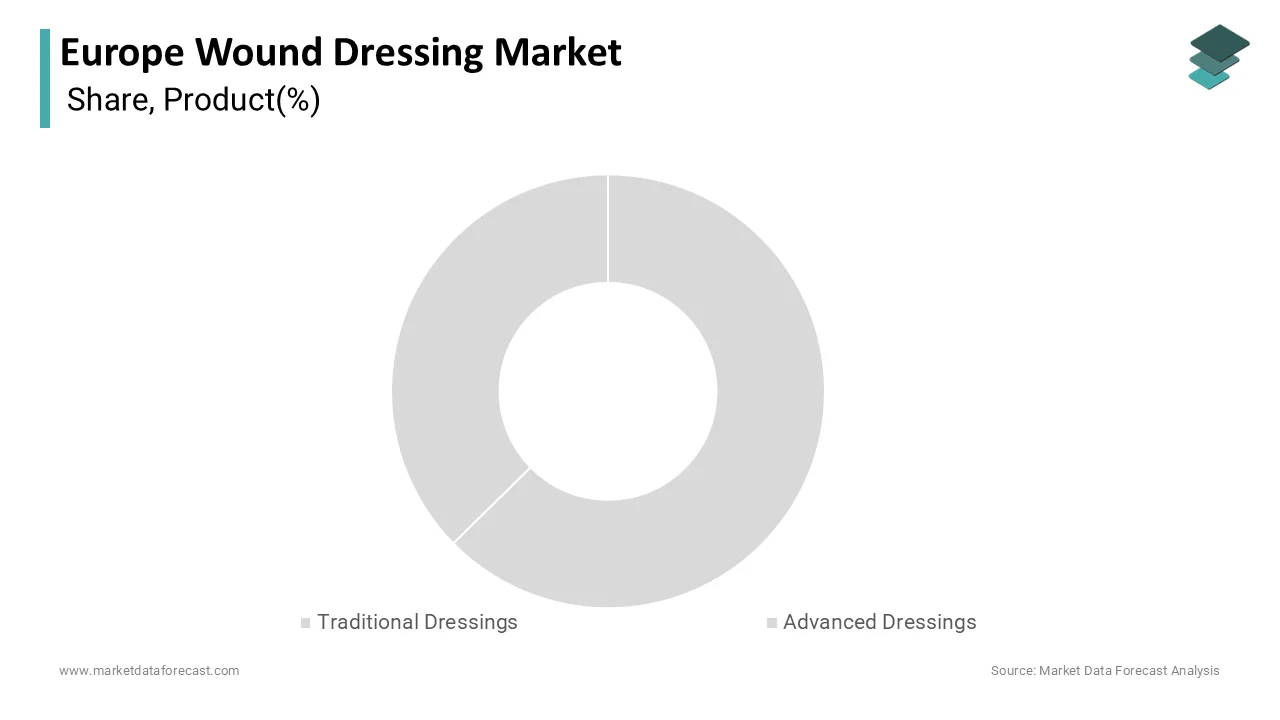
The advanced dressings segment is projected to expand at a CAGR of 10.7% throughout the forecast period, owing to the rising prevalence of chronic wounds, increasing adoption of value-based care,e and clinical evidence supporting faster healing and reduced complications. According to the European Wound Management Association, advanced dressings such as hydrocolloid,s alginates, and antimicrobial foams reduce healing time for diabetic foot ulcers by 25 to 40% compared to gauze. The UK’s National Health Service now mandates their use in Stage II+ pressure injuries under its Quality Improvement Framework. Furthermore, the European Commission’s Horizon Europe program allocated 65 million euros in 2025to scale bioactive dressings with growth factors and exosomes. As per the German Association of Statutory Health Insurance Physicians, reimbursement for advanced dressings in chronic wounds grew annually between 2022 and 2024, reflecting policy alignment with clinical outcomes.
By Application Insights
The chronic wounds segment was the largest by holding 64.3% of theEuropean woundd dressing market share in 2024, owing to the high burden of diabetes,s vascular disease,se and aging-related tissue fragility across the region. According to the International Diabetes Federation, over 61 million adults in the EU had diabetes in 2024, with 15 to 25% developing foot ulcers that often require months of specialized care. The European Society for Vascular Surgery estimates that venous leg ulcers affect 1.5 million Europeans annually, with recurrence rates exceeding 70% without proper management. National health systems prioritize structured wound pathways, where Germany’s Disease Management Programs mandate multidisciplinary care, including moisture-balanced and antimicrobial dressings for chronic cases. As per the European Pressure Ulcer Advisory Panel, over 4 million elderly patients in EU care homes suffer from pressure injuries requiring ongoing dressing changes. The economic imperative is clear, where chronic wounds consume 2 to 4% of national health budgets according to the European Commission, making effective dressing selection a fiscal as well as clinical priority. This sustained demand for long-term high-frequency dressing use ensures chronic wounds remain the cornerstone of market consumption.
The acute wounds segment is anticipated to witness the fastest CAGR of 9.3% throughout the forecast period, from rising trauma incidence, increased volumes, and the integration of advanced dressings into post-operative protocols to prevent complications. According to Eurostat, over 28 million surgical procedures were performed in EU hospitals in 2024, each requiring at least one sterile dressing, with many using antimicrobial variants to reduce surgical site infections. The European Centre for Disease Prevention and Control reports that road traffic accidents caused 1.2 million hospital-treated injuries in 2024, driving demand for rapid-healing foam and film dressings. This combination of procedural volume, trauma burden, and outpatient trends creates consistent growth in acute wound care beyond traditional gauze.
By End-Use Insights
The hospitals segment was the largest by holding 48.2% of the European wound dressing market share in 2025due to their role as primary sites for surgical care, trauma management,t and complex chronic wound treatment. According to the European Hospital Association, over 22 million inpatient admissions involved wound care in 2024, spanning post-operative incisions, burns, and pressure injuries. Hospitals maintain formularies that increasingly include advanced dressings for high-risk patients, where the UK’s NHS Supply Chain procured over 150 million advanced dressings in 2025for acute and chronic indications. Centralized purchasing ensures bulk contracts with major suppliers like ConvaTec and BSN Medical, enabling cost control while meeting clinical standards. Additionally, hospitals serve as training grounds where nurses learn evidence-based dressing selection, reinforcing institutional preferences. As per the study, system dressing costs are bundled into procedure reimbursement, thus incentivizing efficiency without compromising quality.
The home healthcare segment is likely to witness the fastest CAGR of 12.1% throughout the forecast period, owing to the structural shift toward decentralized care models to reduce hospital congestion, improve patient quality of life,e and contain costs. According to the European Observatory on Health Systems and Policies, 19 EU countries expanded community nursing services for wound care between 2021 and 2024. In the Netherlands, over 70% of chronic wound patients receive treatment at home through district nursing teams using longer-wear dressings that require fewer changes. Sweden’s national telehealth initiative integrates smart dressings with remote monitoring, ng reducing nurse visits by 25%. This trend favors intuitive, easy-to-use products that support independence while maintaining clinical efficacy.
COUNTRY LEVEL ANALYSIS
Germany Wound Dressing Market Analysis
Germany was the top performer of the European wound dressing market by holding 23.3% of the share in 2024, with its aging populatio robustst statutory health insurance system,, em and dominance in structured wound care protocols. According to the Federal Statistical Office, over 18 million people aged 65 or older reside in Germany, with high rates of diabetes and vascular disease driving chronic wound prevalence. The Federal Joint Committee mandates evidence-based treatment pathways that include advanced dressings for pressure ulcers and diabetic foot syndrome,e ensuring consistent reimbursement. Germany hosts major manufacturers like BSN Medical and Lohmann & Rausch, er which supply both domestic and pan-European markets with CE-certified products compliant with the EU Medical Devices Regulation. As per the German Wound Healing Society, over 1,200 certified wound centers operate nationwide, providing standardized care and driving product adoption. Additionally, the country’s dual education system trains thousands of wound care nurses annually, ensuring clinical expertise. This blend of demographic need,d regulatory clarity, and industrial capacity sustains Germany’s undisputed leadership in the regional market.
United Kingdom Wound Dressing Market Analysis
The United Kingdom was ranked second by holding 17.3% of tEuropeanope wound dressing market share in 2024, with the centralized procurement through the National Health Service and strong emphasis on preventing avoidable harm. According to NHS England, over 2.4 million patients received wound care in 202,3 with diabetic foot ulcers and pressure injuries accounting for 68% of chronic cases. The NHS Supply Chain regularly tenders for advanced dressings, gs distributing millions of units annually to hospitals and community providers. The National Institute for Health and Care Excellence mandates the use of moisture-retentive dressings for Stage II+ pressure injuries,ies reducing litigation risks. Additionally, the UK leads in home-based care, where the Virtual Wound Clinic model uses telehealth to guide dressing selection in home visits annually. As per the Office for National Statistics, 19% of adults aged 65+ live alone, increasing demand for self-applied dressings. Post-Brexit, the Medicines and Healthcare products Regulatory Agency maintains alignment with the EU MDR, ensuring seamless market access. This structured ecosystem of policy procurement and clinical governance positions the UK as a stable and influential market.
France Wound Dressing Market Analysis
France's wound dressing market growth is likely to grow with the universal healthcare coverage, proactive diabetic care programs, and national wound registries. According to the French National Authority for Health, over 3.8 million people live with diabetes, with integrated foot screening programs identifying ulcer risk early. The HauteAutoritée de Santé includes advanced dressings in its national guidelines for chronic wounds and surgical site infection prevention. France’s public hospitals operate under strict procurement rules that prioritize cost per outcome, leading to long-term contracts with major suppliers. Additionally, France invests in innovation, where the Ministry of Health funded a 2025trial on bioactive dressings for venous ulcers in partnership with Sorbonne University.
Italy Wound Dressing Market Analysis
Italy's wound dressing market growth is likely to grow with the high volumes of chronic wound care and strong regional healthcare autonomy. According to ISTAT, over 4.2 million Italians have diabetes, with significant activity in Lombardy,y Laz, io andCampania regionss where wound clinics are well established. While national reimbursement exisitsists implementation varies by region,egion though most include advanced dressings in DRG bundles for hospital stays. The Italian Medicines Agency requires all wound dressings to comply with the EU MDR, with local distributors providing clinical training. As per the Italian Society of Wound Healing, over 800 certified wound care centers operate nationwide, promoting standardized protocols.
Netherlands Wound Dressing Market Analysis
The Netherlands wound dressing market growth is expected to grow with the efficient healthcare delivery, high home care adoption, and early integration of digital wound solutions. According to the Dutch Health Care Inspectorate, over 650,000 patients received wound treatment in 202,3 with 72% managed in community or home settings. The country’s integrated care networks standardize dressing protocols across hospitals and district nursing teams, favoring evidence-based products with proven cost-effectiveness. As per the Netherlands Federation of University Medical Centers, antimicrobial dressings are routinely used in diabetic foot care, re reducing amputations. The Netherlands also leads in sustainability, where hospitals participate in circular economy pilots for medical device packaging, ing influencing supplier practices. Additionally, Dutch researchers at Erasmus MC contribute to European wound guidelines promoting best practices in dressing selection.
COMPETITIVE LANDSCAPE
The European wound dressing market features intense competition among multinational medical device leaders, regional specialists, and emerging innovators, each vying for differentiation through clinical evidence,e regulatory compliance,e and service integration. Global players like Molnlycke ConvaTec and BSN Medical dominate through extensive portfolios, robust distribution networks, and deep hospital relationships, while smaller firms compete on niche technologies such as bioactive or smart dressings. The competitive landscape is increasingly shaped by value-based healthcare models that reward outcomes such as reduced healing time and fewer complications, favoring premium advanced dressings with proven efficacy. However, public tender systems in Southern and Eastern Europe prioritize price over performance,e creating a dual market dynamic. Innovation in antimicrobial silicone and exudate management creates differentiation but faces barriers from cost containment policies and fragmented clinical guidelines. Success requires balancing scientific credibility, ty regulatory agility, and strategic engagement with clinicians, payers, and caregivers across diverse national healthcare ecosystems.
KEY MARKET PLAYERS
Some of the companies that are playing a dominating role in the global europe wound dressing market include
- Smith & Nephew plc
- 3M Company
- ConvaTec Group plc
- Coloplast A/S
- BSN Medical (a subsidiary of Essity AB)
- Mölnlycke Health Care AB
- Essity AB
- Johnson & Johnson Services, Inc.
- DermaRite Industries LLC
- Medline Industries, Inc.
- Cardinal Health, Inc.
- Hollister Incorporated
- Integra LifeSciences Holdings Corporation
- Eurocept International HealthCare BV
- Acelity L.P. (now part of 3M)
- Hartmann Group
- Paul Hartmann AG
- Covidien (Medtronic plc)
- GlaxoSmithKline plc
- Arjo AB
TOP LEADING PLAYERS IN THE MARKET
- Molnlycke Health Care is a Sweden-based global leader in advanced wound care with a strong presence through its portfolio of antimicrobial silicone and exudate managing dressings. The company supplies hospitals, home care providers, rs and wound clinics in over 30 European countries with products aligned to EU Medical Devices Regulation standards. Molnlycke has strengthened its position by investing in real-world evidence generation through national wound registries in Sweden, the UK, and Germany, demonstrating reduced healing times and infection rates. In recent years, it launched Mepitel One, a silicone dressing for fragile skin widely adopted in ggeriatric careand expanded its digital education platform for nurses on evidence-based wound management. Its commitment to sustainability by achieving 100% renewable electricity in European operations further aligns with regional environmental priorities, reinforcing its reputation as a scientifically rigorous and socially responsible partner.
- ConvaTec maintains a significant footprint in the EEuropeanwound dressing market through its AQUACEL and PROFORE product lines, which address chronic wounds, surgical site infections, and venous leg ulcers. Headquartered in the U, the company leverages deep clinical relationships with national health services to embed its dressings into standardized care pathways. ConvaTec has intensified its focus on bioactive technology, es launching AQUACEL Ag+ Extra with enhanced antimicrobial action against resistant pathogens. It also partners with European telehealth providers to integrate dressing protocols into a virtual wound clinic, supporting home-based care models. Recently, the company achieved full compliance with the EU MDR for its entire wound portfolio and expanded its training programs for community nurses in France and Italy. These initiatives position ConvaTec as a strategic enabler of value-based wound care across diverse European healthcare settings.
- BSN Medical, a subsidiary of Essity, is Germany-baseded key player in the European wound dressing market offering a comprehensive range from traditional gauze to advanced compression and hydrocolloid systems under brands like Cutimed and JOBST. The company benefits from strong distribution through hospital group purchasing organizations and pharmacy networks across Central and Southern Europe. BSN Medical has reinforced its market position by enhancing its sustainability profile, launching dressings with recycled packaging, and reducing water use in manufacturing by 25% since 2022. It also collaborates with German and Spanish wound societies to develop clinical guidelines for diabetic foot care. Recent investments include digital tools for caregivers to track wound progression and optimize dressing changes.
TOP STRATEGIES USED BY THE KEY MARKET PARTICIPANTS
Key players in the European wound dressing market focus on generating real-world clinical evidence through national registries and post-market studies to support reimbursement and guideline inclusion. They invest in digital education platforms and training programs for nurses and caregivers to standardize best practices and drive product adoption. Companies ensure full compliance with the EU Medical Devices Regulation, including unique device identification and post-market surveillance systems. Strategic partnerships with telehealth providers and home care networks expand access to decentralized care models. Additionally, firms enhance sustainability by adopting recycled packaging, reducing water consumption, and developingeco-designedd products to meet tightening environmental regulations, particularly in Western Europe.
MARKET SEGMENTATION
This research report on the europe wound dressing market is segmented and sub-segmented into the following categories.
By Product
- Traditional Dressings
- Advanced Dressings
By Application
- Chronic Wounds
- Acute Wounds
By End-Use
- Hospitals
- Clinics
- Home Healthcare
- Ambulatory Surgical Centers
- Others
By Country
- Germany
- United Kingdom
- France
- Italy
- Netherlands
- Rest of Europe
Frequently Asked Questions
1. What are the main types of products in the Europe Wound Dressing Market?
In the Europe Wound Dressing Market, key product types include foam dressings for exudate absorption, hydrocolloid dressings for moist healing, alginate dressings for heavy exudate, hydrogel for hydration, film dressings as barriers, and collagen dressings for tissue support. Antimicrobial variants add infection control, catering to diverse wound needs from surgical sites to ulcers, with advanced options dominating due to their efficacy in European healthcare settings
2. How does the Europe Wound Dressing Market address chronic wounds?
The Europe Wound Dressing Market addresses chronic wounds like diabetic foot ulcers, pressure ulcers, and venous leg ulcers through specialized dressings that manage moisture, reduce pain, and accelerate healing. Products such as hydrofiber and bioactive dressings create optimal environments, minimizing dressing changes and infection risks, which is crucial in aging populations across Europe where such conditions prevail in home and clinical care.
3. What role do advanced dressings play in the Europe Wound Dressing Market?
Advanced dressings in the Europe Wound Dressing Market, including foam, hydrogel, and antimicrobial types, outperform traditional ones by providing moisture balance, thermal insulation, and infection prevention for complex wounds. They reduce healing time and hospital stays, aligning with value-based care trends in Europe, where reimbursement favors effective solutions for post-surgical and chronic cases.
4. Which countries lead the Europe Wound Dressing Market?
Germany, UK, France, Italy, and Spain lead the Europe Wound Dressing Market due to robust healthcare systems, high adoption of innovative dressings, and focus on chronic wound management. Germany dominates with advanced infrastructure, while UK and France emphasize home care reimbursement, driving demand for moist and foam dressings across hospitals and specialty clinics.
5. What drives growth in the Europe Wound Dressing Market?
Growth in the Europe Wound Dressing Market stems from rising chronic diseases like diabetes, aging populations, and surgical procedures increasing wound incidence. Advancements in bioactive and digital-integrated dressings, alongside favorable regulations from EMA, boost adoption in outpatient settings, enhancing accessibility and outcomes in diverse European healthcare environments
6. How to choose dressings in the Europe Wound Dressing Market?
Choosing dressings in the Europe Wound Dressing Market involves assessing wound type, exudate level, and infection risk—foam for moderate exudate, alginates for heavy, films for low. European guidelines prioritize moist healing to speed recovery, with antimicrobials for at-risk cases, ensuring compatibility with therapies like NPWT in clinical practice.
7. What are moist wound dressings in the Europe Wound Dressing Market?
Moist wound dressings in the Europe Wound Dressing Market, such as hydrocolloids and hydrogels, maintain hydration to promote faster epithelialization and reduce scarring compared to dry methods. Widely used for burns and ulcers, they prevent maceration while absorbing excess fluid, supported by Europe's advanced wound centers for optimal chronic care management.
8. Are antimicrobial dressings key in the Europe Wound Dressing Market?
Yes, antimicrobial dressings like silver-impregnated foams are key in the Europe Wound Dressing Market for preventing biofilm formation in infected or high-risk wounds. They extend wear time and lower resistance risks, integral to protocols in European hospitals tackling rising antimicrobial challenges in diabetic and surgical wounds.
9. What is the focus on home care in the Europe Wound Dressing Market?
Home care is a growing focus in the Europe Wound Dressing Market, with user-friendly dressings enabling self-management of chronic wounds via telehealth. Reimbursement in UK and Nordics supports foam and film products, reducing hospital burdens and improving patient mobility in aging demographics across the region.
10. How does the Europe Wound Dressing Market handle surgical wounds?
The Europe Wound Dressing Market handles surgical wounds with film and hydrocolloid dressings for protection and moisture, plus foams for post-op exudate. These minimize infection and scarring, aligning with Europe's high surgical volumes and emphasis on rapid recovery in outpatient and hospital settings.
Related Reports
Access the study in MULTIPLE FORMATS
Purchase options starting from
$ 2000
Didn’t find what you’re looking for?
TALK TO OUR ANALYST TEAM
Need something within your budget?
NO WORRIES! WE GOT YOU COVERED!
Call us on: +1 888 702 9696 (U.S Toll Free)
Write to us: sales@marketdataforecast.com